Categories
Genesis

Holding on to what you shouldn’t

Several years ago, I was working at an English conversation school called NOVA. It was one of the largest schools in Japan, and I had worked there for seven years or so.

In my last several years I noticed some disturbing trends. One was that they were expanding far more rapidly than it seemed they should. Then in my final year, schools started closing, and if that weren’t enough, paychecks started coming in late.

I should’ve gotten out at that point, but it was hard because the pay was pretty good, I had good benefits, the hours were great, and I just kept hoping against hope that things would get better. It didn’t and the company went bankrupt.

Suddenly, I along with hundreds of other teachers and staff were out of a job. And because the market was so suddenly flooded with teachers, it became very difficult to find another job.

I’ve got an okay job now, but I keep wondering if I could be doing better if I had gotten out of NOVA earlier before the market flooded. Maybe. Maybe not. I’ll never know.

Lot was in a similar situation. He had parted ways from Abraham after a dispute over land, and Lot had chosen a place that looked really good to the eye.

It seems like he also became one of the leaders of the city in a very short time (city leaders often sat at the city gates in order to judge disputes that might have occurred).

So not only was he in a comfortable place, but he was also in a comfortable position in the city.

There was one problem. Sodom was extremely wicked. Perhaps Lot had tried to be a good example to the city from his position of influence. But ultimately, Sodom got worse and worse.

Peter described Lot this way:

a righteous man, who was distressed by the depraved conduct of the lawless (for that righteous man, living among them day after day, was tormented in his righteous soul by the lawless deeds he saw and heard). (2 Peter 2:7–8)

But there was another problem. The people of Sodom were starting to affect the way that Lot thought. Instead of influencing them, they were influencing him.

You see that clearly when the people started to attack his house, insisting that he send the angels out to them so that the people could rape them. What did Lot do? He offered to send out his daughters to them instead.

That’s the problem when you surround yourself with ungodly people with no one around you to remind you of God and his ways. You often start to take on the values and attitudes of the people you actually spend time with.

Lot should have gotten out of there a long time ago. Why didn’t he? He was probably comfortable where he was. He probably enjoyed his place in the community. And he didn’t want to give these things up.

So he continued hoping against hope that things would get better. And it almost led to disaster for him and his family.

Even when the angels warned him of the judgment to come, he hesitated. The angels literally had to drag him and his family out of the city. Even then, he was hesitant to completely leave the area.

How often do we hold on to things that are not good for us? It could be a job that takes us away from our family or from church on Sundays. It could be a relationship with a boyfriend or girlfriend that is not a Christian.

It could be pornography. It could even be something that’s “good” but that pulls us away from God. It could be a hobby that dominates too much of your time. It could be the internet, books, TV, or sports.

None of them are bad in themselves, but they can become bad if they start to control us instead of us controlling them.

I know for me, that has been a problem in the past, and I still struggle with it even today.

What about you? What are you holding on to today?

Categories
Genesis

Mirroring the heart of God

It’s scenes like this one that show why God would choose someone like Abraham in spite of all his faults and failures.

In this interaction, you see in Abraham’s words and pleas what I believe was in the heart of God from the first: a desire to show mercy.

God tells Abraham that the outcry against Sodom and Gomorrah was so great and their deeds so evil that he had come and see it for himself.

And Abraham knew what that would mean: judgment. But Abraham also knew that his nephew Lot and his family were living in Sodom, and so he started pleading for mercy.

It’s a very poignant scene. The two men (angels actually) leave for Sodom and the Lord and Abraham are left standing there, looking down on the city.

Perhaps they’re standing in silence knowing the judgment that is to come. But then Abraham slowly inches his way towards the Lord, and when he’s standing right next to him, he asks softly:

“Will you sweep away the righteous with the wicked?

What if there are fifty righteous people in the city? Will you really sweep it away and not spare the place for the sake of the fifty righteous people in it?

Far be it from you to do such a thing—to kill the righteous with the wicked, treating the righteous and the wicked alike.

Far be it from you! Will not the Judge of all the earth do right?” (Genesis 18:23–25)

The Lord replies, “If I find fifty righteous people in the city of Sodom, I will spare the whole place for their sake.”

Perhaps there is silence for a minute or two. Then Abraham asks, “What if the number of the righteous is five less than fifty? Will you destroy the whole city for lack of five people?”

The Lord immediately answers, “If I find forty-five there,” he said, “I will not destroy it.”

On and on, the conversation goes, as Abraham brings the number down to 40, 30, 20, and finally 10. One wonders how far God would have gone. Down to one? Perhaps God would have spared the city for even one.

Why did God let the conversation go as long as it did? Why do I think he would’ve even gone down to the number one?

Because while God must eventually bring justice, he also longs to show mercy as well. And I think it pleases him when his people mirror his heart and desire to show mercy as well.

So when his people mirror his heart and pray for his mercy on the lost, he is very quick to say yes.

How about us? Do we have that same heart of compassion and mercy for the lost?

Do we desire more than anything that they would know God’s mercy, and in so doing, find a relationship with the living God?

Or do we not give a rip?

How often do you pray for the people around you who don’t know Christ?

Do you pray for God’s mercy in their lives?

Or are you more likely to pray for his judgment?

Or do you not pray at all?

God’s desire is to show mercy. God’s desire for us is that we mirror his heart of mercy.

What is in your heart today, as you consider the lost people around you?

Categories
Genesis

Bitterness and joy

There are times in the Bible that I wish we could’ve caught people’s reactions on video. How exactly did they say the things they said?

For example, when Abraham and Sarah laughed at the words of God in Genesis 17 and 18, did they laugh in the same way? Or was there a different kind of tone in their laughter?

I kind of think (and this is pure speculation on my part) that there was a difference in the tone of their laughter.

I tend to think that when Abraham laughed, it was like he heard a good joke. “Say what? Sarah’s going to have a baby at her age? That’s a good one Lord. Tell me another one. (Under his breath) Sarah having a baby. Heh.”

For Sarah, I kind of wonder if her laughter had a tinge of bitterness in it. She knew the promises God had made to Abraham decades before. And they still hadn’t happened.

During that time, she suffered through the shame of not being able to bear a child, even having her own maidservant mock her over it. And now God was saying, “Sarah will have a child.”

And Sarah’s response: “Ha! Yeah, right. I’ve heard that one before, and nothing has ever happened. Now I’m old and worn out, my husband is an old man, and now we’re going to have a child? Please!”

When we are forced to wait for God’s promises to come to pass in our lives, it can be easy to become bitter.

When we do the things we feel God has asked us to do, and still we find no blessing in our lives, it’s easy to become bitter.

It’s easy to think that the blessing will never come. That God won’t actually keep his promises.

What do we do? Do we hold on to the promises? Do we hold on to the belief that God will bless us in our lives? Or do we give up?

Abraham and Sarah both faltered in their faith during their time in the promised land. But ultimately both continued to put their faith in God.

And in the end, they found God’s blessing. God showed grace to them despite their wavering hearts, and gave them a son.

When he did, their laughter of unbelief and bitterness changed into the laughter of joy.

Sarah said, “God has brought me laughter, and everyone who hears about this will laugh with me.”

And she added, “Who would have said to Abraham that Sarah would nurse children? Yet I have borne him a son in his old age.” (Genesis 21:6–7)

Categories
Genesis

The God of the impossible

It’s been a trying the past week or so. Not that I’ve had a lot of stress or anything, but for whatever reason, I’ve been struggling with insomnia. I’ve never had it before, but last Tuesday and Wednesday, I couldn’t sleep.

Then for the next three days, I was fine, but last night, once again, I couldn’t sleep. I’m not sure if it’s physical or spiritual or whatever. It could be that it’s just really humid. I hope that’s it.

I must say that when you go sleepless, it puts a lot of anxiety into you the next night, wondering if you’ll be able to sleep. Which of course doesn’t do a whole lot of good for your sleeplessness, if you tense up as a result.

At any rate, as I look at this passage, I’m trying to remember that God is the God who can do anything, even overcome things like sleeplessness.

This is the first time in the Bible that God introduces himself as the Almighty one, although it certainly isn’t the last. I don’t think it was an accident either, because God was asking Abraham to believe a lot.

Abraham is now 99 and he still has no son. His wife Sarai was of course not much younger, and was far beyond the age of giving birth. To believe that God could give them a child through Sarah strained credibility.

And so when God appears, he tells Abraham, “I am God Almighty.” The not-so-subtle hint being, “Your situation may seem impossible, but I can do anything.”

Abraham, of course, had a tough time believing at that point that God could keep his promise. First he laughs when God tells him that Sarai will have a baby. Then he tries to help God out.

“Hey God, I already have a son named Ishmael. Just use him to carry out your promise.”

But God declined Abraham’s offer, and instead said, “No, I will do what I have promised you. It may seem impossible to you, but all things are possible with me.”

Which brings me back to my problem. I have no idea why I’m going sleepless, and it’s easy to get worried about it. I’d be lying if I said I wasn’t.

Honestly, I could use your prayers. Pray for peace that God can take care of my problem. And pray that God does take care of my problem, whatever the cause may be.

God you are the one who can do all things. You’re the God who sees me. You’re the God who hears me. You know my insomnia problems and my worries about it.

Lord, give me peace at night when it’s time to sleep. Help me to block out all noises that might distract me. Help me not to be bothered by other physical conditions. If it’s a spiritual attack, I pray your protection over me.

I know that you are the God of the impossible. You were the God of the impossible to Abraham. You are the God of the impossible even now. Help me to truly believe that.

In Jesus’ name, amen.

Categories
Genesis

The God who sees; the God who hears

“God sees what you’re doing! God knows! You can’t hide from him!”

All of these words can have an ominous tone behind them. It’s as if God is just waiting in heaven, looking for the next person to mess up so that he can zap them.

But what’s interesting in this passage to me is that God doesn’t reveal himself as that way at all.

Hagar really messed up. She was given to Abraham by Sarai in order to continue the family line, when Sarai couldn’t have children.

But when Hagar became pregnant, she started to “despise” Sarai. She looked down on her. Perhaps she even mocked her inability to get pregnant in 30–40 years while Hagar became pregnant in just one.

And so Sarai started to mistreat her. What does that mean? Perhaps she started using cutting words of her own. Perhaps she used violence. But whatever she did, life became so unbearable for Hagar that she fled.

Certainly Sarai was wrong. But Hagar helped bring all of this upon herself by her own attitude and actions.

And yet, when God confronted her, he didn’t scold her. He didn’t punish her for her attitude or actions. He didn’t say, “You got what you deserved.”

Instead, he showed concern for her. He said, “Where have you come from? Where are you going?”

And when Hagar said, “I’m running from my mistress,” God didn’t demand the whole story from her. He didn’t beat a confession out of her.

Instead, he simply said, “Go back to your mistress and submit to her. You were wrong to do what you did. So go back, apologize, and stop doing what you were doing. If you do, everything will be all right.”

And then he added,

I will so increase your descendants that they will be too numerous to count… You shall name [your son] Ishmael, for the Lord has heard of your misery. (Genesis 16:9–11)

Basically God said, “Hagar, I know of your troubles; I know you brought them on yourself, but let your son always be a reminder that I am the God who hears you” (Ishmael means “God hears”).

What was Hagar’s response?

She gave this name to the LORD who spoke to her: “You are the God who sees me,” for she said, “I have now seen the One who sees me.” (Genesis 16:13)

For Hagar, the fact that God sees and God hears was not a thing to be worried about. It was not a thing to be feared.

Rather she learned that this God who sees us and hears us does so in order to show us mercy, if we’ll just yield to him and his voice.

As the old song by Michael Card goes,

To the outcast on her knees, you were the God who really sees.

Maybe you feel like you’ve failed. Maybe your life is a mess because of the bad choices you made. Remember that God sees you. Remember that he hears you. And remember that he longs to show you mercy as he did to Hagar.

Categories
Genesis

It may be normal, but is it right?

I was chatting with a middle-aged English student recently, and he talked about how he met his daughter’s boyfriend recently.

While they were chatting, the boyfriend mentioned that he and the daughter would be going off on an overseas trip together.

My student said, “I was surprised, but I said okay.”

I guess he thought he was being an understanding father by saying this.

I suppose that the couple might actually reserve separate rooms, but I wouldn’t bet my life on it.

In our culture today, it just seems like a “normal” thing for couples to sleep together even though they’re not married.

Recently my sister mentioned overhearing a mother talking about her kid’s 16th birthday party at a hotel, saying, “Well, I took away the vodka from them, but I let them keep the rum.”

I suppose this mom thought it was just “normal” that teens drink at their parties.

A lot of things seem “normal” in our cultures, but the big question is not if it’s “normal,” but if it’s right.

Abram faced the same problem in his day.

God had promised him a son, but after 10, perhaps even 20 years of waiting, Abram still had no children. Sarah was getting up in age, she was already 65 by this point, and there seemed to be no way for her to have children.

Culturally, this was a terrible situation.

In those days, it was considered the worst thing in the world for a family name to die out.

But in their culture, it was perfectly natural for a wife with no children to offer her servant to the husband. The servant would sleep with the husband, have a baby, and that baby would become the heir.

So, going along with the culture, Sarai did just that. And it was considered perfectly normal in that day. But was it right?

No. God had promised to give Abram a child through Sarai, but instead of believing God’s promise and waiting for his timing, they got impatient and tried to force things to happen on their own.

They succeeded. Abram and Sarai got the child they wanted. But their choice also brought about problems they didn’t anticipate.

When Sarai’s servant Hagar got pregnant, she started mocking Sarai and despising her.

That led Sarai to get upset and caused marital strife with Abraham. “This is all YOUR fault!”—totally ignoring the fact that it was her own idea in the first place.

Their decision had long-term consequences as well, as the descendants of Hagar’s son Ishmael (the Muslims) have had a long-standing feud with the descendants of Sarai’s son Isaac (the Jews).

But that’s what happens when we stray from God’s way to follow the way of our culture.

Cultures change. What was normal in our culture 100 years ago is not normal now. And what is normal now will probably not be normal 100 years from now.

But God’s ways and his Word never change. And when we stray away from his ways and his Word, we do so at our own risk.

Unwanted pregnancies. Abortion. Teenage moms without husbands. Poverty. Alcoholism. Drunk driving accidents. Marital strife. Divorce. The list goes on and on.

So we have a choice. Are we going to follow culture? Or are we going to follow God?

Sometimes, there’s no difference between the two. But when the two come into conflict, which do we follow?

When Joshua led the people into the promised land, he said this:

Now fear the LORD and serve him with all faithfulness. Throw away the gods your forefathers worshiped beyond the River and in Egypt, and serve the LORD.

But if serving the LORD seems undesirable to you, then choose for yourselves this day whom you will serve, whether the gods your forefathers served beyond the River, or the gods of the Amorites, in whose land you are living.

But as for me and my household, we will serve the LORD. (Joshua 24:14–15)

The Israelites had to decide whether to leave behind the cultural practices that they and their ancestors had followed in Egypt, or to continue in them.

They had to choose whether to follow their culture or to follow God.

And we have the same choice today.

May we make the same choice Joshua did: “But as for me and my household, we will serve the Lord.”

Categories
Genesis

Believing God

Sometimes, believing God can be pretty difficult. We know God’s promises. We know what he has said. And yet, our circumstances can sometimes make it difficult to hold on to these things.

In Japan, for instance, the population of Christians is very small, less than one percent. And the ratio of female to male Christians in Japan is highly disproportionate in favor of the women.

This is great for the men, I suppose, but a big problem for women who are looking for someone to marry.

They know God’s admonition not to marry a non-Christian, but with the choices so limited, it’s sometimes difficult to believe God will provide someone, especially if they’ve been waiting a long time.

And so I know a number of Japanese women who just gave up and married a non-Christian.

Unfortunately, many of them find that while they’ve solved one problem, they’ve invited a number of other problems into their lives as they deal with living with a man who is not following Christ, and all the pressures and struggles that come with it.

Abram faced a similar choice. To believe God or not. God had promised him that if he would leave his land and go where God told him, that he would become a great nation. But at this point, he was in his seventies, and he still didn’t have a son.

Now God comes again and says to him, “I am your great reward” (NIV) or “Your reward will be very great.” (NASB)

I tend to think the latter translation is better, considering Abram’s response.

Abram basically answered, “How can you say that? I don’t have any kids. I’m getting up there in age. Everything I have is going to be inherited by my servant? How can you say my reward is going to be great? Where is the blessing that you promised me.”

God answered, “This man won’t be your heir. Look at the sky. Count all the stars in the sky if you can. That’s what your descendants will be like.”

That must have been tough to swallow. “I have no kids. My wife is getting older. And my descendants are going to be like the stars in the sky?”

But Abram made a decision. What was it?

“I’m going to choose to believe God.”

Abraham was not perfect. He failed many times in his life. There were many times he didn’t trust in God.

His failures with Pharaoh and Abimelech were just two of them. But at this place, and at this time, he said, “I’m going to choose to believe God.”

And that pleased God.

More than anything else, God wants us to trust him. It was what he asked of Adam and Eve.

“You can eat from any tree in the garden, but don’t eat from that tree. Trust me. I’m only looking out for your best.”

And it was broken trust that led to their broken relationship with him.

In Hebrews 11:6, it says,

And without faith it is impossible to please God, because anyone who comes to him must believe that he exists and that he rewards those who earnestly seek him.

Most of us believe that God exists. But do we really believe that he is looking out for our best? Do we really believe that he will reward us if we trust him? That’s the key question.

For many of the Japanese women that married non-Christians, the answer was no.

It’s hard to condemn them because loneliness is a difficult thing. And when you’ve been waiting a long time with no end in sight, it gets very hard to believe anymore.

Even Abraham had trouble believing under those circumstances as chapter 16 bears out.

But if we want a close relationship with God, we need to settle this one question in our heart. “Do I believe him?”

Maybe you have failed in the past. You didn’t trust him, and you made bad decisions as a result.

Take heart from the life of Abraham. He also made bad decisions because he didn’t trust God. But God didn’t give up on him. And he won’t give up on you.

If you want to get right with God, all you have to do is come to him and say, “God, I’ve failed. I’m sorry. But I come to you today, and I just want to say, ‘I believe in you.'”

And just as God credited Abraham with righteousness for his faith despite his failures, he will do the same with you.

Categories
Genesis

Where blessing and success come from

“Abram and the battle of the kings.” Sounds like some kind of movie set in the middle ages or something like that. 🙂

Anyway, after Abram and his allies gained victory over the kings that had captured his nephew Lot and his family, it would’ve been pretty easy to let pride rise up.

“Here we are, just 318 men, and we rout these kings and their men. What a great military strategist I am! What a great leader I am!”

But Abram didn’t fall into that trap.

Instead, when Melchizedek came, pointing out that his victory came from the Lord, Abram acknowledged it by giving a tenth of the plunder to Melchizedek.

And instead of taking the rest of the plunder as his due for his great victory, he kept none of it—only dispersing some of it to his allies who had helped him and then giving the rest back to the king of Sodom and (assumedly) the king’s allies.

His reason? He remembered where true blessing came from, and would not receive anything from men whose lives were so ungodly. He said in verse 23,

I will accept nothing belonging to you, not even a thread or the thong of a sandal, so that you will never be able to say, ‘I made Abram rich.’

How often do we fall into the trap of pride?

We begin to think that it’s only because of our own talents, abilities, and efforts that we find success in our lives, and forget that it was God who gave us the talents, abilities, and the strength to do those things in the first place.

And when we forget that, it’s so easy to forget God himself and to start seeking blessings in our lives apart from him, whether it be money, pleasure, or whatever.

That’s what happened to the Israelites when they came into the promised land. Within but a few generations, they quickly forgot that it was God who had brought them there.

As a result, they started seeking blessings from other gods, and in the process, they left God on the side.

It’s worth noting that in a lot of cases, they didn’t completely leave him behind; they just put him on the side while pursuing these other things.

That’s often how it is with us. We don’t really leave God behind. He just ends up on the side somewhere.

How do we avoid this trap when things are going well for us?

First, remember who God is. That he is, “God most high, Creator of heaven and earth.”

An alternate reading for “creator” in the NIV is “possessor.” In other words, because he is the creator, he owns everything, and he is the one who gives us all that we have.

In 1 Corinthians 4:7, Paul wrote,

For who makes you different from anyone else? What do you have that you did not receive? And if you did receive it, why do you boast as though you did not?

In Jeremiah 9:23–24, God adds,

“Let not the wise man boast of his wisdom or the strong man boast of his strength or the rich man boast of his riches, but let him who boasts boast about this: that he understands and knows me, that I am the LORD, who exercises kindness, justice and righteousness on earth, for in these I delight,” declares the LORD.

As we boast in him and not in ourselves, it helps us to maintain perspective on where the blessings and success in our lives come from.

The second thing to remember is to give thanks to him for the blessings we’ve received—as Melchizedek did through his words, and Abram did through his giving.

Once in a while, I hear people say, “Christians don’t have to tithe. That was Old Testament law. We are not bound by that anymore.”

That’s true. But it’s worth noting that before the law came, Abraham—not Moses—set the precedent for tithing. And that he gave it as a sign of gratitude for what God had done.

I believe it is the same with us. We don’t give because of the Old Testament law or out of obligation.

Rather, it’s a way to acknowledge where we got our blessings from and to thank God for them. And in doing so, it helps us avoid the trap of pride.

Lord, help me always remember where my blessings come from. Help me always remember where my success comes from.

I know that they don’t come merely from my own talents or efforts. Rather, they all originate from you.

Help me to always keep a heart of gratitude towards you, to never push you to the side in pursuit of other things, and to always keep you at the center of my life.

In Jesus’ name, amen.

Categories
Genesis

Not worth arguing about

Every once in a while, my wife and I will have a disagreement. Generally speaking, they tend to be small things, but our conversation can get heated at times.

It’s very strange to me how stubborn I can get (dare I say my wife as well) about things sometimes. And I often find myself fighting pride, not wanting to give in to her.

Just as an example, on our baby stroller, there are some straps with hooks on them that will naturally just slide down the sides of the stroller handle if you don’t make a conscious effort to hold them where they are.

(When there’s no bag or something on them holding them together, anyway).

One time, my wife got really annoyed with me because I let the straps go down yet again and left them there until she used the stroller the next day. (In my defense, she’d never mentioned it before).

From my standpoint, it was a very small thing. So it falls down. It takes all of 2 seconds to push them back up again. Who cares? Apparently, my wife did.

Still, my thinking was, “If it takes two seconds, and she really cares about it, she should just push it up.”

It took God’s little voice saying, “If it takes two seconds, why don’t you just push them back up before you put the stroller away,” to get me to stop the argument and to start changing my habits.

Yep, pride can be a pretty nasty thing in these kinds of arguments.

Abram’s dispute with Lot was much bigger. The land couldn’t support the two of them, and it was causing a huge problem between their men.

Abram had every right as the leader in the family to say, “Get lost Lot. I get first pick of the land, and I’m going this way.”

There could’ve been a big dispute over the land, but instead, Abram said, “Hey, we’re close relatives. This isn’t worth arguing about. There’s a lot of land. You choose where you want to go, and I’ll go the other way.”

And when Lot chose what looked to be the better land, Abram didn’t argue; he just said, “God bless” and left. And what’s more, God blessed him for it.

How much better would life be if when we’re arguing about something, we say, “Look we’re friends. You’re my husband. You’re my wife. Our relationship is much more important than our dispute. So I’ll bend on this because I love you.”

How much better would our lives be if we could just let pride go, and as the apostle Paul said:

Submit to one another out of reverence for Christ. (Ephesians 5:21)

How much of the Lord’s blessing would we find in our relationships, if we would learn to do that?

Categories
Genesis

To be a blessing?

Well, as I’ve mentioned before, even the godly people in the Bible aren’t perfect, and Abram proves this in spades here.

Because of a famine, Abram and his wife go to Egypt and stay there, but Abram is so lacking in faith in God and his protection, that he tells his wife, “Don’t tell anyone you’re married to me. Tell them I’m your brother.”

(This was technically true. They had the same father, but different mothers).

The result: Pharaoh (Quick! Look away and see if you can spell Pharaoh) takes Sarai to be his wife.

Can you imagine what Sarai was thinking? “What in the world kind of husband do I have, anyway?” What was Abram thinking? And I mean before and after Sarai was taken away from him.

Anyway, by not trusting God, Abram got some temporary blessings (sheep, cattle, donkeys, servants, camels, etc) from Pharaoh.

But in the end, instead of being a blessing to Pharaoh, Abram ends up being a curse to him, with Pharaoh and his household getting struck with serious diseases.

Abram gets his wife back, but gets chased out of the country too.

Abram learned his lesson so well, he did the same thing years later. He goes to a place called Gerar, calls Sarah his sister, and she gets taken away from him by the king, Abimelech.

Sarah must have been thinking, “Not again! I can’t believe my husband!”

So once again, Abram ends up being a curse to the king (not to mention Sarah—can you imagine being put through this twice?), as God warns Abimelech to return Abram’s wife lest he and his family die.

Pharaoh and the king of Gerar had similar responses:

What have you done to me?

Why didn’t you tell me she was your wife? Why did you say ‘She is my sister,’ so that I took her to be my wife? (Genesis 12:18–19)

What have you done to us?

How have I wronged you that you have brought such great guilt upon me and my kingdom?

You have done things that should not be done. What was your reason for this? (Genesis 20:9–10)

What was Abram’s answer? “Well, I knew you were ungodly people that would kill me and steal my wife, so I lied. Besides, it wasn’t really a lie.” (Genesis 20:11–13)

What do you think Pharaoh’s and Abimelech’s response to that was? “Oh, I really want to get to know your God now! Your words and actions make him look so attractive to me!”

No way. They were probably thinking to themselves, “I’m more righteous than Abram. And look at what curses he brought on my life!”

It’s easy to criticize Abram. But how often can people say the same thing about me? How often am I a curse to the people around me, rather than a blessing? How often am I a curse to my wife? To my coworkers? To my friends? To my neighbors?

I’d seriously hate to know the answers to those questions.

Lord, forgive me for the times I’ve failed to trust you, and did things my way. Forgive me for those times when I’ve been a curse to the people around me rather than a blessing.

God, I want others to be attracted to you because of me. Show me where I need to change. And give me the strength to change.

In Jesus’ name, amen.

Categories
Genesis

To be blessed, and be a blessing

I suppose one of these days, I’ll actually get off of these verses. Maybe even tomorrow.

It’s very interesting here that God actually offers Abram what he denied the people of Babel—a great nation, and a name that would last. Which I guess goes to prove that these things aren’t bad in themselves.

But what’s even more interesting to me is what God added: “You will be a blessing… all the peoples on earth will be blessed through you.”

God didn’t just want to bless Abram, but he wanted Abram to be a blessing to the people around him. Of course, this ultimately came through one of Abram’s descendants, Jesus himself.

But even while Abram was living on the earth, God’s desire for him was that he be a blessing to others.

So often, Christians pray, “Lord, bless me!” But how often do we pray, “Lord, let me be a blessing?”

“Let me be a blessing to my wife. To my husband. To my kids. To the people at church. To the people at work. To the people in my neighborhood.”

The funny thing is that as we are a blessing to others, we find that we ourselves become blessed as well.

It says in Proverbs 11:25,

The generous man will be prosperous, and he who waters will himself be watered.” (NASB)

The NIV puts it another way:

He who refreshes others will himself be refreshed.

Lord, sometimes it’s so easy to get wrapped up with myself, asking for my needs and my wants to be met. But change me.

I ask not that you bless me. Rather, I pray that I may be a blessing to the people around me. That when people come away from me, they come away from me refreshed, and encouraged.

Let me be a blessing to my wife, to my daughter, to my coworkers, to the people at church, and to the people in my neighborhood.

More than anything, may they see you in me, and may they become attracted to you because of me. Get my eyes off of myself, and onto the people you have placed in my life. Change my heart.

In Jesus’ name, amen.

Categories
Genesis

Get out!

Generally speaking, I like reading out of the NIV, but today I happened to read out of the New King James, and two words jumped out at me. “Get out!”

Somehow, it sounds much stronger than “Go from” (NIV) or “Leave” (NLT) or even “Go forth” (NASB). It just seems like there is more urgency when you say it that way.

Why did God tell Abram to get out from his country, his family, and his father’s house?

Probably because these things were having a bad influence on him. The culture they were living in wasn’t honoring God, and it was having an effect on Abram’s family, as they were serving false gods along with the one true God. (Joshua 24:2)

Already, Abram’s and his wife Sarai’s way of thinking had been affected as you could see from some questionable decisions they made even after deciding to follow God. So God said “Get out.”

What is influencing us? What is shaping the way we think or act? Is it our culture? Is it our friends? Is it our family?

God tells us the same thing. Get out from under the influence of a world that would shape our minds and our lives in a way displeasing to him.

In Romans 12:2, the apostle Paul wrote,

Do not conform to the pattern of this world, but be transformed by the renewing of your mind. Then you will be able to test and approve what God’s will is—his good, pleasing and perfect will.

All around us, there are pressures trying to influence us. Some of them even have benign intentions. But benign or not, they can take us away from God and his way of thinking if we’re not careful.

And if there are people or things in our lives that are shaping us in a way that pulls us away from God, God calls us to get out from under their influence.

It doesn’t mean necessarily that we need to cut them off. But when we need to pour out our problems, when we’re seeking advice, we need to do so with people whose values come from God.

Too often, we seek comfort and advice from people whose values come from the world, and though they may care for us, they’re still leading us away from God and the life he has for us.

“Go ahead and date that guy. I know he’s not a Christian, but I’m sure things will be okay. Maybe he’ll even become a Christian later.”

“Go ahead and sleep with your boyfriend. You love him right?”

“Go ahead and marry that woman. It doesn’t really matter that she’s not a Christian. You love her right?”

“Go ahead and divorce your husband already. He’s making your life miserable, right?”

“Go ahead and take the job. So what if it means you have to work Sundays and can’t go to church anymore. God will understand.”

“It’s okay if you offer incense at the Buddhist funeral. You don’t really mean anything by it, right?”

All of the advice is well meant. But all of it is wrong. And if we are under the influence of these people, it will lead us away from God.

So what does God say?

“Come out from them and be separate, says the Lord. Touch no unclean thing, and I will receive you.”

And,

“I will be a Father to you, and you will be my sons and daughters, says the Lord Almighty.” (2 Corinthians 6:17–18)

Again, this doesn’t mean you have to cut these people out of your lives. But it does mean that you need to take yourself out from under their influence.

Do you want to know God’s will in your life? Do you want to live a life pleasing to him?

Then let his Word be the transforming influence in your life. Make sure that the advice you get comes from people who also have made the word of God the transforming influence in their lives.

If you do, you’ll find his good, pleasing, and perfect will, and a life as sons and daughters to a Father who loves us more than any other.

Categories
Genesis

Holding back

My decision to move to Japan was not an easy one.

I grew up in Hawaii, and went to school there all the way through college. All my family and friends were living there, and quite frankly, I was just plain comfortable living there. I figured I’d stay there the rest of my life.

And then came the call. It didn’t come by lightning. And it didn’t come all at once. But it came.

I still remember the first day I heard the call.

I was talking to my friend one day, and somehow, we got to talking about being missionaries. And I remember telling him, “God is not calling me to be a missionary.”

To which my friend asked, “How do you know? Did you ask him?”

“Well….no….”

Later that night, I was talking to God, and I said, “Oh, my friend was saying I should ask you about being a missionary.”

And while it wasn’t an out loud voice or anything, I got a very distinct answer: “Yeah, ask me.”

I remember my response just as clearly: “But I don’t want to ask you. What if you say yes?”

The next two years of my life were a struggle of God calling me to Japan and me trying to fight it.

The funny thing is, when I got here, I found myself happier here than I ever was living in Hawaii. And I came to realize, “I guess God knows what he’s doing after all.”

That was 15 years ago.

As I read the story of Abraham, I can’t help but wonder if he struggled with the same kind of feelings.

In verse 1, it says, “The LORD had said to Abram, ‘Leave your country, your people and your father’s household and go to the land I will show you.’”

It doesn’t say that at that point in time, “The Lord said…”

It says, “The LORD had told him” before to leave everything behind to follow him.

How long did it take for Abraham (then called Abram) to leave? We don’t know.

It seems, though, that he convinced his dad (Terah) to move the family in the direction of Canaan only to stop before they arrived there (Genesis 11:31).

Why did they stop? Again we don’t know. Maybe Terah told Abram, “I’m too old to keep moving around like this. Let’s just settle down here.”

But whatever the reason, they established their own little town (Haran, apparently named after Abram’s deceased brother), and stayed there for a number of years, until the day Terah died.

It seems that it was at that time that Abram finally remembered God’s call again, picked up, and left everything behind to follow God.

Why did it take so long for Abram to go? God had given him some pretty amazing promises. Maybe it was for some of the same reasons I had. He was comfortable where he was. He had no desire to leave family and friends behind.

Maybe he had other reasons like loyalty to his father and family obligations. But you have to wonder how many years of God’s blessing he missed out on because he held back and didn’t obey God.

How many times do we miss out on God’s blessing, because we’re too comfortable with where we’re at to follow him? How many times have we held on to what’s good, but missed out on what’s best?

It’s something I still struggle with. I like being comfortable. Stepping out in faith is very uncomfortable. But if there’s one thing that I’ve learned, it’s that God knows what he’s doing. And if I follow him, I will find blessing.

As Jesus said,

“Truly I tell you,” Jesus said to them, “no one who has left home or wife or brothers or sisters or parents or children for the sake of the kingdom of God will fail to receive many times as much in this age, and in the age to come eternal life.” (Luke 18:29–30)

Categories
Genesis

Something queer is going on here

It’s often said that there are only two things certain in life: death and taxes.

But that wasn’t always true. Taxes certainly were not always around. And neither was death.

In the beginning, Adam and Eve were created as eternal beings. People say death is a natural thing. But it wasn’t always so.

As I look at this passage, it’s truly fascinating (to me anyway) how the life span of humans went down after the flood.

It’s also fascinating to see who was alive when others were alive. Noah’s son Shem, if I’m calculating correctly, lived all the way until the time of Jacob. Abraham died before Shem did.

You’ve got to wonder how Shem felt seeing his descendants dying one by one before he did.

He must’ve been wondering, “What’s going on here? Why is everyone dying before I am? Why has life become so short? Something queer is going on here.”

And there certainly was. Somehow, something had happened to people’s genetic structure that greatly shortened their life spans until we have the current lifespans of today.

Nobody likes the idea of death. It’s hard to believe that I’m nearing 40, and could very well be halfway through this life.

I already know of two guys from my high school that have passed away. Neither of them were particularly close friends, but I did know them personally. One died of a heart attack, which is especially stunning to me.

Some people try to console themselves saying it’s just a part of life. That it’s just the nature of things. But if that’s so, then why do we find ourselves rebelling against the thought?

Solomon wrote,

[God] has set eternity in the hearts of men. (Ecclesiastes 3:11)

And it is so true. Try as we might, we can’t help but fight the feeling that there should be something more. That death cannot be the end. And it’s not.

Someone once said that life is like driving a car. Eventually, the car gets old and conks out. But that doesn’t mean you stop living. It just means you start living in a different reality. You’re walking instead of driving.

Well the bodies we are in are just like that car. Eventually, it’s going to get old and conk out. But that doesn’t mean you stop living. It just means you start living in a different reality.

There’s an old song that says, “If I know Jesus, I’ll live forever. If I know Jesus, I’ll never die.”

Well the truth is, it doesn’t matter if you know Jesus or not. You’re never going to die. All of us are eternal beings. The question isn’t if we’ll live forever, but where.

Are we set for eternity when our time comes? The apostle John sets forth the key to the question:

And this is the testimony: God has given us eternal life, and this life is in his Son. He who has the Son has life; he who does not have the Son of God does not have life. (1 John 5:11–12)

But not only do we need to ask this of ourselves, it’s a question we need to ask about our loved ones as well. Where will they go when their bodies go? And what are we doing to make sure that we’re all going to the same place?

As the apostle Paul wrote in Romans 10:

How, then, can they call on the one they have not believed in?

And how can they believe in the one of whom they have not heard?

And how can they hear without someone preaching to them?

And how can they preach unless they are sent?

As it is written, “How beautiful are the feet of those who bring good news!” (Romans 10:14–15)

Sooner or later, death comes to us all. Are your family and loved ones ready for it? Are you?

Categories
Genesis

Life without God

Yes, I know I skipped a chapter. I suppose it had to happen sometime. I’m sure there will be other chapters in the future that I’ll skip too.

For the most part it won’t mean I didn’t read it, just that I didn’t particularly get anything out of it. Maybe I’ll tackle them the next time around.

At first glance, the story of Babel seems to portray God as a big bully that just knocks down some helpless little kids’ sand castle and chases them all away.

I suppose the biggest reason it seems this way to me is that his motives for doing so are not spelled out. At least it’s not spelled out clearly enough to my liking.

What’s wrong with trying to establish unity?

What’s wrong with trying to accomplish great things?

What’s wrong with trying to make a name for yourself?

At a guess, they were trying to make their culture man-centered, not God-centered.

They said, Come, let US build ourselves a city, with a tower that reaches to the heavens, so that WE may make a name for OURSELVES. (Genesis 11:4, emphasis mine.)

The last time people started to think that way, things got so bad in the culture that God had to wipe them out in the flood.

And here it was, not so many years later, and the same pattern was cropping up again. And so God stopped it before it could begin.

Verse 9 is very interesting, saying the city was named Babel (which sounded like the Hebrew word for “confused”) because the Lord confused the language of the whole world.

It strikes me that confusion is the result of any culture or person that tries to live without God.

People stray from God’s way of dealing with people, and then wonder why they have relationship problems.

People stray from God’s pattern of marriage, and they wonder why their marriages don’t work.

People stray from God’s pattern of raising kids, and they can’t understand why their kids are going berserk.

People stray from God’s ideal for sex, and then wonder why we face the social problems of unwanted babies, abortions, teenage single moms, kids raised without a father, poverty, not to mention numerous broken hearts.

People try to find joy apart from the Joy-giver, and then can’t figure out why what joy they do find never seems to last very long.

Life without God can be spelled very simply: C-O-N-F-U-S-I-O-N. That’s what the people of Babel found. That’s what people find even today.

What’s the solution? Go back to the one who created life. When you do, you not only find a life that works, but you find life itself. For God is life.

Jesus said,

The thief comes only to steal and kill and destroy; I have come that they may have life, and have it to the full. (John 10:10)

Would we only believe that.

Categories
Genesis

Saints, but sinners

When I was in university, I took a world religions class. When we came to Judaism, one of the things taught was the story of Noah.

And towards the end of the story, my professor noted that in another flood story from another culture, after the flood, the hero went to some island and lived in paradise (or something like that).

“But in the Bible,” he said, “it’s quite different. After the flood, Noah got drunk, and then he died.”

Everyone in the class roared.

Following a question from a student, he then amended the story saying, “Well, he didn’t die right after he got drunk, but…”

Needless to say, my professor wasn’t a Christian, but he did bring up a very important point.

When you look at most of the characters in the Bible that are dealt with at length, no matter how godly they are, you also see them in their doubts, in their weaknesses, and yes, in their sin.

Noah was no exception.

Here was a man that God called blameless in his sight, someone who stood out from the crowd. And yet in this story, he’s lying on the floor drunk and naked.

I take some comfort in that. If I never saw flaws in the godly men the Bible talks about, it could get pretty discouraging, considering how often I have doubts, how many weaknesses I have, and how often I fall into sin.

Yet while God doesn’t hide these things about these men, you don’t generally see God dwell on these things.

Whenever God refers to Noah from that point on, he never brings up that failure again. Instead, he only points out his righteousness.

And that’s how God sees us. It says in Psalm 103,

The LORD is compassionate and gracious, slow to anger, abounding in love.

He will not always accuse, nor will he harbor his anger forever; he does not treat us as our sins deserve or repay us according to our iniquities.

For as high as the heavens are above the earth, so great is his love for those who fear him; as far as the east is from the west, so far has he removed our transgressions from us. (Psalm 103:8–12)

In another place, God says,

I will forgive their wickedness and will remember their sins no more. (Hebrews 8:12)

I titled this post “Saints, but sinners,” but that’s from a purely human point of view.

In God’s eyes, he doesn’t see us as “saints, but sinners,” but only as “saints.”

And when he writes about you in his book, he may make mention of the times you failed or sinned, but that will only be part of the larger story. A story where Jesus redeemed you and washed away all of your sin.

And a story about how because of the blood Jesus shed on the cross, you have become his beloved saint, holy and blameless in his sight, to the praise of his glorious grace. (Ephesians 1:4–14)

Categories
Genesis

A covenant of mercy

Steak for dinner! Well, maybe not. It’s a bit pricey in Japan.

Anyway, it occurs to me that we probably won’t have steaks in heaven. And any barbecues we may have will probably be vegetarian.

At least, that’s what life was like before the flood. It was only after that, that eating meat was permitted by God.

Hmm…think we can have any meat substitutes in heaven? I’m sure some people won’t miss it too much, but I think even the Japanese would miss their sushi and sashimi.

Genesis 9 is a time of firsts. The first steak, for one thing. The first barbecue. I don’t know about you, but I don’t know how people lived without these things.

But it was also the first time fear entered the relationships between humans and animals, and I would guess also between animals and animals. The lion would no longer live with the lamb, and will not until Jesus comes back.

Finally, it also saw the first covenant made between God and man. And it was a one-sided covenant. It was a very rare thing when God made a two-way covenant in the Bible where both sides had to do something to fulfill it.

I think God knew that if he made covenants two-sided, they would quickly be broken, because with us being human, we are weak and sinful, and can’t keep our side of the deal. That’s what happened in his two-sided covenant with Israel.

But the first covenant was one-sided. The humans didn’t have to do anything at all. It was all on God. And he said, “Never again, will I ever send a flood to wipe out all of mankind again.”

It’s probably a good thing this covenant wasn’t two-sided, and dependent on how good humans behaved, because it didn’t take very long before mankind became corrupted again.

And God knew that. He knew we were weak. He knew things would get really bad in a very short period of time. Maybe it was because he knew how corrupt we would become that he made this covenant.

As I’ve mentioned before, God does not take any pleasure in the death of the wicked. He weeps over it.

I think you could say that every drop of rain that destroyed the earth came from the eyes of God. And maybe he didn’t have the heart to do it again no matter how bad things got.

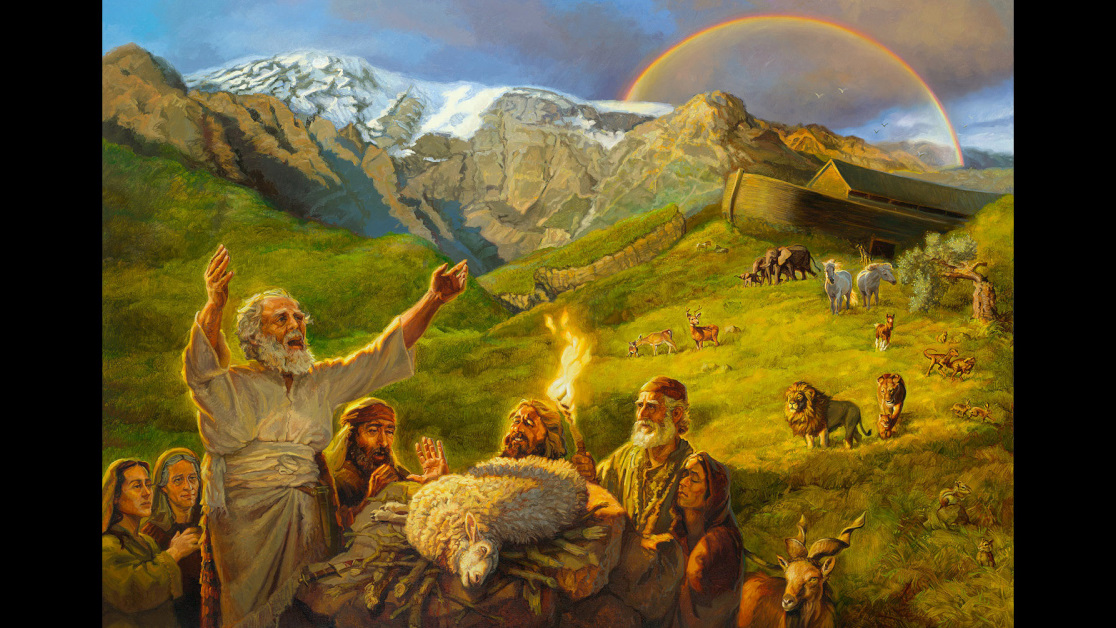
The awesome thing is that the covenant of mercy that God set in place thousands of years ago still holds. And things have gotten pretty bad in this world. Yet the rainbow is a continuing sign of his mercy.

And yet as great as that covenant of mercy is, there is another covenant of mercy that’s even greater.

The covenant God first made with mankind when the flood ended is limited in that it only prevents judgment by water.

But on the final day of judgment, judgment will come to each man and woman. And this time, it won’t be a judgment by water, but a judgment by fire. (2 Peter 3:6–7)

The covenant of mercy God made to Noah will not apply on that day.

But there is another covenant of mercy that God has made that will see us through the judgment of fire. It’s a covenant where through the blood of Jesus, our sins may be forgiven if we’ll just put our trust in him and his work on the cross.

Paul says,

But when the kindness and love of God our Savior appeared, he saved us, not because of righteous things we had done, but because of his mercy. (Titus 3:4–5)

Noah and his family were spared from the flood by the mercy of God. We’ve been spared from being wiped out from this earth by that same mercy.

And on the day of judgment, when we see God face to face, those who have put their trust in Jesus will find mercy on that day.

May you know the mercy of God in your life.

Categories
Genesis

When it’s hard to wait

Several years ago, when I was traveling to Hawaii from Japan, I decided to save a few yen and go through Korea.

Bad choice. As we arrived in Korea, there was a fog, and the plane couldn’t land.

After circling for a while, we landed at the old Korean airport, and there we stayed for at least an hour, perhaps two or three.

And that entire time, I had to stay in my cramped economy class airplane seat, bored to tears.

Finally, we were able to take off and land at the new airport. Needless to say, I vowed never to go through Korea again.

I kind of wonder if that’s how Noah and his family felt in that ark.

We often talk about how it rained for 40 days and nights, but we don’t think very often about how long they actually stayed in the ark. Five months after the flood started, they finally land on dry ground.

Sort of, anyway. They landed on the top of a mountain. So the motion sickness part of their trip was over. But their cabin sickness part didn’t end for another 7 months.

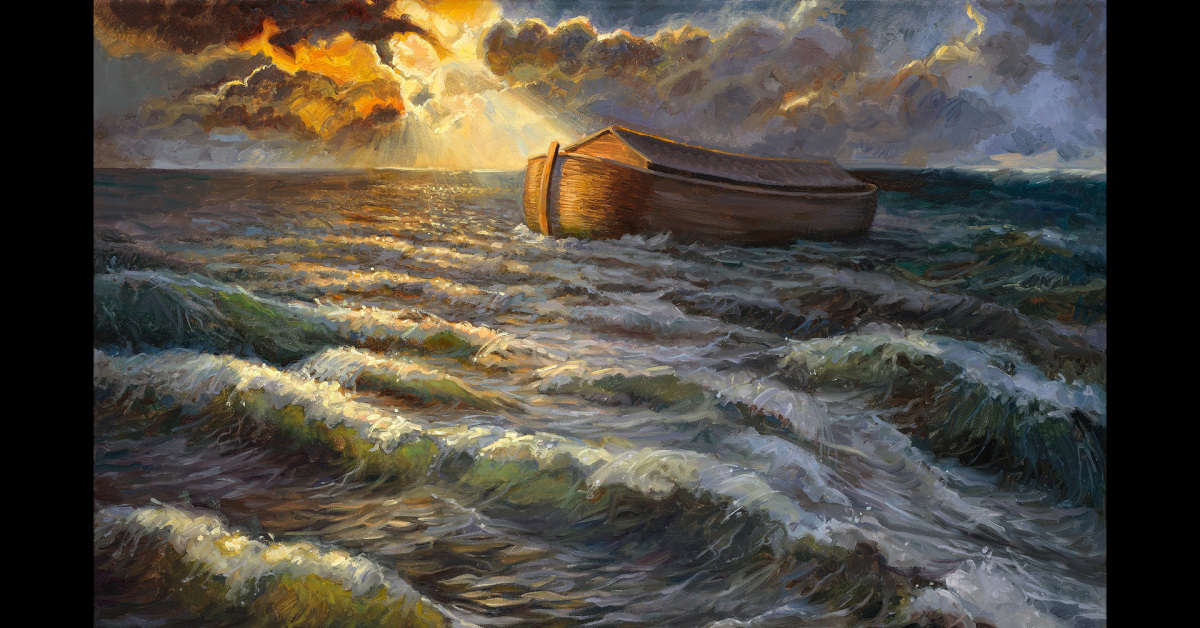
Altogether, Noah and his family were in the ark for a year before God finally said, “Okay Noah, it’s okay to leave the ark.”

I can’t imagine having to do that. I mean it’s bad enough waiting five months on water. But then the boat actually lands on sort of solid ground, and you have to wait another 7 months after that.

Every day, you have to feed a ton of animals and deal with the manure. And that was the fun part of the day. The rest of the time, you’re just twiddling your thumbs waiting for the go-ahead to leave. Talk about going stir crazy.

How many times does God ask us to wait in our lives for his timing? And how do we react to it?

I remember wanting to go to Japan right after I finished college. But for whatever the reasons, the doors kept closing on me. I had to wait a full year before I could finally go.

But in that time, God gave me a job at a computer firm. Literally. I didn’t go searching for the job; it came to me. And God kept me there just long enough for me to know that it wasn’t the life for me.

If I had gone to Japan right away, I probably would’ve wondered what would’ve happened if I had actually done something with my major (management information systems). But by being forced to wait, now I know, and I have no regrets.

I remember waiting for the right woman to come into my life. I figured I’d get married sometime in my mid-twenties and ended up getting married in my mid-thirties instead.

But at the point when I had reached ultimate frustration, once again God provided and placed just the right woman into my life.

For the past several years, I’ve felt like I’m in somewhat of a holding pattern concerning my ministry. And it’s been a bit frustrating.

I still don’t know all that God holds for me. But I’m starting to feel God is moving again, and I know that whatever he has in store for me, it will have been worth the wait.

I wait for the LORD, my whole being waits, and in his word I put my hope. (Psalm 130:5, NIV)

Categories
Genesis

The judgment of God

The last few verses of chapter 7 end with a few poignant words.

Every living thing that moved on the earth perished—birds, livestock, wild animals, all the creatures that swarm over the earth, and all mankind.

Everything on dry land that had the breath of life in its nostrils died. Every living thing on the face of the earth was wiped out; men and animals and the creatures that move along the ground and the birds of the air were wiped from the earth.

Only Noah was left, and those with him in the ark. (Genesis 7:21–23)

A lot of people wonder how God could do such a thing. How could God just wipe out all those people and animals?

Throughout the Old Testament, you see God bringing judgment on people, even commanding that entire races of people get wiped out.

Some people say, “I don’t like the God of the Old Testament. He seems so cruel and unmerciful. I like the God of the New Testament much better. He’s much more filled with love and grace.”

But that’s not really true. There are many instances of the love and grace of God in the Old Testament, while there are many instances of the judgment of God in the New Testament as well.

The Bible ends with a revelation of God’s judgment before the heavens and earth are made new again.

Why does God command such things? I think there are two misconceptions that people have about God.

One is that God is only a God of love. And so they say, “How can a God of love do these things?”

But what they don’t understand is that God is a holy God too. He is so pure, he cannot look on evil.

And he is a God of justice. He cannot allow evil to go unpunished forever. Sooner or later, he must bring judgment. Otherwise God can no longer be called a God of justice.

The other misconception people have is that God must take great delight in bringing this kind of judgment. But that’s not true either.

In Ezekiel 18:23, he says,

Do I take any pleasure in the death of the wicked? declares the Sovereign LORD.

Rather, am I not pleased when they turn from their ways and live?

Later in Ezekiel 33:11, he says,

Say to them, ‘As surely as I live, declares the Sovereign LORD, I take no pleasure in the death of the wicked, but rather that they turn from their ways and live.

Turn! Turn from your evil ways! Why will you die, O house of Israel?’

The truth is that while there is the justice of God, there is also the patience of God. That patience sometimes frustrates the very same people who complain about the judgment of God.

They say, “If God is really just, why does he allow evil on this earth now? Why doesn’t he just wipe out all of the evil people on earth?”

I wonder when people ask this if they realize they’re including themselves among those evil people. The Bible says, “For all have sinned and fall short of the glory of God.”

If God were to bring instantaneous judgment on all the evil in the world, there would be no one left on this earth.

But back to the patience of God. Throughout history, you see God’s patience before judgment. You see him waiting and waiting, hoping for repentance, before passing judgment.

He waited 120 years between sending the warning and sending the flood.

He waited four generations of people before sending the Israelites to pass judgment on the land of Canaan (Genesis 15:16).

When the Israelites sinned, he sent prophet after prophet with warnings to turn.

And now, God says this:

First of all, you must understand that in the last days scoffers will come, scoffing and following their own evil desires.

They will say, “Where is this ‘coming’ he promised? Ever since our fathers died, everything goes on as it has since the beginning of creation.”

But they deliberately forget that long ago by God’s word the heavens existed and the earth was formed out of water and by water.

By these waters also the world of that time was deluged and destroyed.

By the same word the present heavens and earth are reserved for fire, being kept for the day of judgment and destruction of ungodly men.

But do not forget this one thing, dear friends: With the Lord a day is like a thousand years, and a thousand years are like a day.

The Lord is not slow in keeping his promise, as some understand slowness.

He is patient with you, not wanting anyone to perish, but everyone to come to repentance. (II Peter 3:3–9)

Yes, God is a God of love. But God is a God of justice.

Yes, he is a God of justice. But he is a patient God who wants all to be saved.

Yes, he is a patient God, but his patience won’t last forever.

So remember the words of the Lord Jesus:

As it was in the days of Noah, so it will be at the coming of the Son of Man.

For in the days before the flood, people were eating and drinking, marrying and giving in marriage, up to the day Noah entered the ark; and they knew nothing about what would happen until the flood came and took them all away.

That is how it will be at the coming of the Son of Man.

Two men will be in the field; one will be taken and the other left.

Two women will be grinding with a hand mill; one will be taken and the other left.

Therefore keep watch, because you do not know on what day your Lord will come. (Matthew 24:37–42)

Categories
Genesis

Grieving God, pleasing God

Verses 5–6 really strike me in this chapter.

The LORD saw how great man’s wickedness on the earth had become, and that every inclination of the thoughts of his heart was only evil all the time.

The LORD was grieved that he had made man on the earth, and his heart was filled with pain. (Genesis 6:5-6)

When we see evil in this world, we often weep or are disturbed, but how often do we think about God’s feelings on the matter?

God weeps too. And his heart gets filled with pain too from seeing all the hurt that comes from a broken, sinful world.

How often do my actions cause God to weep? How often do my actions cause God pain?

I’ve mentioned before that because God is invisible, it’s easy to ignore him at times. And it often becomes convenient to ignore him when I choose to sin. But when I do, God sees, and it fills his heart with pain.

But when God saw Noah, he saw someone that brought a smile to his face. In verse 8, it says that Noah found favor in the eyes of God. At a time when everyone was doing all sorts of evil, God called him blameless.

It would’ve been so easy for Noah to say, “Well, everyone else is doing whatever they want. Why shouldn’t I?” But instead, Noah dared to be different.

Even when God gave him a difficult task that probably didn’t make much sense (building a huge boat in an area where there was no ocean or lake even remotely in sight), he didn’t complain. He didn’t argue.

When his neighbors and perhaps even his relatives ridiculed him, he didn’t waver in his obedience.

Instead, he did everything just as God commanded him.

If only I could be the same. If only my life could bring a smile to the heart of God.

Lord, forgive me for the times when I’ve ignored you and fallen into sin. Forgive me for the times I’ve caused you pain and made you weep.

Lord, let me be like Noah. Let me be different from the people around me. Help me to trust you and obey you in everything, even when it’s difficult. Even when I don’t know the whys.

And let my life bring a smile to your face whenever you see me. In Jesus’ name, amen.

Categories
Genesis

Walking with God

Admit it. You usually skip over these sections in the Bible where so and so gave birth to so and so who gave birth to so and so. So do I.

But from time to time you can glean some interesting information.

Methuselah, for example. He was the longest living person who ever lived. When did he die?

Well, if I did my calculations right, he died the year of the flood.

He lived 969 years in total. He had Lamech when he was 187 years old and lived 782 years after that. He actually outlived his son by 5 years.

Lamech had Noah when he was 182, and lived 595 years after that. Noah was 600 years old when the flood came, which means that Lamech died 5 years before the flood, while Methuselah died the year of the flood.

So the question comes, “Did Methuselah die just before the flood or did he die because of the flood?”

Noah’s great grandfather (probably—the word “father” in Hebrew can also mean “ancestor” so it’s not 100% clear what their relationships were) was Enoch.

Enoch and Noah were both known as men who “walked with God.”

It makes you wonder about Methuselah and Lamech. Did they walk with God too? Or were they as corrupt as the rest of the world around them?

When Lamech named Noah (“Noah” means “comfort”), and said, “Noah will bring me comfort in this God-cursed land,” was he complaining against God, or was he thanking God that despite the troubles in the world, God had given him a blessing?

I don’t know.

Lamech never had to make the decision whether to enter the ark or not. But there’s a chance that Methuselah did.

Did Methuselah argue with his crazy grandson about this ark Noah was building? Did he think that Noah was as crazy as the rest of the community did? Was that why Methuselah perished?

Interesting questions. We’ll never know this side of heaven.

But considering that the Bible took the time to say that Enoch and Noah were notable for walking with God, you’d think that the Bible would make note of it if it were true about Lamech and Methuselah too.

But what does it mean that Enoch and Noah walked with God?

I think it’s a relationship with God where you’re constantly aware of his presence.

I’m not saying that you think about him 100% of the time. Obviously, we have to work, or we spend time with friends or family, etc.

But for example, when I’m at home, although I may not be talking with my wife 100% of the time, I’m usually aware of where she is in the house and generally what she’s doing.

And I’m always aware that she’s there to talk to whenever I want to or need to.

Of course, there are also times when she interrupts what I’m doing to talk with me too.

It’s the same with us as we walk with God throughout the day. We may not be praying 100% of the time, but we’re consistently aware of his presence, we’re quick to talk to him as things happen in our day, and we notice the things that he’s doing in the world around us.

I do some of those things. I do pray a lot throughout the day, even if it’s just mundane things like, “Wow Lord! That last English student was really tough to teach.”

I also have more serious conversations like, “Well, Lord, my wife and I got into a fight. Now what do I do?”

But how often am I aware of what God is trying to do around me? And how often am I willing to interrupt my schedule to cooperate with what he’s doing?

Sometimes I’m at work, and I’m trying to read while eating lunch. And someone comes in and starts talking to me.

Sometimes I’ll put the book down and chat, but other times, I’ll just give short answers, and go back to reading.

Did I just miss an opportunity God was giving me?

It’s so easy to kind of read our Bible at home, and pray, and then say, “Okay God. Good talking with ya. See ya later.”

We then give him nary a thought the rest of the day.

But when we do that, we miss a lot of the things he’s trying to do in us, and in the people around us.

I don’t know about you, but I want to be like Enoch and Noah. I want people to see me as someone who “walked with God.”

Lord, help me be more aware of your presence in my life every day. Help me also to see what you’re doing in the world around me.

And help me be willing to interrupt my schedule to join hands with you in what you’re doing. In Jesus’ name, amen.

Categories
Genesis

Hardened hearts

It sure didn’t take long after Adam and Eve sinned for hearts to become hardened to God. Cain tried to worship God on his own terms, and God rejected it.

When Cain got angry, God said,

Why are you angry? Why is your face downcast? If you do what is right, will you not be accepted?

But if you do not do what is right, sin is crouching at your door; it desires to have you, but you must rule over it. (Genesis 4:6-7)

Yet Cain hardened his heart to God and instead murdered his brother. When God confronted him, he didn’t even try to make an excuse like Adam and Eve did. All he said was, “My punishment is too great!”

One of his descendants Lamech was even worse. He murdered a man who offended him, and he wrote a song celebrating that fact.

He boasted in the song, “This man hurt me so I’m going to kill him (or ‘I killed him’). If Cain was avenged 7 times over for anyone trying to hurt him, I’ll make sure I’m avenged 77 times for someone trying to hurt me.”

How can a heart become so hardened?

The key is found in verses 6-7. We are in a constant battle with sin. Either we will conquer it or it will conquer us. But the more we give in to sin, the harder our hearts get.

Often times, when we’re first tempted to sin, God uses our conscience to warn us, and if we give in to sin, we feel guilty.

But if we don’t repent, our hearts become harder. The next time God warns us, he becomes easier to ignore, and we don’t feel so bad when we sin again. And if we don’t repent, our hearts become even harder.

Soon we get to the point where we can’t hear God’s voice anymore, and so we don’t feel any guilt at all for doing this act that once made us feel so guilty.

How do we avoid this? Keep a soft heart. When your conscience strikes you, don’t ignore it. Listen to it. Repent. Keep your heart open to God and his voice.

There’s an old song by Petra that I love. It says:

Don’t let your heart be hardened
Don’t let your love grow cold
May it always stay so childlike
May it never grow too old

Don’t let your heart be hardened
May you always know the cure
Keep it broken before Jesus
Keep it thankful, meek, and pure

Categories
Genesis

By faith

Adam named his wife Eve, because she would become the mother of all the living. (Genesis 3:20)

It’s nice to see in this passage that there was reconciliation between Adam and Eve after the fall.

I kind of wonder, however, when Adam actually gave her the name Eve? Did he just call her “woman” all this time?

Still, I love the name he gave her. Eve literally means “Living.”

I get the impression from the passage that Adam gave her that name when God promised to bring a Savior through her seed. And when Adam heard that, he named his wife Eve, saying “Through you comes life.”

Is there a more beautiful name he could’ve given her?

Anyway, I digress. As I read the story of Cain and Abel, the obvious question pops up. Why did God accept Abel’s offering and not Cain’s?

Some people think it’s because it was a sin offering and therefore had to be a blood offering. Others think it’s because Cain didn’t offer his firstfruits.

What we do know for certain is what the author of Hebrews wrote:

By faith Abel brought God a better offering than Cain did. By faith he was commended as righteous, when God spoke well of his offerings.

And by faith Abel still speaks, even though he is dead. Hebrews 11:4 (NIV)

Whatever the exact reason was, it’s clear that Abel offered his sacrifice in faith. Cain did not.

Maybe for Cain, it became just a habit. Maybe he couldn’t see the point of giving his best to God. Maybe he just couldn’t see why the sacrifices had to be a blood offering.

But whatever his reasons, his attitude did not please God.

I have to wonder sometimes how often I make unacceptable offerings to God.

I must admit that sometimes I’ve seen tithes as a kind of a tax. One of those unpleasant things that is very painful to do, but I kind of have to do.

Yet that’s not really giving by faith, is it?

The apostle Paul writes in II Corinthians 9:7,

Each of you should give what you have decided in your heart to give, not reluctantly or under compulsion, for God loves a cheerful giver.

Too often I’m not giving cheerfully, but reluctantly. I still struggle with that sometimes…actually to be honest, I struggle with it often.

At a time when it’s hard to save any money, it’s easy to look back and count all the money I’ve given to the church.

So the question is, “Why am I giving? Is it because I have to? Or because I want to?”

I sometimes also wonder how often I offer prayers unacceptable to God. Sometimes when I’m praying over the food, I find myself just saying words.

Or when we’re praying in church, I find my mind starting to wander. I can’t say that I’m praying by faith in those situations either.

God forgive me. Help me to never have the attitude of Cain which takes you lightly. Which despises you. Which makes prayer a dead ritual. Which makes giving tithes a tax that’s painful to give.

Instead let me have the heart of Abel, who gave every offering out of a heart of faith and who did everything out of his love for you.

Categories
Genesis

Broken

I watched a documentary recently on a couple of basketball players, Vlade Divac and Drazen Petrovic, called “Once Brothers.” If you haven’t seen it, you should watch it on YouTube.

It documents the friendship between these two men and how it was broken during the civil war in Yugoslavia. Divac said in the documentary, “To build a friendship takes years. But to destroy it, it takes one second.”

As I read Genesis 3, it brought those words to mind. We don’t know how many years Adam and Eve spent in the garden of Eden before the fall, but during that time, they had a wonderful relationship of openness, honesty, love, and acceptance with each other and with God.

So many people long for the perfect marriage. That’s exactly what Adam and Eve had. So many people long for a close relationship with God. That’s exactly what Adam and Eve had.

Day after day, Adam and Eve worked in the garden with each other, perhaps went for hikes when their work was done, enjoyed the great food God had provided, and in general just enjoyed each others’ company throughout the day.

And when evening came, and God came into the garden for a visit, they enjoyed sweet fellowship with him too.

I’m sure God enjoyed hearing about their activities and adventures throughout the day. He probably answered a lot of the questions they had as they learned more about the world he had created just for them.

For years, perhaps, they enjoyed building their relationship with each other. But then in an instant, it was gone.

You know the story. Adam and Eve ate the fruit God had forbidden them to eat. As soon as they did, shame and insecurity came into their relationship. They tried to hide their bodies from each other by making clothes from fig leaves.

Gone was the openness that they had previously had in their relationship. Instead questions like, “Can he accept me?” and “Can she really love me?” started to pop up in their minds.

And when God walked into the garden, instead of racing out to meet him, they ran away. They hid.

When God confronted them, the brokenness in the relationship between Adam and Eve and in their relationship with God became even more evident.

“God! It’s not my fault I ate. It was this woman! It’s her fault! I never asked for her! YOU gave her to me!”

How must Eve have felt when she heard those words from Adam’s lips? Condemnation. Rejection.

How must God have felt? “Not only have you rejected me, but you have rejected this precious gift I made especially for you.”

All those years of sweet fellowship…broken in a moment.

And yet…from the moment that fellowship was broken, God started working to restore that fellowship.

He made clothes for them, and in doing so, he showed the way that fellowship would be restored.

Death came into the world for the first time, as God killed an animal and used it to make clothes to cover their shame. And in the same way, thousands of years later, God would send his Son, and through his death on the cross, our sin and shame would be covered for all time.

Our relationships are a struggle now. We struggle with each other. I’d be lying if I said my marriage is perfect. There are times my wife and I fight. There are times we let each other down.

I struggle in my relationship with God. I really wish I could be closer to him, as Adam and Eve once were. I wish I could hear his voice more clearly. I wish I could enjoy sweet fellowship with him every day. But I don’t.

And yet, the way to restoration has already been established in Christ. Pursue it.

It’s easy to throw relationships away. Don’t do it. Pursue your relationship with God and with each other.

It takes effort, and it takes humility.

But by God’s grace and power, that which is broken can be restored.

God did it with Adam and Eve.

He can do it with you.

Categories
Genesis

No shame

When I look at this passage, I’m struck by the goodness of God. How as he created man, he took such care to provide for him.

He plants a garden with trees that he made sure were good for food and not only that, but pleasing to the eye as well. He also gives him pleasant work to do within the garden.

Then, perhaps even before the man realized his own need, God realized that the man needed a companion, one who would be “just right” (NLT) for him. So God created Eve.

And the reaction by Adam is instantaneous. “WOW! This is what I’ve been looking for. This is the one for me!”

And the Bible says that both were naked, but not ashamed. (Genesis 2:25)

That’s what marriage should be. Complete nakedness. I’m not just talking about sex. But nakedness of the soul. And complete acceptance. Knowing each part of the other person, and accepting them, and even celebrating who they are.

How many marriages fail because they lack this. All of us long to know and to be known. And be accepted.

The ability to laugh. To play. To share. To be intimate. How much has the thief of John 10:10 taken away from what marriage is? And all because we refuse to bare our souls completely to each other because we’re too afraid of rejection.

Maybe we’ve already suffered the scars of rejection and that prevents us from trying again.

But as we turn to the Author of Life, as we learn about his unconditional acceptance of us and find his healing.

And as we learn how to accept the people around us as he does, he is able to breathe new life into our dead marriages and relationships and make them as they were in the beginning: naked, but not ashamed.

Categories
Genesis

So God created man in his own image

I’ve read these words a thousand times, so it’s easy to just read right past them without thinking about it.

But apparently, they’re words that God thought were so important, he took the time to have it written twice in the same verse.

So God created man in his own image, in the image of God he created him; male and female he created them. (Genesis 1:27)

In other words, when God created the human race, he created reflections of himself.

Every time we show kindness to another, we reflect God’s image.

Whenever we show mercy and grace to another, we reflect God’s image.

Everything that is good within us reflects the image of God.

So whenever we look at another person, we should see them as images of the God who created us.

I have to admit, though, that sometimes it’s hard to see, because unlike Adam and Eve in the beginning, we are all distorted reflections of God. The brokenness that comes from sin has marred that image.

Sometimes when I’m walking in the underground mall in Umeda, I smell a horrible smell, and when I look up I see a homeless person that apparently hasn’t taken a bath in weeks. It’s hard for me to see God’s image in him.

Or sometimes when I’ve taught elementary or high school students that are disrespectful and stir up a lot of trouble, it’s hard for me to see God’s image in them.

And because of that, it’s easy in my heart to devalue them. To despise them. To see them as of little worth.

And yet, God sees these very same people and says, “They were created in my image, distorted though that image might be. What right do you have to look down on them? What right do you have to despise what I have created? I valued them so much that I sent my Son to die for them.”

And it’s not like the image of God in me is not distorted either. By judging these people and despising them, I can see that the image of God in me is clearly marred as well.

When I look at my life and all the sin that’s there, I have to wonder how people see me? How distorted is the image of God I reflect when people look at me? Honestly, I’d rather not know.

Yet God doesn’t give up on me. He keeps on working in me to renew me and make me more like himself. As it says in II Corinthians 3:18,

And we, who with unveiled faces all reflect the Lord’s glory, are being transformed into his likeness with ever-increasing glory, which comes from the Lord, who is the Spirit.

And if God doesn’t give up on me, who am I to give up on others as lost causes? Who am I to despise others?

For by the mercy that I myself have received, others may be transformed back into the likeness of the God that created them too.

So the question for me is, “How much will I reflect God’s image to those around me whose images have been marred by sin? Will I show them the same mercy that I have received?”

Lord, all I want for others to see
is a reflection of you inside of me.

Like the sun on the still water,
let me be a mirror of your heart.

I want to walk in the image of you,
like a child imitating what his Father would do.

A mirror of your heart. — Chris Christian

Categories
Genesis

The power and wisdom of God

As I read Genesis 1, God’s power and wisdom really strike me. With a word, God created. “Let there be light,” and bang! There is light. “Let there be plants and animals,” and bang! They appear.

I kind of wonder how God revealed all of this to Moses. Did he just say, “Okay, Moses, on the first day, I created light. Then on the second day…”

Or did he give Moses a time lapse vision of the whole thing. That would’ve been awesome to see.

If God did give a vision to Moses of the creation events, it might give credence to the theory that the earth is very old. Moses saw everything happening in a very short time, but actually, it took millions of years.

I know, I know. There are some of you out there that are ready to shoot me now for even suggesting this.

But considering that neither you or I were actually there, we’re just going to have to wait until heaven to find out.

Honestly, I don’t know if creation was done in 7 literal days or not. All I’m saying is that IF…IF God gave Moses a time lapse vision of the whole thing, it COULD give credence to the 7 “time period” interpretation of Genesis 1.

Speaking of how God revealed all this to Moses, I wonder how God would have explained all this if he had been talking to modern day scientists?

I wonder if God did explain it all to the scientists, could they grasp it all even now?

We’d like to think we’re so advanced. We’d like to think that if God explained it all we could grasp it.

We certainly understand more about our world and our universe than Moses did. But if God explained it all, could we really grasp it? Maybe. Maybe not.

I think scientists will have a fascinating time talking with God about all this when they get to heaven.

“Oh! Is that how it worked? We were close to the answer, but we were a bit off.” Or “Wow! We were way off on that one!”

So what’s my point? Stand in awe of God’s power and wisdom.

Sometimes we look at this world and we question God. We look at the evil that is in this world and we question why? Why does God allow earthquakes? Why does God allow murder?

In my case, I sometimes ask, “Why do I have to have diabetes? Why do I have to have ulcers?” (I have to have a checkup for both next week. Ugh!)

Some answers are simple. “Bruce, you have diabetes because you drank too much Pepsi!” Other questions, though, are much more difficult. And we struggle with them.

But if we can’t grasp the scientific questions, how can we hope to grasp the philosophical questions of life?

God’s wisdom is so much greater than ours.

There are simply some things that we’ll never understand while we’re on this earth.

There are simply some answers God will never give us because we won’t be able to grasp them even if he does give them to us.

What he does ask us to do is to trust him.

Even if we don’t understand.

Even if we never get the answers this side of heaven.

Just trust him.

Trust that he knows what he’s doing. Trust that he’s good. And even more, trust that he still does love you and that he still does care for you despite your circumstances.

That’s the lesson of Job. God never did give Job any answers to his questions of why he suffered so much.

All he said was, “You’re not qualified to judge me and what I do. You have neither my power nor my wisdom.”

And Job fell to his knees and said:

I know that you can do all things; no purpose of yours can be thwarted.

You asked, “Who is this that obscures my plans without knowledge?”

Surely I spoke of things I did not understand, things too wonderful for me to know.

You said, “Listen now, and I will speak; I will question you, and you shall answer me.”

My ears had heard of you but now my eyes have seen you. Therefore I despise myself and repent in dust and ashes. (Job 42:2–6)

And as Job humbled himself before God, as he put his trust in God despite the circumstances, God worked to turn his situation completely around.

So whatever our situations, whatever our questions, whatever our struggles, let us stand in awe of the God who knows more than we can grasp.

More, let us trust that he does know best and has the power to transform our worst problems into something glorious.

As the apostle Paul wrote:

Oh, the depth of the riches of the wisdom and knowledge of God! How unsearchable his judgments, and his paths beyond tracing out!

“Who has known the mind of the Lord? Or who has been his counselor?”

“Who has ever given to God, that God should repay him?”

For from him and through him and to him are all things. To him be the glory forever! Amen. (Romans 11:33–36)

Categories
Genesis

In the beginning, God…

Hmm…I think I said earlier that this wouldn’t be a verse-by-verse commentary. Yet here I am, and I can’t get past the first four words. But I have to say that those words brought me to a complete stop as soon as I read them.

In the beginning, God… (Genesis 1:1)

Why do these words stop me short? I think they’re a reminder to me that everything starts with God. If we want to find meaning in life, it all starts with God. If we want to find true satisfaction in life, it all starts with God.

Yet so many people’s starting point is not in him, but in themselves. They’re always thinking about “How do I make my life work?” “How can I be happy?”

And they bounce from one thing to another, trying to find something that brings satisfaction, but they can never find it because their focus was wrong from the very beginning.

As one writer has put it, “It (your life) is not about you.” You are not the center of the storybook. You are not the lead character. But as long as we think that way, all we’ll find is what King Solomon found in the book of Ecclesiastes: meaninglessness.

Meaningless! Meaningless…Utterly meaningless! Everything is meaningless. (Ecclesiastes 1:2)

Why? Because the starting point of everything is God. God is Life. And if from the start, you walk away from the one who is Life, your life becomes an empty shell. Utterly meaningless.

I have to think, though, is God the beginning with me? As I live my life every day, does my day start and end with God? For that matter, is he a part of everything in my life? Or do I kind of leave him out of parts of my life.

It’s so easy to do, I must admit. I suppose it’s one of the problems when dealing with an invisible God. He can be so easy to ignore.

Far too often, I’ve found that things like sports, or books, or the internet have come to dominate my day.

But as Solomon pointed out, even if we spend our time on good things, learning things, working, or just enjoying the life God’s given us, they all become empty if we leave God out of them. These are the gifts God has given us.

Yet the gifts are temporary. The Giver is eternal. That’s why the gifts can never satisfy for very long. The gifts God gives us on this earth should never be the focus of our lives. Our focus should be on the Giver of the gifts.

And if we put our focus on the Giver of the gifts, then we’ll find meaning in everything we do. We’ll find something that truly satisfies. Because he is forever.

Categories
About this blog

In the beginning…

This is a blog in which I’ll be posting my thoughts as I read through the Bible.  I recently decided to go through through the entire Bible cover to cover and I thought it would be fun to write my thoughts as I go along.  I have no idea how long this will take.  Maybe a year.  Probably more.  This will by no means be a verse by verse commentary, more of a thought by thought commentary as ideas come to mind.  Enjoy!