Categories
Joel

The valley of decision

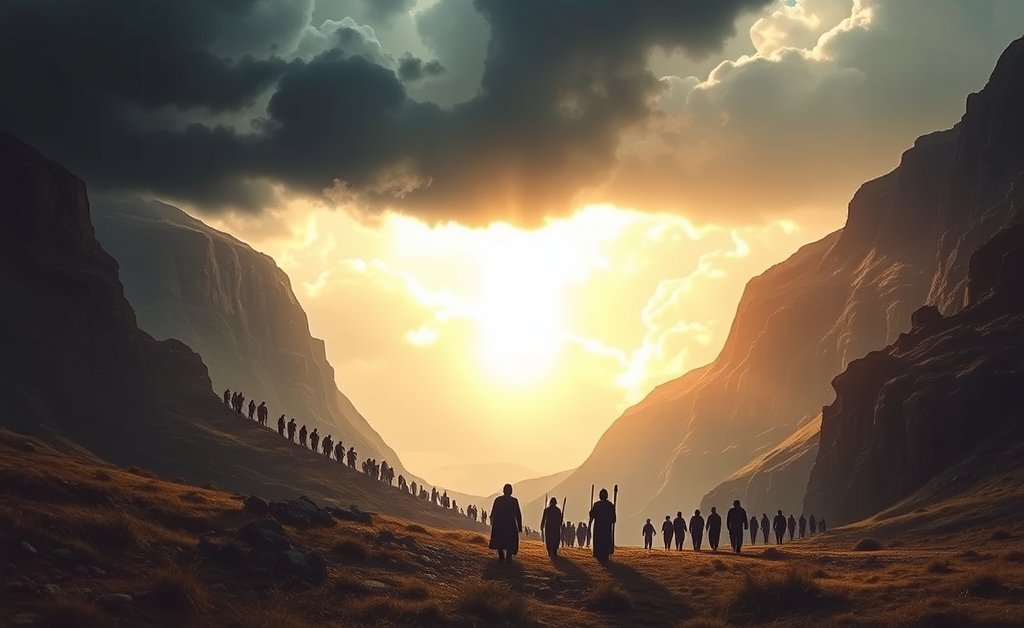
Multitudes, multitudes in the valley of decision! For the day of the Lord is near in the valley of decision. (Joel 3:14)

I think that a lot of people see this passage and think of it as a time when people will have to make a decision on whether to follow God or not.

But actually, their decision has already been made in this passage.

The nations march out against God in rebellion and against his people. But while they think they’re coming out to battle God, the truth is that they’re instead marching out into his courtroom.

And God says,

There I will sit to judge all the nations on every side. (Joel 3:12)

So the decision to be made is not really on the part of the nations, but on the part of God.

He will pass judgment on the people who have turned their backs on him. And for turning their backs on Christ, trampling him underfoot, they will find eternal punishment.

As it says in Hebrews 10:30–31,

For we know him who said, “It is mine to avenge; I will repay,” and again, “The Lord will judge his people.”

It is a dreadful thing to fall into the hands of the living God.

But to those who have turned to God and made him Lord of their lives, they will find forgiveness. God says,

Their bloodguilt, which I have not pardoned, I will pardon. (Joel 3:21)

And so before we hit the valley of decision where God will judge the living and the dead, we need to make a decision about what we will do with God.

Will we confess Jesus as Lord? Or will we live our lives in rebellion against him?

To those who turn to him, God pours out forgiveness and blessing. But to those who turn against him, judgment will come.

Which will you choose?

Categories
Joel

When the Spirit comes

If there is one thing that’s different between the Old and New Testament times, it is the work of the Holy Spirit.

Back in the Old Testament, the Holy Spirit would come upon a person occasionally to do a certain work.

More often than not, it was only a temporary thing. And as quickly as he could come, he could leave just as quickly.

You see this in the cases of Samson (Judges 14:1; 16:20) and Saul (1 Samuel 11:6; 16:14), for example.

After David had sinned with Bathsheba, he pleaded with God, “Do not… take your Holy Spirit from me.” (Psalm 51:11)

But here in Joel, God makes a promise. The day would come when the Holy Spirit would be poured out, not only on a select few, but on all of his people.

He promised that both men and women, both young and old, would be filled with his Spirit. And all this would be a sign of the last days.

Believe it or not, we’ve been in the last days for the last 2000 years.

Why does God fill us with his Spirit? To do his work.

What is his work? To preach the gospel before the day of judgment comes.

Time and again, the prophets warn of the day of the Lord.

Actually, there are many “days of the Lord.”

Any time God moves in judgment, it can be referred to as the day of the Lord. But all of this will ultimately culminate in the great and dreadful day of the Lord. (Joel 2:31)

It will be a day when all mankind is brought before the throne of God and judged. On that day, only those who have called on the name of the Lord will be saved. (Joel 2:32)

As we all know, part of this prophecy was fulfilled in the second chapter of Acts.

The Holy Spirit came upon the believers at Pentecost, and in explaining what was happening to the wondering crowd, Peter quoted this passage in Joel.

But one thing that Jesus made clear was that the reason he was sending his Holy Spirit was that they should receive power.

Power to do what?

Power to be his witnesses, and to take the gospel into all the world. (Acts 1:8)

God hasn’t given his Spirit to us in order for us to brag about the spiritual gifts we have.

He hasn’t given us his Spirit for us to look down upon each other for what gifts we have or don’t have.

He has given us his Spirit that we might take his gospel to a dying world before the day of judgment comes. Because when that day comes, their fate is already sealed.

God has given you his Spirit that you might make a difference in this world.

The question is, are you?

Or are we focused on ourselves and what we can get from God instead?

May our lives be filled with his Spirit.

And may we touch the lives of those around us that they may come to know him before the day of judgment comes.

Categories
Joel

True repentance

Sometimes, when people say that they’re sorry, you can tell that they really aren’t. Sometimes, the “sorry” is dragged out of them.

Other times they seem more sorry that they were caught than for their actions.

That’s what God addresses in this passage.

In the first part of chapter two, he continues letting the people know that this disaster of locusts did not just happen by chance. Rather, it happened because of the people’s sin.

And then he told the people,

“Even now return to me with all your heart, with fasting and weeping and mourning. Rend your hearts, not your garments.

Return to the Lord your God, for he is gracious and compassionate, slow to anger and abounding in love, and he relents from sending calamity.” (Joel 2:12–13)

“Rend your hearts, not your garments.” As a sign of grief or humility, people back in the Old Testament days would tear their garments.

But God said, “I don’t just want outward appearances of repentance. I want your heart. I want to know that you are truly sorry for your actions.”

David once wrote,

You do not delight in sacrifice, or I would bring it; you do not take pleasure in burnt offerings.

The sacrifices of God are a broken spirit; a broken and contrite heart, O God, you will not despise. (Psalm 51:16–17)

God told the people, “If you repent, then I will heal you. All the damage done from the locusts will be undone. You will have new grain, new wine and oil, and all your trees will bear fruit once more. And you will no longer have to know shame.”

God tells us the same today. It is never too late to repent and turn from our sins.

If we will just turn to him, he is quick to show compassion and mercy and to bring healing in our lives from all the damage we caused by our sin.

Categories
Joel

How we respond to tragedy in this world

Why is there evil in this world? Why is there so much tragedy?

That is one of the haunting questions that people have asked throughout the ages.

And as we take a look at the book of Joel, that’s what we see here. A swarm of locusts swept down upon Judah and stripped the land of its harvest.

It’s uncertain when Joel wrote this prophecy, but there are a number of people who believe that Joel wrote this right about the time of King Joash.

He was probably still an infant or young child at the time, with the priest Jehoiada serving as his mentor and perhaps as his regent as well.

It was a time when the people were coming out of the rule of three ungodly leaders—Jehoram, Ahaziah, and Athaliah—all three of whom had led the people of Judah into idol worship.

And now this tragedy hit. And into this tragedy, the prophet Joel spoke. What did Joel tell the people to do?

Basically he told them to turn to the Lord, to wake up from their spiritual slumber and repent. He said,

Wake up, you drunkards, and weep! Wail, all you drinkers of wine; wail because of the new wine, for it has been snatched from your lips. (Joel 1:5)

He particularly called on the priests, the spiritual leaders of Judah, to lead the people in repentance, saying,

Put on sackcloth, O priests, and mourn; wail, you who minister before the altar. Come, spend the night in sackcloth, you who minister before my God… declare a holy fast, call a sacred assembly.

Summon the elders and all who live in the land to the house of the Lord your God and cry out to the Lord. (Joel 1:13–14)

Why did he call them to do this?

For the day of the Lord is near; it will come like destruction from the Almighty. (Joel 1:15)

Why is there evil in this world? Why do we see earthquakes, hurricanes, typhoons, and tsunamis?

I think one reason God allows these things is to wake people up from their spiritual slumber. And I’m not just talking about unbelievers, but believers as well.

If there were no evil in this world, people would probably just live their lives in comfort, not even thinking of the judgment that is looming because of their sins. God would not even cross most of their minds.

But that judgment to come is far worse than any earthquake, typhoon, or natural disaster that hits. Because once judgment is passed, there is no remedy, and the consequences are forever.

And that’s what Joel was saying to the people.

“Wake up! Do you think this tragedy is bad? It’s nothing compared to the judgment to come. Repent from your sins. Turn your face towards God, lest something worse happen to you.”

It reminds me of the words of Jesus that he spoke to a man he had healed. He said, “See, you are well again. Stop sinning or something worse may happen to you.” (John 5:14)

In other words, “The suffering you endured from your disability is nothing compared to the suffering you will endure if you don’t repent of your sins. Being condemned to hell is far worse than suffering from being lame.

So repent that your soul and spirit may be restored, not just your body.”

How do you respond when you see tragedy in this world? May the tragedies we see bring us to our knees. As it was in Joash’s day, so it is today.

God calls us, his priests, to pray and repent of our own sins, and then to pray for the people around us, calling them out of the kingdom of darkness into God’s marvelous light.

Let us not be, as Keith Green once put it, asleep in the light.

Let us be awake and call the people around us to awaken too.

And let us all turn our faces to God before the true day of judgment comes.