

Categories
John John 20 Luke Luke 24 Mark Mark 16 Matthew Matthew 28

The One who is always with us

A couple of notes on the resurrection.

I think I will be cutting out Mark 16:9-20 from my commentary since it is considered by most scholars to not be in the original text.

It was apparently added on to Mark by someone, either because Mark died before it was completed or because the original ending was lost.

Second, there is some difficulty in harmonizing the events of the resurrection. What I give here in my blog is my best guess.

The thing to remember, though, is that all the essential facts are the same.

The tomb was empty when the women arrived there. Angels appeared to the women to tell them that Jesus had risen. Jesus appeared to Mary and the women. They all went to tell the disciples.

Lawyers today will tell you that in a court of law, any apparent discrepancies in the testimony of these four sources would not be able to overturn these essential points.

With that, a very quick summary as to what I believe happened.

The women went to the tomb and found it empty. When Mary entered the tomb and found the body gone, she immediately left to tell the disciples.

The other women lingered, however, and at that point, two angels appeared, with one giving them the good news that Jesus was alive. The women ran to tell the disciples talking to no one else along the way. (Matthew 28:5-8; Mark 16:1-8; Luke 24:1-10)

Meanwhile, Mary told the disciples that the body was gone. (John 20:2). And so Peter and John (probably) went to investigate, with Mary following after.

After they had left, the other women arrived with their tale of the angels. (Luke 24:9-11)

Peter and John then arrived at the tomb and found the body gone, and while John seems to have believed that Jesus rose from the dead, Peter wasn’t so sure. Perhaps discussing the situation, they then left. (Luke 24:12; John 20:3-9)

Mary, by this time had arrived at the tomb. Whether Peter and John were still there when she arrived is not clear, but it’s possible they had already gone.

Jesus then appeared for the first time and spoke to her. She then went to tell the disciples. (John 20:10-18)

As she was on her way, Jesus then appeared to the other women, perhaps as they were on their way back home, discouraged that the disciples had not believed them.

Encouraged once again, they returned and told the disciples what Jesus had told them, bolstered by Mary’s testimony. (Matthew 28:9-10)

I don’t know if that was the exact order of events, but it seems to be a reasonable harmonization to me.

At any rate, I want to focus on Mary for a moment.

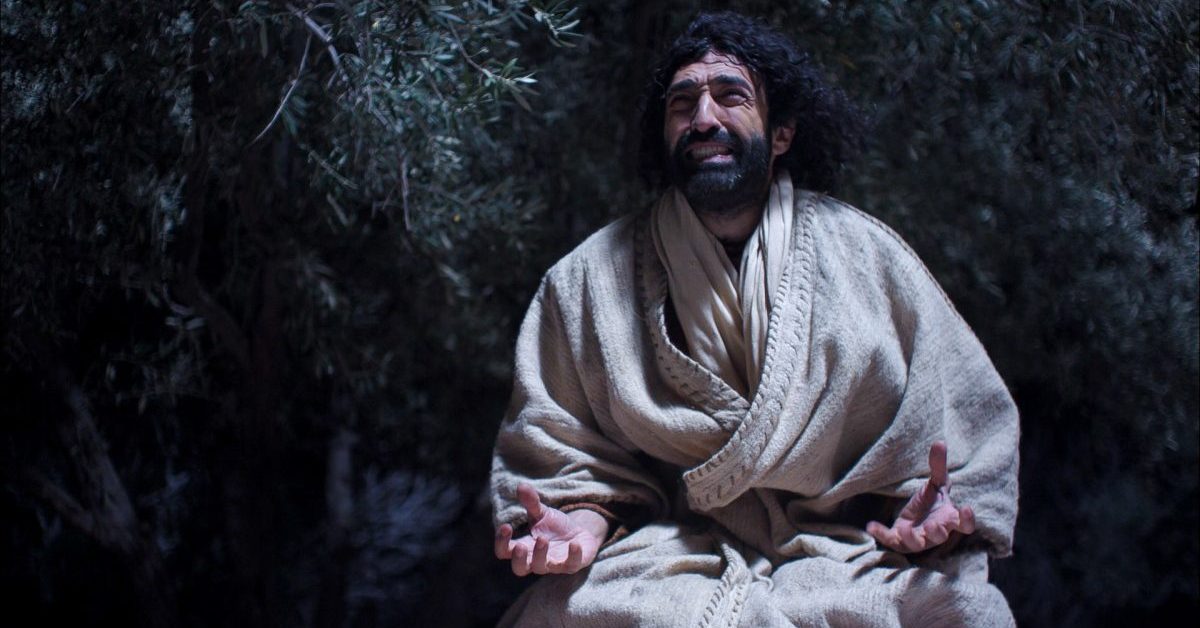
The image that strikes me most was Mary in the garden, in the depths of sorrow and despair.

If the order of events were as I imagine, she had not heard the story of the other women. All she knew was that Jesus was gone.

She enters the tomb, and sees the two angels, but because she never heard the other women’s story, she doesn’t recognize the angels for what they are.

So when they ask her, “Why are you crying?” she simply says, “They’ve taken away my Lord, and I don’t know where they’ve put him.”

Perhaps the angels were about to tell Mary the truth when they saw Jesus appear behind her.

At first, through her tears, she couldn’t recognize him, but then he spoke her name, “Mary.”

And in an instant, all of her tears of sorrow were washed away by joy.

How often are we like Mary? We’re going through a tough time, and God seems far away. We pray but our prayers bounce off the ceiling. We seek him, but we can’t seem to find him. For all we know, he’s dead.

But the truth is, he is there. Like Mary, we can’t see him, but he is there. And at the proper time, he will reveal himself to us.

So don’t give up. We all go through times of sorrow. We all go through times when God seems distant.

But he is Immanuel. He is God with us. And through the same power that raised Jesus from the dead, he will change our sorrow into joy.
Categories
John John 19 Luke Luke 23 Mark Mark 15 Matthew Matthew 27

That scripture would be fulfilled

One thing that becomes crystal clear as we look at these passages is that Christ’s death was no accident. It was no mistake on the part of God. Rather, he had planned it from the beginning of time for our salvation.

The irony was that when the chief priests asked for a sign from Jesus to prove that he was the Messiah, Jesus did give them a sign. They were just too blind and deaf to perceive it.

They demanded he come down from the cross. He pointed them to prophecy.

He couldn’t have been more clear when he cried out,

My God, my God, why have you forsaken me? (Matthew 27:46)

The priests thought he was calling for Elijah. But Jesus was actually pointing them to Psalm 22. Why? If they had only seen, they would have understood that Jesus was fulfilling many of the things that David had written.

He was scorned, despised, mocked, and insulted. In fact, the chief priests themselves used virtually the very words that David prophesied they would say.

He trusts in the LORD; let the LORD rescue him. Let him deliver him, since he delights in him. (Psalm 22:8)

He trusts in God. Let God rescue him now if he wants him, for he said, ‘I am the Son of God.’ (Matthew 27:43)

David also gave a graphic description of suffering on the cross. He said,

All my bones are out of joint. (Psalm 22:14a)

This disjointing of the bones is what often happened to people hanging on a cross.

David then said,

My heart has turned to wax; it has melted away within me. (Psalm 22:14b)

John records that when the soldiers pierced Jesus’ side, water and blood flowed out, which doctors today say is a sign that he had suffered heart failure.

David prophesied Jesus’ great thirst upon the cross, saying,

My tongue sticks to the roof of my mouth. (Psalm 22:15)

And he prophesied Jesus’ hands and feet being pierced. (Psalm 22:16).

More, a person hanging on a cross could probably see his ribs pressing against his flesh, thus David saying,

I can count all my bones. (Psalm 22:17)

And of course, David prophesied the casting of lots for Jesus’ clothing, saying,

They divide my garments among them and cast lots for my clothing. (Psalm 22:18)

All these pointed to Jesus as the Messiah, but the chief priests who knew the scripture, couldn’t see it.

John points to other scriptures, Psalm 34, Psalm 69, and Zechariah 12, all of which point to the cross.

And of course, Isaiah 53 describes even more.

Jesus being pierced for our sin and taking our punishment for us.

Being silent in front of his accusers.

Interceding for those who killed him.

Being originally assigned a grave with the wicked, but instead being buried in a rich man’s tomb.

And of course, being resurrected from the dead.

In short, again, this was no accident. It was planned and purposed by the Father for our salvation from the beginning of time.

So let us never take the cross for granted. Instead let us praise God with hearts full of thanksgiving for the price his Son paid for our salvation.

Categories
John John 19 Luke Luke 23 Mark Mark 15 Matthew Matthew 27

Paid in full

If there is one thing I hate to do, it’s pay taxes.

Every year, I have to go down to the tax office to declare my income, and then a month later, I collect my refund…only to have to give all of that refund back and more to pay my property taxes as well as my city and prefectural taxes.

Nowadays, I tend to pay these taxes all at once. We have the option to pay in installments, but it’s nice to get it all over with. And when I pay, my tax bill is stamped, to show that my tax debt is paid in full.

And that is exactly the picture Jesus invoked when saying his final words at the cross.

At around 12:00 p.m., the gospels tell us that it became dark, and that the sun did not shine its light.

I doubt that it was an eclipse because those last only a few minutes, and this darkness lasted 3 hours. But however God did it, a darkness fell on the land.

My guess is it was a picture of God placing all of our sin upon Jesus. That all the darkness in this world that comes from sin, was put on Jesus during that time.

Then at around 3 p.m. Jesus cried out,

My God, my God, why have you forsaken me? (Matthew 27:46)

At that moment, I believe that God the Father turned his face aside from Jesus because of the sin that had been placed upon him.

If so, it was the first time ever that the relationship between the two had ever been broken, and Jesus suffered what all of us deserve: separation from the Father.

Separation from he who is love. Separation from he who is joy. Separation from he who is life.

That’s what hell is. And so in that sense (and that sense alone), Jesus suffered hell. He took upon himself the punishment that we deserved.

And having suffered that, he looked up for the last time, and said,

“It is finished. Father, into your hands, I commit my spirit.” (Luke 23:46, John 19:30)

It is finished.

Those were the words that were often printed on the bill of those who paid their taxes in Jesus’ day. And they literally meant, “paid in full.”

And by Jesus’ death on the cross, he paid in full the debt we owed because of our sin.

What’s the result? We can have a new relationship with God.

God tore the curtain that hung between the Holy Place and the Most Holy Place. (Mark 15:38). And by doing so, he was telling us, “The barrier that stood between me and you is gone. You have now free access to me through my Son.”

We no longer have to stay at a distance from God as the Israelites once did. (Exodus 20:18-21)

We can draw near. So let us draw near.

As the writer of Hebrews exhorts us,

Therefore, brothers, since we have confidence to enter the Most Holy Place by the blood of Jesus, by a new and living way opened for us through the curtain, that is, his body, and since we have a great priest over the house of God, let us draw near to God with a sincere heart in full assurance of faith, having our hearts sprinkled to cleanse us from a guilty conscience and having our bodies washed with pure water. (Hebrews 10:19-22)

Categories
John John 19 Luke Luke 23 Mark Mark 15 Matthew Matthew 27

Railing at God, humbling ourselves before him

This is one of the most famous stories from the cross. Along with Jesus, two robbers were crucified by his side. And at first, both mocked him. In the ESV, it says,

One of the criminals who were hanged railed at him, saying, “Are you not the Christ? Save yourself and us!” (Luke 23:39)

Somehow, that word, “railed,” really strikes me. It makes me think about how many people rail at God when they face the consequences for their sin.

Here was this criminal who had done wrong and was being punished for it, but far from being repentant, it seems he felt that he was being wronged.

Perhaps he felt justified in the things that he had done, and so as he railed at Jesus, he said, “Are you really the Christ? Then save me from this! I don’t deserve this!”

Apparently, according to the other gospels, the second criminal joined in with the first in railing at Jesus, at least at first.

But perhaps as Jesus refused to answer, but instead only looked with pity upon his abusers, the second criminal started to quiet down.

He saw the dignity of Jesus in a situation where all dignity had seemingly been stripped away from him.

He saw the compassion, love, and forgiveness Jesus had for those who had crucified him.

And as he did, perhaps he remembered all the stories he had heard about Jesus. Perhaps, he had even gone to listen to Jesus at one time and seen him perform all those miracles.

As he considered all these things, perhaps he then looked at himself, and for the first time, admitted, “I was wrong. I made all these excuses for what I did. But ultimately, those were just excuses. I was wrong. I deserve this.”

And so after hearing again the railings of the man beside him, he said,

Don’t you fear God…since you are under the same sentence?

We are punished justly, for we are getting what our deeds deserve. But this man has done nothing wrong. (Luke 23:40-41)

Then he turned to Jesus, and pled with him,

Jesus, remember me when you come into your kingdom. (Luke 23:42)

I’m not sure, but perhaps for the first and only time on the cross, Jesus smiled. And he said,

I tell you the truth, today you will be with me in paradise. (Luke 23:43)

And in that moment, the man was saved. In death, he found life.

As I said, so many people are like the first man on the cross. They do wrong, but when they are caught in their sin and suffer for it, instead of admitting their wrong, they rail at God.

Sometimes, people wonder how God could allow eternal punishment.

I think part of it is because there is no repentance in hell. Rather, there is an eternal railing against God.

They rail that they were justified in their actions. And they rail that God would punish them for what they know deep in their heart is wrong.

And part of hell is the knowing they are wrong and are getting what they deserve but being too proud to admit it.

But for those who will only recognize their sin, humble themselves, and repent, as the second criminal did, there is forgiveness and there is life.

But that time is now. Because once you are dead, it is too late. As the apostle Paul wrote,

I tell you, now is the time of God’s favor, now is the day of salvation. (2 Corinthians 6:2)

How about you? Have you humbled yourself before Jesus? Have you received his salvation?

Categories
John John 19 Luke Luke 23 Mark Mark 15 Matthew Matthew 27

What has been written

The interaction between Pilate and the chief priests is very interesting. Pilate put up the “charge” against Jesus, calling him the “King of the Jews.”

The priests immediately went up to Pilate, asking him to change it to, “He claimed to be king of the Jews.” But Pilate simply replied, “What I have written, I have written.” (John 19:21-22)

It strikes me that many people take the same kind of attitude toward Jesus that the Jews did.

They don’t want to recognize Jesus as their king. They don’t want to admit that he’s God’s Son. They don’t want to admit he’s the only way of salvation.

So they complain to Christians saying, “He just claimed to be the king. He just claimed that he was God’s Son. He just claimed that he’s the only way. But don’t go telling us that he really is all these things. We don’t believe it.”

But unlike Pilate, we have a higher authority than ourselves to point to. And we simply have to say, “What God has written in his Word, he has written. You cannot change what he has said. Nor can you convince him to change his mind.

What he has said is fixed for all eternity. And all your unbelief will not change it.”

People won’t like to hear that. The chief priests certainly didn’t. But the question is not whether you like it or not. The question is whether it’s true.

And the question is whether you will bend your heart to that truth or attempt to bend the truth to what you want to believe.

But if you try to do the latter, it’s not the truth that will shatter, but you.

Jesus said of himself,

Have you never read in the Scriptures: ‘The stone (that is, Jesus) the builders (the chief priests and other religious leaders) rejected has become the capstone; the Lord has done this, and it is marvelous in our eyes’…

He who falls on this stone will be broken to pieces, but he on whom it falls will be crushed. (Matthew 21:42, 44)

The chief priests rejected Jesus, and as a result their whole world was shattered. Jerusalem was conquered, their temple destroyed, and worse, they will find themselves condemned before God on judgment day.

The same will happen to anyone who rejects Christ. What God has written is written.

The only question is, “What will you do with what he has said?”

Categories
John John 19 Luke Luke 23 Mark Mark 15 Matthew Matthew 27

If we were forced to bear the cross Christ bore

We know very little of this man of Cyrene, this Simon. It is conjectured that he is the father of the Rufus mentioned in Romans 16:13, the only other Rufus mentioned in the Bible.

In all probability, he was a pilgrim from Northern Africa, a Jew who had come to Jerusalem to celebrate the Passover, perhaps for the first time ever.

But when he arrived, he got more than he expected. He saw the true Passover lamb sacrificed for him. (I Corinthians 5:7).

For a time, though, Simon had to bear the cross Jesus was eventually crucified on.

As Jesus was going up the hill, the physical strain, the loss of blood, the scourging, the beating he had taken at the hands of the soldiers, and the emotional strain, of being betrayed and abandoned by those he loved most dearly, became too much and he fell under the weight of the cross. He could no longer bear it.

And so Simon had to carry it for him.

And it makes me think. What would have happened if Jesus had said to us at Calvary, “Enough. I can’t bear this anymore. You carry the cross. You die on that cross. You deserve it, after all, not me. I’ve never sinned. You have.”

In a sense, Simon had to experience that, if only for a short time. A cross that he should have been carrying anyway because of his sin, was put on him because Jesus simply couldn’t do it anymore.

Did he realize later, “I was doing Jesus no favor by taking up that cross for him. I was carrying the cross I deserved anyway.

It was he who was doing me the favor by trying to carry my cross up to Calvary. It was he who helped me, he who saved me by dying on that cross when I should have been the one hung there.

But what if he had chosen not to? What if he had simply felt like he could not bear it any longer? Where would I be now?”

The answer? Hell. Because that’s what we all deserve. Hell.

But Jesus did bear the cross. He loved us so much that he died there, and by doing so he took the punishment we deserved upon himself.

And now, because of what he did, our sins can be forgiven, and we can find life as we were meant to have it. A life in relationship with the God who loves us more than any other.

So let us never take the cross for granted. And when we look at it, may we look to the One who died there with hearts full of gratitude.

Jesus Christ,
Praise your name,
Lord, I sing
Without shame.

You bore the cross.
So much love.
All my life, all I need is you.
–James Gabriel

Categories
John John 18 John 19 Luke Luke 23 Mark Mark 15 Matthew Matthew 27

When we have nothing to stand on

I will start by saying that it’s a bit hard to harmonize these passages. Here’s how I see it, but I encourage you to look at it yourself, and come to your own conclusions.

  • The priests and council members bring Jesus in front of Pilate with their initial accusations. (Luke 23:1-2, John 18:29-31)
  • Pilate then talks to Jesus the first time. (John 18:33-38 gives us the most details of this conversation while the other gospels give the briefest of summaries).
  • Pilate proclaims Jesus innocent but after further accusations, decides to send him to Herod. (Mark 15:3-5; Luke 23:4-12)
  • Herod returns Jesus, and Pilate proclaims him innocent again. (Luke 23:13-17)
  • Pilate proposes releasing Jesus or Barabbas, and the crowd demands Barabbas. (All the gospels.)
  • Pilate releases Barabbas, but then proposes punishing Jesus instead of crucifying him. Ultimately, he has Jesus flogged. (Mark 15:16-20; Luke 23:21; John 19:1-7)
  • Pilate makes one last appeal, but ends up giving Jesus over to be crucified. (John 19:7-14)

With that background, over the next few days, I think I’ll go over the main characters in these events.

Today, I want to look at Pilate. You can read about Pilate in history, but I want to stay with what we see here. And what I see is someone who had nothing to stand on when it came to how he made decisions and how he lived his life.

When Pilate first called Jesus in for a private interrogation, his main concern was whether Jesus was truly an insurrectionist or not. So he asked point blank whether Jesus was a king or not.

When he found out that Jesus did claim to be a king, but that this kingdom was “not of this world,” and was certainly no threat to the Roman empire, that was all that mattered to Pilate. (John 18:36-37).

But Jesus would not let things rest there. Instead he challenged Pilate, by saying,

In fact, for this reason I was born, and for this I came into the world, to testify to the truth. Everyone on the side of truth listens to me. (John 18:37b)

Basically, Jesus was asking Pilate, “What about you? Are you on the side of truth? Are you a lover of truth? Are you willing to stand on truth? If you are, then you must listen to me and believe it.”

It’s the challenge that faces all of us. What do we base our lives on? Do we base it on truth? Do we believe that Jesus himself is truth?

Pilate faced that question in that moment. His response?

What is truth? (John 18:38)

I really wish that we could know the tone behind his words. Did he say this with the implication of, “Who do you think you are? You think you know better than everyone else?”

Or did he say it with a voice dripping with irony? “Truth? There is no truth. Truth is what people in power say it is.”

Or did he say it with despair. “Is there really any truth out there? Is it really possible to find?”

Whatever his feeling, his ultimate response was to reject the idea of absolute truth. Specifically he rejected Jesus as the source of truth. The result?

He had no foundation by which to make his decisions. Instead, he was tossed and blown by the winds of the words of others and the pressures they put upon him.

The pressure of facing a riot. (Matthew 27:24)

The pressure of being reported to Caesar. (John 19:12)

The pressure, ultimately, of his own fears. And because of this, he made a decision he knew was wrong.

The same will happen to us. If we refuse to make truth the foundation of our lives, if we refuse to make Jesus himself the foundation of our lives, then we will be blown and tossed by the opinions of others and by our own fears. And we’ll end up making decisions we know are wrong.

How about you? What do you rest your decisions on? What do you rest your life on?

Do you seek God’s counsel? And do you have the faith to believe that what he has said is true?

James tells us,

If any of you lacks wisdom, he should ask God, who gives generously to all without finding fault, and it will be given to him.

But when he asks, he must believe and not doubt, because he who doubts is like a wave of the sea, blown and tossed by the wind.

That man should not think he will receive anything from the Lord; he is a double-minded man, unstable in all he does. (James 1:5-8)

Categories
Luke Luke 22 Mark Mark 14 Matthew Matthew 26

The ultimate question

The trial of Jesus was an atrocity on many levels.

Among them, the priests and Sanhedrin knew Jesus was innocent. Yet because of their jealousy and hatred of Jesus, they were desperate to find a reason to kill him.

Jewish law required that two witnesses agree before condemning a person, but time after time, the testimony was completely uncollaborated.

Finally, they seemed to find two people that could agree. Two witnesses came up and said that Jesus had threatened to destroy the temple and that he would build a new one.

This, though Jesus had meant, “Though you destroy this temple, I will raise it up,” and that he was referring to his death and resurrection, not the destroying of the Jewish temple. (John 2:19-21).

As a result, there were contradictions between what even the two witnesses said and in the end, their testimony became completely invalidated.

The high priest was so frustrated at that point, that he finally questioned Jesus directly, and when Jesus refused to answer, he said,

I charge you under oath by the living God: Tell us if you are the Christ, the Son of God. (Matthew 26:63)

And that is the ultimate question. Who is Jesus? Is he really the Christ? Is he really the Son of God? Because if he is, we owe him our lives. More than that, we are accountable to him.

Jesus warned them as such, saying,

But I say to all of you: In the future you will see the Son of Man sitting at the right hand of the Mighty One and coming on the clouds of heaven. (Matthew 26:64)

The reference is to Daniel 7, where all authority, glory, and power were given to the Messiah, and judgment would be pronounced on all who warred against him.

The reaction of the priests and Sanhedrin? Rejection. They refused to believe that Jesus was the Son of God. That he was their Messiah. Instead, they accused him of blasphemy and condemned him to death.

Many people do the same today.

They are exposed to the gospel. They are exposed to the claims of Christ. And they reject him. They trample underfoot the one who loved them enough to die for them.

As a result, the writer of Hebrews tells us they will be judged. (Hebrews 10:28-30)

But for all who believe in him and receive him, he gives the right to become children of God. (John 1:12)

The choice is yours. What will you choose? What will you do with Christ?

Categories
John John 18 Luke Luke 22 Mark Mark 14 Matthew Matthew 26

Power and authority, mercy and grace

In this passage, there are three things I see in Jesus.

1. His power and authority. Though surrounded by his enemies, he was in total command of the situation. Standing to face his enemies, he asked them, “Who are you looking for?”

And when they said, “Jesus of Nazareth,” he answered, “I am he.” (John 18:4-5)

At this, his enemies immediately fell to the ground at his use of the divine name. (Exodus 3:13-14; John 8:58)

What fear must have struck their hearts at that moment? Jesus then asked again, “Who are you looking for?” (John 18:6-7)

Completely shaken and with a lot less confidence in their voices, they answered, “Jesus of Nazareth,” and probably braced themselves to be knocked down again.

But instead, Jesus simply said,

I told you that I am he… If you are looking for me, then let these men go. (John 18:8)

And though they went up to arrest him, I don’t think there was any doubt in their minds who was truly in control of the situation.

2. His mercy. Jesus’ disciples, however, perhaps thought to take advantage of their enemies’ uncertainty, and one of them cried out,

Lord, should we strike with our swords? (Luke 22:49)

Not waiting for an answer, Peter dashed up and chopped the ear off of one of the men that had come to arrest Jesus.

(Either he had very good aim going for the ear and hitting it, or he was trying to slice the guy in two, and missed. I kind of think it was the latter).

But Jesus rebuked his followers, and told them,

Do you think I cannot call on my Father, and he will at once put at my disposal more than twelve legions of angels? (Matthew 26:53)

There’s an old song that says Jesus could have called 10,000 angels to destroy the world and set himself free.

Actually, the songwriter miscalculated. 12 legions would be more like 48,000 to 72,000 men. (Then again, maybe the songwriter just thought ten thousand sounded better).

Whatever the case, the point is Jesus could have destroyed them all. But he showed mercy to them. He spared their lives, and in fact, ultimately gave up his life for theirs.

3. His grace. While mercy is not giving a person the punishment he deserves, grace is the giving of something the person does not deserve.

And Malchus, the high priest’s servant, found Jesus’ grace as Jesus took Malchus’ severed ear and restored it. (Luke 22:51)

It was the last healing that Jesus ever performed here on earth. Physically, anyway.

For it was through the cross that Jesus brought spiritual healing. And by his grace, our sins are forgiven, and we can find eternal life. And he gives it to anyone who will believe.

Power and authority. Mercy and grace. Are there any better descriptions of our Lord?

Categories
Luke Luke 22 Mark Mark 14 Matthew Matthew 26

When my will is not God’s will

There are times in our lives when we go through trials and suffering. It may be an illness. It may be family troubles because of our Christian faith. It may be problems in our ministry. And so we pray for relief.

Sometimes God says yes, and we see him work in a powerful way to transform our situation.

But sometimes, God says no. And we see that in this passage.

Jesus asks three times that the Father would take away the cross from him. He says first,

My Father, if it is possible, may this cup be taken from me. Yet not as I will, but as you will. (Matthew 26:39)

This was no calm, serene prayer. So troubled was he that he fell to the ground praying to the Father. (Mark 14:35)

So stressed was he that he sweated blood. (Luke 22:44)

So often we think of Jesus as being perfectly calm and collected at all times. This was certainly not true at that moment.

God knew his feelings. God sympathized. God cared for and loved his Son. But God said no.

Knowing this, when Jesus started to pray again, he said,

My Father, if it is not possible for this cup to be taken away unless I drink it, may your will be done. (Matthew 26:42)

Still, I have to think that he continued to pray that God would provide another way.

But each time, God said no.

What can we get from this? I think there are several things.

There are people out there, Christian people, who claim that if you just have enough faith, God has to do what you ask.

But if we are going to claim that, then we have to say that Jesus didn’t have enough faith.

Are we going to condemn the Son of God for not having enough faith? I don’t think any rebuttal to that notion is needed.

The truth is that there are times when our will is not God’s will.

God is not a genie that we should make his will bend to ours. Rather, we need to bend our will to his. And that’s exactly what Jesus did.

Rather than insisting on his will, he conformed his will to the Father’s. We need to do the same.

And faced with his no, we need to do as Jesus did at the end of this story. Rise up, go, and do the Father’s will.

But when we make that decision, know that you are not alone. You don’t have to face your situation alone. Jesus didn’t.

In the midst of his struggle, in the midst of his agony in the garden, God sent an angel to comfort and strengthen him. God will do the same for you.

I actually think we can say more than that. Through his Holy Spirit, God himself will comfort us. That in fact, is one of the names of the Holy Spirit: the Comforter. (John 14:16—KJV)

And as I mentioned in an earlier blog, Paul tells us in Romans 8 that when we are weak, he intercedes for us in accordance with God’s will.

Because of that, we can have confidence that God will work out everything for our good. (Romans 8:26-28)

So what do we do when God says no?

Trust him. Trust that his way is better than your way. Trust that he will see you through whatever you’re going through.

Then rise up, go, and continue to do the things he has asked of you.

Categories
John John 18 Luke Luke 22 Mark Mark 14 Matthew Matthew 26

Weak

Nobody ever said Satan fights fair. And he doesn’t. When he sees us in our weakness, whether it be physically or emotionally, he will attack.

You see this in these passages. When Jesus and his disciples arrived at the Garden of Gethsemane, Jesus warned them,

Pray that you will not fall into temptation. (Luke 22:40)

The disciples had been through an emotional wringer.

They were still trying to make sense of all that Jesus had said, words about his betrayal, words about their betrayal of him, and the thoughts of him being taken from them.

Because of that, they were weakened, not just physically and emotionally (Luke 22:45), but spiritually.

So though Jesus asked them to stay with him and keep watch with him, they fell asleep. Not just once, not just twice, but three times. This despite all Jesus’ pleas and admonishments to keep watch and pray.

The result? When it came time to face Judas and all of Jesus’ enemies, they fled.

Jesus, on the other hand, faced even harsher realities. He was going to the cross, with all the sins of the earth upon him, and his Father’s face turned from him.

We see only a glimpse of his prayers here, but consider that they went on for at least an hour for the first prayer, and that he returned twice more to pray.

He prayed so hard, that drops of blood started to fall from his brow (a condition called hematidrosis—Luke 22:44)

Not only that, with his disciples sleeping, he had no emotional or spiritual support.

But in his weakness, God strengthened him, even sending an angel as support and comfort. (Luke 22:43)

Thus, when the time came for his arrest, he was calm, and fully prepared to face his final trials here on earth.

When I think about why Jesus could do this and his disciples could not, here’s the guess I would hazard.

Jesus throughout his life watched and prayed. Every morning he did so (Mark 1:35), and we can guess that he often did this at night too (Matthew 14:23)

So when the time came when he was weakest, he naturally responded the way he had trained himself.

His disciples, however, had not disciplined themselves that way, so in their weakness, they fell.

I remember reading about a famous football coach named Chuck Noll.

As he was watching film of a game with his team, he pointed out an opposing player who repeatedly made errors late in the game.

And he told his team (this is my paraphrase), “When he was practicing, he was probably lazy about working on his technique. He probably thought to himself, ‘Well, I don’t need to work so hard on this. I know what I need to do, and in the game, I’ll do it.’

“But when you’re tired and beat up late in the game, you don’t think, you react. And you react in the way that you trained yourself.”

The same is true in the spiritual world.

If you tell yourself, “Well, when I’m in trouble, I know what to do. I’ll pray,” but never make a daily practice of that, when you’re tired and beat up spiritually, you’ll find yourself unable to do even that.

And like the disciples, you’ll fall prey to your own weakness when your greatest hour of trial comes.

But if like Jesus you make a practice of seeking God, of watching and talking with him, when your hour of trial comes, you’ll find yourself able to do what you know you should. And you will stand.

How about you? Are you making a daily practice of watching and talking with God?

Watch and pray so that you will not fall into temptation. The spirit is willing, but the body is weak. (Mark 14:38)

Categories
John John 13 Luke Luke 22 Mark Mark 14 Matthew Matthew 26

A God who knows our weakness and accepts us anyway

When Jesus told the disciples that he was leaving for a place they could not follow, it must have really troubled them. He was their teacher, and they couldn’t imagine life without him.

As usual, it was Peter who spoke out, saying,

Lord, where are you going… why can’t I follow you now? I will lay down my life for you. (John 13:36-37)

Jesus then stunned Peter and the rest of the disciples by saying,

Will you really lay down your life for me? I tell you the truth, before the rooster crows, you will disown me three times! (John 13:38)

He then said,

Simon, Simon, Satan has asked to sift (all of) you as wheat.

But I have prayed for you, Simon, that your faith may not fail. And when you have turned back, strengthen your brothers. (Luke 22:31-32)

Again, Peter declared,

Lord, I am ready to go with you to prison and to death. (Luke 22:33)

But again Jesus replied,

I tell you, Peter, before the rooster crows today, you will deny three times that you know me. (Luke 22:34)

Perhaps, at that point, the other disciples thought that Peter was the betrayer that Jesus had talked about earlier. Perhaps even Peter was wondering.

So Jesus said,

You will all fall away… for it is written: ‘I will strike the shepherd, and the sheep will be scattered.’

But after I have risen, I will go ahead of you into Galilee. (Mark 14:27-28)

Still Peter continued to insist,

Even if all fall away on account of you, I never will. (Matthew 26:33).

So Jesus made his declaration even stronger and more specific saying,

I tell you the truth… today—yes, tonight—before the rooster crows twice you yourself will disown me three times. (Mark 14:30)

Even then, Peter refused to believe it, and insisted with all the other disciples that he would never do such a thing, even if it meant death. (Mark 14:31)

In the end, of course, they all did as Jesus had predicted. All of them ran away when Jesus was arrested, and Peter ended up denying Jesus three times.

What’s my point? Jesus knows us better than we know ourselves. He knows our weaknesses, even when we can’t see them ourselves. And yet, he accepts us.

That’s the amazing thing of all of this. He never condemned Peter.

Rather, he tried to encourage him saying, “I’ve been praying for you that your faith will not fail. You will fall, but you will get up again. And when you do, encourage the others.”

In the same way, Jesus knows our weakness. Yet he doesn’t condemn us.

Rather, he, as our great high priest, prays for us daily. He reaches out to pull us up when we fall down. And when we get up again, he tells us to have mercy on the others we see around us who have fallen as well.

So in our weakness, in our failures, let us always remember,

Therefore, there is now no condemnation for those who are in Christ Jesus. (Romans 8:1)

Categories
Luke Luke 22 Mark Mark 14 Matthew Matthew 26

Pictures of the cross

The Old Testament is rich with pictures of Christ. And in this passage, we see the fulfillment of them in Christ.

The disciples were having the Passover meal, and after the first cup of wine, Jesus pulled out a piece of bread from a bag, a bread called matzah.

There were actually three pieces of bread in this bag, which were put into three different compartments.

Why three? Some people said it represented Abraham, Isaac, and Jacob. Others said it represented the priests, Levites, and the people.

During the meal, the second piece was pulled out and broken. And for the first time in any Passover meal, Jesus gave his disciples the true meaning of the bread. He said,

This is my body given for you; do this in remembrance of me. (Luke 22:19)

Jewish Christians tell us now that they believe the three pieces of bread represent the Father, Son, and Holy Spirit. But it was Jesus who came out and lived among us. And in the matzah, we see what he was like.

Matzah was made without yeast. In the Bible, yeast is always a picture of sin, and so the bread was a picture of Jesus’ sinless nature.

The bread was also pierced, so that the bread would stay unleavened during the cooking process. In the same way, Jesus was pierced for our sins.

And then the bread was broken, just as Jesus’ body was on the cross.

Then Jesus took the cup, and the cup he took was what the Jews called the “Cup of Redemption.”

It was a reminder of how God had bought the Jews out of slavery to Egypt and set them free.

But Jesus, instead of pointing back to the past, pointed to the future, saying,

This is my blood of the covenant, which is poured out for many for the forgiveness of sins. (Matthew 26:28)

Luke, in his gospel, adds the word “new” to covenant.

What did Jesus mean by new covenant? Well, when God brought the Jews out of Egypt, he gave them a covenant. An agreement. That if they would obey his laws, he would be their God and they would be his people.

But there was a problem. No one could keep those laws perfectly.

And so God promised in the book of Jeremiah that he would make a new covenant that would not depend on our effort.

He said,

I will put my law in their minds and write it on their hearts. I will be their God and they will be my people.

No longer will a man teach his neighbor or a man his brother saying, ‘Know the Lord,’ because they will all will know me from the least of them to the greatest.

For I will forgive their wickedness and remember their sins no more. (Jeremiah 31:33-34)

In this new covenant, God made several promises.

First, he would change us from the inside, changing our hearts and minds so that we can obey him.

Second, we would have a new relationship with him. We don’t need priests or pastors to stand between us and God. We can have a close intimate relationship with God himself.

And third, all our sins would be wiped away. He will remember our sins no more.

Now Jesus was saying, “The time for the new covenant has come. My blood will be poured out for you so that your sins may be forgiven and you may find new life.”

So because of Jesus and what he did for us,

Let us draw near to God with a sincere heart in full assurance of faith, having our hearts sprinkled to cleanse us from a guilty conscience and having our bodies washed with pure water.

Let us hold unswervingly to the hope we profess, for he who promised is faithful. (Hebrews 10:22-23)

Categories
John John 13 Luke Luke 22 Mark Mark 14 Matthew Matthew 26

Betrayal

As I’ve mentioned before, harmonizing these passages is a little tough.

One question is whether Judas participated in the first communion. Luke seems to imply so, while the other gospel writers seem to say Judas didn’t.

It’s just my opinion, but I believe Judas was there, and that the other writers, for whatever reason, didn’t keep things in chronological order.

At any rate, in these passages, Jesus dealt with his betrayer Judas.

There are some interesting things to note here.

While it was John who sat on one side of Jesus (assuming that he is “the one Jesus loved,” there seems to be a good chance that it was Judas that was on Jesus’ other side. It seems hard to believe that Jesus could say what he did to Judas without the others hearing unless this were so.

Unlike most pictures you see of the Last Supper, Jesus and his disciples did not sit in chairs. They sat on couches.

And when they reclined, they didn’t lean back, rather they leaned to the side, resting on their left elbow, right near the bosom of the person on their left.

Thus, it seems John was on Jesus’ right, and Judas on Jesus’ left.

Like I said before, to be seated next to Jesus at the table was an honor to the people there. And Jesus let Judas sit next to him. In short, he honored Judas.

Yet despite all of this, Jesus never fooled himself concerning Judas’ true nature. He told the disciples,

I tell you the truth, one of you is going to betray me. (John 13:21)

This of course, shocked all the disciples, and they started to ask Jesus one by one, “Is it I?” Judas himself asked “Surely not I, Rabbi?” (Matthew 26:25)

Perhaps Judas thought he had fooled Jesus. But Jesus whispered to him, “Yes, it is you.”

Imagine the look of shock that must have come on Judas’ face. He was totally exposed. Perhaps he was afraid that Jesus would now denounce him before his disciples and have him killed.

At about that time, Peter nudged John and said, “Ask Jesus who he’s talking about.” (John 13:24)

When John did, Jesus replied, “It is the one to whom I will give this piece of bread when I have dipped it in the dish.” (John 13:26)

He then (in the eyes of the other disciples watching) honored Judas once again by offering a morsel of bread to Judas.

To everyone except John, they must have been thinking, “Wow, Judas is more special than we thought!”

Judas himself must have been wondering at all this honor that Jesus was bestowing upon him. Maybe he thought he had misunderstood Jesus. Then Jesus told him,

What you are about to do, do quickly. (John 13:27)

And Judas quickly realized that Jesus knew exactly what was in his heart. And he went to betray Jesus.

What can we learn from this? Two things.

There are people that will betray us. That will hurt us. And it is easy to get bitter against them. To dishonor them as they have dishonored us.

But just as Jesus honored his betrayer, we are to show the same kind of honor and respect to them.

At the same time, however, we should know exactly what kind of person they are. We should not deceive ourselves about their nature. And we should protect ourselves from them.

When you look at the life of Jesus, he always did this. When people sought to kill him, he got out of there. The only time he didn’t was with Judas, and that was because it was his whole purpose to die. His time had finally come.

But God generally does not call us to submit to abuse from others if we don’t have to. Stay away. Keep your distance.

And if that’s not possible for some reason, keep your armor up around them. The chances of them hurting you deeply is much less if you have not fooled yourself concerning their character.

That said, we are called to forgive them. And even more, to treat them with respect and honor. As Peter wrote,

Do not repay evil with evil or insult with insult, but with blessing, because to this you were called so that you may inherit a blessing. (1 Peter 3:9)

Categories
Luke Luke 22 Mark Mark 14 Matthew Matthew 26

Room for the master

Jesus’ final public appearances (of his own volition, anyway) are now over. And he now knows that the time of his arrest and crucifixion is close at hand.

But before that happens, Jesus prepares to have one last meal with his disciples.

It’s kind of an unusual account that’s given concerning the preparations for the Passover meal.

Did Jesus supernaturally know that a man would be carrying a jar of water around (something only women generally did)?

Or had he worked out an arrangement and a special signal ahead of time with the parents of John Mark (the author of the book of Mark)?

Whatever the case, when the disciples entered the house, they found the upper room furnished and ready for them.

It’s very interesting to me that at the time of Jesus’ birth, there was no room for him. But now, just before his death, there was a room already prepared and ready for him.

How about your heart? Is it always prepared and ready for whatever Jesus wants to do in it?

Or is it so cluttered with sin or your own desires that it’s impossible for him to make use of it?

Lord, may there always be room in my heart for you. More, may my heart be cleared out from any clutter that would prevent you from doing what you want to accomplish in me and through me.

May my life always be used for your glory. In your name I pray, amen.

Categories
John John 12 Mark Mark 14 Matthew Matthew 26

True love, false love

Here we see a stark contrast in love. One person’s love came from the heart. The other’s came only for what profited him.

Jesus was in Bethany having dinner at the house of a man named Simon. Lazarus, Mary, and Martha were all there, as were Jesus’ disciples.

And at the meal, Mary took some expensive perfume and poured it on Jesus’ feet and on his head.

Judas’ reaction was immediate.

Why wasn’t this perfume sold and the money given to the poor? It was worth a year’s wages. (John 12:5)

And apparently, the other disciples chimed in with Judas.

John tells us, however, that Judas’ love and concern for the poor was not genuine. Instead,

He did not say this because he cared about the poor but because he was a thief; as keeper of the money bag, he used to help himself to what was put into it. (John 12:6)

But of Mary, Jesus said,

Leave her alone… Why are you bothering her? She has done a beautiful thing to me.

The poor you will always have with you, and you can help them any time you want. But you will not always have me.

She did what she could. She poured perfume on my body beforehand to prepare for my burial.

I tell you the truth, wherever the gospel is preached throughout the world, what she has done will also be told, in memory of her. (Mark 14:6-9)

Judas’ reaction? He went to the chief priests and betrayed Jesus for 30 pieces of silver.

We will always wonder why Judas decided to do this, but I don’t think it was simply because Jesus rebuked him in front of the disciples.

I think it went much deeper than that: His love for Jesus (and for others) apparently didn’t go much further than what it benefited him.

As treasurer among the disciples, he was happy to give to the poor as long as he could help himself to some of the money himself. And as a disciple, he was happy to follow Jesus as long as it seemed Jesus would become king.

But time and again, Jesus talked not about ruling as Messiah, but of his death. Perhaps frustrated and fed up with this, Judas thought, “Fine, if you want to die, die.”

And he went to betray him.

Mary’s love, on the other hand, came from her heart. And unlike Judas, who followed Jesus for what he could get, she loved Jesus enough to give him what was precious to her.

I love what John said about what happened when she opened the bottle of perfume. He said,

The house was filled with the fragrance of the perfume. (John 12:3)

And that’s what our love for Jesus and others should be like. It should permeate the world around us. It should be so evident, that no one can miss it. Some people, like Judas, will criticize us for it. But to Jesus, it’s a sweet-smelling aroma.

How about you? Is your love selfish, only interested in what you can gain? Or is it a sweet-smelling aroma to Jesus and the world around you?

Categories
Luke Luke 21 Mark Mark 13 Matthew Matthew 24

Being ready whenever

There are a lot of people concerned about when Jesus will return. And over the years, many people have predicted when he will come back.

I remember back in my high school days, a book came out called, “88 reasons why the rapture will happen in 1988.”

Needless to say, it never happened. Not that it stopped the author from making more futile predictions.

For some reason, such people seem to ignore the words of Jesus who said,

No one knows about that day or hour, not even the angels in heaven, nor the Son, but only the Father. (Mark 13:32)

God has his plans, and he hasn’t chosen to reveal to us when Jesus will return. What he has given us is signs to look for, which we’ve already talked about.

And he’s given us an admonition that too few Christians follow today: watch, and be ready.

Jesus said,

Be on guard! Be alert! You do not know when that time will come.

It’s like a man going away: He leaves his house and puts his servants in charge, each with his assigned task, and tells the one at the door to keep watch.

Therefore keep watch because you do not know when the owner of the house will come back—whether in the evening, or at midnight, or when the rooster crows, or at dawn.

If he comes suddenly, do not let him find you sleeping.

What I say to you, I say to everyone: ‘Watch!’ (Mark 13:33-37)

I know I mentioned this yesterday, but considering that Jesus repeats the same admonition 4 times in the same passage, I figure it can’t hurt to repeat it again.

A lot of Christians argue about when Jesus will rapture the church. Will it be before the great tribulation? Will it be in the middle? Will it be after?

I’m not saying these things aren’t important. What I am saying is that it’s not so important when Jesus is coming, but to be ready whenever he comes. And if you are ready whenever he comes, you’ll never be caught by surprise.

That is the whole point of what Jesus is saying here.

So before you start arguing about pre-trib, mid-trib, or post-trib, or premillenial, postmillenial, or amillenial, ask yourself one question: If Jesus were to come today, am I ready?

Am I doing the things that he has asked me to do? If he were to come today, what would he say to me?

And if you have that question settled, everything else will work itself out.

So…are you ready?

Categories
Luke Luke 21 Mark Mark 13 Matthew Matthew 24

Until our Lord returns

The Lord talks a lot about the events that will occur before he returns. And the thing that you get from all he says is that things will get worse before he returns. A lot worse.

There will be wars, earthquakes, and famines. And because of all these troubles, false prophets will arise, trying to bring hope, but instead deceiving many. And if that weren’t bad enough, Antichrist will appear.

The result? Persecution.

There will be a persecution of the Jews in particular, but also of any who follow Christ, leading to a great falling away from the faith.

You won’t see what you see today with many people claiming to be Christians, all the while living as they please.

And because of all the wickedness surrounding them, the love of most will grow cold.

Trust, I believe will be in short supply as well, as people will be turning on each other, especially on those who are following God.

And then celestial phenomena will start to occur that will further shake people’s hearts.

But just when things reach their worst, Jesus will appear and bring an end to these things, and his kingdom will finally come.

Having said all this, Jesus gives us warning and encouragement.

The first warning he gives is to be careful of false Christs.

When Christ comes, he’ll come from the sky and the whole world will see his coming. So don’t waste your time running after rumors.

And though people may come with great signs and wonders, if they claim to be Christ, don’t believe them. For that is exactly how the Antichrist will come, performing signs and wonders, deceiving many. (2 Thessalonians 2:3-9)

He then warns us and encourages not to lose hope through this time of trouble, but to be ever watchful doing what he has called us to do. He says first,

When these things begin to take place, stand up and lift up your heads, because your redemption is drawing near. (Luke 21:28)

In other words, don’t fret when these things happen. Don’t get discouraged. Don’t lose hope. Because all these things mean that Jesus is truly coming soon.

But then he says,

Be careful, or your hearts will be weighed down with dissipation, drunkenness and the anxieties of life, and that day will close on you unexpectedly like a trap. (Luke 21:34)

It will be so easy in those days to fall into discouragement and depression from all the evil you see around you. And so Jesus says to be careful not to let that happen to you.

He also warns us not to become jaded and cynical, and to start thinking that Jesus will never return because of all the evil we see.

Instead, we are to continue waiting in hope. Waiting in terms of watching for his return. But also waiting in terms of serving him and doing the things he has asked of us.

If we do, we’ll be rewarded. If we don’t, we will be punished. (Matthew 24:46-51)

I know that there are a lot of people thinking, “Well, this isn’t really for me. I’ll be raptured by then.”

I certainly hope you’re right. But if the day comes that you see the Antichrist, then know that these words are not only for the Jews. They are not only for those who become Christians at that time. They are for you.

And no matter what happens, no matter what trials we may go through, let us keep watching for our Lord, serving him faithfully until he returns.

Categories
Luke Luke 21 Mark Mark 13 Matthew Matthew 24

A sign of things to come

I mentioned in my last blog that this is one of the more difficult passages in scripture, and part of the difficulty comes in the harmonizing of it.

Jesus had just told the disciples that the temple was going to be destroyed, and troubled by this revelation, the disciples asked when this would happen and what would be the sign of his coming and the end of the age.

I’m trying to think of this from their perspective.

At this point, it still had not sunk in that Jesus had to die and be raised to life. It had never even crossed their minds that Jesus would ascend to heaven and depart from them.

So when they asked about his coming, they weren’t asking when he would come back from heaven. They were probably asking when he would set up his kingdom.

They had heard all the prophesies of the “Day of the Lord” from the Old Testament. A day of judgment for the nations, and a time when Israel would be restored.

But now Jesus was saying that this temple would be destroyed. The Day of the Lord could not certainly happen before that.

And yet, that very week, they had heard the people in Jerusalem shouting “Blessed is the king who comes in the name of the Lord. Hosanna in the highest!”

As a result, they were understandably confused.

The truth is, I’m still working through all Jesus said in his answer. And as time has gone on, my perspective has changed on what it means from when I first wrote this particular article, and thus a slight revision has been made.

At any rate, in Luke’s account, Jesus talks about how in the future, there would be false Christs, wars, and disasters. But he warned the disciples that before these things happened, they would be persecuted and even be put to death.

All this happened in the book of Acts. We also see when they were put on trial, the Holy Spirit gave them the words to speak in such a way that their opponents couldn’t answer them, just as Jesus promised.

He then warned that when they saw armies surrounding Jerusalem, to get out of there because Jerusalem would be destroyed and the people taken captive. And he talked about how terrible it would be for those women who would be pregnant or nursing at that time.

All this happened in AD 70, and most if not all the Christians at that time took Jesus’ warning and were not there when Jerusalem was destroyed, while many other Jews stayed in Jerusalem thinking it was their only hope for safety.

In Matthew and Mark, we also see Jesus referring to an abomination that causes desolation standing in the temple.

The book of Daniel refers to this event, and it was originally fulfilled when Antiochus Epiphanes set up an idol of Zeus in the temple and then sacrificed a pig on the altar of God.

There was no such desecration of the altar when the temple fell in AD 70, but there are Bible scholars that feel (and I agree) that during the destruction of the temple, the Romans nevertheless defiled it, albeit in a different way from Antiochus, and that fulfilled Jesus’ prophesy.

And Jesus said of that time,

Those will be days of distress unequaled from the beginning, when God created the world, until now—and never to be equaled again. (Mark 13:19)

I originally felt that at this point, Jesus couldn’t be talking about Jerusalem’s destruction in AD 70, as I felt that the future tribulation to come would be much worse.

But when you look at history and all that actually happened in Jerusalem at that time, I’m not so sure anymore.

All that said, I still think the things that happened in Jerusalem in AD 70 were a sign for what will happen in the future. After all, we see some of those things happening now.

Even now, we see wars and rumors of wars. We see famines, earthquakes, and other natural disasters. We see false Christs popping up all over the place. We see persecution.

And all this will not end until Jesus comes again. And when he comes, all will know it because he will appear in the sky for all to see, and at that time he will call his elect to him.

I know that many people think that Jesus will rapture all Christians before Antichrist even comes. I certainly hope so. I’m willing to be convinced. But I wouldn’t count on it.

Whatever you believe, here’s the point I want you to remember: Jesus’ words concerning Jerusalem came true, exactly as he had said. We see his words coming true even today.

And so when he says he will come again, we can know it’s true. Because he said so. Jesus said,

Heaven and earth will pass away, but my words will never pass away. (Luke 21:33)

So no matter what trouble we may suffer through, let us wait in hope, and be ready whenever he does come.

Categories
Luke Luke 21 Mark Mark 13 Matthew Matthew 24

When our temple becomes corrupt

We now come to one of the more difficult passages in scripture.

I want to say straight off that if you’re hoping to get all the answers for what all this means, I don’t have them.

There are other people much more qualified to espouse their views on the matter of whether pre-trib, mid-trib, post-trib, are correct and all that goes with it.

More than anything, as I have through my blogs, I want to stay with what’s clear and what things mean practically for us.

(Although I’m sure all the pundits for the different positions will argue that the scriptures are clear about their positions).

Today, though, I want to look at what started this whole discourse.

After this final day of arguing with the Pharisees and teachers of the law, Jesus’ disciples said concerning the temple,

Look, Teacher! What massive stones! What magnificent buildings! (Mark 13:1)

And indeed from the outside, the temple was beautiful indeed. But Jesus quickly doused their enthusiasm by saying,

Do you see all these great buildings? Not one stone here will be left on another; every one will be thrown down. (Mark 13:2)

That was exactly what happened. When the temple was attacked in A.D. 70, a fire started, and the gold from the roof melted into the cracks of the walls of the temple.

As a result, the commander of the attack ordered that the temple be dismantled stone by stone so as to retrieve all of the gold.

Why did this happen? We saw the answer earlier.

While the temple looked beautiful on the outside, and though there were certainly some good things that happened on the inside, nevertheless, the corruption was so great that it could not stand.

There was greed (as seen in the cleansing of the temple), and even worse, a rejection of the very God they claimed to serve.

They couldn’t even recognize him when he stood right there among them. Rather, they were determined to kill him.

All of us as Christians are God’s temples. But how often have we seen high-profile Christians, particularly in ministry, fall because of corruption. And not just fall, but fall utterly, with “not one stone left on another.”

But before we start judging others, we need to look at our own temples. What is there? Is there any hint of corruption? Greed? Hypocrisy? Jealousy? Pride?

These things in particular were in the temple of Jerusalem. Are they in your temple?

What about other things that can corrupt a temple? Lust? Bitterness? Unforgiveness?

And are there things that should be in your temple, but aren’t? Things like love and mercy?

Our temples might look good to those who see us from the outside. We might seem to be shining examples of what a Christian should be.

But if our temples are corrupt, eventually, they will utterly collapse and be exposed for what they really are.

What’s in your temple?

Categories
Luke Luke 21 Mark Mark 12

What God is looking for

After the blistering criticism Jesus gave the Pharisees, he settled back, and quietly started to watch the people walking past the place where offerings were put.

A number of rich people walked past, and with great ceremony dumped in large amounts of money. And perhaps as they did, Jesus’ face twisted in consternation.

Person after person walked by, giving their offerings, but somehow, I imagine Jesus’ face only grew darker.

And then a poor widow walked by.

Unlike many of those who had dropped in their offerings, this woman only dropped in two coins. There was no pride in it. No seeking of attention. I imagine there was only a heart filled with love and gratefulness toward God.

At this, Jesus’ face lit up. And he quickly pointed her out to the disciples, telling them,

I tell you the truth, this poor widow has put more into the treasury than all the others. (Mark 12:43)

The disciples must have thought Jesus was out of his mind. They probably said, “Jesus, what are you talking about? You can barely buy anything with what that woman gave!”

But Jesus replied,

They all gave out of their wealth; but she, out of her poverty, put in everything — all she had to live on. (Mark 12:44)

I don’t think it’s coincidence that Jesus pointed this woman out after all he had said about the Pharisees and teachers of the law. He had just scathed them for all their hypocrisy, because all of their righteousness was merely for show.

And so when he finally found the kind of person that God was really looking for, he said to his disciples, “This is what I’m talking about. This is the kind of person God is looking for.”

What kind of person was that? A person whose heart truly belonged to God.

A heart that didn’t worry about what others thought about her. A heart that didn’t cling to what was hers. But a heart that said, “Here I am. Here’s what I have. I give it to you.”

How about you? Is that the kind of heart you have?

Can Jesus point to you and say, “Here is a person whose heart is mine?”

Categories
Luke Luke 20 Mark Mark 12 Matthew Matthew 23

A wrong view of leadership

What is leadership? What is leadership not?

In a scathing criticism of the Pharisees and teachers of the law, Jesus gives us insight into what true leadership is about.

He first warned the disciples and the crowds,

The teachers of the law and the Pharisees sit in Moses’ seat. So you must obey them and do everything they tell you.

But do not do what they do, for they do not practice what they preach. (Matthew 23:1-2).

Here, Jesus tells the people that though they were to respect the offices of authority, nevertheless they were not to do what the teachers of the law and Pharisees did because they didn’t practice what they preached.

Oh, they kept all the minor details of the laws, as well as the traditions of the elders, but when it came down to what was most important, justice, mercy, and faithfulness, they failed miserably. And it showed in how they treated the people, and how they related to God.

It also showed in how they viewed leadership. They saw it merely as telling the people what to do, not serving them. Jesus said of them,

They tie up heavy loads and put them on men’s shoulders, but they themselves are not willing to lift a finger to move them. (Matthew 23:4).

These men poured out law upon law, rule upon rule on the people.

But when people started to crumble under the burden of guilt for not being able to keep all these things, they didn’t encourage them; they didn’t pray for them; they didn’t think how to help them. Rather, they condemned them.

They also saw it as a point of pride to be in that position.

Their phylacteries (boxes that held writings of scripture in them) were wide and their tassels which also had scriptures written on them were long so that all the world would be impressed by their spirituality.

They then abused their position for financial gain. Jesus said, “They devour widows’ houses,” probably meaning that they used the respect they gained from their position to get money from the widows.

They also gloried in being called “teacher” or “father” by those around them because it showed their high position among the people. But Jesus said,

But you are not to be called ‘Rabbi,’ for you have only one Master and you are all brothers.

And do not call anyone on earth ‘father,’ for you have one Father, and he is in heaven.

Nor are you to be called ‘teacher,’ for you have one Teacher, the Christ. (Matthew 23:8-10).

And that’s what a leader is to remember. Titles are nice to have, but in reality, all of us are equal, and God is the only one who is truly above all.

Yet even God came down to earth as a servant. He healed the sick, he brought good news to the poor and downtrodden, and then he died on a cross to take the punishment for all of our sins. And that is the attitude that leaders are to take.

Jesus said,

The greatest among you will be your servant. For whoever exalts himself will be humbled, and whoever humbles himself will be exalted. (Matthew 23:11-12).

True leaders are servants. They don’t look for what they can gain in terms of respect, pride, or money. Rather, they are willing to sacrifice all for the sake of the people around them.

What kind of leader are you?

Categories
Luke Luke 20 Mark Mark 12 Matthew Matthew 22

Son of David, Son of God

Perhaps tiring of the hypocrisy of those questioning him, Jesus posed his own question to them that ultimately shut them up. He said,

What do you think about the Christ? Whose son is he? (Matthew 22:42a)

This was an easy question for the Pharisees and teachers of the law, and they immediately answered,

The son of David. (Matthew 22:42b)

Then Jesus challenged their thinking of who the Christ, the Messiah really was. He asked,

How is it then that David, speaking by the Spirit, calls him “Lord”?

For he says, “The Lord said to my Lord: ‘Sit at my right hand until I put your enemies under your feet.'”

If then David calls him “Lord,” how can he be his son? (Matthew 22:43-45)

The answer is simple. Jesus is not simply the Son of Man (namely David), he is also the Son of God. As a man, he was the son of David. But as the Son of God, he was also David’s Lord.

But this was something the Pharisees and teachers of the law could not see. Or perhaps did not want to see.

There are many people like that today. They are willing to see Jesus as the son of man. A good person. A great teacher even. But they are unwilling to acknowledge him as Son of God.

But Jesus is not simply a son of man. He is the Son of God. And as such, he is worthy of our honor, our trust, and obedience. More, he is the only way to the Father.

How about you? How do you see Jesus?

Categories
Mark Mark 12 Matthew Matthew 22

What we need to understand to enter the kingdom

Of all the people that had come to question Jesus, there was one that seemed to be impressed with what Jesus had to say. And so he asked Jesus,

Of all the commandments, which is the most important? (Mark 12:28)

Jesus answered,

The most important one…is this: ‘Hear, O Israel, the Lord our God, the Lord is one.

Love the Lord your God with all your heart and with all your soul and with all your mind and with all your strength.’

The second is this: ‘Love your neighbor as yourself.’

There is no commandment greater than these.

All the Law and the Prophets hang on these two commandments. (Mark 12:29-31 and Matthew 22:40)

In other words, if you keep these two laws, to love God with everything you have and you love your neighbor as yourself, you will have kept all of the laws. All of the laws are summed up in those two commands.

The man questioning Jesus answered,

Well said, teacher…You are right in saying that God is one and there is no other but him.

To love him with all your heart, with all your understanding and with all your strength, and to love your neighbor as yourself is more important than all burnt offerings and sacrifices. (Mark 12:32-33)

This man was unique among the other Pharisees and teachers of the law in that he understood that it was not enough to be ritually clean.

He understood that to please God meant going beyond the letter of the law to the spirit beneath it, to love God and to love others. And if you don’t do these two things, all the “righteous” things you do are worthless.

When Jesus saw the man understood this, he said,

You are not far from the kingdom of God. (Mark 12:34)

Notice he didn’t say, “Good job. You are now part of the kingdom!”

Rather, he said, “You are not far from the kingdom of God.”

What was this man lacking? He was lacking one further insight. That none of us keep these two commandments perfectly. And because of that, we need a Savior.

Once this man realized that and put his faith in Jesus, then Jesus could say, “Welcome to the kingdom.”

And that’s what all of us need to realize. None of us are good enough to earn our way into heaven. Because no matter how hard we may try, all of us fail in loving God or loving others in one way or another.

That’s why Jesus came. He died on a cross to take the punishment for our sin. He then rose again three days later, and if we will put our faith in him, then and only then will we be saved.

Have you done that? If not, will you do it today?

Lord Jesus, I realize that I have sinned. I have not loved you with all my heart, soul, mind, and strength. And I haven’t loved my neighbor as myself. Instead, I have hurt you and others through my actions. Forgive me.

Thank you for dying on the cross for my sin and taking my punishment. Now come and be Lord of my life. In Jesus’ name, amen.

Categories
Luke Luke 20 Mark Mark 12 Matthew Matthew 22

When we fail to understand the scriptures and the power of God

There’s a children’s song that humorously describes the Sadducees. It says, “I don’t wanna be a Sadducee, ’cause a Sadducee is ‘sad, you see?'”

Yes, I know, a very bad joke. 🙂

Nevertheless, they were a sad bunch of people because of one main thing. They had no hope for a resurrection. They thought this life was all we have.

And because of that, it shaped the way they saw God, the way they saw life, and the way they saw scripture.

They didn’t understand God’s power, nor his desire for a lasting relationship with us.

They didn’t understand that life goes beyond the grave, and so they were more interested in the power and influence they had on earth, as well as their wealth.

As a result of these things, it also affected the way they saw scripture. They only accepted the first five books of the Bible as scripture, and rejected everything else as divinely inspired.

They therefore came up to Jesus with a question that had apparently stumped the Pharisees who did believe in the resurrection of the dead.

It was essentially an asinine question, although it brought up a situation that was technically possible.

In Jewish culture, if a person’s brother died without having a son, they would have to marry that brother’s wife and have children through her so that their brother’s family line could continue.

So the Sadducees asked Jesus if a man had 7 brothers, and this happened 6 times because the woman failed to have a son, whose wife would she be in the resurrection?

Like I said, an asinine question, on the level of asking, “Can God make a rock so big that he can’t move it?”

Jesus answered the Sadducees,

You are in error because you do not know the Scriptures or the power of God.

At the resurrection people will neither marry nor be given in marriage; they will be like the angels in heaven. (Matthew 22:29-30)

Then he stuck the needle in by using a passage from the book of Exodus that they had never really thought through (and most people don’t to this day).

He said,

But about the resurrection of the dead—have you not read what God said to you, ‘I am the God of Abraham, the God of Isaac, and the God of Jacob’?

He is not the God of the dead but of the living. (Matthew 22:31-32)

In other words, God could have said, “I was the God of Abraham, Isaac, and Jacob.”

But he purposely said, “I am the God of Abraham, Isaac, and Jacob. Even now, I am their God.”

Meaning, of course, that they were still alive, not dead, utterly destroying the Sadducees’ argument, using the only possible passage they would accept as scripture.

What does this mean for us? Let us not put God in a box that he has not put himself in.

In the Sadducees’ case, they had boxed him in as a God that could not raise the dead because they did not understand his power. And the reason they didn’t understand his power was because they did not understand scripture.

Let us not be like the Sadducees. Let us thoroughly study God’s word and seek to understand it.

And where it contradicts our ideas of God, let us not cast it aside as the Sadducees did. Rather, let it transform the way we think about God and cause us to draw closer to him.

Categories
Luke Luke 20 Mark Mark 12 Matthew Matthew 22

Giving to God what is his

I hate paying taxes. When March rolls around (tax time in Japan), it’s not so bad in that I actually get money back (after the pain of filling out all the tax forms).

But when June rolls around, that’s when it really hurts because that’s when I have to pay property taxes as well as city and prefectural taxes.

Nobody likes paying taxes, but the Jews in Jesus’ day especially loathed it because they were paying it to their conquerors.

And so the Pharisees and Herodians thought they had come up with the perfect question to trap Jesus, saying,

Teacher, we know that you speak and teach what is right, and that you do not show partiality but teach the way of God in accordance with the truth.

Is it right for us to pay taxes to Caesar or not? (Luke 20:21-22)

If on one hand, Jesus said they shouldn’t pay taxes, the Herodians would have immediately reported Jesus to the Roman government accusing him of being an insurgent.

If on the other hand, Jesus said it was right to pay taxes, he would instantly lose popularity with the people.

Jesus, however, knew what they were trying to do. And once again, he answered a question with a question.

After having them pull out a coin that they would use to pay their taxes, he asked,

Whose portrait and inscription are on it? (Luke 20:24)

When they answered, “Caesar’s,” Jesus replied,

Then give to Caesar what is Caesar’s, and to God what is God’s. (Luke 20:25)

What was Jesus saying? First, “You are using Caesar’s money, aren’t you? If you are using Caesar’s money, then isn’t it really his? Give to him what belongs to him.”

But he didn’t stop there. He said, “But make sure you give to God what belongs to him.”

In one short sentence, he both tactfully attacked what Rome claimed, and taught the people a very important lesson.

The Romans claimed that Caesar was God, and such was written on the inscription of the coin the people showed Jesus.

But Jesus clearly draws a distinction between Caesar and God. “Give to Caesar, the man, what is his. But make sure you give the only true God what belongs to him.”

It is the second point Jesus was making, however, that I want to focus on.

Just as the Roman coins had Caesar’s image and inscription on it, so we too have God’s image and inscription upon us.

The Bible says we were made in the image of God. And in II Corinthians 3:3, Paul tells us,

You show that you are a letter from Christ, the result of our ministry, written not with ink but with the Spirit of the living God, not on tablets of stone but on tablets of human hearts. (2 Corinthians 3:3)

God has written his name upon our hearts, showing that we belong to him. And though his image upon us has been marred by our sin, nevertheless, through Christ,

We…are being transformed into his likeness with ever-increasing glory, which comes from the Lord, who is the Spirit. (2 Corinthians 3:18)

What am I saying? That we belong to him. And because we belong to him, we need to give to him what rightfully belongs to him. Not just our money. But our lives.

Are you giving to God what is rightfully his?

Categories
Luke Luke 20 Mark Mark 12 Matthew Matthew 21

Parable of the tenants: When we reject Jesus

After nailing the leaders for their unbelief, he then told a parable warning them of what would happen if they didn’t repent.

And the start of it is very similar to Isaiah 5 in which God describes a vineyard that he planted, the vineyard representing Israel and Judah.

And in both cases, we see that the owner does not receive the fruit he deserves from the vineyard. The one difference is that Jesus places the blame specifically on the tenants who were put in charge of the vineyard.

The tenants, of course, were these very leaders that had rejected Jesus, and all those that had come before them.

They had been put in charge of the spiritual welfare of Israel that they might bear spiritual fruit for God. But instead, they became corrupted and failed in the charge they had been given.

Why? They failed to honor God, instead focusing on themselves. They focused on money, power, and the praise of man.

Is it any wonder that Israel failed to produce fruit when its very leaders failed in their responsibilities?

And so God sent his servants. Throughout Israel’s history, he sent prophet after prophet to warn and admonish the people. But time and again, the leaders of Israel rejected the prophets, beating and/or killing them.

Finally, God sent his Son. But now the leaders planned to kill the Son, hoping to take what rightfully belonged to him.

When Jesus asked the people what would happen to such people, the people replied,

[The owner] will bring those wretches to a wretched end…and he will rent the vineyard to other tenants, who will give him his share of the crop at harvest time. (Matthew 21:41)

Nevertheless, the people were astonished that such horrible people could exist, saying, “May this never be!” (Luke 20:16)

Jesus answered,

Have you never read in the Scriptures:

‘The stone the builders rejected has become the capstone; the Lord has done this, and it is marvelous in our eyes’?

Therefore I tell you that the kingdom of God will be taken away from you and given to a people who will produce its fruit.

He who falls on this stone will be broken to pieces, but he on whom it falls will be crushed. (Matthew 21:42-44)

What was Jesus saying? He was saying that he is the one on whom everything rests. He is the cornerstone (probably a better translation than “capstone” here) of everything.

The cornerstone was always laid down first when constructing a building, and everything was built around it.

In the same way, Jesus is the one we are to build our lives and his kingdom around.

But the Jewish leaders rejected him, and so the kingdom of God would be given to those the leaders despised, the tax collectors, prostitutes, and the Gentiles who would turn to Jesus and embrace him as Savior.

The leaders, meanwhile, would be judged and lose everything.

How about you? How are you building your life? Are you building it on money? Possessions? Power? The things of this world? Or are you building it around Jesus? Is he the chief cornerstone of your life?

God has given you your life. You and all you have ultimately belong to him, and he will demand that you produce fruit in your life for his kingdom.

But you cannot produce fruit if you are living for yourself. And if you reject him who is the cornerstone, you, like the Jewish leaders will lose everything and be judged.

Who are you living for?

Categories
Luke Luke 20 Mark Mark 11 Matthew Matthew 21

When you’re too proud to admit you’re wrong

It’s hard to admit when we’re wrong. I know I struggle with it at times. The reason? Pride. It takes a great deal of humility to simply say, “I was wrong.”

But if we want relationships that last, relationships with others and with God, we need that kind of humility.

This was exactly what the religious leaders of Jesus’ day did not have. Time and again, Jesus clearly showed them they were wrong, and they simply could not bring themselves to admit it.

We see this several times over this last week of Jesus’ ministry before he went to the cross.

It starts here, however. The chief priests, the teachers of the law, and the elders all came up to Jesus asking by what authority he had come to the temple and cleared it out.

Jesus, as was typical, answered their question with a question.

John’s baptism—where did it come from? Was it from heaven, or of human origin? (Matthew 21:25)

Immediately, these men were in a quandary. If they said it was from heaven, then Jesus would say, “Why don’t you believe his words that I am the Messiah, then? If, however, you do accept them, then you know exactly where my authority comes from.”

On the other hand, they didn’t want to say it was from men because everyone else in Israel believed John was a prophet and would not stand for them denigrating him.

So, they answered, “We don’t know.”

And so Jesus said, “Fine. You don’t answer my question, I won’t answer yours.”

Then he told them a parable of two sons. One was asked by the father to do something, and he said “Sure,” but ended up doing nothing. The other refused his father’s request at first, but later changed his mind and obeyed.

This of course was a contrast between these leaders and the “sinners” Jesus ministered to.

Outwardly, these leaders were “righteous.” But in truth, they rebelled against God.

They saw John and immediately dismissed him as a kook.

But then they started to see the impact he was having, and all the lives that were changing because of John. They had to know in their hearts that he really was from God, but in their pride, they rejected him anyway.

Then they saw Jesus, they saw all his miracles and heard all his teaching. Despite all this, they rejected Jesus too.

Even when he shredded all their arguments and left them speechless, they still clung to their old way of thinking.

On the other hand, these “sinners” the leaders despised had outwardly rebelled against God, ripping people off and selling their bodies for sex.

But then John and Jesus came, and as a result they repented of their sins. They were humble enough to recognize their wrong, and so turned from their sins.

And so Jesus told these leaders,

Truly I tell you, the tax collectors and the prostitutes are entering the kingdom of God ahead of you. (Matthew 21:31)

How about you? Are you so proud that you can’t admit when you’re wrong?

It’s bad enough when that pride tears apart your relationships with others. It’s worse when it keeps you from a relationship with God.

So let us have hearts that are humble and soft to correction. That can admit when we are wrong.

Otherwise, we’ll find ourselves in the same position as these leaders. Separated from others and separated from God.

Categories
Mark Mark 11 Matthew Matthew 21

How much faith do I have?

Faith. It’s something I must admit I struggle with, particularly in prayer. When I pray, do I pray in faith? And what does it mean?

When the tree Jesus cursed withered, the disciples were amazed and asked how it could wither so quickly. Jesus answered,

Have faith in God. (Mark 11:22)

Have faith in God. What does that mean? What are we believing about God?

We’re believing first that he is a good God. That he is a loving Father that only gives good gifts. That if we ask him for bread, he will not give us a stone. Or if we ask for a fish, he will not give us a serpent.

We’re believing that he hears us. That even the tiniest prayer we breathe, he hears. No matter how big, or how insignificant our problem may be, he sees and hears our cries.

We’re believing that he has the power to do what we ask. That no thing we ask is too big for him.

We’re believing that he wants to bless us. That he won’t withhold what is good from us for no good reason.

We believe that he has an overriding plan for our lives. And that plan is good.

With all this in mind, Jesus then says,

I tell you the truth, if anyone says to this mountain, ‘Go, throw yourself into the sea,’ and does not doubt in his heart but believes that what he says will happen, it will be done for him.

Therefore I tell you, whatever you ask for in prayer, believe that you have received it, and it will be yours. (Mark 11:23-24)

Some people take this verse to mean that whatever we ask God for, he must give it to us.

But sometimes we ask for something thinking it’s bread, thinking it’s fish, when in reality it is a stone or a serpent.

We pray, for example, to marry that girl or guy at school and ten years later, we are thanking God he didn’t give them to us.

Or sometimes we pray for something good, but God has something even better planned for us. For example, we pray for a certain job, only to have God give us an even better one.

So to just pray believing God will give us whatever we want does not guarantee we will get what we ask for.

My problem, however, is not believing God has to give me whatever I want. My problem a lot of times is believing that God might actually say yes.

I think about my current job that I just got back in April. It is in almost every way much better than my previous jobs over the past 8 years.

Yet because of all the difficulties I faced in getting the job, I was wracked with doubt as to whether God would give it to me. I suppose it didn’t help that I had applied for that very job a few years back and didn’t get it.

So many times I had prayed for things and was disappointed. I suppose it’s a testimony to the grace of God that I got the job anyway.

Another friend I know is facing terminal cancer. It looked hopeless. The doctors said it was hopeless. My friend asked for prayer.

I prayed, but with little hope. Certainly not praying, “believing I have received it.”

Do I believe that God has the power to heal? Certainly. I guess it’s just that I saw him choose not to heal another friend of cancer (she passed away a year ago) that makes me doubt. And yet, God does seem to be healing my friend now.

What am I trying to say? First, God certainly responds to faith, and is pleased by it, but he is not restricted by how strong our faith is.

But second, I should pray with more hope. With more confidence. Because God can and will answer prayer.

As one man once said, “Lord, I believe. Lord increase my faith.”

Categories
Luke Luke 19 Mark Mark 11 Matthew Matthew 21

Fruitless

This is a story where it is a little hard to understand the actions of Jesus. Why would he curse a tree that wasn’t bearing fruit though it was not even the season for it?

There does tend to be disagreement on the answer.

One idea is that during the time of the Passover, fig trees in Palestine usually produced crops of small edible buds.

These buds were often eaten by local peasants, and it was perhaps this that Jesus was looking for. But if there were no buds growing at that time, it was a sign that there would be no fruit at all from the tree.

I don’t know if this is the answer, but it seems as reasonable as any other explanation I’ve heard.

At any rate, sandwiched around the cleansing of the temple as it is in Mark, it seems Jesus was making a point. That just as judgment came upon that fig tree for not bearing fruit, so judgment was coming upon Israel for not bearing spiritual fruit.

This was clearly seen in the temple and the people running it.

Early in his ministry, Jesus had cleansed the temple, casting out the merchants and money changers from the court of the Gentiles.

As I mentioned before, this was the only area where the foreigners could come and worship God within the temple courts.

But the priests had turned it into a market, and not only that, a “den of thieves” where people who came there were cheated of their money. And this was the temple. The very center of Israelite worship.

All of their religious acts, all of their zeal, was proven to be corrupt by what was happening in their temple. Particularly in the fact that they not only rejected Jesus as Messiah, but plotted to kill him.

And because of that, judgment came when Titus tore down the temple for the final time.

To this day, it has not been rebuilt. Why? Because for all the time and love God poured into Israel, ultimately, they proved to be fruitless.

But none of God’s actions are fruitless. Through the Jews’ rejection of Christ, the gospel spread to the world. And in time, the Jews too will come to Christ. (Romans 11)

The question we need to ask ourselves, however, is what fruit is coming out of our lives?

The Bible calls our lives the temple of God. As his temples, are we bearing fruit? Are we making a difference in the lives around us?

Or have we let ourselves become corrupted by the world? By a love of money as the priests had, or by other things?

If so, then we will stop bearing fruit and all that we “accomplish” or “achieve” will eventually be burned.

Let us not be fruitless, but fruitful. Filled with God’s Spirit, and touching the lives of all he puts in our path.

Categories
John John 12 Luke Luke 19 Mark Mark 11 Matthew Matthew 21

What would bring us peace

Lots going on in these passages, and as you look at all four gospels, you really get an idea of the frenzy going on due to Jesus’ entrance in Jerusalem. People are shouting,

Hosanna to the Son of David!
Blessed is he who comes in the name of the Lord!
Hosanna in the highest heaven! (Matthew 21:9)

And,

Blessed is the coming kingdom of our father David! (Mark 11:10)

And again,

Peace in heaven and glory in the highest! (Luke 19:38)

And ultimately,

Blessed is the king of Israel! (John 12:13)

Because of the frenzy some people were asking, “What’s going on? Who is this guy?” And others replied, “This is Jesus, the prophet from Nazareth in Galilee.” (Matthew 21:11)

We see from John that one of the reasons for all this frenzy was that people were still talking about Jesus’ raising Lazarus from the dead. (John 12:17-18)

At first, the Pharisees tried to stop all of this, even trying to get Jesus to stop his disciples from crying out all these words of praise. But when Jesus refused, they muttered to themselves,

This is getting us nowhere. Look how the whole world has gone after him! (John 12:19)

But for all the frenzy surrounding Jesus’ coming the most poignant moment comes just before Jesus enters the city. In the midst of all the cries of joy from the people, Jesus wept when he saw Jerusalem, saying,

If you, even you, had only known on this day what would bring you peace—but now it is hidden from your eyes.

The days will come upon you when your enemies will build an embankment against you and encircle you and hem you in on every side.

They will dash you to the ground, you and the children within your walls.

They will not leave one stone on another, because you did not recognize the time of God’s coming to you. (Luke 19:42-44)

And that’s exactly what happened in AD 70 when Titus came and destroyed Jerusalem and its temple.

Why did this happen? Because they “did not recognize the time of God’s coming” to them.

And because of that, they missed the peace that could have been theirs. Peace within themselves. But more importantly, peace with God.

The same is true with us. God comes to each of us at some time in our lives.

According to Romans chapter 1, even the one who has never heard of God knows about him.

And when they gaze into the sky or see all the nature around them, I believe the Spirit speaks to them saying, “This cannot be an accident. This was designed. You were designed. Seek the Designer.”

For others, the call is much more direct. It comes at church or through a friend telling them about Christ.

And at that point people reach a crossroad. What will they do with this call? Will they listen and follow? Or will they reject it? To follow is to find peace with God and eternal life. To reject it means judgment and eternal death.

How about you? If you are reading this, God is calling you now. Now is the day of salvation. Won’t you receive him today?

Categories
John John 12 Luke Luke 19 Mark Mark 11 Matthew Matthew 21

The Lord needs it

We have now reached the home stretch of the life of Jesus, his final week.

As I read this passage, one phrase struck me. Jesus was instructing his disciples to do something very unusual, to go into the village, and just take a colt and donkey that they found there. And if anyone challenged them, they were to simply say, “The Lord needs it.”

The disciples did as they were told, and when the owners saw this, they immediately asked,

Why are you untying the colt? (Luke 19:33)

The disciples responded as Jesus had commanded, and immediately the owners acquiesced.

The question that came to my mind was, “When the Lord says to me of something, ‘I need this,’ how do I respond?”

If Jesus, for example, were to say, “I need you to give some money to this person. They are in need.” Would I immediately say, “Yes Lord?”

Or if I were headed somewhere, and I happen to run into someone, and Jesus were to say, “I need some of your time. Stop and talk to this person,” would I do so?

Or if God were to tell me, “It’s time to leave Nishinomiya. I need you elsewhere for another work,” would I say yes?

Or would I instead cling to what is mine?

Honestly, I don’t know, and probably too often, the Lord has told me, “I need this from you,” and for whatever reason, I said no.

“I’m too busy.”

Or,

“I need that money for other things.”

The disciples brought the colt to Jesus, set him on it, and honored him as king. And we need to do the same.

When Jesus says to us, “I need this,” we need to bring it to Jesus, setting him above it, and honoring him as our king over all.

Do I?

Do you?

Categories
Luke Luke 18 Mark Mark 10 Matthew Matthew 20

Looking beyond ourselves

As I read the story of Bartimaeus and his friend, what strikes me is the incredible compassion and love Jesus had for people.

Here Jesus is, headed for the cross, and his closest friends, despite all he’s told him, still don’t understand what’s about to happen.

In that situation it would have been understandable for him to get lost in his own thoughts, frustrations, and anxieties. But as he is walking along, he hears a familiar cry.

Lord, Son of David, have mercy on us! (Matthew 20:30)

It would have been so easy to miss. And even easier to ignore, pretending that he didn’t hear these two men over the crowd. Particularly since the people around these men were telling them to shut up.

But instead, Jesus stopped, and said, “Call them.”

And when these two men came up to him, he asked, “What do you want me to do?”

They replied, “Lord, we want to see.”

And Matthew tells us that Jesus was filled with compassion for these two men, touched them, and healed them.

Instead of focusing on his own troubles and frustrations, Jesus saw beyond himself to the needs of those crying out for help.

I wonder. How often do we see beyond ourselves and see the needs of others as Jesus did.

How often do we instead only look at ourselves and our needs and frustrations? And because of that we either miss or ignore the opportunities we have to reach out with God’s love.

I found out yesterday that Robin Williams died, apparently from suicide. Here was a man that brought so much laughter and even comfort to others. And yet, he was also a man tortured by his own demons.

And I wonder, “Was there a Christian in his life that missed that chance to minister to him?”

Maybe there wasn’t. And if there was, I’m not saying that I’m condemning them for missing that chance. Because I have missed too many opportunities of my own. I’ve failed.

May we learn to be like our Savior. Looking beyond ourselves long enough to see the needs and hurts of those in our lives. And like our Savior, reaching out with the hand of God to bring healing in their lives.

Categories
Mark Mark 10 Matthew Matthew 20

A totally different attitude

As I mentioned in my last blog, though Jesus had been as crystal clear with the disciples as he possibly could, they still didn’t get it. They still didn’t get why he was there, and what was facing them.

Because if they had, I can’t imagine that James and John would have asked Jesus what they did, prompted by their mother or not.

They said,

Let one of us sit at your right and the other at your left in your glory. (Mark 10:37)

One wonders how Jesus felt. Here he had just told them that he was going to die, and they were fighting for position in his kingdom. And so he said,

You don’t know what you are asking…Can you drink the cup I drink or be baptized with the baptism I am baptized with? (Mark 10:38)

In other words, “Haven’t you been listening to anything I’ve been saying? I’m going to die. You want to die on my right and left?”

That’s what he meant, but as usual, Jesus’ words went right over their heads, and they replied, “We can.”

Jesus then told them,

You will drink the cup I drink and be baptized with the baptism I am baptized with. (Mark 10:39)

And in time, both of them would suffer for Christ. James was beheaded, and John was forced into exile.

But Jesus also told them,

But to sit at my right or left is not for me to grant. These places belong to those for whom they have been prepared. (Mark 10:40)

When the other disciples heard about James’ and John’s request, they became indignant.

Why? Because James and John were so insensitive to Jesus’ plight? No, they were indignant because they hadn’t thought of asking Jesus first. And each of them thought they were more qualified than the others.

But Jesus pulled them together, and he told them,

You know that those who are regarded as rulers of the Gentiles lord it over them, and their high officials exercise authority over them.

Not so with you. Instead, whoever wants to become great among you must be your servant,
and whoever wants to be first must be slave of all.

For even the Son of Man did not come to be served, but to serve, and to give his life as a ransom for many. (Mark 10:42-45)

Essentially what Jesus told them was, “Guys, you need a little attitude readjustment.

“All of you are so worried about your position in my kingdom, because you think that a high position means a cushy life. That it means ordering people around, and having them obey your every whim.

“But that’s not what greatness in my kingdom means. If you truly want to be great, you need to serve. And if you want to be at the very top, you need to be the slave of all.

“After all, I’m not here to have other people serve me. I’m here to serve and give my life for them.”

I’ve got to admit, I’m far from having this kind of attitude. And it’s a struggle sometimes, because it’s so easy to compete and compare myself with others.

But when we do ministry, the point is not to show ourselves better than others, it’s to serve them.

This is true not just in ministry, but in every aspect of life. At work, we need to be serving our customers and coworkers.

And in our homes, men especially need to have this kind of attitude as head of the household. An attitude of serving their wives and children.

And to be honest, I fail far too often in all three arenas.

And so I guess my prayer is the one that James and John offered in that old Christian musical “The Witness.” After hearing Jesus’ words, they prayed,

Lord make me like you. Please make me like you.
You are a servant. Make me one too.

O Lord I am willing.
Do what you must do to make me like you Lord.
Make me like you.

Whatever you do Lord, please make me like you.

Categories
Luke Luke 18 Mark Mark 10 Matthew Matthew 20

Failing to see what is clear

As I look at this particular story, it is the last phrase in Luke’s account that strikes me.

The disciples did not understand any of this. Its meaning was hidden from them, and they did not know what he was talking about. (Luke 18:34)

“This” and “its” of course is referring to Jesus’ telling them that he would be betrayed and crucified, and then rise again from the dead.

Luke’s words strike me because Jesus spoke so plainly. I really don’t see how they could possibly misunderstand him. Yet, as clearly as Jesus spoke, they could not understand.

Why not?

Perhaps one reason was that they simply weren’t ready to understand. And that’s true with many of us as we look at scripture.

When we are young as Christians, some things are simply difficult to understand. But as we mature in our knowledge and our faith, we start to grasp the things God is telling us.

Perhaps there was some of this at work in the disciples, but I think there were other things as well.

For one thing, they didn’t want to understand. They didn’t want to believe that Jesus would die. And because they didn’t want to believe that he would die, any words concerning his death and resurrection went right past them.

For another, they were too focused on what they wanted, rather than what God’s will was. You only have to look at James’ and John’s request a few verses later to see that.

How often are we the same? We see something crystal clear in scripture, or God speaks to our heart so clearly that there should be no way that we can miss it, and yet we do.

Looking back, it should have been so clear to me that God was calling me to Japan. Time and again, people were telling me, “I can’t see you working at a regular desk job. I see you in ministry.”

Or sometimes they said outright, “I can see you being a missionary in Japan.”

But because I had no interest in ever leaving Hawaii, no less going to Japan, I couldn’t see it for a long time.

And whenever I read passages like, “Go and make disciples of all nations,” my thought was always, “Well, God isn’t calling ME to do that.”

It took several years, and a lot of work on God’s part to actually turn my heart, but when he did, I found the joy of following him and doing what he has said.

And so will you if you’ll soften your heart to him.

So the question is, “Where is your heart? Have you blinded yourself to what God is saying to you? Or have you opened your heart completely to what God is telling you?”

May our words to our Lord always be, “Speak Lord, for your servant is listening.”

Categories
Luke Luke 18 Mark Mark 10 Matthew Matthew 19

Is it worth it?

Is it really worth it to follow Christ? That was the question the rich young ruler had to face. Unfortunately, he decided that it wasn’t.

Peter too asked himself the same question. “I’ve given up everything to follow after Jesus. But is it really worth it?” And so he said,

We have left everything to follow you! What then will there be for us? (Matthew 19:27)

Jesus replied,

Truly I tell you…no one who has left home or brothers or sisters or mother or father or children or fields for me and the gospel will fail to receive a hundred times as much in this present age: homes, brothers, sisters, mothers, children and fields—along with persecutions—and in the age to come eternal life.

But many who are first will be last, and the last first. (Mark 10:29-31)

A couple of things to note here.

First, Jesus says that we will be rewarded for following him. Not just in heaven, but here. And not just rewarded, but richly rewarded.

This is not to say that we will all be wealthy. But at the end of the day, when we look back on our lives, we will be able to say, “I have been blessed. It was all worth it to follow Christ.”

But there’s also one little note that Jesus added. It’s only found in Mark, but it really stands out when you read it.

Jesus talks about all the blessings you will receive, but then he also warns, “You will be persecuted. Persecutions will come for following after me.”

In other words, being a Christian is not all fun and games. Yes, it is a joy. Yes, there are multiple blessings upon blessings for following Jesus.

But there will be people who will dislike, and even hate us for it. Jesus was the perfect Son of God, and people still hated him.

How can we expect to be exempt from the same treatment that Jesus received? As Jesus said, “No servant is greater than his master.” (John 15:20).

So let us not be surprised when hardships come because we follow Christ. Instead, let us keep our eyes on the prize, and know that whatever we may suffer in this life because we follow Christ, in the end, it truly will be worth it all.

Categories
Mark Mark 10

Loving people enough to tell the truth

It would be easy to think that Jesus was being mean by throwing out such an impossible challenge to the young ruler who wanted so desperately to enter the kingdom of God. 

Who at least to some degree was quite zealous for God, but who then quickly had that zeal quenched by the words Jesus spoke. 

But Mark tells us something very interesting about Jesus’ feelings for the young man. It says in verse 21, 

Jesus looked at him and loved him. 

Jesus looked not just at the exterior, he looked right into this man’s heart and soul. He saw the zeal. But he also saw what was lacking. And it was his deepest desire that this young man also see what was lacking so that he might seek help and find life. 

So he said something that revealed the truth to this young man. 

One thing you lack…Go, sell everything you have and give to the poor, and you will have treasure in heaven. Then come, follow me. (Mark 10:21b). 

In other words, “You told me you feel that you lack something. You do. You’ve put money above God. So go and sell everything you have. 

You said that you love your neighbor as yourself. Then take the money you receive from all you sell, and give it to the poor. Then you will have true treasure. Then come, follow me.” 

As he said this, it was Jesus’ deepest desire that this young man would find true life. But instead, the young man walked away sadly. 

Jesus didn’t sugarcoat the truth. He told it like it was. Not to be mean. Nor did he say it with coldness of spirit. Rather, he said it out of true compassion and love. 

We need to do the same. To speak the truth. Sometimes the truth is hard. Sometimes people will reject it. But we need to speak it. 

But we also need to say it with genuine love and compassion. Too often, people use it simply as a blunt instrument to beat people with. 

Let us not be that way. Instead, let us wield the truth in the manner that Jesus did. 

People may still reject it, but may they never doubt the spirit in which we speak. 

They may be hurt by what we say, but may they never doubt that we truly care for them and want what is best for them. 

Categories
Luke Luke 18 Mark Mark 10 Matthew Matthew 19

The impossibility of salvation

My religion professor in university brought up this story when talking about Christianity. His point? “If you want eternal life, you have to sell everything you have.”

Which shows the fallacy of not looking at a scripture in its context, because that was not Jesus’ point at all.

But we’re getting ahead of ourselves.

It’s interesting looking at the different accounts of this story, because through them, you get a composite view of this man who came to Jesus.

He was young (Matthew 19:22), rich (all the accounts), and a ruler (Luke 18:18)

And he asked Jesus, “Good teacher, what good thing must I do to inherit eternal life?”

Jesus answered, “Why do you call me good? And why do you ask me about what is good? No one is good except God alone.”

Here Jesus dispels one thing that many people say about Jesus. Namely, “Jesus was a good man, but he wasn’t God.”

Jesus told the young man and us, “You can call me God. Or you can call me just a man. But if you call me just a man, you cannot call me good, because only God is good.”

He then told the man, “You know the commandments. Do them, and you will find life.”

At first glance, it seems that Jesus is telling us that we can work our way into heaven. But look at what the young man said next.

All these I have kept…What do I still lack? (Matthew 19:20)

Here we see the problem of many people today. They do their best to follow God’s commands. To do what is right. Maybe, like this young man, they even think they have achieved it.

But deep in their soul, they know something is wrong. That something is lacking. Why?

Because though we may fool others and even ourselves, none of us meet God’s standard. The Bible says,

For all have sinned and fall short of the glory of God. (Romans 3:23)

And if we look deeply into ourselves, we’ll realize that.

Why then, did Jesus point to the commandments as the way to life? I think the apostle Paul gives us the answer.

No one will be declared righteous in his sight by observing the law (because no one can keep it); rather, through the law we become conscious of sin. (Romans 3:20).

The law cannot make us righteous any more than a mirror can clean our face. What the law can do is show us the sin that is there.

And through the law, we see our need for a Savior.

The problem is, sometimes the mirror can get a little blurred. Not that the law itself is blurry, but we make it blurry by our own conceptions of what it means.

And that was the problem with this young man. He was convinced that he had kept the law. So Jesus cleaned off the mirror so that the young man could see clearly. He said,

If you want to be perfect, go, sell your possessions and give to the poor, and you will have treasure in heaven. Then come, follow me. (Matthew 19:21)

Why did Jesus say that? Because the young man was right. He was lacking something. He had put his money ahead of God. Money was most important to him.

And by this attitude, he broke the first commandment against putting anything ahead of God in his life.

The man now saw clearly. And sadly, instead of saying, “Jesus, help me. Have mercy on me a sinner,” he walked away. He walked away sadly. But he did walk away.

And Jesus said,

How hard it is for the rich to enter the kingdom of God! (Mark 10:23).

His disciples were stunned to hear this because they always had thought that people were rich because of God’s blessing. But Jesus said again,

Children, how hard it is to enter the kingdom of God!
It is easier for a camel to go through the eye of a needle than for a rich man to enter the kingdom of God. (Mark 10:24-25).

Why? Because it is impossible to hold on to the things of God when you’re holding on to the things of this world. The rich have more things of this world to hold than most people. And more to let go of.

The disciples then asked,

Who then can be saved? (Mark 10:26).

And now we come to the key point of this entire passage. Jesus answered,

With man this is impossible, but not with God; all things are possible with God. (Mark 10:27).

Salvation apart from God is impossible. None of us can make it because none of us are perfect. That’s what Jesus wanted to make clear to the young man.

But because of Christ’s work on the cross, because of what God did, salvation is now possible. All we have to do is believe.

As John wrote,

For God so loved the world that he gave his one and only Son, that whoever believes in him shall not perish but have eternal life. (John 3:16).

Won’t you accept God’s gift of salvation today?

Categories
Luke Luke 18 Mark Mark 10 Matthew Matthew 19

Like a child

When Jesus rebuked his disciples for trying to chase the children away, he said to them,

Let the little children come to me, and do not hinder them, for the kingdom of God belongs to such as these.

I tell you the truth, anyone who will not receive the kingdom of God like a little child will never enter it. (Mark 10:14-15)

What does it mean to receive the kingdom like a child? What is a child like?

1. They are completely trusting. Until they are hardened by years of hurt, lies, and betrayal, they have a heart that is totally trusting and believes what it is told.

That’s the kind of heart that we need. Sin, at its base, is a lack of trust in God. It’s saying, “I don’t believe what you say. I don’t believe you want what’s best for me. So I’m going to do things my way.”

But as long as we hold that attitude, we will never enter God’s kingdom.

2. They are completely dependent, and they know it.

They can’t provide their own food. They can’t provide their own clothes or any of their needs. They are completely dependent on their parents to provide these things.

In the same way, we will never enter the kingdom of heaven until we come to the realization of how dependent we are on God. That there is nothing we can do to buy or earn our salvation.

Rather, we simply rely on his grace and the work Christ did on the Cross.

It’s so easy, it’s hard. People don’t want to believe it. They want to think their salvation is something they can work for and earn. They don’t want to admit that there is simply nothing they can do.

But it comes back to my first point. They need to learn to trust God completely. And Jesus said,

The work of God is this: to believe in the one he has sent. (John 6:29).

How about you? Are you coming to God with the heart of a child?

Categories
Luke Luke 18 Mark Mark 10 Matthew Matthew 19

The God of the “insignificant”

As a father, I really love my daughter, but I have to admit there are times when she can be annoying. Particularly when I’m trying to do something, sometimes important, sometimes not, and she desperately wants my attention.

It’s so easy to just give her only part of my attention. To say, “Yes, yes, yes” to what she’s saying and quickly brush her off and return to what I’m doing. Or if I’m feeling particularly impatient, to simply say, “Later. I’m busy now.”

And that’s exactly what the disciples did in this passage.

Mothers were coming with their babies (some of them undoubtedly crying) or with their young children (most of them who were undoubtedly noisy and making a ruckus), and the disciples quickly got fed up with it, saying, “Get out of here. Jesus doesn’t have time for all these…kids.”

Jesus’ response was quick and sharp. It says in Mark,

When Jesus saw this, he was indignant. (Mark 10:14a)

Indignant. The dictionary defines it as showing anger at something that is unfair or wrong. And that was the response of Jesus when he saw his disciples shoving the children away.

He rebuked his disciples saying,

Let the little children come to me, and do not hinder them, for the kingdom of God belongs to such as these. (Mark 10:14b)

What can we get from this? That we don’t dare treat our children, or anyone for that matter, as the disciples did in this story. As insignificant. As unimportant. As not worth our time.

Because when we do, Jesus becomes indignant. They are his special creation. They are people that he loved so much that he died for them.

And so are you. Maybe you feel insignificant. Cast off. Rejected. But when Jesus sees you treated that way, he gets indignant. He has compassion on you. He loves you. And he would never cast you aside as so many others have.

So come to him. Draw near, knowing that in his eyes you are significant. You are precious. And that more than anything else, he wants a relationship with you.

Categories
Mark Mark 10 Matthew Matthew 19

Jesus on marriage and divorce: When our spouse’s heart is hardened

I’ve mentioned before our need as a husband or wife to search our hearts. To see if there is any way in which we have hardened our hearts to God, or to our spouse.

This is important for any marriage, whether we think it’s healthy or not. Because if your heart is starting to harden to God or to your spouse, your marriage is in trouble, or very soon will be.

But what happens if our spouse’s heart has hardened against us? What do we do?

It’s a hard issue to deal with. And there are only two such cases that are specifically dealt with in scripture.

One is in the case where our partner is involved in adultery. And not only involved in adultery but is completely unrepentant.

Jesus specifically says in the Matthew passage, that divorcing that person and marrying another would not be considered adultery in the eyes of God.

Why is that?

Probably, because in the eyes of God, the other person has hardened their heart to the point that the bond has been completely broken. Your partner has become “one” with another.

The same can be said if you have been divorced, and your ex-partner has since remarried. In these cases, you are no longer bound to that person.

How about a one-time affair that your partner has repented of? That is less clear.

Trust broken at that level is difficult to restore. Not impossible, but very difficult.

That said, if your partner has repented, I do believe that it is God’s will that you stay with your spouse.

It won’t be easy. And you’ll definitely need the support of others on top of the grace of God. It will take time, probably much time to restore the trust. But it can be done.

And if your heart and the heart of your spouse is softened to Him, He can bring healing to your heart and to your marriage.

The apostle Paul brings up another situation in 1 Corinthians 7. Namely, abandonment. He says if your spouse is a non-believer, and they choose to walk away from you, you are not bound to stay married to that person.

These are the only reasons that Jesus and the apostles give for permitting divorce.

Many people today, however, wonder about domestic violence. Is divorce permissible in that situation? Jesus and the apostles were silent on the issue.

I don’t know why. It was a problem even in those days. Wives couldn’t divorce their husbands, but they could plead with the judges to force their husband to divorce them in cases of domestic abuse.

Because the Bible doesn’t address domestic violence, there are many pastors that think domestic violence is not a reason for divorce.

Here’s what I can say for sure: If you are in danger from your spouse, if they are abusing you and they refuse to get help, you are not bound in that situation to keep living with that person. Protect yourself and your children.

I think Jesus’ words to the Pharisees in Matthew 12:7 are very apropos here:

If you had known what this means, I desire mercy and not sacrifice, you would not have condemned the innocent. (Matthew 12:7)

I don’t think God requires the beating of and even killing of wives on the altar of preserving a marriage.

So does that mean divorce is okay in cases of domestic violence? I don’t know if that’s the right question.

So what is the right question?

Jesus said that in the days of Moses, God allowed for divorce because of the hardness of people’s hearts.

Question: Should those words ever describe the heart of a Christian?

No.

So in my opinion, God permits divorce only if your spouse’s heart is so hard, that to continue the marriage is no longer possible.

What does that mean for you if you’re contemplating divorce?

Whatever situation you may be facing, adultery, abandonment, domestic violence, or whatever else it may be, before you make any decision, search your heart.

And again, ask, “Is there any way in which I have hardened my heart to my spouse or to God?”

That is the most important question.

As long as the answer to that question is yes, I think you should put off ideas of divorce. Divorce should never be because of the hardness of your heart.

But in cases where you have totally opened your heart to God and to your spouse, and yet your spouse has completely hardened their heart to you and demands a divorce, or your life is at risk because of that person’s hardness of heart, I think divorce is permissible.

God doesn’t command it, but he understands, and it is permissible.

Categories
Mark Mark 10 Matthew Matthew 19

Jesus on marriage and divorce: When our hearts are hardened

It’s kind of interesting looking at the gospels and trying to harmonize them sometimes. I don’t know if I’m harmonizing Matthew and Mark well here, but it’s amusing to look at these passages this way.

Pharisees: “Is it lawful to divorce your wife for any reason?”

Jesus: “Don’t you know that when husband and wife get married, the two become one? What God has joined together, let no man separate.”

Pharisees: “Why then did Moses command that a man give his wife a certificate of divorce and send her away?”

Jesus: “Excuse me? What did Moses command you? He commanded you, ‘Thou shalt divorce your wife?'”

Pharisees: “Well, no. But he did permit a man to divorce his wife.”

Jesus: “That’s right. He permitted it, not commanded it. And the only reason he permitted it was because your hearts were hard. But it was not that way from the beginning.”

All humor aside, the issue is very serious. And in this passage, Jesus lays out why divorce is so common in our day and age. People harden their hearts against God, and they harden their hearts against their spouse.

How do people harden their hearts against God?

First, they harden their hearts against his teaching against marriage. That it is to be for life. That you are to be faithful to your spouse. That husbands are to love their wives as Christ loves the church. That wives are to submit to their husband as the church does to Christ.

Instead, they make all kinds of excuses as to why it’s impossible for them to do so.

“Well, she doesn’t submit to me, so why should I show that kind of love to her?”

“Well he doesn’t show love to me, so why should I submit to him?”

“You just never know about marriage. Maybe he really isn’t the one, so it’s best to keep your options open in case it doesn’t work out.”

Or during their arguments, God starts speaking to one or both of them saying, “Let it go. Give in. It’s not worth fighting about.”

But in their pride or anger, they refuse to heed his voice.

How do people harden their hearts against their spouses? They fail to listen to each other.

When husbands hear their wives complain they are working too much, they dismiss it without thought, saying, “But we need the money.”

When husbands complain about a lack of intimacy, the wives dismiss it because they are “too tired.”

When wives share with their husbands how their actions or words were hurtful, husbands dismiss their wives as being too sensitive.

This list could go on and on.

The end result? Divorce.

So many people wonder why their marriages fail. Some try two or three times, or even more, to get things right, and never do.

The reason? They’ve never dealt with their heart. They’ve never learned to soften their hearts to God’s voice and to their spouses.

Are you single? Are you seeking a spouse? Then start by searching your heart.

When God speaks to you about your actions now, when he convicts your heart about the way you live, are you listening?

Because when you get married, he will start speaking to you about how you treat your spouse.

But if you’re hardening your heart to God now when he speaks, you’ll take that attitude into your marriage, and if you do, your marriage won’t last long.

Are you married? Are you frustrated by your spouse? Start by taking your eyes off of them, and put them on you.

How have you hardened your heart to your spouse? Let God speak to your heart about the things that you need to do.

Are you divorced and looking for another spouse? Before you do, ask yourself, how did I harden my spouse in the past? How did I harden my heart to God?

Because until you address these issues, you are doomed to repeat the same mistakes you committed before.

And the first question you need to ask yourself is, “Am I hardening myself to God and my ex-spouse by not working to reconcile with my ex-spouse?”

What is the state of your heart?

Categories
Mark Mark 10 Matthew Matthew 19

Jesus on marriage and divorce: Why divorce hurts so much

Divorce is one of those touchy topics that is difficult to deal with, if only because of the emotions and hurt that is often involved.

But considering the social climate we’re in, in which marriages fall apart at such a high rate, I think that it is vital for us to take a serious look at what Jesus said about marriage and divorce.

The Pharisees came up to Jesus, asking,

Is it lawful for a man to divorce his wife for any and every reason? (Matthew 19:3)

This was a hot topic of the time, much as it is today. And for some of the Pharisees, they did pretty much believe that it was lawful to get divorced for any reason.

For others, they held a much stricter view that there had to be some kind of sexual sin involved for a divorce to be lawful.

The truth is, many of the Pharisees did get divorced, and as I mentioned before, often times, it was with the intent of marrying another.

They had married, only to meet another woman they desired, but in order to “avoid” the sin of adultery, they simply divorced their wife and married the other woman.

I believe it was this situation that Jesus was specifically addressing in the Sermon on the Mount, and in these passages here.

He was telling the Pharisees and us, “Even if you don’t technically commit adultery by sleeping with a woman you’re not married to, if you divorce your wife because you’ve found another woman, you are still committing adultery in the eyes of God, whether you marry that second woman or not.”

But we’re getting ahead of ourselves.

In answer to the Pharisees’ question, Jesus replied,

Haven’t you read…that at the beginning the Creator ‘made them male and female,’ and said, ‘For this reason a man will leave his father and mother and be united to his wife, and the two will become one flesh’?

So they are no longer two, but one flesh. Therefore what God has joined together, let no one separate. (Matthew 19:4-6)

Jesus totally bypassed the arguments of the “experts” of the day, and went straight to scripture.

And by doing so, he tells us exactly what marriage was supposed to be: a union between a man and a woman where they are no longer two separate entities, but one. The two are “glued” together and become one flesh.

Sometimes people wonder why God says sex is only to be between husband and wife.

The main reason is that there is a joining that occurs during the sexual act. Not just a physical joining, but an emotional joining as well. It’s a joining in which the two are glued together as one.

Have you ever used super glue, and gotten your fingers stuck together? What happens if you forcibly try to pull them apart. Your skin rips off.

Divorce is the same. There is no clean break. Because of the oneness in body and emotion that occurred, it causes a tearing in the soul when two people divorce.

The same is true when two people become sexually intimate outside of marriage. When the relationship breaks up, there is a tearing of soul that occurs because of the oneness that was shared between them.

And that tearing becomes much more painful the longer the relationship goes on. All that they share, not just sexually, but all the experiences they go through together, both good and bad, pull a couple closer together and make them one.

Jesus is telling us the reason divorce is so bad is because it tears apart a part of our soul. What was meant to be one forever, a oneness in body, in heart, in soul, is torn apart.

And so he tells us, “What God has joined together, let no one separate.”

Am I saying there can be no healing from divorce? That there can be no forgiveness? No. But I think we need to understand two things.

First, marriage was meant to be forever. It was how God designed it.

And second, when we get away from God’s design, pain is inevitable.

Why then do so many people get divorced? We’ll get into that in the next blog.

Categories
Mark Mark 9 Matthew Matthew 18

Parable of the unforgiving servant: Seasoned with mercy? Or fire?

It’s been interesting putting all the accounts of this one discourse into one place.

But let us go back once more to the start of it: an argument between the disciples about who was the greatest. And probably during the argument, there were a lot of words said and feelings hurt.

So after Jesus talked about what to do when a person offends you, Peter asked a question that was very real to him at the moment. One of the other disciples had hurt him.

It wasn’t the first time, and it probably wouldn’t be the last. The question was, how many times was he obligated to forgive?

Peter suggested seven, which at that time, was considered very magnanimous.

Rabbis at the time threw out the number three in forgiving a repeated offense. (Certainly this number is found nowhere in the Bible).

Jesus answered, “Not 7 times, but 77 times (or 70 times 7).”

One wonders if he was referencing the Old Testament, where a man named Lamech issued a curse in which if anyone hurt him, that he would be avenged 77 times. (Genesis 4:24)

But here, Jesus teaches that we are not to look to curse the person who hurts us, but to forgive.

Jesus, by the way, is not teaching that we should forgive up to 77 times or even 490 times. Rather, we are to always forgive.

He then tells the famous story of a king who forgives the huge debt of one of his servants.

The servant promptly goes out, sees another person that owes him money and demands it back. When the person begs for more time, the servant refuses, and has him thrown in prison.

The king, however, heard about it, and called the servant back in, saying,

You wicked servant,’ he said, ‘I canceled all that debt of yours because you begged me to.

Shouldn’t you have had mercy on your fellow servant just as I had on you? (Matthew 18:32-33)

He then had him thrown into jail to be tortured until he paid all that he owed. Jesus then said,

This is how my heavenly Father will treat each of you unless you forgive your brother from your heart. (Matthew 18:35)

Some points. To the servant who had his debt forgiven, the amount the other man owed him was huge. Basically it was about 4 months wages worth of debt.

But compared to the debt he had owed to the king, a debt worth millions and impossible to pay, there was no comparison at all.

Sometimes people hurt us, and to us, it is huge. We are hurt and scarred deeply. But what we need to realize is that our debt of sin that we owe to God is so much greater. Sure, our sins may be “smaller,” but what is small adds up.

If you sin 3 times a day, that’s nearly 1000 sins a year. Multiply that by your age and you start to get an idea of just how big your debt to God is. Yet God forgave you. Shouldn’t you forgive others?

If we don’t, what will happen? The servant in the story cast the man indebted to him away from himself to wallow in his guilt. And the man was guilty.

So often, we do the same. We refuse to forgive, and we cut that person off, hoping to make them wallow in their guilt.

But when the king found out, he cut that person off from his presence and handed him over to be tortured by the jailers.

I believe in the same way, when we refuse to forgive, God will hand us over to Satan to have at us. To make our lives miserable. To make us wallow in our bitterness and anger.

Why? Because God hates us? No. Because he loves us and wants us to repent.

I wonder about the order of all that Jesus said in these parallel passages. And I wonder if perhaps things weren’t said in the exact order that Mark places them. Because it fits perfectly here. Jesus said,

Everyone will be salted with fire. (Mark 9:49)

In other words, if you refuse God’s seasoning of grace and mercy, he will salt you with fire. He’ll make your life miserable until you repent.

Jesus then concludes,

Salt is good, but if it loses its saltiness, how can you make it salty again? (Mark 9:50a)

Jesus calls us the salt of the earth. To flavor the world around us with his grace and mercy. But if we hold on to bitterness and anger in our lives, we lose that saltiness. So Jesus told his disciples and us,

Have salt in yourselves, and be at peace with each other. (Mark 9:50b).

How about you? Are you salt to those who hurt you?

Categories
Luke Luke 9 Mark Mark 9

Pride in ministry

As Jesus taught his disciples about what it meant to be great in God’s kingdom, it must have caused some unease in their hearts. Not only because of how they had been treating each other, but because of how they had been treating people outside of their group.

And so probably with a lot of trepidation, John said,

Teacher, we saw a man driving out demons in your name and we told him to stop, because he was not one of us.” (Mark 9:38)

Jesus replied,

Do not stop him,” Jesus said. “No one who does a miracle in my name can in the next moment say anything bad about me, for whoever is not against us is for us.

I tell you the truth, anyone who gives you a cup of water in my name because you belong to Christ will certainly not lose his reward. (Mark 9:39-41)

One problem in the church is that people are often very protective of their “territory.” They have their ministry, and God help anyone who would try to “infringe” on that territory.

That’s what the disciples were doing. They saw someone casting out a demon in Jesus’ name, and the demon actually left. But because the man was encroaching on their “territory,” they told him to stop.

But Jesus makes clear to them, “You’re not in a competition. He’s doing this work out of love for me. Let him do it. Don’t stop him from doing the things I’ve enabled him to do.”

We need to be the same way. We should be happy to let other people into the ministry that we are doing, even if they prove to be better at it than we are.

Why? Because we are not seeking personal glory in our ministry. At least we shouldn’t be. We’re seeking to glorify God. And whenever anyone uses their gifts to glorify God, we should be praising God for that.

Unfortunately, this kind of competition also happens between churches. Churches get into who is bigger than whom. Who is doing the better ministry. Worse, they start criticizing each other because they do things differently.

But that’s not what Jesus wants from us. That’s what Satan wants from us. Because if we’re too busy fighting each other, or looking down on each other, we’ll have no time to fight him and his kingdom.

Let us not get into competitions trying to outdo each other, as churches, or as people. Rather let us work together. Because ultimately, we are on the same team working toward the same goals.

Division brings discredit to the name of God. Unity and cooperation brings glory to his name. Let us be a people that bring glory to God’s name.

Categories
Mark Mark 9 Matthew Matthew 18

How God sees our children

In his discourse on greatness in the kingdom of heaven, Jesus also makes it very clear how God feels about children.

First, he gives us a warning. “Don’t do things that would cause a child to sin.”

If that isn’t clear enough, he tells us,

But if anyone causes one of these little ones who believe in me to sin, it would be better for him to have a large millstone hung around his neck and to be drowned in the depths of the sea.

Woe to the world because of the things that cause people to sin! Such things must come, but woe to the man through whom they come! (Matthew 18:6-7)

He then goes on to say you’d be better off to maim yourself than to do something that would cause a child to sin.

Why is Jesus so vehement about this? Because children are impressionable. They learn from what they see us do.

If they see us losing our temper all the time, that’s what they’ll do.

If they see us taking our spouse for granted, they will learn to do the same when they get married.

And if we abuse them, they will tend to abuse their children when they become parents.

So be careful how you act around your children, because God will hold you accountable for it.

He also warns us, however,

See that you do not look down on one of these little ones. For I tell you that their angels in heaven always see the face of my Father in heaven. (Matthew 18:10)

God cares so much about children, that he assigns angels to them to watch over them. And if God so cares about them, how can we dare see them as any less valuable. To push them aside as unimportant or insignificant. To see them as anything less than the treasures God has entrusted us with.

He then compares them to sheep that are lost, and how God will do anything to save them. He concludes by saying,

In the same way your Father in heaven is not willing that any of these little ones should be lost. (Matthew 18:14)

A couple things here. I do believe there is an age of accountability. That there is a point when a child will be held responsible for their sin.

What that age is, I don’t know. My guess is that it would depend on the child. Whenever they become aware of their sin, and that it’s really wrong, that’s when they will be held accountable for it.

Second, just because it says that the Father is not willing that any of the little ones be lost does not mean that they cannot be lost.

It says in 2 Peter 3:9 that God is not willing that any should perish but that all would repent. But in that same passage, Peter makes clear that people will perish if they don’t repent. And so will children if they willfully reject God in their lives.

So let us treasure our children. Let us value them as God does. And let us preach the gospel clearly to them so that they may be saved too.

Categories
Luke Luke 9 Mark Mark 9 Matthew Matthew 18

The greatest

I think something that gives me hope as I look at how much I have yet to grow as a Christian, is to look at Jesus’ disciples, and how much patience Jesus had to have with them.

One day, as they were walking down to Capernaum, they started squabbling about who among them was the greatest. Jesus heard them, but kept on walking as perhaps their voices became louder and more heated.

But when they arrived at the house they were staying at, he asked them,

What were you arguing about on the road? (Mark 9:33)

A very embarrassed silence fell in the room, as none of them wanted to admit what they had been talking about. So Jesus told them,

If anyone wants to be first, he must be the very last, and the servant of all. (Mark 9:35)

Perhaps at that, his disciples traded confused looks with each other. And so to try to get a clearer answer, they asked, “Who is the greatest in the kingdom of heaven then?” (Matthew 18:1).

In other words, “Who among us is the greatest?”

At that point, Jesus took a child into his arms, perhaps the son or daughter of the person they were staying with. And he said,

I tell you the truth, unless you change and become like little children, you will never enter the kingdom of heaven.

Therefore, whoever humbles himself like this child is the greatest in the kingdom of heaven. (Matthew 18:3-4)

What was Jesus saying? He was saying two things. First, no one can even enter the kingdom of heaven unless they become like a little child.

What is a little child like? They are humble. They don’t think they know it all. That’s why they’re always pestering their parents with questions. More than that, they are dependent on their parents for everything.

And if we are to enter the kingdom of heaven, we need to be the same way. We need to humble ourselves before God. To admit we don’t know everything and to seek God’s wisdom and his ways.

And we need to learn to rely on him. For our salvation, first of all, but then to rely on his wisdom and strength to live each day.

So often people don’t, however. They think they’re smart enough and strong enough to live life on their own. But as long as they think that way, they’ll never enter God’s kingdom.

Even after they become Christians, people often struggle with this. I know I do. Too often, I live on my own wisdom and strength. And even now, I’m realizing how inadequate I am, and just how much I need him.

But Jesus’ second point is that greatness in the kingdom of heaven is measured not by how many people serve you, but by how many people you serve. He said, “If you want to be great, you must become the servant of all.”

If you think about the great leaders in history, the people who didn’t force others to follow them, but were people that others wanted to follow. These leaders lived to serve.

Jesus told his disciples that meant even serving those who can’t give you any “benefit.”

He said,

Whoever welcomes one of these little children in my name welcomes me; and whoever welcomes me does not welcome me but the one who sent me. (Mark 9:37).

Let’s face it, serving children doesn’t bring much benefit in itself because children don’t have the power to give you much.

But Jesus says that when you serve them, you’re really serving Christ.

For that matter, whenever you serve anyone because you love Jesus, you really are serving Christ. And that’s the kind of person that Jesus considers great in his kingdom.

Are you looking to be great in God’s kingdom? Then be like a child. Humble. And willing to serve others, looking to their needs above your own, whoever they are, great or small.

Is that you?

Categories
Luke Luke 9 Mark Mark 9 Matthew Matthew 17

Afraid to ask

In this passage, we see the second time in which Jesus speaks plainly to his disciples about what was going to happen to him in Jerusalem. He couldn’t have been more clear.

He said, “Listen carefully to what I am about to tell you.” (Luke 9:44).

And he told them specifically that he would be betrayed, killed, and raised to life on the third day.

The way Luke records the disciples’ response strikes me.

But they did not understand what this meant. It was hidden from them, so that they did not grasp it, and they were afraid to ask him about it. (Luke 9:45)

Looking back as Christians, it’s very difficult for us to understand why the disciples would have trouble grasping this. It wasn’t like he was speaking in parables. He told them in a very straightforward manner, “This is what is going to happen.”

Why couldn’t they understand something that Jesus said so plainly? Luke says the reason was that it was hidden from them.

Why was it hidden from them? I think the main reason is they weren’t ready to hear the truth. They were still totally focused on the idea that he would be setting up his kingdom in Israel soon, setting the Jews free from Roman rule.

We’ll see this in a couple of blogs from now.

But because their minds were so focused on their way of thinking, they couldn’t understand the plain words of Jesus. What’s more, they were afraid to ask what Jesus meant.

Why were they afraid? I don’t think they were afraid of Jesus’ rebuke. I think they were afraid that he was speaking plainly.

And they were so focused on the negative parts, that he would be betrayed and die, that they couldn’t see the positive, that he would rise again.

What does this mean for us?

I think that sometimes, we get so set in our way of thinking, that we can’t see what Jesus is saying to us, even when he is speaking plainly.

What he says goes so contrary to the way we’re thinking or feeling, that we think, “He can’t really mean what I think he’s saying, can he?”

Yet we’re afraid to ask because if he tells us that he means what he says, it means we need to change. We need to change our way of thinking, our behavior, or both. And that can be scary.

For example, God says “Don’t be yoked with unbelievers.” (2 Corinthians 6:14)

In other words, we shouldn’t be in relationships where we are tied to people in such a way that they pull us away from God and his ways.

But when many Christians who date non-Christians, or are even engaged to non-Christians see this passage, it scares them.

“It doesn’t really mean what I think it’s saying, is it?”

And they are afraid to ask God, because it might mean they have to break up with that person, when they don’t want to.

Or when God says, “Flee sexual immorality.” (1 Corinthians 6:18), some people think, “Does this mean sleeping with a person before marriage is wrong?”

And they’re afraid to ask because they are sleeping with their partner.

Let’s be frank. Truth can be painful. And change can be excruciating. But sometimes we get so focused on the negative, that we forget the positive.

The same passage that says that we should not be unequally yoked, says that God will be a Father to us, and we his sons and daughters.

The same passage that says that we should flee sexual immorality says that Christ has given us his Holy Spirit to dwell in us. That we are his temples.

These are the things we should focus on.

So let us not be afraid to ask what a scripture means. Let’s embrace it. Let’s live it. And while there may be pain in the short run, in the long run, we will find blessing.

Categories
Luke Luke 9 Mark Mark 9 Matthew Matthew 17

Where is our faith?

Where is my faith?

That’s a question I have to ask myself far too often in the sense of, “Why don’t I trust God more?”

But it’s also a question I need to ask myself in terms of “Where am I putting my trust?”

We see both senses of this question in this passage.

Jesus and his 3 close disciples came down from the mountain, and ran into a huge argument between the rest of his disciples and the teachers of the law. What they were arguing about exactly, I’m not sure.

It could’ve been something like, “Your Jesus is not truly from God. Look, you tried to cast out this demon, and nothing happened.”

Or perhaps they were arguing about whether there was a demon at all in the boy that was brought to the disciples.

When Jesus asked what was going on, the boy’s father explained that a demon was in his son, causing him to go into seizures, and even trying to kill him at times. This father was obviously desperate, as this had been going on since his son was a child, and he pleaded with Jesus,

If you can do anything, take pity on us and help us. (Mark 9:22)

Jesus answered,

If you can? Everything is possible for him who believes. (Mark 9:23)

The man replied in a way that I identify with quite well.

I do believe…help me overcome my unbelief! (Mark 9:24)

How did he say that, I wonder? My guess is that he was so desperate that he said he believed just so that Jesus would try to help.

But then Jesus looked into his eyes questioningly, and at his gaze, the father broke down and said, “O Jesus. I want to believe, but this has been going on so long that I find it hard. But you’re my only hope. Help me overcome my unbelief!”

And Jesus healed the boy, casting out the demon.

I find hope in this for all the times that I struggle with unbelief. Because my trickle of belief so often gets overwhelmed by the tidal wave of my unbelief.

That’s how it was with this father. Yet, Jesus showed grace and mercy to this father despite his unbelief, and healed the boy.

I’ve seen this in my own life, at times even questioning God’s goodness. And yet when I cry out, he answers. He shows mercy and grace. And I remember again, he really is good.

Later the disciples asked why they couldn’t cast out the demon. Jesus gives them a lecture about faith, that if you have the faith of a mustard seed, you can do anything.

But then he said something very important,

This kind can come out only by prayer. (Mark 9:29)

Remember that up to this point, the disciples had been casting out demons in Jesus’ name. They had gone throughout the country doing so.

But perhaps as time went on, they had forgotten that it was not really them doing the work, but God. And they had stopped putting their faith in God, but put it in their own powers or formulas for casting out demons.

The result? They forgot to pray and were unable to cast out the demon.

And so the question again comes, “Where is my faith?” Is it in my own abilities? My own talents? My own wisdom? Or is it in God? If it’s in God, the faith of a mustard seed can accomplish much. Without God, I can do nothing.

These are things I struggle with every day. Perhaps you do too. If so, will you pray with me now.

Lord Jesus, where is my faith? Too many times, I look at my circumstances and they are beyond me. And I panic because I just can’t see how you could possibly help me.

Lord, forgive my unbelief. Help me to believe in you, to trust you in everything. And give me your peace and joy as you work in my heart and my circumstances.

Where is my faith? Too many times it’s in myself. And because of that I fail. Forgive my self-reliance. My self-trust. Help me to hear your voice. To trust you. To rely on you each day. In your name I pray, amen.

Categories
Luke Luke 9 Mark Mark 9 Matthew Matthew 17

Listen to Him!

This is one of the more interesting passages in the Gospels, and it comes at an interesting time.

Jesus has just shattered his disciples’ ideas of what Messiah is supposed to be, and they’re wondering what in the world does all this dying and being raised from the dead is all about.

For the most part, it seems, all the way until the cross, they kind of shoved it to the back of their minds and tried not to think about it.

Perhaps they convinced themselves they heard Jesus wrong. Or perhaps they thought he was speaking in some kind of parable.

Whatever they thought, they never really came to grips with what Jesus was telling them.

And so about a week later, Jesus tries to drive it home to three of his closest followers.

One quick note: Matthew and Mark say this event happens 6 days later, Luke says it happens about eight days later. Which is correct?

There are two explanations that I’ve seen. One is that the Greek expression “about eight days later” that Luke used was a common expression that meant “about a week later.”

The other is that Luke was counting partial days. He counted the day that Jesus spoke and the day of the transfiguration, while Matthew and Mark only counted the full days in between the events.

We’ll see more of this when we come to the resurrection.

Anyway, Jesus takes Peter, James, and John up to a high mountain, and while he’s praying, they either fell asleep or were on the verge of it. Because of that, they nearly missed what happened next.

Jesus suddenly shines in all his glory, and Moses and Elijah both appear. And as the disciples listen in to their conversation, they hear them talking to Jesus about his impending death and resurrection. (Luke 9:30-31)

By now, the disciples are fully awake, and as usual Peter speaks up first asking if they should build shelters for Jesus and his two visitors.

But at that point, a bright cloud surrounds them, and they hear a voice saying,

This is my Son, whom I love. Listen to him! (Mark 9:7)

Hearing this, they fell down on their faces in terror, but then they hear another voice, the voice of their beloved Master who tells them,

Get up…Don’t be afraid. (Matthew 17:7)

And when they look up, only Jesus is there, the glory that had been shining from him faded. And as they went down the mountain, Jesus warned them not to tell anyone what they saw until he had risen from the dead.

Why did Jesus show them all this? Again, I think one reason was to impress to them that his mission was to die.

But I think another reason was to impress to them that death was not the end. They had just seen Moses and Elijah. One had died, the other had been taken away in a chariot of fire, never seeing death. But both were still alive and talking to Jesus.

Even so, the disciples still didn’t understand. And as they continued down the mountain, they continued discussing among themselves what “being raised from the dead” was all about. (Mark 9:10)

But as I look back at this, the words that impress me most were the Words of the Father. “This is my Son whom I love. Listen to him.”

Sometimes, like the disciples, we don’t always fully understand the things that Jesus is trying to teach us.

Later, as with the disciples, we will understand. But though there may be some time between when we hear what Jesus says and when we understand everything completely, Jesus is our Lord, sent from the Father, and we are to hear him, follow him, and obey.

How about you? Inasmuch you understand the things he’s told you, will you trust Jesus enough that you’ll hear him, follow him, and obey him in everything he says?

Categories
Luke Luke 9 Mark Mark 8 Mark 9 Matthew Matthew 16

What’s really important

What are you living for? What are you seeking in life?

Comfort? Money? Things?

Here Jesus challenges us to really consider our priorities. He told his disciples and would-be disciples something really difficult.

If anyone would come after me, he must deny himself and take up his cross daily and follow me. (Luke 9:23)

The interesting thing to me is that Jesus asks us no less than what he did himself.

He denied himself.

He could have stayed in heaven. He could have let us all suffer in hell for all eternity. But he denied himself.

He gave up all he had in heaven, his glory, the worship of the angels, and he took on human flesh. While here on earth, he gave of himself, surrendering his own needs to meet the needs of others.

He took up his cross.

He suffered greatly, first having to carry his own cross to the place of his death, though he had already been beaten and was weak from the loss of blood. And then agonizing in pain while hanging on the cross. Why?

In order to follow his Father, and the plan he had set in motion for our salvation.

In the same way that Jesus denied himself, we too are to deny ourselves.

This doesn’t mean that we can’t enjoy life. Jesus certainly enjoyed his life here on earth. But there will be times when we need to sacrifice our needs and desires to fulfill the purpose God has for us.

Sometimes, it will require suffering. Our family rejects us because of our faith. We lose our jobs because we refuse to work on Sundays. Or we go through other kinds of persecution because we put Christ first in our lives.

But through it all, we need to keep following after Christ.

Why? Because in him, we find what’s most important. What’s most important? A relationship with him. And to fulfill the purpose for which he has created us.

Some people, however, sacrifice these things for what they want. And if following Christ will require them to let go of what they want, they let go of Christ instead. But Jesus tells them,

For whoever wants to save his life will lose it, but whoever loses his life for me will find it.

What good will it be for a man if he gains the whole world, yet forfeits his soul? Or what can a man give in exchange for his soul?

For the Son of Man is going to come in his Father’s glory with his angels, and then he will reward each person according to what he has done. (Matthew 16:25-27)

The bitter irony of letting go of Christ to hold on to the things we seek is that in the end, we’ll lose it all.

But if we let go of everything in order to follow Christ, that’s when we’ll find true satisfaction and peace. For when the day of judgment arrives, Christ will reward us.

And even before that, we’ll catch glimpses of the glory that is to come here on earth. Jesus indeed promised that to his disciples, saying,

I tell you the truth, some who are standing here will not taste death before they see the kingdom of God come with power. (Mark 9:1)

Though the disciples did go through suffering for the sake of Christ, nevertheless, they saw the kingdom of God come with power, as they saw miracles coming by their own hands, but more than that, the miracle of transformed lives as the gospel spread.

And though many died martyrs’ deaths, they did find reward as they stepped into God’s kingdom.

How about you? Are you willing to let go of what you have, in order to grasp what’s really important?

Categories
Luke Luke 9 Mark Mark 8 Matthew Matthew 16

A stumbling block to Christ

A lot of times we hear how we shouldn’t be stumbling blocks to other Christians. And of course, we often hear about how Christ is a stumbling block to those who reject him.

But how often are we stumbling blocks to Christ, and what he’s trying to accomplish? It’s the thought that came to me as I read this passage this morning.

Jesus told the disciples plainly that in order to accomplish God’s plan for him as Messiah, he must die.

All his disciples must have been shocked to hear this. They had never heard Jesus speak like this before, and they could not reconcile what they had just heard with their images of what a Messiah should be.

They thought he would be bringing down the Roman government and setting Israel free from their rule.

They thought that they would be his prime ministers in this new kingdom that Jesus would soon set up.

But how could all this happen if Jesus were dead?

All this must have been running through the disciples’ minds, but as usual, it was Peter who spoke up first, saying,

Never, Lord! This shall never happen to you! (Matthew 16:22)

I think I’ve mentioned this before, but if there are two words that should never go together, they are “No” and “Lord.”

If Jesus really is your Lord, how can you possibly say, “No” or “Never” to him?

Jesus’ rebuke was immediate, and quite harsh.

Get behind me, Satan! You are a stumbling block to me; you do not have in mind the things of God, but the things of men. (Matthew 16:23)

How would you like to be called Satan? That’s exactly what Jesus called Peter, for it was Satan’s words coming out of Peter’s mouth.

Jesus was set on the cross to die for our salvation. And Peter was dead set against it.

He kept that attitude all the way to the garden of Gethsemane when he tried to attack (quite clumsily) the people who were arresting Jesus.

But in taking that attitude, he was a stumbling block to Jesus and what Jesus was trying to accomplish. He wasn’t shaping his way of thinking to match Jesus’. Rather, he tried to shape Jesus’ thoughts to his.

How about you? As you live your life, do you have in mind the things of God, or the things of men?

Are you shaping your plans to match God’s? Or are you trying to shape God to match your plans?

Are you doing God’s will? Or are you doing your own will in God’s name?

Categories
Luke Luke 9 Mark Mark 8 Matthew Matthew 16

The most important question

By now, Jesus was about halfway through his ministry, and was starting to look toward the cross.

But as he did, he wanted his disciples to really think about who he was. Was he just a prophet? Was he just a good teacher? Who did they think he was?

And so after asking what the disciples had heard people say about him, he asked them,

But what about you? Who do you say I am? (Matthew 16:15)

This is the question of the ages. It is the question that he asks everyone, even today.

What about you? Who do you say I am?

Do you think he was a prophet? Well, certainly Jesus was a prophet. And through him, we heard the words of God.

Was he a good man? That goes without saying. He lived a perfectly sinless life.

But is he more?

Peter certainly thought so. He said,

You are the Christ, the Son of the living God. (Matthew 16:16)

The disciples and the Jews, at this point, still didn’t completely understand the concept of Messiah. It was something they still had to learn, and that’s part of the reason that Jesus told them not to tell anyone.

It’s hard to teach someone something that you don’t understand yourself.

They had no idea at this point that Messiah had to die for the forgiveness of sins. What they did know was that the Messiah would someday reign, and that’s where all their focus was.

How about you? Do you believe that Jesus is the Messiah? Do you believe that Jesus died on the cross so that your sins might be forgiven? More than that, is he your king? Have you surrendered your life to him?

You see, Jesus is not simply a good man or a prophet. He is God himself.

The Jews themselves recognized this. You could call yourself a child of God in the sense that God created you. But to call yourself uniquely the Son of God was to claim deity for yourself. That was their basis for crucifying him. (Matthew 26:63-66).

As God and king, Jesus is worthy of your worship and your service. But do you believe it? Have you come to the place where you can say as Peter did, “You are the Christ, the Son of the Living God?”

If you are, and you have never committed your life to him before, it starts with a simple prayer.

Lord Jesus, I believe that you are more than just a good man. More than a prophet. I believe that you are God. That you died on the cross for my sins, and that you rose again. Thank you.

Be my king. Be my Lord. I want to follow you from now on. Teach me what it means to follow you each day. In your name I pray, amen.

Categories
Mark Mark 8

Blind

My father lost his sight after an accident in which he fell and his glasses broke into his eyes.

I kind of think that the man in this story also was once able to see, but through some disease or accident lost his eyesight.

For one thing, he seemed to know what trees and people were supposed to look like. For another, it says his sight was “restored,” which seems to imply that he used to be able to see.

At any rate, Jesus went through a very interesting process to heal the man. First, he spit in the man’s eyes, and then he touched them.

Why did he spit first? One commentary (Adam Clarke’s) says that perhaps it was for the practical purpose of separating the eyelids which may have been gummed together, as can happen in some cases of blindness.

After touching the blind man’s eyes, Jesus asked if he could see, at which point the man said he saw people walking around, but they looked like trees. Jesus then put his hands on the man again, and after he did, the man could see clearly.

Just as Jesus gave physical eyesight to this man, so he gives sight to those who are spiritually blind. But as in the case of this man, it can be a process.

He first loosens the eyelids by removing their old, sinful way of thinking. Then as he touches them, they begin to see, but not so clearly at first.

But at his repeated touch, they come to a place where they can see clearly, and the first thing they see is him. And as he transforms their minds and lives, they are made completely new.

What am I trying to say? Don’t get discouraged if the people seem blind to Jesus and his life-transforming truth. It often takes time before they can see.

And remember that you can’t make a person see. Only Jesus can. So keep bringing them before Jesus in prayer, and keep planting the seed.

And by God’s grace, the day will come when they will see clearly.

Categories
Mark Mark 8 Matthew Matthew 15 Matthew 16

Legalism and worldliness

I’ve mentioned more than once in this blog the need to test everything that we hear, whether it’s from the pulpit, from the radio or a podcast, from a book, or from wherever you hear people teaching the Word of God.

For that matter, you should be testing everything I say as well.

In these passages we see why.

We see in the first part of these accounts a near repeat of Jesus’ miracle of feeding the 5000. The details are different, however, in terms of the number of people fed, the amount of fish and bread used, as well as the amount of leftovers.

After this event, the Pharisees and Sadducees came to see Jesus.

(It’s not clear whether the Herodians were also there as a separate group, or the Herodians mentioned in Mark were the Sadducees, who were well known as collaborators with the Romans. I take it as the latter).

After arguing with them and rebuffing yet another request for a sign, he told his disciples, “Be careful…Be on your guard against the yeast of the Pharisees and Sadducees.” (Matthew 16:6).

(Again, it’s possible that when he referred to the leaven of Herod in Mark 8, he was talking about the Sadducees).

The disciples, as usual, were confused and were perhaps wondering if Jesus was forbidding them from getting actual bread from these two groups.

But Jesus quickly corrected them, saying, “Why are you worrying about bread? Don’t you remember how I provided for the 5000 and the 4000? I’m not talking about that at all.”

At which point, Matthew says,

“Then they understood that he was not telling them to guard against the yeast used in bread, but against the teaching of the Pharisees and Sadducees.” (Matthew 16:12)

What was the teaching of these two groups? For the Pharisees, it was a very devout legalism. They thought that they could earn their way to heaven by their works.

Because of this, they devoted themselves to studying God’s law and keeping it. There were a few problems, however.

First, they added things to God’s law that God never taught. And in doing so, they put burdens on the people that God never intended. What’s more, they criticized and looked down on anyone who didn’t keep those rules.

Furthermore, as we saw earlier, some of their rules based on tradition flat out contradicted God’s word.

In addition, in focusing on the minutia of the law, they missed its spirit completely, causing them to condemn people unjustly. They forgot things like justice and mercy in their pursuit of legalistic perfection.

All these things, we have already seen or will see in later passages.

The Sadducees, on the other hand, tended to be focused more on wealth and power, thus their collaboration with the Romans. They also didn’t believe in a resurrection, which made it easier for them to focus on the things of this earth, rather than on eternal things.

Thus Jesus warns against both legalistic religiosity and worldliness. Both of them, like leaven, can spread throughout a church, and make it useless to the kingdom of God.

Unfortunately, many people in Jesus’ day didn’t test what they were taught, and as a result, they either lived their lives feeling weighed down and condemned, or they put all their efforts into temporal things, rather than eternal ones.

How about you? Have you fallen into either of these traps?

Categories
Mark Mark 7 Matthew Matthew 15

Bringing people to Jesus

In these two passages, we see the great popularity of Jesus because of his healing ministry.

What strikes me as I read them is that most people didn’t come to Jesus on their own for healing. Rather, it was others that brought them to Jesus. And when people brought those who needed healing to Jesus, Jesus healed them.

Just as Jesus opened people’s physical eyes and ears back then, so he does now to those who are spiritually blind and deaf. Just as he healed those who were physically hurting, so he does now to those who are emotionally hurting.

I do believe in physical healing for today as well, but it is people’s souls and spirits that Jesus cares for most, even more than their bodies, as we saw in the case of the paralyzed man and his four friends. (Mark 2:1-12)

So in the same way that these people brought the sick and the hurting to Jesus, we too are called to bring those who are hurting spiritually and emotionally to Jesus.

We in ourselves don’t have the power to heal them, but Jesus can. And we need to go out and bring them to him, rather than just wait for them to come to him on their own.

That said, Jesus always asked the people he healed, “What do you want of me?” or “Do you desire to be healed?”

And only those who were open to his healing touch did he heal.

The same can be said of those we bring to Jesus. Once we’ve brought them face to face with Jesus, they have to make a choice. Do they desire healing or not? Do they desire what Jesus has to offer or not?

We can’t make that choice for them. They have to make it themselves.

How about you? Are you bringing people to Jesus?

Categories
Mark Mark 7 Matthew Matthew 15

Persistence, humility, and faith

One wonders exactly what Jesus was thinking throughout this conversation with this woman, and in what kind of tone did he speak to her.

Jesus, after his confrontation with the Jews, actually left the confines of Israel and went to the region of Tyre and Sidon which was north of Israel along the coast.

And while he tried to keep his presence there secret, people in the area heard about it, including this Greek woman born in that area.

Her daughter was demon-possessed, and she no doubt had heard about Jesus, and so she came to him, begging for help, saying,

Lord, Son of David, have mercy on me! My daughter is suffering terribly from demon-possession. (Matthew 15:22)

For all the compassion that Jesus generally showed people, he did not do so here, at least at first. Though he heard her cry, he ignored her.

Undiscouraged (and probably desperate), she continued to plead for his attention until his disciples finally said in short, “If you’re not going to help her, at least send her away. She’s bothering us.” (Matthew 15:23)

At which point, Jesus gave her what seems a very curt answer,

I was sent only to the lost sheep of Israel. (Matthew 15:24)

How did he say this, however? Did he say it as curtly as it sounds? Or did he say it almost with a tinge of regret that said, “I wish I could help. But I’m only here for the Jews.”

However, he said it, it only caused her to keep crying out, “Lord, help me,” as she fell at his feet.

Again, Jesus rebuffs her, with what seems to be very harsh words,

It is not right to take the children’s bread and toss it to their (little — YLT) dogs. (Matthew 15:26)

The word “dogs” were generally used in a pejorative sense in Israel, but Jesus softens it with the word, “little,” which was often used in a very affectionate way in their language.

Even so, to be compared to a dog, even in an affectionate way is not the way most people want to be referred to.

But instead of being offended, she turned Jesus own words in her favor, saying,

Yes, Lord…but even the (little) dogs eat the crumbs that fall from their masters’ table. (Matthew 15:27)

In other words, “I know that you came for the Jews. And I know that because of that they have priority. But can’t I at least have the crumbs they don’t want?”

At which point Jesus praises her like he praised few others.

Woman, you have great faith! (Matthew 15:28)

There is only one other person that he praises for their faith, and it was another Gentile, a Roman centurion.

And because of her faith, he healed her daughter.

What can we get from this?

Sometimes, we pray and it seems like God is silent. Like he is ignoring us. But as this woman, we should be persistent in our prayer.

This is not to say that we have the right to order Jesus to do something, as some people would have you believe.

But as with this woman, if we come with humility and keep believing that he can do what we ask, more often than not, he will reward that faith.

The key questions we need to ask ourselves are:

  1. Do we trust that he is good and that he truly cares for us?
  2. Do we trust his answers to be good, whether he says yes or no?
  3. Will we persist in prayer until he does answer?

How about you? Are you persistent in prayer? Do you truly trust in him? And are you humble enough to accept whatever answer he gives?

Categories
Mark Mark 7 Matthew Matthew 15

What is truly unclean

I think a lot of times, when people look at the laws of Moses, they wonder about why the Jews had all these laws about what is clean and unclean.

For the most part, from a practical standpoint, they seemed to be for health and sanitary reasons.

But I think there was something beyond that which God wanted to make clear to the people: There are things that make you unclean.

And by fixing this idea of clean and unclean in their minds from the physical aspect, he was drawing a picture for them of what it meant to be clean and unclean from a spiritual aspect.

He was impressing the idea to them that they needed to be a people that were completely pure. Not just in body, but in spirit.

Unfortunately, the Jews put so much focus on the physical aspect of the law, that they missed the true point God was trying to get across to them.

And so when Jesus told the people that what goes into the mouth doesn’t make people unclean, it’s what comes out of the mouth that does, his disciples got confused.

All their lives, they had been told, “Don’t eat this. Don’t eat that. If you do, you’ll become unclean.”

And so basically they asked Jesus, “What do you mean? We always thought that certain foods would make us unclean.”

Jesus responded,

Are you so dull? Don’t you see that nothing that enters a man from the outside can make him ‘unclean’? For it doesn’t go into his heart but into his stomach, and then out of his body…

What comes out of a man is what makes him ‘unclean.’ For from within, out of men’s hearts, come evil thoughts, sexual immorality, theft, murder, adultery, greed, malice, deceit, lewdness, envy, slander, arrogance and folly.

All these evils come from inside and make a man ‘unclean.’ (Mark 7:18-23)

I think this passage is fairly self-explanatory, and doesn’t need any further commentary as to what Jesus meant.

The question then becomes, how about you? What is in your heart? Is it love, joy, peace, patience, kindness, goodness, faithfulness, and self-control? Then these things will flow out of your mouth and out of your life.

But if it’s evil thoughts, sexual immorality, and all the rest, those things too will flow out of your mouth and your life. These are the things that make you pure or impure.

As you examine your life today, what’s coming out of your mouth? What’s coming out of your life?

Categories
Mark Mark 7 Matthew Matthew 15

The standard for our lives

On what do you base your values? This is an important question because your values will influence your decisions.

For the Pharisees, the Law of Moses and the words of the prophets were very important.

But for them, something else superseded even these, though they might not have admitted it. That thing was their tradition.

And in some cases, they completely let go of the commandments of God in order to follow their religious traditions, as we saw in the last blog. Jesus condemned them for this, saying,

You nullify the word of God for the sake of your tradition. (Matthew 15:6)

Unfortunately, there are a lot of Christians who live that way today. They let go of the commands of God in their lives in favor of something else.

For some people, it’s their culture and traditions.

I know of some Japanese Christians that still offer incense at the Buddhist altar. Some make the excuse, “Well, it’s just a cultural thing. It really doesn’t mean anything. It’s just something we Japanese do.”

But in doing so, they are letting go of the commands of God for the sake of tradition, much as the Pharisees did.

But culture can shape us in other ways.

Nowadays, we see a strong homosexual movement in the United States, where even people who say they believe in Christ say it’s okay.

What’s happened? They are bowing to a culture that is becoming more and more godless every day. They are conforming their values to meet the standards of the culture, and in doing so, they again let go of the commands of God.

Other people let go of the commands of God for their own personal opinions.

They know, for example, that God has said Christians should not marry unbelievers. But they think, “How bad can it be? I love this guy. I’m sure it will work out.”

But by marrying the unbeliever, they let go of the clear teaching of God.

How about you? What is the standard for your life? Culture? Traditions? Your own personal opinion?

There can only be one standard for our lives, and that is the Word of God. Cultures change. Traditions change. Opinions change. But God’s word never changes.

As Isaiah said,

The grass withers and the flowers fall, but the word of our God stands forever. (Isaiah 40:8)

So let us not base our values on things that change. Let us base our values on the word of God which never changes. And if we do, we will find blessing.

Categories
Mark Mark 7 Matthew Matthew 15

Leaving behind blind guides

Here we see another confrontation between Jesus and the Pharisees.

Because Jesus’ disciples did not wash their hands in the ceremonial way prescribed by Jewish tradition, the Pharisees criticized them and Jesus as well for letting his disciples get away with such a “travesty.”

But Jesus tears into the Pharisees because they put their own traditions over God’s law.

He then gave them an example of this. The Pharisees taught that a person could say to his needy parents, “I’ve devoted this money to God, so I can’t help you out financially.”

But they taught this at the expense of breaking God’s law concerning honoring your parents.

He then applied Isaiah’s words to them when he said,

These people honor me with their lips, but their hearts are far from me.

They worship me in vain; their teachings are but rules taught by men. (Matthew 15:8-9)

When Jesus’s disciples noted that his words offended the Pharisees, Jesus replied,

Every plant that my heavenly Father has not planted will be pulled up by the roots.

Leave them; they are blind guides.

If a blind man leads a blind man, both will fall into a pit. (Matthew 15:13-14)

What can we get from all of this?

Be very careful about who you listen to. A lot of people sound good when they speak. They may sound very authoritative and speak with great power.

But if what they’re teaching contradicts God’s word, eventually their ministry will be exposed for what it truly is, and it will be pulled out. If not in this world, then come judgment day when God will burn all works whose foundation is faulty.

If they are Christians, they themselves will be saved, but all that they “accomplished” will be burned. (1 Corinthians 3:10-15)

So test everything you hear. From your pastor. From any Christian book that you read. From any speaker you hear on a podcast or on the radio.

If what they are teaching is consistent with God’s word, listen and obey. If it isn’t, don’t.

And if they consistently teach things contrary to the Word of God, walk away from them completely. Because if you don’t, you’ll walk straight into the pit they’re headed for.

Categories
John John 6 Mark Mark 6 Matthew Matthew 14

Doubting Jesus

As I was looking through the three gospel accounts of this story, there are a lot of things that struck me.

First, the balance that Jesus kept in his life. That though he would often sacrifice his needs to meet the needs of others, he nevertheless always made time to get alone to be with his Father. If he needed to do that, how much more do we need to?

But as he was up on the mountain, he looked down and saw his disciples struggling out in the ocean. And yet, though he saw, he waited until 3 to 6 a.m. in the morning to go out to them.

In the same way, sometimes, Jesus will let us go through times of struggles. It doesn’t mean he has abandoned us. He’s still watching over us.

But he does allow us to go through times of testing, and I think the reason is to see just how much we trust him, even when we can’t see him.

Jesus had told his disciples, “I’ll see you on the other side.”

Yet how many of his disciples actually believed his words and thought they’d reach the other side when they were struggling out in the ocean?

And then Jesus goes out to them, walking on the water, and even acts as he is about to pass them by. When they see him they’re terrified thinking he is a ghost. But Jesus tells them, “Hey, don’t worry, it’s me.”

Then we have the famous story of Peter going out to Jesus on the water.

But as he looks at the wind and the waves, and starts to sink, so he cries, “Lord, save me!”

And Jesus, in his love and grace, does so, but asks, “Oh, Peter, why did you doubt?”

But at the end of the story, we see that Peter wasn’t the only one who had a problem with doubt. For as Jesus came into the boat, immediately the wind died down, and it says in Mark that the disciples were completely amazed. Why?

For they had not understood about the loaves; their hearts were hardened. (Mark 6:52)

And that last verse is what struck me the most. They had not understood about the loaves. What didn’t they understand about the loaves? Two things.

Number one, that Jesus cared deeply for them. He cared so much that he would take care of their needs.

Number two, that Jesus had the power to take care of their needs.

As Peter walked out onto that water, he was fine until he took his eyes off of Jesus and started looking at the wind and waves.

How often are we the same? We take our eyes off of Jesus, his love for us, and his power to deal with every situation, and we look only at our circumstances. As a result doubt creeps into our minds and we start to sink.

I’ve got to admit, despite all that I’ve seen God do in my life, doubt still creeps in my heart. So this is my prayer.

Lord, I’ve seen you do so much in my life. I’ve seen your goodness to me. I’ve seen your love. I’ve seen your power. Yet I still doubt, somehow.

It’s so stupid, I know. Lord, increase my faith. Soften my hardened heart. And help me to truly understand about the loaves. About your love. And about your power in my life, if I’ll just trust you. In your name I pray, amen.

Categories
John John 6 Luke Luke 9 Mark Mark 6 Matthew Matthew 14

Though we may have little…

I have probably read or heard this passage a billion times, so it’s always exciting when God gives me a new way of looking at a passage.

Jesus’ disciples had just come back from their mission trip, and were probably exhausted. So after they reported back to Jesus, it says in Mark 6:31,

Then, because so many people were coming and going that they did not even have a chance to eat, he said to them, “Come with me by yourselves to a quiet place and get some rest.”

There was probably another reason, however, that Jesus wanted to get away with his disciples and we see it in Matthew.

When Jesus heard [that John the Baptist had been killed], he withdrew by boat privately to a solitary place. (Matthew 14:13)

According to Matthew, another reason Jesus went to be alone was that he had heard that John had been killed.

Now part of this withdrawing was probably for his own safety, as Herod apparently was looking for him. (Luke 9:9).

But why does the passage emphasize “privately?” Why did he only want to be with his disciples?

I think we forget sometimes that though Jesus was fully God, he was also fully human.

I don’t know how close Jesus was to John, but they were cousins. It’s possible they had played together as children.

John had baptized Jesus at the beginning of his ministry, and Jesus had encouraged John at a time when he was in deep depression.

So I don’t think Jesus just thought, “Oh, that’s okay. He’ll be with me in heaven soon enough.”

I think he wanted some time to mourn for John. Remember too, that at least two of his disciples had once been disciples of John as well. (John 1:37). They probably needed time to mourn too.

They didn’t have long to do so, however, because the crowds followed them, and they pressed their needs upon them, not knowing that Jesus and his disciples had needs of their own.

Now if it had been me, I might have gotten upset. I might have said, “I’m hurting, get lost!”

Or at the very least, “You know, I want to spend time with you, but could you come back another time. I need some time for myself today.”

But Jesus not only let them come, he welcomed them. (Luke 9:11). Not only did he welcome them, he spent the entire day with them.

Then evening came. His disciples came up to him, and said, “Hey it’s late. Why don’t you send everyone home so they can get something to eat.”

And Jesus had the perfect excuse to send thousands of people home. But he didn’t. Instead, he said, “You give them something to eat.”

“But Lord, we can’t possibly meet the needs of all these people.”

“What do you have?”

“We have only a little.”

“Give it to me.”

And Jesus took what they had, blessed it, and multiplied it, not only meeting the needs of the people, but of the disciples themselves. Not only were the disciples satisfied, they had much left over when it was all said and done.

The new thing I got from this passage?

Sometimes, we feel like we have little or nothing to give because we’re tired or even hurting. But if God is asking us to do something, not only will he give us enough to meet the needs of others, he’ll give us more than enough to meet our own needs as well.

I suppose the key phrase there is, “If God is asking us to do something…”

God does not ask us to meet everyone’s needs. If we try to do that, we will burn out.

So the question we need to ask is, “Is God giving me compassion to reach out to these people even though I don’t feel like I have much to give? And is God telling me to reach out to this person?”

Or am I simply feeling like ‘I have to reach out. It’s my duty.'”

If God is not giving you compassion, if you are not hearing him speak to your heart, you probably need to pass that person to another.

But if God gives you the compassion and the word to go, he will take what little you have, bless it, multiply it, and not only meet the needs of the other, but yours as well.

Categories
Luke Luke 9 Mark Mark 6 Matthew Matthew 14

I respect you, but…

As I look at this passage, Herod is a puzzle to me.

He apparently wasn’t happy with John the Baptist when John condemned him for taking his (that is, Herod’s) brother’s wife and marrying her.

It’s possible, though, that he would never have done anything, even arrest John, if Herodias, his wife, hadn’t prodded him too. She actually wanted Herod to kill John, but even Herod refused to go that far, although he had apparently wanted to at first.

Part of his refusal was his fear of the people. (Matthew 14:5). But perhaps as time went on, he gained a respect for this prophet who was anything but a “yes-man” to the king.

It says in Mark that Herod had come to recognize that John was different, that he was a righteous and holy man. And for some reason, he liked listening to John.

You have to wonder why though, because John probably drilled him for his sin time and again. Whatever John said, it “perplexed him.”

Whether it was John and his courage to condemn the king to his face that perplexed Herod, or whether it was something else that John said, I don’t know. But one thing that never happened was that Herod never repented.

And the day came when, on his birthday, his daughter danced in front of him, probably a very lewd one, and he was so pleased that he promised her up to half the kingdom if she asked. On consultation with her mother, she asked for John’s head.

Her request “distressed” Herod, but out of his pride and unwillingness to look bad in front of his guests, he gave in to her request and killed John.

I don’t know if it happened, at a guess not, but I can just imagine his final conversation with John.

“Sorry about this. Nothing personal, you understand. I really do respect you, and I don’t want to do this, but my daughter asked for your head, so…”

It’s easy to condemn Herod for his actions, but how often do we take that same attitude with Christ. We hear his words. Something in them stirs our hearts.

But instead of following his words, we ultimately turn our back on them and Him. Rather, we put priority on our pride, our family, or other things in our lives.

What about you? Do you go to church and listen to the message, or do you read the words of this blog, and say, “There’s something there. Something about it feels strangely good even though it stings to hear it. I really respect this messenger. He really is someone to be admired.

“But….”

And ultimately turn your backs on what God is telling you?

It’s not enough to respect the messengers God sends you.

It’s not enough to admit they are (hopefully) godly men.

But insofar as they proclaim the words of God, you need to take action. To let those words penetrate your heart and cause repentance and change. Because God will hold you accountable for what you have heard and know.

What do you do with what you hear?

Categories
Luke Luke 9 Mark Mark 6 Matthew Matthew 10

Discipleship: The spiritual and the practical

Happy Resurrection Sunday people west of Japan! 🙂 I hope you enjoy yours as much as I did mine. I’m now back blogging after a short one-day break.

Anyway, as I look at how Jesus discipled his men, he versed them in both the spiritual and the practical.

For a long time, he versed them in the spiritual. He gave them the Sermon on the Mount and on the Plain. He gave them the parables and explained them. And he gave them many other teachings as well.

But now as he was sending them out into the ministry, he gave them practical instruction as well as spiritual.

Among the practical, he told them to go to the Jews, not the Gentiles or Samaritans. Why?

Because the gospel was for the Jews first, as Paul mentions in Romans. The time to preach to the others had not fully come yet, although Jesus did do some ministry to the non-Jews as well.

In addition, he told them what to bring and not to bring. (Matthew 10:9-10)

He gave them instructions on accommodations. (Matthew 10:11-13)

And what to do in face of rejection and persecution. (Matthew 10:14, 23)

He was also fiercely practical in warning them not to trust everyone, and that they needed to be shrewd in dealing with people, while maintaining their innocence. (Matthew 10:16-17)

Among the spiritual reminders were to trust in God to provide for them and protect them, and that God loved them more than the sparrows which God cares for daily. (Matthew 10:9-10; 29-31)

He also reminded them that they needed to love him above all else, and that they were to take up their cross daily and follow him. That if they would try to save their life they would lose it, but if they lost it for his sake, they would gain it. (Matthew 10:37-39)

So what am I trying to say?

When we disciple people to do ministry, we need to teach them both the spiritual and the practical.

We of course need to teach them the spiritual principles that apply not just to their ministry but to their lives. But we also need to teach them practically how to do ministry.

Jesus himself let his disciples watch how he did things and then after a while, after giving them further instructions, sent them out.

And when they came back, we see that they reported to Jesus all that they had done, at which point, I’m sure Jesus gave them feedback. That’s what we should do with people we disciple in ministry.

Now this is not to say that people we train are to do carbon copies of our ministry. But we do need to teach them the basics, and then once they have that foundation down, let them build their ministry as God leads them.

The problem with many people that disciple others in the ministry is that they do one kind of training but not the other.

They may give the person spiritual training but not the practical, and as a result the person falls on their face simply because they were not trained practically on what is needed to make a ministry run smoothly.

On the other hand, other people focus exclusively on the practical, only to find that the person they trained falls because of pride, sin, or many of the other spiritual pitfalls ministers encounter. As a result, the “smoothly running” ministry collapses.

Let us not make that mistake as we train others in ministry. Let us be sure to teach both the spiritual and the practical. And as we do, we will see God’s kingdom grow on earth as he uses them and us.

Categories
Luke Luke 9 Mark Mark 6 Matthew Matthew 10

A tare in the wheatfield

As I look at this passage, for some reason, Judas sticks out to me.

Jesus called his 12 disciples to go out and minister to the people of Israel. Look at what he did. He gave them the authority to drive out demons, he gave them the ability to cure diseases, and he sent them out preaching the kingdom of God.

And as Matthew lists all the disciples, he notes last of all, “Judas Iscariot, who betrayed him.” (Matthew 12:4)

Judas drove out demons. Judas healed sick people. Judas went out and preached the kingdom of God. And yet, he would later betray Jesus.

How could that happen? It’s hard to fathom. But I think he is the perfect example of the tare in the wheatfield that Jesus talked about in Matthew 13.

The thing about tares is that they look very similar to wheat. So if a farmer were to try to pull out the tares from the wheat, many times he would end up pulling out the wheat by accident.

That’s why the farmer in the story said to leave them until harvest time, and at that time, he would separate the wheat from the tares.

Judas, like the tare, looked like a believer. He learned with the other disciples. He cast out demons like the others. He healed the sick like the other disciples. And he preached the kingdom like the others. But in his heart, he never truly gave his life to Jesus.

My guess is that he looked only for what a relationship with Jesus could give him. And when he saw that Jesus’ vision was different from his own, and that he would not get from Jesus what he sought, he turned on him and betrayed him.

Many people are like that today. They look like Christians. They sound like Christians. They may even be involved in ministry. But they’ve never truly given their hearts to Jesus.

How about you? Have you given your life to Jesus? Is your life truly his? Or are you like Judas, simply the tare in the wheatfield.

Don’t pretend. You can fool others, your pastor and the people at church. But you can’t fool God. And the day will come when you will be seen for what you really are.

Don’t be that tare. Truly give your life to him. To merely play the Christian will only leave you empty, and result in judgment and death.

Categories
Mark Mark 6 Matthew Matthew 13

When people we love refuse our testimony

I mentioned before that there were two times Jesus was amazed. The first time was when he saw a Roman centurion’s great faith. (Matthew 8:5-13)

The second time was here. Jesus, by this point, had become well known throughout the nation. This was, in fact, the second time we see him visit his hometown after he had started his ministry.

But though the people noted his miracles, and they noted his wisdom, they refused to believe.

Why? Perhaps it was because they had the picture of a carpenter in their heads. A person who put together their tables, and all the other wooden things in their houses.

All that time, they had never thought of him as anything special. He was just “the carpenter.”

Or perhaps they still thought of him as that little boy who lived down the street. The one who played with their children, and who had visited their houses and shared their food.

But because of these things, they could not imagine taking instruction from him. They could not imagine that they could learn anything from him. And so they took offense at him when he tried to teach them.

That’s why Jesus said,

Only in his hometown, among his relatives and in his own house is a prophet without honor. (Mark 6:4)

What can we take from this? I think there are two things.

First, God can speak to us through the most unexpected of people. But we can miss it if we’re too busy looking down on them.

Sometimes we look down on them because they are younger than us and less experienced. Maybe we look down on them because they are less educated.

Essentially, what it comes down to, whether we admit it or not, is that we look down on them because we don’t think God thinks much of them. And because we think that way, we do not receive the things that they say.

But God can use the old and the young, the educated and uneducated, to speak to us.

He can use the pastor you respect, and he can use the brother or sister or neighbor that annoyed you when you were a kid (and maybe still does annoy you).

If anyone has given their lives to the Lord, the Holy Spirit is living in them, and he can and will speak through them. The question is, do we have a heart that is humble enough to listen? A heart that can see beyond the person to the Spirit that is in them.

The second thing we can learn is that there will be some people that will reject your testimony simply for the reasons I mentioned above.

If it happened to Jesus, and he was perfect, how can you be surprised if it happens to you when you are far from perfect?

You can’t control that. You can’t make someone believe. All you can do is share what God has given you and done for you. And if they reject your testimony, pray for them.

Because there is only one person who can change the human heart, and that’s God.

So in short, don’t get discouraged when people reject your testimony. Stay humble. And always be on the watch for whenever God may be speaking to you. If you do, you’ll find that he speaks a lot more than you ever realized.

Categories
Luke Luke 8 Mark Mark 5 Matthew Matthew 9

The God who cleanses and raises the dead

When you look throughout the Old Testament, particularly the law of Moses, you see the concept of “clean” and “unclean” a lot.

This referred to things that the Jews were to avoid and things they were allowed to come into contact with.

Women having their period were considered, “unclean,” as were dead bodies. And if you touched them, you yourself became “unclean.”

I’ve mentioned this before, but the remarkable thing about Jesus was that when he touched the “unclean,” he didn’t become unclean himself, rather he cleansed.

We see this in these two stories.

First, we see this woman who had suffered from a discharge of blood for 12 years.

It’s possible that this was a menstrual problem of some sort. But because of it, she was considered unclean all the time, not just once a month. And though she went to many doctors and tried many remedies, none worked.

So in her desperation, she reached out to touch Jesus’ garment, thinking that if she could only do so, she would be healed.

Why didn’t she ask Jesus directly? Perhaps she was ashamed of her condition. Perhaps she thought Jesus would reject her because of her unclean state.

But after her healing, Jesus immediately asked, “Who touched me?” And he would not let it go until she spoke up.

Why did he do this? I think there were a couple of reasons.

First, he wanted her to know for sure in her heart that she was healed. That this condition would not return.

Second, perhaps it was for the sake of the people who knew her that they could also be sure that she had been cleansed, because for 12 years, she had probably been ostracized by society because of her condition.

After this, he went to the house of a synagogue leader named Jairus, who had asked him to heal his daughter. But after he had healed the woman, messengers came to say it was too late for Jairus’ daughter. She was dead.

But Jesus told Jairus to not give up, but believe. And as he went up to the dead girl’s bed, he said with great tenderness, “Little girl, get up.”

And immediately she got up.

What can we get from this?

All of us are made unclean by our sin. Maybe we feel stained beyond cleansing. We feel it’s too late for God’s forgiveness to come.

Or maybe because of our sin, we feel that our hope is dead. Our marriage is falling apart. Our finances are a mess. Or we feel that we have no future.

But the God who cleansed the woman and raised the little girl to life is the same God who can cleanse us from our sin and give us new life. And he can do it with one word, one touch.

All we need to do is ask in faith, putting our trust in him and Christ’s work on the cross, and he will do it.

So as Paul prayed, so I pray for you now.

May the God of hope fill you with all joy and peace as you trust in him, so that you may overflow with hope by the power of the Holy Spirit. (Romans 15:13)

Categories
Luke Luke 8 Mark Mark 5 Matthew Matthew 8

Set free

A very bizarre story to say the least. Here, Jesus and his disciples come to the other side of the lake following the storm, and when they do, they immediately come across two demon possessed men.

(One wonders why only one is mentioned in Mark and Luke. Perhaps only one of them came to a saving faith, but that is only speculation).

Perhaps as they first were drawing near the shore, they heard these strange howls and cries, and they wondered what in the world those howls were.

Then when they reach shore, these men come running out naked, and possibly with broken chains hanging from their hands and feet.

And when the disciples look more closely, they notice cuts up and down these men’s bodies, and they can see they’re self-inflicted.

How would you have felt? I would have been frightened out of my mind.

But Jesus commands the demons to leave.

At first, they resisted, shouting, “What do you want with me, Jesus, Son of the Most High God? Have you come here to torture us before the appointed time? Swear to God that you won’t torture me.” (Matthew 8:29; Mark 5:7)

But when Jesus continues to demand they leave, they ask permission to go into a herd of pigs, and when they do, the pigs jump off a steep bank and drown in the lake.

When the townspeople come out and see the men in their right minds, however, they are frightened out of their minds at the transformation and ask Jesus to leave.

What can we get from this?

I think the first thing is that demons are real, and are not to be trifled with.

Some people “play” with tarot cards and ouija boards thinking it’s just a game, but whenever you “play” with these things, you’re opening yourself up to a spiritual beings…and they are not from God.

One person put it this way. “There is a door to the spiritual world, and the doorknob is only on our side. But when we open that door, anything can come in.”

Note too that these demons do not mean us any good. Sometimes they disguise themselves as angels of light, but ultimately, they seek our destruction.

You can see that in their treatment of these men, but also in what happened to the pigs when they entered them. Tarot cards and ouija boards may seem fun, but the powers behind them are seeking to destroy you.

The good news is that we don’t have to be afraid of them. Because as powerful as demons are, Jesus clearly shows here that he has the authority over them.

That said, stay as far as possible from anything occultic. You may be forced to encounter demons, but that doesn’t mean you should go pursuing encounters with them.

Hopefully, you’ll never encounter demon possession, but there are other things I think we can get from this passage.

One thing is that while sin may seem fun, in the end, it controls you and will destroy you.

I don’t know how these men came to be demon possessed, but it didn’t come by seeking God. And while they may have opened the door to these demons, once they came in, they were no longer in control, the demons were.

In the same way, we may start out by choosing sin, but in the end, it controls us. Like the men in this story, a lot of the wounds we have are self-inflicted. And apart from repentance and God’s grace, sin will destroy us.

But as with Jesus and these demoniacs, Jesus has the power to set us free. If we will turn to him and repent, he will forgive our sins, and help us to overcome sin in our lives.

Not everyone will be happy with the change, however. The people from their hometown certainly weren’t. They asked Jesus to leave.

As bad and frightening as these men used to be, it seems the townspeople almost wished they had never changed. People may feel the same about you.

But Jesus calls us to minister to them. And like Jesus told these men, so he tells you,

Return home and tell how much God has done for you. (Luke 8:39)

Jesus has set you free. Won’t you share what God has done for you so that he can set free those you love too?

Categories
Luke Luke 8 Mark Mark 4 Matthew Matthew 8

Our faith

I look at Jesus’ words, “O you of little faith,” and I can’t help but think that if he were to see me now, he would say the same thing. “O Bruce, why do you have so little faith?”

Think for a bit about the circumstances the disciples faced. They’re taking the boat across the lake just as Jesus told them to.

At first, things are calm, but suddenly, as is often the case in that region, a sudden squall comes in. Now, waves are crashing in the boat, and row as they might against the wind and the waves, they’re not getting anywhere.

Suddenly the thought comes, “Why doesn’t Jesus do something?” They look down and find him fast asleep in the boat. Here they are about to die, and Jesus is sleeping?

So they wake him up and shout, “Master! Master! Save us! Don’t you care we’re about to drown?”

I wonder at that point, what exactly they expected Jesus to do? From their reaction at the end of the story, they certainly didn’t expect him to do what he did. So what then?

My guess, is they had no clue. They asked not truly believing that Jesus could do anything, but at the same time thinking that if there was anyone who could save them, it was him. A strange mixture of faith and unbelief.

How often are we the same?

We’re drowning in our circumstances. We’ve exhausted all efforts trying to keep our boat afloat, and now, we cry out to Jesus, not because we truly believe he can help us, but because we have no other options. We cry, not in faith, but in desperation.

In our panic, we even wonder if he’s asleep on the job. If he really cares.

Yet Jesus in his grace, brings us through the storm as he gently chides, “Why are you so afraid? Do you still have no faith?” (Mark 4:40)

Which brings me back to my original question. How often does Jesus ask that of me? Why would I doubt that he cares, and why would I doubt that he is in control when he has proven himself time and time again? And yet I do.

Would that I could completely trust him. To not let anxiety take over me when I lose control of a situation (as if I ever were in control?).

To ask of him not in panic or fear, but in faith, fully believing that he does care for me, and will meet my needs.

How about you? Is that your heart’s cry?

Categories
Mark Mark 4 Matthew Matthew 13

The qualities of a good teacher: What made Jesus the master teacher

I have been teaching English for the last 19 years, and have been teaching the Bible in some way, shape, or form for the last 27, going back to my high school days.

But as long as I have been teaching, I doubt I’ll ever match the greatness of Jesus as a teacher. He was the true master teacher.

What made him so great? It was the way he taught. How did he teach?

According to this passage, he taught through parables. Why did he use parables?

I’ve mentioned this before, but one reason was to see who really wanted to learn. Those who did asked questions. Those who didn’t may have been entertained, but remained blind to the truth.

But for those who asked, the stories were something that people could easily understand and remember, because Jesus took stories from everyday life and applied them to spiritual truths.

That’s one of the marks of a good teacher. They take a spiritual truth and put it in a way that anyone can understand.

Some teachers are more interested in impressing their audience with their education or spiritual knowledge and use a number of theological words that no one understands.

Or they introduce all these Greek or Hebrew words that no one has heard of before.

At the end of the day, people are indeed impressed, but they end up saying things like, “That was a very deep message. Very scholarly. I wish I knew what it meant.”

But Jesus kept his language simple and basic so that anyone could understand it.

Because of this, and because of the stories he told, he did something else important that a good teacher does. He kept his audience interested.

There are few things more painful in a classroom than a teacher that bores his students to tears. Jesus never did that.

Jesus also understood his audience’s level. It says in Mark that Jesus spoke the word to them as much as they could understand. (Mark 4:33)

He didn’t give them more than they could handle.

In short, as the writer of Hebrews put it, you can’t give solid food to babies. You give them milk until they can handle solid food. Then when they are mature enough, you give them more. (Hebrews 5:11-14)

Finally, he answered questions. Again in Mark, it says that when he was alone with his disciples, he explained everything in more detail. (Mark 4:34)

You see in other passages that he generally did this in response to their questions. Unlike Jesus, we may not have all the answers. But it gives us the opportunity for us ourselves to learn more when we allow people to ask us questions.

You may or may not be a teacher in the church. But all of us have teaching opportunities, with our children especially, but also with the people God brings into our path.

So let us all strive to be teachers like our Master.

Categories
Luke Luke 13 Mark Mark 4 Matthew Matthew 13

Parable of the mustard seed: Starting small

I love the vividness of the pictures Jesus paints as he tells stories.

As he talks about God’s kingdom, he talks about how the mustard seed, though it is extremely small, grows into a tree in which birds can find shade from the sun.

What is Jesus’ point? The kingdom of God doesn’t usually start with a bang, it usually starts with something small.

This is especially true in terms of the kinds of people that God uses for his kingdom. Think of Mary, a simple, poor, teenage girl. Think of Joseph, an ordinary carpenter.

And when Jesus came, he didn’t come as a great king surrounded by his armies. He, like Joseph, was a carpenter.

When Jesus chose his disciples, he chose ordinary fishermen, a hated tax collector, and a political radical.

When the Christian movement started, it started in a relatively insignificant city, at least compared to the other great cities of the world.

And yet, through these people in this insignificant city, the gospel spread to the very ends of the earth.

What can we get from this?

You may feel insignificant. Small. Useless to the kingdom of God.

Yet it is because of this very fact that God is so eager to use you. The kingdom of God is filled with such “insignificant” people that others are quick to look down on.

But it is through people like you and me that the kingdom spreads and touches the people around us.

Paul puts it this way,

Brothers, think of what you were when you were called.

Not many of you were wise by human standards; not many were influential; not many were of noble birth.

But God chose the foolish things of the world to shame the wise; God chose the weak things of the world to shame the strong.

He chose the lowly things of this world and the despised things — and the things that are not — to nullify the things that are, so that no one may boast before him. (1 Corinthians 1:26-29)

Never think that you are insignificant concerning God’s kingdom. It is through the small that God’s great work is accomplished.

Categories
Mark Mark 4

Parable of the growing seed

I think this parable is very similar in meaning to the last one.

As I said before, while we may plant the word of God in people’s hearts, only God can make it grow. Many times, the growth is happening, and we don’t even notice.

For example, we share the gospel, and the person seems indifferent or even hostile. But unbeknownst to us, the seed takes root.

Through no power of our own, God through his Holy Spirit starts working in that person’s heart, using circumstances, other people, and the word you planted to start pulling that person to himself.

The next thing you know, the person who was so indifferent or so hostile to the gospel comes up to you smiling and says, “Thank you. Thank you for sharing Jesus with me. It was because of you that I am now a Christian.”

But I think we can take this parable another way. Sometimes we get frustrated by this world, and we wonder, “Is God’s kingdom really coming? It sure doesn’t seem like it. Things just keep getting worse.”

But in this parable we see several things.

The seeds of the kingdom have already been planted through Jesus and the apostles. Even to this day, seeds are being planted in the hearts of the people around us. And those seeds are growing. Most times, we don’t even notice it.

But as with a plant that slowly grows over time, we can see just how much it has grown when we look back to its beginning.

Think of how the gospel has spread in 2000 years. From one city, it has spread throughout the whole world. And it is continuing to spread to this very day.

Moreover, the kingdom of God is inevitable. No one can stop its growth completely. Sometimes it can be hindered, but it can’t be stopped.

The U.S.S.R. learned that, as have many other countries that have tried to stamp out the gospel.

Because of this, a time is coming when the kingdom of God will be here for all to see, and Christ will reign.

A day of judgment will come when those who follow Christ will be rewarded, and those who went their own way will be condemned.

So what can we take from this?

First, wait patiently in hope. It’s easy to get discouraged when we see all the evil around us. But take heart. God’s kingdom is coming. It is growing even now, and it can’t be stopped.

So in your frustrations, through your afflictions, wait patiently. It won’t last forever. Know that you will be rewarded.

Second, be prepared. We don’t know when Jesus will come back, but until that day, let us be about our Father’s business.

The key issue is not when Jesus will come back. The key issue is to be ready whenever he comes back.

How about you? Are you ready?

Categories
Luke Luke 8 Mark Mark 4 Matthew Matthew 13

Parable of the sower: Planting the seed

As I looked back on the last blog, there was one last point that occurred to me that I want to put here.

So often, I think of the farmer as Jesus. But I think it’s equally if not even more valid to think of the farmer as Christians.

Because while Jesus was here for a short time, planting the words of God in the hearts of people, it is we, here and now, who are planting the seeds in the hearts of people today.

Taken that way, I think there’s one more valuable lesson to take from this parable.

Sometimes, as we plant the word of God in people’s hearts, as we scatter the seed, some seeds fall on hardened hearts. People hear us, but they don’t understand, and Satan quickly snatches that seed away.

Other people hear it, and we’re encouraged because they get excited. Perhaps, they even make a profession of faith. But then trouble or persecution comes, they get discouraged, and they fall away.

In other cases, people receive the word and start to grow. But then work starts to get in the way of their relationship with God. Or they start getting too wrapped up in money or possessions.

Maybe they still go to church every Sunday, but they no longer grow. They bear no fruit.

But for other people, they hear the word of God, and in their lives, they produce the fruit of God, making an impact for his kingdom.

What’s my point? We are not responsible for the results. We cannot shape people’s hearts. What can we do?

Plant the seed. Water it. And then pray. Paul put it this way: one person plants, another person waters, but only God can make the seed grow. (1 Corinthians 3:6-7)

Do you get discouraged because the seeds you plant don’t seem to bear fruit? You can’t control that. All you can do is keep planting the seed. Keep watering it. And leave the rest to God.

How about you? Are you planting the seed in the hearts of the people around you?

Categories
Luke Luke 8 Mark Mark 4 Matthew Matthew 13

Parable of the four soils: The state of our hearts

This is the first full on parable we hear from Jesus, although he did give numerous illustrations to explain his points on previous occasions.

Here he gives a picture of a farmer scattering his seed along the ground. It wasn’t, perhaps, the most efficient way of doing things by modern standards, but it was how things were done in those days.

Some of the seed fell on hard ground, and Jesus said that these are the people that hear God’s word but don’t understand it. I think we can add another point here: they make no effort to understand it.

As I mentioned before, the parables distinguished the people who really wanted to learn from those who simply wanted to be entertained.

The ones who really wanted to learn, like Jesus’ disciples, asked questions. Those who didn’t, just went home.

Perhaps they enjoyed their time listening to Jesus, but because they didn’t understand the true message, nor did they try, Satan quickly took those seeds Jesus had planted and they forgot what they heard.

Others fell on rocky ground.

The picture here is not a bunch of rocks on the ground, rather it was a thin layer of dirt on limestone. Because the dirt was so shallow, the seeds quickly sprouted, but because there was no root, they died in the heat of the day.

Jesus said that these were people who heard his words and received them with great joy, even believing them for a short time, but when persecution or trouble came, they fell away.

Were these ever true Christians? Probably not, since they “had no root.”

It’s possible that all they had was an emotional experience. But when the emotion wore off, and trouble came because of their “faith,” they quickly fell away.

Still other seeds fell on thorny ground, and when they grew up, they were choked out by the thorns.

Jesus said these were those whose faith was choked out by the worries of life, and the desire for wealth, pleasure, and possessions.

Too many Christians are like this today. They are so in love with the world, they’ve forgotten their love for Jesus.

Finally, there are those who fell on the good ground, and produced great fruit.

Jesus says these are those who hear God’s word, understand it, accept it, and retain it. Such people bear great fruit for the kingdom of God.

What kind of heart do you have?

When you hear God’s word and don’t understand it, do you just leave it to the side, or do you seek to understand? Do you ask questions?

It’s through questions that we grow. But if we never ask, we never grow, and Satan takes away the seed God wants to plant in your heart.

When you go to church, are you just seeking an emotional experience?

Emotions come and go. They go up and down according to our circumstances. And if you try to build your faith on your emotions, it will not last. Are you instead building your faith on Christ and his Word?

What are you seeking in your life? Is God above all? Or are you so busy seeking money, pleasure, and things, that you don’t have time for God anymore? That you no longer seek his will in your life? That you no longer pursue his kingdom?

Or are you a person that hears God’s word and pursues understanding? Do you accept God’s word, trusting that it is true, and retain it in your heart and mind, bearing fruit as a result?

What is the state of your heart?

Categories
Luke Luke 8 Mark Mark 4 Matthew Matthew 13

Parables of Jesus: Eyes to see, ears to hear

One of Jesus’ favorite phrases was,

He who has ears to hear, let him hear. (Luke 8:8)

You see this admonition in the gospels, and you also see it in Revelation.

What did Jesus mean?

When Jesus told his parables, his disciples asked, “Why do you speak this way?” And Jesus answered,

The knowledge of the secrets of the kingdom of heaven has been given to you, but not to them.

Whoever has will be given more, and he will have an abundance. Whoever does not have, even what he has will be taken from him. This is why I speak to them in parables:

“Though seeing, they do not see; though hearing, they do not hear or understand.”

In them is fulfilled the prophecy of Isaiah: “You will be ever hearing but never understanding; you will be ever seeing but never perceiving.

For this people’s heart has become calloused; they hardly hear with their ears, and they have closed their eyes.

Otherwise they might see with their eyes, hear with their ears, understand with their hearts and turn, and I would heal them.” (Matthew 13:11-15)

It seems a bit unfair for Jesus to say, “I’m giving you the secrets of the kingdom, but not them.”

But here are some things to consider.

First, anyone who wanted to could hear the parables. And while Jesus says that the meanings of these stories were concealed from many, it was not meant to be so in perpetuity.

Rather, Jesus set out these stories to ultimately give light, not to hide the truth. And anything that was hidden from the people would eventually be disclosed and brought into the open. (Luke 8:16-17)

Therefore, whenever anyone asked him the explanations to his parables, he would give them, and the apostles eventually passed these teachings on to everyone they taught.

The question, however, is do people want to know the truth? Are they seeking answers? Or do they just want to be entertained?

That’s what the parables did. It separated those who really wanted to see and hear God’s truth from those who were just caught up in the popularity of Jesus.

The trouble with so many church-going people today is that they’re more interested in being entertained than in hearing God’s truth.

Therefore, though they hear the things the pastor preaches, and sing the songs, the words may “tickle their ears” but never penetrate their hearts.

And when something does strike their hearts and God speaks, they get uncomfortable and stop listening.

Unfortunately, as I’ve mentioned before, if they do this long enough, they’ll stop hearing God entirely, fulfilling Isaiah’s prophecy that Jesus quoted in Matthew.

They see but don’t really see. They hear, but don’t really hear. Rather, they close their eyes (and ears) to God’s truth.

So Jesus warns, “Consider carefully how you listen. Think carefully about what you hear from God.” (Mark 4:24; Luke 8:18).

If you listen carefully and act on it, God will give you more. But if you don’t, not only won’t you be able to hear God’s voice anymore, you’ll forget what things he’s already taught you.

But Jesus told his disciples,

But blessed are your eyes because they see, and your ears because they hear.

For I tell you the truth, many prophets and righteous men longed to see what you see but did not see it, and to hear what you hear but did not hear it. (Matthew 13:16-17)

How about you? Do you have eyes that see and ears that hear what God is teaching you?

Categories
Luke Luke 11 Mark Mark 3 Matthew Matthew 12

The danger of hardening our hearts

In this passage, we see another confrontation between the Pharisees and Jesus. A blind and mute man was brought to Jesus, apparently because of demon possession. Jesus cast out the demon, and immediately, the man could talk and see.

Everyone was astonished, but the Pharisees immediately tried to discredit Jesus’ miracle by saying he did it by Beelzebub’s (i.e. Satan’s) power.

It’s interesting to note here, by the way, that the Pharisees (and all of Jesus’ other enemies) never denied Jesus performed miracles. They only said that it was done by Satan’s power.

It’s only people who lived thousands of years after the fact that ever deny it happened. It’s easy to deny something happened thousands of years after it occurs. It’s much more difficult to do when it happens right in front of you. And the Pharisees never did.

All of this brings us to the main point, and we saw this earlier: some people simply won’t believe, no matter what they see. Not because they can’t believe, but because they don’t want to believe.

And because they don’t want to believe, they harden their hearts to God, and try to explain away anything that God does to show he is really there.

The Pharisees tried to explain away Jesus by saying he had a demon and that he was casting out demons by the authority of Satan.

But Jesus countered that in two ways.

First, Satan’s kingdom wouldn’t be able to stand if he were fighting himself.

Second, by casting out the demon, Jesus was showing he wasn’t on Satan’s side. Rather, he was fighting Satan.

Satan was the enemy, so Jesus was coming against him and making him and his demons scatter. And in binding Satan up, Jesus set people free.

Then Jesus warns,

And so I tell you, every sin and blasphemy will be forgiven men, but the blasphemy against the Spirit will not be forgiven.

Anyone who speaks a word against the Son of Man will be forgiven, but anyone who speaks against the Holy Spirit will not be forgiven, either in this age or in the age to come. (Matthew 12:31-32)

Mark explains Jesus’ words, saying,

He said this because they were saying, “He has an evil spirit.” (Mark 3:30)

In other words, the Pharisees had so hardened their hearts to Jesus, they couldn’t even see what God was doing anymore. Not only that, they were crediting the Holy Spirit’s work to Satan.

And that’s the danger of hardening our hearts. If we do it long enough, there comes a point where we can no longer hear the Spirit’s voice, nor recognize his work even when we see it. When that happens, all hope of salvation is lost.

This is what Jesus calls “the unpardonable sin.” It’s unpardonable because there is no hope once we’ve hardened our hearts to that point. Pharaoh in the time of Moses was a perfect example of this, and it led to his destruction.

When does a person reach that point? Only God knows. There have been people that seemed to be hardened beyond redemption and yet were saved. The apostle Paul was such a man.

Some Christians worry that they’ve committed the unpardonable sin. But if you are worried about it, it’s almost certain you haven’t committed it.

If you can recognize the sin in your own life and your need for forgiveness, you have nothing to worry about so long as you keep a repentant heart.

It is only those who have hardened their hearts to God that are in danger of the unpardonable sin.

How do we keep our hearts from hardening? Keep a humble and repentant heart before God. And live each day in communion with him as Jesus did: seeking the Father’s will, and following it.

How about you? Is your heart soft or hardened toward God today?

Categories
Luke 8 Mark Mark 3 Matthew 12

Closer than family

It can be painful to be misunderstood by those we love. I’ve mentioned before that Jesus experienced that in the temple when he was 12. His own parents didn’t understand him.

Here again, we see his family not understanding him. Because he was so involved in God’s work that he didn’t even have time to eat, his family started to think he was crazy, and so they came to “take charge of him.”

It would be easy to assume that it was just his (half-)brothers and sisters that thought he was crazy, but Mary was there too, apparently. She knew he wasn’t crazy, but she was probably nonetheless concerned about his health.

The crowds were so thick around Jesus, however, that they couldn’t reach him, and so they had word passed to Jesus that they were there.

But when Jesus heard this, probably knowing their intentions to take him away from doing God’s work, he didn’t go out to them. Instead, he looked around at the disciples gathered around him, and said,

“Who is my mother, and who are my brothers?”

Pointing to his disciples, he said, “Here are my mother and my brothers. For whoever does the will of my Father in heaven is my brother and sister and mother.” (Matthew 12:48-50)

And again,

“My mother and brothers are those who hear God’s word and put it into practice.” (Luke 8:21)

There may be times when those you love will try to pull you away from doing God’s will. Sometimes they think you’re crazy. Sometimes they may think you’re overdoing it.

But what we need to remember is that we are not here to please them. We are here to please God. To hear what God is telling us to do, and to do it.

Now part of what God tells us to do is to honor and love our family. And God certainly doesn’t want us to do more than he’s called us to do because that can lead to burnout.

With that in mind, however, God is to be closer to our hearts than our own family. His desires for us are to supersede even our own family’s desire for us.

Does he have priority in your life? Or is our family pulling us away from the things that God has called us to do?

This is, by the way, one reason why it’s important to marry a Christian. Because when you don’t, conflicts between what your spouse wants and what God wants are inevitable.

Even if your spouse claims to be a Christian, if they are not walking with God and are not sensitive to his voice, conflicts can arise as you seek to follow Him.

So let us give our hearts to people who have given their hearts to God. More than that, let us give all our hearts, souls, and minds to the one who died for us and rose again.

Who has your heart?

Categories
Luke Luke 6 Mark Mark 3 Matthew Matthew 10

Called to be with him, called to go out

In these passages, we see the increasing popularity of Jesus, and perhaps it was because of these increasingly great crowds and their needs that Jesus decided to choose 12 people as his trained disciples.

As a man, Jesus was limited to one place at one time. As a result, to minister more effectively, he needed people around him to share in his work.

It truly was a motley crew he chose.

You had fishermen, a former tax collector and collaborator of the Roman government, and a former zealot who was highly nationalistic.

You also had a variety of personalities. You had the brash and bold (Peter), the skeptical (Thomas and Nathanael), and the short-tempered (James and John).

They were all quite different people. But there were three things that Jesus wanted of them. It says in Mark 3:14-15,

He appointed twelve–designating them apostles–that they might be with him and that he might send them out to preach and to have authority to drive out demons.

First and foremost, Jesus wanted people that would be with him. People who would spend time with him, and to learn from him.

Jesus still desires that today. He desires that we share in his life. That we might know him. And that we might grow to be more like him.

Second, Jesus wanted people that would go out and share the message he had given them.

So often, people read their Bibles, and they grow in their relationship with God. But it’s not enough to just know the Word. God wants us to share that message with others so that they can share in what you have.

Third, Jesus wanted people who would fight spiritual warfare. You may or may not drive out demons from people as the disciples did, but you will have to fight the spiritual forces that are out there.

As Paul wrote,

For our struggle is not against flesh and blood, but against the rulers, against the authorities, against the powers of this dark world and against the spiritual forces of evil in the heavenly realms. (Ephesians 6:12)

Jesus calls us to fight. Not against people, but against Satan and his spiritual forces that would blind people and doom them to eternal hell. He calls us to fight for the souls of men and women everywhere.

Every day, people are dying and going to hell. But God doesn’t want that. He wants us to go and fight that they may be saved.

That’s what it means to be a disciple of Christ. To be with Jesus. To go out and share the good news with others. And to engage in spiritual warfare.

How about you? As Christ’s disciple, are you doing these things?

Categories
Luke Luke 5 Mark Mark1 Matthew Matthew 4

Called to follow

I do have to back up in time a bit. I just noticed I missed some crucial passages, namely where Jesus first calls the fishermen to follow him. (I’m sure this won’t be the last time I skip something by mistake.)

At any rate, these passages are a little difficult to harmonize, namely Matthew and Mark with Luke.

Any harmonization is purely speculative, but it is my guess that the events in Luke happened first, and that the events in Matthew and Mark happened shortly thereafter, perhaps a day or two later.

One day Jesus was trying to teach, but was getting pressed all the way back to the water by the huge crowds that were surrounding him.

Seeing Peter and his friends washing their nets nearby, he got into one of their boats and asked them to go out from shore a bit, and he taught from the water.

I’m not sure how much Peter and his friends wanted to do that. They’d just had a fruitless night of fishing, were tired, and probably wanted to go home. But they did as Jesus asked.

After Jesus finished teaching, however, he told them to go out further into the water to catch some fish.

At that point, Peter reached his limit. He was tired, discouraged, and wanted to waste no more time fishing this day. He certainly didn’t want to take any advice on fishing from a carpenter.

So he said,

Master, we’ve worked hard all night and haven’t caught anything. (Luke 5:5a)

But Jesus never wavered and just looked at Peter until he finally mumbled,

But because you say so, I will let down the nets. (Luke 5:5b)

So Peter and his friends went out, probably totally embarrassed. After all, nobody went fishing at that time of day. There were simply no fish to be had, and their friends in the other boat were probably all laughing at them for following Jesus’ advice.

But when they let down the nets, there were so many fish, Peter soon called his friends in the other boat to come help them, and there were so many fish, both boats began to sink.

At first, Peter was probably exuberant. But then it sank down in his heart what had just happened. He realized that this Jesus was much more than just an ordinary teacher.

And so he fell to his knees, and said,

Go away from me, Lord; I am a sinful man! (Luke 5:8)

But Jesus answered,

Don’t be afraid; from now on you will catch men. (Luke 5:10)

Again this is pure speculation, but I’m guessing that Luke compressed what happened next.

I’m guessing that they all went home that night. It’s possible that Jesus wanted them to reflect on all that had happened and the words he had spoken to them.

And then, perhaps the next morning, or shortly thereafter, while Peter and Andrew were fishing, and while James and John were mending their nets, Jesus made his formal call to them saying,

Come, follow me, and I will make you fishers of men. (Matthew 4:19)

And when they heard it, they left everything to follow him.

What can we get from this?

First, Jesus’ grace extends to us and covers all our sins and failures, just like it covered Peter’s. He didn’t condemn Peter for his sin. Rather, he called Peter into a new life.

Second, you don’t need special qualifications to follow Jesus. You don’t need to go to seminary or Bible school. Peter and his friends were simple, uneducated fishermen. But Jesus called them anyway as his primary disciples.

Third, the most important thing for us to do is to trust him and to obey him. We don’t need to understand all the whys for the things Jesus asks us to do.

But we do need a heart that says, “But because you say so, I will.” We need a heart that is willing to let go of everything we hold dear in order to follow him.

Finally, as his followers, we are called to join in Jesus’ work. To bring others into the kingdom of God.

Will you be like Peter and his friends. Will you follow the Master’s call?

Categories
Luke Luke 6 Mark Mark 3 Matthew Matthew 12

What grieves Jesus

This is one of those stories where each of the gospels gives us a little piece of the puzzle to what happened. Here’s my take on the whole story taking into account each of the stories.

Jesus was in the synagogue, and he sees a man there with a shriveled hand. But he also notices the scrutiny he’s getting from the Pharisees and teachers of the law, and he knows that they’re waiting to see if he will break their rules concerning the Sabbath and heal the man. (Mark 3:1-2)

So Jesus deliberately calls the man to come up, and as he does, the religious leaders ask,

Is it lawful to heal on the Sabbath? (Matthew 12:10)

Jesus, as he typically does, responds to the question with a question of his own.

I ask you, which is lawful on the Sabbath: to do good or to do evil, to save life or to destroy it? (Luke 6:9)

This was of course an unanswerable question for these leaders. They would have sounded stupid if they had said it was wrong to do good on the Sabbath or to save a life. How can you dishonor God on the Sabbath by doing good and saving lives?

But if they had said it was lawful, Jesus would have said, “You’ve just answered your own question,” and immediately healed the man.

On the other hand, there was no way they could say it was lawful to do evil or destroy life on the Sabbath.

So in the face of this unanswerable question, they remained silent. For as the old saying goes, “Better to remain silent and be thought a fool than to speak and to remove all doubt.”

Luke tells us that Jesus looked around the room for an answer, but Mark adds a bit more information in chapter 3 verse 5. He says,

He looked around at them in anger…deeply distressed at their stubborn hearts (NASB — “hardness of heart”).

So Jesus probes them further, saying,

If any of you has a sheep and it falls into a pit on the Sabbath, will you not take hold of it and lift it out?

How much more valuable is a man than a sheep! (Matthew 12:11-12a)

In other words, “You are willing to help your sheep if it falls into a pit on the Sabbath? Which is more important, a person or a sheep? And if people are more important, how can you accuse me of breaking the Sabbath when I heal a man?”

So Jesus concludes,

Therefore it is lawful to do good on the Sabbath. (Matthew 12:12b)

He then healed the man.

The irony of all this? Jesus had asked them, “Is it lawful on the Sabbath to save life or destroy it?”

And right after this event, on the Sabbath, the religious leaders started plotting to kill Jesus. (Mark 3:6)

But the verse that strikes me is Mark 3:5. That when Jesus saw these leaders’ hardened hearts, it grieved him.

They were so hardened by their legalism and by their traditions, God’s word and truth could not penetrate their hearts. Even when they had to know deep in their hearts they were wrong (as proven by their silence), they would not admit it.

How about you? You may not be as legalistic as the Pharisees, but are there areas in your life where you’ve hardened your heart to God?

You’re doing something wrong, or your way of thinking is wrong, and God has spoken to your heart and shown you your error and your sin, and you know you’re wrong. You know you need to change.

But instead, you cling to your old way of thinking. You cling to your sin. This kind of hardness of heart grieves God.

It grieves him because he wants so much better for you. It grieves him because by refusing to repent, you not only hurt him, but you hurt yourself, and those around you.

Let us have hearts softened to him. Receptive to his word. May we not bring grief to Jesus who died for us, but let us bring him joy.

Categories
Luke Luke 6 Mark Mark 2 Matthew Matthew 12

Condemning the innocent

We have already seen in John the problems the religious leaders had with Jesus for “breaking” the Sabbath. Actually, all he did was break the rules that they had added to God’s original commandment to keep the Sabbath.

Here again, we see another confrontation between Jesus and these leaders concerning the Sabbath.

This time, Jesus and his disciples were walking by a field, and because his disciples were hungry, they took some grain to eat of it.

By the way, it was perfectly acceptable to take grain from another person’s field back in those days, as long as you weren’t taking a sickle to it. (Deuteronomy 23:25)

The problem was not the picking of the grain, the problem was that the Pharisees considered this “work,” which was of course forbidden on the Sabbath.

But Jesus refutes this in two ways.

First, the priests always worked in the temple on the Sabbath, and were not considered guilty of sin.

Second, there are some laws that God considers higher than others. Namely, the preservation of life was considered more important than keeping the letter of the Sabbath law.

Even the Pharisees accepted this to some degree as I’ve mentioned before. (Doctors could save a person’s life on the Sabbath, but could only do enough to keep them alive until the next day, from where they could give full treatment to the patient).

And once again, Jesus quotes Hosea to them, saying,

If you had known what these words mean, ‘I desire mercy, not sacrifice,’ you would not have condemned the innocent. (Matthew 12:7)

One mistake that people make about God is that they think he’s most interested in rules. That rules are the most important thing to him, and that he’s just waiting to blast us for every mistake we make.

God is far more interested in people than he is in rules.

But because the Pharisees didn’t understand this, they set up multiple rules around the laws God had made, and they were quick to condemn anyone who didn’t meet the standards they had set up.

But Jesus told the Pharisees,

The Sabbath was made for man, not man for the Sabbath. (Mark 2:27)

I think you could say the same for all the rules God has set up. They were made for us. We were not made for them. God didn’t make rules solely for the sake of making us dance to them. He made them for our benefit.

And if we understand that, we can better understand the purpose for each rule, and what it means for our lives.

But if we fail to understand that, we’ll end up like the Pharisees, misunderstanding and misinterpreting the law of God, and condemning people who are innocent in his sight.

How about you? How do you see God’s rules? Are you seeing them as something God has set up just for the sake of setting them up?

Or do you see them as something God has set up for your benefit? Do you understand the whys for each rule?

If you do, you’ll be far less likely to unjustly condemn others for “breaking the rules.”

Categories
Luke Luke 5 Mark Mark 2 Matthew Matthew 9

For God to use you

One thing that the religious leaders always seemed to be trying to do was to pit John the Baptist versus Jesus. And John’s disciples fell for it every time.

First, these leaders pointed out to John’s disciples that Jesus was baptizing more people than John. (John 3:25-26)

(I should say that it’s not certain whether it was a religious leader that did this, but I think it’s a good guess.)

Then here in this passage, they have John’s disciples questioning Jesus as to why he and his disciples didn’t fast as they did.

Why did the Pharisees and others do this? Probably to rob Jesus of his credibility. John the Baptist, after all, did point to Jesus as the Messiah.

I don’t think it’s coincidence that Jesus brought up the illustration of a wedding. John did the very same thing earlier when told about Jesus baptizing more than him.

John said he was like the best man in the wedding, while Jesus was the bridegroom. Perhaps in using this illustration, Jesus was trying to remind them of that.

John was gone. He was in prison. His work was done. Yet for some reason, his disciples maintained their loyalty to John, and apparently weren’t interested in going after Jesus as Andrew and one other disciple of John had done. (John 1:35-40).

Jesus told them, “John told you I am the bridegroom. Why should people fast and mourn while the bridegroom is there? When the bridegroom leaves, there will be plenty of time for that.

But now is not the time for fasting and praying because I am here. When I leave, that will be the time to be fasting and praying.”

Then he told them a parable, talking about patches and wineskins which the people then could understand easily, but are a little difficult to understand in our day.

But think about it this way, if you put a brand new piece of denim to patch up a pair of old jeans, what will happen if you wash it? The denim will shrink, and ruin the jeans.

Nowadays, people put wine in bottles, but in those days, they used goatskins to make bottles for wine.

As the wine fermented, the skin would expand, so if you ever put new wine into an old wineskin, the wineskin would burst because it had already expanded, and could expand no further.

What was Jesus telling John’s disciples (and for that matter, the Pharisees that were looking on)?

Basically, he was saying, “God is doing something new. I, the Son of God, am here, and I am reaching out to the lost and dying. I’m building a kingdom that will last forever.

But you are like the old wineskins. You are so in love with your old ways, that God can’t use you.”

For the Pharisees, they were in love with all the laws and regulations. To them, that was the most important thing, not people.

As a result, they were looking down on the very people God was trying to save. They were more interested in sacrifices and religious ritual than saving people.

For John’s disciples, perhaps they fell too much in love with their teacher. They forgot what John’s purpose was. It wasn’t merely to baptize people or to call people to repentance. It was to prepare the people for Jesus and get them following him.

But instead of going to Jesus, even after John was gone, they missed out on what God wanted of them.

God was pouring new wine, the work of the Spirit, through the ministry of Jesus. But John’s disciples were clinging to the teachings and practices of John, and saying, “The old is better.” (Luke 5:39)

How about you? Are you open to the Spirit’s work in your life? Or are you clinging to traditions? To legalistic righteousness? Or even to things that were important and effective in their time, but whose time has passed.

In order for God to use you, you need to constantly be watching for what he is doing now, and joining in with his work, even if it’s different from what you’ve done in the past.

Are you an old wineskin, or a new one?

Categories
Luke Luke 5 Mark Mark 2 Matthew Matthew 9

Mercy-givers

Here we see a big difference between Jesus and the religious leaders of the day. A heart of mercy.

Matthew was so excited to be called by Jesus, that he immediately invited Jesus to a great banquet with him and all his friends.

Of course, being an outcast of society, all of Matthew’s friends were also outcasts; fellow tax collectors and other people looked down upon as “sinners.”

But Jesus didn’t hesitate. He gladly agreed, and soon he was dining with Matthew and all his disreputable friends.

How often do we do that? To reach out to those others, even those the “religious” among us have rejected?

One could make the case that Matthew had repented, but I doubt you could make that same case for all his friends. Yet Jesus reached out, and spent time with them. More than that, he enjoyed being with them.

How did the religious establishment respond? They were appalled.

If I were to translate it into modern society, imagine a famous pastor hanging out with gays and lesbians, eating and drinking with them. How would many “religious folk” respond?

Probably the same as these Pharisees. “How in the world can you hang out with those kinds of people? Those sinners?”

But Jesus replied,

It is not the healthy who need a doctor, but the sick. I have not come to call the righteous, but sinners. (Mark 2:17)

In other words, “It is just these kinds of people that I need to be hanging out with. These are the people that need me because they are spiritually sick, whether they know it or not. And if I isolate myself from them, they will die in their sin.”

Matthew then gives us one more thing Jesus told those Pharisees that Mark and Luke don’t, probably because he was there, and Jesus’ words so impressed themselves on him. Jesus told them,

But go and learn what this means: ‘I desire mercy, not sacrifice.’ (Matthew 9:13)

Jesus was telling them, “You guys are so wrapped up in your laws and traditions. You dot every ‘i’ and cross every ‘t’ when it comes to the law, offering every sacrifice that’s required, and acting so religious.

But that’s not the most important thing God desires.

He desires that you be a mercy-giver. A person that reaches out to those who are lost in their sin. Who spends time with them. Who shows love to them. A person who offers them life and a second chance.

Instead, you isolate yourselves from them, leaving them to die in their sin.

How about you? Do you isolate yourself from sinners, looking down on them because of their sin? Or do you see them as Jesus does? As sick people who need a doctor. Who need a Savior.

Let us be mercy-givers today and every day. For that is what God desires.

Categories
Luke Luke 5 Mark Mark 2 Matthew Matthew 9

Never beyond redemption

I love these passages because it teaches us one thing. We’re never so far gone that God’s love can’t reach us.

One day, Jesus was walking past the tax collecting booth of a man named Matthew. I kind of wonder what was going through Matthew’s heart as he saw Jesus approaching.

I’m not sure, but at a guess, there was probably regret. Long ago, Matthew had “sold his soul.”

Tax collectors were among the most despised people in Israel. Not only were they considered collaborators for collecting taxes for the hated Roman government, they were also considered cheats for taking more money in “taxes” than they should have, and pocketing the excess.

Why Matthew took this path, we will never know. But perhaps as time went on, he discovered that the money he was making wasn’t worth the price. It wasn’t bringing him joy just having money and things. Instead, it was bringing only despair.

It’s possible that as he saw Jesus was approaching, Matthew felt a sting of jealousy for the throng that was following Jesus. Maybe a part of him wished that he too could follow after Jesus.

He had heard of all the things Jesus taught. He had heard of the miracles. And perhaps in Jesus, he thought there might be a way out from the hell he was in.

But he thought, “There’s no chance. There’s no way Jesus could accept me as a follower. I’m too far gone.”

Suddenly Jesus stopped at Matthew’s booth and looked at him. As he did, Matthew probably felt that everything in his heart was laid bare before that piercing gaze, and his head dropped in shame and guilt.

But then Jesus said, “Matthew.”

And when Matthew looked up, he didn’t see condemnation in Jesus’ eyes. He saw compassion. He saw forgiveness.

And Jesus said to him, “Follow me.”

Two simple words. “Follow me.”

But in those words were a wealth of meaning. “It’s not too late for you. There is forgiveness available to you. There is hope. There is redemption. Just follow me.”

And Matthew left all to follow Jesus. To be sure, there was a lot still that needed to be dealt with in Matthew’s life. But that day, he took a first step into a new life.

How about you? Do you feel that you are beyond redemption? That you’ve gone so far that God has given up on you.

He hasn’t. He still loves you. He looks upon you with compassion. And he offers you forgiveness and mercy. All you have to do is to take that first step and start following after him.

Change will take time. Like Matthew, you will not become perfect overnight. There will be struggles with sin. There will be times you will fall.

But when you take that first step and say, “Jesus I want to follow you. Please be my Lord,” Jesus will give you a new heart that can follow him, and he will change you from the inside out.

Will you take that first step today?

Categories
Luke Luke 5 Mark Mark 2 Matthew Matthew 9

The power to forgive

Who was this Jesus? Just a great religious teacher? A good, moral man? A miracle worker? Or something more?

From this passage, we can see that Jesus was something much more.

Jesus was back in Capernaum where he had made his home for the time being. I’m not sure if he was staying in his own house, or was at another’s, but the people so crammed the place he was at that they were literally bulging out the doors.

People were probably jammed around the windows peering in as well as Jesus taught.

And to this house came four men who brought a friend who was paralyzed, hoping that Jesus would heal him. But because of all the people there, they had no conventional way to get him to Jesus.

So they took an unconventional route. They made a hole in the roof, and lowered him down in front of Jesus.

Can you imagine the scene? Jesus is teaching in this crowded room, when suddenly the people notice a strange sound coming from the roof.

Then pieces of the roof start falling down into the room and people are trying to get out of the way, only it’s very difficult because there’s nowhere to move.

Eventually, people start pushing out and opening up a space under which the roof is falling to the ground.

By this time, of course, there’s no way Jesus is teaching anymore. Everyone is just waiting to see what will happen next.

Then the man is lowered in front of Jesus and everyone is waiting expectantly to see what Jesus will do.

Of course, everyone expects him to heal the man. But Jesus instead says something totally unexpected.

Take heart, son; your sins are forgiven. (Matthew 9:2)

Those words probably dropped with a greater thud than the chunks of roof that fell to the ground. Everyone is dead silent.

And the Pharisees and teachers of the law probably voiced what everyone was thinking.

Who is this fellow who speaks blasphemy? Who can forgive sins but God alone? (Luke 5:21)

In other words, “What right does Jesus have to forgive sins? Only God can do that.”

They were half right. Only God can forgive sins. Only the person wronged can absolve another of a wrongdoing.

But what the Pharisees and teachers of the law didn’t know was that God was standing among them. Jesus was himself God, and because of that, he had the right to forgive.

He then proved the man’s spiritual healing by healing him physically.

Jesus is much more than just a great religious leader. Much more than a good moral man. Much more than just a miracle worker. He is God come in human form.

He came and lived among us for a while, and then he died to take the punishment for our sin. And because he did so, our sins can be forgiven.

Just as he delivered this man from his sin, he can deliver you from yours. All you need to do is ask.

Categories
Luke Luke 5 Mark Mark1 Matthew Matthew 8

The One who cleanses

I love the compassion of Jesus that we see in this passage. A man covered with leprosy came to Jesus, begging him,

Lord, if you are willing, you can make me clean. (Matthew 8:2)

Being leprous back in those days was a horrible thing because you were literally cut off from society. You had to leave your home, and basically go into exile. If someone came close to you, you had to shout “Unclean, unclean” to warn them away.

It was a lonely, miserable life. The only people you could hang out with were other lepers.

But this leper had heard about Jesus and suddenly he had hope again. He dared to draw near, asking for healing.

I think Jesus went well beyond what this man expected. Not only did Jesus say he was willing to heal him, he even touched the man.

To touch a leprous man in Jewish society was to make yourself ceremonially unclean, not to mention putting yourself in danger of becoming leprous yourself.

It may have been the first time that this man had been touched in years and Jesus’ touch may have jolted him.

I’ve been in Japan, a place not known for much human touch (such as hugs) among adults. I’ve been here so long, I get kind of jolted when people offer me a hug.

That’s how this man may have felt. For so long, people feared to touch him because they might become unclean.

But when Jesus touched this man, Jesus didn’t become unclean. Rather, he made the leprous man clean.

In the same way, Jesus sees us in an unclean sinful state. We’re trapped in the muck and mire of our sin, unable to save ourselves. All we can do is say, “Jesus, if you’re willing, you can make me clean. Help me. Save me.”

And if we will do that, as he did with the leprous man, Jesus will reach down, touch us, and make us whole.

If Jesus could make a person’s skin whole, how much more can he make our souls whole?

Are you trapped in your sin? Do you feel unclean because of it, unable to help yourself? Come to Jesus. Ask for his help and his forgiveness. And he will make you whole.

Categories
Luke Luke 4 Mark Mark1 Matthew Matthew 4

Recharging, refocusing

When Jesus started his ministry, he went all out, touching as many people as he could, spending the whole day doing his Father’s will.

But one thing that he never did was burn out. I’ve been through burnout in ministry before, and it wasn’t fun. Jesus never did.

Considering how much time he spent ministering not only to the crowds, but to his disciples, it would have been easy to do. Why didn’t he?

I think one of his secrets is found in these passages. Mark writes,

Very early in the morning, while it was still dark, Jesus got up, left the house and went off to a solitary place, where he prayed. (Mark 1:35)

Jesus didn’t live life in his own strength and his own wisdom. Rather, he lived in total dependence on the Father.

And during those times away from the crowds, he was able to recharge and refocus.

He was able to remember the love the Father had for him. And just as importantly, he was able to remember exactly what the Father wanted him to be doing.

People were always trying to press on Jesus’ time. Luke tells us,

The people were looking for him and when they came to where he was, they tried to keep him from leaving them. (Luke 4:42)

But Jesus didn’t simply give in to everyone’s demands. Rather, he listened to what his Father wanted him to do and he did it. He told the people,

I must proclaim the good news of the kingdom of God to the other towns also, because that is why I was sent. (Luke 4:43)

There are two reasons people often burn out from ministry.

One is that they’re always giving and never receiving. Most importantly, they’re not receiving from the Father.

They are not receiving love from him, not because he doesn’t want to give it, but because they fail to seek it, and spend time with Him.

Because of that, they start running on fumes, instead of the love that God wants to pour into their lives.

That’s why when things start to go rough in ministry (as they inevitably do), people start to wear down and get discouraged. They’re trying to get their energy from the ministry itself rather than from God.

And when the ministry fails to provide that, they burn out.

The other reason people burn out is that they start doing more than God is telling them to do. They’re trying to please everyone and can’t say no.

Or they put burdens on themselves that God is not putting there. And eventually, they fall beneath the overload.

That’s why it’s so important to spend time with God every day. To recharge and refocus. To plug yourself into God, and the love and energy he wants to pour into you.

And to refocus on exactly what he wants you to do so that you filter out all the other demands people try to put on your time.

Failing to do this will lead to burnout.

How about you? Are you recharging and refocusing every day?

Categories
Luke Luke 4 Mark Mark1 Matthew Matthew 8

The One who heals

Here we catch a glimpse of the healing ministry of Jesus as it kicks into full gear.

It starts with Jesus visiting Peter’s home, and healing Peter’s mother-in-law. It strikes me here that this was the first time Jesus healed on the Sabbath, although it was in a private setting, so he caught no flack for it.

Looking back, I kind of wonder about the casting out of the demon back in the synagogue. Would the Pharisees and teachers of the law considered that “work” and criticized Jesus for that too had they been there?

I can just imagine them saying, “Hey, what are you doing? Cast out demons some other day. It’s the Sabbath!”

Jesus would soon get into trouble for healing on the Sabbath, but not on this day. After the Sabbath was over, people flocked to Peter’s house to ask Jesus for healing, and Jesus healed each one.

Matthew says of this,

This was to fulfill what was spoken through the prophet Isaiah: “He took up our infirmities and carried our diseases.” (Matthew 8:17)

It should be pointed out that Matthew clearly states that this prophesy was fulfilled in the healing ministry of Christ while he was on earth. There is no guarantee of healing now.

Jesus, of course, can and does still heal. But unlike what some preachers teach, it is not guaranteed.

Anyway, what can we take from this passage? First, the compassion of Jesus. He not only cares about the crowds, he cares about the individual.

Here was a woman in Peter’s mother-in-law, who is otherwise nameless. And yet Jesus took her by the hand and healed her.

You may be nameless in this world. People may not know who you are. But Jesus knows. And when you’re hurting physically or emotionally, he sees and he cares.

Like I said, there is no guarantee for physical healing. Sometimes God has plans that we can’t see that don’t involve the physical healing of our bodies, but Jesus does tell us to ask, and we should.

But where there are emotional hurts or scars, Jesus will definitely bring healing to those if we will just come to him.

While I’ve seen Jesus use physical ailments for his glory, I don’t believe there would be any reason that Jesus would desire you to carry those emotional hurts throughout your life. So bring them to him. And he will heal you.

The other thing that strikes me from this passage is Peter’s mother-in-law’s response to her healing. She immediately started serving Jesus.

We should do the same. When Jesus heals us, whether from physical ailments or from emotional ones, or from the scars that come from sin, our response should be to serve him out of our gratitude and love for him.

Not because we have to, but because we want to.

And in many cases, he asks us to help others who are in the very same kind of trouble we were in.

Jesus doesn’t just heal us so that we will be healed, but so that we can bring his healing to others as well.

Are you bringing the healing of Jesus to those around you?

Categories
Luke Luke 4 Mark Mark1

Authority

What makes Jesus different from all the other great religious leaders that started major religions?

There are many things, of course, first and foremost the fact that Jesus is God, and that he rose from the dead. All the others have this one thing in common: they’re all dead. Which proves beyond a shadow of a doubt that they weren’t God.

But as we look at this passage, we see another difference between Jesus and them: authority.

It was the thing that struck the Jews immediately when they started listening to him teach from God’s word.

All the other teachers they heard would preface their remarks with phrases like, “So-and-so said this about this passage.”

Or “According to so-and-so, this passage means…”

Jesus never said that. Instead, he would repeatedly tell them, “I say to you…” or “I tell you the truth…”

The people marveled at this. “This man speaks with authority. It sounds like he actually knows and is confident about what he is teaching.”

As a teacher myself, I think I would marvel myself. While I of course do my own studies and ask God for insight, nevertheless, I wouldn’t pretend to have a fraction of the authority that Jesus Christ has. It must have been marvelous to hear him speak.

He then backed it up with his works, casting out a demon from a man in the synagogue. Is it any wonder that word about him spread like wildfire throughout Israel?

But what does it mean for us?

I suppose the question you need to ask yourself is, “Do I accept the fact that Jesus does indeed speak with authority? Or do I just think he was giving his own opinion, and my opinion is as good as his?”

Too often, though we may give lip service to Christ’s authority, nevertheless we do not obey him. Either because we think it’s too “pie-in-the-sky,” the ideals of a man who didn’t have a grasp of “real life,” or because we simply don’t want to do what he has said.

But if we claim Jesus as our Lord, we can’t think this way. And we certainly can’t live that way. Jesus said,

Why do you keep calling me ‘Lord, Lord,’ but don’t do what I tell you? (Luke 6:46)

If there are two words that are oxymoronic, they are “No” and “Lord.”

How about you? Do you accept Christ’s authority in your life?

Categories
Luke Luke 4 Mark Mark1 Matthew Matthew 4

A light in the darkness

I mentioned yesterday the question of why God allowed John the Baptist to go to prison. We don’t know for sure, but perhaps one reason was to get people’s eyes off of John and solely on to Jesus.

For right after John went into prison, it says that Jesus returned to Galilee to begin his formal ministry. In doing so, Matthew tells us he fulfilled the words of Isaiah who wrote,

Land of Zebulun and land of Naphtali, the way to the sea, along the Jordan, Galilee of the Gentiles– the people living in darkness have seen a great light; on those living in the land of the shadow of death a light has dawned. (Matthew 4:15-16)

It’s amazing that the Pharisees totally missed this passage as they disparaged Jesus’ background. (John 7:52)

But here we see one of the reasons Jesus came. We were living in darkness, separated from God by our sin, condemned to death. But in Jesus, a light dawned.

Hope sprang anew as he showed the way to the Father. He declared to the people,

“The time has come…The kingdom of God is near. Repent and believe the good news!” (Mark 1:15)

That is our message to this day. The King has come. His kingdom is near. Both in the fact that it is working in the hearts of all who believe in him, and in the fact that Jesus will come again to establish his kingdom here on earth forever.

And so we are called to repent. To repent is to turn around. To change our way of thinking. To stop living for ourselves and start living for God. To put aside our distrust of God and to follow him wholeheartedly.

A big part of that, of course, is to believe in the good news of Jesus Christ.

That God became man, becoming one of us. That he died on a cross to take the punishment for our sins, and that he rose again. And that if we will only put our faith in him, trusting in him as our Lord and Savior, we will be saved from eternal hell.

That’s the message Jesus came to bring.

Now there are two questions we all must ask.

First, have you put your faith in Christ? And if you have, are you continuing to pass on the message Jesus came to give?

How about you? Can you say yes to both questions?

Categories
Luke Luke 4 Mark Mark1 Matthew Matthew 4

Following the Father

Happy New Year all!

I suppose there’s no better way to start the year then remembering who we are to follow heading into the New Year. It’s the person whom Jesus followed while he walked this earth, and you see it clearly in these passages.

This is one of the most famous passages in scripture in which Jesus gets tempted in the desert.

But as I read it this time, and looked at the scripture that Jesus quoted in fighting the temptations thrown at him by Satan, one thing struck me: Just how much trust he put in his Father.

Filled with and led by the Holy Spirit, Jesus went out into the desert after his baptism, and stayed out there for 40 days.

It seems only fitting, then, that the scriptures he quoted came from Deuteronomy after the Israelites had been wandering around in the desert for 40 years. Because what Moses told the Israelites right after that, Jesus lived out in his life.

What did Moses say?

Remember how the LORD your God led you all the way in the desert these forty years, to humble you and to test you in order to know what was in your heart, whether or not you would keep his commands.

He humbled you, causing you to hunger and then feeding you with manna, which neither you nor your fathers had known, to teach you that man does not live on bread alone but on every word that comes from the mouth of the LORD. (Deuteronomy 8:2-3)

Just as the Father led the Israelites through the desert to test them, so he led Jesus out into the desert to be tested. Like the Israelites, Jesus was humbled, being caused to become hungry.

But unlike the Israelites, he refused to complain against his Father during that time. Rather, he trusted that his Father would provide what he needed, when he needed it.

Satan tried to get Jesus to rely on himself and his own powers to meet his needs by turning stones into bread. But Jesus refused, and relied solely on his Father in heaven to provide what he needed.

When Satan tempted Jesus to throw himself down from the temple and let the angels catch him, even quoting scripture to do so (which shows how important it is to understand context when we’re reading scripture), Jesus pointed to Deuteronomy 6, where Moses told the people,

Do not test the LORD your God as you did at Massah. (Deuteronomy 6:16)

What happened at Massah? The Israelites again showed a lack of trust in God, this time because they had no water, saying, “Is the Lord among us or not?” (Exodus 17:7)

Sometimes, we question God in the same way. We go through struggles, and say, “Is God really with me or not?”

Satan was basically tempting Jesus to question God in that way too. He was saying, “Is your Father really with you? If you’re going to serve him, you’d better find out by jumping off the temple. If he’s really with you, he’ll catch you.”

But Jesus refused to do so, fully believing that his Father was with him, though he couldn’t see him.

Finally, Satan tempted Jesus to worship him in order to gain the kingdoms of the world. But again Jesus refused. He would not let anything or anyone deter him from following his Father saying,

Away from me, Satan! For it is written: ‘Worship the Lord your God, and serve him only.’ (Matthew 4:10)

How about you? Who are you following as you head into this new year? Are you following the Father?

Are you trusting that he is with you and will meet your needs? Are you making following him your first priority, above your job, your family, your friends, and everything else?

Who are you following?

Categories
John John 1 Luke Luke 3 Mark Mark1 Matthew Matthew 3

Loved by the Father, Filled with the Spirit

During the time that John was baptizing multitudes of people, Jesus also came up to him to be baptized.

I wonder just how well John knew Jesus and exactly who he was when he did. How much did his parents tell him about his cousin? How much did God tell him?

John had been living in the desert probably from the time he was old enough to survive on his own. Did he even recognize Jesus?

He must have, at least to some degree, for when Jesus came to be baptized, John saw in his eyes someone unlike any other he had ever met. Someone who had no need of repentance. And so he told Jesus,

I need to be baptized by you, and do you come to me? (Matthew 3:14)

But Jesus told him,

Let it be so now; it is proper for us to do this to fulfill all righteousness. (Matthew 3:15)

Why did Jesus get baptized? For two reasons. One was to make clear to John with no room for doubt just who he was preparing the people for. Later, when John saw Jesus, he gave this testimony:

Look, the Lamb of God, who takes away the sin of the world!

This is the one I meant when I said, ‘A man who comes after me has surpassed me because he was before me.’

I myself did not know him, but the reason I came baptizing with water was that he might be revealed to Israel…

I saw the Spirit come down from heaven as a dove and remain on him.

I would not have known him, except that the one who sent me to baptize with water told me, ‘The man on whom you see the Spirit come down and remain is he who will baptize with the Holy Spirit.’

I have seen and I testify that this is the Son of God. (John 1:29-34)

From his words, it seems clear that up until that point, that though he recognized something different in Jesus, nevertheless, he didn’t know he was the One God had promised, the one that he was preparing Israel for.

The second reason Jesus got baptized was to identify himself with us as fallen people in need of repentance.

Although Jesus himself never sinned, he would take our sins upon himself at the cross, and die for us. By his birth, he identified with us as being human. By his baptism, he identified with our sinfulness.

But the thing that strikes me is what happened when he got baptized, something that John the Baptist alludes to.

Namely, that when he got baptized, the Spirit came upon Jesus in power. Not only that, the Father affirmed his love for him.

If we are to be effective Christians, we need these things in our lives. If Jesus, the only unique Son of God, needed these things, how much more do we?

To know that the Father loves us. If we do not know this, we will always fear to draw near to Him. We will always be afraid of his words of rebuke, and so we’ll hesitate to draw into a close relationship with him.

But also, if we are not secure in the love of the Father, it makes all our other relationships much more difficult.

It becomes difficult to love others when they don’t return that love, or at least as much as we would expect or hope.

It becomes difficult to forgive when people hurt us.

The reason so many people find it hard to love as God does is simply because they don’t know God’s love for them.

But because Jesus was so completely filled with his Father’s love, he could love others despite their failings.

At the same time the Father affirmed his love for Jesus, however, the Spirit empowered him. Jesus didn’t start his ministry until that happened.

In the same way, if we want to be effective servants for God, we need to be filled with his Spirit. According to John, that was what Jesus also came to do. To baptize us with his Spirit.

How about you? Do you know God’s love in your life? Are you filled with his Spirit?

Categories
John John 1 Luke Luke 3 Mark Mark1 Matthew Matthew 3

Telling it like it is

We leap approximately 18 years in time from when Jesus was 12 years old to when he turned 30. And just before he began his ministry, his cousin John started his own.

The apostle John makes very clear who John the Baptist was and was not, saying,

There came a man who was sent from God; his name was John.

He came as a witness to testify concerning that light (i.e. Jesus), so that through him all men might believe.

He himself was not the light; he came only as a witness to the light. (John 1:6-8)

Or as John the Baptist himself put it when questioned by the priests, the Pharisees, and the Sadducees,

I am not the Christ…I am the voice of one calling in the desert, “Make straight the way for the Lord.” (John 1:20, 23)

His whole purpose in life was to pave the way for Jesus. To prepare people’s hearts to receive him.

It strikes me that as followers of Jesus, God has passed on that mission to us. To prepare people’s hearts for Jesus. We cannot make them follow him. All we can do is plant the seed.

Our message, really, isn’t much different from John’s. The main difference, of course, was that he was preaching that they needed to prepare their hearts because God’s salvation was coming. (Luke 3:6)

We preach that God’s salvation has already come in Jesus Christ.

But the other thing that strikes me is that John really didn’t mince words. When he saw the Pharisees and Sadducees coming down towards him, he said,

You brood of vipers! Who warned you to flee from the coming wrath? Produce fruit in keeping with repentance.

And do not think you can say to yourselves, “We have Abraham as our father.”

I tell you that out of these stones God can raise up children for Abraham.

The ax is already at the root of the trees, and every tree that does not produce good fruit will be cut down and thrown into the fire.

I baptize you with water for repentance. But after me will come one who is more powerful than I, whose sandals I am not fit to carry.

He will baptize you with the Holy Spirit and with fire.

His winnowing fork is in his hand, and he will clear his threshing floor, gathering his wheat into the barn and burning up the chaff with unquenchable fire. (Matthew 3:7-12)

Why did John come down so hard on these people? Because for the most part, they were hypocrites that looked good on the outside, keeping the letter of the law, while on the inside, they were utterly corrupt.

They thought they were in with God because they were Jews. Not only that, unlike the “ignorant,” they knew God’s law.

But on the inside, they were filled with pride and were utterly devoid of the mercy of God in their lives.

And though he was less harsh with the rest of the people, even the most hated of people in Israel, the tax collectors and astonishingly enough the Roman soldiers (although some would argue that the soldiers were Jewish soldiers), nevertheless, he called them to repentance as well.

He warned them that they could not just keep living the way that they were. Because as he told all of them, a day of judgment is coming.

We need to do the same. We need to tell people like it is.

We of course need to tell people that Jesus loves them. That he died to take the punishment for their sins, and that they can be forgiven and made whole.

But if they refuse to listen in their pride, stubbornness, or utter sinfulness, we also need to warn them that a day of judgment is coming.

Because if we don’t, God will hold us accountable. (Ezekiel 3:16-21; Acts 20:26-27)

How about you? Are you telling it like it is?