

Categories
Luke Luke 22 Mark Mark 14 Matthew Matthew 26

The ultimate question

The trial of Jesus was an atrocity on many levels.

Among them, the priests and Sanhedrin knew Jesus was innocent. Yet because of their jealousy and hatred of Jesus, they were desperate to find a reason to kill him.

Jewish law required that two witnesses agree before condemning a person, but time after time, the testimony was completely uncollaborated.

Finally, they seemed to find two people that could agree. Two witnesses came up and said that Jesus had threatened to destroy the temple and that he would build a new one.

This, though Jesus had meant, “Though you destroy this temple, I will raise it up,” and that he was referring to his death and resurrection, not the destroying of the Jewish temple. (John 2:19-21).

As a result, there were contradictions between what even the two witnesses said and in the end, their testimony became completely invalidated.

The high priest was so frustrated at that point, that he finally questioned Jesus directly, and when Jesus refused to answer, he said,

I charge you under oath by the living God: Tell us if you are the Christ, the Son of God. (Matthew 26:63)

And that is the ultimate question. Who is Jesus? Is he really the Christ? Is he really the Son of God? Because if he is, we owe him our lives. More than that, we are accountable to him.

Jesus warned them as such, saying,

But I say to all of you: In the future you will see the Son of Man sitting at the right hand of the Mighty One and coming on the clouds of heaven. (Matthew 26:64)

The reference is to Daniel 7, where all authority, glory, and power were given to the Messiah, and judgment would be pronounced on all who warred against him.

The reaction of the priests and Sanhedrin? Rejection. They refused to believe that Jesus was the Son of God. That he was their Messiah. Instead, they accused him of blasphemy and condemned him to death.

Many people do the same today.

They are exposed to the gospel. They are exposed to the claims of Christ. And they reject him. They trample underfoot the one who loved them enough to die for them.

As a result, the writer of Hebrews tells us they will be judged. (Hebrews 10:28-30)

But for all who believe in him and receive him, he gives the right to become children of God. (John 1:12)

The choice is yours. What will you choose? What will you do with Christ?
Categories
John 18 Luke 22 Mark 14 Matthew 26

Taking a hard look at ourselves

We’ll get to the trial of Jesus in the next few blogs, but first, I’d like to deal with Peter.

It’s a bit tricky trying to harmonize the gospels on this point because there are variations in the testimony. If I’ve pieced it together properly, there were actually four denials with three coming before witnesses.

The first came as Peter entered the courtyard of the high priest.

Another of the disciples (perhaps John, or perhaps a disciple who was not one of the twelve) was well known to the high priest, so he was able to enter the courtyard, and on his word, Peter was able to enter too. (John 18:15-16)

Enter a very persistent servant girl. She was the one watching the gate, and as Peter entered, she asked, “You’re not one of his disciples, are you?” (John 18:17)

At a guess, she recognized him as one that had been with Jesus. This was probably confirmed in her mind by the fact that his friend who had vouched for him was a disciple too.

Peter denied it, saying, “I am not.”

The first denial before witnesses came shortly thereafter. As Peter was warming himself by the fire, the same girl came up to him, peered closely, and convinced that she was right, said, “You also were with that Nazarene, Jesus.” (Mark 14:67)

She then announced to everyone in the courtyard in a loud voice, “This man was with him.” (Luke 22:56)

At that point, one of the people at the fire questioned Peter, “You’re not one of his disciples are you?” (John 18:25)

Peter answered. “I am not. I don’t even know the man. I don’t know what you’re talking about.” (Mark 14:68; John 18:25b)

He then moved off to the entryway. A short while later, the same servant girl came with her friend, another servant girl who had perhaps seen Peter with Jesus before, and pointed him out to her, saying, “This fellow is one of them.” (Mark 14:69)

Her friend then said for all to hear, “This fellow was with Jesus of Nazareth.” (Matthew 26:71)

One of the men in the area looked over, recognized Peter and he too exclaimed, “You also are one of them.” (Luke 22:58)

Peter then swore that he didn’t saying, “Man, I am not. I don’t know the man.” (Matthew 26:72; Luke 22:58b)

Perhaps that satisfied everyone for a while, but after about an hour, one of the priest’s servants walked by and saw Peter.

Worse, he was a relative of the man Peter had attacked in the Garden of Gethsemane. And he said, “Didn’t I see you with him at the olive grove?” (John 18:26).

When Peter denied it, another piped up, “Surely you are one of them for you are a Galilean. Your accent gives you away. (Matthew 26:73; Mark 14:70)

At that point, Peter lost it and started to call curses on himself swearing, “I don’t know the man.”

And then, he heard a rooster crow. He then heard a commotion in the courtyard as Jesus was being led out to be taken to Pilate, and as he turned, he saw Jesus looking right at him.

Realizing what he had done, he ran out, weeping bitterly.

So much for that. What can we get from this?

It would be so easy to criticize Peter. To criticize him for his cowardice and hypocrisy. But I think we would be better served to take a close look at ourselves.

Personally, I don’t know if I would have done any better than Peter.

I remember as a teenager, basically doing the same thing. When asked if I was a Christian, I didn’t deny it, but I avoided the question entirely, either by silence or by trying to deflect the question.

It’s something I’m ashamed of to this day.

But going beyond that, I have seen people fall into other kinds of sin. Particularly sexual ones. And knowing the temptations that I face daily, I know that I could be like them if I’m not careful. Because I am weak. And only by the grace of God, can I stand.

And that’s what we need to remember when we see others fall. That we are all weak. We are all sinful. And we can all fall. So let us not stand in judgment so much as to have compassion for them and seek their restoration.

Let us remember the words of Paul who wrote,

Brothers, if someone is caught in a sin, you who are spiritual should restore him gently. But watch yourself, or you also may be tempted. (Galatians 6:1)

Categories
John John 18 Luke Luke 22 Mark Mark 14 Matthew Matthew 26

Power and authority, mercy and grace

In this passage, there are three things I see in Jesus.

1. His power and authority. Though surrounded by his enemies, he was in total command of the situation. Standing to face his enemies, he asked them, “Who are you looking for?”

And when they said, “Jesus of Nazareth,” he answered, “I am he.” (John 18:4-5)

At this, his enemies immediately fell to the ground at his use of the divine name. (Exodus 3:13-14; John 8:58)

What fear must have struck their hearts at that moment? Jesus then asked again, “Who are you looking for?” (John 18:6-7)

Completely shaken and with a lot less confidence in their voices, they answered, “Jesus of Nazareth,” and probably braced themselves to be knocked down again.

But instead, Jesus simply said,

I told you that I am he… If you are looking for me, then let these men go. (John 18:8)

And though they went up to arrest him, I don’t think there was any doubt in their minds who was truly in control of the situation.

2. His mercy. Jesus’ disciples, however, perhaps thought to take advantage of their enemies’ uncertainty, and one of them cried out,

Lord, should we strike with our swords? (Luke 22:49)

Not waiting for an answer, Peter dashed up and chopped the ear off of one of the men that had come to arrest Jesus.

(Either he had very good aim going for the ear and hitting it, or he was trying to slice the guy in two, and missed. I kind of think it was the latter).

But Jesus rebuked his followers, and told them,

Do you think I cannot call on my Father, and he will at once put at my disposal more than twelve legions of angels? (Matthew 26:53)

There’s an old song that says Jesus could have called 10,000 angels to destroy the world and set himself free.

Actually, the songwriter miscalculated. 12 legions would be more like 48,000 to 72,000 men. (Then again, maybe the songwriter just thought ten thousand sounded better).

Whatever the case, the point is Jesus could have destroyed them all. But he showed mercy to them. He spared their lives, and in fact, ultimately gave up his life for theirs.

3. His grace. While mercy is not giving a person the punishment he deserves, grace is the giving of something the person does not deserve.

And Malchus, the high priest’s servant, found Jesus’ grace as Jesus took Malchus’ severed ear and restored it. (Luke 22:51)

It was the last healing that Jesus ever performed here on earth. Physically, anyway.

For it was through the cross that Jesus brought spiritual healing. And by his grace, our sins are forgiven, and we can find eternal life. And he gives it to anyone who will believe.

Power and authority. Mercy and grace. Are there any better descriptions of our Lord?

Categories
Luke Luke 22 Mark Mark 14 Matthew Matthew 26

When my will is not God’s will

There are times in our lives when we go through trials and suffering. It may be an illness. It may be family troubles because of our Christian faith. It may be problems in our ministry. And so we pray for relief.

Sometimes God says yes, and we see him work in a powerful way to transform our situation.

But sometimes, God says no. And we see that in this passage.

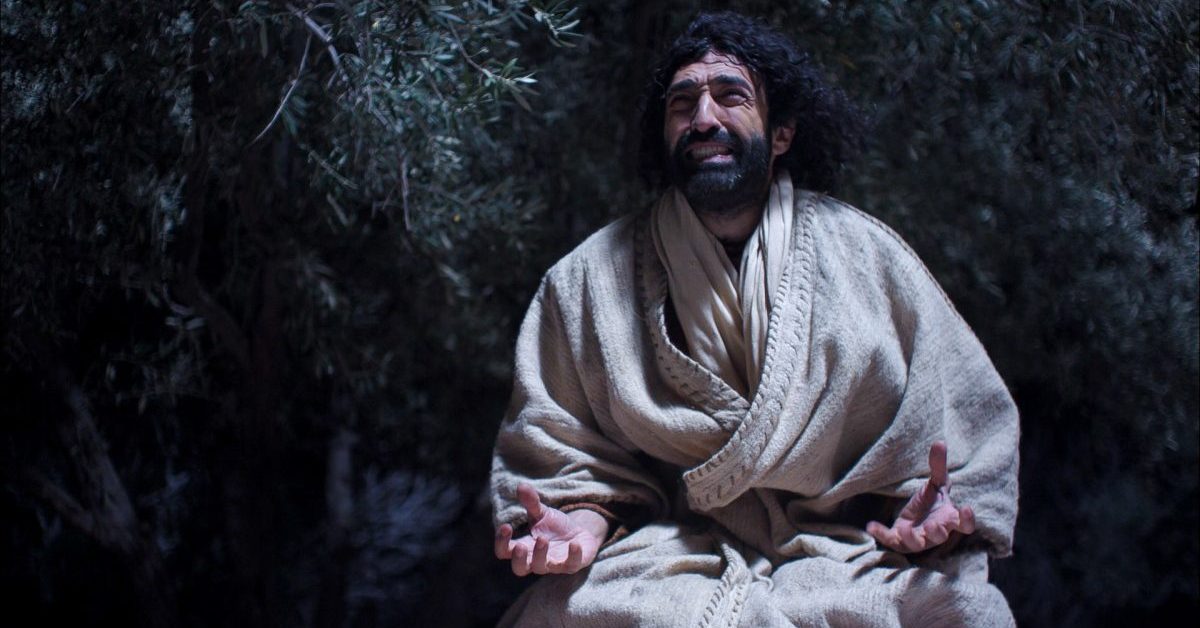
Jesus asks three times that the Father would take away the cross from him. He says first,

My Father, if it is possible, may this cup be taken from me. Yet not as I will, but as you will. (Matthew 26:39)

This was no calm, serene prayer. So troubled was he that he fell to the ground praying to the Father. (Mark 14:35)

So stressed was he that he sweated blood. (Luke 22:44)

So often we think of Jesus as being perfectly calm and collected at all times. This was certainly not true at that moment.

God knew his feelings. God sympathized. God cared for and loved his Son. But God said no.

Knowing this, when Jesus started to pray again, he said,

My Father, if it is not possible for this cup to be taken away unless I drink it, may your will be done. (Matthew 26:42)

Still, I have to think that he continued to pray that God would provide another way.

But each time, God said no.

What can we get from this? I think there are several things.

There are people out there, Christian people, who claim that if you just have enough faith, God has to do what you ask.

But if we are going to claim that, then we have to say that Jesus didn’t have enough faith.

Are we going to condemn the Son of God for not having enough faith? I don’t think any rebuttal to that notion is needed.

The truth is that there are times when our will is not God’s will.

God is not a genie that we should make his will bend to ours. Rather, we need to bend our will to his. And that’s exactly what Jesus did.

Rather than insisting on his will, he conformed his will to the Father’s. We need to do the same.

And faced with his no, we need to do as Jesus did at the end of this story. Rise up, go, and do the Father’s will.

But when we make that decision, know that you are not alone. You don’t have to face your situation alone. Jesus didn’t.

In the midst of his struggle, in the midst of his agony in the garden, God sent an angel to comfort and strengthen him. God will do the same for you.

I actually think we can say more than that. Through his Holy Spirit, God himself will comfort us. That in fact, is one of the names of the Holy Spirit: the Comforter. (John 14:16—KJV)

And as I mentioned in an earlier blog, Paul tells us in Romans 8 that when we are weak, he intercedes for us in accordance with God’s will.

Because of that, we can have confidence that God will work out everything for our good. (Romans 8:26-28)

So what do we do when God says no?

Trust him. Trust that his way is better than your way. Trust that he will see you through whatever you’re going through.

Then rise up, go, and continue to do the things he has asked of you.

Categories
John John 18 Luke Luke 22 Mark Mark 14 Matthew Matthew 26

Weak

Nobody ever said Satan fights fair. And he doesn’t. When he sees us in our weakness, whether it be physically or emotionally, he will attack.

You see this in these passages. When Jesus and his disciples arrived at the Garden of Gethsemane, Jesus warned them,

Pray that you will not fall into temptation. (Luke 22:40)

The disciples had been through an emotional wringer.

They were still trying to make sense of all that Jesus had said, words about his betrayal, words about their betrayal of him, and the thoughts of him being taken from them.

Because of that, they were weakened, not just physically and emotionally (Luke 22:45), but spiritually.

So though Jesus asked them to stay with him and keep watch with him, they fell asleep. Not just once, not just twice, but three times. This despite all Jesus’ pleas and admonishments to keep watch and pray.

The result? When it came time to face Judas and all of Jesus’ enemies, they fled.

Jesus, on the other hand, faced even harsher realities. He was going to the cross, with all the sins of the earth upon him, and his Father’s face turned from him.

We see only a glimpse of his prayers here, but consider that they went on for at least an hour for the first prayer, and that he returned twice more to pray.

He prayed so hard, that drops of blood started to fall from his brow (a condition called hematidrosis—Luke 22:44)

Not only that, with his disciples sleeping, he had no emotional or spiritual support.

But in his weakness, God strengthened him, even sending an angel as support and comfort. (Luke 22:43)

Thus, when the time came for his arrest, he was calm, and fully prepared to face his final trials here on earth.

When I think about why Jesus could do this and his disciples could not, here’s the guess I would hazard.

Jesus throughout his life watched and prayed. Every morning he did so (Mark 1:35), and we can guess that he often did this at night too (Matthew 14:23)

So when the time came when he was weakest, he naturally responded the way he had trained himself.

His disciples, however, had not disciplined themselves that way, so in their weakness, they fell.

I remember reading about a famous football coach named Chuck Noll.

As he was watching film of a game with his team, he pointed out an opposing player who repeatedly made errors late in the game.

And he told his team (this is my paraphrase), “When he was practicing, he was probably lazy about working on his technique. He probably thought to himself, ‘Well, I don’t need to work so hard on this. I know what I need to do, and in the game, I’ll do it.’

“But when you’re tired and beat up late in the game, you don’t think, you react. And you react in the way that you trained yourself.”

The same is true in the spiritual world.

If you tell yourself, “Well, when I’m in trouble, I know what to do. I’ll pray,” but never make a daily practice of that, when you’re tired and beat up spiritually, you’ll find yourself unable to do even that.

And like the disciples, you’ll fall prey to your own weakness when your greatest hour of trial comes.

But if like Jesus you make a practice of seeking God, of watching and talking with him, when your hour of trial comes, you’ll find yourself able to do what you know you should. And you will stand.

How about you? Are you making a daily practice of watching and talking with God?

Watch and pray so that you will not fall into temptation. The spirit is willing, but the body is weak. (Mark 14:38)

Categories
John John 13 Luke Luke 22 Mark Mark 14 Matthew Matthew 26

A God who knows our weakness and accepts us anyway

When Jesus told the disciples that he was leaving for a place they could not follow, it must have really troubled them. He was their teacher, and they couldn’t imagine life without him.

As usual, it was Peter who spoke out, saying,

Lord, where are you going… why can’t I follow you now? I will lay down my life for you. (John 13:36-37)

Jesus then stunned Peter and the rest of the disciples by saying,

Will you really lay down your life for me? I tell you the truth, before the rooster crows, you will disown me three times! (John 13:38)

He then said,

Simon, Simon, Satan has asked to sift (all of) you as wheat.

But I have prayed for you, Simon, that your faith may not fail. And when you have turned back, strengthen your brothers. (Luke 22:31-32)

Again, Peter declared,

Lord, I am ready to go with you to prison and to death. (Luke 22:33)

But again Jesus replied,

I tell you, Peter, before the rooster crows today, you will deny three times that you know me. (Luke 22:34)

Perhaps, at that point, the other disciples thought that Peter was the betrayer that Jesus had talked about earlier. Perhaps even Peter was wondering.

So Jesus said,

You will all fall away… for it is written: ‘I will strike the shepherd, and the sheep will be scattered.’

But after I have risen, I will go ahead of you into Galilee. (Mark 14:27-28)

Still Peter continued to insist,

Even if all fall away on account of you, I never will. (Matthew 26:33).

So Jesus made his declaration even stronger and more specific saying,

I tell you the truth… today—yes, tonight—before the rooster crows twice you yourself will disown me three times. (Mark 14:30)

Even then, Peter refused to believe it, and insisted with all the other disciples that he would never do such a thing, even if it meant death. (Mark 14:31)

In the end, of course, they all did as Jesus had predicted. All of them ran away when Jesus was arrested, and Peter ended up denying Jesus three times.

What’s my point? Jesus knows us better than we know ourselves. He knows our weaknesses, even when we can’t see them ourselves. And yet, he accepts us.

That’s the amazing thing of all of this. He never condemned Peter.

Rather, he tried to encourage him saying, “I’ve been praying for you that your faith will not fail. You will fall, but you will get up again. And when you do, encourage the others.”

In the same way, Jesus knows our weakness. Yet he doesn’t condemn us.

Rather, he, as our great high priest, prays for us daily. He reaches out to pull us up when we fall down. And when we get up again, he tells us to have mercy on the others we see around us who have fallen as well.

So in our weakness, in our failures, let us always remember,

Therefore, there is now no condemnation for those who are in Christ Jesus. (Romans 8:1)

Categories
Luke Luke 22 Mark Mark 14 Matthew Matthew 26

Pictures of the cross

The Old Testament is rich with pictures of Christ. And in this passage, we see the fulfillment of them in Christ.

The disciples were having the Passover meal, and after the first cup of wine, Jesus pulled out a piece of bread from a bag, a bread called matzah.

There were actually three pieces of bread in this bag, which were put into three different compartments.

Why three? Some people said it represented Abraham, Isaac, and Jacob. Others said it represented the priests, Levites, and the people.

During the meal, the second piece was pulled out and broken. And for the first time in any Passover meal, Jesus gave his disciples the true meaning of the bread. He said,

This is my body given for you; do this in remembrance of me. (Luke 22:19)

Jewish Christians tell us now that they believe the three pieces of bread represent the Father, Son, and Holy Spirit. But it was Jesus who came out and lived among us. And in the matzah, we see what he was like.

Matzah was made without yeast. In the Bible, yeast is always a picture of sin, and so the bread was a picture of Jesus’ sinless nature.

The bread was also pierced, so that the bread would stay unleavened during the cooking process. In the same way, Jesus was pierced for our sins.

And then the bread was broken, just as Jesus’ body was on the cross.

Then Jesus took the cup, and the cup he took was what the Jews called the “Cup of Redemption.”

It was a reminder of how God had bought the Jews out of slavery to Egypt and set them free.

But Jesus, instead of pointing back to the past, pointed to the future, saying,

This is my blood of the covenant, which is poured out for many for the forgiveness of sins. (Matthew 26:28)

Luke, in his gospel, adds the word “new” to covenant.

What did Jesus mean by new covenant? Well, when God brought the Jews out of Egypt, he gave them a covenant. An agreement. That if they would obey his laws, he would be their God and they would be his people.

But there was a problem. No one could keep those laws perfectly.

And so God promised in the book of Jeremiah that he would make a new covenant that would not depend on our effort.

He said,

I will put my law in their minds and write it on their hearts. I will be their God and they will be my people.

No longer will a man teach his neighbor or a man his brother saying, ‘Know the Lord,’ because they will all will know me from the least of them to the greatest.

For I will forgive their wickedness and remember their sins no more. (Jeremiah 31:33-34)

In this new covenant, God made several promises.

First, he would change us from the inside, changing our hearts and minds so that we can obey him.

Second, we would have a new relationship with him. We don’t need priests or pastors to stand between us and God. We can have a close intimate relationship with God himself.

And third, all our sins would be wiped away. He will remember our sins no more.

Now Jesus was saying, “The time for the new covenant has come. My blood will be poured out for you so that your sins may be forgiven and you may find new life.”

So because of Jesus and what he did for us,

Let us draw near to God with a sincere heart in full assurance of faith, having our hearts sprinkled to cleanse us from a guilty conscience and having our bodies washed with pure water.

Let us hold unswervingly to the hope we profess, for he who promised is faithful. (Hebrews 10:22-23)

Categories
John John 13 Luke Luke 22 Mark Mark 14 Matthew Matthew 26

Betrayal

As I’ve mentioned before, harmonizing these passages is a little tough.

One question is whether Judas participated in the first communion. Luke seems to imply so, while the other gospel writers seem to say Judas didn’t.

It’s just my opinion, but I believe Judas was there, and that the other writers, for whatever reason, didn’t keep things in chronological order.

At any rate, in these passages, Jesus dealt with his betrayer Judas.

There are some interesting things to note here.

While it was John who sat on one side of Jesus (assuming that he is “the one Jesus loved,” there seems to be a good chance that it was Judas that was on Jesus’ other side. It seems hard to believe that Jesus could say what he did to Judas without the others hearing unless this were so.

Unlike most pictures you see of the Last Supper, Jesus and his disciples did not sit in chairs. They sat on couches.

And when they reclined, they didn’t lean back, rather they leaned to the side, resting on their left elbow, right near the bosom of the person on their left.

Thus, it seems John was on Jesus’ right, and Judas on Jesus’ left.

Like I said before, to be seated next to Jesus at the table was an honor to the people there. And Jesus let Judas sit next to him. In short, he honored Judas.

Yet despite all of this, Jesus never fooled himself concerning Judas’ true nature. He told the disciples,

I tell you the truth, one of you is going to betray me. (John 13:21)

This of course, shocked all the disciples, and they started to ask Jesus one by one, “Is it I?” Judas himself asked “Surely not I, Rabbi?” (Matthew 26:25)

Perhaps Judas thought he had fooled Jesus. But Jesus whispered to him, “Yes, it is you.”

Imagine the look of shock that must have come on Judas’ face. He was totally exposed. Perhaps he was afraid that Jesus would now denounce him before his disciples and have him killed.

At about that time, Peter nudged John and said, “Ask Jesus who he’s talking about.” (John 13:24)

When John did, Jesus replied, “It is the one to whom I will give this piece of bread when I have dipped it in the dish.” (John 13:26)

He then (in the eyes of the other disciples watching) honored Judas once again by offering a morsel of bread to Judas.

To everyone except John, they must have been thinking, “Wow, Judas is more special than we thought!”

Judas himself must have been wondering at all this honor that Jesus was bestowing upon him. Maybe he thought he had misunderstood Jesus. Then Jesus told him,

What you are about to do, do quickly. (John 13:27)

And Judas quickly realized that Jesus knew exactly what was in his heart. And he went to betray Jesus.

What can we learn from this? Two things.

There are people that will betray us. That will hurt us. And it is easy to get bitter against them. To dishonor them as they have dishonored us.

But just as Jesus honored his betrayer, we are to show the same kind of honor and respect to them.

At the same time, however, we should know exactly what kind of person they are. We should not deceive ourselves about their nature. And we should protect ourselves from them.

When you look at the life of Jesus, he always did this. When people sought to kill him, he got out of there. The only time he didn’t was with Judas, and that was because it was his whole purpose to die. His time had finally come.

But God generally does not call us to submit to abuse from others if we don’t have to. Stay away. Keep your distance.

And if that’s not possible for some reason, keep your armor up around them. The chances of them hurting you deeply is much less if you have not fooled yourself concerning their character.

That said, we are called to forgive them. And even more, to treat them with respect and honor. As Peter wrote,

Do not repay evil with evil or insult with insult, but with blessing, because to this you were called so that you may inherit a blessing. (1 Peter 3:9)

Categories
Luke Luke 22 Mark Mark 14 Matthew Matthew 26

Room for the master

Jesus’ final public appearances (of his own volition, anyway) are now over. And he now knows that the time of his arrest and crucifixion is close at hand.

But before that happens, Jesus prepares to have one last meal with his disciples.

It’s kind of an unusual account that’s given concerning the preparations for the Passover meal.

Did Jesus supernaturally know that a man would be carrying a jar of water around (something only women generally did)?

Or had he worked out an arrangement and a special signal ahead of time with the parents of John Mark (the author of the book of Mark)?

Whatever the case, when the disciples entered the house, they found the upper room furnished and ready for them.

It’s very interesting to me that at the time of Jesus’ birth, there was no room for him. But now, just before his death, there was a room already prepared and ready for him.

How about your heart? Is it always prepared and ready for whatever Jesus wants to do in it?

Or is it so cluttered with sin or your own desires that it’s impossible for him to make use of it?

Lord, may there always be room in my heart for you. More, may my heart be cleared out from any clutter that would prevent you from doing what you want to accomplish in me and through me.

May my life always be used for your glory. In your name I pray, amen.

Categories
John John 12 Mark Mark 14 Matthew Matthew 26

True love, false love

Here we see a stark contrast in love. One person’s love came from the heart. The other’s came only for what profited him.

Jesus was in Bethany having dinner at the house of a man named Simon. Lazarus, Mary, and Martha were all there, as were Jesus’ disciples.

And at the meal, Mary took some expensive perfume and poured it on Jesus’ feet and on his head.

Judas’ reaction was immediate.

Why wasn’t this perfume sold and the money given to the poor? It was worth a year’s wages. (John 12:5)

And apparently, the other disciples chimed in with Judas.

John tells us, however, that Judas’ love and concern for the poor was not genuine. Instead,

He did not say this because he cared about the poor but because he was a thief; as keeper of the money bag, he used to help himself to what was put into it. (John 12:6)

But of Mary, Jesus said,

Leave her alone… Why are you bothering her? She has done a beautiful thing to me.

The poor you will always have with you, and you can help them any time you want. But you will not always have me.

She did what she could. She poured perfume on my body beforehand to prepare for my burial.

I tell you the truth, wherever the gospel is preached throughout the world, what she has done will also be told, in memory of her. (Mark 14:6-9)

Judas’ reaction? He went to the chief priests and betrayed Jesus for 30 pieces of silver.

We will always wonder why Judas decided to do this, but I don’t think it was simply because Jesus rebuked him in front of the disciples.

I think it went much deeper than that: His love for Jesus (and for others) apparently didn’t go much further than what it benefited him.

As treasurer among the disciples, he was happy to give to the poor as long as he could help himself to some of the money himself. And as a disciple, he was happy to follow Jesus as long as it seemed Jesus would become king.

But time and again, Jesus talked not about ruling as Messiah, but of his death. Perhaps frustrated and fed up with this, Judas thought, “Fine, if you want to die, die.”

And he went to betray him.

Mary’s love, on the other hand, came from her heart. And unlike Judas, who followed Jesus for what he could get, she loved Jesus enough to give him what was precious to her.

I love what John said about what happened when she opened the bottle of perfume. He said,

The house was filled with the fragrance of the perfume. (John 12:3)

And that’s what our love for Jesus and others should be like. It should permeate the world around us. It should be so evident, that no one can miss it. Some people, like Judas, will criticize us for it. But to Jesus, it’s a sweet-smelling aroma.

How about you? Is your love selfish, only interested in what you can gain? Or is it a sweet-smelling aroma to Jesus and the world around you?