Categories
Nehemiah

Remaining spiritually vigilant

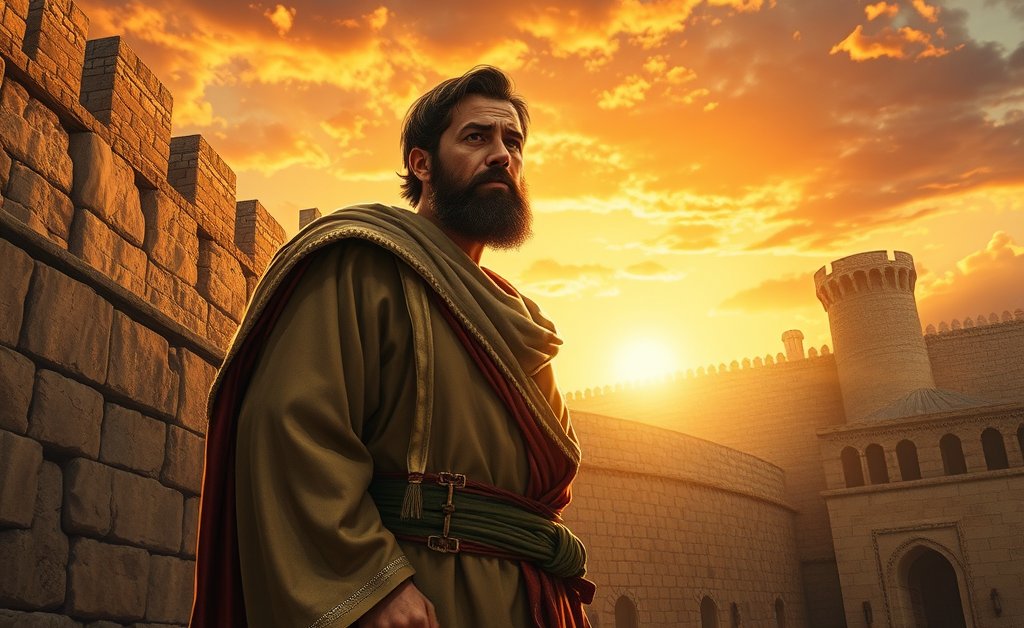
The walls of Jerusalem were now completed.  But even so, Nehemiah refused to let his guard down.

He put two men he knew he could trust, his brother Hanani (who had told him of the troubles of Jerusalem in chapter 1) and a man named Hananiah, to watch over the defense of the city.

In doing so, he told them,

The gates of Jerusalem are not to be opened until the sun is hot.  While the gatekeepers are still on duty, have them shut the doors and bar them.

Also appoint residents of Jerusalem as guards, some at their posts and some near their own houses.  (Nehemiah 7:3)

The idea, of course, was that no one could attack the city when people were just getting up and were unprepared to defend the city, and to also make sure that people would be extra vigilant since they were guarding the areas near their own homes.

What Nehemiah did in staying vigilant is also important for us.

We may have rebuilt our spiritual walls and be standing strong in our faith.  But we can never let our guard down.

Satan is always waiting for the opportunity to take us down, and he is patient.  He will wait for a time when we are not so vigilant, and then he will attack.

He did this with David, for example, when he fell into sin with Bathsheba.

So as Paul wrote,

If you think you are standing firm, be careful that you don’t fall!  (1 Corinthians 10:12)

Let us also take the words of Peter to heart who warned,

Be alert and of sober mind.  Your enemy the devil prowls around like a roaring lion looking for someone to devour. (1 Peter 5:8)

Categories
Nehemiah

Lies, discernment, and strength

With the walls near completion, the enemies of the Jews made one last attempt to stop the work.

First, they tried to lure Nehemiah out of the city where they could ambush and kill him.

Four times they tried to get him to come out, and when Nehemiah refused, they threatened to report him to King Artaxerxes, that he was planning to become king  of Jerusalem.

Perhaps they looked at the prophesies of Zechariah (Zechariah 9) and pointed to them as proof that Nehemiah was seeking to become king.

But Nehemiah rebuffed the accusation, secure in the knowledge that one, he had no such plans, and two, that King Artaxerxes trusted him.  So he called their bluff, and indeed, that’s exactly what it was.

Next they bribed one of the priests of God to tell him to hide within the temple for sanctuary against his enemies.  But Nehemiah refused for two reasons.

First, as the leader, he couldn’t be seen as hiding from his enemies as it would have hurt the confidence the people had in him.

Second, it was against God’s law that he enter the Holy Place, and by doing so, he would’ve sinned against God, again discrediting him among the people.

They then tried in turn to weasel their way into his confidence by sending their spies to speak well of them to Nehemiah, and when that didn’t work, to intimidate him.

But Nehemiah prayed to God, saying,

Now strengthen my hands.  (Nehemiah 6:9)

And God did.  Despite all the efforts of their enemies, the wall was completed.  And everyone, even these enemies, acknowledged that it was through God’s help that the wall was rebuilt.

What can we learn from this?

Satan will often try to keep us from God’s work.  He’ll try to throw lies at us to tempt us to sin or to cause us harm.

How do we combat that?

We need discernment and wisdom from God.  And the way we do that is through his Word and through constantly being connected to him through prayer.

As we read his word and pray, not only can we discern the truth from lies, but we can discern what the will of God is in our lives.

And when Satan attacks us and tries to intimidate us, we need to come before God as Nehemiah did, and ask for his strength.

So each day, as we go out into this world to do God’s will, let us seek his discernment and wisdom, and look to him for our strength.

If we do, there is no way Satan can stop us.

Categories
Nehemiah

Division

Satan wasn’t having any success trying to stop the Jews’ work on Jerusalem’s walls through outside attacks.  So he tried another tactic.  He brought division between the Jews themselves, namely between the rich and the poor.

Essentially, the poor among the Jews were suffering because they didn’t have enough money to buy food, particularly with a famine going on at that time, and also because of taxes they had to pay.

As a result, they were selling off their fields and homes just to be able to have something to eat.  When they no longer had any land to sell, they started to sell their own sons and daughters into slavery.

As Nehemiah considered the situation, he realized that the real reason things were so bad was the attitude of the nobles and officials.

They were taking advantage of the problems with the poor in order to enrich themselves.  Namely, they were taking the pledges people had made for the loans they were giving.

But God had commanded them,

When you make a loan of any kind to your neighbor, do not go into their house to get what is offered to you as a pledge. (Deuteronomy 24:10)

Yet despite God’s commands, these nobles and officials had no qualms about taking their neighbor’s land and children when these people couldn’t pay off the debt.

As a result, Nehemiah gave them a major tongue lashing, to which they had no answer.

To their credit, however, they repented and gave back everything they had taken from their fellow Jews.

Nehemiah himself, though he had a right to have a lot more food as governor in Jerusalem, refused to take it because it would’ve been a burden on the people.

Instead, he daily invited 150 people to dine with him.

He also never lorded over the people as their governor.  Rather, he worked beside them to help rebuild the walls around Jerusalem.

What can we learn from this?

If Satan can’t stop us from doing God’s work by directly attacking us, he’ll try to get us to attack each other.

He’ll divide us and get us so busy fighting each other that we don’t have time to do the things that God has asked.

How do we prevent that from happening?  By having the kind of heart that Nehemiah had.  A servant’s heart.

So let us not be looking out only for our own interests.  That kind of attitude leads to division.

Rather let us look to serve one another in love.

Paul put it this way,

Serve one another humbly in love.  For the entire law is fulfilled in keeping this one command:  “Love your neighbor as yourself.”

If you bite and devour each other, watch out or you will be destroyed by each other.  (Galatians 5:13-15)

Categories
Nehemiah

Rebuilding in the face of opposition

Under Nehemiah, work on the walls of Jerusalem began.  But it wasn’t long before the opposition started.

We see this at the end of chapter 2 when the Jews’ enemies tried to accuse them of rebellion.

That accusation no longer had any teeth behind it, however, with Nehemiah leading the efforts under the authority of Artaxerxes himself.

So in chapter 4, they tried to discourage the Jews by mocking them, calling them weak, and questioning their ability to rebuild their walls.

But when the Jews continued to work and had in fact built up the wall to half its height, their enemies tried stronger tactics, threatening to attack them when they least expected it.

In the face of this opposition and the size of the task, some of the Jews began to falter, saying,

The strength of the laborers is giving out, and there is so much rubble that we cannot rebuild the wall.  (Nehemiah 4:10)

So Nehemiah took action.

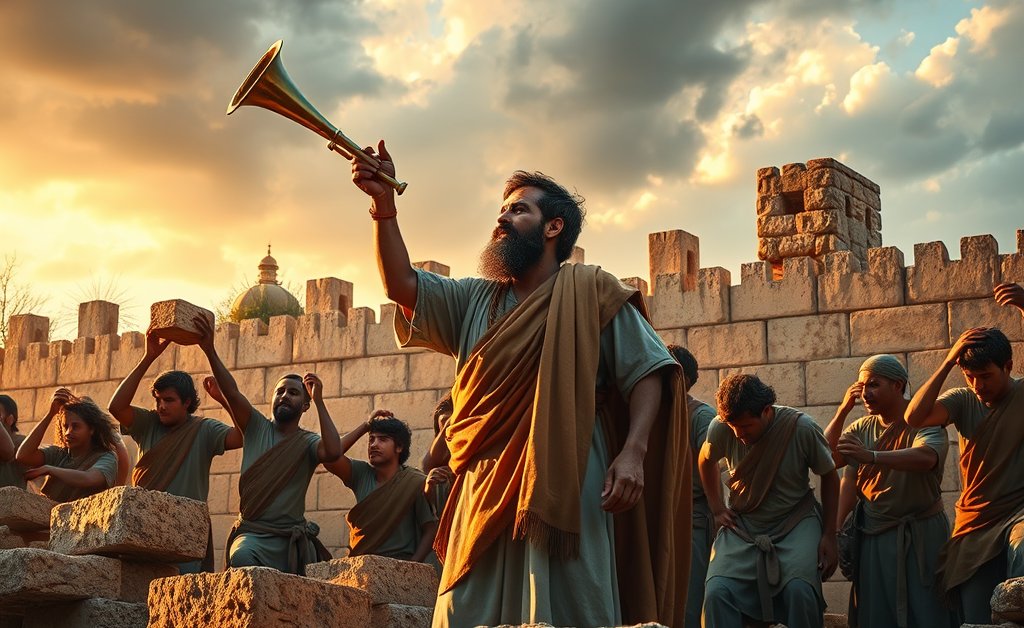
He posted guards to protect the laborers and even armed the laborers themselves.

They also set up a system where if there was trouble, a trumpet would blow and all would rally to defend the people being attacked.

But beyond these practical things, Nehemiah also encouraged the people saying,

Don’t be afraid of them.  Remember the Lord, who is great and awesome, and fight for your families, your sons and your daughters, your wives and your homes.  (14)

And with all this, the work continued on.

What can we learn from this?

I think it’s important to realize that Satan’s tactics haven’t changed very much over the centuries.

And when we start to rebuild the spiritual walls of our lives, Satan will first try to discourage us.  He’ll tell us we’re too weak to change.

He’ll say, “What are these feeble Christians doing? Will they restore their walls?  Can they bring their marriages back to life?  Can they bring back to life all the things they tore down because of their sin?”

If that fails to discourage us, he’ll start to attack and bring trials and troubles in our lives in order to stop us.

How do we respond in the face of this opposition?

First, remember that while Satan is strong, God is stronger.  He is “great and awesome,” and he will help and deliver us.

But we have to fight.  We need to clothe ourselves with God’s armor and refuse to surrender to Satan’s attacks.

Second, remember that we have brothers and sisters to help us.

Tell them your struggles.  Ask them to pray for you.  Let them rally around you and support you when you feel under attack.  And do the same for them when they’re under attack.

Satan gets angry when we rebuild our spiritual walls.

Let’s not be intimidated by him.

Rather, in God’s strength, and with the support of others, let us rebuild our walls and become the people God has called us to be.

Categories
Nehemiah

Rebuilding the walls

Nehemiah had a massive task ahead of him as he looked to repair the walls around Jerusalem.

But it was an important one.  As long as the walls were down, the Jews were defenseless against their enemies.  And so after three days of rest, he started to inspect the damage.

After doing so, he told his fellow Jews his plan to repair the walls.  And taking heart from Nehemiah’s words and the authority they had received from King Artaxerxes, they started to work side by side to repair the walls.

What can we get from these chapters?  I think there are a few things.

First, like Jerusalem, we are people with broken spiritual walls.  And as long as those walls are broken down, we are vulnerable to the attacks of the Enemy.

He has no mercy on us, especially since we have declared war on him by becoming Christians.  He will keep attacking our weak points, trying to get us to fall and to drive us away from God.

For some of us, it’s a struggle with our temper.  For others, it’s a struggle with lust.  For others, it’s a struggle with unforgiveness.  For yet others, it’s a struggle with bitterness.

Whatever your struggle may be, they are broken walls in your life and must be repaired if you are to become whole as a Christian.

Like Nehemiah, we need to take a careful look at our lives in the light of God’s word and see just where the damage in our walls are.

Where are we often falling to temptation?  What are the areas Satan is attacking us in.

Satan isn’t stupid.  He doesn’t waste his time attacking us where we’re strong.  He attacks us where we are weak.

So inspect your walls and see what needs to be repaired.

Second, know that the King is on our side and that he has given us the resources to repair the walls.

Peter put it this way,

His divine power has given us everything we need for a godly life through our knowledge of him who called us by his own glory and goodness.  (2 Peter 1:3)

Finally, not only is God on our side, but we should be working side by side with our brothers and sisters to rebuild the walls in our lives.

James wrote,

Therefore confess your sins to each other and pray for each other so that you may be healed.  The prayer of a righteous person is powerful and effective.  (James 5:16)

In other words, we ought to be accountable to one another.  Find a Christian you can trust and share your struggles with them.  Have them pray for you.  Do the same for them.

And as you do, you’ll find the walls in your lives starting to be rebuilt.

Categories
Ezra Nehemiah

The power to change hearts

As I’ve mentioned earlier, the book of Ezra, at least by the interpretation I’ve been going by (namely that Xerxes and Artaxerxes are Xerxes I and Artaxerxes I respectively), is not chronological.

Chapter 4 of Ezra gives us the background to the beginning of Nehemiah.

After Ezra came to Jerusalem with the initial blessing of Artaxerxes, opposition arose.

Ezra was told by Artaxerxes to use the gold and silver he had given them in order to buy things for their sacrifices at the temple.

Artaxerxes then told Ezra that whatever was left over could be used for whatever seemed best to them (Ezra 7:15-18).

Under Ezra, the people then started to rebuild the walls and foundations of Jerusalem using the money that Artaxerxes had given them.

But opposition arose.

The enemies of the Jews sent a letter to Artaxerxes telling him that if they were to complete these walls, they would rebel against Persia.

They then pointed to Israel’s “history of sedition,” and requested that Artaxerxes look for himself in the Persian records  (Ezra 4:14-15).

Artaxerxes did look, and came to the conclusion that the Jews would be a threat if they rebuilt their walls, and so he immediately commanded a stop to this work.

And so we come to Nehemiah.

Years had passed, but Artaxerxes was still on the throne, and the walls that Ezra had been building up were now torn down.

The gates were also burnt down, leaving the Jews vulnerable to any attacks by their enemies.

Nehemiah was a Jew who was a cupbearer to the king.  Basically, he brought wine to the king, and tasted it before giving it to the king to make sure it wasn’t poisoned.

Although it may seem a simple job, as a cupbearer, he was considered a high official in the court, and obviously had frequent access to the king.

Also, because of the position of trust he was in, he was often taken into the king’s confidence and had influence with the king.

One day Nehemiah’s brother came with news from Jerusalem about the state of trouble the people were in.

When Nehemiah heard this, he wept, prayed, and fasted before God.  He confessed the sin of his people and prayed for favor with the king, namely that his heart towards the Jewish nation would be changed.

This was no small prayer.

It was Artaxerxes after all that had ordered the stoppage of the work on the walls.

Yet God answered.

Artaxerxes noticed Nehemiah’s troubled face and asked him what was wrong.

Nehemiah was frightened because it was actually a capital offense to come before the king with less than a cheerful face.

But because of the respect that Artaxerxes had for Nehemiah, he was concerned for his well-being.

With that, Nehemiah breathed a quick prayer for help (I hardly think he prayed for an hour before the king before presenting his request) and told him about the situation in Jerusalem.

And God gave Nehemiah favor in Artaxerxes’ eyes.

What changed Artaxerxes’ heart?

There’s no explanation for it except that God had heard Nehemiah’s prayer.

Perhaps having seen Nehemiah’s humble and loyal service over the years also helped sway Artaxerxes.

Maybe he felt with Nehemiah in charge of the situation, rebellion would not happen after all.  Surely this highly trusted Jew would not make this request if he thought rebellion would be the result. 

And with that, Artaxerxes gave his blessing.

What can we get from this?  I think two things.

First, what may seem insignificant to the kingdom of God can turn out to be very significant.

If Nehemiah had proven himself untrustworthy to the king in his position as cupbearer, there’s no way Artaxerxes would have trusted him when he made his request.

But because Nehemiah had been faithful and loyal as his servant, Artaxerxes trusted him.

You may think that what you’re doing at your job has nothing to do with God’s kingdom.

But by serving faithfully, loyally, and with excellence, you show the people around you what a Christian is, and it will make an impact.

If on the other hand you are unfaithful, and give less than your best, it will have a negative impact on how people view God.

Second, prayer has the power to change hearts.

You may look at your husband, your wife, your boss, or the other people around you and think it’s impossible for God to work in them.

But if you pray for them, and you live a consistent example of Christ to them, it gives God a free hand to work in their hearts.

Is there someone in your life that you long to see change in?

Be an example to them of what a follower of Christ is.  Pray for them.

And you will see God work in their lives.

Categories
Ezra

Marrying ourselves to the world

This is one of the more difficult passages in the Bible.

God says that he hates divorce, and yet Ezra basically commands those who had taken foreign wives to divorce them.

In some cases, they were to even send away the children that were born to those marriages.

Why did Ezra do this?

I think the main thing to note is that based on the commands God had given the people, these marriages were not lawful. +

God had specifically told the people not to intermarry with the people from Canaan (Exodus 34:15-16; Deuteronomy 7:1-6).

Why?  Because they were doing atrocious things that God did not want his people to get involved with.  Child sacrifice and prostitution were two examples of this.

So in God’s eyes, these were not legitimate marriages.

The book of Malachi confirms this idea.

It’s not certain when Malachi was written, but it was probably written sometime during the time of Ezra and Nehemiah.

In Malachi, God said this:

Judah has desecrated the sanctuary the Lord loves by marrying women who worship a foreign god (Malachi 2:11).

Right after saying this, Malachi lights into those who divorced their wives.

Some believe that what was happening was that the Jews were divorcing their wives in order to marry these idol-worshipping women.

If this is so, it makes the marriages even more illegitimate.  In short, it was adultery in the eyes of God.

The result of all this?

Basically, by marrying these idol-worshippers, the Jews were falling into the same habits that caused their exile (Ezra 9:1-2).

You can understand then, why Ezra immediately fell into mourning, and what he meant in his prayer of repentance on behalf of the people.

He prayed,

What has happened to us is a result of our evil deeds and our great guilt, and yet, our God, you have punished us less than our sins deserved and have given us a remnant like this.

Shall we then break your commands again and intermarry with the peoples who commit such detestable practices?

Would you not be angry enough with us to destroy us, leaving us no remnant or survivor?

Lord, the God of Israel, you are righteous!  We are left this day as a remnant.

Here we are before you in our guilt, though because of it not one of us can stand in your presence.  (Ezra 9:13-15)

And so in chapter 10, Ezra called for a purging in Israel.

All those who had taken idol-worshipping women as their wives were to send them and their children away.

You see a powerful picture of the misery of the situation as the people wept in the rain repenting before God in chapter 10.

What can we get from this?

First, I am NOT saying that if you are married to a non-Christian, you should divorce them.

Unlike the Jews, we are no longer living under Mosaic law.  Instead we are living under the new covenant of grace.

And the apostle Paul clearly teaches us that as long as our unsaved spouse is willing to live with us, we are not to seek to leave them.

Rather we should pray that they too may be saved.  (1 Corinthians 7:12-16)

But there is a principal that we need to be aware of.

When we marry ourselves to the things of this world, it pulls us away from God.

Sometimes these things look beautiful, just as these foreign women looked beautiful to the Jewish men.  But when we attach ourselves to them, they pull our hearts away from God.

For some people, they marry themselves to money.  They make money their top priority in life.

Others marry themselves to possessions.

Others to power.

And of course, some set aside their relationship with God in order to pursue a romantic relationship with a non-Christian.

But by doing these things, we commit adultery against God.

We’re essentially saying to God, “These things are more important to me than you.”

How about you?  Are you in love with the things of this world?  What is it doing to your relationship with God?

Let us purge from our lives all that would pull us away from a relationship with him.

Categories
Ezra

The gracious hand of God

We now return to the book of Ezra.

Xerxes is now dead (he was assassinated by the commander of his own royal bodyguard), and his son Artaxerxes is now on the throne.

At that time, Ezra, a priest of God living in Persia, made the decision to return to Jerusalem in order to teach the people there God’s word.

One phrase that we see over and over again in these two chapters is “The gracious hand of God.”

We see it as King Artaxerxes granted Ezra everything he asked as made his trip to Jerusalem.

Artaxerxes gave him an abundant amount of silver and gold to buy all the things they needed to make their sacrifices to God.  He also gave him wheat, wine, olive oil, and salt as well.

God’s gracious hand was also seen in sending a man named Sherebiah and two other men who brought in a number of people to help serve in the temple.

And God’s hand was seen as he protected Ezra and his contingent from bandits on their return back to Jerusalem.

Why was God’s hand upon them?  Ezra told Artaxerxes the reason.

The gracious hand of our God is on everyone who looks to him, but his great anger is against all who forsake him.  (Ezra 8:22)

Ezra had set his heart on seeking God.  He had devoted himself to studying God’s word and it was his heart’s desire that all would know what God had said.

As a result, God blessed him.

How about you?  Are you seeing God’s hand on your life?

If not, can you say you are truly seeking him?

Are you making him the center of your life?  Does your day begin and end with him?  Are you devoting yourself to his word and his work as Ezra did?

It is as you do these things that you will see God work both in you and through you to touch the people around you.

Categories
Esther

Working for the good of the people

The book of Esther finishes with a brief passage talking about Xerxes’ greatness and of Mordecai’s.

What strikes me here is the last verse where it says,

 Mordecai the Jew was second in rank to King Xerxes, preeminent among the Jews, and held in high esteem by his many fellow Jews, because he worked for the good of his people and spoke up for the welfare of all the Jews.  (Esther 10:3)

To many people, being a leader is all about perks.  About being served.

But to Mordecai, who certainly enjoyed perks and people serving under him, leadership meant much more.

It meant serving the people.  It meant looking out for their good, not just his own.  And it meant making sure that his people were cared for.

This was what he had impressed upon Esther in chapter 4, and it was how he carried himself as a leader.

How about you?

As a husband, parent, teacher, boss, or whatever position of leadership you may hold, how do you carry yourself?

Do you look out only for yourself, demanding respect from the people around you?

Or do you work for the good of the people under your leadership?

You notice that it was because Mordecai looked after his people’s good, that he was held in high esteem.

You cannot demand respect of people.  It must be earned.  And the way to earn their respect is to look out for their good, and to care for them as Jesus did.

Paul put it this way,

Do nothing out of selfish ambition or vain conceit.

Rather, in humility value others above yourselves, not looking to your own interests but each of you to the interests of the others.  (Philippians 2:3-4)

Categories
Esther

Celebrating God’s goodness

Feasting.  Joy.  Celebration.

These are words you see again and again in this chapter.

After the Jews succeeded in defending themselves against their enemies, they celebrated their salvation.

Not only that, but Mordecai and Esther started the first annual celebration not required by the law of Moses, Purim.

In commanding the start of this new holiday, they said,

These days should be remembered and observed in every generation by every family, and in every province and in every city.

And these days of Purim should never fail to be celebrated by the Jews — nor should the memory of these days die out among their descendants.  (Esther 9:28)

What can we get from all this?

Basically, we should never forget God’s goodness in our lives.

Not only that, we should pass on our stories of what he has done in our lives to the next generation.

So often we pray for things, and when God answers our prayers, we give him a brief thank you and then completely forget about it.

That was something that Mordecai and Esther didn’t want to happen.  And so they commanded that Purim be celebrated annually so that people would never forget.

When God does good things in your life, write them down.

It might be a good idea to write down your prayer requests, and to take note how God answered them.

Then, say during Thanksgiving, take the time to go over what you wrote and thank God for them during your celebration.  Or do it during Christmas, if you don’t celebrate Thanksgiving in your country.

And make sure to share with your children all God has done for you.

But above all, let us always remember and pass on what Jesus did to deliver us from our sins.

It’s so easy to start taking it for granted.

But Jesus paid such an awful price, that it’s something we should never take for granted.

During Christmas, Easter, and Thanksgiving, be especially sure to celebrate your salvation.

But let us not just do it during those times, but all throughout the year.

As David wrote,

Give thanks to the Lord, for he is good;
his love endures forever.  (Psalm 118:1)

Categories
Esther

The God who defends us

Now we come to the dramatic scene in which Esther reveals her identity and makes her plea for her people before Xerxes.

I’m guessing that by this time, most of her fears are gone, as Xerxes has by this point shown her great favor.

Still, perhaps there was a little doubt in her heart whether he would side with Haman or with her.

It must have warmed her heart to see the concern Xerxes showed when she told him that she and her people were in great danger.  Xerxes answered hotly,

Who is he? Where is he—the man who has dared to do such a thing?  (Esther 7:5)

Haman must have been stunned to hear himself named, and in the next instant must have realized that Esther was a Jew.

Xerxes made the same realization at the same time, and was so upset that he walked out of the room to clear his mind.

Haman knew he was in deep trouble and so he went to Esther to plead for his life.

Esther meanwhile, must have been terrified, thinking that Haman was coming to attack her, and it was at this point, that Xerxes came back into the room.

And when he saw Haman near Esther (a serious breach of Persian protocol; no man was to ever come within 7 steps of the queen), and perhaps seeing a look of terror on her face, he immediately exclaimed,

Will he even molest the queen while she is with me in the house?  (Esther 7:8)

One of Xerxes’ servants spoke up at that moment, telling the king about how Haman had built gallows to hang Mordecai, who had saved Xerxes’ life.

At which point, Xerxes said, “Hang him on it.”

Esther then brought Mordecai before Xerxes, and he made Mordecai prime minister in Haman’s place.

Once again Esther pleaded for her people, and though Xerxes couldn’t repeal the law he had made (he was not above the law), nevertheless, he gave Mordecai and Esther the authority to at least nullify its effects.

Mordecai and Esther made a new law that said that the Jews had the right to defend themselves.

Some people have interpreted this law to mean that the Jews also had the right to exterminate the women and children of those who tried to destroy them.

But it likely means (as the NIV reflects) that the Jews could defend themselves against those who tried to attack them, their wives, and their children.

The right to take plunder was also probably added as an extra deterrent to those who would think about trying to attack the Jews.

Despite this provision, it should be noted that none of the Jews actually did plunder their enemies.

Some people have also criticized the hanging of Haman’s sons.

I should point out however, that they were actually killed while trying to destroy the Jews.  (9:5-10)

Their dead bodies were then hung as an example to all those who would try the atrocities they had tried to commit.

What can we get from all this?  Two things.

First, just as Xerxes rose up to defend his wife and her people, so God rises up to defend us.

When the Enemy comes up against us to destroy us, God doesn’t leave us helpless.  Instead he fights for us and he will cast down the enemy.  Such is the great love God has for us.

Second, although Xerxes was on their side, the Jews still had to fight.

In the same way, though God is on our side, we still have a spiritual battle to fight.  Because of this, God calls us to arm ourselves with his armor (Ephesians 6:10-18).

So when we’re under spiritual attack, let us take heart.  God is with us.

And let us gird ourselves with his armor, fighting the good fight of the faith. (1 Timothy 6:12)

Remember that because of him, we have already won the victory.

Categories
Esther

The God who controls chance

Haman threw his lot to determine the day that he would destroy the Jews.  Then God threw his own lot into the picture.

After Haman returned from his banquet with Xerxes and the queen, he was on top of the world.

He must’ve been thinking of how important he was to be the only other person invited to Esther’s banquet besides the king.

Not only that, she seemed to have a request to make, and she so recognized Haman’s importance, she wanted his help too.

But as he was returning home, he once again passed by Mordecai, and he saw that Mordecai, despite Haman’s plan to execute the Jews, still didn’t show him any honor, nor did he show any fear.

And so upon the advice of his family and friends, he decided to go before Xerxes the next morning to ask permission to hang Mordecai.

But that night, by chance, Xerxes couldn’t sleep.  And so, by chance, he happened to ask that the record of his reign be read to him.

As it was being read, Xerxes was reminded of how Mordecai had saved his life by uncovering the plot to kill him.

But he noticed something missing in the record, namely that no reward had been given to Mordecai.

So he asked if any of his advisers were nearby, and by chance, Haman happened to have just arrived to make his request to hang Mordecai.

Xerxes asked Haman what should be done for the man that he wanted to honor, and Haman in his pride assumed that Xerxes was referring to him.

And so he thought of the grandest thing he could think of, only to find out too late that it was Mordecai that Xerxes was thinking of.

As a result, Haman was humiliated that day.  He was forced to parade Mordecai around the city shouting, “This is what is done for the man the king delights to honor!”

What can we learn from this?

There certainly were a lot of coincidences in this story.  Or were they?

I prefer to call them Godincidences.  God stepping into time and space and intervening in his creation to achieve his purposes.

Keeping Xerxes awake at night.  Putting the idea of going over the Persian chronicles.  And finally bringing Haman in at just the right time, not only to preserve Mordecai’s life, but to humble Haman.

God intervened in Esther’s time, and he still does it today.

With God, nothing is left to chance.

Categories
Esther

Courage

If there was one quality that both Mordecai and Esther had, it was courage.

Whether you agree or not with Mordecai’s decision not to bow to Haman, it did require courage not to do so, especially in the face of the pressure he received from the royal officials.

And here, he admonished his cousin Esther to have courage too.

When Esther heard that Mordecai was in mourning, she immediately sent her servants to find out what was wrong.

Mordecai then told her of the coming disaster, and asked her to intercede for them before the king.

But there was a problem.  Esther hadn’t seen the king in a month.

Whether it was that he was simply too busy, or that perhaps his attention was being taken by one of his other concubines at the time, not only had Esther not seen Xerxes, she wasn’t sure if he wanted to see her.

One wonders what seeds of doubt might have crept into her heart at that time.

Did she start to wonder if Xerxes had found out about her Jewish background, and had passed this law in order to get rid of her?

According to Persian law, it was forbidden to go before the king without invitation.  To do so meant death, unless the king extended his scepter to that person.

Still, in Persian history, it was not unheard of for a person to send a letter to the king asking for an audience.

Esther could have done so, but apparently, she didn’t have enough confidence in her relationship with Xerxes to do even that.

So, with all of these things possibly running through Esther’s mind, you can understand her reluctance to go before Xerxes on behalf of her people, and she told Mordecai as much.

But Mordecai told her,

Do not think that because you are in the king’s house you alone of all the Jews will escape.

For if you remain silent at this time, relief and deliverance for the Jews will arise from another place, but you and your father’s family will perish.

And who knows but that you have come to your royal position for such a time as this?  (Esther 4:13-14)

Hard words.  But Esther did what she had always done, and followed the words of Mordecai.  She told him,

Go, gather together all the Jews who are in Susa, and fast for me.  Do not eat or drink for three days, night or day.  I and my attendants will fast as you do.

When this is done, I will go to the king, even though it is against the law.  And if I perish, I perish.  (Esther 4:16)

People often criticize the book of Esther not mentioning the name of God, but I think there’s little doubt that this time of fasting also included seeking God’s favor.

And God answered.  She probably went before the king, heart threatening to beat right out of her chest.

But when Xerxes saw Esther, he extended his scepter to her.  And with that act began the salvation of her people.

What can we get from this?

Sometimes we face hard decisions in our lives that require courage.  Sometimes, like Esther, we face hard words that challenge us to do something that we know is right.  And it’s so much easier to just do nothing.

We make excuses for why we shouldn’t act.  Sometimes, those excuses even make a lot of sense.  There are (seemingly) good reasons for not doing what God asks us to do.

But courage means doing what God has asked us to do no matter the cost.

For Esther, it meant going before Xerxes even possibly at the cost of her life.

There were no guarantees that Xerxes would spare her life.  But Esther entrusted her life to God, doing what he wanted her to do.

We too have no guarantees that if we do God’s will, everything will turn out happily.  Sometimes life gets much harder.

Jesus lived perfectly within the will of God, but he was mocked, beaten, and killed.

Many of his followers suffered the same fate, despite being in God’s will.

But as Mordecai said, God has placed us where we are to do his will.

So let us follow him, like Esther did, no matter what.

Remember the words of Jesus who said,

Whoever wants to be my disciple must deny themselves and take up their cross daily and follow me.

For whoever wants to save their life will lose it, but whoever loses their life for me will save it.  (Luke 9:23-24)

Categories
Esther

Two proud men

It’s very interesting to me that one chapter after I praise Mordecai for honoring the king, I have to criticize him for his pride and stubbornness in not doing so for Haman.

The Bible is silent on why Mordecai refused to kneel before Haman, but we can make some guesses why.

This is, of course, speculation on my part so feel free to disagree with me (and more than a few do), but I find it hard to believe it was because Haman was expecting worship as God.

For one thing, Xerxes was the one who had ordered the people to pay Haman honor.  For another thing, I can’t imagine that Xerxes would order that people honor Haman in a way that he wouldn’t demand for himself.

We also see later that Xerxes raises Mordecai to second in command in the kingdom, but it seems highly unlikely that he would do so if Mordecai refused to kneel before him as he refused to do for Haman.

So what was the reason for Mordecai’s refusal?  If you look at Mordecai’s family history, it seems that he was related to King Saul, the first king of Israel.

As you may recall, God ordered Saul to destroy the Amalekites, whose king was Agag.  Saul failed to do so, and God stripped him of his kingdom for his disobedience.  (I Samuel 15).

As a result, not only was there a long history of hostility between the Jews and the Amalekites, but there was also a personal element to this hostility between Mordecai and Haman.

My guess is that it was this that caused Mordecai to balk at bowing before Haman and paying him any honor.

In short, it was his pride.

Haman, meanwhile, apparently had his nose stuck so high in the air as he walked that he didn’t even notice Mordecai’s slight until the royal officials informed him of it.  At which point, Haman became furious at this lack of respect.

And when he found out that Mordecai was a Jew, he determined not only to kill Mordecai, but to wipe out the Jews as well, probably because of the hostility between their peoples.

Haman allowed his pride to guide his actions, and it ultimately led to his downfall.

Mordecai also allowed his pride to guide his actions, and it very well could have led to the destruction of the Jews apart from God’s grace.

I wonder if Mordecai realized just how wrong his attitude had been as he wore sackcloth and ashes as he mourned by the king’s gate.  (Esther 4:1)

What about you?  What guides your actions?

Does God’s Spirit and his Word guide your actions?

Or does your pride?

If we let pride rule in our lives, it will cause ruin in our lives.

How many marriages have fallen because of pride?  How many relationships? How many careers and ministries?

Let us learn to be humble.  Humble before God.  Humble before others.

As James wrote,

God opposes the proud but shows favor to the humble.  (James 4:6)

Categories
Esther

Honoring those in authority

Having said what I did about Esther and Mordecai yesterday, some of you may think that I have little respect for them.

Nothing could be further from the truth.

While I’m not sure I can agree with all of their decisions, there is a lot to be said about their overall character.

I could say the same of many of the great characters in the Bible, including Abraham, David, and Paul, among many others.

And here we see some of the character of Mordecai.

He hears a plot against the king by two men who seemed to have a grudge against him.  He then warns Esther, who in turn warns the king, saving his life.

One wonders what Mordecai’s true feelings concerning Xerxes were.

He knew about Xerxes’ ill treatment of Vashti and of Xerxes’ attitude towards women in general.  (Just think about the number of women that passed through his bedroom doors during the contest alone).

Xerxes also certainly wasn’t a God-fearer, nor was he a peaceable man according to history.

And yet, Mordecai, regardless of his personal feelings, nevertheless respected the office of the king, something that the two would-be assassins definitely didn’t do.

So when he heard of the plot, he immediately took steps to prevent it.

We find out later that though he saved the king’s life, the king didn’t give him a second thought until much later.

Yet we see no hint of resentment or bitterness in his heart.  To him, he was only doing what was right, namely, honoring those in authority.

The apostle Peter wrote,

Show proper respect to everyone…fear God, honor the king.  (1 Peter 2:17)

Sometimes, we feel that the people in authority don’t deserve our respect.  We complain about the things our president does, or our boss does, or our parents do.

But here, God makes it clear that we are to honor them anyway.

Why?  Paul adds these words,

Everyone must submit himself to the governing authorities, for there is no authority except that which God has established.

The authorities that exist have been established by God.  (Romans 13:1)

In other words, we honor those in authority out of our fear of God, and the fact that he is the one that ultimately put them in authority over us.

Are there people that God has placed over you that you struggle to submit to?

God doesn’t call you to submit out of your reverence for them necessarily, although it certainly helps if you can do so.  He calls you to submit out of your reverence for God.

Submission can be a difficult thing.

But let us submit ourselves to those in authority, and in so doing, show our reverence for God.

Categories
Esther

Working because of us or in spite of us?

As I was looking through one of my commentaries getting background for the book of Esther, one of them mentioned some of the moral issues people have had as they studied this book.

It also noted that the name of God is not mentioned once in the entire book and addressed some of the possible reasons why.

One possible reason was that it was written as an explanation to the Persians for the Feast of Purim, and that they were not so interested in the religious aspect of things.

Another interesting reason that the commentary proposed was that perhaps God really wasn’t actively involved in this entire episode.

Rather it was showing how people were trying to do things in their own wisdom and strength while pushing God to the side.

This wouldn’t be the first time we see this in the Bible.

Certainly, most of the book of Ecclesiastes was that way.  But you also see this in the life of King Saul, and even people like Abraham, Isaac, and Jacob.

Looking at the book as a whole, I’m not convinced that God was not involved.  I personally think he was.

The question then becomes, did he sanction every action that Esther and Mordecai took?  And that, I’m not entirely certain of.

Chapter 2 includes some of my biggest concerns.

One question is how voluntary was Esther’s decision to become part of the “contest” to become queen?

Did she have a choice?  Did Mordecai push her in that direction?

If so, there is a serious issue in that God forbade this kind of marriage to heathen people.  We will see this later in the book of Ezra.

It should also be noted that once she was in this “contest,” there was no getting out even if she didn’t win.

After spending the night with the king, if she didn’t find favor with him, she would become one of the concubines of the king for life, even if she never saw him again.  And she probably would never see him again.

This is hardly the kind of situation they should have been aiming for.

If it wasn’t voluntary, then why did Mordecai insist that she hide her identity?

The only thing I can think of is that he wanted her to become the queen, and being a Jew would be a hindrance to that.

But did he really want her to be queen, considering God’s feelings on intermarriage with ungodly people?

If she had been up front with the Persians, it might have been possible she would’ve been dismissed before even seeing Xerxes, thus escaping becoming his wife, or being put into his harem.

Some might say, “But if she hadn’t become queen, the Jews would have been slaughtered.”

But there’s two points that should be made here.

Mordecai makes it crystal clear to Esther in chapter 4 that if she did nothing, deliverance for the Jews would come from somewhere else.

Wouldn’t that equally apply to the situation in which Esther did not become queen?

Second, if she had been up front with her background, would Haman still have plotted to destroy the Jews knowing that the queen was one?

My point is this:  Is God working in us because we are in line with his will?  Or is he working in us in spite of our decisions?

Like I said, I do believe God was working in the situation.  And since Esther was already queen, I think he chose to use her.

But I’m equally convinced that had she not been queen, he would’ve worked out the Jews’ deliverance another way.

Am I then trying to disparage Esther and Mordecai, saying that they were terrible people?

No.  They were probably people who were trying to do their best in bad circumstances.

But just because they were doing their best doesn’t mean they were always doing what was right.

And in this case, they were probably doing what was right in their own eyes, rather than God’s, just as the people in the book of Judges did (Judges 21:25).

What can we get from all this?  Be careful about what you do.

Judge everything you do by God’s Word.  Judge things by what he says is right, and not by what you think is right.

You may justify what you do by your circumstances.  You may even point to the fact that God used you to do something good.

But again, the question is, did he use you because you were in line with his will, or in spite of the fact that you weren’t?

Categories
Esther

Honoring your wife

We are now hitting the book of Esther.

I must admit it took me by surprise that assuming, as many people do, that the Xerxes mentioned in Esther is Xerxes I, that these events happened during the time of Ezra.

Somehow, I always thought it happened well after Ezra and Nehemiah.

I will say here, however, that there is some disagreement on whether it was Xerxes I or not.  Some believe he was Artaxerxes I and some believe he is Artaxerxes II.

For the purposes of this blog, I’ll go with the traditional view that it was Xerxes I.

In this passage, we see the background to Esther’s rise as queen.

Xerxes was holding a great banquet for all of his nobles and officials.  It seems that during this feast, he was attempting to impress all of these people with his wealth and power.

But in doing so, he chose to call his queen to the banquet in order to basically parade her beauty in front of them all.  But to his humiliation, she refused to come.

When he asked his advisors to advise him on what to do, they said,

Queen Vashti has done wrong, not only against the king but also against all the nobles and the peoples of all the provinces of King Xerxes.

For the queen’s conduct will become known to all the women, and so they will despise their husbands and say, ‘King Xerxes commanded Queen Vashti to be brought before him, but she would not come.’

This very day the Persian and Median women of the nobility who have heard about the queen’s conduct will respond to all the king’s nobles in the same way.  There will be no end of disrespect and discord. (Esther 1:16-18)

They then counseled him to permanently banish her from his presence in order that,

 all the women will respect their husbands, from the least to the greatest. (20)

Xerxes agreed, issuing the proclamation while adding that,

 “Every man should be ruler over his own household.” (22)

What do we get from all this?

So many husbands are like Xerxes, who treat their wives not as people, but as things.  Despite this, they demand respect from their wives, some even quoting scripture while doing so.

But while God does indeed command that wives respect their husbands, it would be much better for husbands to worry about how they’re treating their wives than how their wives are treating them.

If husbands were the kind of leaders that Jesus was, and as God has commanded us to be (Ephesians 5:25-28), do you think they would have much of a problem getting respect from their wives?

If you treat your wife not as an object, but as a person that you value highly, if you sacrifice your own needs to meet hers, if you love her as Christ does, how do you think she’ll respond?

So many people are caught in a downward spiral in their marriages.

The husbands don’t love their wives, so they don’t respect their husbands.

The husbands don’t feel respected, so they show less love.

The wives feel less love, so they show less respect.

And the cycle goes down in an endless spiral all the way to divorce.

May I suggest husbands, if you’re reading this, that as the leader in the household, God calls on you to be the one that stops that spiral downward?

That instead of showing less love because you feel no respect, you should start showing more love?

I would bet that if you start to do so, your wife will start showing you more respect.

It may take time, however, as there are probably years of wounds that have to be healed.

She’ll be wondering, “How long will this last?  Is it just a phase?  I’ve been hurt so often by him.  Can I really trust him?”

Husbands, keep at it.  Win her trust once again.

It’ll probably have to start with setting aside your pride and apologizing to her.

Tell her, “I haven’t been loving you as I should.  Will you forgive me?”

And ask for God’s help in the process.

Wives, if you are reading this, then maybe God is calling you to stop the downward spiral.

It’s not easy.  We men can be pig-headed and hard-hearted.  But pray for us.

And ask God to help you find at least one thing, however small, that you can respect him for.  Then voice that respect to your husband.

You may be amazed at how such a little thing can make such a big difference.

Categories
Zechariah

The bringer of victory, life, and light

As we come to the conclusion of Zechariah, we see the second coming of Christ and the time of the Millennium.

It starts once again with the nations rising up against Jerusalem to crush it, and in so doing, half of its inhabitants will be sent into exile.

But then, Jesus will return, and as he sets foot on the Mount of Olives, it will split in two.

The lights will dwindle, but God himself will bring light to the earth, so that even at night, it will be light. As it says in Revelation,

The city does not need the sun or the moon to shine on it, for the glory of God gives it light, and the Lamb is its lamp. (Revelation 21:23)

Not only that, but from Jerusalem will flow living water. This is probably the same thing that was written about in Ezekiel 47:3–11 which we have looked at earlier.

God will then fight for Israel, casting down its enemies through plagues.

I kind of wonder from verse 12 if God will turn the nations’ nuclear weapons against themselves. It certainly sounds like some kind of nuclear disaster, anyway. But this is pure speculation on my part.

But anyway, from that point on, people from all over the earth will acknowledge him as King, rejoicing in his goodness.

The Feast of Tabernacles was one of rejoicing out of gratefulness towards God. Rejoicing in how God brought his people out of slavery to Egypt, and gratefulness for his presence with them as he kept them safe through their time in the desert.

We too, will rejoice at how God brought us out of slavery to Satan’s kingdom, and brought us through the trials of life until the day he finally makes all things new.

For all those who refuse to turn to God, however, they will only find judgment.

What can we get from all this?

God is the bringer of victory. Though Satan fights against God and us, God will triumph.

He actually has already triumphed. He triumphed when Jesus died on the cross, but Satan just doesn’t want to admit it.

But whatever trials we may go through, we know that we have victory. And not only will we have victory over our trials, but we’ll have victory over sin and death itself.

As Paul said,

But thanks be to God! He gives us the victory through our Lord Jesus Christ. (1 Corinthians 15:57)

God is the giver of life. Just as the water will flow out from Jerusalem and make even the Dead Sea fresh and alive, God’s Spirit will flow into our lives and give us life.

But for all those who are apart from God, they will be cut off from life, and find only misery.

Finally, God is the giver of light. When all is dark, and we have no hope, he gives us light to see and restores our hope once more. When we can’t see our way and which path we should take, he shines the light on the right path.

Lord, thank you that you give us victory, life, and light.

Let us cling to you every day, and as we do, make us holy unto you. May we be pure before you, set apart for your purposes as we live our lives each day. In Jesus’ name, amen.

Categories
Zechariah

Purified

In this passage, it continues talking about the repentance of the Jews. That during the last days, by God’s grace and the blood of the one they had pierced two thousand years ago, they will be purified and cleansed from their sins.

All idolatry and all the false prophets will be wiped out from the land, and it will truly be a land holy to the Lord.

But before that could happen, the Good Shepherd had to be struck, and the flock scattered.

That’s exactly what happened to Jesus. He was arrested, and all his followers fled. He was mocked, whipped, beaten, and ultimately crucified.

And because the Jews had rejected their Savior, God’s hand fell against them, and their nation was destroyed.

Even so, God’s grace continues to shine through. Though many Jews will perish, there will be a remnant of those who will follow the Messiah, and God says of them,

This third I will put into the fire;
I will refine them like silver
and test them like gold.

They will call on my name
and I will answer them;
I will say, ‘They are my people,’
and they will say, ‘The Lord is our God.’ (Zechariah 13:9)

God never does promise that we won’t go through times of trial and trouble. In fact, Jesus warned us, “In this world you will have trouble.” (John 16:33)

But God will use them to refine us and make us into the pure ones he created us to be. And when we call on him, he will answer.

Categories
Zechariah

That we may see

In this passage, we see a glimpse of Israel’s future.

Sometimes people think that God has abandoned Israel, and that God’s promises to them have all been transferred to the church. But that’s not true. As Paul said concerning Israel,

As far as election is concerned, they (the Jews) are loved on account of the patriarchs, for God’s gifts and his call are irrevocable. (Romans 11:28–29)

And so in this passage we see how the blinders will be taken off their eyes that they might see again.

It starts with God’s protection over the Jews in the final days when the nations come against Israel to destroy it. But God says that when that happens, the nations will be the ones hurt and sent reeling. (Zechariah 12:2–3)

That will begin the taking off of the blinders, as all Israel will realize that it is God who is protecting them. The day will come when they will say,

The people of Jerusalem are strong, because the Lord Almighty is their God. (Zechariah 12:5)

And as they continue to see God’s salvation in their lives, they will make another realization. The Messiah that they have been longing for has already come. That two thousand years ago, they crucified him.

And I will pour out on the house of David and the inhabitants of Jerusalem a spirit of grace and supplication.

They will look on me, the one they have pierced, and they will mourn for him as one mourns for an only child, and grieve bitterly for him as one grieves for a firstborn son. (Zechariah 12:10)

At that time, Israel will repent and recognize Jesus as the Messiah, and all Israel shall be saved. (Romans 11:26)

As I look at this, I marvel at the grace of God. Though Israel will not be looking for him, or at least will be looking for him in all the wrong directions, nevertheless they will find him.

Not because they deserve it, nor because they are better than anyone else, but because of God’s love and mercy.

It’s the same with us. He pours out his Spirit of grace and mercy on us that we may see and repent. And when we see Jesus as our Messiah, our Savior, then we like the Jews will find salvation.

As the old song goes,

Amazing grace
How sweet the sound
That saved a wretch like me.

I once was lost,
But now I’m found.
Was blind, but now I see.

Categories
Zechariah

When we reject the Savior

God loves word pictures. Jesus showed this through his parables. You also see this throughout the prophets.

And in this chapter, we see yet another example of this.

It starts with a picture of the devastation of Israel represented by the falling of the forests and trees.

From the forest of Lebanon to the oaks of Bashan to the thickets of the Jordan, all would fall and be ruined.

(The forest of Lebanon is linked by rabbis with the second temple that was built in Ezra’s time as it was built of cedars from Lebanon. Bashan was a land east of the Jordan, which had been taken over by the Israelites after the king of that land, Og, had attacked them.)

Why? The answer is given in the rest of the chapter. The people had rejected their Messiah. Zechariah apparently took on the role of a shepherd to illustrate all of this to the people.

God told him to take charge of a flock marked for slaughter, which represented Israel. They were marked for judgment because they had rejected God.

This judgment is probably seen in the intertestamental period all the way down through the Roman empire.

And then in the midst of this, appears the Messiah, as represented by Zechariah. He comes wielding two staffs, “Favor” referring to God’s favor on the people, and “Union” representing the unity of Israel as a nation.

He gets rid of the bad shepherds that had hurt the flock (perhaps the false prophets, priests, and wicked kings that Israel had had), and looks after the flock, especially the oppressed.

But his flock detests him, and so he lets them go their own way. He takes away his favor from them, and the result is the destruction of the nation under Titus in A.D. 70.

In pay for his services, he is paid thirty pieces of silver, the price for a slave, and considered a trifling amount. (When it says “a handsome price,” it’s said sarcastically).

This was then thrown to the potter at the house of the Lord.

All of this, of course, points to the betrayal of Jesus and how he was sold for thirty pieces of silver, and how that silver was used to buy a potter’s field that was used for a burial ground.

The unity of the nation was thus shattered and not restored until the twentieth century. And the time will come, when another false shepherd will arise who cares nothing for the flock.

This probably refers to Antichrist, who will eventually be cast down and punished for his treatment of Israel.

In this passage, we see not only the results of Israel’s rejection of the Messiah, our Savior, but what happens when we do so.

God reached down to us through Jesus to save us from Satan’s oppression. But if we reject him, he will leave us to the consequences of our sin, and judgment will come.

We will not know his favor, nor the strength that comes from the unity of his people. Instead, there will only be destruction and death.

The writer of Hebrews puts it this way,

If we deliberately keep on sinning after we have received the knowledge of the truth, no sacrifice for sins is left, but only a fearful expectation of judgment and of raging fire that will consume the enemies of God.

Anyone who rejected the law of Moses died without mercy on the testimony of two or three witnesses.

How much more severely do you think someone deserves to be punished who has trampled the Son of God underfoot, who has treated as an unholy thing the blood of the covenant that sanctified them, and who has insulted the Spirit of grace?

For we know him who said, “It is mine to avenge; I will repay,” and again, “The Lord will judge his people.”

It is a dreadful thing to fall into the hands of the living God. (Hebrews 10:26–31)

Categories
Zechariah

All of God

In this passage, Zechariah talks further about the salvation of Israel. But the thing that I notice here more than anything else are these words…

It is the Lord who…

The Lord Almighty will…

I (the Lord) will…

In his name…

In other words, all that we have is from God and God alone.

It is from God that we receive the spring rains and food from the earth. (Zechariah 10:1)

It is the Lord who will punish those who would lead his people astray, and it is the Lord who will take care of his flock. (Zechariah 10:3)

It is the Lord who will strengthen, save, and restore us. It is the Lord who will answer us when we call. (Zechariah 10:6)

It is the Lord who will call us, gather us to himself, and redeem us. (Zechariah 10:8)

And it is in his name that we will live securely. (Zechariah 10:12)

Why does he do all these things for us? Is it because we’re so deserving of it all? No, it is all because of his grace.

Everything that we have, everything that we are, it is all of God and all of grace.

Categories
Zechariah

The Prince of Peace

In this passage, we see more prophecies of Jesus, some of which were fulfilled in his first coming, while others are yet to come.

It says in verse 9,

Rejoice greatly, Daughter Zion! Shout, Daughter Jerusalem!

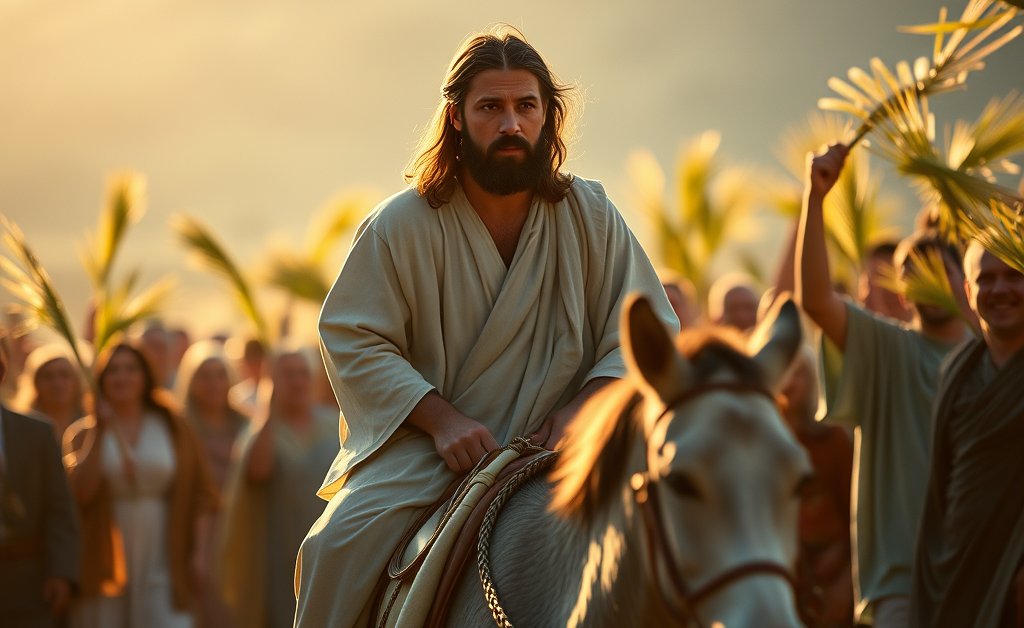
See, your king comes to you, righteous and victorious, lowly and riding on a donkey, on a colt, the foal of a donkey. (Zechariah 9:9)

This was fulfilled, of course, when Jesus came into Jerusalem shortly before he was crucified.

Why a donkey, and not a horse? Basically, in those days, a king rode horses during times of war, while they would ride donkeys in times of peace.

Jesus came into Jerusalem not as a conquering king, but as the Prince of Peace.

And when Jesus comes again, he will come in defense of his people, and bring war to a final end.

In verse 10, it says,

I will take away the chariots from Ephraim and the warhorses from Jerusalem, and the battle bow will be broken.

He will proclaim peace to the nations. His rule will extend from sea to sea and from the River to the ends of the earth. (Zechariah 9:10)

To those who are held captive and in despair, he will bring freedom and hope. Why?

Because of the blood of my covenant with you. (Zechariah 9:11)

This is probably pointing back to the covenant made under Moses, which is all the Jews in Zechariah’s time knew.

But it’s worth pointing out that the sacrifices under the old covenant were shadows of the new covenant made in Christ’s blood.

And it is through Christ’s blood that all of us who were held captive in Satan’s kingdom were set free and given hope.

And so God says of his people Israel, but also of us,

The Lord their God will save his people on that day as a shepherd saves his flock. They will sparkle in his land like jewels in a crown.

How attractive and beautiful they will be! Grain will make the young men thrive, and new wine the young women. (Zechariah 9:16–17)

Categories
Zechariah

The God who watches over all

This passage starts with the people’s eyes upon the Lord, looking to see what he would do.

And here we see how God would bring Alexander the Great to bring judgment upon Syria, Tyre and Sidon, and Philistia.

The prophecies here detail the route Alexander took in his campaigns. He started with Hadrach (probably a place in Syria) and Damascus. Then he conquered Tyre and Sidon.

Tyre had been a place that even the Assyrians and Babylonians could not conquer, despite sieges of five and thirteen years respectively. But Alexander managed to conquer it within seven months.

Alexander then went on to conquer the Philistines (Gaza, Ashkelon, Ekron, and Ashdod were all cities there).

He ended the Philistine monarchy, and depopulated the cities before bringing in other people to live there in the Philistines’ place.

But then it says in verse 8,

But I will encamp at my temple to guard it against marauding forces.

Never again will an oppressor overrun my people, for now I am keeping watch. (Zechariah 9:8)

In the midst of Alexander’s campaigns, Jerusalem was spared.

Josephus tells the account of how God appeared to the high priest in a dream and told him not to fear but to open the city gates and to go meet Alexander when he came.

The high priest went out with purple and gold clothing, while the rest of the priests went out in white linen.

When they did, Alexander approached the high priest, and kissed the name of God that was on the golden plate that was on the priest’s headpiece.

When asked why he did so, he said that he had had a dream in which he had seen a person wearing the same clothing bidding him to cross Asia and conquer the Persian empire.

Alexander then allowed the Jews to keep living according to their own laws, and also made them exempt from taxes every seven years.

What can we get from this? God is truly the one who watches over all and is in control.

To those who defy him will eventually come judgment. But to those who humble themselves before him, he will protect them.

He did so for the Jews and he will do so for us. As David wrote,

The angel of the Lord encamps around those who fear him, and he delivers them.

Taste and see that the Lord is good; blessed is the one who takes refuge in him. (Psalm 34:7–8)

Categories
Zechariah

Saved to be a blessing

The book of Zechariah is full of warnings and admonitions. But as we have seen, it also has words of encouragement as well. And in this passage we see a bit of both.

God starts with words of encouragement, telling the people that Jerusalem would indeed be restored and that it would become a place of joy and safety for those who lived there.

More, he told them that those who had been scattered would be brought back, and that they would be his people and he would be their God once again.

For those who had a hard time imagining it, he reminded them that he is the God that can do all things, saying,

It may seem marvelous to the remnant of this people at that time, but will it seem marvelous to me? (Zechariah 8:6)

And so he charged the people,

Let your hands be strong so that the temple may be built. (Zechariah 8:9)

God tells us the same. That through his power, we have been saved. And now, we are to take courage, even in the face of opposition, and to become the temple that God intended us to be, holy and set apart for his use as he dwells within us.

But then he said,

Just as you, Judah and Israel, have been a curse among the nations, so I will save you, and you will be a blessing. (Zechariah 8:13)

Before we were saved, our lives were cursed by sins, and we cursed others by the sins we committed against them. But God tells us that now that we have been saved, we will become a blessing to them instead.

That’s the same promise that God gave to Abraham. That he would bless him and make him a blessing to those around.

God wants the same for us. So he tells us,

These are the things you are to do: Speak the truth to each other, and render true and sound judgment in your courts; do not plot evil against each other, and do not love to swear falsely.

I hate all this, declares the Lord. (Zechariah 8:16–17)

In short, he calls us to love our neighbors as ourselves. And as we do, people will be drawn to us and to him.

Zechariah closes the chapter by saying,

Many peoples and powerful nations will come to Jerusalem to seek the Lord Almighty and to entreat him.

This is what the Lord Almighty says: In those days ten people from all languages and nations will take firm hold of one Jew by the hem of his robe and say, ‘Let us go with you, because we have heard that God is with you.’ (Zechariah 8:22–23)

One day, people will say that of the Jews.

But may the same be said of us, as we live our lives each day.

Categories
Zechariah

False piety

Many people criticize Christians for hypocrisy, warranted or not. But to God, it is a serious issue.

In this passage, we see the returnees who had been exiled to Babylon coming before Zechariah and asking if they should continue fasting in the fifth and seventh months as they and their parents had done for the previous seventy years.

But God replied to Zechariah,

Ask all the people of the land and the priests, “When you fasted and mourned in the fifth and seventh months for the past seventy years, was it really for me that you fasted?

And when you were eating and drinking, were you not just feasting for yourselves?” (Zechariah 7:5–6)

In other words, “You did these religious rituals, but it meant nothing because it didn’t come from your heart. It was just a show.”

The word “hypocrite” originally meant a “stage actor.” And that’s what these exiles were. They pretended to be pious, but in reality, they were not.

Then God reminded them of what he had commanded their forefathers before the exile.

This is what the Lord Almighty said:

‘Administer true justice; show mercy and compassion to one another. Do not oppress the widow or the fatherless, the foreigner or the poor. Do not plot evil against each other.’

But they refused to pay attention. (Zechariah 7:9–11)

And God warned them that it was because they had hardened their hearts that they had been sent into exile in the first place.

‘When I called, they did not listen; so when they called, I would not listen,’ says the Lord Almighty. (Zechariah 7:13)

What do we take from all of this?

God isn’t impressed with our pious religious rituals. He’s more concerned with our daily lives. How do we treat others? Do we show mercy and compassion to others? And are we concerned with true justice?

I was watching a movie today, Amazing Grace, about William Wilberforce’s efforts to get the slave trade banned in Great Britain.

As I think of Wilberforce’s life, I think that’s the kind of thing God wants from all of us. Wilberforce had compassion on those who were being shipped and dying as slaves, and worked hard for its abolishment.

We may not have the same kind of influence on a country-wide scale as Wilberforce did. But we do have influence with every single person that we touch. At home. At work. In our neighborhoods.

Do people see the compassion and mercy of Christ in our lives?

That’s what God wants from us. And that’s what’s ultimately going to change this world: the body of Christ showing his love and compassion to all we come in contact with.

Let us not be hypocrites who merely go to church, read the Bible, and pray.

Let us be people who are filled with God’s compassion and mercy. And let’s make a difference in this world that God has put us in.

Categories
Zechariah

He who will come again

One of my favorite Easter songs is “Rise Again,” by Dallas Holm. In the last verse of the song, it says,

Go ahead
Say I’m dead and gone.
But you will see that you were wrong.

Go ahead,
Try to hide the Son.
But all will see that I’m the one.

’Cause I’ll come again.
Ain’t no power on earth can keep me back.
’Cause I’ll come again.
Come to take my people back.

In this passage, we see something of Christ’s return.

In verses 1–8, we see the judgment that will come upon the earth and its kingdoms.

If we compare this passage to Revelation 6, we see that the white horses represent war; the red horses, violence and bloodshed; the black horses, famine and death.

The dappled horses probably correspond to the pale horses of Revelation, perhaps symbolizing death by plagues.

But terrible as these things are, God is in control.

Until now, believe it or not, this judgment has actually been held in check by the hand of God.

But the time will come when he fully releases it upon all the earth and we’ll experience a time of trouble beyond what we’ve ever known.

But after all this, Jesus will come again, and he is represented here by someone of the same name, Joshua (which as I’ve mentioned before is the Hebrew version of the Greek name Jesus).

Joshua, as we’ve seen, was the high priest at the time. But Zechariah was told to make a crown for him and to put it on his head. And as he did, he was to make a prophecy of the one he symbolized, the coming Messiah.

Unlike Joshua, who was merely a priest, and unlike Zerubbabel who was merely a governor (not even a king, though he was of royal blood), one was coming who would be both king and high priest.

Zechariah said of him,

It is he who will build the temple of the Lord, and he will be clothed with majesty and will sit and rule on his throne. And he will be a priest on his throne.

And there will be harmony between the two. (Zechariah 6:13)

The temple mentioned here is probably the temple written about in Ezekiel 40–43, not the one Joshua and Zerubbabel were building. And Zechariah says that at the time this new temple is built, Jesus will be the perfect king and priest.

What do we take from all this? Hope.

We look at the world around us and see all the trouble surrounding us. We look at our political leaders, and we see people that cannot be fully trusted. The words “honest politician” are seen as an oxymoron.

Ministers of Christ don’t always have the greatest reputations either. Many are often scoffed at with all the scandals that we have seen in the church, and people often look for the first sign of hypocrisy in them.

But when Jesus comes, he will reign in righteousness, and his holiness will be beyond reproach. Through him, we will all see what the Father is truly like.

So let us not get discouraged by all the wars, disease, famines, and natural disasters that we see. God is in control.

And let us not be disheartened by the corrupt political and spiritual leaders that we see either. Jesus is coming back.

So let us focus on him, rather than all these other things. If we focus on these other things, it’s easy to lose hope. But when we focus on him, our hope can never be taken from us.

Categories
Zechariah

The purging of all evil

Happy Easter for those of you across the international date line. I celebrated Easter yesterday in what turned out to be a very long (but great) day, so I didn’t get around to doing this blog.

Anyway, the visions kept coming to Zechariah, and this one concerns the purging of evil from Israel.

In the first vision, Zechariah saw a flying scroll that on one side listed the curses for stealing, and on the other listed the curses for swearing falsely.

Although it lists only two of the ten commandments God had given Moses, those two commandments are probably representative of all the commandments. For as James put it,

For whoever keeps the whole law and yet stumbles at just one point is guilty of breaking all of it. (James 2:10)

Perhaps these two sins were particularly representative of the Israelites of that time. Or perhaps, it had a broader meaning of hurting your neighbor (stealing) and despising the holiness of God (using his name to make false oaths).

Two things to note from this vision. First, because of the size of the scroll, there was no excuse for anyone not to know judgment was coming. Anyone could easily read it.

Second, judgment is certain. God said,

I will send [the curse] out, and it will enter the house of the thief and the house of anyone who swears falsely by my name.

It will remain in that house and destroy it completely, both its timbers and its stones. (Zechariah 5:4)

In the second vision, God shows Zechariah how he would purge all evil from the land.

Zechariah saw a basket that represented evil in the land. And within it, we see the source of the wickedness (represented by a woman) trying to rise out, only to be pushed back in by the angel.

Then two women carried it out of Israel to bring wickedness to a place where it would be more welcome, the land of Babylonia.

What can we get from all of this? First, the day is coming when evil will be dealt with. Satan will fight God to the bitter end, but no matter how hard he fights, he will be overcome.

Second, let us purge ourselves from the evil that is within us. God has made it crystal clear how he feels about sin, and that judgment is coming because of it. We have no excuse for not knowing.

So as Paul said,

Let us purify ourselves from everything that contaminates body and spirit, perfecting holiness out of reverence for God. (2 Corinthians 7:1)

There is a balance in this of course. We do not purify ourselves by our own efforts alone. In our own strength it would be impossible.

But God does give us the strength and ability to live holy lives for him (2 Peter 1:3–4).

And as he carried away evil from Israel in Zechariah’s vision, so he will carry evil from our lives as we follow him. This is the process called “sanctification.”

As Paul also wrote,

May God himself, the God of peace, sanctify you through and through.

May your whole spirit, soul and body be kept blameless at the coming of our Lord Jesus Christ.

The one who calls you is faithful, and he will do it. (1 Thessalonians 5:23–24)

Categories
Zechariah

Filled to do His work, in his power

The more I’m reading Zechariah, the more I’m starting to love it. This is another great passage that’s rich in meaning.

The temple was still under construction at this time, and the people were still facing opposition.

It was uncertain whether Darius would continue to allow the rebuilding project, and perhaps Zerubbabel, the governor of Judah at that time, was growing discouraged.

But at that time, God gave Zechariah a vision of a golden lampstand, like that of those found in the temple.

But while the lampstands in the temple constantly needed to be refilled by the high priest, these lampstands were filled by two olive branches.

And then the angel gave Zechariah this message:

This is the word of the Lord to Zerubbabel: “Not by might nor by power, but by my Spirit,” says the Lord Almighty.

“What are you, mighty mountain?

Before Zerubbabel you will become level ground. Then he will bring out the capstone to shouts of ‘God bless it! God bless it!’”

Then the word of the Lord came to me: “The hands of Zerubbabel have laid the foundation of this temple; his hands will also complete it. Then you will know that the Lord Almighty has sent me to you.” (Zechariah 4:6–9)

In other words, God was saying, “Don’t worry. You’re not going to complete this project because of your own strength or by the power of those who support you. Instead this project will be done by my Spirit working in you.

And though you may face giant obstacles, they will become level before you. Thus, when you bring out the capstone to this temple, you will know that it was by my grace that it happened.”

The NASB puts verse 7 this way,

He will bring forth the top stone with shouts of ‘Grace, grace to it!’ (Zechariah 4:7)

To those who were discouraged by the slow start, and by how pale this temple seemed in comparison to the one built by Solomon, God said,

Who dares despise the day of small things, since the seven eyes of the Lord that range throughout the earth will rejoice when they see the chosen capstone in the hand of Zerubbabel? (Zechariah 4:10)

In other words, “What you have done, and what you are doing may seem small and insignificant. But don’t despise small beginnings.

And don’t despise the things that I have called you to do, no matter how small they may seem. For I rejoice when my people do my work, and you will be rewarded.”

Zechariah then closes with an explanation of the lamp and the two olive trees at the beginning of the vision.

When he asked about them, and particularly the two olive branches beside the two gold pipes pouring out golden oil, the angel replied,

These are the two who are anointed to serve the Lord of all the earth. (Zechariah 4:14)

This is in reference to Joshua the high priest and Zerubbabel, two men that God had chosen to serve him and to complete the project of the temple he had given them.

But to me, the most significant thing is this: Oil is often used as a symbol of God’s Spirit. And here we see two men of God whom the Spirit filled and from whom his Spirit poured out to do his work.

In the same way, God fills us up with his Spirit by his grace. And through us, his Spirit pours out to do his work: to touch the lives of the people around us and to make a difference in this world.

As we do, God’s will will be accomplished not by our own might and power, but by his Spirit flowing through us.

So let us do his work, not despising the day of small things. And through his Spirit constantly pouring in us and through us, we will make a difference in this world.

Categories
Zechariah

Free from accusation

This is probably one of my favorite passages in the entire Old Testament, basically because of how rich in meaning it is for us who are Christians.

In this passage, Joshua, the high priest was standing before the Lord, and Satan was hurling accusations against him.

What’s more, they were probably true accusations, for Joshua was standing before the Lord with clothes stained with sin.

But at that point, the Lord said,

The Lord rebuke you, Satan! The Lord, who has chosen Jerusalem, rebuke you!

Is not this man a burning stick snatched from the fire? (Zechariah 3:2)

Very interesting to me that it says, “The Lord said, ‘The Lord rebuke you, Satan.’” Could it be that this messenger (angel actually just means “messenger”) was Jesus himself?

At any rate, the Lord rebukes Satan, saying, “This is a man I’ve already saved. How dare you accuse him!”

The messenger then tells those around to take off the filthy clothes from Joshua, and he said to Joshua,

See, I have taken away your sin, and I will put fine garments on you. (Zechariah 3:4)

He then charged Joshua,

If you will walk in My ways and if you will perform My service, then you will also govern My house and also have charge of My courts, and I will grant you free access among these who are standing here. (Zechariah 3:7, NASB)

The interesting thing here is that He first cleansed Joshua, and then He charged him to follow after and serve Him.

God promised that if he did, Joshua would continue as the high priest for His people. Not only that, he would have free access before God.

One final thing. It’s ironic, but then is it really ironic for the God who knows and plans everything?

He tells Joshua of another Joshua that would come. (Jesus is simply the Greek form of the Hebrew name Joshua).

He said that this “Joshua” would come in all the wisdom of God (the seven eyes on the stone) and in a single day, he would wipe out sin forever by his death on the cross.

And when Jesus comes back and reigns, we shall finally find true peace. (Zechariah 3:8–10)

What can we get from all of this? We all, like Joshua, stood before God, stained with sin. Satan stood against us hurling accusations against us.

But when we turned to Christ, Jesus became our advocate, defending us, and rebuking Satan.

He then took off our filthy garments and clothed us with righteousness, not because of anything we had done, but because of what he had done on the cross.

And now, having already been cleansed, we are urged to follow him and serve him as his priests. As we do, we find that we have free access to Him along with all the saints.

Paul put it this way,

Once you were alienated from God and were enemies in your minds because of your evil behavior.

But now he has reconciled you by Christ’s physical body through death to present you holy in his sight, without blemish and free from accusation — if you continue in your faith, established and firm, and do not move from the hope held out in the gospel. (Colossians 1:21–23)

Categories
Zechariah

Wall of fire, glory within

This message, along with all the others in the rest of this book, came to Zechariah during the rebuilding of the temple.

Here, we see a vision of horsemen going out to see the state of things in the world. What they saw were nations at peace and at ease, which may have been disturbing to God’s people, since God had talked of shaking the nations.

As a result, an angel of the Lord asked,

Lord Almighty, how long will you withhold mercy from Jerusalem and from the towns of Judah, which you have been angry with these seventy years? (Zechariah 1:12)

And the Lord spoke words of comfort to him (and to all the Jewish people) that indeed he would bless the people, that his house would be rebuilt, and that the towns would once again prosper. (Zechariah 1:13–17)

He then promised judgment on the nations that had conquered Israel, saying,

I am very jealous for Jerusalem and Zion, and I am very angry with the nations that feel secure. I was only a little angry, but they went too far with the punishment. (Zechariah 1:14–15)

Thus in verses 18–20, he promises to strike down the four nations (horns) that had come against and scattered his people.

There’s some dispute on who these horns represent, but it seems to make sense that it is the nations of Assyria, Egypt, Babylon, and Persia.

But it is chapter 2 that really strikes me.

The Lord continues to talk about the restoration of his people, and he says that they would be so prosperous, they wouldn’t be able to set up walls around the city because of the sheer number of people and animals that would live there.

But beyond that, the Lord said,

I myself will be a wall of fire around it, declares the Lord, and I will be its glory within…whoever touches you touches the apple of my eye. (Zechariah 2:5, 8)

And again,

Shout and be glad, Daughter Zion. For I am coming, and I will live among you. (Zechariah 2:10)

I love these words. God himself is a wall of fire around us. He is our protection and our shield. He fights those who come against us.

And he is our glory within. The Holy Spirit himself lives within us and shines through us.

As David put it,

But you, Lord, are a shield around me, my glory, the One who lifts my head high. (Psalm 3:3)

Categories
Haggai

Though all is shaken

The book of Haggai ends with a word of encouragement to Zerubbabel.

Perhaps Zerubbabel saw the opposition that was rising up against the rebuilding of the temple and of Jerusalem and he was getting discouraged.

But God told him,

Tell Zerubbabel governor of Judah that I am going to shake the heavens and the earth.

I will overturn royal thrones and shatter the power of the foreign kingdoms.

I will overthrow chariots and their drivers; horses and their riders will fall, each by the sword of his brother. (Haggai 2:21–22)

In short, he was saying, “Zerubbabel, things may seem tough now, but I will shake the heavens and earth. I will tear down kingdoms and shatter their power.”

Then he said,

‘On that day,’ declares the Lord Almighty, ‘I will take you, my servant Zerubbabel son of Shealtiel,’ declares the Lord, ‘and I will make you like my signet ring, for I have chosen you,’ declares the Lord Almighty. (Haggai 2:23)

A signet ring was a ring that kings would use in those days to sign documents. It was a symbol of his authority.

So God was telling Zerubbabel, “While I will cast down kings and thrones, I have chosen you to become a symbol of authority for my people.”

In the short run, he used Zerubbabel to lead the people in Jerusalem in the rebuilding of the temple and their lives. In the long run, it was through Zerubbabel that Jesus the Messiah came.

Just before Jesus left to go back to the Father following the resurrection, he told the disciples,

All authority in heaven and on earth has been given to me. (Matthew 28:18)

Why is this important? Just as God chose Zerubbabel as his servant, he has also called and chosen us. What has he called us and chosen us to do?

Therefore go and make disciples of all nations, baptizing them in the name of the Father and of the Son and of the Holy Spirit, and teaching them to obey everything I have commanded you. (Matthew 28:19–20)

This world has been shaken by war, turmoil, and strife. And things will only get worse. But though all is shaken, let us never fear the future.

Instead, let us remember that all authority has been given to Jesus. And let us do as he has commanded us, going out, preaching the gospel, and making disciples until the day he returns.

And as Jesus said,

And surely I am with you always, to the very end of the age. (Matthew 28:20)

Categories
Ezra

When we commit ourselves

It took a long time for the Israelites to commit themselves to the building of the temple, but finally, at the urging of Zechariah and Haggai, they once again got started.

And once again, almost as soon as they got restarted, opposition came.

This time it came from Tattenai, the governor of the Trans-Euphrates and Shethar-Bozenai, who perhaps was some sort of Persian investigator.

They questioned the Jews about what they were doing and under what authority.

After receiving the reply from the Jews, they immediately went to King Darius about it to see what he had to say.

The result?

Darius found the order originally given by Cyrus to allow the Jews to rebuild the temple.

Not only did he then order Tattenai and Shethar-Bozenai not to interfere, he ordered them to help pay for it and to help provide for the offerings made at the temple as well.

It’s really amazing to me how God turned the whole situation around such that the people who had originally tried to cause trouble for the Jews, ended up helping them.

But it also shows me that when God calls us to do something, and we commit ourselves to doing what he has said, he will make sure that we will have everything we need to complete the job.

And if opposition from the enemy comes, he is more than able to turn the situation around so that our work can be completed.

The only question we need to ask ourselves is, “How committed are we to doing what God has said?”

Do we easily give up when things get hard?  Or do we let other things in our lives such as the pursuit of money, the pursuit of possessions, or the pursuit of pleasure get in the way?

God has a great plan that he wants us to get involved in.

How committed are you to that plan?

Categories
Haggai

The difference between impurity and holiness

After Zechariah gave his message, it was Haggai’s turn. And here he shows us one of the differences between impurity and holiness.

To give a bit of background, in Mosaic law, after the altar was anointed, it became holy, and anything that touched it became holy (Exodus 29:37).

What Haggai was asking about here was if holiness could be transmitted second hand. If meat touched the altar, it became holy. But if food touched that consecrated meat, the holiness didn’t pass on to that food.

In other words, holiness can’t be passed on second hand.

Holiness doesn’t come from merely walking in a church, or fellowshipping with godly people. Holiness certainly didn’t spread from the prophets to the people for most of Israel’s history.

And for most of their history, despite going to the tabernacle and temple to offer their sacrifices, these things didn’t affect their actions the rest of the time, as they sinned greatly in God’s sight.

On the other hand, impurity is much more easily spread. So if someone touched a dead body, according to Mosaic law, they became unclean. And anything they touched also became unclean. (Numbers 19:11–22)

God then said,

‘So it is with this people and this nation in my sight,’ declares the Lord. ‘Whatever they do and whatever they offer there is defiled.’ (Haggai 2:14)

Why were they defiled?

Basically it was because their attitudes had been wrong. They had taken God from the throne of their hearts, and placed themselves there.

That attitude quickly spread throughout the people, and soon the work on the temple ground to a halt. As a result, the temple remained in ruins for years while they were building their own houses and trying to establish their own lives.

That “defiled” attitude then infected everything else they did. It made everything they did unclean before God. Even when they did “religious” things, it meant nothing to God, because their attitudes were wrong.

So God warned them to give careful thought to how they lived.

He reminded them once again that when their attitudes had been wrong and they had left the temple in ruins, nothing went right in their lives.

But now he was promising them that because they had now repented and had changed their attitudes, blessing would come, saying,

From this day on I will bless you. (Haggai 2:19)

What do we take from this?

Let us never let any seed of sin or impurity take root within our hearts. If we do, like the Israelites, it will permeate throughout our lives and make everything we do defiled before God.

Paul put it this way,

Don’t you know that a little yeast leavens the whole batch of dough? Get rid of the old yeast, so that you may be a new unleavened batch—as you really are. (1 Corinthians 5:6–7)

Lord, please root out any leaven that’s in my life. Let evil not spread within my heart, nor let it affect the things I do in service for you.

Instead, fill me with your holiness that everything I do may be acceptable in your sight. In Jesus’ name, amen.

Categories
Zechariah

Learning from the past

Zechariah started his ministry at the same time as Haggai, and together they helped the Israelites get back on track with the rebuilding of the temple. As well as being a prophet, he was also a priest.

By the way, just a quick historical note, when it says this happened in the time of Darius (and this goes for Haggai too), this was not the Darius mentioned in Daniel. This is Darius the Great as known in history.

Anyway, Zechariah starts his ministry by reminding the Israelites of their past. He told them,

The Lord was very angry with your ancestors. Therefore tell the people:

This is what the Lord Almighty says: ‘Return to me,’ declares the Lord Almighty, ‘and I will return to you,’ says the Lord Almighty.

Do not be like your ancestors, to whom the earlier prophets proclaimed: This is what the Lord Almighty says: ‘Turn from your evil ways and your evil practices.’

But they would not listen or pay attention to me, declares the Lord.

Where are your ancestors now? And the prophets, do they live forever? But did not my words and my decrees, which I commanded my servants the prophets, overtake your ancestors?

Then they repented and said, ‘The Lord Almighty has done to us what our ways and practices deserve, just as he determined to do.’ (Zechariah 1:2–6)

Here Zechariah recounts how time and again, God had called their forefathers to return to him, and turn away from their sins, but they ignored him.

Many thought that the prophets were speaking empty words, but in the end, judgment fell on them until they finally repented and admitted they were wrong.

Now God was saying, “Learn from your past. My words were not empty when I spoke to your forefathers. They are not empty now. Repent and turn from your sins lest judgment fall upon you again.”

God tells us the same. We all sin sometimes. But the question we need to ask is if we are learning from the mistakes that we make, or are we just repeating the same destructive patterns in our lives.

Let us not be people who repeat our mistakes of the past. Let us instead be wise, walking in repentance and the grace of God.

Categories
Haggai

Where our true glory comes from

I’ve mentioned before in the book of Ezra that some of the older generation that had seen Solomon’s temple wept when they saw the foundations of the new temple that was being built.

And here, we see some of the same feelings rising up from that generation when the work was restarted. So Haggai speaks to them saying,

‘Who of you is left who saw this house in its former glory? How does it look to you now? Does it not seem to you like nothing?

But now be strong, Zerubbabel,’ declares the Lord. Be strong, Joshua son of Jozadak, the high priest.

Be strong, all you people of the land,’ declares the Lord, ‘and work. For I am with you,’ declares the Lord Almighty.

‘This is what I covenanted with you when you came out of Egypt. And my Spirit remains among you. Do not fear.’ (Haggai 2:3–5)

In other words, “Don’t get discouraged by how this temple compares with the one Solomon built. And don’t get discouraged by all the opposition you’re facing. Get to work and build the temple, for I am with you.

“I was with you when I promised to bring you out of Egypt and my promises never change. I am the same God that brought you here and my Spirit still remains among you.”

Then he said,

This is what the Lord Almighty says: “In a little while I will once more shake the heavens and the earth, the sea and the dry land.

I will shake all nations, and what is desired by all nations will come, and I will fill this house with glory,” says the Lord Almighty.

“The silver is mine and the gold is mine,” declares the Lord Almighty.

“The glory of this present house will be greater than the glory of the former house,” says the Lord Almighty.

“And in this place I will grant peace,” declares the Lord Almighty. (Haggai 2:6–9)

Here we see another prophecy of the Messiah to come. Before his coming, there was a shaking of the nations, with one empire rising after another.

And then Jesus came, the desired of all nations, and he filled that house with his presence and glory. God in human flesh was in that temple preaching and performing miracles.

As we look at this passage, I think we see a mistaken way of thinking in these older Jews. They merely looked at the outside of the temple, of the materials it was built from, and thought that the temple’s glory came from these things.

But the glory of Solomon’s temple, beautiful as it was, did not come from the gold or silver or any of the things it was built from. Its glory came from the presence of God dwelling inside of it.

And as beautiful as it was compared to the second temple that was built in Ezra’s time, it never had the privilege of housing God in human flesh.

When Jesus stepped into the second temple, it received greater glory than Solomon’s temple ever did.

It’s the same with us. You may look at your life and think that you are nothing compared to the other “beautiful temples of God.”

Others may be more physically beautiful or handsome.

Others may be more talented or gifted.

But your glory does not come from how you look or what gifts you may have. Your glory comes from Jesus living inside of you.

So don’t look around comparing yourself to others. And don’t get discouraged by the people that would keep you from following God.

Be strong. Do the work that God has called you to do.

The same God that brought you out of slavery to Satan’s kingdom is with you now and he’ll never leave you.

And each day he will transform you into the glorious temple he created you to be.

As Paul wrote,

And we all, who with unveiled faces contemplate the Lord’s glory, are being transformed into his image with ever-increasing glory, which comes from the Lord, who is the Spirit. (2 Corinthians 3:18)

Categories
Ezra Haggai

Getting our priorities straight

Before I go on, I should make some comments on the chronology of events going forward.

I’ve mentioned before that there is a lot of dispute among scholars about the timing of events, and the more I dig, the more I see why.

I also see why there is dispute about the starting date for the prophecy in Daniel 9. I have already given my position, but I will admit it’s not without its problems. One is the list of events as set out in Ezra.

Basically, if we go with the idea that Xerxes and Artaxerxes were the ones noted in history (as I do), then we have to say that Ezra 4:6–23 is one long parenthetical comment.

The reason that it’s put there is not because it’s in chronological order, but because thematically it fits in with the idea of the opposition the Jews faced in Jerusalem.

The events of Ezra 7 to the end of the book actually happen before Ezra 4, and the events of Nehemiah occur after it.

One thing to note is that in Ezra 4, it says nothing of the rebuilding of the temple, only the city walls and foundations, the reason being that the temple was already built as seen in chapters 5–6 of Ezra.

At any rate, because of the opposition they faced in Ezra 4:4–5, they stopped work on the temple. But we see in the book of Haggai, there was another reason they stopped the work. It simply wasn’t important enough to them.

And so Haggai confronted the people, saying,

This is what the Lord Almighty says: “These people say, ‘The time has not yet come to rebuild the Lord’s house.’”

Then the word of the Lord came through the prophet Haggai: “Is it a time for you yourselves to be living in your paneled houses, while this house remains a ruin?” (Haggai 1:2–4)

In other words, the people were so concerned about their own personal lives and trying to rebuild them, that they neglected the Lord’s temple.

How often do we do the same in our own lives? We know that our spiritual lives and our relationship with the Lord are important, but there are so many other things we’re concerned about, our finances, our job, our families, etc.

Not to say that these things are unimportant. They are. They have their place in our lives. But when they usurp God’s place in our lives, something’s wrong.

God told the people, “Look at your lives right now. You plant much, but harvest little. You eat, but are not satisfied. You drink, but are not filled. You put on clothes, but aren’t warm, and you earn money but see it all slip through your fingers.” (Haggai 1:5–6)

He then told them the reason for all this was because their priorities were messed up. They had ignored him, and so he had withdrawn his hand of blessing on them. So he told them,

This is what the Lord Almighty says: “Give careful thought to your ways. Go up into the mountains and bring down timber and build my house, so that I may take pleasure in it and be honored,” says the Lord. (Haggai 1:7–8)

God tells us the same. Give careful thought to your ways. Make your relationship with God your top priority. Give priority to God and his kingdom above all else. And if we do, we’ll find blessing.

Jesus put it this way,

But seek first his kingdom and his righteousness, and all these things will be given to you as well. (Matthew 6:33)

Categories
Daniel 3

Those who are wise

I suppose that for those who are skeptics, these chapters take the cake in terms of prophecy, so detailed and accurate as they are.

Here, Daniel talks first about what was to come in the Persian and Greek Empires, and then what is yet to come in the future.

First, he talks about the three kings to come in Persia after Cyrus. These were Cambyses, Gaumata, and Darius (mentioned in Ezra).

Following Darius was the fourth king, his son, Xerxes (the king mentioned in Ezra as well as in Esther).

Xerxes was the richest of all the other Persian kings because of the taxes he collected, as well as his conquests.

He then attacked Greece, but after some victories, his navy was defeated, and later, his army that he had left behind in Greece was crushed at the battle of Plataea. (Daniel 11:2)

Then, a great king (Alexander) arose in Greece, but after he died, his empire was divided among his four generals, not his children. (Daniel 11:3–4)

Daniel then goes into great detail about what would happen to the Greek Empire from the time of Ptolemy I and Antiochus II all the way down through Ptolemy VII and Antiochus IV.

There are numerous study Bibles and commentaries that go into detail about how these prophecies were fulfilled, and it’s fairly lengthy, so I won’t go over it here.

Even if you don’t have either, you could find a good history book and see how all of this was fulfilled just as Daniel wrote.

From chapter 11, verse 36 to the end of the book, however, we seem to move to the end times and the coming of Antichrist.

He will not worship any gods but set himself up as God.

The other god he will worship is the “god of fortresses,” that is, the god of power or war. And he will conquer and rule, until the time that Christ comes.

During those days, there will be great times of trouble.

But God will deliver his people, and at the final resurrection, those who love and follow him will rise to eternal life, while those who hate and oppose him will go to “shame and everlasting contempt.” (Daniel 12:1–3)

What can we get from all this?

Several passages strike me from these chapters.

First Daniel 11:33–35, which talks about the times of Antiochus IV and that period of persecution during the time of the Maccabean revolt.

Those who are wise will instruct many, though for a time they will fall by the sword or be burned or captured or plundered.

When they fall, they will receive a little help, and many who are not sincere will join them.

Some of the wise will stumble, so that they may be refined, purified and made spotless until the time of the end, for it will still come at the appointed time. (Daniel 11:33–35)

It strikes me here that God doesn’t promise that he would spare his people trouble. That though they were wise and would instruct many in the ways of God, yet many would be captured, burned, killed, and plundered.

But God had a purpose for all the things they went through. That they would be refined, purified, and made spotless before him.

He says later of those who come out of the tribulation and are resurrected in chapter 12,

Those who are wise will shine like the brightness of the heavens, and those who lead many to righteousness, like the stars for ever and ever. (Daniel 12:3)

And at the end of the book, he writes,

Many will be purified, made spotless and refined, but the wicked will continue to be wicked.

None of the wicked will understand, but those who are wise will understand. (Daniel 12:10)

Finally, the angel says to Daniel,

As for you, go your way till the end. You will rest, and then at the end of the days you will rise to receive your allotted inheritance. (Daniel 12:13)

I take from all of this a sense of hope.

There will be wars. There will be trials and troubles in the future.

But God will use them to purify us, and to make us spotless and refined.

And come the resurrection day, we will shine like the stars before him who saved us.

So let us be wise. Let us be people that seek after God daily. Let us be people that lead others to do the same.

And like Daniel, in the end, we will rest and then rise to receive our allotted inheritance.

Categories
Daniel 3

War

A long time ago, a book came out called “This Present Darkness,” by Frank Peretti.

It was a fictional book, but after reading it, it really made me think about the spiritual warfare that goes on that we can’t see with our eyes and about the necessity of prayer.

I can’t help but think that the book was inspired by this passage, because this is the first time you get a behind-the-scenes view of the spiritual war that goes on in the Bible.

Here we see Daniel in a time of mourning. Why he was mourning is uncertain.

It could be that he was hearing of the troubles that his people were having back home in Israel, with all the opposition to the rebuilding of the temple and the city walls.

Or he might have been mourning the fact that his people were still more interested in themselves than the things of God (something that Haggai would later criticize them for).

Whatever the reason, he was fasting and seeking God. Yet for three weeks, this man of God heard nothing.

How often do we feel the same way. We’re troubled, we’re seeking God, and yet God seems to be ignoring us.

But was God ignoring him? Not at all. An angel appeared to Daniel saying,

Do not be afraid, Daniel. Since the first day that you set your mind to gain understanding and to humble yourself before your God, your words were heard, and I have come in response to them.

But the prince of the Persian kingdom resisted me twenty-one days. Then Michael, one of the chief princes, came to help me, because I was detained there with the king of Persia. (Daniel 10:12–13)

After strengthening Daniel to hear his message, he then said,

Do you know why I have come to you?

Soon I will return to fight against the prince of Persia, and when I go, the prince of Greece will come; but first I will tell you what is written in the Book of Truth.

(No one supports me against them except Michael, your prince.) (Daniel 10:20–21)

What should we get from all of this?

When we think of all the problems in this world, when we think of the times that God sometimes seems silent in the midst of it all, there’s a lot going on that we cannot see.

There is, in fact, a spiritual war going on.

Paul wrote,

For our struggle is not against flesh and blood, but against the rulers, against the authorities, against the powers of this dark world and against the spiritual forces of evil in the heavenly realms. (Ephesians 6:12)

This is not a war in which we’re fighting people, although at times, it sure seems that way. We’re fighting spiritual forces who influence those around us.

And if we’re going to fight these forces, then we need spiritual armor and spiritual weapons, all of which are described in Ephesians 6.

I won’t comment on them right now except to point out that all these pieces of armor that Paul mentions are for the front of the body. There’s nothing for the back.

Why? Because we are meant to fight going forward, not running away.

But the thing to remember after arming ourselves is that we also need to be praying. Paul wrote,

And pray in the Spirit on all occasions with all kinds of prayers and requests.

With this in mind, be alert and always keep on praying for all the Lord’s people. (Ephesians 6:18)

We cannot fight this fight alone and in our own strength. We need the Spirit of God himself, fighting for us.

And so we should not only pray for ourselves, but for all of the Lord’s people, for our brothers and sisters in Christ.

Pray for your pastor. Pray for those brothers and sisters who are hurting.

Let us not be complacent. Let us not be caught unaware by the enemy.

Let us always be alert and praying as God has called us to.

And let us fight the good fight of faith in this war we’re in.

Categories
Daniel 2

Integrity

We now come back to Babylon where Daniel was still residing. A man named Darius was ruling as king there.

This is not, by the way, Darius the Great who is later mentioned in the book of Ezra.

It is not entirely clear who he was, but some speculate that he is known in secular history as Gubaru, who was governor over Babylon for fourteen years under Cyrus.

It is also possible that Darius was another title for Cyrus himself.

At any rate, Daniel had found favor in the eyes of Darius, and because of how well he had distinguished himself, he was about to be named as prime minister in Babylon.

The other administrators and satraps were none too pleased that this Jew from a conquered nation would be set over them, and so they tried to find anything in Daniel that would discredit him.

To their dismay, they could find nothing. It says in verse 4,

They could find no corruption in him, because he was trustworthy and neither corrupt nor negligent. (Daniel 6:4)

Eventually, they came to the conclusion that the only way to get to Daniel was through his love for God. And so, behind Daniel’s back, they came before Darius with a proposal.

The proposal was that for one month, no one could pray to any god or man except to Darius.

Why Darius agreed to this proposal is uncertain.

Perhaps he thought it would help change people’s allegiance from Babylon to Persia. Perhaps he did it out of his own pride.

Whatever the reason, the law appealed to him and so he passed it.

How did Daniel respond?

He continued to do as he always did. Three times a day he prayed before God.

The administrators kept their eye on Daniel, and as soon as they saw him praying, they went to Darius to report Daniel’s activities to him.

Darius was greatly shocked and saddened when he heard this and did everything he could to spare Daniel’s life.

But the law of the Medes and Persians could not be revoked, and so he was forced to throw Daniel into a den of lions.

You all probably know the story. God shut the mouths of the lions, and the next morning, when Darius found him still alive, he had him pulled out.

He then threw all of Daniel’s accusers and their families into the den of lions where they were all killed.

The thing that strikes me most about this story is the integrity of Daniel.

Here was a man that had the magnifying glass put on his life. Yet no one around him could find a single bad thing about him. He was neither incompetent, nor negligent, nor corrupt.

Not only that, when it came to a choice between following God or compromising his faith, Daniel never flinched. He held on to his integrity and continued to boldly follow the Lord.

How about you? Can people say the same about you?

If the magnifying glass were put on you by your family, by your friends, by your coworkers, what would they say?

And when the pressure is on from those around you to compromise your faith, do you hold onto your integrity, do you flinch? Do you give in?

May we all be like Daniel and be men and women of integrity.

Categories
Ezra

Opposition

Things are about to become messy concerning the chronology of Ezra.

I think I’ve got a handle on it now, but as we go through the next several blogs, keep in mind that there is quite a bit of dispute on scholars, not only on the chronology of events, but on who is who.

For the time being, I’m holding to the idea that Xerxes and Artaxerxes in chapter 4 of Ezra are the Persian kings who reigned between 486-423 B.C.

Some hold that they were actually Cambysses and Smerdis who reigned before Darius, which would make sense chronologically, but I’m not sure there’s enough evidence from history to say that they also held the names of Xerxes and Artaxerxes.

At any rate, speaking of things getting messy, things quickly got messy for the Jews who were rebuilding the temple.

As they were doing so, some enemies, apparently Samaritans, offered to help them in the rebuilding of the temple.

These Samaritans were the descendants of the remnant of northern kingdom Jews left in Samaria after the majority of the Jews were exiled to Assyria.

This remnant had then intermarried with the people who the Assyrians imported from Mesopotamia and Syria.

These Samaritans still worshiped the true God, but not him alone.  They mixed their worship of God with other gods.

As a result, the Jews that came with Ezra rejected their help.

When this happened, they started to oppose the Jews, not only in the building of the temple, but in the restoration of the walls and the city, as we will see throughout Ezra and Nehemiah.

I think we can learn a lesson from this in our own lives.

When we start to follow God, to build up and sanctify the temple of our body to Christ, and to build up our spiritual strength, there will be opposition.

Sometimes the people around us will be happy to see the positive changes in our lives and will even support us.

But when they start to see that what we believe is in conflict with what they believe, they try to get us to compromise our faith.

In Japan, for example, there’s much pressure on the Christians here to offer incense at Buddhist ceremonies.

But people will try to get us to compromise in other ways as well.  They try to get us to compromise our ethics at work or in our personal lives.  And if we don’t do so, they then start to become hostile.

Jesus never promised that if we followed him, everyone would like us.  Jesus was perfect, and people still hated him.  Jesus said,

If the world hates you, keep in mind that it hated me first.  (John 15:18)

So the question we need to ask ourselves is, “Who are we trying to please?”  Are we trying to please God or people?

Let us be people who seek the praise of God over all others.  No matter the opposition, no matter the cost.

Categories
Ezra

Joy and regret

In this passage, we see several things.  First, we see the restarting of sacrifices and offerings, and the first Feast of Tabernacles in years.

But we also see the start of the rebuilding of the temple.  And after the Israelites had laid down the foundation, there was great rejoicing.  In verse 11, it says,

With praise and thanksgiving they sang to the Lord:   “He is good; his love toward Israel endures forever.”

And all the people gave a great shout of praise to the Lord, because the foundation of the house of the Lord was laid. (Ezra 3:11)

At the same time, however, it says,

But many of the older priests and Levites and family heads, who had seen the former temple, wept aloud when they saw the foundation of this temple being laid, while many others shouted for joy.

No one could distinguish the sound of the shouts of joy from the sound of weeping, because the people made so much noise.  And the sound was heard far away.  (12-13)

Apparently, when the older priests, Levites, and family heads who had seen the original temple saw the foundation of the new temple, there was a feeling of bitter-sweetness.

Sweet because something they had loved was being rebuilt.

Bitter because its glory was nothing in comparison with what it was before.

Sometimes in our lives, we make decisions that make a mess of our lives. Through our sin, we tear apart our marriages; we ruin our health; we ruin our finances. 

When we repent, God does forgive us.  And he helps us to put the pieces of our lives back together again.  In this, there is great joy in his mercy and grace towards us.

But at the same time, sometimes we feel the pain of regret.

We see the great damage we’ve done to our relationships and to our lives, and though things seem to be coming back together, going through the process can be painful.

On top of that, what we seem to be rebuilding seems to be much less than what we originally had.

But let us not let our regret overwhelm us.  Once we’ve repented, it is not God’s desire that we focus on our past mistakes and the consequences that we have reaped.

Rather, he desires that we focus on the future, resting in his forgiveness and grace.

As we do so, he will wipe away every tear, and his glory will shine through us once again.

Paul puts it this way,

Godly sorrow brings repentance that leads to salvation and leaves no regret.  (2 Corinthians 7:10)

Categories
2 Chronicles Ezra

Called by name

And so after about ten months, we finally come to the end of 2 Chronicles.  Sometimes I thought we’d never get to the end of Kings and Chronicles.

But here, and at the beginning of Ezra, we see the return of the Jews to their homeland.  How did it come about?  Cyrus made a proclamation in the first year of his reign saying,

The Lord, the God of heaven, has given me all the kingdoms of the earth.  He has appointed me to build Him a Temple at Jerusalem, which is in Judah.

Any of you who are His people may go to Jerusalem in Judah to rebuild this Temple of the Lord, the God of Israel, who lives in Jerusalem.  And may your God be with you!  (Ezra 1:2-3)

That first verse there struck me.  “[Yahweh] has given me all the kingdoms of the earth.  He has appointed me to build Him a Temple at Jerusalem, which is in Judah.”

Why did he say that?  Considering that the Persians had their own gods, why did he give credit to the God of the Jews?  Probably because of what God had said through Isaiah the prophet.  Isaiah had written, years before Cyrus was born,

[God] says of Cyrus, “He is my shepherd and will accomplish all that I please; he will say of Jerusalem, ‘Let it be rebuilt,’ and of the temple, ‘Let its foundations be laid.'”(Isaiah 44:28)

And again,

This is what the Lord says to his anointed, to Cyrus, whose right hand I take hold of to subdue nations before him and to strip kings of their armor, to open doors before him so that gates will not be shut… so that you may know that I am the Lord, the God of Israel, who summons you by name.  (Isaiah 45:1,3)

I believe that it was because of these words that Cyrus said what he did.

He allowed the Israelites to return, giving them back all the temple items that had been taken by Nebuchadnezzar.

Moreover, he commanded the Israelites’ neighbors to support them with gold, silver and other things for the rebuilding of the temple.

And with Cyrus’ blessing, the Israelites returned just as God had said.

Just as God called Cyrus to accomplish his purposes, so God has called us to do the same.

We were not called to live for ourselves.  We were not called for our own purposes.

God has called us by name that we might live for him.

Paul put it this way,

And [Jesus] died for all, that those who live should no longer live for themselves but for him who died for them and was raised again.  (2 Corinthians 5:15)

Who are you living for?

God has not only called you for his purposes, he has called you by name.

Will you answer the call?

Categories
Daniel 3

The coming of Messiah, the coming of Antichrist

In today’s passage, we look at one of the most remarkable passages of prophecy.

Many people discount the prophecies of Daniel concerning the rise and fall of the Babylonian, Persian, and Greek Empires, insisting that it must have been written after the fact.

This is an argument based on a disbelief in supernaturalism, however, not on fact.

However, I think that this prophecy in Daniel alone, written well before the coming of Christ (the entire Old Testament was translated into Greek between the third and first century B.C.), more than dispels that argument.

God told Daniel that there would be seventy sevens, that is seventy seven-year periods in which,

  • Transgression would be finished.
  • Sin would be put to an end.
  • Wickedness would be atoned for.
  • Everlasting righteousness would be established.
  • The vision and prophecy would be sealed up (that is, fulfilled).
  • The most holy (that is, the new temple) would be anointed.

There are several interpretations for this and when the sevens start.

I take the position that it starts when King Artaxerxes gave the command to adorn and strengthen the temple, as well as enforcing the Mosaic code in Ezra 7.

Although the focus on this seems to be merely on the temple, it also seems from Ezra 9:9 that Ezra was also permitted to build up the city walls as well.

As a result, Nehemiah was very disappointed to find out years later that this was never done.

In the first set of seven (forty-nine years), we find that Jerusalem was rebuilt, but “in times of trouble.”

Certainly, the Israelites would face much opposition in the rebuilding of their city and temple as noted in Ezra and Nehemiah.

Also, I think you could qualify someone trying to annihilate your entire race as times of trouble as well (see Esther).

Then if you count off the next sixty-two sets of seven (434 years), from the year the decree was made (457) and account for the fact that we skip immediately from 1 B.C. to 1 A.D. (there is no year 0), we come out with a date of 27 A.D., the year the Messiah came (that is, he started his ministry).

Then sometime after the sixty-two sevens, he was cut off.

Literally, it means that he died.

The NIV adds “and will have nothing,” which could possibly refer to the fact that all his supporters abandoned him.

The King James puts it, “But not for himself,” which could refer to the fact that Jesus didn’t die for his own sins, but for ours.

However you interpret it, it was clearly at this time that sin was atoned for by Jesus’ death on the cross.

Then the city of Jerusalem and the temple were both destroyed following this in A.D. 70.

The final seven years refers to the future when Antichrist comes.

He will make a covenant with “the many” (that is, the Jews) and will allow them religious freedom to worship God as they please.

Then in the middle of the seven, he will break the covenant and end the sacrifices and offerings and set up an abomination that causes desolation.

This will mirror in some way the same abomination that Antiochus committed during the Maccabean period.

But then Antichrist will fall and be judged, at which time transgression and sin will come to an end, and everlasting righteousness will come.

The new temple will be established (probably referring to the temple in Ezekiel chapters 40–44) and all the prophecies will be fulfilled.

That’s a mouthful. But to me, it proves that God holds the future.

If he could predict accurately the rise and fall of empires, the coming of his own Son, and the destruction of Jerusalem once again, I think we can bank on his prediction of the Antichrist and the coming of God’s kingdom thereafter.

So let us not worry so much about the future, terrible though things may get.

Let us remember that God is in control, and all that he has promised will come to pass.

Categories
Daniel 3

When your life has been shattered by sin

Shortly after Babylon fell to the Persians, Daniel remembered the words of Jeremiah saying that the exile of the Israelites would last seventy years.

With the seventy years up, it caused Daniel to hit his knees.

The interesting thing to me in this passage is that of all the Israelites, Daniel had the least to repent of. And yet he prayed for his people, in no way separating himself from them as he did so.

Instead, he counted himself among the sinners that needed God’s grace.

But in praying this prayer, I think Daniel gives us a model of how we should pray when our lives have been shattered by sin.

First, without excuse or any mincing of words, he plainly and openly confessed the sins of the people, saying,

We have sinned and done wrong. We have been wicked and have rebelled; we have turned away from your commands and laws.

We have not listened to your servants the prophets who spoke in your name to our kings, our princes and our fathers, and to all the people of the land. (Daniel 9:5–6)

Second, he places the reasons for their exile solely on themselves, not on God, saying,

All Israel has transgressed your law and turned away, refusing to obey you.

Therefore the curses and sworn judgments written in the Law of Moses, the servant of God, have been poured out on us, because we have sinned against you. (Daniel 9:11–12)

Third, he confesses that God is the one who is righteous, not the Israelites. He confessed,

For the Lord our God is righteous in everything he does; yet we have not obeyed him. (Daniel 9:14)

He then asked for forgiveness, not based on their righteous acts, but upon God’s mercy.

We do not make requests of you because we are righteous, but because of your great mercy. O Lord, listen! O Lord, forgive! (Daniel 9:18–19)

So often, when our lives are shattered by sin, we try to put the blame on anyone but ourselves.

Sometimes, we even try to blame God for our problems. We try to make God out to be unfair for letting our lives fall apart.

And even when we’re forced to admit we were wrong, we try to justify ourselves.

But as long as we hold those attitudes, we will never know God’s forgiveness, and our lives will remain shattered. All we will be left with is the bitterness of a broken life.

If we truly desire forgiveness and healing in our lives, we need to pray as Daniel did. No excuses. No mincing of words.

Just simply saying to God, “I’ve sinned. I was wrong.”

We need to admit that the reason that our lives are a mess is not because God is being unfair to us but is rather a result of our own sin.

We need to confess that God is righteous in all his judgments, and that we were the ones who were wrong.

And then, based on God’s mercy and his mercy alone, we should ask for forgiveness.

None of us deserve God’s forgiveness. None of us can earn his mercy. All we can do is humbly ask.

When we do so, God will reach down, as he did with the Israelites, forgive our sins, and make us whole.

How about you? Is your life shattered by sin? Have you been putting the blame on God? Have you been putting the blame on others?

It’s time to own up. It’s time to truly confess. For only in doing so can we find true forgiveness and healing.

Categories
Daniel

Numbered and weighed

We now come to the end of the Babylonian empire in this chapter as Daniel had prophesied in chapters 2, 7, and 8.

Belshazzar, the co-regent of Nabonidus, was reigning in Babylon at the time, and was holding a party while his city was under siege by the Medes and Persians.

Why were the Babylonians partying? Basically they were so confident in their defenses that they thought they were invincible.

Little did they know that the Medo-Persian army had diverted the Euphrates River that flowed through the city and had thus created a path for themselves through the river gates.

Belshazzar, totally ignorant of this, was partying with the rest of his court. In his arrogance, he took the gold goblets that had been taken from the temple in Jerusalem and used them to worship his own gods.

At that point, he suddenly saw a hand writing on the wall of the banquet room. (Yes, this is where we get the phrase, “see the handwriting on the wall.”)

Upon seeing this, Belshazzar was terrified and called for his wise men to interpret it, but none could. At this point, Belshazzar’s mother heard the commotion and suggested that they call in Daniel.

When Daniel came in, Belshazzar asked him to interpret it, offering him the third highest position in the empire (after Nabonidus and himself) if he could do so.

Daniel rejected the offer, but did say he would interpret the writing.

He recounted to Belshazzar the history of Nebuchadnezzar and how God had raised him up, but also humbled him until he recognized God as sovereign over all.

“You knew all this, Belshazzar,” accused Daniel.

“And yet, you did not humble yourself before God. Rather you set yourself up against him by using the goblets from his temple to worship your own gods. You failed to honor him, though he holds your life and all your ways in his hand.

So now he says this:

Mene (meaning numbered) — Your days as king are numbered and have now come to an end.

Tekel (meaning weighed) — You have been weighed on the scales and found wanting.

Peres (meaning divided) — Your kingdom has been divided and given to the Medes and Persians. (Daniel 5:26–28)

Belshazzar’s reign did come to an end that night, and though he gave Daniel what he had promised, Daniel’s new position lasted all but a few hours.

What can we learn from this?

As with Belshazzar, our days are numbered. We will only be on this earth for a short time. And at the end of this time, our life will be weighed.

God will hold us accountable for what we have done on this earth. And if we are found wanting, we will lose everything.

If you’re not a Christian, this means that if, as with Belshazzar, you refuse to humble yourself before God and honor him in your life—namely, if you reject Jesus as Lord of your life, refusing to believe in his work on the cross—you will be condemned for all eternity.

As John wrote,

Anyone who does not believe God has made him out to be a liar, because he has not believed the testimony God has given about his Son.

And this is the testimony: God has given us eternal life, and this life is in his Son.

He who has the Son has life; he who does not have the Son of God does not have life. (1 John 5:10–12)

For the Christian, it would be well to remember that God will hold us accountable for how we live as well. Paul wrote,

But each one should be careful how he builds [upon the life God has given us].

For no one can lay any foundation other than the one already laid, which is Jesus Christ.

If any man builds on this foundation using gold, silver, costly stones, wood, hay or straw, his work will be shown for what it is, because the Day will bring it to light.

It will be revealed with fire, and the fire will test the quality of each man’s work.

If what he has built survives, he will receive his reward. If it is burned up, he will suffer loss; he himself will be saved, but only as one escaping through the flames. (1 Corinthians 3:10–15)

So let us pray each day as Moses did,

The length of our days is seventy years—or eighty, if we have the strength; yet their span is but trouble and sorrow, for they quickly pass, and we fly away…

Teach us to number our days aright, that we may gain a heart of wisdom. (Psalm 90:10, 12)

Categories
Daniel 3

Fleeting power

Two years after Daniel’s vision of the four beasts, he has another vision of two beasts which in many ways is similar to the first.

Here he dreams of a ram with two horns, with one horn longer than the other.

This, as Gabriel will point out later, represents once again the Medo-Persian empire. And for a while, they could do what they pleased, and no one could stop them.

But then a goat with a prominent horn shows up and vanquishes the ram, shattering its horn and trampling upon him. The goat too became powerful, but at the peak of its power, its horn was broken off and four horns grew in its place.

This again represents the Greek Empire under Alexander, who at the peak of his power suddenly died, and had his empire divided under his four generals.

Then we get a little more detail about what happened under this empire, which would foreshadow things that are yet to come.

One of the horns started out small but became great in power. It cast down some of the stars to the ground and trampled on it. It set itself up to be as great as the Prince of the host of stars, stopping the sacrifices, throwing truth to the ground, and prospering in all it did.

This horn represents Antiochus Epiphanes who took control of one of the four divisions of the Greek empire (the Seleucid throne).

During his reign, he sent twenty thousand troops to seize Jerusalem, and upon doing so, he set up an idol of Zeus in the temple, and sacrificed a swine on the altar of God, thus desecrating it. This was the “abomination of desolation.”

The stars refer to the Jews who were persecuted and killed under Antiochus, and as Daniel predicted, he threw truth to the ground, stopping the sacrifices, and turning the temple of God into a temple of Zeus.

Antiochus in his pride even made claims of godhood, printing on his coins, “theos epiphanes” which meant, “God manifest.”

But eventually he was cast down. Judas Maccabaeus led a revolt that ultimately resulted in the purification and rededication of the temple.

Antiochus, meanwhile, would die of a sudden illness. While he was riding his chariot, he had sudden abdominal pains that caused him to fall out of his chariot, and as a result of his injuries from the fall and the worms in his bowels, he died.

As well as predicting the life of Antiochus, this passage also seems to be a foreshadowing of the Antichrist as well, who will do many of the same things that Antiochus did. But as we know, this Antichrist will be cast down.

What can we learn from this?

Essentially, power is fleeting.

Persia and its kings thought themselves to be a great power that no one could stop. But they were cast down.

Alexander the Great thought the same, but he too was cast down. Even the Antichrist, empowered by the devil himself, will also be cast down.

I seriously doubt that most people reading this have any dreams of world domination.

But how do you view your dominion, that is, your life? Are you at the center of it?

Do you believe that the people around you are there to serve you? Are you willing to step on others or even destroy others to get to where you want to go? And are you taking God off the throne of your heart, trying to take his place?

Ultimately if you follow that path, you’ll find out what all these men Daniel described found out: the power you wield in your life is fleeting. And you can either surrender it willingly to God, or try desperately to hold on to it, only to lose it anyway.

In surrender, however, we find life. In trying to hold on, we find only death.

Jesus put it this way,

For whoever wants to save his life will lose it, but whoever loses his life for me will find it. (Matthew 16:25)

Categories
Daniel 3

The God who will reign over all

Daniel is a bit out of order chronologically, so we’re going to skip chapters 5 and 6 for the time being.

Belshazzar was now king of Babylon. He was the son of Nabonidus, who had apparently married a daughter of Nebuchadnezzar to legitimize his seizing of the Babylonian throne.

During the last ten years of Nabonidus’ life, he lived in a place called Teima and left the administration of Babylon in Belshazzar’s hands.

It was during this time that Daniel had this vision, which in many ways mirrored the dream of Nebuchadnezzar in chapter 2. Four beasts are described, representing four kingdoms.

The lion with an eagle’s wings represented Babylon. The image of its wings being ripped off, and then the lion standing up and being given the heart of a man, stands for Nebuchadnezzar’s fall into insanity and his subsequent restoration.

The bear stood for the Medo-Persian empire. The raising up of one side stood for the fact that the Persian side of this empire was stronger, while the three ribs stood for the nations of Babylon, Lydia, and Egypt that this empire devoured.

The leopard stood for Greece, which under Alexander the Great swiftly conquered the known world, while the four heads stood for how after his death, his four generals would take over.

The fourth beast represents Rome, which would conquer Greece. The horns seem to represent ten rulers that would come from this empire in a time yet to come, with one taking prominence over all the others.

This ruler shall blaspheme God and persecute the saints. It seems pretty clear then that this is referring to the Antichrist.

But then God brings this Antichrist to judgment, and one “like a son of man” comes with the clouds of heaven and is given dominion, glory, and a kingdom, and all people will serve him. And that final kingdom will never be destroyed but will stand forever.

This, of course, represents Christ’s return and the coming of God’s kingdom.

Obviously, there is much debate about the timing of all these events to come, and you have all the pre-tribulationists, post-tribulationalists, mid-tribulationists, and so forth.

Other people can argue their case far more eloquently than I ever could. I tend to be a pan-tribulationist. I believe it will all pan out the way God wants it to.

I’m not going to worry so much about when Jesus comes. I just want to be ready when he does. I hope God takes us away before the tribulation, but I trust that if he doesn’t, and I’m there when the Antichrist is, the words of Paul will hold true, namely,

No temptation has seized you except what is common to man.

And God is faithful; he will not let you be tempted beyond what you can bear.

But when you are tempted, he will also provide a way out so that you can stand up under it. (1 Corinthians 10:13)

The thing I take from this passage, however, is that ultimately, God will reign over all.

No matter how bad things get, it will turn out because he’s in control. He sets up kings and he casts them down. He set up Nebuchadnezzar, Cyrus, Alexander, and Caesar.

All were great men. But all were ultimately cast down by God, in his timing.

And though things will get bad when Antichrist comes, he too will be cast down, and at that point, God will reign over all.

So when you find yourself looking at the world situation and fretting about it, remember the words of Jesus when he said,

Do not let your hearts be troubled. Trust in God; trust also in me. (John 14:1)

And again,

I have told you these things, so that in me you may have peace. In this world you will have trouble. But take heart! I have overcome the world. (John 16:33)

Categories
2 Kings Jeremiah

Grace

And with one fell swoop, we finish two books, which happen to end with the same story.

We started 2 Kings way back in June of 2012. Now many major and minor prophets later, we finally come to a close here with an epilogue which talks about the end of Jehoiachin’s life.

As you may remember he was the second to last king of Judah, but he only lasted three months on the throne before being taken into exile by King Nebuchadnezzar.

I personally find it a curious story to place here. Why did God see fit to put this story in his Word?

One thing we don’t see is why Jehoiachin was suddenly treated with such favor. The Bible is silent on this point.

Jewish tradition holds, however, that Jehoiachin, upon being imprisoned in Babylon, ultimately repented, and as a result, God caused him to find favor in the eyes of the Babylonian king Evil-Merodach (Nebuchadnezzar’s son).

Whatever happened, I do believe God put this passage here as a picture of his grace. And it reminds me in many ways of what God has done for us.

Jehoiachin had done nothing for Evil-Merodach that he might set him free.

But Evil-Merodach not only set him free, he spoke kindly to him, gave him new clothes, let him feast at his table, and gave him a seat of honor.

That’s exactly what God did for us.

Though we had done nothing for God that he might save us, yet by his grace and mercy, he did so.

He forgave us our sins, setting us free from the chains of sin and death. Not only that, he speaks kindly to us, clothing us with Christ, and one day we’ll feast at his table, crowned with glory and honor.

That’s grace.

Do NOT take this seriously because this is not good Biblical interpretation, but I found it very interesting that the day Jehoiachin was officially pardoned was the 25th day of the 12th month. (He was probably actually set free 2 days later as stated in 2 Kings.)

Who knows? Maybe God knew about the change in the calendar and that Jesus’ birth would be celebrated on December 25th. Perhaps he wanted Jehoiachin’s pardon to be a picture of our own.

Merry Christmas Jehoiachin!

Then again, maybe not. 🙂

All kidding aside, the thing to remember is that all that we are, and all that we have is by God’s grace, and his grace alone.

Categories
Daniel

The God who is sovereign

We now return to the book of Daniel, and close up the story of Nebuchadnezzar.

This is the famous story of how Nebuchadnezzar lost his sanity, acting basically like a cow for seven years before finally acknowledging that God alone is sovereign.

The story opens up with Nebuchadnezzar praising God, saying,

How great are his signs, how mighty his wonders! His kingdom is an eternal kingdom; his dominion endures from generation to generation. (Daniel 4:3)

This indeed is the theme of the whole chapter.

Nebuchadnezzar then talks about how he had been in his palace, content, prosperous, and as a result, quite full of himself.

But then he had a dream that terrified him. He saw a huge, beautiful, and fruitful tree that provided shelter and food to all. But then a messenger from heaven called out,

“Cut down the tree and trim off its branches; strip off its leaves and scatter its fruit. Let the animals flee from under it and the birds from its branches.

But let the stump and its roots, bound with iron and bronze, remain in the ground, in the grass of the field.

Let him be drenched with the dew of heaven, and let him live with the animals among the plants of the earth.

Let his mind be changed from that of a man and let him be given the mind of an animal, till seven times pass by for him.

The decision is announced by messengers, the holy ones declare the verdict, so that the living may know that the Most High is sovereign over the kingdoms of men and gives them to anyone he wishes and sets over them the lowliest of men.” (Daniel 4:14–17)

I find Daniel’s response to Nebuchadnezzar’s dream very interesting. It was filled with compassion. Here was a man who took Jeremiah’s words to heart when he said,

Seek the peace and prosperity of the city to which I have carried you into exile. Pray to the Lord for it, because if it prospers, you too will prosper. (Jeremiah 29:7)

Though Nebuchadnezzar had destroyed the nation he loved, still Daniel desired Nebuchadnezzar’s good.

He told Nebuchadnezzar that this dream was directed at him and that judgment was about to fall on him until the day came when he recognized God’s sovereignty over all, including his own self.

He then urged the king to repent so that God’s judgment would not have to fall.

As is God’s pattern throughout history, he gave Nebuchadnezzar time to do so before passing judgment. For one year, God waited for Nebuchadnezzar to repent. But after one year, nothing changed.

Then one day, Nebuchadnezzar was on the roof of his palace bathing in his own glory, saying,

Is not this the great Babylon I have built as the royal residence, by my mighty power and for the glory of my majesty? (Daniel 4:30)

At which point, God’s judgment fell on him, and he became like a beast for seven years. When this happened, no one knows, although it has been noted that there is no record of Nebuchadnezzar’s activities between 582 and 575 B.C.

Finally, at the end of this time, Nebuchadnezzar looked up to heaven and his sanity was restored. As it was, he praised God saying,

His dominion is an eternal dominion; his kingdom endures from generation to generation.

All the peoples of the earth are regarded as nothing. He does as he pleases with the powers of heaven and the peoples of the earth.

No one can hold back his hand or say to him: “What have you done?”…

Everything he does is right and all his ways are just. And those who walk in pride he is able to humble. (Daniel 4:34–35, 37)

What can we get from all of this? Very simply: Remember that God is sovereign. You are not.

What does this mean for us practically?

For one thing, are you in a position of authority? Whether as a husband, or a mother, or a boss, or whatever position you may be in?

Remember that though you may have a position of authority, you yourself are subject to the ultimate Authority. And he will hold you accountable for how you use the authority you’ve been granted.

God did not give you this authority to trample on those in your care. He has given you that authority to serve.

Jesus himself is our example. As God, he had ultimate authority. But he didn’t come to reign. He came to serve.

And so should you. Serve your wife. Serve your children. Serve the people in your care. That’s what it means to be a leader.

Second, when you are worried about who’s leading you, whether on a government level, or in your job, or in your family, remember that God is sovereign.

God has allowed them to take these positions of leadership over you, though we may not see why.

And as Daniel did with Nebuchadnezzar, we are to seek their good and pray for them even when they aren’t good leaders.

We are not to rejoice when they fail or fall. We are to pray for their repentance and restoration. For when our leaders are truly submitting themselves to God, not only will they prosper, but so will we.

How about you? Are you submitting to God’s sovereignty in your life?

Categories
Ezekiel

A new inheritance

We wrap up Ezekiel today, and as we do, God outlines the new inheritance that will be received by the Israelites—or shall we say a renewed inheritance.

God promised to bring his people back to the land he had promised their ancestors, but when he does, there will be some significant changes, namely in the division of the land.

Under the old division of the land under Joshua, the land was not equally divided. It was divided on the basis of population. (Numbers 26:52–54)

Issachar and Zebulun, therefore, received very small inheritances, while Manasseh and Judah had large ones.

But under the new division of the land, each inheritance will be equal. (Ezekiel 47:14)

Further, while God had allowed the tribes of Dan, Manasseh, and Gad to live across the Jordan away from the land God had promised them, under the new division, all the tribes will dwell in the land that God promised.

Finally, God told the people that any foreigners who had settled among them will also be allotted an inheritance among them.

I think we learn several things from this.

First, in God’s kingdom, we all receive an equal inheritance that is not dependent on who we are or what we’ve done, but an inheritance of salvation that is based solely on his grace.

And it is an inheritance that is open to all, whether Jew or Gentile.

As Paul wrote,

Here there is no Greek or Jew, circumcised or uncircumcised, barbarian, Scythian, slave or free, but Christ is all, and is in all. (Colossians 3:11)

Second, it’s an inheritance that does not include what’s second best.

The tribes of Dan, Manasseh, and Gad had accepted what was second best as their inheritance, but God doesn’t desire what’s second best for us. He desires what is best.

Third, more than anything else, it is God who is our inheritance.

In the new division of the land, God’s portion was right in the middle of everyone else’s. And God said that the new Jerusalem would be named “Yahweh-Shammah,” meaning “The Lord is there.”

The greatest thing about being a Christian is that God himself is with us, and inside of us. As David wrote,

Lord, you alone are my inheritance, my cup of blessing. (Psalm 16:5, NLT)

Lord, I thank you that you’re my inheritance. That by your grace, you have given me the gift of salvation.

Not only that, you have come to dwell within me and are always with me.

I thank you that you desire to give me what is best, not second best.

Walk with me every day. Be my God. In Jesus’ name, amen.

Categories
Ezekiel

Living water

Above, you can see a body of water called the Dead Sea.

It is so called because the water is so salty that no animals can survive there. The only signs of life are tiny quantities of bacteria and fungi.

But in this passage, God tells us that something wondrous will happen to that which everyone calls dead.

From under the threshold of the temple that Ezekiel describes in these chapters will flow water which starts as a small stream but gradually grows into a roaring river that flows out into the Dead Sea.

The result?

When it empties into the [Dead] Sea, the water there becomes fresh.

Swarms of living creatures will live wherever the river flows.

There will be large numbers of fish, because this water flows there and makes the salt water fresh; so where the river flows everything will live. (Ezekiel 47:8–9)

Not only that,

Fruit trees of all kinds will grow on both banks of the river. Their leaves will not wither, nor will their fruit fail.

Every month they will bear, because the water from the sanctuary flows to them.

Their fruit will serve for food and their leaves for healing. (Ezekiel 47:12)

While I believe there will be a literal fulfillment of this, I also think this is a beautiful picture of our lives.

From God himself flows rivers of living water which flow out from heaven’s throne into our lives.

And we who were dead in our sins will overflow with the life of God.

We will start to bear fruit in our lives that not only brings nourishment and healing to our own souls but also helps nourish and bring healing to the people around us.

As Jesus said,

If anyone is thirsty, let him come to me and drink.

Whoever believes in me, as the Scripture has said, streams of living water will flow from within him. (John 7:37–38)

Lord, fill me up with your Spirit.

Pour down your Living Water into my soul and heal my wounds and my hurts. And let me be fruitful for you.

As I come into contact with the people around me, let your Living Water pour through me to touch their lives that they may be nourished and healed in their souls too. In Jesus’ name, amen.

Categories
Ezekiel

Setting apart our hearts for God

In these two chapters, God gives the people instructions for when they return to the land.

A lot of this (as well as the things in chapters 43–44) are repetitions of instructions God had originally given Moses.

But as I look at this, two verses struck me.

God told the people,

When you allot the land as an inheritance, you are to present to the Lord a portion of the land as a sacred district…the entire area will be holy…

In the sacred district…will be the sanctuary, the Most Holy Place. (Ezekiel 45:1, 3)

One of the first things the people were to do when they returned to the land and divided it among the tribes was to set apart a certain part of it to the Lord for his sanctuary.

God was basically saying to the people, “When you return to the land I’ve given you, set apart space for me. Remember that I’m dwelling among you and that I am your Lord.”

It reminds me of what Peter said,

But in your hearts set apart Christ as Lord. (1 Peter 3:15)

What does that mean?

Part of it is making sure he has the throne of your heart. That you set apart the throne of your heart for him, and him alone.

But God gave other instructions to the people. To the princes, he said,

You have gone far enough, O princes of Israel!

Give up your violence and oppression and do what is just and right. (Ezekiel 45:9)

God tells us the same. In setting apart Christ as Lord, we are to give up our evil practices and do what is right before God.

He then told the priests to sacrifice a bull and use its blood to purify the sanctuary. This was not a one-time thing, either. It was done every year.

We too are to make sure that we keep a pure sanctuary, and we do that by confession. Praying for forgiveness for our sins and asking that the blood of Jesus cleanse us.

God told the priests to make atonement for people who sinned unintentionally or through ignorance.

We may not have meant to sin, but even so, all of our sins must be atoned for and cleansed by the blood of Jesus. And so as David prayed, so should we:

Who can discern his errors? Forgive my hidden faults.

Keep your servant also from willful sins; may they not rule over me. Then will I be blameless, innocent of great transgression. (Psalm 19:12–13)

The people were also to remember the Passover, their deliverance from the land of Egypt.

We too should remember our deliverance from sin and Satan’s kingdom.

Too often, we forget why we set our hearts apart for him. It’s out of our love for him and all that he has done for us. As John wrote,

We love because he first loved us. (1 John 4:19)

Chapter 46 repeats these themes as it goes over all the offerings that were offered. I’ve touched on this in another blog, but it’s worth repeating.

The burnt offering was used for atonement for sin, and it also showed a complete surrender to God (the offering was completely burnt up).

The grain offering was an offering of thanksgiving.

The fellowship offering again had the idea of atonement, with the animal taking on the guilt of the offerer, but also had the idea that with our sins taken care of, we now have fellowship with God.

One last point. When the people came to worship, they had to enter one gate (north or south) and exit the opposite gate.

To me this symbolizes that as we enter his presence to worship, we cannot help but come out changed.

Having been washed by Jesus’ blood, with hearts that have been justified and sanctified, and Jesus sitting on the throne of our hearts, we have become new people.

As Paul wrote,

Therefore, if anyone is in Christ, he is a new creation; the old has gone, the new has come! (2 Corinthians 5:17)

As God’s new creations, let us set apart our hearts for him each day.

Categories
Ezekiel

What we let enter our hearts

When I was a kid, there was a song we used to sing in Sunday school: “Oh be careful little eyes what you see. Oh be careful little ears what you hear.”

Basically, it was a simple song about being careful about what we let into our hearts and minds.

Why is that so important? Because as I mentioned in my last blog, our bodies are the temple of the Holy Spirit who lives within us.

And so God told Ezekiel to command the people,

Give attention to the entrance of the temple and all the exits of the sanctuary.

Say to the rebellious house of Israel, “This is what the Sovereign Lord says: Enough of your detestable practices, O house of Israel!

In addition to all your other detestable practices, you brought foreigners uncircumcised in heart and flesh into my sanctuary, desecrating my temple while you offered me food, fat and blood, and you broke my covenant.” (Ezekiel 44:5–7)

Apparently, the people had allowed ungodly foreigners into the sanctuary where only the priests were allowed. As a result, they ended up worshiping idols in the temple itself, desecrating it before God.

Because of this, those Levites whose ancestors had worshiped idols in the temple were prohibited from becoming priests. Only those who had been faithful to God were able to be priests before God.

What about you? What do you allow to come into your temple gates, through your eyes and ears? And what do you allow to dwell within your heart?

What do you watch on TV? What kinds of messages and music are you listening to? And what do you let reign in your heart?

When we allow what is ungodly into our hearts, it pollutes the temple that God dwells in.

When we let the idols of money, possessions, sex, or whatever else it may be reign in our hearts, it desecrates the temple God dwells in.

Let us never do that. May we shut our doors to that which would pollute our hearts.

Instead, let us open our hearts wide to God, giving him the throne of our hearts that he might dwell there.

Categories
Ezekiel

Made anew

I feel like I’m going back to the book of Exodus, plowing through these chapters.

Here, as in Exodus, we see extremely detailed information for the temple (albeit in Exodus, it was a tabernacle, not a temple).

With the current temple in ruins and stripped of all its glory, and with the Spirit of God himself departed from the temple, God here gives Ezekiel a vision of a new temple.

And in painstaking detail (and I mean painstaking) he talks about all the dimensions of this new temple, as well as a description of what it would look like.

Then in chapter 43, Ezekiel sees the glory of God return to the temple.

As God once had departed from the east (Ezekiel 10:18–19), he now returns from the east and fills the whole temple with his glory.

And God told Ezekiel,

Son of man, this is the place of my throne and the place for the soles of my feet. This is where I will live among the Israelites forever.

The house of Israel will never again defile my holy name…

Now let them put away from me their prostitution and the lifeless idols of their kings, and I will live among them forever. (Ezekiel 43:7, 9)

What can we take from this?

We were all created to have a relationship with God. We were created to be inhabited by his Spirit and to be his temple.

But by our sins we defiled this temple of our body that God built, and we were living in separation from God. As a result, this life God gave us was in ruins.

But when we turn to God, he clears away the ruins of our lives and makes us anew. He puts his Spirit in us and we become his temple as he intended from the very beginning.

And now God tells us the same thing he told the Israelites. As Paul wrote,

We are the temple of the living God.

As God has said: “I will live with them and walk among them, and I will be their God, and they will be my people.”

“Therefore come out from them and be separate, says the Lord. Touch no unclean thing, and I will receive you.”

“I will be a Father to you, and you will be my sons and daughters, says the Lord Almighty.” (2 Corinthians 6:16–18)

And again,

Do you not know that your body is a temple of the Holy Spirit, who is in you, whom you have received from God?

You are not your own; you were bought at a price.

Therefore honor God with your body. (1 Corinthians 6:19–20)

By the blood of Jesus, we have been made anew and have become his temple.

So let us put aside our past sins, walking every day in relationship with the God who saved us.

Categories
Ezekiel

For His purposes, for His glory, that all may know…

In this passage, Ezekiel looks to the last days when nations will rise up against Israel and try to destroy it, only to be thrust back and destroyed by God.

There’s quite a bit of debate as to when this will happen, which I won’t get into here. There are others much more qualified to argue the point than I am.

I’m more interested in why God allows this to happen. God tells the leader of those nations to come,

I will bring you against my land, so that the nations may know me when I show myself holy through you before their eyes. (Ezekiel 38:16)

Then after describing the judgment to come against these nations, he says,

And so I will show my greatness and my holiness, and I will make myself known in the sight of many nations.

Then they will know that I am the Lord. (Ezekiel 38:23)

The theme continues in chapter 39.

I will make known my holy name among my people Israel.

I will no longer let my holy name be profaned, and the nations will know that I the Lord am the Holy One in Israel. (Ezekiel 39:7)

And when talking about Israel’s restoration, he once again says,

When I have brought them back from the nations and have gathered them from the countries of their enemies, I will show myself holy through them in the sight of many nations. (Ezekiel 39:27)

What do we get from all of this?

All that God does is for his purposes. All that God does is for his glory.

And all that he does is so that the world may know who he is, and that he is holy. That he is the God above all other gods.

And on the last day, every knee will bow and every tongue confess that Jesus Christ is Lord, to the glory of God the Father. (Philippians 2:10–11)

God chose Israel to be his people, not because Abraham or his descendants were any better than anyone else.

If you look at the lives of Abraham on down through all the people in Israel’s history, you see they were sinners just like everyone else.

In his grace God chose them. And he chose them for his purposes.

He knew they would sin. But he would use them anyway to glorify himself to the world.

He brought Jesus through the Israelites to redeem us from our sins and to reveal himself to us.

And the day will come when he again reveals his glory, power, and grace to the world.

How? By defending Israel in the last days against the nations that would come against them and by pouring his Spirit upon his people and forgiving their sins.

God has chosen us as Christians for the same reasons.

Not because we are any better than others. Not for our own purposes and our own glory.

But because of his grace, and for his purposes and his glory that all may know that he is the Lord,

A compassionate and gracious God, slow to anger, abounding in love and faithfulness, maintaining love to thousands, and forgiving wickedness, rebellion and sin. (Exodus 34:6–7)

May we all be a people for his purposes and his glory.

Categories
Ezekiel

The God who raises what’s dead

Well, winter’s almost over, and spring is almost here. Which means that Easter is right around the corner. And here we get a vivid picture of what Easter is all about.

In this passage, Ezekiel is given a vision of a valley of dry bones. And God asked him,

Son of man, can these bones live? (Ezekiel 37:3a)

To which Ezekiel replied,

O Sovereign Lord, you alone know. (Ezekiel 37:3b)

God then said to Ezekiel,

Prophesy to these bones and say to them, ‘Dry bones, hear the word of the Lord!

This is what the Sovereign Lord says to these bones: I will make breath enter you, and you will come to life.

I will attach tendons to you and make flesh come upon you and cover you with skin; I will put breath in you, and you will come to life.

Then you will know that I am the Lord.’ (Ezekiel 37:4–6)

When Ezekiel did so, the bones came together, were covered with flesh, and when God breathed life into them, they became a massive army.

As that army stood before Ezekiel, God told him the meaning of the vision.

Son of man, these bones are the whole house of Israel.

They say, ‘Our bones are dried up and our hope is gone; we are cut off.’

Therefore prophesy and say to them: ‘This is what the Sovereign Lord says: O my people, I am going to open your graves and bring you up from them; I will bring you back to the land of Israel.

Then you, my people, will know that I am the Lord, when I open your graves and bring you up from them.

I will put my Spirit in you and you will live, and I will settle you in your own land.

Then you will know that I the Lord have spoken, and I have done it, declares the Lord.’ (Ezekiel 37:11–14)

The Israelites’ hopes were dead and gone, buried under the loss of their kings, priests, and their land.

But God said, “You may think all is lost, but I am the God that can raise the dead. And though you have been scattered and your nation is in shambles, I will restore you to your land.

“Our relationship that was broken by your sin will be restored. My Spirit himself will dwell in you, and you will live.

“I will be your God and you will be my people, and I will dwell among you forever.”

What can we get from this? So many of us have broken lives and broken dreams. Everything has been smashed, and we think there’s no way that they can be repaired. We feel like a bunch of old, dry, dead bones.

But God can give life to you again. He can restore your life and your hope.

I heard one person say, “Jesus didn’t come to make bad people good. Jesus came to make dead people live.”

We were dead in our sins, without hope and without God in the world.

But through Christ, our sins can be forgiven. Our brokenness can be healed.

And God can take the old, dry, dead bones of our lives and make all things new. All we have to do is call out to him, and he will save us.

As Paul wrote,

The same Lord is Lord of all and richly blesses all who call on him, for, “Everyone who calls on the name of the Lord will be saved.” (Romans 10:12–13)

Categories
Ezekiel

Though we have fallen

In chapters 35 and 36, we once again see God condemning the nations around Judah for celebrating Jerusalem’s fall.

He first directs his judgment against Edom for harboring hostility, jealousy, and anger against the people of Judah and for trying to take advantage of the Israelites’ plight.

But then he tells the people of Israel that all the nations around them that were celebrating in their fall would be judged while Israel itself would be restored.

But as we have seen before, this would not be because the people were deserving of restoration. Rather, it was solely because of God’s grace toward them.

It wasn’t because of who they were that God restored them, but because of who God is.

His name was blasphemed by the nations because he had allowed Jerusalem to fall.

But in restoring Israel, he would show the nations the kind of God he was.

A powerful God. An awesome God.

A God who does exactly what he says he will.

And a God who can not only punish but restore.

A God not only of wrath, but of forgiveness.

Through Israel, God said, all would come to know that he alone is the Lord.

How would God do this? He would do this by doing what no other god can: change the human heart. He said,

I will sprinkle clean water on you, and you will be clean; I will cleanse you from all your impurities and from all your idols.

I will give you a new heart and put a new spirit in you; I will remove from you your heart of stone and give you a heart of flesh.

And I will put my Spirit in you and move you to follow my decrees and be careful to keep my laws. (Ezekiel 36:25–27)

God does the same with us.

Though we’ve turned our backs on God and gone our own way, he saves us, not because of who we are but because of who he is. Not because of what we’ve done, but because of what he’s done.

Paul wrote,

He saved us, not because of righteous things we had done, but because of his mercy.

He saved us through the washing of rebirth and renewal by the Holy Spirit, whom he poured out on us generously through Jesus Christ our Savior, so that, having been justified by his grace, we might become heirs having the hope of eternal life. (Titus 3:5–7)

What can we get from this?

None of us are too far gone to be saved. Though we have fallen, God can still save us.

He doesn’t save us because we are good people. Truly good people would never have to be saved in the first place.

It is we who are sinners, who have walked away from God that need to be saved.

So if you’re feeling far from God, lost in your sin, all you need to do is turn to him. Ask for his forgiveness. And he will hear.

Categories
Ezekiel

Godly leadership?

In this passage, God really comes down hard on the people who had been the political and spiritual leaders of Judah. What was their problem?

God told them,

Woe to the shepherds of Israel who only take care of themselves! Should not shepherds take care of the flock? (Ezekiel 34:2)

The main problem of these “shepherds” was that they were looking to be served, rather than to serve.

They used their positions to gain power, money, and prestige, but cared nothing for the people they were placed over. Rather, they took advantage of them.

God said,

You eat the curds, clothe yourselves with the wool and slaughter the choice animals, but you do not take care of the flock.

You have not strengthened the weak or healed the sick or bound up the injured. You have not brought back the strays or searched for the lost.

You have ruled them harshly and brutally. (Ezekiel 34:3–4)

In other words, they took everything they could from the sheep but gave nothing back.

They did not take care of the weak or heal the sick or search for those that went astray. Rather, they ruled over them like tyrants.

What was the result? With no protector, the sheep were left to the wolves.

So they were scattered because there was no shepherd, and when they were scattered they became food for all the wild animals. (Ezekiel 34:5)

So God told the shepherds, “I hold you accountable for what’s happened to my flock, the people of Israel. I hold you responsible for the fall of Jerusalem, and all the people who have now been scattered among the nations.

“I will remove you from your position, and I myself will become their shepherd.”

And that’s what God did. He brought all of the Israelites back to their own land by his own power and might.

And then Jesus came. When Jesus came down to this earth, he was God in human form. But when he came, he said,

[I] did not come to be served, but to serve, and to give his life as a ransom for many. (Mark 10:45)

Jesus came as a servant. A good shepherd. As such, he loved us so much that he died on the cross to take the punishment for our sins.

And now, by his blood, we who were scattered and separated from God have now been brought near to him. He heals our scars and our wounds, and makes us whole again.

But the question you need to ask yourself is, “What kind of leader are you?”

You might say to me, “Me? A leader? I’m no leader.”

But if you have children, you’re a leader to them.

If you have a wife, God calls you to be a leader to her.

If you’re a boss, you’re a leader to the people under you.

And if there are people following you in whatever ministry you do at church, you are definitely a leader.

But whether you’re a leader at church, at home, or at work, Jesus calls us to follow his example.

To care for the people under you. To put their needs above your own. To help bring healing where they need healing and give guidance where they need guidance.

That’s what Jesus did for us. Let us do it for each other.

Categories
Ezekiel

How then shall we live?

In this passage, Ezekiel repeats some themes from earlier in the book.

God once again warns Ezekiel, “Don’t be silent when I tell you to speak. I will hold you accountable if a person dies in their sin and you didn’t warn them.”

Then he told Ezekiel what the Israelites were saying among themselves.

Our offenses and sins weigh us down, and we are wasting away because of them. How then can we live? (Ezekiel 33:10)

So many times, we look at our own lives and we say the same thing.

We see the sin that is chaining us down and destroying us. And we say, “I’ve made such a mess of my life and God is punishing me for it. How can I live when God is so against me?”

But God told the people,

Say to them, ‘As surely as I live, declares the Sovereign Lord, I take no pleasure in the death of the wicked, but rather that they turn from their ways and live.

Turn! Turn from your evil ways! Why will you die, O house of Israel?’ (Ezekiel 33:11)

He says the same to us.

“Do you think I like seeing you suffer? Do you think I like it when people go to hell? Turn! The reason that I’m doing these things is so that you can find true life. Why keep living a life that leads to death?”

But the problem with these Jews is clearly seen in the latter part of the chapter.

Word had just come to Ezekiel and his fellow expatriates that Jerusalem had finally fallen. Even so, the people were certain that they would someday return, not because of God, but because of their own efforts.

And so God told them, “It’s not going to happen. You continue to live in rebellion against me and you will perish for it.”

Then he told Ezekiel,

My people come to you, as they usually do, and sit before you to listen to your words, but they do not put them into practice.

With their mouths they express devotion, but their hearts are greedy for unjust gain.

Indeed, to them you are nothing more than one who sings love songs with a beautiful voice and plays an instrument well, for they hear your words but do not put them into practice. (Ezekiel 33:31–32)

The problem with these Jews was that though they made a pretense of wanting to hear God’s word and of worshiping him, their hearts were far from him.

Hearing Ezekiel’s words was like a kind of entertainment for them, but they would not put those words into practice.

Sometimes people go to church with the same attitude.

They go to get a good show. They go because they are entertained. They go because it makes them feel good.

But when it comes to the Word of God, they fail to put it into practice. As a result, they are walking dead men and women because they are still steeped in their sin. And one day they will be judged.

How about you? Are you suffering because of your sin?

God doesn’t desire that you perish but that you be saved. That you be set free from a lifestyle that is destroying you and that you would find true life.

Jesus came 2000 years ago, dying on a cross that your sins might be forgiven, and three days later he rose again, conquering death. Now he offers life to you.

Don’t think that playing the Christian will save you.

God sees your heart. He sees the sin that is there and he calls you to repent and follow him. Will you? It starts with a prayer.

Jesus, I’ve made a mess of my life through my sin. I’ve gone my own way and paid for it. Please forgive me.

I believe you died on the cross for my sins. Wash me clean. Change me. Make me new.

Teach me what it is to truly live. I want to follow you. In Jesus’ name, amen.

Categories
Ezekiel

A fragile thing to lean on

I find it kind of ironic that despite having subjected Israel to slavery for years, the Egyptians became the people that Israel turned to in order to deliver them from the Babylonians. But that’s exactly what they did.

During the siege of Jerusalem, the Egyptians came to the aid of the Israelites, marching out against the Babylonian army and giving them some temporary relief.

But it didn’t last long. Babylon eventually vanquished the Egyptian army and then came right back against the Israelites until Jerusalem finally fell.

In this passage, God tells Egypt that like a crocodile being pulled out of a river and then left out in the desert to die, so Egypt would fall to the Babylonians.

The reason? There were several, but one was that Israel had tried turning to the Egyptians for help rather than to God.

So God told the Pharaoh,

You have been a staff of reed for the house of Israel.

When they grasped you with their hands, you splintered and you tore open their shoulders; when they leaned on you, you broke and their backs were wrenched.

Therefore this is what the Sovereign Lord says: “I will bring a sword against you and kill your men and their animals.

Egypt will become a desolate wasteland…

Egypt will no longer be a source of confidence for the people of Israel but will be a reminder of their sin in turning to her for help.” (Ezekiel 29:6–9, 16)

The Egyptians had thought of themselves as being strong and powerful.

In his pride, the Pharaoh Hophra made himself to be as God, saying,

The Nile is mine; I made it. (Ezekiel 29:9)

In fact, Hophra had taken the title of “He Who is strong-armed.”

But God said of him,

Son of man, I have broken the arm of Pharaoh king of Egypt. It has not been bound up for healing or put in a splint so as to become strong enough to hold a sword.

Therefore this is what the Sovereign Lord says: I am against Pharaoh king of Egypt.

I will break both his arms, the good arm as well as the broken one, and make the sword fall from his hand. (Ezekiel 30:21–22)

Egypt also put their confidence in their alliances and treaties with other nations, and in their gods to protect them.

But God told them,

The allies of Egypt will fall and her proud strength will fail… I will destroy the idols and put an end to the images in Memphis. (Ezekiel 30:6, 13)

In chapter 31, God warned the Egyptians that the Assyrians had once been proud of their own strength and beauty as well. That they had made their own alliances to protect themselves.

But despite this, they had fallen to the Babylonians. And God said, “If they fell, and they were greater than you, what makes you think you will stand?”

Finally, in chapter 32, God told Egypt that they would be like all the other evil nations that had stood up in their pride, only to be cast down into hell.

What can we learn from all of this?

What are you leaning on in your life?

Are you leaning on all the people around you to support you? Are you leaning on your own strength? Are you leaning on the gods of this earth—money, power, and possessions?

They are all fragile things to lean on.

People will let you down. Your strength will eventually fail. Money, power, and possessions will all pass away.

And when everything is gone, what will you have left to lean on?

There is only one thing, one person, that is reliable enough to lean on, and that is Christ.

While everything else around us fails, Jesus never fails. And he is the rock that you can build your life upon without fear of having it all shatter.

As Isaiah said of Him,

See, I lay a stone in Zion, a tested stone, a precious cornerstone for a sure foundation; the one who trusts will never be dismayed. (Isaiah 28:16)

Who are you putting your trust in?

Categories
Ezekiel

Only One

In the midst of the passages condemning Tyre, we find an interesting passage concerning the king of Tyre.

Many people have said the “ruler of Tyre” in verses 1–10 was the literal human ruling over Tyre, while the “king of Tyre” in verses 11–19 was referring to the king’s ruler, Satan.

Whether this is true or not is debatable.

There is enough historical, linguistic, and cultural evidence to say that all of these verses were in reference to the literal king of Tyre, and that Ezekiel was talking about how this king was trying to make himself “a god” like the gods he worshiped.

Whatever Ezekiel was referring to in this passage, God makes one thing clear: there is only one God, and neither this king (nor Satan, if that was indeed who verses 11–19 were referring to) was him.

This king, because of the prosperity of his city and his reign as king, proclaimed,

“I am a god. I sit on the throne of a god in the heart of the sea.” (Ezekiel 28:2)

But God told him,

You are a man and not a god, though you think you are as wise as a god… you will die a violent death in the heart of the seas.

Will you then say, “I am a god,” in the presence of those who kill you?

You will be but a man, not a god, in the hands of those who slay you. (Ezekiel 28:2, 8–9)

What can we get from this?

Very few of us would ever claim that we are gods. But how many of us live that way?

How many of us, because of our accomplishments or success, start to think of ourselves as above others?

How many of us then start to look down on others and treat them not as fellow brothers or sisters, but as people who should be serving us?

Worse, how many of us take the throne of our hearts, casting God from his rightful place, doing our own will instead of his?

The day will come when we realize what the king of Tyre realized.

No matter how successful we are, no matter how beautiful, no matter how wise, we are mere humans, not God. And if we try to rise up and usurp God’s rightful position in our lives, we will be cast down.

There is only one God, and we are not him. So let us submit ourselves to him and his reign in our lives.

Categories
Ezekiel

A heart of malice

We now shift the scene back to Babylon. The prophecies here, for the most part, happened during the time of Jerusalem’s siege and fall.

In these passages, Ezekiel prophesies against some of the enemies around Judah: the Ammonites, Moabites, Edomites, Philistines, Tyrians, and the Sidonites.

These people basically had one thing in common. They had a lot of malice in their hearts toward the people of Judah.

And when Judah fell under attack by the Babylonians, these people rejoiced. In some cases, they even took advantage of the situation to enhance their prosperity or to exact revenge against Judah.

The result? God passed judgment on each of these nations, proclaiming each of their downfalls.

What can we learn from this?

What kind of heart do we have for the people around us? Do we have hearts of malice toward people?

Do we, for example, have hearts of unforgiveness?

Someone hurts us, and we refuse to forgive. And when something bad happens to them, we rejoice in it, saying, “They got what they deserved!”

Or do we see trouble in others’ lives and rather than thinking about how to help them, we think about how to take advantage of the situation?

These are attitudes that God despises. And as God’s people, there should be no room in our hearts for them.

I think of David’s life and the heart he had. When he heard that the man who had tried to kill him for years, King Saul, had died, he didn’t rejoice. He didn’t say, “Ha! You got what you deserved!”

Instead he wept for him, writing a song of lament for Saul and his son Jonathan.

When Ishbosheth, Saul’s son, was assassinated by his own men, David didn’t think, “Hey, this is my chance to unite the kingdom under me.”

Instead, his first thought was to exact justice on the assassins.

David wasn’t a perfect man by any means. But one reason God called him a man after his own heart was that he rejected a heart of malice and embraced a heart of mercy and compassion.

How about you? Is your heart full of compassion and mercy? Or is it filled with malice? Jesus said this:

You have heard that it was said, ‘Love your neighbor and hate your enemy.’

But I tell you: Love your enemies and pray for those who persecute you, that you may be sons of your Father in heaven. (Matthew 5:43–45)

Categories
Jeremiah

Sliding back

For those of you who have been following this blog through Jeremiah, you know that we’ve done quite a bit of jumping around the book just to stay roughly chronological.

That said, it may come as a bit of a surprise (it did to me) that chapters 43–44 are essentially the end of Jeremiah.

The last 8 chapters all happened prior to the events recorded here. The only thing remaining after this passage is a little footnote concerning King Jehoiachin which we’ll get to in a future blog.

What also surprised me was that Jeremiah probably died right there in Egypt.

We see in chapter 43 that he was dragged there against his will by the leaders of the Jewish remnant that was trying to flee from Nebuchadnezzar. And nowhere in scripture do we see that he ever returns to Judah.

Doing a little digging (the internet is such a useful thing), Jewish tradition holds that he did indeed die in Egypt, probably stoned to death by his own people.

Chapter 44 may provide some explanation for this. (Although admittedly, it may have no connection with it at all. There are times we just have to say, “I don’t know.”)

Having been dragged to Egypt, Jeremiah probably was shocked by what he saw when he got there.

Despite all the horrors that had happened to the Israelites in Jerusalem with the siege and its ultimate fall, the Jews living in Egypt, far from repenting from their sin, were continuing in it.

Namely, they continued worshiping their false gods, specifically the “Queen of Heaven.” (This is probably referring to Ashtoreth, a fertility goddess.)

At this, God gave Jeremiah a message to pass on to the people.

Basically he said this:

“You saw all that happened to Jerusalem because the people had turned their backs on me and started worshiping all these false gods. They did all kinds of detestable things and despite my warnings, they continued in their sin. That’s why all my wrath was poured out on them.

“Why then are you continuing in the sins that destroyed your family and friends in Jerusalem? Because of what you are doing, judgment will come upon you right here in Egypt.” (Jeremiah 44:1–14)

How did the Israelites respond?

“What are you talking about? When we made offerings to the Queen of Heaven, everything went well with us. It was when we stopped that this disaster happened. That’s why we’re making these offerings once again.” (Jeremiah 44:15–19)

It seems that the Jews here had some selective memory.

This is just a guess, but it’s possible that their stopping of offerings happened during the revival under Josiah. During that time, God’s blessing fell upon the nation.

But after his death, the last three kings fell back under idol worship, and so did the nation. It was at that point, after years of warning from the prophets, that Jerusalem fell.

Jeremiah also points out here that their prosperity during their time of idol worship was due not to their idol worship, but due to God’s mercy.

God had given them an extended time to repent, but when they refused to, his patience finally ran out and judgment fell. (Jeremiah 44:20–23)

And now, because they were continuing their sin, judgment would follow them there in Egypt as well.

What can we learn from this? Sometimes we look back at our old life before we became Christians and we start to remember “the good times.”

We think of our life of sin, and think, “Those were the good days. My life was so happy then. Maybe I should go back to my old way of life.”

But we forget two things.

Number one, for most of us, those good times were not so good.

We were often hurting our relationships with our family and the people around us by our attitudes and actions. On top of that, we were hurting ourselves by the bad decisions that we made.

But number two, and even more important, we were a people standing under judgment. And if we had continued on that path, we would have been condemned for all eternity.

Even if we were enjoying our lives, the day would have come when we would have paid for all of our sins.

The Israelites forgot this and slid back into their old sins, and it eventually cost them their lives.

If we slide back into our sins, they will destroy us too.

So let us not slide back to our old life and our old ways. Let us embrace the new life God has given us.

Only in doing so will we truly find a life worth living.

Categories
Jeremiah

Whether favorable or unfavorable

Let’s face it. Sometimes God’s will is not convenient for us.

There are times we’d much rather do something other than what God has asked us to do. And it’s so easy to focus on what we want or what we think is right that we push God’s will to the side.

That’s what happened to the remnant of Jews in these chapters.

After Gedaliah’s assassination, two leaders of the remnant, Johanan and Jezaniah, went up to attack his assassin Ishmael and his band.

Ishmael and his people were going, along with their captives, to the land of the Ammonites who had hired them for the assassination.

Johanan and Jezaniah were successful in recovering the captives, but Ishmael and eight of his men escaped.

At that point, Johanan and Jezaniah had to decide what to do.

They were frightened that Nebuchadnezzar would hold them responsible for Gedaliah’s death, and were contemplating running to Egypt.

Before doing so, however, they consulted Jeremiah, saying,

Pray that the Lord your God will tell us where we should go and what we should do….

Whether it is favorable or unfavorable, we will obey the Lord our God, to whom we are sending you, so that it will go well with us, for we will obey the Lord our God. (Jeremiah 42:3, 6)

One gets the impression, however, that more than asking God’s will, they were hoping for God’s blessing on their plans.

They probably started making their plans for Egypt, fully expecting Jeremiah to say, “Yes, God wants you to go to Egypt. Go in peace.”

But Jeremiah told them just the opposite.

First he told them that God was grieved at having to bring judgment upon Judah, and that if they stayed in Judah, God would plant them there and they would be fruitful.

He also told them that they would have nothing to fear from Nebuchadnezzar.

After saying this, however, he warned them against going to Egypt, saying that if they did, what they feared would come to them: they would die in Egypt and never see Judah again.

Then Jeremiah said,

You made a fatal mistake when you sent me to the Lord your God and said, ‘Pray to the Lord our God for us; tell us everything he says and we will do it.’

I have told you today, but you still have not obeyed the Lord your God in all he sent me to tell you. (Jeremiah 42:21–22)

I like the King James and New King James translations here. The King James says,

For ye dissembled in your hearts, when ye sent me unto the LORD your God. (21)

The New King James puts it,

You were hypocrites in your hearts when you sent me to the Lord your God. (21)

Despite their promise to do whatever God said, favorable or not, the people disobeyed God, going to Egypt anyway.

What about you? When you come to God, do you do so hypocritically?

Do you dissemble in your heart saying, “Lord, I’ll do whatever you ask,” when you really mean, “I’ll do whatever you ask if it fits with what I want to do”?

Sometimes it seems favorable to us to do things God’s way. It’s easy to obey God then.

But how about when it seems unfavorable? What will you do?

If, for example, it means leaving a comfortable life, or if it means leaving behind your job or your girlfriend or boyfriend, will you do it?

God does desire what’s best for us. If only we could recognize that and trust him enough to obey him.

Do you?

Categories
2 Kings Jeremiah

Failing to heed the warning signs

After the fall of Jerusalem, a man named Gedaliah was named governor of the area by Nebuchadnezzar.

Gedaliah appears to be a good man, and he attempted to calm the fears of the remaining Jews and was successful. In fact, many of the Jews that had scattered among the nations returned under Gedaliah.

But Gedaliah was naive. He was warned that a man named Ishmael, of the house of David, was plotting to kill him. Despite this, Gedaliah refused to believe ill of Ishmael, and did nothing to protect himself.

The result was that Gedaliah paid for it with his life. Not only that, the good he had done came apart as the people who had returned to Israel under him fled to Egypt.

What can we learn from this? We can have the best of intentions, and indeed do much good in our lives. But if we fail to heed the warning signs around us, all the good we do can come undone.

My pastor has in past Sunday messages shared about his own life and how his own family almost came undone at one point.

He was an assistant pastor at another church at the time, but he had spent so much time at the church doing ministry, it was causing harm to his family.

His wife had come down with ulcers because of the stress, his son had started to develop a nervous tic in his face as well. But all the while, he ignored all of this because he was doing “good” in his ministry.

Had he continued on that path, he could’ve lost both his family and his ministry.

Finally he realized he wasn’t living within God’s will. He took some time off to seek God, and during that time, he realized that he was out of God’s will and that he needed to change.

God has since blessed both his family and ministry in great ways and we are so blessed to have him as our pastor.

You may be doing good things, but are there warning signs in your life that you’re missing? With your personal life? With your family? With your finances? With your ministry? If you fail to heed the warning signs, you can lose everything.

Let us not be like Gedaliah, but rather heed the warning signs.

And by following God’s leading and direction, let us walk the path he has laid out for us.

Categories
Lamentations

Mourning unto repentance

I could go chapter by chapter through Lamentations, but I think I’ll take it as a whole.

The major themes are pretty consistent throughout, and I see no need to get too repetitive going through this book chapter by chapter, verse by verse.

Jeremiah is generally recognized as the author of this book, and he probably wrote it shortly after the destruction of Jerusalem. And you can see the pain of Jeremiah very clearly in this book.

In chapter 1, he compares Jerusalem to a great queen who has not only lost her husband and been cast down, but has been taken into captivity.

As she lies in her prison, she weeps bitterly throughout the night, and all the lovers she had courted while she was queen, and all her “friends,” have either betrayed or abandoned her.

Throughout the rest of the book, we catch glimpses of how bad the situation was in Jerusalem.

The beautiful temple Solomon had built, the pride of the nation, was now looted and burned. All the leaders were slain or exiled.

Those who had been rich were reduced to poverty, and all the people were starving. Children were dying in their mothers’ arms, and mothers were eating their own children.

Death permeated the city, and Jeremiah lamented that it would have been better to die by the sword than to die of starvation.

As a result of all this, the people no longer knew any joy in their lives. Instead, they all lived in hopelessness and despair.

In chapter 2, Jeremiah talks about what to him is even worse—that the Lord himself had abandoned the city. He had rejected the altar and his sanctuary there.

Not only that, he had fought against Jerusalem, tearing down the city in his anger.

Why did he do all this? We talked about this earlier, but Jeremiah reiterates it here:

The Lord has brought her grief because of her many sins. (Lamentations 1:5)

And because of all this, they were now being ridiculed by the nations around them for how low they had fallen.

Yet in the midst of all the destruction and suffering, we do find an oasis of hope in Jeremiah’s heart.

In chapter 3, he talks about the state of Jerusalem, comparing it perhaps to his time of imprisonment in the pit under the reign of Zedekiah.

Forced to dwell in darkness, in bitterness of heart, with no means of escape. Weighed down by his chains. Crying out to God, but feeling like God was not hearing. Being made the laughingstock of all the people around him.

But then he said,

Yet this I call to mind and therefore I have hope: Because of the Lord’s great love we are not consumed, for his compassions never fail.

They are new every morning; great is your faithfulness. (Lamentations 3:21–23)

Where did Jeremiah find his hope?

In the love and compassion of God. That though God brought judgment on his people, he had not completely abandoned them. Though broken and exiled, yet they still lived.

Jeremiah continued,

For men are not cast off by the Lord forever. Though he brings grief, he will show compassion, so great is his unfailing love.

For he does not willingly bring affliction or grief to the children of men. (Lamentations 3:31–33)

And so Jeremiah told the people: Don’t just weep in self-pity. Rather mourn unto repentance. He said,

Arise, cry out in the night, as the watches of the night begin; pour out your heart like water in the presence of the Lord. (Lamentations 2:19)

And again,

Why should any living man complain when punished for his sins?

Let us examine our ways and test them, and let us return to the Lord.

Let us lift up our hearts and our hands to God in heaven, and say: “We have sinned and rebelled and you have not forgiven.” (Lamentations 3:39–42)

God says the same to us.

Perhaps you are feeling broken by your sins. Your life is a mess, and you think there’s no hope. And as long as you’re mourning in self-pity, there is no hope.

But when we turn to God in repentance, he will show us his compassion once again, and will forgive and restore us.

Paul put it this way,

Godly sorrow brings repentance that leads to salvation and leaves no regret, but worldly sorrow brings death. (2 Corinthians 7:10)

Jeremiah ends the book by saying,

Restore us to yourself, O Lord, that we may return; renew our days as of old unless you have utterly rejected us and are angry with us beyond measure. (Lamentations 5:21–22)

God will not utterly reject you nor be angry beyond measure if you’ll only do one thing: repent.

So let us not wallow in the sorrow that leads to death. But let us instead embrace the godly sorrow that leads to forgiveness and life.

Categories
Jeremiah

Because you trust in me

One of the nice things of trying to do things chronologically in this blog is that it gives me a better perspective of Biblical events and where everyone fits in history. It also causes me to speculate a bit more than I have in the past.

For example, it’s very interesting to me that Nebuchadnezzar ordered that Jeremiah be treated well.

From chapter 40, it’s made clear that he did so because he knew of Jeremiah’s prophecies that God was handing Judah over to Nebuchadnezzar because of Judah’s sins. The question that pops up then is, “How did Nebuchadnezzar know?”

The easy answer is that with all the exiles that had been taken to Babylon earlier when Jehoiachin was dethroned, Nebuchadnezzar had gained access to these prophecies.

But the question still remains, “Who told Nebuchadnezzar, and why did he believe the prophecies?”

This is pure speculation, but I have to wonder if it wasn’t Daniel.

He certainly had the respect of Nebuchadnezzar. He was considered the chief of the magicians and served in Nebuchadnezzar’s court. (Daniel 4:9)

And from Daniel chapter 9, we know that Daniel knew about the prophecies of Jeremiah.

I wonder if Daniel, when hearing that Jerusalem was about to fall, didn’t tell Nebuchadnezzar, “Hey there’s a guy named Jeremiah living there. He’s a prophet of the God I serve. He has even predicted Jerusalem’s fall to you because of their sin. Please make sure no harm comes to him.”

Like I said, this is pure speculation, but thinking about it now, it’s also purely possible.

At any rate, however Nebuchadnezzar heard about Jeremiah, he ordered his men to look after Jeremiah. And so they did.

Jeremiah had suffered through a lot through the reigns of the kings following Josiah. But because he had trusted in God, when Judah fell and all of its leaders were killed or exiled, his life was spared.

The same can be said of a man named Ebed-Melech.

When Jeremiah had been thrust into a cistern to die, Ebed-Melech was the man who had had the courage to approach Zedekiah to plead on Jeremiah’s behalf. As a result, Jeremiah was set free.

And so God told Ebed-Melech,

This is what the Lord Almighty, the God of Israel, says: I am about to fulfill my words against this city through disaster, not prosperity. At that time they will be fulfilled before your eyes.

But I will rescue you on that day, declares the Lord; you will not be handed over to those you fear. I will save you; you will not fall by the sword but will escape with your life, because you trust in me, declares the Lord.’ (Jeremiah 39:16–18)

God was as good as his word and spared Ebed-Melech when the walls were broken through and Jerusalem was captured.

“Because you trust in me.”

Those words resonate with me. God promises that if we will trust in him, while others will suffer his judgment, we will escape with our lives. We will receive his mercy and grace.

This is not to say that we won’t ever suffer for trusting and following God. Jeremiah certainly didn’t escape it for much of his life. Many others throughout history have not only suffered, but died for their faith.

But in death, they found rest and reward.

That’s what faith is about. We don’t always see deliverance in our lifetime. We may go through many struggles because we follow Jesus.

But ultimately, faith says, “Even though I can’t see it now, I believe that in the end, all will be made right.”

That’s the faith Jeremiah had. That’s the faith that Ebed-Melech had.

That’s the kind of faith we need too.

As the writer of Hebrews said,

And without faith it is impossible to please God, because anyone who comes to him must believe that he exists and that he rewards those who earnestly seek him. (Hebrews 11:6)

Categories
2 Chronicles 2 Kings Jeremiah

Reasons for the fall

This is one of the few times in scripture that the same event is talked about in four different places.

Jeremiah 52 appears to be a historical appendix, however, and seems to have been added by someone other than Jeremiah. It’s an almost word-for-word repetition of the Kings’ account.

Basically Zedekiah had rebelled against Babylon, despite taking an oath in God’s name to be a vassal under him, so Nebuchadnezzar put Jerusalem under siege for 2 years.

As a result, there was famine in the city, and at last, the walls were broken through.

Though Zedekiah fled, he was eventually captured. His sons were put to death, after which he was blinded and taken into captivity until he died.

Nebuchadnezzar killed the officials of Judah, and also the chief priest and the next in rank.

Everything of value in the temple was taken away, and then the temple itself, the palace, and the houses of the land were all burned down.

Why? 2 Chronicles makes the reasons crystal clear.

[Zedekiah] did evil in the eyes of the Lord his God and did not humble himself before Jeremiah the prophet, who spoke the word of the Lord… He became stiff-necked and hardened his heart and would not turn to the Lord, the God of Israel.

Furthermore, all the leaders of the priests and the people became more and more unfaithful, following all the detestable practices of the nations and defiling the temple of the Lord, which he had consecrated in Jerusalem.

The Lord, the God of their fathers, sent word to them through his messengers again and again, because he had pity on his people and on his dwelling place.

But they mocked God’s messengers, despised his words and scoffed at his prophets until the wrath of the Lord was aroused against his people and there was no remedy. (2 Chronicles 36:12–16)

What can we learn from this? Why did Jerusalem fall?

First, they did what was evil in God’s sight. It goes without saying that when we do evil, we bring evil upon ourselves.

Second, when they heard God’s words of rebuke, they didn’t humble themselves and repent. Rather, they hardened their hearts, not only continuing their evil deeds, but becoming even more unfaithful to God.

Third, they followed the religious practices of the nations around them, and in doing so defiled the temple of God.

Finally, they continually mocked the words of God and scoffed at his messengers until finally there was no remedy for the evil in their hearts. It is possible to so harden ourselves that we make it impossible for ourselves to return.

How about you? What path are you going down?

Are you unrepentedly doing what God has called evil? When you hear God’s words of rebuke in his Word or through messages at church, do you just close your eyes and ears?

Are you following the religious practices and beliefs of the people around you, and in so doing defiling the temple of the Holy Spirit within you?

I’m not just talking about following other religions. I’m talking about following the gods of money, sex, and materialism as well. These things will defile your lives.

Worst of all, have you become so hardened to God’s word, that you actually scoff at it and anyone who would preach it?

These are what caused Israel to fall into destruction. And it will cause you to fall to destruction too.

I’m not saying that you’ll lose your salvation. But you will eventually destroy all the good things in your life. And you’ll wreck all the good plans God intended for your life.

Instead of having a life worth living, you’ll be left with a wasted life full of regret.

Let us not be like the Israelites who lost everything. Let us keep hearts that are soft and humble before God. For only in doing that can we find the way of life.

Categories
Jeremiah

Great and unsearchable things

I love verse 3 in this chapter.

Call to me and I will answer you and tell you great and unsearchable things you do not know. (Jeremiah 33:3)

Honestly, I need to do a lot more seeking of God in my life. It seems like I say that a lot lately.

Somehow, however, I find myself getting wrapped up in my life, and not just the important things. (I’m wondering if I should say “important” rather than important).

I think of Jesus and his lifestyle. Every morning he spent time with his Father.

How much power and insight did he receive from those times? How much more power and insight would I have if I did the same.

I do spend time in the Word, but I do need to spend a lot more time in prayer, and in simply listening to him. And the thing is, God promises that if we seek him, we will find him, and he will speak.

Of course, we all need insight into our lives and for our future. But there is one great and unsearchable thing that I think we would all do well to remember: God’s grace.

And that’s what this chapter is about. It starts, though, with the judgment of God. That because of Israel’s sin, judgment was coming. Not exactly a great and unsearchable thing anyone wants to hear.

But then, he says,

Nevertheless, I will bring health and healing to it; I will heal my people and will let them enjoy abundant peace and security…

I will cleanse them from all the sin they have committed against me and will forgive all their sins of rebellion against me.

Then this city will bring me renown, joy, praise and honor before all nations on earth… (Jeremiah 33:6, 8–9)

While speaking to the Israelites, much of this applies to us.

Though we have been broken by sin, God brings spiritual health and healing to us. He cleanses us from our sins and forgives our rebellion against him.

He gives us abundant peace and security. And we will be a people for his renown, joy, and praise, and honor among the nations.

How much would our lives be different if we would reflect on these things each day. How grateful would we be to him? And having received God’s grace, how would it shape our attitudes towards others and our lives?

But there’s one more great and unsearchable thing to remember: The day is coming when Jesus will return.

In verses 14–16, Jeremiah writes,

‘The days are coming,’ declares the Lord, ‘when I will fulfill the gracious promise I made to the house of Israel and to the house of Judah.

“‘In those days and at that time I will make a righteous Branch (that is, Jesus) sprout from David’s line; he will do what is just and right in the land.

In those days Judah will be saved and Jerusalem will live in safety. This is the name by which it will be called: The Lord Our Righteousness.’”

So often we focus on things that are temporary. But if we would reflect on the fact that Jesus is coming soon, do we really have time to waste on things that are temporary?

How much would our priorities change if we would remember that?

Categories
Jeremiah

For our good

In this passage, Jerusalem is still under siege, and for that matter, Jeremiah is still in prison.

Still, God told him, “When your cousin comes here to tell you about an opportunity to buy land from him, buy it.”

Under normal circumstances, it might seem like a good thing to do.

But with the land under siege and no guarantee that Jeremiah would actually be able to keep the land for any length of time, it seemed like a foolish purchase. Yet God told him to buy it, saying,

Houses, fields and vineyards will again be bought in this land. (Jeremiah 32:15)

In other words, Jeremiah’s purchase was to be a sign to the people of Israel’s future restoration.

It’s hard to tell whether Jeremiah’s response to God in verses 16–25 were a prayer of faith or one of questioning whether God would really restore Israel or not. Maybe it was both.

How often are we like the man who came to Jesus asking him to heal his son, and who, when Jesus challenged his faith, said, “I believe… Lord help my unbelief.” (Mark 9:24)

That’s what Jeremiah seems to be doing here.

“Lord, all things are possible with you. Nothing is impossible for you. Look! You said that the Babylonians would come and lay siege to this city, and here they are. It’s just as you said. I believe!

“But now you’re saying that I should buy land because Jerusalem will be restored. Really? Is this really a wise investment? Will it really be restored?”

Perhaps Jeremiah was not questioning God’s power to do so as much as he was questioning the people’s willingness to repent and turn back to him.

They certainly had shown no such willingness when hearing Jeremiah’s warnings.

God answered by basically repeating back to Jeremiah what he had prayed. But after proclaiming judgment on the people, he added,

I will surely gather them from all the lands where I banish them in my furious anger and great wrath; I will bring them back to this place and let them live in safety. They will be my people, and I will be their God.

I will give them singleness of heart and action, so that they will always fear me for their own good and the good of their children after them.

I will make an everlasting covenant with them: I will never stop doing good to them, and I will inspire them to fear me, so that they will never turn away from me.

I will rejoice in doing them good and will assuredly plant them in this land with all my heart and soul. (Jeremiah 32:37–41)

In short, God once again promised to bring the people back.

But just as he promised in chapter 31, the restoration of the people’s hearts would be by his work, not their own. He would be the one that would turn their hearts back to him. And as they did, he promised blessing in their lives.

What can we get from all of this?

First, remember in our times of doubt, that God is looking out for our good.

He wants to do good in our lives. He rejoices in doing good in our lives. If only we could remember that and believe that, it would be so much easier to trust him and obey him.

Second, God is constantly working within us to change us and make us the people he wants us to be. A people he can bless.

All we have to do is cooperate with him. To say yes to him. And as we do, we’ll find blessing.

Categories
Jeremiah

A futile hope

Zedekiah is kind of a difficult guy to figure out. Here is the son of the last good king of Judah, Josiah. So he had an example of what a good king was.

He also saw how two of his brothers (Jehoahaz and Jehoiakim) and his nephew (Jehoiachin) had failed miserably by going their own way.

Yet, he insisted on following in their footsteps, rather than his father’s.

To some degree he seemed to have some respect for Jeremiah. He certainly consulted him often enough.

Yet when his officials got tired of Jeremiah’s prophesies against Jerusalem, Zedekiah allowed them to falsely accuse him of deserting to the Babylonians, to beat him, and throw him into prison.

Later they convinced Zedekiah to put Jeremiah into a cistern to die.

Only by the actions of one brave man confronting Zedekiah about this was Jeremiah rescued from the cistern, and returned to the courtyard of the guard where he was held prisoner.

But the question was, why consult Jeremiah at all? He never listened to anything Jeremiah said.

As Jeremiah 37:2 says,

Neither [Zedekiah] nor his attendants nor the people of the land paid any attention to the words the Lord had spoken through Jeremiah the prophet.

The only thing I can think of is that he was vainly hoping that somehow God would change his mind. That even if he continued living his own way, God would save him anyway, and just let him live his own life in peace.

But it was a futile hope.

God does indeed sometimes change his mind concerning judgment. But as Jeremiah 18 says, it’s predicated on one thing: repentance. And that’s something that Zedekiah never did.

Instead, he made excuses for why he wouldn’t obey. When Jeremiah urged him to surrender to the Babylonians, he replied,

I am afraid of the Jews who have gone over to the Babylonians, for the Babylonians may hand me over to them and they will mistreat me. (Jeremiah 38:19)

And when Jeremiah tried to convince him that was not so, Zedekiah refused to listen.

How about you? Are you clinging to your sins, hoping that things will somehow turn out for the good?

Are you insistent on living your own way, just hoping that God will show mercy and not bring judgment for it?

That’s a futile hope. If we hold on to our sins, if we insist living our own way, judgment will eventually come. God will not change his mind if we don’t repent.

If however we repent, God will forgive and he will restore us.

I’m not saying that there will not be any consequences here on this earth for our actions. We do reap what we sow.

But when we repent, God will forgive us. And by repenting, we allow God to start turning our lives around for the good.

What will you do? Will you hold on to a futile hope? Or will you seek the hope that comes from repentance?

Categories
Jeremiah

Temporary repentance

And so we continue jumping through Jeremiah to somewhat keep our chronological order.

It’s a bit unclear when these events happened, but it appears to be before Jeremiah was put in prison. (Chapters 32–33)

Jeremiah first warns Zedekiah that Nebuchadnezzar would triumph over Jerusalem, although Zedekiah would not be put to death by the sword.

While it’s not clear, it appears this caused at least some repentance on the part of Zedekiah and Judah.

For years, they had broken God’s law against the Israelites keeping their own brother Israelites as slaves.

According to the law, every seven years they were to release any Israelite serving them. (Most of these people were forced into labor because of debt problems.)

But instead of doing this, the Israelites forced their brothers to keep serving them as slaves.

With the Babylonians threatening to overrun them, however, and with all of Jeremiah’s warnings of what was to come, Zedekiah convinced the people of Israel to make a covenant with God in which they promised to release all the slaves.

And they did. But only for a short time.

While the timing is not clearly stated, it appears that sometime after they had done this, Nebuchadnezzar withdrew his army from Jerusalem’s walls to fight against the Egyptians. (Jeremiah 34:21)

With the threat of Nebuchadnezzar now gone, the people had gone back on their promise to God and forced their brothers back into slavery.

As a result, God pronounced judgment on them, telling them that Nebuchadnezzar would be back and would lay waste to Jerusalem.

What can we learn from this? Sometimes people go through troubles in their lives and as a result turn to God. God works in their lives and forgives them, bringing restoration to them.

But when things go well, they forget the goodness of God in their lives, and start living their own way again. As a result, they fall right back into a life of turmoil and destruction.

I’m not saying they will lose their salvation, but I am saying they will reap the consequences of their sin here on earth.

How about you? Having been forgiven and restored, are you now turning back to your old way of life?

May our repentance from sin not be temporary. Rather, let us always turn our face to God, fleeing from sin.

Only in doing so will we find blessing.

Categories
Jeremiah

A new covenant

This is another one of my favorite passages. As with Ezekiel, Jeremiah quotes a proverb that had become quite common among the Israelites,

The fathers have eaten sour grapes, and the children’s teeth are set on edge. (Jeremiah 31:29)

The idea again being that “We poor Israelites really didn’t do anything wrong. We’re just suffering for our fathers’ sins.”

But God makes clear that people wouldn’t suffer for their parents’ sins, but for their own.

Yet the purpose of this passage is not so much to bring judgment, but to show God’s mercy. He told the people,

“The days are coming,” declares the Lord, “when I will plant the house of Israel and the house of Judah with the offspring of men and of animals.

Just as I watched over them to uproot and tear down, and to overthrow, destroy and bring disaster, so I will watch over them to build and to plant,” declares the Lord. (Jeremiah 31:27–28)

Then God talked about a new covenant he would establish with the people. He said,

“The time is coming,” declares the Lord, “when I will make a new covenant with the house of Israel and with the house of Judah.

It will not be like the covenant I made with their forefathers when I took them by the hand to lead them out of Egypt, because they broke my covenant, though I was a husband to them,” declares the Lord.

“This is the covenant I will make with the house of Israel after that time,” declares the Lord.

“I will put my law in their minds and write it on their hearts. I will be their God, and they will be my people. No longer will a man teach his neighbor, or a man his brother, saying, ‘Know the Lord,’ because they will all know me, from the least of them to the greatest,” declares the Lord.

“For I will forgive their wickedness and will remember their sins no more.” (Jeremiah 31:31–34)

This covenant was of course fulfilled in Christ.

What was the difference between the old and new covenant? The main difference between the two was that the first was a bilateral agreement, and the second a unilateral one.

In the first, God promised blessings if the people would obey him, and curses if they disobeyed him.

Unfortunately, the people broke his covenant time and again, ultimately incurring the curses of the law.

But the second covenant’s purely a unilateral agreement. There were no conditions the people had to follow. Rather it was God that would do the work.

Instead of relying on people to change their own hearts, God promised to change them from the inside out. That he would put his laws in their hearts and minds and that they would desire to obey him.

Another big difference was the access people would have to God.

No longer would the people need priests or mediators to communicate to God for them, exhorting them to know the Lord. Rather, everyone would have direct access to God.

All of their sins would be paid for, and thus forgiven and forgotten.

That’s the new covenant. More than that, it’s the good news that we proclaim.

We don’t have to work to earn God’s favor anymore. Rather, we have received his favor by his grace. Now we can relax in our relationship with him, knowing he has already accepted us.

Let us never take that for granted, however. Rather, every day, let us show our love and gratitude for this great gift.

Categories
Jeremiah

The heart of a Father

This passage has one of my all-time favorite verses in it. I like it because it really shows the heart of our Father.

The Lord appeared to us in the past, saying: “I have loved you with an everlasting love; I have drawn you with loving-kindness. (Jeremiah 31:3)

In this chapter, Jeremiah continues to talk about Israel’s future restoration, and you see God’s heart toward his people throughout it.

In verses 8–9, God promises to bring his people back. Some would be weeping perhaps in mourning for their past sins, while others would be weeping at the mercy God was showing his people in restoring them.

And God said that as they prayed,

I will lead them beside streams of water on a level path where they will not stumble, because I am Israel’s father, and Ephraim is my firstborn son. (9)

Time and again, you see this heart, that despite his children’s rebellion, God continued to love them with an everlasting love.

“I have surely heard Ephraim’s moaning:

‘You disciplined me like an unruly calf, and I have been disciplined. Restore me, and I will return, because you are the Lord my God. After I strayed, I repented; after I came to understand, I beat my breast. I was ashamed and humiliated because I bore the disgrace of my youth.’

Is not Ephraim my dear son, the child in whom I delight? Though I often speak against him, I still remember him.

Therefore my heart yearns for him; I have great compassion for him,” declares the Lord. (18–20)

Then God said to his people,

Return, O Virgin Israel, return to your towns.

How long will you wander, O unfaithful daughter? (21–22)

What can we get from all of this? The heart of the Father is such that he never stops loving us. And even if we walk away from him, he never stops waiting for our return.

There’s an old song that I love that expresses that sentiment so beautifully.

Almighty God.
The great I AM.
Immovable rock.
Omnipotent, powerful, awesome Lord.
Victorious warrior.
Commanding King of kings.
Mighty conqueror.

And the only time, the only time I ever saw him run

Was when he ran to me, took me in his arms,
Held my head to His chest,
Said “My son’s come home again!”

Lifted my face,
Wiped the tears from my eyes,
With forgiveness in His voice He said
“Son, do you know I still love You?”

He caught me by surprise,
When God ran…

Lord, I thank you that though I fall, though I fail, though I sometimes run from you, you’re always waiting for me to return. I thank you that your love for me never stops. That it’s an everlasting love.

Thank you that you not only wait for me to return, but you run to greet me when I come. I love you Lord. In Jesus’ name, amen.

Categories
Jeremiah

One who would dare approach the Father

In the midst of all the prophecies of Jerusalem’s fall, Jeremiah does not leave the people without hope.

God assures his people here that though he will discipline them, and not let them go entirely unpunished, yet he would not completely destroy them. (Jeremiah 30:10–11)

Still, Jeremiah doesn’t sugarcoat their situation, saying,

Your wound is incurable, your injury beyond healing. There is no one to plead your cause, no remedy for your sore, no healing for you….

Because of your great guilt and many sins I have done these things to you. (Jeremiah 30:12–13, 15)

But then he promises to send someone to save them.

Their leader will be one of their own; their ruler will arise from among them. I will bring him near and he will come close to me, for who is he who will devote himself to be close to me?’ declares the Lord.

“‘So you will be my people, and I will be your God.’”

See, the storm of the Lord will burst out in wrath, a driving wind swirling down on the heads of the wicked. The fierce anger of the Lord will not turn back until he fully accomplishes the purposes of his heart.

In days to come you will understand this. (21–24)

This passage is of course talking about Jesus. I like verse 21 where God says, “For who is he who will devote himself to be close to me?”

In the NASB, it says, “Who would dare to risk his life to approach Me?”

In Jeremiah’s time, there was no one who could approach the Father. Only the high priest might dare to do so, and he could do so only once a year.

But by this time, the priesthood was compromised, and the ones who were supposed to be serving God were serving false gods.

But as God’s own Son, Jesus could approach the Father and intercede for us. He stood in the gap for us, and in doing so, he took upon himself the fierce wrath of the Father, dying on the cross for our sins. And because of that, God’s anger has been turned back.

Now, those of us who believe in him can also approach the Father, without fear.

So as the writer of Hebrews said,

Therefore, brothers, since we have confidence to enter the Most Holy Place by the blood of Jesus, by a new and living way opened for us through the curtain, that is, his body, and since we have a great priest over the house of God, let us draw near to God with a sincere heart in full assurance of faith, having our hearts sprinkled to cleanse us from a guilty conscience and having our bodies washed with pure water.

Let us hold unswervingly to the hope we profess, for he who promised is faithful. (Hebrews 10:19–23)

Categories
Jeremiah

No genie

We now shift scenes from Babylon, where Ezekiel was, back to Jerusalem, where Nebuchadnezzar had started his siege against Jerusalem.

When he came, Zedekiah panicked and immediately sent messengers to Jeremiah, asking him to pray for them. This, after years of ignoring Jeremiah’s warnings of judgment. His messengers said,

Inquire now of the Lord for us because Nebuchadnezzar king of Babylon is attacking us.

Perhaps the Lord will perform wonders for us as in times past so that he will withdraw from us (Jeremiah 21:2).

Reading this, I very much get the impression that Zedekiah treated God like a genie.

You stick him in a bottle, stashed away somewhere you can ignore him. Then when trouble comes, you pull out the bottle, pop the cork, and expect that the genie will rescue you.

But God is no genie. And basically, he told Zedekiah, “Forget it. I myself am fighting against you. I’m giving you into the hands of Nebuchadnezzar, and he will show you no mercy, pity, or compassion.” (3–7)

Still, God did offer them one last chance. He told them that they could not escape judgment, but they could escape death. All they had to do was one thing. Trust him. And obey him.

He said,

“Furthermore, tell the people, ‘This is what the Lord says: See, I am setting before you the way of life and the way of death.

Whoever stays in this city will die by the sword, famine or plague. But whoever goes out and surrenders to the Babylonians who are besieging you will live; he will escape with his life.

I have determined to do this city harm and not good, declares the Lord. It will be given into the hands of the king of Babylon, and he will destroy it with fire.’” (8–10)

In other words, “For once in your lives, believe me. Believe me when I say judgment is inescapable. And trust me. I know it’s scary giving yourselves up and surrendering to your enemies. But if you do, you will be saved.”

He went on to tell King Zedekiah, “Bring justice to your people as you’re supposed to. And put away your pride. It is these things that are bringing judgment upon you.”

But as we will see later, Zedekiah refused to do so. When God refused to be his genie, Zedekiah walked away. As a result, everything came crashing down around him.

How about you? How do you regard God? Do you regard him as your genie, expecting him to perform at the snap of your fingers?

Or is he your God? Do you trust him? Do you put your faith in him to the point that you actually obey him?

So many people think that happiness comes from having your own way. They think they’d be happy if only God would do what they wanted.

But the truth is we’ll only be happy if we make him our God, trusting him and following him no matter what.

As the old song goes,

Trust and obey
For there’s no other way,
To be happy in Jesus,
Than to trust and obey.

Categories
Ezekiel

When weeping does no good

We are truly reaching the end of Judah as a nation at this point.

After years of warning from Jeremiah, Ezekiel, and many others, Babylon was now on the doorstep of Judah, ready to destroy it once and for all.

On the day the siege started, God told Ezekiel, “This is it. This nation is so wicked, they spill blood and don’t even care to hide it.

“I’ve tried to cleanse this nation from its impurities, but despite all my warnings and efforts, it has all been in vain.

“So I’m no longer going to hold back. I will show no pity. The time of judgment has now come. (Ezekiel 24:1–14)”

Then God gave Ezekiel news that had to devastate him: “Your wife will die.”

Not only that, he commanded Ezekiel not to do all the traditional Jewish things that people did to mourn for their dead. He told Ezekiel,

Do not lament or weep or shed any tears. Groan quietly; do not mourn for the dead.

Keep your turban fastened and your sandals on your feet; do not cover the lower part of your face or eat the customary food of mourners. (Ezekiel 24:16–17)

Why did he command this?

It was to be a sign to the people around him of what their response would be at the destruction of Jerusalem. Their stronghold, their glory, their delight, their desires, even their very children would be taken from them.

As a result, their grief would be so deep that they would not be able to find any comfort or release from their usual customs of mourning.

Yet despite their grief, they still would not repent. Instead, they would waste away because of their sins, groaning among themselves.

What can we take from this?

Mourning can be a good thing. When mourning causes us to turn from our sins and turn to God, it can bring us comfort, restoration, and life.

Jesus himself said,

Blessed are those who mourn, for they will be comforted. (Matthew 5:4)

But we can get so jaded by our sins that even when we lose everything we hold dear, even when our grief is so deep nothing can seem to relieve it, we refuse to repent. Instead, we shout in defiance to God or waste away in self-pity.

That’s what would happen to the people of Judah. And that’s what can happen to us if we let ourselves get hardened to sin in our lives.

How about you? Has your heart become jaded because of sin? Have you lost all hope because of it? Are you simply wallowing in your anger toward God or in self-pity?

You don’t have to be that way. Confess your sins before God. Mourn for your sins, not just for the consequences of them.

And if you do, God will reach down, touch you, forgive you, and restore you.

Remember it’s never too late, no matter what you’ve done.

The apostle Paul was a man who had blasphemed Christ and had murdered Christ’s own people. But after his conversion, he wrote,

Here is a trustworthy saying that deserves full acceptance: Christ Jesus came into the world to save sinners—of whom I am the worst.

But for that very reason I was shown mercy so that in me, the worst of sinners, Christ Jesus might display his unlimited patience as an example for those who would believe on him and receive eternal life. (1 Timothy 1:15–16)

Paul’s weeping brought repentance and salvation. May your weeping bring you the same.

Categories
Ezekiel

Lusting after what destroys

Ezekiel continues his rebuke of Israel and Judah here by telling a parable about two prostitutes named Oholah and Oholibah.

Oholah represented Samaria, the capital of the former northern kingdom of Israel.

After breaking off from the southern kingdom, they had set up their own places of worship, supposedly for God, but in reality, they were for idols. (Oholah literally means, “Her own tabernacle.”)

Oholibah represented Judah, which actually had the temple of God residing there. (Oholibah means, “My tabernacle is in her.”)

And here, we have a very graphic story of how these two women were prostitutes of Egypt before being brought out by God.

This, of course, refers to how the people of Israel started worshiping other gods while in Egypt before God called them to leave their idols behind and to follow him out of Egypt.

But then, Oholah started lusting after the Assyrians, committing adultery with them, and eventually was killed by them, with her children taken away as slaves.

This refers to how the northern kingdom started to ally themselves with the Assyrians and worship their gods, only to have the Assyrians take them into exile, leaving their nation in ruins.

Oholibah didn’t learn from her sister’s mistakes and started lusting after the Assyrians too.

Not only that, she started to lust after the Babylonians.

When she became disgusted with them, she turned her heart back to the Egyptians from whom she had first come.

But in the end, her spurned lover (the Babylonians) would come back for her and destroy her, taking her children captive as slaves.

This, of course, refers to Judah’s alliances with the Assyrians, then the Babylonians, and then the Egyptians again. The end result of which would be their exile to Babylon.

There are two things that I think we can get from this.

First, God will not force us to follow him. If we choose to walk away from him, he will let us. He will hand us over to the things that we lust after.

But second, these things that we lust after will destroy us. We may think that they will bring us pleasure, or security, or blessing. But they will enslave us and ultimately destroy us.

The apostle Paul puts it this way,

Don’t you know that when you offer yourselves to someone to obey him as slaves, you are slaves to the one whom you obey—whether you are slaves to sin, which leads to death, or to obedience, which leads to righteousness…

When you were slaves to sin, you were free from the control of righteousness. What benefit did you reap at that time from the things you are now ashamed of?

Those things result in death! (Romans 6:16, 20–21)

That’s what happened to the Israelites. That’s what can happen to us.

How many husbands have destroyed their families by cheating on their wives? How much damage has this caused to their wives and children? They know what they’re doing is harmful to their family and yet they can’t stop.

Or how many people destroy their lives through alcohol or drugs?

How many people destroy their lives in pursuit of money or by making their work their god?

So many people think that they find freedom in living for their lusts.

But is it freedom when you can’t stop? Is it freedom when your lusts are destroying you?

Jesus died that you might be set free from the things that are destroying you. He died that you might find life.

The only thing you need to ask is, “Do you want to be set free?”

Categories
Ezekiel

Standing in the gap

So many times, we complain about the evil that we see in this world. But do we really care? Do we care enough to do something about it?

God in this passage tells Ezekiel to warn the people of the judgment that was coming through Babylon. That their leaders, the priests (the turban), and the kings (the crown) would be judged and removed from their positions of power. (Ezekiel 21:25–26)

He told Ezekiel to groan with broken heart and bitter grief before the people because of this.

He then told Ezekiel that in the same way, all the people would groan when the day of judgment came.

Why was it coming? Because of all the evil in the land.

There was idolatry, murder, sexual immorality, and corruption.

In short, the people had forgotten the Lord and were simply living their own way. (Ezekiel 22:1–12)

But at the end of chapter 22, God says something interesting. He says,

I looked for a man among them who would build up the wall and stand before me in the gap on behalf of the land so I would not have to destroy it, but I found none.

So I will pour out my wrath on them and consume them with my fiery anger, bringing down on their own heads all they have done, declares the Sovereign Lord. (Ezekiel 22:30–31)

To build up the wall. To stand in the gap. What does this mean?

Israel’s spiritual walls had been torn down. There were gaping holes in them, and as a result, the people had fallen into immorality.

And God said, “Isn’t there anyone who can rebuild these walls? To repair the breaches that were meant to protect my people?”

More, he asked, “Isn’t there anyone to stand in the gap between us? I’m about to destroy my people because of their sin. Where is the person who will intercede for them as Moses did many times before?”

But there was no one to do these things. And so God was going to have to pour his judgment on these people.

How about you? When you see the evil around you, do you simply complain or moan in misery? Or do you do something?

Do you, like Ezekiel, fight for what’s right? Do you warn people of the judgment to come if they don’t turn from their sin?

More than that, do you pray for them?

Do you pray that the Holy Spirit would work in their hearts to repair the breaches there? Do you pray that Jesus himself would stand in the gap and bring salvation to them?

It’s not enough for us to just stand and weep. We need to stand in the gap. Do you?

Categories
Ezekiel

God of judgment and mercy

I’ve mentioned this before, but going through the prophets can be somewhat wearying at times, the reason being that much of their messages seem to be the same—namely, messages of judgment.

The same can be said here. The elders of Israel came “to inquire of the Lord,” but probably more as people seeking the advice of a fortune teller than as people who were truly seeking God.

And so God basically tells Ezekiel, “I have nothing to say to them. But if you want, then recount to them their history, and all the evil they have committed. Let them know exactly why I have nothing to say to them.”

But in the midst of all of this is something that we should always remember when going through these passages of judgment: God is also a God of mercy.

As he recounts Israel’s history, he shows this again and again, telling Ezekiel how despite Israel’s rebellion, he had refused to destroy them completely.

He showed them mercy, not because of what they did, but rather because of who he was.

Time and again, he says, “It was for my own name’s sake that I spared them.

“I continued to work with my people, that the nations around them might see that I am a God who is faithful to his promises, even when my people are not faithful to theirs.

“That I am a God who is merciful and forgiving despite their actions.”

I’m so glad that God doesn’t treat me as I deserve. Because I deserve God’s judgment in my life for the things that I do.

But as God showed mercy to Israel, he shows mercy to me. He took me from the kingdom of darkness into his marvelous light. And for that I’m grateful.

Lord, I thank you that you don’t treat me as I deserve. But that you forgive me. Not only that, you’re continuing to shape me into your image.

Lord, help me to loathe the evil in my life. Help me to take on your character each day, that I may become more like you.

And as you’ve extended your mercy to me, let me extend your mercy to those around me. In Jesus’ name, amen.

Categories
Ezekiel

Where a nation puts its hope

Where is hope for a nation found?

For the Israelites, they put their hope in their leaders, hoping they could bring them prosperity. And when the Assyrians came against them, and then the Babylonians, they looked to their leaders for deliverance from their enemies.

But it was an empty hope.

That’s what this chapter is about. The lioness was the nation of Israel, and the first cub was Jehoahaz.

But as we’ve mentioned before, he didn’t last long as a king, and he was quickly taken prisoner by the Egyptians after just three months on the throne.

Jehoiakim took over as king, but he brought no deliverance for the people of Judah, instead becoming a vassal of Egypt. Later on, he was taken captive by the Babylonians.

As a result,

When [Judah] saw her hope unfulfilled, her expectation gone, she took another of her cubs and made him a strong lion. (Ezekiel 19:5)

This king was Jehoiachin, but he too would be taken by the Babylonians into exile.

Ezekiel concludes by lamenting how Israel had been such a “fruitful vine,” strong and powerful among the nations. But because of their sin, they would be uprooted, their fruit shriveled, and their branches burned in the fire.

Not only that, they would be taken from their land and planted in the desert, a dry and thirsty land.

This of course was talking about their exile to Babylon (Ezekiel 19:10–14). And now there were no kings left in which they could put their hope.

So many nations put their hope in their leaders, trusting them to lead them to prosperity and safety. But all the while, they turn their backs on God, living their own way.

Even if a leader is good, a nation will start to wither apart from the Source of life. And if a leader is bad, it will wither that much faster.

Salvation for a nation is not found in politics.

It’s found only in people one by one turning to God, giving their hearts to him. And it’s only as people are turned to Christ one by one, that things start to change in a nation.

Am I saying politics is unimportant? Absolutely not.

But remember that a nation only has hope if they’re turned towards God. And that starts with you, touching the people around you.

So let us be the light in the darkness that God calls us to be.

For he alone is where this nation’s…where this world’s hope is.

Categories
Ezekiel

A warped sense of justice

“God’s not fair.”

It is a little ironic that people sometimes say this. Why? Basically because God’s way of thinking is perfect and holy, and ours has been corrupted by sin.

Yet we dare, with our corrupted judgment, to disagree with God’s decisions of judgment and mercy, claiming that he isn’t fair.

I read about a group of Christians who were discussing Jeffrey Dahmer, a man who had committed some pretty hideous murders in the ’90s. While in prison, however, he became a Christian.

Upon his death (he was murdered by another prisoner), the group was divided on how they saw him.

Some had seen an interview in which Dahmer had talked about his conversion, and believed he had truly repented.

The ones who had not only saw him as a monster, and dismissed the idea that he had truly repented.

“Crimes that bad can never be forgiven. He couldn’t be sincere,” one person said.

Many people would agree with the latter group. Yet these same people bitterly complain about being forced to suffer the consequences of their own sin.

“God! Why are you punishing me?” they cry, all the while ignoring the fact that it was their own actions that brought the consequences upon their heads.

That’s what God was saying to the Israelites here in this passage. He said,

Yet you say, ‘The way of the Lord is not just.’

Hear, O house of Israel: Is my way unjust? Is it not your ways that are unjust?

If a righteous man turns from his righteousness and commits sin, he will die for it; because of the sin he has committed he will die.

But if a wicked man turns away from the wickedness he has committed and does what is just and right, he will save his life.

Because he considers all the offenses he has committed and turns away from them, he will surely live; he will not die.

Yet the house of Israel says, ‘The way of the Lord is not just.’

Are my ways unjust, O house of Israel? Is it not your ways that are unjust? (Ezekiel 18:25–29)

Here were the people of Israel, criticizing God for being unjust because of all they were suffering. Yet they totally ignored that it was their own sin that caused God’s judgment to come.

How about you? Do you get angry when God allows judgment to come into your life? Or do you get angry when God shows mercy in others’ lives?

Remember that God is totally just. He always does what is right, and if you disagree with him, it is not he who is wrong, but your own warped sense of justice that is.

So let us be humble before God, showing mercy to those who repent of their sins and repenting of our own sins when God’s discipline comes into our lives.

Categories
Ezekiel

Accountable

If there’s one thing I get from this passage, it’s that each of us stands accountable before God. The day will come when we will have to answer to him for our actions and decisions.

At this time, the Israelites were complaining by using an old proverb,

The fathers eat sour grapes, and the children’s teeth are set on edge. (Ezekiel 18:2)

In short, “We’re suffering for our ancestors’ mistakes! Why should we be punished for their mistakes?”

But God clearly refutes this idea. He told them,

As surely as I live, declares the Sovereign Lord, you will no longer quote this proverb in Israel.

For every living soul belongs to me, the father as well as the son—both alike belong to me. The soul who sins is the one who will die. (Ezekiel 18:3–4)

In other words, while people may sometimes suffer from the sins of their parents (or others), each person is ultimately responsible for their own actions.

A person may be abused by their parents and suffer physically or emotionally from it. But how they respond to the sins of their parents is their own responsibility.

Will they continue in the sin of their parents or break away from it?

God then goes into a number of hypothetical questions.

He said, “Suppose a righteous man has a wicked son? Will the wicked son be deemed righteous because of his father?

“No. He will be punished for his own deeds, not blessed for his father’s.”

Then he said, “But imagine a wicked father has a son. The son sees all the wickedness that his father commits, but he himself turns from his father’s sin and lives righteously. Will I punish him for his father’s sin?

“Of course not. His father will die for his own sin. But the son will live.”

Then he brings up two other situations.

“Suppose a wicked man turns from his sin and does what is right? Will he still die? No, I will have mercy on him and forgive his sin. I will forget all the things of his past.”

But God says, “If a righteous man turns from his righteousness and starts doing evil, will he continue to live? No, he will die.”

We see this pattern throughout the history of Judah’s kings.

We have the man who turned from righteousness to do evil (Asa).

We have his son who turned from his father’s sin to do good and was blessed (Jehoshaphat).

We have Jehoshaphat’s son who turned from his father’s way to do evil (Jehoram).

We also have a king who had a good father, turned from his father’s way and did evil, and then repented (Manasseh).

What is God’s point? Why did he say all of this? The reason is found in his pleas with the people.

Repent! Turn away from all your offenses; then sin will not be your downfall.

Rid yourselves of all the offenses you have committed and get a new heart and a new spirit.

Why will you die, O house of Israel? For I take no pleasure in the death of anyone, declares the Sovereign Lord. Repent and live! (Ezekiel 18:30–32)

In other words, “Take accountability for yourselves. Admit your own sin.

“Don’t blame anyone else for their sins. They will be held accountable for their sins, but you will be held accountable for yours. Instead of blaming other people for your troubles, repent from your sin.

“Ask me for a new heart and a new spirit, and I will give it. I don’t take pleasure in anyone’s death.”

Earlier in the passage, God added,

Rather, am I not pleased when they turn from their ways and live? (Ezekiel 18:23)

How about you? Are you blaming others for your own troubles? Are you blaming them for the consequences of your own sin?

It does no good to blame them, no matter how much they deserve it.

Instead, look within yourself. Look at your own sins. Repent of them.

And not only will God forgive you, he’ll restore you and make you new.

He’s waiting for you. What will you do?

Categories
Ezekiel

The tender one

So many times we get the image of God, especially the “God of the Old Testament,” as a hard-liner. Someone who is ready to blast us for every sin that we commit.

But here, God talks of a “tender one” to come. He said,

This is what the Sovereign Lord says: ‘I myself will take a shoot from the very top of a cedar and plant it; I will break off a tender sprig from its topmost shoots and plant it on a high and lofty mountain.

On the mountain heights of Israel I will plant it; it will produce branches and bear fruit and become a splendid cedar.

Birds of every kind will nest in it; they will find shelter in the shade of its branches.

All the trees of the field will know that I the Lord bring down the tall tree and make the low tree grow tall.

I dry up the green tree and make the dry tree flourish.

I the Lord have spoken, and I will do it.’ (Ezekiel 17:22–24)

This passage, I think, has a dual fulfillment.

The first fulfillment was through Zerubbabel, the grandson of Jehoiachin.

Zerubbabel (the tender sprig) came along with Joshua the high priest to lead the first of the exiles back to Jerusalem, and became governor of the people.

There by the grace of God, Israel, the dry tree, started its restoration as a nation, while Babylon, the green tree, had been brought low by the Medes and Persians.

But its second fulfillment comes through Christ. It reminds me of the passage in Isaiah 53, where it says,

[Jesus] grew up before him like a tender shoot, and like a root out of dry ground. (Isaiah 53:2)

Jesus may have come from humble origins, being born in Bethlehem and raised in Nazareth, but after being put on a cross,

God exalted him to the highest place and gave him the name that is above every name, that at the name of Jesus every knee should bow, in heaven and on earth and under the earth, and every tongue confess that Jesus Christ is Lord, to the glory of God the Father. (Philippians 2:9–11)

And now, we can find rest and shelter under his wings of grace.

Where our lives are dry and withered, he can bring life back to us, making us flourish once again.

You may think that God is angry with you and has given up on you because you’ve messed up your life.

But remember that he sent the Tender One that we may know his grace and love. And remember that through his cross, the life that we have wrecked can be restored.

Categories
Ezekiel

Breaking your word

Being able to trust someone is one of the most important things in a relationship. I think it’s one reason why God looks for us to be honest, both in our relationship with him and with others.

In this passage, God shows how important honesty is to him, as he deals with the Israelites, and in particular, with King Zedekiah.

Ezekiel tells a parable of an eagle that swoops down on a cedar tree, takes the topmost shoot, and plants it in a city of traders. Then he takes a seed from the land, plants it in another place, and it grows into a vine.

It seems here that Ezekiel is referring to Babylon (the eagle) taking the king of Judah (Jehoiachin) captive, as well as some of the other leaders of Judah (i.e., the topmost shoots of the cedar).

In doing so, a treaty was made between Zedekiah, Jehoiachin’s successor (represented by the vine), and Babylon, in which Zedekiah promised to submit to Nebuchadnezzar.

But in the story, it says that another eagle came, and the vine that sprouted from the seed that was planted started to seek water from this other eagle.

The second eagle represented Egypt, and basically the story meant that Zedekiah was breaking the treaty with Babylon and was seeking help from Egypt against Babylon.

And so God said of Zedekiah,

He despised the oath by breaking the covenant.

Therefore this is what the Sovereign Lord says: As surely as I live, I will bring down on his head my oath that he despised and my covenant that he broke.

Because he had given his hand in pledge and yet did all these things, he shall not escape. (Ezekiel 17:18–19)

Zedekiah swore in God’s name to serve Nebuchadnezzar, but in trying to seek help from Egypt (which God had severely warned Israel against), he broke that treaty.

Not only that, Zedekiah continued to break the covenant that God had made with the Israelites through Moses, by serving other gods.

As a result, God warned Zedekiah that judgment would be coming through Babylon.

How about you? When you give your word, do you keep it? Or do you easily break it?

Is your word something you take seriously? Or lightly?

However we may see our own word, God sees it as something important to him.

So let us be people of integrity and always be honest with him, and with others.

Categories
Ezekiel

Adulterous

In many ways this passage reminds me of Hosea. Hosea cast Israel as an adulterous wife, and Ezekiel here casts Jerusalem as the same.

Ezekiel starts by showing the love that God had for Jerusalem. That though it had been founded by evil people (the Amorites and Hittites), and though it had been despised, God had cared for it and made it into something beautiful.

When David took over Jerusalem, he had the ark of the covenant brought in, and Solomon later built a temple for God. During that time, God blessed the city and made it his.

In fact, in Solomon’s day, the Bible says that Jerusalem had become so prosperous, silver was considered of little value (1 Kings 10:21).

But then, starting with Solomon, things started going downhill.

Solomon started marrying foreign wives, and they led him into idolatry. That idolatry spread throughout the nation, and soon, the things that God had given them were used to worship other gods.

God’s temple itself was used for worshiping other gods at times.

The Israelites made treaties with the Egyptians, Assyrians, and Babylonians, all the while adopting the gods they served and rejecting the one true God.

God said that unlike women who received money to prostitute themselves, Jerusalem was like an unfaithful wife that actually paid others to prostitute herself.

And while Jerusalem tried to deceive themselves into thinking they were not so bad, God said they were even worse than Samaria (the former capital of the northern kingdom of Israel) and Sodom, both of which were destroyed for their sins.

Because of all this, God was bringing judgment on the land.

But God also promised that the day would come that he would restore them and make atonement for them, taking away the shame they brought upon themselves.

So what do we take from all of this?

First, let us never forget all that God has done for us. That he snatched us from out of our sin and shame, and clothed us in his righteousness and beauty.

Let us remember with thankfulness all that Christ did on the cross that we might be forgiven. And let us not return to the things that brought us shame, committing adultery against God.

Second, let us never let pride deceive us into thinking that we saved ourselves. That we are responsible for all the blessings in our lives.

As James wrote,

Every good and perfect gift is from above, coming down from the Father of the heavenly lights, who does not change like shifting shadows. (James 1:17)

Even if you think that you have earned everything you have, remember who it is that gave you your life, your talents, and your strength. Everything is ultimately from him.

Third, don’t compare yourselves with others, saying you’re not so bad compared to them. We look through clouded glasses, and what we think is not so bad, often is.

And like Jerusalem, in God’s eyes, we are often doing things that are just as bad, if not worse, than those around us.

Fourth, no matter how far we may fall, God’s promises never change. Though we may be unfaithful, he remains faithful to us (2 Timothy 2:13).

Jerusalem would fall to the depths, but even so, God restored it. And he can restore you.

Categories
Ezekiel

Spiritually fruitless

I’m not a farmer nor am I a carpenter, so I learned something about the wood from grapevines when reading this passage: it’s absolutely useless for anything except for bearing fruit.

Now that I think about it, I’ve never heard of anyone saying, “Can I have some furniture made of grapevine wood?”

If a branch from a grapevine did not bear fruit, the only thing you could do with it back in Ezekiel’s day was to burn it and use it for fuel.

A quick search on the internet shows that people nowadays sometimes use it for “grapevine wreaths” as a kind of art.

But here’s what they say of the branches, and it points out why they are never used for anything else:

As soon as you cut a vine, it immediately starts to dry out and becomes brittle. When that happens, they easily snap or break.

That’s what God was comparing Israel to.

Throughout scripture, he compares the nation of Israel to a vineyard.

They were to be fruitful vines that would show the nations around them who God really was. Not only that, they were to be a blessing to all the nations surrounding them.

But through their sin and idolatry, they had become fruitless vines.

Instead of being a light to the nations around them, the Israelites had become just like them. And now, cut off from their source of life, they had become dried out, brittle, and completely useless.

As a result, Babylon was coming and would literally burn down the city, destroying the temple, the royal palace, the major buildings, and many of the people’s houses.

The same thing can happen to us as Christians. Jesus told the disciples,

Remain in me, and I will remain in you. No branch can bear fruit by itself; it must remain in the vine.

Neither can you bear fruit unless you remain in me.

I am the vine; you are the branches. If a man remains in me and I in him, he will bear much fruit; apart from me you can do nothing.

If anyone does not remain in me, he is like a branch that is thrown away and withers; such branches are picked up, thrown into the fire and burned…

This is to my Father’s glory, that you bear much fruit, showing yourselves to be my disciples. (John 15:4–6, 8)

God calls us to be connected to Jesus who is the vine. And if we are living in relationship with him, we will bear much fruit for him. We will be a light to the people around us, showing them who God really is.

But if we don’t remain in him, we wither and become brittle branches. In that state, it’s impossible for God to use us. And eventually, God will do something about it.

This doesn’t mean we’ll lose our salvation. As God’s promises to Israel have never changed despite their unfaithfulness, his promises to us never change. But he will bring discipline into our lives.

What kind of branch are you? Are you bearing much fruit? Or are you dry and withered?

Categories
Ezekiel

Saving ourselves, saving others

When I was younger, I remember reading a book that said that if we became Christians, it meant that God guaranteed that our families would be saved too.

The author quoted Acts 16:31, where Paul said,

Believe in the Lord Jesus, and you will be saved—you and your household.

So the book encouraged us to pray for our families’ salvation.

While I agree with the need to pray for our families’ salvation, I disagree with the interpretation of the scripture.

I believe what Paul meant was, “If you and your family will put your faith in Christ you all will be saved.”

In other words, if the jailer whom Paul was talking to put his faith in Christ, he would be saved. And if his family put their faith in Christ, they would be saved too.

It’s very important as we interpret scripture to not just look at one verse before reaching a conclusion, but to look at what the Bible says on the topic as a whole.

If we look at Paul’s further teachings, he told the Corinthians, “If your unsaved husband or wife decides they want to leave you, let them leave.” Why? Because,

How do you know, wife, whether you will save your husband? Or, how do you know, husband, whether you will save your wife? (1 Corinthians 7:16)

This was of course a rhetorical question, the answer to which was, “You don’t know if your spouse will ever get saved, so let them go.”

This flies straight in the face of the interpretation of Acts 16:31 which says that if you get saved, it automatically means that your whole family will be saved.

This passage in Ezekiel also contradicts this teaching. Here, God proclaims judgment on Israel saying,

Son of man, if a country sins against me by being unfaithful and I stretch out my hand against it to cut off its food supply and send famine upon it and kill its men and their animals, even if these three men—Noah, Daniel and Job—were in it, they could save only themselves by their righteousness, declares the Sovereign Lord. (Ezekiel 14:13–14)

And again,

Even if these three men were in it, they could not save their own sons or daughters. They alone would be saved. (Ezekiel 14:18)

Several times in this passage, God repeats the same thing. A person cannot save others by their own righteousness, only themselves.

Of course, our righteousness is a righteousness that comes through faith in Christ. As Paul says,

The righteous will live by faith. (Romans 1:17)

That was true in the Old Testament days, the New Testament days, and even in our days.

What then am I trying to say?

Ultimately, people need to make their own choices, whether to follow God or not.

We cannot coerce people into following God. They need to choose to do so on their own.

What is our responsibility then? To pray for them, certainly. But also to make sure that we tell them the way of salvation.

That’s all we can do. The rest is up to them and God.

None of us want to think of our family or our friends going to hell. But it’s not up to us. They’ve got to make their own choices.

So with this in mind, here’s the question you need to ask yourself: “Am I doing all I can to make sure that they have the opportunity to follow Christ?”

Categories
Ezekiel

Two-faced: How not to find God’s will

Nobody likes a two-faced person. Least of all God.

And that’s what he addresses here when some elders of Israel came to find out if God had something to say to them. He told Ezekiel,

Son of man, these men have set up idols in their hearts and put wicked stumbling blocks before their faces.

Should I let them inquire of me at all? (Ezekiel 14:3)

He was saying, “Here these men are, claiming to want to know my will, but at the same time, they are worshiping idols. I won’t have it.”

And so he went on to say,

Therefore say to the house of Israel, ‘This is what the Sovereign Lord says: Repent! Turn from your idols and renounce all your detestable practices!

When any Israelite or any alien living in Israel separates himself from me and sets up idols in his heart and puts a wicked stumbling block before his face and then goes to a prophet to inquire of me, I the Lord will answer him myself.

I will set my face against that man and make him an example and a byword. I will cut him off from my people. Then you will know that I am the Lord.’ (Ezekiel 14:6–8)

How about you? Do you, on one hand, pray to God asking his will, all the while seeking the things of this world and making them your gods?

Or do you sometimes look at your horoscope or tarot cards, trying to seek what will happen in the future through them?

We cannot be two-faced when we seek God. Either we do so wholeheartedly, or we don’t do it at all.

He will accept nothing less.

Categories
Ezekiel

Whitewashing the truth

“Do I really need to share the gospel with my grandma? Sure, she’s not a Christian, but she’s a really nice person. Surely God will accept her.”

How often do we hear Christians say this? Or maybe they won’t say it, but they think it. And so they never share the gospel with their loved ones.

Even among some Christian “ministers,” they preach universalism—that eventually, everybody will be in heaven. Forget hell. Just preach God’s love.

But when we do that, we whitewash the truth. And God hates that.

In fact, in this passage, he drills the so-called prophets for doing exactly that. He told them,

You have not gone up to the breaks in the wall to repair it for the house of Israel so that it will stand firm in the battle on the day of the Lord. (Ezekiel 13:5)

Later he said of them,

They lead my people astray, saying, “Peace,” when there is no peace, and because, when a flimsy wall is built, they cover it with whitewash, therefore tell those who cover it with whitewash that it is going to fall.

Rain will come in torrents, and I will send hailstones hurtling down, and violent winds will burst forth.

When the wall collapses, will people not ask you, “Where is the whitewash you covered it with?” (Ezekiel 13:10–12)

What were these prophets doing?

They were saying to the Israelites, “You’re cool with God. Don’t worry about his judgment. You’re fine.”

And though they could see that the Israelites were a tottering wall because of their sin, instead of preaching repentance so that the wall could be stabilized and strengthened, they merely whitewashed it with words of peace.

The result? Judgment. Exile. And death.

And the same thing will happen to those we love if we whitewash the sins in their lives. If we say to them, “Peace,” when they have no peace with God.
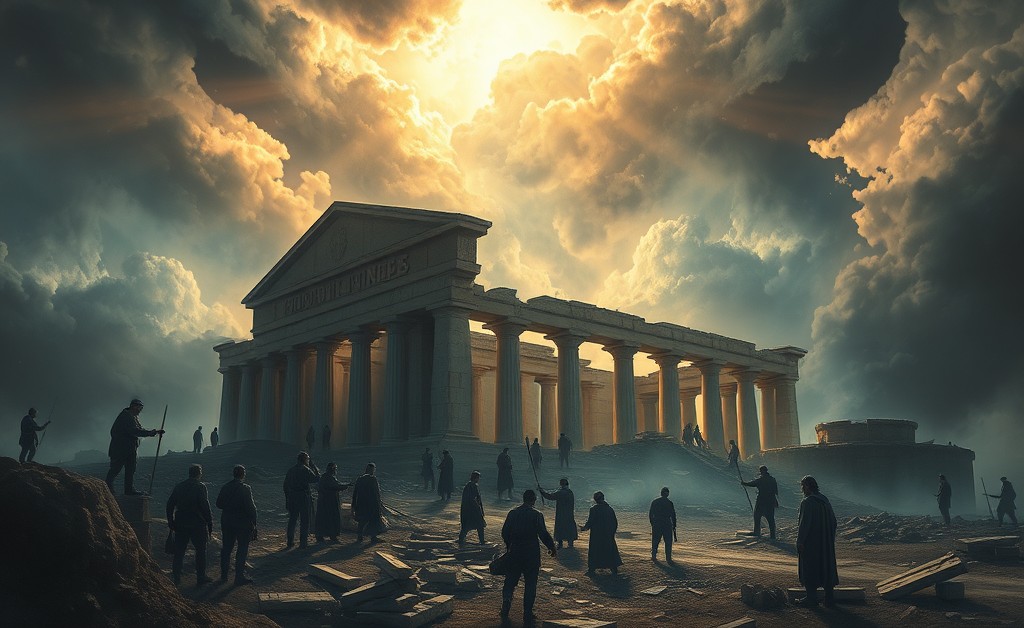
Let us never whitewash the truth.

Let us be honest with those who are separated from God and in danger of judgment and call them to repentance.

For only then will they find true life.

Categories
Ezekiel

True to his word

In this passage, we see how true to his word God is.

He starts by talking about the exile of Jerusalem, and namely that of Zedekiah, the last king of Judah.

God had Ezekiel do a little drama to show the exiles what would happen to their king: that he would be forced to flee Jerusalem under cover of night, that he would be captured, blinded, and brought to Babylon to face Nebuchadnezzar.

Following that, he would scatter the Israelites among the nations.

All these things came to pass.

God told Ezekiel to demonstrate all this, so that all who heard would know that he was the Lord, the only true God.

It was something that the Israelites had trouble accepting. And because God was patient in passing judgment, they took it for God being unreliable. They said,

The days go by and every vision comes to nothing? (Ezekiel 12:22)

This was a proverb that was common in Ezekiel’s time, and people claimed that all these visions that Jeremiah and Ezekiel were having were simply lies or delusions.

But God responded,

‘I am going to put an end to this proverb, and they will no longer quote it in Israel.’

Say to them, ‘The days are near when every vision will be fulfilled. For there will be no more false visions or flattering divinations among the people of Israel.

But I the Lord will speak what I will, and it shall be fulfilled without delay.

For in your days, you rebellious house, I will fulfill whatever I say, declares the Sovereign Lord.’ (Ezekiel 12:23–25)

God is true to his word.

But this is not only true in prophecy. It’s also true concerning his promises. And if he promises something, he will keep his promise.

What promises has he made to us?

“Whoever believes in [Jesus] shall not perish, but have eternal life.” (John 3:16)

“Therefore, there is now no condemnation for those who are in Christ Jesus.” (Romans 8:1)

“I will never leave you nor forsake you.” (Hebrews 13:5)

“If we confess our sins, he is faithful and just and will forgive us our sins and purify us from all unrighteousness.” (1 John 1:9)

“And my God will meet all your needs according to his glorious riches in Christ Jesus.” (Philippians 4:19)

And these are just the tip of the iceberg. There are many, many more.

So let us cling to the promises of God, knowing that he is indeed true to his Word.

Categories
Ezekiel

A true temple, a true people

One of the things that I learned way back in Sunday school was, “The church is not a building. It’s people.”

That’s true, but not quite complete. The church is a people whose hearts belong to God.

Unfortunately, Israel’s heart did not belong to God, despite being “God’s people.”

They had turned their backs on him, worshiping idols, even going so far at times to put idols in God’s temple itself.

In the end, God had enough. He left the temple.

That’s what this passage is all about. From the time Solomon built the temple in Jerusalem, God’s presence rested there (2 Chronicles 5:14).

This is not to say, of course, that it was really his house, for as Solomon said,

The heavens, even the highest heavens, cannot contain you. How much less this temple I have built! (2 Chronicles 6:18)

But Solomon’s prayer was that God’s eyes and ears would be open to the place that had been built for his name (2 Chronicles 6:20–42).

The temple that Solomon had built was glorious. But now, because of Israel’s sin and unfaithfulness towards God, the temple’s true Glory had departed.

We see Israel’s stubbornness of heart in the next chapter, where 25 of the leaders of Israel kept insisting that nothing bad was going to happen to the city.

God rebuked them, and as a sign, slew one of them right then and there.

At which point, Ezekiel cried out,

Ah, Sovereign Lord! Will you completely destroy the remnant of Israel? (Ezekiel 11:13)

To which God basically answered, “No I will not. I’m still with those who have been taken captive in Babylon.”

The ones remaining in Jerusalem had said of them,

They are far away from the Lord; this land was given to us as our possession. (Ezekiel 11:15)

It’s possible here that the people who had been taken captive were the ones who had heeded Jeremiah’s advice to surrender to the Babylonians (Jeremiah 27:17).

As a result, the people who had remained considered them as traitors, rejected by the Lord who had given Israel their land.

But it wasn’t those who had stubbornly stayed despite Jeremiah’s warning that were God’s people. It was those who had left. And God said of them,

Although I sent them far away among the nations and scattered them among the countries, yet for a little while I have been a sanctuary for them in the countries where they have gone.

Therefore say: ‘This is what the Sovereign Lord says: I will gather you from the nations and bring you back from the countries where you have been scattered, and I will give you back the land of Israel again.’ (Ezekiel 11:16–17)

He then went on to say,

I will give them an undivided heart and put a new spirit in them; I will remove from them their heart of stone and give them a heart of flesh.

Then they will follow my decrees and be careful to keep my laws. They will be my people, and I will be their God. (Ezekiel 11:19–20)

What is a true temple? It’s not a building. Who are truly God’s people?

It’s not people who simply go to church or have Christian parents.

God’s temple and God’s people are those within whom God dwells. They are those to whom God has given a soft heart, and a heart to follow him.

May we all have hearts like that.

Categories
Ezekiel

He who sees what is hidden

Sometimes we wonder if God truly sees or cares about what we’re doing. But in this passage, God makes very clear that he does see and that he does care.

Ezekiel in this vision was taken to Jerusalem, and was shown the evil that was rampant there.

First he saw the idols in the inner court of the temple. Then he looked through a wall where seventy elders of Israel were offering incense to false gods.

When he returned to the temple gate, he saw women worshiping Tammuz, a god of fertility and rain. And finally, he saw a group of men worshiping the sun.

Why were they doing all this? Basically, they were saying to themselves,

The Lord does not see us; the Lord has forsaken the land. (Ezekiel 8:12)

And so God brought judgment on them.

But just as he sees the evil that is hidden, he also sees the good.

In Ezekiel’s vision, God told a man to put a mark on the foreheads of all those who grieved over the sin that was being committed around them. And when judgment came upon the idolaters, those God had marked were spared.

What do we take from this? God does see everything we do, whether anyone else knows or not. Our sins are not hidden from him, and he will bring judgment on those who sin against him.

But at the same time, let us who follow God and mourn over the sin we see in this world not get discouraged. Let us remember that though evil may reign for a time, God will ultimately bring justice.

And when that time comes, he will remember those of us who clung to him despite the evil we saw around us and spare us.

But not only will he spare us, he will reward us.

Lord, I thank you that you see everything. That nothing is hidden from you.

Lord, let my life be pure both in private and in public, that wherever I am or whoever I am with, my life may be pleasing to you.

In Jesus’ name, amen.

Categories
Ezekiel

The end

When I was a kid, there was a Japanese superhero show I used to always watch called Kikaida.

If you think he looks cheesy, you should’ve seen the monsters and special effects. (I’m sure you can find this on YouTube somewhere.)

Anyway, in the climax of each show, Kikaida would battle the villain and finish it with a special super blow that would destroy the monster.

In the English translation, Kikaida always shouted, “The end!” as he did so.

That’s basically what God tells the Israelites in this passage. He said,

The end has come! The end has come! It has roused itself against you. It has come!

Doom has come upon you—you who dwell in the land. The time has come, the day is near; there is panic, not joy, upon the mountains.

I am about to pour out my wrath on you and spend my anger against you; I will judge you according to your conduct and repay you for all your detestable practices. (Ezekiel 7:6–8)

In other words, “This is the end for you. You’ve rebelled against me time and again. Now the day of judgment has come and Babylon will come and wipe you out.”

As we look at this passage, I think we see several things about God’s judgment.

First, we will be judged for the evil that we have done. We may think that we have gotten away with our sin, because God hasn’t done anything yet.

But when the day of judgment comes, all that we have done will be put on the table.

Second, God’s love does not prevent him from passing judgment. He told the Israelites,

I will not look on you with pity or spare you; I will repay you in accordance with your conduct and the detestable practices among you. (Ezekiel 7:4)

So many people say, “How can a loving God send anyone to hell?”

But while God is a God of love, he is also a God of justice. And because God is pure, he must punish sin.

More than that, he cannot stand in the presence of sin. All who are stained from sin will be banished from his presence.

Essentially, that’s what hell is. It’s a life apart from God. And when you’re apart from God, ultimately only hopelessness and despair remain.

God doesn’t want that for us, but when we choose to live a life of sin, that’s all that’s left for us.

Third, nothing that we accumulate here on earth can spare us from judgment. God said of the Israelites,

They will throw their silver into the streets, and their gold will be an unclean thing. Their silver and gold will not be able to save them in the day of the Lord’s wrath. (Ezekiel 7:19)

You can accumulate money. You can accumulate land. You can accumulate things.

But all of them will mean nothing when the day of judgment comes. You cannot buy off God’s judgment.

Finally, each will be judged by what they know, not by what they don’t. God told them,

I will deal with them according to their conduct, and by their own standards I will judge them. (Ezekiel 7:27)

God says here that the standards that the people themselves set up will condemn them.

Nobody is completely lawless. While laws may get corrupted over time, there is still some semblance of the moral code that God set in motion at the beginning of time.

And corrupted though people’s laws or sense of morals may be, deep down, they still have an idea of what God has said is right.

Yet people don’t even live up to their corrupted version of God’s code. Men will be condemned by the code that they know. And God says, “You are without excuse, because your own code will condemn you.”

Is there no hope then? Is there only judgment waiting for us all?

Not at all. Jesus came to this earth and died on a cross to take the punishment for our sin.

And now the Bible says that if we will put our trust in him, his blood will purify us from all sin. (1 John 1:7)

So let us turn from our sin and turn to Jesus. With him, there is hope. Without him, there is no hope at all.

Categories
Ezekiel

Finding out too late

I used to like playing with Lego sets when I was a kid, but I don’t think I’d like to do what Ezekiel had to do. He had to build his own “Lego” set, with Jerusalem at the center, a bunch of siege ramps surrounding it, and battering rams.

That in itself wouldn’t have been so bad, but then he had to lie on his side next to the set for 390 days to stand for the 390 years that the northern kingdom of Israel would be punished for their sin.

Then he had to lie for 40 days on his other side to stand for the 40 years that the southern kingdom of Judah would be punished for their sin.

Add to that the fact that he had to cook his food over cow dung, and you have a very unpleasant year and two months of living.

(It could have been worse. God initially told him to cook the food over human excrement before relenting.)

All of this was to be a picture to the Israelites held captive in Babylon, showing them what would happen to Jerusalem and why. (Ezekiel 4)

God then had Ezekiel shave off his hair and beard, and after the “siege” was over, he was to burn a third “inside the city,” cut a third “outside the city,” and take the last third, burning some of that third, while preserving the rest.

Again, this was a sign that many of the Jews would perish, although some would survive. (Ezekiel 5)

In Ezekiel 6, he gives further warnings of judgment. In doing so, we start to see a phrase that we’ll see time and again in the book of Ezekiel: “You will know that I am the Lord.”

In other words, by God telling them what was to happen beforehand, the people would know who truly was God. And it wasn’t their idols that they were serving. It was the one true God whom they had rejected.

The problem was, they wouldn’t find out who the true God was until it was too late. They had so hardened their hearts that only when the day of judgment came would they find out who was truly God.

So many people today are the same. They live all their lives in rebellion against God, turning their backs on him, doing their own thing.

But the day will come when they will stand before God’s throne and find out who truly is God. But by that time, it will be too late, and they will be judged.

How about you? Are you acknowledging God in your life? Are you making him your king?

You will acknowledge him sooner or later, but if you only acknowledge him when you step into his courtroom, it’ll be too late.

But if you do so here and now, not only will you find forgiveness, but you’ll find true life. Not just life in heaven. But a life that’s worth living here on earth.

As Paul wrote,

That if you confess with your mouth, “Jesus is Lord,” and believe in your heart that God raised him from the dead, you will be saved.

For it is with your heart that you believe and are justified, and it is with your mouth that you confess and are saved…for, “Everyone who calls on the name of the Lord will be saved.” (Romans 10:9–10, 13)

May you turn to him and acknowledge him as Lord before it’s too late.

Categories
Ezekiel

Whether they listen or not

Hey, a chronological book! What a unique concept! And quite refreshing considering all the time jumping going on in Jeremiah.

Ezekiel comes on to the scene at about this time of history. It was the fifth year after Jehoiachin, the second-to-last king of Judah, had gone into exile to Babylon. Along with Jehoiachin, Ezekiel and many other Jews joined him in exile.

Ezekiel was the son of a priest, but at an age (30) when he would normally have started his service as a priest, God calls him here as a prophet.

Ezekiel first saw what appears to be cherubim. They had four faces, that of a man, lion, ox, and an eagle.

Many of the church fathers take that as the different “faces” of Christ as found in the gospels. Jesus the “Lion of Judah” in Matthew, Jesus the servant in Mark (the ox), Jesus the Son of Man in Luke, and Jesus the Son of God in John (the eagle).

They also show the omniscience of God (with their four faces on four sides, nothing was out of their view), and the omnipresence of God (the wheel within the wheels able to go anywhere at any time).

But then God himself appears, and speaks to Ezekiel.

And it is his call of Ezekiel that interests me the most here.

First he told Ezekiel,

Son of man, I am sending you to the Israelites, to a rebellious nation that has rebelled against me; they and their fathers have been in revolt against me to this very day.

The people to whom I am sending you are obstinate and stubborn. Say to them, ‘This is what the Sovereign Lord says.’

And whether they listen or fail to listen—for they are a rebellious house—they will know that a prophet has been among them.

And you, son of man, do not be afraid of them or their words. Do not be afraid, though briers and thorns are all around you and you live among scorpions.

Do not be afraid of what they say or terrified by them, though they are a rebellious house.

You must speak my words to them, whether they listen or fail to listen, for they are rebellious. (Ezekiel 2:3–7)

Two key things here:

First, God said that he was sending Ezekiel to the people of Israel.

Second, he said, “Whether they listen or not, you are to give them my message.”

He tells us the same thing. He is sending us to the people around us, and commands us to give them his words.

Some may listen. Some may not. But whether they listen or not, we are to give them his words.

Then he told Ezekiel,

Open your mouth and eat what I give you. (Ezekiel 2:8)

He then gave Ezekiel a scroll with his words written on it. They were not happy words. Rather they were words of “lament, mourning, and woe.”

In other words, they were words of the judgment to come because of the people’s sins. Ezekiel took in the words of God, and he said it tasted like honey in his mouth.

We too are to take in the words of God. We are to savor them.

But we are not just to keep them to ourselves, we are to share them. Not just the good things God has said, but his words of warning as well. What happens if we don’t?

God told Ezekiel,

Son of man, I have made you a watchman for the house of Israel; so hear the word I speak and give them warning from me.

When I say to a wicked man, ‘You will surely die,’ and you do not warn him or speak out to dissuade him from his evil ways in order to save his life, that wicked man will die for his sin, and I will hold you accountable for his blood.

But if you do warn the wicked man and he does not turn from his wickedness or from his evil ways, he will die for his sin; but you will have saved yourself.

Again, when a righteous man turns from his righteousness and does evil, and I put a stumbling block before him, he will die. Since you did not warn him, he will die for his sin.

The righteous things he did will not be remembered, and I will hold you accountable for his blood.

But if you do warn the righteous man not to sin and he does not sin, he will surely live because he took warning, and you will have saved yourself. (Ezekiel 3:17–21)

What is God saying here? We have a responsibility as God’s watchmen to warn people to turn from their sin.

If we do, and they repent, we will have saved them. If they don’t, they will die, but God will not hold us responsible for their blood.

If, however, we say nothing, they will die and God will hold us responsible.

We cannot control how people respond to God’s message. That’s not in our hands.

But whether they listen or not, God calls us to tell them. To tell our family, our friends, our neighbors, and our coworkers.

Some will listen and be saved. Some will close their ears and die because of it.

But the question you need to ask yourself is this: “Am I doing what God has commanded me to do? Am I telling them his words of warning and salvation?”

Are you?

Categories
Jeremiah

Run

In this passage God turns from pronouncing judgment on the conquered nations to pronouncing judgment on their conqueror Babylon.

Here, God tells them that their reign will come to a crashing end by nations from the North, that is, the Medes and the Persians.

But in the midst of this judgment, God gives a command to his people: Run!

Time and again, we see him saying things like

Flee out of Babylon; leave the land of the Babylonians (Jeremiah 50:8),

and,

Flee from Babylon! Run for your lives! (Jeremiah 51:6)

and again,

Come out of her, my people! Run for your lives! Run from the fierce anger of the Lord. (Jeremiah 51:45)

This is in sharp contrast to chapter 29 where he told the Jews to make their home in Babylon, to multiply there, and seek the peace and prosperity of the cities they were living in.

Why the contrast? Because when the Medes and Persians came, Babylon’s own time of judgment would come. And so God commanded the people to leave so that they would not get caught in Babylon’s doom.

In the same way, it would be well for us to remember not to get too comfortable as we live in this world. To keep our hearts softened to God. To remember that he is our true pasture and our hope in this world. (Jeremiah 50:7)

To remember he is our creator, the one who made everything by his power and wisdom. (51:15–16)

And to remember that there will be a day of reckoning for all who live on this earth. (51:6, 56)

So let us leave our life of sin, and not linger in the evil that others do.

Instead, let us “remember the Lord in a distant land, and think on Jerusalem.” (51:50)

Or as Paul said,

Since, then, you have been raised with Christ, set your hearts on things above, where Christ is seated at the right hand of God.

Set your minds on things above, not on earthly things. For you died, and your life is now hidden with Christ in God.

When Christ, who is your life appears, then you also will appear with him in glory. (Colossians 3:1–4)

Categories
Jeremiah Obadiah

Reasons for judgment

I know. At first glance, it seems a bit strange to combine Jeremiah and Obadiah. But there is some method to my madness.

If you look at Obadiah, it actually has a lot in common with Jeremiah 49:7–22.

A lot of the imagery and wording is so similar, you have to believe that Obadiah had some access to Jeremiah or vice versa.

It is not unusual for biblical authors to quote other biblical authors. And it’s possible that God told Obadiah, “Remember what Jeremiah said here. Repeat what he said.” Or vice versa.

Or it’s possible that God independently gave each of them the same words to speak. That too is not entirely unusual.

At any rate, God here is passing judgment on the nations surrounding Judah. At a guess, it would seem that these prophecies happened at the same time as the events of Jeremiah 27–29.

In those passages, as you recall, Jeremiah was warning many of these same nations to submit to Nebuchadnezzar.

Also in the prophecy against Elam, Jeremiah timestamps it as being early in the reign of Zedekiah.

Why did God pass judgment on these nations? He doesn’t always give reasons, but there are several repeated themes.

First, the worship of false gods.

For Moab, it was the god Chemosh. For Ammon, it was the god Molech. These are the gods mentioned in these passages, but each nation had their own gods that they worshiped, turning their backs on the one true God.

Second, pride. God said of Moab,

“Since you trust in your deeds and riches, you too will be taken captive…

We have heard of Moab’s pride—her overweening pride and conceit, her pride and arrogance and the haughtiness of her heart.

I know her insolence but it is futile,” declares the Lord, “and her boasts accomplish nothing.” (Jeremiah 48:7, 29–30)

Of Ammon, he said,

“Why do you boast of your valleys, so fruitful? O unfaithful daughter, you trust in your riches and say, ‘Who will attack me?’” (Jeremiah 49:4)

To Edom, he said,

“The terror you inspire and the pride of your heart have deceived you… I will bring you down.” (Jeremiah 49:16)

And of Kedar and Hazor, he said,

“Arise and attack a nation at ease, which lives in confidence,” declares the Lord. (Jeremiah 49:31)

Finally, you see a lack of mercy and compassion on the part of these nations.

Moab ridiculed Israel when it fell (Jeremiah 48:27).

When Assyria had taken the northern kingdom of Israel captive, Ammon callously took over the land that had been left abandoned (Jeremiah 49:1).

As for Edom, despite the fact that they were descendants of Esau and the Israelites were descendants of his brother Jacob, Edom “stood aloof” when Israel was attacked and rejoiced over its destruction (Obadiah 12–13).

Idolatry. Pride. A lack of mercy and compassion. Do these things reign in your life?

You may not worship Buddha or other “gods,” but how about money? How about possessions? Whatever is most important in your life is your god.

What about pride? Who do you put your trust in? Yourself? Or God?

C.S. Lewis called pride “the great sin.” Because it is pride more than any other sin that separates us from God.

It is pride that causes us to think that we don’t need him. It is pride that causes us to walk away from him.

A lack of mercy and compassion.

This is what Jesus criticized the Pharisees and teachers of the law for. “I desire mercy, not sacrifice,” he said.

But though they claimed to love God, they certainly didn’t care about people.

How about you? Do you actually care about the people around you? Or do you not give a rip, thinking only of yourself?

Categories
Jeremiah

While we’re still here

I’ve been thinking a lot about life and death recently.

One of the pillars of my church here in Japan, a woman named Kathleen Benton, passed away last week due to cancer.

She wasn’t a pastor, but she touched many lives and made a difference in every life that she touched.

Maybe some people wouldn’t call her a pillar, but I think she was.

As I look at this passage, it really speaks to me as a person who is still here on earth.

God was talking to the exiles in Babylon. They had been taken from their homes and forced to live in a land that was not theirs. It was a land filled with idolatry and godlessness.

But God said to them,

Build houses and settle down; plant gardens and eat what they produce. Marry and have sons and daughters; find wives for your sons and give your daughters in marriage, so that they too may have sons and daughters.

Increase in number there; do not decrease.

Also, seek the peace and prosperity of the city to which I have carried you into exile. Pray to the Lord for it, because if it prospers, you too will prosper. (Jeremiah 29:5–7)

It seems to me that God says the same thing to us.

Like the Jews, we are in a world filled with idolatry and godlessness. And it would be easy to just say, “I just want to go to heaven already! I don’t want to deal with this world and its problems.”

But God says, “While you’re here on earth, enjoy the life I’ve given you. Settle down. Marry. Have children. Be productive.”

More than that, he said, “Seek the peace and prosperity of the place that you’re in. Pray for it, because if it prospers, you too will prosper.”

Sometimes Christians just isolate themselves from the world. They live in fear, making the church their fortress, and just praying that God would keep them safe there.

But God doesn’t want us to do that. He tells us to be active in our community. To make a difference in it. To be involved politically. To touch the lives around us. And most of all to pray for our community and our nation.

And instead of living in fear of the future, he wants us to know that there is a future and a hope for us, even here on earth. He told the Jews and he tells us today,

For I know the plans I have for you,” declares the Lord, “plans to prosper you and not to harm you, plans to give you hope and a future.

Then you will call upon me and come and pray to me, and I will listen to you. You will seek me and find me when you seek me with all your heart. I will be found by you… (Jeremiah 29:11–14)

So while we’re still here, let us seek the Lord. Let us pray to him.

Let us not live in fear of the future or of what we see in our community today. Rather let us go out and enjoy this life he has given us. Let us be productive, using the gifts he has given us.

And let us touch the world around us, making a difference in people’s lives.

Categories
Jeremiah

Testing the prophets

With Zedekiah, the final king of Judah, now on the throne, Judah was on its last legs.

And Jeremiah had a very unpopular message to give them and the surrounding nations: Submit to Babylon. If you will submit to Babylon, you will live. If you don’t, you will die.

There were a lot of prophets in Judah and in the other nations telling their kings, “Don’t worry about Babylon. You won’t serve them.”

But Jeremiah said of them,

They prophesy lies to you that will only serve to remove you far from your lands; I will banish you and you will perish. (Jeremiah 27:10)

A false prophet named Hananiah arose at that time, speaking against all that Jeremiah said.

When he did, Jeremiah answered,

Amen! May the Lord do so! May the Lord fulfill the words you have prophesied by bringing the articles of the Lord’s house and all the exiles back to this place from Babylon.

Nevertheless, listen to what I have to say in your hearing and in the hearing of all the people: From early times the prophets who preceded you and me have prophesied war, disaster and plague against many countries and great kingdoms.

But the prophet who prophesies peace will be recognized as one truly sent by the Lord only if his prediction comes true. (Jeremiah 28:6–9)

What was he saying?

Basically he was saying that we should beware the prophets that speak only words of peace. That say, “Oh yes, God is pleased with your worship. He’s pleased with your lives,” and speak nothing of the need for repentance in our lives.

Another man named Shemaiah told the priests to reprimand Jeremiah for all his words of “doom and gloom.” (Jeremiah 29:24–32)

But in both cases, the Lord rebuked these would‑be prophets, and they both died for it.

I think sometimes people claim to speak for the Lord, when really they are only speaking from their own emotions.

Emotions are great, but they don’t mean the Lord is speaking. God will use prophets to encourage us, that’s true. But he will not use prophets to say that he will bless us when we’re living in sin.

Instead he uses true prophets to admonish us to put away our sin and follow him. That’s what Jeremiah did.

Do you test those that claim to be speaking for the Lord? Just because a person claims to be speaking for the Lord doesn’t make it true.

Don’t get me wrong. I’m not saying to just outright dismiss anyone claiming to speak for God. As Paul said,

Do not put out the Spirit’s fire; do not treat prophecies with contempt. (1 Thessalonians 5:19–20)

But also remember what Paul said right after that,

Test everything. Hold on to the good. (1 Thessalonians 5:21)

How about you? Do you test what you hear?

Categories
2 Chronicles 2 Kings Jeremiah

God’s choice, our choice

The sovereignty of God and the free will of man is one of those things that has been a long-standing debate in the Christian world.

We see this tension in this passage, so we’ll discuss it a bit here, but I won’t claim to have any new answers on the subject.

At this point in history, Jehoiakim was deposed by the king of Babylon after Jehoiakim rebelled.

His son Jehoiachin took over, but his reign lasted only three months before Nebuchadnezzar came again and took him prisoner too, along with a bunch of other people.

The king’s mother, his wives, his officials and leading men, the entire army, as well as a thousand craftsmen and artisans were all taken as well.

In Jehoiachin’s stead, Nebuchadnezzar made his uncle Zedekiah king.

It was during this time that God gave Jeremiah a vision of two baskets of figs, one of very good figs, and one of very bad figs.

God told Jeremiah that he considered the people that were taken into exile the good figs and the people that remained in Jerusalem the bad figs.

And while he would ultimately destroy those remaining in Jerusalem, God promised to restore the exiles to their land and bless them.

The question is why would God spare one group and destroy the other? God said, of the exiles,

My eyes will watch over them for their good, and I will bring them back to this land.

I will build them up and not tear them down; I will plant them and not uproot them.

I will give them a heart to know me, that I am the Lord.

They will be my people, and I will be their God, for they will return to me with all their heart (Jeremiah 24:6–7).

Certainly some of the people taken into exile were innocents, so to speak. Daniel and Ezekiel were two examples of this.

But there were many others who were not so innocent. Why would God spare them? I don’t know, other than to say it was due to God’s mercy.

Some people would say, “Well, it’s because of God’s foreknowledge. He knew they would return to him eventually, and so that’s why he spared them.”

But that ignores the passage where God says that the reason they would return to him is that he would give them a heart to know him. He was the one that would change their hearts.

Why didn’t he do the same for Zedekiah and the people remaining in Jerusalem?

I don’t know.

What can I say for sure?

First, people are condemned directly by their own choices. Had Zedekiah and the other people chosen to follow God, he would have blessed them. But they chose not to.

Second, nobody would come to God unless he started to work in their lives and gave them a heart to know him. This is true of the exiles. It is true of us.

As someone once put it, “He fixed our broken antenna so that we might hear him.”

Third, God is never arbitrary in his choices. God always has his reasons.

The problem we have is that he never gives us those reasons in his word. We have a lack of data because God has chosen not to reveal it to us. And so there we have to stop.

The question we ultimately have to ask ourselves is this: What will we choose?

Nobody can ever come to God and say, “It’s not my fault I didn’t follow you.”

We are responsible for our own choices. And so God will hold us responsible for the choices that we make.

We can choose to follow him or choose not to. What will you choose?

Categories
Jeremiah

Judgment and discipline

It was at this time in history that Nebuchadnezzar was really rattling the cages of the nations around. He had already rattled the cage of Judah, and now he was rattling the cage of Egypt.

In these two passages, we see the judgment God was bringing on two nations, Egypt and Philistia. God would use Egypt to crush Philistia, while he would use Babylon to crush Egypt.

It’s the pattern God has used throughout history.

But sandwiched in between these two proclamations of judgment, God speaks to Judah, saying,

“Do not fear, O Jacob my servant; do not be dismayed, O Israel. I will surely save you out of a distant place, your descendants from the land of their exile.

Jacob will again have peace and security, and no one will make him afraid.

Do not fear, O Jacob my servant, for I am with you,” declares the Lord.

“Though I completely destroy all the nations among which I scatter you, I will not completely destroy you. I will discipline you but only with justice; I will not let you go entirely unpunished.” (Jeremiah 46:27–28)

It strikes me that God makes a distinction between those who are his and those who are not.

To those who are not his, to those who have utterly rebelled against him, judgment is coming, and it is certain.

But to those who are his, while he may discipline us, and that discipline may indeed be harsh, he will not simply dispose of us. Rather, he is constantly working to restore us.

And no matter how badly we may fall, he promises that he will always be with us.

You may feel that because of your sin, God is punishing you, and more than that, that he has given up on you.

But if you have received Jesus as Lord in your life and received his gift of eternal life, you are God’s child. And as such, he says to you,

I will never leave you; I will never forget you. (Hebrews 13:5)

So,

Do not make light of the Lord’s discipline, and do not lose heart when he rebukes you, because the Lord disciplines those he loves, and he punishes everyone he accepts as a son.”…

Our fathers disciplined us for a little while as they thought best; but God disciplines us for our good, that we may share in his holiness.

No discipline seems pleasant at the time, but painful. Later on, however, it produces a harvest of righteousness and peace for those who have been trained by it. (Hebrews 12:5–6; 10–11)

Categories
Jeremiah

Who to listen to

None of us like to feel uncomfortable, especially when we’re listening to messages at church.

But a good pastor will not only give messages of comfort and encouragement, but will also give messages that challenge us to grow. And for most of us, messages that challenge also tend to make us feel uncomfortable.

That’s exactly what the priests, prophets, and other leaders of Judah were not doing.

Jeremiah starts this chapter by criticizing the leaders for not leading and caring for the people.

In a political sense, they cared little if at all for justice and the physical needs of the people. But in a spiritual sense, they had led the people into idolatry and spiritual adultery.

In so doing, not only did they fail to do anything to stop the spread of evil among the people, they even promoted it. And when they spoke, they only said things that made the people feel good.

God said of them,

The prophets follow an evil course and use their power unjustly. Both prophet and priest are godless; even in my temple I find their wickedness…

They prophesied by Baal and led my people Israel astray.

And among the prophets of Jerusalem I have seen something horrible: They commit adultery and live a lie.

They strengthen the hands of evildoers, so that no one turns from his wickedness…

Do not listen to what the prophets are prophesying to you; they fill you with false hopes. They speak visions from their own minds, not from the mouth of the Lord.

They keep saying to those who despise me, “The Lord says: You will have peace.”

And to all who follow the stubbornness of their hearts they say, “No harm will come to you.”…

“I am against the prophets who wag their own tongues and yet declare, ‘The Lord declares.’”

“Indeed, I am against those who prophesy false dreams,” declares the Lord.

“They tell them and lead my people astray with their reckless lies, yet I did not send or appoint them. They do not benefit these people in the least,” declares the Lord. (Jeremiah 23:10–11, 13–14, 16–17, 30–32)

The same can be said in many churches today. In many “Christian churches,” they actively promote as good what God has said is evil.

They fill people with false hopes saying “You will have peace” when judgment is looming over them.

But God says to those who would be his representatives,

“Let the prophet who has a dream tell his dream, but let the one who has my word speak it faithfully. For what has straw to do with grain?” declares the Lord.

“Is not my word like fire,” declares the Lord, “and like a hammer that breaks a rock in pieces?” (28–29)

What kind of church are you going to? Is the word of God burning like a fire there, getting rid of the chaff in your life?

Is it like a hammer that breaks the hardened places in your hearts and makes it soft soil where the fruit of God’s Spirit can thrive?

If not, it may be time for you to leave and find somewhere where you can grow into the person God’s called you to be.

The day will come when Jesus will return, “a King who will reign wisely and do what is just and right in the land. (5)”

But until that day comes, let us commit ourselves to following him and going to churches that are committed to the same.

Categories
Jeremiah

Seeking what’s temporary. Seeking what’s eternal

Baruch, Jeremiah’s scribe, was throwing a pity party for himself.

He had delivered Jeremiah’s words to King Jehoiakim, but Jehoiakim merely took the scroll, cut it into pieces, and burned it.

As a result, Baruch was totally discouraged, saying,

Woe to me! The Lord has added sorrow to my pain; I am worn out with groaning and find no rest. (Jeremiah 45:3)

In short, “Why am I doing this? What profit am I getting from serving Jeremiah and the Lord? I do what they say, and all that ever happens is that I get into trouble.

“I could be doing other things. I could be out there in the world earning money, and becoming rich. I could be doing something that actually amounts to something. Why do I have to subject myself to all this?”

But God responded to him, saying,

This is what the Lord says: I will overthrow what I have built and uproot what I have planted, throughout the land.

Should you then seek great things for yourself? Seek them not.

For I will bring disaster on all people, declares the Lord, but wherever you go I will let you escape with your life. (4–5)

What was God saying? Basically he was telling him that this world is temporary. All that we see will ultimately be destroyed.

So don’t seek the things of this world which are here today and gone tomorrow. But seek God and his kingdom.

And while all those who serve themselves will ultimately perish, you will find true life.

Do you get discouraged sometimes about doing what’s right? Do you ever feel like you’re wasting your time serving God? Do you think you’d be better off seeking the things of the world?

Don’t waste your time seeking what’s temporary. Seek what’s eternal. For only in doing so will you ever find true life and true reward.

As Paul wrote,

Let us not become weary in doing good, for at the proper time we will reap a harvest if we do not give up. (Galatians 6:9)

Categories
Jeremiah

The blessing that comes from obedience

So many times we know what God says, but don’t obey him.

One reason is that we feel like we’ll “miss out on all the fun.” Or that we’ll find more happiness if we do things our way instead of God’s.

That’s how the people of Judah were. But here God shows them and us the blessing that comes from obedience.

God told Jeremiah to invite a family to the temple. They were all descendants of a man named Recab.

They must have been looked upon by their neighbors as a bit strange. They still lived in tents when everyone else had built their own homes, and they refused to drink wine like everyone else.

When this family came, they went to one of the rooms in the temple where the sons of a man named Hanan lived.

Jeremiah then offered them wine to drink, but they replied,

We do not drink wine, because our forefather Jonadab son of Recab gave us this command: ‘Neither you nor your descendants must ever drink wine.

Also you must never build houses, sow seed or plant vineyards; you must never have any of these things, but must always live in tents. Then you will live a long time in the land where you are nomads.’

We have obeyed everything our forefather Jonadab son of Recab commanded us. Neither we nor our wives nor our sons and daughters have ever drunk wine or built houses to live in or had vineyards, fields or crops.

We have lived in tents and have fully obeyed everything our forefather Jonadab commanded us. (Jeremiah 35:6–10)

Even when Nebuchadnezzar came against Judah, and they were forced to flee from their land to Jerusalem, they continued to keep the command of Jonadab.

God then spoke to Jeremiah, saying,

This is what the Lord Almighty, the God of Israel, says: Go and tell the men of Judah and the people of Jerusalem, ‘Will you not learn a lesson and obey my words?’ declares the Lord.

‘Jonadab son of Recab ordered his sons not to drink wine and this command has been kept. To this day they do not drink wine, because they obey their forefather’s command.

But I have spoken to you again and again, yet you have not obeyed me.’ (13–14)

In other words, “These men obeyed their forefather Jonadab, even though he was a mere man. But here I am your God, and you don’t obey me. Why not?”

But then he said of the Recabites,

This is what the Lord Almighty, the God of Israel, says: ‘You have obeyed the command of your forefather Jonadab and have followed all his instructions and have done everything he ordered.’

Therefore, this is what the Lord Almighty, the God of Israel, says: ‘Jonadab son of Recab will never fail to have a man to serve me.’ (18–19)

Because the Recabites were faithful to their forefather, and to God, they found blessing in their lives at a time when judgment was falling on the land they were living in.

What about you? Do you truly believe that if you follow God and do things his way that you’ll find blessing?

This is not to say that your life will be easy. But you will find joy and contentment in your life as you follow him, no matter your circumstances.

Categories
Daniel

Even if…

You have to admire the faith and commitment Daniel and his friends had toward God. To stand against the tide is no easy thing, especially when it threatens to crash down on you.

I’m not sure, but I kind of guess Nebuchadnezzar got some inspiration from the dream that God had given him. Unfortunately, he took it in the wrong direction. Instead of humbling himself before God, he tried to exalt himself.

Unlike the dream, the statue he made wasn’t made up of many kinds of metal. Rather, it was made of only gold.

Perhaps he was throwing the gauntlet down in front of God saying, “I don’t care what you said. My kingdom will last forever. There will be no kingdom of silver, bronze, or iron.”

His egotism showed in the command he gave to all the people: that when they heard the sound of Nebuchadnezzar’s musicians, they were to bow down and worship the idol.

Everyone obeyed.

Well, almost everyone.

For in the midst of all the people prostrating themselves on the ground, three people stood tall: Daniel’s three friends, Shadrach, Meshach, and Abednego.

(Where Daniel was, we don’t know. It’s possible he was away on official business at the time.)

The astrologers, perhaps jealous of the elite position these three men had obtained, told Nebuchadnezzar about this, and he flew into a rage. He called the three men before him and threatened them with their lives, saying,

If you do not worship [my statue], you will be thrown immediately into a blazing furnace. Then what god will be able to rescue you from my hand? (Daniel 3:15)

Talk about throwing down a gauntlet. But Daniel’s friends didn’t back down. They said,

O Nebuchadnezzar, we do not need to defend ourselves before you in this matter.

If we are thrown into the blazing furnace, the God we serve is able to save us from it, and he will rescue us from your hand, O king. (Daniel 3:16–17)

And then they told him,

But even if he does not, we want you to know, O king, that we will not serve your gods or worship the image of gold you have set up. (Daniel 3:18)

In other words, “God can deliver us from you, Nebuchadnezzar. But even if he doesn’t, we will continue to follow him.”

Even if. Talk about unconditional commitment. These men refused to flinch from their devotion to God, even if it meant their lives.

How about you? How committed are you to God?

Are you committed to him even if your family turns against you?

Will you remain devoted to him even if you have to give up your job in order to do things his way?

Will you continue to follow him even if he doesn’t do all that you ask him to do?

That’s the kind of heart God wants from us.

God doesn’t always promise a life of roses if we follow him. Sometimes there’s a price to pay.

But as I mentioned in my last blog, he is a God that walks among us. He walked with Shadrach, Meshach, and Abednego in the fire, to the astonishment of Nebuchadnezzar and his officials.

And whatever fiery trial you may go through, he will be with you through every moment of it.

Let us be people who follow God no matter what. Even if…

Categories
Daniel

The God who walks among men

Here we have one of the most famous prophetic passages in the Bible. In this passage, God reveals to Nebuchadnezzar the future of his empire, as well as of the Medo-Persian, Greek, and Roman empires.

Ultimately, God makes clear to Nebuchadnezzar that as great as these human empires might be, they would only be temporary, and could not compare to the kingdom that would come, God’s kingdom.

God’s kingdom would sweep away all other kingdoms and would stand forever.

But as interesting as this prophecy was, I find the words of Nebuchadnezzar’s astrologers in verse 11 even more interesting.

Nebuchadnezzar demanded that they not only interpret the dream he had, but that they tell him the dream itself. In that way, he could tell that their interpretation was true. The astrologers complained that they could not do it, saying,

There is not a man on earth who can do what the king asks! No king, however great and mighty, has ever asked such a thing of any magician or enchanter or astrologer.

What the king asks is too difficult. No one can reveal it to the king except the gods, and they do not live among men. (Daniel 2:10–11)

The Babylonians had many gods, but to the astrologers, they were inaccessible, at least to do what Nebuchadnezzar commanded them to do. “Our gods do not live among men,” they said.

But Daniel served a God who does walk among men. And when he heard of the king’s edict to kill all the wise men of Babylon, he asked for more time to seek God.

When God revealed the mystery and the dream to him, he worshiped God saying,

Praise be to the name of God for ever and ever; wisdom and power are his. He changes times and seasons; he sets up kings and deposes them.

He gives wisdom to the wise and knowledge to the discerning. He reveals deep and hidden things; he knows what lies in darkness, and light dwells with him.

I thank and praise you, O God of my fathers: You have given me wisdom and power, you have made known to me what we asked of you, you have made known to us the dream of the king. (Daniel 2:20–23)

The same God who walked with Daniel, walks with us as well. Jesus is Immanuel, “God with us.”

So let us never think of God as one who is far away or inaccessible. But when we face problems and troubles in our lives, let us do as Daniel did: humble ourselves before him and seek his face.

And just as he was with Daniel, he will also be with us.

Categories
Daniel

Resolved

I have to admit that trying to keep the chronology of Israel’s history is a bit like juggling balls. There were so many books being written at about the same time, it’s difficult to keep everything straight.

At the same time, I must say that all of this has been quite illuminating. I’m sure I’ve read or heard before of the timing of the book of Daniel, but it still came as a surprise to me to realize that the early events of Daniel came before Judah’s ultimate fall during the reign of Zedekiah.

Even knowing it happened before then, I somehow had it in mind that his exile came in the time of Jehoiachin, the second to last king of Israel.

But according to Daniel, Babylon’s siege of Jerusalem started in the third year of Jehoiakim’s reign (he lasted a total of 11 years as king), and Daniel was probably taken in the fourth year of Jehoiakim’s reign.

Anyway, Daniel and a number of Jews from the royal family and nobility were taken to Babylon. Basically Nebuchadnezzar wanted the best of the best from the land of Judah, as well as from the other lands he had conquered.

The idea was two-fold: strip the conquered areas of any potential threats, while strengthening his own kingdom. And so Daniel and his friends were taken and indoctrinated with the Babylonian culture.

To try to get these captives immersed in their new surroundings, they were also given new names. Daniel and his friends all had names which honored God, but each were given new names that honored the Babylonian gods.

It’s interesting that today, most people remember Daniel’s friends’ names by their Babylonian names, while somehow, Daniel’s name has stuck with us.

I suppose it’s because Daniel used his own name throughout the entire book, while using the Babylonian names to refer to his friends.

But early on, Daniel and his friends were faced with a choice. And it was seemingly a very minor one, whether to eat the food that they were being served. It was food that came from the king’s table, and it was supposedly a way to honor those being trained for the king’s service.

But there were two problems. First, they probably violated the dietary laws God had given to the Israelites. And second, the food had probably been offered to idols first.

It would’ve been easy for Daniel and his friends to say, “Well, we’re far from home. God seems to have abandoned us. He let us get captured by these people. When in Rome… (or more accurately, ‘When in Babylon….’).”

But it says in verse 8,

Daniel resolved not to defile himself with the royal food and wine. (Daniel 1:8)

He talked to the official in charge of him and his friends, showing some God-given wisdom and tact in doing so (something we all need, but don’t always have), and as a result, was given a ten-day test period to do things God’s way.

When they passed the test, the official let them eat as they wished. The result?

To these four young men God gave knowledge and understanding of all kinds of literature and learning. And Daniel could understand visions and dreams of all kinds…

The king talked with them, and he found none equal to Daniel, Hananiah, Mishael and Azariah; so they entered the king’s service.

In every matter of wisdom and understanding about which the king questioned them, he found them ten times better than all the magicians and enchanters in his whole kingdom. (Daniel 1:17, 19–20)

What can we take from this?

How resolved are you to do what is pleasing in God’s sight?

Think of the pressure that Daniel and his friends were under. Pressure from the Babylonians. Pressure from their friends who had compromised their beliefs. Pressure from the lusts of their own flesh, and the pride of life.

Yet these things did not shake them. They committed themselves to serving God no matter what. And God blessed them for it.

Are you resolved to follow God in the face of peer pressure? In the face of temptation?

Let us be like Daniel and his friends, resolved to follow God no matter the cost. And know that if we do so, we will ultimately find his blessing in our lives.

Categories
Jeremiah

Responding to hard words

Nobody likes discipline. Nobody likes hearing hard words. But how we respond to them can shape our lives for the good or the bad.

Jeremiah had many hard words for the people of Judah, namely words of judgment for their sin.

It was always a two-fold message: Judgment is coming. But you can avoid it if you will just turn from your sin.

In chapter 25, he warned the people that they would go into exile into Babylon for 70 years unless they repented.

Not only did he warn Judah, but he warned the surrounding nations as well.

How did they respond? Many didn’t respond well at all.

When many of the people, priests, and prophets heard Jeremiah’s words, they seized him, saying, “You must die! Why are you saying these things?” (Jeremiah 26:8–9).

They considered it almost treason to preach that Judah would be destroyed for their sins. Jeremiah was only saved when the elders of the land stood up for him.

They pointed out that when the prophet Micah prophesied during the time of Hezekiah, Hezekiah responded by fearing the Lord and repenting, causing God to relent on passing judgment.

On hearing this, the people released Jeremiah, but we see no signs that they actually turned from their sins.

Their king Jehoiakim was no better. When another prophet named Uriah preached against Judah as Jeremiah did, Jehoiakim had him pursued all the way to Egypt, and when they brought him back, he had Uriah killed. (Jeremiah 26:20–23)

At another time, Jeremiah had his scribe Baruch go to the temple and read out the words Jeremiah had been given by God.

When he did, the palace officials had Baruch hand them the scroll, and they took it and read it to Jehoiakim.

Jehoiakim’s response? He cut them up and burned them. Then he tried to have Jeremiah put to death too.

How about you? How do you respond to hard words. When someone confronts you about sin in your life, do you brush it off? Do you get angry and attack the person who confronts you? Or do you take those words to heart and repent?

God’s desire is not to judge people. His desire is that we turn from our sins and repent. And by sending people to warn us, he’s giving us that chance.

How much better for us would it be if we would take those words and let them shape us, instead of casting them aside?

What will you do?

Categories
Habakkuk

Trusting God in the midst of an evil world

We hit yet another minor prophet here.

Habakkuk probably prophesied during the time of Jeremiah, and this book was probably written sometime during the reign of King Jehoiakim the son of Josiah.

Jehoiakim came to power (so to speak) when his brother Jehoahaz was dethroned by Egypt after a mere three months on the throne, and Egypt made Jehoiakim their puppet king.

And during his reign, Habakkuk was appalled at all the evil he saw going on in Judah.

Once again, the people of Judah had fallen into idolatry, and evil and injustice were rampant.

And so Habakkuk cried out to God saying,

How long, O Lord, must I call for help, but you do not listen?

Or cry out to you, “Violence!” but you do not save?

Why do you make me look at injustice?

Why do you tolerate wrong?

Destruction and violence are before me; there is strife, and conflict abounds. Therefore the law is paralyzed, and justice never prevails.

The wicked hem in the righteous, so that justice is perverted. (Habakkuk 1:2–4)

Does this at all sound familiar to you?

The things Habakkuk saw in his day, we see in ours. Violence. Injustice. A legal system that at times seems paralyzed. Justice that is perverted.

And like so many people today, Habakkuk cried out to God, “Why? Why do you allow this? Why don’t you do something?”

How did God answer? He told Habakkuk that judgment was coming to Judah through the Babylonians.

Up until that time, Egypt and Assyria had been the main powers in the world.

But now Babylon was going to take their place of power, and through them, God would punish not only Judah, but the other nations for their sins. (Habakkuk 1:5–11)

At that point, Habakkuk said, “Wait a minute. The Babylonians are even worse than we are. And you’re going to use them to punish us? How can you allow them to swallow up those who are more righteous than they are?” (Habakkuk 1:12–13)

God basically answered Habakkuk, “Yes, even though they are more evil than Judah, I will use them to punish Judah as well as the other nations.

“But don’t worry about it, they will get theirs. Their day of judgment is coming too, and they will eventually be overthrown.” (Habakkuk 2)

But in the midst of all this, he tells Habakkuk and us something very important.

He says, “These Babylonians are all puffed up. They think they’re so great because of their power and might. As a result, they put their faith solely in themselves. But Habakkuk, the righteous person will live by his faith.” (Habakkuk 2:4)

It is the one verse that the apostle Paul quoted time and again. It was the verse that Martin Luther made as the cornerstone of the Protestant Reformation.

And it was one of the main messages God was telling Habakkuk in the midst of a world of evil.

“Trust me. I am good. I am just. And I will make all things right.”

God told Habakkuk,

Write down the revelation and make it plain on tablets so that a herald may run with it.

For the revelation awaits an appointed time; it speaks of the end and will not prove false.

Though it linger, wait for it; it will certainly come and will not delay. (Habakkuk 2:2–3)

And after proclaiming judgment on Babylon, he told Habakkuk,

The Lord is in his holy temple; let all the earth be silent before him. (Habakkuk 2:20)

In other words, “Habakkuk, I am in control. It may not seem that way now. But I am. And all the earth will bow to me and my will. So Habakkuk, trust me.”

How does Habakkuk respond? He responds with praise and prayer.

Lord, I have heard of your fame; I stand in awe of your deeds, O Lord. Renew them in our day, in our time make them known; in wrath remember mercy. (Habakkuk 3:2)

That’s how we should respond as we look at all the evil in this world.

Praise him. Remember his goodness. Remember what he’s done.

And then pray for revival in this fallen world, that God’s mercy might fall on us once again.

And as you do so, continue to walk in faith, trusting him. Habakkuk closes by saying,

Though the fig tree does not bud and there are no grapes on the vines, though the olive crop fails and the fields produce no food, though there are no sheep in the pen and no cattle in the stalls, yet I will rejoice in the Lord, I will be joyful in God my Savior.

The Sovereign Lord is my strength; he makes my feet like the feet of a deer, he enables me to go on the heights. (Habakkuk 3:17–19)

Lord, this world is full of evil. I see it every day.

But Lord, help me to trust in you despite all the evil that is there. To believe that you are in control. To believe that one day justice will come.

Lord remember mercy on those who have fallen. Let me be your agent of mercy. And may I walk each day trusting you. In Jesus’ name, amen.

Categories
2 Chronicles 2 Kings Jeremiah

To know God

The last four kings after Josiah can all be basically painted bad.

Jehoahaz (known as Shallum in Jeremiah 22), Jehoiakim, Jehoiachin, and Zedekiah all were miserable failures as kings.

We’ll take a closer look at the latter three later, but God makes his comment on the first three kings in Jeremiah 22.

Basically, they were all more interested in themselves than in serving God or the people. They used their positions of power merely to enrich themselves while ignoring God and the needs of the people. And so God passes judgment on all three kings.

In doing so, he compares them to Josiah, saying,

“Does it make you a king to have more and more cedar? Did not your father have food and drink? He did what was right and just, so all went well with him. He defended the cause of the poor and needy, and so all went well. Is that not what it means to know me?” declares the Lord.

“But your eyes and your heart are set only on dishonest gain, on shedding innocent blood and on oppression and extortion.” (Jeremiah 22:15–17)

All of these men knew of God. They knew what he had done in the past. But they didn’t truly know him. And God makes crystal clear that knowing him doesn’t simply mean knowing about him.

To know God means to acknowledge him with our lives and with our actions. To do what is just and right, things that these kings simply did not do.

James put it this way,

Show me your faith without deeds, and I will show you my faith by my deeds.

You believe that there is one God. Good! Even the demons believe that — and shudder. (James 2:18–19)

How about you? Do you simply know about God? Do you simply believe that he exists? Or do your actions and your life show it?

Categories
2 Chronicles 2 Kings

One bad choice

Choice.  It is a gift.  And a responsibility. 

Every day, we have choices in life that we face. 

Some choices are mundane.  What to have for breakfast.  Whether to drive or take a bus or train to work.

Other decisions are much more important.  Namely, are we going to follow God today or not?  And more specifically, are we going to follow God in this moment or not?

Josiah for most of his life made the decision to follow God. 

He made many wise decisions in leading his people and was a very good king, one of the best in Israel’s history. 

But one day, for whatever reason, he ignored the voice of God, and it cost him his life.

The king of Egypt had gone out to war, but not against Judah. 

For some reason, Josiah went out to stop him, and the king of Egypt said,

What quarrel is there between you and me, O king of Judah? 

It is not you I am attacking at this time, but the house with which I am at war. 

God has told me to hurry; so stop opposing God, who is with me, or he will destroy you.  (2 Chronicles 35:21)

This he said at God’s command. (2 Chronicles 35:22)

But Josiah failed to heed God’s voice. 

Why?  I don’t know. 

Pride, perhaps. 

Pride in his army. 

Pride in his strategy to hide his identity in battle. 

Pride, perhaps, that God would not speak to a foreign king.

Whatever the reason, however, Josiah fell that day, and Judah’s fall didn’t come long after that.

Sometimes we have days where we know what’s right, but for whatever reason, choose what is wrong. 

Sometimes we try to justify our actions; other times we don’t even bother to do that. 

But if there’s a lesson to be learned from Josiah, it’s this:  one bad choice can be our undoing. 

It can be our undoing in our marriage, destroying years of marriage with a single act of unfaithfulness. 

It can also be our undoing in ministry, destroying years of credibility with one sinful decision. 

It can be our undoing in many different aspects of life. 

All it takes is one bad choice.

Of course, God will forgive us if we repent.

I believe Josiah went to heaven. God forgave him.

But by his one action, his reign came to an end, as did his life.

So let us make the decision, every moment of every day to follow God. 

And let us always keep in mind the prayer Jesus taught us.

“Lead us not into temptation.”  (Matthew 6:13)

Categories
Jeremiah

A word like a fire

“Why don’t you just shut up? All this preaching and prophesying ever does is get you in trouble.”

Jeremiah’s own family probably asked him this question. Jeremiah himself asked this question.

God told him to take a pot and break it in front of some of the priests and elders of the people, using it as an illustration of the judgment that was coming on Judah.

Jeremiah then went to the temple courts and warned all the people there of the judgment that was coming.

When he did, one of the priests, Pashur, had him beaten and put in stocks.

And so Jeremiah complained to God,

O Lord, you deceived me, and I was deceived; you overpowered me and prevailed. I am ridiculed all day long; everyone mocks me.

Whenever I speak, I cry out proclaiming violence and destruction. So the word of the Lord has brought me insult and reproach all day long. (Jeremiah 20:7–8)

But then he said,

But if I say, “I will not mention him or speak any more in his name,” his word is in my heart like a fire, a fire shut up in my bones. I am weary of holding it in; indeed, I cannot. (Jeremiah 20:9)

Jeremiah’s feelings are completely jumbled as you look at this passage.

In one verse, he’s praising the Lord, believing he will be vindicated (20:11–13), the next he’s cursing the day he was born (20:14–16).

But one thing he could not do was shut up. The word of God burned too strongly in his heart and soul.

How about you? How strongly does the word of God burn in your heart and soul?

Is it but a spark that is quickly extinguished? Or is it a roaring fire that cannot be quenched?

Categories
Jeremiah

Turn

When I was in Hawaii, I often had Jehovah’s Witnesses and Mormons come to my door.

Even in Japan, I had Jehovah’s Witnesses come to my door, although since I’ve moved to my condo 6 years ago, I’ve had no such visits because of condo rules.

It’s too bad really. I had some very interesting conversations with them.

Anyway, one problem with these groups (among many others), is the number of false prophecies that their leaders have given in the past.

And one thing they often say in response is, “Well, sometimes Biblical prophets made mistakes too. Look at Jonah. He prophesied that Nineveh would fall, and it didn’t.”

What they fail to realize is that God’s purpose in Jonah’s message was that the people would repent. It wasn’t a false prophecy, it was a warning.

This is what God says of such warnings:

If at any time I announce that a nation or kingdom is to be uprooted, torn down and destroyed, and if that nation I warned repents of its evil, then I will relent and not inflict on it the disaster I had planned.

And if at another time I announce that a nation or kingdom is to be built up and planted, and if it does evil in my sight and does not obey me, then I will reconsider the good I had intended to do for it. (Jeremiah 18:7–10)

The Ninevites were a perfect example of this. They repented and therefore God spared them.

On the other hand, God promised the Israelites that if they would follow his commands, he would bless them, and that they would be his people and he would be their God.

But the people turned their backs on him, and so although God planned good for them, he instead brought disaster against them.

Here at the end of this chapter, we see that they were so hardened against God’s message that they ignored Jeremiah and wanted to be rid of him.

The result? Exile.

What is the message for us? Turn. Turn from our sin. Turn from our selfish ways. And most of all, turn to God. For only in following him will we find true life.

So as we end this year, let us reflect on the sins in our lives that we need to turn from and also on the things that God would have us do in the coming year.

Categories
Jeremiah

Marred

It’s hard to believe another year is coming to a close. Mine is not exactly coming to an ideal end. I caught my third cold in the past month or so.

I suppose it doesn’t help to have a daughter who keeps spreading the germs she catches from nursery school. All part of a broken world, I suppose. And all of us are a part of it.

But here, we see that God can take something that is broken or marred and turn it into something beautiful.

God told Jeremiah to go to a potter’s house, and as Jeremiah observed, he saw a potter shaping a pot. When Jeremiah looked carefully however, he saw that the pot was marred.

But the potter didn’t throw it away. Rather, the potter formed it into another pot, shaping it as he saw fit. Then God told Jeremiah,

“O house of Israel, can I not do with you as this potter does?” declares the Lord.

“Like clay in the hand of the potter, so are you in my hand, O house of Israel.” (Jeremiah 18:6)

The house of Israel was marred by their sin. But God let them know that as badly marred as they were by their sin, they could still be shaped into something beautiful.

And he tells us the same.

Maybe you look at your life and think that you’re worthless. Maybe you look at your life and think that it’s so bad that even God couldn’t possibly love you.

But no matter how marred you are, God can take the scars of your life and heal them. He can take your brokenness and restore you.

It was for that purpose that Jesus himself was marred. As Isaiah 53:5 says,

But he was pierced for our transgressions, he was crushed for our iniquities; the punishment that brought us peace was upon him, and by his wounds we are healed.

Do you feel you are damaged goods? God can forgive you and restore you. All you have to do is turn to him.

As the old song goes,

Something beautiful, something good.
All of my confusion, he understood.

All I had to offer him was brokenness and strife,
But he made something beautiful of my life.

— Bill Gaither

Categories
Jeremiah

Honor, trust, and obedience

I suppose it would be easy to just skip over this section in which God tells the Israelites to keep the Sabbath. Easy because Paul wrote to the Christians at Colosse not to let people judge them concerning the Sabbath.

I’ve written more on this here.

But I think there are some principles that we can take from this passage.

The keeping of the Sabbath was something that the Israelites did that showed three things.

It showed that they honored God as their creator. They remembered his creative work and how on the 7th day he rested from that work.

It also showed their trust in him. They took a day off from work, trusting that God would provide their needs, even if they did so.

And finally, it showed their obedience. Trust and obedience are very much linked. Without trust, it’s very difficult to obey God.

Unfortunately, the Israelites failed on all three counts.

God told them, “If you will only keep the Sabbath, you will find blessing. But if you don’t, judgment will come.”

Why? Because in violating the Sabbath, they failed to show honor towards God, they failed to trust him, and they failed to obey him, even in something that was pretty easy to do.

Their failure to keep the Sabbath was but a symptom of the overall problem the Israelites had in their relationship with God.

How about you?

Do you honor God with your life? Do you remember all that he has done for you, and praise him for it?

Do you trust him? Do you trust that his way is best and that he really does want the best for you? And do you obey him even in the little things?

That’s what God desired from his people. And that’s what he desires from us.

May we be a people that honors, trusts, and obeys him.

Categories
Jeremiah

The need for a cure

The human condition can probably be summed up in verse 9 of this chapter.

The heart is deceitful above all things and beyond cure. Who can understand it? (Jeremiah 17:9)

If you think about all the problems in this world, it comes down to the hearts of people.

Our hearts are deceitful. Our hearts deceive others. Our hearts even deceive ourselves.

Jeremiah talks about people who deceive others in order to gain wealth. But in doing so, they deceive themselves into thinking that they have found the path to happiness.

Jeremiah says of them,

When his life is half gone, they will desert him, and in the end he will prove to be a fool. (Jeremiah 17:11)

Others turn away from God thinking that it will allow them to enjoy life more. That God is just trying to take away their fun.

But Jeremiah points out,

All who forsake you will be put to shame.

Those who turn away from you will be written in the dust because they have forsaken the Lord, the spring of living water. (13)

In other words, life is found only in God, and in walking away from him, people ultimately lose their lives because they’ve walked away from the source of life.

Others scoff at the words of God, thinking they’re meaningless babble. They say,

Where is the word of the Lord? Let it now be fulfilled! (15)

The Lord’s word will be fulfilled. And if these people don’t turn from their sin, when the day of judgment comes, their scoffing will turn into weeping and regret.

We may deceive others. We may even deceive ourselves. But we’re not fooling God.

And he warns us,

I the Lord search the heart and examine the mind, to reward a man according to his conduct, according to what his deeds deserve. (10)

Our hearts are sick and stained with sin. And we don’t have the power to heal ourselves. We are beyond human remedy.

No matter how hard we try, we cannot make ourselves righteous in the eyes of God. Instead we continually fall into the same patterns of sin that lead to death.

Where is the hope then? Only in God. All we can do is pray as Jeremiah did,

Heal me, O Lord, and I will be healed; save me and I will be saved, for you are the one I praise. (14)

Through the blood of Jesus, our sins have been paid for at the cross. And through the work of the Spirit, he cleanses us from the inside out, washing away the stain of sin, and making us holy.

How about you? Do you see the need for a cure in your own life? Do you see the sin that seems to hold you captive?

Turn to Jesus, and he will heal you and set you free.

Categories
Jeremiah

Remaining fruitful in difficult times

Let’s be honest. Life can be difficult.

Sometimes, it’s through no fault of our own. Other times it’s directly related to bad decisions we make.

For the Israelites of Jeremiah’s time, they had brought trouble onto their own heads by turning their backs on God and going their own way.

God told them,

Through your own fault you will lose the inheritance I gave you.

I will enslave you to your enemies in a land you do not know, for you have kindled my anger, and it will burn forever. (Jeremiah 17:4)

Jeremiah, on the other hand, was suffering through no fault of his own. Rather, he was suffering for doing exactly what God told him to do, preaching the Word to a stubborn and rebellious people.

God gave this word to the Israelites, but I think it was just as much for Jeremiah’s encouragement, when God told him,

Cursed is the one who trusts in man, who depends on flesh for his strength and whose heart turns away from the Lord.

He will be like a bush in the wastelands; he will not see prosperity when it comes.

He will dwell in the parched places of the desert, in a salt land where no one lives.

But blessed is the man who trusts in the Lord, whose confidence is in him.

He will be like a tree planted by the water that sends out its roots by the stream.

It does not fear when heat comes; its leaves are always green.

It has no worries in a year of drought and never fails to bear fruit. (Jeremiah 17:4–8)

In saying this, God condemned the Israelites for trusting in themselves, but encouraged Jeremiah at the same time.

Basically, he said, “Jeremiah, I know things are tough. But if you will trust in me and put your confidence in me, you will be blessed. Even though your circumstances seem tough, you will always be fruitful for me. Even if everyone else around you falls to these hard times, you will prosper.”

And God was as good as his word. Though Jerusalem would eventually fall, God delivered Jeremiah. Nebuchadnezzar himself gave orders that Jeremiah was to be taken care of and not harmed. (Jeremiah 39:11–14)

This is not to say Jeremiah’s life was easy and that he lived a life of leisure. But he was a man that lived a life that was fruitful despite everything that happened around him.

As we face the coming year, what difficulties are you going through? Are they coming because you’ve turned your back on God?

Now’s a good time to turn back. To turn your back on your stubbornness and sin, and to start trusting God again.

Are things going wrong even though you’re following God? Keep trusting him. Don’t get discouraged.

And like Jeremiah, you will see a life that is fruitful and makes a difference in this world.

Isn’t that what we all want?

Categories
Jeremiah

The One to whom all nations will come

As Christmas approaches, our eyes turn to Jesus.

But which Jesus do our eyes turn to? Is it to that cute baby in the manger?

That’s a Jesus that people like. Why? Because it’s a picture that’s not threatening. It’s a Jesus that makes no demands on you. It’s a Jesus that just lays there resting comfortably.

But the day will come when “every knee will bow and every tongue confess that Jesus Christ is Lord, to the glory of God the Father.” (Philippians 2:10–11).

On that day,

The nations will come from the ends of the earth and say, “Our fathers possessed nothing but false gods, worthless idols that did them no good. Do men make their own gods? Yes, but they are not gods!” (Jeremiah 16:19–20)

Perhaps the people will say this with joy at finding the truth. But there may also be weeping and gnashing of teeth on that day.

Many people will look at their gods and see them for the worthless pieces of wood and stone that they are.

Others will look at the things they pursued in life. Money, sex, power, the things of this world. But all those things will be shown for the empty things that they are.

At that time they will know that Jesus is no longer a baby in a manger. They’ll know that he is both Lord and King.

God says at that time,

I will teach them – this time I will teach them my power and might. Then they will know that my name is the Lord. (Jeremiah 16:21)

How about you? How do you see Jesus? Do you see him as just the baby from Bethlehem? Or do you see him as your Lord and King?

When Jesus comes and you fall to your knees saying “Jesus is Lord,” will you say it in love and awe?

Or will you say it with the words literally being pulled out of your mouth through gritted teeth?

May you come to know this Jesus, not as a baby born 2000 years ago, but as your Lord and King today.

Categories
Jeremiah

Deliverer and Redeemer

As I write this, Christmas is drawing near. And as such, my thoughts turn even more than usual to the one who came 2000 years ago.

Why did he come? He came not to judge, but to deliver and redeem us from our captivity to sin and to set us free that we might have a relationship with him once again.

As usual, we see a lot of the judgment of God in this passage.

God told Jeremiah not to mourn with those who had lost loved ones, because there was no comfort to give. God had withdrawn his blessing from the people.

And soon, so many would die that there would be no one left who could bring comfort to others. All would be suffering from pain and loss.

Then he told him not to join in their feasting because all joy and gladness would soon be taken from them.

God told Jeremiah to make crystal clear to the people why judgment would come. That it would come because they had turned their backs on God and started serving other gods in the stubbornness of their own hearts.

But then the tone of the passage changes a bit in verses 14–15.

God asked Jeremiah, “Do you know how people always look back at how I saved the Israelites from the hands of the Egyptians. That’ll be nothing compared to how I’ll bring all my people back from exile into the land I promised their forefathers.

“From that point on, people will no longer point back to the Exodus, but to their return from exile.”

And that’s exactly what God did. He brought them back from Persia into their own land.

And after Rome decimated Jerusalem during the time of the apostles and all the Jews were scattered, 2000 years later, in our very own time, he brought them back into their own land.

Why did he do so? To prove to them that he is their deliverer and redeemer, not the gods that they had been seeking.

The day will come when all Israel will acknowledge that. And God says concerning them,

“Therefore I will teach them — this time I will teach them my power and might. Then they will know that my name is the Lord.” (Jeremiah 16:21)

Today, there are many people lost in their sin. Who like the Israelites have turned their backs on God in the stubbornness of their own hearts.

But Jesus came to deliver and redeem them. To show them who God really is, that they might know him and have a relationship with him.

So as we look around at the people around us this Christmas, let us keep that in mind and share with them the good news that they can be delivered and redeemed as well.

Categories
Jeremiah

Spiritual pitfalls: The trap of self-pity

Sometimes when following God gets hard, it becomes easy to complain.

“Why is this happening to me? I don’t understand. I thought that if I followed you, all would go well. Why are you allowing this to happen?”

And that’s how Jeremiah felt. Once again, he felt the sting of rejection and persecution from his own people.

As a result, he started to face doubts about what he was doing for God, saying,

Why is my pain unending and my wound grievous and incurable?

Will you be to me like a deceptive brook, like a spring that fails? (Jeremiah 15:18)

In other words, “I’m suffering here. Can’t you see? Are you truly going to help me? Or will you let me down like so many others have in the past?”

But once again, God doesn’t allow Jeremiah to wallow in his own self-pity. Rather, he challenges him, saying,

Therefore this is what the Lord says: “If you repent, I will restore you that you may serve me; if you utter worthy, not worthless, words, you will be my spokesman.

Let this people turn to you, but you must not turn to them.

I will make you a wall to this people, a fortified wall of bronze; they will fight against you but will not overcome you, for I am with you to rescue and save you,” declares the Lord.

“I will save you from the hands of the wicked and redeem you from the grasp of the cruel.” (Jeremiah 15:19–21)

Put simply, “Stop feeling sorry for yourself. Walk away from your pity party so that I can use you. Stop your complaining, and instead speak the words I give you.

“These people around you would have you become like them, but you must not. Instead, you must make them bend to you.

“They may fight against you and persecute you, but they will not overcome you. I will rescue you.

“So take your eyes off of yourself, and put them on me where they belong.”

How about you? Do you wallow about in self-pity when things get hard because you’re serving God?

Satan loves that, because it makes you utterly useless to God. Satan wants you to focus on yourself, because when you do, it’s impossible to focus on God or the people around you.

Let us not be people that focus on ourselves and our own troubles.

Rather, as the writer of Hebrews says,

Let us fix our eyes on Jesus, the author and perfecter of our faith, who for the joy set before him endured the cross, scorning its shame, and sat down at the right hand of the throne of God.

Consider him who endured such opposition from sinful men, so that you will not grow weary and lose heart. (Hebrews 12:2–3)

Categories
Jeremiah

Feeding on the words of God

Things were so bad in Judah, that God told Jeremiah he would not have heeded any intercession even from Moses or Samuel.

Basically, after Hezekiah died, Judah went on a downward slide. His son Manasseh had led the nation back into idol worship, and though he himself repented, the nation continued in their sin.

This despite the rise of Josiah, who like Hezekiah before him, truly sought the Lord from his heart.

The problem? The people refused to take in the words of God. They heard them all the time from Jeremiah and the other prophets. But they would not heed them.

Jeremiah, on the other hand, was different. He said,

When your words came, I ate them; they were my joy and my heart’s delight, for I bear your name, O Lord God Almighty. (Jeremiah 15:16)

When the people of Judah tasted the words of the Lord, they immediately spit it out.

But when Jeremiah tasted the words of the Lord, he savored them. He delighted in them. And he took them in and let them transform him.

How about you? What do you do with the words of God?

Some people are literally starving spiritually because they fail to take in the nutrients of the Word.

They think that the Sunday message is enough, though they would never consider having just one big meal to sustain them through the entire week.

Other people hear the word, and immediately forget what they read, making it of no use to them.

But if we want to see God work in our lives, we need to feed on his words, delight in them, and take them into our hearts. To let them renew our minds and transform our way of thinking and acting.

If we do, we will find not judgment, as the people of Judah received. Rather, we will find mercy as Jeremiah and the others who followed God received even in the midst of a troubled time.

Categories
Jeremiah

Where our hope lies

Here we see more warnings of judgment to come.

Jeremiah first warns the people that they will be taken captive and put to shame because of their sins. That while they would hope for light, God would cover them in the utter darkness of despair (Jeremiah 13:16).

Then he uses the drought Judah was going through to show them that this was just another warning for the people to turn from their sin before utter disaster hit. (Chapter 14)

In the midst of the drought, Jeremiah pleaded with God for mercy in spite of the people’s sins. But after he finished praying,

The Lord said to me, “Do not pray for the well-being of this people.

Although they fast, I will not listen to their cry; though they offer burnt offerings and grain offerings, I will not accept them.

Instead, I will destroy them with the sword, famine and plague.” (Jeremiah 14:11–12)

Still, Jeremiah pleaded with God for the people, and in the end said,

Do any of the worthless idols of the nations bring rain? Do the skies themselves send down showers?

No, it is you, O Lord our God. Therefore our hope is in you, for you are the one who does all this. (Jeremiah 14:22)

The thing that Jeremiah realized, which apparently none of the other people of Judah did, was that their only hope lay in God.

The people of Judah put their trust in themselves, in their alliances with other countries, and in their own wisdom and strength.

But that pride would end up destroying them. And the gods they stubbornly clung to wouldn’t be able to pull them out of the trouble they were in.

Where does your hope lie? Does it lie in God? Do you put your trust in him for everything in life? Do you do things his way?

Or are you like the people of Judah, trusting in yourself, and counting on the gods of this world to pull you through the troubles you are going through.

There is only one place we can truly find hope, and that’s in God. So let us turn to him and follow him before it’s too late.

Categories
Jeremiah

Making ourselves useless

What are we doing here on earth? What is God’s purpose for us?

Ultimately it comes down to two things:

First, to know him more.

And second, to touch the world around us for him.

God could take us straight to heaven and accomplish the first. But he would be quite limited in doing the second if he took us to heaven right here and now.

(I suppose he could use our writings or the inspiration people take from our lives to touch others even after our death, for example).

But it is possible to make ourselves useless. To be a person that God cannot use at all to touch this world. How can that happen?

God told the people of Judah,

I bound the whole house of Israel and the whole house of Judah to me,’ declares the Lord, ‘to be my people for my renown and praise and honor.

But they have not listened.’ (Jeremiah 13:11)

In other words, God intended Israel and Judah to be a shining light to the nations around them. That the nations would see God in their midst and be drawn to him.

But Israel and Judah refused to listen to or obey him. So God made a graphic picture for them to realize what had happened to them.

He had Jeremiah buy a linen belt, wear it for a while, and then bury it in the ground for a time.

When Jeremiah finally brought it back out of the ground, it was ruined and completely useless. God then told Jeremiah,

In the same way I will ruin the pride of Judah and the great pride of Jerusalem.

These wicked people, who refuse to listen to my words, who follow the stubbornness of their hearts and go after other gods to serve and worship them, will be like this belt – completely useless! (Jeremiah 13:9–10)

When we in our pride turn from God, refuse to heed his voice and instead follow the stubbornness of our own hearts, following the gods of this world, whether it be idols, or money, or possessions, or whatever it may be, we become like the linen belt: buried in the ground, ruined, and useless to God.

I don’t know about you, but I don’t want to be that way. As the old song goes,

My heart’s one desire
Is to be holy
Set apart for You, Lord

I choose to be holy
Set apart for You, my Master
Ready to do Your will.

Categories
Jeremiah

Running out of steam

Nobody ever said following the Lord would be easy. (At least I never have). And the life of a prophet is much tougher.

Jeremiah found that out when he learned that the people of his own hometown of Anathoth were plotting to kill him.

But despite God’s reassurance that their time of judgment was coming near, Jeremiah complained to God saying,

You are always righteous, O Lord, when I bring a case before you. Yet I would speak with you about your justice:

Why does the way of the wicked prosper? Why do all the faithless live at ease? You have planted them, and they have taken root; they grow and bear fruit. You are always on their lips but far from their hearts.

Yet you know me, O Lord; you see me and test my thoughts about you. (Jeremiah 12:1–3)

In other words, “Why are these evil people around me prospering? Look at me! I’m doing my best to follow you, and see what it’s getting me? Everyone hates me and they even want to kill me!”

One might think that God would give him a consoling pat on the shoulder and say, “Oh don’t worry Jeremiah. It’ll all be okay.”

But instead, God gives him a word of rebuke. A slap in the face, so to speak.

If you have raced with men on foot and they have worn you out, how can you compete with horses?

If you stumble in safe country, how will you manage in the thickets by the Jordan? (Jeremiah 12:5)

In short, “You’re tired already? This is only the beginning. Things are about to get much tougher. If you’re wilting now, how are you going to stand when the pressure really comes.”

God never promised us that the Christian life would be easy. And he warned Jeremiah, “Don’t even trust the members of your family, because they will betray you behind your back, while speaking pleasantly to your face.”

What am I saying? That we should be paranoid of everyone around us? Of course not. But on the other hand, don’t be surprised if you suffer for the sake of Christ.

Jesus himself said,

Remember the words I spoke to you: ‘No servant is greater than his master.’ If they persecuted me, they will persecute you also. (John 15:20)

Jeremiah was running out of steam because of the opposition he was facing.

And essentially God was telling him, “Welcome to the big leagues. This is but a taste of what it means to follow me. And if you’re going to not just survive but thrive, you need to get a lot stronger.”

How do we get stronger? Know what you’re facing and prepare. Know that there are forces around us that are out to get us, and I’m not talking about the people that make trouble for us in our lives.

Paul wrote,

For our struggle is not against flesh and blood, but against the rulers, against the authorities, against the powers of this dark world and against the spiritual forces of evil in the heavenly realms. (Ephesians 6:12)

How do we prepare in this spiritual fight? Paul tells us,

Be strong in the Lord and in his mighty power.

Put on the full armor of God so that you can take your stand against the devil’s schemes. (Ephesians 6:10–11)

In other words, don’t rely on your own strength to fight. If you rely on your own strength, like Jeremiah, you will start to falter.

Root yourself in your relationship with God. That’s what Jesus did daily, spending much time in prayer with the Father, drawing his strength for the day from him.

Honestly, that’s something I need to do more of.

But not only that, put on the armor of God. Put on the belt of truth, the breastplate of righteousness, the shield of faith, the helmet of faith, and the sword of the Spirit which is the Word of God.

Too many Christians run around naked and in their own strength, not even knowing there’s an enemy out there. That’s a good way to get killed.

How about you? Are you rooted in your relationship with God? Are you daily putting on his armor?

If not, you’ll find yourself running out of steam very quickly, and getting shot down by the enemy.

Let us not be that way. Rather, as Paul said, let us,

Put on the full armor of God, so that when the day of evil comes, you may be able to stand your ground, and after you have done everything, to stand. (Ephesians 6:13)

Categories
Jeremiah

When God won’t listen

“I’m already saved. So I’ll just sin and God will forgive me.”

That’s the unfortunate attitude of many people that say they are Christians, but continue to live their own way.

But God makes clear here that he doesn’t tolerate that kind of attitude.

He said of the people of Israel and Judah,

There is a conspiracy among the people of Judah and those who live in Jerusalem.

They have returned to the sins of their forefathers, who refused to listen to my words. They have followed other gods to serve them.

Both the house of Israel and the house of Judah have broken the covenant I made with their forefathers. (Jeremiah 11:9–10)

So many people today are the same. They return to the sins that they had previously left behind.

Perhaps the people of Judah thought to themselves, “It’s okay. If we get into trouble, we’ll just make the sacrifices for sin, and God will forgive us.”

But they forgot the sacrifices were not for willful sins, that is, sins made in utter rebellion and disobedience towards God.

Sometimes we sin in the heat of the moment. Sometimes we sin before we even know it. It was for those sins that the sacrifices were for, not for defiant ones. See here for more on that.

Here, the people of Judah knew what they were doing was wrong, but insisted on sinning. So God said,

Therefore this is what the Lord says: ‘I will bring on them a disaster they cannot escape. Although they cry out to me, I will not listen to them.’ (11)

And again,

Do not pray for this people nor offer any plea or petition for them, because I will not listen when they call to me in the time of their distress. (14)

We are living in the age of grace. That’s true. God will forgive us if we’re truly repentant. But as I’ve mentioned before, that doesn’t mean we’ll escape the consequences of sin.

If you cheat on your wife, she may divorce you no matter how much you may plead with her or God.

If you blow your money on gambling or unwise use of credit cards, you can plead with God all you want, but most likely, he’ll let you suffer the consequences of your actions.

So let us not fool ourselves by saying, “God will forgive, so I’ll just sin.”

Let us instead do as Paul admonishes us.

Flee the evil desires of youth, and pursue righteousness, faith, love and peace, along with those who call on the Lord out of a pure heart. (2 Timothy 2:22)

Categories
2 Chronicles 2 Kings

A superficial repentance

We now come to the beginning of the end for Judah. 

Josiah was the last great king of Judah.  And on the surface, it looks like there was true repentance under his leadership. 

He destroyed the false idols and altars.  He got rid of all the spiritists, mediums, and all the false priests as well. 

They also had the greatest Passover feast since the time of Samuel. 

And it says,

As long as he lived, they did not fail to follow the Lord, the God of their fathers.  (2 Chronicles 34:33)

But it says in 2 Kings 23:26-27,

Nevertheless, the Lord did not turn away from the heat of his fierce anger, which burned against Judah because of all that Manasseh had done to provoke him to anger.  

So the Lord said, “I will remove Judah also from my presence as I removed Israel, and I will reject Jerusalem, the city I chose, and this temple, about which I said, ‘There shall my Name be.’”

What was the problem? 

While Josiah’s repentance was quite genuine, the same cannot be said of the rest of the people of Israel. 

While there were certainly those among the Israelites that truly repented, there were others that stubbornly clung to their sinful ways. 

It may have been hidden, but it was there.

And after Josiah died, all that evil came flooding back into the open.

How about you?  Are you truly serving God with all your heart as Josiah did? 

Or are you like many of the people of Israel, superficially serving God, but continuing to serve the idols of this world in your own home and workplace?

You may be fooling others, but you’re not fooling God. 

And you will pay the price for it if it continues, just as the Israelites did.

Let us not just serve God with our actions, but with our hearts, putting away all the things that would lead us away from Him.

Categories
2 Chronicles 2 Kings

Living life without the Book

You know that things were a mess spiritually for the people of Judah when their own priests had no idea where God’s book of the Law was. 

It’s utterly inconceivable to me. 

How in the world could the priests teach the people God’s word when they didn’t read it themselves?

I suppose they could remember some of the things that were taught by their fathers. 

But considering that Hezekiah was followed by two corrupt kings and the temple fell into ruin shortly thereafter, it’s doubtful just how accurate the things they remembered were.

So what do you have a result? 

People for the most part living, as was in the time of Judges, according to what they thought was right. 

But what they thought was right was often not what was truly right in God’s eyes.

That’s what Josiah found out. 

As the priests were restoring the temple, someone found the book of the Law.  It was almost brought up to Josiah as an afterthought.

“Everything’s being done as you asked to restore the temple.  All the money is being paid out so that the work can be done.  Oh, and by the way, the book of the Law was found.”  (2 Kings 22:9-10)

But while it may or may not have been an afterthought to Shaphan, Josiah’s secretary, it certainly wasn’t an afterthought to Josiah. 

When the words of the law were read to him, he tore his robes saying,

Go and inquire of the Lord for me and for the people and for all Judah about what is written in this book that has been found. 

Great is the Lord’s anger that burns against us because our fathers have not obeyed the words of this book; they have not acted in accordance with all that is written there concerning us.  (2 Kings 22:13)

The news that came back wasn’t good.  Huldah the prophetess replied,

“This is what the Lord, the God of Israel, says:  Tell the man who sent you to me, ‘This is what the Lord says: 

I am going to bring disaster on this place and its people, according to everything written in the book the king of Judah has read. 

Because they have forsaken me and burned incense to other gods and provoked me to anger by all the idols their hands have made, my anger will burn against this place and will not be quenched.’” (2 Kings 22:15-17).

That was the bad news.  But then she said,

Because your heart was responsive and you humbled yourself before the Lord when you heard what I have spoken against this place and its people, that they would become accursed and laid waste, and because you tore your robes and wept in my presence, I have heard you, declares the Lord. 

Therefore I will gather you to your fathers, and you will be buried in peace. 

Your eyes will not see all the disaster I am going to bring on this place.  (2 Kings 22:19-20)

What can we get from this? 

Our lives become a mess spiritually without the Book.  We cannot live our lives not being fed with God’s word, and hope to live lives pleasing to him. 

One of my pet peeves is preachers who speak a lot and barely touch the Word of God during the entire message. 

They might talk 30 or 40 minutes, and then say, “Okay let’s look at what God says about this.” 

They go on to read God’s word for about 5 minutes, and then they move on to their own thoughts, barely touching the Word again.

The message may have some very good things in it.  We might take home some godly advice. 

But people go home well fed with the pastor’s words and very little of God’s word.

For other people, they may be very well fed at their church, but are starving the rest of the week spiritually. 

Their Bible gathers dust while their lives fall apart because they’re living by their own wisdom rather than God’s.

How about you?  Is the Bible lost in your church?  Is it lost in your own home? 

If it is, you’ll soon find the temple of your body in disrepair because you’re living by your own wisdom and the wisdom of men rather than God’s.

Whose wisdom are you living by? 

May we have hearts like Josiah, hearts that are humble and responsive to God’s word. 

And hearts that are committed to living life with the Book, not without.

Categories
Zephaniah

The Day of the Lord

We’re going to take a short break from Jeremiah at this point, and take a brief look at Zephaniah, who was a contemporary of Jeremiah.

As with the book of Nahum, I won’t spend too much time here, mostly because Zephaniah’s message is very similar to Jeremiah’s and Isaiah’s and most of the other prophets, namely warnings of judgment to come.

If you have any doubt of that, look no further than the first chapter where Zephaniah says,

“I will sweep away everything from the face of the earth,” declares the Lord.

“I will sweep away both men and animals; I will sweep away the birds of the air and the fish of the sea.

The wicked will have only heaps of rubble when I cut off man from the face of the earth,” declares the Lord. (Zephaniah 1:2–3)

Just as the other prophets, Zephaniah drills Judah over their idolatry (1:4–6), their complacency (1:12), their disobedience (3:1), and injustice from the top-down (3:3–4).

And so Zephaniah warns them of the judgment to come.

The great day of the Lord is near—near and coming quickly. Listen! The cry on the day of the Lord will be bitter, the shouting of the warrior there.

That day will be a day of wrath, a day of distress and anguish, a day of trouble and ruin, a day of darkness and gloom, a day of clouds and blackness, a day of trumpet and battle cry against the fortified cities and against the corner towers.

I will bring distress on the people and they will walk like blind men, because they have sinned against the Lord. Their blood will be poured out like dust and their entrails like filth. (Zephaniah 1:14–17)

Not only that, Zephaniah proclaimed judgment on the nations around Judah (Zephaniah 2:4–15). For they too were idolatrous and constantly reproached and threatened the nation God had chosen.

As I read this, it makes me think of Romans 2:5–11, where Paul writes,

But because of your stubbornness and your unrepentant heart, you are storing up wrath against yourself for the day of God’s wrath, when his righteous judgment will be revealed.

God “will give to each person according to what he has done.”

To those who by persistence in doing good seek glory, honor and immortality, he will give eternal life.

But for those who are self-seeking and who reject the truth and follow evil, there will be wrath and anger.

There will be trouble and distress for every human being who does evil: first for the Jew, then for the Gentile; but glory, honor and peace for everyone who does good: first for the Jew, then for the Gentile. For God does not show favoritism. (Romans 2:5–11)

Paul could have been speaking in Zephaniah’s time.

Zephaniah followed the pattern of Paul in proclaiming judgment. Judgment for the Jews first, and then judgment for the Gentiles.

Why? Because the Jews should’ve known better. God had directly revealed himself to them in ways he didn’t to the other nations.

God will bring judgment upon our times as well. And Zephaniah’s message to the people of Judah is the same message God gives us today.

Gather together, gather together, O shameful nation, before the appointed time arrives and that day sweeps on like chaff, before the fierce anger of the Lord comes upon you, before the day of the Lord’s wrath comes upon you.

Seek the Lord, all you humble of the land, you who do what he commands. Seek righteousness, seek humility; perhaps you will be sheltered on the day of the Lord’s anger. (Zephaniah 2:1–3)

In short, repent. Humble yourself before God. Seek his ways.

If you do, on that Day of the Lord, our judgments will be taken away and the Enemy of our souls cast out for good.

More, Jesus our king will be in our midst, and disaster and evil will be a thing of the past. (Zephaniah 3:15)

And as we rejoice in his salvation, he will rejoice over us. Zephaniah closes by saying,

The Lord your God is with you, he is mighty to save.

He will take great delight in you, he will quiet you with his love, he will rejoice over you with singing. (Zephaniah 3:17)

And again,

At that time I will gather you; at that time I will bring you home.

I will give you honor and praise among all the peoples of the earth when I restore your fortunes before your very eyes,” says the Lord. (Zephaniah 3:20)

Zephaniah is of course talking about Israel’s restoration in the last days, but the day will come when God takes all of us home. On that day, all will be as it was meant to be in the beginning.

I can’t wait.

Categories
Jeremiah

The God who is awesome

In America, we don’t see many actual idols that people worship. Of course you have the “idols” of this world. Fame. Money. Power. Sex.

But in Japan, we see idols all over the place, mostly of one Buddha or another. Many people also worship in front of a Shinto altar.

And it’s really sad to me. Because at best, they are worshiping a piece of carved stone or metal. At worst, they’re worshiping a demon behind the stone. It’s hard for me to understand why people would do that.

Actually, for most Japanese, it’s more cultural practice than actual religious belief. But it doesn’t really change the fact of what they’re actually doing.

God puts it this way,

For the practices of the peoples are worthless;
they cut a tree out of the forest,
and a craftsman shapes it with his chisel.

They adorn it with silver and gold;
they fasten it with hammer and nails
so it will not totter.

Like a scarecrow in a cucumber field,
their idols cannot speak;
they must be carried
because they cannot walk.

Do not fear them;
they can do no harm
nor can they do any good. (Jeremiah 10:3–5)

And again,

The images he makes are a fraud;
they have no breath in them.

They are worthless, the objects of mockery;
when their judgment comes, they will perish. (14–15)

But God is quite different. Jeremiah says of him,

No one is like you, Lord;
you are great,
and your name is mighty in power.

Who should not fear you,
King of the nations?
This is your due.

Among all the wise leaders of the nations
and in all their kingdoms,
there is no one like you. (6–7)

And again,

The Lord is the true God;
he is the living God, the eternal King.

When he is angry, the earth trembles;
the nations cannot endure his wrath…

But God made the earth by his power;
he founded the world by his wisdom
and stretched out the heavens by his understanding. (10–12)

I don’t say this to mock those who worship these false idols.

But my prayer is that they would turn from these false gods, these pieces of stone or metal, and worship the one true God. Because he alone is worthy of our worship.

Categories
Jeremiah

Something to boast about

This is what the LORD says:
“Let not the wise man boast of his wisdom
or the strong man boast of his strength
or the rich man boast of his riches,
but let him who boasts boast about this:
that he understands and knows me,
that I am the LORD, who exercises kindness,
justice and righteousness on earth,
for in these I delight,” (Jeremiah 9:23–24)

The people of Judah were boasting in their own wisdom and strength. Some even boasted that they were God’s people because they were circumcised.

But all these things were meaningless because they had turned their backs on God and were living their own way. And so judgment was about to fall on them.

What about you? What are you proud of? Your education? Your job? Your wealth? Your position? The things that you own?

They are all meaningless if you don’t know the Lord.

This doesn’t mean that we just know about God. Many people know about God. Satan knows more about God than probably any of us do. But do we truly know him?

Do we walk in close relationship with him, delighting in the things that he delights and despising the things he despises? Do we even know God well enough that we know what he delights in and despises?

To truly know God and what he’s like. Now that’s something to boast about.

And it’s a lifelong process. To not only know what he delights in and despises, but to have our minds transformed so that we delight in and despise the same things that he does.

How much time do we spend getting to know God? How much time do we spend with him every day? Is it a priority in our lives?

Paul wrote this,

I consider everything a loss compared to the surpassing greatness of knowing Christ Jesus my Lord, for whose sake I have lost all things.

I consider them rubbish, that I may gain Christ and be found in him, not having a righteousness of my own that comes from the law, but that which is through faith in Christ – the righteousness that comes from God and is by faith.

I want to know Christ and the power of his resurrection and the fellowship of sharing in his sufferings, becoming like him in his death, and so, somehow, to attain to the resurrection from the dead. (Philippians 3:8–11)

To know Jesus was Paul’s passion. Is it yours?

Categories
Jeremiah

Deceptive hearts, lying tongues

If there’s one thing I try to be, it’s to be honest. I don’t even care to tell white lies very often.

If I don’t want to do something, I’ll just say so. Nicely, but honestly.

If I don’t like something, I’ll usually go by the maxim, “If you don’t have anything nice to say, don’t say anything at all.”

If I do have to say something, I try (although I admittedly don’t always succeed) to do it gently.

There are two reasons for this:

One, I’m not a good liar anyway.

But secondly, and more importantly, God calls us to be honest. He hates deceptive hearts and lying tongues. And that’s what we see here.

He told Jeremiah,

They make ready their tongue like a bow, to shoot lies; it is not by truth that they triumph in the land. They go from one sin to another; they do not acknowledge me,” declares the Lord.

“Beware of your friends; do not trust your brothers. For every brother is a deceiver, and every friend a slanderer. Friend deceives friend, and no one speaks the truth. They have taught their tongues to lie; they weary themselves with sinning.

You live in the midst of deception; in their deceit they refuse to acknowledge me,” declares the Lord.

Therefore this is what the Lord Almighty says: “See, I will refine and test them, for what else can I do because of the sin of my people?

Their tongue is a deadly arrow; it speaks with deceit. With his mouth each speaks cordially to his neighbor, but in his heart he sets a trap for him. (Jeremiah 9:3–8)

That’s a pretty miserable picture God paints. A picture where you can’t even trust your own family or friends. Tongues as smooth as silk, but hearts filled with poison.

And God says of these kinds of people,

“Should I not punish them for this?” declares the Lord. “Should I not avenge myself on such a nation as this?” (Jeremiah 9:9)

What kind of person are you?

Do you teach your tongue how to lie? Or do you teach it how to speak the truth in love?

Is your mouth filled with deceit? Or is it full of integrity?

When you talk with your wife or your husband, do you hide things from them? Or are you completely open with them?

When you talk with your business clients, do you keep things from them in order to win the contract? Or are you completely honest and above board with them?

Do you speak soft words to people, while despising them in your heart? Or are you learning to love them as Jesus does, matching both your heart and words?

God says that people that live lives of deceit are failing to acknowledge him in their lives.

God is truth. And so he calls us to live truthful lives.

How truthful are you?

Categories
Jeremiah

Jeremiah: Weeping for the lost

Jeremiah is known as the weeping prophet and you see part of the reason why here.

So often, we look at the prophets and all the fire and brimstone they bring to the table and think that they almost delighted in doing so.

But I believe that most, if not all, were like Jeremiah, weeping for the people they were preaching to. Weeping because the people refused to listen and were headed for judgment.

After railing against the Israelites, Jeremiah said,

O my Comforter in sorrow, my heart is faint within me.

Listen to the cry of my people from a land far away: “Is the Lord not in Zion? Is her King no longer there?”…

“The harvest is past, the summer has ended, and we are not saved.”

Since my people are crushed, I am crushed; I mourn, and horror grips me. Is there no balm in Gilead? Is there no physician there? Why then is there no healing for the wound of my people?

Oh, that my head were a spring of water and my eyes a fountain of tears! I would weep day and night for the slain of my people.

Oh, that I had in the desert a lodging place for travelers, so that I might leave my people and go away from them; for they are all adulterers, a crowd of unfaithful people. (Jeremiah 8:18–22, Jeremiah 9:1–2)

I’ve mentioned this before, but going through all the prophets in the Old Testament is kind of tough, basically because a lot of times I feel like I’m repeating myself, particularly concerning God’s judgment.

I probably am repeating myself, considering the fact that the prophets continually preached judgment on the people for their sin.

And it wasn’t as if the people were always making new mistakes. They kept repeating their sins of the past, constantly going in a downward spiral.

It might be easy for someone to look at a lot of what I write and think I’m kind of a fire and brimstone type of guy myself, which I don’t consider myself to be.

But one thing I always want to do as a writer and as a teacher is to tell it like it is. And I write these things for the same reasons that the prophets did. I want people to be saved.

To be honest, though, I still need much more of a heart for the lost. A heart that weeps for them as Jeremiah did. To see their needs, having a heart that breaks for them and reaches out to them.

If the church were filled with those kinds of people, how much of an impact do you think we could have on this world?

Categories
Jeremiah

When the church is not a sanctuary

We often call the church a sanctuary. And that’s what it is. It’s a place where we can find God and find safety in his presence.

But it is not a sanctuary for everyone. And that’s what God tells the people here.

This is what the Lord Almighty, the God of Israel, says: Reform your ways and your actions, and I will let you live in this place.

Do not trust in deceptive words and say, “This is the temple of the Lord, the temple of the Lord, the temple of the Lord!”

If you really change your ways and your actions and deal with each other justly, if you do not oppress the alien, the fatherless or the widow and do not shed innocent blood in this place, and if you do not follow other gods to your own harm, then I will let you live in this place, in the land I gave your forefathers for ever and ever.

But look, you are trusting in deceptive words that are worthless.

Will you steal and murder, commit adultery and perjury, burn incense to Baal and follow other gods you have not known, and then come and stand before me in this house, which bears my Name, and say, “We are safe”—safe to do all these detestable things?

Has this house, which bears my Name, become a den of robbers to you? But I have been watching! declares the Lord. (Jeremiah 7:3–11)

In short, you can’t just live your own way and claim sanctuary in the house of God.

David’s general Joab learned that to his sorrow. After years of living his own way and killing innocent men, he tried to escape to the sanctuary to avoid being put to death.

It didn’t work. Solomon had him struck down right there in the tabernacle. (1 Kings 2:28–34)

God told the people, “Look at Shiloh where my tabernacle used to be. It was wiped out because the people there turned their backs on me. And the same will happen to the temple in Jerusalem unless you repent. (12–15)

“I’m not so interested in your sacrifices or religious rituals. I’m much more interested in your obedience. If you’ll just obey, everything will go well with you. But instead you continually harden your hearts as your forefathers did.” (21–27)

Then he said,

This is the nation that has not obeyed the Lord its God or responded to correction. Truth has perished; it has vanished from their lips…

“The people of Judah have done evil in my eyes,” declares the Lord…

“So beware, the days are coming,” declares the Lord, “when people will no longer call it Topheth or the Valley of Ben Hinnom, but the Valley of Slaughter, for they will bury the dead in Topheth until there is no more room.” (28–30, 32)

Topheth, in the valley of Ben Hinnom in Jerusalem, was a place where the Israelites were doing child sacrifice. While they were performing their sacrifices to God at the temple, they were also performing these vile sacrifices to false gods.

And so God said, “I will bring judgment. Your going to the temple will not save you. Truth has perished to the point where you’re doing things that are evil in my eyes and you no longer respond to correction.”

How about you? Do you go to church thinking it absolves you from all the evil that you do during the week? It doesn’t. Going to church means nothing if you just live your own way the rest of the week.

So let us not live for God just for a few hours each week. But let us remember the words of Micah.

He has showed you, O man, what is good. And what does the Lord require of you? To act justly and to love mercy and to walk humbly with your God. (Micah 6:8)

Categories
Jeremiah

A crossroad

I belong to a church in Japan called Crossroad Bible Fellowship. It’s an appropriate name in more ways than one.

We’re located near a station that’s literally a junction point between several different cities. But as part of the church at large, we’re also called to be a crossroad to the community around us.

When people walk into our church, they should be forced to a point of decision, a crossroad as it were. To follow Christ or to not.

And that’s what Jeremiah was trying to force the people of Judah to do. Make a decision. Either follow God or not. He said,

This is what the Lord says: “Stand at the crossroads and look; ask for the ancient paths, ask where the good way is, and walk in it, and you will find rest for your souls.” (Jeremiah 6:16)

Basically God’s saying here, “You’re at a point of decision. You can go one way or the other. Ask for the ancient paths that people like Abraham, Isaac, Jacob, and the other people of faith followed. That’s the good way. If you walk in it, you’ll find peace.”

But the problem is found in the very next sentence.

But you said, ‘We will not walk in it.’ (16b)

Stubbornness. Hardness of heart.

However you want to put it, that’s how the people of Judah were. Though God sent people like Jeremiah to warn them and admonish them, the people responded,

‘We will not listen.’ (17)

Jeremiah said of the people,

To whom can I speak and give warning? Who will listen to me?

Their ears are closed so they cannot hear. The word of the Lord is offensive to them; they find no pleasure in it. (10)

The result? Judgment.

It was very interesting yesterday as I posted this blog on Facebook.

I printed this quote from yesterday: “Everyone loves to hear about God’s love and mercy. No one likes to hear about God’s judgment.”

A few people “liked” the quote. But I wonder if they really understood what I was saying. It occurred to me this morning that it could be taken two ways.

When I wrote it, it was to make people realize that the love and mercy of God were only one side to the gospel. But there is another side to it as well: judgment.

I wonder if some people took it in the wrong way. That we should be preaching God’s love and mercy and completely leave behind the message of God’s judgment.

That’s what the priests and false prophets were doing.

They dress the wound of my people as though it were not serious. ‘Peace, peace’ they say, when there is no peace. (14)

There was a missionary named Jim Elliot who wrote something that I’ve never forgotten. He prayed,

Let me not be a milepost on a single road; make me a fork, that men must turn one way or another on facing Christ in me.

How about you? Are you simply a milepost on a single road? Or are you a fork? A crossroad?

I’m not saying we should bash a person on the head with the gospel and force them to make a decision right then and there (although a quick decision would be ideal).

But if a person is with us long enough, they should come to a point of decision. And if they’re not, then we’re probably not doing the job God has called us to do.

Are you? Some people, like the people of Judah, may reject the message we bring. But others will hear and be saved. And that’s what really matters.

May we all be a crossroad to the people around us, not just pointing the way to Christ, but also forcing people to a point of decision.

Categories
Jeremiah

Deceiving ourselves

Jeremiah continues to rip the people here in this passage. He starts with an allusion to Sodom and Gomorrah.

As you may recall, Abraham asked if God would spare them if he found just ten righteous people in the city, and while God agreed, ten righteous people were not to be found.

Here, God says that if he found just one righteous person, he would spare Jerusalem, but there was none.

Either none of the prophets lived in Jerusalem, or this is a bit of hyperbole. Jeremiah was certainly one man that sought God, and there were other prophets as well, such as Zephaniah and perhaps Nahum.

King Josiah had also started seeking the Lord as well, although perhaps he hadn’t started at the time this prophecy was written. But the point is that there were precious few who were seeking God, from the high on down to the low.

What was the problem? Nobody feared the Lord. Everyone took him lightly, and thought that even if he noticed what they were doing, that he wouldn’t do anything about it.

Jeremiah said of them,

They have lied about the Lord; they said, “He will do nothing! No harm will come to us; we will never see sword or famine.

The prophets are but wind and the word is not in them; so let what they say be done to them. (Jeremiah 5:12–13)

So many people live that way today. They live their own way, believing that God will not ever bring judgment.

“God’s a God of love. Surely he wouldn’t bring judgment down on us, would he? All those people that talk about his judgment are just trying to scare us. Don’t pay any attention to what they say.”

And so instead of listening to those who bring God’s word and warnings of judgment, they listen only to those who make them feel good.

As Jeremiah said,

The prophets prophesy lies, the priests rule by their own authority, and my people love it this way.

But what will you do in the end? (31)

Everyone loves to hear about God’s love and mercy. No one likes to hear about God’s judgment. But if we refuse to listen to those warnings, we are deceiving ourselves because judgment is coming.

He judged the people of Judah through the Babylonians. And the day will come when Jesus will come back and judge each person both the living and the dead. All will stand before him and give an account to him.

How about you? Are you living your own way, deceiving yourself into thinking that judgment will never come?

God is patient, but judgment will come. You may like to only hear words of God’s love and mercy, but if you ignore his warnings of judgment and refuse to repent, what will you do when you stand before him?

There’s only one way to be ready for judgment day. To turn from your sins, and receive Jesus as your Lord.

As Paul wrote,

If you confess with your mouth, “Jesus is Lord,” and believe in your heart that God raised him from the dead, you will be saved.

For it is with your heart that you believe and are justified, and it is with your mouth that you confess and are saved. (Romans 10:9–10)

Let us not deceive ourselves. Judgment is coming. Let us get ready now before it’s too late.

Categories
Jeremiah

Bringing evil upon ourselves

Why is this happening to me? People often ask that question when bad things happen in their lives.

Sometimes, bad things happen because we are caught in a world corrupted by sin. But sometimes, we bring evil upon ourselves. That’s what the people of Judah did.

In this passage, God warns them of the coming judgment through Nebuchadnezzar, king of Babylon. That he would come and besiege the land, and leave Judah in ruins (6–7).

And the people would have no one to blame but themselves. They had hardened their hearts against God’s message, from the king, to the priests and prophets, all the way down the people.

God said of them,

They (the Babylonian army) surround her like men guarding a field, because she has rebelled against me.

Your own conduct and actions have brought this upon you. This is your punishment.

How bitter it is! How it pierces to the heart. (Jeremiah 4:17–18)

And again,

My people are fools; they do not know me. They are senseless children; they have no understanding. They are skilled in doing evil; they know not how to do good. (22)

Even when disaster overtook them, they refused to repent, prostituting themselves to other gods. And so Jeremiah asked,

What are you doing, O devastated one?

Why dress yourself in scarlet and put on jewels of gold? Why shade your eyes with paint? You adorn yourself in vain. Your lovers despise you; they seek your life. (30)

It’s amazing how little changes over the centuries. People harden their hearts against God and suffer the consequences of their own sin. Yet instead of repenting, they continue to live a life that would destroy them.

How about you? Are you that way?

Are there things that you’re doing that are destroying your marriage, your relationships, your career, or your life?

Despite seeing what damage you’re doing, are you persisting in your attitudes and actions?

Or will you repent?

Categories
Jeremiah

False repentance

Every once in a while, my daughter will do something wrong, and we’ll tell her to apologize.  But when she does, she sometimes makes light of it, almost singing, “I’m sorrryyy.”

And that’s how Judah was.  God said of them,

You have the brazen look of a prostitute; you refuse to blush with shame.

Have you not just called to me: ‘My Father, my friend from my youth, will you always be angry?  Will your wrath continue forever?’

This is how you talk, but you do all the evil you can. (Jeremiah 3:3-5)

With their lips, they said “I’m sorry,” but their actions showed they were not sorry at all.

God then compared them to the northern kingdom of Israel that had been exiled.  God said that he divorced them because of their adulteries (that is, he exiled them because of their idolatry).  But despite seeing this, the people of Judah didn’t repent.

Oh, they said the words of repentance, but did not truly repent in their hearts.  God said of them,

“In spite of all this, her unfaithful sister Judah did not return to me with all her heart, but only in pretense,” declares the Lord.

The Lord said to me, “Faithless Israel is more righteous than unfaithful Judah.” (Jeremiah 3:10-11)

What does God mean by this?  “Either repent, or don’t.  I’d prefer outright rebellion than false piety.”

But of course, true repentance is what God truly wants.  And so he says,

“Return, faithless Israel,” declares the Lord, “I will frown on you no longer, for I am merciful,” declares the Lord, “I will not be angry forever.

Only acknowledge your guilt – you have rebelled against the Lord your God, you have scattered your favors to foreign gods under every spreading tree, and have not obeyed me,” declares the Lord.

“Return, faithless people,” declares the Lord, “for I am your husband…

Return, faithless people; I will cure you of backsliding.”  (Jeremiah 3:12-14,22)

How should we respond?

Yes, we will come to you, for you are the Lord our God.  (Jeremiah 3:22)

And as God says,

Break up your unplowed ground and do not sow among thorns.

Circumcise yourselves to the Lord, circumcise your hearts.  (Jeremiah 4:3-4)

In other words, soften your heart towards God.  Break up the hardness of your heart.  Pull out the thorns of sin.  And cut out the things in your life that would keep you from him.

When we do this, our repentance will not only affect us, but the people around us.

As God says,

“If you will return, O Israel, return to me,” declares the Lord.

“If you put your detestable idols out of my sight and no longer go astray, and if in a truthful, just and righteous way you swear, ‘As surely as the Lord lives,’ then the nations will be blessed by him and in him they will glory.”  (Jeremiah 4:1-2)

In short, when we return to the Lord in true repentance, and truly start living for him, all the people around us start to be blessed as he works through us to touch them.

May we all have hearts that are softened towards him that we may touch the world around us.

Categories
Jeremiah

Where our worth comes from

Self-esteem. Self-worth.

These words are often thrown around in society as people try to “find themselves.”

But there is only one place you’ll ever find yourself. And you won’t find it by looking at yourself.

That’s what God told the people of Israel. He compared them to a wife who left her husband for another lover. Despite God’s love for his people, despite all he had done for them, still they strayed away from him.

And God asked them,

What fault did your fathers find in me, that they strayed so far from me? (Jeremiah 2:5a)

And then he said,

They followed worthless idols and became worthless themselves. (5b)

So many people say, “I have to find myself.” And so they seek everywhere they can to “find themselves.” Everywhere, that is, except God.

They look to money, a career, a boyfriend, girlfriend, husband or wife. They look to possessions. They look to all the things that this world offers.

And that’s what the Israelites did too. God told them,

They did not ask, ‘Where is the Lord, who brought us up out of Egypt…’

The priests did not ask, ‘Where is the Lord?’

Those who deal with the law did not know me; the leaders rebelled against me.

The prophets prophesied by Baal, following worthless idols. (6, 8)

But in seeking the worthless idols of the world, we don’t gain self-worth. We lose it. We don’t find life. We lose it.

God said,

My people have committed two sins: They have forsaken me, the spring of living water, and have dug their own cisterns, broken cisterns that cannot hold water. (13)

Two sins. Forsaking God, the true living water. And building our own broken cisterns that can’t support anything.

How many people have tried to build cisterns based on money, possessions, power, and even relationships, only to find that they’ve been left empty. And so they cry out even more, “I need to find myself.”

But God tells us that in the end,

Your wickedness will punish you; your backsliding will rebuke you.

Consider then and realize how evil and bitter it is for you when you forsake the Lord your God and have no awe of me. (19)

Why? Because we can’t find life when we’ve abandoned the source of life. Everything else will leave us disappointed.

Israel tried to “find themselves” by their alliances with Egypt and Assyria and the gods they served (18). But in the end, God said,

You will be disappointed by Egypt as you were by Assyria. You will also leave that place with your hands on your head, for the Lord has rejected those you trust; you will not be helped by them. (36–37)

Are you trying to find yourself? You won’t find it in yourself. You won’t find it in the things the world offers. You’ll only find it in God.

Pursue him. Everything else will leave you empty.

Categories
Jeremiah

Something more

And so we hit our second major prophet. This one’s a challenge, and I’m not sure how I want to tackle this yet.

For some reason, Jeremiah keeps switching the chronology of events. He’ll talk about Josiah, then Zedekiah (the last king of Judah), and then Jehoiakim (Josiah’s son), and then go back to Zedekiah.

Isaiah may have done a bit of skipping around too, but not to the extent Jeremiah does.

But anyway, God speaks to Jeremiah and says,

Before I formed you in the womb I knew you, before you were born I set you apart; I appointed you as a prophet to the nations. (Jeremiah 1:5)

How old Jeremiah was when this call came is uncertain. What is certain is that Jeremiah was hardly brimming with confidence. He said,

“Ah, Sovereign Lord,” I said, “I do not know how to speak; I am only a child.” (6)

In other words, “Who me? I can’t do that. I’m too young. I don’t know anything. And I’m no orator either. I think you’ve got me confused with someone else.”

But God replies,

Do not say, ‘I am only a child.’

You must go to everyone I send you to and say whatever I command you. Do not be afraid of them, for I am with you and will rescue you,” declares the Lord.

Then the Lord reached out his hand and touched my mouth and said to me, “Now, I have put my words in your mouth. See, today I appoint you over nations and kingdoms to uproot and tear down, to destroy and overthrow, to build and to plant. (7–10)

What was God saying?

He was saying to Jeremiah, “You’re something more than what you think of yourself. You’re something more because I’ve made you something more. I’ll put my words in your mouth and I’ll use you to make a difference in this world.”

So often, we are like Jeremiah. I know I am. I look at myself, and I still don’t think I’m much.

I may have a few years on me, but I still don’t feel particularly wise. Nor do I feel particularly capable to do all that God may be calling me to do.

But God says, “Don’t put yourself down. I am with you. What you are is not so important. What’s important is who I am. And I will use you to make a difference.”

What do we have to do? Just do whatever God asks. God won’t give us more than we can handle.

He started simple with Jeremiah as we see in verses 11–12.

The word of the Lord came to me: “What do you see, Jeremiah?”

“I see the branch of an almond tree,” I replied.

The Lord said to me, “You have seen correctly, for I am watching to see that my word is fulfilled.”

God gave him a simple vision with a simple question. Jeremiah answered, and God said, “See, you can do it. And I’m watching to make sure the word I give to you is fulfilled.”

He even did a little wordplay in the process. The word for “watching” in Hebrew sounds similar to the word for “almond tree.”

It’s the same with us. God starts simple with us, and then he gives us more when we can handle it. But even more importantly, he promises to always stand with us.

He told Jeremiah,

Get yourself ready! Stand up and say to them whatever I command you. Do not be terrified by them, or I will terrify you before them.

Today I have made you a fortified city, an iron pillar and a bronze wall to stand against the whole land—against the kings of Judah, its officials, its priests and the people of the land.

They will fight against you but will not overcome you, for I am with you and will rescue you,” declares the Lord. (17–19)

God tells us the same.

“Get ready. Stand up and do and say whatever I tell you. People will fight against you, but they will not overcome. Satan himself will fight you, but you will not be defeated, for I am with you and will rescue you.”

How do you see yourself? Do you see yourself as weak? Inadequate? Worthless?

You’re so much more in the sight of God. All you have to do is follow him.

Will you?

Categories
2 Chronicles 2 Kings

Cleaning out the junk

I’ll admit it.  I’m a pack rat.  I just have a tendency to keep unwanted and unneeded things around.  It’s my nature I guess.

I would guess there are many people around like me.  But if there’s one thing that we shouldn’t keep around in our lives, it’s sin and the things that would lead us into temptation.

And so when Amon’s son, Josiah became king, he quickly started clearing out the junk. 

It didn’t happen all at once.  Josiah became king at age 8, but by age 16, it says that he began to seek the God of his father David (2 Chronicles 34:3).

What caused him to turn, I don’t know. 

Maybe when he was a boy, his grandfather Manasseh had a talk with him about all his failures.  Josiah sure didn’t get any good influence from his father.

But whatever the reason, he started seeking God. 

Immediately, he started to get rid of all the idols, altars to other gods, and all other things that were ensnaring the people in idolatry. 

He went so far as to crush all the idols to powder and to get rid of all the false priests from the land.

That’s cleaning out the junk. 

We need to do the same. 

Maybe it’s books or magazines or videos that are causing us to fall.  Maybe it’s things in our hearts such as envy, bitterness, or anger, or greed.

But whatever junk may be there, it has no place in our hearts. 

And if we’re truly seeking God, we need to get rid of it, just as Josiah did.

What do you need to get rid of in your life?

Categories
2 Chronicles 2 Kings

Increasing our guilt

Hey!  Finally!  We’re back in the books of Kings and Chronicles…if only for a short time.

The story of Amon, son of Manasseh, is very short, but not very sweet. 

Like Manasseh, Amon got into all kinds of idolatries and unspeakable sin.  It’s amazing that he would do so, after he saw what had happened to his father.

But there was one thing that was very different between this father and son, and it’s written in 2 Chronicles 33:23.

Unlike his father Manasseh, he did not humble himself before the Lord; Amon increased his guilt.

The result?  Ultimately, his own people conspired against him and murdered him.

I have to believe that there were prophets who tried to warn Amon, just as they did with Manasseh. 

But he refused to listen.  Instead, he “increased his guilt.” 

What does that mean?

I suppose one thing that it means is that he piled sin upon sin. 

When we confess our sins and repent, God washes them away and we’re given a clean slate. 

But when we don’t repent, our sins pile up just as a trash pile would. 

I remember visiting the garbage dump when I was living in Hawaii, and it wasn’t a pretty sight.

Another thing it probably means is that his sins got progressively worse. 

So often, when we commit a small sin, our conscience smites us, and if we repent right away, it keeps our hearts sensitive to sin and to God’s Spirit. 

But when we ignore the voice of God, our hearts become hardened and soon we can’t hear his voice, nor do we feel any guilt when we commit sin. 

The result is a heart that no longer cares when we do what’s wrong, leading to bigger and bigger sins.

A final thing it probably means is that by knowing he was sinning, he increased his guilt by sinning anyway. 

Sometimes we sin unintentionally.  It’s still sin, and it still must be dealt with, but when we sin knowingly, our guilt is much greater, and so is our accountability. 

Jesus said,

That servant who knows his master’s will and does not get ready or does not do what his master wants will be beaten with many blows. 

But the one who does not know and does things deserving punishment will be beaten with few blows. 

From everyone who has been given much, much will be demanded; and from the one who has been entrusted with much, much more will be asked.  (Luke 12:47-48)

How about you?  Are you confessing and repenting of the sin in your life?  Or are you letting it pile up in your life? 

Let us not be like Amon who increased his guilt and had to pay the price as a result. 

Let us be like Manasseh who repented and turned from his sin, and in the process, found God’s mercy.

Categories
Nahum

A certain judgment

I sometimes wonder when I’m ever going to finish 2 Kings and 2 Chronicles. I seriously have just a handful of chapters to finish with these two books, but these prophets keep getting in the way. 🙂

I suppose the Israelites felt the same way. The prophets kept getting in the way of the people’s sinful way of life, and so the people probably just wished they would shut up.

In this case, however, the Israelites probably took great comfort in this book. In fact, Nahum’s very name means “comfort” or “consolation.”

And in this book, Nahum predicts the fall of Israel’s oppressors, the Assyrians, namely their capital city of Nineveh.

As we’ve already read in Jonah, God had been about to judge the Ninevites for their sin.

Initially, they had humbled themselves and repented. But they soon reverted to their old ways, and God was once again about to bring judgment upon them.

This time, however, there would be no repentance, and judgment did come.

It’s not exactly clear when this prophecy was written.

It was probably written sometime between the reign of Manasseh and his grandson Josiah. So putting the prophecy here is a bit arbitrary.

But anyway, the book starts with portraying God as a God of wrath, a picture people commonly associate with the “God of the Old Testament” (as if he were different from the God of the New Testament).

Nahum writes,

The Lord is a jealous and avenging God; the Lord takes vengeance and is filled with wrath.

The Lord takes vengeance on his foes and maintains his wrath against his enemies. (Nahum 1:2)

“Sounds pretty wrathful to me, Bruce,” you may say.

True, but it also says in verse 3 that “the Lord is slow to anger.”

And that was very true for Nineveh. God was quick to spare the Ninevites when they repented earlier. And he gave them much more time after they started sinning again to repent.

If this book was written in the time of Manasseh, they had at least 50 years, and if it was written in the time of Josiah, they may have had as many as 30 years to repent.

And yet they didn’t, despite God’s warning that,

The Lord will not leave the guilty unpunished. (Nahum 1:3)

Ultimately that’s the whole of this book. To those who put their trust in him and follow him,

The Lord is good, a refuge in times of trouble. He cares for those who trust in him. (Nahum 1:7)

But of Nineveh, Nahum says,

He will make an end of Nineveh; he will pursue his foes into darkness. (Nahum 1:8)

And again,

It is decreed that the city be exiled and carried away. Its slave girls moan like doves and beat upon their breasts. Nineveh is like a pool, and its water is draining away.

“Stop! Stop!” they cry, but no one turns back.

Plunder the silver! Plunder the gold! The supply is endless, the wealth from all its treasures!

She is pillaged, plundered, stripped! Hearts melt, knees give way, bodies tremble, every face grows pale. (Nahum 2:7–10)

Why was God doing this? He makes it very clear in chapter 3.

Woe to the city of blood, full of lies, full of plunder, never without victims!

The crack of whips, the clatter of wheels, galloping horses and jolting chariots! Charging cavalry, flashing swords and glittering spears!

Many casualties, piles of dead, bodies without number, people stumbling over the corpses—all because of the wanton lust of a harlot, alluring, the mistress of sorceries, who enslaved nations by her prostitution and peoples by her witchcraft. (Nahum 3:1–4)

For years the Ninevites had preyed on other nations, killing many and plundering their cities out of their lust for power and wealth.

Not only that, they had prostituted themselves to false gods and taught other nations to do the same.

So God said,

I am against you…I will pelt you with filth, I will treat you with contempt and make you a spectacle.

All who see you will flee from you and say, ‘Nineveh is in ruins—who will mourn for her?’

Where can I find anyone to comfort you?” (Nahum 3:5–7)

Because of their atrocities, no one would ever mourn Nineveh. Nahum concludes by saying,

Nothing can heal your wound; your injury is fatal.

Everyone who hears the news about you claps his hands at your fall, for who has not felt your endless cruelty? (Nahum 3:19)

What can we take from this?

Judgment is certain.

God is a God of patience and mercy. He waits far longer than I would for people to repent. He takes no pleasure in seeing people die.

But the time will come when God’s patience runs out, and then judgment will come.

It came for the Ninevites, and it will come for each one of us.

The writer of Hebrews said,

Man is destined to die once, and after that to face judgment. (Hebrews 9:27)

The question you need to ask yourself is: “Are you ready?”

Categories
Isaiah

Humble before God. Humbled before God.

And so we end the longest book of the Old Testament, save for the Psalms.

In this final chapter of Isaiah, we see the distinction God makes between the righteous and the unrighteous. Who is the righteous person?

God puts it this way:

This is the one I esteem: he who is humble and contrite in spirit, and trembles at my word. (Isaiah 66:2)

The righteous person is humble.

He knows that he doesn’t know it all. He knows his sins; he knows his weaknesses. And he keeps a spirit that is contrite when he sins.

He never takes the words of God lightly; rather, he trembles at God’s word, knowing that in them there is life.

What is an unrighteous person? God says of them,

They have chosen their own ways, and their souls delight in their abominations…

For when I called, no one answered, when I spoke, no one listened. They did evil in my sight and chose what displeases me. (Isaiah 66:3–4)

Unlike the righteous person, they despise the word of God. They consider it passé. They ignore it and do whatever they like, and as a result, end up sinning in God’s sight.

Not only that, they mock those who would obey God’s word.

But God says of them that they will be put to shame and reap the consequences of their sin. (5–6)

Meanwhile, the righteous will rejoice, knowing peace, God’s comfort, satisfaction, and ultimately blessing. (10–14)

God says here of Israel that the people who survived the exile would go out among the nations declaring his glory, and bring back fellow Jews who had been scattered.

God will even choose some of them to be his priests and Levites. (19–21)

In the same way, we who are righteous are to go out and declare his glory among the nations, bringing people to the Lord. And when we do, the people we touch will become priests and servants of the Lord too.

Ultimately, on that day of judgment when the new heavens and new earth are created, all mankind will come and bow before God. (23)

The only question is will we come humbly before God? Or will we have to be humbled?

To those whose hearts were humble and contrite before God, there will be forgiveness, and a name that will endure.

But for those who rebelled, they will be humbled, and Isaiah closes by saying,

Their worm will not die, nor will their fire be quenched, and they will be loathsome to all mankind. (Isaiah 66:24)

Let us humble ourselves before God before that day of judgment. For only in doing so can we find mercy. Only in doing so can we find true life, here on earth, and in the life to come.

Categories
Isaiah

All things made new

I recently got a new computer. My last one was bought way back in 2001, and while it was pretty good at the time, by the end, it was old, slow, and just about dead.

It’s pretty amazing how fast things move now with my new PC. Videos now go smoothly, applications open quickly, my computer starts and shuts down in seconds. It’s really nice.

But it’s nothing to compare with what God’s going to do with world someday.

We’re living in a world where things are literally falling apart. Earthquakes, typhoons, hurricanes, all kinds of natural disasters.

More than that, people hurting people. Not just crimes, but husbands hurting wives, wives hurting husbands, parents hurting children, friends hurting friends.

And of course, there’s death. It comes to us all, both young and old.

But Isaiah says this is all coming to an end.

He seems to be talking not of heaven at this point, but at the time when Jesus reigns for a thousand years. (Revelation 20)

And during that time, God says,

Behold, I will create new heavens and a new earth. The former things will not be remembered, nor will they come to mind.

But be glad and rejoice forever in what I will create, for I will create Jerusalem to be a delight and its people a joy.

I will rejoice over Jerusalem and take delight in my people; the sound of weeping and of crying will be heard in it no more.

Never again will there be in it an infant who lives but a few days, or an old man who does not live out his years; he who dies at a hundred will be thought a mere youth; he who fails to reach a hundred will be considered accursed. (Isaiah 65:17–20)

Tears and mourning will be put aside, and in its place will be joy. And while death will still happen at this time, people will live out their lives in peace.

For those who love Jesus who die during that time, they will receive new bodies. (Although I don’t know the timing for that).

Not only that, we’ll find joy in our work as we were meant to in the beginning.

They will build houses and dwell in them; they will plant vineyards and eat their fruit.

No longer will they build houses and others live in them, or plant and others eat.

For as the days of a tree, so will be the days of my people; my chosen ones will long enjoy the works of their hands. They will not toil in vain. (21–23)

And at that time, there will be peace on earth, even with the animals.

The wolf and the lamb will feed together, and the lion will eat straw like the ox, but dust will be the serpent’s food.

They will neither harm nor destroy on all my holy mountain (25).

All things new.

I’ll tell you what: I can’t wait for that day.

Categories
Isaiah

Ignoring the call of God

I wonder sometimes how frustrated God gets with us. I think we see some of his frustration here in this passage. He’s talking specifically about Israel, but it could easily apply to us.

He said,

I revealed myself to those who did not ask for me; I was found by those who did not seek me.

To a nation that did not call on my name, I said, ‘Here am I, here am I.’

All day long I have held out my hands to an obstinate people, who walk in ways not good, pursuing their own imaginations – a people who continually provoke me to my very face. (Isaiah 65:1–3)

The amazing thing about God is that he could’ve just left us to die. He could’ve said, “Well, nobody’s seeking me, so why should I seek them?”

But instead, even though no one pursued him, he pursued us. And he does so much to get our attention.

He’s constantly calling to us, “Here I am,” and holding out his hands towards us.

But instead of responding to him in love, we intentionally provoke him to his face with our actions.

Instead of being a sweet incense to him, we become smoke in his nostrils. And because of our willfulness, we will be judged. God says,

I will not keep silent but will pay back in full; I will pay it back into their laps – both your sins and the sins of your fathers,” says the Lord…

I will measure into their laps the full payment for their former deeds…for I called but you did not answer, I spoke but you did not listen.

You did evil in my sight and chose what displeases me. (6–7, 12)

Still, judgment is not without mercy. God will show mercy on those who respond to his call. In verses 8–9, he says,

As when juice is still found in a cluster of grapes and men say, ‘Don’t destroy it, there is yet some good in it,’ so will I do in behalf of my servants; I will not destroy them all.

I will bring forth descendants from Jacob, and from Judah those who will possess my mountains; my chosen people will inherit them, and there will my servants live.

Just as God did not completely forsake Israel, but spared those whose hearts were his, he will not forsake those today whose hearts belong to him.

Peter writes,

The Lord knows how to rescue godly men from trials and to hold the unrighteous for the day of judgment, while continuing their punishment. (2 Peter 2:9)

The question we need to ask ourselves is how do we respond to God’s call in our lives?

Do we run to his embrace?

Or do we obstinately turn our backs on him and provoke him to his face?

Categories
Isaiah

God of compassion, God of power

It amazes me that the God who created this world could care about me. That the God who just spoke things into existence could even spare a moment’s thought about me.

But that’s what we see here. Isaiah talks about the Israelites here, and how God had chosen them to be his people. And it says of their time in Egypt,

In all their distress he too was distressed, and the angel of his presence saved them.

In his love and mercy he redeemed them; he lifted them up and carried them all the days of old. (Isaiah 63:9)

In all their distress, he too was distressed.

Isaiah said this of the Israelites, but it’s true of us as well. During the times when we’re hurting, God hurts right along with us. When we weep, he weeps with us.

And when we were lost in our sins, he redeemed us and saved us through his Son’s work on the cross. He lifts us up and carries us through all we go through in life.

And he’s a powerful God. Isaiah writes in chapter 64,

For when you did awesome things that we did not expect, you came down, and the mountains trembled before you.

Since ancient times no one has heard, no ear has perceived, no eye has seen any God besides you, who acts on behalf of those who wait for him.

You come to the help of those who gladly do right, who remember your ways. (Isaiah 64:3–5)

He is a God that has the power to change things. To help us.

He delivered the Israelites from the power of Egypt when it was one of the most powerful nations in the world. He did it with signs and wonders that caused fear in the hearts of all of Israel’s enemies.

And it is this same God that works in our lives today. He works in all those who wait for him and who seek to serve him.

He is the God of compassion and power.

Yet one thing can separate us from him and the blessings and help he wants to give us each day: our sin.

The Israelites rebelled against him and grieved his Spirit despite all that he had done for them. And so God delivered them into the hands of their enemies.

Just like the Israelites, when we live in sin, we cut ourselves off from God. As Isaiah said,

All of us have become like one who is unclean, and all our righteous acts are like filthy rags; we all shrivel up like a leaf, and like the wind our sins sweep us away.

No one calls on your name or strives to lay hold of you; for you have hidden your face from us and made us waste away because of our sins. (Isaiah 64:6–7)

When we fail to seek God, even our righteous deeds are like filthy rags to him. Isaiah literally compares our deeds to used menstrual cloth.

And ultimately, we reap the consequences of our sin. Sin will destroy us if we give ourselves to it.

What is the path to forgiveness? Repentance. Turning from our sins and asking for forgiveness. Remembering who our Creator is, and seeking him. To pray as Isaiah did,

Yet, O Lord, you are our Father. We are the clay, you are the potter; we are all the work of your hand.

Do not be angry beyond measure, O Lord; do not remember our sins forever.

Oh, look upon us, we pray, for we are all your people. (Isaiah 64:8–9)

And when we do, we’ll know his compassion and power in our lives again.

Categories
Isaiah

God of Salvation; God of Judgment

The gospel has, from the beginning, been a double-edged sword. Salvation for those who will receive Jesus, and judgment for those who reject him.

You see both in this passage.

First you see the judgment of Christ on the nations, his garments red with the blood of those who rebelled against and fought against God. He said,

I trampled them in my anger and trod them down in my wrath; their blood spattered my garments, and I stained all my clothing. For the day of vengeance was in my heart. (Isaiah 63:3–4)

And again,

I trampled the nations in my anger; in my wrath I made them drunk and poured their blood on the ground. (6)

It’s a picture of Christ that no one wants to think about. But it shows very clearly what Paul says in the book of Romans.

For the wages of sin is death. (Romans 6:23)

If we refuse to turn from our sin, and persist in our rebellion against God, we will face judgment and death.

But God is also the God who brings salvation. Isaiah asks,

Who is this, robed in splendor, striding forward in the greatness of his strength? (Isaiah 63:1)

God answers,

It is I, speaking in righteousness, mighty to save…the year of my redemption has come.

I looked, but there was no one to help, I was appalled that no one gave support; so my own arm worked salvation for me. (1, 4–5)

It is very reminiscent of what Paul also wrote in Romans.

You see, at just the right time, when we were still powerless, Christ died for the ungodly.

Very rarely will anyone die for a righteous man, though for a good man someone might possibly dare to die.

But God demonstrates his own love for us in this: While we were still sinners, Christ died for us. (Romans 5:6–8)

When there was no one who could save us, when we were powerless to save ourselves, God came down as a man and died for our sins.

He didn’t wait for us to make ourselves righteous. We couldn’t.

Instead, while we were still steeped in our sin, unable to help ourselves, Christ died for us.

Now all we have to do is receive the gift he offers. That’s the other side of the gospel.

But the gift of God is eternal life in Christ Jesus our Lord. (Romans 6:23)

Salvation or judgment. For each person, it’s one or the other.

Which will you choose?

Categories
Isaiah

New names

Have you ever wished you had another name? When I was a kid, I did.

The biggest problem with the name Bruce is that there are too many words that rhyme with it. Goose, moose, juice, loose. It’s almost endless. It makes you an easy target to get teased.

Kids can be pretty creative, especially when it comes to teasing other kids.

I remember hearing a story James Dobson (the famous Christian psychologist) told of naming his daughter Danae. He and his wife specifically chose a name that they felt couldn’t be twisted by other kids.

Their attempt failed miserably. Other kids called their daughter “Decay.”

But anyway, the Israelites also were called names. When they were taken into exile people called them “Deserted,” and “Desolate,” a people rejected by God.

But here God says,

For Zion’s sake I will not keep silent, for Jerusalem’s sake I will not remain quiet, till her righteousness shines out like the dawn, her salvation like a blazing torch.

The nations will see your righteousness, and all kings your glory; you will be called by a new name that the mouth of the Lord will bestow. (Isaiah 62:1–2)

A new name. What would God call them? God said,

No longer will they call you Deserted, or name your land Desolate.

But you will be called Hephzibah, and your land Beulah; for the Lord will take delight in you, and your land will be married. (4)

The name Hephzibah literally means, “My delight is in her,” while Beulah means “married.”

And so God says to Israel, “While you feel deserted by me, and left desolate, the time is coming when I will once again delight in you, and you will be my beloved bride.”

Then he said,

Say to the Daughter of Zion, ‘See, your Savior comes! See, his reward is with him, and his recompense accompanies him.’

They will be called the Holy People, the Redeemed of the Lord; and you will be called Sought After, the City No Longer Deserted. (11–12)

He told Israel, “No longer will you be called the city that was deserted by me. Rather, you will be called ‘God’s Holy People,’ ‘The Redeemed of the Lord,’ and ‘The Ones Sought After.’”

God has given us those same names. But what do they mean?

God’s Holy People.

Holy basically means “to be set apart.” We are a people who are set apart for God. In other words, we are special to him and precious in his sight.

The Redeemed of the Lord.

Redeemed means “to be bought back.” God created us and so we belonged to him. But then we sold ourselves as slaves to sin and to the kingdom of Satan.

But God loved us so much that he redeemed us. He bought us back with the blood of Jesus, shed on the cross.

The Ones Sought After.

God didn’t just forget about us after we fell into sin. Rather, he sought after us as a shepherd seeks after a lost sheep.

Jesus said that if a shepherd had one sheep that was lost, he would leave behind the other 99 in the pen, and seek for the one that had gone astray. And he does the same with us. That’s how much he loves us.

Do you feel deserted by God? Desolate? Rejected?

God has new names just for you.

“The one he sought after.”

“The one he gave his life to redeem.”

“The one who is precious in his eyes and is set apart for him.”

“His beloved bride.”

“His delight.”

Those are the names God gives to all those who belong to him.

If you’re a Christian, don’t believe the lies Satan would tell you about yourself. That God hates you. That he has abandoned you.

He has given you a new name. He has given you many new names. Think about them. Meditate on them. And rest in the love of God.

If you’re not a Christian, know that God is seeking you. And no matter who you are, or what you’re called, he has a new name for you. All you have to do is turn to him. It’s as easy as a prayer.

Lord, you said that you are seeking me. That Jesus gave his life on a cross to redeem me. Thank you.

Lord forgive me my sins, and cleanse me. Come into my life and make me your beloved bride. Your delight. Reveal yourself to me more and more each day. In Jesus’ name, amen.