Categories
Joshua Devotionals

Judgment day

So Joshua conquered the whole region—the hill country, the Negev, the Judean foothills, and the slopes—with all their kings, leaving no survivors.

He completely destroyed every living being, as the Lord, the God of Israel, had commanded. (Joshua 10:40).

Let’s be honest, words like these are tough to swallow. Why would God command such a thing?

In a word: judgment.

What were the Amorites being judged for?

Their sin.

God goes into great description of that in Leviticus 18, telling the Israelites that the land was “vomiting” out the Amorites for their sin. (Leviticus 18:24-25)

That said, God was patient with them. He waited 400 years for them to repent. (Genesis 15:13-16)

They never did.

And when their sin reached their “full measure,” judgment came, with God instructing Joshua and the Israelites to wipe them out.

I mentioned in my last article that the Bible is not all encouraging and comforting words about God’s love and mercy. It also has hard words about judgment too.

God is patient. He desires all to come to repentance. (2 Peter 3:9)

But if like the Amorites, people refuse to repent, judgment will come.

So let us never take our sin lightly. Remember that a day of judgment is coming as it came for the Amorites. And always keep in mind the words of Peter.

But the day of the Lord will come like a thief; on that day the heavens will pass away with a loud noise, the elements will burn and be dissolved, and the earth and the works on it will be disclosed.

Since all these things are to be dissolved in this way, it is clear what sort of people you should be in holy conduct and godliness as you wait for the day of God and hasten its coming. (2 Peter 3:10-12)

Categories
Joshua Devotionals

Casting crowns

When Joshua was near Jericho, he looked up and saw a man standing in front of him with a drawn sword in his hand. Joshua approached him and asked, “Are you for us or for our enemies?”

“Neither,” he replied. “I have now come as commander of the Lord’s army.”

Then Joshua bowed with his face to the ground in homage and asked him, “What does my lord want to say to his servant?” (Joshua 5:13-14)

This chapter has so many awesome things in it.

I love the idea of the rolling away of our past. (9)

I was also thinking about how failing to trust and obey God will lead us to wandering around the desert instead of finding the life God desires for us. (6)

But for some reason, whenever I read this chapter, I always gravitate toward verses 13-14. This is now the fifth article I’m writing on it.

I love how the English translation of the Jewish Bible describes Joshua’s response to the commander of the Lord’s army.

Joshua threw himself face down to the ground and, prostrating himself, said to him, “What does my lord command his servant?” (14, Tanakh)

Here was Joshua, the leader of God’s people. But when the commander of the Lord’s army shows up (who many Bible scholars believe is actually Jesus), he throws himself down before him, and asks, “What do you want of me?”

It reminded me of the response of the 24 elders in Revelation 4.

Whenever the living creatures give glory, honor, and thanks to the one seated on the throne, the one who lives forever and ever, the twenty-four elders fall down before the one seated on the throne and worship the one who lives forever and ever.

They cast their crowns before the throne… (Revelation 4:9-10)

Just as the twenty-four elders cast their crowns before the throne of God, so did Joshua before his commander, submitting to God’s authority in his life.

And that was my response to Jesus today.

Jesus, I cast my crown before you. You are my King. I surrender reign over my life to you. What do you want me to do?

Categories
Joshua Devotionals

What does this mean to you?

In the future, when your children ask you, ‘What do these stones mean to you?’ you should tell them, ‘The water of the Jordan was cut off in front of the ark of the Lord’s covenant. When it crossed the Jordan, the Jordan’s water was cut off.’

Therefore these stones will always be a memorial for the Israelites.” (Joshua 4:6-7)

Last Sunday, my pastor was talking about Abraham’s circumcision, and how it was a constant reminder to Abraham of his relationship with God.

The stones in today’s passage served a similar function. They reminded the Israelites of their relationship with God and all he had done for them.

But getting back to my pastor’s message, he asked, “What things serve as memorials for you?”

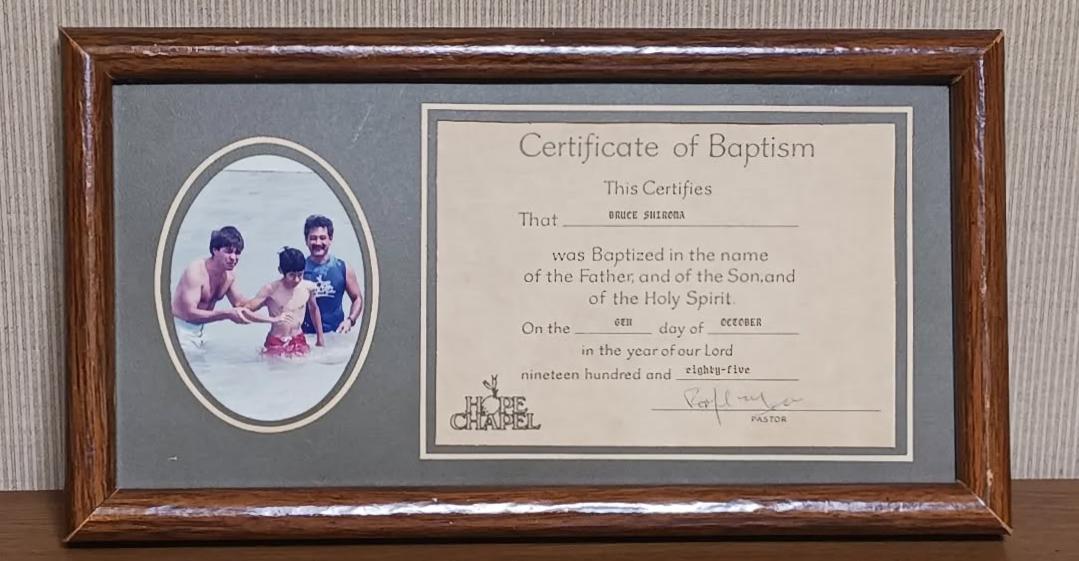
I was thinking of my baptism picture today. It’s in a box in my closet right now. I think the glass for the frame is broken, but the picture is intact.

And I was thinking, “What does that picture mean to me? Why is it stuck in that box in the closet?”

That picture actually represents a lot. It represents a turning point for me in my walk with God.

I can’t say I totally understood everything baptism represented that day. But I vividly remember my pastor asking me, “Why do you want to get baptized.”

I answered, “I want to know God better.”

An imperfect answer, to be sure.

But God honored that request. And as I look back, it wasn’t long before he started to make himself more real to me.

Maybe it’s time for me to pull that picture out of the box.

How about you? What are the things that remind you of your relationship with God? Which remind you of all he’s done for you?

What do you need to pull out of the box and put on display?

Categories
Acts Devotionals

In all good conscience (2)

I always strive to have a clear conscience toward God and men. (Acts 24:16)

This is the second time in two chapters that Paul talks about keeping a clear conscience before God. (Acts 23:1)

Why was that important to him?

I think there were three reasons.

First, he knew there was a resurrection and that he would stand before God’s judgment seat someday. (15)

He once told the Corinthians,

Therefore, whether we are at home or away, we make it our aim to be pleasing to him.

For we must all appear before the judgment seat of Christ, so that each may be repaid for what he has done in the body, whether good or evil. (2 Corinthians 5:9-10)

But as much as he knew the fear of the Lord, he also knew the love of the Lord, and that also drove him. He said,

For the love of Christ compels us, since we have reached this conclusion, that one died for all, and therefore all died.

And he died for all so that those who live should no longer live for themselves, but for the one who died for them and was raised. (2 Corinthians 5:14-15)

But I think a final reason is that he knew keeping a clear conscience had an effect on his testimony.

When Paul talked to Felix about judgment, it scared Felix to death. (Acts 24:25)

I half-wonder if one reason Felix was hoping for a bribe from Paul was to diminish his testimony. After all, if Paul accepted a bribe, how afraid of judgment could Paul really be?

But Paul kept a clean conscience, and his testimony stood.

How important is keeping a clear conscience to us?

Father, help me to always keep a clear conscience before you. For fear of you. For love of you. And for an unstained witness that might draw the people I love to you.

Categories
John Devotionals

That everything I do would be pleasing to you

There were many words that hit my heart this morning. Perhaps none more so than verse 29 when Jesus said, “I always do what pleases the Father.”

I wish I could say that.

But there were other words too.

If you continue in my word, you really are my disciples. You will know the truth, and the truth will set you free. (John 8:31-32)

Truly I tell you, everyone who commits sin is a slave of sin. A slave does not remain in the household forever, but a son does remain forever. So if the Son sets you free, you really will be free. (34-36)

…my teaching makes no progress among you. (37, NET)

The one who is from God listens to God’s words. (47)

I honor my Father and you dishonor me. (49)

And so my prayer for the day.

Lord Jesus, I want to be like you. I wish I could say with you that all I do pleases the Father. But that is not so. There are many things I do that are displeasing to him.

Forgive me. Help me to never dishonor the Father or you by my words or my actions.

Instead, let there always be room in my heart for your Word. Let it progress in my heart. Help me to understand it better. Not only that, help me to obey it better.

Help me to be like Abraham, listening to the truth of your Word, believing and accepting the truth, and following the truth.

Jesus, thank you for your grace. Because of you, I am no longer a slave to sin. By your blood shed on the cross, you have set me free. Thank you for making me a child of God.

Categories
John Devotionals

The one who sees our hearts

While he was in Jerusalem during the Passover Festival, many believed in his name when they saw the signs he was doing.

Jesus, however, would not entrust himself to them, since he knew them all and because he did not need anyone to testify about man; for he himself knew what was in man. (John 2:23-25)

[Peter] said, “Lord, you know everything; you know that I love you.” (John 21:17)

Jesus, you see my heart. You don’t need anyone to tell you what is there. Because you know me. And so I say with Peter, “You know that I love you.”

You know how imperfect my love is. You know my failings. You know my sin. But you also know I love you.

Still, it’s so easy to deceive myself. So peel off the layers of my own heart. Expose it. Show me the things you see so that you can heal it.

Lord Jesus, I want to be like you. Make me like you.

Categories
John Devotionals

A world that needs light

In him was life, and that life was the light of men. That light shines in the darkness, and yet the darkness did not overcome it…

The true light that gives light to everyone was coming into the world. (John 1:4-5, 9)

Last week, I was reading the news and it said that 527 students from elementary school to high school committed suicide in Japan last year.

Just one is too many.

John tells us that in Jesus is life, and that he is the light-giver to those walking in darkness.

There are so many people living in that darkness. So many people living without hope.

And they need that light.

In my church, we’ve been talking recently about our Father’s eyes, and the importance of understanding how God sees us.

That understanding brings light to our darkness.

That’s what Jesus did for everyone he touched. Whenever people looked into his eyes, they saw the Father’s eyes. And it brought light into their darkness.

My prayer is that people would see Jesus in me. That when people look into my eyes, my wife, my daughter, my students, my coworkers, everyone I meet, they would see my Father’s eyes.

And that through me, God would bring his light into their darkness.

May we all have our Father’s eyes.

Categories
Numbers Devotionals

Guarding our hearts against sin

Let’s be honest. There are things in Numbers that are hard to read. Especially when it comes to God’s judgment.

But according to the apostle Paul, there is a reason God recorded all these things. He wrote this in 1 Corinthians 10.

Now these things took place as examples for us, so that we will not desire evil things as they did.

Don’t become idolaters as some of them were; as it is written, The people sat down to eat and drink, and got up to party.

Let us not commit sexual immorality as some of them did, and in a single day twenty-three thousand people died. Let us not test Christ as some of them did and were destroyed by snakes.

And don’t grumble as some of them did,, and were killed by the destroyer.

These things happened to them as examples, and they were written for our instruction, on whom the ends of the ages, have come. (1 Corinthians 10:6-11)

The first event Paul mentions happened in Exodus 32. The rest occured in the chapters we’ve been reading in Numbers, including today’s chapter.

Why did God record all these things?

For our instruction.

What can we learn?

1. God takes sin seriously, especially willful, rebellious sin.

We saw this in chapters 15-17, and we see it again here in verse 6.

While the people are weeping over their sin and God’s judgment, a man brashly brings into his tent a Midianite woman to sleep with her, probably as part of a religious ritual.

2. The wages of sin, particularly willful, rebellious, and unrepentant sin is death.

Because of that we dare not take sin lightly in our lives. Rather we are to flee from it.

And so Paul warns us:

So, whoever thinks he stands must be careful not to fall. (1 Corinthians 10:12)

We need to constantly be on our guard against sin.

But the good news is that God is with us to help us stand against sin and be victorious over it.

As Paul says,

No temptation has come upon you except what is common to humanity.

But God is faithful; he will not allow you to be tempted beyond what you are able, but with the temptation he will also provide the way out so that you may be able to bear it. (1 Corinthians 10:13)

Categories
Numbers Devotionals

Lead your heart

Speak to the Israelites and tell them that throughout their generations they are to make tassels for the corners of their garments, and put a blue cord on the tassel at each corner.

These will serve as tassels for you to look at, so that you may remember all the Lord’s commands and obey them and not prostitute yourselves by following your own heart and your own eyes.

This way you will remember and obey all my commands and be holy to your God.

I am the Lord your God who brought you out of the land of Egypt to be your God; I am the Lord your God. (Numbers 15:38-41)

Last year at my church, we talked about not following our hearts, but rather leading our hearts to follow God.

That’s not a new idea.

Moses told the Israelites the same thing. “Don’t just follow your hearts, setting them on the things you see, and so prostitute yourself. Lead your hearts to follow God and his ways.”

Why? Because God had first loved them. He had saved them from slavery in Egypt and made them his people.

And so now, they were to be holy to him.

In the same way, God first loved us, setting us free from slavery to Satan’s kingdom.

We are God’s beloved people now, and we are to be holy to him, not prostituting ourselves to sin again.

But how do we lead our hearts?

God gave the Israelites one way.

He told them to make a tassel with a blue cord attached to each corner of their garments. Every time they put on their clothes, they were to remember to lead their hearts to follow God.

We don’t need to do that, but it is good to find ways to remind ourselves whose we are and who we are to follow.

Recently, someone at my church moved into a new apartment, and he showed me a picture of its cornerstone. It says, “The LORD our God is one LORD.” (Deuteronomy 6:4)

Every time he walks into his apartment building, that can be his “tassel.”

My “tassel” is a prayer I pray every morning from Revelation 4:11.

Our Lord and God,
you are worthy to receive
glory and honor and power,
because you have created all things,
and by your will
they exist and were created.

By your will, you created me, and I have breath for another day. Be glorified in my life.

What’s your tassel? If you don’t have one, find one!

Categories
Numbers Devotionals

Riff-raff? Or Spirit filled?

The riffraff among them had a strong craving for other food.

The Israelites wept again and said, “Who will feed us meat? We remember the free fish we ate in Egypt, along with the cucumbers, melons, leeks, onions, and garlic. But now our appetite is gone; there’s nothing to look at but this manna!” (Numbers 11:4-6)

The word translated “riffraff” is an unusual word found only here in the Old Testament.

It possibly referred to some foreigners who had joined the Israelites on their departure from Egypt.

Whoever they were, one thing is clear: they were complainers who influenced others in a bad way and were a burden on Moses.

On the other hand, 70 of the Israelites were filled with God’s Spirit to be a support to Moses. And as Moses told Joshua, he wished all the people were Spirit-filled.

That was a wish God would grant years later at Pentecost. (Acts 2:14-18)

One thing I never want to be in God’s church is riffraff. Someone who’s constantly complaining, who influences others to do the same, burdening the leadership.

I want to be Spirit-filled, being used by God to touch and bless others’ lives, both inside the church and out.

How about you?

God has given you his Spirit.

Are you living a life filled and led by the Spirit?

Or are you living like riffraff?

Categories
Colossians Devotionals

Letting Christ’s word dwell in us

Let the word of Christ dwell richly among you, in all wisdom teaching and admonishing one another through psalms, hymns, and spiritual songs, singing to God with gratitude in your hearts. (Colossians 3:16)

I’ve always loved the words, “Let the word of Christ dwell richly among you.”

But today I noticed how it was to dwell richly among us. Not just through Bible reading and Sunday messages, though that’s important. But Paul specifically says through psalms, hymns, and spiritual songs.

And it just made me think how much songs have shaped my Christian life. Not just worship songs. But other Christian songs as well.

Some songs came straight from scripture so that I was singing (and praying) things like Psalm 121, Romans 12:1, Romans 8:14-21, and Matthew 11:28.

Some songs didn’t quote scripture, but were scripture-based.

They taught me what it means that God is my Father. They taught me how God sees me.

They challenged me not to let my heart be hardened, but to keep a soft heart towards God.

They taught me to praise God in the midst of trial.

They taught me that worship is not just singing songs, but that our whole lives are to be praise to God.

Songs are powerful tools to let God’s word richly dwell in you.

Do you listen to music? If so, what kind of music are you listening to? Do you pay attention to what those lyrics are really saying?

If you want to let Christ’s word richly dwell in you, start looking for songs centered on Scripture. Not just “love songs” to God. But songs that communicate God’s truth.

They can be songs from church. They can be songs from Christian artists.

But sing them. Pray them. And let those words encourage, challenge, and admonish you. Pass those words on to others.

And Christ’s word will richly dwell in you.

Categories
Colossians Devotionals

That you might be first

He is the image of the invisible God, the firstborn over all creation.

For everything was created by him, in heaven and on earth, the visible and the invisible, whether thrones or dominions or rulers or authorities— all things have been created through him and for him. He is before all things, and by him all things hold together.

He is also the head of the body, the church; he is the beginning, the firstborn from the dead, so that he might come to have first place in everything. (Colossians 1:15-18)

Lord Jesus, I was created by you. I was created through you. I was created for you. Have first place in my life. You are worthy to be first in my life.

Fill me with the knowledge of your will in all wisdom and spiritual understanding so that I may walk worthy of you, fully pleasing to you, bearing fruit in every good work, and growing in my knowledge of you.

Strengthen me with all power so that I may have great endurance and patience, filled with joy and thanksgiving.

Your grace to me is incredible. You have given me an inheritance with your people. You rescued me from the domain of darkness and brought me into your kingdom.

By your death on the cross, you present me before the Father holy, faultless, and blameless.

By your grace, let me remain grounded and steadfast in faith, never shifted from the hope I have through your gospel.

In your name I pray, amen.

Categories
Philippians Devotionals

Working out our salvation

Therefore, my dear friends, just as you have always obeyed, so now, not only in my presence but even more in my absence, work out your own salvation with fear and trembling… (Philippians 2:12)

I was thinking today on what it means to work out our salvation.

I think Paul explains his meaning more clearly in chapter 3.

He’s not talking about trying to become righteous by his own efforts to keep the law. His righteousness came by faith in Christ’s work on the cross for him. (Philippians 3:9)

So what does he mean by working out his salvation?

  1. Pursuing his relationship with Jesus. Knowing Christ became his ultimate pursuit in life above all other things.
  2. Becoming more and more like Jesus. Paul wanted to experience Jesus’ resurrection power in his life, becoming like his Lord.

    But before he could be raised with Jesus, he had to die with Jesus. Just as Jesus suffered and died to sin once for all time, Paul needed to learn to die to sin once and for all so that he could live for God (Romans 6:10-11).

    And by Paul joining in Christ’s sufferings, he showed that he was through with sin, no longer living for himself, but for God’s will. (1 Peter 4:1-2)

That’s what it means to work out our salvation. And it’s an ongoing process. A process that Paul admitted he had not fully completed yet.

He still fell short. He still hadn’t arrived.

But Jesus in his grace had taken hold of him. And so Paul strove to take full hold of the salvation he had received, working out his salvation with fear and trembling.

I marvel at the fact that this same Jesus that took hold of Paul has taken hold of me. And so like Paul, I’m striving to take full hold of the salvation I have received, working out that salvation with fear and trembling.

I still fall short. I still haven’t arrived. But with full confidence in the grace and love God has given me, I say with Paul,

Forgetting what is behind and reaching forward to what is ahead, I pursue as my goal the prize promised by God’s heavenly call in Christ Jesus. (Philippians 3:13-14)

Categories
Philippians Devotionals

Praying for others. Praying for ourselves.

As I was reading Paul’s words today, I started to pray some of his prayers for the Philippians for the people on my prayer list, for my family and small group in particular, but also for my pastor and his wife.

I pray that <name>’s love will keep on growing in knowledge and every kind of discernment, so that <name> may approve the things that are superior and may be pure and blameless in the day of Christ, filled with the fruit of righteousness that comes through Jesus Christ to your praise and glory, God.

I believe you started a good work in <name>. Please carry it to completion.

Let <name> live a life worthy of your gospel, and may you be highly honored in <name>’s body. (From Philippians 1:6, 9-11, 20, 27)

As I was praying, though, I realized I needed those prayers too. And so I prayed for myself as well.

Father, I pray that I too will keep growing in knowledge and every kind of discernment, so that I may approve the things that are superior and be pure and blameless in the day of Christ, filled with the fruit of righteousness that comes through Jesus Christ to your praise and glory.

You started a good work in me. Please carry it to completion.

Let me live a life worthy of your gospel, and be highly honored in my body, in my life today. In Jesus’ name, amen.”

Categories
Ephesians Devotionals

Put all of your armor on

Put on the full armor of God so that you can stand against the schemes of the devil…

For this reason take up the full armor of God, so that you may be able to resist in the evil day, and having prepared everything, to take your stand. (Ephesians 6:11, 13)

“The full armor.”

Those are the words God impressed on me this morning.

Put on the full armor. Take up the full armor. Not just part of it. All of it.

Satan schemes against us and uses different strategies to get at us, not just one. And if we don’t put on the full armor every day, we’re vulnerable.

Rephrasing Paul’s words, if you don’t put on the full armor, you can’t stand against the devil’s schemes.

If you don’t take up the full armor, you won’t be able to resist, you won’t be able to take your stand.

So put on truth. The truth of God’s word. Make it foundation of your thinking. Let truthfulness also mark your speech. And put away the masks. Don’t be two-faced, one person at church, another person outside the church.

Put righteousness over your heart. Deal rightly with the people around with you. And when Satan accuses you for your failings, put on Christ’s righteousness which is ours by faith in him.

Put on the gospel of grace on your feet, so that you don’t slip into constant self-condemnation, nor legalism, nor willful sin.

Take up the shield of faith. But don’t just stand alone. Stand together with other Christians.

Make fellowship with them a priority so that your shield becomes part of a mighty turtle shell that protects not only you, but the Christians around you from Satan’s attack.

Receive the helmet of salvation. Welcome it with thanksgiving, knowing that you received it freely by God’s grace.

And swing the sword of God’s word whenever the enemy comes against you with his lies.

How about you? Are you putting it all on every day? Or are you leaving some of it on the floor?

Categories
1 Thessalonians Devotionals

Because we have hope

…may the Lord cause you to increase and to abound in love for one another and for all, just as also we do for you, so that your hearts may be established blameless in holiness before our God and Father at the coming of our Lord Jesus with all his saints.

Finally therefore, brothers, we ask you and appeal to you in the Lord Jesus that, just as you have received from us how it is necessary for you to live and to please God, just as indeed you are living, that you progress even more…

For this is the will of God, your sanctification. (1 Thessalonians 3:12-4:1, 3, LEB)

Here at Christmastime, we often reflect on the first coming of Jesus. But Jesus is coming again. That is our hope.

In the last three months, two people I know have passed away and gone to be with the Lord.

But as Paul said, we don’t grieve as those in the world who have no hope. When Jesus returns, they will rise and we who are alive will join them in the air to be with Jesus forever.

And on that day, Paul says we will be established blameless in holiness before God. To put it more simply, we will be like Jesus, for we shall see him as he is. (1 John 3:2)

That’s our hope. But in the meantime, Paul and John both encourage us to become more and more like Jesus. (2 Thessalonians 4:1-3, 1 John 3:3)

I love the LEB’s translation of verse 3: You are already seeking to please God, but “progress even more.”

Keep moving forward. That’s God’s will for us. That moment to moment, day to day we become more like Jesus.

Lord Jesus, as I look forward to Christmas, I also look forward to your coming. To seeing you and seeing my friends again.

But until then, help me to keep progressing. Help me to keep on growing. And by your grace, help me to become more like you each day.

Categories
Exodus Devotions

Finding God’s rest and peace

Yet on the seventh day some of the people went out to gather, but they did not find any.

Then the Lord said to Moses, “How long will you refuse to keep my commands and instructions? Understand that the Lord has given you the Sabbath…” (Exodus 16:27-29)

“The Lord has given you the Sabbath.”

Those words struck me. God wanted to give the Israelites rest. It was a gift to them.

But they couldn’t find that rest as long as they refused to trust and obey him.

It’s so amazing how quickly they forgot God’s goodness. One moment, they’re singing,

Lord, who is like you among the gods?
Who is like you, glorious in holiness,
revered with praises, performing wonders…

With your faithful love, you will lead the people
you have redeemed;
you will guide them to your holy dwelling
with your strength. (Exodus 15:11, 13)

The next moment, they’re complaining and wishing they were back in Egypt.

I don’t want to be like that, crying out, “How great is our God!” on Sunday, but failing to trust and obey him the rest of the week.

Not only does it sadden my Father, but I lose out on the gift of rest and peace he wants to give me.

Father, I want to know your rest and peace. And the thing is, you want me to experience your rest and peace. So help me to trust you and obey.

You are good. You are trustworthy. And you deeply love me.

Help me to always remember that. In Jesus’ name, amen.

Categories
Matthew Devotionals

“Following” Jesus, or truly following Jesus?

Then Jesus said to his disciples, “If anyone wants to follow after me, let him deny himself, take up his cross, and follow me. (Matthew 16:24)

It’s not clear in the English, but the first “follow” and the second “follow” are two different words in the Greek. Both are often used in reference to discipleship.

The first “follow” literally has the idea of walking behind someone, going where they go.

The second “follow” has that idea, but includes the idea of responding to his voice and of learning from him as his disciple. (Matthew 4:20; John 10:4, 27)

Lots of people “followed” Jesus in that first sense. Some wanted healing. Some were interested in this new teaching he brought.

But few truly followed him in the second sense.

Even his disciples struggled with it at times. Jesus told them what was “necessary” for God’s plan to be accomplished.

At that point, Peter stopped following Jesus and instead tried to lead him in a different direction. In doing so, however, he actually became a hindrance to Jesus.

It made me think.

“Am I truly following Jesus? Or are there times when I’m trying to pull him in the direction I want to go?”

“Am I following Jesus’ agenda? Or am I trying to get him to follow mine?”

How about you? Are you “following” Jesus, going to church, maybe even reading your Bible and praying from time to time, but ultimately trying to get him to follow you and your plans?

Or are you truly following him, learning from him, and responding to his voice and leading, moment to moment, day to day?

Categories
Matthew Devotionals

Hard words?

And whoever doesn’t take up his cross and follow me is not worthy of me. (Matthew 10:38)

Those are hard words.

When you read them, how did you feel?

Uneasy? Fearful?

Even as a long-time Christian, one of my first thoughts was, “These are hard words. Jesus is asking a lot.”

And when I think of what this might mean practically in my life, of what specifically Jesus might be asking of me, it gets even harder.

And so the question I had to ask myself this morning was, “What do I do with these feelings?”

What do I do?

Remember the truth.

What’s the truth?

My Abba is good and he deeply loves me.

Aren’t two sparrows sold for a penny? Yet not one of them falls to the ground without your Father’s consent.

But even the hairs of your head have all been counted. So don’t be afraid; you are worth more than many sparrows. (Matthew 10:29-31)

What is the truth?

If I take up my cross and follow Jesus, I don’t lose my life. I gain it.

Anyone who finds his life will lose it, and anyone who loses his life because of me will find it. (Matthew 10:39)

No, following Jesus isn’t always easy. Sometimes, it’s painful.

But because my Abba is good and he deeply loves me, because he is always faithful in keeping his promises, I have hope. And it is a certain hope.

I have told you these things so that in me you may have peace.

You will have suffering in this world. Be courageous! I have conquered the world. (John 16:33)

Categories
Matthew Devotionals

Praying to our Abba

When you pray, don’t babble like the Gentiles, since they imagine they’ll be heard for their many words…Therefore, you should pray like this: Our Father in heaven. (Matthew 6:7, 9)

As I read Jesus’ words, I thought about what Solomon said in Ecclesiastes.

Do not be hasty to speak, and do not be impulsive to make a speech before God. God is in heaven and you are on earth, so let your words be few. (Ecclesiastes 5:2)

Solomon was mostly warning against making foolish vows to God. Sometimes, in our attempts to win his favor, or worse to manipulate God, we make all kinds of promises that we’re unable to keep.

Jesus on the other hand, seemed to be talking about people making flowery but ultimately empty prayers in order to impress God and those hearing their prayers.

In both cases, Jesus and Solomon say the same thing: Let your words be few. Do more listening than speaking.

But when you speak, Jesus gives us a model to follow.

Reflect on who God is and honor him as holy. Worship him. (Matthew 6:9; Revelation 4:8-11)

As you pray, set your heart on his kingdom. Ask him, “What’s important to you, today?” (Matthew 6:10a, 33)

And as you reflect on these things, ask that his will be done in your life, that you can participate in what he’s doing. (Matthew 6:10b)

But as much as he is God in heaven, remember he is also your Abba in heaven. And you are his beloved child. (Matthew 6:9)

So ask him for your needs. (Matthew 6:11, 25-32)

When you fall, don’t fear to approach him. Draw near and seek his forgiveness. (Matthew 6:12a)

Ask for his help concerning your broken relationships, especially when you’re struggling to forgive others. (Matthew 6:12b)

And ask your Abba for his leading and protection. (Matthew 6:13)

We have such an incredible privilege as God’s kids. We get to approach our Abba at any time. So let’s take advantage of that privilege and draw near.

Categories
Jeremiah

The One to whom all nations will come

As Christmas approaches, our eyes turn to Jesus. 

But which Jesus do our eyes turn to?  Is it to that cute baby in the manger?

That’s a Jesus that people like.  Why?  Because it’s a picture that’s not threatening.  It’s a Jesus that makes no demands on you.  It’s a Jesus that just lays there resting comfortably.

But the day will come when “every knee will bow and every tongue confess that Jesus Christ is Lord, to the glory of God the Father.”  (Philippians 2:10-11).

On that day,

The nations will come from the ends of the earth and say, “Our fathers possessed nothing but false gods, worthless idols that did them no good.  Do men make their own gods? Yes, but they are not gods!”  (Jeremiah 16:19-20)

Perhaps the people will say this with joy at finding the truth.  But there may also be weeping and gnashing of teeth on that day. 

Many people will look at their gods and see them for the worthless pieces of wood and stone that they are. 

Others will look at the things they pursued in life.  Money, sex, power, the things of this world.  But all those things will be shown for the empty things that they are.

At that time they will know that Jesus is no longer a baby in a manger.  They’ll know that he is both Lord and King.

God says at that time,

I will teach them – this time I will teach them my power and might.  Then they will know that my name is the Lord.  (Jeremiah 16:21)

How about you?  How do you see Jesus?  Do you see him as just the baby from Bethlehem?  Or do you see him as your Lord and King? 

When Jesus comes and you fall to your knees saying “Jesus is Lord,” will you say it in love and awe? 

Or will you say it with the words literally being pulled out of your mouth through gritted teeth?

May you come to know this Jesus, not as a baby born 2000 years ago, but as your Lord and King today.

Categories
Isaiah

Humble before God. Humbled before God.

And so we end the longest book of the Old Testament, save for the Psalms.

In this final chapter of Isaiah, we see the distinction God makes between the righteous and the unrighteous.  Who is the righteous person? 

God puts it this way:

This is the one I esteem:  he who is humble and contrite in spirit, and trembles at my word.  (Isaiah 66:2)

The righteous person is humble. 

He knows that he doesn’t know it all.  He knows his sins; he knows his weaknesses.  And he keeps a spirit that is contrite when he sins. 

He never takes the words of God lightly; rather, he trembles at God’s word, knowing that in them there is life.

What is an unrighteous person?  God says of them,

They have chosen their own ways, and their souls delight in their abominations…

For when I called, no one answered, when I spoke, no one listened.  They did evil in my sight and chose what displeases me. (Isaiah 66:3-4)

Unlike the righteous person, they despise the word of God.  They consider it passé.  They ignore it and do whatever they like, and as a result, end up sinning in God’s sight. 

Not only that, they mock those who would obey God’s word.

But God says of them that they will be put to shame and reap the consequences of their sin.  (5-6)

Meanwhile, the righteous will rejoice, knowing peace, God’s comfort, satisfaction, and ultimately blessing. (10-14)

God says here of Israel that the people who survived the exile would go out among the nations declaring his glory, and bring back fellow Jews who had been scattered.

God will even choose even some of them to be his priests and Levites.  (19-21)

In the same way, we who are righteous are to go out and declare his glory among the nations, bringing people to the Lord.  And when we do, the people we touch will become priests and servants of the Lord too.

Ultimately, on that day of judgment when the new heavens and new earth are created, all mankind will come and bow before God.  (23)

The only question is will we come humbly before God?  Or will we have to be humbled? 

To those whose hearts were humble and contrite before God, there will be forgiveness, and a name that will endure. 

But for those who rebelled, they will be humbled, and Isaiah closes by saying,

Their worm will not die, nor will their fire be quenched, and they will be loathsome to all mankind.  (Isaiah 66:24)

Let us humble ourselves before God before that day of judgment.  For only in doing so can we find mercy.  Only in doing so can we find true life, here on earth, and in the life to come.

Categories
Isaiah

Good news

We live in a world where it seems that most of the news is bad.  Earthquakes, crime, political corruption, the list goes on and on and on.  It’s pretty easy to get depressed.

But when Jesus came, he spoke the words Isaiah wrote here, saying,

The Spirit of the Sovereign Lord is on me, because the Lord has anointed me to preach good news to the poor. 

He has sent me to bind up the brokenhearted, to proclaim freedom for the captives and release from darkness for the prisoners, to proclaim the year of the Lord’s favor.  (Isaiah 61:1-2)

Good news.  Isn’t that something that we all need?  Isn’t it something that this whole world needs? 

So many are living with hearts that are broken.  So many are captive to sin, living in darkness with no hope.  But Jesus came to set people free from all that.

He came to comfort those who mourn and bring them joy.

He came to fill their hearts and mouths with praise, rather than despair.

To take them from the ashes of their lives and crown them with beauty, to plant them as oaks of righteousness that can stand through the storms of life, and for His glory. (2-3)

To rebuild the ruins of their lives, and restore the parts of their lives that have been devastated. (4)

To make them his priests and ministers before him.  (6)

To take away their shame and disgrace, and give them a lasting inheritance that will not corrupt or fade over time. (7)

To clothe us with garments of his salvation and robes of righteousness, justifying us by the blood of Jesus, and sanctifying us by his Spirit.  (10)

Good news?  That’s great news! 

So as Christmas starts to draw near, let us share its true meaning with the people around us and the life that Christ himself offers them so that they may receive what we already have.

As Isaiah said in chapter 52 verse 7,

How beautiful on the mountains are the feet of those who bring good news, who proclaim peace, who bring good tidings, who proclaim salvation.

Categories
Isaiah

Why the righteous perish

A year ago at this time, I was standing vigil over my dad in his final days and hours here on earth.  It was a day I had been prepared for, for the previous ten years, actually. 

My dad’s heart was weak, he had had multiple bypasses and near heart-attacks.  He also had diabetes and other health problems. 

It’s almost miraculous to me that he lived as long as he did.

What I didn’t expect is that I would be there when he died.  Living in Japan, I had always expected that I’d get a call one day saying that my dad had passed on.

But in God’s timing and provision, I got to be there in his last days.  It don’t know that it made things any less painful.  In some ways, it made things more painful.  But I’m glad I was there.

Sometimes people wonder why we have to die.  Why we can’t just live forever here on earth.  But here, God provides the answer. 

He said,

The righteous perish, and no one ponders it in his heart; devout men are taken away, and no one understands that the righteous are taken away to be spared from evil. 

Those who walk uprightly enter into peace; they find rest as they lie in death.  (Isaiah 57:1-2)

The truth is, this world is dying.  It’s been corrupted by sin.  Not only do we see things like earthquakes or other natural disasters, we also see disease, and people who have been corrupted and broken by sin. 

In this state, do we really want to live forever?  I don’t.

I certainly didn’t want to see my dad live forever in the state he was living.  I’m glad he was taken away. 

Not that I don’t miss him.  I do.  But he’s in a much better place now. 

His body that was broken down and dying, will be renewed.  And for now, he has peace.  He has rest. 

More, he’s face to face with our Savior right now.  In some ways, I really envy him.

Don’t get me wrong.  I’m not in a hurry to leave this planet.  But there are many things I won’t miss either.  And in God’s timing, whenever it is, I’ll be ready to go. 

I liked what someone said about what they wanted written on their tombstone.  I wouldn’t mind it being written on mine.

“Don’t mourn for me.  Bruce is not here.”

Death truly has no sting for those who put their faith in God.

How about you?  Are you ready?

Categories
Isaiah

The spiritually blind and the deaf

So often when we think of spiritually blind and deaf people, we think of non-Christians. And that they certainly are. But here we see something shocking.

Isaiah says,

Hear, you deaf; look, you blind, and see! 

Who is blind but my servant, and deaf like the messenger I send?  Who is blind like the one committed to me, blind like the servant of the Lord? 

You have seen many things, but have paid no attention; your ears are open, but you hear nothing.”  (Isaiah 42:18-20)

Who were the blind?  The people who were to be God’s servants.  The ones who were “committed to him.” 

Who were the deaf?  The people who were supposed to be God’s messengers. 

They saw what God had done, but somehow what they saw didn’t register in their brain.  They heard what God had said, but somehow it slipped in one ear and out the other.

What was the result?  The Israelites were,

plundered and looted, all of them trapped in pits or hidden away in prisons.

They have become plunder, with no one to rescue them; they have been made loot, with no one to say, “Send them back.”  (22)

And yet despite all the hardships God allowed as discipline for their sin, the Israelites still failed to repent. (24-25)

All in all, it was a sad situation. For the people God had called to be a light to the nations had joined in their darkness.

The Jews had become just as deaf and blind as the nations around them.

What do we get from this?

Even we, as God’s people can become spiritually blind and deaf.

How does that happen? We stop listening to God and his Word and start doing things our own way. We stop paying attention to what God’s doing around us and instead focus solely on our own agendas.

God has called us to be light to a dying world. But how can we be light when we are just as deaf and blind as the world is? Let us not be that way.

Let us keep our eyes and ears open to our heavenly Father, as Jesus did. Let us always look at what God is doing in us and around us and put our hands in his, joining him in his work.

In short, let us not join the blind and the deaf, but let us go out to them, bringing them out of darkness into God’s light. 

Categories
Isaiah

Come that day

In some ways, it’s been a depressing past couple of months.  Finances have been a bit of a struggle, and I’ll have to admit that it’s hard not to think about.

But as I look at this passage, I see hope.  It says,

Nevertheless, there will be no more gloom for those who were in distress.

In the past, he humbled the land of Zebulun and the land of Naphtali, but in the future he will honor Galilee of the Gentiles, by way of the sea, along the Jordan — The people walking in darkness have seen a great light; on those living in the shadow of death a light has dawned. 

You have enlarged the nation and increased their joy; they rejoice before you as people rejoice at the harvest, as men rejoice when dividing the plunder. 

For as in the days of Midian’s defeat, you have shattered the yoke that burdens them, the bar across their shoulders, the rod of their oppressor.  (Isaiah 9:1-4)

This passage, of course, is pointing to Jesus.

It’s amazing to me that the Pharisees and the teachers of the law missed this when saying, “Look into it, and you will find that the Prophet does not come out of Galilee (John 7:52).

That this passage is talking about Messiah cannot be denied, however, as it continues,

For to us a child is born, to us a son is given, and the government will be on his shoulders.

And he will be called Wonderful Counselor, Mighty God, Everlasting Father, Prince of Peace.  Of the increase of his government and peace there will be no end.

He will reign on David’s throne and over his kingdom, establishing and upholding it with justice and righteousness from that time on and forever.

The zeal of the Lord Almighty will accomplish this.  (Isaiah 9:6-7)

Every Christmas, we hear this in messages and in song.  But it is a message that the world needs to hear more than once a year.

So many are walking in gloom and distress.  Whether it’s relationship problems, financial problems, health problems, or whatever it may be.

I was reading that in Japan, the suicide rate is among the highest among industrialized nations.

But as Jesus brought light and hope to a dying nation in Israel, so he brings hope to people today.  He brings joy to those who are in despair.  And he breaks the yokes that would burden us and weigh us down.

He’s the Wonderful Counselor who shows us how to live in the midst of a broken world.  Who shows us how our broken lives can be restored.

He is the Mighty God who has the power to help us in our distress.

He is the Everlasting Father, the one who knew us before time began, and who cares infinitely about us.

And he is the Prince of Peace, giving rest to those who are burdened by anxiety and fear.  And as he came 2000 years ago, he will come again.

Come that day, he will return and make right all that is wrong in the world.

Injustice will be a thing of the past.  So will death, sorrow, and mourning.

But until then, he has given us of his Spirit to dwell in us, to comfort us, and to guide us.

He has not left us alone as orphans.  He is with us each and every day.

And when we’re weighed down by our worries and our troubles, he will be our light in the darkness.  All we have to do is to turn to him.  And he tells us now,

Come to me, all you who are weary and burdened, and I will give you rest. 

Take my yoke upon you and learn from me,for I am gentle and humble in heart, and you will find rest for your souls.  (Matthew 11:28-29)

Categories
Isaiah

Blinding ourselves

Isaiah 6:9-13 is one of the most quoted parts of scripture from the Old Testament, and one of the more difficult to understand.

God told Isaiah to give the people this message:

“Go and tell this people: “ ‘Be ever hearing, but never understanding; be ever seeing, but never perceiving.’

Make the heart of this people calloused; make their ears dull and close their eyes.

Otherwise they might see with their eyes, hear with their ears, understand with their hearts, and turn and be healed.” (Isaiah 6:9-10)

Talk about a depressing message.

Isaiah asked God, “For how long, O Lord?  How long will they be so blind?”  (11).

God answered,

“Until the cities lie ruined and without inhabitant, until the houses are left deserted and the fields ruined and ravaged, until the Lord has sent everyone far away and the land is utterly forsaken.

And though a tenth remains in the land, it will again be laid waste.  (Isaiah 6:11-13)

What does this all mean?  It does seem a bit unfair.  It almost seems as though God is purposefully blinding the hearts and minds of the people.  But is this really true?  Yes, and no.

The Greek translation of the Old Testament, made before the time of Jesus, translated it this way.

“You will be ever hearing, but never understanding; you will be ever seeing, but never perceiving.

This people’s heart has become calloused; they hardly hear with their ears, and they have closed their eyes.”

In other words, it’s not so much what God did to the people, it’s what the people did to themselves.

God spoke to the people, warning them about their sin, but they closed their ears, and refused to listen.

The more God spoke, the more they hardened their hearts.  And the more they hardened their hearts, the more difficult it became for them to accept the words of God.

God knew what their reaction would be, but he continued to warn them to turn from their sin.

In that sense, you could say, “God hardened their hearts” because he knew how they would respond.  But what was the alternative?

There was a song that once said, “The same sun that melts the wax will harden clay.”

The same thing can be said about the Word of God and the hearts of people.

For some, the word of God makes their hearts softer and more able to respond to him.

But for others, that very same word causes them to harden their hearts and turn their face even further away from him.

And so God has a choice.  He can either say nothing and let all perish.  Or he can say something that some may be saved.

That’s what happened in Judah and Israel.  Yes, there were many that hardened their hearts even more at the word of God.

But there were others that softened their hearts to him.  You can see that clearly in the exile in the lives of people such as Daniel, Shadrach, Meshach, and Abednego.

God loves us too much to let us alone to perish.  But what we do with his word is our choice alone.

The question is, will we soften our hearts, or harden them?  Will we close our eyes and ears to his word?  Or open them?

The choice is yours.

Categories
Isaiah

Things the Lord hates

God is love.

Everyone loves to hear those words.  They’re very comforting words.  But there are things that God hates, and he lists a number of them here.

Isaiah wrote,

Woe to you who add house to house and join field to field till no space is left and you live alone in the land.  (Isaiah 5:8)

In other words, God hates it when people are so covetous, that they accumulate things to no purpose and to the hurt of others who are in need.

What about you?  Are you solely concerned with accumulating things you don’t really need, not caring for the people around you?

He then wrote,

Woe to those who rise early in the morning to run after their drinks, who stay up late at night till they are inflamed with wine…

Woe to those who are heroes at drinking wine and champions at mixing drinks.  (Isaiah 5:11,22)

I’m not saying that it is wrong to have an occasional glass of wine, but what God clearly condemns is those who get drunk, and who are controlled by wine.

We are temples of God, and we are to be controlled by his Spirit, not wine.  (Ephesians 5:18)

Debauchery has no place in the temple of God.

Woe to those who draw sin along with cords of deceit, and wickedness as with cart ropes.  (18)

Here Isaiah condemns those who deliberately follow the path of sin.  They pull around their sinful lifestyle wherever they go.

All of us sin.  All of us fall.  But we are not to be characterized by it.  Instead, we should be known for our righteousness, and to be holy as God is holy.

(Woe) to those who say, “Let God hurry, let him hasten his work so we may see it.  Let it approach, let the plan of the Holy One of Israel come, so we may know it.” (Isaiah 5:19)

At first glance, it seems that these were people who were seeking God.

But in reality, they were sneering at God.  They were saying, “If God really exists, then let him show himself so that I can know.”

And all the while they ignored his Word and all the things he was trying to do in their lives.

But God will not be mocked.  And if you are not sincerely seeking him, he will not reveal himself to you.

Woe to those who call evil good and good evil, who put darkness for light and light for darkness, who put bitter for sweet and sweet for bitter.

Woe to those who are wise in their own eyes and clever in their own sight. (Isaiah 5:20-21)

Isaiah could have been preaching in our age.

Nowadays, people cast aside God’s teaching of what’s right and wrong and create their own standards of right and wrong.

They call the things that God despises “good”, and the things God loves “evil”.

God hates that kind of “wisdom.”

(Woe to those) who acquit the guilty for a bribe, but deny justice to the innocent. (Isaiah 5:23)

Anytime we cast aside the wisdom of God and his righteousness, injustice is sure to come.  And today, you see the very things that Isaiah saw in his day, the guilty acquitted for a bribe, and justice denied to the innocent.

How little do things change.  One thing that hasn’t changed is God’s hatred for these things. And just as God brought judgment on Israel for these things, he will bring judgment on those who persist in this behavior.

God is love, but he will judge those who follow the path of sin. 

So as Paul wrote, let us cast aside these things that God hates, and cling instead to that which is good.  (Romans 12:9)

Categories
Hosea

Repentance

Repentance.

It’s one of those words that you hear in the Christian church a lot, but not so much outside of the church walls.

What is it really?

That’s what Hosea addresses in this last chapter.

He told the Israelites,

Return, O Israel, to the Lord your God. Your sins have been your downfall! Take words with you and return to the Lord.

Say to him, “Forgive all our sins and receive us graciously, that we may offer the fruit of our lips.

Assyria cannot save us; we will not mount war horses.

We will never again say, ‘Our gods’ to what our own hands have made, for in you the fatherless find compassion.” (Hosea 14:1–3)

What does it mean to repent? It means to return to the Lord. To turn around from going in your own direction and follow the Lord once again.

It’s to confess our sins before God and ask for his forgiveness.

It’s to turn away from all the things we were chasing after in our lives, and to confess our need for God once again.

And it’s to throw ourselves upon the mercy of God.

That’s repentance.

And when we do, how will God respond?

I will heal their waywardness and love them freely, for my anger has turned away from them.

I will be a dew to Israel; he will blossom like a lily. Like a cedar from Lebanon he will send down his roots; his shoots will grow.

His splendor will be like an olive tree, his fragrance like the cedar of Lebanon.

Men will dwell again in his shade. He will flourish like the grain. He will blossom like the vine, and his fame will be like the wine from Lebanon…I will answer him and care for him. (Hosea 14:4–8)

In other words, God will forgive, and we’ll know his love once again.

The areas in our lives that became dry and withered because of sin will once again grow strong, bringing blessing not only to ourselves, but to the people around us.

The question is, why do we stray in the first place?

God closes with these words,

Who is wise? He will realize these things. Who is discerning? He will understand them.

The ways of the Lord are right; the righteous walk in them, but the rebellious stumble in them. (Hosea 14:9)

May we not only be wise enough to repent, but wise enough to stay under the shelter of God each and every day of our lives.

Categories
2 Kings

The God who gives life

This is one of the more interesting, if short, stories that we see in scripture. 

After Elisha had died and was buried, the Israelites continued to have problems with their neighbors, in this case, raiding bands from Moab.

As a group of men were burying one of their friends, one of these raiding bands came and in their hurry to get away, these men threw their friend into the first available tomb. 

It just so happened to be Elisha’s.  And when the dead man touched Elisha’s bones, he revived.

At a guess, God was trying to send a message to Jehoash and all of Israel, that he was the God who lives.  And even if his servant Elisha was dead, God wasn’t and was still working. 

Not only that, he was the God who gives life to the dead.

And although Israel was perishing in their sins, and suffering from oppression from the Arameans, and their surrounding neighbors, God had the power to give life to them. 

All they had to do was turn to him. 

Unfortunately, there is no sign that the Israelites in the northern kingdom ever did turn.  Things went from bad to worse as we will see.

But God says the same to us. 

We may be stuck in a bad situation because of our sin, but if we turn to him and repent, he has the power to give life.  All we have to do is turn. 

Let us not be stubborn as the kings of Israel were. 

Rather, let us humble ourselves, pray, seek his face, and turn from our wicked ways.  And he will heal us.

Categories
2 Kings

Respect, or wholehearted devotion?

One wonders at the relationship between Jehoash and Elisha. 

Jehoash, according to this passage did evil in the eyes of the Lord and continued the idol worship of his father and the kings before him.

But still, there seemed to be some respect and even love for Elisha. 

As Elisha lay dying, he  cried out, “My father, my father, the chariots and horsemen of Israel.” 

These were in fact the same words that Elisha had used when Elijah was taken from him.  (II Kings 2:12)

One would think that if Jehoash had truly respected and loved Elisha, he would’ve followed his advice completely.  But he didn’t.

And now, Elisha told him to shoot out an arrow, and as he did, Elisha said, “This shows that you will have victory over Aram.”

Then he said, “Strike the ground with the arrows.”

One wonders how Jehoash responded when he heard this.

Perhaps he was puzzled as to why Elisha said this, and so he may have just hesitantly struck the ground three times. 

But Elisha got angry with him, saying, “You should have struck it 5 or 6 times.  Then you would’ve completely destroyed Aram.  Now you will only defeat them three times.”

And that’s what happened. 

Jehoash, with God’s help, was able to defeat the Arameans three times and recapture some of the towns that his father Jehoahaz had lost.

But Jehoash’s response to Elisha mirrored his attitude toward God. 

There seemed to be some respect there.  Perhaps even some affection. 

But he refused to give his whole heart to God and his Word.  If anything, there was a half-hearted obedience to God’s word. 

The result was a reign and a life that was far less than what God desired for him. 

He could’ve accomplished a lot more had he committed his whole heart to God, but he didn’t.

How about you?  Have you given your whole heart to God?  Have you committed yourself to obeying him completely? 

Or is your commitment limited to a kind of respect for God and his Word.  A respect that says, “Well, I agree that what God says is probably good, but it’s not for me.”

Let us not be half-hearted in our pursuit of God. 

Let us give everything to him, loving him with all of our heart, soul, mind and strength.

As the old hymn goes,

Love so amazing, so divine
Demands my soul, my life, my all.

Categories
Joel

True repentance

Sometimes, when people say that they’re sorry, you can tell that they really aren’t. Sometimes, the “sorry” is dragged out of them.

Other times they seem more sorry that they were caught than for their actions.

That’s what God addresses in this passage.

In the first part of chapter two, he continues letting the people know that this disaster of locusts did not just happen by chance. Rather, it happened because of the people’s sin.

And then he told the people,

“Even now return to me with all your heart, with fasting and weeping and mourning. Rend your hearts, not your garments.

Return to the Lord your God, for he is gracious and compassionate, slow to anger and abounding in love, and he relents from sending calamity.” (Joel 2:12–13)

“Rend your hearts, not your garments.” As a sign of grief or humility, people back in the Old Testament days would tear their garments.

But God said, “I don’t just want outward appearances of repentance. I want your heart. I want to know that you are truly sorry for your actions.”

David once wrote,

You do not delight in sacrifice, or I would bring it; you do not take pleasure in burnt offerings.

The sacrifices of God are a broken spirit; a broken and contrite heart, O God, you will not despise. (Psalm 51:16–17)

God told the people, “If you repent, then I will heal you. All the damage done from the locusts will be undone. You will have new grain, new wine and oil, and all your trees will bear fruit once more. And you will no longer have to know shame.”

God tells us the same today. It is never too late to repent and turn from our sins.

If we will just turn to him, he is quick to show compassion and mercy and to bring healing in our lives from all the damage we caused by our sin.

Categories
2 Chronicles 2 Kings

The rightful king

One wonders what Jehoshaphat would have done if he had only seen the future. 

He had made an alliance with Ahab’s family through the marriage of his son to Athaliah, Ahab’s daughter. 

What would Jehoshaphat have done had he known that this daughter would turn his son away from the Lord?

What would he have done had he known Athaliah would convince his son to murder his brothers?

What would he have done had he known she would then attempt to wipe out the rest of the royal family upon the death of her son so that she could seize control of the country?

Fortunately for Jehoshaphat, Ahaziah’s sister was able to save one of Ahaziah’s sons, Joash, from the hand of Athaliah. 

And after hiding in the temple for six years, he was brought out by the priest Jehoiada and crowned king of Judah.

We can look at the actions of Athaliah and despise her for what she did. 

But how often do we do the same thing as her:  seize control of the throne of our hearts and displace the true king?

The Bible says that God is to be our king, but so often we push him off of the throne of your hearts, and we usurp his position. 

Instead of living for him, we live for ourselves.  Instead of following him, we follow our own desires.

And when God tries to take his rightful place in our hearts, like Athaliah, we scream out, demanding our right to sit in that throne.

So often, when we take control of the throne of our hearts, we think it’ll make us happy. 

But when all is said and done, we end up making a mess of things. 

Our marriages fall apart.  Our families fall apart.  And everything we looked to build up in our lives comes tumbling down.

But what happens when God takes the throne? 

That’s when true joy comes. 

And God can bring healing to what has been damaged or destroyed by our bad decisions. 

The people of Judah suffered under the reign of Athaliah for 6 years.

But when the true king took the throne, they had hope once again.  And they rejoiced. 

You may be suffering from the bad choices you have made.

But if you put God on the throne, there can be hope in your life once again.  And with that hope, joy.

Have you usurped God’s position on the throne of your heart? 

Let us restore God to his rightful place and make him king of our lives once again.

Categories
2 Chronicles 2 Kings

Who to listen to?

There was an old song in the 80s that said,

You’ve got to know who to, who not to listen to.
They’re gonna hit you from all sides.
You’ve gotta make up your mind who to, who not to listen to. — Amy Grant

This is very true.  Where are you getting your counsel from?  Because where you get your counsel from will shape your life, whether for the good or for the bad.

Ahaziah learned this to his regret. 

This Ahaziah was the king of Judah, not the king of Israel that we looked at earlier in 2 Kings 1.

And like his father, he took bad advice. 

He got bad advice from his mother, Athaliah, and since she was a relative of King Joram in Israel, Ahaziah took bad advice from Joram as well. 

As a result, he continued to worship the Baals as his father did.  As 2 Chronicles 22:3-4 put it,

He walked in the ways of the house of Ahab, for his mother encouraged him in doing wrong. 

He did evil in the eyes of the Lord, as the house of Ahab had done, for after his father’s death, they became his advisers, to his undoing.

Those last three words are the key to this passage. 

By following bad advice, it led to his undoing.

He followed Joram into a war with the king of Aram, and after Joram got injured, Ahaziah went to visit him. 

But it was at that time that a man named Jehu came to kill Joram. 

And because Ahaziah had associated himself with Joram, particularly in the evil he had committed in following false gods, Jehu killed him too. 

Ahaziah died because he was in the wrong place at the wrong time. 

But he was there because he chose to follow bad advice.

How about you?  Whose counsel are you following? 

Are you following the counsel of people who are godly? 

Or are you following the counsel of those who are not?

This is not to say that non-Christian can never give good advice.  They can. 

And there are times when Christians can give you some very bad advice. 

The key is to measure all things you hear by God’s word.  Because he is the only one who gives perfect counsel.

David wrote,

Blessed is the man who does not walk in the counsel of the wicked or stand in the way of sinners or sit in the seat of mockers. 

But his delight is in the law of the Lord, and on his law he meditates day and night.  (Psalm 1:1-2)

May we be people who take the counsel of God, and if we do, we will be

like a tree planted by streams of water which yields its fruit in season, and whose leaf does not wither. 

Whatever he does will prosper.  (Psalm 1:3)

Categories
2 Kings

Nothing hidden from God

Which came first, the chicken or the egg? 

That’s the age-old question.  Of course, as Christians, we’d say the chicken.

In the case of this story, which came first, Elisha’s prophesy of Hazael’s assension to the throne, or Hazael’s intention to usurp Ben-Hadad’s throne? 

I also kind of wonder if Elisha was fulfilling God’s command to Elijah to anoint Hazael as king of Aram (I Kings 19:15), or whether Elisha is merely confirming the message Elijah had already given him.

I don’t know the answer to either question, but I’d like to focus on the first one. 

I’ve always thought that Hazael heard Elisha’s words and then took it upon himself to fulfill it by murdering Ben-Hadad.

But there is another possibility. 

It’s possible that Hazael had already been planning in his heart to take advantage of Ben-Hadad’s weakened condition and to murder him.  And what Elisha was doing was to expose what was already in Hazael’s heart.

Whatever the case, nothing is hidden from God.  Neither the future, nor what lies in people’s hearts. 

Everything is laid out before him.

In this, we can take warning…and comfort.

The warning we can take is that we cannot hide the sin that we do, nor can we hide the sin that lies within our hearts. 

And so we need to be very careful how we live, because we all will stand before God’s judgment seat some day. 

As Hebrews says,

Nothing in all creation is hidden from God’s sight.  Everything is uncovered and laid bare before the eyes of him to whom we must give account.  (Hebrews 4:13)

But we can also take hope in knowing that God holds the future.  As David wrote,

You saw me before I was born. 
Every day of my life was recorded in Your book. 

Every moment was laid out
before a single day had passed.  (Psalm 139:16 — NLT)

I mentioned in my last blog that God’s timing is perfect.  And if we can remember that God does hold our future, it makes it much easier to trust him and wait for his timing. 

There’s an old song that I love.  It says,

You haven’t rested for days
And you’re so wrapped up in worry
That you can’t even think

You’ve done the best you can do
But the answer still evades you
To the problems that you face

He’ll lead you if you just ask
But you’ve got to trust His wisdom
And believe in His word

He sees what you cannot see
And He knows and wants the best for you
So it’s time that you learned.

God holds the future — He’s got a plan
There’s no need to worry, ’cause it’s all in His hand.

So if you are struggling, with what you should do
God holds the future for you.
–David Meece

Categories
2 Kings

Out of patience, low on faith

The respite that the Israelites gained from the kindness they showed to the Arameans didn’t last long. 

Once again, the king of Aram led another assault on Samaria, the capital of Israel, laying siege to it.  As a result, no food was coming into the city, leaving the people starving.

Things got so bad, that one woman complained to the king about a horrid agreement she had made with another woman:  She cooked her own baby and they ate it, agreeing to cook and eat the other woman’s baby the next day. 

But the second woman hid her child, and so the first woman brought the case before the king, asking for justice.

What did King Joram do?  He placed blame on God and the prophet Elisha, saying,

May God deal with me, be it ever so severely, if the head of Elisha son of Shaphat remains on his shoulders today. (2 Kings 6:31)

He then went in search of Elisha to kill him.  When he found him, he told Elisha,

This disaster is from the Lord. Why should I wait for the Lord any longer? (2 Kings 6:33)

In other words, “Elisha, I’m out of patience, and low on faith.  Why should I follow God any longer when things are going so badly?”

Yet one wonders what Joram was doing long before this? 

Had he sought Elisha’s advice before?  Had he sought the word of the Lord before this? 

In all probability, he hadn’t.  Instead, he had tried to handle his problems his own way, and in his own wisdom. 

Now that he realized that he couldn’t handle things, he still didn’t seek God.  Rather, he tried to place blame on God once again for his bad decisions. 

(You remember he did this before when he led an attack with Jehoshaphat on Moab in chapter 3 of 2 Kings).

When Elisha told Joram God would take care of the situation, Joram apparently took his word for it, but one of his officers had also apparently run out of faith and muttered to the king his doubts concerning Elisha’s words.

So Elisha basically told him, “You will see God’s deliverance, but you will not get to enjoy the benefits of it.”  (2 Kings 7:2)

God did deliver the people, and while Joram’s officer stood at the gate watching the people rush out of the city, he got trampled and died.

What can we learn from this? 

How much faith do we have when things aren’t going well?  Do we just give up?  Not only on the situation, but on God? 

Or do we keep trusting him, even though we can’t see how he could possibly deliver us?

It’s easy to believe in God when things are going well. 

Do we continue to believe in him when things are not?

Categories
2 Kings

Returning good for evil

“If I ever get my hands on him…”

“You won’t know when.  You won’t know where.  But someday…”

Have you ever said these things? 

When we’ve been hurt, these are common thoughts to have. 

But they’re not the way God would have us live.

In this story, with the Aramean army surrounding the city Elisha was in, God struck them with blindness. 

I’m not sure whether it was complete blindness or if it was a situation where God simply caused them to be unable to recognize what they were seeing.

They may have been very much like Mary Magdalene and the two men on the road to Emmaus who could look right at Jesus and not recognize him. 

I kind of guess it was the latter, considering an entire army had to be escorted to Samaria. That would’ve been tough if they were completely blind.

Then again, maybe the men of the city did escort the army down. 

Whatever the situation, King Joram had the Arameans in his hands. 

And with the Aramean army surrounded by his own, Joram asked Elisha, “Shall I kill them?”

Perhaps he was thinking, “This is my chance to strike a huge blow against the Arameans, taking out a large part of the army.” 

Or “It would only serve them right.  They attacked us; we didn’t attack them.”

But Elisha instead had them treat the Aramean army to a giant feast, and then sent them on their way.

Apparently, this so shamed the Arameans, that they would actually stop their attacks for a time.

When people ill-treat you, how do you respond? 

God doesn’t call us to act as the world does.  Rather, he calls us to respond as his Son did. 

When Jesus was mocked, beaten, and put on a cross, he forgave his enemies. 

Not only that, he returned good for evil by paying the price for their sins by dying on the cross.

Remember the words of Paul who wrote,

Do not repay anyone evil for evil…

If it is possible, as far as it depends on you, live at peace with everyone. 

Do not take revenge, my friends, but leave room for God’s wrath, for it is written: “It is mine to avenge; I will repay,” says the Lord. 

On the contrary: “If your enemy is hungry, feed him; if he is thirsty, give him something to drink.  In doing this, you will heap burning coals on his head.” 

Do not be overcome by evil, but overcome evil with good. (Romans 12:17-21)

Categories
2 Kings

Eyes that see beyond

I can’t say I read this story very often, nor do I think I’ve ever heard it preached on in Japan in the 17 years I’ve been here.  But I’ve got to say it’s probably one of my favorite stories in the Bible. 

It’s one of my favorites because it’s one of the few times we catch a glimpse of the spiritual world that surrounds us.

Here are Elisha and his servant surrounded by the enemy, and it seems that they’re in deep trouble. 

But while Elisha’s servant is panicking, Elisha never blinks an eye.  Why? 

Because he saw beyond what his servant saw. 

His servant could only see the enemy around them.  Elisha saw an even greater army surrounding them, an army on his side. 

He prayed, “Lord, open my servant’s eyes.” 

And when he did, his servant saw the hills full of horses and chariots of fire all around Elisha. (2 Kings 6:17)

I have to admit, I worry and fret about a lot of things.  At work and at home, it’s easy to see the problems that I have and have them consume my thoughts. 

How I long to have the eyes of Elisha.  Eyes that see beyond my circumstances, to the God who is greater than any problem that I could possibly have.

Categories
2 Kings

An unpayable debt

I hate being in debt. 

I don’t use my credit cared often, but when I do, I always pay it it off before the end of the month. 

My only other debt is the one I owe on my house.  I pray I never have to take out another loan for the rest of my life. 

The problem with debts, of course, is that you eventually have to pay them back.  And if you can’t, you’re in trouble.

That’s what happened with the woman in this story. 

For whatever reason, after her husband died, he left behind debts that she couldn’t pay. 

Perhaps they were medical bills from his final illness.  But whatever they were, she was in trouble, because in those days, if a person couldn’t pay their debts, they were often thrown in prison or forced to work as slaves.

In this case, her creditors were planning to take her two sons as slaves, which would have left her with no one who could support her in her old age. 

And so she came up to Elisha for help.

Very much like the story of Elijah and the widow of Zarephath (1 Kings 17), he had the woman take what little she had from her house, and miraculously was able to multiply it. 

He just told her to get as many jars as she could get from her neighbors, and upon doing so, told her to fill the oil she did have into those jars. 

The oil never did stop flowing until all the jars were filled.  Not only was she able to pay off her debt, whe was able to live off of the rest the money she had made.

In the same way, we too had an unpayable debt:  the debt of sin. 

In Romans 3:23, it says, “For all have sinned” (Romans 3:23). 

And we must all pay for our sins. 

How can we pay for them?  The truth is, we can’t. 

And because of that, we are doomed to be separated from God forever when we die.

But God loved us so much that he sent his Son Jesus to die on the cross for our sins.  And by doing so, he paid the debt for our sin. 

When Jesus died on the cross, he said “It is finished.” 

The word he used on the cross was often used when a person paid off their tax bills in Rome.  It means, “Paid in full.” 

What Jesus was saying was that our debt of sin was paid in full by his death on the cross.

And just as God poured oil into all those jars, he pours his Holy Spirit into our hearts, guaranteeing our inheritance in heaven someday  (Ephesians 1:13-14). 

But not only does he pay off our debt and give us eternal life, he also gives us a life worth living on earth and promises to provide for our needs here.

So let us always keep in mind Paul’s words.

He who did not spare his own Son, but gave him up for us all — how will he not also, along with him, graciously give us all things?  (Romans 8:32).

Categories
2 Kings

Doing God’s will, or our own?

Joram, king of Israel, was facing a rebellion by Moab. 

After being subject to his father Ahab, the Moabites now refused to pay tribute to Israel, and so Joram allied himself with Judah and Edom to attack the Moabites.

Once again, Jehoshaphat showed poor judgment, as he had much of his life, in choosing his friends. 

Perhaps it was because his son was married to Ahab’s daughter that he allied himself with Joram. 

Perhaps it was because of Jehoshaphat’s own problems with Moab earlier. 

But whatever the reason, it got him into trouble again.

As he and the two other kings were traveling with their armies to attack Moab, they soon found themselves with no water to support themselves.

Then, typical of many people today, Joram placed the blame on God, saying, “What!  Has the Lord called us three kings together only to hand us over to Moab?” (2 Kings 3:10)

Jehoshaphat at least had the wisdom to ask Elisha for help. 

But Elisha showed his scorn for Joram saying, “What do we have to do with each other?  Go to the prophets of your father and the prophets of your mother.”  (13)

Once again, Joram placed blame on God for his circumstances basically saying, “No.  The only reason we’re here is because God led us here.  This is his fault.”  (13)

But God in his grace, not only provided water for the three kings and their armies, but he also gave them the victory as well.

Nevertheless, the question we need to ask ourselves is this: 

“Are we doing God’s will?  Or are we simply doing our own will in God’s name?”  What’s the difference?

When we simply make our own plans, and ask God to bless them, that’s not doing God’s will.  That’s doing our own will and attaching God’s name to it. 

So often when we do that, we get in trouble, and we start wondering why. 

Then we start blaming God for our problems. 

But that’s not how we are to live.

Rather, we need to be asking, “God, what is your will?  May your will be done in my life.” 

And if we seek him first, and seek his guidance, he will lead. 

It is as we obey him, that we will be prosperous and find success in the things we do.  (Joshua 1:8)

How about you?  Are you doing God’s will?  Or are you doing your own will in God’s name?

Categories
2 Kings

Never alone

Elijah’s time had come to leave this earth and to be with God. 

But before he departed, he asked Elisha, his disciple, “What can I do for you before I’m taken from you?” 

Elisha replied, “Let me inherit a double portion of your spirit.”  (2 Kings 2:9)

Elijah wouldn’t promise that outright, saying only that if Elisha saw how Elijah was taken, his request would be granted by God. 

And as they walked along, suddenly a chariot of fire came and took Elijah away, right before Elisha’s eyes.

When they had crossed the Jordan together, Elijah had struck the water with his cloak and it divided for him. 

Now as Elisha came back, he said, “Where now is the Lord, the God of Elijah?”  (14)

In other words, is God with me as he was with Elijah?  Or have I been left lonely? 

His answer came, as he took Elijah’s cloak that was left behind, struck the Jordan and saw it split before him.

This story calls to mind what Jesus told his disciples at the last supper.  He told them,

I tell you the truth, anyone who has faith in me will do what I have been doing. He will do even greater things than these, because I am going to the Father. 

And I will do whatever you ask in my name, so that the Son may bring glory to the Father. 

You may ask me for anything in my name, and I will do it…

I will not leave you as orphans; I will come to you. (John 14:12-14, 18)

Just as God’s Spirit was with Elisha after Elijah departed, God’s Spirit is with us. 

And just as Elisha was able to do greater things than even Elijah, we are able to do even greater things than Jesus did while he was on earth. 

Why?  Because as with Elisha, God does not leave us lonely.  He does not, as Jesus put it, leave us as orphans. 

Rather he comes to us and imparts to us not only his love, but his power. 

More than that, Jesus promises that we may ask anything in his name and he will do it.

So let us be like Elisha was with Elijah: 

Faithful to our Lord. 

Constantly following him. 

Willing to do whatever he asks. 

As Jesus said,

Whoever has my commands and obeys them, he is the one who loves me.

He who loves me will be loved by my Father, and I too will love him and show myself to him.  (John 14:21) 

Categories
2 Chronicles

Under authority

For all his mistakes in making unwise alliances, Jehoshaphat truly did love the Lord.

Jehu noted this even as he rebuked Jehoshaphat saying,

There is, however, some good in you, for you have rid the land of Asherah poles and have set your heart on seeking God.  (2 Chronicles 19:3)

Chastened, but perhaps encouraged by these words, Jehoshaphat went among the people to try to turn them back to the Lord.

In doing so, he appointed judges, priests, elders, and Levites to lead the people and judge disputes.

As he did, he reminded them that they were under authority.  Not just Jehoshaphat’s, but God’s.

He told the judges,

Consider carefully what you do, because you are not judging for man, but for the Lord, who is with you whenever you give a verdict.

Now let the fear of the Lord be upon you.  Judge carefully, for with the Lord our God, there is no injustice or partiality or bribery.  (6-7)

To the priests, Levites, and elders, he said,

You must serve faithfully, and wholeheartedly in the fear of the Lord.  (9)

Like these men, we are people under God’s authority.

That knowledge should color everything we do, because we are merely serving people, but God.

God expects us to be faithful in what he’s called us to do, and to do everything wholeheartedly.

Because of this, we need to consider very carefully the things we do and how we do them.

Paul put it this way,

And whatever you do, whether in word or deed, do it all in the name of the Lord Jesus, giving thanks to God the Father through him.  (Colossians 3:17)

Always remember that no matter what your position or what you’re doing, you are under God’s authority.

May we always live in a way that brings honor to his name.

Categories
1 Kings 2 Chronicles

Unwise associations

Jehoshaphat was by all accounts a good king.  He was a man that loved God, and wanted to do what was right.  But he had one major fault:  he was very unwise in his associations.

And more than once, it got him into trouble.

First, he allied himself to Ahab through his son Jehoram’s marriage to Ahab’s daughter Athaliah.  That in itself would have near fatal consequences to the line of Jehoshaphat as we’ll see later.

But then, when Ahab asked Jehoshaphat to join him in a war against the King of Aram, Jehoshaphat agreed.  He did so against his better judgment.

Jehoshaphat saw 400 prophets urge them to go to war, promising victory over the king of Aram.  But despite all their words, Jehoshaphat must have sensed something wrong, that they were not true prophets of God.

So he said, “Isn’t there a real prophet of God around here somewhere?”

Ahab answered, “Well, there is one guy, but I hate him because he never says anything good about me.”  (1 Kings 22:7-8)

Ahab’s answer must’ve disturbed Jehoshaphat on two levels.

First, that Ahab would show such utter disrespect for a true prophet of God, and second that a true prophet of God had nothing positive to say about King Ahab.

Things only got worse from there.  They called in the prophet Micaiah, and he sarcastically said, “Oh yeah!  Go on up against the king of Aram.  God will give you the victory.”  (1 Kings 22:15).

Ahab obviously heard the sarcasm because he pressed him further, upon which Micaiah warned him that going to war would lead to his death.  That God’s judgment was coming upon him.

Upon hearing this, Ahab tossed him in prison.

So what did Jehoshaphat do?  Did he say, “Well, that’s that.  I won’t be going with you after all.”

No.  Instead, he went anyway.

What’s equally perplexing was that he agreed with Ahab and went to battle in his royal robes while Ahab went in disguise.

Without God’s aid, Jehoshaphat would’ve been killed, but God was gracious and spared his life, while Ahab perished despite his disguise.

After Jehoshaphat returned from the battle, another prophet named Jehu confronted him saying, “Should you help the wicked and love those who hate the Lord?  Because of this, the wrath of the Lord is upon you.”  (2 Chronicles 19:2)

Despite this, Jehoshaphat then allied himself to Ahab’s son, Ahaziah, building trading ships with him.

But Ahaziah, like his father, was also a wicked man and another prophet came to Jehoshaphat, saying, “Because you have made an alliance with Ahaziah, the Lord, will destroy what you have made.” (2 Chronicles 20:37)

Only after those ships were indeed wrecked, did Jehoshaphat finally wise up and refuse to have anything more to do with Ahaziah.

But that lesson didn’t last long.  He would then ally himself with another of Ahab’s sons Joram, and that too led to near disaster.  (2 Kings 3)

But that’s another story for another time.

What’s the point of all of this?

Be careful of who you associate with.

This is not to say we are to isolate ourselves from all non-believers.  What it does mean is that we shouldn’t tie ourselves to them in such a way that they influence us away from the will of God.

Proverbs 13:20 says,

He who walks with the wise grows wise, but a companion of fools suffers harm.

Generally, when the Bible talks about fools, it’s talking about people who willfully turn their backs on God and his ways.  When we tie ourselves to them and let them influence us, we will suffer harm.

The key question to ask is, who is influencing who?  Are you influencing them and bringing them closer to God?  Or are they influencing you and taking you away from God?

Who are you associating yourself with?

Categories
1 Kings

Leaving all behind to follow

I’ve always thought about this story whenever I read the story of the man Jesus called to follow him. 

The man said,

“I will follow you, Lord; but first let me go back and say good-by to my family.” 

Jesus replied, “No one who puts his hand to the plow and looks back is fit for service in the kingdom of God.” (Luke 9:61-62)

The parallel cannot be escaped.  Here Elijah calls Elisha to succeed him as prophet, and Elisha answers,

Let me kiss my father and mother good-by, and then I will come with you. (1 Kings 19:20)

And Elijah allowed it.

What was the difference? 

I suppose one difference was who was doing the calling.  Jesus certainly commands higher respect than Elijah does. 

But I think it was more a matter of the heart. 

I think the man who spoke to Jesus was reluctant to go because he would miss his family.  And Jesus didn’t want someone who would always be looking back to where he came from. 

He wanted someone who would instead be focusing on what Jesus was calling him to do.

And if you look at Elisha, that’s exactly the type of person he was. 

Here was this man for whom farming was his life.  But what did he do when Elijah called him?  He slaughtered the oxen that he had owned and burned up the plow, using the fire to cook the oxen.  And after that, he left all to follow Elijah.

For Elisha, there was no looking back once he started to follow Elijah.  Once he burned everything, there was nothing to look back to.

And that’s how God wants us to be. 

Not looking back longingly at our past life.  But looking at the one who loved us and redeemed us. 

Not holding on to what we once had. But leaving all behind to follow him.

I remember hearing a message once about being a missionary in Japan.  My pastor said something I’ve never forgotten. 

He said, if you’re going to be a missionary in Japan, don’t have a plan B (that is, going back home).  Only have a plan A (that is, staying in Japan permanently). 

If God gives you plan B later, that’s fine.  But don’t come thinking that if things get tough, you’ll go to plan B. 

This is especially important in Japan where relationships take time to develop and are very important to the Japanese people.

From that point on, I determined to stick with plan A, and God has blessed.

How about you?  Have you left all to follow Jesus?  Or are you always looking back?

Remember the words of Paul who wrote,

Forgetting what is behind and straining toward what is ahead, I press on toward the goal to win the prize for which God has called me heavenward in Christ Jesus.  (Philippians 3:13-14)