Categories
Psalms Devotionals 2

God’s humility

You have given me the shield of your salvation;
your right hand upholds me,
and your humility exalts me. (Psalm 18:35)

It’s probably because Christmas is fast approaching that those words resonate with me.

“Your humility exalts me.”

Though by the world’s standards, I’m insignificant, God humbled himself, became a man, and took the form of a servant.

He then went to the cross paying the price for my sin. (Philippians 2:7)

And because of what Christ did there, insignificant little me has now become a child of God.

That’s awesome to ponder.

The Lord lives—blessed be my rock!
The God of my salvation is exalted. (Psalm 18:46)

Categories
Ephesians Devotionals

Drawn near

At that time you were without Christ, excluded from the citizenship of Israel, and foreigners to the covenants of promise, without hope and without God in the world.

But now in Christ Jesus, you who were far away have been brought near by the blood of Christ…

For through him we both have access in one Spirit to the Father. So, then, you are no longer foreigners and strangers, but fellow citizens with the saints, and members of God’s household. (Ephesians 2:12-13, 18-19)

This is perhaps my favorite passage in Ephesians. And it perfectly encapsulates Christmas and why Jesus came.

We were outsiders to God’s family, foreigners to all of God’s promises of blessing to Abraham and his descendants. But now in Jesus, we who were once far away have been brought near.

We see this in Jesus’ own family tree.

Tamar was a Canaanite, a people that God would ultimately order the Israelites to destroy because of their sin. (Matthew 1:3; Genesis 10:15-18, 15:16; Leviticus 18:24-28; Deuteronomy 7:1-4)

Rahab also was a Canaanite and a prostitute as well. (Matthew 1:5)

Ruth was a Moabite, another group that was supposed to have been excluded. (Matthew 1:5 Deuteronomy 23:3-4)

All of them perfectly fit what Paul talked about: excluded from the citizenship of Israel, foreigners to the covenant of promise, without hope and without God in the world.

But they were brought near, fellow citizens with the saints and members of God’s household.

And so are we.

Meditate on those words this Christmas. Chew on them.

And rejoice.

I know I am.

Categories
Isaiah Devotionals

A Christmas song

Lord, you are my God;
I will exalt you. I will praise your name,
for you have accomplished wonders,
plans formed long ago, with perfect faithfulness. (Isaiah 25:1)

That song resonated with me this morning, especially as I think about Christmas.

According to his plans formed long ago, with perfect faithfulness, God sent his Son.

But Isaiah 24-25 seem focused not on Jesus’ first coming, but his second.

When Jesus comes again, he will make all things right, destroying all evil. And after he does so, he will conquer the final enemy: death.

Death which covers this world like a burial shroud will be taken away forever. God will remove the disgrace and shame of all our sin. And he will wipe every tear from our eyes. (Isaiah 25:7-8)

Paul and John also talk about this, so I really encourage you to read their words. (1 Corinthians 15:20-28, 51-57; Revelation 20:7-21:4)

Anyway, on that day, we will see Jesus and sing this Christmas song, a song we can sing now, but one which will have far greater meaning when he comes again.

Look, this is our God;
we have waited for him, and he has saved us.

This is the Lord; we have waited for him.
Let’s rejoice and be glad in his salvation. (Isaiah 25:9)

Categories
Psalms Devotionals 2

The significance of Christmas

We heard of the ark in Ephrathah; 
we found it in the fields of Jaar.

Let’s go to his dwelling place; 
let’s worship at his footstool.” (Psalm 132:6-7)

In the Old Testament, the ark of the covenant was a symbol of God’s presence with the Israelites.

But at a time when the Israelites had turned their backs on God, it got captured by the Philistines. And even when the Philistines returned the ark, it was ignored by the Israelites for years.  (I Samuel 4-7, I Chronicles 13:3)

But in this psalm, the poet recounts how David took the ark of the covenant from Kiriath-jearam and brought it to Jerusalem. (1 Chronicles 15) 

The poet also recounts the promises God made to David to keep his dynasty alive forever. 

There are two Ephrathahs in the Old Testament. This psalm probably is referring to the one in Kiriath-jearam.

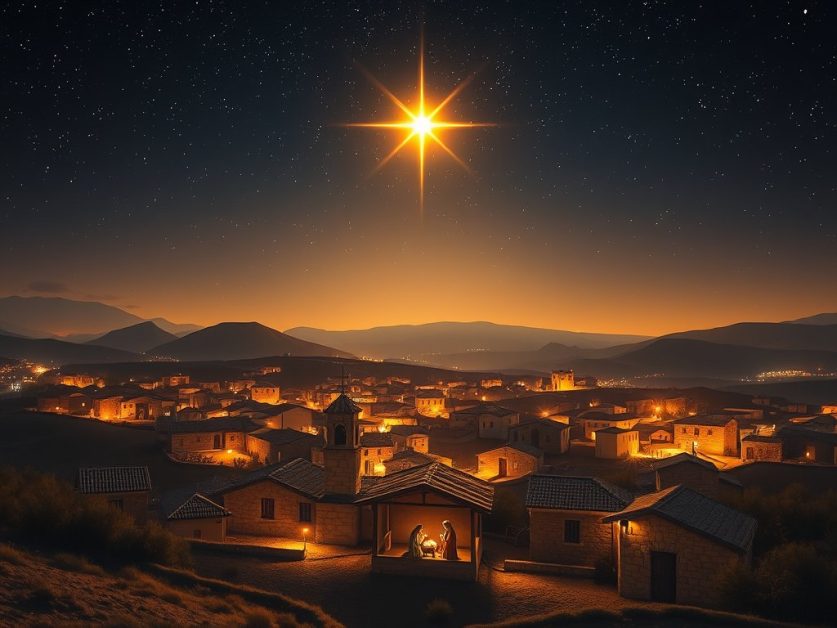
But I do find it interesting that hundreds of years later, God kept his promise to David through the birth of Jesus in another Ephrathah: Bethlehem. (Micah 5:2; Matthew 2:5)

And after he was born, wise men from the East said, 

Where is he who has been born king of the Jews? For we saw his star at its rising and have come to worship him. (Matthew 2:2)

And because of the cross, now we are clothed with salvation as God’s priests and we shout for joy because of it. (16)

More, the day will come when God will put all Jesus’ enemies under his feet. (I Corinthians 15:24-27).

And on that day, his crown will indeed be glorious. (18)

So let us remember that Christmas is not just about Jesus coming 2000 years ago. He will come again. 

On that day, we will all sing,

The kingdom of the world has become the kingdom of our Lord and of his Christ, and he will reign forever and ever. (Revelation 11:15)

Categories
Psalms Devotionals 2

A rich redemption

Israel, put your hope in the Lord.

For there is faithful love with the Lord,
and with him is redemption in abundance.

And he will redeem Israel
from all its iniquities. (Psalm 130:7-8)

When I read those  words, I couldn’t help but think of the angel’s words to Joseph:

[Mary] will give birth to a son, and you are to name him Jesus, because he will save his people from their sins. (Matthew 1:21)

We live in a world broken by sin.

Your own life may be broken because of your sin and failures.

If God kept track of all of them, there is no way we could stand before him. (Psalm 130:3)

But put your hope in the Lord.

With him, there is grace, a love that is faithful to us even when we are faithless. (2 Timothy 2:13)

And by Jesus’ blood, we have received redemption.

But not just redemption.

Redemption in abundance.

Indeed, we have all received grace upon grace from his fullness, for the law was given through Moses; grace and truth came through Jesus Christ. (John 1:16-17)

Categories
Psalms Devotionals 2

Because Jesus was afflicted.

Since my youth they have often attacked me
let Israel say—
since my youth they have often attacked me,
but they have not prevailed against me.

Plowmen plowed over my back;
they made their furrows long.

The Lord is righteous;
he has cut the ropes of the wicked.” (Psalm 129:1-4)

Here in this psalm, the poet laments his afflictions, yet finds hope in that the Lord will ultimately deliver him and curse his enemies.

Years later, Jesus would also be afflicted. He knew what it meant to be despised. He knew what it was like to be afflicted, his back plowed by whips, furrows cut into his back. More, he knew the pain and humiliation of crucifixion.

But God raised him from the dead, delivering him from the grave.

More importantly, it was because of Jesus’ afflictions that we now have peace with God. (Isaiah 53:4-5)

That’s the reason why on the day of Jesus’ birth, the angels didn’t call down a curse on us. Rather, they raised their voice in worship to God, pronouncing his blessings on us.

Glory to God in the highest heaven,
and peace on earth to people he favors! (Luke 2:14)

Categories
Genesis Devotions

Son of sorrows. Son of the Father’s right hand.

I suppose it’s because Christmas is near, but the word “Bethlehem” in verse 19 caught my eye today.

While Jacob’s family was on their way there, Rachel gave birth to Jacob’s youngest son, but in doing so, she died.

As she was dying, she named her son “Ben-oni,” which means “son of my sorrows.”

Jacob would rename him “Benjamin,” which means “son of my right hand.”

Nearly 2000 years later, another baby would be born, this one in Bethlehem itself.

In a sense, he was “Ben-oni.” When he died on the cross, a sword pierced his mother’s soul. (Luke 2:34-35).

More than that, he himself was a man of sorrows, knowing pain, suffering, and rejection. (Isaiah 53:3)

But on the cross, he willingly submitted himself to death, bearing our sin, and interceding for us who had rebelled against God. (Isaiah 53:12)

And then the Father raised him from the dead, seating him at his right hand, “far above every ruler and authority, power and dominion, and every title given.” (Ephesians 1:20-21)

Son of sorrows.

Son of the Father’s right hand.

That’s Jesus.

And that’s what Christmas is all about.

Joy to the world!
The Lord is come!
Let earth receive her King!

Isaac Watts
Categories
Galatians Devotionals

In the fullness of time

But when the fullness of time had come, God sent forth his Son, born of woman, born under the law, to redeem those who were under the law, so that we might receive adoption as sons.

And because you are sons, God has sent the Spirit of his Son into our hearts, crying, “Abba! Father!”

So you are no longer a slave, but a son, and if a son, then an heir through God. (Galatians 4:4-7, ESV)

Sometimes we wonder why God allows so much pain, suffering, and evil in this world. Ever since sin came into the world, humans have been under these things, and the words of that old carol resonate with us.

And in despair I bowed my head.
“There is no peace on earth.” I said.

“For hate is strong, and mocks the song
Of peace on earth, good will to men.”

But in the “fullness of time,” at just the right time, God sent his Son.

His Son was born of a woman. He became human as we are. The pain, suffering, and evil we face every day, Jesus himself faced.

The law of God that we were unable to keep and were condemned by, Jesus lived under perfectly.

And then he went to the cross, taking upon himself the curse the law demanded, not for his own sin, but for ours. (Galatians 3:13-14)

And by taking that curse upon himself, he purchased us for God, not to be his slaves, but to be his sons and daughters.

Now for those of us who have put our trust in him, the right Jesus had to call God, “Abba, Father,” has become ours. We are heirs of God now, and coheirs with Christ.

And in the fullness of time, Jesus will come again. On that day, he will indeed be “Immanuel, God with us.” We will be his people, and he will be our God.

And when we see him, he will wipe away every tear from our eyes, “and death shall be no more, neither shall there be mourning, nor crying, nor pain anymore, for the former things will have passed away.” (Revelation 21:2-4)

No, God is not slow in keeping his promises. For as that old carol concludes,

God is not dead, nor does he sleep.
The wrong shall fail; the right prevail
With peace on earth, good will to men.

Categories
Psalms Devotionals

God’s favor for a lifetime

I was just meditating on David’s words in verse 9 today.

He said,

What profit is there in my death,
if I go down to the pit? (Psalm 30:9, ESV)

For David, there was no profit.

But hundreds of years later on the cross, the answer to that question was quite different.

Through Jesus’ death, there was great profit: our salvation.

And because of his death and resurrection, our mourning is turned into dancing. God’s anger was shown but for a moment on the cross, but now his favor toward us lasts a lifetime.

So this Christmas season, let us sing out in praise with Paul.

Thanks be to God for his indescribable gift! (2 Corinthians 9:15)

Categories
Hebrews

What Christmas is all about (part 3)

For the past couple of days, we’ve been looking at Christmas through the lens of Hebrews.

First, we talked about how it was because of Christmas that we can truly see what God is like. That through Jesus, the invisible God became visible.

Then yesterday, we talked about the second reason Jesus came. That because of our sin, this world became messed up.

We were meant to rule over this earth as God’s representatives and children, but our sin made a mess of this world and our lives.

But when Jesus came, he paid the price for our sin, taking God’s wrath upon himself. Now he has blazed the way to salvation for us.

All we have to do is trust in and follow him, and God’s original plan for us will come to fruition. The day will come when we will reign with Christ for all eternity, crowned with glory and honor.

There is, however, a third reason Jesus came, and we see this also in chapter 2. He came to identify with us. To truly understand us.

So often, we think of God in heaven, and he seems too transcendent. How could such a God truly understand all that we go through.

But God came down to earth in Jesus Christ, and he experienced all that we do. The writer of Hebrews says that Jesus, our “pioneer”, was made perfect through suffering (Hebrews 2:10).

What does that mean? Wasn’t Jesus already perfect? Certainly in terms of sinlessness he was.

But he became more “complete” as a Savior by identifying with us in every way. By taking on human flesh and learning what it means to suffer in an imperfect world, to go through the strongest of temptations and overcome, and ultimately to die and overcome death itself.

Because Jesus did all of that, the writer of Hebrews says,

Both the one who makes men holy and those who are made holy are of the same family. So Jesus is not ashamed to call them brothers. (Hebrews 2:11)

In other words, because Jesus became a man, he truly became one of us. And he can call us brothers and sisters and really mean it.

Throughout the Psalms that are quoted in verses 12-13, you see the joy of Jesus as he calls us his own brothers, sisters, and children. He makes no distinction between us and him.

Again in verse 14-15, it says,

Since the children have flesh and blood, he too shared in their humanity so that by his death he might destroy him who holds the power of death–that is, the devil–and free those who all their lives were held in slavery by their fear of death.

Like us, Jesus took on flesh and blood. But unlike us, he never sinned.

And now by offering the perfect sacrifice for sin, he destroyed Satan’s hold over us and has set us free from the fear of death and hell.

But there’s one last thing. The writer of Hebrews tells us,

For this reason he had to be made like his brothers in every way, in order that he might become a merciful and faithful high priest in service to God, and that he might make atonement for the sins of the people.

Because he himself suffered when he was tempted, he is able to help those who are being tempted. (17-18)

Put another way, he understands our weakness as he never had before because now he himself has experienced it. And because of that, he has become a merciful high priest for us.

So when we now cry out because of our struggles with sin or the pains of life, he understands.

That’s the wonder of Christmas. Of “God with us.” The wonder is that he now truly understands us.

I love the song that says,

He knows all the struggles you are going through.
He knows the pain you’re feeling.

He hears the silent cries you hold within your heart.
And he wants so much to show you
That he knows.

–Brian Becker

Categories
Hebrews

What Christmas is all about

As I write this, Christmas season is well in swing and is in fact just around the corner.

And in Hebrews, we find out just what Christmas is all about. Who is this Christ that came? And why is he so important?

The writer of Hebrews starts by telling us,

In the past God spoke to our forefathers through the prophets at many times and in various ways, but in these last days he has spoken to us by his Son, whom he appointed heir of all things, and through whom he made the universe. (Hebrews 1:1-2)

In other words, while there were many prophets throughout the centuries, now in these last days, we find one that was greater than them all. Greater than even Isaiah and Jeremiah, and Daniel.

While these men spoke many things clouded in mystery, these mysteries were all revealed in Jesus Christ. He is, as John put it, the very Word of God made flesh (John 1:1, 14), and all the scriptures find their fulfillment in him.

But who is he, really?

Jehovah’s Witnesses claim he is the archangel Michael. But the writer of Hebrews flatly denies this.

Instead, he said,

The Son is the radiance of God’s glory and the exact representation of his being, sustaining all things by his powerful word. (3a)

The picture here is of a signet ring that was put into wax and then pressed onto paper. And Jesus is the exact representation of the very nature of God.

All that God is can be seen in Jesus. Jesus himself is the radiance of God’s glory.

The writer then says,

After he had provided purification for sins, he sat down at the right hand of the Majesty in heaven. (3b)

Here we see the why of Jesus’ coming. To die on a cross that our sins may be forgiven. But after he died, he rose again, and now is sitting at the right hand of God the Father in glory.

And on the day Jesus rose from the dead, the Father said,

“You are my Son; today I have become your Father.” (Verse 5, but also see Acts 13:32-34 where Paul uses this passage in reference to the resurrection.)

In ancient times, a king who was over another had a “father-son” relationship with the king who was subject to him. God himself said that of his relationship with Solomon (2 Samuel 7:14)

And the writer of Hebrews makes very clear, “No angel ever had this said to them. Only Jesus.” (4-5)

More, when God brought Jesus into the world, he said,

Let all God’s angels worship him. (6)

We see that during the angel’s worship in front of the shepherds. And on the day Jesus returns to earth, God will again command, “Let all the angels worship him.”

That’s significant, because only God is worthy of worship. The Father could not say that if Jesus were not one with Him. (Luke 4:8)

And while angels are compared to things created things like wind and fire (7), Jesus is called the eternal God himself, and the creator of all things. (2, 8-12)

Finally, no angel had the position of authority that Jesus has. Rather their job is to serve those who will be saved because of the work Jesus did. (13-14)

In short, as glorious as angels are, Jesus is so much more. He is God himself in human flesh. And when he came, he revealed to us who God really is.

Not only that, but through him and him alone we find salvation from our sins and the gift of eternal life.

That’s what Christmas is all about.

More on this tomorrow.

Categories
1 Timothy

The wonder of the gospel

Christmas is right around the corner, and I think it can be so easy to take for granted what it’s all about. Do we truly wonder at what it really means?

Paul did.

He said,

Beyond all question, the mystery of godliness is great. (1 Timothy 3:16a)

The mystery of godliness.

So many people in Paul’s time said that the key to godliness was their own self-effort. That it could be found through asceticism or through keeping the law.

Others were saying it was found in these myths and genealogies that they were promoting.

But true godliness does not come through religion or self-improvement. It comes through Jesus Christ and what he did for us.

Paul wrote,

[God] appeared in a body, was vindicated by the Spirit, was seen by angels, was preached among the nations, was believed on in the world, was taken up in glory. (16b)

God came down to this earth as a tiny baby in Jesus Christ.

God who created this world. God, the one who sustains all things by his word alone. The true King of the universe, apart from whom nothing would exist. He came as a helpless child.

Jesus grew up as a carpenter’s son. He knew hardship as a youth with Joseph his father passing away, leaving him to care for the family.

He then left his home to start his ministry, preaching to the people. He showed them who God really is.

He showed them the power of the kingdom, casting out demons, healing the sick, and raising the dead. And yet they crucified him, just a week after declaring him king.

But the Spirit showed him to be the Son of God with power by raising him from the dead.

The angels proclaimed his resurrection to his disciples. He himself appeared to them, and then was taken into glory.

His disciples took this news to the world, and even now, Jesus’ name is preached and believed on throughout the world.

And it is through this gospel, that people are now made righteous before God, their lives transformed by the very power of God that raised Jesus from the dead.

That’s the wonder of the gospel. That’s the wonder of Christmas.

May we, his church, be the pillar and foundation of this truth, proclaiming it to this world that is dying and without hope.

Let us never become calloused and take for granted the glory of this gospel.

How about you? Do you still wonder at this gospel you believe?

Categories
Acts

A second Christmas

Well, Christmas has come and gone here in Japan. I hope you enjoyed yours as much as I did mine.

As I read this passage though, it strikes me that there is still a Christmas we are yet waiting for.

The first Christmas marked Jesus’ first coming. His purpose? To bear our sins on the cross. To take the punishment that we deserved that our sins might be forgiven.

But Paul tells us here that Jesus is coming again. And this time, he will be coming for judgment. Paul said,

For he has set a day when [God] will judge the world with justice by [Jesus whom] he has appointed. He has given proof of this to all men by raising him from the dead. (Acts 17:31)

To those who reject him will come condemnation for all eternity. But to those who receive him as Lord, their ultimate salvation from this fallen, broken world will come, and all things will be made new.

The writer of Hebrews puts it this way:

Just as man is destined to die once, and after that to face judgment, so Christ was sacrificed once to take away the sins of many people; and he will appear a second time, not to bear sin, but to bring salvation to those who are waiting for him. (Hebrews 9:27-28)

The question is, are you ready? There is only one way to be ready. Paul told the Athenians and us,

Now [God] commands all people everywhere to repent. (Acts 17:30)

To repent means to turn around. To stop going your own way and to start going God’s way. To stop putting your trust in yourself, and start putting it in Jesus Christ.

And if you do, you will be ready when “Christmas” truly rolls around again.

Are you ready?

Categories
Luke Luke 2

The One who causes many to fall

Merry Christmas to the rest of you celebrating Christ’s birth in the world! (It’s already the 26th in Japan…and all Christmas decorations are already gone).

Anyway, this passage strikes me, because the words that were spoken by Simeon are just as true today as they were when Christ was first born.

Simeon was a godly man, and somehow God had revealed to him that he would not pass away until he had seen the Messiah, the one who would come to save Israel…and the world. And when Simeon saw Jesus with his own eyes, he prayed,

Sovereign Lord, as you have promised, you may now dismiss your servant in peace.

For my eyes have seen your salvation, which you have prepared in the sight of all nations: a light for revelation to the Gentiles, and the glory of your people Israel. (Luke 2:29-32)

But while Joseph and Mary marveled at his words, Simeon warned them,

This child is destined to cause the falling and rising of many in Israel, and to be a sign that will be spoken against, so that the thoughts of many hearts will be revealed.

And a sword will pierce your own soul too. (Luke 2:34-35)

Truer words have never been spoken. For as many people accepted Jesus as their Messiah, many more rejected him. As many people honored the name of Jesus, many more cursed it.

And because of the Jews’ rejection of Him, it caused a piercing to the soul of Mary, who had to watch him crucified before her very eyes.

But while Simeon’s words were true of Israel in that time, they are just as true in the world today. Because while many people honor the name of Jesus, and worship him as Lord, so many others curse his name and reject him.

In doing so, they reveal the true state of their hearts.

For while many people may seem “good,” by rejecting the One who came to die for their sins, they show their rejection of God and his ways in their hearts. Instead they insist on living their own way whether God approves or not.

And seeing this pierces the souls of all who truly love Him. Especially when we see our loved ones reject Him.

I suppose at Christmas time, it’s especially painful to see. That at the time we rejoice in Christ’s birth, yet people choose to reject him.

Christ said that he didn’t come to bring peace, but a sword. (Matthew 10:34).

Some of you may say, “But what about the angels’ words at Christ’s birth, ‘peace on earth’ and all that?”

Christ did indeed come to bring peace, peace between God and us. But he is also a dividing point. People divide because of his name. Families divide. Friends divide. It’s inevitable because not everyone will believe.

I guess what I’m trying to say is this: If you are truly going to follow Christ and preach his name, you cannot please everyone. Not everyone will like you.

Why? Because if they hate Christ, can you truly expect them to love you?

Jesus told us,

If the world hates you, keep in mind that it hated me first. If you belonged to the world, it would love you as its own.

As it is, you do not belong to the world, but I have chosen you out of the world. That is why the world hates you. (John 15:18-19)

So let us not waste time trying to make everyone love us. Instead, let us love Christ and preach his name. Because while some may fall because of him, some will rise and find life in his name.

And if those you love find him, isn’t it worth it?

God bless, and Merry Christmas!

Categories
Luke Luke 2

Spreading the Joy

Merry Christmas all! I trust you’ll forgive this short, but sweet blog on this Christmas day (in Japan).

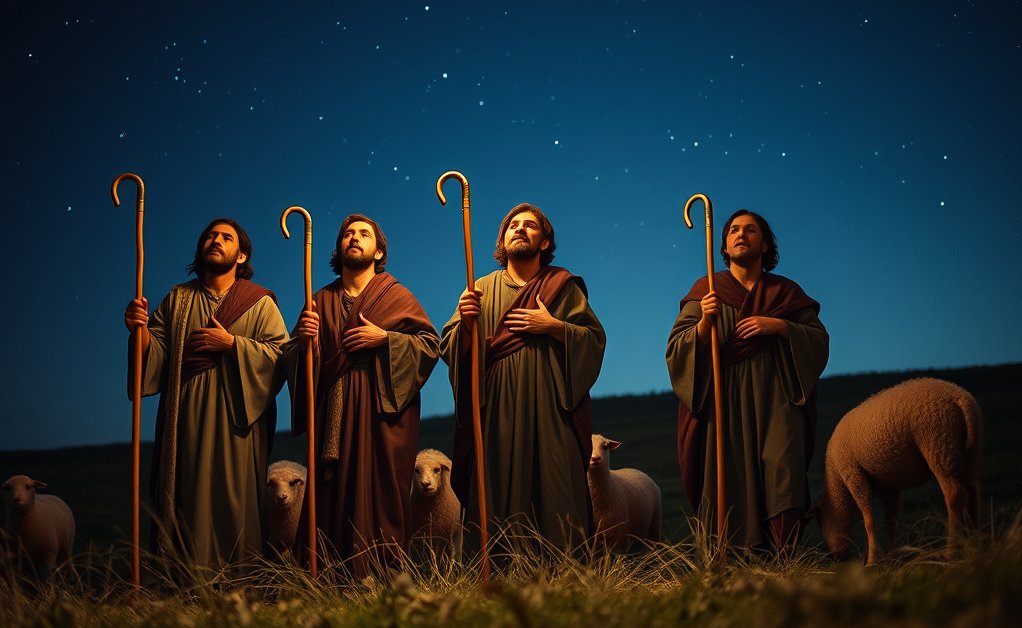
When the shepherds heard the news that a Savior was born, they immediately raced down to Bethlehem to find him. And when they found Him, they rejoiced greatly.

It says that after they returned, they were glorifying and praising God. To be honest, I think that was an understatement for the joy they felt.

But it was a joy that they could not hold to themselves, for it says in verse 17, that they spread the news to anyone that would listen.

It says that the people were amazed at what the shepherds told them. What it doesn’t say is how they responded after that.

Did they truly believe the shepherds and go see the child themselves? Somehow, I get the impression that they didn’t. Some may have, but if they did, it’s recorded nowhere in scripture.

But to the shepherds, it didn’t matter whether or not the people believed them. They were so filled with joy that they HAD to tell others about it or they’d burst.

How about you? Are you so filled with the joy of the Lord that you’ll just burst if you don’t tell them?

We can’t control how people will respond to the good news about Jesus. What’s more, that’s not our responsibility.

But if we truly love Jesus, if we are truly filled with his joy, we should be telling people about him so that they can know that same joy in their lives too.

How much joy are you spreading?

Categories
Luke Luke 2

When Joy came

As I write this, it is Christmas Eve. And as I reflect on that first Christmas night, it’s hard to truly fathom. For it was on that day that joy truly did come to the world.

When the angel appeared to the shepherds, he said,

Do not be afraid. I bring you good news of great joy that will be for all the people.

Today in the town of David a Savior has been born to you; he is Christ the Lord. (Luke 2:10-11)

As I read this, and think of the feelings of the shepherds, I think of the old carol that says,

Long lay the world in sin and error pining
‘Til he appeared and the soul felt its worth.

Ever since Adam and Eve first sinned in the garden, the world had lived under the shadow of death. We were dying because of our sin. Without hope, and without God in the world.

And particularly for Israel at that time, they may have started to wonder if God had abandoned them. Though God had appeared to their forefathers and revealed himself to them, they hadn’t heard from him for 400 years.

But then, for the first time in centuries, God spoke, and said, “I am here.”

Literally. “Emmanuel” had come. And by his birth he said, “I not only care about you, but I have come to walk among you. To be a light in your darkness. To bring you hope. To bring you salvation.”

And when he sent angels to announce this, he didn’t send them to the priests who were supposed to be closest to God. Nor did he send them to the teachers of the law or any of the “religious” folk.

He came to ordinary folk. To shepherds. People, who in those days, were despised among the general Jewish population.

And by coming to them, God let them know that he truly had come for everyone. That this good news was truly for all people from the greatest to the least.

And because he came, the barrier between God and man came crumbling down. Peace between God and man became possible.

Not because of anything we had done. But because of what Jesus did, not on that Christmas night, but on the cross years later, when the curtain that stood between God and us was torn in two forever.

I pray that you may know that peace this Christmas. And may the joy the shepherds felt that night, fill your heart as well.

Joy to the World! The Lord is come!

Categories
John John 1

Light in a darkened world

I once read about a young teenage girl in the United States.

She had perfect grades in high school. She had a perfect score for the SAT. She had a perfect score for the University of California acceptance exam. She was a brilliant young woman.

But in an interview, a reporter asked her, “What is the meaning of life?”

Her answer?

“I have no idea. I would like to know myself.”

That’s the kind of world that we’re living in. A world where people are separated from God, and because they are, they are walking around in darkness.

They’re stumbling around looking for meaning in life. Even worse, they are blinded by their sin and where that sin is leading them.

And it was into this world that Jesus stepped into 2000 years ago as a little baby. It says in verse 4 of this passage,

In him was life, and that life was the light of men. (John 1:4)

When Jesus came into this world, he became light in a darkened world. How did he become light?

He showed us who God is.

As we saw in my last post, he explained who God is to us. God is invisible, but when Jesus appeared, God became visible. All that God is, we see in Jesus.

We no longer have to guess what God is like. We can look at Jesus and know.

He showed us the meaning of life.

What is the meaning of life? Ultimately, it is to have a relationship with God.

It says in verse 3 that he created all things, including us. But when Jesus came, the very people that he created didn’t recognize him. More than that, they rejected him. (John 1:10-11)

But it says in verse 12-13,

Yet to all who received him, to those who believed in his name, he gave the right to become children of God – children born not of natural descent, nor of human decision or a husband’s will, but born of God. (John 1:12-13)

In other words, when we receive Jesus as our Savior and as our Lord, we become adopted into his family.

Nobody is physically born into God’s family. Just because your parents are Christians does not make you one. You need to be born of God.

In other words, you need to respond to God’s work in your heart and say “Yes” to Jesus.

“Yes Jesus. I want you to be my King. I want you to be my Lord.”

When you do that, you become part of God’s family. And in doing so, you find the main purpose for which you were created. A relationship with your heavenly Father.

He showed us the way to life.

Just as he gave life and breath to all that live, he gives eternal life to all who believe in him.

It says in verse 5,

The light shines in the darkness, but the darkness has not understood (or overcome) it.

When Jesus came into the world, the sinful people around him could not understand him, even the religious ones. And because of that they tried to kill him.

But even in killing him, they could not overcome him. Rather, through his death, he took the punishment for our sin.

More than that, he conquered death and the grave by rising again three days later, and now he gives life to all who come to him.

And so John writes,

From the fullness of his grace we have all received one blessing after another.

For the law was given through Moses; grace and truth came through Jesus Christ. (John 1:16-17)

Moses gave us the law that showed us what God required of us. But the law couldn’t save us. All it could do was show us our shortcomings. That we’re all sinners deserving death.

But through Jesus, we find grace and truth. We see the truth of our sinfulness. But we also see the truth of God’s love for us shown on the cross.

And when we receive him, we receive “grace upon grace.” A grace that never runs out and covers all our sin. A grace that gives us life.

May the light of Christ shine in your hearts this Christmas.

Categories
Isaiah

Why Jesus came

As I write this, Christmas is about 6 or 7 weeks away.  It’s so amazing how the time just flies by.  It doesn’t seem so long ago that I took our Christmas tree down.

But as Christmas draws near and we think about Jesus’ birth, it’s equally important to think about his death. 

And here in Isaiah 52-53 we see a mini-biography of his life and death, hundreds of years before he was born. 

What do we learn of him?

He grew up before him like a tender shoot, and like a root out of dry ground. 

He had no beauty or majesty to attract us to him, nothing in his appearance that we should desire him.  (Isaiah 53:2)

If I had been God, I would’ve probably had him born of a noble family.  Probably a king.  And I would’ve made him the most handsome and majestic person you had ever seen. 

But instead, Jesus was like a root out of dry ground.  He was born to a simple, poor carpenter.

And according to Isaiah, he was a simple looking man.  Nothing outstanding at all in the way that he looked.  He looked like any another man you might see on the street. 

The women around him certainly weren’t flocking to him based on his looks.

Not only that, he was a man familiar with rejection.  It says in verse 53:3,

He was despised and rejected by men, a man of sorrows, and familiar with suffering. 

Like one from whom men hide their faces he was despised, and we esteemed him not. (Isaiah 53:3)

Sometimes we wonder if Jesus could identify with us.  Many of us are not so handsome or beautiful.  Many of us have known rejection.  Yet Jesus understands us, because he was like us in every way.

Not only could Jesus identify with us, he also loved us deeply.  Though we rejected him, though we “considered him stricken by God, smitten by him, and afflicted,” yet

he was pierced for our transgressions, he was crushed for our iniquities; the punishment that brought us peace was upon him, and by his wounds we are healed.  (Isaiah 53:5)

It wasn’t even as if we were seeking a relationship with him.  We were running as far away from him as we could. 

As it says in 53:6,

We all, like sheep, have gone astray, each of us has turned to his own way. (Isaiah 53:6

Yet even so,

The Lord has laid on him the iniquity of us all.  (53:6b)

It’s almost unimaginable.  Though we rejected him, though we ran from us, he was willing to suffer unspeakable pain in order to take the punishment for our sins.

He was oppressed and afflicted, yet he did not open his mouth; he was led like a lamb to the slaughter, and as a sheep before her shearers is silent, so he did not open his mouth. 

By oppression and judgment he was taken away…Just as there were many who were appalled at him – his appearance was so disfigured beyond that of any man and his form marred beyond human likeness.  (Isaiah 53:7-8, Isaiah 52:14)

And then on the cross,

he was cut off from the land of the living; for the transgression of my people he was stricken…

he poured out his life unto death, and was numbered with the transgressors.  For he bore the sin of many, and made intercession for the transgressors.  (Isaiah 53:8, 12)

After that,

He was assigned a grave with the wicked, and with the rich in his death, though he had done no violence, nor was any deceit in his mouth.  (Isaiah 53:9)

But that isn’t the end of the story, for

though the Lord makes his life a guilt offering, he will see his offspring and prolong his days, and the will of the Lord will prosper in his hand. 

After the suffering of his soul, he will see the light of life and be satisfied; by his knowledge my righteous servant will justify many, and he will bear their iniquities.  (Isaiah 53:10-11)

In other words, death would not keep hold of him.  He would see the “light of life” and live again, his days prolonged. 

Not only that, he would live to see his offspring, we who would believe in him and become part of God’s family.

That’s why Jesus came.  That those of us who had run from him, who had rejected him, who were headed towards eternal death, could be saved from our sins and come into a relationship with God as his children.  That through him we could know true life. 

That’s Christmas.

So as we draw close to the Christmas season, let us not only remember Jesus’ birth, but his death and resurrection as well. 

Let us remember that this Jesus can identify with us, that he loves us, and that he came to redeem us. 

And let us share that knowledge with those around us, that they may come to know him too.