Categories
Numbers Devotionals

Breaking faith with God

Because you did not believe in me, to uphold me as holy in the eyes of the people of Israel, therefore you shall not bring this assembly into the land that I have given them. (Numbers 20:12)

I was thinking on those words God spoke to Moses and Aaron this morning.

“You did not believe in me.”

Instead of believing God’s instructions and doing things God’s way, Moses did things his own.

In doing so, he showed the same lack of honor to God that the people had with all their complaining and rebelliousness.

Later Moses paraphrased what God had told him. “You broke faith with me. You betrayed my trust. You were unfaithful and disloyal to me.” (Deuteronomy 32:51)

Here was a man that God had spoken to face to face, as a man does with a friend. (Exodus 33:11).

And Moses had betrayed that trust.

How much did that pain the heart of the Father?

Father, how often am I like Moses? How often do I fail to believe in you? Instead of believing your instructions and doing things your way, I do things my own?

By your grace, you saved me. By your grace, you made me your own and call me “friend.”

I never want to look into your eyes knowing that I have betrayed your trust.

Help me to always honor you as holy in my life. To give you the honor you are so worthy of in everything I say and do. And when other see me, let them see you.

In Jesus’ name, amen.

Categories
Exodus Devotions

The God who pitched his tent among us

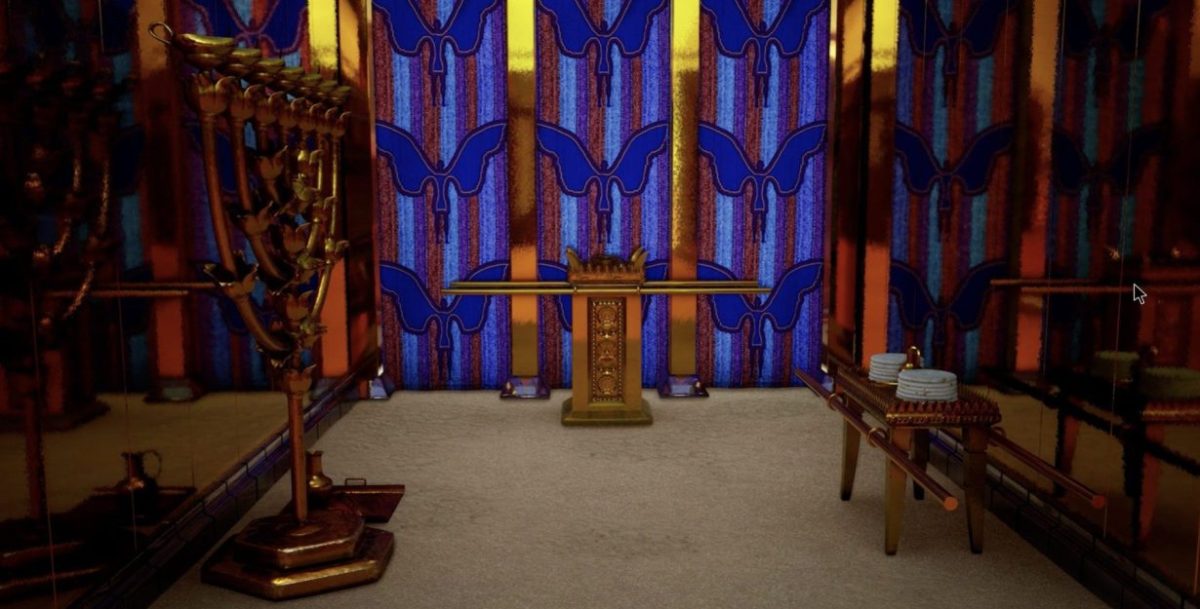
The cloud covered the tent of meeting, and the glory of the Lord filled the tabernacle.

Moses was unable to enter the tent of meeting because the cloud rested on it, and the glory of the Lord filled the tabernacle. (Exodus 40:34-35)

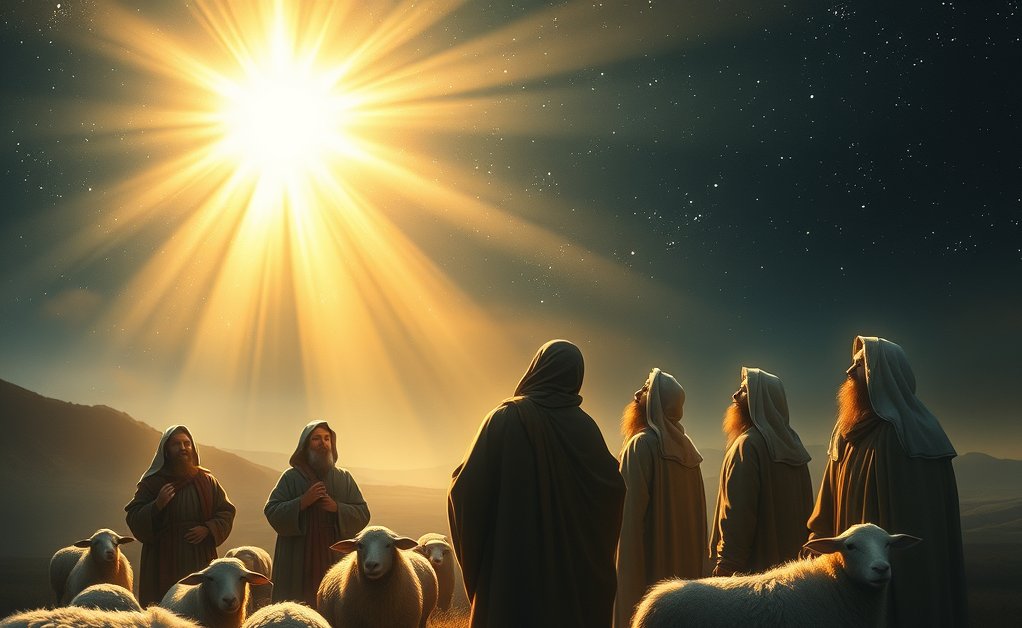
This being Christmas season, I couldn’t help but think of the story of the shepherds in Luke 2.

In the same region, shepherds were staying out in the fields and keeping watch at night over their flock.

Then an angel of the Lord stood before them, and the glory of the Lord shone around them, and they were terrified. (Luke 2:8-9)

The same glory that filled the tabernacle now shone around the shepherds.

No wonder the shepherds were terrified.

Even Moses wouldn’t enter the place where God’s glory shone.

And yet the angel said to the shepherds,

Don’t be afraid, for look, I proclaim to you good news of great joy that will be for all the people: Today in the city of David a Savior was born for you, who is the Messiah, the Lord. (Luke 2:10-11)

Through Jesus, the shepherds gained access to God that even Moses didn’t have. And so have we.

John tells us,

The Word (i.e. God) became flesh and dwelt among us. (John 1:14)

The word “dwelt” has the idea of “pitching one’s tent.”

In Jesus becoming human, God “pitched his tent” among us, just as God did for the Israelites.

Because he did, John tells us that,

We observed his glory, the glory as the one and only Son from the Father, full of grace and truth. (John 1:14b)

And just as God was Immanuel to the Israelites, “throughout all the stages of their journey,” Jesus is Immanuel to us throughout all the stages of our journey through life, promising,

I am with you always, to the end of the age. (Matthew 28:20)

Categories
Bible Original

A sanctuary

They are to make a sanctuary for me so that I may dwell among them. You must make it according to all that I show you—the pattern of the tabernacle as well as the pattern of all its furnishings. (Exodus 25:8-9)

Father, dwell in me. Let my life be your sanctuary. May my life not be built according to my own blueprint, but according to yours.

Father, you are holy, your Word is holy, but so often I am unholy. So always meet me above your mercy seat (Exodus 25:21-22).

Jesus, you are my mercy seat (Romans 3:25, CSB).

By your blood, daily wash away all my sins and make me pure before you.

Father, you are always with me, providing me my daily bread (Exodus 25:23-30).

Jesus you are the bread from heaven that gives me eternal life. (John 6:33-35)

Jesus, you are my light (Exodus 25:31-38, John 8:12). Let me walk by your light each day.

In your name, I pray, Amen.

Categories
Exodus Devotions

What we all need

“What you’re doing is not good,” Moses’s father-in-law said to him.

“You will certainly wear out both yourself and these people who are with you, because the task is too heavy for you. You can’t do it alone.” (Exodus 18:17-18)

“You can’t do it alone.”

I found it interesting that Jethro told Moses that not long after the battle against the Amalekites.

Moses literally couldn’t keep his hands up as he was interceding for the Israelites before God, but Aaron and Hur supported him until victory was achieved. (Exodus 17:8-16)

And now Jethro was telling him again, “You can’t do God’s work alone.”

That’s something we all need to remember.

Our leaders may seem like “super-Christians,” but they can’t do their jobs alone.

They certainly need our prayers and encouragement. But they also need us to do our part in ministry as well.

God has given each of us gifts to minister to others. Ministry is not just the job of the leaders. It’s the job of every Christian. (Ephesians 4:11-16)

But beyond that, all of us need support in our Christian lives.

Our personal ministries to our families and those around us can get heavy. Life itself can get heavy.

So let’s not try to live our Christian lives on our own.

Let’s support and encourage each other so that our load will be lightened and we’ll be able to endure. (Exodus 18:22-23)

As Paul put it,

Carry one another’s burdens; in this way you will fulfill the law of Christ. (Galatians 6:2)

Categories
Exodus Devotions

What makes us different

The blood on the houses where you are staying will be a distinguishing mark for you; when I see the blood, I will pass over you.

No plague will be among you to destroy you when I strike the land of Egypt. (Exodus 12:13)

What made the Israelites different from the Egyptians? Why were the Israelites spared God’s judgment and not the Egyptians?

As we’ll see later in Exodus, it wasn’t because the Israelites were somehow morally superior to the Egyptians.

Rather, it was the blood of the sheep or goat that was shed for them.

It’s the same with us.

We deserve God’s judgment as much as anyone.

What distinguishes us and saves us from God’s judgment is not how good or faithful we are.

Rather, it is Jesus’ blood shed on the cross for us.

Perhaps David was thinking of the Israelites using hyssop to brush the blood on their doorposts when he prayed,

Purify me with hyssop, and I will be clean;
wash me, and I will be whiter than snow. (Psalm 51:7)

God told the Israelites to always remember what he did for them that day. (Exodus 12:24-27)

In the same way, let us always remember what Jesus did for us on the cross, and like the Israelites, fall down in worship.

It’s your blood that cleanses me.
It’s your blood that gives me life.
It’s your blood that took my place in redeeming sacrifice.
And washes me whiter than the snow.
My Jesus, God’s precious sacrifice. — Michael Christ

Categories
Exodus Devotions

Though God is patient

Our God is patient. That is true.

But ultimately, there is one thing he will not tolerate: willful disobedience.

We see that twice in this passage.

When God first called Moses to go to Pharaoh, Moses started making all kinds of excuses about why he couldn’t go.

But in the end, those excuses were merely excuses. And when God answered each one, Moses finally said, “I don’t want to go. Send someone else.”

At that, God got upset.

Now, by his grace, God made allowance for Moses’ weaknesses, allowing Aaron to be his spokesman.

But he did not allow Moses to simply walk away from this task he had given him.

Then we have this curious incident where God is about to kill Moses. Why?

Apparently, God had commanded Moses to circumcise his son. It was something God had commanded Abraham and all his descendants to do (Genesis 17:9-14).

And as Israel’s leader, Moses had to set an example for the people.

But for whatever reason, he didn’t. From his wife’s reaction, it’s possible she had been against her son being circumcised.

Again, God is patient and gracious. But never mistake his patience and grace for indifference to our sin.

He does not take willful disobedience lightly.

Neither should we.

Categories
Exodus Devotions

Having our Father’s heart

Years later, after Moses had grown up, he went out to his own people and observed their forced labor. He saw an Egyptian striking a Hebrew, one of his people…

After a long time, the king of Egypt died. The Israelites groaned because of their difficult labor, and they cried out, and their cry for help because of the difficult labor ascended to God.

God heard their groaning, and God remembered his covenant with Abraham, with Isaac, and with Jacob; and God saw the Israelites, and God knew. (Exodus 2:11, 23-25)

Moses was a flawed man. And yet, I think God saw in Moses a heart similar to his own. A heart that not only saw the groanings and struggles of others, but wanted to help.

Moses saw the suffering of his own people and refused to stand by and do nothing.

His murdering a man was of course wrong, but his desire to help his suffering brothers was not.

He later saw some shepherdesses also being bullied, and despite his failure the time before, he still couldn’t stand idly by.

And when God saw the suffering of his own people, he couldn’t just stand by and watch either. He had compassion on his people and determined to help them.

And so he chose to use a man who had the same kind of heart he had.

God still chooses to use the same kind of people today.

I don’t know about you, but I want to be such a man.

Categories
Psalms Devotionals

When God looked down

He looked down from his holy heights—
the Lord gazed out from heaven to earth—
to hear a prisoner’s groaning, 
to set free those condemned to die,
so that they might declare 
the name of the Lord in Zion 
and his praise in Jerusalem when peoples and kingdoms are assembled to serve the Lord.” (Psalm 102:19-22)

Those words reminded me of the Lord delivering the Israelites from Egypt.

They were groaning and condemned to die in slavery. But God looked down and heard them, setting them free. (Exodus 2:23-25, 3:7-10)

And because of that, they praised the Lord, declaring his name, and serving him.

In the same way, we were all groaning and condemned to die because of our sin. But God looked down and heard our cries. And by his grace he saved us. 

And the day will come when people from every tribe, tongue, and nation will stand before him to serve and worship him forever. (Revelation 7:9-17)

So when we are weak, when we are crying out to him, let us always remember what an awesome God we serve!

Categories
Exodus

Who do you fear?

And so we hit Exodus.

I think that Moses must’ve gotten a kick out of writing this chapter, especially the part about Shiphrah and Puah, the Hebrew midwives.

Here is the most powerful man in Egypt, the Pharaoh, and he has commanded these midwives to kill all the baby boys born to the Hebrews.

But word gets back to him that the midwives haven’t been doing so, and so he summons them into the palace and asks, “Why haven’t you done what I commanded?”

And here are these two women, standing before him with a straight face saying, “Hebrew women are not like Egyptian women; they are vigorous and give birth before the midwives arrive.” (Exodus 1:19)

I can just see Pharaoh looking at these women saying, “I see. I didn’t know that. You learn something new every day. Vigorous. Hmm…”

What gave these women the courage to defy the most powerful man in Egypt?

They feared God more than Pharaoh.

It says in verse 17, “The midwives, however, feared God and did not do what the king of Egypt had told them to do; they let the boys live.”

And because they feared God more than Pharaoh, God blessed them. In verses 20–21, it says,

So God was kind to the midwives and the people increased and became even more numerous.

And because the midwives feared God, he gave them families of their own.

Who do you fear in your life? Who do you honor most in your life? Is it God? Or is it others?

Sometimes we fear the reactions of others in our lives, and it affects our relationship with God.

I know of one woman who for a long time put off baptism because she feared what her parents would think.

I know of another woman who put off becoming a Christian because she was afraid of what her husband would think.

And yet, they found that when they feared and honored God more than their own parents and husband, God blessed them.

I’m not saying that by fearing God more than people you’ll never get into trouble. There will be people who will get upset with you when you make that choice.

I know of one man who got in trouble with his coworkers because he wouldn’t put work ahead of God in his life.

They wanted him to work more overtime, but he refused because he felt God had other things for him to do outside of work.

Eventually, he had to leave his company.

But I believe that God was pleased with this man for fearing him above all others.

God once told the prophet Isaiah,

The Lord spoke to me with his strong hand upon me, warning me not to follow the way of this people.

He said: “…do not fear what they fear, and do not dread it.

The Lord Almighty is the one you are to regard as holy; he is the one you are to fear, he is the one you are to dread, and he will be a sanctuary…” (Isaiah 8:11–14)

God will be a sanctuary for you—a place to run to when times get tough and everyone is against you.

But he warns us, as he did Isaiah, not to follow the way of the world.

Rather, we are to fear and follow him.

And if we do, just as he blessed those Hebrew midwives, he will bless you.

Who do you fear?