
Categories
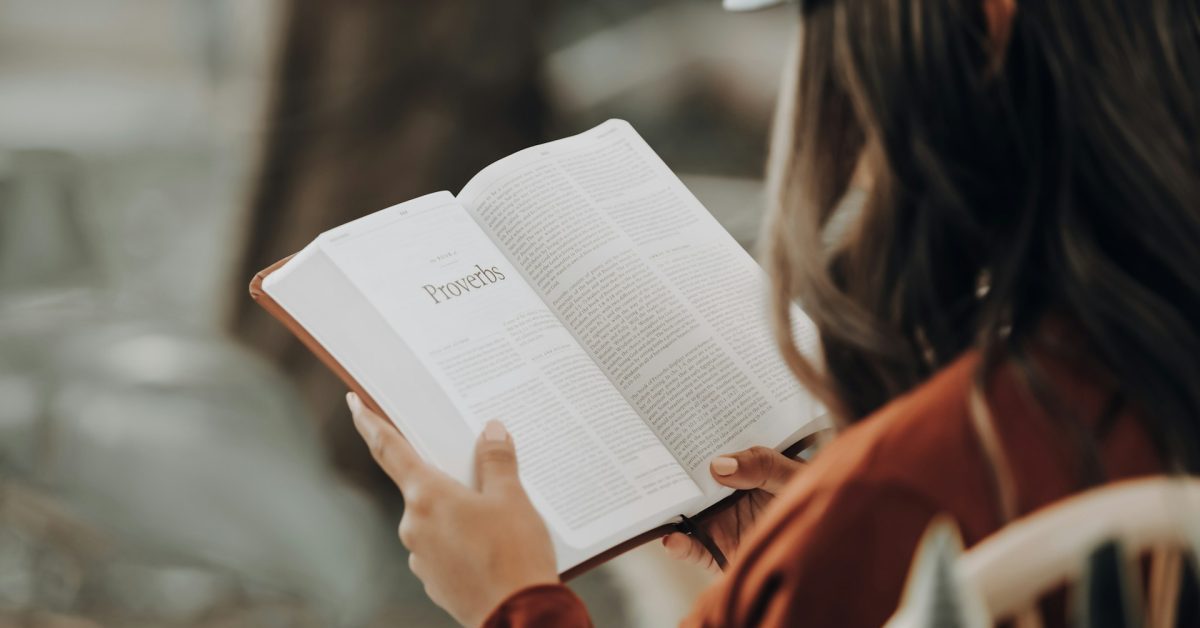
Proverbs

Who (or what) we put our trust in

Who or what do you put your trust in?

Yourself?  Your money?  Or God?

That’s what Solomon addresses time and again in Proverbs.  He writes,

The name of the LORD is a strong tower; the righteous run to it and are safe. 

The wealth of the rich is their fortified city; they imagine it an unscalable wall. 

Before his downfall a man’s heart is proud, but humility comes before honor.  (Proverbs 18:10-12)

So many people put their trust in themselves.  In their own wisdom, or in this case, what they have.  They feel that if they have enough money, they can handle whatever may come their way.

But Solomon writes that it is when you put your trust in God that you are truly safe. 

Many who have put their trust in money still haven’t found happiness or security.  Their marriages fall apart.  They lose sleep worrying about their job or the stocks they’ve invested in. 

And though they may have all they need, they still find it hard to be at peace.

And though others may feel secure, proud of all they have or all they’ve accomplished, often times they see the kingdoms they built crumble around them. 

More importantly, they will find that the day will come when they have to stand before God and give an account before him for all they’ve done. 

And if they’ve been only living for themselves, they’ll find that all they built will mean nothing on the day of judgment.

On the other hand, those who have put their trust in God find rest in him, knowing that as they walk in his will, he will take care of them. 

And on the day of judgment, they will be able to stand with Jesus at their side.

So we need to be careful who or what we put our trust in.

Solomon writes,

It is not good to have zeal without knowledge, nor to be hasty and miss the way.  (Proverbs 19:2)

We can have all the enthusiasm for life in the world, but if we are not following God and his leading, we’ll miss the path that he has for us. 

So often, in our zeal, we make foolish mistakes that we later regret.  Yet as Solomon says,

A man’s own folly ruins his life, yet his heart rages against the LORD.  (19:3)

So many times, we trust in our own wisdom and so ruin our lives, and then we ask, “God, why did you let this happen to me?”

But we fail to realize that we are simply reaping what we sowed.  Had we trusted in God, we wouldn’t have fallen into the pit we are in.

As Solomon said,

He who obeys instructions guards his life, but he who is contemptuous of his ways will die.  (19:16)

God’s words are the words of life.  If we choose to ignore them, that’s on our own head.

So Solomon admonishes us,

Listen to advice and accept instruction, and in the end you will be wise.  (19:20)

And always remember,

Many are the plans in a man’s heart, but it is the LORD’s purpose that prevails.  (19:21)

In other words, you can make all the plans that you want, but things will turn out in the end the way that God wants. 

So don’t fight God’s will.  Align yourself with it.  And if you do, you’ll find,

The fear of the LORD leads to life:  Then one rests content, untouched by trouble.  (19:23)

Who or what are you putting your trust in?
Categories
Proverbs

Where wisdom begins

As we start through Proverbs, I must admit to a little uncertainty in how to present this book.  There are a broad variety of themes within Proverbs, even within the chapters themselves. 

I briefly considered organizing this book by themes, but ultimately, I decided to go chapter by chapter as I have with the other books. 

That said, in chapters where there are multiple themes, I’ll probably list “nuggets of wisdom” within the chapter, and very brief thoughts on them within the one blog, rather than a full blog on just one or two verses at a time.

Anyway, the first few verses are the introduction to the book of Proverbs, and in them, Solomon writes the reason for writing this compilation, namely,

To know wisdom and instruction, to discern the sayings of understanding, to receive instruction in wise behavior, righteousness, justice and equity…to give prudence…knowledge and discretion…and wise counsel, to understand a proverb and a figure, the words of the wise and their riddles.  (Proverbs 1:2-6)

Who was it meant for?  This part is interesting.  It was meant for the naive and the youth first (4).  Namely, to teach them prudence.  In other words, to teach them good judgment as they deal with the “real world.” 

Not only that, but to give them knowledge they don’t have, and discretion in all their affairs whether it’s finances, relationships, or whatever it  may be.

Now this makes sense.  But Solomon also says it’s for those who have already attained a measure of wisdom, that they may hear and increase in their learning.  Not only that, but that they would get the wise counsel that they need.

It’s so easy for us as we get older to think we know it all.  To think we already know all we need to. 

But Solomon says here that it’s important to continue increasing in wisdom and learning.  Because even those who are “wise” can forget and make mistakes that destroy their lives. 

Solomon himself is a great example of this.  He was the wisest man who ever lived, and yet, he wrecked his own life by his own bad decisions.

What is the key to wisdom?  Solomon give the answer in verse 7,

The fear of the LORD is the beginning of knowledge, but fools despise wisdom and discipline.

Solomon also wrote in Proverbs 9:10,

The fear of the LORD is the beginning of wisdom, and knowledge of the Holy One is understanding.

People who are wise will fear the Lord.  It is only when we begin to fear him that wisdom truly begins. 

Why? 

Because he’s our creator.  He’s the one who knows how life is meant to work.  When you want to know how something is meant to work, go to its designer.

But when you try to do things your own way, it inevitably leads to trouble.  And God says if you do so, you are a fool.

We often think of fools as stupid people.  And certainly doing things your own way leads to doing stupid things.  But the word fool in the Bible has the idea of a person who is morally deficient and corrupt.

Not only does despising God and his wisdom lead to stupid decisions, it mars us and makes us less than the complete people God created us to be. 

When people look at us, they are meant to see the image of God in us.  But how often do you look at yourself in the mirror and see something less than that because of what you’ve done to your own self?

God wants us to be whole.  He wants us to be complete.  He wants us to reflect his image. 

But for that to happen, we need to embrace him and the wisdom he freely gives to those who ask him.

Don’t be a fool.  Don’t think you know it all. 

As you read the proverbs in this book, open your hearts to them.  Drink them in.  And ask God to speak to you and change you into his image.

Categories
Isaiah

The key to life

I love verses 5-6 in this chapter.

The Lord is exalted, for he dwells on high; he will fill Zion with justice and righteousness. 

He will be the sure foundation for your times, a rich store of salvation and wisdom and knowledge; the fear of the Lord is the key to this treasure. (Isaiah 33:5-6)

The Israelites were in trouble.  Their treaties with Egypt and with other nations had failed.  Assyria was coming, and everything was falling apart. 

But in the midst of this, the Lord says, “I am above all things.  I am above all the powers of the earth.  And I will be a sure foundation for you.  I provide salvation, wisdom and knowledge for your life.  Not only that, I’m a rich store of all these things.”

What unlocks the box that holds this treasure?  One key:  the fear of the Lord.  To honor and respect him above all things. 

To know that compared to him, we are nothing, and that he has the power to wipe us all out with a single word. 

But though we always keep that in mind ,we also remember that he is a God of love and mercy to those who humble themselves before him.

And so God says,

You who are far away, hear what I have done; you who are near, acknowledge my power!  (Isaiah 33:13)

For many people, to come face to face with God is a frightening thing.  In verse 14, it says,

The sinners in Zion are terrified; trembling grips the godless.

As a result, they cry out,

“Who of us can dwell with the consuming fire? Who of us can dwell with everlasting burning?”

But God answers, “Anyone can do so.”

[Anyone] who walks righteously and speaks what is right, who rejects gain from extortion and keeps his hand from accepting bribes, who stops his ears against plots of murder and shuts his eyes against contemplating evil.  (15)

To these, God says,

This is the man who will dwell on the heights, whose refuge will be the mountain fortress. 

His bread will be supplied, and water will not fail him.   Your eyes will see the king in his beauty and view a land that stretches afar.  (16-17)

And as we do that, we’ll look back at all we feared and see that all of them have been swept away.  And our lives will be

a peaceful abode, a tent that will not be moved; its stakes will never be pulled up, nor any of its ropes broken. (20)

And,

the sins of those who dwell there will be forgiven.  (24)

What do you fear?  There are many things that people fear in life.  But the truth is, if we fear God, we need not fear anything else in life. 

As Isaiah said,

The Lord will be our Mighty One…the Lord is our judge, the Lord is our lawgiver, the Lord is our king; it is he who will save us.  (21-22)

Let us take the key to life God has given us, and fear him. 
As we do, we’ll have everything we need to not only survive, but to prosper in life.

Categories
2 Chronicles

Under authority

For all his mistakes in making unwise alliances, Jehoshaphat truly did love the Lord.

Jehu noted this even as he rebuked Jehoshaphat saying,

There is, however, some good in you, for you have rid the land of Asherah poles and have set your heart on seeking God.  (2 Chronicles 19:3)

Chastened, but perhaps encouraged by these words, Jehoshaphat went among the people to try to turn them back to the Lord.

In doing so, he appointed judges, priests, elders, and Levites to lead the people and judge disputes.

As he did, he reminded them that they were under authority.  Not just Jehoshaphat’s, but God’s.

He told the judges,

Consider carefully what you do, because you are not judging for man, but for the Lord, who is with you whenever you give a verdict.

Now let the fear of the Lord be upon you.  Judge carefully, for with the Lord our God, there is no injustice or partiality or bribery.  (6-7)

To the priests, Levites, and elders, he said,

You must serve faithfully, and wholeheartedly in the fear of the Lord.  (9)

Like these men, we are people under God’s authority.

That knowledge should color everything we do, because we are merely serving people, but God.

God expects us to be faithful in what he’s called us to do, and to do everything wholeheartedly.

Because of this, we need to consider very carefully the things we do and how we do them.

Paul put it this way,

And whatever you do, whether in word or deed, do it all in the name of the Lord Jesus, giving thanks to God the Father through him.  (Colossians 3:17)

Always remember that no matter what your position or what you’re doing, you are under God’s authority.

May we always live in a way that brings honor to his name.