The amazing thing about God’s grace is how willing he is to forgive and cleanse us.

If you are willing…
Psalm 51
 Moment to Moment (Bible blog)
The amazing thing about God’s grace is how willing he is to forgive and cleanse us.
Psalm 51

All the people answered, “His blood be on us and on our children!” (Matthew 27:25)
Jesus, your blood is on me, my responsibility. It is because of my sin that you died.
But Jesus, your blood is on me, sprinkling me clean of a guilty conscience. (Hebrews 9:19-22; 10:19-22)
Because of the cross, the temple curtain that separated me from the Father is torn in two. Now I have free access to him. I can draw near to him–and you–without fear.
Thank you, Jesus, that your blood is on me.

Just thinking today on Jesus’ words to the criminal:
Truly I tell you, today you will be with me in paradise. (Luke 23:43)
In short, Jesus was telling him, “No condemnation.”
“Yes, you’re on a cross and you will soon die. But know that when you stand before the Father’s judgment seat: no condemnation.”
Despite his pain, how much joy washed over that criminal in that moment? How much peace?
Like the criminal, you may still be suffering some of the consequences of your sin, even after you’ve repented. And you may be wondering if perhaps God is still punishing your for your sin.
If that’s you, remember the criminal and Jesus’ words to you: “Yes, you may facing pain because of your sin right now. But be at peace. In the Father’s eyes, there is now no condemnation for you.”
How joyful is the one
whose transgression is forgiven,
whose sin is covered!How joyful is a person whom
the Lord does not charge with iniquity… (Psalm 32:1-2)

Father, you are not hardhearted or tightfisted toward me. (Deuteronomy 15:7)
Nor do you have a stingy heart toward me. (10)
Instead you open your hand willingly, giving generously to me. (11, 14)
More, 2000 years ago on a cross, you proclaimed the release of debts and forgave all my sins. (Deuteronomy 15:2; Colossians 2:13-14)
So Father, let me be like you to those around me. Open-handed, generous, forgiving people for any wrong they have done to me.
I’ve got so far to go. But I want to be like you.
Help me to be like you. In Jesus’ name, amen.

Peace be with you. (John 20:19)
That was a pretty common greeting in those days and still is among Jews.
But was that all it was? Considering Jesus said it twice, I’m kind of thinking not.
The disciples were in hiding, afraid of the future. And even Jesus appeared to them, how much angst did they have because they had failed him.
But Jesus said, “Peace be with you. I’m here. And despite your failings, I accept you.”
He then sent them out to bring his peace to people without it.
But it’s hard to bring peace into people’s lives if we don’t have God’s Spirit of peace living in us. And so he breathed on them and said, “Receive the Holy Spirit.”
Jesus wants to send you out too.
But do you have peace yourself? Or are you constantly worried about the future? Are you constantly worrying about what God thinks of you?
Remember: Jesus looks at you, and says, “Peace be with you.”
Jesus has already given you his Spirit. Not a spirit of fear, but one that cries out with us, “Abba, Father.”
We have peace with God now. (Romans 5:1, 5; 8:15)
So rest in his peace. And let’s take that peace out to those living without it.

The following day Moses said to the people, “You have committed a grave sin.” (Exodus 32:30)
Moses’ words really struck me this morning. “You have committed a grave sin.”
It made me think, “How seriously do I take my sin? Do I ever take it too lightly?”
Paul tells us that the wages of sin is death. (Romans 6:23)
The Israelites learned that lesson that day, with 3000 dying and more gettting struck by plague.
Our sin is so grave, that Jesus had to go to a cross to “settle our accounts.”
And only when we realize the gravity of our sin can we understand the depth of joy David had when he wrote,
How joyful is the one
whose transgression is forgiven,
whose sin is covered!How joyful is a person whom
the Lord does not charge with iniquity… (Psalm 32:1-2)
Father, help me to never take my sin lightly. And let me never take your awesome grace for granted.

Then he took a cup, and after giving thanks, he gave it to them and said, “Drink from it, all of you. For this is my blood of the covenant, which is poured out for many for the forgiveness of sins.” (Matthew 26:27-28)
Just thinking about how much those words must have meant to Peter every time he took communion after Jesus’ resurrection.
He had boasted that he would never fall away, that he would always be faithful to Jesus.
And yet not long after, he falls asleep when Jesus had asked him to watch and pray with him.
When Jesus woke him up, Peter was probably cursing himself, vowing to do better.
But then he falls asleep not only a second time, but also a third.
Then Judas comes to betray Jesus, and Peter attacks a servant, but instead of Jesus’ praise, he receives Jesus’ rebuke.
And then he denies three times that he even knew Jesus. He probably didn’t even realize what he was doing until that rooster crowed. And he weeps bitterly at his failure.
How much did Jesus’ words mean to him every time he took communion? Every time he felt the sting of his failures?
“This is my blood poured out for the sins of many. Poured out for your sins, Peter.”
I can’t count the times I’ve failed Jesus. Broken vows. Done the wrong thing despite my best intentions. Or denied Jesus if not by my words, by my actions.
And yet Jesus says to me, “This is my blood poured out for the sins of many. For your sins, Bruce.”
Remember those words every time you take communion. Remember them, every time you feel the sting of your sin, the bitterness of your failures. And as you remember them, rest in his grace.
This is my blood poured out for you…poured out for the forgiveness of your sins.

Woe to you, scribes and Pharisees, hypocrites! You travel over land and sea to make one convert, and when he becomes one, you make him twice as much a child of hell as you are! (Matthew 23:15)
The Pharisees and scribes, needless to say, were terrible disciple-makers.
But Jesus’ words made me think, “What kind of disciples am I making? Of my daughter? Of the other people God has placed in my life?”
Do I ever put heavy loads on their shoulders that are hard to carry, and just tell them, “Good luck?”
Or are they people that know mercy as well as justice and faithfulness? (Matthew 23:23)
Do they see that mercy in me?
More importantly, do they know God’s mercy to them? Do they rest in that mercy? Do they rejoice in it?
And do they in turn show mercy to those around them?
Or are they constantly hard on themselves and just as hard on others?
Father, I want my daughter, my wife, and the people around me to see in me someone who is just and faithful.
But I also want them to see someone who is full of mercy. Who walks in your mercy and shows others that same mercy.
Help me to make disciples like that: disciples who know your mercy and show that same mercy to others.

At this, his fellow servant fell down and began begging him, “Be patient with me, and I will pay you back.”
But he wasn’t willing. (Matthew 18:29-30)
“But he was not willing.”
Those words struck me this morning.
Not willing to do what?
Not willing to be patient, certainly.
And most definitely not willing to forgive.
The picture behind verses 29-30 is that the fellow servant repeatedly asked for mercy. And the first servant repeatedly said, “I will not wait. I will not be patient. I will not forgive.”
Is that you?
Lots of people say, “I can’t forgive.”
But how often do they really mean, “I refuse to forgive”?
As God’s kids, that attitude is unacceptable. It’s unacceptable because God has forgiven us so much. To repeatedly say, “I will not forgive, I will not forgive, I will not forgive,” that is sin.
I’m not saying forgiveness is easy. Sometimes it’s downright hard. God understands that.
But there is a vast difference between stubbornly saying, “I refuse to forgive,” and humbly coming before God and saying, “I want to forgive, but I dont know how. Help me.”
Peter tells us,
All of you clothe yourselves with humility toward one another, because God resists the proud but gives grace to the humble.
Humble yourselves, therefore, under the mighty hand of God, so that he may exalt you at the proper time, casting all your cares on him, because he cares about you. (1 Peter 5:5-7)
Pride holds on to its hurt. “I’ve been hurt. I deserve to be treated better. He deserves to suffer for what he did to me.”
Humility recognizes that we ourselves have wounded others, that we have sinned against God himself.
Humility also recognizes how much we have needed the mercy of others and more importantly of God. And so we choose to let go of our hurt and forgive.
But again, forgiveness can be hard. The deeper the wound, the harder it is to forgive. But as Peter said, “God cares about you.”
God knows your wounds. And he wants to heal those wounds.
But he also knows that part of that healing can only come as you forgive. And he is willing to help you if you will humble yourself before him saying, “I don’t know how to forgive. But I am willing. Please show me how.”
How about you? Is there someone God is speaking to your heart about today?

When he saw the crowds, he felt compassion for them, because they were distressed and dejected, like sheep without a shepherd.
Then he said to his disciples, “The harvest is abundant, but the workers are few. Therefore, pray to the Lord of the harvest to send out workers into his harvest.” (Matthew 9:36-38)
Lord of the Harvest, who are the distressed and dejected around me? Who are those living without hope?
Open my eyes. Help me to see beyond the surface to the need as you did. Give me your compassion. And send me out into the harvest.
May I be a giver of hope to those without hope, proclaiming your forgiveness, salvation, and your love. (Matthew 9:2, 22)
In Jesus’ name, amen.

Right away a man with leprosy came up and knelt before him, saying, “Lord, if you are willing, you can make me clean.”
Reaching out his hand, Jesus touched him, saying, “I am willing; be made clean.” (Matthew 8:2–3)
Leprosy was a terrible disease in Israel. It made people “unclean,” outcasts from society, and as such, they were banned from God’s temple. (Leviticus 13:45-46, Numbers 5:2-3).
In that way, leprosy is a picture of sin. It makes us spiritually unclean and breaks our relationships with God and others.
But the man in this story approached Jesus and said, “If you are willing, you can make me clean.”
And in his mercy and grace, Jesus touched him and said, “I am willing. Be clean.”
Often times after we sin, we wonder if God could possibly forgive us, if he could possibly accept us after what we’ve done.
And so we come before him trembling, saying, “If you are willing, you can make me clean.”
Jesus says the same thing to us as he said to that man.
“I am willing. Be clean.”
So, children of God, let us approach his throne with confidence, knowing that we will receive mercy and find grace in our time of need. (Hebrews 4:16)

When Joseph’s brothers saw that their father was dead, they said to one another, “If Joseph is holding a grudge against us, he will certainly repay us for all the suffering we caused him.”
So they sent this message to Joseph, “Before he died your father gave a command: ‘Say this to Joseph: Please forgive your brothers’ transgression and their sin—the suffering they caused you.’
Therefore, please forgive the transgression of the servants of the God of your father.”
Joseph wept when their message came to him. (Genesis 50:15-17)
Father, do you ever weep?
Do you ever weep when we hold on to guilt in our lives, even after you’ve forgiven us?
Do you ever weep when you see us holding back from you in fear, thinking you still want to punish us?
Do you ever weep when we act as fearful slaves though you call us your beloved children?
Help us to see you as the Father you really are and draw near.

[Joseph’s brothers] could not answer him because they were terrified in his presence.
Then Joseph said to his brothers, “Please, come near me.” (Genesis 45:3-4)
Imagine being in Joseph’s brothers’ shoes.
One moment, they’re talking to this powerful Egyptian ruler through an interpreter. (Genesis 42:23)
The next thing they know, the interpreter and everyone else is sent out of the room.
Then this Egyptian ruler starts speaking to them in Hebrew. And not only does he speak to them in Hebrew, he says, “I am Joseph.”
Now they’re terrified. This is the brother they had sold as a slave all those years before. They were well aware of their guilt and how deserving they were of Joseph’s wrath.
But Joseph says to them, “Please…come near me.”
It’s the same with us and Jesus.
We stand before him with all our sins and failures laid bare, and we see just how deserving we are of God’s wrath.
But Jesus looks at us and says, “Please…come near me. God sent me ahead of you to save you with a great deliverance. The Father has made me Lord of all. (1 Corinthians 15:27)
And now you can draw near. You can dwell near me, walking with me moment to moment, day to day without fear.
I will sustain you through all the struggles and trials of your life.
Now go, tell your family and all those around you about my glory and all you have seen so that they may draw near me too.”
That is awesome to ponder. The Psalm I was praying today is so apropos.
Let the whole earth shout triumphantly to the Lord!
Serve the Lord with gladness;
come before him with joyful songs.Acknowledge that the Lord is God.
He made us, and we are his,—
his people, the sheep of his pasture.Enter his gates with thanksgiving
and his courts with praise.
Give thanks to him and bless his name.For the Lord is good, and his faithful love endures forever;
his faithfulness, through all generations. (Psalm 100)

At that time Judah left his brothers and settled near an Adullamite named Hirah. (Genesis 38:1)
I have read that verse hundreds of times, but today, for the first time, I asked myself a question: “Why?”
Why did Judah leave his family? Why did he leave his responsibilities?
It can be argued that with his three older brothers Reuben, Simeon, and Levi fallen into disfavor with their father Jacob (Genesis 49:3-7), Jacob was counting on Judah to lead the family after he died.
But Judah left. Why?
I don’t know, but I’m guessing that his conscience was deeply bothering him for what he had done to Joseph. And perhaps seeing his mourning father every day was more than Judah could bear. (Genesis 37:26-28, 34-35)
And so he left.
He tried to start a new life.
But he couldn’t escape himself. He couldn’t escape his sinful heart.
And as he faced himself at the end of chapter 38, Judah didn’t like what he saw.
Not only was Joseph whom he had betrayed more righteous than he was, this Canaanite girl Tamar who didn’t even know God was more righteous than he was.
And perhaps at that point, he looked in the mirror and said, “Something has to change. I can’t keep living like this. I have to stop running.”
His first step? Taking responsibility for Tamar and their two sons.
And then somewhere along the line, it seems he returned home a different person.
You see that in his actions in chapters 43-44.
The change probably didn’t happen overnight. But it started with that single step, and he took it. And as God led him, day by day Judah kept taking those steps forward.
In doing so, he found healing in his broken life.
Joseph forgave him. (Genesis 45)
His father forgave him. (Genesis 49:8-12)
And of course, God forgave him.
What do you see in the mirror? Do you like what you see?
Change…and healing starts with a single step. What is God asking you to do?

The one who says he is in the light but hates his brother or sister is in the darkness until now. The one who loves his brother or sister remains in the light, and there is no cause for stumbling in him. (1 John 2:9-10)
I think it’s often easy for us to skip over these verses because we think to ourselves, “No problem. I don’t hate anyone.”
Maybe we don’t hate them.
But how often do we judge them?
Or how often do we fail to truly forgive them?
I was thinking of four people today. I don’t hate them, but whenever I think about them, I tend to stumble around a lot in my heart. Which probably means I don’t love them as I should.
So this morning, I’ve been praying that God would get my heart right towards them.
How about you? Is there anyone that God is putting on your heart right now?
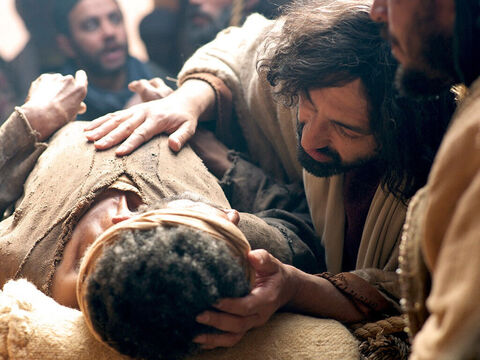
Seeing their faith, Jesus told the paralytic, “Son, your sins are forgiven.” (Mark 2:5)
I’d never thought of this before, but how many people had been telling this paralytic, “It’s your fault you’re this way. God must be punishing you for some sin in your life.”
It was a very common way of thinking in those days. (John 9:1-2, Luke 13:1-4)
How long had this man carried this burden of guilt and shame? How often had he loathed himself for his sin every time he saw his paralyzed body?
Whether or not his condition was directly connected to his sin, I don’t know. But his sin and the shame that came from it were very real.
But then this man heard about Jesus. He heard his teaching. And it sparked faith in both him and his friends. I don’t think this was just faith that Jesus could heal him. I think he took Jesus’ message to heart.
The time is fulfilled, and the kingdom of God has come near. Repent and believe the good news! (Mark 1:15)
And when Jesus saw his faith, he said, “Your sins are forgiven.”
In an instant, all the man’s guilt and shame were gone.
How about you? Are you burdened by your guilt and shame?
Jesus is the one who takes away our guilt and shame.
And when we come to him with a heart of faith and repentance, he looks at us and says to us the same thing he told that man. “My child. Your sins are forgiven.”

Simon, Simon, look out. Satan has asked to sift you like wheat. But I have prayed for you that your faith may not fail.
And you, when you have turned back, strengthen your brothers. (Luke 22:31-32)
Peter ended up failing pretty miserably by the end of this chapter, denying that he knew Jesus right in front of His eyes.
But then again, all of us fall flat on our faces sooner or later. All of us fail Jesus. How do we come back from that?
The best thing we can do is remember Jesus’ words. Remember that he’s praying for you.
He hasn’t given up on you. He’s interceding for you even now. So return to him.
And if you see others who have stumbled along the way, strengthen them. Tell them, “I understand. I’ve failed too. But he’s forgiven me. And he’ll forgive you too. Let’s go back to Jesus together.”
One of Satan’s greatest lies is, “You’re the only one. You’re the only one who has failed like this.”
But the truth is, all of us, even the best of Christians fall.
And the truth is, Jesus hasn’t given up on us. He’s praying for us and he’s just waiting for us to come back.
Let us always remind and strengthen each other with those truths.

He said to his disciples, “Offenses will certainly come, but woe to the one through whom they come!
It would be better for him if a millstone were hung around his neck and he were thrown into the sea than for him to cause one of these little ones to stumble.
Be on your guard. If your brother sins, rebuke him, and if he repents, forgive him. And if he sins against you seven times in a day, and comes back to you seven times, saying, ‘I repent,’ you must forgive him.” (Luke 17:1-4)
“Be on your guard.” Or more literally, “Watch yourselves (NIV)”, “pay attention to yourselves (ESV).”
I wonder if those words were meant more for verses 1-2 or 3-4? It’s not really clear. (Did you know that New Testament verse divisions weren’t invented until 1555?!)
Frankly, it could be used for both.
Verses 1-2 are always sobering for me. And so this was my prayer this morning:
“Father, I don’t want to be a stumbling block for people. Don’t let me cause my wife or daughter to stumble. Don’t let me cause my students or fellow teachers to stumble. And don’t let me cause my brothers and sisters at church to stumble.”
But another thing we need to guard against is bitterness when someone hurts us. We are not to hold anger in our hearts.
Rather we are to confront the person who hurt us. Not simply to vent our anger out on them. But with the purpose of reconciliation.
But as much as we are to forgive when people repent, we are to forgive even when they don’t. Not for their sake, but for our own.
If we don’t forgive, bitterness will consume us. And so in that sense, we need to watch ourselves too.
Search me, God, and know my heart;
test me and know my concerns.See if there is any offensive way in me;
lead me in the everlasting way. (Psalm 139:23-24)

For the former troubles will be forgotten
and hidden from my sight.For I will create new heavens and a new earth;
the past events will not be remembered or come to mind. (Isaiah 65:16-17)
Somehow, whenever I’ve read verses 16-17, I’ve always thought about how when we see God face to face in the new heavens and new earth, we will forget all our former troubles, all our sins and mistakes.
I still think we’ll forget all those things.
But I don’t think that’s what God’s saying. He said, “the former troubles will be forgotten and hidden from MY sight.”
And so when he says the past events will not be remembered or come to mind, I think he’s saying, “They will not come to MY mind.”
How much trouble have we brought into this world since Adam and Eve first sinned? How much have we grieved God’s heart?
That’s what we see in this chapter. God recounts all the sin and rebellion of his people, and how much they have grieved him over the years.
And yet, God says, “I will make all things new. And on that day, all your sins, all the times you’ve grieved my heart will be forgotten and hidden from my sight. They will not be remembered or come to my mind.”
All our sins forgiven and forgotten because of what Jesus did for us on the cross.
That’s amazing grace!

Jesus said to him, “The one who has bathed does not need to wash, except for his feet, but is completely clean. And you are clean… (John 13:10)
A lot of Christians live steeped in guilt. All they can see is their own sin and failures.
Is that you?
If you have put your faith in Jesus and what he’s done for you on the cross, his words are for you.
“You are clean.”
Let Jesus’ words ring in your soul.
“You are clean.”
It’s made all the difference in my life.
Yes, my feet get dirtied by sin as I walk through this world. But I know he has accepted me. And I know that when I come to him, in his grace, he’ll wash my feet and I’ll be completely clean again.
That’s the confidence I walk in. That’s why I have joy as a Christian, despite all my weaknesses and failures.
Is that the confidence and joy you walk in?
Meditate on Jesus’ words. Repeat them in your heart and mind.
Let them sink deep into your soul.
“You are clean.”

Dear friends, we are God’s children now, and what we will be has not yet been revealed. We know that when he appears, we will be like him because we will see him as he is.
And everyone who has this hope in him purifies himself just as he is pure. (1 John 3:2-3)
Father, I have a hope.
I have hope because you have called me your child.
I have hope that your Son will return, and when he appears, I will be like him for I shall see him as he is.
And so in the here and now, I strive to be more like Jesus. To live as he did. To love as he did.
But when I fall, when I sin, I have hope because you don’t give up on me.
Instead, when I confess my sin, you are faithful and just to forgive my sin (1 John 1:9).
And though Satan may accuse me, though my own heart at times accuses me, you are greater than my heart and you know all things. You know I love you. (John 20:15-21)
Let me walk each day in your love, your grace, your hope. In Jesus’ name amen.

He said to his disciples, “Offenses will certainly come, but woe to the one through whom they come!
It would be better for him if a millstone were hung around his neck and he were thrown into the sea than for him to cause one of these little ones to stumble. Be on your guard…
If your brother sins, rebuke him, and if he repents, forgive him.
And if he sins against you seven times in a day, and comes back to you seven times, saying, ‘I repent,’ you must forgive him.”…
when you have done all that you were commanded, you should say, ‘We are unworthy servants; we’ve only done our duty.’” (1-4, 10)
Lord, I don’t want to be a person that causes your children to stumble. Guard my words. Guard my actions. Help me to be a person that builds up, not tears down. Forgive me for the times I have failed.
And Lord, when people offend me, help me to forgive.
You have forgiven me far more than seven times. As a servant who has been forgiven many times, isn’t it then my duty to forgive those who have hurt me.
And yet, that’s not always easy. Especially when my hurt is as deeply rooted as the roots of a mulberry tree.
But you said I don’t need this great faith to be able to forgive. Even my little faith is enough, because you are a great God.
Let me always have a heart of gratitude for all you’ve done for me. For all the forgiveness you’ve shown me. For cleansing me of my sin as you cleansed the ten men of their leprosy.
Let me never take that for granted. And as that gratitude deepens, let me learn to forgive.
In your name I pray, amen.
“Lord, if you are willing, you can make me clean.”
Reaching out his hand, Jesus touched him, saying, “I am willing; be made clean”… (Luke 5:12-13)
It strikes me that those words sum up much of this chapter.
Jesus encountered three sinners, Peter, the paralytic, and Matthew.
Just as the leper was covered with leprosy, Peter, the paralytic, and Matthew were covered with their sin.
And just as Jesus cleansed the leper of his leprosy, he cleansed the three men of their sins.
Do we ever look at ourselves, and cry out to Jesus, “Depart from me, Lord! I am so sinful! How can you possibly accept me? How can you possibly forgive me?”
And yet Jesus, in his grace, reaches out his nail-scarred hand and says, “I am willing. Be clean.”
More, he tells us, “From now on, let us catch people together for God’s Kingdom that they may know this same grace I’ve given you.”
With gratitude and joy, let us say with Isaiah, “Here am I. Send me.” (Isaiah 6:1-8)

The king was deeply moved and went up to the chamber above the city gate and wept.
As he walked, he cried, “My son Absalom! My son, my son Absalom! If only I had died instead of you, Absalom, my son, my son!” (2 Samuel 18:33)
I can’t help but think David had a deep sense of guilt for Absalom’s death.
Guilt for not dealing with Amnon when he raped Tamar.
Guilt for holding Absalom at a distance for so long, instead of showing him the grace and mercy God had shown David.
But now, that guilt threatened to destroy him and his kingdom as Joab would point out in chapter 19.
As with David, we may feel guilt for our failures and sins. That can be especially painful when we see the effects those failures and sins have had on those we love.
But at some point, we have to let go of our guilt and move on, or that guilt will destroy us.
I’m not saying that we should make light of our guilt. To convince ourselves that what we did wasn’t so bad and try to forget about it.
On the contrary, we need to fully admit our guilt before God.
And if possible, we should also fully admit our guilt to anyone we have hurt and try to make things right.
It’s also important to reflect on and learn from our sins and failures.
But after that, embrace the forgiveness of God.
The person we hurt may never forgive us. But God will.
Feelings of guilt will destroy you if you let it. And that’s not God wants for you.
Jesus died in our place on the cross, bearing all our guilt and sin. And now by his grace, his blood has washed away our sins. (1 John 1:7)
We are spotless before him. We are blameless before him. (Ephesians 1:4, 5:27)
We are forgiven!
That may be hard to believe right now. But it’s true.
Don’t let Satan lie to you, telling you what you’ve done is unforgiveable.
You are spotless before God!
You are blameless before God!
You are forgiven!
So remember these words of Paul and make them your own:
Therefore, there is now no condemnation for those in Christ Jesus… (Romans 8:1)
“Unforgiveable!”
That’s probably what Ahithophel said when he found out what David had done to his granddaughter Bathsheba and to her husband. (2 Samuel 11:3; 23:34)
By David’s actions, he had brought disgrace to Ahithophel’s granddaughter and to Ahithophel’s family name.
It certainly explains his advice to Absalom, even to the place where Absalom slept with David’s concubines (2 Samuel 11:2; 16:20-22).
It also explains why he personally, a counselor, not a warrior, wanted to lead the troops sent to kill David (12 Samuel 7:1-13).
But in the end, his refusal to forgive destroyed him.
How about you? Is there someone you need to forgive?
To forgive is to set a prisoner free and discover that the prisoner was you. — Lewis B. Smedes
“Get out of here, you murderer, you scoundrel!” he shouted at David. “The Lord is paying you back for all the bloodshed…
At last you will taste some of your own medicine, for you are a murderer!” (2 Samuel 16:7-8, NLT)
It struck me today that those words probably stung David deeply. Obviously, he wasn’t responsible for Saul’s death or for Ish-bosheth’s. Nor had he stolen the throne.
But he was a murderer. And Nathan had told him that disaster would rise up from his own family as a result (2 Samuel 12:11).
So while Shimei’s accusations were not completely true, there was truth in them.
Perhaps that is why David said, “He curses me this way because the Lord told him, ‘Curse David!’” (10)
But while David was reaping the consequences of his sin, God was not accusing him. God had already forgiven him (2 Samuel 12:12).
More, he was on David’s side (2 Samuel 17:14).
Sometimes here on earth, we suffer the consequences for our sins. And Satan’s accusations against us sting, because there is truth behind them.
But if we have repented, let us remember, God is not accusing us. He has already forgiven us. And he is on our side.
So if you’re feeling weighed down by your guilt, remember Paul’s words:
Who can bring an accusation against God’s elect? [Not God!] God is the one who justifies.
Who is the one who condemns? [Not Jesus!] Christ Jesus is the one who died, but even more, has been raised; he also is at the right hand of God and intercedes for us. (Romans 8:33-34)
She gave birth to a son and named him Solomon. The Lord loved him, and he sent a message through the prophet Nathan, who named him Jedidiah (meaning, “beloved of the Lord”), because of the Lord (2 Samuel 12:24–25).
David had seriously messed up. By his sin, he had treated the Lord with contempt. And the consequences of his sin would affect he and his family for a long time.
And yet.
With David’s repentance came forgiveness. David would write later,
As far as the east is from the west, so far has he removed our transgressions from us. (Psalm 103:12)
Honestly, if I had been God, I probably would have thought, “Well, I’ll forgive David and Bathsheba. But there’s no way I’m blessing this marriage.”
But God didn’t think that way.
In naming Solomon “beloved of the Lord,” I think God was passing a message on to David and Bathsheba.
“I still love you. And though there will be hard times ahead of you because of your sin, whenever you look at this child, remember that I have not taken my love away from you. Solomon is my beloved child. And so are you.”
And ultimately, it was through David, Bathsheba, and Solomon that Jesus came. (Matthew 1:6-16)
That’s grace. That’s God’s faithful love.
What regrets do you have? Are you still struggling because of the consequences of your past sin?
Know that like David, Bathsheba, and Solomon, you are beloved of God.
And in Jesus, there is forgiveness and a way forward. So let’s take that next step together with him.
How long do we hold on to anger and bitterness in our lives? At one point do we choose to let go?
Abner had killed Joab’s brother Asahel, and it seemed Joab and his other brother Abishai were determined to avenge Asahel’s death.
But in their pursuit of Abner, others were dying as well.
And so at sunset with Joab showing no signs of stopping his pursuit, Abner spoke out:
Must the sword devour forever? Don’t you realize this will only end in bitterness? How long before you tell the troops to stop pursuing their brothers? (2 Samuel 2:26)
As we’ll see, Joab was a very violent man. (So was Abishai, for that matter).
But on this day, he saw the wisdom of Abner’s words and he stopped his pursuit.
What hurts are you holding on to? Who are you refusing to forgive? Who are you constantly sniping at?
Let us listen to the words of our Lord.
“Must the sword devour forever? Don’t you realize this will only end in bitterness? Let go of your anger. Put your pain in my hands. And let me heal you.”

This is the last time David and Saul ever talk. And while their parting was amicable, nevertheless, it’s clear that David did not trust Saul enough to return despite Saul’s promises.
Saul had proven far too many times that his promises could not be trusted.
That said, David treated Saul’s life as precious and forgave him.
When there is a pattern of abuse, I think it’s important to realize that while we are to forgive our abuser and not seek revenge, God does not require us to put ourselves in harm’s way.
It is all right to keep our distance until the other person proves that they have truly changed. And that takes time. Sadly, in many cases, that time never does come. It certainly didn’t for Saul.
So let us learn from David.
Forgive your abuser. But do not allow that person’s abuse.

I don’t think it’s a coincidence that the story of the man violating the Sabbath directly follows God’s instructions found in verses 27-31.
In those verses, God makes a clear distinction between those who sin unintentionally and those who sin defiantly.
For those who sinned unintentionally, atonement could be made and the person was forgiven.
But for the person who sinned defiantly, there was no forgiveness.
That seemed to be the case with the Sabbath-breaker.
It wasn’t that he had simply forgotten it was the Sabbath. When his sin was pointed out, he wasn’t saying, “Oh, no! I messed up. What should I do?”
Rather, he simply didn’t care.
He despised God’s word and by his defiant action blasphemed God.
The result? Death.
For the submissive, repentant heart, God is gracious, and there is always forgiveness.
But for the defiant, unrepentant heart, there is no forgiveness.
Let us always keep hearts that are soft to our God.

All of us have regrets in life. And sometimes as we look at the consequences of our sins and failures, our guilt threatens to crush us.
Certainly our enemy Satan would love to see that.
But what does God want?
In a lot of ways, Paul mirrored the heart of our Father.
Paul wrote a letter to the Corinthians confronting them with their sin. And that letter caused them much guilt and grieving. But what does Paul say about that?
I now rejoice, not because you were grieved, but because your grief led to repentance. For you were grieved as God willed, so that you didn’t experience any loss from us. (2 Corinthians 7:9)
Sometimes when people wrong us, we want them to suffer. We are happy that they are being crushed by their grief. Sometimes, we even want them to be destroyed by their grief.
But Paul didn’t want that for the Corinthians. He didn’t want them to suffer any loss. Rather, he wanted them to repent.
That’s what our Father wants.
When we sin, the consequences can be painful. And the guilt can be crushing.
But God doesn’t want to crush us. He wants us to repent. And with that repentance comes not death, but healing.
Paul says,
For godly grief produces a repentance that leads to salvation without regret, but worldly grief produces death. (10)
Some of you may be feeling crushed by guilt right now. It may seem that there can be no healing, that there can be no forgiveness.
But let me tell you now: There is forgiveness for you. And there can be healing.
All you need to do is repent. Admit your wrong. Ask God for forgiveness. And he will forgive.
“Come, let’s settle this,” says the Lord.
“Though your sins are scarlet,
they will be as white as snow;
though they are crimson red,
they will be like wool.” (Isaiah 1:18)

“What can we say to my lord?” Judah replied. “How can we plead? How can we justify ourselves? God has exposed your servants’ iniquity.” (Genesis 44:16)
Aren’t those words representative of us all? When we stand before God, and God opens up the books that show our entire lives, there will be nothing we can say. No defense we can give.
Judah’s words to his father Jacob in verse 32 also strike me.
If I do not return him to you, I will always bear the guilt for sinning against you, my father. (32)
It seems to me there was a double meaning there, although Jacob didn’t see it at the time.
It was Judah who had suggested selling Joseph as a slave. (Genesis 37:26-27)
And we see in this chapter how heavily he wore the weight of that guilt.
He had sinned against his father by selling Joseph. There was nothing he could do to change it. And I think he was trying to atone for his sin by guaranteeing Benjamin’s safety.
I think his hidden message to his father was, “If I do not bring Benjamin back to you, I will always bear the guilt for sinning against you by selling Joseph.”
But the truth is, even if he had brought Benjamin back safely, it would not have truly paid for his sin.
How often do we try to do what Judah did? We try to “make up” for the wrong we did.
But nothing we do can take our sin away. God exposes our iniquity and there is no way to justify ourselves.
But the good news is that Jesus lifted the weight of our sin, put it on himself, and paid for our sin at the cross.
All we have to do is trust and rest in what Jesus did for us.
And so Paul tells us,
Therefore, since we have been justified by faith, we have peace with God through our Lord Jesus Christ.
We have also obtained access through him by faith into this grace in which we stand, and we boast in the hope of the glory of God. (Romans 5:1-2)
[Jacob] himself went on ahead and bowed to the ground seven times until he approached his brother.
But Esau ran to meet him, hugged him, threw his arms around him, and kissed him. Then they wept…
Jacob said… “I have seen your face, and it is like seeing God’s face, since you have accepted me.” (Genesis 33:3-4, 10)
Sometimes we wonder how God sees us.
Like Jacob sinned against Esau, we have sinned against God. And we wonder how in the world he could ever accept us.
The amazing thing is, though we may come head down, fearful, and awaiting punishment, God comes running to us like Esau, hugs us, throws his arms around us, and kisses us. In short, he accepts us.
In a lot of ways, Esau’s response to Jacob mirrors the father’s response in a famous parable Jesus told.
But while the son was still a long way off, his father saw him and was filled with compassion. He ran, threw his arms around his neck, and kissed him. (Luke 15:20)
That’s what we see when we see our heavenly Father’s face:
Compassion.
Forgiveness.
Acceptance.

God’s forgiveness and grace never cease to amaze me.
It apparently never ceased to amaze David either.
He said,
Iniquities overwhelm me;
only you can atone for our rebellions. (Psalm 65:3)
I wonder if David was thinking of his own sins of adultery and murder as he wrote this.
The guilt we feel because of our sins can be overwhelming. So can the consequences we reap from them.
There is nothing we can do to “make up” for our sins. Nothing we can do to atone for them. But through Jesus, God does. And he forgives our sin.
Not only that, God chooses us as his children and he draws us close to himself. He gives us blessings that we do not deserve.
And so David says,
How happy is the one you choose
and bring near to live in your courts!We will be satisfied with the goodness of your house,
the holiness of your temple.You answer us in righteousness,
with awe-inspiring works,
God of our salvation,
the hope of all the ends of the earth
and of the distant seas. (4-5)
That’s the wonder of forgiveness and grace. Let us reflect on and rejoice in that grace each day.

David had committed an unspeakable sin. He had murdered a man and taken his wife.
In light of that, verse 7 really is quite stunning.
Purify me with hyssop, and I will be clean;
wash me, and I will be whiter than snow. (Psalm 51:7)
Here David compares his sin with leprosy, something that in that time was incurable and ostracized a person from the presence of God.
(That is, a leprous person could not approach the tabernacle/temple as well as his community. See Leviticus 13:45-46, 14:1-32 and especially verses 6-7, Numbers 5:3-4)
And yet he says with utter confidence, “You can make me clean.”
It reminds me of something a leper once said to Jesus. With the same confidence that David had, he said to Jesus,
Lord, if you are willing, you can make me clean. (Matthew 8:2)
Jesus’ response?
I am willing; be made clean. (Matthew 8:3)
Because of the cross, no matter how terrible our sin, no matter how great our guilt, Jesus can cleanse us. All we have to do is humble ourselves and ask.
And he will make us clean.
Blessed is the one whose transgression is forgiven,
whose sin is covered.Blessed is the man against whom the Lord counts no iniquity…(Psalm 32:1-2, ESV)
When was the last time you thought of the blessedness of forgiveness? I mean really thought about it?
David knew that blessedness after his sin with Bathsheba. The weight of his sin was crushing him. But in His mercy, God forgave him. (2 Samuel 11-12)
Peter knew that blessedness after denying Jesus 3 times. He bore incredible guilt for what he had done. But with one conversation, that guilt was wiped away. (John 21)
The woman caught in adultery knew that blessedness. She should have died for her sin. Instead, she found mercy. (John 8:1-11)
Why is it that we so often fail to marvel at the blessedness of forgiveness?
Perhaps it is because we take our sin so lightly now. We don’t think our sins are so bad.
Or perhaps it’s because we are so overwhelmed by feelings of guilt that we feel there can be no forgiveness for us.
Both extremes are wrong.
Remember the cross. Remember the suffering Jesus went through because of our sin. Not just the “major” ones. Every sin. For even the “smallest” sin, even the sin we take lightly would have sent us to hell.
Remember the cross. God doesn’t just pardon us because he’s a nice guy. He pardons us because his Son paid a terrible price for us.
And when he died, he said, “It is finished! Your debt of sin is paid in full!”
Now because of Jesus’ work, there can be forgiveness for even the worst of our sins. There is no sin that is unforgivable if we repent.
Look to the cross.
Marvel at the grace we have been given.
And sing with David,
Blessed is the one whose transgression is forgiven,
whose sin is covered.Blessed is the man against whom the Lord counts no iniquity… (1-2)
As I read this passage, it reminds me of the importance of remembering the grace by which we live.
We see it first in Jesus’ talk concerning forgiveness. Jesus makes it crystal clear: when a person repents, you must forgive. (Luke 17:4)
To which his disciples replied, “Lord increase our faith.” (5)
In other words, “We can’t do it. We’re not strong enough spiritually.”
But Jesus replied,
If you have faith the size of a mustard seed…you can say to this mulberry tree, ‘Be uprooted and planted in the sea,’ and it will obey you. (6)
The reality is, we only need only the tiniest amount of faith to do what God calls us to do, even forgive.
Why? Because of who we are putting our faith in. By his grace, he empowers us to do what he asks.
He doesn’t just tell us what to do and then stand back to see whether we’ll succeed or not.
Instead, if we come to him saying, “I choose to trust you. I choose to believe you are good. I choose to believe you want my best,” and we take the smallest step of faith to obey, by his grace, he will move mountains, even the mountains of bitterness and unforgiveness in our lives.
But again, remembering the grace we have received is the key to forgiveness.
In choosing to forgive, it is that same grace which causes us to say, “We are unworthy servants; we’ve only done our duty.”
Like the prodigal son, we are unworthy even to be God’s servants. Rather, what we deserve is to be punished for all our sins.
So when we forgive others, we are only doing what we should in light of all God has forgiven us. It is our duty.
And the more we remember the grace we’ve received though we are unworthy of God’s forgiveness, the easier it will be for us to forgive others when they hurt us.
But there’s one more thing in this chapter that points to our need to remember grace.
When the ten lepers were healed, only one came back to thank Jesus. An important part of remembering grace is having a heart filled with gratitude.
How often, though, do we just take God’s grace for granted? Or worse, we actually come to think we deserve it because of “all we’ve done for him?”
Let us cast aside that way of thinking. Rather, let us instead always have an attitude of gratitude, remembering the grace we’ve received and continue to receive every day.
If we do so, not only will we be able to forgive, but mountains will start to move in our lives as we take the steps of faith God has called us to take.

And whenever you stand praying, if you have anything against anyone, forgive him, so that your Father in heaven will also forgive you your wrongdoing. (Mark 11:25)
Powerful words, to say the least.
But how often do they cross our minds as we pray?
If there’s one thing that Jesus makes crystal clear, it’s that our horizontal relationships with each other have a definite impact on our vertical relationship with God.
We cannot separate the two.
And if we don’t make every effort to make things right with those who have wronged us, it will cause a block in our relationship with God.
After all, how can we say, “I can’t forgive that person,” and then say in the next moment, “God, please forgive me.”
Is it always easy to forgive? No. More often than not, it can be extremely painful to do.
But the good news is that we have a High Priest that intercedes for us, and he will help us forgive if we’ll just ask.
And so if when you’re praying, you remember someone that you have yet to forgive, pray, “Lord have mercy on me. And help me forgive.”
Better yet, pray, “Lord have mercy on this person that has hurt me.”
And by his grace, the One who forgave his enemies (including us) on the cross, will give us the ability to forgive those who have wronged us.

Something struck me as I read Acts 10: the gospel message of Peter.
He talked about how Jesus had come with power, healing the sick and doing good. He then talked about how Jesus was crucified and subsequently resurrected. And then he said this,
He (Jesus) commanded us to preach to the people and to testify that… (Acts 10:42a)
Okay, you fill in that blank. What do you think they were commanded to preach and testify about to the people?
I’ll wait….
Ready?
Are you sure?
Okay, here’s the finish to that sentence.
…he is the one appointed by God to be the judge of the living and the dead. (42b)
Surprised?
I was. How many people, when they come to the crux of the gospel and what the death and resurrection of Christ mean, start off with that sentence?
“Judgment day is coming. And on that day, Jesus will judge you.”
It’s so easy for us to preach the love of God. But we also need to preach the judgment of God.
Yes, Jesus’ second coming is good news. After all, when he does, our good King will judge all evil, heal this broken world, and make all things right.
But the thing is, how many know that they are part of the evil that must be judged.
All of us are worthy of condemnation because of our sin, and like it or not, judgment day is coming not just for others, but for us.
But there is more good news for those facing that judgment. What is it?
All the prophets testify about him that through his name everyone who believes in him receives forgiveness of sins. (43)
The price for our sin has already been paid by Jesus on the cross. Our Judge is also our Savior. And if we will put our trust in him and the work he did on the cross, we will be forgiven.
That’s the whole gospel.
Let’s not sugarcoat the gospel. Let’s tell it as it is. Like Peter did. Like Paul did (Acts 17:30-31).
And by God’s grace, many will hear and be saved.

I’ve now hit Deuteronomy in my Bible reading, and actually covered about 10 chapters or so.
I use a Bible with no chapter numbers or verses, and it’s amazing how quickly the chapters fly by when you don’t know they’re there.
(And actually, there were no chapter or verse divisions in the Bible until about 500 years ago or so).
There’s a lot I’d like to write on. But here’s what struck me today. In Deuteronomy 15:1-2, it says this,
“At the end of every seven years you must cancel debts. This is how to cancel debt: Every creditor is to cancel what he has lent his neighbor.
He is not to collect anything from his neighbor or brother, because the Lord’s release of debts has been proclaimed.
“The Lord’s release of debts has been proclaimed.”
I’ve never thought of it this way, but at the Cross, the true “Lord’s release of debts” was proclaimed.
Paul put it this way,
And when you were dead in trespasses and in the uncircumcision of your flesh, he made you alive with him and forgave us all our trespasses.
He erased the certificate of debt, with its obligations, that was against us and opposed to us, and has taken it away by nailing it to the cross. (Colossians 2:13-14)
And since God proclaimed a release of our debts on the cross, how much more should we release others from the “debts” they owe us.
I’m not talking about monetary debts, of course, but all the grudges we hold in our hearts toward others for the wrongs they’ve done to us.
For the Israelites, the 7 year mark was a time for them to remember that it was time to let go of debts owed to them.
How often, though do we hold our grudges for year on end?
Perhaps for us, it would be good to think not in terms of every 7 years, but every 7 days.
Every Sabbath, remember the spiritual rest that God gave us in Christ. That because of Jesus’ work on the cross, our debts have been forgiven. Then think of the debts that people owe us from that week. And let them go.
Is that easy? No.
But another theme from the passages I read today is one of dependence. We are never to forget our dependence on God.
Perhaps one of the reasons God allows us to experience hurt in our lives is to remind us just how much we need to depend on him.
In this case, that means depending on him for strength to forgive.
It means depending on him for the love that others refuse to give us.
And depending on him to heal our hurts.
So when we pray, “Give us this day our daily bread,” let’s remember that we depend on God not only for our physical needs, but for our emotional and spiritual needs as well.
With that heart of humility and dependence, then, let’s pray,
And forgive us our debts,
as we also have forgiven our debtors. (Matthew 6:12)

As I read John’s words here to his different readers, it strikes me that there are different stages that we go through in our Christian lives.
First, as children.
John writes,
I write to you, dear children, because your sins have been forgiven on account of his name. (1 John 2:12)
And again,
I write to you, dear children, because you have known the Father. (13c)
I think that when we first become Christians, two things strike us above all things.
First, that God has forgiven us.
So many of us come to God weighted down by our sins. We see what a mess we have made of our lives because of our choices, and in our desperation we turn to God. And John tells us, “Your sins are forgiven.”
I think of the woman who came to Jesus, a woman who had been burdened by her sins, weeping and wetting his feet with her tears. And Jesus said to her gently, “Your sins are forgiven.” (Luke 7:36-50)
That’s the joy that all new Christians know.
Second, we come to know God as Father. It’s a theme that John will come back to later in this letter. (3:1-3)
The thing is, we don’t come to know God first as the awesome other-worldly being that transcends the universe. As the great King of all kings. As someone so far removed from us that we couldn’t possibly draw near to him.
Rather, we come to know him as Father. As someone who is approachable because he truly loves and cares for us. As someone who is never too busy for us, but will stop whatever he is doing when we come to him because he delights in us as his children.
But as we grow as Christians, we don’t remain mere children. We become mature and strong.
So John says,
I write to you, young men, because you are strong, and the word of God lives in you, and you have overcome the evil one. (14b)
In other words, as the word of God lives in us, as we get beyond the milk of the gospel and take in the solid meat of the word, and by our constant use of it train ourselves to distinguish good from evil (Hebrews 5:12-14), we overcome the evil one and all his attempts to destroy us.
We learn to recognize the false teaching he throws at us to lead us astray from God. And we learn to overcome the temptations to sin that would destroy us. We will see more of these themes throughout the rest of this letter.
Finally, as we become mature in our faith, we start to see God as he truly is. John writes,
I write to you fathers, because you have known him who is from the beginning. (2:13a, 2:14a)
As C.S. Lewis put it, the more we grow, the bigger God becomes to us. Not because he actually grows bigger. But because we see him more clearly as he truly is.
We see that he is not just our loving Father, but the creator of all things and ruler of the universe. That he is the eternal one, with no beginning or end. And we bow down at awe of him.
But we will bow, not just because of his greatness. But because of the fact that as awesome as he is, he still loves us and calls us his children.
Because at the end of the day, no matter how much we may grow and mature as Christians, we will never outgrow our Father or our need to see him as such.
So each day, let us grow in the grace and knowledge of him who loves us and calls us his children.
We saw yesterday that God is light and in him there is no darkness at all. So if we are going to claim to have fellowship with him, then we need to be walking in that light with him.
If we try to explain away his commands or blatantly ignore them and still claim fellowship with him, we are liars.
John then gives one specific example which he will get back to again and again in this letter. He says,
Dear friends, I am not writing you a new command but an old one, which you had since the beginning. This old command is the message you have heard.
Yet I am writing you a new command; it’s truth is seen in him and you, because the darkness is passing and the true light is already shining. (1 John 2:7-8)
What is this old/new command?
I think John is specifically referring to loving your neighbor, although as we will see in later passages, loving your neighbor goes a long way to proving your love for God too.
In Moses’ law, God said to love your neighbor as yourself. That was the old command.
But the new command as seen in Jesus is this: to love one another, not merely as we love ourselves, but as Jesus himself loved us. (John 13:34-35)
In short, it is to know the love of God so much in our lives, that his love can’t help but flow out of our lives to others.
And so John says that this truth is not just seen in Jesus, but in us who truly believe in him. For his true light of love is already shining in our hearts, while the darkness which formerly marked our hearts is departing.
Therefore, John says,
Anyone who claims to be in the light but hates his brother is still in the darkness.
Whoever loves his brother lives in the light, and there is nothing in him to make him stumble.
But whoever hates his brother is in the darkness and walks around in darkness; he does not know where he is going because the darkness has blinded him. (2:9-11)
All this links right back to chapter 1 verses 5-7. There is no way we can claim to have fellowship with God if we hate our brother. A person who hates is still walking in darkness, not light.
This hatred can manifest itself in bigotry or racism of course. It can also manifest itself in jealousy or envy.
But one place it most often manifests itself is in unforgiveness. And many people stumble around in darkness, bound in bitterness and hatred because they can’t forgive.
And like I said before, for such people, it can be very easy to either try to explain away scripture or blatantly ignore it, all the while holding on to their hatred toward the person that hurt them.
But if we truly understand the love God has for us and the forgiveness he has extended toward us, can we truly hold on to that hatred?
A true child of God can’t.
Now I’m not saying that Christians should never struggle with unforgiveness. They do. And it’s not easy to forgive, especially when the pain is deep.
But if you are truly born of God, you cannot simply stay in the darkness. You cannot make excuses for your hatred, saying things like, “What he did was unforgiveable. I can’t forgive. I won’t forgive!”
To say such things is to step out of light into utter darkness. And to claim to still have fellowship with God in that state is to make yourself a liar.
A true child of light will step out into the light and receive the healing touch of Jesus. And by his grace and power, they will forgive.
How about you? Is there someone you hate? That you can’t forgive? You can’t hold on to those things and have fellowship with God.
Healing will require time. It will require prayer. It will require emotional support from your brothers and sisters in Christ. It may require counseling. And it will definitely require the love and power of God’s Spirit working in your life.
But stop making excuses, and step out into the light.
Until you do, you will find your relationship with God stunted, if not impossible.

As I said before, a lot of James at first glance seems disjointed, but the more that I’ve read this book, the more I’ve come to see the overall flow of it.
And here James comes back to an idea that he started in chapter 1, prayer in the midst of trouble.
In chapter 1, he said that if you are going through trial to ask God for wisdom, but to ask in faith. Faith that God is good. Faith that God’s way is best.
Now he comes returns to this thought, saying,
Is any of you in trouble? He should pray. (James 5:13)
Pray for what? Pray for wisdom and pray for help. But again, we need to pray believing in the essential goodness of God. Because if you doubt that, your prayers will be totally ineffective. (1:5-6)
But we shouldn’t just pray when we’re in trouble. James tells us,
Is anyone happy? Let him sing songs of praise.
It’s easy to remember God in our times of trouble. But do we remember him in the good times as well?
Do we thank him for his goodness? That’s part of faith too. Believing that every good and perfect gift comes from him. (1:17)
James then returns to the idea of praying through trials, saying,
Is any of you sick? He should call the elders of the church to pray over him and anoint him with oil in the name of the Lord.
And the prayer offered in faith will make the sick person well; the Lord will raise him up. (James 5:14-15a)
This is no guarantee of healing, no matter what some people may say. Paul himself prayed for people who didn’t get well. (II Timothy 4:20, for example).
But nevertheless, if we are sick, James says to pray and to have the leaders of the church pray for you as well.
The oil was either a symbol of the Holy Spirit’s work in healing, or it was used as an ointment for healing.
Again, though, the idea is that through prayer, we express our faith in God. By praying, we put ourselves in the hands of God to heal…or not, trusting that whatever he chooses to do is best.
There are times, however, when sickness is the result of sin. And so James says,
If he has sinned, he will be forgiven. Therefore, confess your sins to each other and pray for each other that you may be healed. (James 5:15-16)
It calls to mind the time Jesus healed the paralytic in Mark 2. Before dealing with his physical ailment, Jesus dealt with his sin.
I’m not saying that all sickness is the result of sin. But there are many people, for example, who have suffered physical ailments because of bitterness and unforgiveness in their hearts. And by dealing with their sin first, their physical ailments were also healed.
That’s another reason James says to pray when you are sick or troubled. Prayer can reveal these kinds of spiritual issues and bring healing to them.
He concludes by saying,
The prayer of a righteous man is powerful and effective. Elijah was a man like us.
He prayed earnestly that it would not rain and it did not rain on the land for three and a half years. Again he prayed, and the heavens gave rain, and the earth produced its crops. (James 5:16-17)
In short, never think prayer is a waste of time. That it is ineffective.
Even for the “ordinary” person, if we come to God in faith, prayer can accomplish great things. Not because we’re speaking some magic formula or incantation. But because the God we pray to is great.
And when we trust him, he can accomplish great things in us and through us.
How about you? Do you sometimes think prayer is a waste of time? Or do you have the faith to pray in the good times and bad?

In 2 Corinthians 5:16-17, Paul wrote,
So from now on we regard no one from a worldly point of view. Though we once regarded Christ in this way, we do so no longer.
Therefore, if anyone is in Christ, he is a new creation; the old has gone, the new has come! (2 Corinthians 5:16-17)
Here we see the results of a genuine faith. We no longer see Christ the same way and neither do we see the people around us in the same way.
And there is no story that better illustrates that than this letter to a man named Philemon.
Philemon was apparently a leader in the Colossian church, and the church itself met in his house.
Nevertheless, he lived in a time when slavery abounded. Slaves made up approximately a third of the Roman population.
Sometimes people wonder why early Christian leaders like Paul didn’t speak directly against the practice.
My guess is he knew change wouldn’t come through politics but through changed hearts. And the only way hearts would be changed is through the gospel.
Many Christians trying to bring change to their nations would do well to remember that.
This is not to say that people should not be politically involved.
What it does mean is that any long-lasting change must come through the transformation of the human heart. And politics and new laws cannot effect that.
At any rate, while Paul was under house arrest in Rome, he met a man named Onesimus.
We don’t know the exact circumstances under which they met, but whatever they were, it seems that Onesimus became a Christian through Paul (Philemon 10).
And as Onesimus grew in the faith, he actually started serving with Paul, becoming a beloved and trusted friend.
But there was a problem, Onesimus seems to have been a runaway slave.
Apparently, he had stolen from his master and run away to gain his freedom.
But now as a Christian, his conscience probably smote him. He knew he was in the wrong, and he felt like he had to return to his old master. But to do so could very well mean death under Roman law.
Onesimus’ fate was purely in the hands of his master should he return.
And perhaps under this burden, he shared his heart with Paul.
When Paul asked him, “Who is your master?” to Paul’s surprise, Onesimus’ master was Philemon, a close friend of Paul.
Philemon himself, it seems, had also become a Christian through Paul (19)
With that, Paul wrote this letter on Onesimus’ behalf.
But Paul, though he had the authority as an apostle to tell Philemon what to do, refused to do so. Instead, you see him appealing to Philemon as a friend and as one he greatly loved.
What did he tell Philemon?
He told Philemon that God’s hand was in all that had happened. (15-16)
Oh certainly God didn’t tell Onesimus to run away. Onesimus did that all on his own, sinning not only against Philemon, but against God.
But God reached out to him and directed him right into the path of Paul. And now this “useless slave” had become someone truly valuable, useful to Paul in the ministry. (11-13)
(Onesimus’ name itself meant “useful.”)
Now Paul told Philemon, “Onesimus is no longer the same man he was when he left you. He is not just merely your slave anymore. He is now a new creation in Christ. And your brother.” (16)
More Paul said,
If he has done you any wrong or owes you anything, charge it to me….I will pay it back–not to mention that you owe me your very self. (Philemon 18-19)
Paul here does two things.
He offers to pay for what Onesimus has stolen. But in doing so, he gives a subtle reminder that Philemon himself had his debt of sin paid by Jesus.
And as much as he might have owed Paul for bringing the gospel message that saved him, he owed Jesus much more, because Jesus was the one who actually paid the price.
How did Philemon respond? We don’t know. But Paul was confident that Philemon would do what was right. (21)
Why? Because Philemon was a new creation too. And Paul was confident that he would see Onesimus in the same light that Paul saw him.
The real question, though, is, “What about you? Is your faith genuine? If it is genuine, it should transform not only how you see Christ, but others.
It should lead you to forgive because you have been forgiven.
It should lead you to love and accept those around you, because Jesus loved and accepted you.”
What kind of faith do you have?
When someone hurts us it can be easy to hold a grudge. And even if they are truly sorry and apologize, sometimes we withhold that forgiveness.
Or sometimes we forgive, but we let them know in no uncertain terms that it hasn’t been forgotten.
The same is true in church discipline. Someone sins, and is disciplined by the church. They then repent, but people in the church still look sideways at them and keep their distance from them.
It’s almost as if we’re saying, “We can’t make it too easy for them to get back in our good graces again. We have to make them suffer a little more, and then maybe, just maybe we’ll accept them again.”
But Paul tells us here that’s not how we should be. He wrote the Corinthians,
The punishment inflicted on him by the majority is sufficient for him.
Now instead, you ought to forgive and comfort him, so that he will not be overwhelmed by excessive sorrow.
I urge you, therefore, to reaffirm your love for him. (2 Corinthians 2:6-8)
What did Paul mean by “the punishment inflicted on him is sufficient for him”?
I believe it means that the punishment has accomplished its purpose: he repented.
And once a person repents, there is no further need for the punishment. Instead, we are to immediately forgive and comfort him, letting him know that not only has God forgiven him, but we have forgiven him as well.
Having done that, we are to then reaffirm our love for him.
God wants us to mourn for our sins. But as we will see later in this letter, there are two kinds of sorrow: a sorrow that leads to repentance and a sorrow that leads to death.
But a sorrow that leads to repentance can also lead to death if that person sorrows excessively due to the fact that the people in the church refuse to forgive him or her. The same is true in personal relationships as well.
And that is not something that God wants; it’s what Satan wants. Satan’s schemes always have the same end in mind, “to steal, kill, and destroy.”
When we refuse to forgive a person and leave them in excessive sorrow, we are participating with Satan, not with God.
How about you? Has someone hurt you? Or has someone committed some grave sin within the church?
Have they repented? If they have, then let us join in with God in showing forgiveness and acceptance to them once again.
Remember the words of our Lord who told us,
Be merciful, just as your Father is merciful. (Luke 6:36)

This is one of the most famous stories from the cross. Along with Jesus, two robbers were crucified by his side. And at first, both mocked him. In the ESV, it says,
One of the criminals who were hanged railed at him, saying, “Are you not the Christ? Save yourself and us!” (Luke 23:39)
Somehow, that word, “railed,” really strikes me. It makes me think about how many people rail at God when they face the consequences for their sin.
Here was this criminal who had done wrong and was being punished for it, but far from being repentant, it seems he felt that he was being wronged.
Perhaps he felt justified in the things that he had done, and so as he railed at Jesus, he said, “Are you really the Christ? Then save me from this! I don’t deserve this!”
Apparently, according to the other gospels, the second criminal joined in with the first in railing at Jesus, at least at first.
But perhaps as Jesus refused to answer, but instead only looked with pity upon his abusers, the second criminal started to quiet down.
He saw the dignity of Jesus in a situation where all dignity had seemingly been stripped away from him.
He saw the compassion, love, and forgiveness Jesus had for those who had crucified him.
And as he did, perhaps he remembered all the stories he had heard about Jesus. Perhaps, he had even gone to listen to Jesus at one time and seen him perform all those miracles.
As he considered all these things, perhaps he then looked at himself, and for the first time, admitted, “I was wrong. I made all these excuses for what I did. But ultimately, those were just excuses. I was wrong. I deserve this.”
And so after hearing again the railings of the man beside him, he said,
Don’t you fear God…since you are under the same sentence?
We are punished justly, for we are getting what our deeds deserve. But this man has done nothing wrong. (Luke 23:40-41)
Then he turned to Jesus, and pled with him,
Jesus, remember me when you come into your kingdom. (Luke 23:42)
I’m not sure, but perhaps for the first and only time on the cross, Jesus smiled. And he said,
I tell you the truth, today you will be with me in paradise. (Luke 23:43)
And in that moment, the man was saved. In death, he found life.
As I said, so many people are like the first man on the cross. They do wrong, but when they are caught in their sin and suffer for it, instead of admitting their wrong, they rail at God.
Sometimes, people wonder how God could allow eternal punishment.
I think part of it is because there is no repentance in hell. Rather, there is an eternal railing against God.
They rail that they were justified in their actions. And they rail that God would punish them for what they know deep in their heart is wrong.
And part of hell is the knowing they are wrong and are getting what they deserve but being too proud to admit it.
But for those who will only recognize their sin, humble themselves, and repent, as the second criminal did, there is forgiveness and there is life.
But that time is now. Because once you are dead, it is too late. As the apostle Paul wrote,
I tell you, now is the time of God’s favor, now is the day of salvation. (2 Corinthians 6:2)
How about you? Have you humbled yourself before Jesus? Have you received his salvation?

Forgiveness is one of the most difficult things people struggle with. The reason is that the hurts we experience go straight to the depths of our hearts. And as deep as our wounds go, they can be very difficult to heal.
For a simple prick of the finger, healing is generally quick; for a deliberate knifing, healing takes much more time.
That’s what makes Jesus’ response to his enemies so remarkable. He said,
Father, forgive them, for they do not know what they are doing. (Luke 23:34)
Think about that for a minute.
Obviously, it’s easier to forgive someone who literally doesn’t know what they’re doing. They accidentally hurt you and when they find out, they’re quick to apologize. That kind of wound is relatively easy to forgive.
But what of the person who knows exactly what they’re doing. That type of person is much harder to forgive.
Which category do the Pharisees and chief priests fall into. Did they say, “Oh, Jesus, how in the world did you end up on that cross. My bad. Let me help you get off of there.”
No. From the very beginning, all their actions were quite deliberate.
They paid Judas to betray him. They got false witnesses to lie about him in the Sanhedrin. They then lied to Pilate and Herod about Jesus. They incited the crowd against him. And now with him on the cross, they ruthlessly mocked him.
How in the world could Jesus say, “They don’t know what they’re doing.”
They knew exactly what they were doing.
And yet they didn’t. They were blinded by their own jealousy. They were blinded by their own pride. They were blinded by their own sin. They were blinded by Satan himself.
Just as we all were at one time.
When people hurt you, no matter how deliberately, they do it because they are blind. They can’t see how their actions could be hurtful. Or perhaps they can’t see the value you have as a person in God’s eyes.
It’s also possible that they have their own hurts that they’ve never come to grips with, and those hurts cause them to lash out in ways that even they can’t understand sometimes.
I know of a man who really struggled with forgiving his father for all the physical and emotional abuse he had poured out on his family.
But the day came when God opened his eyes and he realized that his father had been abused too. That because of the hurt his father had experienced as a child, and his inability to deal with it, he grew up to be the man he had become.
And because he could finally understand his father, he suddenly felt compassion for him and was able to forgive.
That’s what we need to pray for when we’re struggling to forgive. That God would help us get our eyes off of ourselves and our hurts. That he would help us to understand the hurts and needs of those who have hurt us so that we can have compassion on them.
That’s what Jesus did. Jesus saw beyond his own hurt to the utter need of those who hated him. They never ever repented for what they did. But he was able to forgive.
Though God gives you understanding of those who hurt you, they may never change.
But as you start to understand them, you will change. You’ll start to focus on their hurts and needs instead of your own. And because of the compassion God puts in your heart for them, you will be able to forgive.
Is there someone you’re struggling to forgive.
Pray for understanding for why they act the way they do. And as he gives you that understanding, pray for them as Jesus did,
Father forgive them. They don’t know what they’re doing.
When Jesus told the disciples that he was leaving for a place they could not follow, it must have really troubled them. He was their teacher, and they couldn’t imagine life without him.
As usual, it was Peter who spoke out, saying,
Lord, where are you going… why can’t I follow you now? I will lay down my life for you. (John 13:36-37)
Jesus then stunned Peter and the rest of the disciples by saying,
Will you really lay down your life for me? I tell you the truth, before the rooster crows, you will disown me three times! (John 13:38)
He then said,
Simon, Simon, Satan has asked to sift (all of) you as wheat.
But I have prayed for you, Simon, that your faith may not fail. And when you have turned back, strengthen your brothers. (Luke 22:31-32)
Again, Peter declared,
Lord, I am ready to go with you to prison and to death. (Luke 22:33)
But again Jesus replied,
I tell you, Peter, before the rooster crows today, you will deny three times that you know me. (Luke 22:34)
Perhaps, at that point, the other disciples thought that Peter was the betrayer that Jesus had talked about earlier. Perhaps even Peter was wondering.
So Jesus said,
You will all fall away… for it is written: ‘I will strike the shepherd, and the sheep will be scattered.’
But after I have risen, I will go ahead of you into Galilee. (Mark 14:27-28)
Still Peter continued to insist,
Even if all fall away on account of you, I never will. (Matthew 26:33).
So Jesus made his declaration even stronger and more specific saying,
I tell you the truth… today—yes, tonight—before the rooster crows twice you yourself will disown me three times. (Mark 14:30)
Even then, Peter refused to believe it, and insisted with all the other disciples that he would never do such a thing, even if it meant death. (Mark 14:31)
In the end, of course, they all did as Jesus had predicted. All of them ran away when Jesus was arrested, and Peter ended up denying Jesus three times.
What’s my point? Jesus knows us better than we know ourselves. He knows our weaknesses, even when we can’t see them ourselves. And yet, he accepts us.
That’s the amazing thing of all of this. He never condemned Peter.
Rather, he tried to encourage him saying, “I’ve been praying for you that your faith will not fail. You will fall, but you will get up again. And when you do, encourage the others.”
In the same way, Jesus knows our weakness. Yet he doesn’t condemn us.
Rather, he, as our great high priest, prays for us daily. He reaches out to pull us up when we fall down. And when we get up again, he tells us to have mercy on the others we see around us who have fallen as well.
So in our weakness, in our failures, let us always remember,
Therefore, there is now no condemnation for those who are in Christ Jesus. (Romans 8:1)
As I’ve mentioned before, harmonizing these passages is a little tough.
One question is whether Judas participated in the first communion. Luke seems to imply so, while the other gospel writers seem to say Judas didn’t.
It’s just my opinion, but I believe Judas was there, and that the other writers, for whatever reason, didn’t keep things in chronological order.
At any rate, in these passages, Jesus dealt with his betrayer Judas.
There are some interesting things to note here.
While it was John who sat on one side of Jesus (assuming that he is “the one Jesus loved”), there seems to be a good chance that it was Judas that was on Jesus’ other side. It seems hard to believe that Jesus could say what he did to Judas without the others hearing unless this were so.
Unlike most pictures you see of the Last Supper, Jesus and his disciples did not sit in chairs. They sat on couches.
And when they reclined, they didn’t lean back, rather they leaned to the side, resting on their left elbow, right near the bosom of the person on their left.
Thus, it seems John was on Jesus’ right, and Judas on Jesus’ left.
Like I said before, to be seated next to Jesus at the table was an honor to the people there. And Jesus let Judas sit next to him. In short, he honored Judas.
Yet despite all of this, Jesus never fooled himself concerning Judas’ true nature. He told the disciples,
I tell you the truth, one of you is going to betray me. (John 13:21)
This of course, shocked all the disciples, and they started to ask Jesus one by one, “Is it I?” Judas himself asked “Surely not I, Rabbi?” (Matthew 26:25)
Perhaps Judas thought he had fooled Jesus. But Jesus whispered to him, “Yes, it is you.”
Imagine the look of shock that must have come on Judas’ face. He was totally exposed. Perhaps he was afraid that Jesus would now denounce him before his disciples and have him killed.
At about that time, Peter nudged John and said, “Ask Jesus who he’s talking about.” (John 13:24)
When John did, Jesus replied, “It is the one to whom I will give this piece of bread when I have dipped it in the dish.” (John 13:26)
He then (in the eyes of the other disciples watching) honored Judas once again by offering a morsel of bread to Judas.
To everyone except John, they must have been thinking, “Wow, Judas is more special than we thought!”
Judas himself must have been wondering at all this honor that Jesus was bestowing upon him. Maybe he thought he had misunderstood Jesus. Then Jesus told him,
What you are about to do, do quickly. (John 13:27)
And Judas quickly realized that Jesus knew exactly what was in his heart. And he went to betray Jesus.
What can we learn from this? Two things.
There are people that will betray us. That will hurt us. And it is easy to get bitter against them. To dishonor them as they have dishonored us.
But just as Jesus honored his betrayer, we are to show the same kind of honor and respect to them.
At the same time, however, we should know exactly what kind of person they are. We should not deceive ourselves about their nature. And we should protect ourselves from them.
When you look at the life of Jesus, he always did this. When people sought to kill him, he got out of there. The only time he didn’t was with Judas, and that was because it was his whole purpose to die. His time had finally come.
But God generally does not call us to submit to abuse from others if we don’t have to. Stay away. Keep your distance.
And if that’s not possible for some reason, keep your armor up around them. The chances of them hurting you deeply is much less if you have not fooled yourself concerning their character.
That said, we are called to forgive them. And even more, to treat them with respect and honor. As Peter wrote,
Do not repay evil with evil or insult with insult, but with blessing, because to this you were called so that you may inherit a blessing. (1 Peter 3:9)
As I was reading this passage, something new struck me as I was reading the ESV.
Jesus is, of course, talking about forgiveness here. He said,
If your brother sins, rebuke him, and if he repents, forgive him. (Luke 17:3 — NIV)
This is a key point about forgiveness. There is no room for seething or holding in your anger for long stretches of time when someone hurts you. Jesus tells us to confront them about it.
Now you may want to hold off a bit before you talk to them if you need to calm down, but to just let your anger build is definitely not a good thing. And Jesus says that if they apologize, forgive them.
Jesus then takes it further. The ESV puts it this way,
And if he sins against you seven times in the day, and turns to you seven times, saying, ‘I repent,’ you must forgive him. (Luke 17:4)
In the King James Version, it says,
Thou shalt forgive him.
In short, this is not just a simple suggestion to forgive. It’s a command. Jesus isn’t saying, “If he apologizes, you might want to consider forgiving him.”
He’s saying, “Forgive!”
The disciples’ response?
Increase our faith! (Luke 17:5)
I think a lot of us feel this way. “Lord, my hurt is so deeply rooted, I don’t know if I can forgive. Increase my faith so that I can forgive.”
Jesus answered,
If you have faith as small as a mustard seed, you can say to this mulberry tree, ‘Be uprooted and planted in the sea,’ and it will obey you. (Luke 17:6)
Jesus is saying here, it doesn’t matter how deeply rooted your hurt may be, it can get rooted out.
And you don’t require a whole lot of faith either. What matters is not how much faith you have, but who you have your faith in.
Jesus is the great healer, and no matter what hurt you may have, he can bring healing.
The question then is not a matter of the amount of willpower you have to change yourself.
None of the commandments God gives us is able to give us that power. None of us have the power to change ourselves and make ourselves perfect.
But Jesus can. So don’t turn to yourself and try to will yourself to forgive. Turn to Jesus and ask for his healing and his help.
And by putting your faith in him, you will see miracles happen.

This is probably my favorite story in the Bible.
Jesus is teaching in the temple courts early in the morning, and a huge crowd of people are surrounding him, listening to him teach.
But all of a sudden, there’s a commotion in the temple courts, and people are getting shoved out of the way as the Pharisees and teachers of the law push their way through to Jesus, with a woman in tow.
They thrust her in front of Jesus, and as he looks at her, he probably sees tears running down her face, and fear in her eyes.
One of the Pharisees then speaks out and says, “This woman was caught in the act of adultery. Now Moses in the law says that women like her should be stoned. What do you say?” (John 8:5)
Jesus looked at these men, and one thing was immediately clear from the glint of triumph that was probably in their eyes:
They were not bringing this woman to Jesus because they were horrified by her sin. They weren’t bringing this woman to Jesus because they were truly at a loss on what to do with this woman so caught in her sin.
They were bringing this woman to try to trap Jesus. What was the trap?
Well, if he said to stone her, they could probably accuse him before the Romans of breaking the law. According to Roman law, only the Romans were allowed to conduct capital punishment.
Not only that, all these people that had seen the love and compassion Jesus had for the worst of sinners, would probably walk away from him. He could no longer be called, “A friend of sinners.”
If on the other hand, he said “Let her go,” they could accuse him of going against the teachings of Moses whom all Israelites held in high regard as a prophet of God. He would therefore lose all credibility as a teacher.
So after a moment of looking at these men, Jesus stooped down to the ground and started writing in the dirt. Put another way: he ignored them.
This of course, infuriated these men, and so they started badgering him. “Hey! Don’t ignore us. Answer our question! What do we do with this woman!”
Finally, Jesus stood up, looked at them again, and said, “Fine. You want to stone this woman. Do it.”
But just as the smiles started to spread across these men’s faces, Jesus added, “The one person among you that’s never sinned, you get to throw the first stone.”
Then he started writing in the dirt again.
What did he write? I don’t know. But the word “write,” sometimes had the idea of “writing a record against someone.”
So it’s very possible he was writing each of their names, and specific sins they had committed.
What would you do if you saw your name being written and your deepest, darkest sins exposed for all to see? You’d probably do what they did. Get out of there.
And soon, only the woman was standing before Jesus. He said to her,
Woman, where are they? Has no one condemned you? (John 8:10)
When the woman looked up, all the people that had been accusing her were gone. And she realized with wonder, “No one accuses me.”
I can imagine Jesus smiling at her as he said,
Then neither do I condemn you. Go now and leave your life of sin. (John 8:11)
A lot of times, we look at ourselves in the mirror, and we wonder, “How can God possibly love me? How can he accept me?”
Because we look at our sin and the mess we made of our lives. But Jesus tells us the same thing he told that woman.
“I don’t condemn you.”
More than that, he says, “Now go. Don’t linger in your regret. Don’t keep looking at your past. It’s forgiven. Leave the past behind. And leave behind the sin that made a mess of your life. Go. I’m making all things new. Live the new life I died to give you.”
Are you trapped by your regret? Are you lingering in doubt about whether God could love or accept you? Remember these words. “I don’t condemn you. Now go.”
Therefore, if anyone is in Christ, he is a new creation; the old has gone, the new has come! (2 Corinthians 5:17)
It’s been interesting putting all the accounts of this one discourse into one place.
But let us go back once more to the start of it: an argument between the disciples about who was the greatest. And probably during the argument, there were a lot of words said and feelings hurt.
So after Jesus talked about what to do when a person offends you, Peter asked a question that was very real to him at the moment. One of the other disciples had hurt him.
It wasn’t the first time, and it probably wouldn’t be the last. The question was, how many times was he obligated to forgive?
Peter suggested seven, which at that time, was considered very magnanimous.
Rabbis at the time threw out the number three in forgiving a repeated offense. (Certainly this number is found nowhere in the Bible).
Jesus answered, “Not 7 times, but 77 times (or 70 times 7).”
One wonders if he was referencing the Old Testament, where a man named Lamech issued a curse in which if anyone hurt him, that he would be avenged 77 times. (Genesis 4:24)
But here, Jesus teaches that we are not to look to curse the person who hurts us, but to forgive.
Jesus, by the way, is not teaching that we should forgive up to 77 times or even 490 times. Rather, we are to always forgive.
He then tells the famous story of a king who forgives the huge debt of one of his servants.
The servant promptly goes out, sees another person that owes him money and demands it back. When the person begs for more time, the servant refuses, and has him thrown in prison.
The king, however, heard about it, and called the servant back in, saying,
You wicked servant,’ he said, ‘I canceled all that debt of yours because you begged me to.
Shouldn’t you have had mercy on your fellow servant just as I had on you? (Matthew 18:32-33)
He then had him thrown into jail to be tortured until he paid all that he owed. Jesus then said,
This is how my heavenly Father will treat each of you unless you forgive your brother from your heart. (Matthew 18:35)
Some points. To the servant who had his debt forgiven, the amount the other man owed him was huge. Basically it was about 4 months wages worth of debt.
But compared to the debt he had owed to the king, a debt worth millions and impossible to pay, there was no comparison at all.
Sometimes people hurt us, and to us, it is huge. We are hurt and scarred deeply. But what we need to realize is that our debt of sin that we owe to God is so much greater. Sure, our sins may be “smaller,” but what is small adds up.
If you sin 3 times a day, that’s nearly 1000 sins a year. Multiply that by your age and you start to get an idea of just how big your debt to God is. Yet God forgave you. Shouldn’t you forgive others?
If we don’t, what will happen? The servant in the story cast the man indebted to him away from himself to wallow in his guilt. And the man was guilty.
So often, we do the same. We refuse to forgive, and we cut that person off, hoping to make them wallow in their guilt.
But when the king found out, he cut that person off from his presence and handed him over to be tortured by the jailers.
I believe in the same way, when we refuse to forgive, God will hand us over to Satan to have at us. To make our lives miserable. To make us wallow in our bitterness and anger.
Why? Because God hates us? No. Because he loves us and wants us to repent.
I wonder about the order of all that Jesus said in these parallel passages. And I wonder if perhaps things weren’t said in the exact order that Mark places them. Because it fits perfectly here. Jesus said,
Everyone will be salted with fire. (Mark 9:49)
In other words, if you refuse God’s seasoning of grace and mercy, he will salt you with fire. He’ll make your life miserable until you repent.
Jesus then concludes,
Salt is good, but if it loses its saltiness, how can you make it salty again? (Mark 9:50a)
Jesus calls us the salt of the earth. To flavor the world around us with his grace and mercy. But if we hold on to bitterness and anger in our lives, we lose that saltiness. So Jesus told his disciples and us,
Have salt in yourselves, and be at peace with each other. (Mark 9:50b).
How about you? Are you salt to those who hurt you?

This passage is similar to what we see in Matthew 16, and I have to admit, both are difficult to interpret within the context.
In Matthew 16, Jesus talks about binding and loosing. That whatever you bind on earth would be bound in heaven, but whatever you loose on earth would be loosed in heaven.
As I look back on Matthew 16, it seems the reference is to God’s kingdom and salvation.
Throughout the New Testament, it seems that God wants to use us to reach people, rather than appearing to them directly.
As Christ’s body, we are his mouth, hands, and feet to those around us. And if we are going out and preaching the gospel, sharing the keys to the kingdom to those around us, God’s hands will be completely loosened to work for their salvation.
But if we refuse to go out, if we refuse to tell others about Jesus, God’s hands will be tied to some extent. Not literally, of course. But most times, he will not work unless we do.
Peter “loosened” God’s hands in two ways.
One was by preaching the gospel. First he preached to the Jews, loosening God’s hand to work in their lives.
Yet by failing to go out to the Gentiles as Jesus commanded in the great commission, the disciples limited God’s work of salvation.
God then had to do what he prefers not to: direct intervention, first talking to Cornelius through an angel, and then through a vision to Peter. But throughout the rest of the New Testament, salvation came only as people preached to others.
Peter also loosened God’s work in the Gentiles’ lives by freeing them from the requirements of the Jewish law. By doing so, it made it so much easier for them to enter God’s kingdom.
In this passage, however, the context of these words are different. Again, Jesus says, “Whatever you bind on earth will be bound in heaven, and whatever you loose on earth will be loosed in heaven.” (Matthew 18:18)
What does Jesus mean in this context?
I think the idea is that when we’ve been hurt, and the other person refuses to repent, we are to pray for them, loosening God’s hand to work in their lives.
Too many times, we are bound by bitterness and anger toward the person that hurt us. Too many times, we are not praying for that person that hurt us, we are praying about that person.
“Lord, I am so hurt and angry. Look at what he did! I can’t believe it. Give him what he deserves!”
But when Jesus was on the cross, he didn’t pray about those who hurt him. He prayed for them.
“Father, forgive them; for they do not know what they are doing.” (Luke 23:34)
By praying for those who mistreated him, it allowed God to work in the lives of those who hated him. Indeed, it allowed God to work his work of salvation.
When we pray for those who hurt us, rather than simply pray about them, it loosens God’s hands so to speak, and allows him to work in their lives.
Not to say that God can’t work without our prayers, but most times, he only chooses to work because of them.
But if we hold on to bitterness, we stay the hand of God, both in our lives, and in the lives of the people who hurt us.
It’s not easy to let go. But that’s why God has given us brothers and sisters to support us. They can help us in reconciliation with those who hurt us. And they can help us in prayer.
Jesus said,
I tell you that if two of you on earth agree about anything you ask for, it will be done for you by my Father in heaven.
For where two or three come together in my name, there am I with them. (Matthew 18:19-20)
How about you? Are you binding the Father’s hand or are you loosening his hand in your life and in the lives of those who have hurt you?
Put another way, are you simply praying about those who have hurt you, or are you praying for them?
As I read Luke 7:36-50, I suppose the question I ask myself is, “How much do I really love Jesus?”
We see in this passage two people.
One was a woman who lived a sinful life. What she did, we don’t know, but considering that everyone seemed to know about her, it would seem to have been a public sin, perhaps adultery and/or prostitution. All this is mere speculation, however.
On the other hand, we have a Pharisee. A person who was publicly “righteous.” He said the right things. He did the right things. He was a person, in short, who had it all together.
This man, Simon, invited Jesus to his house for a meal, and while they were there, this sinner comes in and starts weeping.
Her tears fall on Jesus’ feet as he’s reclining at the table, and she starts wiping her tears with her hair, and then pours some expensive perfume on his feet.
Simon’s reaction was immediate. Contempt. Contempt for the woman. And contempt for Jesus. He thought to himself,
If this man were a prophet, he would know who is touching him and what kind of woman she is—that she is a sinner. (Luke 7:39)
But Jesus looks at him and tells him a story of two people who owed a great deal of money, one more than the other, but who were forgiven their debts. Then he asked,
Now which of them will love him more? (Luke 7:42)
Simon, perhaps wondering where all this was going and if this was a trick question, replied,
I suppose the one who had the bigger debt forgiven. (Luke 7:43)
Not the most confident sounding of answers, but nevertheless correct.
Jesus then sticks in the knife, saying, “You know Simon, it’s only common courtesy that a host would give a visitor water to wash his feet, to greet him with a kiss, and to pour oil over his head. But you did none of these things.
“This woman, on the other hand, washed my feet with her tears, and hasn’t stopped kissing my feet since she’s been here. Moreover, she poured this expensive perfume on me.”
Simply put, “Where’s the love Simon? This woman loves me. By her actions, she’s shown the depth of her gratitude for the forgiveness of God in her life. Because she realizes just how much she has been forgiven, her love is deep.
“But you, you have so little awareness of just how much you’ve been forgiven, that your love is practically non-existent. In fact, you take me for granted, and even look on me with contempt.”
He then turned to the woman and said,
Your sins are forgiven. (Luke 7:48)
And while those around buzzed that he would say something like that, he told her,
Your faith has saved you; go in peace. (Luke 7:50)
How about you? How deep is your love? Are you like Simon? Are you so unaware of how bad your sin is, are you so unaware of how much you have been forgiven that you take Jesus for granted?
When we fail to understand God’s forgiveness in our lives, it results in two things. A self-righteous attitude that leads to contempt of others who are “lower” than us. And a love for God that is so shallow as to be non-existent.
But when we truly understand God’s forgiveness, it naturally results in a heart of thanksgiving and love towards God, and a heart of grace and mercy towards others.
What kind of heart do you have?
One thing that I notice about Jesus is that while he will repeat illustrations, he’ll apply it to different situations.
In Matthew, we see him apply the idea of a good tree bearing good fruit and a bad tree bearing bad fruit to false prophets. And his point is to test the fruit (both the lives and the teaching) of those you listen to.
But in Luke, he uses this illustration to challenge us to test our own hearts. The context of it in Luke is the judging of others, condemning those around us, and forgiveness.
And having talked about that, he then says,
No good tree bears bad fruit, nor does a bad tree bear good fruit. Each tree is recognized by its own fruit.
People do not pick figs from thornbushes, or grapes from briers.
The good man brings good things out of the good stored up in his heart, and the evil man brings evil things out of the evil stored up in his heart.
For out of the overflow of his heart his mouth speaks. (Luke 6:43-45)
What is Jesus saying here? He’s asking us, what kind of trees are we? What is in our hearts? Is it judgmentalism? Is it condemnation? Or is it forgiveness and grace?
How can we tell what is in our hearts? By the fruit of our words. Because Jesus tells us that from the overflow of our hearts, our mouths speak.
If our hearts are full of condemnation and judgmentalism, that is what will come pouring out of our mouths.
But if our hearts are full of God’s forgiveness and grace, that’s what will come pouring out of our mouths.
A key point to note here is that Jesus associates a judgmental and condemning heart to a bad tree. But he associates a gracious and forgiving heart to a good tree.
So the question we need to ask ourselves is, “What is coming out of our mouths?”
Are we constantly criticizing and judging other people? Or are our words full of grace? Because the fruit of our words show just what kind of trees we are.
What kind of tree are you?
It is so easy to judge others for their shortcomings. To rail on them for their character or their deeds. It’s especially easy to do so when they’ve hurt us.
I think it’s very interesting that in the Lukan account, Jesus puts this teaching right after talking about loving your enemies and showing mercy to those who curse you or mistreat you. He says concerning them,
Be merciful, just as your Father is merciful. (Luke 6:36)
Right after that, he talks about judging others, saying,
Do not judge, and you will not be judged. Do not condemn, and you will not be condemned. Forgive, and you will be forgiven. (Luke 6:37)
In other words, when people hurt you, don’t condemn them. It’s quite frankly, not your place. That’s God’s place. Instead, God says to forgive them.
Forgiveness, in a lot of ways, is more for you than it is for another person.
As I think I’ve mentioned before, when you hold on to unforgiveness in your life, it chains you to your past. It keeps you from moving into the future God desires for you.
So God says to let go of your hurt and forgive. That the other person would actually change because of your forgiveness would be a bonus but is not guaranteed.
(The Pharisees and Sadducees certainly didn’t change despite Jesus’ prayer for their forgiveness.)
And of course, this comes back to the Lord’s prayer where we say, “Forgive us as we forgive those who sin against us.”
Jesus then tells us exactly what will happen if we don’t. If instead we pour out judgment and condemnation on others for what they’ve done to us.
He said,
Give, and it will be given to you. A good measure, pressed down, shaken together and running over, will be poured into your lap.
For with the measure you use, it will be measured to you. (Luke 6:38)
A lot of people take this verse and use it in reference to giving offerings. But this is not what Jesus is talking about at all. The whole context of this passage is judging others and showing mercy.
The picture here is of a farmer pouring out grain into a bag to sell it.
It’s a little hard to picture for us nowadays, but think about trash bags. How do we fill them?
Well, first we put some trash in. When it starts getting full, what do we do? We shake it a bit to let the trash settle to the bottom, and then put in more trash.
When shaking no longer works, we push down the trash so that we can get more of it in. Of course the point comes where we can’t put in any more trash and it starts to overflow.
So what Jesus is saying is that if you pour out judgment and condemnation on others, it will be poured out on you.
It will be pressed down and shaken so that more judgment and condemnation can be poured out in your life to the point of overflow.
If, on the other hand, you pour out mercy and forgiveness on others, mercy and forgiveness will be pressed down, shaken, and overflow in your life.
What do you want poured into your life?
I remember having a dream one night about being at some kind of ministry training seminar or something in China of all places (I’ve never been there), and during it, our teacher told us, “You all know your Bibles well, but are you living it?”
He then started to teach about mercy, and he quoted from the passage where Jesus said, “Go and learn what this means. I desire mercy, not sacrifice.” (Matthew 9:13)
At that point, I woke up kind of wondering what it all meant.
I was on vacation at the time, and that night, I visited my brother’s church. As I was waiting for service to start, I was reading over those passages on mercy.
Then when the message started, my brother (an assistant pastor) read from James, after which he started teaching on, of all things, mercy.
Later that week, I visited my home church and my pastor spoke about…mercy.
Which kind of gave me the idea that God wanted me to learn something. And that year, God started to teach me about mercy.
It’s a lesson I’m still learning. I wish I could say I am now a completely merciful person, but I’m not. It’s an area I still need to grow in.
Jesus says here,
Blessed are the merciful, for they will be shown mercy.
What does it mean to be merciful? One thing I learned that year was to stop putting people on a measuring stick. To constantly demand that they meet the standards of my expectations.
God gave me that lesson one day while teaching English to some Japanese students.
I was getting really frustrated with some of them because of their lack of improvement. I was feeling like, “You should know this already! You learned this! Why can’t you remember?”
But God told me, “Bruce stop putting them on the measuring stick you’re setting up. Yes, they probably should be at a higher level than they are. Yes, they should probably know this by now.
But they don’t. Stop criticizing them and accept them where they are. Look at what their needs are and do what you can to meet them.”
It was a lesson I never have forgotten. So many times, people don’t meet our expectations as friends, as coworkers, as children, as husbands, and as wives. As a result we become very critical of them.
But to be merciful means to stop criticizing and to instead start asking ourselves, “What is their need? How can I meet their need?”
That was a key difference between Jesus and the Pharisees, and you see it throughout the gospels.
Another meaning of being merciful is to forgive. People often don’t deserve our forgiveness. Some aren’t even sorry for the hurt they cause us. And because of that, resentment and bitterness start to build up in our hearts.
The word resent, means “to feel again.” And when we hold resentment in our heart, whenever we think of that person that hurt us, we “feel again” the pain they caused us.
Resentment and bitterness chains us to our past. And God doesn’t want that for us. He wants us to move on and find the purposes for which he created us. But we can’t do that if we keep holding on to our past.
More importantly than that, God showed mercy to us, even though we didn’t deserve it. And because of that, he calls us to show mercy to others and forgive them even when they don’t deserve it.
And Jesus tells us time and again that if we desire mercy from God, we need to be merciful to others. We see that in this passage, in the prayer he taught his disciples, and also in the parables he taught.
How about you? How merciful are you?
I love these passages because it teaches us one thing. We’re never so far gone that God’s love can’t reach us.
One day, Jesus was walking past the tax collecting booth of a man named Matthew. I kind of wonder what was going through Matthew’s heart as he saw Jesus approaching.
I’m not sure, but at a guess, there was probably regret. Long ago, Matthew had “sold his soul.”
Tax collectors were among the most despised people in Israel. Not only were they considered collaborators for collecting taxes for the hated Roman government, they were also considered cheats for taking more money in “taxes” than they should have, and pocketing the excess.
Why Matthew took this path, we will never know. But perhaps as time went on, he discovered that the money he was making wasn’t worth the price. It wasn’t bringing him joy just having money and things. Instead, it was bringing only despair.
It’s possible that as he saw Jesus was approaching, Matthew felt a sting of jealousy for the throng that was following Jesus. Maybe a part of him wished that he too could follow after Jesus.
He had heard of all the things Jesus taught. He had heard of the miracles. And perhaps in Jesus, he thought there might be a way out from the hell he was in.
But he thought, “There’s no chance. There’s no way Jesus could accept me as a follower. I’m too far gone.”
Suddenly Jesus stopped at Matthew’s booth and looked at him. As he did, Matthew probably felt that everything in his heart was laid bare before that piercing gaze, and his head dropped in shame and guilt.
But then Jesus said, “Matthew.”
And when Matthew looked up, he didn’t see condemnation in Jesus’ eyes. He saw compassion. He saw forgiveness.
And Jesus said to him, “Follow me.”
Two simple words. “Follow me.”
But in those words were a wealth of meaning. “It’s not too late for you. There is forgiveness available to you. There is hope. There is redemption. Just follow me.”
And Matthew left all to follow Jesus. To be sure, there was a lot still that needed to be dealt with in Matthew’s life. But that day, he took a first step into a new life.
How about you? Do you feel that you are beyond redemption? That you’ve gone so far that God has given up on you.
He hasn’t. He still loves you. He looks upon you with compassion. And he offers you forgiveness and mercy. All you have to do is to take that first step and start following after him.
Change will take time. Like Matthew, you will not become perfect overnight. There will be struggles with sin. There will be times you will fall.
But when you take that first step and say, “Jesus I want to follow you. Please be my Lord,” Jesus will give you a new heart that can follow him, and he will change you from the inside out.
Will you take that first step today?
Who was this Jesus? Just a great religious teacher? A good, moral man? A miracle worker? Or something more?
From this passage, we can see that Jesus was something much more.
Jesus was back in Capernaum where he had made his home for the time being. I’m not sure if he was staying in his own house, or was at another’s, but the people so crammed the place he was at that they were literally bulging out the doors.
People were probably jammed around the windows peering in as well as Jesus taught.
And to this house came four men who brought a friend who was paralyzed, hoping that Jesus would heal him. But because of all the people there, they had no conventional way to get him to Jesus.
So they took an unconventional route. They made a hole in the roof, and lowered him down in front of Jesus.
Can you imagine the scene? Jesus is teaching in this crowded room, when suddenly the people notice a strange sound coming from the roof.
Then pieces of the roof start falling down into the room and people are trying to get out of the way, only it’s very difficult because there’s nowhere to move.
Eventually, people start pushing out and opening up a space under which the roof is falling to the ground.
By this time, of course, there’s no way Jesus is teaching anymore. Everyone is just waiting to see what will happen next.
Then the man is lowered in front of Jesus and everyone is waiting expectantly to see what Jesus will do.
Of course, everyone expects him to heal the man. But Jesus instead says something totally unexpected.
Take heart, son; your sins are forgiven. (Matthew 9:2)
Those words probably dropped with a greater thud than the chunks of roof that fell to the ground. Everyone is dead silent.
And the Pharisees and teachers of the law probably voiced what everyone was thinking.
Who is this fellow who speaks blasphemy? Who can forgive sins but God alone? (Luke 5:21)
In other words, “What right does Jesus have to forgive sins? Only God can do that.”
They were half right. Only God can forgive sins. Only the person wronged can absolve another of a wrongdoing.
But what the Pharisees and teachers of the law didn’t know was that God was standing among them. Jesus was himself God, and because of that, he had the right to forgive.
He then proved the man’s spiritual healing by healing him physically.
Jesus is much more than just a great religious leader. Much more than a good moral man. Much more than just a miracle worker. He is God come in human form.
He came and lived among us for a while, and then he died to take the punishment for our sin. And because he did so, our sins can be forgiven.
Just as he delivered this man from his sin, he can deliver you from yours. All you need to do is ask.
I love the compassion of Jesus that we see in this passage. A man covered with leprosy came to Jesus, begging him,
Lord, if you are willing, you can make me clean. (Matthew 8:2)
Being leprous back in those days was a horrible thing because you were literally cut off from society. You had to leave your home, and basically go into exile. If someone came close to you, you had to shout “Unclean, unclean” to warn them away.
It was a lonely, miserable life. The only people you could hang out with were other lepers.
But this leper had heard about Jesus and suddenly he had hope again. He dared to draw near, asking for healing.
I think Jesus went well beyond what this man expected. Not only did Jesus say he was willing to heal him, he even touched the man.
To touch a leprous man in Jewish society was to make yourself ceremonially unclean, not to mention putting yourself in danger of becoming leprous yourself.
It may have been the first time that this man had been touched in years and Jesus’ touch may have jolted him.
I’ve been in Japan, a place not known for much human touch (such as hugs) among adults. I’ve been here so long, I get kind of jolted when people offer me a hug.
That’s how this man may have felt. For so long, people feared to touch him because they might become unclean.
But when Jesus touched this man, Jesus didn’t become unclean. Rather, he made the leprous man clean.
In the same way, Jesus sees us in an unclean sinful state. We’re trapped in the muck and mire of our sin, unable to save ourselves. All we can do is say, “Jesus, if you’re willing, you can make me clean. Help me. Save me.”
And if we will do that, as he did with the leprous man, Jesus will reach down, touch us, and make us whole.
If Jesus could make a person’s skin whole, how much more can he make our souls whole?
Are you trapped in your sin? Do you feel unclean because of it, unable to help yourself? Come to Jesus. Ask for his help and his forgiveness. And he will make you whole.
The word “gospel,” as most people know, means “good news.”
But the good news can’t really be understood until you understand the bad news. What is the bad news? It’s found in verse 18 of this passage.
Whoever does not believe (in Jesus as their Lord and Savior) stands condemned already. (John 3:18)
Ever since the time of Adam, every single member of the human race has stood condemned. Why? Because we failed to trust in God, and as a result, we turned our backs on him, and started going our own way.
Why is that a problem?
In Romans 6:23, it says,
“For the wages of sin is death.”
We are not in danger of death row. We are on death row, because all of us have sinned. Judgment has already been passed.
So it says in verse 17 that when Jesus came to this earth, he didn’t come to condemn us because we were condemned already. It’s a bit redundant to condemn a person that’s already condemned.
That’s the other side of the gospel. It’s a side that we don’t like to talk about very much.
If you don’t believe in Jesus, you’re not going to be condemned by God in the future. You already stand condemned.
How often do we think about that? That right here, right now, many of our family, friends, and neighbors already stand condemned before God.
Some of you as you read this also stand condemned before God because of your sin.
It’s not a pleasant thought. But that’s where the good news comes in.
For God so loved the world that he gave his one and only Son, that whoever believes in him shall not perish but have eternal life.
For God did not send his Son into the world to condemn the world, but to save the world through him. (John 3:16-17)
God loved us so much that he sent his Son to save us. Jesus took our punishment for us.
Now he asks a simple question. “Will you trust me? Will you put your faith in Jesus and his work on the cross for the forgiveness of your sins?”
There is only one way off of death row, for you and for those you love. It’s through Jesus Christ. And John writes,
Whoever believes in him is not condemned. (John 3:18a)
When we put our trust in Christ, God forgives us our sin. Not because of anything we have done. But because of what Christ has done for us.
And he looks at us and says, “Because my Son has paid the penalty for your sin, I no longer condemn you.”
Again, it’s not that God says “I won’t condemn you in the future (although of course, that’s true). But God says right here and right now, ‘You are not condemned.'”
But if you choose to reject Jesus, you are on death row and the clock is ticking. John concludes by saying,
Whoever does not believe stands condemned already because he has not believed in the name of God’s one and only Son. (John 3:18b)
What will you do?
One wonders all that Zechariah thought during the nine months his mouth was stopped due to his unbelief.
Somehow, one gets the feeling that while he regretted his unbelief, it nevertheless didn’t put a damper on his spirit, because his inability to speak proved to him that God’s promise was true.
Instead of wallowing in sorrow, I think he walked each day with a new spring in his step.
And when his son was finally born, and his mouth was opened, all his joy came bubbling out. He sang,
Praise be to the Lord, the God of Israel, because he has come and has redeemed his people.
He has raised up a horn of salvation for us in the house of his servant David (as he said through his holy prophets of long ago). (Luke 1:68-70)
And as he goes on in his song of salvation, we see just what salvation is all about.
It’s a salvation that shines on those in darkness and in the shadow of death. (Luke 1:79)
So many people today are living in the darkness of sin, and because of that, the shadow of death hangs over them. For as Paul wrote, the wages of sin is death. (Romans 6:23)
But to those in darkness, salvation proclaims the forgiveness of sins to all who will believe. (Luke 1:77)
It’s a salvation that comes not through works, but through the mercy of God. (Luke 1:78)
We deserve nothing from God but eternal death. But because he loved us so much, he sent his Son to die for us, and through him, our sins can be forgiven.
It’s a salvation that rescues us from Satan’s kingdom. (Luke 1:71, 74)
Though Satan hates us and desired to keep us in bondage, God set us free from the chains of sin Satan had bound us in.
It’s a salvation that brings us a new life (Luke 1:74-75)
Instead of serving Satan’s kingdom, leading to our own destruction, we now serve in God’s kingdom.
Instead of living in sin, leading to fear, sorrow, and shame, we now live in the holiness and righteousness that he has clothed us in.
And each day, he transforms us more and more into his likeness. (2 Corinthians 3:18)
It’s a salvation that brings us peace. (Luke 1:79)
A peace that goes beyond our personal circumstances and is beyond all comprehension. A peace that comes because we know that we are at peace with God.
How can we receive this salvation? It’s as easy as a prayer:
Lord Jesus, I admit I’m a sinner. I have done so many things that have hurt you and others. Please forgive me.
Thank you for dying on the cross for me and taking the punishment for my sin. Please give me a new start. I desire to follow you and become more like you each day. Grant me your peace each day. In Jesus’ name, amen.
Psalm 130 is a very short but sweet psalm which reflects on the forgiveness and mercy of God in a time of distress.
The date of this psalm is not known, but it has the feel of someone writing after the exile to Babylon. You could easily imagine someone like Daniel writing this.
Unlike Daniel’s prayer (Daniel 9), however, this psalm starts with a personal plea for forgiveness. The psalmist cries out,
Out of the depths I cry to you, O LORD;
O Lord, hear my voice.Let your ears be attentive
to my cry for mercy. (Psalm 130:1–2)
He asks this not on the basis of his own merits, but on God’s character. He notes,
If you, O LORD, kept a record of sins,
O Lord, who could stand?But with you there is forgiveness;
therefore you are feared. (3–4)
I love those two verses. None of us deserve to even stand before God. If God kept a record of all our sins, we’d be dead.
Someone noted that if you sinned just three times a day and lived 30 years, you’d already have a list of over 30,000 sins. I’d hate to think about how many sins would be on my record.
But because of the blood of Jesus, my slate has been washed clean. As the psalmist writes, “With God, there is forgiveness.”
He goes on to say,
I wait for the LORD, my soul waits,
and in his word I put my hope. (5)
What is he waiting for? For the grace of God to come. On what basis does he wait for it? On the promises of God.
And if the psalmist had the promises of God to lean on, how much more as Christians do we? Specifically,
If we confess our sins, he is faithful and just
and will forgive us our sins
and purify us from all unrighteousness. (1 John 1:9)
And as sure as the morning comes, so will God’s forgiveness to those who repent. (Psalm 130:6)
Having repented of his own sins, he then calls out to his nation to do the same, saying,
O Israel, put your hope in the LORD,
for with the LORD is unfailing love
and with him is full redemption.
He himself will redeem Israel
from all their sins. (7–8)
Let us never forget that as people who have known God’s forgiveness, we too are called to share the good news of his mercy to those around us and to call them to repentance.
Psalm 123 is a very interesting psalm in the imagery it gives. The psalmist writes,
I lift up my eyes to you,
to you whose throne is in heaven.As the eyes of slaves look to the hand of their master,
as the eyes of a maid look to the hand of her mistress,
so our eyes look to the LORD our God… (Psalm 123:1–2)
At first glance, this is a picture of a slave looking to serve his master.
Back in those days, slaves didn’t so much listen to their master’s direction as watch for their every gesture and anticipate their every need.
So as we look at this psalm, it seems to have the idea of us looking intently at God, waiting on him with a heart of service.
Indeed, that is a heart we should have. Remembering that our lives are not about ourselves and serving ourselves, but serving the one who created us.
But the whole of verse 2 says,
As the eyes of slaves look to the hand of their master,
as the eyes of a maid look to the hand of her mistress,
so our eyes look to the LORD our God,
till he shows us his mercy.
In other words, the reason the psalmist was looking so intently at his master was not for the purpose of service, but for mercy. And he cries out,
Have mercy on us, O LORD, have mercy on us,
for we have endured much contempt.We have endured much ridicule from the proud,
much contempt from the arrogant. (3–4)
What the situation was that inspired this psalm is unknown.
It has been speculated that it was written during the exile to Babylon, or even well after, in the times of Antiochus who defiled the temple of God by offering a pig on its altar.
But whatever the situation was, it was bad, and there seemed to be no hope.
And so the psalmist fixed his eyes on the Lord. He knew his people deserved nothing from God because of the evil they had done.
Yet he knew the character of God. That though God may chasten us, he still loves us. And that if we will but turn our hearts to him, he is merciful.
This passage reminds me of the parable Jesus told of the man who stood before God and beat his breast saying, “Have mercy on me, a sinner.”
And Jesus said of him,
I tell you that this man…went home justified before God. (Luke 18:14)
You may feel that you too are being chastened by God because of your sin. You may feel that God has abandoned you.
But turn your eyes to Jesus. Fix your eyes on him, and repent. Ask for his mercy. And he will forgive.
May you know the mercy of God in your life.
Psalm 109 is another of the imprecatory psalms, where we see the psalmist calling for the judgment of God on those who have wronged him.
A lot of people, including myself, get disturbed reading these kinds of psalms, because it seems to go so against the spirit of Jesus and his call for us to forgive our enemies.
I’ve mentioned some of these points before in previous psalms, but they bear repeating.
As king (or as one who was soon to become king depending on when this psalm was written), David knew the importance of justice—that evil cannot just be allowed to go on unchecked.
And so he was essentially calling for the evil to reap what they sowed.
Whereas they falsely accused him, he asked that they would be put on trial and found guilty.
When it says, “appoint an evil man to oppose him,” it’s hard to say whether he meant that he desired them to know what it’s like to be falsely accused by men, or if he just meant that the justice system is run by people who are no saints themselves.
Whereas they had made children into fatherless beggars, and wives into widows in poverty, he asked the same would come upon them.
That may seem harsh, but it calls to mind the case of Aaron Hernandez, the football player who is accused of murdering a man.
If it is true, he will be incarcerated, leaving his daughter fatherless and his fiancée without a husband. It would be wise to remember that our actions not only affect us, but the ones we love.
And where there is no repentance for sin, there can be no forgiveness from God. Their sin will always remain before him as a record against them.
But whereas we may call for justice, there can be no room for bitterness in our lives. Because bitterness does not destroy the person who hurt you so much as it hurts you.
It’s interesting to note that the apostle Peter used this psalm to refer to Judas, who attacked Jesus without cause, repaid Jesus evil for good, and returned hatred for Jesus’ friendship.
And ultimately, because he never repented, he found God’s justice. His days were few and another took his place of leadership.
But throughout it all, Jesus was never bitter against Judas.
Instead, when he was at the Last Supper washing Judas’ feet (along with the other disciples’) and offering him bread—indeed, when he was at the garden and Judas came to betray him—we see no signs of bitterness in Jesus.
Rather, we see compassion.
Jesus wasn’t naive. He knew the character of Judas and he didn’t deceive himself concerning Judas. Yet he still showed compassion and love toward Judas.
In doing so, he poured burning coals over Judas’ head, and in his guilt, Judas hung himself. But Jesus remained unstained by bitterness.
And so did David. Only once do we ever see him consumed with bitterness because of another’s actions to the point he was willing to take revenge (the situation with Nabal).
But when Nabal’s wife reminded him of what true justice was, he swiftly let go of his bitterness and showed mercy.
And when he saw God’s justice finally come, he rejoiced, as he does at the end of this psalm.
With my mouth I will greatly extol the Lord;
in the great throng I will praise him.For he stands at the right hand of the needy one
to save his life from those who condemn him. (Psalm 109:30–31)
So let us let go of bitterness in our lives, and instead cling to mercy, forgiveness, and justice.
Psalm 103 is a song of praise for the love and mercy of God.
When David wrote this, we don’t know, but I kind of think it was written after his sin with Bathsheba or perhaps his sin concerning the census.
And having known the forgiveness of God, he sings,
Praise the Lord, my soul;
all my inmost being, praise his holy name. (Psalm 103:1)
This verse reminds me of what Jesus said: that those who have been forgiven much, love much. (Luke 7:47)
Because David had been forgiven much, his love for God was so much greater.
He had seen in his own life the forgiveness of the most awful of sins, the restoration of his health and salvation from death, and the love and compassion God had crowned him with despite all his failings. (2–4)
He then recalled the words of God to Moses, how God had said of himself,
The Lord is compassionate and gracious,
slow to anger, abounding in love. (8)
To that, David added his own words,
He will not always accuse,
nor will he harbor his anger forever;
he does not treat us as our sins deserve
or repay us according to our iniquities.For as high as the heavens are above the earth,
so great is his love for those who fear him;
as far as the east is from the west,
so far has he removed our transgressions from us. (9–12)
I love these verses.
He will not always accuse.
Some of us have had fathers or mothers that always found fault with us—who never praised us, but only criticized us. And because of that, we think God is that way. But God does not always accuse.
And neither does he harbor his anger toward us when we repent.
Some people will tell us that they forgive us, but when we fail again, they remind us of all the other times we have failed them.
But God is not that way. When he forgives, he forgives completely and remembers our sins no more.
He has compassion on us because he knows we are weak. He knows what it is to be human, because he himself became like us. He understands us because he was tempted as we are, only without sin.
And if we will turn to him and repent, if we will honor him with our lives, David says his love will be with us from everlasting to everlasting. (13–17)
Because of all these things, David calls on all in heaven and earth to praise God, and he himself joins in concluding,
Praise the Lord, my soul. (22)
Lord, I again thank you for your love and mercy. That though I am frail and weak, though I sin, yet you forgive me.
You don’t look at me to accuse me, but you look on me with great love and compassion.
Lord, help me to extend that love and compassion I’ve received to those around me. In Jesus’ name, amen.
It’s hard to tell in what situation Psalm 65 was written. It’s possible it was written after a time of famine or drought as a result of God’s judgment, followed by a time of repentance and blessing.
The psalmist starts with praise to God for his mercies. He sings,
Praise awaits you, our God, in Zion;
to you our vows will be fulfilled.You who answer prayer,
to you all people will come.When we were overwhelmed by sins,
you forgave our transgressions.Blessed are those you choose
and bring near to live in your courts!We are filled with the good things of your house,
of your holy temple. (Psalm 65:1–4)
Here the psalmist looks back on their sin and God’s judgment. I love verse 3. “When we were overwhelmed by sins, you forgave our transgressions.”
We were overwhelmed and overpowered by our sins. There was no escape for us from the judgment to come. But “while we were yet sinners, Christ died for us.” (Romans 5:8)
Now he draws us near to himself and he brings blessing in our lives. We no longer live in fear of him. Rather we look upon him in love for his mercy and grace.
And the psalmist looks forward to the day when all will come before God in heaven and rejoice over his great mercy (verse 1).
He then says,
You answer us with awesome and righteous deeds,
God our Savior,
the hope of all the ends of the earth
and of the farthest seas (5).
The rest of the psalm looks at God’s power in creation and his sustenance of it through the water he pours down to bless the earth.
But as I read this, I see something else.
I see the most awesome of deeds that our Savior did for us. His death on the cross for our sins. And because he has done so, he truly has become our hope in this dying world.
Now, just as he pours out water from the heavens to bless the earth, he pours out the living water of his Holy Spirit upon us and fills us with Himself each and every day.
Through his Spirit, he brings forth abundant fruit through us as he pours out his grace upon us and all those whom we touch.
Lord, I thank you for your grace that you poured upon me to save me from my sins. That when I was powerless to save myself, you saved me.
Lord, fill me with your Spirit. Let your Spirit overflow in my life that I might bear your fruit and touch those around me.
Thank you for the joy that you pour into my life. In Jesus’ name, amen.
When I was a kid, I had a friend that I would often hang out with. But by the time we hit junior high school, we had kind of drifted apart, and it soon became evident that he really didn’t like me. To this day, I’m not completely certain why.
How do we deal with these kinds of people?
David certainly experienced this. Though David did nothing to deserve it, he experienced the wrath and hatred of King Saul. And it was perhaps during his time of fleeing from Saul that he wrote this psalm.
David opens by praying,
Contend, O LORD, with those who contend with me;
fight against those who fight against me.Take up shield and buckler;
arise and come to my aid.Brandish spear and javelin against those who pursue me. (Psalm 35:1–3)
One thing that we see about David is that when dealing with those who hated him, he always left the fighting in God’s hands. He said, “Lord, please fight for me. You be my defender.”
Even so, it was probably difficult for him to remember to do this and not take things into his own hands, and so he prayed,
Say to my soul, “I am your salvation.” (3)
In other words, “Remind me Lord that you’re on my side. Remind me that you will deliver me so that I don’t try to avenge myself.”
What’s really amazing to me is his attitude towards those who hated him.
Yet when they were ill,
I put on sackcloth and humbled myself with fasting.When my prayers returned to me unanswered,
I went about mourning as though for my friend or brother.I bowed my head in grief as though weeping for my mother. (13–14)
You actually see this attitude when David heard about the death of Saul. When he heard of Saul’s and Jonathan’s death, he not only mourned for Jonathan who was David’s best friend, but he wept for the man who had tried to kill him.
It is the kind of attitude, in fact, that Jesus had. In fact, I see a lot of Jesus in this psalm.
Like David, Jesus had false accusers coming against him (11), and people mocking and slandering him (15–16).
And yet, he prayed for them, even as they were crucifying him.
God calls us to do the same. In 1 Peter, the apostle wrote,
To this you were called, because Christ suffered for you, leaving you an example, that you should follow in his steps. (1 Peter 2:21)
In particular, Peter is talking about suffering for doing what’s right. And he’s saying that because Jesus endured suffering in order to save us, we should also endure suffering for righteousness’ sake.
But we also see in this passage more on how Jesus responded to those who hated him. And in this, we are to follow in Jesus’ steps as well. How did Jesus respond?
“He committed no sin,
and no deceit was found in his mouth.”When they hurled their insults at him, he did not retaliate;
when he suffered, he made no threats.Instead, he entrusted himself to him who judges justly. (1 Peter 2:22–23)
How about you? When people hate you and hurt you without cause, do you follow in Jesus’ steps?
I often wish that we had a little more insight as to the background of the songs that David wrote. Some of the psalms have the background written in the title. This one, unfortunately, does not.
But what strikes me in Psalm 25 is the cry in his soul for God in the midst of the troubles in his life.
He sings,
To you, O LORD, I lift up my soul;
in you I trust, O my God. (Psalm 25:1–2)
In other words, “Lord, I give my everything to you. Everything that I am, I lift to you. And in you, I put my complete trust.”
It’s so easy to say those words. It’s so difficult to live them.
So often I take back from God what I once surrendered. So often, I lack in faith, failing to trust him completely.
Yet despite my failings, it is the cry of my heart, just as it was David’s.
He then prays,
Show me your ways, O LORD,
teach me your paths;
guide me in your truth and teach me,
for you are God my Savior,
and my hope is in you all day long. (4–5)
Here we see the humility of David.
So often we think we know it all. That we don’t need to inquire of God.
But David humbles himself and says, “I don’t know everything. I don’t know the best path to take. Please teach me. Please guide me.”
Why did he seek God’s ways and path? Because of his love for God, and his desire to please him. He said, “You are my God my Savior. My hope is in you.”
Then in the midst of this psalm, he pleads,
Remember, O LORD, your great mercy and love,
for they are from of old.Remember not the sins of my youth and my rebellious ways;
according to your love remember me,
for you are good, O LORD…For the sake of your name, O LORD,
forgive my iniquity, though it is great. (6–7, 11)
I wonder from these verses if perhaps David wrote this during his flight from Absalom.
Perhaps he saw how his sin with Bathsheba, though forgiven by God, had nevertheless led to the events that led to his exile.
And so once again, he prayed, “Lord, don’t hold my sin against me, though I know it was great. Forgive me. Not because I deserve it, but because of your love and mercy.”
So often we look at our own lives, and see how our sins, though forgiven, have nevertheless brought about the trouble we are in. And we wonder if God has truly forgiven us.
God has. And he will have mercy on us on the day of judgment though we don’t deserve it.
But that doesn’t mean he will necessarily take away the consequences of what we’ve sown in our lives here on earth.
Nevertheless, he will stand with us through the things we’ve brought upon ourselves, as he did with David.
And so David said,
Good and upright is the LORD;
therefore he instructs sinners in his ways.He guides the humble in what is right
and teaches them his way.All the ways of the LORD are loving and faithful
for those who keep the demands of his covenant. (8–10)
In other words, even though we sin, as long as we seek him, he will never give up on us. He will continue to lead us and teach us.
Of course, the big difference between us and David is that we live not under law, but under grace.
And so though we fail to keep his law, nevertheless his love and faithfulness towards us never changes. As Paul wrote,
If we are faithless, he remains faithful,
for he cannot disown himself. (2 Timothy 2:13)
David then closes by asking for God’s protection, saying,
Guard my life and rescue me;
let me not be put to shame,
for I take refuge in you.May integrity and uprightness protect me,
because my hope is in you. (20–21)
As he started the psalm, so he finishes. By putting his soul in the hands of God, and his hope in God as well.
Through the trials that we go through in this life, may we do the same.

After his encounter with God, it was a time for healing for Job. But to God, it wasn’t just about the healing of his body, or the healing of all his personal hurts from the tragedies he had suffered.
It was about the healing of relationships. God told Job’s friends, “You were wrong about Job. More than that, you were wrong about me and my purposes for Job.”
That must have been sweet music to Job’s ears, to be vindicated like that. But then God told them,
So now take seven bulls and seven rams and go to my servant Job and sacrifice a burnt offering for yourselves.
My servant Job will pray for you, and I will accept his prayer and not deal with you according to your folly. (Job 42:8)
One wonders how Job felt when he heard that. Did he readily pray for his friends? Or was there still hurt there that made it difficult for him to do so?
I tend to think there was still a lot of hurt there. They had spent the better part of the day, or possibly weeks (how long did this conversation last, anyway?) ripping on him and his integrity. And now God was saying to pray for them?
But it was only when he forgave his friends and prayed for them that the healing began, not just in his relationships with his friends, but in every other area of his life.
I think there’s a very important principle to learn from that. When we’ve been wounded by others, it can be very easy to get bitter and to hold on to that bitterness.
But God calls us to forgive them. And not only to forgive them, but to pray for God’s forgiveness in their lives for what they did to you.
“But Bruce, you don’t know what they’ve done to me. You don’t know how much they hurt me.”
No I don’t. But God does. And though they were wrong, God calls you to forgive. Why?
Because you will never know healing in your own life otherwise.
Bitterness not only affects your relationship with the person who hurt you. It affects every other part of your life.
Bitter, unforgiving people are affected not only emotionally, but often times physically as well. Unforgiveness has been linked with higher blood pressure, ulcers, and heart disease, among other things.
One of my favorite quotes is this: “To forgive is to set a prisoner free and discover that the prisoner was you.”
Do you want healing in your life? Learn to forgive.
Is it easy? No.
You may need help from your pastor. Or a counselor. But most of all, you’ll probably need help from God.
But when you forgive, that’s when the healing in your life begins.

And with one fell swoop, we finish two books, which happen to end with the same story.
We started 2 Kings way back in June of 2012. Now many major and minor prophets later, we finally come to a close here with an epilogue which talks about the end of Jehoiachin’s life.
As you may remember he was the second to last king of Judah, but he only lasted three months on the throne before being taken into exile by King Nebuchadnezzar.
I personally find it a curious story to place here. Why did God see fit to put this story in his Word?
One thing we don’t see is why Jehoiachin was suddenly treated with such favor. The Bible is silent on this point.
Jewish tradition holds, however, that Jehoiachin, upon being imprisoned in Babylon, ultimately repented, and as a result, God caused him to find favor in the eyes of the Babylonian king Evil-Merodach (Nebuchadnezzar’s son).
Whatever happened, I do believe God put this passage here as a picture of his grace. And it reminds me in many ways of what God has done for us.
Jehoiachin had done nothing for Evil-Merodach that he might set him free.
But Evil-Merodach not only set him free, he spoke kindly to him, gave him new clothes, let him feast at his table, and gave him a seat of honor.
That’s exactly what God did for us.
Though we had done nothing for God that he might save us, yet by his grace and mercy, he did so.
He forgave us our sins, setting us free from the chains of sin and death. Not only that, he speaks kindly to us, clothing us with Christ, and one day we’ll feast at his table, crowned with glory and honor.
That’s grace.
Do NOT take this seriously because this is not good Biblical interpretation, but I found it very interesting that the day Jehoiachin was officially pardoned was the 25th day of the 12th month. (He was probably actually set free 2 days later as stated in 2 Kings.)
Who knows? Maybe God knew about the change in the calendar and that Jesus’ birth would be celebrated on December 25th. Perhaps he wanted Jehoiachin’s pardon to be a picture of our own.
Merry Christmas Jehoiachin!
Then again, maybe not. 🙂
All kidding aside, the thing to remember is that all that we are, and all that we have is by God’s grace, and his grace alone.

This is another one of my favorite passages. As with Ezekiel, Jeremiah quotes a proverb that had become quite common among the Israelites,
The fathers have eaten sour grapes, and the children’s teeth are set on edge. (Jeremiah 31:29)
The idea again being that “We poor Israelites really didn’t do anything wrong. We’re just suffering for our fathers’ sins.”
But God makes clear that people wouldn’t suffer for their parents’ sins, but for their own.
Yet the purpose of this passage is not so much to bring judgment, but to show God’s mercy. He told the people,
“The days are coming,” declares the Lord, “when I will plant the house of Israel and the house of Judah with the offspring of men and of animals.
Just as I watched over them to uproot and tear down, and to overthrow, destroy and bring disaster, so I will watch over them to build and to plant,” declares the Lord. (Jeremiah 31:27–28)
Then God talked about a new covenant he would establish with the people. He said,
“The time is coming,” declares the Lord, “when I will make a new covenant with the house of Israel and with the house of Judah.
It will not be like the covenant I made with their forefathers when I took them by the hand to lead them out of Egypt, because they broke my covenant, though I was a husband to them,” declares the Lord.
“This is the covenant I will make with the house of Israel after that time,” declares the Lord.
“I will put my law in their minds and write it on their hearts. I will be their God, and they will be my people. No longer will a man teach his neighbor, or a man his brother, saying, ‘Know the Lord,’ because they will all know me, from the least of them to the greatest,” declares the Lord.
“For I will forgive their wickedness and will remember their sins no more.” (Jeremiah 31:31–34)
This covenant was of course fulfilled in Christ.
What was the difference between the old and new covenant? The main difference between the two was that the first was a bilateral agreement, and the second a unilateral one.
In the first, God promised blessings if the people would obey him, and curses if they disobeyed him.
Unfortunately, the people broke his covenant time and again, ultimately incurring the curses of the law.
But the second covenant’s purely a unilateral agreement. There were no conditions the people had to follow. Rather it was God that would do the work.
Instead of relying on people to change their own hearts, God promised to change them from the inside out. That he would put his laws in their hearts and minds and that they would desire to obey him.
Another big difference was the access people would have to God.
No longer would the people need priests or mediators to communicate to God for them, exhorting them to know the Lord. Rather, everyone would have direct access to God.
All of their sins would be paid for, and thus forgiven and forgotten.
That’s the new covenant. More than that, it’s the good news that we proclaim.
We don’t have to work to earn God’s favor anymore. Rather, we have received his favor by his grace. Now we can relax in our relationship with him, knowing he has already accepted us.
Let us never take that for granted, however. Rather, every day, let us show our love and gratitude for this great gift.
This passage has one of my all-time favorite verses in it. I like it because it really shows the heart of our Father.
The Lord appeared to us in the past, saying: “I have loved you with an everlasting love; I have drawn you with loving-kindness. (Jeremiah 31:3)
In this chapter, Jeremiah continues to talk about Israel’s future restoration, and you see God’s heart toward his people throughout it.
In verses 8–9, God promises to bring his people back. Some would be weeping perhaps in mourning for their past sins, while others would be weeping at the mercy God was showing his people in restoring them.
And God said that as they prayed,
I will lead them beside streams of water on a level path where they will not stumble, because I am Israel’s father, and Ephraim is my firstborn son. (9)
Time and again, you see this heart, that despite his children’s rebellion, God continued to love them with an everlasting love.
“I have surely heard Ephraim’s moaning:
‘You disciplined me like an unruly calf, and I have been disciplined. Restore me, and I will return, because you are the Lord my God. After I strayed, I repented; after I came to understand, I beat my breast. I was ashamed and humiliated because I bore the disgrace of my youth.’
Is not Ephraim my dear son, the child in whom I delight? Though I often speak against him, I still remember him.
Therefore my heart yearns for him; I have great compassion for him,” declares the Lord. (18–20)
Then God said to his people,
Return, O Virgin Israel, return to your towns.
How long will you wander, O unfaithful daughter? (21–22)
What can we get from all of this? The heart of the Father is such that he never stops loving us. And even if we walk away from him, he never stops waiting for our return.
There’s an old song that I love that expresses that sentiment so beautifully.
Almighty God.
The great I AM.
Immovable rock.
Omnipotent, powerful, awesome Lord.
Victorious warrior.
Commanding King of kings.
Mighty conqueror.And the only time, the only time I ever saw him run
Was when he ran to me, took me in his arms,
Held my head to His chest,
Said “My son’s come home again!”Lifted my face,
Wiped the tears from my eyes,
With forgiveness in His voice He said
“Son, do you know I still love You?”He caught me by surprise,
When God ran…
Lord, I thank you that though I fall, though I fail, though I sometimes run from you, you’re always waiting for me to return. I thank you that your love for me never stops. That it’s an everlasting love.
Thank you that you not only wait for me to return, but you run to greet me when I come. I love you Lord. In Jesus’ name, amen.

We are truly reaching the end of Judah as a nation at this point.
After years of warning from Jeremiah, Ezekiel, and many others, Babylon was now on the doorstep of Judah, ready to destroy it once and for all.
On the day the siege started, God told Ezekiel, “This is it. This nation is so wicked, they spill blood and don’t even care to hide it.
“I’ve tried to cleanse this nation from its impurities, but despite all my warnings and efforts, it has all been in vain.
“So I’m no longer going to hold back. I will show no pity. The time of judgment has now come. (Ezekiel 24:1–14)”
Then God gave Ezekiel news that had to devastate him: “Your wife will die.”
Not only that, he commanded Ezekiel not to do all the traditional Jewish things that people did to mourn for their dead. He told Ezekiel,
Do not lament or weep or shed any tears. Groan quietly; do not mourn for the dead.
Keep your turban fastened and your sandals on your feet; do not cover the lower part of your face or eat the customary food of mourners. (Ezekiel 24:16–17)
Why did he command this?
It was to be a sign to the people around him of what their response would be at the destruction of Jerusalem. Their stronghold, their glory, their delight, their desires, even their very children would be taken from them.
As a result, their grief would be so deep that they would not be able to find any comfort or release from their usual customs of mourning.
Yet despite their grief, they still would not repent. Instead, they would waste away because of their sins, groaning among themselves.
What can we take from this?
Mourning can be a good thing. When mourning causes us to turn from our sins and turn to God, it can bring us comfort, restoration, and life.
Jesus himself said,
Blessed are those who mourn, for they will be comforted. (Matthew 5:4)
But we can get so jaded by our sins that even when we lose everything we hold dear, even when our grief is so deep nothing can seem to relieve it, we refuse to repent. Instead, we shout in defiance to God or waste away in self-pity.
That’s what would happen to the people of Judah. And that’s what can happen to us if we let ourselves get hardened to sin in our lives.
How about you? Has your heart become jaded because of sin? Have you lost all hope because of it? Are you simply wallowing in your anger toward God or in self-pity?
You don’t have to be that way. Confess your sins before God. Mourn for your sins, not just for the consequences of them.
And if you do, God will reach down, touch you, forgive you, and restore you.
Remember it’s never too late, no matter what you’ve done.
The apostle Paul was a man who had blasphemed Christ and had murdered Christ’s own people. But after his conversion, he wrote,
Here is a trustworthy saying that deserves full acceptance: Christ Jesus came into the world to save sinners—of whom I am the worst.
But for that very reason I was shown mercy so that in me, the worst of sinners, Christ Jesus might display his unlimited patience as an example for those who would believe on him and receive eternal life. (1 Timothy 1:15–16)
Paul’s weeping brought repentance and salvation. May your weeping bring you the same.

Hey! Finally! We’re back in the books of Kings and Chronicles… if only for a short time.
The story of Amon, son of Manasseh, is very short but not very sweet.
Like Manasseh, Amon got into all kinds of idolatries and unspeakable sin. It’s amazing that he would do so after he saw what had happened to his father.
But there was one thing that was very different between this father and son, and it’s written in 2 Chronicles 33:23.
Unlike his father Manasseh, he did not humble himself before the Lord; Amon increased his guilt.
The result? Ultimately, his own people conspired against him and murdered him.
I have to believe that there were prophets who tried to warn Amon, just as they did with Manasseh.
But he refused to listen. Instead, he “increased his guilt.”
What does that mean?
I suppose one thing it means is that he piled sin upon sin.
When we confess our sins and repent, God washes them away and we’re given a clean slate.
But when we don’t repent, our sins pile up just as a trash pile would.
I remember visiting the garbage dump when I was living in Hawaii, and it wasn’t a pretty sight.
Another thing it probably means is that his sins got progressively worse.
So often, when we commit a small sin, our conscience smites us, and if we repent right away, it keeps our hearts sensitive to sin and to God’s Spirit.
But when we ignore the voice of God, our hearts become hardened, and soon we can’t hear his voice, nor do we feel any guilt when we commit sin.
The result is a heart that no longer cares when we do what’s wrong, leading to bigger and bigger sins.
A final thing it probably means is that by knowing he was sinning, he increased his guilt by sinning anyway.
Sometimes we sin unintentionally. It’s still sin, and it still must be dealt with, but when we sin knowingly, our guilt is much greater, and so is our accountability.
Jesus said,
That servant who knows his master’s will and does not get ready or does not do what his master wants will be beaten with many blows.
But the one who does not know and does things deserving punishment will be beaten with few blows.
From everyone who has been given much, much will be demanded; and from the one who has been entrusted with much, much more will be asked. (Luke 12:47–48)
How about you? Are you confessing and repenting of the sin in your life? Or are you letting it pile up in your life?
Let us not be like Amon, who increased his guilt and had to pay the price as a result.
Let us be like Manasseh, who repented and turned from his sin and, in the process, found God’s mercy.

One of the interesting things in this passage was that at a time when there were probably still hard feelings between Israel and Judah, Hezekiah reached out to the remnant that remained in the northern kingdom after the Assyrians had sent most of them into exile.
And basically, Hezekiah told them, “We, like you, have turned our backs on God and have paid the price for it. Now we’re turning back to God. Won’t you join us? Won’t you come back with us?”
As I look at this passage, I think there are several things we can learn when calling people to repentance.
One is that we need a heart of forgiveness and compassion even for those who have hurt us.
The Israelites of the northern kingdom had joined forces with Aram and had caused much trouble for the people of Judah during the time of Hezekiah’s father Ahaz (Isaiah 7).
But when Israel fell to Assyria, Hezekiah reached out with compassion, begging them to return to the Lord.
We need that kind of heart as well—a heart that longs for the repentance and salvation of those around us, even those who have hurt us.
But too often, instead of reaching out to them, we rejoice at their suffering.
The second thing to note is the message itself.
What is the message of salvation?
“Return to the Lord. Your life is a mess because you’ve turned your back on him. But if you will return to him, ‘he is gracious and compassionate, and he will not turn his face from you.’” (2 Chronicles 30:9)
The message is the same today.
“Maybe you have messed up your life because of the choices you’ve made.
“But God still loves you and wants a relationship with you, no matter how messed up your life is. And if you return to him, he will forgive and restore you.
“All you have to do is turn.”
That’s the message we need to be giving people—a message of repentance and hope.
The final thing to remember is that we cannot control how people will respond to the message.
Many of the people in Israel scorned and ridiculed Hezekiah’s messengers.
But others humbled themselves and went to Jerusalem to join in the Passover Feast with the people of Judah.
And when it was all done, they not only helped destroy the places of idol worship in Judah, but they went home and destroyed the places of idol worship in their own towns as well.
Some people will reject the message of the gospel.
That’s okay. You can’t control their response.
But there will be others who will respond with open hearts, and they will repent.
So don’t get discouraged. Just keep preaching the message.
As God told Isaiah,
As the rain and the snow come down from heaven and do not return to it without watering the earth and making it bud and flourish, so that it yields seed for the sower and bread for the eater, so is my word that goes out from my mouth.
It will not return to me empty, but will accomplish what I desire and achieve the purpose for which I sent it. (Isaiah 55:10–11)

Joseph had many reasons for tears in his life. His being sold to Egypt as a slave.
Being falsely accused and thrown into prison. Being confronted with his past as the brothers who had sold him into slavery came before him in Egypt for the first time.
Seeing his brother Benjamin for the first time in years, and then seeing his father Jacob alive, after thinking he would never see them again. And then years later, seeing his father pass away.
But perhaps his most poignant tears came after all that had happened.
Following his father’s death, his brothers sent him a message saying, “We know that we did you wrong all those years ago. But before Father died, he asked that you forgive us.”
And at those words, Joseph wept.
Why?
Probably because he had forgiven his brothers all those years ago, and they still felt guilty for what they had done. They still felt a block between themselves and Joseph.
And when he called them before him, they threw themselves on the ground, saying, “We are your slaves.”
But Joseph picked them up off the ground and said, “There’s no need for this. Why are you doing this? I’ve already forgiven you. I’m not God. I’m not your judge. I’m your brother. So get up and don’t be afraid. I will take care of you.” (Genesis 50:18–21)
I wonder if God weeps as Joseph did when we hold on to guilt in our lives.
I wonder if God weeps when he sees us hold back from him in fear, thinking he still desires to punish us for our sin.
I wonder if God weeps when we fall before him in fear when he’s already forgiven us and made us his children.
Unlike Joseph, he is our judge, and yet because of Jesus, he doesn’t condemn us.
Instead, he lifts us to our feet and says, “Why are you so afraid? I’ve already forgiven you. My Son has already paid the penalty for your sin. I don’t judge you any longer. You’re my child. So get up, and don’t be afraid. I will take care of you.”
Do you still feel guilty for your past? Do you hesitate to draw near to God because of your guilt?
Just as Joseph forgave his brothers, God has forgiven you.
So draw near. He will accept you.
Draw near.
So, brothers and sisters, we are completely free to enter the Most Holy Place without fear because of the blood of Jesus’ death.
We can enter through a new and living way that Jesus opened for us. It leads through the curtain—Christ’s body.
And since we have a great priest over God’s house, let us come near to God with a sincere heart and a sure faith, because we have been made free from a guilty conscience, and our bodies have been washed with pure water. (Hebrews 10:19–22)

As I read the story of Joseph dealing with his brothers, this is yet another time when I wish we could look into the mind of a character in the Bible.
What was Joseph really thinking throughout this entire episode of arresting his brothers, threatening them, sending them away, putting their silver back in their bags, falsely accusing Benjamin of theft, and finally revelation?
Had Joseph completely dealt with his anger and bitterness toward his brothers by the time they first arrived in Egypt? Or was he still struggling with it all?
Was he simply testing his brothers to see if they had changed? Or was he trying to take some measure of revenge, trying to make them suffer as he suffered?
I really don’t know. Sometimes I think he had completely forgiven them; sometimes I’m not so sure.
But whatever his feelings throughout these chapters, I think there are some things we can learn about forgiveness.
First, forgiveness doesn’t mean ignoring what the other person did to you, or saying it never happened.
Joseph says to his brothers quite clearly, “I am Joseph. You know. The one you sold into Egypt as a slave. I am the one that you wronged.”
Sometimes people try to avoid feeling pain by refusing to acknowledge that they were hurt. But before the pain you feel can be dealt with, you have to acknowledge it, not ignore it.
And things can never be made completely right with the person who hurt you unless you are willing to admit, “You hurt me.”
That’s what Joseph did.
Second, it’s saying to the other person, “You don’t owe anything to me anymore.” He told his brothers,
And now, do not be distressed and do not be angry with yourselves for selling me here. (Genesis 45:5)
So often, we want people to be angry at themselves. We want people to feel guilty for what they’ve done to us.
But here, Joseph says, “I’ve forgiven you. Don’t beat yourself up for what you’ve done to me. I’m certainly not.”
Third, it’s letting go of the past and embracing the future.
Joseph didn’t dwell on how wrong his brothers were in selling him as a slave.
Instead, he pointed out how God was able to turn their actions into something that would save their family.
He said,
It was to save lives that God sent me ahead of you. For two years now there has been famine in the land, and for the next five years there will be no plowing and reaping.
But God sent me ahead of you to preserve for you a remnant on earth and to save your lives by a great deliverance. (Genesis 45:5–7)
God has a plan for each and every one of us. And he wants to work in us and through us to touch lives.
But unforgiveness is like a chain that binds us to our past. And as long as we are chained to our past, we can’t move forward into the future God has for us.
So in order to move forward and find God’s blessing in our lives, we must let go of the past.
One person put it this way, “To forgive is to set a prisoner free and discover that the prisoner was you.”
But one thing that forgiveness does not mean is recklessly putting yourself in harm’s way.
God calls us to forgive, whether the other person is sorry or not. As long as we don’t forgive, we’re a prisoner to our past, and we can’t move on into our future.
But if the other person is not sorry, then they can be a danger to us, both physically and emotionally.
Forgiveness doesn’t require repentance by the other person. But full restoration of a relationship does.
I believe that’s why Joseph treated his brothers the way he did. He wanted to see if they had really changed. And when he saw that they had, full restoration was possible.
It’s very possible that if there had been no change, Joseph would never have revealed himself to them.
When someone hurts you, forgive.
But unless they are truly sorry and are committed to change, you would be wise to be very cautious in your relationship with them. If you’re not, you’re just opening yourself up to being hurt again.
Too many people get hurt because they want to restore a relationship before there is repentance.
As long as the other person doesn’t acknowledge that they’ve hurt you, as long as the other person refuses to acknowledge there needs to be some change in their behavior and are making serious efforts at change, you’re much better off keeping your distance from them.
If that’s not possible, then at least don’t fool yourself into thinking that things will get better.
Know what they are like and prepare yourself in your heart for the kinds of things they’re capable of.
At least that way, you’re not caught completely off guard when something happens, and you can prepare yourself emotionally.
But once again, repentant or not, we need to forgive. Not so much for the other person’s sake. But for ours.
 Moment to Moment (Bible blog)