Categories
Numbers Devotionals

That I might honor you

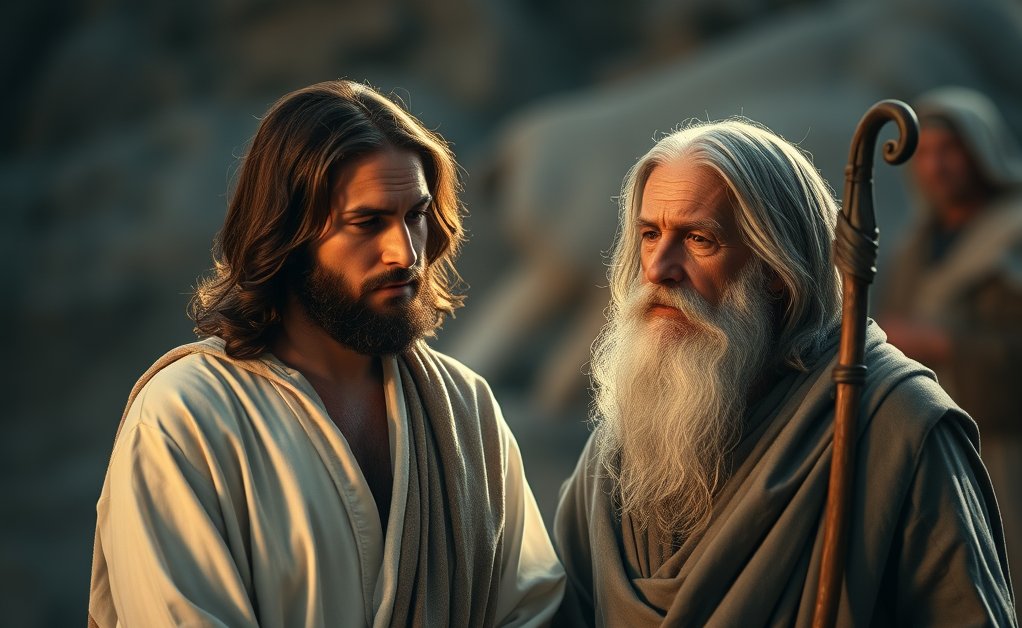
Listen to what I say: If there is a prophet among you from the Lord, I make myself known to him in a vision; I speak with him in a dream.

Not so with my servant Moses; he is faithful in all my household. (Numbers 12:6–7)

Therefore, holy brothers and sisters, who share in a heavenly calling, consider Jesus, the apostle and high priest of our confession.

He was faithful to the one who appointed him, just as Moses was in all God’s household.

For Jesus is considered worthy of more glory than Moses, just as the builder has more honor than the house…

Moses was faithful as a servant in all God’s household, as a testimony to what would be said in the future.

But Christ was faithful as a Son over his household. And we are that household. (Hebrews 3:1-6)

Lord Jesus, Moses was faithful in the Father’s household as a servant. As such, he was worthy of glory and honor.

But you were faithful in the Father’s household as a Son. And because of that you are worthy of even more glory and honor than Moses.

So let me honor you in all my words and my actions. You are worthy of my obedience and respect.

Forgive me for the times I fail to honor you in that way.

Thank you for continuing to be my high priest who faithfully intercedes for me despite the times I fail to honor you. Thank you for your awesome grace. In your name I pray, amen.

Categories
Psalms Devotionals

You are my God

This morning, I was reflecting on David’s words, “You are my God.”

What did he mean by that?

Ultimately, I think it comes down to this. He was saying, “I have seen your steadfast love in my life.”

Despite all his troubles, despite being on the run in the wilderness as he wrote this psalm, he could say, “I have seen your steadfast love in my life.”

It’s one thing to say, “I believe in God.”

Or to say, “God’s power and glory are breathtaking.”

It’s another thing to be able to look back on your life, and say, “I have actually seen God’s steadfast love in my life.”

To really be able to look at points in your life and be able to say, “God showed his steadfast love to me in this way, in this way, and in that way.”

It is through those experiences that we say with confidence, “God is my God! And I am his.”

And it’s because of that confidence, we “follow hard” after God. (Psalm 63:8)

We thirst for more of him in our lives. (1)

We lift up our hands in praise to him. (3-4)

And our hearts turn to him even as we go to sleep at night. (6)

So let us take some time and meditate on those words, “You are my God.”

In what ways has God shown steadfast love to you? What times in your life can you point to?

Categories
Psalms Devotionals

My Glory

Psalm 3 is one of my favorite psalms, and I’ve probably read it hundreds of times, but today, I was thinking about one thing David said.

He said, “God, you are my glory.”

What does that mean: “God is my glory”?

What do we glory in?

Many people glory in their physical beauty. Many others glory in their position or accomplishments. These are the things they boast about. These are the things they feel give them personal worth.

But for David, God was his glory.

Perhaps that truth hit home at the time when he was exiled from Jerusalem, with his own son Absalom trying to kill him.

All his “glory” had been stripped from him: his kingdom, his position as king, all gone. Only one thing remained: God. When everything else was gone, God was his glory.

David no longer boasted in his position or his accomplishments. His self-worth no longer came from these things. His self-worth came from one thing: His relationship with the God who loved him.

And so David said, “God, you are my glory.”

Paul said something similar hundreds of years later.

But everything that was a gain to me, I have considered to be a loss because of Christ.

More than that, I also consider everything to be a loss in view of the surpassing value of knowing Christ Jesus my Lord.

Because of Him I have suffered the loss of all things and consider them filth, so that I may gain Christ. (Philippians 3:7-8)

So as God told Jeremiah,

The wise person should not boast in his wisdom;
the strong should not boast in his strength;
the wealthy should not boast in his wealth.

But the one who boasts should boast in this:
that he understands and knows me… (Jeremiah 9:23-24)

What is your glory?

Categories
Acts Devotionals

What’s in our hearts

When I was looking at the story of Simon, it made me think about what’s in my heart. In my church, I have a very visible position when I teach. And so it’s very easy to desire honor and praise from people.

That’s what Simon wanted.

Before he became a Christian, he was famous among the Samaritans. He had won their accolades as “the Great Power of God.” Everyone paid attention to him because of all the powers he displayed.

And then Phillip came performing signs and miracles, and people were coming to know Christ. Simon himself made a profession of faith.

But when Peter and John came, Simon saw them laying hands on people and the Holy Spirit falling upon those people in power. And so he offered Peter and John money, saying,

Give me this power also so that anyone I lay hands on may receive the Holy Spirit. (Acts 8:19)

But Peter rebuked him, saying,

May your silver be destroyed with you, because you thought you could obtain the gift of God with money!

You have no part or share in this matter, because your heart is not right before God.

Therefore repent of this wickedness of yours, and pray to the Lord that, if possible, your heart’s intent may be forgiven. For I see you are poisoned by bitterness and bound by wickedness. (20-23)

“Your heart is not right. It’s poisoned by bitterness and bound by wickedness. Therefore, you have no part or share in this matter.”

Some people when they do “ministry” suffer from the same problem. Their hearts are not right. Their hearts are poisoned by bitterness.

Bitterness when people more skilled than they arrive in the church.

Bitterness when their position and “glory” is taken away by another.

Hearts bound by wickedness, solely centered on self, instead of God and his kingdom.

And Peter says of such people, “You have no part or share in our ministry.”

So I have to ask myself, what is in my heart? Where is my focus? On my own personal glory, success, and praise? Or on God and his kingdom?

How about you? Where is your heart? Are you truly serving God? Or yourself?

Categories
1 Samuel Devotionals

Where’s the glory?

In this passage, we see the people of Israel, who have been living their own way and not following God, doing something worse: they were treating God like a genie.

They thought they could control him and use him to defeat their enemies.

But the author of 1 Samuel insists, “The Lord Almighty…is enthroned between the cherubim.”

Usually when you see that expression, it’s talking about the ark of the covenant, because God usually met with Moses and the priests in a cloud over the ark. (Leviticus 16:2)

But in this story, the cloud of God’s presence was nowhere in sight.

For that reason, I think it’s possible that the writer wasn’t talking about the ark, but the heavenly reality that the ark represented. That in heaven, the cherubim honor God as he deserves.

This in contrast to the lack of honor for God that the Israelites had.

And at the end of the story, the daughter-in-law of Eli gives birth and names her son “Ichabod” which means, “Where is the glory?”

She meant, “Where is the glory? God has left us. There is no glory here.”

But perhaps God was asking the same thing to the Israelites and us.

Where is the glory and honor he deserves?  The cherubim rightfully give it to him. Do we? At church, in our homes, at our work, in our lives, do we honor and glorify God?

Or does God look down and say, “Where is the glory?”

Categories
Hebrews

What Christmas is all about (part 2)

What’s wrong with the world today? Until we answer that question, we can’t really answer what Christmas is about. And that’s what the author of Hebrews addresses here.

He says in verse 5 that in the world to come, when all things are made new, the earth will not be made subject to angels, but to the human race. And like the psalmist, he marvels, saying,

“What is man that you are mindful of him, the son of man that you care for him?

You made him a little lower than the angels; you crowned him with glory and honor and put everything under his feet.” (Hebrews 1:6-8)

Here it seems the psalmist and the writer of Hebrews is speaking not of Jesus, but of people.

They both marvel at the grace of God that though we are but dust, lower at this time than the angels, that the day will come when we will be crowned with glory and honor, and rule over all things, even the angels.

Paul told us in 1 Corinthians 6:3 that the day will come when we will even judge the angels.

That’s what God meant for us from the very beginning. When he created Adam and Eve, he said,

Be fruitful and increase in number; fill the earth and subdue it.

Rule over the fish of the sea and the birds of the air and over every living creature that moves on the ground. (Genesis 1:28)

And the writer of Hebrews says,

In putting everything under him, God left nothing that is not subject to him. (8b)

And yet. Is that how things really are? The writer continues,

Yet at present we do not see everything subject to him. (8c)

Why not? Because of sin.

Sin is what’s wrong with the world. Sin corrupted everything. It broke our relationship with God. It broke this world. And it broke us. Because of that, we see natural disasters, disease, and death.

And that’s why Jesus had to come.

The writer continues,

But we see Jesus, who was made a little lower than the angels, now crowned with glory and honor because he suffered death, so that by the grace of God he might taste death for everyone. (9)

Jesus left heaven, and became one of us. He lived among us, taking our form that was lower than the angels. A form that was mortal. A form that could get sick and die.

But through his death on the cross, he paid for our sin so that we would not have to pay for it ourselves.

And now, Jesus is crowned with glory and honor. He has become the “author of our salvation.”

That word “author” is now translated in the new NIV, “pioneer.”

Jesus went ahead of us, living a perfect life, and then suffering and dying for us. And now we follow the path of salvation he blazed for us.

We don’t have to find the path to salvation. The path has already been made. He’s done all the hard work. All we have to do is trust in and follow after him.

Why did Jesus come to this earth as a baby 2000 years ago?

Since the children have flesh and blood, he too shared in their humanity so that by his death he might destroy him who holds the power of death–that is, the devil–and free those who all their lives were held in slavery by their fear of death. (14-15)

But not only we have been set free from the power of sin and death, now the way has been paved for us to be crowned with glory and honor and to rule this world as coheirs with Christ as God intended from the very beginning.

That’s what Christmas is all about.

So this Christmas, let us praise God not just for what he did 2000 years ago in Bethlehem, but praise him for what he is doing now, and what he will do in the world to come.

Categories
2 Thessalonians

That God may be glorified in you and you in him

Nobody likes suffering. And it’s easy to question why God allows it. But here we find some answers in Paul’s second letter to the Thessalonians.

As I’ve mentioned before, the Thessalonian church was started in the midst of persecution. Paul was literally forced out of the city and it was very difficult for him to get back in, thus causing him to send Timothy to go for him and sending two letters to the church to encourage them.

This is the second of those letters.

What was the result of the suffering that the Thessalonians went through? We see the answer in Paul’s first words to the them. He said,

We ought always to thank God for you, brothers, and rightly so, because your faith is growing more and more, and the love every one of you has for each other is increasing. (2 Thessalonians 1:3)

Despite all their sufferings, their faith grew and so did their love, just as Paul had prayed (I Thessalonians 3:11-12)

And because of this, Paul said,

Therefore, among God’s churches we boast about your perseverance and faith in all the persecutions and trials you are enduring. 

All this is evidence that God’s judgment is right, and as a result you will be counted worthy of the kingdom of God, for which you are suffering. (4-5)

I kind of pondered that phrase, “All this is evidence is that God’s judgment is right.” What does that mean?

I think it means that God always does what is right, that he never makes mistakes. And so when he allows trials and suffering in our lives, he does so knowing that they will not destroy us, but instead will purify us so that we come forth as gold. (Job 23:10)

This was proven true in the Thessalonians who were not destroyed by their trials, but came out with both stronger faith and love in their lives.

Because of this, Paul says, “Despite your suffering, know that you will be counted worthy of God’s kingdom.”

He then encourages them that though there may seem to be no justice in this world, God would judge their persecutors, and would give the Thessalonians rest.

It kind of reminds me of God’s words of comfort to the martyred saints in Revelation 6:9-11.

And Paul says that all this would happen,

on the day [Jesus] comes to be glorified in his holy people and to be marveled at among all those who have believed. This includes you, because you believed our testimony to you. (10)

I love this verse. When Jesus comes back, God will be glorified in us whom he saved and who lived for him despite many trials, not giving up.

At the same time, we will marvel at him who through his grace saved us though we were totally unworthy.

More, we will realize that the only reason we made it through our trials was because he was there with us all along, strengthening us.

And so Paul prays,

With this in mind, we constantly pray for you, that our God may count you worthy of his calling, and that by his power he may fulfill every good purpose of yours and every act prompted by your faith. 

We pray this so that the name of our Lord Jesus may be glorified in you, and you in him, according to the grace of our God and the Lord Jesus Christ. (11-12)

Why do we go through suffering?

Ultimately it’s so that God may be glorified in us and us in him. And no matter what you go through, if you choose to continue to follow him, he will fulfill every good purpose you have and bless every act prompted by your faith.

And on the day he comes back, he will look at you and say, “Well done, good and faithful servant…Come and share your master’s happiness! (Matthew 25:21)

Amen. Come soon Lord Jesus.

Categories
2 Corinthians

A people that are an honor and glory to Christ

In this last section, Paul talks about the measures that he is taking to make sure that the offering he is collecting for the poor in Jerusalem is completely above board, that no one would be able to criticize him.

In doing so, he talks about the people that were chosen to be in charge of collecting the money and carrying it on to Jerusalem.

Among them were Titus and two unnamed brothers, one who was well known for his preaching of the gospel, and the other a man who had proven zealous in his work for the Lord.

Paul says of them,

As for Titus, he is my partner and fellow worker among you; as for our brothers, they are representatives of the churches and an honor to Christ. (2 Corinthians 8:23)

The word “honor” is often translated “glory” as well. So Paul was also saying of these men that they were a glory to Christ.

What does that mean? I think it means these men by their very lives brought glory and honor to the name of Christ.

They did so by their zeal for him. They did so in the preaching of his word. And they did so in the love and concern that God had placed in their hearts for others.

As I read this, I ask myself, “Am I an honor to Christ? Do I bring glory to his name by my words and by my actions?

Am I zealous for him? Am I bringing his words to those who need to hear them? And is my heart filled with the love and concern God has for others?”

I hope that I am. I realize I’m not perfect. But I don’t want to do anything that would put a stain on the name of Christ.

How about you? Are you an honor to Christ? Do you bring glory to his name?

Categories
2 Corinthians

Why we need never be ashamed

I touched on this yesterday, but I want to look at it much more deeply today.

We saw yesterday that when Moses received the ten commandments, his face initially glowed with the glory of the Lord.

At first, because the people were frightened by this glowing, he covered his face with a veil. But then, he kept it on much longer than he needed to. Why?

Probably because he was ashamed that the glory was fading from his face. And probably because he realized that his own sinfulness caused that glory to fade.

And therein, as we have seen the last couple of days, lies the problem with the law. While it tells us what God is like and what we are meant to be, it cannot change us. We remain sinful in God’s sight and condemned by the law.

But Paul tells us that doesn’t have to be us anymore. Rather, when we come to Christ, we find a new glory that far surpasses the glory that shone from Moses’ face.

Why? Because the law is no longer simply written on tablets of stone or on sheets of paper for that matter.

Rather, when we become Christians, the Spirit writes his laws upon our hearts and transforms us day by day into Christ’s likeness. Each day, we are being transformed from one degree of glory to another.

There is no fading of our glory. Rather, it is an ever increasing glory.

As a result, Paul can tell us,

Therefore, since we have such a hope, we are very bold.

We are not like Moses, who would put a veil over his face to keep the Israelites from gazing at it while the radiance was fading away. (2 Corinthians 3:12-13)

We don’t have to worry that the glory that God has bestowed on us will fade. Rather we can know with confidence that he will continue to work in us until we are conformed to the likeness of his Son, shining in radiance.

Because of this, Paul says we have freedom (2 Corinthians 3:17).

Freedom from guilt for failing to keep the law.

Freedom from punishment.

Freedom from trying to keep a law by our own efforts.

This was something that even Moses never had. He was bound under law, and as a result, he experienced guilt and shame despite all the sacrifices (Hebrews 10:2-4).

He experienced the pains of judgment in that he could not enter the promised land because of his sin. And so he covered his face as the glory of the law faded away.

But we don’t have to do that. Let us take off the veil and show the world who we are. People saved by grace. People who though we are not perfect, are nevertheless being transformed day by day in the likeness of Christ.

And let us live each day remembering what God has told us,

“See, I lay a stone in Zion, a chosen and precious cornerstone (Jesus), and the one who trusts in him will never be put to shame.” (1 Peter 2:6)

Categories
2 Corinthians

Letters from Christ

I must becoming ancient. I still remember letters. I remember receiving them, reading them, and writing them.

When I first came to Japan 20 years ago, email was around, I used it in university, but it was hardly common. So whenever I wrote home, I used air letters, which were cheaper than regular ones.

To this day, I still have a number of old letters from friends, but I can’t remember the last time I received an actual letter.

But anyway, Paul calls us letters from Christ. When talking to the Corinthians, he said, “I don’t need letters of recommendation to you or from you to prove my ministry is valid. Rather,

You yourselves are our letter, written on our hearts, known and read by everybody.

You show that you are a letter from Christ, the result of our ministry, written not with ink but with the Spirit of the living God, not on tablets of stone but on tablets of human hearts. (2 Corinthians 3:2-3)

What does Paul mean that we are letters from Christ that are known and read by everyone? He means that when people see us, our very lives are Jesus’ message that he is alive and working in this world today.

For when people see us, they see the change that he is working in us.

Back in the time of Moses, one way God revealed who he was to the Jews was through his laws. Through the ten commandments, he showed what his character was like and what he created us to be like.

But all these things were exterior to the Jews themselves. That is, through the law they could now see what God was like and how he had created us to be, but those tablets of stone could do nothing more for them.

They couldn’t actually give the Jews, or anyone else for that matter, the power to change.

But when we come to Christ, God writes his laws into our very hearts.

No longer are the laws merely exterior to us showing us how we should live. Rather, the laws are written within us and God’s Holy Spirit is changing us from the inside out.

As we live each day, he is whispering to our hearts, “This is the way; walk in it.” (Isaiah 30:21)

And as we follow him, we start to reflect the Lord’s glory in our lives and are transformed into his likeness with “ever increasing glory.” (2 Corinthians 3:18)

I like how the ESV puts it. We are transformed from “one degree of glory to another.”

In other words, with each little step we take in which we become more like Christ, we step into another degree of glory.

And as that glory shines through us, people start to understand, “Jesus is real. He lives. Because I see it in <your name>. Each day, I see more of what Christ is through him/her.”

And in us they see that letter of invitation from Jesus that says, “Come to me. You can find life just as <your name> has.”

So each day, let us be that letter to those around us. Let God write his words upon our hearts that others may see his glory and come to know him too.

Categories
1 Corinthians

Though we are a dim reflection

I was kind of planning to move on to the next section of this passage, but the more I reflect on this passage, the more I stand in wonder at what we will be.

Our new bodies will be imperishable and incorruptible. No longer shall we know illness, injury, or death.

More, Paul tells us,

And just as we have borne the likeness of the earthly man (Adam), so shall we bear the likeness of the man from heaven (Jesus). (1 Corinthians 15:49)

Put another way, in our new bodies, we will bear the likeness of Jesus. And because he is the image of the invisible God (Colossians 1:15), we will in fact bear the image of God much more perfectly than we do now.

As Adam’s descendants, all of his imperfections have been passed down to us.

Jealousy. Deceit. Bitterness. Anger. Hatred. Sin.

All these things mar the image of God in us.

As a result, our bodies as they are are but a dim reflection of God’s likeness. But when we are transformed, we will reflect God’s image as perfectly as anything can.

As John said,

But we know that when [Jesus] appears, we shall be like him, for we shall see him as he is. (1 John 3:2)

But though we marvel at what we will be, let us not disparage or despise what we are now.

Paul writes,

There are also heavenly bodies and there are earthly bodies; but the splendor of the heavenly bodies is one kind, and the splendor of the earthly bodies is another.

The sun has one kind of splendor, the moon another and the stars another; and star differs from star in splendor. (1 Corinthians 15:40-41)

In other words, in all that God creates, each thing has its own splendor.

Our human bodies, marred by imperfections as they are, deteriorating as they are, still have a type of splendor.

Think about all the intricate parts of the eye that have to work together so that we can see. Or all the parts of the ear that are so perfectly fitted together so that we can hear.

Think about all the processes that connect my brain to my fingers so that I can type this the moment I think it.

These are things we all take for granted, but if you consider them, they’re incredible.

As David wrote, “I am fearfully and wonderfully made.” (Psalm 139:14)

And though we are imperfect, God is not waiting for us to receive our new bodies to transform us.

Rather, Paul tells us,

And we, who with unveiled faces all reflect the Lord’s glory, are being transformed into his likeness with ever-increasing glory, which comes from the Lord, who is the Spirit. (2 Corinthians 3:18)

So let us not just consider the wonder of what we will be in glory. But let us consider the splendor of the bodies God has given us now. They too reflect God, if only dimly.

And as we consider that, let us strive each day to reflect his image even more clearly to those around us.

Categories
Romans

A God who is beyond us

One of the things that amazes me is the people who think that if they were to argue with God, they could win.

More than a few atheists, when posed with the question, “If God exists, what would you say when you stood before him in heaven,” respond by saying they could argue why they didn’t believe in God while they were on earth.

And they seem to think they could reasonably argue their position before God.

But in this passage, Paul shows the utter foolishness and futility of that way of thinking.

In chapters 10 and 11, he talks about how God used the disobedience of the Jews to bring the Gentiles to salvation, and how the result of the Gentiles coming to Christ will be the salvation of the Jews.

In short,

Just as you (Gentiles) who were at one time disobedient to God have now received mercy as a result of their (the Jews’) disobedience, so they too have now become disobedient in order that they too may now receive mercy as a result of God’s mercy to you.

For God has bound all men over to disobedience so that he may have mercy on them all. (Romans 11:30-32)

It’s here that you see a glimpse of how God’s foreknowledge works with predestination.

He knew how the Jews would react to Jesus, and he thus made plans to bring Gentiles into his kingdom.

But he also knew that if he did that, the Jews would then feel a longing for God, and thus turn to Jesus and be saved as well.

In short, God knows what his endgame is on the chessboard of the universe, and he knows how to achieve it.

God knows exactly what choices we will make, and he knows exactly how he will respond to each of our choices so that his will will ultimately be done.

People thus retain their free will and he maintains his.

As he contemplated this, Paul was simply overwhelmed, singing,

Oh, the depth of the riches of the wisdom and knowledge of God!

How unsearchable his judgments, and his paths beyond tracing out!

“Who has known the mind of the Lord? Or who has been his counselor?” (Romans 11:33-34)

In other words, no one can match the wisdom and knowledge of God.

It’s hard to match all wisdom and all knowledge, after all.

And because he knows all things and we don’t, it’s impossible for us to understand all his decisions unless he reveals it to us.

And even if he does reveal it, we’re still limited as to how much we can truly understand.

So when people argue, for example, about how a good God could allow evil in the world, they do so from ignorance.

They don’t have all the information that God has, and so all their arguments against him essentially amount to nothing.

Yet people argue as if they do know everything. As if their arguments are unanswerable. And so they boast that they could debate against God and win.

But when they stand before him, he will lay out on the table all the motivations of their heart and all that they knew or should have known had they taken the time to find out.

He will lay out all the facts as they are, not as we perceived them in our pride.

And ultimately, every mouth will be silenced and every person held accountable. (Romans 3:19).

There is nothing that we can bring to the table that will stun God and make him say, “I never knew that.”

Nor will there be anything that we can point to in our lives to say, “Look at what I did. I deserve heaven.”

For as Paul concludes,

“Who has ever given to God, that God should repay him?”

For from him and through him and to him are all things. (Romans 11:35-36a)

Everything we have is from him. All things came through him. And all things will return to him. That includes us.

So we have two choices. We can give glory to him, as Paul did, saying,

To him be the glory forever! Amen. (Romans 11:36b)

Or we can continue to rebel against him until the day come when we are silent before him.

How about you? What will you choose?

Categories
Luke Luke 9 Mark Mark 9

Pride in ministry

As Jesus taught his disciples about what it meant to be great in God’s kingdom, it must have caused some unease in their hearts. Not only because of how they had been treating each other, but because of how they had been treating people outside of their group.

And so probably with a lot of trepidation, John said,

Teacher, we saw a man driving out demons in your name and we told him to stop, because he was not one of us.” (Mark 9:38)

Jesus replied,

Do not stop him,” Jesus said. “No one who does a miracle in my name can in the next moment say anything bad about me, for whoever is not against us is for us.

I tell you the truth, anyone who gives you a cup of water in my name because you belong to Christ will certainly not lose his reward. (Mark 9:39-41)

One problem in the church is that people are often very protective of their “territory.” They have their ministry, and God help anyone who would try to “infringe” on that territory.

That’s what the disciples were doing. They saw someone casting out a demon in Jesus’ name, and the demon actually left. But because the man was encroaching on their “territory,” they told him to stop.

But Jesus makes clear to them, “You’re not in a competition. He’s doing this work out of love for me. Let him do it. Don’t stop him from doing the things I’ve enabled him to do.”

We need to be the same way. We should be happy to let other people into the ministry that we are doing, even if they prove to be better at it than we are.

Why? Because we are not seeking personal glory in our ministry. At least we shouldn’t be. We’re seeking to glorify God. And whenever anyone uses their gifts to glorify God, we should be praising God for that.

Unfortunately, this kind of competition also happens between churches. Churches get into who is bigger than whom. Who is doing the better ministry. Worse, they start criticizing each other because they do things differently.

But that’s not what Jesus wants from us. That’s what Satan wants from us. Because if we’re too busy fighting each other, or looking down on each other, we’ll have no time to fight him and his kingdom.

Let us not get into competitions trying to outdo each other, as churches, or as people. Rather let us work together. Because ultimately, we are on the same team working toward the same goals.

Division brings discredit to the name of God. Unity and cooperation brings glory to his name. Let us be a people that bring glory to God’s name.

Categories
Zechariah

Wall of fire, glory within

This message, along with all the others in the rest of this book, came to Zechariah during the rebuilding of the temple.

Here, we see a vision of horsemen going out to see the state of things in the world. What they saw were nations at peace and at ease, which may have been disturbing to God’s people, since God had talked of shaking the nations.

As a result, an angel of the Lord asked,

Lord Almighty, how long will you withhold mercy from Jerusalem and from the towns of Judah, which you have been angry with these seventy years? (Zechariah 1:12)

And the Lord spoke words of comfort to him (and to all the Jewish people) that indeed he would bless the people, that his house would be rebuilt, and that the towns would once again prosper. (Zechariah 1:13–17)

He then promised judgment on the nations that had conquered Israel, saying,

I am very jealous for Jerusalem and Zion, and I am very angry with the nations that feel secure. I was only a little angry, but they went too far with the punishment. (Zechariah 1:14–15)

Thus in verses 18–20, he promises to strike down the four nations (horns) that had come against and scattered his people.

There’s some dispute on who these horns represent, but it seems to make sense that it is the nations of Assyria, Egypt, Babylon, and Persia.

But it is chapter 2 that really strikes me.

The Lord continues to talk about the restoration of his people, and he says that they would be so prosperous, they wouldn’t be able to set up walls around the city because of the sheer number of people and animals that would live there.

But beyond that, the Lord said,

I myself will be a wall of fire around it, declares the Lord, and I will be its glory within…whoever touches you touches the apple of my eye. (Zechariah 2:5, 8)

And again,

Shout and be glad, Daughter Zion. For I am coming, and I will live among you. (Zechariah 2:10)

I love these words. God himself is a wall of fire around us. He is our protection and our shield. He fights those who come against us.

And he is our glory within. The Holy Spirit himself lives within us and shines through us.

As David put it,

But you, Lord, are a shield around me, my glory, the One who lifts my head high. (Psalm 3:3)

Categories
Isaiah

Where your glory comes from

Where does your glory come from? From where do you get your praise? What in your life do you take pride in?

For the people of Tyre, it came from their trading business.

They were a port city, and had a thriving maritime business. They were wealthy and successful. They were also a very ungodly people, worshiping their own gods, including a god very common in our day, the god of money.

And here, in all their pride and glory, God brings judgment on them, warning them that the day would come when they would be overthrown.

He warned that though they were famous and had great wealth, it would all be stripped from them. Isaiah says of them,

Wail, you people of the island. Is this your city of revelry, the old, old city, whose feet have taken her to settle in far-off lands?

Who planned this against Tyre, the bestower of crowns, whose merchants are princes, whose traders are renowned in the earth?

The LORD Almighty planned it, to bring low the pride of all glory and to humble all who are renowned on the earth. (Isaiah 23:6–9)

And while God tells them they will once again be restored,

Yet her profit and her earnings will be set apart for the LORD; they will not be stored up or hoarded.

Her profits will go to those who live before the LORD, for abundant food and fine clothes. (18)

In other words, all her pride and glory will be for the benefit of the Lord and his people, not their own.

What can we learn from this?

Lasting glory can come from only one place. It’s not from money, or fame, or anything else of this earth because all of these things are temporary.

Lasting glory can only come from God. And glory doesn’t come from molding ourselves into an image of our own devising. Rather it comes from reflecting the Lord’s image as we draw near to him.

As Paul wrote,

And we, who with unveiled faces all reflect the Lord’s glory, are being transformed into his likeness with ever-increasing glory, which comes from the Lord, who is the Spirit. (2 Corinthians 3:18)

I like how the NASB puts it, that we are being transformed into Christ’s image “from glory to glory.”

And so what should we take pride in? Jeremiah answers that, saying,

This is what the LORD says:
“Let not the wise man boast of his wisdom
or the strong man boast of his strength
or the rich man boast of his riches,
but let him who boasts boast about this:
that he understands and knows me,
that I am the LORD, who exercises kindness,
justice and righteousness on earth,
for in these I delight,” (Jeremiah 9:23–24)

How about you? Where is your glory? Where is your pride?