Categories
Exodus Devotions

The God who pitched his tent among us

The cloud covered the tent of meeting, and the glory of the Lord filled the tabernacle.

Moses was unable to enter the tent of meeting because the cloud rested on it, and the glory of the Lord filled the tabernacle. (Exodus 40:34-35)

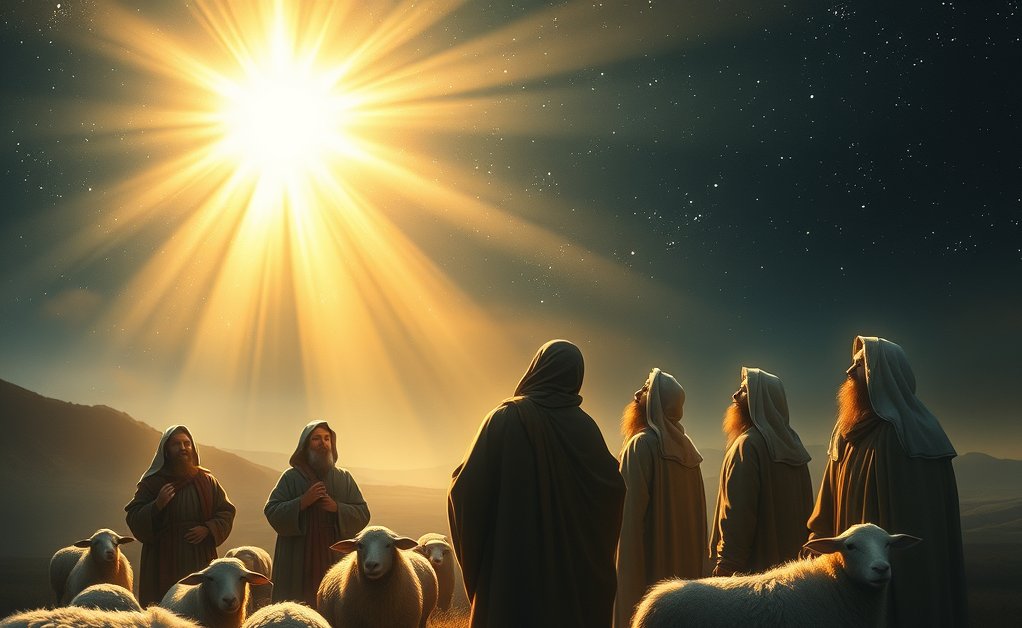
This being Christmas season, I couldn’t help but think of the story of the shepherds in Luke 2.

In the same region, shepherds were staying out in the fields and keeping watch at night over their flock.

Then an angel of the Lord stood before them, and the glory of the Lord shone around them, and they were terrified. (Luke 2:8-9)

The same glory that filled the tabernacle now shone around the shepherds.

No wonder the shepherds were terrified.

Even Moses wouldn’t enter the place where God’s glory shone.

And yet the angel said to the shepherds,

Don’t be afraid, for look, I proclaim to you good news of great joy that will be for all the people: Today in the city of David a Savior was born for you, who is the Messiah, the Lord. (Luke 2:10-11)

Through Jesus, the shepherds gained access to God that even Moses didn’t have. And so have we.

John tells us,

The Word (i.e. God) became flesh and dwelt among us. (John 1:14)

The word “dwelt” has the idea of “pitching one’s tent.”

In Jesus becoming human, God “pitched his tent” among us, just as God did for the Israelites.

Because he did, John tells us that,

We observed his glory, the glory as the one and only Son from the Father, full of grace and truth. (John 1:14b)

And just as God was Immanuel to the Israelites, “throughout all the stages of their journey,” Jesus is Immanuel to us throughout all the stages of our journey through life, promising,

I am with you always, to the end of the age. (Matthew 28:20)

Categories
2 Kings Devotionals

Our attitude in prayer

Please, Lord, remember how I have walked before you faithfully and wholeheartedly and have done what pleases you. (2 Kings 20:3)

This story apparently happened after Assyria started their attacks on Judah, but before Sennacherib besieged Jerusalem. (See 2 Kings 20:13 and compare with 18:14-16.)

What strikes me is the basis on which Hezekiah made his plea, and the basis on which God answered. Hezekiah made his plea based on his goodness and faithfulness.

But on what basis did God answer?

When God gave the reasons for granting Hezekiah’s request and for delivering Judah from Assyria, he said he would do these things “for my sake and for the sake of my servant David.” (16)

In short, God granted Hezekiah’s request, not because of Hezekiah’s goodness, but because of God’s glory, goodness, faithfulness, and grace.

He had made promises to David, and he was faithful to keep them.

And by healing Hezekiah and delivering Judah from Assyria, he showed his glory, goodness, and grace not only to Hezekiah, but to Judah and all the surrounding nations.

It made me think. On what basis do I come to God with my requests?

Am I appealing to my own goodness? Am I saying, “God, I deserve this”?

Or do I acknowledge, “Father, I deserve nothing from you. But I come to you because of your goodness, faithfulness, and grace to me.”

Do I lay my requests before him with that kind of heart?

If we come to God thinking we deserve things from him, it’s easy to fall into the trap of pride Hezekiah did. (2 Kings 20:12-19, 2 Chronicles 32:24-25).

“Of course, God answered my prayer. I deserve it. I deserve his blessings.”

Or if God says no, we get angry.

“Why didn’t you answer me? I deserve this!”

On what basis do you come to God in prayer?

On your goodness?

Or God’s glory, goodness, faithfulness, and grace?

Father, I deserve nothing from you. And yet, by your grace, you call me your child and tell me I can ask you for anything.

So Father, I humbly come before you and lay my requests before you.

Not because of my goodness. But because of your glory, goodness, faithfulness, and grace.

And I trust that however you answer, yes or no, you are good and your ways are best. In Jesus’ name, amen.

Categories
2 Corinthians Devotionals

Seeing God’s glory

Then Moses said, “Please, let me see your glory.”

He said, “I will cause all my goodness to pass in front of you, and I will proclaim the name ‘the Lord’ before you. I will be gracious to whom I will be gracious, and I will have compassion on whom I will have compassion.”

But he added, “You cannot see my face, for humans cannot see me and live.” (Exodus 33:18-20)

There are a lot of ties between that passage and 2 Corinthians 3.

For sinful humans like us, the glory of God can be a scary thing. Because he is so holy and we are not, people could not see God’s glory and live.

And so for Moses, God provided a rock to hide behind. (Exodus 33:21-23)

In the tabernacle, there was a curtain that blocked the priests and everyone else from the Most Holy Place where God revealed his presence. (Leviticus 16:2)

Even when the high priest entered the Most Holy Place on the Day of Atonement, he burned incense creating a cloud that prevented him from seeing God’s glory directly. (Leviticus 16:12-13)

Just to see the remnants of God’s glory on Moses’ face was too much for the Israelites. And so Moses put a veil on his face, even as that glory gradually faded away. (Exodus 34:29-30)

But when Jesus died on the cross, the temple curtain was torn. And now, when we turn to the Lord, the veil is taken away. And in the face of Christ, we see God’s glory.

But in seeing God’s glory, we are not destroyed. Rather, we are transformed into his likeness.

Sinful though we are, God is gradually changing us. And when Jesus comes, in an instant, we will be like him. (1 John 3:2)

And unlike the glory that faded from Moses’ face, we go from glory to glory. (2 Corinthians 3:18)

So like Paul, let us be bold. (2 Corinthians 3:13)

Bold in drawing near to God. (Hebrews 10:19-22)

And bold in sharing the message that gives life with those around us. (2 Corinthians 3:4-6)

Categories
Isaiah Devotionals

A little perspective

Isaiah 43 is definitely one of my favorite passages, especially verses 1-3.

But today verses 7 and 21 stand out to me.

God talks of Israel returning from Babylon, and in describing them, he says,

everyone who bears my name
and is created for my glory.
I have formed them; indeed, I have made them. (Isaiah 43:7)

And again,

The people I formed for myself
will declare my praise. (21)

I asked yesterday about who we tend to point to in our lives: Ourselves? Or Jesus?

And in this passage again, we see what perspective we should hold in life.

We bear God’s name. We were created for his glory. We were created for him.

Sin is essentially turning that perspective 180 degrees. We are concerned about our name. We live for our glory. We act as if we were created  to live for ourselves.

Repentance is all about turning our perspective back to where it belongs.

And so Paul says in 2 Corinthians 5:14-15,

For the love of Christ compels us, since we have reached this conclusion: If one died for all, then all died.

And he died for all so that those who live should no longer live for themselves, but for the one who died for them and was raised.

What perspective do you live your life by?

Categories
Leviticus Devotions

How we regard God

Yes, I know I’m going backward. Actually this year, I’m reading through each book of the Bible at least twice, using two different translations.

I’ve been thinking about leadership in the church, and how we are to be held to a higher standard. And this passage shows that in no uncertain terms.

It’s interesting to me that in chapters 9 and 10, the exact same words are used, “Fire came from the Lord and consumed…”

In the first case, it consumed the burnt offering, and all the people stood in awe of God’s glory and were blessed.

In the second case, it consumed two of Aaron’s sons, because unlike in chapter 9 where you repeatedly see them and Aaron doing things as the Lord commanded, these two sons offered “unauthorized fire” in contradiction to what the Lord commanded (Leviticus 10:1).

And as a result, the people stood in fear as God’s glory was displayed in his judgment of these two men.

And God told Aaron,

I will demonstrate my holiness
to those who are near me,
and I will reveal my glory
before all the people. (10:3)

The ESV shows another possible reading of the Hebrew.

Among those who are near me I will be sanctified, and before all the people I will be glorified.

If we take the ESV reading, God is saying this:

“I will be treated as holy by those who would draw near to me. I will not be treated as some common or unholy thing. And I will be glorified before all the people by those who draw near me. You cannot just take me lightly and expect me to stand by and do nothing.”

The CSB reading makes it even stronger.

“If you will not treat me as holy, I will demonstrate my holiness such that you will never make that mistake again. If you will not glorify me before the people by the way you treat me, I will glorify myself so that they will know who I am.”

Either way, as a leader in the church, it gives me pause. How do I treat God? In my actions, do I display his holiness to those around me? Do I glorify him in what I do?

Will God display his glory in my life in such a way that people stand in awe of him, and be blessed?

Or will God display his glory in my life in judgment, causing people to fear?

Both are possible. It happened in the New Testament days as well. Just look at the story of Barnabas, and Ananias and Sapphira. (Acts 4:34-5:11).

God will not be treated lightly, especially by those who are supposed to lead. One way or the other, God will display his holiness and glory in my life.

I prefer that it be in a way that people see it and are blessed, not see it and fear.

Categories
1 Peter

Living for the will of God (Part 2)

A lot of people want to know what God’s will is for their lives. And they tend to think of it in terms of “What job should I have?” “What ministry should I join?” Or “Who should I marry?”

But when Peter talks about living for the will of God, he really doesn’t address these things. Rather, if there’s one thing that he says which describes living for the will of God, it’s this: it’s living for his glory.

A lot of people say they want to know God’s will, but in their everyday lives, they live for themselves and their own glory, not for God and his glory.

How do we live for God and his glory?

For one thing, love one another. It says in verse 8 to love one another earnestly. The word “earnestly” has the idea of being stretched to the limit, as a runner will stretch his muscles to the limit when he’s in a race. In short, live all out in your love for each other.

Peter says that as we do so, love covers a multitude of sins. In our relationships with those around us, especially with our brothers and sisters of Christ, love helps us overlook their faults and to forgive them when they sin against us.

But as we show Christ’s love for those who don’t know him, it also opens the door for Christ to work in their lives and to wash their sins in his blood as they turn to him. So in that sense too, love can cover a multitude of sins.

Either way, we bring God glory through the love that we show for others.

Peter also says to show hospitality to one another without grumbling. (1 Peter 4:9)

When we are going through suffering ourselves, it’s hard to be generous and give of ourselves to others. But as we follow the example of Christ, giving of ourselves even as we suffer, we again bring glory to God.

Finally, Peter reminds us to be faithful with the gifts God has given us and to serve one another. (10)

And once again, this not to our glory but to God’s. Peter says,

If anyone speaks, he should do it as one speaking the very words of God.

If anyone serves, he should do it with the strength God provides, so that in all things God may be praised through Jesus Christ.

To him be the glory and the power for ever and ever. Amen. (1 Peter 4:11)

In other words, remember that all our gifts are from God. They will only be truly effective if they are empowered by him. And the end result should not be that people praise us, but him.

How about you? Do you desire to know God’s will in your life? God’s will doesn’t have so much to do with what your job is, what your marriage is, or the different minutia of your life. Rather it comes down to this:

Whether you eat or drink or whatever you do, do it all for the glory of God. (I Corinthians 10:31)

Who are you living for?

Categories
Ephesians

That we may be filled with his glory

In 1 Kings, it says about the completion of the temple Solomon had built,

When the priests withdrew from the Holy Place, the cloud filled the temple of the LORD.

And the priests could not perform their service because of the cloud, for the glory of the LORD filled his temple. (1 Kings 8:10-11)

Just as the glory of the Lord filled the temple, God desires that his church be filled with all the fullness of his glory. And that’s what Paul prays for here.

He says,

I pray that out of his glorious riches he may strengthen you with power through his Spirit in your inner being, so that Christ may dwell in your hearts through faith.

And I pray that you, being rooted and established in love, may have power, together with all the saints, to grasp how wide and long and high and deep is the love of Christ, and to know this love that surpasses knowledge–that you may be filled to the measure of all the fullness of God. (Ephesians 3:16-19)

Whenever I’ve read this passage in the past, I’ve always taken that “you” as singular. But actually, these “you”s are all plural.

Paul is saying, “I pray that the Spirit would empower you all through his Spirit in your inner being. I pray that you all would be rooted and established in love. I pray that you all may be filled to the measure of all the fullness of God.”

Of course, I think Paul wanted that for each individual Christian. But as he was writing this, I think he was thinking of them as a unified whole. They were and we are, after all, one in Christ.

It is the very point he was hammering home earlier in chapter 2, and continues to do in chapters 3 and 4.

So he was praying,

God, please empower your church through your Spirit working in each person.

Lord Jesus dwell in their hearts through their faith in you.

Father, may they be rooted in your love for them. May that be the foundation of their lives.

And as they root themselves in your love for them, may they also be rooted and established in their love for each other.

As they do, may they really start to see and understand how wide, long, high, and deep are the riches of your wisdom and your love.

And may the result of all this be that you flood your church with all your fullness, with all your glory, just like you filled Solomon’s temple long ago.

That’s God’s vision for the church. That we would be his temple, filled with his glory, shining his light to the world.

But the thing to remember is this does not come about through our own efforts. Rather, it comes about through the work and power of God working in you and the church.

So when you feel discouraged at what you are and what the church is like now, remember that he “is able to do immeasurably more than all we ask or imagine, according to his power that is at work within us.” (20)

He can do the miraculous. He can take broken lives and a broken church and turn it into something glorious. All we need to do is start cooperating with him.

And ultimately, the day will come when he will be glorified in us and in his Son who bought us with his blood.

So don’t be discouraged. Instead, let us sing as Paul sang,

Now to him who is able to do immeasurably more than all we ask or imagine, according to his power that is at work within us, to him be glory in the church and in Christ Jesus throughout all generations, for ever and ever! Amen. (Ephesians 3:20-21)

Categories
Ephesians

Chosen and blessed in love, by God’s plan and for his glory

As I look at the first two chapters of Ephesians, I can’t help but marvel all over again at all that God has given you and me who have put our faith in Jesus.

Paul starts this letter to the Ephesians in worship, saying,

Praise be to the God and Father of our Lord Jesus Christ, who has blessed us in the heavenly realms with every spiritual blessing in Christ. (Ephesians 1:3)

How have we been blessed?

For he chose us in him before the creation of the world to be holy and blameless in his sight.

In love he predestined us to be adopted as his sons through Jesus Christ, in accordance with his pleasure and will — to the praise of his glorious grace, which he has freely given us in the One he loves.

In him we have redemption through his blood, the forgiveness of sins, in accordance with the riches of God’s grace that he lavished on us with all wisdom and understanding. (Ephesians 1:4-8)

That’s a mouthful. Paul tells us that before this world was ever created God had a plan. He chose us to be a people that are holy and blameless in his sight.

This despite the fact that he knew we would be a sinful, rebellious people who would turn our backs on him.

But though he knew all this, he made a plan to save us and make us his own. He sent Jesus to die on the cross and take the punishment for our sins that we might be forgiven.

By his blood, he bought us out of slavery to sin and did not merely make us his own slaves, but adopted us as his beloved sons and daughters.

More, he has put his seal on us, guaranteeing our inheritance with him.

The Holy Spirit both protects us and holds us from anything that would tear us apart from God, and his presence and work in our lives is a foretaste of what we will have someday in heaven when we see God face to face.

All this was not because of anything we did, but rather it was entirely because of his own pleasure and will.

And when God chose us, this was by no means some random or capricious choosing of who to save and who not to save. Rather, Paul tells us that “in love” he chose us.

Though we were totally undeserving of it, he looked on us with love and lavished his grace upon us.

How and why he decided to choose us, we will never know. All we know is that for some reason, God chose to set his love upon us.

Because of this, the glory for our salvation does not at all go to us. Rather, Paul says three times that this is all for the praise of God’s glory (verses 6, 12, and 14).

In short, we are a part of God’s incredible plan, a plan to unite this rebellious, sinful, and dysfunctional world under Christ.

And while he could have done so by simply wiping us out as we deserved, he chose to set his love on us and make us a glorious part of his plan for this universe.

Honestly, I feel totally incompetent to express this all. All the superlatives in the world could adequately express how awesome God and his grace is.

So I think I’ll just stop here and take more time to wonder at it all.

Categories
1 Corinthians

For God’s purposes, for God’s glory

As I think about the problems of pride and jealousy within the church because of spiritual gifts, I think a lot of it comes down to the fact that we forget our lives, as Rick Warren once put it, is not about us.

We were not created to live for our own purposes and our own glory. Rather we were created for God’s purposes and God’s glory.

We see this in verses 4-6. We all have different gifts, but it’s not as if those gifts were something we created within ourselves. Rather, they were gifts given from God himself.

And as Paul said in chapter 4,

For who makes you different from anyone else? (God).

What do you have that you did not receive? (Nothing).

And if you did receive it, why do you boast as though you did not? (For no good reason). (1 Corinthians 4:7)

Yet so often, we act as if we are God’s gift to man. In a sense, I suppose we are. We are to be a blessing to those around us.

But that is not for our glory and for our benefit. It’s for God’s glory and for the benefit of those around us.

Like I mentioned in the last blog, the gifts we have been given are to be used for the common good. (1 Corinthians 12:7)

Paul goes on to say,

All these (gifts) are the work of one and the same Spirit, and he gives them to each one, just as he determines. (1 Corinthians 12:11)

Again, we see that these gifts are not only from the Spirit, but it is he who decides, for his own purposes, who to give them to.

Paul then adds,

But in fact God has arranged the parts in the body, every one of them, just as he wanted them to be. (1 Corinthians 12:18)

Here again we see that it is for God’s purposes that we are given our place in the body.

Because of this, there’s no room for pride. It is for God’s purposes that you have been placed where you are and given the gifts you have received, not your own.

And there’s no need for jealousy. God has specially placed you in where you are for his own good reasons.

It’s not that he said, “Well, I kind of messed up when I made you. I can’t use you for much, so I guess I’ll just stick you here.”

Rather God, when he created you, looked at you and said, “I have a special purpose for you. I need someone to fill in this position for my body, and I specially designed you to fill that need.”

How about you? Do you see your gifts as something that should bring you glory and fulfill your purposes?

Or do you see them as something that should bring God glory and fulfill his purposes.

A self-centered attitude concerning your gifts will lead to jealousy and pride. What kind of attitude do you have?

Categories
John John 9

Why did this happen to me?

Sometimes, bad things happen to people, and they wonder, “Why did this happen to me? Is God punishing me for something I did?”

There are times when God will let us go through suffering because of our sin.

But I would say that most, if not all the time, it’s not so much that God is punishing you, as he is letting you reap the natural consequences of your actions.

Just because you are a Christian does not mean that you can sin and expect to escape the natural consequences of your actions. There is a price to pay for what we do.

We can hardly blame God if he does nothing to keep us from suffering those consequences. It’s how we learn, and it’s part of the process that leads to holiness. A refining by fire, if you will.

But there are times when bad things happen to us through no fault of our own.

In this story, Jesus and his disciples came across a man who had been blind from birth. And his disciples asked,

Rabbi, who sinned, this man or his parents, that he was born blind? (John 9:2)

It was a very common belief in that day that if you were handicapped, it was because God was punishing you. But this man was blind from birth, and so that provided a conundrum for the disciples.

Was this man blind because his parents sinned? Did God see that he was going to sin in the future and so he made him blind from birth? Did he somehow sin in the womb of his mother?

But Jesus answered,

Neither this man nor his parents sinned… but this happened so that the work of God might be displayed in his life. (John 9:3)

What was Jesus saying? He was saying that there are times when bad things happen to us, not because God is punishing us, but because God wants to do something glorious through us.

A woman named Joni Eareckson Tada immediately springs to my mind as an example.

She was a woman who in her teenage years had a diving accident leaving her quadriplegic. Many people have prayed for her healing over the years, and yet God never healed her.

But through her, so many people around the world have been touched, and not just people with disabilities.

God wasn’t punishing her. But through this accident, God’s work was displayed in her life in a way that would never have been done had she not had this accident.

Jesus said,

While I am in the world, I am the light of the world. (John 9:5)

While Jesus may no longer be physically present here on earth, nevertheless, he shines his light on us that God’s glory might be revealed to us. More, he shines his light through us that others may be touched as well.

So if you’re going through suffering, don’t wallow in your misery. Rather ask God, “Shine your light on me and let your light shine through me in the midst of all this.”

And if you do, God will be glorified in you and through you.

Categories
Haggai

Where our true glory comes from

I’ve mentioned before in the book of Ezra that some of the older generation that had seen Solomon’s temple wept when they saw the foundations of the new temple that was being built.

And here, we see some of the same feelings rising up from that generation when the work was restarted. So Haggai speaks to them saying,

‘Who of you is left who saw this house in its former glory? How does it look to you now? Does it not seem to you like nothing?

But now be strong, Zerubbabel,’ declares the Lord. Be strong, Joshua son of Jozadak, the high priest.

Be strong, all you people of the land,’ declares the Lord, ‘and work. For I am with you,’ declares the Lord Almighty.

‘This is what I covenanted with you when you came out of Egypt. And my Spirit remains among you. Do not fear.’ (Haggai 2:3–5)

In other words, “Don’t get discouraged by how this temple compares with the one Solomon built. And don’t get discouraged by all the opposition you’re facing. Get to work and build the temple, for I am with you.

“I was with you when I promised to bring you out of Egypt and my promises never change. I am the same God that brought you here and my Spirit still remains among you.”

Then he said,

This is what the Lord Almighty says: “In a little while I will once more shake the heavens and the earth, the sea and the dry land.

I will shake all nations, and what is desired by all nations will come, and I will fill this house with glory,” says the Lord Almighty.

“The silver is mine and the gold is mine,” declares the Lord Almighty.

“The glory of this present house will be greater than the glory of the former house,” says the Lord Almighty.

“And in this place I will grant peace,” declares the Lord Almighty. (Haggai 2:6–9)

Here we see another prophecy of the Messiah to come. Before his coming, there was a shaking of the nations, with one empire rising after another.

And then Jesus came, the desired of all nations, and he filled that house with his presence and glory. God in human flesh was in that temple preaching and performing miracles.

As we look at this passage, I think we see a mistaken way of thinking in these older Jews. They merely looked at the outside of the temple, of the materials it was built from, and thought that the temple’s glory came from these things.

But the glory of Solomon’s temple, beautiful as it was, did not come from the gold or silver or any of the things it was built from. Its glory came from the presence of God dwelling inside of it.

And as beautiful as it was compared to the second temple that was built in Ezra’s time, it never had the privilege of housing God in human flesh.

When Jesus stepped into the second temple, it received greater glory than Solomon’s temple ever did.

It’s the same with us. You may look at your life and think that you are nothing compared to the other “beautiful temples of God.”

Others may be more physically beautiful or handsome.

Others may be more talented or gifted.

But your glory does not come from how you look or what gifts you may have. Your glory comes from Jesus living inside of you.

So don’t look around comparing yourself to others. And don’t get discouraged by the people that would keep you from following God.

Be strong. Do the work that God has called you to do.

The same God that brought you out of slavery to Satan’s kingdom is with you now and he’ll never leave you.

And each day he will transform you into the glorious temple he created you to be.

As Paul wrote,

And we all, who with unveiled faces contemplate the Lord’s glory, are being transformed into his image with ever-increasing glory, which comes from the Lord, who is the Spirit. (2 Corinthians 3:18)

Categories
Ezekiel

For His purposes, for His glory, that all may know…

In this passage, Ezekiel looks to the last days when nations will rise up against Israel and try to destroy it, only to be thrust back and destroyed by God.

There’s quite a bit of debate as to when this will happen, which I won’t get into here. There are others much more qualified to argue the point than I am.

I’m more interested in why God allows this to happen. God tells the leader of those nations to come,

I will bring you against my land, so that the nations may know me when I show myself holy through you before their eyes. (Ezekiel 38:16)

Then after describing the judgment to come against these nations, he says,

And so I will show my greatness and my holiness, and I will make myself known in the sight of many nations.

Then they will know that I am the Lord. (Ezekiel 38:23)

The theme continues in chapter 39.

I will make known my holy name among my people Israel.

I will no longer let my holy name be profaned, and the nations will know that I the Lord am the Holy One in Israel. (Ezekiel 39:7)

And when talking about Israel’s restoration, he once again says,

When I have brought them back from the nations and have gathered them from the countries of their enemies, I will show myself holy through them in the sight of many nations. (Ezekiel 39:27)

What do we get from all of this?

All that God does is for his purposes. All that God does is for his glory.

And all that he does is so that the world may know who he is, and that he is holy. That he is the God above all other gods.

And on the last day, every knee will bow and every tongue confess that Jesus Christ is Lord, to the glory of God the Father. (Philippians 2:10–11)

God chose Israel to be his people, not because Abraham or his descendants were any better than anyone else.

If you look at the lives of Abraham on down through all the people in Israel’s history, you see they were sinners just like everyone else.

In his grace God chose them. And he chose them for his purposes.

He knew they would sin. But he would use them anyway to glorify himself to the world.

He brought Jesus through the Israelites to redeem us from our sins and to reveal himself to us.

And the day will come when he again reveals his glory, power, and grace to the world.

How? By defending Israel in the last days against the nations that would come against them and by pouring his Spirit upon his people and forgiving their sins.

God has chosen us as Christians for the same reasons.

Not because we are any better than others. Not for our own purposes and our own glory.

But because of his grace, and for his purposes and his glory that all may know that he is the Lord,

A compassionate and gracious God, slow to anger, abounding in love and faithfulness, maintaining love to thousands, and forgiving wickedness, rebellion and sin. (Exodus 34:6–7)

May we all be a people for his purposes and his glory.