Categories
1 Samuel Devotionals

Doing what seems good to me?

“Do whatever you want,” the troops replied.

But the priest said, “Let’s approach God here.” (1 Samuel 14:36)

As I read those words, I thought about the message my pastor gave at church yesterday.

He was talking about bringing everything in our lives under God’s good reign. To not just do whatever we want. But to seek God and do what is pleasing to him.

That’s what Saul failed to do, and that’s why his reign ultimately collapsed.

It’s so easy for me to just do whatever I want. To spend my money as I please. To spend my time as I please. To do what seems right to me.

But that’s not living under God’s reign.

So the thing I think God is telling me today is that I need to seek him more before making my decisions.

Probably the one area that’s the biggest is my finances. To put all of that under his reign, not just my tithes.

To not just do what seems right to me concerning my money, but to seek out what is pleasing to him.

How about you? What is God telling you today?

Categories
1 Thessalonians Devotionals

God’s will

For this is God’s will, your sanctification… (1 Thessalonians 4:3)

Those words struck me today, probably because this is one of the few places that outright says, “This is God’s will.”

I think a lot of Christians, myself included, say, “I want to know God’s will.”

And we usually think in terms of things like who we should marry or what career path to take.

But God reminded me this morning, “This is my will: your sanctification.”

Paul is primarily talking about sexual purity here, as sexual sin was as big a problem then as it is now.

But sanctification isn’t limited to sexual purity. It’s becoming more like Jesus in everything: in love, in speech, in thoughts, in everything we do.

So today, I’m thinking about certain heart issues God’s been working on in my life.

And as I’m wrestling with them even now, I’m reminding myself of loving Abba’s words to me.

“This is my will: your sanctification.”

Categories
Joshua Devotionals

Because we’re on untraveled ground

When you see the ark of the covenant of the Lord your God carried by the Levitical priests, you are to break camp and follow it.

But keep a distance of about a thousand yards between yourselves and the ark. Don’t go near it, so that you can see the way to go, for you haven’t traveled this way before…”

Come closer and listen to the words of the Lord your God.” (Joshua 3:3-4, 9)

As I read those words, I couldn’t help but think of some verses I’ve been memorizing over the past week from Psalm 143.

Let me hear in the morning of your steadfast love, for in you I trust.

Make me know the way I should go, for to you I lift up my soul.

Deliver me from my enemies, O Lord! I have fled to you for refuge.

Teach me to do your will, for you are my God! Let your good Spirit lead me on level ground! (Psalm 143:8-10, ESV)

That could have been the song of the Israelites entering Canaan.

But it’s also my prayer now.

The future is all untraveled ground for me. There’s so much I don’t know.

And Satan would lay so many traps for me that I can’t see.

But God knows everything that lies ahead.

And so I want…I need to draw closer. To listen to His words. To learn to do his will. To be led by his Spirit moment to moment, day to day.

What does that look like practically? I’m still trying to figure it out, to be honest. But that’s my prayer.

Let me hear in the morning of your steadfast love, for in you I trust.

Make me know the way I should go, for to you I lift up my soul.

Deliver me from my enemies, O Lord! I have fled to you for refuge.

Teach me to do your will, for you are my God! Let your good Spirit lead me on level ground! (Psalm 143:8-10)

Categories
Acts Devotionals

Your Kingdom come

They all were continually united in prayer… (Acts 1:14)

I was thinking about what the apostles and the rest of the Christians were praying about in that room. Were they merely praying for their personal needs?

Considering that Jesus had just given them a crash course on the Kingdom and had told them to wait for the Holy Spirit, I kind of doubt it. My guess is that two prayers dominated:

“Let your Kingdom come.”

“Send your Holy Spirit.”

And so that’s what I’m praying today.

Father, let your Kingdom come among us, your people.

Let your church be the intersection between heaven and earth. A place where your will is done as it is in heaven. A place where our chains of sin are broken, our broken lives are healed, and our relationship with you is restored.

But not only that, fill us with your Holy Spirit. As you filled Jesus, fill us so that we can be effective witnesses for you.

As you’ve brought the Kingdom into our lives, help us to bring your Kingdom into the lives of everyone we touch.

Through us, break chains, heal lives, and bring people into a close relationship with you.

In Jesus’ name, amen.

Categories
Isaiah Devotionals

A prayer

Pay attention to me, my people,
and listen to me, my nation;
for instruction will come from me…

Listen to me, you who know righteousness,
the people in whose heart is my instruction… (Isaiah 51:4, 7)

Father, direct my heart to you. May I be alert, paying attention to you, and listening to you in my prayers.

I want to hear the instruction that comes from you. To have your instruction in my heart.

And as I pray, let me not merely say, “Your will be done.” But remind me of what you have said in your Word so that I can truly know your will and pray your will.

In Jesus’ name, amen.

Categories
Ephesians Devotionals

Understanding God’s will

Pay careful attention, then, to how you walk—not as unwise people but as wise— making the most of the time, because the days are evil.

So don’t be foolish, but understand what the Lord’s will is. (Ephesians 5:15-17)

Father, as I walk each day, help me keep in mind the bigger picture of what your will is.

Your will is that everything would be brought under your Son’s rule. (Ephesians 1:9-10)

That includes me. That includes the people around me. That includes all creation.

That’s the bigger picture. But as I see the bigger picture, help me also see the smaller picture of what you want me to do today.

Help me to see the opportunities you’re giving me to touch other’s lives. To rescue Satan’s prisoners of war and bring them into your kingdom.

Give me your compassion for them. Help me to walk in love as Jesus loved me.

And help me to make the most of every opportunity you give me today. In Jesus’ name, amen.

Categories
Matthew Devotionals

Your will be done

Therefore, you should pray like this: Our Father in heaven…Your will be done on earth as it is in heaven. (Matthew 6:9-10)

My Father, if this cannot pass unless I drink it, your will be done. (Matthew 26:42)

Just thinking, Father, the exact words Jesus put in his “disciple’s prayer” is what he prayed the night before he was crucified.

It’s easy to teach others to pray that way.

It’s easy to pray that way as a general prayer to start the day.

It’s so much harder when I’m facing something I don’t want to face.

Can I say, “Your will be done” when it affects my life. When it means going through suffering or hard times? Can I still call you “My Father” during those times and not be bitter, questioning your goodness?

Jesus, I am so weak, as Peter was. As the disciples were.

So especially when I’m facing something bigger than me, something I can’t handle on my own, give me the grace, the strength, the faith, to say as you did, “Father, your will be done.”

Categories
1 Thessalonians Devotionals

God’s will for us

Rejoice always, pray constantly, give thanks in everything; for this is God’s will for you in Christ Jesus. (1 Thessalonians 5:16-18)

A lot of times, we ask, “What is God’s will for me?”

While this is not the whole of God’s will for us, Paul does tell us how God desires us to live each day: “Rejoice always, pray constantly, give thanks in everything.”

Life isn’t always fun. Many times we face trials.

How is it then that we can rejoice always and give thanks in everything? When life is hard, what do we have to rejoice about, to give thanks about.

We can give thanks and rejoice in how God sees us. That he has stamped his image on us (Genesis 1:26-27).

And as his priests, he has stamped his seal on us: “Holy to the Lord.” (Exodus 28:36, Deuteronomy 7:6, 14:2; 1 Peter 2: 5, 9).

And because we are his, his priests, his people, his beloved children, we have access to him 24-7.

We don’t have to be afraid he’ll reject us or turn us away. In good times and bad, in our triumphs and struggles, we can come to him with boldness.

That’s God’s will for us. To walk with him moment to moment, rejoicing in our relationship with him.

Categories
Numbers Devotionals

Truly seeking God?

Balaam and Barak sounded very pious didn’t they?

“I’m going to seek the Lord.”

“Great! I’ll wait…So what did he say? I want to hear.” (Numbers 23:15, 17)

And yet, when God spoke, both Balaam and Balak were upset.

Balak was frustrated because he wanted God to curse Israel.

Balaam was frustrated because he wanted to get paid and desperately wanted God to change his mind, something God refused to do. (Numbers 23:19)

How often are we like Balak and Balaam?

We say we want to hear from God. But when he speaks, we want nothing to do with his words.

Are we only willing to listen to God when we like what he says?

Or are we willing to listen to God even when we don’t like what he says?

Are we trying to bend God to our will?

Or are we yielding to his?

Categories
Mark Devotionals

Chosen to be with him. Chosen to do battle.

He appointed twelve, whom he also named apostles, to be with him, to send them out to preach, and to have authority to drive out demons. (Mark 3:14-15)

What does it mean to live the Christian life? I think we find the answer in these two verses.

We are chosen to be with Jesus.

This doesn’t mean just spending time with God during your quiet time (important as that is) and then living the rest of the day for yourself.

It means being with Jesus every moment of every day. It means walking with him, constantly listening for his voice, and following his lead. (John 15:4-5)

But we aren’t just chosen to be with Jesus. He sends us out into the world to do spiritual battle. (Ephesians 6:11-12, 2 Corinthians 10:3-5)

Oh, we may not be driving out demons. But we are called to do battle against Satan and his kingdom. And we mainly do that by sharing the gospel with those around us.

For it is through the gospel that the gates of hell are torn down and people are set free from Satan’s kingdom.

That’s the Christian life: to be with Jesus and to touch others with his gospel.

And as we do so, I believe Jesus looks at us, smiles, and says,

Who are my mother and my brothers?…

Here are my mother and my brothers! Whoever does the will of God is my brother and sister and mother.” (Mark 3:33-35)

Categories
Acts Devotionals

A prayer

And he said, ‘The God of our ancestors has appointed you to know his will, to see the Righteous One, and to hear the words from his mouth, since you will be a witness for him to all people of what you have seen and heard. (Acts 22:14-15)

Lord, you have chosen me for yourself. (Ephesians 1:3-14).

In these troubled times, I look forward to the day when you return, and I will see you face to face. (1 Corinthians 13:12, 1 John 3:2)

Now, let me hear your voice each day so that I may know your will. (Isaiah 30:20-21, Romans 12:2)

And let me be your witness in this dying world. (Acts 1:8, 2 Corinthians 5:13-21).

In Jesus’ name, amen.

Categories
Matthew Devotionals

The God who accomplishes his will

In these difficult times, we often hear from pastors, “God is still in control.”

But do we believe it?

One thing I think we see from this passage is that God is in control, even when we can’t always see it.

He made his intentions clear from the very beginning, promising to Abraham that through him, all nations would be blessed.

He then promised to David that one of his descendants would reign forever.

How did this all happen? Through one unbroken line of blessing?

Actually no. When you look at the family line of the Messiah, you see a people corrupted and broken by sin.

You see Judah and his brothers who initially tried to kill their brother Joseph, before eventually sending him off into slavery in Egypt.

Yet God had not lost control. He used Joseph to save not only his family, but the Egyptians themselves, as well as the surrounding peoples.

You see times of God’s judgment in the form of famine, because of his people’s sin. Everyone did what was right in their own eyes, but in the process, they became utterly corrupt.

In the midst of that corruption, people like Naomi suffered great sorrow. Perhaps in her bitterness over losing her husband and sons, she wondered if God had lost control.

But instead, God used all this to bring a foreigner named Ruth into the family line of Jesus, showing that he already was keeping his promise to Abraham that all nations would be blessed through him.

You also see the good kings and the bad kings throughout Israel’s history.

David’s family threatened to tear itself apart because of his failures as a husband and a father.

Rehoboam actually did tear the nation apart because of his foolish decisions. The result was civil war, idolatry, the murder of innocent children, and all manner of atrocities ultimately leading to exile. Had God lost control?

No, even in all that, God had not lost control. He brought his people back.

Foreign nations opposed them, oppressed them, and even tried to annihilate them. But though all that, God kept that line of Messiah alive.

And then Jesus was born. His very name expresses God’s plan and purpose through all of history. “Yahweh saves.”

That’s our hope in the midst of all the chaos around us.

What God has promised, he will bring about. And nothing and no one can keep him from accomplishing his purpose.

Categories
Joshua Devotionals

Following God, seeking his will.

As I was reading today’s passage, I thought about prayer.

In this passage, the commander of the army of the Lord appears to Joshua. Most likely, that was Jesus himself, hundreds of years before he came to this earth as a baby.

Anyway, when the commander appears, Joshua challenges him asking, “Are you for us, or for our enemies?”

The commander answered. Neither. “But as the commander of the Lord’s armies, I have come.”

What was he saying? Essentially he was saying, “You’re asking the wrong question. I’m the one in charge, not you. The question is not whether I am for you, but whether you are for me.”

Sometimes in prayer, we ask the Lord, “Are you really for me? Then do this for me. Do that for me.”

But that’s the wrong attitude toward prayer. In prayer, we are not trying to draw God to ourselves and make him do our will. We are drawing near to him, seeking his will.

Jesus said, “When you pray, say, ‘Your kingdom come, your will be done.'” (Matthew 6:10)

So when you pray, remember: We are not seeking to make God align to our will. Rather, we are aligning ourselves to his.”

Categories
Ephesians Devotionals

Making the most of our time

Pay careful attention, then, to how you live—not as unwise people but as wise—making the most of the time, because the days are evil.

So don’t be foolish, but understand what the Lord’s will is. (Ephesians 5:15-17)

As I read Paul’s words, I think to myself, “How am I living? Am I making the most of my time?

Each moment God gives me is an opportunity to make a difference for his kingdom. Do I take advantage of the opportunities he gives me? Am I aware of the Lord’s will in my life each day?”

It’s so easy to live for ourselves. But our time is short. When Jesus comes for us, will he find us doing what he has asked?

Or will he find us wasting our time?

We are dearly loved children of God. Jesus loved us and gave himself for us (1-2).

So let us be imitators of our Father, and walk each day, each moment, in love. Let us look, not solely at ourselves, but at God and what he’s doing around us.

And let us join in his work, touching the lives of the people he has placed in our lives, our families, our friends, our neighbors, our coworkers, and our fellow church members.

Then when we stand before God some day, he can look at us with a smile and say,

Well done, good and faithful servant! (Matthew 25:21)

Are we living each day wisely? Or unwisely?

Are we making the most of our time and opportunities? Or are we wasting them?

Categories
Acts Devotionals

Handpicked

I find Ananias’ words to Paul very interesting.

The God of our ancestors has appointed you to know his will, to see the Righteous One, and to hear the words from his mouth, since you will be a witness for him to all people of what you have seen and heard. (14-15)

“God has ‘appointed’ you,” Ananias said.

The word “appointed” has the idea of “handpicked.” God specially chose Paul. For what? To know his will. To see Jesus. To hear his voice. To be a witness for him.

And the same can be said of you as a Christian.

God handpicked you. To know his will. To see Jesus. To hear his voice.

“But Bruce, I don’t think I know his will. I’ve never seen Jesus. And I’ve never heard his voice.”

Actually, you already have if you are a Christian.

You came to know his will that we turn from our sin and follow him. That we become his beloved children. And every time you read his Word, you find his will for you.

You may have not physically seen Jesus or heard his voice, but he did work in your heart to the point that you believed in him. And the day will come when we will see him face to face.

But two things we should remember.

First, usually when people are handpicked, it’s because they are special. It’s because they have special qualifications that others have.

But God did not handpick us for those reasons. He handpicked us solely because of his grace. He knew you before the world began. He knew all your weaknesses, sins, and failures. And yet he said, “I choose you.”

Second, God did not choose us simply so that can enjoy a relationship with him.

Of course, he does want us to have an intimate relationship with him. But as he told Paul, he appointed us to be his witnesses. To take his gospel to a dying world.

You were handpicked by God, not to live for yourself, but for him who died for you and rose again. (2 Corinthians 5:15)

A suggestion: Read Ephesians 1:3-14 and 2 Corinthians 5:14-21.

Meditate on these words.

Because in those passages Paul fully explains what Ananias told him that day. And Paul realized Ananias’ words weren’t just for him, they were for all of us who are Christians.

All of us were handpicked by Jesus. That is truly an incredible thought.

Categories
2 Samuel Devotionals

God’s wisdom. Our wisdom.

In this passage, we see both David’s good points and bad points.

His good point was that he sought God’s wisdom. So when he fought with the Philistines, he always asked, “God, what should I do?”

His bad point? Ironically, it was that at times, he didn’t seek God’s wisdom. Not only did he have multiple wives, but he had multiple concubines as well.

Now in those days, that was considered totally normal. Kings in surrounding countries often had multiple wives and concubines.

But that wasn’t God’s will for David.

Jesus said this concerning marriage.

Haven’t you read…that he who created them in the beginning made them male and female,” and he also said, “For this reason a man will leave his father and mother and be joined to his wife, and the two (not three, four, or more) will become one flesh?

So they are no longer two, but one flesh.

Therefore, what God has joined together, let no one separate. (Matthew 19:4-6)

Not only that, God had commanded this concerning kings in Israel.

He must not acquire many wives for himself so that his heart won’t go astray. (Deuteronomy 17:17)

Why did David have all those wives and concubines then? I don’t know. But perhaps there were two reasons.

1. David just thought it was natural for kings to have multiple wives and concubines. As a result, he didn’t even think to pray, “God should I marry more women?”

2. Because he was influenced by his culture and those around him, when he read God’s command in Deuteronomy, he thought, “I’m not marrying that many women. Besides, I will stay faithful to God.”

But in the end, because of these multiple wives and concubines, David and his family experienced many troubles. (2 Samuel 13-18; 1 Kings 1-2)

How often, because we are influenced by our own culture, do we overlook what God has taught or misunderstand it?

Each day, let us seek God’s wisdom in all we do.

As Paul wrote,

Do not be conformed to this age, but be transformed by the renewing of your mind, so that you may discern what is the good, pleasing, and perfect will of God. (Romans 12:2)

Categories
1 Peter

Living for the will of God (Part 3)

If there’s one thing that most people don’t think about when it comes to knowing the will of God in their lives, it’s that sometimes it’s God’s will that we go through suffering.

The more I read the New Testament, the more I feel that conclusion is unavoidable. But the other thing that I get is that through those sufferings, God is glorified and so are we.

And so Peter tells us,

Dear friends, do not be surprised at the painful trial you are suffering, as though something strange were happening to you. (1 Peter 4:12)

Translation: it’s something that is actually normal in the Christian life. It’s normal when people reject you for Christ’s sake.

Why?

Because Christ was rejected too.

Peter says,

But rejoice that you participate in the sufferings of Christ, so that you may be overjoyed when his glory is revealed. (13)

In short, rejoice when you suffer unjustly, for Christ suffered unjustly too. But the day will come when he will return and his glory will be revealed. And on that day, all your struggles and suffering will be forgotten.

But even before then, Peter tells us,

If you are insulted because of the name of Christ, you are blessed, for the Spirit of glory and of God rests on you. (14)

I can’t help but think of Stephen, facing his accusers just before he was stoned, his face glowing like an angel. (Acts 6:15).

Or of the apostles coming back from their beating at the hands of the Sanhedrin, praying, and then being filled with the power of the Holy Spirit and with boldness. (Acts 4:31)

When we suffer for Christ’s sake, the presence of the Father and the Holy Spirit rest upon us. And Peter says we are blessed because of it.

So Peter tells us,

If you suffer for as a Christian, do not be ashamed, but praise God that you bear that name. (16)

He then says something a bit enigmatic.

For it is time for judgment to begin with the family of God; and if it begins with us, what will the outcome be for those who do not obey the gospel of God.

And, “If it is hard for the righteous to be saved, what will become of the ungodly and the sinner?” (17-18)

What does he mean by this? I think it means that as Christians, God puts all of us through times of testing. But as we’ve seen in James, this testing is not for the purpose of destroying us, but of refining us like gold, making us more like Christ.

Nevertheless, the process is not pleasant. In fact, it can be quite painful.

But how much better is that than to stand in judgment before God when all your life you have rejected him?

And so though we may suffer for the will of God, know that it always is for our good. More than that, it will be to God’s glory, for when we come out of the fire, we will come forth as gold.

So Peter concludes,

So then, those who suffer according to God’s will should commit themselves to their faithful Creator and continue to do good. (19)

Are you going through a time of peace right now? Rejoice. Be thankful. But don’t be surprised if it doesn’t last, for we live in a broken world.

Are you going through suffering? Rejoice. Know that it is only temporary and it will not ultimately be for your destruction, but for your good.

But whatever the case may be, whether you are in times of peace or suffering, commit yourselves to your Creator, and continue to do good. And God will be glorified through you.

Categories
1 Peter

Living for the will of God (Part 2)

A lot of people want to know what God’s will is for their lives. And they tend to think of it in terms of “What job should I have?” “What ministry should I join?” Or “Who should I marry?”

But when Peter talks about living for the will of God, he really doesn’t address these things. Rather, if there’s one thing that he says which describes living for the will of God, it’s this: it’s living for his glory.

A lot of people say they want to know God’s will, but in their everyday lives, they live for themselves and their own glory, not for God and his glory.

How do we live for God and his glory?

For one thing, love one another. It says in verse 8 to love one another earnestly. The word “earnestly” has the idea of being stretched to the limit, as a runner will stretch his muscles to the limit when he’s in a race. In short, live all out in your love for each other.

Peter says that as we do so, love covers a multitude of sins. In our relationships with those around us, especially with our brothers and sisters of Christ, love helps us overlook their faults and to forgive them when they sin against us.

But as we show Christ’s love for those who don’t know him, it also opens the door for Christ to work in their lives and to wash their sins in his blood as they turn to him. So in that sense too, love can cover a multitude of sins.

Either way, we bring God glory through the love that we show for others.

Peter also says to show hospitality to one another without grumbling. (1 Peter 4:9)

When we are going through suffering ourselves, it’s hard to be generous and give of ourselves to others. But as we follow the example of Christ, giving of ourselves even as we suffer, we again bring glory to God.

Finally, Peter reminds us to be faithful with the gifts God has given us and to serve one another. (10)

And once again, this not to our glory but to God’s. Peter says,

If anyone speaks, he should do it as one speaking the very words of God.

If anyone serves, he should do it with the strength God provides, so that in all things God may be praised through Jesus Christ.

To him be the glory and the power for ever and ever. Amen. (1 Peter 4:11)

In other words, remember that all our gifts are from God. They will only be truly effective if they are empowered by him. And the end result should not be that people praise us, but him.

How about you? Do you desire to know God’s will in your life? God’s will doesn’t have so much to do with what your job is, what your marriage is, or the different minutia of your life. Rather it comes down to this:

Whether you eat or drink or whatever you do, do it all for the glory of God. (I Corinthians 10:31)

Who are you living for?

Categories
1 Peter

Living for the will of God

From the very beginning of the letter, Peter made something very clear that he gets back to here. In chapter 1, verse 2, he let us know that we were chosen by God for obedience to Jesus Christ.

And this is a theme that we see throughout this letter. We don’t belong to ourselves. We belong to God. We don’t live for ourselves. We live for God. At least we should be.

Now here in chapter 4, Peter reminds us yet again, we do not live for ourselves, but for the will of God. And it is for that reason reason that we endure suffering and put away sin in our lives. (1-3)

But living for the will of God is not merely avoiding sin and being willing to suffer for his sake. It’s living every moment of every day for him.

Peter says,

The end of all things is near. Therefore be clear minded and self-controlled so that you can pray. (1 Peter 4:7)

In short, remember that this life is temporal. Jesus is coming back. And so all that we do should be done with that in mind.

Don’t let the pleasures of this world, the worries of this world, or anything else cloud your mind. And don’t let sin reign in your lives either. All these things take our focus off of what’s truly important: God and his kingdom.

Each day, we should be drawing near to God and doing all we can to bring people into his kingdom. And that’s where most of our prayers should be directed.

But how often do our prayers remain purely self-focused? I’m not saying that we should never pray for ourselves. Jesus, in the model prayer he gave us, encouraged us to do so. (Matthew 6:11).

But remember again, we don’t live for ourselves. And so when we pray, it should start with, “Your kingdom come, your will be done on earth as it is in heaven.” (Matthew 6:10)

When we are too focused on ourselves, when our minds our clouded by the things of this world and the worries of this world, we lose sight of that. And when we fall into sin, letting ourselves become slaves to it once more, we definitely lose sight of God and his kingdom in our lives.

That is why Peter writes, “Be clear minded and self-controlled so that you can pray.”

I don’t think Peter is saying, “so that you may have the ability to pray.” Rather, I think he’s saying, “so that you can pray effectively.”

“So that you can pray according to the will of God.”

“So that you can pray in such a way that God will honor your prayers.”

The NASB puts it, “be of sound judgment and sober spirit for the purpose of prayer.”

In short, we cannot pray effectively according to the will of God if our hearts are not right.

How we pray shows where our priorities are. It also shows how much we are truly living for the will of God.

What do your prayers show about you? Do they show a person living according to the will of God?

Categories
Acts

When our plans are not God’s plans

We see a very interesting passage here in which time and again, Paul and his companions try to go to different places, and each time are told no by the Holy Spirit.

Finally, after probably more than a few days and perhaps weeks of frustration, Paul received a vision of a man from Macedonia saying,

Come over to Macedonia and help us. (Acts 16:9)

At this, they immediately made plans to leave for Macedonia.

What can we learn from this? It’s so easy for us to go about here and there doing what we think is God’s will, but instead we find obstacle after obstacle and end up in utter frustration.

What’s the problem? Many times we’re not doing God’s will. We’re doing our own will in God’s name.

So what should you do if you’re finding yourself frustrated in ministry? Take a step back. Seek God. Stop saying, “God, please bless what I’m doing.”

Instead, pray, “God show me what you’re doing and how I can join you in your work.”

And as you seek his will, he will make it known to you.

How about you? Are you truly doing God’s will? Or are you simply doing your own will in his name?

Categories
Luke Luke 22 Mark Mark 14 Matthew Matthew 26

When my will is not God’s will

There are times in our lives when we go through trials and suffering. It may be an illness. It may be family troubles because of our Christian faith. It may be problems in our ministry. And so we pray for relief.

Sometimes God says yes, and we see him work in a powerful way to transform our situation.

But sometimes, God says no. And we see that in this passage.

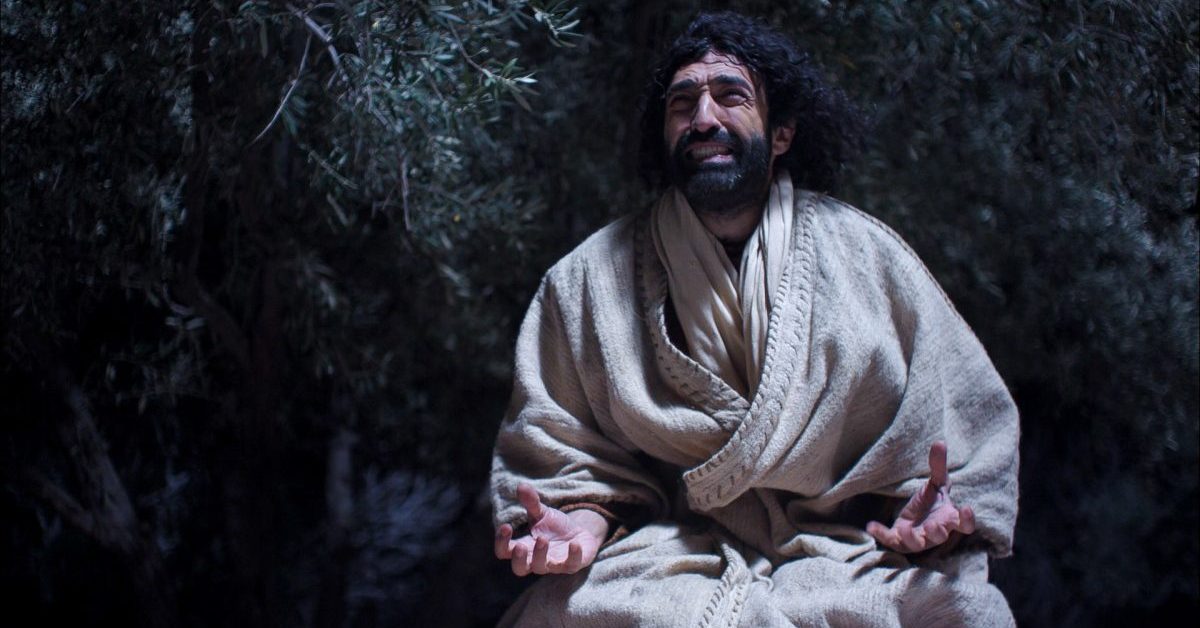
Jesus asks three times that the Father would take away the cross from him. He says first,

My Father, if it is possible, may this cup be taken from me. Yet not as I will, but as you will. (Matthew 26:39)

This was no calm, serene prayer. So troubled was he that he fell to the ground praying to the Father. (Mark 14:35)

So stressed was he that he sweated blood. (Luke 22:44)

So often we think of Jesus as being perfectly calm and collected at all times. This was certainly not true at that moment.

God knew his feelings. God sympathized. God cared for and loved his Son. But God said no.

Knowing this, when Jesus started to pray again, he said,

My Father, if it is not possible for this cup to be taken away unless I drink it, may your will be done. (Matthew 26:42)

Still, I have to think that he continued to pray that God would provide another way.

But each time, God said no.

What can we get from this? I think there are several things.

There are people out there, Christian people, who claim that if you just have enough faith, God has to do what you ask.

But if we are going to claim that, then we have to say that Jesus didn’t have enough faith.

Are we going to condemn the Son of God for not having enough faith? I don’t think any rebuttal to that notion is needed.

The truth is that there are times when our will is not God’s will.

God is not a genie that we should make his will bend to ours. Rather, we need to bend our will to his. And that’s exactly what Jesus did.

Rather than insisting on his will, he conformed his will to the Father’s. We need to do the same.

And faced with his no, we need to do as Jesus did at the end of this story. Rise up, go, and do the Father’s will.

But when we make that decision, know that you are not alone. You don’t have to face your situation alone. Jesus didn’t.

In the midst of his struggle, in the midst of his agony in the garden, God sent an angel to comfort and strengthen him. God will do the same for you.

I actually think we can say more than that. Through his Holy Spirit, God himself will comfort us. That in fact, is one of the names of the Holy Spirit: the Comforter. (John 14:16—KJV)

And as I mentioned in an earlier blog, Paul tells us in Romans 8 that when we are weak, he intercedes for us in accordance with God’s will.

Because of that, we can have confidence that God will work out everything for our good. (Romans 8:26-28)

So what do we do when God says no?

Trust him. Trust that his way is better than your way. Trust that he will see you through whatever you’re going through.

Then rise up, go, and continue to do the things he has asked of you.

Categories
Luke Luke 11 Matthew Matthew 6

Sermon on the Mount: His Kingdom, His Will

I was in a quandary this morning. I was asked in for an interview for a job that would be higher paying and have better benefits than the one I have now. Whether I’ll get it or not, I don’t know.

My current company, however, seemed to be doing whatever they could to prevent me from going to the interview. They denied me a day off, for reasons that were not clear, and so I was trying to find a way to go to the interview without breaking conscience.

In the end, by God’s grace, everything worked out. With the vice-principal’s and head English teacher’s help (I work at a junior high school), I was able to convince my employer to give me a half-day off for which I’m truly grateful.

As for whether I’ll get the job or not, we’ll see.

What does this have to do with this blog? Well, we’re praying, “Your kingdom come. Your will be done on earth as it is in heaven.”

I’ll be honest. I was very stressed this morning. I felt like I was being treated “unfairly” as I mentioned several blogs ago. And as I said then, I couldn’t control my circumstances. All I could control was my attitude, and it was difficult.

But in the end, I had to say, “Lord, your will be done.”

I didn’t know what my current employer would say when I went to work this morning, and even now, I don’t know if I can even get this job I’m interviewing for.

But I’m praying, “Your will be done on earth as it is in heaven. Your will in heaven is perfectly done. I pray that it would be perfectly done on earth, and especially right now, in this situation.

If you want me to get this job, work everything out. If not, help me to accept your will.”

But another part of this prayer is “Your kingdom come.”

As important as getting this job is to me, my first priority needs to be his kingdom.

Honestly, I feel I can do more for God’s kingdom with this job. I’d have more time to do the things I think God wants me to do, to go along with the better pay and benefits.

I read further than this passage today, I will admit, because I was reading where Jesus was saying not to be anxious about this life.

And the thing that caught my eye was Matthew 6:33, where he says to seek God’s kingdom first. And if we do that, everything will fall in place.

Like I said, I don’t know how things will fall out. But as God gives me grace, my prayer is, “Your kingdom come, your will be done. In my life. And in the world around me.”

Lord, you know my stress. You know my worries. But you are Lord of all. Lord of my employer. More importantly, Lord of me.

Let your will be done. In my job situation. With my future. And let me always keep in focus your kingdom above all things. In Jesus’ name, amen.

Categories
Song of Solomon

Still captivated

As I look at these passages, I can’t help but think of the words of Solomon when he wrote,

May you rejoice in the wife of your youth.  A loving doe, a graceful deer — may her breasts satisfy you always, may you ever be captivated by her love.  (Proverbs 5:18-19)

And that’s what you see in these passages.

Though some time has passed since the wedding, Solomon is still captivated by his wife.

If anything, he is even more captivated.  Along with the metaphors that he used previously to describe his love for her, he adds more.

He compares her to the cities of Tirzah and Jerusalem.  (Song of Solomon 6:4)

Just as it takes time to explore a city to discover all its glory, so it takes time to explore your spouse, and all the depths that make them what they are.  It is in fact, a lifelong process.

He tells her that when he looks into her eyes, they still overwhelm him.  (5).

After years of marriage, I can say the same when I look into my wife’s eyes and see the love that she has for me there.

He calls her his perfect one.

I think that as time passes, we can see that our spouses are not perfect.  But the eyes of love are willing to overlook their faults.  Indeed, the eyes of love often cause people to rise above what they are.

Some look at verse 8 and conclude that Solomon must have had other wives and concubines by this time, and that may be true.

It’s also possible that at this time, he was still monogamous and was simply throwing out a hypothetical situation (though one wishes it had remained hypothetical).

The main point, though, was of all the women in his life, she had a special place in his heart.

Men may have different women in their lives, mothers, daughters, sisters, and friends.  But as God intended it, his wife is to trump them all.  She is to take priority over all other women in his life.

Even when Solomon went out to conduct business, he found his thoughts drifting back to his wife, and they soon had him in his chariot racing back to her (11-12)

That should be a husband’s attitude.

Certainly, work is necessary, and hopefully enjoyable.

But his desire for his wife should outweigh his love for his work.  If we love our work more than our wives, this is never a good thing.

The same can be said for the working woman concerning her husband.

How about you?  Are you still captivated by your spouse?

It’s not simply an ideal.  It’s certainly not intended to be just a dream awoken by “reality.”

It’s what God intended for you and your spouse from the beginning.

Categories
Proverbs

Aligning our will with God’s

Often times, we try to invite God to join in with what we’re planning.  But one thing that is crystal clear from this passage is that this the wrong way to go about living our lives.

We shouldn’t be inviting God to join in with what we’re planning.

Rather, we should be asking God what he’s planning and how we can join in with him.

Solomon knew this well, and he wrote,

To man belong the plans of the heart, but from the LORD comes the reply of the tongue.  (Proverbs 16:1)

And again,

In his heart a man plans his course, but the LORD determines his steps.  (9)

We can make all the plans we want to, but the final answer belongs to God.  And if our plans aren’t aligned with his, they are doomed to fail.

Solomon goes on to say,

All a man’s ways seem innocent to him, but motives are weighed by the LORD. (2)

More than that,

There is a way that seems right to a man, but in the end it leads to death.  (25)

Sometimes we even deceive ourselves as to our motives for doing things, and we make our plans because they seem right to us.

But God sees to the very heart of why we do things.  And though we may feel that our plans are good, they can actually cause us great harm.

So when we make plans, we should be asking him, “Search me and know my heart.  Why am I making these plans?  Are they truly from you, or are they merely from me?”

Solomon expounds on this idea saying,

Commit to the LORD whatever you do, and your plans will succeed. (3)

Again, this doesn’t mean making our plans and saying, “Okay God, please join in with this plan I’ve made, and bless what I’m doing.”

Rather, in everything we do, we need to submit to his Lordship, asking “Is this your will?  Is this what I should be doing?”

Only when we and our plans are fully submitted to him, can we be assured that our plans will be successful.

For as Solomon said,

The LORD works out everything for his own ends – even the wicked for a day of disaster.  (4)

God is never surprised by anything that happens.  He is never taken aback by the choices we make.

He knows every choice people will make, and has plans for every contingency. His plans are never truly disrupted by ours. 

But ours can be disrupted if they’re contrary to his.

So what do we do?  Humble ourselves and ask God what he would have us do.

So many people think they are wise enough to make their own decisions without God, but Solomon writes,

Pride goes before destruction, a haughty spirit before a fall.  (18)

On the other hand,

Whoever gives heed to instruction prospers, and blessed is he who trusts in the LORD.  (20)

How are you living your life?  Are you making plans and then asking God to bless them?  Are you trying to align God to your will?

Or are you aligning yourself to God’s?

Categories
Esther

Working because of us or in spite of us?

As I was looking through one of my commentaries getting background for the book of Esther, one of them mentioned some of the moral issues people have had as they studied this book.

It also noted that the name of God is not mentioned once in the entire book and addressed some of the possible reasons why.

One possible reason was that it was written as an explanation to the Persians for the Feast of Purim, and that they were not so interested in the religious aspect of things.

Another interesting reason that the commentary proposed was that perhaps God really wasn’t actively involved in this entire episode.

Rather it was showing how people were trying to do things in their own wisdom and strength while pushing God to the side.

This wouldn’t be the first time we see this in the Bible.

Certainly, most of the book of Ecclesiastes was that way.  But you also see this in the life of King Saul, and even people like Abraham, Isaac, and Jacob.

Looking at the book as a whole, I’m not convinced that God was not involved.  I personally think he was.

The question then becomes, did he sanction every action that Esther and Mordecai took?  And that, I’m not entirely certain of.

Chapter 2 includes some of my biggest concerns.

One question is how voluntary was Esther’s decision to become part of the “contest” to become queen?

Did she have a choice?  Did Mordecai push her in that direction?

If so, there is a serious issue in that God forbade this kind of marriage to heathen people.  We will see this later in the book of Ezra.

It should also be noted that once she was in this “contest,” there was no getting out even if she didn’t win.

After spending the night with the king, if she didn’t find favor with him, she would become one of the concubines of the king for life, even if she never saw him again.  And she probably would never see him again.

This is hardly the kind of situation they should have been aiming for.

If it wasn’t voluntary, then why did Mordecai insist that she hide her identity?

The only thing I can think of is that he wanted her to become the queen, and being a Jew would be a hindrance to that.

But did he really want her to be queen, considering God’s feelings on intermarriage with ungodly people?

If she had been up front with the Persians, it might have been possible she would’ve been dismissed before even seeing Xerxes, thus escaping becoming his wife, or being put into his harem.

Some might say, “But if she hadn’t become queen, the Jews would have been slaughtered.”

But there’s two points that should be made here.

Mordecai makes it crystal clear to Esther in chapter 4 that if she did nothing, deliverance for the Jews would come from somewhere else.

Wouldn’t that equally apply to the situation in which Esther did not become queen?

Second, if she had been up front with her background, would Haman still have plotted to destroy the Jews knowing that the queen was one?

My point is this:  Is God working in us because we are in line with his will?  Or is he working in us in spite of our decisions?

Like I said, I do believe God was working in the situation.  And since Esther was already queen, I think he chose to use her.

But I’m equally convinced that had she not been queen, he would’ve worked out the Jews’ deliverance another way.

Am I then trying to disparage Esther and Mordecai, saying that they were terrible people?

No.  They were probably people who were trying to do their best in bad circumstances.

But just because they were doing their best doesn’t mean they were always doing what was right.

And in this case, they were probably doing what was right in their own eyes, rather than God’s, just as the people in the book of Judges did (Judges 21:25).

What can we get from all this?  Be careful about what you do.

Judge everything you do by God’s Word.  Judge things by what he says is right, and not by what you think is right.

You may justify what you do by your circumstances.  You may even point to the fact that God used you to do something good.

But again, the question is, did he use you because you were in line with his will, or in spite of the fact that you weren’t?

Categories
Genesis

God’s blessing, God’s will

Very interesting interaction between Joseph and his father Jacob here in Genesis 48.

His father is dying and calls in Joseph and his sons in order to bless them. But Jacob can’t see very well, so Joseph puts Manasseh, his older son, on Jacob’s right, and Ephraim, his younger son, on Jacob’s left.

The custom in those days was to put the person of greater honor on the right side and the person of lesser honor on the left, and so Joseph wanted Jacob to know that it was Manasseh who should get the greater blessing.

But Jacob crossed Joseph up, literally. He crossed his arms and put his right hand on Ephraim and his left hand on Manasseh, and blessed them that way, giving the greater blessing to Ephraim.

When Joseph saw this, he immediately tried to stop Jacob, saying “No, no, no. You’ve got it wrong, Father. Give your greater blessing to my older son.”

But Jacob just said, “No, I know what I’m doing. Manasseh will become a great people, but Ephraim will become greater.” And he blessed the two sons.

There is some sense of irony here.

I can’t help but think that Jacob was recalling his own life, where his mother was told by God that Jacob, the younger son, would become greater than Esau, the older son, despite the hopes that Isaac had for Esau. And now, Jacob was telling the same thing to Joseph.

There are two points about God’s blessing and God’s will here that I think can be pointed out.

First, God’s blessing in our lives has nothing to do with our position in life, or how people perceive us.

In Joseph’s family, Manasseh had been treated with greater honor because he was the older son. But God had other plans. It was his will that Ephraim have prominence.

Maybe you look down on yourself because you don’t think you’re so special. “I don’t have any special talents or skills. I’m a nobody. I just work at McDonalds. I’m just a housewife. I just have a boring 9-5 job. Why would God want to bless someone like me?”

Maybe you were always being compared to your brother or sister by your parents and you were always finding yourself being found wanting. “Why can’t you be more like your brother?” “Why can’t you be more like your sister?”

Maybe you weren’t so popular in school, and even now you don’t seem to have many friends.

But God doesn’t care about all that. He doesn’t care about what others think of you. He doesn’t care about your position in life. He cares about you. And he wants to bring blessing in your life. Jesus said in God’s kingdom,

Indeed, there are those who are last, and first who will be last. (Luke 13:30)

Jesus was talking to the Jews who thought that they had a special position in the world as God’s people, but Jesus told them that when God’s kingdom came, people from all over the world would be there, not just the Jews.

And Jesus told them that at that time, some Jews who thought they were so special would be humbled, while some of the ones they looked down upon would be honored.

In a broader perspective, there are people that are in low positions and are looked down upon now, but they will be blessed and exalted, while there are people that are in high positions now that will be humbled.

So don’t think that you’re exempt from God’s blessing just because of your position in life, what your skills or talents are, or how people perceive you. As you follow Jesus, and live your life for him, he will shower you with his blessings.

But there’s another point to be made about God’s will. It doesn’t always coincide with ours. Joseph had his own plans for his sons, as had Isaac. Both had planned for their older sons to be the prominent members of their family. But that wasn’t God’s will.

So often we’re like Joseph, who when Jacob tried to express his will, said, “No, no. You’ve got it all wrong. Do it this way.” But Jacob said, “No, that’s not how it’s going to be.”

And God sometimes does the same thing with us. We have our own plans for our lives. And when God tries to do something different, we tell him “No, you’ve got it all wrong. I want things this way.”

But as Proverbs 16:9 says,

In his heart a man plans his course, but the LORD determines his steps.

And so we can either fight God and try to do things our way, or we can trust him and do things his way. But it’s as we give in to him, that we find blessing in our lives.

I mentioned before that for a long time I fought God’s will for me in my life that I come to Japan. But it was when I gave in, that I found God’s blessing in my life.

Do you want God’s blessing in your life? Remember that it doesn’t matter who you are or how people perceive you. God wants to bless you.

But also remember that his will isn’t always ours. And if we truly want his blessing in our lives, we need to trust and follow him.