Categories
Genesis Devotions

You are the God who sees me

To the outcast on her knees, you were the God who really sees. — Michael Card

Father, you are El Roi. You are “the God who sees me.”

You are Lahai Roi. You are “the Living One who sees me.”

But you are not a God that just observes me from afar.

You know my name.

You hear me and my cries of affliction.

And you are the One who searches me out and finds me.

Though the Lord is exalted,
he takes note of the humble…

The Lord will fulfill his purpose for me.
Lord, your faithful love endures forever…” (Psalm 138:6, 8)

Categories
Genesis Devotions

The God who sees and comforts

It’s always amazing to me how I can read something in the Bible over and over and never really notice its significance.

I’ve read this passage hundreds of times before, but today, this verse stuck out at me:

Now Isaac was returning from Beer-lahai-roi, for he was living in the Negev region. (62)

A pretty inconspicuous verse, right?

But that name “Beer-lahoi-roi” rang a bell with me. And I suddenly realized that it was the same place where God had met Hagar years earlier when she had been running away from Sarah. (Genesis 16)

And after her encounter with God, she called him, “El-roi”, “The God who sees me.” The name “Beer-lahoi-roi” means “the well of the Living One who sees me.”

Perhaps as Isaac was wandering out there, he was praying, “God, you were with Hagar when she was pregnant with my brother Ishmael. You saw her when she was hurting. Will you now be with me in my hurt? My mother has died. And right now, I am feeling incredibly lonely.”

And God was. In his gracious provision and impeccable timing, God brought Rebekah to Isaac. It says at the end of this chapter,

And Isaac brought her into the tent of his mother Sarah and took Rebekah to be his wife. Isaac loved her, and he was comforted after his mother’s death. (67)

Christmas season is usually a happy time. But it can also be a hard time for many people, especially if you have lost someone you loved this year.

But remember that God is “El-roi”, the God who sees you.

And remember that Jesus is “Immanuel,” God with us.

So if you’re struggling right now, turn to him.

God is the Father of mercies, and the God of all comfort who comforts us in all our affliction (2 Corinthians 1:3-4).

And through whatever pain you may be feeling, his Son is right there by your side.

For a child will be born for us,
a son will be given to us,
and the government will be on his shoulders.

He will be named
Wonderful Counselor, Mighty God,
Eternal Father, Prince of Peace. (Isaiah 9:6)

Categories
Genesis Devotions

The God who hears. The God who sees.

Here in this passage, we see two names that describe God.

Ishmael: God hears.

El-roi: God sees me.

That’s who God was to Hagar.

And it wasn’t like she deserved it. She messed up badly, and so she was forced to run away.

But God heard her.

God saw her.

And he went chasing after her in the desert.

That term “angel of the Lord” is very interesting.

Sometimes it refers to a mere angel.

But the word “angel” itself means “messenger.”

And sometimes it seems that messenger spoke as if he were God himself.

He does so here:

The angel of the Lord said to her, “I will greatly multiply your offspring, and they will be too many to count.” (10)

Some Bible scholars think this messenger may have been Jesus himself, hundreds of years before he appeared on earth as a baby.

And to Hagar too, Jesus was Immanuel: “God with us.”

The God who sees. The God who hears.

Like Hagar, you might be in a spiritual desert right now. Like Hagar, it might be your own fault.

But God is not giving up on you. He’s chasing after you.

He sees.

He hears.

He is and will always be…Immanuel.

Categories
Galatians

Children of promise

In this passage, Paul makes a very interesting allegory to drive home a simple point: We are children of God based on His promise, not children of God based on our keeping his law.

He talks about the story of Hagar and Sarah found in Genesis 16-21.

God had promised to give Abraham a son, but after years of waiting, Abraham and Sarah had started to lose hope that God would keep his promise.

So Sarah suggested that Abraham have a child through her slave Hagar (something atrocious to us, but perfectly normal back in those days).

Through Hagar, Abraham got his first son, Ishmael. But this was a son that came not based on the promise of God and his provision. Rather, it was based solely on human efforts.

Later though, Sarah did give birth to a son named Isaac. His birth was a total miracle, a total act of God, as Sarah was 90 years old when she gave birth.

And it was through Isaac, God told Abraham, that He would keep his promise to make Abraham into a great nation.

Paul then says those who try to be justified by the law are symbolized by Hagar and her son Ishmael. They are not trying to receive the blessing of God based on God’s promise and God’s work. Rather, they are trying to achieve it through their own human effort.

But there’s a problem with this. Children born of a slave are slaves themselves. So people who try to be “children of Hagar,” justified by their own human efforts, will in reality only find themselves enslaved by the law of sin and death.

In other words, the law can’t save them at all. All it does is point out their sin and condemn them to death. (Galatians 4:24-25)

On the other hand those who are trying to be justified before God by his grace are like Isaac, children and heirs of God based on God’s promise and God’s work.

Because of that, we are no longer enslaved by the law of sin and death. We have been set free and are now true children of the most high God. (Galatians 4:26-28)

But just as Ishmael, the child born of human efforts, persecuted Isaac, the child born of God’s promise, so the Judaizers persecuted the Christians.

In particular, the Judaizers tried to shut out the Galatian Christians until they agreed to put themselves under slavery to the law like the Judaizers were. (Galatians 4:29)

So Paul speaks very strongly here:

What does the Scripture say? “Get rid of the slave woman and her son, for the slave woman will never share in the inheritance with the free woman’s son.” (Galatians 4:30)

In short, “Get rid of these false teachers. They are children of the slave. And they will never share in your inheritance. They have no part with you. They are trying to exclude you when the reality is that it is they who are excluded.”

And then he reemphasizes,

“Therefore, brothers, we are not children of the slave woman, but of the free woman.” (Galatians 4:31)

He then charges them,

“It is for freedom that Christ has set us free. Stand firm, then, and do not let yourselves be burdened again under a yoke of slavery.” (Galatians 5:1)

Let us never forget that. Christ set us free from the law, not so that we would go under it all over again, but that we would truly be free from it forever.

He set us free so that we could live as children of God, knowing that we are already accepted by Him, and not worrying about whether we are good enough.

How about you? Are you living with the peace and joy of a child of God? Or are you still living like a slave burdened by all the rules of religion?

Categories
Genesis

The God who sees; the God who hears

“God sees what you’re doing! God knows! You can’t hide from him!”

All of these words can have an ominous tone behind them. It’s as if God is just waiting in heaven, looking for the next person to mess up so that he can zap them.

But what’s interesting in this passage to me is that God doesn’t reveal himself as that way at all.

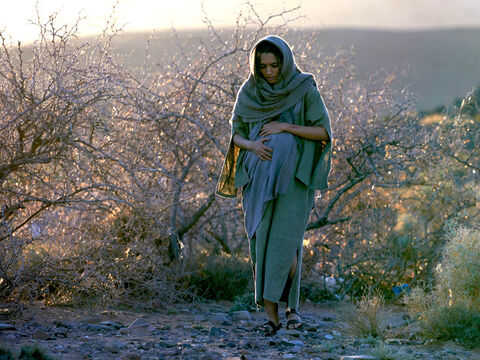
Hagar really messed up. She was given to Abraham by Sarai in order to continue the family line, when Sarai couldn’t have children.

But when Hagar became pregnant, she started to “despise” Sarai. She looked down on her. Perhaps she even mocked her inability to get pregnant in 30–40 years while Hagar became pregnant in just one.

And so Sarai started to mistreat her. What does that mean? Perhaps she started using cutting words of her own. Perhaps she used violence. But whatever she did, life became so unbearable for Hagar that she fled.

Certainly Sarai was wrong. But Hagar helped bring all of this upon herself by her own attitude and actions.

And yet, when God confronted her, he didn’t scold her. He didn’t punish her for her attitude or actions. He didn’t say, “You got what you deserved.”

Instead, he showed concern for her. He said, “Where have you come from? Where are you going?”

And when Hagar said, “I’m running from my mistress,” God didn’t demand the whole story from her. He didn’t beat a confession out of her.

Instead, he simply said, “Go back to your mistress and submit to her. You were wrong to do what you did. So go back, apologize, and stop doing what you were doing. If you do, everything will be all right.”

And then he added,

I will so increase your descendants that they will be too numerous to count… You shall name [your son] Ishmael, for the Lord has heard of your misery. (Genesis 16:9–11)

Basically God said, “Hagar, I know of your troubles; I know you brought them on yourself, but let your son always be a reminder that I am the God who hears you” (Ishmael means “God hears”).

What was Hagar’s response?

She gave this name to the LORD who spoke to her: “You are the God who sees me,” for she said, “I have now seen the One who sees me.” (Genesis 16:13)

For Hagar, the fact that God sees and God hears was not a thing to be worried about. It was not a thing to be feared.

Rather she learned that this God who sees us and hears us does so in order to show us mercy, if we’ll just yield to him and his voice.

As the old song by Michael Card goes,

To the outcast on her knees, you were the God who really sees.

Maybe you feel like you’ve failed. Maybe your life is a mess because of the bad choices you made. Remember that God sees you. Remember that he hears you. And remember that he longs to show you mercy as he did to Hagar.