Categories
Numbers Devotionals

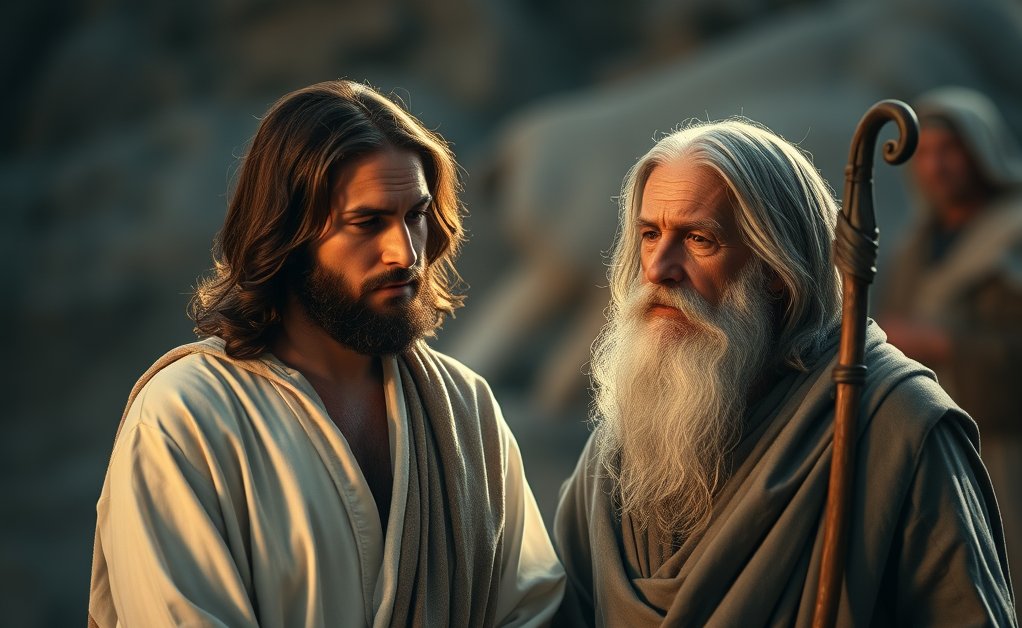
That I might honor you

Listen to what I say: If there is a prophet among you from the Lord, I make myself known to him in a vision; I speak with him in a dream.

Not so with my servant Moses; he is faithful in all my household. (Numbers 12:6–7)

Therefore, holy brothers and sisters, who share in a heavenly calling, consider Jesus, the apostle and high priest of our confession.

He was faithful to the one who appointed him, just as Moses was in all God’s household.

For Jesus is considered worthy of more glory than Moses, just as the builder has more honor than the house…

Moses was faithful as a servant in all God’s household, as a testimony to what would be said in the future.

But Christ was faithful as a Son over his household. And we are that household. (Hebrews 3:1-6)

Lord Jesus, Moses was faithful in the Father’s household as a servant. As such, he was worthy of glory and honor.

But you were faithful in the Father’s household as a Son. And because of that you are worthy of even more glory and honor than Moses.

So let me honor you in all my words and my actions. You are worthy of my obedience and respect.

Forgive me for the times I fail to honor you in that way.

Thank you for continuing to be my high priest who faithfully intercedes for me despite the times I fail to honor you. Thank you for your awesome grace. In your name I pray, amen.

Categories
Revelation

Honoring our King who sits on the throne

“I am a friend of God,” says one contemporary worship song.

“We are children of God,” proclaims the apostle John in one of his epistles. (I John 3:1)

And yet while both are true, one thing that we should never forget is that he is also our king. And he is worthy of our honor and our praise.

Here in Revelation 4, we step into the very throne room of God, and we see God in all his glory as king.

As is often the case when people try to describe God, John finds it impossible to describe Him in detail. All he can do is give us glimpses of His glory, comparing Him to precious stones such as jasper and carnelian, and emerald. (3)

Not to say that God is a gem, of course, but that His glory radiates with great beauty.

John then tells us that from his throne came flashes of lightning, rumblings, and peals of thunder which recall the awesomeness of God’s power which the Israelites witnessed on Mount Sinai. (Exodus 19:16)

And before the throne were 7 blazing lamps or torches. (5)

Back in those days, torches were set before rulers to show their authority. But John tells us these lamps also symbolize the “seven spirits of God,” which we saw in chapter 1 probably refers to the Holy Spirit.

Leading up to the throne was a sea of glass, like crystal. It’s not clear whether this is an actual sea that John sees or it’s a pavement of glass that sparkled like crystal (NLT). Either way, imagine approaching God on that.

Before you even get to God, you have to go past some beings which are glorious in their own rights.

First are the 24 elders on their thrones.

People dispute who they are, but my guess is that they are a high order of angels, who also perhaps represent the 12 tribes of Israel and the 12 apostles joining as one people before God.

They are dressed in white, showing their holiness, and have crowns on their head, perhaps showing the authority they have.

Second are four living creatures which seem to merge the characteristics of the angels called cherubim (Ezekiel 1:5-14; Ezekiel 10), and seraphim (Isaiah 6:2-3).

These creatures are also angels of high order who would later help execute God’s judgment on the earth.

John says one was like a lion, another like an ox, the third like a man, and the fourth like a flying eagle. Perhaps they represent all of creation serving and praising God, the wild (lion), the domesticated (ox), humanity, and the birds (eagle).

It’s also possible they represent God’s majesty (lion), strength (ox), intelligence (man), and loving care (eagle — see Exodus 19:4).

But the thing that stands out to me, is that as awesome as these beings are, they all bow in worship to God.

The four creatures cry out day and night,

Holy, holy, holy, is the Lord God Almighty, who was, and is, and is to come. (Revelation 4:8)

And as they do so, these mighty elders, rulers in their own right, throw their crowns before the God who gave them their authority singing,

You are worthy, our Lord and God, to receive glory and honor and power, for you created all things, and by your will they were created and have their being. (11)

What can we get from all this?

First and foremost, that though God is our father and our friend, he is also the king upon the throne. He is the almighty God. And he is worthy of our worship.

Sin comes when we refuse to recognize this one all-important fact.

Second, he is the king, and he is in control.

Although this world sometimes seems out of control, and things will go from bad to worse as we will see later in Revelation, God is on his throne, and nothing happens apart from his will. And ultimately, he will triumph, to his praise and glory.

Amen. Come soon Lord Jesus.

Categories
Hebrews

What Christmas is all about (part 2)

What’s wrong with the world today? Until we answer that question, we can’t really answer what Christmas is about. And that’s what the author of Hebrews addresses here.

He says in verse 5 that in the world to come, when all things are made new, the earth will not be made subject to angels, but to the human race. And like the psalmist, he marvels, saying,

“What is man that you are mindful of him, the son of man that you care for him?

You made him a little lower than the angels; you crowned him with glory and honor and put everything under his feet.” (Hebrews 1:6-8)

Here it seems the psalmist and the writer of Hebrews is speaking not of Jesus, but of people.

They both marvel at the grace of God that though we are but dust, lower at this time than the angels, that the day will come when we will be crowned with glory and honor, and rule over all things, even the angels.

Paul told us in 1 Corinthians 6:3 that the day will come when we will even judge the angels.

That’s what God meant for us from the very beginning. When he created Adam and Eve, he said,

Be fruitful and increase in number; fill the earth and subdue it.

Rule over the fish of the sea and the birds of the air and over every living creature that moves on the ground. (Genesis 1:28)

And the writer of Hebrews says,

In putting everything under him, God left nothing that is not subject to him. (8b)

And yet. Is that how things really are? The writer continues,

Yet at present we do not see everything subject to him. (8c)

Why not? Because of sin.

Sin is what’s wrong with the world. Sin corrupted everything. It broke our relationship with God. It broke this world. And it broke us. Because of that, we see natural disasters, disease, and death.

And that’s why Jesus had to come.

The writer continues,

But we see Jesus, who was made a little lower than the angels, now crowned with glory and honor because he suffered death, so that by the grace of God he might taste death for everyone. (9)

Jesus left heaven, and became one of us. He lived among us, taking our form that was lower than the angels. A form that was mortal. A form that could get sick and die.

But through his death on the cross, he paid for our sin so that we would not have to pay for it ourselves.

And now, Jesus is crowned with glory and honor. He has become the “author of our salvation.”

That word “author” is now translated in the new NIV, “pioneer.”

Jesus went ahead of us, living a perfect life, and then suffering and dying for us. And now we follow the path of salvation he blazed for us.

We don’t have to find the path to salvation. The path has already been made. He’s done all the hard work. All we have to do is trust in and follow after him.

Why did Jesus come to this earth as a baby 2000 years ago?

Since the children have flesh and blood, he too shared in their humanity so that by his death he might destroy him who holds the power of death–that is, the devil–and free those who all their lives were held in slavery by their fear of death. (14-15)

But not only we have been set free from the power of sin and death, now the way has been paved for us to be crowned with glory and honor and to rule this world as coheirs with Christ as God intended from the very beginning.

That’s what Christmas is all about.

So this Christmas, let us praise God not just for what he did 2000 years ago in Bethlehem, but praise him for what he is doing now, and what he will do in the world to come.

Categories
1 Timothy

Supporting and honoring our pastors

Pastors are not perfect. And because they’re up on the pedestal at church, they often become easy targets for criticism.

More, far too often, we neither honor nor support them the way that God commands us to.

And God does command us to do this.

Paul wrote,

The elders who direct the affairs of the church well are worthy of double honor, especially those whose work is preaching and teaching. 

For the Scripture says, “Do not muzzle the ox while it is treading out the grain,” and “The worker deserves his wages.” (1 Timothy 5:17-18)

Paul tells us here how we are to look upon our pastors and elders in the church. We are to consider them worthy of not just honor, but double honor. We are to respect them and support them.

How are we to support them? With our prayers, first and foremost, but also with our encouragement. And with our finances.

Sometimes people argue that tithing is not a New Testament command. I happen to agree with that.

But most people who make such arguments usually stop there and say, “Therefore I have no obligation whatsoever to support my church financially.”

But Paul makes it crystal clear that is not true. He says you do have an obligation to support your pastor financially.

Put it this way.

If your pastor is forced to work an outside job in order to support his family (remember that Paul said in verse 8 that a person that fails to do this is worse than an unbeliever), how much time can he put into the message on Sunday?

How much time can he put into counseling those who are hurting?

How much time can he put into all the pastoral duties God has given him? Not much.

And yet one of the main complaints that people in the church have is that their pastor is not fulfilling his obligations.

If you’re making that complaint, let me ask you: “Are you supporting your pastor financially so that he can?”

More, are you supporting him in other ways? Are you praying for him? Are you encouraging him with your words? Are you seeking to take the burden off of him by actually participating in ministry so that he doesn’t have to do everything himself?

Or are you just simply sitting in church waiting to be ministered to?

The church is a body. Each person has a part in it. Are you playing your part?

Now don’t get me wrong. There are times when a pastor is to be criticized. Paul will go into that later. But there are fair criticisms and unfair ones.

And among the unfair ones are criticizing him for not doing all you feel he should be doing, when you’re not doing all that you’re supposed to be doing.

So before you start criticizing your pastor, look at yourself. Are you honoring and supporting your pastor? Are you doing everything you can to make his job easier?

Or are you just sitting on your chair at church, taking potshots at him?

Where is your heart?

Categories
2 Corinthians

A people that are an honor and glory to Christ

In this last section, Paul talks about the measures that he is taking to make sure that the offering he is collecting for the poor in Jerusalem is completely above board, that no one would be able to criticize him.

In doing so, he talks about the people that were chosen to be in charge of collecting the money and carrying it on to Jerusalem.

Among them were Titus and two unnamed brothers, one who was well known for his preaching of the gospel, and the other a man who had proven zealous in his work for the Lord.

Paul says of them,

As for Titus, he is my partner and fellow worker among you; as for our brothers, they are representatives of the churches and an honor to Christ. (2 Corinthians 8:23)

The word “honor” is often translated “glory” as well. So Paul was also saying of these men that they were a glory to Christ.

What does that mean? I think it means these men by their very lives brought glory and honor to the name of Christ.

They did so by their zeal for him. They did so in the preaching of his word. And they did so in the love and concern that God had placed in their hearts for others.

As I read this, I ask myself, “Am I an honor to Christ? Do I bring glory to his name by my words and by my actions?

Am I zealous for him? Am I bringing his words to those who need to hear them? And is my heart filled with the love and concern God has for others?”

I hope that I am. I realize I’m not perfect. But I don’t want to do anything that would put a stain on the name of Christ.

How about you? Are you an honor to Christ? Do you bring glory to his name?

Categories
John John 13 Luke Luke 22 Mark Mark 14 Matthew Matthew 26

Betrayal

As I’ve mentioned before, harmonizing these passages is a little tough.

One question is whether Judas participated in the first communion. Luke seems to imply so, while the other gospel writers seem to say Judas didn’t.

It’s just my opinion, but I believe Judas was there, and that the other writers, for whatever reason, didn’t keep things in chronological order.

At any rate, in these passages, Jesus dealt with his betrayer Judas.

There are some interesting things to note here.

While it was John who sat on one side of Jesus (assuming that he is “the one Jesus loved,” there seems to be a good chance that it was Judas that was on Jesus’ other side. It seems hard to believe that Jesus could say what he did to Judas without the others hearing unless this were so.

Unlike most pictures you see of the Last Supper, Jesus and his disciples did not sit in chairs. They sat on couches.

And when they reclined, they didn’t lean back, rather they leaned to the side, resting on their left elbow, right near the bosom of the person on their left.

Thus, it seems John was on Jesus’ right, and Judas on Jesus’ left.

Like I said before, to be seated next to Jesus at the table was an honor to the people there. And Jesus let Judas sit next to him. In short, he honored Judas.

Yet despite all of this, Jesus never fooled himself concerning Judas’ true nature. He told the disciples,

I tell you the truth, one of you is going to betray me. (John 13:21)

This of course, shocked all the disciples, and they started to ask Jesus one by one, “Is it I?” Judas himself asked “Surely not I, Rabbi?” (Matthew 26:25)

Perhaps Judas thought he had fooled Jesus. But Jesus whispered to him, “Yes, it is you.”

Imagine the look of shock that must have come on Judas’ face. He was totally exposed. Perhaps he was afraid that Jesus would now denounce him before his disciples and have him killed.

At about that time, Peter nudged John and said, “Ask Jesus who he’s talking about.” (John 13:24)

When John did, Jesus replied, “It is the one to whom I will give this piece of bread when I have dipped it in the dish.” (John 13:26)

He then (in the eyes of the other disciples watching) honored Judas once again by offering a morsel of bread to Judas.

To everyone except John, they must have been thinking, “Wow, Judas is more special than we thought!”

Judas himself must have been wondering at all this honor that Jesus was bestowing upon him. Maybe he thought he had misunderstood Jesus. Then Jesus told him,

What you are about to do, do quickly. (John 13:27)

And Judas quickly realized that Jesus knew exactly what was in his heart. And he went to betray Jesus.

What can we learn from this? Two things.

There are people that will betray us. That will hurt us. And it is easy to get bitter against them. To dishonor them as they have dishonored us.

But just as Jesus honored his betrayer, we are to show the same kind of honor and respect to them.

At the same time, however, we should know exactly what kind of person they are. We should not deceive ourselves about their nature. And we should protect ourselves from them.

When you look at the life of Jesus, he always did this. When people sought to kill him, he got out of there. The only time he didn’t was with Judas, and that was because it was his whole purpose to die. His time had finally come.

But God generally does not call us to submit to abuse from others if we don’t have to. Stay away. Keep your distance.

And if that’s not possible for some reason, keep your armor up around them. The chances of them hurting you deeply is much less if you have not fooled yourself concerning their character.

That said, we are called to forgive them. And even more, to treat them with respect and honor. As Peter wrote,

Do not repay evil with evil or insult with insult, but with blessing, because to this you were called so that you may inherit a blessing. (1 Peter 3:9)

Categories
John John 7

Who are we serving?

As I was reading through this passage yesterday, these verses really struck me, particularly as a teacher of God’s Word.

My teaching is not my own. It comes from him who sent me.

If anyone chooses to do God’s will, he will find out whether my teaching comes from God or whether I speak on my own.

He who speaks on his own does so to gain honor for himself, but he who works for the honor of the one who sent him is a man of truth; there is nothing false about him. (John 7:16-18)

The question I ask myself is, “Where is my teaching coming from? Is it coming from myself? Or is it coming from God?

“Why do I speak? Is it for my own honor that people might be impressed by me? Or is it for the glory of God?”

As Christians, we are to be people of truth with nothing false about us. Not just the pastors and teachers, but all of us.

But if we are to be people of truth, we need to be clear on who we are serving. We need to be clear about whose honor we are seeking.

Are we simply seeking our own honor? Or are we seeking God’s?

Are we truly serving God? Or are we simply serving ourselves in God’s name?

If we are merely seeking our own honor, if we are seeking the praise of men, we will tend to water down the gospel that God has given us to share…if we share it at all.

Or like the Pharisees, we become hypocrites, pretending to seek God, but in reality seeking the praise of the people around us.

Who are you serving? Whose honor are you seeking?

Categories
Matthew Matthew 10

The “great” and the “small”

It’s interesting to me how Jesus finishes this discourse. He tells the disciples that if people receive them, they are receiving him.

The reverse is also true. When people reject us because of the gospel, they aren’t merely rejecting us, they are rejecting Christ who is in us.

Basically, this means, don’t take their rejection personally. It may hurt, especially if they are people we care for. But ultimately, they’re not rejecting you because of who you are. They’re rejecting you because of who you represent.

But Jesus goes off on this to lay down a principle for the disciples to remember.

He says in the same way, if a person receives a prophet, they will receive a prophet’s reward. And if a person receives a righteous person, he will receive a righteous person’s reward.

Here, I think Jesus is specifically referring to people who provide room and board for others doing ministry, as people would do for the disciples on their mission trip.

Why did Jesus say this? I think he was reminding them that though their work was important, they were not to look down on others who were given other tasks by God to do.

He was telling them that the people who would provide for them were as worthy of as much honor as the disciples themselves.

The disciples may have been doing the “spiritual” work, but these others were taking care of the “practical” work that was needed for the ministry to go forward.

Too often, we look to the pastors, teachers, and worship leaders as the “great people of the church.”

But we fail to look at the other people who work behind the scenes. The ones who run the audio equipment or the ones who set up the room, for example.

These too are worthy of praise, and will be honored by God just as much as the person who is up front speaking or singing.

Since God honors them, we need to remember to honor them too.

But Jesus goes beyond that, saying,

And if anyone gives even a cup of cold water to one of these little ones because he is my disciple, I tell you the truth, he will certainly not lose his reward. (Matthew 10:42)

I wonder what Jesus is talking about here.

Did he happen to be holding a “little one,” that is a child, in his lap as he said this? Or was he referring to the disciples and prophets as “little ones?”

If he was talking about a little child, it’s a reminder to us that even caring for the needs of a child because he belongs to Christ is important to God.

If he’s talking about the prophets and disciples, it’s a reminder that they are “little ones” themselves. Certainly not people who should hold themselves over others because of the position they’d been given.

Are you in a “greater” position than others?

Remember that what others do for God’s kingdom, even if it’s “just” supporting your work, is just as important as what you do. So honor them as such.

Are you in a “lower” position? Remember that if you are faithful in what God calls you to do, he honors you just as much as the people in the “higher positions.”

Because when it’s all said and done, God considers us all valuable in his sight and will honor us if we are faithful.

Categories
Proverbs

Love and faithfulness

Love and faithfulness. Two things that are sorely lacking in this world. It’s the reason why relationships, and particularly marriages, fall apart in this world.

Solomon writes in verses 3–4,

Let love and faithfulness never leave you;
bind them around your neck,
write them on the tablet of your heart.

Then you will win favor
and a good name in the sight of God and man. (Proverbs 3:3–4)

What does love and faithfulness toward God mean? A lot of it has to do with trusting him enough to obey him. To be so sure of God’s love for you that you trust him implicitly and show it by the way that you live.

Solomon expounds on this in verses 5–7,

Trust in the LORD with all your heart
and lean not on your own understanding;
in all your ways acknowledge him,
and he will make your paths straight.

Do not be wise in your own eyes;
fear the LORD and shun evil.

When we love God, we put our complete trust in him. In all that we do, wherever we are, we acknowledge that he is the center of our lives, not ourselves. And we lean on his wisdom and not our own understanding.

That’s hard sometimes. Let’s be honest. It’s hard a lot of times.

One area that is especially hard is in the area of finances. Solomon writes,

Honor the LORD with your wealth,
with the firstfruits of all your crops;
then your barns will be filled to overflowing,
and your vats will brim over with new wine. (9–10)

Whether you believe in tithing or not, one thing is crystal clear. Your money is NOT your own.

Jesus Christ bought you with a price. And if we are to honor God with our body (1 Corinthians 6:19–20), how much more should we honor God with our wealth?

Oftentimes, people who object to the practice of tithing are people who object because deep down, they’re saying, “It’s my money. I have a right to do with it what I want.”

I would agree that 10% of your money doesn’t belong to God. Actually 100% of your money belongs to God. You are merely a manager of the money that God has given you.

So whether you tithe or not, you should be asking, “God, how do YOU want me to use this money? It’s yours. How should I use it?”

We are also to submit ourselves to God’s discipline. Solomon writes,

My son, do not despise the LORD’s discipline
and do not resent his rebuke,
because the LORD disciplines those he loves,
as a father the son he delights in. (11–12)

Sometimes as we read his Word, or as we listen to the Sunday message, we hear things that are hard. The Holy Spirit rebukes us for something in our lives.

The way we treat our wives or children. The way we use our finances. The way we act at work.

And it’s painful. We want to close our ears to it. But if we truly love God, we will submit ourselves to him, leaning not on our own understanding and following our own ways, but following his.

And God says when we do, we’ll find life and peace (16–18). And if we cling to his wisdom, fearing him, then we’ll have no need to fear anything else (21–26).

But not only are we to show love and faithfulness to God, but to each other.

Solomon says that we are not to withhold good from others when we have the power to act. In other words, whenever you have opportunity to do good, whether at home or work or wherever you are, do it. Don’t wait.

Solomon also says not to act treacherously against your neighbor either, for God is watching, and he is against such people.

Solomon concludes the chapter by saying,

He mocks proud mockers
but gives grace to the humble.

The wise inherit honor,
but fools he holds up to shame. (34–35)

When we mock God’s wisdom and hold to our own ways, he will let us reap what we sow. What do we reap? Sorrow, shame, and ultimately death.

But God gives grace, honor, life, and peace to those who humble themselves, submit themselves to his discipline, and follow him in all his ways.

What will you do?

Categories
Malachi

What God deserves

In this passage, we see one of the main problems that the Jews had, and it filtered down to everything that they did.

What was their problem? They failed to honor God. They treated him as something less than the great God and King that he is.

And so God said,

A son honors his father, and a slave his master.

If I am a father, where is the honor due me?

If I am a master, where is the respect due me? (Malachi 1:6)

And of all people, the priests said, “What are you talking about? How are we not showing you honor? How are we showing contempt for your name?”

They were probably thinking, “Hey we’re doing our job. We’re offering the sacrifices. We’re doing what we’re supposed to. What more do you want?”

But God said,

When you offer blind animals for sacrifice, is that not wrong? When you sacrifice lame or diseased animals, is that not wrong?

Try offering them to your governor! Would he be pleased with you? Would he accept you? (Malachi 1:8)

In the laws God gave to Moses, he demanded that the people sacrifice perfect animals. Yet, the people had such little respect for God, that they gave him all the animals they didn’t want, the lame and diseased animals.

So God said, “You show more honor to your governor than you do to me, your King. Your governor wouldn’t accept less than the best. Why do you think I would?”

More than that, the people were saying,

‘The Lord’s table is defiled,’ and, ‘Its food is contemptible…What a burden!’ (Malachi 1:12–13)

The people weren’t offering these things out of their love for God. Rather, it had become a burden to them. And so instead of honoring God, they showed contempt for him through their actions.

But God told them,

I am a great king…and my name is to be feared among the nations. (Malachi 1:14)

How about you? How do you see God? I think there’s a balance that we need to remember in our relationship with God.

Jesus says that he calls us friends. Many people embrace that, and they should. It’s a rare privilege we have to be friends with the King.

But at the same time, we do need to remember that he is the King. And as King, he deserves our honor. And that means giving him our very best, not our leftovers.

I’m not just talking about money. But also about our time. And our very lives.

What are you giving God? Do you give him the honor he deserves?

Categories
Esther

Honoring your wife

We are now hitting the book of Esther.

I must admit it took me by surprise that assuming, as many people do, that the Xerxes mentioned in Esther is Xerxes I, that these events happened during the time of Ezra.

Somehow, I always thought it happened well after Ezra and Nehemiah.

I will say here, however, that there is some disagreement on whether it was Xerxes I or not. Some believe he was Artaxerxes I and some believe he is Artaxerxes II.

For the purposes of this blog, I’ll go with the traditional view that it was Xerxes I.

In this passage, we see the background to Esther’s rise as queen.

Xerxes was holding a great banquet for all of his nobles and officials. It seems that during this feast, he was attempting to impress all of these people with his wealth and power.

But in doing so, he chose to call his queen to the banquet in order to basically parade her beauty in front of them all. But to his humiliation, she refused to come.

When he asked his advisors to advise him on what to do, they said,

Queen Vashti has done wrong, not only against the king but also against all the nobles and the peoples of all the provinces of King Xerxes.

For the queen’s conduct will become known to all the women, and so they will despise their husbands and say, ‘King Xerxes commanded Queen Vashti to be brought before him, but she would not come.’

This very day the Persian and Median women of the nobility who have heard about the queen’s conduct will respond to all the king’s nobles in the same way. There will be no end of disrespect and discord. (Esther 1:16–18)

They then counseled him to permanently banish her from his presence in order that,

all the women will respect their husbands, from the least to the greatest. (20)

Xerxes agreed, issuing the proclamation while adding that,

“Every man should be ruler over his own household.” (22)

What do we get from all this?

So many husbands are like Xerxes, who treat their wives not as people, but as things. Despite this, they demand respect from their wives, some even quoting scripture while doing so.

But while God does indeed command that wives respect their husbands, it would be much better for husbands to worry about how they’re treating their wives than how their wives are treating them.

If husbands were the kind of leaders that Jesus was, and as God has commanded us to be (Ephesians 5:25–28), do you think they would have much of a problem getting respect from their wives?

If you treat your wife not as an object, but as a person that you value highly, if you sacrifice your own needs to meet hers, if you love her as Christ does, how do you think she’ll respond?

So many people are caught in a downward spiral in their marriages.

The husbands don’t love their wives, so they don’t respect their husbands.

The husbands don’t feel respected, so they show less love.

The wives feel less love, so they show less respect.

And the cycle goes down in an endless spiral all the way to divorce.

May I suggest husbands, if you’re reading this, that as the leader in the household, God calls on you to be the one that stops that spiral downward?

That instead of showing less love because you feel no respect, you should start showing more love?

I would bet that if you start to do so, your wife will start showing you more respect.

It may take time, however, as there are probably years of wounds that have to be healed.

She’ll be wondering, “How long will this last? Is it just a phase? I’ve been hurt so often by him. Can I really trust him?”

Husbands, keep at it. Win her trust once again.

It’ll probably have to start with setting aside your pride and apologizing to her.

Tell her, “I haven’t been loving you as I should. Will you forgive me?”

And ask for God’s help in the process.

Wives, if you are reading this, then maybe God is calling you to stop the downward spiral.

It’s not easy. We men can be pig-headed and hard-hearted. But pray for us.

And ask God to help you find at least one thing, however small, that you can respect him for. Then voice that respect to your husband.

You may be amazed at how such a little thing can make such a big difference.

Categories
Jeremiah

Honor, trust, and obedience

I suppose it would be easy to just skip over this section in which God tells the Israelites to keep the Sabbath. Easy because Paul wrote to the Christians at Colosse not to let people judge them concerning the Sabbath.

I’ve written more on this here.

But I think there are some principles that we can take from this passage.

The keeping of the Sabbath was something that the Israelites did that showed three things.

It showed that they honored God as their creator. They remembered his creative work and how on the 7th day he rested from that work.

It also showed their trust in him. They took a day off from work, trusting that God would provide their needs, even if they did so.

And finally, it showed their obedience. Trust and obedience are very much linked. Without trust, it’s very difficult to obey God.

Unfortunately, the Israelites failed on all three counts.

God told them, “If you will only keep the Sabbath, you will find blessing. But if you don’t, judgment will come.”

Why? Because in violating the Sabbath, they failed to show honor towards God, they failed to trust him, and they failed to obey him, even in something that was pretty easy to do.

Their failure to keep the Sabbath was but a symptom of the overall problem the Israelites had in their relationship with God.

How about you?

Do you honor God with your life? Do you remember all that he has done for you, and praise him for it?

Do you trust him? Do you trust that his way is best and that he really does want the best for you? And do you obey him even in the little things?

That’s what God desired from his people. And that’s what he desires from us.

May we be a people that honors, trusts, and obeys him.

Categories
Exodus

Clothed with dignity and honor

As I read this passage, one phrase struck me concerning the priest’s clothing. 

God said it was designed to give the priests “dignity and honor.”

The priests were by no means perfect people. 

When the high priest entered the Most Holy Place, he offered the blood of the sacrifices not only for the people, but for himself as well. 

But though the priests were sinners, God looked at them as people worthy of dignity and honor, and he clothed them as such.

Why was that so important to him?

Because he wanted the people they served to see them that way too.

I think there are two things we can take from this. 

First, in the Christian church, our leaders, and especially our pastors are to be treated with dignity and honor, just as the priests in the Old Testament were. 

Like the priests, our pastors are not perfect.  And yet, they have been called by God to serve us. 

Because of Christ’s work on the cross, God has forgiven their sins, clothed them with Jesus Christ, and given them both dignity and honor. 

For this reason, we are to see them in that way too.

The writer of Hebrews wrote,

Obey your leaders and submit to their authority. They keep watch over you as men who must give an account.

Obey them so that their work will be a joy, not a burden, for that would be of no advantage to you.  (Hebrews 13:17)

In 1 Timothy 5:17, Paul adds,

The elders who direct the affairs of the church well are worthy of double honor, especially those whose work is preaching and teaching.

How many churches fall apart because the leaders are not given their due dignity and honor?  Instead, members snipe at them, gossip, complain, and in general, dishonor the people God put in the church to shepherd them. 

More than one pastor has had his ministry fall apart because of this.  But that’s not God’s will. 

We are to treat our leaders with dignity and honor.  Because God does.

But as we look back on the Aaronic priesthood, it’s good to remember that as believers, we also have been called as priests.  (1 Peter 2:4,9; Revelation 1:6)

As we come before God, we too have been clothed with Jesus Christ.  He covers our sin with his blood, and we no longer have to be ashamed of who we are or what we’ve done. 

We’ve been forgiven and have been given dignity and honor by God.

So many times, Christians hear that God wants to use them for his kingdom, but they think to themselves, “How could God use me?  I’m a nobody.  I have no special skills or talents. 

“Besides that, look at my past.  How could use someone with my past?  How could God use someone that has failed so terribly?”

But God doesn’t see you that way.  He has clothed you with Jesus Christ and your sins have been forgiven. 

He doesn’t see your sins.  He doesn’t see your failures.  He doesn’t see your shame. 

Instead, he sees someone whom he has clothed with dignity and honor. 

And now he has called you to be his priest.  He has called you to touch the lives of the people around you.

How do you see yourself? 

Do you see yourself clothed with the dignity and honor that God has bestowed upon you? 

Or are you still looking upon yourself with shame? 

God doesn’t want you to see yourself that way anymore.  You are his priest.  And he has clothed you with dignity and honor. 

So let’s start living that way.