Categories
1 Samuel Devotionals

Our faithful Priest

If one person sins against another, God can intercede for him, but if a person sins against the Lord, who can intercede for him?” (1 Samuel 2:25)

I was thinking on those words this morning.

There is someone who can and does intercede for us when we sin against God.

God raised up Jesus to be our faithful priest forever. (1 Samuel 2:35; Hebrews 2:17-18; 7:23-25)

When I think of all the times I’ve grieved God by my sin, that is an amazing thought.

Who is the one who condemns? Christ Jesus is the one who died, but even more, has been raised; he also is at the right hand of God and intercedes for us. (Romans 8:34)

Categories
Judges Devotionals

Our true light

…you will conceive and give birth to a son..and he will begin to save Israel from the power of the Philistines. (Judges 13:5)

Samson’s name meant “little sun.” But he was only a dim reflection of the Light that was to come.

Samson began to save his people, but because of his many flaws, he never truly completed the job.

Israel’s true light was yet to come. (John 1:9)

But 2000 years ago, another angel appeared to a man named Joseph and said,

[Mary] will give birth to a son, and you are to name him Jesus, because he will save his people from their sins.” (Matthew 1:21)

That’s what I’m thanking God for today. Our Light has come!

Arise, shine, for your light has come, and the glory of the LORD shines over you. (Isaiah 60:1)

Categories
Mark Devotionals

Because he lives

“Don’t be alarmed,” he told them. “You are looking for Jesus of Nazareth, who was crucified. He has risen! He is not here.” (Mark 16:6)

Tomorrow, I’ll be flying out to Hawaii for my mother’s memorial service, and in a few days, we will be placing her remains in the earth.

But the truth is, that won’t really be her buried in the ground. Her spirit is with the Lord now, and the day will come when her ashes will rise and her spirit will be joined to a new body, perfect, immortal, incorruptible.

That’s my hope. Because Jesus lives, my mother lives also. (John 14:19)

And by his grace, so will I.

Many still mourn
And many still weep
For those that they love
Who have fallen asleep

But we have this hope
Though our hearts may still ache
Just one shout from above
And they all will awake

And in the reunion of joy
We will see
Death will be swallowed
In sweet victory — Bob Hartman

Categories
Mark Devotionals

God of the living

And as for the dead being raised—haven’t you read in the book of Moses, in the passage about the burning bush, how God said to him: I am the God of Abraham and the God of Isaac and the God of Jacob?

He is not the God of the dead but of the living. (Mark 12:26-27)

It’s been about three weeks since my mother passed away. And perhaps that’s why the above verses resonate with me.

God is not the God of the dead, but of the living.

And one day, the Father will put all of Jesus’ enemies under his feet, including the final enemy: death. (1 Corinthians 15:26-27)

I will see my mother again.

And so though I’m mourning for her, I’m also joyfully singing Christ’s victory song.

Death has been swallowed up in victory.
Where, death, is your victory?
Where, death, is your sting? (1 Corinthians 15:54-55)

Categories
Mark Devotionals

Returning empty-handed?

If anyone says to you, ‘Why are you doing this?’ say, ‘The Lord needs it… (Mark 11:3)

The next day when they went out from Bethany, he was hungry. Seeing in the distance a fig tree with leaves, he went to find out if there was anything on it. When he came to it, he found nothing but leaves. (Mark 11:12-13)

I don’t know that I’ve ever connected these two verses before. In both cases, the Lord needs something.

But in the first he receives what he asks, and in the second, he doesn’t.

It just made me think. “When the Lord needs something of me, how often does he come away empty-handed?”

Lord Jesus, may you never return empty-handed when approaching me for fruit.

Categories
Mark Devotionals

First love

 But I have this against you: You have abandoned the love you had at first. (Revelation 2:4)

I’ve been thinking about those words the past few days. What is the characteristic of first love? I think the main characteristic is joy.

What sparks first love for God? His mercy and love towards us. (1 John 4:19)

It seems the rich ruler never had that kind of love. He had never experienced his need for mercy, thinking that he was a pretty good person already. (Mark 10:19-20)

And so when Jesus asked him to give up all he had and to follow him, there was no joy. Only gloominess and sorrow. (21-22)

The disciples, on the other hand, did love Jesus, but their motivations were still very mixed, constantly thinking about what was in it for them for following Jesus. (28, 35-37)

But when Bartimaeus followed Jesus, he did so filled with joy. (Luke 18:43)

Why? Because he had asked for mercy and received it.

That’s first love.

Jesus looks at me and loves me. He “mercied” me. (Mark 10:21, 47)

I pray I never forget that or take it for granted.

I pray the same for you.

Because you first loved me,
Jesus, you will always be
You will always be
My first love. — Bob Hartman.

Categories
Mark Devotionals

Father, what do I cling to?

For the Pharisees and all the Jews do not eat unless they perform a ritual washing, holding fast to the tradition of the elders…

Having no regard for the command of God, you hold fast to human tradition. (Mark 7:3, 8 NET)

Those words, “hold fast,” really stood out to me.

By holding fast to their traditions, the Pharisees and the Jews dishonored God’s word, and by extension, the One who gave it. They honored God with their lips, but their hearts were far from him, clinging to other things.

Of course, we see the same kinds of problems among people claiming to be Christians today. They look at some of the things God has said, but instead of holding fast to those words, they cling to the values of “modern-day culture.”

And so though they may honor God with their lips, their hearts are actually far from him.

But I was thinking today, “What am I holding fast to? Am I holding fast to Jesus and his Word? Or am I holding fast to other things? A desire for financial security? My pride? Wrong attitudes? Or even sin?”

Jesus, take my whole heart. Let me hold fast to nothing else but you.

Categories
Mark Devotionals

I want everything to do with you!

What do you have to do with us, Jesus of Nazareth? (Mark 1:24)

I was thinking of the demon’s words to Jesus, essentially saying to him, “I want nothing to do with you. I don’t trust you, and I certainly don’t love you.”

That’s exactly the kind of attitude Jesus was calling the Jews and us to repent of.

“Your Father loves you. He desires your best and is inviting you into his kingdom as his beloved children. Turn to him! Trust him!”

I do trust him.

And so my heart’s cry is “I want everything to do with you!”

Categories
Joshua Devotionals

Judgment day

So Joshua conquered the whole region—the hill country, the Negev, the Judean foothills, and the slopes—with all their kings, leaving no survivors.

He completely destroyed every living being, as the Lord, the God of Israel, had commanded. (Joshua 10:40).

Let’s be honest, words like these are tough to swallow. Why would God command such a thing?

In a word: judgment.

What were the Amorites being judged for?

Their sin.

God goes into great description of that in Leviticus 18, telling the Israelites that the land was “vomiting” out the Amorites for their sin. (Leviticus 18:24-25)

That said, God was patient with them. He waited 400 years for them to repent. (Genesis 15:13-16)

They never did.

And when their sin reached their “full measure,” judgment came, with God instructing Joshua and the Israelites to wipe them out.

I mentioned in my last article that the Bible is not all encouraging and comforting words about God’s love and mercy. It also has hard words about judgment too.

God is patient. He desires all to come to repentance. (2 Peter 3:9)

But if like the Amorites, people refuse to repent, judgment will come.

So let us never take our sin lightly. Remember that a day of judgment is coming as it came for the Amorites. And always keep in mind the words of Peter.

But the day of the Lord will come like a thief; on that day the heavens will pass away with a loud noise, the elements will burn and be dissolved, and the earth and the works on it will be disclosed.

Since all these things are to be dissolved in this way, it is clear what sort of people you should be in holy conduct and godliness as you wait for the day of God and hasten its coming. (2 Peter 3:10-12)

Categories
Joshua Devotionals

What does this mean to you?

In the future, when your children ask you, ‘What do these stones mean to you?’ you should tell them, ‘The water of the Jordan was cut off in front of the ark of the Lord’s covenant. When it crossed the Jordan, the Jordan’s water was cut off.’

Therefore these stones will always be a memorial for the Israelites.” (Joshua 4:6-7)

Last Sunday, my pastor was talking about Abraham’s circumcision, and how it was a constant reminder to Abraham of his relationship with God.

The stones in today’s passage served a similar function. They reminded the Israelites of their relationship with God and all he had done for them.

But getting back to my pastor’s message, he asked, “What things serve as memorials for you?”

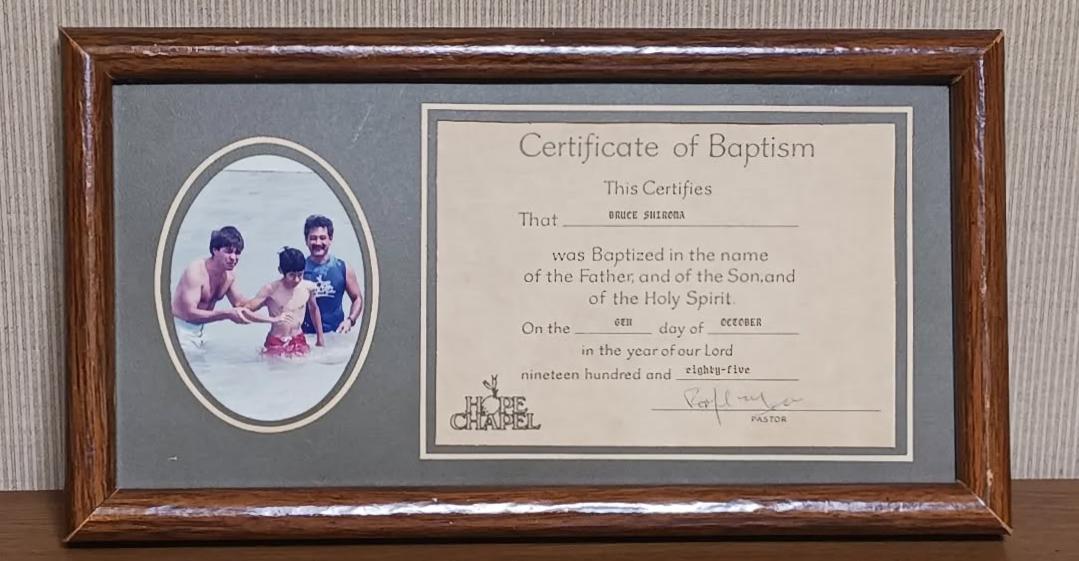
I was thinking of my baptism picture today. It’s in a box in my closet right now. I think the glass for the frame is broken, but the picture is intact.

And I was thinking, “What does that picture mean to me? Why is it stuck in that box in the closet?”

That picture actually represents a lot. It represents a turning point for me in my walk with God.

I can’t say I totally understood everything baptism represented that day. But I vividly remember my pastor asking me, “Why do you want to get baptized.”

I answered, “I want to know God better.”

An imperfect answer, to be sure.

But God honored that request. And as I look back, it wasn’t long before he started to make himself more real to me.

Maybe it’s time for me to pull that picture out of the box.

How about you? What are the things that remind you of your relationship with God? Which remind you of all he’s done for you?

What do you need to pull out of the box and put on display?

Categories
Joshua Devotionals

Because we’re on untraveled ground

When you see the ark of the covenant of the Lord your God carried by the Levitical priests, you are to break camp and follow it.

But keep a distance of about a thousand yards between yourselves and the ark. Don’t go near it, so that you can see the way to go, for you haven’t traveled this way before…”

Come closer and listen to the words of the Lord your God.” (Joshua 3:3-4, 9)

As I read those words, I couldn’t help but think of some verses I’ve been memorizing over the past week from Psalm 143.

Let me hear in the morning of your steadfast love, for in you I trust.

Make me know the way I should go, for to you I lift up my soul.

Deliver me from my enemies, O Lord! I have fled to you for refuge.

Teach me to do your will, for you are my God! Let your good Spirit lead me on level ground! (Psalm 143:8-10, ESV)

That could have been the song of the Israelites entering Canaan.

But it’s also my prayer now.

The future is all untraveled ground for me. There’s so much I don’t know.

And Satan would lay so many traps for me that I can’t see.

But God knows everything that lies ahead.

And so I want…I need to draw closer. To listen to His words. To learn to do his will. To be led by his Spirit moment to moment, day to day.

What does that look like practically? I’m still trying to figure it out, to be honest. But that’s my prayer.

Let me hear in the morning of your steadfast love, for in you I trust.

Make me know the way I should go, for to you I lift up my soul.

Deliver me from my enemies, O Lord! I have fled to you for refuge.

Teach me to do your will, for you are my God! Let your good Spirit lead me on level ground! (Psalm 143:8-10)

Categories
Acts Devotionals

In all good conscience (2)

I always strive to have a clear conscience toward God and men. (Acts 24:16)

This is the second time in two chapters that Paul talks about keeping a clear conscience before God. (Acts 23:1)

Why was that important to him?

I think there were three reasons.

First, he knew there was a resurrection and that he would stand before God’s judgment seat someday. (15)

He once told the Corinthians,

Therefore, whether we are at home or away, we make it our aim to be pleasing to him.

For we must all appear before the judgment seat of Christ, so that each may be repaid for what he has done in the body, whether good or evil. (2 Corinthians 5:9-10)

But as much as he knew the fear of the Lord, he also knew the love of the Lord, and that also drove him. He said,

For the love of Christ compels us, since we have reached this conclusion, that one died for all, and therefore all died.

And he died for all so that those who live should no longer live for themselves, but for the one who died for them and was raised. (2 Corinthians 5:14-15)

But I think a final reason is that he knew keeping a clear conscience had an effect on his testimony.

When Paul talked to Felix about judgment, it scared Felix to death. (Acts 24:25)

I half-wonder if one reason Felix was hoping for a bribe from Paul was to diminish his testimony. After all, if Paul accepted a bribe, how afraid of judgment could Paul really be?

But Paul kept a clean conscience, and his testimony stood.

How important is keeping a clear conscience to us?

Father, help me to always keep a clear conscience before you. For fear of you. For love of you. And for an unstained witness that might draw the people I love to you.

Categories
Acts Devotionals

Worshiping in ignorance? (2)

[Apollos] had been instructed in the way of the Lord; and being fervent in spirit, he was speaking and teaching accurately about Jesus, although he knew only John’s baptism…

After Priscilla and Aquila heard him, they took him aside and explained the way of God to him more accurately. (Acts 18:25-26)

It occurred to me as I read this that Apollos was another person who to some degree was worshiping God in ignorance.

He knew about Jesus and apparently was zealous for him, but there were gaps in his knowledge.

But unlike most of the Atheniens, he was hungry to have those gaps filled. He wasn’t content with what he knew.

And by filling those gaps, not only did he come to know God more deeply, God was able to use him more effectively for His kingdom. (Acts 18:27-28)

How about you? You may know Jesus. You may be zealously serving him. But all of us have gaps in our knowledge of him.

Are you content to live with those gaps? Or are you actively seeking to fill those gaps?

Jesus said,

But an hour is coming, and is now here, when the true worshipers will worship the Father in Spirit and in truth.

Yes, the Father wants such people to worship him. God is spirit, and those who worship him must worship in Spirit and in truth.” (John 4:23-24)

Let’s not be satisfied living with those gaps in our knowledge of God and his Word. Let’s actively seek to fill them.

And as we do, we’ll worship and serve God as he desires: in Spirit…and in truth.

Categories
Acts Devotionals

Being God’s intersection point

But Peter said, “I don’t have silver or gold, but what I do have, I give you: In the name of Jesus Christ of Nazareth, get up and walk!” (Acts 3:6)

Last Sunday, my pastor was talking about how Eden was God’s first intersection point between heaven and earth: a place where Adam and Eve could encounter God.

Then the tabernacle and the temple became God’s intersection point where his people could encounter him.

Then Jesus came, and he became the intersection point between God and and humanity. When people met Jesus, they literally encountered God face to face.

But now the Holy Spirit dwells in us, and we are God’s intersection point.

At least we should be.

Peter and John were for that lame man. Through them, that man encountered God and so did thousands more after hearing Peter speak.

In the same way, I want to be God’s intersection point for those around me. I want to be like Peter and John, noticing the people God brings to me and touching them with God’s love.

It may be praying for their healing.

Or giving them a word of encouragement.

Or sharing my faith in Jesus.

But that’s my prayer: “Father, make me your intersection point so that others may encounter you in me.”

Categories
Luke Devotionals

Approachable?

All the tax collectors and sinners were approaching to listen to him. (Luke 15:1)

For some reason, those words hit me this morning. And it made me wonder: “How approachable am I to those who don’t know Jesus?”

I’ll be honest. I’m not a people person. I like people, but no one would ever call me an extrovert. And for me, meeting new people is never easy. I’ve gotten better at it, but I don’t know if I’ll ever be natural at it.

But can people see the love of Jesus in me? Can they sense I care about them? Can they approach me knowing that I’m not looking down on them or condemning them?

I hope so. But then again, I can look at myself and see times I wasn’t so approachable.

Jesus was approachable. That’s why “sinners” were attracted to him. No one, on the other hand, ever accused the Pharisees of being approachable.

We are called to spread God’s Kingdom, to invite people to come under his good reign. But that will never happen if we are not approachable as Jesus was.

So the thing I’m praying today is, “Lord show me how to be more approachable, like you were.”

How about you? Are you approachable?

Categories
Luke Devotionals

Digging deep

“Why do you call me ‘Lord, Lord,’ and don’t do the things I say?

I will show you what someone is like who comes to me, hears my words, and acts on them: He is like a man building a house, who dug deep and laid the foundation on the rock. (Luke 6:46-48)

Father, let me be one who digs deep. Who doesn’t just skim over your words, but thinks on them and meditates on them. Who seeks to understand them. Who seeks to really know what you’re telling me.

Let your words be the foundation of my life.

Jesus, don’t let be be like those who call you “Lord, Lord,” but don’t do what you say.

You are my King. And I believe you are a good King. So give me ears to hear and a heart to obey you.

Categories
Luke Devotionals

An open ear, a soft heart

I don’t know this for sure, but I’ve felt for a long time that when Jesus prayed at his baptism, he probably prayed Psalm 40:6-8.

You…open my ears to listen…Then I said, “See, I have come; in the scroll it is written about me. I delight to do your will, my God…”

Why do I think he prayed that? Because the writer of Hebrews has Jesus praying that psalm. (Hebrews 10:5-7)

But whether he prayed that or not at his baptism, I think we can safely say that Jesus had open ears and a soft heart to God.

Those were things Herod didn’t have, especially when confronted with his sin. (Luke 3:19-20)

The people John baptized, on the other hand, came with open ears and a soft heart. And we see it in their response.

“What should we do?” (Luke 3:10, 12, 14)

That’s the question of open ears and a soft heart.

That’s the heart Jesus had.

That’s the kind of heart I want.

Is it the kind of heart you have?

Whenever we read or hear God’s word, let that be our response to him.

“What should I do? I delight to do your will.”

Categories
Luke Devotionals

True peace

Suddenly a vast, heavenly army appeared with the angel, praising God and saying, “Glory to God in the highest, and on earth peace among people with whom he is pleased!” (Luke 2:13-14, NET)

As I read those words, I was thinking about my pastor’s message last Sunday. He talked about how the peace Jesus came to bring is different from the peace people often seek.

With a vast heavenly army appearing, the shepherds might have thought that they came to wipe out Roman oppression.

A scarier thought might have been that the angels came to wipe out the shepherds themselves. God’s glory tends to reveal to us our own sinfulness.

But instead, this army proclaims peace, not just to the shepherds, not just to the Jews, but to all people. (Luke 2:10)

But again, what kind of peace?

Peace with God.

A peace where he breaks into our lives and says, “You don’t have to be afraid of me anymore because of your sin. My Son came to pay the price for your sin.

“And now, my favor is on you. Just as it was on Elizabeth (Luke 1:25). Just like it was on Mary (Luke 1:28-30). My favor rests on you.”

That’s something to treasure in your heart and meditate on. (Luke 2:19)

Categories
John Devotionals

Walking in grace

[Jesus] told him, “Follow me.” (John 21:19)

John 21 has many similarities to Luke 5:1-11.

One that really struck me this morning was that in both stories, Peter recognized his own failings and sinfulness. And each time, Jesus still said, “Follow me.”

Peter started his faith journey walking in grace. Three years later, he was still walking in that grace. And he would continue to do so until the day he met Jesus face to face once more.

We too are on a journey. Like Peter’s, our journey starts by grace. And it continues each day by grace.

We’re not perfect. Our love for Jesus isn’t perfect either. But despite that, Jesus still says, “Follow me.”

So let’s not get discouraged by our own sins, weaknesses, and failings. Let’s simply keep our eyes on him and follow.

Categories
John Devotionals

Peace be with you

Peace be with you. (John 20:19)

That was a pretty common greeting in those days and still is among Jews.

But was that all it was? Considering Jesus said it twice, I’m kind of thinking not.

The disciples were in hiding, afraid of the future. And even Jesus appeared to them, how much angst did they have because they had failed him.

But Jesus said, “Peace be with you. I’m here. And despite your failings, I accept you.”

He then sent them out to bring his peace to people without it.

But it’s hard to bring peace into people’s lives if we don’t have God’s Spirit of peace living in us. And so he breathed on them and said, “Receive the Holy Spirit.”

Jesus wants to send you out too.

But do you have peace yourself? Or are you constantly worried about the future? Are you constantly worrying about what God thinks of you?

Remember: Jesus looks at you, and says, “Peace be with you.”

Jesus has already given you his Spirit. Not a spirit of fear, but one that cries out with us, “Abba, Father.”

We have peace with God now. (Romans 5:1, 5; 8:15)

So rest in his peace. And let’s take that peace out to those living without it.

Categories
John Devotionals

He prays for us 

I pray for them. (John 17:9)

For some reason, those words stood out to me this morning.

Jesus prayed for his disciples.

Jesus prayed for us. (John 17:20)

And even now, he continues to do so. (Romans 8:34; Hebrews 7:25)

He prays for our protection. (John 17:15)

He prays that we would know and live by God’s truth. (John 17:17)

He prays that we would know him and the Father more intimately. And he prays that as our relationship with God deepens, that our relationship with one another would also deepen. (John 17:21-23, 26)

But that’s just the tip of the iceberg. How much more intimately does Jesus pray for those he loves?

We often say, “Jesus loves me.”

But today, let’s consider this truth. Let it ring in your soul: “Jesus prays for me.”

Categories
John Devotionals

Do I trust you?

Don’t let your heart be troubled. Believe in God; believe also in me. (John 14:1)

As I was thinking on Jesus’ words today, I asked myself, “When my heart is troubled, how often is it because I’m not trusting God?”

Trusting that he is for me.

Trusting that he is with me.

Trusting that he is in control even though my circumstances, and even this world seem out of control.

Trusting that he will never leave me an orphan. That he will always come to me when I cry out.

That nothing, not even death can separate me from his love. That when I leave this life, he will take me to be where he is.

When we find ourselves losing our peace, maybe that’s the question we all need to ask: Lord, do I trust you?

Categories
John Devotionals

Our right to draw near

I was thinking this morning about our right to draw near to Jesus. How often do we take that for granted?

In today’s passage, there were some Greek men that didn’t feel they had that privilege, probably because they were Gentiles, outsiders to the Jewish community, and Jesus was a famous rabbi.

But Jesus was lifted up on a cross so that all of us could draw near to him. (John 12:32)

It made me think of an old hymn.

What a friend we have in Jesus,
All our sins and griefs to bear.
What a privilege to carry everything to God in prayer.

O what peace we often forfeit.
O what needless pain we bear.
All because we do not carry everything to God in prayer.

— Joseph Medlicott Scriven

Categories
John Devotionals

That everything I do would be pleasing to you

There were many words that hit my heart this morning. Perhaps none more so than verse 29 when Jesus said, “I always do what pleases the Father.”

I wish I could say that.

But there were other words too.

If you continue in my word, you really are my disciples. You will know the truth, and the truth will set you free. (John 8:31-32)

Truly I tell you, everyone who commits sin is a slave of sin. A slave does not remain in the household forever, but a son does remain forever. So if the Son sets you free, you really will be free. (34-36)

…my teaching makes no progress among you. (37, NET)

The one who is from God listens to God’s words. (47)

I honor my Father and you dishonor me. (49)

And so my prayer for the day.

Lord Jesus, I want to be like you. I wish I could say with you that all I do pleases the Father. But that is not so. There are many things I do that are displeasing to him.

Forgive me. Help me to never dishonor the Father or you by my words or my actions.

Instead, let there always be room in my heart for your Word. Let it progress in my heart. Help me to understand it better. Not only that, help me to obey it better.

Help me to be like Abraham, listening to the truth of your Word, believing and accepting the truth, and following the truth.

Jesus, thank you for your grace. Because of you, I am no longer a slave to sin. By your blood shed on the cross, you have set me free. Thank you for making me a child of God.

Categories
John Devotionals

Rivers of living water

On the last and most important day of the festival, Jesus stood up and cried out, “If anyone is thirsty, let him come to me, and drink. The one who believes in me, as the Scripture has said, will have streams of living water flow from deep within him.”

He said this about the Spirit. Those who believed in Jesus were going to receive the Spirit, for the Spirit had not yet been given because Jesus had not yet been glorified. (John 7:37-39)

Somehow, whenever I read this passage, my very first thought is how when I come to Jesus, his Spirit quenches my spiritual thirst.

But what God reminded me today was that he doesn’t simply give me his Spirit to quench my thirst. He wants his rivers of living water to flow out from me so that those dying of spiritual thirst around me may also find life.

So this was my prayer today.

Holy Spirit, I have received you and you have quenched my thirst. But I pray that you would be like a river flowing out from me so that those thirsting around me might also drink and find life too.

Categories
John Devotionals

Three questions

So when Jesus looked up and noticed a huge crowd coming toward him, he asked Philip, “Where will we buy bread so that these people can eat?”

He asked this to test him, for he himself knew what he was going to do. (John 6:5-6)

I was thinking this morning what it meant that Jesus was testing Phillip.

What was he asking Phillip?

I’m not sure, but I imagine he was asking, “Do you know who I am yet? Do you know what I’m capable of doing? How much do you trust me?”

If that’s what Jesus was asking, Phillip failed the test on all three counts.

All he could see was the disciples’ inadequacy in meeting the needs of the crowd.

But Jesus already knew what he was going to do. And in his grace, he used what little Phillip and the disciples had to feed thousands.

Sometimes, I am like Phillip. Jesus sees people around me he wants to minister to. He already knows what he’s going to do. But he turns to me and asks, “Do you know who I am yet? Do you know what I’m capable of? How much do you trust me?”

But instead of seeing who Jesus is and what he can do, all I can see is my own weaknesses and inadequacies.

The truth is, my weaknesses and inadequacies are irrelevant. What’s important is who Jesus is. What he can do.

The only question is will I trust him and do what he asks.

Because Jesus is more than able to take what little I have to touch those around me with his love.

So maybe I need to think on those questions more.

“Do you know who I am yet?”

“Do you know what I’m capable of doing?”

“Do you trust me?”

Categories
John Devotionals

First loved

For God loved the world in this way: He gave his one and only Son, so that everyone who believes in him will not perish but have eternal life. (John 3:16)

I reallly like this translation.

Most translations read, “For God so loved the world…” and it can be translated that way. But usually, the Greek word for “so” would be read not as “so much,” but as “in this way.”

John uses different words in his letter, but expresses the same idea.

God’s love was revealed among us in this way: God sent his one and only Son into the world so that we might live through him.

Love consists in this: not that we loved God, but that he loved us and sent his Son to be the atoning sacrifice, for our sins. (1 John 4:9-10)

Paul says something similar in Romans 5:8.

But God proves his own love for us in that while we were still sinners, Christ died for us.

The amazing thing is that God didn’t wait for us to turn to him before he showed us his love. Rather, he first turned to us. Not in judgment, but in mercy.

I wonder. How shocked was Nicodemus that Jesus said God demonstrated his love for the world by sending his Son.

It’s possible that his only concept of God sending his Son was to judge the world for its rebellion (Psalm 2).

Had Nicodemus ever considered that the blessed people in Psalm 2:12 could apply to those nations who had once been rebellious but had repented because of God’s love for them shown through his Son? Had the psalmist?

I don’t know. But let’s always remember the most amazing thing about John 3:16. God first loved an unrepentant, rebellious world, and sent his Son to save it.

And that includes us.

Take time to ponder that today. Ponder John 3:16. Ponder 1 John 4:9-10. Ponder Romans 5:8.

Ponder this truth and bathe in it: “God first loved me.”

Categories
John Devotionals

The one who sees our hearts

While he was in Jerusalem during the Passover Festival, many believed in his name when they saw the signs he was doing.

Jesus, however, would not entrust himself to them, since he knew them all and because he did not need anyone to testify about man; for he himself knew what was in man. (John 2:23-25)

[Peter] said, “Lord, you know everything; you know that I love you.” (John 21:17)

Jesus, you see my heart. You don’t need anyone to tell you what is there. Because you know me. And so I say with Peter, “You know that I love you.”

You know how imperfect my love is. You know my failings. You know my sin. But you also know I love you.

Still, it’s so easy to deceive myself. So peel off the layers of my own heart. Expose it. Show me the things you see so that you can heal it.

Lord Jesus, I want to be like you. Make me like you.

Categories
John Devotionals

A world that needs light

In him was life, and that life was the light of men. That light shines in the darkness, and yet the darkness did not overcome it…

The true light that gives light to everyone was coming into the world. (John 1:4-5, 9)

Last week, I was reading the news and it said that 527 students from elementary school to high school committed suicide in Japan last year.

Just one is too many.

John tells us that in Jesus is life, and that he is the light-giver to those walking in darkness.

There are so many people living in that darkness. So many people living without hope.

And they need that light.

In my church, we’ve been talking recently about our Father’s eyes, and the importance of understanding how God sees us.

That understanding brings light to our darkness.

That’s what Jesus did for everyone he touched. Whenever people looked into his eyes, they saw the Father’s eyes. And it brought light into their darkness.

My prayer is that people would see Jesus in me. That when people look into my eyes, my wife, my daughter, my students, my coworkers, everyone I meet, they would see my Father’s eyes.

And that through me, God would bring his light into their darkness.

May we all have our Father’s eyes.

Categories
Numbers Devotionals

Guarding our hearts against sin

Let’s be honest. There are things in Numbers that are hard to read. Especially when it comes to God’s judgment.

But according to the apostle Paul, there is a reason God recorded all these things. He wrote this in 1 Corinthians 10.

Now these things took place as examples for us, so that we will not desire evil things as they did.

Don’t become idolaters as some of them were; as it is written, The people sat down to eat and drink, and got up to party.

Let us not commit sexual immorality as some of them did, and in a single day twenty-three thousand people died. Let us not test Christ as some of them did and were destroyed by snakes.

And don’t grumble as some of them did,, and were killed by the destroyer.

These things happened to them as examples, and they were written for our instruction, on whom the ends of the ages, have come. (1 Corinthians 10:6-11)

The first event Paul mentions happened in Exodus 32. The rest occured in the chapters we’ve been reading in Numbers, including today’s chapter.

Why did God record all these things?

For our instruction.

What can we learn?

1. God takes sin seriously, especially willful, rebellious sin.

We saw this in chapters 15-17, and we see it again here in verse 6.

While the people are weeping over their sin and God’s judgment, a man brashly brings into his tent a Midianite woman to sleep with her, probably as part of a religious ritual.

2. The wages of sin, particularly willful, rebellious, and unrepentant sin is death.

Because of that we dare not take sin lightly in our lives. Rather we are to flee from it.

And so Paul warns us:

So, whoever thinks he stands must be careful not to fall. (1 Corinthians 10:12)

We need to constantly be on our guard against sin.

But the good news is that God is with us to help us stand against sin and be victorious over it.

As Paul says,

No temptation has come upon you except what is common to humanity.

But God is faithful; he will not allow you to be tempted beyond what you are able, but with the temptation he will also provide the way out so that you may be able to bear it. (1 Corinthians 10:13)

Categories
Numbers Devotionals

How God sees us

How can I curse someone God has not cursed?

How can I denounce someone the Lord has not denounced? (Numbers 23:8)

As I read those words, I thought about what Paul said to the Roman Christians.

Who can bring an accusation against God’s elect? God is the one who justifies.

Who is the one who condemns? Christ Jesus is the one who died, but even more, has been raised; he also is at the right hand of God and intercedes for us. (Romans 8:33-34)

Satan would denounce us before the Father for all our sins and failures.

Sometimes, we even denounce ourselves.

But how can we denounce someone our Father has not denounced?

Our Father justifies us by the blood Jesus shed for us on the cross. And Jesus himself stands by the Father’s side and defends us.

God foreknew us. He predestined us to be his children and to be like Jesus. He called us. He justified us. And he glorified us in his sight.

That’s how he sees us. He sees us as our loving Father.

And the good news is, he won’t change his mind. I love Numbers 23:19.

God is not a man, that he might lie, or a son of man, that he might change his mind.

Does he speak and not act, or promise and not fulfill?

God is determined to bless us and he will. (Numbers 23:20)

We may face his discipline at times for our sins, but he will never abandon us.

And because he never changes his mind, nothing can separate us from his love. (Romans 8:38-39)

God is with us. So let’s rejoice in our King. (Numbers 23:21)

And every day, let’s cry out, “What great things God has done for me!” (Numbers 23:23)

Categories
Numbers Devotionals

Only words?

As I was reading Balaam’s story, I couldn’t help but think of Jesus’ rebuke of the Pharisees and scribes:

This people honors me with their lips, but their heart is far from me. (Matthew 15:8)

At times, Balaam sounded very pious.

“I can’t possibly go against God’s command, small or great.” (Numbers 22:18)

Bu though he honored God with his lips, his heart was apparently far from God.

Because of his greed, it seems he was trying to find some way circumvent God’s command to him. (2 Peter 2:15-16)

But God saw his heart and made sure Balaam knew that he was not fooled. Only then did Balaam refrain from cursing the Israelites.

But even then, Balaam later found a way to bring trouble on the Israelites. (Numbers 25:1-5, 31:16)

It’s easy on Sunday to sing songs saying, “Yes, Lord. Yes, Lord. Yes, yes, Lord. Amen!”

But is it just words?

Or is it our heart?

A heart that is fully given to God, not just on Sunday, but all week, moment to moment, day to day?

Do we wholeheartedly follow him? Or do we try to find ways to get around his commands?

Father, I don’t want to be like Balaam. May my heart be completely yours.

Categories
Numbers Devotionals

What cannot be forgiven

In these chapters, we see some harsh punishments that God laid on the Israelites.

For a lot of people, including Christians, that’s hard to understand, but it comes down to a truth that God laid out in chapter 15.

There is a huge difference between unintentional sins and willful, and more importantly, unrepentant rebellion.

There were sacrifices that could be made for the former.

There were no sacrifices for the latter.

Where there is unrepentant rebellion, any sacrifices would be totally meaningless. (Numbers 15:22-30)

We see this truth played out in the person who willfully and unrepentantly broke the Sabbath. (Numbers 15:32-36)

We see it also in Korah and his followers. (Numbers 16)

A rebellious heart is an ugly thing.

But when it is combined with a heart that refuses to repent, it becomes unforgivable.

All of us sin. But let us never get to the point where we willfully and unrepentantly rebel against God.

Instead, let us have the heart of David, who certainly knew willful sin, but also knew true repentance as well.

Who perceives his unintentional sins?
Cleanse me from my hidden faults.

Moreover, keep your servant from willful sins;
do not let them rule me.
Then I will be blameless
and cleansed from blatant rebellion.

May the words of my mouth
and the meditation of my heart
be acceptable to you,
Lord, my rock and my Redeemer.” (Psalm 19:12-14)

Categories
Numbers Devotionals

That I might honor you

Listen to what I say: If there is a prophet among you from the Lord, I make myself known to him in a vision; I speak with him in a dream.

Not so with my servant Moses; he is faithful in all my household. (Numbers 12:6–7)

Therefore, holy brothers and sisters, who share in a heavenly calling, consider Jesus, the apostle and high priest of our confession.

He was faithful to the one who appointed him, just as Moses was in all God’s household.

For Jesus is considered worthy of more glory than Moses, just as the builder has more honor than the house…

Moses was faithful as a servant in all God’s household, as a testimony to what would be said in the future.

But Christ was faithful as a Son over his household. And we are that household. (Hebrews 3:1-6)

Lord Jesus, Moses was faithful in the Father’s household as a servant. As such, he was worthy of glory and honor.

But you were faithful in the Father’s household as a Son. And because of that you are worthy of even more glory and honor than Moses.

So let me honor you in all my words and my actions. You are worthy of my obedience and respect.

Forgive me for the times I fail to honor you in that way.

Thank you for continuing to be my high priest who faithfully intercedes for me despite the times I fail to honor you. Thank you for your awesome grace. In your name I pray, amen.

Categories
Psalms Devotionals 2

Acnowledging God as God

Acknowledge that the Lord is God.
He made us, and we are his,—
his people, the sheep of his pasture. (Psalm 100:3)

Last week, I was preparing a message on the book of Job. And perhaps because of that, when I came across Psalm 100 in my quiet time, it really struck me that this was a song Job could have sung after all his experiences.

Because verse 3 was the main thing that he learned.

God is God. We are not.

He made us. We are his people, his sheep.

And that’s a good thing.

Why?

Because ultimately, he is good, his faithful love is forever, and his faithfulness through all generations. (5)

There’s a lot in this world that we can’t understand. And because of that, it’s easy to start questioning God. To start questioning his goodness. To start questioning his love toward us.

But the key to finding joy in the midst of our trials is acknowledging the Lord as God. That he is wise. That he is powerful. And most importantly, that he is loving to us.

So with those truths firmly in mind, let us shout triumphantly to the Lord. (1)

Serve the Lord with gladness. Come before him with joyful songs. (2)

Enter his gates with thanksgiving and his courts with praise. (4)

For the Lord is good, and his faithful love endures forever;
his faithfulness, through all generations. (5)

Categories
Colossians Devotionals

That you might be first

He is the image of the invisible God, the firstborn over all creation.

For everything was created by him, in heaven and on earth, the visible and the invisible, whether thrones or dominions or rulers or authorities— all things have been created through him and for him. He is before all things, and by him all things hold together.

He is also the head of the body, the church; he is the beginning, the firstborn from the dead, so that he might come to have first place in everything. (Colossians 1:15-18)

Lord Jesus, I was created by you. I was created through you. I was created for you. Have first place in my life. You are worthy to be first in my life.

Fill me with the knowledge of your will in all wisdom and spiritual understanding so that I may walk worthy of you, fully pleasing to you, bearing fruit in every good work, and growing in my knowledge of you.

Strengthen me with all power so that I may have great endurance and patience, filled with joy and thanksgiving.

Your grace to me is incredible. You have given me an inheritance with your people. You rescued me from the domain of darkness and brought me into your kingdom.

By your death on the cross, you present me before the Father holy, faultless, and blameless.

By your grace, let me remain grounded and steadfast in faith, never shifted from the hope I have through your gospel.

In your name I pray, amen.

Categories
Philippians Devotionals

Working out our salvation

Therefore, my dear friends, just as you have always obeyed, so now, not only in my presence but even more in my absence, work out your own salvation with fear and trembling… (Philippians 2:12)

I was thinking today on what it means to work out our salvation.

I think Paul explains his meaning more clearly in chapter 3.

He’s not talking about trying to become righteous by his own efforts to keep the law. His righteousness came by faith in Christ’s work on the cross for him. (Philippians 3:9)

So what does he mean by working out his salvation?

  1. Pursuing his relationship with Jesus. Knowing Christ became his ultimate pursuit in life above all other things.
  2. Becoming more and more like Jesus. Paul wanted to experience Jesus’ resurrection power in his life, becoming like his Lord.

    But before he could be raised with Jesus, he had to die with Jesus. Just as Jesus suffered and died to sin once for all time, Paul needed to learn to die to sin once and for all so that he could live for God (Romans 6:10-11).

    And by Paul joining in Christ’s sufferings, he showed that he was through with sin, no longer living for himself, but for God’s will. (1 Peter 4:1-2)

That’s what it means to work out our salvation. And it’s an ongoing process. A process that Paul admitted he had not fully completed yet.

He still fell short. He still hadn’t arrived.

But Jesus in his grace had taken hold of him. And so Paul strove to take full hold of the salvation he had received, working out his salvation with fear and trembling.

I marvel at the fact that this same Jesus that took hold of Paul has taken hold of me. And so like Paul, I’m striving to take full hold of the salvation I have received, working out that salvation with fear and trembling.

I still fall short. I still haven’t arrived. But with full confidence in the grace and love God has given me, I say with Paul,

Forgetting what is behind and reaching forward to what is ahead, I pursue as my goal the prize promised by God’s heavenly call in Christ Jesus. (Philippians 3:13-14)

Categories
Philippians Devotionals

With fear and trembling

Therefore, my dear friends, just as you have always obeyed, so now, not only in my presence but even more in my absence, work out your own salvation with fear and trembling. (Philippians 2:12)

With fear and trembling.

I was meditating on those words this morning.

What do they mean?

Three times, Paul uses that exact phrase, and each time it’s in the context of obedience to the Lord.

In 2 Corinthians 7:15, the Corinthians received Timothy with fear and trembling because of Jesus who he represented and who they obeyed.

In Ephesians 6:5, Paul told slaves to obey their masters with fear and trembling just as they obeyed Jesus with fear and trembling.

And here in Philippians 2:12, he tells the Philippians that as they have always obeyed, to work out their salvation with fear and trembling.

Of course, Jesus fully accomplished our salvation on the cross, but as we follow and serve him, we more fully experience the benefits of that salvation. And the greatest benefit is a restored relationship with the God who deeply loves us.

So a large part of working out our salvation is learning to walk in that restored relationship with God, moment to moment, day to day.

But why do so with fear and trembling?

Because Jesus has been given the name above all names. Every knee shall bow and every tongue confess that he is Lord.

I can’t help but think that Paul was not only thinking of Isaiah 45:23 which he quotes, but Psalm 2.

Psalm 2 is a Messianic psalm in which God essentially does what Paul talks about in Philippians 2: he establishes Jesus as king over all. And all who rage against him and rebel will be destroyed. Such people should be afraid of his wrath.

But on the other hand, all who take refuge in Jesus will find joy. (Psalm 2:12)

And so, the psalmist writes,

Serve the LORD with fear, and rejoice with trembling. (Psalm 2:11, ESV)

Sound familiar? I think that’s what Paul is alluding to when he says work out your salvation with fear and trembling.

We are not Jesus’ equals. Jesus is King of kings and Lord of lords. He is worthy of our obedience. And he will judge all those who rebel against him.

Because of that, we dare not take him lightly.

And yet, when we acknowledge his lordship in our lives, we need not live in constant fear of his punishment. Punishment is for his enemies, not us.

Rather with reverential awe, not only that, with gladness and joyful songs, we serve him. (Psalm 2:11 (CSB), Philippians 2:13 NLT, Psalm 100:2)

In our trembling, we rejoice at the grace God has given us. We rejoice that he works in us to will and work according to his good purpose. (Philippians 2:13)

I think another psalmist sums up the meaning of working out our salvation with fear and trembling.

Acknowledge that the LORD is God. He made us, and we are his— his people, the sheep of his pasture.

Enter his gates with thanksgiving and his courts with praise. Give thanks to him and bless his name.

For the LORD is good, and his faithful love endures forever; his faithfulness, through all generations. (Psalm 100:3-5)

So this year, let us not take our Lord or the salvation he has given us lightly. Rather, let us work out our salvation with fear and trembling. And rejoicing.

Categories
Philippians Devotionals

Praying for others. Praying for ourselves.

As I was reading Paul’s words today, I started to pray some of his prayers for the Philippians for the people on my prayer list, for my family and small group in particular, but also for my pastor and his wife.

I pray that <name>’s love will keep on growing in knowledge and every kind of discernment, so that <name> may approve the things that are superior and may be pure and blameless in the day of Christ, filled with the fruit of righteousness that comes through Jesus Christ to your praise and glory, God.

I believe you started a good work in <name>. Please carry it to completion.

Let <name> live a life worthy of your gospel, and may you be highly honored in <name>’s body. (From Philippians 1:6, 9-11, 20, 27)

As I was praying, though, I realized I needed those prayers too. And so I prayed for myself as well.

Father, I pray that I too will keep growing in knowledge and every kind of discernment, so that I may approve the things that are superior and be pure and blameless in the day of Christ, filled with the fruit of righteousness that comes through Jesus Christ to your praise and glory.

You started a good work in me. Please carry it to completion.

Let me live a life worthy of your gospel, and be highly honored in my body, in my life today. In Jesus’ name, amen.”

Categories
Ephesians Devotionals

Put all of your armor on

Put on the full armor of God so that you can stand against the schemes of the devil…

For this reason take up the full armor of God, so that you may be able to resist in the evil day, and having prepared everything, to take your stand. (Ephesians 6:11, 13)

“The full armor.”

Those are the words God impressed on me this morning.

Put on the full armor. Take up the full armor. Not just part of it. All of it.

Satan schemes against us and uses different strategies to get at us, not just one. And if we don’t put on the full armor every day, we’re vulnerable.

Rephrasing Paul’s words, if you don’t put on the full armor, you can’t stand against the devil’s schemes.

If you don’t take up the full armor, you won’t be able to resist, you won’t be able to take your stand.

So put on truth. The truth of God’s word. Make it foundation of your thinking. Let truthfulness also mark your speech. And put away the masks. Don’t be two-faced, one person at church, another person outside the church.

Put righteousness over your heart. Deal rightly with the people around with you. And when Satan accuses you for your failings, put on Christ’s righteousness which is ours by faith in him.

Put on the gospel of grace on your feet, so that you don’t slip into constant self-condemnation, nor legalism, nor willful sin.

Take up the shield of faith. But don’t just stand alone. Stand together with other Christians.

Make fellowship with them a priority so that your shield becomes part of a mighty turtle shell that protects not only you, but the Christians around you from Satan’s attack.

Receive the helmet of salvation. Welcome it with thanksgiving, knowing that you received it freely by God’s grace.

And swing the sword of God’s word whenever the enemy comes against you with his lies.

How about you? Are you putting it all on every day? Or are you leaving some of it on the floor?

Categories
Ephesians Devotionals

Drawn near

At that time you were without Christ, excluded from the citizenship of Israel, and foreigners to the covenants of promise, without hope and without God in the world.

But now in Christ Jesus, you who were far away have been brought near by the blood of Christ…

For through him we both have access in one Spirit to the Father. So, then, you are no longer foreigners and strangers, but fellow citizens with the saints, and members of God’s household. (Ephesians 2:12-13, 18-19)

This is perhaps my favorite passage in Ephesians. And it perfectly encapsulates Christmas and why Jesus came.

We were outsiders to God’s family, foreigners to all of God’s promises of blessing to Abraham and his descendants. But now in Jesus, we who were once far away have been brought near.

We see this in Jesus’ own family tree.

Tamar was a Canaanite, a people that God would ultimately order the Israelites to destroy because of their sin. (Matthew 1:3; Genesis 10:15-18, 15:16; Leviticus 18:24-28; Deuteronomy 7:1-4)

Rahab also was a Canaanite and a prostitute as well. (Matthew 1:5)

Ruth was a Moabite, another group that was supposed to have been excluded. (Matthew 1:5 Deuteronomy 23:3-4)

All of them perfectly fit what Paul talked about: excluded from the citizenship of Israel, foreigners to the covenant of promise, without hope and without God in the world.

But they were brought near, fellow citizens with the saints and members of God’s household.

And so are we.

Meditate on those words this Christmas. Chew on them.

And rejoice.

I know I am.

Categories
Ephesians Devotionals

Lavished on

Blessed is the God and Father of our Lord Jesus Christ, who has blessed us with every spiritual blessing in the heavens in Christ.

For he chose us in him, before the foundation of the world, to be holy and blameless in love before him.

He predestined us to be adopted as sons through Jesus Christ for himself, according to the good pleasure of his will, to the praise of his glorious grace that he lavished on us in the Beloved One. (Ephesians 1:3-6)

I love the translation of verse 6. God has “lavished” his grace on us.

The word translated “lavished” is used only one other time in the New Testament, when Gabriel visited Mary. Gabriel told her,

Greetings, favored woman! The Lord is with you.(Luke 1:28)

He was basically saying to her, “Mary, God has lavished his grace upon you.”

You may think that Mary must have been pretty special for the angel to say that to her.

And yet, God says the same thing to us.

“I have lavished my grace upon you through my Son. I chose you before the foundation of the world to be adopted into my family.”

The words God spoke to Mary are for you. God has lavished his grace on you. And in Jesus, he is Immanuel, “God with us.”

Categories
2 Thessalonians Devotionals

Be an example? Me?

For you yourselves know how you should imitate us…we did it to make ourselves an example to you so that you would imitate us. (2 Thessalonians 3:7, 9)

Those words really hit me this morning. Paul’s words are pretty bold: “You yourselves know how you should imitate us.”

Honestly, I don’t know if I feel that bold.

I see all my flaws. I see all the areas I still need to grow.

Why would people want to imitate me?

But God calls all of us to make disciples. Not just the pastors. Not just the church leaders. All of us. He calls all of us to make ourselves examples to the people in our lives so that they would imitate us.

And I suppose that means them not only seeing our strengths and imitating them, but seeing us working on our flaws as well.

And to see us moment to moment, day by day, walking in God’s grace, not under condemnation for our flaws, but with full confidence as children of God.

Father, I desire to be someone others want to imitate. In a lot of ways, I feel unworthy of that.

But as people watch me, let them see not only my admirable qualities that they want to imitate, let them also see the grace I walk in each day as I’m working on my flaws. In Jesus’ name, amen.

Categories
1 Thessalonians Devotionals

God is faithful. He will do it.

Now may the God of peace himself sanctify you completely.

And may your whole spirit, soul, and body be kept sound and blameless at the coming of our Lord Jesus Christ.

He who calls you is faithful; he will do it. (1 Thessalonians 5:23-24)

“He who calls you is faithful; he will do it.”

Those words rung in my mind this morning.

It brought to mind what Paul wrote in Romans 8:29-30:

For those he foreknew he also predestined to be conformed to the image of his Son, so that he would be the firstborn among many brothers and sisters.

And those he predestined, he also called; and those he called, he also justified; and those he justified, he also glorified.

I wonder. Do we really believe this?

He started this work, choosing us before we were born. Choosing us to become like his Son, our whole spirit, soul, and body sound and blameless before him.

And what he started, he will complete. Because he is faithful.

Do you like what you see in the mirror? Or do you see your sins and failures, the dirt and grime, and grimace?

Our Abba doesn’t grimace. He knew you from the first. And he still chose you. He called you. He justified you, wiping away your entire record of sin.

And whether you can see it or not, he’s in the process of sanctifying you through and through.

This is God’s will: your sanctification, your becoming like Jesus. (1 Thesssalonians 4:3)

And he’s not going to stop until he’s completed the process and he glorifies you, making you completely like his Son.

So put on the breastplate of righteousness. Not your righteousness, but the righteousness of God that comes by faiith. Let confidence in God’s love for you guard your heart. (Ephesians 6:14; 1 Thessalonians 5:8)

And know that the hope of your salvation, of your becoming like Jesus is a certain hope. Wear that hope every day.

For God did not appoint us to wrath, but to obtain salvation through our Lord Jesus Christ… (1 Thessalonians 5:9)

And again,

He who calls you is faithful; he will do it. (1 Thessalonians 5:24)

Categories
1 Thessalonians Devotionals

Because we have hope

…may the Lord cause you to increase and to abound in love for one another and for all, just as also we do for you, so that your hearts may be established blameless in holiness before our God and Father at the coming of our Lord Jesus with all his saints.

Finally therefore, brothers, we ask you and appeal to you in the Lord Jesus that, just as you have received from us how it is necessary for you to live and to please God, just as indeed you are living, that you progress even more…

For this is the will of God, your sanctification. (1 Thessalonians 3:12-4:1, 3, LEB)

Here at Christmastime, we often reflect on the first coming of Jesus. But Jesus is coming again. That is our hope.

In the last three months, two people I know have passed away and gone to be with the Lord.

But as Paul said, we don’t grieve as those in the world who have no hope. When Jesus returns, they will rise and we who are alive will join them in the air to be with Jesus forever.

And on that day, Paul says we will be established blameless in holiness before God. To put it more simply, we will be like Jesus, for we shall see him as he is. (1 John 3:2)

That’s our hope. But in the meantime, Paul and John both encourage us to become more and more like Jesus. (2 Thessalonians 4:1-3, 1 John 3:3)

I love the LEB’s translation of verse 3: You are already seeking to please God, but “progress even more.”

Keep moving forward. That’s God’s will for us. That moment to moment, day to day we become more like Jesus.

Lord Jesus, as I look forward to Christmas, I also look forward to your coming. To seeing you and seeing my friends again.

But until then, help me to keep progressing. Help me to keep on growing. And by your grace, help me to become more like you each day.

Categories
Exodus Devotions

The God who pitched his tent among us

The cloud covered the tent of meeting, and the glory of the Lord filled the tabernacle.

Moses was unable to enter the tent of meeting because the cloud rested on it, and the glory of the Lord filled the tabernacle. (Exodus 40:34-35)

This being Christmas season, I couldn’t help but think of the story of the shepherds in Luke 2.

In the same region, shepherds were staying out in the fields and keeping watch at night over their flock.

Then an angel of the Lord stood before them, and the glory of the Lord shone around them, and they were terrified. (Luke 2:8-9)

The same glory that filled the tabernacle now shone around the shepherds.

No wonder the shepherds were terrified.

Even Moses wouldn’t enter the place where God’s glory shone.

And yet the angel said to the shepherds,

Don’t be afraid, for look, I proclaim to you good news of great joy that will be for all the people: Today in the city of David a Savior was born for you, who is the Messiah, the Lord. (Luke 2:10-11)

Through Jesus, the shepherds gained access to God that even Moses didn’t have. And so have we.

John tells us,

The Word (i.e. God) became flesh and dwelt among us. (John 1:14)

The word “dwelt” has the idea of “pitching one’s tent.”

In Jesus becoming human, God “pitched his tent” among us, just as God did for the Israelites.

Because he did, John tells us that,

We observed his glory, the glory as the one and only Son from the Father, full of grace and truth. (John 1:14b)

And just as God was Immanuel to the Israelites, “throughout all the stages of their journey,” Jesus is Immanuel to us throughout all the stages of our journey through life, promising,

I am with you always, to the end of the age. (Matthew 28:20)

Categories
Bible Original

A sanctuary

They are to make a sanctuary for me so that I may dwell among them. You must make it according to all that I show you—the pattern of the tabernacle as well as the pattern of all its furnishings. (Exodus 25:8-9)

Father, dwell in me. Let my life be your sanctuary. May my life not be built according to my own blueprint, but according to yours.

Father, you are holy, your Word is holy, but so often I am unholy. So always meet me above your mercy seat (Exodus 25:21-22).

Jesus, you are my mercy seat (Romans 3:25, CSB).

By your blood, daily wash away all my sins and make me pure before you.

Father, you are always with me, providing me my daily bread (Exodus 25:23-30).

Jesus you are the bread from heaven that gives me eternal life. (John 6:33-35)

Jesus, you are my light (Exodus 25:31-38, John 8:12). Let me walk by your light each day.

In your name, I pray, Amen.

Categories
Exodus Devotions

Old covenant, new covenant

Moses took half the blood and set it in basins; the other half of the blood he splattered on the altar.

He then took the covenant scroll and read it aloud to the people.

They responded, “We will do and obey all that the Lord has commanded.”

Moses took the blood, splattered it on the people, and said, “This is the blood of the covenant that the Lord has made with you concerning all these words.” (Exodus 24:6-8)

Having taken communion yesterday, it’s hard not to think of Jesus’ words at the last supper.

This cup is the new covenant in my blood. Do this, as often as you drink it, in remembrance of me. (1 Corinthians 11:25)

In a lot of ways, the old covenant was a covenant of grace. It brought an undeserving people into a relationship with God.

But in a lot of ways, it was an imperfect covenant.

It was built on promises by the people to obey God’s law, something they could never do perfectly. (Hebrews 8:7-9, 10:1-4)

Morever, even with the blood sprinkled on them, they could not draw near to God. Only Moses, the priests, and the elders could eat and drink in God’s presence.

And even then, only Moses could truly approach God on Sinai.

But the new covenant is not based on our efforts to keep God’s law. It’s not based on any vows we make to “be good.”

It’s based on Jesus’ work on the cross for us and his blood that he shed for us.

A blood that cries out, not for vengeance, as Abel’s did (Genesis 4:10), but a blood that cries out, “Father, forgive them.”

And because of Jesus, all of us can draw near to God, joyfully, boldy, and without fear. (Hebrews 10:19-22)

The writer of Hebrews sums up the difference between the Old and New covenant this way.

For you have not come to what could be touched, to a blazing fire, to darkness, gloom, and storm, to the blast of a trumpet, and the sound of words.

Those who heard it begged that not another word be spoken to them, for they could not bear what was commanded: If even an animal touches the mountain, it must be stoned.

The appearance was so terrifying that Moses said, I am trembling with fear.

Instead, you have come to Mount Zion, to the city of the living God (the heavenly Jerusalem), to myriads of angels, a festive gathering, to the assembly of the firstborn whose names have been written in heaven, to a Judge, who is God of all, to the spirits of righteous people made perfect, and to Jesus, the mediator of a new covenant, and to the sprinkled blood, which says better things than the blood of Abel. (Hebrews 12:18-24)

That’s awesome to think about.

Therefore, since we are receiving a kingdom that cannot be shaken, let us be thankful.

By it, we may serve God acceptably, with reverence and awe, for our God is a consuming fire. (Hebrews 12:28-29)

Categories
Exodus Devotions

Finding God’s rest and peace

Yet on the seventh day some of the people went out to gather, but they did not find any.

Then the Lord said to Moses, “How long will you refuse to keep my commands and instructions? Understand that the Lord has given you the Sabbath…” (Exodus 16:27-29)

“The Lord has given you the Sabbath.”

Those words struck me. God wanted to give the Israelites rest. It was a gift to them.

But they couldn’t find that rest as long as they refused to trust and obey him.

It’s so amazing how quickly they forgot God’s goodness. One moment, they’re singing,

Lord, who is like you among the gods?
Who is like you, glorious in holiness,
revered with praises, performing wonders…

With your faithful love, you will lead the people
you have redeemed;
you will guide them to your holy dwelling
with your strength. (Exodus 15:11, 13)

The next moment, they’re complaining and wishing they were back in Egypt.

I don’t want to be like that, crying out, “How great is our God!” on Sunday, but failing to trust and obey him the rest of the week.

Not only does it sadden my Father, but I lose out on the gift of rest and peace he wants to give me.

Father, I want to know your rest and peace. And the thing is, you want me to experience your rest and peace. So help me to trust you and obey.

You are good. You are trustworthy. And you deeply love me.

Help me to always remember that. In Jesus’ name, amen.

Categories
Exodus Devotions

What makes us different

The blood on the houses where you are staying will be a distinguishing mark for you; when I see the blood, I will pass over you.

No plague will be among you to destroy you when I strike the land of Egypt. (Exodus 12:13)

What made the Israelites different from the Egyptians? Why were the Israelites spared God’s judgment and not the Egyptians?

As we’ll see later in Exodus, it wasn’t because the Israelites were somehow morally superior to the Egyptians.

Rather, it was the blood of the sheep or goat that was shed for them.

It’s the same with us.

We deserve God’s judgment as much as anyone.

What distinguishes us and saves us from God’s judgment is not how good or faithful we are.

Rather, it is Jesus’ blood shed on the cross for us.

Perhaps David was thinking of the Israelites using hyssop to brush the blood on their doorposts when he prayed,

Purify me with hyssop, and I will be clean;
wash me, and I will be whiter than snow. (Psalm 51:7)

God told the Israelites to always remember what he did for them that day. (Exodus 12:24-27)

In the same way, let us always remember what Jesus did for us on the cross, and like the Israelites, fall down in worship.

It’s your blood that cleanses me.
It’s your blood that gives me life.
It’s your blood that took my place in redeeming sacrifice.
And washes me whiter than the snow.
My Jesus, God’s precious sacrifice. — Michael Christ

Categories
Exodus Devotions

That the world may know

You must say whatever I command you; then Aaron your brother must declare it to Pharaoh so that he will let the Israelites go from his land…

The Egyptians will know that I am the Lord when I stretch out my hand against Egypt and bring out the Israelites from among them. (Exodus 7:2, 5)

Moses and Aaron were to speak God’s words so that Pharaoh and all the Egyptians would know he was the Lord.

As I read those words, it struck me that we too are to speak God’s words to those around us that they might know he is the Lord.

But whereas Moses’ and Aaron’s words were mostly words of judgment, ours is a message of reconciliation.

Paul put it this way,

Everything is from God, who has reconciled us to himself through Christ and has given us the ministry of reconciliation.

That is, in Christ, God was reconciling the world to himself, not counting their trespasses against them, and he has committed the message of reconciliation to us.

Therefore, we are ambassadors for Christ, since God is making his appeal through us. We plead on Christ’s behalf, “Be reconciled to God.”

He made the one who did not know sin to be sin for us, so that in him we might become the righteousness of God. (2 Corinthians 5:18-21)

So let’s take God’s message of reconciliation to those around us that they may know he is God…and be reconciled to him.

Categories
Exodus Devotions

Who am I?

God spoke further to Moses and said to him, “I am Yahweh; and I appeared to Abraham, Isaac, and Jacob, as God Almighty, but by My name, Yahweh, I was not known to them.” (Exodus 6:2-3, LSB)

Father, you are El Shaddai, God Almighty. You are Yahweh.

You are the God that was with Abraham, Isaac, and Jacob.

You are the God that was with Moses.

And you are with me.

Who am I that you would care about me?

That you would hear my groanings?

That you would save me and redeem me?

That you would take me to be your own?

That you would bring me into your kingdom?

That you would be my God and reveal yourself to me?

That in Jesus you have revealed yourself to me in a way that even Abraham, Isaac, Jacob, and Moses didn’t know.

And so I choose to trust you, even in my struggles.

You were faithful then. You are faithful now. And you will be faithful throughout all eternity.

I love you, Abba.

In Jesus’ name, amen.

Categories
Matthew Devotionals

Labor pains

You are going to hear of wars and rumors of wars. See that you are not alarmed, because these things must take place, but the end is not yet.

For nation will rise up against nation, and kingdom against kingdom. There will be famines, and earthquakes in various places.

All these events are the beginning of labor pains. (Matthew 24:6-8)

As I read Jesus’ words, I thought about Paul’s words in Romans 8.

For we know that the whole creation has been groaning together with labor pains until now.

Not only that, but we ourselves who have the Spirit as the firstfruits—we also groan within ourselves, eagerly waiting for adoption, the redemption of our bodies. (Romans 8:22-23)

It’s natural as look at the problems of this world and in our own lives to groan.

But we have a hope.

Our groans and the groans of creation are not the groans of despair, of death. Our groans are the groans of childbirth, of hope, of life.

Jesus is returning.

He will judge all evil.

He will save his people and make all things new. (Matthew 24:30-31)

That’s our hope.

And our hope is certain because Jesus’ words are certain.

He tells us,

Heaven and earth will pass away, but my words will never pass away. (Matthew 24:35)

So whatever you see in this world, whatever you’re personally going through, don’t give in to despair.

Don’t let your love grow cold.

Instead be faithful in all he has given you to do.

And know in the meantime, you’re never alone.

In the same way the Spirit also helps us in our weakness, because we do not know what to pray for as we should, but the Spirit himself intercedes for us, with inexpressible groanings.

And he who searches our hearts knows the mind of the Spirit, because he intercedes for the saints according to the will of God.

We know that all things work together for the good of those who love God, who are called according to his purpose. (Romans 8:26-28)

Categories
Matthew Devotionals

The disciples we’re raising

Woe to you, scribes and Pharisees, hypocrites! You travel over land and sea to make one convert, and when he becomes one, you make him twice as much a child of hell as you are! (Matthew 23:15)

The Pharisees and scribes, needless to say, were terrible disciple-makers.

But Jesus’ words made me think, “What kind of disciples am I making? Of my daughter? Of the other people God has placed in my life?”

Do I ever put heavy loads on their shoulders that are hard to carry, and just tell them, “Good luck?”

Or are they people that know mercy as well as justice and faithfulness? (Matthew 23:23)

Do they see that mercy in me?

More importantly, do they know God’s mercy to them? Do they rest in that mercy? Do they rejoice in it?

And do they in turn show mercy to those around them?

Or are they constantly hard on themselves and just as hard on others?

Father, I want my daughter, my wife, and the people around me to see in me someone who is just and faithful.

But I also want them to see someone who is full of mercy. Who walks in your mercy and shows others that same mercy.

Help me to make disciples like that: disciples who know your mercy and show that same mercy to others.

Categories
Matthew Devotionals

What do you want?

“What do you want?”

That’s the question you essentially see three times in this chapter.

The landowner asked that question of the workers when they negotiated terms for working for him. (Matthew 20:2)

Jesus asked that of James, John, and their mother. (Matthew 20:20-21)

And Jesus asked that of the two blind men. (Matthew 20:31-33)

In the first two cases, people asked for what they thought they deserved. A denarius for a day’s work. To sit in places of power beside Jesus.

But the two blind men didn’t ask for what they thought they deserved. Instead, they asked for mercy. They asked for grace.

I’m sure James and John were disappointed when Jesus didn’t give them what they asked for. (Though they probably weren’t so disappointed when they weren’t the ones crucified on Jesus’ right and left. They truly didn’t know what they were asking).

The workers, ironically, were bitter that they got exactly what they asked for.

But the two blind men found the joy of God’s mercy and grace.

God’s kingdom isn’t about what we deserve. It’s all about God’s mercy and grace toward us.

When we focus on what we “deserve,” we often find ourselves disappointed, angry, or bitter.

But when we seek God’s grace and mercy, we realize just how good he is. Because he’ll always gives them to us in abundance.

What do you want?

Categories
Matthew Devotionals

Get to? Have to?

“Haven’t you read,” he replied, “that he who created them in the beginning made them male and female, and he also said, ‘For this reason a man will leave his father and mother and be joined to his wife, and the two will become one flesh’?

So they are no longer two, but one flesh. Therefore, what God has joined together, let no one separate”…

His disciples said to him, “If the relationship of a man with his wife is like this, it’s better not to marry.” (Matthew 19:4-6, 10)

It’s amazing how we Christians think a lot of times. God wants to give us something good. And all we focus on is the “have tos.”

God gives marriage to us as a gift, as a blessing. And all the disciples could think was, “Wait. I have to stay married to my wife all my life?”

Later, Jesus gave a young man the opportunity to follow him. To be his disciple. To find true life.

And all the man could think was, “Wait, I have to give all my possessions to the poor?” (Matthew 19:21-22)

Why do we so quickly think that way?

God says to us, “Don’t you understand how much joy I want to give you? Don’t you understand the good gift I’m giving you?”

Father, you are a good God. Forgive my stupid, hardened heart. Help me to throw away the “have to” mentality and joyfully embrace the good gifts you want to give me.

Categories
Matthew Devotionals

Can’t forgive? Or not willing?

At this, his fellow servant fell down and began begging him, “Be patient with me, and I will pay you back.”

But he wasn’t willing. (Matthew 18:29-30)

“But he was not willing.”

Those words struck me this morning.

Not willing to do what?

Not willing to be patient, certainly.

And most definitely not willing to forgive.

The picture behind verses 29-30 is that the fellow servant repeatedly asked for mercy. And the first servant repeatedly said, “I will not wait. I will not be patient. I will not forgive.”

Is that you?

Lots of people say, “I can’t forgive.”

But how often do they really mean, “I refuse to forgive”?

As God’s kids, that attitude is unacceptable. It’s unacceptable because God has forgiven us so much. To repeatedly say, “I will not forgive, I will not forgive, I will not forgive,” that is sin.

I’m not saying forgiveness is easy. Sometimes it’s downright hard. God understands that.

But there is a vast difference between stubbornly saying, “I refuse to forgive,” and humbly coming before God and saying, “I want to forgive, but I dont know how. Help me.”

Peter tells us,

All of you clothe yourselves with humility toward one another, because God resists the proud but gives grace to the humble.

Humble yourselves, therefore, under the mighty hand of God, so that he may exalt you at the proper time, casting all your cares on him, because he cares about you. (1 Peter 5:5-7)

Pride holds on to its hurt. “I’ve been hurt. I deserve to be treated better. He deserves to suffer for what he did to me.”

Humility recognizes that we ourselves have wounded others, that we have sinned against God himself.

Humility also recognizes how much we have needed the mercy of others and more importantly of God. And so we choose to let go of our hurt and forgive.

But again, forgiveness can be hard. The deeper the wound, the harder it is to forgive. But as Peter said, “God cares about you.”

God knows your wounds. And he wants to heal those wounds.

But he also knows that part of that healing can only come as you forgive. And he is willing to help you if you will humble yourself before him saying, “I don’t know how to forgive. But I am willing. Please show me how.”

How about you? Is there someone God is speaking to your heart about today?

Categories
Matthew Devotionals

“Following” Jesus, or truly following Jesus?

Then Jesus said to his disciples, “If anyone wants to follow after me, let him deny himself, take up his cross, and follow me. (Matthew 16:24)

It’s not clear in the English, but the first “follow” and the second “follow” are two different words in the Greek. Both are often used in reference to discipleship.

The first “follow” literally has the idea of walking behind someone, going where they go.

The second “follow” has that idea, but includes the idea of responding to his voice and of learning from him as his disciple. (Matthew 4:20; John 10:4, 27)

Lots of people “followed” Jesus in that first sense. Some wanted healing. Some were interested in this new teaching he brought.

But few truly followed him in the second sense.

Even his disciples struggled with it at times. Jesus told them what was “necessary” for God’s plan to be accomplished.

At that point, Peter stopped following Jesus and instead tried to lead him in a different direction. In doing so, however, he actually became a hindrance to Jesus.

It made me think.

“Am I truly following Jesus? Or are there times when I’m trying to pull him in the direction I want to go?”

“Am I following Jesus’ agenda? Or am I trying to get him to follow mine?”

How about you? Are you “following” Jesus, going to church, maybe even reading your Bible and praying from time to time, but ultimately trying to get him to follow you and your plans?

Or are you truly following him, learning from him, and responding to his voice and leading, moment to moment, day to day?

Categories
Matthew Devotionals

I must tell Jesus

For some reason, verse 12 really struck me today.

Then [John’s] disciples came, removed the corpse, buried it, and went and reported to Jesus. (Matthew 14:12)

After burying John, his disciples’ first thought was, “We must tell Jesus.”

Why?

I suppose one reason might be to warn Jesus about Herod. (Luke 9:9)

But just as importantly, they knew Jesus cared about John.

I wonder, though. Did they know Jesus cared about them? Not this general, “Jesus loves everybody.” But, “Jesus knows my grief, and he cares about me.”

What about you? Do you know Jesus really cares about you? Again, not this general, “Jesus loves everyone,” but “Jesus really does love me.”

When you go through trials and hard times, is your first response, “I must tell Jesus”?

I must tell Jesus all of my trials;
I cannot bear these burdens alone;
In my distress He kindly will help me;
He ever loves and cares for His own.

I must tell Jesus! I must tell Jesus!
I cannot bear my burdens alone;
I must tell Jesus! I must tell Jesus!
Jesus can help me, Jesus alone. — Elisha Hoffman

Categories
Matthew Devotionals

Hard words?

And whoever doesn’t take up his cross and follow me is not worthy of me. (Matthew 10:38)

Those are hard words.

When you read them, how did you feel?

Uneasy? Fearful?

Even as a long-time Christian, one of my first thoughts was, “These are hard words. Jesus is asking a lot.”

And when I think of what this might mean practically in my life, of what specifically Jesus might be asking of me, it gets even harder.

And so the question I had to ask myself this morning was, “What do I do with these feelings?”

What do I do?

Remember the truth.

What’s the truth?

My Abba is good and he deeply loves me.

Aren’t two sparrows sold for a penny? Yet not one of them falls to the ground without your Father’s consent.

But even the hairs of your head have all been counted. So don’t be afraid; you are worth more than many sparrows. (Matthew 10:29-31)

What is the truth?

If I take up my cross and follow Jesus, I don’t lose my life. I gain it.

Anyone who finds his life will lose it, and anyone who loses his life because of me will find it. (Matthew 10:39)

No, following Jesus isn’t always easy. Sometimes, it’s painful.

But because my Abba is good and he deeply loves me, because he is always faithful in keeping his promises, I have hope. And it is a certain hope.

I have told you these things so that in me you may have peace.

You will have suffering in this world. Be courageous! I have conquered the world. (John 16:33)

Categories
Matthew Devotionals

When we are “unclean”

Right away a man with leprosy came up and knelt before him, saying, “Lord, if you are willing, you can make me clean.”

Reaching out his hand, Jesus touched him, saying, “I am willing; be made clean.” (Matthew 8:2–3)

Leprosy was a terrible disease in Israel. It made people “unclean,” outcasts from society, and as such, they were banned from God’s temple. (Leviticus 13:45-46, Numbers 5:2-3).

In that way, leprosy is a picture of sin. It makes us spiritually unclean and breaks our relationships with God and others.

But the man in this story approached Jesus and said, “If you are willing, you can make me clean.”

And in his mercy and grace, Jesus touched him and said, “I am willing. Be clean.”

Often times after we sin, we wonder if God could possibly forgive us, if he could possibly accept us after what we’ve done.

And so we come before him trembling, saying, “If you are willing, you can make me clean.”

Jesus says the same thing to us as he said to that man.

“I am willing. Be clean.”

So, children of God, let us approach his throne with confidence, knowing that we will receive mercy and find grace in our time of need. (Hebrews 4:16)

Categories
Matthew Devotionals

Praying to our Abba

When you pray, don’t babble like the Gentiles, since they imagine they’ll be heard for their many words…Therefore, you should pray like this: Our Father in heaven. (Matthew 6:7, 9)

As I read Jesus’ words, I thought about what Solomon said in Ecclesiastes.

Do not be hasty to speak, and do not be impulsive to make a speech before God. God is in heaven and you are on earth, so let your words be few. (Ecclesiastes 5:2)

Solomon was mostly warning against making foolish vows to God. Sometimes, in our attempts to win his favor, or worse to manipulate God, we make all kinds of promises that we’re unable to keep.

Jesus on the other hand, seemed to be talking about people making flowery but ultimately empty prayers in order to impress God and those hearing their prayers.

In both cases, Jesus and Solomon say the same thing: Let your words be few. Do more listening than speaking.

But when you speak, Jesus gives us a model to follow.

Reflect on who God is and honor him as holy. Worship him. (Matthew 6:9; Revelation 4:8-11)

As you pray, set your heart on his kingdom. Ask him, “What’s important to you, today?” (Matthew 6:10a, 33)

And as you reflect on these things, ask that his will be done in your life, that you can participate in what he’s doing. (Matthew 6:10b)

But as much as he is God in heaven, remember he is also your Abba in heaven. And you are his beloved child. (Matthew 6:9)

So ask him for your needs. (Matthew 6:11, 25-32)

When you fall, don’t fear to approach him. Draw near and seek his forgiveness. (Matthew 6:12a)

Ask for his help concerning your broken relationships, especially when you’re struggling to forgive others. (Matthew 6:12b)

And ask your Abba for his leading and protection. (Matthew 6:13)

We have such an incredible privilege as God’s kids. We get to approach our Abba at any time. So let’s take advantage of that privilege and draw near.

Categories
Matthew Devotionals

Disciple? Or just one of the crowd?

When he saw the crowds, he went up on the mountain, and after he sat down, his disciples came to him. (Matthew 5:1)

For some reason, I’ve always imagined that Jesus went up to the mountain to in order to preach to the crowd.

But actually, it seems he went to escape the crowds. Most times Jesus went up to the mountain, it was usually to pray.

If Matthew 5 and Luke 6 refer to the same event as some Bible scholars think, then that’s why he went this time too.

And after he finished praying, it wasn’t the crowd that came to him at first, though they would apparently come later (Matthew 7:28). It was his disciples.

The crowd had mostly come to Jesus for healing. (Matthew 4:24-25)

But the disciples came to learn from Jesus.

It made me think. “Why do I come to Jesus?”

Is it simply to get something from him? Help? Healing? Blessing?

Or is it to learn from him?

Am I just one of the crowd?

Or Jesus’ disciple?

I want to be a disciple, learning from my Lord.

I want to be like him. Pure in heart. Hungry and thirsty for righteousness. Gentle. A peacemaker. Light and salt to this world.

Not just having superficial righteousness, but true righteousness that comes from the heart.

Loving others as he does. Being perfect as my heavenly Father is perfect.

It made me think of a song I learned long ago, and it’s my prayer today.

Lord, I want to be your disciple,
an example, the way you were to me.

And as I see your humble perfection,
let me be a mirror of your heart.

I want to walk in the image of you,
like a child imitating what his Father would do.

A mirror of your heart. — Chris Christian

Categories
Matthew Devotionals

The joy of following Jesus 

“Follow me,” [Jesus] told them, “and I will make you fish for people.” Immediately they left their nets and followed him.

Going on from there, he saw two other brothers, James the son of Zebedee, and his brother John. They were in a boat with Zebedee their father, preparing their nets, and he called them.

Immediately they left the boat and their father and followed him.” (Matthew 4:19-22)

I wonder. How did Peter, Andrew, James, and John feel when Jesus said to them, “Follow me, and I will make you fish for people?”

Inadequate? Unqualified? Scared?

Perhaps. But somehow, I think they were mostly filled with overwhelming awe and joy.

“Me? Jesus would choose me?”

And so filled with awe and joy, they immediately dropped their nets, left their family business, and followed Jesus.

They weren’t thinking, “Follow Jesus? I’d have to give up so much!”

They were thinking, “I get to follow Jesus! I get to join in his work! This is awesome!”

Often times, though, when we think about following Jesus, about joining in with his work, we feel uneasy. “I’m inadequate. I’m unqualified.”

Or we feel burdened by the “have tos.”

I know I sometimes feel that way.

But Jesus deeply loves us. And knowing everything about us with all our weaknesses and failings, he still looks at us and says, “Follow me. Come. Join me in my work.”

That’s the joy of following Jesus. It’s an awesome privilege that he gives us.

Following Jesus and joining in his work isn’t about the burden of the “have tos.”

It’s the overwhelming joy of the “get tos.”

How about you? Do you know that joy?

Categories
Genesis Devotions

God’s gracious plan

In a lot of ways, Joseph was a picture of Jesus.

Beloved by his father. (Genesis 37:3, Matthew 3:17)

Rejected by his own people. (Genesis 37:8, John 1:10-11)

Sold for silver. (Genesis 37:28, Matthew 26:14-16)

Falsely accused. (Genesis 39:16-18, Matthew 26:59-61)

Raised to power. (Genesis 41:37-44, Philippians 2:9-11)

Bringing salvation to his people. (Genesis 45:7, Matthew 1:21)

And here in chapter 45, we see a picture of our own salvation.

Like Joseph’s brothers, one day we will stand before Jesus, so aware of our own guilt, knowing we deserve death.

But like Joseph, Jesus will say to us gently, “Please, come near me. God sent me ahead of you to establish you as a remnant within the land and to keep you alive by a great deliverance.” (Genesis 45:4, 7)

As with Jacob and his family, there is now a remnant of Jews saved by grace. (Romans 11:5)

And by God’s grace, we are part of that family too, saved by the great deliverance Jesus brought about. (Ephesians 2:11-13)

None of this was an accident either. As in Joseph’s case, it was all part of God’s gracious plan toward us. (Genesis 45:5-8; Acts 2:13-18, 4:27-28)

So let us sing with Paul, rejoicing in our salvation:

Oh, the depth of the riches
and the wisdom and the knowledge of God!

How unsearchable his judgments
and untraceable his ways!

For who has known the mind of the Lord?
Or who has been his counselor?

And who has ever given to God,
that he should be repaid?,

For from him and through him
and to him are all things.

To him be the glory forever. Amen. (Romans 11:33-36)

Categories
Genesis Devotions

The hope we have

Since the dream was given twice to Pharaoh, it means that the matter has been determined by God, and he will carry it out soon. (Genesis 41:32)

Those words of Joseph are very interesting.

He had gone through so many hardships, one wonders how he held on to hope.

From what he said to Pharaoh, I think it had to be those two dreams he had when he was a young man. Dreams that showed the future hope he had. A hope based on the goodness and faithfulness of God.

Joseph’s “soon” took roughly 20 years. But it did come.

We too, have a hope. And that hope is certain.

Why? The writer of Hebrews tells us: God’s unchangeable promises and oath. (Hebrews 6:17)

We could probably add one more unchangeable thing to that: God’s unchanging good purposes.

Through these unchanging things, we have a high priest in Jesus who has become our source of eternal salvation. (Hebrews 5:5-10, 7:11-28)

For this reason, the writer of Hebrews tells that we who have fled to God for refuge have strong encouragement to seize the hope set before us.

For this hope is “an anchor for the soul, firm and secure.” (Hebrews 6:18-19)

So whatever struggles you may be going through, hold on to the hope we have in him, just as Joseph did.

For you need endurance, so that after you have done God’s will, you may receive what was promised.

For yet in a very little while,
the Coming One will come and not delay.

But my righteous one will live by faith;
and if he draws back,
I have no pleasure in him.

But we are not those who draw back and are destroyed, but those who have faith and are saved. (Hebrews 10:36-39)

Categories
Genesis Devotions

Son of sorrows. Son of the Father’s right hand.

I suppose it’s because Christmas is near, but the word “Bethlehem” in verse 19 caught my eye today.

While Jacob’s family was on their way there, Rachel gave birth to Jacob’s youngest son, but in doing so, she died.

As she was dying, she named her son “Ben-oni,” which means “son of my sorrows.”

Jacob would rename him “Benjamin,” which means “son of my right hand.”

Nearly 2000 years later, another baby would be born, this one in Bethlehem itself.

In a sense, he was “Ben-oni.” When he died on the cross, a sword pierced his mother’s soul. (Luke 2:34-35).

More than that, he himself was a man of sorrows, knowing pain, suffering, and rejection. (Isaiah 53:3)

But on the cross, he willingly submitted himself to death, bearing our sin, and interceding for us who had rebelled against God. (Isaiah 53:12)

And then the Father raised him from the dead, seating him at his right hand, “far above every ruler and authority, power and dominion, and every title given.” (Ephesians 1:20-21)

Son of sorrows.

Son of the Father’s right hand.

That’s Jesus.

And that’s what Christmas is all about.

Joy to the world!
The Lord is come!
Let earth receive her King!

Isaac Watts
Categories
Genesis Devotions

The Scriptures testify about me

When Jesus said the Scriptures talked about him (John 5:38-39), I can’t help but think Genesis 22 was one of those Scriptures he was talking about.

God told Abraham,

Take your son…your only son Isaac, whom you love, go to the land of Moriah, and offer him there as a burnt offering on one of the mountains I will tell you about. (Genesis 22:2)

While God ultimately kept Abraham from sacrificing Isaac, God did not hold back his own Son from the cross.

And so the apostle John wrote these words,

God’s love was revealed among us in this way: God sent his one and only Son into the world so that we might live through him.

Love consists in this: not that we loved God, but that he loved us and sent his Son to be the atoning sacrifice, for our sins. (1 John 4:9-10)

And again,

For God loved the world in this way: He gave his one and only Son, so that everyone who believes in him will not perish but have eternal life. (John 3:16)

As Abraham and Isaac went up the mountain, Isaac asked, “Where is the lamb for the burnt offering?”

To which Abraham replied,

God himself will provide the lamb for the burnt offering, my son. (Genesis 22:8)

Many years later, John the Baptist would say of Jesus,

Look, the Lamb of God, who takes away the sin of the world! (John 1:29)

As Isaac carried the wood of the sacrifice, Jesus carried the wood of the cross.

As Isaac “rose from the dead,” so too did Jesus. (Hebrews 11:19)

And now through Jesus, Abraham’s offspring, all the nations of the world have been blessed. (Genesis 22:18, Matthew 1:1-16)

Sometimes people wonder why we should read the Old Testament. The main reason is we see Jesus there.

So as we read the Old Testament, let’s look for Jesus together.  

Categories
Genesis Devotions

At the appointed time

I don’t know why, but maybe because Christmas is right around the corner, I’m seeing a lot of things through that lens.

The Lord asked Abraham,

Why did Sarah laugh, saying, “Can I really have a baby when I’m old?”

Is anything impossible for the Lord?

At the appointed time I will come back to you, and in about a year she will have a son. (13-14)

Those words rang a bell with me, and I thought of Gabriel’s words to Mary.

The Holy Spirit will come upon you, and the power of the Most High will overshadow you.

Therefore, the holy one to be born will be called the Son of God.

And consider your relative Elizabeth—even she has conceived a son in her old age, and this is the sixth month for her who was called childless.

For nothing will be impossible with God. (Luke 1:35-37)

And then I thought of Paul’s words to the Galatians.

But when the set time had fully come, God sent his Son, born of a woman, born under the law, to redeem those under the law, that we might receive adoption to sonship. (Galatians 4:4-5, NIV)

The birth of Isaac was the first step to God fulfilling his promise that Abraham would be a blessing to all nations. It seemed impossible, with Sarah already being 90 years old.

But she did give birth to a son, turning her laughter of doubt into laughter of joy.

Then at the right time, God sent Jesus in an equally impossible situation, with Mary, a virgin, giving birth to a son.

But now, through him, we rejoice as children of God.

For as Paul wrote,

And because you are sons, God sent the Spirit of his Son into our hearts, crying, “Abba, Father!”

So you are no longer a slave but a son, and if a son, then God has made you an heir. (Galatians 4:6-7)

So let us rejoice with Paul, saying,

Thanks be to God for his indescribable gift! (2 Corinthians 9:15)

Categories
John Devotionals

If you love Jesus…

As I read Jesus’ words to Peter, they really hit home today.

Do you love me? Then feed my lambs. (John 21:15)

Do you love me? Then shepherd my sheep. (16)

Do you love me? Then feed my sheep. (17)

Love for Jesus is more than investing in your relationship with him. It’s caring for the people that God has put in your care.

That starts in the home. If you’re a husband, that means feeding and shepherding your wife.

If you’re a father or mother, that means feeding and shepherding your children.

Obviously pastors are in a special position to care for the people in their church.

But if you’re a small group leader, you have that responsibility too.

If you’re a Sunday school teacher or ministry leader, you have that responsibility too.

If you have ever led a friend to Jesus, you have that responsibility too.

A single pastor can only do so much. We are called to minister to others. To feed Jesus’ sheep. To shepherd them.

It’s easy in this Covid season to focus only on ourselves. But what Jesus told Peter, he tells all of us.

“Do you love me?

Then feed my lambs.

Shepherd my sheep.

Feed my sheep.”

Categories
John Devotionals

Because Jesus went before us

This morning, I was meditating on verse 36, where Jesus told his disciples,

Where I am going you cannot follow me now, but you will follow later. (John 13:36)

Where was it that Jesus was going? And why couldn’t the disciples follow him at that time?

The answer, of course, was the cross. And the reason his disciples couldn’t follow him at that time was because no one, not they nor any other person, could ever pay the price for sin that Jesus paid when he died on the cross for us.

But because Jesus went before us, we now have a pathway to the Father.

As we walk down that path, we may be called to suffer for Christ’s sake (I Peter 2:21).

Peter and the other disciples certainly had to. But we do so not to earn our salvation. Rather we do so out of joy because our salvation has already been bought.

And the day will come when we will follow Jesus into glory.

That is why the writer of Hebrews could say,

We have this hope as an anchor for the soul, firm and secure.

It enters the inner sanctuary behind the curtain. Jesus has entered there on our behalf as a forerunner, because he has become a high priest forever according to the order of Melchizedek. (Hebrews 6:19-20)

Categories
Judges Devotionals

Imperfect savior. Perfect Savior

As I read the story of Samson at Christmas time, I can’t help but notice the similarities in the announcements of Samson’s birth, and Jesus’.

You will conceive and give birth to a son…he will begin to save Israel from the power of the Philistines. (Judges 13:3, 5)

You will conceive and give birth to as son, and you will name him Jesus. (Luke 1:31)

She will give birth to a son, and you are to name him Jesus, because he will save his people from their sins. (Matthew 1:21)

There are two huge differences, of course, between Jesus and Samson.

First, the scope of the salvation they were to bring. Samson saved the Israelites from the Philistines, while Jesus saved us from our sins.

More importantly, as you look at his life, you find that Samson was a very flawed savior. Jesus, on the other hand, was a perfect Savior.

But one more point: the word “angel” in the Bible, simply means “messenger.” And it seems very likely that the messenger that came to Manoah and his wife was actually Jesus.

Notice the exchange between Manoah and this messenger.

“What is your name, so that, when your words come true, we may honor you?”

“Why do ask my name, seeing it is wonderful?” (Judges 13:17-18, ESV)

And after the messenger ascended into heaven, Manoah recognized, “we have seen God!” (22)

Years later, the prophet Isaiah would say these words,

For a child will be born for us,
a son will be given to us,
and the government will be on his shoulders,

He will be named Wonderful Counselor, Mighty God,
Eternal Father, Prince of Peace. (Isaiah 9:6)

Let us worship God today for our wonderful, perfect Savior.

Categories
Deuteronomy Devotionals

Muzzling oxes? What does this have to do with me?

One thing I have tried to do as we go through Deuteronomy is show the relevance of these laws to us.

And again, an important principle to keep in mind is what Jesus and the apostles say about it.

In verse 4, it says,

Do not muzzle an ox while it treads out grain.

The idea is that while an ox was working in the field, it should be able to eat grain that had fallen to the ground.

What does this have to do with us? Are any of us farmers?

Paul tells us.

For it is written in the Law of Moses, “You shall not muzzle an ox when it treads out the grain.”

Is it for oxen that God is concerned? Does he not certainly speak for our sake…

In the same way, the Lord commanded that those who proclaim the gospel should get their living by the gospel. (1 Corinthians 9:9-10, 14).

Paul makes the exact same application in I Timothy 5:17-18.

Let the elders who rule well be considered worthy of double honor, especially those who labor in preaching and teaching.

For the Scripture says, “You shall not muzzle an ox when it treads out the grain,” and, “The laborer deserves his wages.”

One of the main reasons for tithes in the Old Testament was to support the priests and those who worked in the temple. And Paul says that in the same way, we should support our pastors financially.

God felt in the Old Testament that 10% was sufficient for the support of the priests in the ministry they did, and that’s one reason why we encourage tithing today.

If you haven’t been tithing to your church, I really encourage you to pray about it and see what God will tell you to do.

But one more thing, on a totally different topic.

God told the Jews not to give more than 40 lashes to a criminal, so that the person would not be degraded in their eyes.

It made me think of Jesus. The Romans didn’t follow Jewish law.

How much was Jesus degraded for our sake when he was beaten and crucified?

In a prophesy of Jesus, Isaiah said this,

See, my servant will be successful;
he will be raised and lifted up and greatly exalted.

Just as many were appalled at you—
his appearance was so disfigured
that he did not look like a man,
and his form did not resemble a human being—
so he will sprinkle many nations. (Isaiah 52:13-15)

Lord Jesus, thank you for the price you paid for us.

Categories
Colossians Devotionals

A prayer of worship

I must admit, I don’t worship nearly enough as I should when I read the Bible. But this time, I couldn’t help myself.

Lord, as I look at this passage, I can’t help but worship you.

Jesus, you are the image of the invisible God. In you, we see Him who is invisible.

Jesus, you are the firstborn, the one who is preeminent over all creation. Why preeminent?

Because you are their creator. You created all things. All things! Visible and invisible. In heaven and on earth. Thrones, dominions, rulers, and authorities, all things! Created through you! And created for you!

You were before all things! And in you, all things hold together!

You are the head of the church.

You are the beginning.

You are the firstborn, preeminent among all those who rose from the dead, because you alone never died again. You alone received a resurrection body upon rising from the grave.

More, all the fullness of the Father was pleased to dwell in you.

And through you, the Father reconciles all things through the blood you shed on  the cross. And by your death, you reconciled me to yourself, in order to present me holy, blameless, and above reproach before the Father.

You are the mystery that was hidden for ages and generations, but now revealed to the saints. And now you dwell in us. You are the hope of glory.

In you, Jesus, the whole fullness of deity dwells bodily, and I…we have been completely filled in you.

You are the head of all rule and authority.

In you, our hearts have now been circumcised, the power of sin cut off away from us. We have been buried with you in baptism, and raised with you through the powerful working of the Father.

I was dead in my trespasses. But now I have been made alive with you. The Father has raised me with you and forgiven my sins, canceling the record of debt that stood against me.

All the things that came before in the ceremonial law, the food laws, the festivals, the Sabbath, they were the shadow. But you, Jesus, are the substance, the reality that all these things pointed to.

You are the one from whom the whole body, the church, is nourished and knit together, growing with a growth that is from God.

Thank you, Jesus, for who you are. Thank you Jesus for all you’ve done.

Amen.

Categories
Numbers Devotionals

A better high priest

As I read this passage, I thought about Aaron.

He was the first high priest that Israel ever knew.

But he was a flawed man.

While Moses was up on the mountain getting the ten commandments, Aaron gave into pressure from the people, built a golden calf for them to worship, and then had the gall to call it “Yahweh.” (Exodus 32)

Then here, in this passage, he (along with Moses this time) fail to honor God as holy.

I am a little puzzled as to why God included Aaron in this rebuke, as it was Moses who struck the rock instead of speaking to it. Aaron so far as we can tell was just standing by when it happened.

But God sees the heart, and there was apparently something wrong in Aaron’s heart that day as well.

But the most important thing that shows the inadequacy of Aaron comes at the very end of this chapter: he died.

He was not a priest who could intercede for God’s people forever. Because of his sin, he too had to die, and another had to take his place.

What does all this show? The need for a better and greater high priest.

And that’s what Jesus is for us.

Unlike Aaron, he always obeyed his Father in heaven. Not once did he fail to honor his Father as holy.

More importantly, though he died (for our sins, not his own), he rose again, and lives forever never to die again. 

Because of that, the writer of Hebrews writes,

But because [Jesus] remains forever, he holds his priesthood permanently.

Therefore, he is able to save completely those who come to God through him, since he always lives to intercede for them. (Hebrews 7:24-25)

That’s the hope we have. Aaron couldn’t do it for us. Nor could any of his sons or descendants after him. But Jesus can and does.

So as the writer of Hebrews says,

Since we have a great high priest over the house of God, let us draw near with a true heart in full assurance of faith, with our hearts sprinkled clean from an evil conscience and our bodies washed in pure water.

Let us hold on to the confession of our hope without wavering, since he who promised is faithful. (Hebrews 10:21-23)

Categories
Jonah Devotionals

Better to die?

What’s striking in this passage is Jonah’s attitude toward people headed for destruction in contrast to Jesus’.

When God spared the Ninevites because of their repentance, Jonah was furious. He wanted them to perish.

After all, they were the enemies of the Jews. And since the Jews were God’s people, weren’t the people of Nineveh enemies of God?

So when God showed mercy to the Ninevites , Jonah screamed, “Lord, take my life from me, for it is better for me to die than to live.”

It strikes me that Jesus said the very same thing to the Father, but for very different reasons.

Jesus saw us hurting because of our sin. He saw a people headed for hell.

And with great love and compassion, he said to the Father, “Father, take my life from me. For it is better for me to die on the cross for their sins, than to simply live here with you and watch them die.”

That’s the love Jesus had for you and me.

May we have that same compassion for those who are perishing around us.

Categories
Jonah Devotionals

Salvation

I’ve really been looking at Jonah through different eyes which has been kind of cool.

Here we see Jonah’s cry from the fish, but we also see Jesus in kind of a reverse mirror image. Jonah, of course suffered for his own sin. Jesus suffered for ours. But that aside, the parallels are remarkable.

Like Jonah, Jesus was thrown into the waves of death.

Like Jonah, Jesus cried out, “I have been banished from your sight. Why have you forsaken me?” (4)

But like Jonah, though Jesus sunk to the pit, he was raised again.

The Father heard his cry, raised him from the grave, and brought him, not to the earthly temple, but the real one in heaven, where Jesus presented the blood he had shed on our behalf.

By his faithful love, Jesus offered the perfect sacrifice and fulfilled his vows to the Father. And in so doing, he fulfilled the meaning of his name, “The Lord saves.”

Or as Jonah cried out,

“Salvation belongs to the Lord.” (9)

Categories
Jonah Devotionals

And the lot fell on…Jesus

I was reading Jonah again today, and again thought about the parallels between Jesus and Jonah.

I didn’t talk about it yesterday, but it did strike me that both in the boat and at the cross lots were cast.

Coincidence? Maybe. Certainly, the casting of lots were for totally different purposes.

At the cross, it was to decide who would get Jesus’ garment.

In the boat, it was to decide who was responsible for the storm.

In verse 7, it says,

So they cast lots, and the lot singled out Jonah. (Jonah 1:7)

My first thought was that had Jesus been in the boat, the lot would have fallen on everyone else but Jesus.

But then I thought about the cross.

If lots had been cast that day to decide who was guilty, who was responsible for all the tragedy, all the pain, all the evil in the world, who would have it fallen on?

If Jesus had stood on one side, and we on the other, who would have it fallen on?

Obviously it should have fallen on us.

But on that day, 2000 years ago, it fell on Jesus.

Not because he was at fault. But because he took all the blame that we deserved on himself.

As Isaiah said,

But he was pierced because of our rebellion,
crushed because of our iniquities;
punishment for our peace was on him,
and we are healed by his wounds.

We all went astray like sheep;
we all have turned to our own way;
and the Lord has punished him
for the iniquity of us all. (Isaiah 53:5-6)

Thank you Jesus, that 2000 years ago, the lot fell on you. That you took the blame for all our sin. And that because you did, I can now have peace with the Father.

May I never take for granted what you did for me on that day. In your name I pray, amen.

Categories
Jonah Devotionals

Reluctant savior. Willing Savior.

As I was reading Jonah today, I thought about how Jesus compared his death and resurrection to Jonah going into the belly of the fish for three days and three nights. (Matthew 12:39-40).

So as I read today, I thought about how the stories of Jonah and Jesus were both similar and different.

Jonah was the son of the “faithful one.” (“Ammitai” means faithful.)

Jesus was the Son of our faithful God.

Jonah was given a mission to save…and ran away.

Jesus was given a mission to save…and he came willingly in love.

The sailors were unwilling to cast a guilty man into the sea.

The Jews shouted of an an innocent man, “Crucify him.”

It pleased God in both cases to sacrifice one to save the many. And when the man was sacrificed, his wrath ceased.

Through the sacrifice of Jonah, the sailors were saved and worshiped God.

Through the sacrifice of Jesus, we are saved, and came to worship God.

And as Jesus said, as Jonah was in the belly of the fish for three days and three nights and then came out alive, Jesus was in the grave for three days, and came out alive.

The sailors cried out to Jonah, “Maybe this god (of yours) will consider us, and we won’t perish.” (6)

God did consider us, and because he sent his only Son, everyone who believes in Him will not perish but have eternal life. (John 3:16)

That’s what this Passion week is all about. So as the sailors did, let us fear God, worship him, and give our lives to him.


Categories
Revelation

The spirit behind prophesy…and all we say and do

I must admit, I can finally see the finish line after all these years of blogging. And it’s very tempting to just rush ahead and finish this as quickly as possible.

But John thought it necessary to take a small break in the narrative, and so I will too. And actually, it’s a reminder to me of why I started writing this blog in the first place.

After the angel tells John about the wedding supper of the Lamb, John falls at the angel’s feet to worship him.

It would be easy to imagine why. Here is this angel, glorious and holy, much more so than John is. It’s easy to see why for a fleeting moment John might think that this angel too is worthy of worship.

But the angel said,

Do not do it! I am a fellow servant with you and with our brothers who hold to the testimony of Jesus. Worship God! For the testimony of Jesus is the spirit of prophesy. (Revelation 19:10)

In other words, “John, I am not showing you all these things so that you can worship me. I am not at the center of all these things, any more than any of the prophets were the center of the prophesies they gave, or you are the center of these prophesies I am showing you now.

“Jesus is the center of all these things. All prophesy is given to testify to Jesus.”

That’s so important for us to remember. That Jesus is the center of everything. He’s the center of prophesy. But he’s also the center of everything we say and do. At least he should be.

When I write this blog, or give a message at church, it shouldn’t be to glorify me. It should be to glorify Christ.

When you serve in the church, or serve in the community, it shouldn’t be to bring you glory, but to testify to Jesus to those around you.

And if we lose sight of that, we get into trouble. We start worshiping fame. We start worshiping money. We start worshiping the praise and respect of others. And Jesus gets lost in the midst of it all, when he should be at the center.

So here’s the question: As you serve in the church, are you doing it with a worshiping heart that points to Jesus? As you reach out to your community, are you doing it with a heart that glorifies God?

Who or what are you falling before and worshiping?

Categories
Revelation

The gospel behind Revelation

This being Easter Sunday in the States, I suppose it’s only fitting that we see the gospel here in this passage.

Most people don’t think of Revelation being a book about the gospel. But it is. And we see it laid out beautifully here by John. He says,

Grace and peace to you from him who is, and who was, and who is to come, and from the seven spirits before his throne, and from Jesus Christ who is the faithful witness, the firstborn from the dead, and the ruler of the kings of the earth.

To him who loves us and has made us to be a kingdom and priests to serve his God and Father — to him be glory and power forever and ever! Amen.

Look, he is coming with the clouds, and every eye will see him, even those who pierced him; and all the peoples of the earth shall mourn because of him. So shall it be. Amen. (Revelation 1:4-7)

Some things to note about the gospel.

First it comes from God in Trinity.

It comes from God the Father, who is, and who was, and who is to come. This title reflects the name God revealed to Moses in Exodus 3:14, the great I AM. The Eternal One.

It comes from the seven spirits before his throne, which seems to be a figurative way to speak of the Holy Spirit.

Many scholars think this alludes to Isaiah 11:2, where the Holy Spirit is called 7 things: the Spirit of the Lord, the Spirit of wisdom, understanding, counsel, might, knowledge,  and the fear of the LORD.

Seven is also the number of completeness or perfection in the Bible, which shows the Spirit’s perfection and completeness as God.

The gospel also comes from Jesus. And it’s interesting what John calls him, for in these titles we see the gospel itself. John calls him the faithful witness, the firstborn of the dead, and the ruler of the kings of the earth.

The word “witness” comes from the Greek word where we get our English word “martyr.”

Initially, the Greek word simply meant “witness,” but even in John’s time, we start to see a change in meaning to “someone who bears his testimony to the point that he’s willing to die for it.” (See Revelation 2:13).

So John seems to show Jesus as the one who died as a martyr for us.

But Jesus is also the firstborn of the dead. This does not mean, however, that he was the first one ever to rise from the dead. Jesus himself raised several people from the dead.

The word “firstborn” has the idea of preeminence. In other words, Jesus is the preeminent one of all who have ever risen from the dead. Why?

He tells us in verse 18.

I am the living One; I was dead, and behold I am alive for ever and ever! And I hold the keys of death and Hades.

While all those Jesus raised from the dead would later die a second time, Jesus never did die again and he never will.

But not only is he preeminent over all who ever rose from the dead. He is preeminent over all who will rise in the future. Why? Because he alone has the keys of death and Hades. He alone gives eternal life to whoever he pleases.

And now, he is king forever, the ruler of all other kings of the earth.

So from God in Trinity, we have this gospel of grace and peace.

What exactly is this gospel?

That God loves us.

That Jesus died for our sins and set us free from them. We are no longer slaves to sin, nor are we condemned for them.

More, we have been made part of God’s kingdom. We are now God’s priests, with direct access to God, and charged with serving him and ministering to the world on his behalf.

And one day, Jesus will return and judge this world.

How can we know these things for sure? Because of what God says in verse 8.

“I am the Alpha and the Omega,” says the Lord God, “who is, and who was, and who is to come, the Almighty.”

In short, God is in control. He is the beginning of all things and the end of all things. And all things are in his hands.

And because of that we have hope.

That’s the message of the gospel. That’s the message of Easter. And that’s the message of Revelation.

To Him be glory and power for ever and ever! Amen. (6)

Categories
Hebrews

Serving the one who never changes

Jesus Christ is the same yesterday and today and forever. (Hebrews 13:8)

This is a famous verse, and one of my favorites.

It reminds me that my Lord is unchanging. And that is comforting in a world where people change all the time, and not always for the better.

In Jesus, we have someone we can always rely on, someone whose word we can trust, and someone who will always be faithful to us.

That’s why the writer of Hebrews tells us,

Remember your leaders, who spoke the word of God to you. Consider the outcome of their way of life and imitate their faith. (7)

For the Jesus that transformed them, and who worked in them and through them is the same Jesus that transforms us, working in us and through us.

So as we look at our leader’s faith and all that God did in their lives, we can be encouraged that if we walk in faith, we too will see God’s work and faithfulness in our lives.

And it’s why the writer of Hebrews tells us also,

Do not be carried away by all kinds of strange teachings. It is good for our hearts to be strengthened by grace, not by eating ceremonial foods, which is of no benefit to those who do so. (9)

In other words, Jesus brought us the message of grace. And because he is unchanging, his message will not change. He will not all of a sudden say, “Hey, you need to eat and avoid certain kinds of food to be right with my Father.”

So we should run from anyone that would bring us teaching that would take us away from the grace of God.

We no longer live by law, but by the grace of God.

Our goal is no longer to please God to earn our salvation. Rather, because we have already received our salvation through Christ, we seek to please him out of gratitude and our love for him.

The writer of Hebrews then tells us the great privilege we have in Christ. He says,

We have an altar from which those who minister at the tabernacle have no right to eat. (10)

What is he talking about? He’s talking about the priests and the sacrifices of atonement they offered for sin.

The priests were allowed to eat from some of the sacrifices, but they could not eat from the sacrifices made on the Day of Atonement.

Instead, the sacrificed animals were completely burned outside of the camp where the Israelites pitched their tents (11).

But at the altar of the cross, we “eat” of the one who is the Bread of Life.

That is, in coming to Jesus and putting our trust in his work on the cross, we now have eternal life.

So the writer of Hebrews tells us, “We have a right that even the priests of the Old Testament didn’t have. They could not take part of the sacrifices of atonement. In Christ, we can.”

And then the writer of Hebrews goes back to the theme of the unchanging Christ.

And so Jesus also suffered outside the city gate to make the people holy through his own blood. (12)

That is, this Jesus in the past offered his life completely to atone for our sins outside of Jerusalem.

Let us, then, go to him outside the camp, bearing the disgrace he bore. (13)

In other words, let us now go to that same Jesus who is waiting for us outside the camp, that is this world.

Put another way, let us leave behind all the sin and pleasures of this world, being willing to suffer for doing so, just as Jesus suffered for us.

For here we do not have an enduring city, but we are looking for the city that is to come. (14)

This world is not our true home. Our true home is in heaven, where this same Jesus reigns forever and ever.

And so the writer of Hebrews concludes,

Through Jesus, therefore, let us continually offer to God a sacrifice of praise—the fruit of lips that openly profess his name.

And do not forget to do good and to share with others, for with such sacrifices God is pleased. (15-16)

Each day then, through our words and our deeds, let us glorify this Jesus, who is the same yesterday, today, and forever.

Categories
Hebrews

We also

Running has never been my thing. I recently have picked it up again though my runs tend to be very short, no where near a 10k, no less a marathon.

But as Christians, we are called to join the great race, the race of God’s kingdom.

To some degree, we are already in God’s kingdom. Jesus said the kingdom of God is within you (Luke 17:21).

And each day we are to live as subjects of that kingdom. We are to live for the purposes of that kingdom, and the King who reigns it.

But the day will come when we see the kingdom in all its fullness. And as Christians, that is what we all long for.

It is what the great men and women of faith lived for. And it is what the writer of Hebrews charged his listeners to live for.

His listeners were going through a tough time and were suffering because of their faith. Others were struggling with sin in their lives. And still others were weighed down by their love for the world, by doubts, or other things.

And so the writer of Hebrews tells them,

Therefore, since we are surrounded by such a great cloud of witnesses, let us throw off everything that hinders and the sin that so easily entangles, and let us run with perseverance the race marked out for us. (Hebrews 12:1)

For some reason, the NIV and some other translations omit a word in their translation here. It’s a simple word: “also.”

The ESV reads this way,

“let us also lay aside every weight, and sin which clings so closely, and let us run with endurance the race that is set before us.”

Maybe the translators for the NIV just felt it wasn’t so important to translate. I don’t know.

But when I read that “also,” it makes me think that these men and women of faith that the writer mentions in chapter 11 were just like me.

They also had to lay aside sin in their life, sin in which they struggled to get untangled from. They also had to lay aside the weights of doubt and the things of this world. And because they did so, God commended them for it.

And now, we too are called to follow their example and lay aside the sin and other things that would weigh us down as we run this race we’re in.

At the same time we lay these things behind, however, we are to look ahead. To what?

To Jesus. He was the author or pioneer of our faith. He blazed a trail for us to reach the Father. Through the cross, our sins can now be forgiven and we can have peace with God.

And he is also the perfecter of our faith. Though we are now imperfect, though we struggle with sin and doubt in our lives, he will not stop working in us until we are complete.

And so through every trial, through every struggle, we are to keep our eyes on him.

When we look at what’s around us, it is easy to get discouraged by what we see. By the evil we see. By our sin.

But take your eyes off of these things. Fix them on Jesus.

Then run, shedding the things that are keeping you from doing so, and especially the sin that would cause you to fall.

And Jesus will lead you home.

Categories
Hebrews

Why we dare not ignore the gospel

One of the key themes you see throughout Hebrews is the supremacy of Christ.

In chapters 1-2, you see his supremacy over the prophets and the angels. In chapter 3, we see his supremacy over Moses. And in chapter 4, we will see his supremacy over Joshua.

But there is a key point we need to remember as we consider Christ’s supremacy.

If he is indeed supreme over all the angels and the other messengers of God, and all of them proclaimed the message of God and people were held to account for what they heard, then we dare not ignore the message that Christ brings.

We see this in the first few verses of chapter 2, where the writer of Hebrews says,

We must pay more careful attention, therefore, to what we have heard, so that we do not drift away.

For if the message spoken by angels was binding, and every violation and disobedience received its just punishment, how shall we escape if we ignore such a great salvation?

This salvation, which was first announced by the Lord, was confirmed to us by those who heard him.

God also testified to it by signs, wonders and various miracles, and gifts of the Holy Spirit distributed according to his will. (Hebrews 2:1-4)

Here, the writer of Hebrews seems to be referring to the Law of Moses (Deuteronomy 33:2, Acts 7:53, Galatians 3:19).

And the writer says the people were judged when they failed to keep this law, even though it was brought by “mere” angels of God.

But now Jesus himself has come and given us the gospel through his own mouth and the mouths of the apostles, and God testified to their veracity by performing signs, miracles, and wonders, not to mention all the gifts of the Spirit that were poured out.

And if the Father, Son, and Spirit themselves testify to these things, not simply angels, will we not be held more accountable?

Of course we will. And there will be no escape from hell if we ignore this gospel that God in Trinity has testified to.

The writer then compares Moses to Jesus. Moses had been a great leader. God used him to deliver the people from slavery in Egypt and through him taught the people His law.

And yet, the writer says,

Jesus has been found worthy of greater honor than Moses, just as the builder of a house has greater honor than the house itself.

For every house is built by someone, but God is the builder of everything. Moses was faithful as a servant in all God’s house, testifying to what would be said in the future.

But Christ is faithful as a son over God’s house. And we are his house, if we hold on to our courage and the hope of which we boast. (Hebrews 3:3-6)

Moses, the writer says, was a mere servant. A faithful servant, but a servant.

And as much as the Jews were held to accountable to a servant like Moses in keeping the law he taught, we are held far more accountable to Jesus because he is God’s Son and the builder of God’s house, the church.

Because of this, we dare not ignore the gospel of salvation he brings. There is no higher court of appeal to go to. He is our final judge.

So the writer tells us,

Therefore, holy brothers, who share in the heavenly calling, fix your thoughts on Jesus, the apostle and high priest whom we confess. (Hebrews 3:1)

How about you? Are you taking the gospel lightly? As a message that you can simply ignore?

Whether you like it or not, you will be held to account for it. So believe it and embrace it while you still can. And if you do, you will find life.

To reject it means judgment and death.

More on that next time.

Categories
Hebrews

What Christmas is all about (part 2)

What’s wrong with the world today? Until we answer that question, we can’t really answer what Christmas is about. And that’s what the author of Hebrews addresses here.

He says in verse 5 that in the world to come, when all things are made new, the earth will not be made subject to angels, but to the human race. And like the psalmist, he marvels, saying,

“What is man that you are mindful of him, the son of man that you care for him?

You made him a little lower than the angels; you crowned him with glory and honor and put everything under his feet.” (Hebrews 1:6-8)

Here it seems the psalmist and the writer of Hebrews is speaking not of Jesus, but of people.

They both marvel at the grace of God that though we are but dust, lower at this time than the angels, that the day will come when we will be crowned with glory and honor, and rule over all things, even the angels.

Paul told us in 1 Corinthians 6:3 that the day will come when we will even judge the angels.

That’s what God meant for us from the very beginning. When he created Adam and Eve, he said,

Be fruitful and increase in number; fill the earth and subdue it.

Rule over the fish of the sea and the birds of the air and over every living creature that moves on the ground. (Genesis 1:28)

And the writer of Hebrews says,

In putting everything under him, God left nothing that is not subject to him. (8b)

And yet. Is that how things really are? The writer continues,

Yet at present we do not see everything subject to him. (8c)

Why not? Because of sin.

Sin is what’s wrong with the world. Sin corrupted everything. It broke our relationship with God. It broke this world. And it broke us. Because of that, we see natural disasters, disease, and death.

And that’s why Jesus had to come.

The writer continues,

But we see Jesus, who was made a little lower than the angels, now crowned with glory and honor because he suffered death, so that by the grace of God he might taste death for everyone. (9)

Jesus left heaven, and became one of us. He lived among us, taking our form that was lower than the angels. A form that was mortal. A form that could get sick and die.

But through his death on the cross, he paid for our sin so that we would not have to pay for it ourselves.

And now, Jesus is crowned with glory and honor. He has become the “author of our salvation.”

That word “author” is now translated in the new NIV, “pioneer.”

Jesus went ahead of us, living a perfect life, and then suffering and dying for us. And now we follow the path of salvation he blazed for us.

We don’t have to find the path to salvation. The path has already been made. He’s done all the hard work. All we have to do is trust in and follow after him.

Why did Jesus come to this earth as a baby 2000 years ago?

Since the children have flesh and blood, he too shared in their humanity so that by his death he might destroy him who holds the power of death–that is, the devil–and free those who all their lives were held in slavery by their fear of death. (14-15)

But not only we have been set free from the power of sin and death, now the way has been paved for us to be crowned with glory and honor and to rule this world as coheirs with Christ as God intended from the very beginning.

That’s what Christmas is all about.

So this Christmas, let us praise God not just for what he did 2000 years ago in Bethlehem, but praise him for what he is doing now, and what he will do in the world to come.

Categories
John John 14

To see and know God

How can we possibly know God? How can we know what he is like?

Obviously, when we’re talking about an invisible God, there can only be one answer: if he chooses to reveal himself.

God first revealed himself through direct contact, through visions, through dreams, through angels, and through prophets.

Then Jesus came. And when he did, he was no mere man. Rather, he was God himself, coming down and living among us. That’s why he could say,

If you really knew me, you would know my Father as well. From now on, you do know him and have seen him. (John 14:7)

And when Philip asked to see the Father, Jesus responded,

Don’t you know me, Philip, even after I have been among you such a long time?

Anyone who has seen me has seen the Father. How can you say, ‘Show us the Father’?

Don’t you believe that I am in the Father, and that the Father is in me?

The words I say to you are not just my own. Rather, it is the Father, living in me, who is doing his work.

Believe me when I say that I am in the Father and the Father is in me; or at least believe on the evidence of the miracles themselves. (John 14:9-11)

This is not to say that the Father is Jesus, or Jesus is the Father. But as Paul wrote,

The Son is the image of the invisible God. (Colossians 1:15)

All that God is, we see in Christ. When we hear Jesus speak, we hear the Father’s words. When we see him react to situations, we see how the Father reacts.

So if we want to truly know the Father, all we need to do is look at Christ.

Let’s put it this way. When people see my daughter, they say, “She looks just like you.”

And as she grows up, a lot of the way she thinks and acts will mirror the way I think and act. You can learn a lot about me by looking at her. It’s the way of fathers and their children.

But while she is an imperfect mirror of what I am like, Jesus is a perfect reflection of what the Father is like.

So what’s my point? Do you want to know God? Look at Jesus.

Do you want to know how God thinks? Look at Jesus’ words.

Do you want to know how God responds to different situations? Look at how Jesus responded.

We don’t have to guess any longer what God is like. We can know because he came down to this earth and he became one of us.

So let us pursue a relationship with him. And if we do, we will find him.

As James wrote,

Draw near to God and He will draw near to you. (James 4:8)

Categories
John John 8

The one who brings light and life

A lot of people in this world are lost. They seek a good life. A good marriage. A good job. And most of all, joy and peace.

And yet, somehow, these things elude them. People have been like this ever since Adam and Eve left the garden of Eden.

Then Jesus came. And when he did, he declared,

I am the light of the world. Whoever follows me will never walk in darkness, but will have the light of life. (John 8:12)

In other words, “Do you want a good life? A life that works? A life filled with joy and peace? Are you stumbling around because you simply cannot see how to achieve these things.

Look to me. I will give you the light you need to see. You won’t stumble around, lost in the dark anymore. You’ll have life.”

Yet so many people like the Pharisees and teachers of the law question Jesus’ qualifications. Just who is he? What gives him the right to say something like that?

If he were just a man, he wouldn’t have any right. Because none of us is all-wise or all-knowing. But Jesus is more than just a man. He is God himself.

Jesus told the Jews as much, saying,

Your father Abraham rejoiced at the thought of seeing my day; he saw it and was glad. (John 8:56)

The Jews responded, “What are you talking about? You’re not even 50 years old and you have seen Abraham?”

Jesus replied,

I tell you the truth, before Abraham was born, I am! (John 8:58)

What exactly was Jesus saying? He was pointing the Jews back to Exodus chapter 3, where God appeared to Moses in the burning bush. And when Moses asked God’s name, God replied,

I AM WHO I AM. This is what you are to say to the Israelites: ‘I AM has sent me to you.’ (Exodus 3:14)

In short, God was saying, “I am. I have always been. And I will always be. I am the eternal one. And there is none besides me.”

Jesus took that phrase and applied it to himself.

The Jews understood it. They immediately picked up stones to kill him. Why? Because they didn’t believe he was God. And if Jesus wasn’t God, to say that he was God was blasphemy and worthy of death.

How about you? Is Jesus just a man to you? Just a good man? A prophet perhaps? Or simply a great teacher? If he is, then you can take what he says or leave it.

But if he is God, then you need to take what he says seriously. Because if you’re ever going to have light in your life, you can only find it in him.

And if you reject him, in the end, you will find only death. Not just physical death, but spiritual death. Eternity apart from God, and all the darkness, suffering, and sorrow that goes with it.

Jesus tells us,

If you do not believe that I am, you will indeed die in your sins. (John 8:24)

Do you believe Jesus is God? More importantly, are you following him?

Categories
Mark Mark 7 Matthew Matthew 15

Bringing people to Jesus

In these two passages, we see the great popularity of Jesus because of his healing ministry.

What strikes me as I read them is that most people didn’t come to Jesus on their own for healing. Rather, it was others that brought them to Jesus. And when people brought those who needed healing to Jesus, Jesus healed them.

Just as Jesus opened people’s physical eyes and ears back then, so he does now to those who are spiritually blind and deaf. Just as he healed those who were physically hurting, so he does now to those who are emotionally hurting.

I do believe in physical healing for today as well, but it is people’s souls and spirits that Jesus cares for most, even more than their bodies, as we saw in the case of the paralyzed man and his four friends. (Mark 2:1-12)

So in the same way that these people brought the sick and the hurting to Jesus, we too are called to bring those who are hurting spiritually and emotionally to Jesus.

We in ourselves don’t have the power to heal them, but Jesus can. And we need to go out and bring them to him, rather than just wait for them to come to him on their own.

That said, Jesus always asked the people he healed, “What do you want of me?” or “Do you desire to be healed?”

And only those who were open to his healing touch did he heal.

The same can be said of those we bring to Jesus. Once we’ve brought them face to face with Jesus, they have to make a choice. Do they desire healing or not? Do they desire what Jesus has to offer or not?

We can’t make that choice for them. They have to make it themselves.

How about you? Are you bringing people to Jesus?

Categories
John John 5

Who Jesus is

Who is this Jesus? That is the question that every single person who encountered him had to face.

It’s the question that people to this day must face in encountering Jesus.

The Jews came face to face with this question when Jesus told them,

My Father is always at his work to this very day, and I, too, am working. (John 5:17)

That statement may seem innocuous to us, but to the Jews, it struck like a thunderbolt. Why?

Nobody in those days ever referred to God as “My Father.” As “Our Father,” perhaps, but not, “My Father.”

And by saying, “My Father,” Jesus essentially made a claim to deity. What was the logic behind that?

Well, think about it. Sons (and daughters) share the nature of their father.

If the father is human, his sons and daughters will be human. If the father is a cat, his sons and daughters will be cats. If the father is an ape, his sons and daughters will be apes.

And if God were to have a Son, that Son would also be God by nature.

Now we are not saying, of course, that God literally gave birth, or that he married and his wife gave birth. Jesus existed from all eternity with the Father and the Holy Spirit.

But one thing is certain. They all share the nature of God. How that works, nobody can truly explain. But that’s how God has revealed himself.

So what? What does this mean for us?

It means that if Jesus is God, we can’t simply dismiss his words as the words of an ordinary man. Of a man who had his opinions, but we are free to disagree with.

Instead, we must hold to his words as truth. And obey them.

How about you? Who is Jesus to you?

Categories
Luke Luke 5 Mark Mark 2 Matthew Matthew 9

The power to forgive

Who was this Jesus? Just a great religious teacher? A good, moral man? A miracle worker? Or something more?

From this passage, we can see that Jesus was something much more.

Jesus was back in Capernaum where he had made his home for the time being. I’m not sure if he was staying in his own house, or was at another’s, but the people so crammed the place he was at that they were literally bulging out the doors.

People were probably jammed around the windows peering in as well as Jesus taught.

And to this house came four men who brought a friend who was paralyzed, hoping that Jesus would heal him. But because of all the people there, they had no conventional way to get him to Jesus.

So they took an unconventional route. They made a hole in the roof, and lowered him down in front of Jesus.

Can you imagine the scene? Jesus is teaching in this crowded room, when suddenly the people notice a strange sound coming from the roof.

Then pieces of the roof start falling down into the room and people are trying to get out of the way, only it’s very difficult because there’s nowhere to move.

Eventually, people start pushing out and opening up a space under which the roof is falling to the ground.

By this time, of course, there’s no way Jesus is teaching anymore. Everyone is just waiting to see what will happen next.

Then the man is lowered in front of Jesus and everyone is waiting expectantly to see what Jesus will do.

Of course, everyone expects him to heal the man. But Jesus instead says something totally unexpected.

Take heart, son; your sins are forgiven. (Matthew 9:2)

Those words probably dropped with a greater thud than the chunks of roof that fell to the ground. Everyone is dead silent.

And the Pharisees and teachers of the law probably voiced what everyone was thinking.

Who is this fellow who speaks blasphemy? Who can forgive sins but God alone? (Luke 5:21)

In other words, “What right does Jesus have to forgive sins? Only God can do that.”

They were half right. Only God can forgive sins. Only the person wronged can absolve another of a wrongdoing.

But what the Pharisees and teachers of the law didn’t know was that God was standing among them. Jesus was himself God, and because of that, he had the right to forgive.

He then proved the man’s spiritual healing by healing him physically.

Jesus is much more than just a great religious leader. Much more than a good moral man. Much more than just a miracle worker. He is God come in human form.

He came and lived among us for a while, and then he died to take the punishment for our sin. And because he did so, our sins can be forgiven.

Just as he delivered this man from his sin, he can deliver you from yours. All you need to do is ask.

Categories
Luke Luke 2

Misunderstood

I suppose that one thing that most people would like is to be understood. And it can be hurtful when those whom we love don’t understand us.

Jesus certainly understood that feeling. His disciples often didn’t understand him. The people he ministered to often didn’t understand him. And in this passage, we see that his own parents didn’t always understand him either.

This is the first story we see of Jesus in the New Testament where he actually interacts with someone, and the people he interacts with are his parents.

When he was twelve years old, he and his parents went to the Passover feast. After the feast, his parents started to return home, but Jesus stayed behind in Jerusalem talking with the teachers in the temple.

Unfortunately, his parents didn’t notice, and by the time they realized he wasn’t around, a whole day had passed. It then took another two or three days to finally find him.

One can understand the agitation in Mary when she rebuked Jesus, saying,

Son, why have you treated us like this? Your father and I have been anxiously searching for you. (Luke 2:48)

And Jesus was totally confused by their reaction, replying,

Why were you searching for me? Didn’t you know I had to be in my Father’s house? (Luke 2:49)

In other words, “You know who I am. I expected you to know where I was.”

But in verse 50, it says,

But they did not understand what he was saying to them.

The people who should have understood Jesus the best, had no clue.

How did Jesus respond?

Then he went down to Nazareth with them and was obedient to them. (Luke 2:51)

When he saw that they didn’t understand him, he didn’t get defensive. He didn’t scathe them for their lack of understanding.

Rather, he did his best to make things right with them. And as a dutiful son, he submitted himself to them.

Think about that for a moment. He was God incarnate. He had created them. And yet, he humbled himself and submitted himself to their authority as his earthly parents.

There will be times when people don’t understand us. And it’s easy to get upset with them. To hold on to hurt because we feel like they should understand us.

But even so, let us learn a lesson from Jesus and humble ourselves. Let us do what we must to make things right. As Paul said,

If it is possible, as far as it depends on you, live at peace with everyone. (Romans 12:18)

“But Bruce,” you may say. “It’s all well and good to say that, but it still hurts. Why can’t they understand me?”

For one reason. They’re not God. Much as we sometimes wish they were, they’re not all-knowing. They can’t see your heart. So don’t expect them to.

But there is one who can understand you, and that’s Jesus. Because he is God. More than that, he experienced what it was like to be human.

So whatever you are going through, he understands you completely.

So just as Jesus took comfort in the fact that his Heavenly Father could understand him, even though his earthly parents couldn’t, take comfort in the knowledge that Jesus can understand you.

When you’re feeling hurt or misunderstood, turn to him. Talk to him. Because he does understand you.

Categories
Matthew Matthew 2

Troubled by the coming of a King

I think at Christmas time, the one image that people have of Jesus is of the baby in the manger.

Perhaps one reason why people like that scene is because Jesus is so non-threatening. He makes no demands on you. He’s just lying there sleeping.

But Jesus is no longer that baby in the manger. He is the King of kings and the Lord of lords. And sooner or later, people will have to acknowledge him as such whether they want to or not.

As I look at this passage, one thing jumps out to me. The reaction by King Herod and the Jews to the coming of Jesus as King.

Some Magi had come from the East. Who were these Magi? There is much speculation about them, but it’s very possible that they came from a priestly tribe of people called the Medes who lived in modern-day Iran.

They were people that studied astronomy and astrology, and were prominent in Babylon and Persia as advisors. In fact, in Persia, no one could become king without their approval.

In the book of Daniel, you see that Daniel himself was made to be the chief of the Magi because of his great wisdom.

Some people believe that it is because of his influence that these Magi knew of the Biblical prophesies of a King that would come. In fact, Daniel had actually narrowed down the dates as to when the Messiah would appear in Daniel 9.

And so these Magi were waiting for a sign of this new King’s appearing and found it in a star that appeared in the sky.

What this star was is not clear. There’s as much speculation about it as there is about the Magi. But when they saw it, they came sweeping into Jerusalem asking about who this new King was and where they could find him.

To their surprise, no one knew. Perhaps to their greater surprise was everyone’s reaction. It says in verse 3,

When King Herod heard this he was disturbed, and all Jerusalem with him. (Matthew 2:3)

Why was King Herod troubled? For one thing, he wasn’t a true Jewish king. He didn’t come from the royal line of David. In fact, he came from the line of Esau, not Jacob. So to the Jews, he was not a legitimate king.

For another thing, he was insanely jealous of his position, and had even killed members of his own family because of it.

Why were the Jews troubled? Probably because they knew what Herod’s reaction would be when he heard about a new king.

You probably know the rest of the story. Herod asked the Magi to find this king for him so that he could worship him.

But after the Magi found Jesus, God warned them about Herod’s intention to kill Jesus, so they went back another way.

When Herod found out the Magi had betrayed him, he had all the boys in Bethlehem two years old and younger killed. Why? Because according to the Magi, the king was born during that time frame.

(Contrary to popular belief, the Magi probably came about two years after Jesus’ birth).

But God warned Joseph to take his family to Egypt and so they escaped Herod’s wrath.

But getting back to the point of Herod’s reaction and the reaction of the people. They were troubled by the coming of this King.

And to this day, Jesus troubles people whenever they confront the fact that he’s no longer a baby, but that he is a King and that they owe him their allegiance.

For some, they, like Herod, react violently because they don’t want to give up the throne of their lives. They want to be in control.

For others, like the Jews, they’re more worried about how others will react if they start following Jesus 100%. They’re worried about persecution. They’re worried about being rejected.

But one day, every knee will bow and every tongue confess that Jesus is Lord.

Some will do so in joy and adoration. Others will do so with grinding teeth. Others will do so in shame. But all will acknowledge him as King.

Don’t you think it’s better to acknowledge him as your king now?

Who is king in your life?

Categories
Luke Luke 2

A heart prepared for the King

Every Christmas, we sing a song that says,

Joy to the World,
The Lord is come.
Let earth receive her King.
Let every heart prepare him room.

And in this passage, we see a woman who did just that. She prepared her heart to receive the King.

Her name was Anna, and she was a prophetess. She suffered tragedy when she was very young. After just 7 years of marriage, her husband died.

I don’t know this for certain, but it’s possible that she was childless. The text seems to imply that right after her husband died, she went to live in the temple and dedicated her life to worship, fasting and prayer.

If so, she was a remarkable woman. It would have been very easy for her to become bitter. To ask God why. Certainly to ask why he took her husband from her. And if she had no children, to question why she had been barren during those 7 years she had been married.

(Remember that this was considered shameful back in those days).

But instead of her tragedy driving her away from God, it drove her to God. And because of this, it gave her a heart that was prepared for meeting the King.

Indeed, she was one of the few who recognized him for who he was. Not only that, her joy was such that she had to tell those around about what she had found.

How about you? Do you have a heart prepared for the King? Do you have a heart that’s seeking God daily?

I’m not saying that you have to be like this woman spending every waking hour in worship, prayer, and fasting. But do you take the time getting to know him on a daily basis.

Or do you let the busyness of life, the worries of this world, and the hardships that you go through to drive you away from him?

So many people in Jesus’ time were that way, and because of that, they ended up crucifying the very Messiah they said they were seeking.

And if we fail to seek God daily, we will very likely miss seeing him in our lives, and the things he’s trying to accomplish.

Christmas may be over, but let us prepare room for God in our hearts every day, spending time with him, and drawing close to him.

For only when we do so, will we find the joy that Jesus came to bring.

Categories
John John 1

When God became flesh

For those wondering how I’m going to tackle the Gospels, I’m going to do it as I did the Old Testament, that is, chronologically. I’m going to use a harmony of the Gospels to do this, and weave between the Gospel narratives to tell the story of Jesus.

Because of this, we will start with John 1, which takes us back to the very beginning of time.

I’m really excited about finally hitting the Gospels by the way, particularly since as I write this, we’re well into the Christmas season. The timing couldn’t be more perfect.

At any rate, John starts off his Gospel by writing,

In the beginning was the Word, and the Word was with God, and the Word was God. He was with God in the beginning. (John 1:1)

When it says “the Word,” it’s talking about Jesus. In other words, in the beginning when time began, Jesus was already there.

Why does it call Jesus “The Word?”

Well to the Jewish mind, “the Word” meant the wisdom of God.

To the Greek mind, it had the idea of reason or mind of God. When they asked themselves, “Why do we see so much order in this world we live in? How could it have been created in such a way?” they would answer, “The mind and reason of God.”

So when John talks of Jesus as the Word, that’s what he’s saying. He’s the mind and reason of God. He’s the wisdom of God himself.

Let’s think of it another way. How can we get to know a person? Through their words.

If a person never speaks or writes, we can get to know them to some degree. But the extent to which we can know them is very limited.

But when they speak, we learn the way they think. We can learn from their wisdom. And most of all, we can find out who they truly are.

That’s what Jesus is to us. He’s God’s “Word” to us. Because through Jesus, we see who God really is. Why is this so?

There are two reasons. First, he was with God in the beginning. More literally, it says, he was “face to face” with God the Father in the beginning. In other words, they had a very close and personal relationship.

But not only that, Jesus himself was God. And in verse 14, it says that he became flesh and dwelt among us. In other words, God became flesh in Jesus Christ.

Here we hit the concept of the Trinity full on. What is the Trinity? It is the idea that though there is one God, we see three persons in the one God, the Father, the Son, and the Holy Spirit.

The Father is not the Son. The Son is not the Spirit. The Spirit is not the Father. Yet somehow, these three are the one God.

How can this be? I don’t know. We live in a dimension where three persons are three separate beings. Three people can stand right next to each other with no space between them, but they are still separate beings.

But God is not bound by a three dimensional universe. He exists in a completely different dimension. And in the dimension in which he exists, three persons can be one being.

We can’t fully understand it simply because we don’t dwell in God’s dimension. We dwell in ours.

But as much as God can be understood, it’s because of Jesus. Because when Jesus was born in that manger 2000 years ago, for the first time, we could actually see God with our own eyes.

John writes,

We have seen his glory, the glory of the one and only Son, who came from the Father, full of grace and truth. (14)

When he walked this earth and spoke, he revealed who God is, because he was God in human flesh. All that God is, we see in Jesus.

That’s why John writes,

“No one has ever seen God [the Father], but God the One and Only [Jesus] who is at the Father’s side, has made him known. (18)

Literally, it says that Jesus has explained God to us. He’s God’s interpreter to us.

This is getting long, so let’s wrap this up for now by saying this: When we celebrate Christmas, we celebrate the fact that God became flesh.

Why is that important? Because by becoming flesh, he revealed himself to us.

Do you want to know the invisible God? Look no further than the manger. Because in Jesus, we see who God is in all his wisdom, power, and glory.

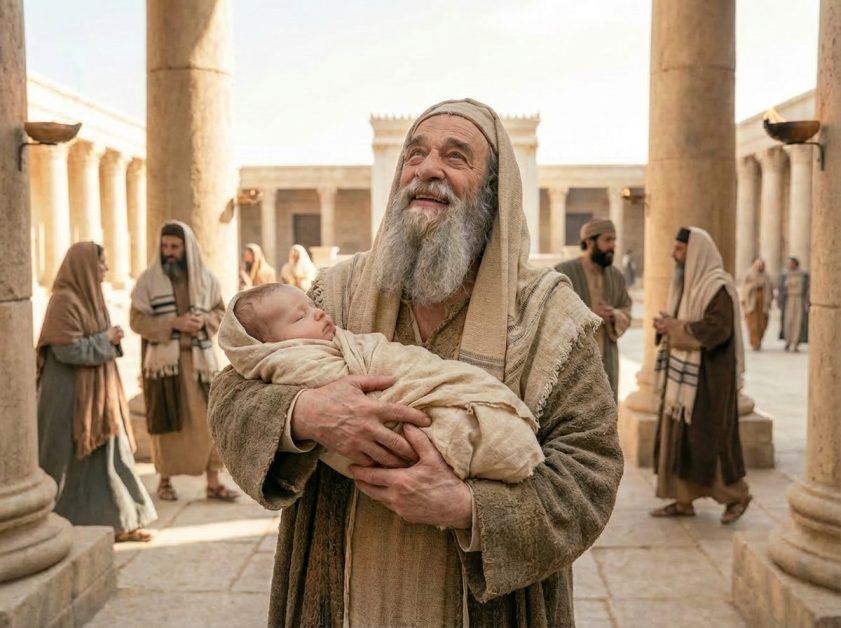
Categories
Jeremiah

One who would dare approach the Father

In the midst of all the prophesies of Jerusalem’s fall, Jeremiah does not leave the people without hope. 

God assures his people here that though he will discipline them, and not let them go entirely unpunished, yet he would not completely destroy them.  (Jeremiah 30:10-11)

Still, Jeremiah doesn’t sugarcoat their situation, saying,

Your wound is incurable, your injury beyond healing.  There is no one to plead your cause, no remedy for your sore, no healing for you….

Because of your great guilt and many sins I have done these things to you.. (Jeremiah 30:12-13, 15)

But then he promises to send someone to save them.

Their leader will be one of their own; their ruler will arise from among them.  I will bring him near and he will come close to me, for who is he who will devote himself to be close to me?’ declares the Lord. 

“‘So you will be my people, and I will be your God.’ ”

See, the storm of the Lord will burst out in wrath, a driving wind swirling down on the heads of the wicked.  The fierce anger of the Lord will not turn back until he fully accomplishes the purposes of his heart. 

In days to come you will understand this. (21-24)

This passage is of course talking about Jesus.  I like verse 21 where God says, “For who is he who will devote himself to be close to me?” 

In the NASB, it says, “Who would dare to risk his life to approach Me?”

In Jeremiah’s time, there was no one who could approach the Father.  Only the high priest might dare to do so, and he could do so only once a year. 

But by this time, the priesthood was compromised, and the ones who were supposed to be serving God, were serving false gods.

But as God’s own Son, Jesus could approach the Father and intercede for us.  He stood in the gap for us, and in doing so, he took upon himself the fierce wrath of the Father, dying on the cross for our sins.  And because of that, God’s anger has been turned back.

Now, those of us who believe in him can also approach the Father, without fear. 

So as the writer of Hebrews said,

Therefore, brothers, since we have confidence to enter the Most Holy Place by the blood of Jesus, by a new and living way opened for us through the curtain, that is, his body, and since we have a great priest over the house of God, let us draw near to God with a sincere heart in full assurance of faith, having our hearts sprinkled to cleanse us from a guilty conscience and having our bodies washed with pure water. 

Let us hold unswervingly to the hope we profess, for he who promised is faithful.  (Hebrews 10:19-23)