Categories
Philemon

If our faith is genuine

In 2 Corinthians 5:16-17, Paul wrote,

So from now on we regard no one from a worldly point of view. Though we once regarded Christ in this way, we do so no longer.

Therefore, if anyone is in Christ, he is a new creation; the old has gone, the new has come! (2 Corinthians 5:16-17)

Here we see the results of a genuine faith. We no longer see Christ the same way and neither do we see the people around us in the same way.

And there is no story that better illustrates that than this letter to a man named Philemon.

Philemon was apparently a leader in the Colossian church, and the church itself met in his house.

Nevertheless, he lived in a time when slavery abounded. Slaves made up approximately a third of the Roman population.

Sometimes people wonder why early Christian leaders like Paul didn’t speak directly against the practice.

My guess is he knew change wouldn’t come through politics but through changed hearts. And the only way hearts would be changed is through the gospel.

Many Christians trying to bring change to their nations would do well to remember that.

This is not to say that people should not be politically involved.

What it does mean is that any long-lasting change must come through the transformation of the human heart. And politics and new laws cannot effect that.

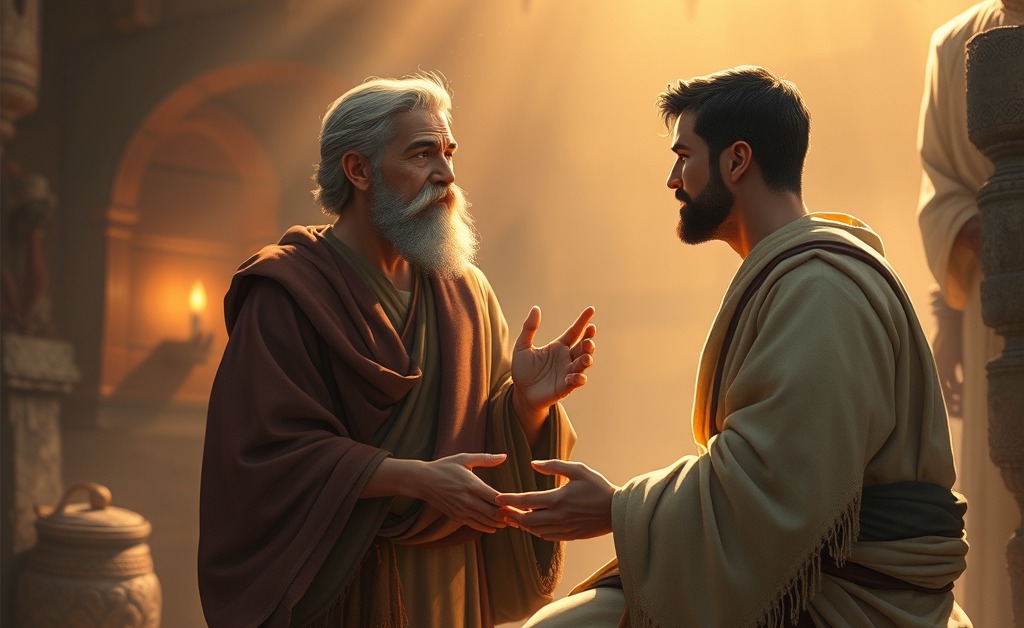
At any rate, while Paul was under house arrest in Rome, he met a man named Onesimus.

We don’t know the exact circumstances under which they met, but whatever they were, it seems that Onesimus became a Christian through Paul (Philemon 10).

And as Onesimus grew in the faith, he actually started serving with Paul, becoming a beloved and trusted friend.

But there was a problem, Onesimus seems to have been a runaway slave.

Apparently, he had stolen from his master and run away to gain his freedom.

But now as a Christian, his conscience probably smote him. He knew he was in the wrong, and he felt like he had to return to his old master. But to do so could very well mean death under Roman law.

Onesimus’ fate was purely in the hands of his master should he return.

And perhaps under this burden, he shared his heart with Paul.

When Paul asked him, “Who is your master?” to Paul’s surprise, Onesimus’ master was Philemon, a close friend of Paul.

Philemon himself, it seems, had also become a Christian through Paul (19)

With that, Paul wrote this letter on Onesimus’ behalf.

But Paul, though he had the authority as an apostle to tell Philemon what to do, refused to do so. Instead, you see him appealing to Philemon as a friend and as one he greatly loved.

What did he tell Philemon?

He told Philemon that God’s hand was in all that had happened.  (15-16)

Oh certainly God didn’t tell Onesimus to run away. Onesimus did that all on his own, sinning not only against Philemon, but against God.

But God reached out to him and directed him right into the path of Paul. And now this “useless slave” had become someone truly valuable, useful to Paul in the ministry. (11-13)

(Onesimus’ name itself meant “useful.”)

Now Paul told Philemon, “Onesimus is no longer the same man he was when he left you. He is not just merely your slave anymore. He is now a new creation in Christ. And your brother.” (16)

More Paul said,

If he has done you any wrong or owes you anything, charge it to me….I will pay it back–not to mention that you owe me your very self. (Philemon 18-19)

Paul here does two things.

He offers to pay for what Onesimus has stolen. But in doing so, he gives a subtle reminder that Philemon himself had his debt of sin paid by Jesus.

And as much as he might have owed Paul for bringing the gospel message that saved him, he owed Jesus much more, because Jesus was the one who actually paid the price.

How did Philemon respond? We don’t know. But Paul was confident that Philemon would do what was right. (21)

Why? Because Philemon was a new creation too. And Paul was confident that he would see Onesimus in the same light that Paul saw him.

The real question, though, is, “What about you? Is your faith genuine? If it is genuine, it should transform not only how you see Christ, but others.

It should lead you to forgive because you have been forgiven.

It should lead you to love and accept those around you, because Jesus loved and accepted you.”

What kind of faith do you have?

Categories
Ephesians

God’s masterpiece

I really love this verse.

For we are God’s workmanship, created in Christ Jesus to do good works, which God prepared in advance for us to do. (Ephesians 2:10)

The NLT puts it, “We are God’s masterpiece.”

We’re not simply some slop God threw together because he had nothing better to do.

He took great care and joy in putting us together. He made us just as he wanted us to be. And when he looks at us, he beams with pride at what he has made.

The thing I noticed today was that second phrase, though: “created in Christ Jesus.”

I’ve always linked that back to our original creation, to the time when God put us in our mother’s womb. And to some degree, that’s probably true.

But when I see that phrase, “in Christ Jesus,” it makes me think that’s not what Paul is talking about.

Although we can rightfully say that Christ did create us in our mother’s womb, we never see those exact words in scripture.

I think what Paul is saying here is that when we became Christians, we were created anew in Christ.

We see that in 2 Corinthians 5:17.

Therefore, if anyone is in Christ, he is a new creation; the old has gone, the new has come!

And when God created us anew in Christ, he did not do so with the intention that we simply live for ourselves once again, falling back into our sinful patterns.

Rather he created us anew for the good works that he prepared in advance for us to do.

In other words, when he created us and recreated us, he already had plans in mind for us. He had things he wanted us to do. People he wanted us to touch.

And so the question we need to be asking moment to moment, day to day is this: “Lord what do you have prepared for me today? What is it that you want me to do? Who is it that you want me to touch?”

Too often we go through our days never giving a thought to the things God has in mind for us to do. And because of that, we miss out on a lot of the things he had planned for us during the day.

There are probably too many days I have had like that.

Let us not live that way. Today is not just another ordinary day. God has specific things in mind for you today. Let’s keep our eyes open for what they are.

Categories
2 Corinthians

A new creation

This is probably one of my favorite verses in the whole Bible.

Therefore, if anyone is in Christ, he is a new creation; the old has gone, the new has come! (2 Corinthians 5:17)

I love the Life Application Bible’s comment on this:

We are not reformed, rehabilitated, or reeducated — we are recreated, living in a vital union with Christ.

So many times, though, that’s how people think. That God saved us to make us better people. To make us good.

But that is not his purpose at all. Rather, his purpose is to make us into something totally new.

The problem with the world’s way of thinking is that it’s based on the idea that we can be reformed. That we can be rehabilitated. That we can be reeducated. And we can to some extent.

But if there’s going to be any real change, it can’t come from human efforts or human wisdom. It has to come from God, changing us from the inside out.

The Jews tried to reform themselves for years, only to find themselves in relapse time and again. The book of Judges is a constant picture of this.

God sent judges, priests, and prophets to reeducate them. For that matter, they had the wisest man who ever lived ruling them in Solomon.

But not only could Solomon not reeducate his people into becoming new people, he himself fell into utter depravity and sin.

The Jews were put into long-term rehab in the desert for 40 years after their escape from Egypt. Then they went into rehab again in Babylon for another 70.

Still, nothing really changed. Oh, after the final rehab they finally came out a people that were no longer spiritually polygamous, worshiping other gods.

But when their Messiah came, they rejected and crucified him. And to this day, the vast majority of them still refuse to recognize Jesus as their Messiah.

So what people need today is not reform. Not reeducation. Not rehabilitation.

They need to become totally new creatures. And that can only come through Christ.

Only through Christ can we become the kinds of people that God originally created to be. People who are the image of God himself.

I love the story of Eustace in C.S. Lewis’ Voyage of the Dawn Treader. Eustace through his own selfishness and greed had turned into a dragon. And during that time as a dragon, he to a degree was reformed and rehabilitated. But he was still a dragon.

Then he met Aslan, a symbol of Christ throughout the Narnian stories.

Aslan told him, “Go into the pool and take a bath. But before you enter, you need to undress.”

As a dragon, Eustace of course didn’t have any clothes, but he did start to peel off his dragon skin.

When he was done, he was about to go into the pool, when he realized he still had another layer of dragon skin on. So he did it twice more, but still there were further layers of dragon skin.

Finally, Aslan said to him, “You will have to let me undress you.”

Aslan’s claws then cut in so deep and so painfully that Eustace said that he had thought they had gone right into his heart.

Aslan then threw Eustace into the pool, and when Eustace came out, he was a boy again.

Like Eustace, we can try to reeducate, rehabilitate, and reform ourselves. But that’s not what we need. What we need is to become a new creation.

And as Lewis said of Eustace, it is only then that the cure truly begins.

How about you? Are you trying to change yourself by your own efforts?

By doing that, you can only become “a better dragon.”

But if you truly want to become the person you were created to be, you need to become a new creation. And that starts with a prayer.

Lord Jesus, I’ve messed up my own life with my sin. I look in the mirror, and I don’t like what I see. I’ve tried to rehabilitate myself, but it hasn’t worked.

So now I turn to you. I believe you died on the cross to pay the penalty for all my sin. Now forgive me. Make me new. Transform me into your image as I was originally created to be. In Jesus’ name, amen.

Categories
Romans

Good infection (aka, the Walking Living)

I’d love to take the credit for the phrase “good infection,” but I must give credit to C.S. Lewis.

I can’t even remember how he used it, but I did read Mere Christianity, and somehow, that term must have floated back up to my head as I was writing yesterday’s blog.

Yesterday, we talked about “bad infection.” That through Adam, we all have been infected with sin. We’re not sinners because we sin, we sin because we are sinners.

Fortunately, there is also a “good infection” that comes through Jesus Christ. Paul writes,

But the gift is not like the trespass. For if the many died by the trespass of the one man, how much more did God’s grace and the gift that came by the grace of the one man, Jesus Christ, overflow to the many!

Again, the gift of God is not like the result of the one man’s sin: The judgment followed one sin and brought condemnation, but the gift followed many trespasses and brought justification.

For if, by the trespass of the one man, death reigned through that one man, how much more will those who receive God’s abundant provision of grace and of the gift of righteousness reign in life through the one man, Jesus Christ.

Consequently, just as the result of one trespass was condemnation for all men, so also the result of one act of righteousness was justification that brings life for all men.

For just as through the disobedience of the one man the many were made sinners, so also through the obedience of the one man the many will be made righteous. (Romans 5:15-19)

In other words, so many have died because of the bad infection of sin they received from Adam.

But through the good infection of grace and righteousness we have received from Jesus, we receive life.

And just as we were condemned through this bad infection we received from Adam, we have now been justified through the good infection we received from Jesus.

More, through this good infection, we become something totally different. And thankfully, we don’t become zombies.

Rather, we become someone with a totally new nature, a righteous nature. And we become righteous not because we do righteous acts. Rather we start to do righteous things because we actually are already made righteous in Christ.

We’ll see this later in 2 Corinthians 5:17 where Paul writes,

Therefore, if anyone is in Christ, he is a new creation; the old has gone, the new has come!

Maybe I should have named this post, “The Walking Living.” Because that’s what we become in Christ. People who are truly alive.

(In fact, I think I’ll rename this post right now. Hold on a bit…Great! Done!) 🙂

So let us pass on this “good infection” we have received in Christ, that they might become the “Walking Living” too.