May Jesus say of us, “How great is your faith!”

Little faith, great faith
Matthew 14-16
 Moment to Moment (Bible blog)
May Jesus say of us, “How great is your faith!”
Matthew 14-16

Blessed be the Lord,
for he has heard the sound of my pleading. (Psalm 28:6)
This being Christmas season, I was reading about Zechariah in Luke 1 this weekend.
David’s words reminded me of what Gabriel told Zechariah.
Do not be afraid, Zechariah, because your prayer has been heard. (Luke 1:13)
Honestly, it can be discouraging when God doesn’t seem to be answering my prayers.
But God was reminding me this weekend and today, “I’m not ignoring you. I have heard you. Even when I say no, I have heard you. And I care.”
So I sing with David,
The Lord is my strength and my shield;
my heart trusts in him, and I am helped.Therefore my heart celebrates,
and I give thanks to him with my song. (Psalm 28:7)

I cry aloud to the Lord,
and he answers me from his holy mountain. (Psalm 3:4)
This past Sunday, I heard a message on Luke 18 and the parable of the unjust judge.
I wonder how much confidence the widow had that the judge would respond to her cries. She had to know that he really didn’t care about her. Yet she had no alternative but to keep crying out to him.
But David had confidence that God cared. That when he cried out, God would answer.
And so though God may have seemed slow at times to answer, he kept praying and didn’t give up.
I was just thinking: When God is “slow” to answer my prayers, how confident am I that he will answer?
I want to have David’s faith.
I cry aloud to the Lord,
and he answers me from his holy mountain. (Psalm 3:4)

Devote yourselves to prayer; stay alert in it with thanksgiving. (Colossians 4:2)
As I mentioned in my last blog post, it’s easy for my heart to get stirred up by all the bad news I see on the internet and SNS.
But God was reminding me to stay alert to my own heart. To be aware of what’s going on there. And to constantly bring it to him in prayer.
And just as importantly, to lead my heart towards thanksgiving, choosing to rejoice in Him.
I was also reading Psalm 17 today, and it really confirmed what God was telling me.
You have tested my heart;
you have examined me at night.You have tried me and found nothing evil;
I have determined that my mouth will not sin…I will see your face in righteousness;
when I awake, I will be satisfied with your presence. (Psalm 17:3, 15)

Father, I look at the news now, I look at social media, and I see so much evil in this world.
It’s so easy to be troubled.
But you have chosen your church, and we are holy and deeply loved in your sight. (Colossians 3:12)
Help us to remember who we are.
And as we do, help us to put away the anger and wrath that marks this world, and to be renewed according to your image. (8, 10)
Help us to put on compassion, kindness, humility, gentleness, and patience, wrapping it all with your love. (12-14)
And let your peace rule in our hearts. (15)
Let your Word dwell among us richly, as we in all wisdom teach and admonish one another through psalms, hymns, and spiritual songs, singing to you with gratitude in our hearts. (16)
And in whatever we do, whether in word or deed, let us do everything in the name of the Lord Jesus, ever marked by a grateful heart for all you’ve done for us. (17)
In this troubled world, let us not be ruled by anger or fear, but by your joy, love, and peace. In Jesus’ name, amen.

Why do any of you consider it incredible that God raises the dead? (Acts 26:8)
Those words stood out to me today. Not because I don’t believe God can raise the dead. But it made me wonder, “Are there other ways in which I make God too small?”
I was praying for someone today, and the thought occurred to me, “Do I really think this can happen? Or am I just expressing a wish, a hope for something that I don’t think will really happen?”
I don’t want to be that way. My God is big. And I want to see him that way.
It made me think of an old worship song.
I have made you too small in my eyes.
O Lord, forgive me.And I have believed in a lie
that you were unable to help me.But now, O Lord, I see my wrong.
Heal my heart and show yourself strong.And in my eyes and with my song,
O Lord, be magnified.
O Lord, be magnified. — Don Moen

Suddenly there was such a violent earthquake that the foundations of the jail were shaken, and immediately all the doors were opened, and everyone’s chains came loose. (Acts 16:26)
As I read those words, I thought about all the people in my life that need to have their chains broken, who need to be set free.
One is bound by chains of hurt, anger, and bitterness.
Another is bound by chains of anxiety and confusion.
Others I know are bound by low self-worth, of not feeling “good enough.”
Others are bound by their own sin.
Satan has wrapped his chains around so many around me, including chains I’m unaware of.
God was reminding me today, “I want break those chains.”
Just as he broke Lydia’s chains. The demon-possessed girl’s chains. The prisoners’ chains. The jailer’s chains.
And so I’m praying for the people in my life whom Satan has enchained. And I’m praying that God shows me how to be that intersection point between heaven and earth for them.
Are there chains that need to be broken in the lives of people you know? Are there chains that need to be broken in your own life?
The Spirit of the Lord God is on me…
He has sent me to heal the brokenhearted,
to proclaim liberty to the captives
and freedom to the prisoners… (Isaiah 61:1)

So Peter was kept in prison, but the church was praying fervently to God for him. (Acts 12:5)
I was thinking today about how even after God didn’t answer the Christians’ prayer for James, they prayed for Peter when Herod imprisoned him. Not only that, they prayed fervently.
It made me think, “How fervent am I in my prayers when God seems slow to answer? Or when God has said no to other prayers?”
I’m thinking of two friends now, both of whom I’ve been praying for a long time. And for whatever reason, God doesn’t seem to be answering.
Sometimes I’m fervent in my prayers for them. But many times I’m not.
Of course, fervency in prayer doesn’t necessarily mean that God will say yes to my requests. Nor does it necessarily show how great my faith is. (The church sure didn’t seem to have much. See verses 15-16).
But fervency does say, “God, this is important to me. And I believe you hear me. And I believe you care. So I’m putting my trust in you and laying this in your hands.”
That’s the attitude I want to have as I pray for my friends today.
How about you? Are you praying with fervency?

But watch yourselves lest your hearts be weighed down with dissipation and drunkenness and cares of this life… (Luke 21:34, ESV)
The words “weighed down” really struck a chord with me this morning.
I look at the news every day, and it’s easy to get weighed down by all that’s going on in the world.
Some people deal with it by trying to escape, whether by drinking or drugs, or by throwing themselves into their work or hobbies.
Others “deal” with it by moaning and groaning on social media.
But how often do we do what Jesus commanded? What Jesus himself practiced?
How often do we take time with our Father and pray? (Luke 21:36-37)
By doing so, we not only gain strength to stand, but we also gain perspective.
The Kingdom of God is near. This world and it’s problems won’t last forever. All Jesus has said will come to pass.
And by remembering that, we’re able to straighten up and raise our heads, knowing our redemption is near. (28)
Is your heart weighed down by all that’s going on in the world? How often are you taking all this to your Father?

Now he told them a parable on the need for them to pray always and not give up…
So he called out, “Jesus, Son of David, have mercy on me!” Then those in front told him to keep quiet, but he kept crying out all the more, “Son of David, have mercy on me!” (Luke 18:1, 38-39)
I don’t think I’ve ever connected those three verses before. Jesus starts this chapter by telling his disciples to pray and not give up. The blind man then exemplifies what that means.
Even when it seemed like Jesus wasn’t hearing him, even when others told him to give it up, he kept crying for mercy. And he got it.
But unlike the unjust judge in the story, Jesus didn’t answer the blind man because he got sick and tired of his cries. He responded because he is a merciful Savior.
I wonder. When God seems slow to answer my cries, am I quick to give up? Do I start questioning his goodness and love? Or do I keep believing that he truly is good and that he loves me?
When Jesus returns, will he find faith in me? (Luke 18:8)
Will he find faith in you?
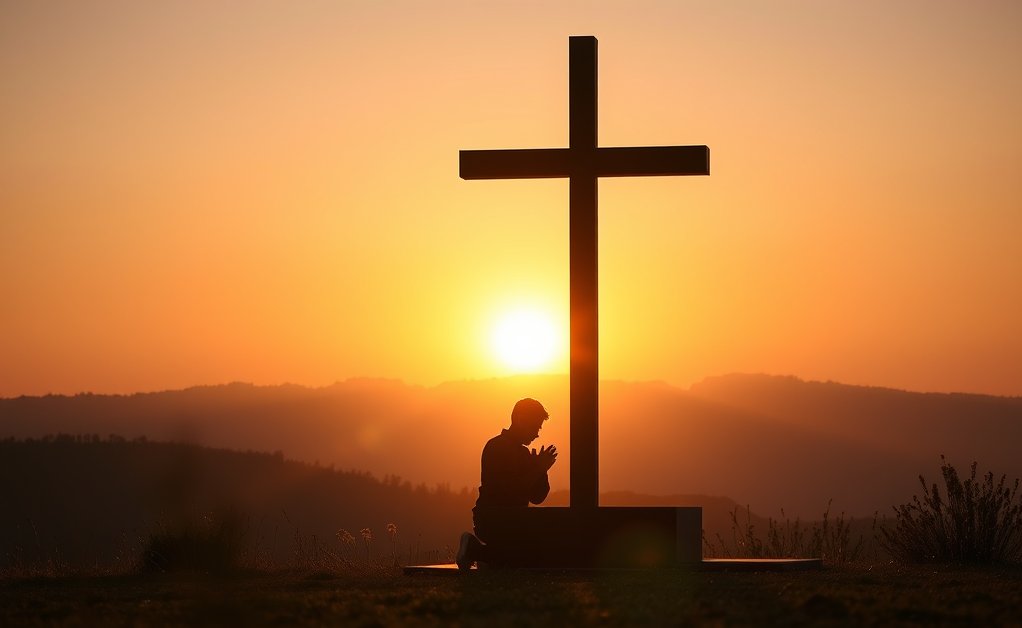
I was thinking this morning about our right to draw near to Jesus. How often do we take that for granted?
In today’s passage, there were some Greek men that didn’t feel they had that privilege, probably because they were Gentiles, outsiders to the Jewish community, and Jesus was a famous rabbi.
But Jesus was lifted up on a cross so that all of us could draw near to him. (John 12:32)
It made me think of an old hymn.
What a friend we have in Jesus,
All our sins and griefs to bear.
What a privilege to carry everything to God in prayer.O what peace we often forfeit.
O what needless pain we bear.
All because we do not carry everything to God in prayer.— Joseph Medlicott Scriven

As I was reading Paul’s words today, I started to pray some of his prayers for the Philippians for the people on my prayer list, for my family and small group in particular, but also for my pastor and his wife.
I pray that <name>’s love will keep on growing in knowledge and every kind of discernment, so that <name> may approve the things that are superior and may be pure and blameless in the day of Christ, filled with the fruit of righteousness that comes through Jesus Christ to your praise and glory, God.
I believe you started a good work in <name>. Please carry it to completion.
Let <name> live a life worthy of your gospel, and may you be highly honored in <name>’s body. (From Philippians 1:6, 9-11, 20, 27)
As I was praying, though, I realized I needed those prayers too. And so I prayed for myself as well.
Father, I pray that I too will keep growing in knowledge and every kind of discernment, so that I may approve the things that are superior and be pure and blameless in the day of Christ, filled with the fruit of righteousness that comes through Jesus Christ to your praise and glory.
You started a good work in me. Please carry it to completion.
Let me live a life worthy of your gospel, and be highly honored in my body, in my life today. In Jesus’ name, amen.”

“Now if I have indeed found favor with you, please teach me your ways, and I will know you, so that I may find favor with you. Now consider that this nation is your people.”
And he replied, “My presence will go with you, and I will give you rest.”
“If your presence does not go,” Moses responded to him, “don’t make us go up from here.” (Exodus 33:13-15)
I was thinking this morning, “How often do I have Moses’ heart?”
“Father, I don’t even want to leave this house unless you go with me. If I have found favor with you, walk with me. Teach me your ways and I will know you so that I may find favor with you.”
The amazing thing is that God says to us, “I will do this very thing you have asked, for you have found favor with me, and I know you by name. My presence will go with you and I will give you rest.” (Exodus 33:17, 14)
Ultimately, that’s what Christmas is about.
Jesus is Immanuel, God with us.
He not only walks with us and talks with us as he did with Moses, he reveals his glory to us, and we receive grace upon grace upon grace. (John 1:14, 16-18)
That’s awesome to ponder.
Glory to God in the highest heaven,
and peace on earth to people he favors! (Luke 2:14)

When you pray, don’t babble like the Gentiles, since they imagine they’ll be heard for their many words…Therefore, you should pray like this: Our Father in heaven. (Matthew 6:7, 9)
As I read Jesus’ words, I thought about what Solomon said in Ecclesiastes.
Do not be hasty to speak, and do not be impulsive to make a speech before God. God is in heaven and you are on earth, so let your words be few. (Ecclesiastes 5:2)
Solomon was mostly warning against making foolish vows to God. Sometimes, in our attempts to win his favor, or worse to manipulate God, we make all kinds of promises that we’re unable to keep.
Jesus on the other hand, seemed to be talking about people making flowery but ultimately empty prayers in order to impress God and those hearing their prayers.
In both cases, Jesus and Solomon say the same thing: Let your words be few. Do more listening than speaking.
But when you speak, Jesus gives us a model to follow.
Reflect on who God is and honor him as holy. Worship him. (Matthew 6:9; Revelation 4:8-11)
As you pray, set your heart on his kingdom. Ask him, “What’s important to you, today?” (Matthew 6:10a, 33)
And as you reflect on these things, ask that his will be done in your life, that you can participate in what he’s doing. (Matthew 6:10b)
But as much as he is God in heaven, remember he is also your Abba in heaven. And you are his beloved child. (Matthew 6:9)
So ask him for your needs. (Matthew 6:11, 25-32)
When you fall, don’t fear to approach him. Draw near and seek his forgiveness. (Matthew 6:12a)
Ask for his help concerning your broken relationships, especially when you’re struggling to forgive others. (Matthew 6:12b)
And ask your Abba for his leading and protection. (Matthew 6:13)
We have such an incredible privilege as God’s kids. We get to approach our Abba at any time. So let’s take advantage of that privilege and draw near.

So Peter was kept in prison, but the church was praying fervently to God for him. (Acts 12:5)
On the one hand, Peter was arrested and kept in prison by the power of Herod.
But the church appealed to a higher power.
I think that’s always worth remembering.
We often face powers stronger than we are. Powers that are antagonistic to us.
They may be demonic powers. They may be earthly powers.
But no matter what powers may confront us, we have the right as children of God to appeal to a higher power.
Let’s take advantage of that right, praying as fervently as the church did for Peter. And remember that however God may answer our prayers, he is faithful.
He was faithful to Peter, delivering him from Herod’s hand.
But he was also faithful to James. While Herod killed James’ body, he could not destroy James’ soul. (Matthew 10:28-31)
And in his faithfulness, God led James home.
The one who lives under the protection of the Most High
dwells in the shadow of the Almighty…He will cover you with his feathers;
you will take refuge under his wings.His faithfulness will be a protective shield. (Psalm 91:1, 4)

Pay attention to me, my people,
and listen to me, my nation;
for instruction will come from me…Listen to me, you who know righteousness,
the people in whose heart is my instruction… (Isaiah 51:4, 7)
Father, direct my heart to you. May I be alert, paying attention to you, and listening to you in my prayers.
I want to hear the instruction that comes from you. To have your instruction in my heart.
And as I pray, let me not merely say, “Your will be done.” But remind me of what you have said in your Word so that I can truly know your will and pray your will.
In Jesus’ name, amen.

“Lord, if you had been here, my brother wouldn’t have died. (John 11:21)
As soon as Mary came to where Jesus was and saw him, she fell at his feet and told him, “Lord, if you had been here, my brother wouldn’t have died!” (32)
I’d always seen Mary’s and Martha’s words as a kind of rebuke of Jesus. “Why didn’t you come earlier? If you had come earlier, Lazarus wouldn’t have died.”
Now I’m not so sure.
Lazarus had been in the grave four days when Jesus arrived. Which means even if Jesus had left right away, Lazarus would have still been in the tomb two days when Jesus arrived.
And so it seems more likely to me that they were saying, “I wish you hadn’t been so far away when Lazarus got sick. If you had been here, he wouldn’t have died.”
But one thing that’s clear to me is that when Jesus arrived, Mary and Martha had no thought that Jesus could raise Lazarus from the dead. It never entered their heads to ask him.
Even when Martha told Jesus, “I believe God will give you anything you ask,” looking at her words in verses 24 and 39, it’s very clear she wasn’t thinking Jesus would raise Lazarus right then and there.
It just made me think. Do I ever think, “It’s too late; it’s no use praying anymore”?
Is my Jesus so small, that I don’t think he can raise the things I consider dead and beyond hope to life again?
Do I truly believe he is able to do far more than I can ask or imagine? Or is my thinking as to what Jesus can do still too small?

He is always wrestling for you in his prayers, so that you can stand mature and fully assured in everything God wills. (Colossians 4:12)
“He’s always wrestling for you in his prayers.”
That word “wrestle” is sometimes translated “fight” in the New Testament, (1 Timothy 6:12; 2 Timothy 4:7)
So you could probably translate Paul’s words, “He’s always fighting for you in his prayers.”
That resonates with me.
How often do I fight for people in my prayers?
There are two people in particular that I’m thinking of right now who are really struggling. But there are many more I know who are also having a really hard time.
And I just feel like God is saying to me, “Fight for them in your prayers. Fight! Don’t just give brief, token prayers for them. Fight!”
Who is God putting on your heart right now that he wants you to fight for?

Therefore, I want the men in every place to pray, lifting up holy hands without anger or argument. (1 Timothy 2:8)
It’s always interesting to me that Paul specifically tells the men to pray.
How much do we men actually value prayer?
How often, instead, do we live as practical atheists, living each day as if God isn’t there, as if we are dependent only upon ourselves?
What marks our lives in our homes, at our workplace, at church?
Anger?
An argumentative attitude?
Or are we marked by prayer, each day lifting holy hands to our Father?
Of course, women should pray too. Everything I said applies to you too.
But men, in this passage, Paul is talking to you.
So let’s take up the challenge God has given us and be men of prayer.
We are soldiers for Christ, fighting an enemy who wants to destroy us, our families, and those we love. (2 Timothy 2:3-4; Ephesians 6:10-18; 1 Peter 5:8; John 10:10)
So as Christ’s soldiers, let’s get on our knees and fight like men.

Rejoice always, pray constantly, give thanks in everything; for this is God’s will for you in Christ Jesus. (1 Thessalonians 5:16-18)
A lot of times, we ask, “What is God’s will for me?”
While this is not the whole of God’s will for us, Paul does tell us how God desires us to live each day: “Rejoice always, pray constantly, give thanks in everything.”
Life isn’t always fun. Many times we face trials.
How is it then that we can rejoice always and give thanks in everything? When life is hard, what do we have to rejoice about, to give thanks about.
We can give thanks and rejoice in how God sees us. That he has stamped his image on us (Genesis 1:26-27).
And as his priests, he has stamped his seal on us: “Holy to the Lord.” (Exodus 28:36, Deuteronomy 7:6, 14:2; 1 Peter 2: 5, 9).
And because we are his, his priests, his people, his beloved children, we have access to him 24-7.
We don’t have to be afraid he’ll reject us or turn us away. In good times and bad, in our triumphs and struggles, we can come to him with boldness.
That’s God’s will for us. To walk with him moment to moment, rejoicing in our relationship with him.

Please, Lord, remember how I have walked before you faithfully and wholeheartedly and have done what pleases you. (2 Kings 20:3)
This story apparently happened after Assyria started their attacks on Judah, but before Sennacherib besieged Jerusalem. (See 2 Kings 20:13 and compare with 18:14-16.)
What strikes me is the basis on which Hezekiah made his plea, and the basis on which God answered. Hezekiah made his plea based on his goodness and faithfulness.
But on what basis did God answer?
When God gave the reasons for granting Hezekiah’s request and for delivering Judah from Assyria, he said he would do these things “for my sake and for the sake of my servant David.” (16)
In short, God granted Hezekiah’s request, not because of Hezekiah’s goodness, but because of God’s glory, goodness, faithfulness, and grace.
He had made promises to David, and he was faithful to keep them.
And by healing Hezekiah and delivering Judah from Assyria, he showed his glory, goodness, and grace not only to Hezekiah, but to Judah and all the surrounding nations.
It made me think. On what basis do I come to God with my requests?
Am I appealing to my own goodness? Am I saying, “God, I deserve this”?
Or do I acknowledge, “Father, I deserve nothing from you. But I come to you because of your goodness, faithfulness, and grace to me.”
Do I lay my requests before him with that kind of heart?
If we come to God thinking we deserve things from him, it’s easy to fall into the trap of pride Hezekiah did. (2 Kings 20:12-19, 2 Chronicles 32:24-25).
“Of course, God answered my prayer. I deserve it. I deserve his blessings.”
Or if God says no, we get angry.
“Why didn’t you answer me? I deserve this!”
On what basis do you come to God in prayer?
On your goodness?
Or God’s glory, goodness, faithfulness, and grace?
Father, I deserve nothing from you. And yet, by your grace, you call me your child and tell me I can ask you for anything.
So Father, I humbly come before you and lay my requests before you.
Not because of my goodness. But because of your glory, goodness, faithfulness, and grace.
And I trust that however you answer, yes or no, you are good and your ways are best. In Jesus’ name, amen.

The end of all things is near; therefore, be alert and sober-minded for prayer. (4:7)
Be sober-minded, be alert. Your adversary the devil is prowling around like a roaring lion, looking for anyone he can devour. (5:8)
I can’t help but wonder if Peter was thinking of his own failures when he wrote those words.
Jesus had warned him that Satan wanted to sift him like wheat (Luke 22:31).
Jesus had told him to watch and pray so that he would not fall into temptation (Matthew 26:41).
So what did Peter do? He fell asleep. And when the time of testing came, he failed the test. (Matthew 26:69-75)
So many of us say, “I want to be strong when I go through times of testing, but I don’t know if I can.”
But we cannot be strong if we’re not connected to the Father, if we are not receiving his strength, his leading, and his wisdom every day.
Jesus knew that and so he constantly took time to be with his Father every day.
That’s why when the time of testing came, unlike Peter, Jesus was able to pass the test.
Do you want to be strong when times of testing come? Are you plugged into the Father daily? In prayer? In his Word?
Or are you asleep?

the eyes of the Lord are on the righteous
and his ears are open to their prayer. ” (1 Peter 3:12)
Recently, I gave a message at church, and one of the things I talked about was the times when God says no or seems slow in answering our prayers.
For me, it seems like God has been awful slow recently as I’ve been struggling with some health problems for the past month.
But Peter’s words, really David’s words (Psalm 34:15), really encouraged me today.
Whether God seems slow or says no, his ears are always open to our prayers. He’s not ignoring us.
And his eyes are always on us.
Not because we’re such good people or more righteous than others.
But because we are his beloved children, clothed with Christ’s righteousness.
That’s an awesome thought.

“Why?” is the oft unanswered question for us as Christians.
I’m sure the Christians in Jerusalem were wondering that after Herod Agrippa killed James, who was Jesus’ disciple and the brother of John.
(Quick note: this Herod was the grandson of the Herod who tried to kill Jesus as a baby in Bethlehem. The James mentioned in verse 17 was the brother of Jesus.)
Now, Peter was imprisoned by Herod and was scheduled to be executed in a few days.
But God saved Peter in a miraculous way.
The question is, though, why did God save Peter and not James?
Was it because the Christians had more faith when they were praying for Peter?
Hardly. They thought Rhoda was crazy when she said Peter was at the door. It seems despite their prayers, they had no faith at all that God would say yes.
So why?
We don’t know.
The truth is God’s plans are often not are our own.
So how should we respond?
1. No matter what, keep believing God is good.
We may not understand God’s plans or purposes. But we can trust they are good because he is good.
2. Connected with that, know that God will ultimately bring justice.
God promises to bring it quickly (Luke 18:7-8), but again, his idea of “quickly” is not always our own (Revelation 6:9-11).
But he will bring justice. He certainly did with Herod (Acts 12:20-23)
3. Keep praying, seeking him.
That’s what Jesus commanded us (Luke 18:1).
But remember: we pray and seek him not to align God to our plans. But to align ourselves to his.
I was talking with a friend recently, and he said something interesting: “God always answers my prayers. But he often doesn’t answer it the way I expect.”
But there was no bitterness or sense of resignation in his words. Rather there was a strong belief in God’s goodness.
God is good. His plans are good.
The question is will we his people still have faith when Jesus returns and those plans come to fruition? (Luke 18:8)
Will you?

Therefore, brothers, pick out from among you seven men of good repute, full of the Spirit and of wisdom, whom we will appoint to this duty.
But we will devote ourselves to prayer and to the ministry of the word. (Acts 6:3-4)
What struck me today was the connection between prayer and the Word and being full of the Spirit and wisdom.
Do you want to be full of the Spirit? Do you want to be led by him and empowered by him like Jesus was (Luke 4:1, 14)?
You need to be connected to him. And that comes through prayer, daily seeking him, asking for his leading and power.
Jesus told us to keep on asking, keep on seeking, and keep on knocking. And if we do, God will not fail to send his Spirit to us. (Luke 11:9-13)
Do you want to be filled with wisdom? You need to devote yourselves to his Word. You can only learn to think as God does if you take the time to read and study his word.
The apostles were full of the wisdom and the Spirit because they did these things.
But that kind of thing isn’t just for the apostles or the “elite” Christians. It’s for all of us.
In the early church, all of the Christians were devoting themselves to God’s word and to prayer. (Acts 2:42).
Let’s not believe the lie that this kind of life is for only the “elite” Christians. It’s for every one of us who follow Jesus.
Only as we, God’s people, live this way, filled with his Spirit and wisdom, will we ever see change in the lives of the people we love and in this country.

“Be on your guard, so that your minds are not dulled from carousing, drunkenness, and worries of life, or that day will come on you unexpectedly like a trap. For it will come on all who live on the face of the whole earth.
But be alert at all times, praying that you may have strength to escape all these things that are going to take place and to stand before the Son of Man.”
During the day, he was teaching in the temple, but in the evening he would go out and spend the night on what is called the Mount of Olives. (Luke 21:34-37)
Jesus never promised an easy life.
Despite all the disciples’ dreams of Jesus throwing down the Roman Empire and setting us his kingdom, Jesus warned them that Jerusalem would be destroyed and that they themselves would be persecuted for his sake.
He also warned them that before he returned in the clouds, there would be many more trials to come. And so he told them to be alert at all times, praying for strength to escape all that would happen.
What I find interesting is that Jesus modeled that for them.
Jesus was facing his own trial. He would soon be crucified for our sins. And so every night he went to the Mount of Olives.
I don’t think he went there to sleep. I think he went there to pray for strength. He could not escape the cross. But he would endure it.
And ultimately, he would escape the grave, rising three days later.
Like Jesus, we are not going to escape all our trials. We’re going to have to go through hard times. And like his disciples, we may have to suffer for Jesus.
You might wonder if you have the strength to get through it.
You don’t. I don’t. We can’t make it through in our own strength.
So let’s follow our Lord’s example and pray for strength. As the Father strengthened Jesus, he will strengthen us. (Luke 22:43)
And though we may face our own crosses, like Jesus, we will find resurrection life.
So I say to you, ask, and it will be given to you. Seek, and you will find. Knock, and the door will be opened to you.
For everyone who asks receives, and the one who seeks finds, and to the one who knocks, the door will be opened.
What father among you, if his son asks for a fish, will give him a snake instead of a fish? Or if he asks for an egg, will give him a scorpion?
If you then, who are evil, know how to give good gifts to your children, how much more will the heavenly Father give the Holy Spirit to those who ask him? (Luke 11:9-13)
The verbs “ask,” “seek,” and “knock,” can all be translated, “keep on asking,” “keep on seeking,” and “keep on knocking.”
But Jesus doesn’t promise that we’ll necessarily receive all we ask for. Rather, we will be given “as much as we need.” (8)
Sometimes in his wisdom, God only gives us only two loaves of bread instead of three. But sometimes in his wisdom, he’ll give us a steak instead of bread.
Sometimes we ask for snakes, thinking they’re fish. Other times we ask for scorpions, thinking they’re eggs.
But God only gives us good gifts.
Prayer is not about trying to manipulate God, getting him to give you what you want. It’s about drawing near to him. And through prayer, we discover his character, his way of thinking, and his love.
If we seek him, we will find him.
If we knock, he will open the door to us.
And ultimately, he will give us what we need the most: himself. For through all our trials and struggles, he will give us his Spirit to lead us, to comfort us, and empower us.
So each day, let us keep asking, seeking, and knocking.

Leaders will always disappoint us.
Whether government leaders or church leaders, they will disappoint us.
They disappoint us because they are human. And as humans, they have all their flaws and failings.
David may have been stronger been Ish-bosheth. But he was no better at dealing with Joab than Ish-bosheth was at dealing with Abner.
David also married many women despite God’s commands (Deuteronomy 17:17).
It seems he married at least one of them purely for political reasons. (2 Samuel 3:3)
In addition, he demanded to have Michal back, seemingly more for political reasons (she was a daughter of the former king, Saul) than actual love. This despite the fact that her new husband obviously loved her.
One also wonders how Michal felt. Certainly she had once loved David (1 Samuel 18:28).
But despite being treated badly by her father (1 Samuel 25:44), she did seem to have moved on.
Now she had to compete with multiple wives for David’s attention. And that may have led to her later attitude toward David. (2 Samuel 6:20)
And yet, God accomplished his purposes through David.
In the same way, he will accomplish his purposes through our political leaders and our church leaders, even though we can’t always see what those purposes are.
So let’s pray for our leaders. Pray that God will accomplish his purposes despite their flaws, despite their weaknesses.
For our leaders that don’t know God, pray that they will come to know him.
And for those who do know God, pray that God will continue to lead them and help them to become the leaders, more than that, the men and women calls them to be.
God shows them grace. Let us have that heart of grace as we pray for them.

Lord, we live in a nation where your word is rare and prophetic visions are not widespread. And just like Eli’s eyesight was failing, so is the spiritual eyesight of so many in our land.
But like Samuel, I want to say, “Speak, Lord, for your servant is listening.”
Reveal yourself to me through your Word as you did to Samuel. And through me, speak to those around me.
Let me not be afraid to tell people what you have said, even when it’s hard to hear. Help me to tell them all you have said, hiding nothing.
And as I speak, let them see my love for them. More importantly, let them see your love for them.
Use me today to bring your words of life to my family, my friends, my coworkers, and my students. And may they find the grace and salvation that I have found in you.
In my life and in theirs, let none of your words fall to the ground, but may they accomplish everything you intend them to do. In Jesus’ name, amen.

Devote yourselves to prayer; stay alert in it with thanksgiving. (Colossians 4:2)
Why pray?
I think we see several reasons in Paul’s instructions on how to pray.
“Stay alert in it.”
Those words remind me of Jesus’ words to his disciples.
Stay awake and pray, so that you won’t enter into temptation. The spirit is willing, but the flesh is weak. (Matthew 26:41)
We pray so that we can be aware of how Satan is trying to attack us during the day.
We pray because we are weak. And we need God’s strength as we face Satan’s attacks and the trials we face each day.
But just as importantly, we pray so that we can see what God is doing around us and join in with what he’s doing, making the most of every opportunity he gives us. (5)
There’s one more reason to pray, though. To remember God’s goodness. To remember his grace and toward us. And as we remember and rest in those things, we start to live each day with gratefulness and joy.
So let us pray each day, staying alert in it, full of thanksgiving.

(Aaron) stood between the dead and the living, and the plague was halted. (Numbers 16:48)
Those words really struck me today.
On one side of Aaron, thousands were dead because of their rebellion.
On the other, thousands were saved through his intercession.
As God’s priests, we stand in the same position as Aaron.
Many around us are dying because of their sin. And we have a choice.
We can just do nothing and watch God’s judgment fall.
Or like Aaron, we can pray. We can intercede. We can reach out to them, sharing God’s gospel of repentance and forgiveness.
Lord, give me the heart of Aaron. There are so many people hurting and dying because of their sin.
Give me Aaron’s compassion. Give me your compassion. Show me what I can do to reach out.
And use me to bring your salvation into their lives. In Jesus’ name, amen.

As I read Jacob’s blessing on Joseph’s sons, I prayed for my own daughter this morning.
Lord, you were the God before whom my father walked.
Not only that, you have my shepherd all my life to this day.
Throughout my life, you have redeemed my life from harm.
You saved me from my sin, and from the Enemy who would have destroyed me.
Now Lord, bless my daughter.
As you have been my shepherd, be hers.
As you have redeemed me, redeem her.
In Jesus’ name, amen.

Lord, you struck our Rock, you struck Jesus on the cross and now through him we have living water.
Quench our spiritual thirst. (1 Corinthians 10:4, Exodus 17:6, Numbers 20:7-11, John 4:10, 7:37-39)
You brought us out of slavery to sin and Satan’s kingdom.
Now, Lord, let us be your sanctuary. Let us be your dominion. (Ephesians 2:16-22, Revelation 1:5-6)
In Jesus’ name amen.
I couldn’t help but see the connections in Jesus’ words in chapter 21 and what happened in chapter 22.
Jesus told his disciples,
Be on your guard, so that your minds are not dulled from carousing, drunkenness, and worries of life, or that day will come on you unexpectedly like a trap.
For it will come on all who live on the face of the whole earth.
But be alert at all times, praying that you may have strength to escape all these things that are going to take place and to stand before the Son of Man. (Luke 21:34-36)
Jesus himself kept his own words. In the midst of much anguish and distress, he prayed to his Father, and his Father strengthened him for the trials he would face. (Luke 22:41-43)
The disciples, on the other hand, slept. Why? Just because they were tired? No, they were “exhausted from grief.” (Luke 22:45)
They were mentally and emotionally drained from all Jesus had told them. And so they slept.
It was a totally understandable response. I can’t help but wonder if I wouldn’t have done the same. But when trials came, they fled (Matthew 26:56).
Peter followed Jesus, but ended up denying him. Instead of being able to stand before Jesus, he too left in shame. (Luke 22:54-60)
We are all weak. And it’s understandable that many of us are tired and emotionally drained because of how long Corona has been dragging on.
But it’s especially in these times that we need to be in prayer. Because without the Father’s help, we will not be able to stand.
But if we come to him, he will strengthen us.
And if we have fallen, don’t lose heart. Just as Jesus showed Peter and the disciples grace, he shows us grace and he restores us.
So as the writer of Hebrews said,
Therefore, since we have a great high priest who has passed through the heavens—Jesus the Son of God—let us hold fast to our confession.
For we do not have a high priest who is unable to sympathize with our weaknesses, but one who has been tempted in every way as we are, yet without sin.
Therefore, let us approach the throne of grace with boldness, so that we may receive mercy and find grace to help us in time of need. (Hebrews 4:14-16)
Taste and see that the Lord is good. (Psalm 34:8)
Lord, I have tasted your goodness. I want to taste more.
As I read your word, let me taste your goodness.
As I pray and I hear you speak to me, let me taste your goodness.
As I see you answer my prayers, let me taste your goodness.
When I’m depressed because I have fallen into sin yet again, let me taste your goodness, knowing the sweetness of your forgiveness.
When I go through struggles and trials in my life, when I am so totally aware of how weak and inadequate I am, let me taste your goodness. Especially as I come to understand that your grace is sufficient for me and that your power is made perfect in my weakness.
As I go out into this world and touch others, let others taste your goodness.
Let my family taste your goodness through me.
Let my friends, coworkers, and neighbors taste your goodness through me.
Let the people at church taste your goodness through me.
And as that happens, let me taste your goodness as I see you work in me, imperfect child of yours though I may be.
Each day, Lord, let me taste your goodness in some way.
In Jesus’ name, amen.
Lord, you are the Rock of my salvation. Just as the rock was struck at Massah and Meribah giving the people life-giving water, you were struck on the cross giving me eternal life (Exodus 17:1-7, I Corinthians 10:4, John 4:10-14, 7:37-39).
I rejoice in you, Lord, because you have triumphed over Satan, sin, and death! And I’m so grateful for the grace that you have given me. (Psalm 95:1-2)
You are the great God, the King of all other “gods.” You are the Creator of all things. (3-5)
So Lord I bow down to you. I worship you. You are my God, my shepherd. I am your sheep. I am yours. (6-7)
Help me to always remember that, Lord. When trials come and I’m struggling, let me never question you, asking “Are you really with me?” (Exodus 17:7)
You’ve already proven your love and goodness to me. So help me to trust you. And no matter what happens to me, let me enter your rest, rejoicing in you today, and every day.
Thank you Lord for your goodness.

Here in Japan, spring is a new season for people in more than one way. April is not only a turning of the weather, but a time when students start a new school year and people start new jobs or change jobs.
For me personally, I’m facing change as well.
After having worked at the same high school for seven years, I will start working at three junior high schools come this April. A big change to be sure.
And so as I read Philippians 1, Paul’s prayer touched my heart.
It’s a prayer I pray for myself as I head into this new season,
And for those of you who are heading into a new season of life, I pray for you as well, especially those of you facing big decisions.
And I pray this: that your love will keep on growing in knowledge and every kind of discernment, so that you may approve the things that are superior and may be pure and blameless in the day of Christ, filled with the fruit of righteousness that comes through Jesus Christ to the glory and praise of God. (Philipians 1:9-11)

First of all, then, I urge that petitions, prayers, intercessions, and thanksgivings be made for everyone, for kings and all those who are in authority, so that we may lead a tranquil and quiet life in all godliness and dignity.
This is good, and it pleases God our Savior… (1 Timothy 2:1-3)
How often do we pray for our political leaders? That’s what Paul calls us to do. What’s more, he says it is pleasing in God’s sight when we do so.
Note two things.
Paul doesn’t merely say, “Pray about our leaders.”
Nor does he say, “Complain about and curse our leaders in your prayers.”
He says “Pray for them.”
If your leaders are godly and you like them, that’s easy to do.
If they aren’t and you don’t, it’s a lot more difficult.
The interesting thing is this, and it’s my second point:
Paul wrote this when Nero was Caesar. And whatever you think of Trump or Biden, Nero was a million times worse than either of them. If you doubt me, just look at the history books.
And yet, Paul said, “Pray for him.”
How do we pray for ungodly leaders?
Finally, a word: “More praying. Less arguing.”
As James said, “People’s anger does not lead to the righteous life God wants us to live.” (James 1:20)
It takes away from our witness when we’re hostile to unbelievers. And when we’re fighting with each other, we lose sight of what God is calling us to do in this world: to bring his salvation to people who are lost and dying.
So let us put aside all our anger and arguments, and lift up holy hands together, praying for and working for the salvation of our nation. (8)

Father, I pray that you will make me worthy of your calling.
By your power fulfill my every desire to do good and my work produced by faith.
I pray this so that the name of the Lord Jesus will be glorified by me, and me by him.
I pray this not according to my own worthiness and goodness. Rather, I pray this according to your grace, Father, and the grace of the Lord Jesus.
And I pray this not only for myself, but for your church, especially in these trying times, so that this world that is hurting and dying may know you.
I love you.
I pray all this in Jesus’ name,
Amen.

I truly love this passage. I could probably write 12 sermons based on it if not more. 🙂
But in these troubled times, the scripture that stood out to me was verse 12.
Rejoice in hope; be patient in affliction; be persistent in prayer. (Romans 12:12)
Rejoice in hope.
The people around us don’t have a lot of hope. And because of that, they easily get angry and cynical when they look at the world around them.
But as Christians, we should never be that way. Why not? Because we have a hope that this world does not have.
We have hope that these troubles will not last forever. And we have hope that Jesus will come back and make all things right.
So let us remember that and choose to rejoice in that hope.
Be patient in affliction.
Again, sometimes our trials seem never-ending. Covid-19 certainly seems that way.
But because of the hope we have, let us keep our eyes focused on Him who is our hope and wait for his deliverance patiently with quietness and confidence. (Psalm 33 :20-21, Isaiah 30:15-18)
Finally, be persistent in prayer.
Pray for our leaders, especially. But also pray for those who are hurting around us and need Jesus. (1 Timothy 2:1-6)
More let us be a light to them in this darkened world.
Rejoice in hope; be patient in affliction; be persistent in prayer.

And he said, ‘The God of our ancestors has appointed you to know his will, to see the Righteous One, and to hear the words from his mouth, since you will be a witness for him to all people of what you have seen and heard. (Acts 22:14-15)
Lord, you have chosen me for yourself. (Ephesians 1:3-14).
In these troubled times, I look forward to the day when you return, and I will see you face to face. (1 Corinthians 13:12, 1 John 3:2)
Now, let me hear your voice each day so that I may know your will. (Isaiah 30:20-21, Romans 12:2)
And let me be your witness in this dying world. (Acts 1:8, 2 Corinthians 5:13-21).
In Jesus’ name, amen.
As I was reading Mark 15 this morning, I thought about Jesus’ words “My God, my God, why have you forsaken me?”
Jesus was of course quoting from Psalm 22, and as I read it, I came across these words.
For he has not despised or abhorred the torment of the oppressed. He did not hide his face from him but listened when he cried to him for help. (Psalm 22:24)
Jesus knows what it’s like to have the Father hide his face from him. To feel abandoned. (Although the Father never truly abandoned Jesus).
And it is for that reason that he does not despise or abhor those who are suffering.
Although we may feel abandoned by God at times, or feel as if he is ignoring our prayers, he does not hide his face from us. And he does turn his ears to our prayers.
So whatever you’re going through now, turn to him. And remember the words of the writer to the Hebrews.
Therefore, since we have a great high priest who has passed through the heavens—Jesus the Son of God—let us hold fast to our confession.
For we do not have a high priest who is unable to sympathize with our weaknesses, but one who has been tempted in every way as we are, yet without sin.
Therefore, let us approach the throne of grace with boldness, so that we may receive mercy and find grace to help us in time of need. (Hebrews 4:14-16)

It’s always good not only to read scriptures, but to pray them. And as I read this passage today, it led me to pray. May it be your prayer today as well.
Father,
You are my God, and I am your child.
Give me integrity of heart and action so that I will fear you always, for my good, and the good of the next generation.
Thank you for the new permanent covenant we have in Jesus. Because of this new covenant, you will never turn away from doing good to me.
Put the fear of you in my heart, so that I will never again turn away from you.
In your faithfulness, and with all your heart and mind, plant me in this land. And today, may I bear fruit for you. May I be a channel of your love to those around me today.
In Jesus name, amen.
Jeremiah had a pretty depressing job.
He was preaching to a nation that was being judged for their sin, and God had outright told him to stop praying for the nation. That even if Moses or Samuel prayed for Israel, God would not listen. (Jeremiah 15:1)
What was the nation’s problem? They couldn’t even recognize their own sin. (16:10)
Namely, they had:
And yet there was still a sliver of hope. Though God would punish his people, he would bring them back. (Jeremiah 16:14-15)
The interesting thing is that right after saying that, God said he would send fishermen to fish for the Israelites, and hunters to gather them in.
That was actually a word of judgment. The Babylonians would gather in the people of Israel and the Israelites would pay for their own sin by suffering exile for 70 years.
But hundreds of years later, after God kept his promise and graciously returned his people to their land, Jesus came and called his first disciples, saying,
“Follow me…and I will make you fish for people.” (Matthew 4:19)
This time, though, he would send out fishers not to punish people, but to save them.
Why was that possible? Because Jesus himself would be punished in our place. He took all of God’s wrath toward us upon himself.
And now, he calls all of us as his disciples to fish for people.
So let us go out and do that.
And especially in this time when fear seems to reign, let us pray for the nations.
Pray as Jeremiah did. I’m an American, living in Japan. But feel free to adjust this prayer to wherever you live.
Lord, my strength and my stronghold,
my refuge in a time of distress,
the nations will come to you from the ends of the earth.Japan will come to you.
The U.S. will come to you.
All the nations.And they will say,
“Our fathers inherited only lies,
worthless idols of no benefit at all.”O God, can one make gods for himself?
People have tried, worshiping all manner of things.
But these things are not gods. Forgive them.Lord, through us, inform them
and make them know your power and might.
Then they will know that your name is Yahweh.(Based on Jeremiah 16:19-21)
O Lord, you chose me before you formed me in the womb.
You knew me, and set me apart before I was born.
You called me as your child, and as your priest, declaring your praises to the nations. (John 1:12; 1 Peter 2:9)
I will go to everyone you send me and speak whatever you tell me.
Fill my mouth with your words.
Use me to uproot and tear down Satan’s strongholds, to destroy and demolish them. (2 Corinthians 10:4:5)
Use me to build and plant your kingdom in the lives of those around me.
For I believe you will watch over your word to fulfill it. What you say, you will do.
In Jesus’ name, amen.

As I was reading today’s passage, I thought about prayer.
In this passage, the commander of the army of the Lord appears to Joshua. Most likely, that was Jesus himself, hundreds of years before he came to this earth as a baby.
Anyway, when the commander appears, Joshua challenges him asking, “Are you for us, or for our enemies?”
The commander answered. Neither. “But as the commander of the Lord’s armies, I have come.”
What was he saying? Essentially he was saying, “You’re asking the wrong question. I’m the one in charge, not you. The question is not whether I am for you, but whether you are for me.”
Sometimes in prayer, we ask the Lord, “Are you really for me? Then do this for me. Do that for me.”
But that’s the wrong attitude toward prayer. In prayer, we are not trying to draw God to ourselves and make him do our will. We are drawing near to him, seeking his will.
Jesus said, “When you pray, say, ‘Your kingdom come, your will be done.'” (Matthew 6:10)
So when you pray, remember: We are not seeking to make God align to our will. Rather, we are aligning ourselves to his.”
Recently, I’ve been thinking of the importance of God’s people praying together. And so verse 14 really struck me today.
They all (the Christians) were continually united in prayer. (Acts 1:14)
How often are we, God’s people, united in prayer? How often do we pray with each other on Sunday?
I’m not just talking about the pastor praying up front. I’m talking about people taking the time to pray together before and after the service.
How often do we pray with each other during the week, praying with our wives or husbands?
How often do we call or LINE or video chat with somebody and pray with each other for our pastors, for our churches, for our communities?
Do we take the time to not only pray with people in our own church, but with our brothers and sisters in other churches?
Can I make a suggestion? Contact someone this week. Pray with them.
At church on Sunday, instead of just chatting with your friends before service starts, pray with each other.
Pray for the pastor that God would speak through him during the message.
Pray that God would use you to touch first-time visitors to your church.
Pray that he would use you to touch other people who will come to church that day, and are hurting.
As God’s people, let us unite together in prayer.
One last thing: men, read 1 Timothy 2:8. Memorize it. It is an extremely important word from God for those of us who are men.

It is so easy to forget as Christians.
We forget how much God has blessed us.
We forget how he chose us before the foundation of the world.
We forget the riches of his grace that he has lavished on us.
We forget the hope to which God called us.
We forget the riches of the glorious inheritance we have received.
We forget the immeasurable greatness of his power in our lives.
We forget the greatness of our King who is “far above all rule and authority and power and dominion, and above every name that is named, not only in this age but also in the one to come.”
And so in Ephesians 1, Paul prays that God would heal our spiritual amnesia. That we would truly see all these things.
When you read the words of Ephesians 1, do they ring in your soul? Or do they leave you cold?
I pray that these words of Paul for you today.
But please pray them for me as well.
Because I get spiritual amnesia too.

From the very beginning of the letter, Peter made something very clear that he gets back to here. In chapter 1, verse 2, he let us know that we were chosen by God for obedience to Jesus Christ.
And this is a theme that we see throughout this letter. We don’t belong to ourselves. We belong to God. We don’t live for ourselves. We live for God. At least we should be.
Now here in chapter 4, Peter reminds us yet again, we do not live for ourselves, but for the will of God. And it is for that reason reason that we endure suffering and put away sin in our lives. (1-3)
But living for the will of God is not merely avoiding sin and being willing to suffer for his sake. It’s living every moment of every day for him.
Peter says,
The end of all things is near. Therefore be clear minded and self-controlled so that you can pray. (1 Peter 4:7)
In short, remember that this life is temporal. Jesus is coming back. And so all that we do should be done with that in mind.
Don’t let the pleasures of this world, the worries of this world, or anything else cloud your mind. And don’t let sin reign in your lives either. All these things take our focus off of what’s truly important: God and his kingdom.
Each day, we should be drawing near to God and doing all we can to bring people into his kingdom. And that’s where most of our prayers should be directed.
But how often do our prayers remain purely self-focused? I’m not saying that we should never pray for ourselves. Jesus, in the model prayer he gave us, encouraged us to do so. (Matthew 6:11).
But remember again, we don’t live for ourselves. And so when we pray, it should start with, “Your kingdom come, your will be done on earth as it is in heaven.” (Matthew 6:10)
When we are too focused on ourselves, when our minds our clouded by the things of this world and the worries of this world, we lose sight of that. And when we fall into sin, letting ourselves become slaves to it once more, we definitely lose sight of God and his kingdom in our lives.
That is why Peter writes, “Be clear minded and self-controlled so that you can pray.”
I don’t think Peter is saying, “so that you may have the ability to pray.” Rather, I think he’s saying, “so that you can pray effectively.”
“So that you can pray according to the will of God.”
“So that you can pray in such a way that God will honor your prayers.”
The NASB puts it, “be of sound judgment and sober spirit for the purpose of prayer.”
In short, we cannot pray effectively according to the will of God if our hearts are not right.
How we pray shows where our priorities are. It also shows how much we are truly living for the will of God.
What do your prayers show about you? Do they show a person living according to the will of God?

The letter of James ends rather abruptly compared to a lot of the letters that you see in the New Testament. But it ends with one of its main themes: a faith that expresses itself in love.
And here we see a love that pursues a fallen brother or sister.
In verses 15-16, it talks about dealing with a brother or sister who is not just physically sick, but spiritually sick. And he encourages us to pray that their whole body, mind, and spirit be healed.
But in the last two verses, he goes further.
My brothers, if one of you should wander from the truth and someone should bring him back, remember this: Whoever turns a sinner from the error of his way will save him from death and over over a multitude of sins. (James 5:19-20)
Sometimes we see a brother or sister walk away from God. And too often, we just let them go without pursuing them. We may pity them, sometimes we even judge them. But we don’t pursue them.
But love doesn’t just let someone slip away without a fight. It pursues.
Part of that pursuit is confronting them in their sin. Part of that pursuit is entreating them to come back. And part of that pursuit is praying for them. How do we pray for them?
I find it very interesting that just before he talks about bringing a brother or sister back, James talks about the kind of prayer that Elijah prayed.
Elijah lived in a time when much of Israel had walked away from God. And so he prayed. What did he pray? He prayed that it would not rain. And it didn’t, for three and a half years.
And because of his prayer, it got people’s attention. It certainly got king Ahab’s attention. Eventually through his prayer, it brought people back to the worship of the Lord.
Sometimes we need to pray the same way.
Like I said at the very beginning of this book, God brings trials into our lives to make us mature and complete. And sometimes God uses trials to bring us back to himself when we are wandering off. So sometimes we need to pray that way.
“Lord, bring a drought in so-and-so’s life. Help them see the futility of a life apart from you and bring them back to you.”
And I think God will honor that prayer.
It almost seems cruel to pray that kind of thing. But like God, we are to have a heart for people, not one that delights in the fact that they are struggling, but one that longs for their repentance and rejoices when they do.
How about you? When someone walks away from God, do you have a faith and love that pursues them?

As I said before, a lot of James at first glance seems disjointed, but the more that I’ve read this book, the more I’ve come to see the overall flow of it.
And here James comes back to an idea that he started in chapter 1, prayer in the midst of trouble.
In chapter 1, he said that if you are going through trial to ask God for wisdom, but to ask in faith. Faith that God is good. Faith that God’s way is best.
Now he comes returns to this thought, saying,
Is any of you in trouble? He should pray. (James 5:13)
Pray for what? Pray for wisdom and pray for help. But again, we need to pray believing in the essential goodness of God. Because if you doubt that, your prayers will be totally ineffective. (1:5-6)
But we shouldn’t just pray when we’re in trouble. James tells us,
Is anyone happy? Let him sing songs of praise.
It’s easy to remember God in our times of trouble. But do we remember him in the good times as well?
Do we thank him for his goodness? That’s part of faith too. Believing that every good and perfect gift comes from him. (1:17)
James then returns to the idea of praying through trials, saying,
Is any of you sick? He should call the elders of the church to pray over him and anoint him with oil in the name of the Lord.
And the prayer offered in faith will make the sick person well; the Lord will raise him up. (James 5:14-15a)
This is no guarantee of healing, no matter what some people may say. Paul himself prayed for people who didn’t get well. (II Timothy 4:20, for example).
But nevertheless, if we are sick, James says to pray and to have the leaders of the church pray for you as well.
The oil was either a symbol of the Holy Spirit’s work in healing, or it was used as an ointment for healing.
Again, though, the idea is that through prayer, we express our faith in God. By praying, we put ourselves in the hands of God to heal…or not, trusting that whatever he chooses to do is best.
There are times, however, when sickness is the result of sin. And so James says,
If he has sinned, he will be forgiven. Therefore, confess your sins to each other and pray for each other that you may be healed. (James 5:15-16)
It calls to mind the time Jesus healed the paralytic in Mark 2. Before dealing with his physical ailment, Jesus dealt with his sin.
I’m not saying that all sickness is the result of sin. But there are many people, for example, who have suffered physical ailments because of bitterness and unforgiveness in their hearts. And by dealing with their sin first, their physical ailments were also healed.
That’s another reason James says to pray when you are sick or troubled. Prayer can reveal these kinds of spiritual issues and bring healing to them.
He concludes by saying,
The prayer of a righteous man is powerful and effective. Elijah was a man like us.
He prayed earnestly that it would not rain and it did not rain on the land for three and a half years. Again he prayed, and the heavens gave rain, and the earth produced its crops. (James 5:16-17)
In short, never think prayer is a waste of time. That it is ineffective.
Even for the “ordinary” person, if we come to God in faith, prayer can accomplish great things. Not because we’re speaking some magic formula or incantation. But because the God we pray to is great.
And when we trust him, he can accomplish great things in us and through us.
How about you? Do you sometimes think prayer is a waste of time? Or do you have the faith to pray in the good times and bad?

“Man up!”
Have you ever heard those words before. That’s essentially what Paul tells the Ephesians here.
In verses 1-4, Paul charged all the Ephesians (through Timothy) to pray. And we talked about how if we are to wage spiritual warfare and win this world for Christ, prayer is where everything starts.
And then Paul says in verse 8,
I want men everywhere to lift up holy hands in prayer, without anger or disputing. (1 Timothy 2:8)
Here, Paul is not talking about Christian men and women in general. He’s specifically talking to the men.
And he’s saying to them, “Man up. Take up the responsibility that God has given you.”
What responsibility? I think more than anything it’s the responsibility to lead in the church, particularly when it comes to prayer.
Certainly the women were to pray as well.
But Paul specifically tells the men, “When it comes to prayer, you are to lead the way. Don’t leave it to the women to do all the praying. You need to lead. You need to be the example for everyone else in the church.”
The problem seems to be that the Ephesian men weren’t.
Instead, they were busy arguing about all the things we talked about earlier: genealogies and myths that led to false pride and false doctrine. They went on and on in vain discussions that generated a great deal of heat, but very little light.
In doing so, however, they neglected to pray. And all the while, I have to believe Satan was laughing.
How often do we men in the church do the same.
Oh, we may not argue about genealogies and myths. But we argue about politics. We argue about how to run the church. Or we get off on all kinds of non-essential doctrines. When is Jesus coming back? Is he coming pre-trib, mid-trib, post-trib?
Just as bad, we have personal arguments and personal issues with each other that divide us. We spend so much time arguing with each other, that we forget our mission: to take the gospel to the people around us.
The result? We forget our mission and we forget to pray. And Satan sees this and laughs at us.
This failure to man up can extend to the home as well. We yield spiritual leadership to our wives.
Instead of leading our families in prayer and in the reading of the Word, we let our wives take that role.
Instead of praying for and with our wives, we argue with them over both the trivial and non-trivial.
Instead of showing humility, love, and forgiveness, we cling to pride, bitterness, and anger. Satan delights when he sees us act that way.
How about you? You are to be a man of God. Are you acting like one?
It’s time to man up. And that starts in one place. On your knees before God. Is that where you are every day?
In chapter 1, Paul starts by condemning those who were stirring up all kinds of controversies based on false doctrine that were taking the Ephesian church away from its main mission: to spread the gospel to those around them (1 Timothy 1:3-6).
He then ends the chapter by charging Timothy to fight the good fight for God’s kingdom, or as the ESV puts it, to “wage the good warfare.”
Part of that was dealing with the false teachers. But part of that was getting back to doing God’s work which the church had been distracted from doing by all these false teachings and controversies.
And so in chapter 2, he lays down the groundwork for where our work and battle begins. Where does it start? Paul tells us.
I urge, then, first of all, that requests, prayers, intercession and thanksgiving be made for everyone — for kings and all those in authority, that we may live peaceful and quiet lives in all godliness and holiness.
This is good, and pleases God our Savior, who wants all men to be saved and to come to a knowledge of the truth. (1 Timothy 2:1-4)
Here we see what our work is. It’s to see that all are saved and come to a knowledge of the truth of the gospel. That’s God’s will. This is not to say that all will be saved, but that it is his desire. And his desire should be ours.
But our work starts with prayer. To see the needs of those around us for Christ and intercede for them.
So many times we pray for people’s physical needs, and that’s important. But do we do so at the neglect of their greatest need, their need for salvation?
I think one reason why we don’t prioritize it is because we don’t really believe in hell. We don’t believe in its reality. And even if we believe in its reality, we don’t really believe in eternal punishment.
If we did, and we realized that’s where many of our loved ones are headed, would we be so indifferent to where they are spiritually?
God certainly isn’t. And so he did something about it. Paul tells us,
For there is one God and one mediator between God and men, the man Christ Jesus, who gave himself as a ransom for all men–the testimony given in its proper time.
And for this purpose I was appointed a herald and an apostle–I am telling the truth, I am not lying–and a teacher of the true faith to the Gentiles. (5-7)
We were all slaves to sin and headed for eternal death. But God bought us out of slavery by sending his Son to pay for our sin on the cross. That’s the meaning of “ransom,” here. It’s the payment given to buy someone out of slavery.
The work is done. All people need to do is to receive it by faith. But before they can receive it, they need to hear about it. That’s why God sent Paul out, to announce this salvation to the world. And that’s why God sends you now.
But again, it starts with prayer.
Praying that God would open the eyes and ears of those we love that they may see their need for him.
Praying that God would work in our leaders in government and open their eyes and ears as well so that the path of the gospel will be that much smoother.
But there’s one last thing. Paul says that we are to give thanks for everyone.
It’s easy to do that for those we love. It’s not so easy for those we don’t. Why are we to give thanks for them?
I think it’s to remind us that no matter how hateful or depraved they may be, they are still precious in God’s eyes. We need to see past their exterior and see people that Christ died for.
And by giving thanks for them, we are forced to see them more as He does.
God has called us to battle. So let us march into battle…on our knees.

As Paul concludes this letter, he gives the Thessalonians some final instructions on how to live in light of the Lord’s coming.
He told them,
Be joyful always; pray continually; give thanks in all circumstances, for this is God’s will for you in Christ Jesus. (1 Thessalonians 5:16-18)
The Thessalonians were going through a lot of persecution. But Paul said in the midst of it all that it was God’s will for them that they rejoice, pray continually, and give thanks in all their circumstances whether good or bad.
I can’t help but wonder if Paul looked back to this experience in Phillipi, just before he came to Thessalonica.
He and Silas had been beaten and thrown into prison for the gospel. How did they respond? They rejoiced, singing hymns to God, praying and giving thanks in the midst of their circumstances.
The result? God literally shook that place and not only delivered Paul and Silas, but brought salvation to their jailer and his family.
And so now, because of his own personal experience, he could encourage the Thessalonians to do the same in the midst of their hardships.
Paul then admonished the church,
Do not put out the Spirit’s fire; do not treat prophecies with contempt. Test everything. Hold on to the good. Avoid every kind of evil. (19-22)
How do we put out the Spirit’s fire and extinguish his work in our lives?
First and foremost by not listening to him and trusting him. That was the problem with the Israelites while they were in the wilderness on the way to the promised land. (Hebrews 3:17-19)
That’s why Paul says don’t treat prophesies with contempt. God can speak through people even today.
But at the same time, test their words. Test them by scripture to make sure their words are from God. And if they are, hold on to them. If they are not, reject them.
But however God speaks to you, through people, through his Word, or whatever, don’t just dismiss Him. In doing so, you put out the Spirit’s fire in your life, and when the Lord comes, he will hold you accountable for it.
Finally, Paul ends with a prayer.
May God himself, the God of peace, sanctify you through and through. May your whole spirit, soul and body be kept blameless at the coming of our Lord Jesus Christ. (23)
And Paul reminds us,
The one who calls you is faithful and he will do it. (24)
Because the Lord is coming, may we live lives that are holy and blameless. But remember that it is not by your own efforts that this will happen, but by the power of his Spirit.
So hold on to Him. Don’t quench him in your life.
Instead, let him fill you to overflow, not only making you blameless and holy, but touching the lives of those around you.
The grace of our Lord Jesus Christ be with you. (28)
I wonder if we understand just how important our prayers are behind the front lines.
There are so many people, pastors and missionaries especially, who are out there on the front lines. Yet many times, we act as if they don’t need our prayers.
They are by definition, after all, “spiritual,” right?
But it is these very people on the front lines that need our prayer the most. Paul certainly recognized his need for others’ prayers. And so he told the Colossians,
Devote yourselves to prayer, being watchful and thankful. (Colossians 4:2)
The idea of “devote” is to be persistent, to hold fast and not let go. In short, don’t just blow off a quick prayer and go on your merry way. Truly engage with God in prayer.
Paul says to be watchful.
Watch for what God’s trying to do around you and ask him how to pray in the midst of what he’s doing.
Remember also to have a thankful heart. Don’t just make your prayers a “give me” list. But make it a time to remember God’s goodness in your life and draw near to him.
But Paul then gives specifics on the kinds of things people on the front lines need prayer for.
They need prayer that God would open up doors of opportunity to preach the gospel.
And they need prayer that God would give them the words so that people can clearly understand the gospel.
One would think, “Just preach the gospel. What’s so difficult about that?”
But while the gospel message remains the same, they still need wisdom on exactly what words need to be said to break through whatever blinders Satan has put on unbelievers.
So as you think of the missionaries and pastors you know, pray for these things. They need your spiritual support.
And let them know you are praying for them as well. It’s always encouraging to know you’re not fighting alone, but that you have people behind the lines supporting you.

If you ever want to pray a prayer for a fellow Christian but are not sure how to do it, and you want to go beyond a simple, “bless so-and-so,” you don’t have to look any further than the prayers of Paul.
Time and again in his letters, he gives us wonderful models of how to pray for others according to God’s will.
We see one of those models here in Colossians chapter 1. Paul had apparently never met these Colossians, but had only heard of them and their faith in Christ through a man named Epaphras.
But when Paul heard about the fruit that was born in their hearts through the gospel, he rejoiced. More, he prayed for them a very specific prayer. What did he pray for?
First, he prayed that God would fill them with the knowledge of His will with all wisdom and understanding. That is something that we all need as Christians. Why?
And we pray this in order that you may live a life worthy of the Lord and may please him in every way: bearing fruit in every good work, growing in the knowledge of God. (Colossians 1:10)
If we want to please God and bear fruit for him, then we need to know his will in our lives.
As he fills us with his wisdom and understanding, we start to understand who he himself is. We understand how he thinks. We understand what is important to him.
In short, we come to truly know him, not just about him, particularly as he imparts his power into our lives. That’s why Paul prays that they would be,
strengthened with all power according to his glorious might so that you may have great endurance and patience, and joyfully giving thanks to the Father, who has qualified you to share in the inheritance of the saints in the kingdom of light. (11-12)
God doesn’t want us to live this Christians life based on our own strength.
Many people go through trials with endurance and patience, but no joy. Why? Because they are resting on their own strength, not God’s.
But Paul’s prayer is not that the Colossians would patiently endure their trials in their own strength. Rather, he prays that God’s power would fill them so that they could not only endure, but do so with joy.
That each day, they would focus not on themselves, but on God. To remember that all they have as Christians is not based on their own efforts, but on what God has done. For he is the one who qualified us to share in his inheritance, not us.
Not only that,
he has rescued us from the dominion of darkness and brought us into the kingdom of the Son he loves, in whom we have redemption, the forgiveness of sins. (13-14)
Again, all the work is of him. He rescued us from out of darkness. He brought us into the kingdom of his Son. And it is in Christ, not ourselves, that we have redemption, the forgiveness of sin.
Yet many Christians forget that. And because we do so, we start trying to live on our own wisdom and strength, and in the process, lose our joy.
But when we are filled with his wisdom, knowledge, and power, when we remember all that Christ has done for us and that all we have comes from him and not ourselves, then we find joy.
So as you pray for your Christian family members, friends, and other brothers and sisters in Christ, don’t just pray a general, “God bless them.” Pray as Paul did for the Colossians.
And pray that God would do these things in you as well.
How are you praying?

As we close Ephesians, we close with the same drum we’ve been beating for the last 4 chapters: unity.
Paul has been talking about the spiritual war we are in, and after talking about the armor of God we are to put on, he told the Ephesians,
And pray in the Spirit on all occasions with all kinds of prayers and requests.
With this in mind, be alert and always keep on praying for all the saints.
Pray also for me, that whenever I open my mouth, words may be given me so that I will fearlessly make known the mystery of the gospel, for which I am an ambassador in chains.
Pray that I may declare it fearlessly, as I should. (Ephesians 6:18-20)
Here he reminds the Ephesians that on top of all the spiritual armor we are to wear, we are to remember where our strength comes from. It comes not from ourselves, but from God.
And so he tells us that we are to pray in the Spirit on all occasions with all kinds of prayers and requests.
What does it mean to pray in the Spirit: To me, it means to let the Spirit lead you as you pray. To ask him, “How should I pray today?”
Too often, we just talk about what we want to talk about. And because of that, we miss out on what God wants to talk about.
So be led by the Spirit in your prayers. Let his prayers be your prayers.
And do it on all occasions, whether good or bad.
Pray using all kinds of prayers: Prayers of thanksgiving; Prayers of worship; Prayers of confession; And prayers for our needs.
But whatever we pray, we are to stand together in prayer. Again, we are not called to fight this battle alone. We are to be one with the other believers in this spiritual war. And so we are to pray for each other and with each other.
We are to especially stand in prayer with those in the front lines preaching the gospel, praying that God would give them the words to speak, and that he would empower them with his Spirit so that people may be changed.
And for those on the front line, remember you are not alone.
As Paul did, seek the prayers of the other believers, and share what’s going on with you. Don’t try to make it on your own. We all need each other.
So wherever you are, let us stand together. And we will find victory.

I suppose the more that we look at the world around us, the more it seems like Satan has set up his strongholds in our culture.
Certainly we see it in the moral shifts that have occurred in America over the last 10-20 years.
And in Japan, the spiritual strongholds are just as strong, keeping people in spiritual darkness with less than a percent of the population being church-going, born again Christians.
It’s enough to discourage us and make us want to give up.
For other Christians, it stirs up anger at what Satan has done to our culture. And it makes them want to fight the way that the world fights: with viciousness and a stomp-you-down mentality.
But that’s not the way we are to fight. That’s not the way to tear down the strongholds Satan has set up.
Paul had to deal with some strongholds in the Corinthian church. Strongholds set up by false teachers. Strongholds of division. Strongholds of rebellion against God and against Paul.
How did Paul respond?
By the meekness and gentleness of Christ.
He didn’t come with an attitude of tearing apart those who opposed him. Rather he came with a gentle spirit.
This is not to say that Paul could never be “bold.”
He could, and he told the Corinthians that if they didn’t repent, he would have to come in boldness and strength. But that was not what he desired to do.
But even in coming in boldness, it was not to tear people apart, but to build them up. (2 Corinthians 10:8)
He then talked about the kind of warfare we are to wage when attacking Satan’s strongholds. He said first,
For though we live in the world, we do not wage war as the world does. (2 Corinthians 10:3)
Sometimes Christians come with the attitude of, “We need to fight fire with fire.”
Or they get sucked into the idea that they have to use worldly means to fight the deterioration in our society, using things like politics.
Don’t get me wrong: we need to be involved in politics as Christians. We cannot just take our hands off of it.
But if we think we are going to change our society through politics, if we think we are going to change the human heart through politics, we are sadly mistaken.
We can have all the Christian values incorporated into our society, but while it may improve our society, politics doesn’t have the power to actually change the human heart.
If we want to effect long-lasting change, it needs to start with each individual Christian touching the individual lives around them. And we need to be using the spiritual weapons God has given us.
Paul said,
The weapons we fight with are not the weapons of the world. On the contrary, they have divine power to demolish strongholds. (2 Corinthians 10:4)
What are those weapons? Primarily they are the word of God and prayer. It’s speaking the words of God into the lives of the people around us, and then praying for them.
That’s what has the power to change lives as the Holy Spirit works in us and through us.
For it’s through the Spirit, that
We demolish arguments and every pretension that sets itself up against the knowledge of God, and we take captive every thought to make it obedient to Christ. (2 Corinthians 10:5)
Ultimately, it is only God that can change the human heart, not politics, not our rhetoric, not our debating skills.
So I suppose the question we need to ask is twofold:
1. Are we joining in the battle to tear down Satan’s strongholds?
2. With what weapons are we waging this warfare?
Do our prayers really make a difference? Or would God have just done what he was going to do anyway, even without our prayers?
I think Paul definitely had his opinion on the matter. He said concerning his trials,
He has delivered us from such a deadly peril, and he will deliver us.
On him we have set our hope that he will continue to deliver us, as you help us by your prayers.
Then many will give thanks on our behalf for the gracious favor granted us in answer to the prayers of many. (2 Corinthians 2:10-11)
The ESV makes it even stronger in verse 11.
You also must help us by prayer, so that many will give thanks on our behalf for the blessing granted us through the prayers of many. (2 Corinthians 2:11)
In short, Paul felt the Corinthians’ prayers made such a big difference that he begged them for their prayers. He encouraged them: “Your prayers make a difference.”
Why does God desire so much that we pray? Why doesn’t he just do whatever he wants to do?
I think the main reason is he wants us to interact with him.
Not only that, he wants us to partner together with him in his work. What happens when we pray, and especially for others?
1. We start to see beyond ourselves to the needs of others.
When God sees us doing that, it delights his heart that we are becoming like him.
Do our prayers then make him more inclined to act? The Bible does seem to imply that.
James wrote, for example,
You do not have, because you do not ask God. (James 4:2)
Jesus himself said,
Until now you have not asked for anything in my name. Ask and you will receive, and your joy will be complete. (John 16:24)
2. We start to see what God wants us to do.
As we pray, God starts to whisper to our hearts and tell us how we can touch others.
I think of the disciples coming to Jesus at the end of a long day saying, “Send the crowds home so that they can eat. They’re must be hungry.”
Now I don’t think the disciples were primarily thinking of the crowds. They were probably thinking of themselves and wanting to finally rest after a long day of serving.
But Jesus told them, “You give them something to eat.” (Matthew 14:16)
They then went out and found a boy who had a small lunch of five loaves and two fish, brought it to Jesus, and he performed one of his greatest miracles.
In the same way, as we see the needs of others around us and we pray for them, Jesus starts to show us how we can partner with him to do his work.
3. We start to see more of God’s goodness as he answers those prayers.
That in turn gives us even more encouragement to pray in the future.
4. Not only will we see God’s goodness and be encouraged, but others will too.
Paul said,
Then many will give thanks on our behalf for the gracious favor granted us in answer to the prayers of many. (2 Corinthians 2:11b)
So let us never doubt the importance of prayer in our lives.
And let us make it a special point to partner with God by praying for others.
Who is God calling you to pray for today?
It is easy, sometimes, to forget that we are in a spiritual war. But we are.
And many people are out on the front lines sharing the gospel.
Some are doing ministry at home. Others are in foreign countries. But whether at home or abroad, these people especially need our prayers.
Paul himself knew that. If there was one person you would think could make it without others’ prayers, it would be him.
But he was particularly mindful of the fact that he couldn’t do it alone. He wrote the Roman church saying,
I urge you, brothers, by our Lord Jesus Christ and by the love of the Spirit, to join me in my struggle by praying to God for me.
Pray that I may be rescued from the unbelievers in Judea and that my service in Jerusalem may be acceptable to the saints there. (Romans 15:30-31)
Sometimes we think of missionaries and other ministers as Christian supermen and superwomen. But they’re not. They’re human just like us. And they are fighting in a terrible spiritual struggle.
So join them in that struggle by praying for them.
Pray for your pastors. I talked yesterday about supporting them financially, but they also need your spiritual support. Pray for them.
Pray for those you know are missionaries. They need your prayers too.
Let us never forget those who are out there on the front lines.
All of us, hopefully, are doing God’s work wherever we are. And whenever we do God’s work we become targets for Satan and his demons.
But those who are on the front lines are especially targets. So let us not neglect praying for them.
More, let us send them our words of encouragement. And as God gives us the finances to do so, let us support them in that way too.
It can be lonely out there on the front lines. Let us remind those who are out there that they are not alone.
Before I get into today’s topic, a note.
I’ve been thinking about the last few blogs I’ve written, and praying about whether I’ve been perhaps too harsh on those who are “Dones.”
I’m honestly not sure.
Here’s what I can say: I know that there are many people who leave the church because they have been hurt by others in the church. On that level, I have sympathy for them.
But to me, the answer is not to abandon the fellowship of believers. Learning to forgive is difficult and painful. But if we truly love and desire to follow Christ, it is a lesson we need to learn.
Why? Number one, to live in bitterness, anger, and unforgiveness grieves the Holy Spirit. (Ephesians 4:29-32)
And you know that if you’re grieving the Holy Spirit, you’re grieving the Father and Jesus too.
Second, if we don’t learn to do this, what message are we sending to the world when Christ’s own people can’t love and forgive each other?
I suppose the people who I have the most problems with are the “Dones” who have hardened their hearts to the Word of God, and the “Dones” who simply feel they don’t need the body of Christ.
People who in the words of Paul, say to the “hands”, “feet”, and other parts of the body, “I don’t need you.” (1 Corinthians 12:21)
If there was one person who might have been able to say that, it was Paul.
He was out in the world doing ministry. He was spreading the gospel, going here and there to do God’s work. In that sense, I don’t think he had a “home church” that he went to every week.
Nevertheless, he had a passion for fellowship. He always longed to be with his fellow believers. (Romans 1:10-12, 2 Corinthians 1:15-16; Philippians 1:8)
His main reason? He wanted to give to them what he could. (Romans 1:11; 2 Corinthians 1:15)
In other words, he recognized they needed him.
More, he affirmed his need for them, especially in their prayers, but also in their encouragement. (Ephesians 6:19-20; Colossians 4:3; 1 Thessalonians 5:25; 2 Thessalonians 3:1-2; Romans 1:12)
For a person to say, “I don’t need the church,” is both arrogant and selfish.
Arrogant in the sense that we all need each other. Selfish in the sense that even if they feel they don’t need us, we need them. We all have a part to play in the body.
Anyway, back to the passage from Acts. It says that the people were devoted to prayer. It occurs to me that this does not mean just in their prayer closet. In the context, the idea is of people praying together.
Why is it important to pray together, not just by yourself?
I think the main reason is that in doing so, not only are we aligning ourselves with God, but we are aligning ourselves with each other.
We are fulfilling the words of Christ when he prayed that we would be one as he and the Father are one. (John 17:20-21)
This was the practice of the church from the very beginning. (Acts 1:14)
And when the church is united, we can do great things for the kingdom of God.
But when we are divided, saying we don’t need each other, and biting and devouring each other, we are rendered weak and powerless to Satan’s great delight.
Let us not be that way. Let us be united as Christ’s church.
We don’t always have to agree on everything. We don’t always have to do ministry the same way. But let us declare our love and need for each other.
And as we do, Satan’s kingdom will be brought to its knees, and Jesus Christ will be exalted in our lives and in this world to the glory of God the Father.

Nobody ever said Satan fights fair. And he doesn’t. When he sees us in our weakness, whether it be physically or emotionally, he will attack.
You see this in these passages. When Jesus and his disciples arrived at the Garden of Gethsemane, Jesus warned them,
Pray that you will not fall into temptation. (Luke 22:40)
The disciples had been through an emotional wringer.
They were still trying to make sense of all that Jesus had said, words about his betrayal, words about their betrayal of him, and the thoughts of him being taken from them.
Because of that, they were weakened, not just physically and emotionally (Luke 22:45), but spiritually.
So though Jesus asked them to stay with him and keep watch with him, they fell asleep. Not just once, not just twice, but three times. This despite all Jesus’ pleas and admonishments to keep watch and pray.
The result? When it came time to face Judas and all of Jesus’ enemies, they fled.
Jesus, on the other hand, faced even harsher realities. He was going to the cross, with all the sins of the earth upon him, and his Father’s face turned from him.
We see only a glimpse of his prayers here, but consider that they went on for at least an hour for the first prayer, and that he returned twice more to pray.
He prayed so hard, that drops of blood started to fall from his brow (a condition called hematidrosis—Luke 22:44)
Not only that, with his disciples sleeping, he had no emotional or spiritual support.
But in his weakness, God strengthened him, even sending an angel as support and comfort. (Luke 22:43)
Thus, when the time came for his arrest, he was calm, and fully prepared to face his final trials here on earth.
When I think about why Jesus could do this and his disciples could not, here’s the guess I would hazard.
Jesus throughout his life watched and prayed. Every morning he did so (Mark 1:35), and we can guess that he often did this at night too (Matthew 14:23)
So when the time came when he was weakest, he naturally responded the way he had trained himself.
His disciples, however, had not disciplined themselves that way, so in their weakness, they fell.
I remember reading about a famous football coach named Chuck Noll.
As he was watching film of a game with his team, he pointed out an opposing player who repeatedly made errors late in the game.
And he told his team (this is my paraphrase), “When he was practicing, he was probably lazy about working on his technique. He probably thought to himself, ‘Well, I don’t need to work so hard on this. I know what I need to do, and in the game, I’ll do it.’
“But when you’re tired and beat up late in the game, you don’t think, you react. And you react in the way that you trained yourself.”
The same is true in the spiritual world.
If you tell yourself, “Well, when I’m in trouble, I know what to do. I’ll pray,” but never make a daily practice of that, when you’re tired and beat up spiritually, you’ll find yourself unable to do even that.
And like the disciples, you’ll fall prey to your own weakness when your greatest hour of trial comes.
But if like Jesus you make a practice of seeking God, of watching and talking with him, when your hour of trial comes, you’ll find yourself able to do what you know you should. And you will stand.
How about you? Are you making a daily practice of watching and talking with God?
Watch and pray so that you will not fall into temptation. The spirit is willing, but the body is weak. (Mark 14:38)

If there’s one thing I see in this passage, it’s the tender care that Jesus has for us as he prays for us.
And he does pray for us.
So often we pray for others. But Jesus, as our high priest, prays for us. And one thing he prays for is our protection.
Yes, I know Jesus in this passage was specifically praying for his disciples, but I do believe that he prays the same for us even now.
Because just as Jesus sent his disciples out into a hostile world, he sends us out. And just as his disciples faced spiritual opposition, so do we.
So Jesus prayed (and prays),
Holy Father, protect them by the power of your name—the name you gave me…
I have given them your word and the world has hated them, for they are not of the world any more than I am of the world.
My prayer is not that you take them out of the world but that you protect them from the evil one. (John 17:11, 14–15)
There may be times you face spiritual attack. There may be times when people hate you because of the gospel. There may be times you will be persecuted.
But because Jesus is praying for us, the Father puts definite limits on what Satan can do to us, and we will never be given more than we can bear.
So whatever you are going through, no matter how hard it is, stand firm.
Stand in hope that God is still with you. And stand in the knowledge that you will come through whatever you’re going through in victory. Because Jesus is praying for you.
It’s very clear from this passage that all that Jesus was saying was weighing heavily on the disciples, mostly because they were so focused on the idea that Jesus was leaving.
As a result, it overshadowed everything else he was saying.
Instead of hearing all that he said about the Spirit and the good things he had in store for them, the only thing they could think about was, “Jesus is leaving. What are we going to do?”
And so Jesus both warned them and encouraged them, saying,
I tell you the truth, you will weep and mourn while the world rejoices. You will grieve, but your grief will turn to joy.
A woman giving birth to a child has pain because her time has come; but when her baby is born she forgets the anguish because of her joy that a child is born into the world.
So with you: Now is your time of grief, but I will see you again and you will rejoice, and no one will take away your joy. (John 16:20–22)
All this was realized in Jesus’ death and resurrection. When Jesus was crucified, his enemies rejoiced while his disciples fell into utter despair. But when they saw him alive again, triumphant over the grave, their grief turned into joy.
And despite all the persecution and hardship they endured, no one was able to take away their joy, and because of that, they changed the world.
But I think the same is true of us in many ways. Until Jesus returns, we will face many troubles in this world. Now is our time of grief.
Paul puts it this way,
We know that the whole creation has been groaning as in the pains of childbirth right up to the present time.
Not only so, but we ourselves, who have the firstfruits of the Spirit, groan inwardly as we wait eagerly for our adoption as sons, the redemption of our bodies. (Romans 8:22–23)
But when Jesus comes again and we see him face to face, we will rejoice and no one will be able to take away our joy.
Until he comes, however, because of Jesus’ work on the cross, we now have direct access to God. Because of that, we can ask anything we wish of him in Jesus’ name and he will give it to us, and we can find joy here and now. (John 16:23–24, 26–27)
I think we spend too much time making disclaimers about Jesus’ words here.
Yes, our prayers need to be according to God’s will. Yes, God reserves the right to say no if we’re asking for a scorpion, thinking it’s a fish.
But we spend so much time making disclaimers that we become afraid of asking at all. And our Father wants us to ask freely.
How much blessing do we miss out on because we don’t ask?
How much is our joy incomplete because we fail to ask for the things we desire in our hearts?
So let us ask. And again, remember the words of Paul who said,
In the same way, the Spirit helps us in our weakness. We do not know what we ought to pray for, but the Spirit himself intercedes for us with groans that words cannot express.
And he who searches our hearts knows the mind of the Spirit, because the Spirit intercedes for the saints in accordance with God’s will. (Romans 8:26–27)
Sometimes in our human weakness, we do not know what to pray for and sometimes even pray for what is bad for us.
But during those times, the Spirit intercedes for us and prays for what’s good. That’s why Paul can say,
And we know that in all things God works for the good of those who love him, who have been called according to his purpose. (Romans 8:28)
So let us rest in these things:
With these things in mind, I think Jesus’ words ring even more powerfully.
I have told you these things, so that in me you may have peace. In this world you will have trouble. But take heart! I have overcome the world. (John 16:33)
Jesus made some pretty amazing promises here. The type that make you say, “Really? Are you serious?”
Jesus said,
I tell you the truth, anyone who has faith in me will do what I have been doing. He will do even greater things than these, because I am going to the Father. (John 14:12)
Jesus did some amazing things. He healed the sick. Raised the dead. Taught thousands, bringing the good news to those without hope.
And anyone who has faith in him will do these things too? And even greater?
I suppose you could look at the church in the book of Acts, and say that Jesus was specifically talking about them.
And certainly, they did all that Jesus did and more. Not only that, they did it on a larger scale, not only taking the gospel to Israel, but beyond Israel to the world.
But Jesus said, “anyone who has faith in me.” Anyone. Not just the disciples. Not just the people in the New Testament. Anyone who has faith in Jesus will do what he did and even greater things.
How could Jesus say that? Because he was going to the Father, and he would send his Holy Spirit to live in each one of us. And through his power working in us, we can change the world around us.
Does that mean we’ll heal the sick and raise the dead like Jesus did? I wonder sometimes how much we limit God by our lack of faith.
I have heard of cases in third world countries where such things actually happened because people were too “ignorant” of the realities of life, and simply took Jesus at his word, and God worked miracles as a result.
My former pastor in Kobe was dying of cancer, and to the shock of his doctor, refused to give up at his diagnosis of 6 months to live. Now he is healthier than ever, and his doctor can only say, “Keep doing whatever you’re doing.”
Another woman in our church had a grandmother who received Christ recently, and though she had once been almost deaf, now she can hear clearly.
A part of me is skeptical. How long will these things last? Can it last? I don’t know. All I know is that God is working. And he is working today.
Maybe we should take him more at his word when he says,
And I will do whatever you ask in my name, so that the Son may bring glory to the Father.
You may ask me for anything in my name, and I will do it. (John 14:13-14)
This is not to say that Jesus will give us a sports car if we ask him for it in his name.
But if we ask things, seeking not our own glory but God’s, seeking that his will be done, and not ours, then we will see answers to prayer. Answers beyond what we can even ask or imagine. (Ephesians 3:20)
God wants to shape the world around us. And he wants to use us to do it.
The only question is, do we believe that he can use us? And will we surrender our prejudices, our skepticism, and our lack of faith to him, and simply say, “Your will be done. Use me as you will.”

This passage is similar to what we see in Matthew 16, and I have to admit, both are difficult to interpret within the context.
In Matthew 16, Jesus talks about binding and loosing. That whatever you bind on earth would be bound in heaven, but whatever you loose on earth would be loosed in heaven.
As I look back on Matthew 16, it seems the reference is to God’s kingdom and salvation.
Throughout the New Testament, it seems that God wants to use us to reach people, rather than appearing to them directly.
As Christ’s body, we are his mouth, hands, and feet to those around us. And if we are going out and preaching the gospel, sharing the keys to the kingdom to those around us, God’s hands will be completely loosened to work for their salvation.
But if we refuse to go out, if we refuse to tell others about Jesus, God’s hands will be tied to some extent. Not literally, of course. But most times, he will not work unless we do.
Peter “loosened” God’s hands in two ways.
One was by preaching the gospel. First he preached to the Jews, loosening God’s hand to work in their lives.
Yet by failing to go out to the Gentiles as Jesus commanded in the great commission, the disciples limited God’s work of salvation.
God then had to do what he prefers not to: direct intervention, first talking to Cornelius through an angel, and then through a vision to Peter. But throughout the rest of the New Testament, salvation came only as people preached to others.
Peter also loosened God’s work in the Gentiles’ lives by freeing them from the requirements of the Jewish law. By doing so, it made it so much easier for them to enter God’s kingdom.
In this passage, however, the context of these words are different. Again, Jesus says, “Whatever you bind on earth will be bound in heaven, and whatever you loose on earth will be loosed in heaven.” (Matthew 18:18)
What does Jesus mean in this context?
I think the idea is that when we’ve been hurt, and the other person refuses to repent, we are to pray for them, loosening God’s hand to work in their lives.
Too many times, we are bound by bitterness and anger toward the person that hurt us. Too many times, we are not praying for that person that hurt us, we are praying about that person.
“Lord, I am so hurt and angry. Look at what he did! I can’t believe it. Give him what he deserves!”
But when Jesus was on the cross, he didn’t pray about those who hurt him. He prayed for them.
“Father, forgive them; for they do not know what they are doing.” (Luke 23:34)
By praying for those who mistreated him, it allowed God to work in the lives of those who hated him. Indeed, it allowed God to work his work of salvation.
When we pray for those who hurt us, rather than simply pray about them, it loosens God’s hands so to speak, and allows him to work in their lives.
Not to say that God can’t work without our prayers, but most times, he only chooses to work because of them.
But if we hold on to bitterness, we stay the hand of God, both in our lives, and in the lives of the people who hurt us.
It’s not easy to let go. But that’s why God has given us brothers and sisters to support us. They can help us in reconciliation with those who hurt us. And they can help us in prayer.
Jesus said,
I tell you that if two of you on earth agree about anything you ask for, it will be done for you by my Father in heaven.
For where two or three come together in my name, there am I with them. (Matthew 18:19-20)
How about you? Are you binding the Father’s hand or are you loosening his hand in your life and in the lives of those who have hurt you?
Put another way, are you simply praying about those who have hurt you, or are you praying for them?
One wonders exactly what Jesus was thinking throughout this conversation with this woman, and in what kind of tone did he speak to her.
Jesus, after his confrontation with the Jews, actually left the confines of Israel and went to the region of Tyre and Sidon which was north of Israel along the coast.
And while he tried to keep his presence there secret, people in the area heard about it, including this Greek woman born in that area.
Her daughter was demon-possessed, and she no doubt had heard about Jesus, and so she came to him, begging for help, saying,
Lord, Son of David, have mercy on me! My daughter is suffering terribly from demon-possession. (Matthew 15:22)
For all the compassion that Jesus generally showed people, he did not do so here, at least at first. Though he heard her cry, he ignored her.
Undiscouraged (and probably desperate), she continued to plead for his attention until his disciples finally said in short, “If you’re not going to help her, at least send her away. She’s bothering us.” (Matthew 15:23)
At which point, Jesus gave her what seems a very curt answer,
I was sent only to the lost sheep of Israel. (Matthew 15:24)
How did he say this, however? Did he say it as curtly as it sounds? Or did he say it almost with a tinge of regret that said, “I wish I could help. But I’m only here for the Jews.”
However, he said it, it only caused her to keep crying out, “Lord, help me,” as she fell at his feet.
Again, Jesus rebuffs her, with what seems to be very harsh words,
It is not right to take the children’s bread and toss it to their (little — YLT) dogs. (Matthew 15:26)
The word “dogs” were generally used in a pejorative sense in Israel, but Jesus softens it with the word, “little,” which was often used in a very affectionate way in their language.
Even so, to be compared to a dog, even in an affectionate way is not the way most people want to be referred to.
But instead of being offended, she turned Jesus own words in her favor, saying,
Yes, Lord…but even the (little) dogs eat the crumbs that fall from their masters’ table. (Matthew 15:27)
In other words, “I know that you came for the Jews. And I know that because of that they have priority. But can’t I at least have the crumbs they don’t want?”
At which point Jesus praises her like he praised few others.
Woman, you have great faith! (Matthew 15:28)
There is only one other person that he praises for their faith, and it was another Gentile, a Roman centurion.
And because of her faith, he healed her daughter.
What can we get from this?
Sometimes, we pray and it seems like God is silent. Like he is ignoring us. But as this woman, we should be persistent in our prayer.
This is not to say that we have the right to order Jesus to do something, as some people would have you believe.
But as with this woman, if we come with humility and keep believing that he can do what we ask, more often than not, he will reward that faith.
The key questions we need to ask ourselves are:
How about you? Are you persistent in prayer? Do you truly trust in him? And are you humble enough to accept whatever answer he gives?
In America, there are some Bible teachers that say that if you want something from God, just claim it in Jesus name, and he has to give it to you.
For a lot of these people, God is like their personal genie. But God is no genie. He doesn’t have to do anything he doesn’t want to do. And whether people believe it or not, he doesn’t always want to give you what you want.
One key phrase we see in Matthew is that God gives “good gifts to those who ask him.” (Matthew 7:11)
Sometimes, though, we ask for things, and God knows they are not good for us. We ask for something thinking it’s bread, but it’s really a stone. Will God give us that stone?
Other times, we’ll ask for a fish when it’s really a serpent. Will he give us that serpent? Of course not. He is a good Father. He would never do that to us.
With that in mind, we can be bold in asking things of God, knowing that if something is good for us, he will give it to us in his timing. But if something is bad for us, he will tell us no.
So Jesus tells us,
Ask and it will be given to you; seek and you will find; knock and the door will be opened to you.
For everyone who asks receives; he who seeks finds; and to him who knocks, the door will be opened. (Luke 11:9-10)
Too often, we don’t receive because we don’t ask. We worry, “Am I being selfish? Shouldn’t I be praying about other things? Surely there are more important things to pray for than what I want.”
I think there are two points to be made here.
Number one, God is more generous than we realize. He loves us and wants to give his children good gifts.
Jesus talks in Luke of a person who only drags himself out of bed because his neighbor keeps pounding on the door asking for some bread.
Far from saying that God has to be pestered consistently before he will answer, Jesus is contrasting God with the man in the story.
Jesus was saying, “If that man, though he is tired, will drag himself out of bed because his neighbor keeps pounding on the door, how much more will God gladly answer the prayers of those who come to his door?”
The second point is this: God wants us to know him better. To learn to trust him. To know his goodness towards us. And asking is part of that process.
As we ask, we start to find out more of what his will is for our lives. We start to understand from his answers just what is good and what is not so good for us.
And through the yeses and nos and the results that come from his answers, we learn to trust God’s judgment and wisdom.
But if we never ask, we’ll never learn these things.
So ask. Seek. Knock. More doors will be opened than you expect.
And more importantly, you’ll find yourself in a closer relationship with God as you understand him and his will more.
Every day, we are fighting a spiritual battle. That’s why Jesus instructed us to pray,
And lead us not into temptation, but deliver us from the evil one. (Matthew 6:13)
We’re living in an evil world, in which the prince of darkness dwells. And he is hostile to us. He will do anything to bring us down from within or without.
From within, he tries to get us to fall to our own sinful nature, to give into the lust of the flesh, the lust of the eyes, and the pride of life.
And so we are to pray that God would lead us. That we would keep our eyes on him, following him, rather than our own sinful nature.
Everyone knows their weak points. And to some degree, it’s good to be aware of them. To avoid doing things that would bring you to the point of temptation.
But if we spend all our time focusing on what we shouldn’t be doing, chances are that the temptation will only grow.
If on the other hand, we keep our eyes on God, we’re much more likely to avoid temptation. It’s not enough to just avoid sin. We need to follow God.
But beyond temptations, Satan wants to hurt us. He will attack us, and many times he’ll use the broken people of this world to hurt us.
Other times, he’ll whisper his lies into our mind, saying things like, “You’re no good. God can’t love you. You messed up too badly this time. He can’t forgive you.”
So Jesus tells us to pray, “Deliver us from the evil one.”
We are in a war against an enemy that hates us. So let us remember the words of Peter, who said,
Be self-controlled and alert. Your enemy the devil prowls around like a roaring lion looking for someone to devour. (1 Peter 5:8)
And let us pray that God in his grace would limit his influence on our lives.
Prayer is simple. And yet somehow, it is difficult.
At its base, prayer is simply talking to God, just as you would talk to any other person.
If that’s all prayer is, why is it so difficult sometimes then? I suppose it’s because we don’t get audible answers back. It would be so much easier if we could actually converse with God like Moses did.
But because we don’t, we often wonder, “Is God hearing me? Am I even doing this ‘prayer thing’ right?”
So instead of just talking, we often turn to formulas. We turn the Lord’s prayer found here in Matthew and in Luke 11 into our formula for prayer.
But prayer is not a mere formula nor was it ever meant to be.
When we look at the Lord’s prayer, it gives us an idea of what prayer should look like, and what kinds of things we should be praying about. But it’s not meant to be prayed as a magic formula to get God to hear you.
Too often, though, people take the Lord’s prayer and turn it into a formula. They think that just because they say the words, God will hear them. After all, that’s what Jesus told us to pray, right?
But Jesus tells us here in verses 7-8,
And when you pray, do not keep on babbling like pagans, for they think they will be heard because of their many words.
Do not be like them, for your Father knows what you need before you ask him. (Matthew 6:7-8)
In other words, when you talk to God, talk normally. You don’t need special words. You don’t need to pray using long, flowery speech. None of these things impress God. All he wants to hear from you is your heart.
Sometimes people ask, “If God already knows what I need, if he already knows my thoughts, why pray?”
The best reason I can give is he wants to engage with you.
Sure, he doesn’t have to hear our voice to know what we’re thinking. Sure, he could just give us our needs without our asking.
But by praying, we engage with the living God. And that’s what he wants more than anything else.
But it’s impossible to engage with him if we’re just mindlessly repeating words we’ve memorized.
It’s impossible to engage with him if we’re busy trying to figure out the right formula to get him to answer our prayers.
He hears. More than that he will speak if we will just listen.
So let’s stop the formulas and mindless prayers and simply engage with the living God by telling him our hearts and holding nothing back from him.
How about you? Are you truly engaging God in your prayers? Or are you just saying words?

Nehemiah had a massive task ahead of him as he looked to repair the walls around Jerusalem.
But it was an important one. As long as the walls were down, the Jews were defenseless against their enemies. And so after three days of rest, he started to inspect the damage.
After doing so, he told his fellow Jews his plan to repair the walls. And taking heart from Nehemiah’s words and the authority they had received from King Artaxerxes, they started to work side by side to repair the walls.
What can we get from these chapters? I think there are a few things.
First, like Jerusalem, we are people with broken spiritual walls. And as long as those walls are broken down, we are vulnerable to the attacks of the Enemy.
He has no mercy on us, especially since we have declared war on him by becoming Christians. He will keep attacking our weak points, trying to get us to fall and to drive us away from God.
For some of us, it’s a struggle with our temper. For others, it’s a struggle with lust. For others, it’s a struggle with unforgiveness. For yet others, it’s a struggle with bitterness.
Whatever your struggle may be, they are broken walls in your life and must be repaired if you are to become whole as a Christian.
Like Nehemiah, we need to take a careful look at our lives in the light of God’s word and see just where the damage in our walls is.
Where are we often falling to temptation? What are the areas Satan is attacking us in?
Satan isn’t stupid. He doesn’t waste his time attacking us where we’re strong. He attacks us where we are weak.
So inspect your walls and see what needs to be repaired.
Second, know that the King is on our side and that he has given us the resources to repair the walls.
Peter put it this way,
His divine power has given us everything we need for a godly life through our knowledge of him who called us by his own glory and goodness. (2 Peter 1:3)
Finally, not only is God on our side, but we should be working side by side with our brothers and sisters to rebuild the walls in our lives.
James wrote,
Therefore confess your sins to each other and pray for each other so that you may be healed. The prayer of a righteous person is powerful and effective. (James 5:16)
In other words, we ought to be accountable to one another. Find a Christian you can trust and share your struggles with them. Have them pray for you. Do the same for them.
And as you do, you’ll find the walls in your lives starting to be rebuilt.

A long time ago, a book came out called “This Present Darkness,” by Frank Peretti.
It was a fictional book, but after reading it, it really made me think about the spiritual warfare that goes on that we can’t see with our eyes and about the necessity of prayer.
I can’t help but think that the book was inspired by this passage, because this is the first time you get a behind-the-scenes view of the spiritual war that goes on in the Bible.
Here we see Daniel in a time of mourning. Why he was mourning is uncertain.
It could be that he was hearing of the troubles that his people were having back home in Israel, with all the opposition to the rebuilding of the temple and the city walls.
Or he might have been mourning the fact that his people were still more interested in themselves than the things of God (something that Haggai would later criticize them for).
Whatever the reason, he was fasting and seeking God. Yet for three weeks, this man of God heard nothing.
How often do we feel the same way. We’re troubled, we’re seeking God, and yet God seems to be ignoring us.
But was God ignoring him? Not at all. An angel appeared to Daniel saying,
Do not be afraid, Daniel. Since the first day that you set your mind to gain understanding and to humble yourself before your God, your words were heard, and I have come in response to them.
But the prince of the Persian kingdom resisted me twenty-one days. Then Michael, one of the chief princes, came to help me, because I was detained there with the king of Persia. (Daniel 10:12–13)
After strengthening Daniel to hear his message, he then said,
Do you know why I have come to you?
Soon I will return to fight against the prince of Persia, and when I go, the prince of Greece will come; but first I will tell you what is written in the Book of Truth.
(No one supports me against them except Michael, your prince.) (Daniel 10:20–21)
What should we get from all of this?
When we think of all the problems in this world, when we think of the times that God sometimes seems silent in the midst of it all, there’s a lot going on that we cannot see.
There is, in fact, a spiritual war going on.
Paul wrote,
For our struggle is not against flesh and blood, but against the rulers, against the authorities, against the powers of this dark world and against the spiritual forces of evil in the heavenly realms. (Ephesians 6:12)
This is not a war in which we’re fighting people, although at times, it sure seems that way. We’re fighting spiritual forces who influence those around us.
And if we’re going to fight these forces, then we need spiritual armor and spiritual weapons, all of which are described in Ephesians 6.
I won’t comment on them right now except to point out that all these pieces of armor that Paul mentions are for the front of the body. There’s nothing for the back.
Why? Because we are meant to fight going forward, not running away.
But the thing to remember after arming ourselves is that we also need to be praying. Paul wrote,
And pray in the Spirit on all occasions with all kinds of prayers and requests.
With this in mind, be alert and always keep on praying for all the Lord’s people. (Ephesians 6:18)
We cannot fight this fight alone and in our own strength. We need the Spirit of God himself, fighting for us.
And so we should not only pray for ourselves, but for all of the Lord’s people, for our brothers and sisters in Christ.
Pray for your pastor. Pray for those brothers and sisters who are hurting.
Let us not be complacent. Let us not be caught unaware by the enemy.
Let us always be alert and praying as God has called us to.
And let us fight the good fight of faith in this war we’re in.
 Moment to Moment (Bible blog)