Categories
Luke Devotionals

When we won’t come in…

Then he became angry and didn’t want to go in. So his father came out… (Luke 15:28)

Those words really struck me when I read them.

Most times when we read the story of the prodigal son, we focus on the younger son.

But it wasn’t only the younger son that the father cared for. He also cared for the older.

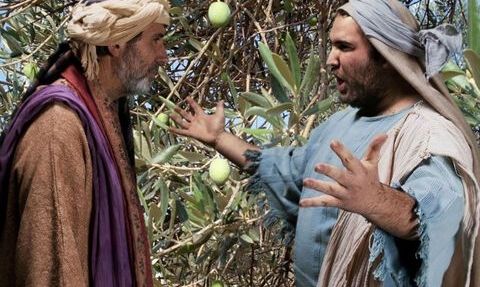
And when his older son was acting bitter and stupid and refused to come into the house, his father went out to him.

How often are we like that older son? Sometimes, because of our circumstances, or because of how we feel God is treating us, we become bitter and stupid, refusing to come into his presence.

But when we won’t come in, God goes out to us.

It’s the grace that he showed when he first saved us. And it’s the grace he extends to us even now.

The psalmist Asaph himself experienced that grace. He wrote,

When I became embittered
and my innermost being was wounded,
I was stupid and didn’t understand;
I was an unthinking animal toward you.

Yet I am always with you;
you hold my right hand.

You guide me with your counsel,
and afterward you will take me up in glory. (Psalm 73:21-24)

Categories
Luke Devotionals

Not insignificant

I’ve read these stories a million times, but one thought came to me as I read it this time.

No person is insignificant in God’s sight.

The lost sheep was not insignificant to the shepherd though he had 99 others.

The lost coin was not insignificant to the woman though she had nine others.

The younger son was not insignificant to the father though he had a more “faithful” son, and his younger son had essentially said, “I wish you were dead.”

In the same way, we are not insignificant to God.

He may have many other children in his family. Those children may be more gifted, faithful, and obedient than we are.

But God did not leave us to perish. Instead, while we were still sinners, Jesus died for us. (Romans 5:8)

And when we repent and come to him, he welcomes us and rejoices over us with all the angels in heaven.

No, we are not insignificant in God’s sight. We are highly precious to him.

So let us ponder that truth. Let us rejoice in that truth.

But more, let us also show the love and compassion God has shown us to others.

Because they not insignificant to him either.

Categories
Luke Devotionals

A good Father?

Do we recognize how good our Father is?

The prodigal son didn’t. In his culture, by asking for his inheritance early, he was essentially saying to his father, “I wish you were dead!”

And then when he was hungry and desperate, it never occurred to him that his father could possibly forgive him or accept him as a son.

The older son didn’t recognize his father’s goodness either. He saw himself as a slave, always working, never getting rewarded.

And yet, in the end, their father proved himself good, forgiving his younger son despite his sin, and reaching out in love to his older son despite his sulking.

How about you? Do you recognize your Father’s goodness toward you?

Categories
Matthew Devotionals

Living by grace

To understand the parable at the beginning of Matthew 20, you really need to look at the end of chapter 19.

Peter had just seen a man walk away from the Lord because that man couldn’t let go of his riches. And so he asked Jesus,

“See, we have left everything and followed you. So what will there be for us?” (Matthew 19:27)

Jesus did reassure Peter that their sacrifice would be rewarded.

But he pointed out a major problem with Peter’s question: Peter was merely thinking about God’s kingdom as sacrifice. As duty. And it was extremely important to Peter to know what his “payment” would be for all his sacrifice and work.

Jesus’ parable about the workers in many ways parallels the parable of the prodigal son.

Great grace was shown to workers who had been idle most of the day. Who seemingly hadn’t even been looking for work.

And yet the master went out and brought them in and paid them generously for what little work they did. He in fact paid them the same wage as the workers who had come first thing in the morning.

And just as the older brother got upset at the grace shown to the prodigal son, the first workers got upset at the grace shown to the late coming workers.

Look at the similarity of their words. First the workers:

These last men put in one hour, and you made them equal to us who bore the burden of the day’s work and the burning heat. (Matthew 20:12)

Now the older brother:

‘Look, I have been slaving many years for you, and I have never disobeyed your orders, yet you never gave me a goat so that I could celebrate with my friends.

But when this son of yours came, who has devoured your assets with prostitutes, you slaughtered the fattened calf for him.’ (Luke 15:29-30)

What is the common complaint? “We have worked so hard for you. We slaved for you.”

There was no joy in their work. Just, “I’m sacrificing for you. I’m slaving away for you. Now give me what I deserve.”

That’s what Peter was saying.

More, in the two stories, there was a looking down on those who weren’t as “diligent.”

“Your worthless son did nothing but party while I was slaving away.”

“Those other guys were just standing around idle while I was working hard.”

And finally, there was a resentment shown when grace was shown to the “undeserving.”

How about you?

Is the kingdom of God all about “duty” and “sacrifice” to you?

Do you feel resentment because you feel you’re working so much harder than everyone else, and you’re not getting what you deserve?

Are you upset when God blesses people more than they deserve?

Or do you rejoice every day because of the grace that you have received?

Do you rejoice in the fact that God calls you “son” and “daughter.”

Do you rejoice that he has invited you to join in with his work?

Do you rejoice that God doesn’t give you what you deserve: hell?

Do you rejoice in the fact that he in fact gives you so much more?

That’s a life of grace.

Are you living a life of grace?

Categories
Luke Luke 15

The prodigal son: The extravagance of God’s grace

This is perhaps the most famous of Jesus’ parables in the Gospels. Yet it must have been utterly shocking to the Pharisees. For here in this story was just the type of person they despised.

Here was a young man, who turned his back on his father, and basically said to his face, “I wish you were dead.” (For only after a father died did his sons usually receive their inheritance).

He then went off squandering all his money on wild living. He was greedy, self-indulgent, and perverse in every way.

And then a famine hit, and the young man was left, poor, desolate, and friendless.

Nobody would lift a finger to help him, and he was left trying to scrape by with the worst of jobs, taking care of pigs (an unclean animal by God’s law).

Things were so bad, that he wanted to eat what the pigs ate.

That’s the deception of sin. It brings you pleasure for the moment, but in the end brings death.

Finally, the young man came to his senses, and he realized, “Even my father’s servants live better than this. There’s no possible way that he could ever accept me as a son. I’ve burned too many bridges. But if he’ll just accept me as a servant…”

And so he trudged home.

All along the way, he rehearsed in his heart what he would say to his dad.

Father, I have sinned against heaven and against you.

I am no longer worthy to be called your son; make me like one of your hired men. (Luke 15:18-19)

Perhaps as the Pharisees heard this, they had one of two thoughts.

One might have been, “Well, if he grovels enough, maybe, just maybe the father would be kind enough to accept him as a servant, but I kind of doubt it.”

The other might have been, “No way! After all he did? There could never be forgiveness for that!”

They must have been shocked to hear what Jesus said next.

But while he was still a long way off, his father saw him and was filled with compassion for him; he ran to his son, threw his arms around him and kissed him. (Luke 15:20)

To a Jew in those days, it was considered undignified for a man his age to go running pell-mell for any reason. To hear that a father would abase himself for such a wretched son was unthinkable.

But that is exactly what happened. And when he reached his son, he threw his arms around him and kissed him.

His son was dirty, his clothes were probably ragged, he probably smelled, and yet this father ignored all this in showing his love for his son.

And when his son tried to give his rehearsed speech, his father wouldn’t even listen to it. Instead, he cried out,

Quick! Bring the best robe and put it on him. Put a ring on his finger and sandals on his feet.

Bring the fattened calf and kill it. Let’s have a feast and celebrate.

For this son of mine was dead and is alive again; he was lost and is found. (Luke 15:22-24)

Such is the extravagance of the grace and love of God.

The Pharisees never conceived of a God like this. And so as they looked upon the “sinners” around them they despised them.

But Jesus let them know that God longs for the sinners to return to him. And when they do, he doesn’t despise them. Rather, he embraces them and celebrates.

How do you view God? As a stern Father? As a critical God that is always lecturing? That will only forgive if we grovel?

That’s not the God Jesus taught. So as we look at the lost around us, let us take on the character of our Father, not the Pharisees.

And if you yourself are lost and wondering if God could possibly accept you after all you’ve done, remember that he can and he will.

Remember that his love and grace toward you is extravagant, and he’ll freely give them to you if you’ll only turn to him.