Categories
Mark Devotionals

Because he lives

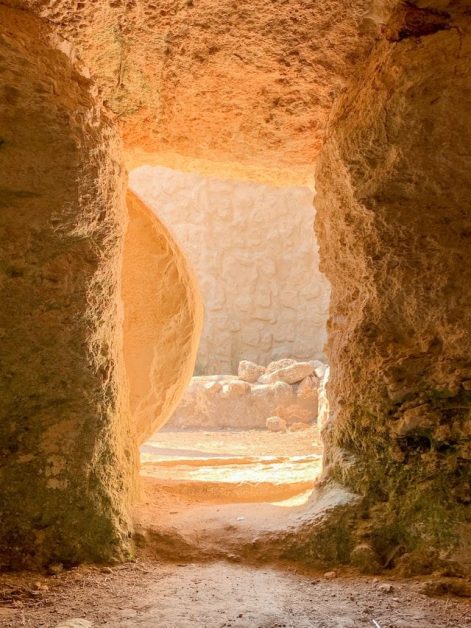
“Don’t be alarmed,” he told them. “You are looking for Jesus of Nazareth, who was crucified. He has risen! He is not here.” (Mark 16:6)

Tomorrow, I’ll be flying out to Hawaii for my mother’s memorial service, and in a few days, we will be placing her remains in the earth.

But the truth is, that won’t really be her buried in the ground. Her spirit is with the Lord now, and the day will come when her ashes will rise and her spirit will be joined to a new body, perfect, immortal, incorruptible.

That’s my hope. Because Jesus lives, my mother lives also. (John 14:19)

And by his grace, so will I.

Many still mourn
And many still weep
For those that they love
Who have fallen asleep

But we have this hope
Though our hearts may still ache
Just one shout from above
And they all will awake

And in the reunion of joy
We will see
Death will be swallowed
In sweet victory — Bob Hartman

Categories
Mark Devotionals

God of the living

And as for the dead being raised—haven’t you read in the book of Moses, in the passage about the burning bush, how God said to him: I am the God of Abraham and the God of Isaac and the God of Jacob?

He is not the God of the dead but of the living. (Mark 12:26-27)

It’s been about three weeks since my mother passed away. And perhaps that’s why the above verses resonate with me.

God is not the God of the dead, but of the living.

And one day, the Father will put all of Jesus’ enemies under his feet, including the final enemy: death. (1 Corinthians 15:26-27)

I will see my mother again.

And so though I’m mourning for her, I’m also joyfully singing Christ’s victory song.

Death has been swallowed up in victory.
Where, death, is your victory?
Where, death, is your sting? (1 Corinthians 15:54-55)

Categories
Bible Original Luke Devotionals

Authority

Jesus, you are my King, But do I fully acknowledge your authority in my life?

The centurion recognized the authority of your Word. (Luke 7:7-8).

Do I?

Your word has the power to raise the dead. (Luke 7:14-15)

And one day, by your word, all the dead will be raised, and you will judge them. Including me. (John 5:25-29)

What will you say to me on that day? Will you be amazed at the faith I had? Will you rejoice that I so totally trusted and obeyed you?

Or will you say, “Why did you call me Lord, Lord, and not do what I said?” (Luke 6:46)

Lord, I do believe in you. But increase my faith and help me to obey you in all things.

Categories
Acts Devotionals

I have a hope

I have a hope in God, which these men themselves also accept, that there will be a resurrection, both of the righteous and the unrighteous.

I always strive to have a clear conscience toward God and men. (Acts 24:15-16)

Father, I have a hope.

A hope that death is not the end. That there will be a resurrection.

I have a hope, Father.

A hope that there will be a day of judgment. A day when every evil deed will be judged by you.

I have a hope, Father.

That on judgment day, I need not fear. That for me there is no condemnation because of the blood of Jesus.

I have a hope.

And so I strive to keep a clear conscience before you and and the people around you, not out of fear, but out of love and gratitude toward you.

Let my life be holy and acceptable to you today, a sweet smelling incense.

In Jesus’ name, amen.

Categories
Exodus Devotions

Celebration Sunday!

Okay, it doesn’t quite have the alliteration of Throwback Thursday, but anyway…

Happy Resurrection Sunday! He is risen indeed!

God’s redemption plan is imperturbable.

No matter how badly we sin, no matter how badly we fall, no one is beyond God’s ability to save.

That’s the hope of Easter.

Categories
Romans Devotionals

The newness of life

Therefore we were buried with him by baptism into death, in order that, just as Christ was raised from the dead by the glory of the Father, so we too may walk in newness of life. (Romans 6:4)

I like the translation “newness of life” here.

I don’t want to walk around in the tomb surrounded by the stench of sin and death. I want to breathe in the fresh air of righteousness and life.

I don’t want to be walking around clothed with the decaying clothes of sin. I want to wear the new clothes of Christ’s righteousness.

Imagine Jesus raising Lazarus and saying, “Come out,” only for Lazarus to answer, “No, thank you. I like walking around in this tomb in my grave clothes.”

I don’t want to do that.

Rather, breathing in the fresh air and wearing my new clothes, I want to present myself to God as a weapon, an instrument he can use to battle Satan who has enslaved so many people.

Like Isaiah, I want to stand before God and present myself to him, saying, “Here am I, send me.” (Isaiah 6:8)

Categories
John Devotionals

Too late?

“Lord, if you had been here, my brother wouldn’t have died. (John 11:21)

As soon as Mary came to where Jesus was and saw him, she fell at his feet and told him, “Lord, if you had been here, my brother wouldn’t have died!” (32)

I’d always seen Mary’s and Martha’s words as a kind of rebuke of Jesus. “Why didn’t you come earlier? If you had come earlier, Lazarus wouldn’t have died.”

Now I’m not so sure.

Lazarus had been in the grave four days when Jesus arrived. Which means even if Jesus had left right away, Lazarus would have still been in the tomb two days when Jesus arrived.

And so it seems more likely to me that they were saying, “I wish you hadn’t been so far away when Lazarus got sick. If you had been here, he wouldn’t have died.”

But one thing that’s clear to me is that when Jesus arrived, Mary and Martha had no thought that Jesus could raise Lazarus from the dead. It never entered their heads to ask him.

Even when Martha told Jesus, “I believe God will give you anything you ask,” looking at her words in verses 24 and 39, it’s very clear she wasn’t thinking Jesus would raise Lazarus right then and there.

It just made me think. Do I ever think, “It’s too late; it’s no use praying anymore”?

Is my Jesus so small, that I don’t think he can raise the things I consider dead and beyond hope to life again?

Do I truly believe he is able to do far more than I can ask or imagine? Or is my thinking as to what Jesus can do still too small?

Categories
John Devotionals

Behold Your King

[Pilate] said to the Jews, “Behold your King!” (John 19:4)

Jesus came and stood among them and said to them, “Peace be with you.” When he had said this, he showed them his hands and his side. (John 20:19-20)

I don’t usually wax poetic, but yesterday and today, I felt particularly inspired.

Behold your King.
Body, bloodied and torn.

Behold your King.
Crowned with thorns.

Behold your King.
Face, battered and bruised.

Behold your King.
Unjustly abused.

Behold your King.
Crucified.

Behold your King.
For you, he died.

Behold your King.
His empty grave.

Behold your King.
In glory, raised.

Behold your King.
His hands, his side.

Behold your King.
In his peace, abide.

Behold your King.
Coming soon.

Behold your King.
Making all things new.

Categories
Matthew Devotionals

I am your God

Now concerning the resurrection of the dead, haven’t you read what was spoken to you by God:

I am the God of Abraham and the God of Isaac and the God of Jacob? He is not the God of the dead, but of the living.” (Matthew 22:31-32)

When I went back to Hawaii this past winter vacation, I visited the place where my dad’s ashes were scattered over 11 years ago.

As I read today’s passage, it reminded me of the hope we have in Christ.

For the God who said, “I am the God of Abraham and the God of Isaac and the God of Jacob,” now says this:

“I am the God of your father George. I am the God of Pastor Rob and all your other loved ones who knew me. And I am your God now and ever will be.

“Because now and forever, I am Immanuel, God with you.”

Thank you Lord, for the hope that I have in you. You are not the God of the dead, but of the living, of all who know you.

Lord help me pass on that hope to all who are now living in darkness, in despair. Let me bring the light of your hope that I have to them this year.

In Jesus’ name, amen.

Categories
John Devotionals

Believe!

Do not be unbelieving, but believing. (John 20:27, NASB)

Jesus’ words to Thomas resonated with me this morning. They echo Jesus’ earlier words to the disciples the night before his crucifixion.

Don’t let your heart be troubled. Believe in God; believe also in me. (John 14:1)

In a world filled with trouble, we have hope. We have hope because of the resurrection.

Peter talks about that hope we have.

Because of his great mercy he has given us new birth into a living hope through the resurrection of Jesus Christ from the dead and into an inheritance that is imperishable, undefiled, and unfading, kept in heaven for you.

You are being guarded by God’s power through faith for a salvation that is ready to be revealed in the last time. (1 Peter 1:3-5)

As I said a few days ago, the world is not our home. We have something far greater awaiting us.

For that reason, Peter said,

You rejoice in this, even though now for a short time, if necessary, you suffer grief in various trials that the proven character of your faith—more valuable than gold which, though perishable, is refined by fire—may result in praise, glory, and honor at the revelation of Jesus Christ. (1 Peter 1:6-7)

That’s the hope we cling to.

But we need choose to believe.

To a large degree, after the resurrection, it was easy for Thomas to believe. After all, he saw the risen Lord with his own eyes and was able to touch Jesus’ hands and his side.

But Jesus told him,

Blessed are those who have not seen and yet believe. (John 20:29)

Peter would later remember these words and say this to people like us who had never seen Jesus with their own eyes.

Though you have not seen him, you love him; though not seeing him now, you believe in him, and you rejoice with inexpressible and glorious joy, because you are receiving the goal of your faith, the salvation of your souls. (1 Peter 1:8-9)

Are you troubled by all that is going on in the world? Are you struggling with personal trials?

Remember the resurrection. Remember the hope we have in Jesus. Trust the Father. Trust Jesus.

Do not be unbelieving, but believing.

Categories
Revelation

From bad to worse…to salvation

I mentioned earlier that I was in deep waters trying to explain these things. The waters just keep getting deeper. 🙂

There’s a lot of disagreement among Christians about what this chapter all means. Again, all I can say is my conclusions are tentative, but here’s what I think.

John is given a measuring rod to measure the temple and the altar, and is told to count the worshipers. But he is told to exclude the outer court because it has been given to the Gentiles, and they will trample the Holy city for 42 months.

What is this all about? There seems to be some allusion to Luke 21:24, where Jesus prophesies the fall of Jerusalem in AD 70.

Because of this, many people take it quite literally and say this will happen again in the future. And it might. This would mean, of course, that a new temple would have to be built.

But it’s also possible that this past event is used symbolically for what will happen in the future. That the temple and the Holy city is representative of the people of God (I Corinthians 3:16-17, Revelation 21:2). And that while many will be protected by God, others will be persecuted.

This is a theme you see time and again throughout Revelation as we have already seen, and we’ll see it again in chapters 12-13. It’s also something you see in Daniel (7:21, 12:7).

Throughout the next few chapters, and in Daniel, it talks about 1260 days, three and a half years, and a time, times, and half a time. All refer to the same thing. Three and a half years of intense suffering on the part of God’s people.

That may be a literal time period. Or it could simply be referring to the fact that the time of suffering is not perfect (7 is a symbol of perfection), but is cut off.

And indeed, Jesus talks of the tribulation being cut off for the sake of God’s chosen people. (Matthew 24:22)

Then we see two witnesses testifying to the world God’s judgment and salvation. Again, there is dispute among Christians whether they are literal people or whether they represent the church.

I don’t know, but considering that the church is compared to lampstands in chapters 2-3, I think there’s a good chance it refers to the church.

In the book of Zechariah, two olive trees symbolize both a ruler and a priest (Zechariah 3-4), and those are two roles the church plays. (Revelation 1:6, 5:10)

Whoever they are, these two witnesses prophesy, apparently during that three and half years of intense persecution of the church.

God protects them for a time, and brings judgment through them, but at the end of that time, the beast, that is, the antichrist kills them. And all the world rejoices. Why?

Because of how these witnesses tormented them with their preaching, and the judgment that came because of their prayers. (Revelation 11:5-10).

I’m not certain if this refers to all the martyrs who have died for Christ’s sake, or whether this is yet to come.

If verse 6 is purely symbolic, evoking memories of Elijah and Moses, then it could represent all the martyrs. If it is to be taken literally, then I’d have to say this is future.

Verse 5 would tend to make me think it’s symbolic since I highly doubt fire will literally come out of their mouths to destroy people. Even Elisha (not Elijah) didn’t do that (See 2 Kings 1:9-12)

Anyway, the witnesses lie dead for a time, and then God resurrects them and calls them to heaven in front of all their enemies.

And if these witnesses are symbolic of the church, I tend to think this is referring to the rapture when God calls all the dead in Christ back to life. For we see soon after, the 7th trumpet being blown, and voices calling out,

The kingdom of the world had become the kingdom of our Lord and of his Christ, and he will reign forever and ever. (Revelation 11:15)

The elders then worship, singing,

We give thanks to you, Lord God Almighty, the One who is and who was, because you have taken your great power and have begun to reign.

The nations were angry; and  your wrath has come.

The time has come for judging the dead, and for rewarding your servants, the prophets and your saints, and those who reverence your name, both small and great — and for destroying those who destroy the earth. (17-18)

Then John sees God’s temple in heaven opened and the true ark of the covenant that can never be destroyed.

Then judgment falls in a great storm, an earthquake, and a hailstorm.

What do we get from all this? Things will go from bad to worse for God’s people.

Jesus warned of this in the gospels. He warned of this in his letters to the 7 churches. And we see it here.

Persecution will come. But it will not last forever. It will be cut short. Jesus will come back and when he does, we’ll see salvation.

Justice will come. And if we endure to the end, not only will we be saved, we’ll be greatly rewarded. And every tear we’ve cried will be wiped away.

I know. I’ve already mentioned all this. But this is the theme running throughout Revelation. We’ve seen it earlier. We’ve seen it here. And we will see it again through the final half of this book.

Why does God repeat this over and over? Probably because our suffering will be intense. It will be incredibly difficult to endure. But God wants us to know that it will not be forever.

So as we continue through the rest of this book, look for this theme.

For Revelation is not simply meant to give us a peek into the future or to brace us for hardships to come. It’s meant to give us hope. As Paul once prayed,

May the God of hope fill you with all joy and peace as you trust in him, so that you may overflow with hope by the power of the Holy Spirit. (Romans 15:13)

Categories
1 Corinthians

Because we have hope

Nobody said life was easy.

And neither did Paul. He was a man who had been stoned, shipwrecked, persecuted, imprisoned, and even more.

What could keep a person going in the face of all these trials? The hope that he had.

Paul had told the Corinthians earlier in this chapter,

Now if there is no resurrection…why do we endanger ourselves every hour?

I die every day–I mean that, brothers–just as surely as I glory over you in Christ Jesus our Lord.

If I fought wild beasts in Ephesus for merely human reasons, what have I gained?

If the dead are not raised, “Let us eat and drink, for tomorrow we die.” (1 Corinthians 15:29-32)

But there is a resurrection. And after talking of the hope he had, that one day we will be changed, raised imperishable, and immortal, Paul exhorts us,

Therefore, my dear brothers, stand firm. Let nothing move you.

Always give yourselves fully to the work of the Lord, because you know that your labor in the Lord is not in vain. (1 Corinthians 15:58)

There is so much in this world that can shake us. Our troubles, our trials, our worries. And they may cause us to think that it isn’t worth it anymore to keep living as a Christian. To keep serving the Lord.

But Paul encourages us not to let the storms of life move us. To keep doing the things God has called us to do.

Why? Because in the end, we will find that it was all worth it. And one day, we’ll look into the face of Christ, and he will say to us with a smile, “Well done, good and faithful servant.”

And on seeing his face, all that we went through will be revealed for what they truly are: “light and momentary troubles” which are far exceeded and outweighed by the glory that awaits us.

I love how the Living Bible put it in Psalm 17:15.

When I awake in heaven, I will be fully satisfied, for I will see you face-to-face. (Psalm 17:15, TLB)

So if you’re discouraged, if you are feeling down because of what you are suffering through, if you feel like you’re losing hope, then as the old song goes,

Turn your eyes upon Jesus.
Look full in his wonderful face.

And the things of earth will grow strangely dim,
In the light of his glory and grace.

Categories
1 Corinthians

Though we are a dim reflection

I was kind of planning to move on to the next section of this passage, but the more I reflect on this passage, the more I stand in wonder at what we will be.

Our new bodies will be imperishable and incorruptible. No longer shall we know illness, injury, or death.

More, Paul tells us,

And just as we have borne the likeness of the earthly man (Adam), so shall we bear the likeness of the man from heaven (Jesus). (1 Corinthians 15:49)

Put another way, in our new bodies, we will bear the likeness of Jesus. And because he is the image of the invisible God (Colossians 1:15), we will in fact bear the image of God much more perfectly than we do now.

As Adam’s descendants, all of his imperfections have been passed down to us.

Jealousy. Deceit. Bitterness. Anger. Hatred. Sin.

All these things mar the image of God in us.

As a result, our bodies as they are are but a dim reflection of God’s likeness. But when we are transformed, we will reflect God’s image as perfectly as anything can.

As John said,

But we know that when [Jesus] appears, we shall be like him, for we shall see him as he is. (1 John 3:2)

But though we marvel at what we will be, let us not disparage or despise what we are now.

Paul writes,

There are also heavenly bodies and there are earthly bodies; but the splendor of the heavenly bodies is one kind, and the splendor of the earthly bodies is another.

The sun has one kind of splendor, the moon another and the stars another; and star differs from star in splendor. (1 Corinthians 15:40-41)

In other words, in all that God creates, each thing has its own splendor.

Our human bodies, marred by imperfections as they are, deteriorating as they are, still have a type of splendor.

Think about all the intricate parts of the eye that have to work together so that we can see. Or all the parts of the ear that are so perfectly fitted together so that we can hear.

Think about all the processes that connect my brain to my fingers so that I can type this the moment I think it.

These are things we all take for granted, but if you consider them, they’re incredible.

As David wrote, “I am fearfully and wonderfully made.” (Psalm 139:14)

And though we are imperfect, God is not waiting for us to receive our new bodies to transform us.

Rather, Paul tells us,

And we, who with unveiled faces all reflect the Lord’s glory, are being transformed into his likeness with ever-increasing glory, which comes from the Lord, who is the Spirit. (2 Corinthians 3:18)

So let us not just consider the wonder of what we will be in glory. But let us consider the splendor of the bodies God has given us now. They too reflect God, if only dimly.

And as we consider that, let us strive each day to reflect his image even more clearly to those around us.

Categories
1 Corinthians

What we will be

I was talking with some students in their 60s last week, and we were talking about how some researchers were saying that 60 and 65 are becoming the new middle age because of increasing lifespans.

I asked them how long they hope to live, and all of them said between 75-80. I would probably agree, the main reason being that by that time, our bodies are really starting to fall apart, something I really don’t want to have to deal with.

I’d much rather live in my new body that God provides me, and that’s what Paul talks about here.

Some of the Corinthians were asking, “What will our resurrection bodies be like?”

And Paul compares our current bodies to a seed that is planted in the ground. The seed that is planted is quite different from what grows out from that seed.

In the same way, our current bodies when they are planted in the ground are quite different from what our new bodies will be like. How will they be different?

Paul says,

The body that is sown is perishable, it is raised imperishable; it is sown in dishonor, it is raised in glory; it is sown in weakness, it is raised in power; it is sown a natural body, it is raised a spiritual body.

If there is a natural body, there is also a spiritual body. (1 Corinthians 15:42-44)

Our bodies, as they are, grow old and will eventually die, but our new bodies will never die.

Our bodies will deteriorate and rot in the ground, but they will be raised in glory.

Our bodies are growing weaker as we age, but our new bodies will be strong and healthy, never to grow sick or old again.

I think about my dad in his final days. He was completely blind due to an accident. He could barely move around towards the end, his body weakened by multiple bypasses and a variety of other health problems.

At the end, he couldn’t even speak. He could only lie there.

It was hard to see him that way. But I know that now he has been freed from all that, and when that day comes when Christ returns, and the final trumpet sounds, he will receive a new body and meet Christ in the air.

Assuming I’m still around when it happens, I’ll be joining him not long after. And all things will be made new. On that day, we will all sing,

Where, O death, is your victory? Where, O death, is your sting? (1 Corinthians 15:55)

I can’t wait for that day.

Categories
1 Corinthians

The importance of Christ’s resurrection

I remember teaching at an English conversation school and overhearing this conversation between another teacher and her students.

Student: What is Easter?

Teacher: Oh, it’s the day that Christians believe Jesus rose from the dead.

<dead silence, and probably incredulous looks by the students>

Teacher: Well, I don’t believe it. Christians do.

Having been a Christian practically all my life, I suppose I take it for granted that Jesus rose from the dead.

But I have to admit, if I really think about it, it really is an incredible thing that we believe. A very hard thing we believe.

And I suppose it would be easy to ask, “Is it really that important to believe in Christ’s resurrection? Can’t we just teach what Christ said and what he did on the cross?”

That’s the question the Corinthians were facing. And in fact, many were starting to say, “There is no resurrection.”

So Paul launches into a vociferous defense of the resurrection. He says,

But if it is preached that Christ has been raised from the dead, how can some of you say that there is no resurrection of the dead?

If there is no resurrection of the dead, then not even Christ has been raised. And if Christ has not been raised, our preaching is useless and so is your faith. (1 Corinthians 15:12-14)

He’s saying here, “Look, if there is no resurrection, that means Christ is still dead. And if Christ is still dead, then our preaching and your faith are meaningless.” Why?

If Christ has not been raised, your faith is futile; you are still in your sins.

Then those also who have fallen asleep in Christ are lost. (1 Corinthians 15:17-18)

Why is the resurrection so important? It is proof that God accepted Jesus’ sacrifice for our sins.

But if Christ is still dead, Paul tells us that means God didn’t accept Christ’s sacrifice, and we are still headed for hell.

And if we are still headed for hell, Paul says that we are to be pitied because all our hope is in vain (verse 19).

Paul later says that he and so many others have suffered for Christ, yet if Christ is not risen, then all their suffering was for naught. (verses 30-32)

In fact, we might as well just live to please ourselves.

As Paul said,

If the dead are not raised, “Let us eat and drink, for tomorrow we die.” (1 Corinthians 15:32)

But because Christ was raised from the dead, God did accept Christ’s sacrifice for us. And because Christ rose, we can know that we too will be raised with Christ if we put our faith in him.

More, we have the hope that one day, he will return and make all things right, reigning over everyone and everything, even death (verses 20-27).

So no matter what we may go through on this earth, whether it be suffering or even death for Christ’s sake, in the end, we can be confident it will be all worth it.

Why is the resurrection important? Because it is the source of our hope.

Without the resurrection, there is no hope. But with the resurrection, we have a hope and joy that no one will ever be able to take from us.

Do you have that hope today?

Categories
Acts

The God who heals and raises the dead

In Acts 9:32-43, we see two powerful stories. The thing that struck me the most were Peter’s words to Aeneas and Dorcas (Tabitha).

To Aeneas, who had been bedridden for eight years, and who had probably lost all hope of ever getting up again, Peter said,

Jesus Christ heals you. Get up and take care of your mat. (Acts 9:34)

Instantly, the man was healed, and got up.

To Dorcas, who had died, he said,

Tabitha, get up. (Acts 9:40)

Her eyes opened, her life fully restored.

Simple words. But they are words people need to hear even today.

Jesus Christ heals you.

Certainly there is physical healing that can happen even today. But so many people are in need of healing in so many other ways as well. Hurts from their past. Hurts from their present. Emotional hurts. Spiritual hurts.

And people around us need to hear us say, “Jesus Christ heals you.”

Because the same Jesus that healed Aeneas on that day, can heal people now.

Get up. Rise from the dead.

People today look at their lives and they see dead hopes. Dead marriages. A dead future.

And they need to hear from us that Jesus can restore what is dead. That there is hope for their marriages, hope for their futures, hope for their lives.

We need to tell them, “Get up. God can give you life again if you’ll just turn to him.”

These are the messages people need to hear. Let’s take them out to a world in desperate need of Him.

Categories
Luke Luke 24

Slow to believe

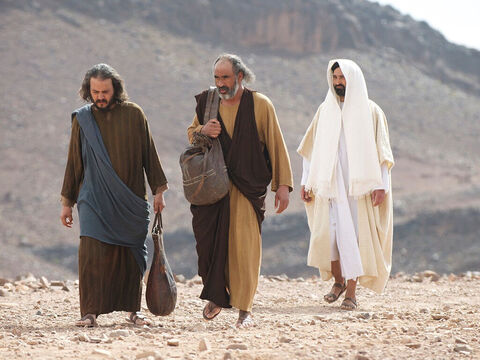
This appears to be the third or fourth appearance of Jesus after his resurrection, depending on when Jesus showed himself to Peter.

And here we see two followers of Jesus walking down to Emmaus, which was perhaps their hometown.

As they did, they talked with each other about all the women had said, and what Peter and John had found at the tomb.

But it’s obvious from their sadness that they still didn’t believe Jesus had risen.

Then Jesus appeared. But it says that these followers couldn’t recognize him. The New King James puts it, “Their eyes were restrained.”

In other words, they could see Jesus, but he purposely kept them from recognizing him. It is perhaps the very thing that Jesus did with Mary Magdalene in the garden.

And he asked them, “What are you talking about?”

The two followers must have been shaking their heads in disbelief as they said, “You don’t know? You were in Jerusalem right? You must have seen and heard what happened.”

But playing dumb, Jesus simply said, “What things?”

And the two followers poured out their hearts.

They talked about all the hopes they had had that Jesus was the Messiah and that he would set them free from the Romans, only to have them dashed when he was crucified.

They then shared the bewildering news of how Jesus’ body had disappeared and the stories of his resurrection.

At which point, Jesus said,

How foolish you are, and how slow of heart to believe all that the prophets have spoken!

Did not the Christ have to suffer these things and then enter his glory? (Luke 24:25-26)

And then he gave the first “sermon” on the prophesies of a suffering Messiah that would die for our sins and be resurrected.

When they arrived at Emmaus, Jesus acted as if he would continue on, but stirred by all the words of Jesus, they begged him to stay. And as they sat down to eat, Jesus broke the bread and gave it to them.

Perhaps as he did, it sparked a memory of how he had done the very same thing on the day he fed the 5000 or the 4000. Then their eyes were opened, and they recognized him. When they did, Jesus disappeared.

They said to each other,

Did not our heart burn within us while He talked with us on the road, and while He opened the Scriptures to us? (Luke 24:32)

They then rushed to the eleven disciples and told them that Jesus was alive, confirming the women’s and (apparently) Peter’s testimony.

What can we learn from this? How often are we slow of heart to believe what God has spoken?

Oh, we believe that Jesus died on the cross for our sins and rose again. But what about his other words to us?

Sometimes we are slow to believe because like these followers, we have been disappointed in the past. Or things are not going as we had hoped.

And so we question God, asking, “Is your Word really true? Are you really here with me? Are you really going to provide for me? Do you truly care for me?”

I know I have experienced those doubts more than once.

Or perhaps we doubt that his way is best because our way seems better. Or going his way seems hopeless.

I’ve known more than a few people that have married non-Christians because they couldn’t find a suitable Christian partner.

So instead of waiting, they just plunged into a relationship with an unbeliever. Too many times, I have seen that decision end in regret.

And because we fail to believe, like those two followers, we walk through this life in disappointment and sorrow.

But the good news is that Jesus does not give up on us. He is still there walking with us.

And if we will pour out our hearts to him, and if we open up our lives to him, and let him pour his word into our lives, he will bring us healing and renew our hope.

So let us not be slow of heart to believe. Let us open up our hearts to him and believe. For,

Whoever believes in him will not be disappointed. (Romans 10:11 NASB)

Categories
John John 20 Luke Luke 24 Mark Mark 16 Matthew Matthew 28

The One who is always with us

A couple of notes on the resurrection.

I think I will be cutting out Mark 16:9-20 from my commentary since it is considered by most scholars to not be in the original text.

It was apparently added on to Mark by someone, either because Mark died before it was completed or because the original ending was lost.

Second, there is some difficulty in harmonizing the events of the resurrection. What I give here in my blog is my best guess.

The thing to remember, though, is that all the essential facts are the same.

The tomb was empty when the women arrived there. Angels appeared to the women to tell them that Jesus had risen. Jesus appeared to Mary and the women. They all went to tell the disciples.

Lawyers today will tell you that in a court of law, any apparent discrepancies in the testimony of these four sources would not be able to overturn these essential points.

With that, a very quick summary as to what I believe happened.

The women went to the tomb and found it empty. When Mary entered the tomb and found the body gone, she immediately left to tell the disciples.

The other women lingered, however, and at that point, two angels appeared, with one giving them the good news that Jesus was alive. The women ran to tell the disciples talking to no one else along the way. (Matthew 28:5-8; Mark 16:1-8; Luke 24:1-10)

Meanwhile, Mary told the disciples that the body was gone. (John 20:2). And so Peter and John (probably) went to investigate, with Mary following after.

After they had left, the other women arrived with their tale of the angels. (Luke 24:9-11)

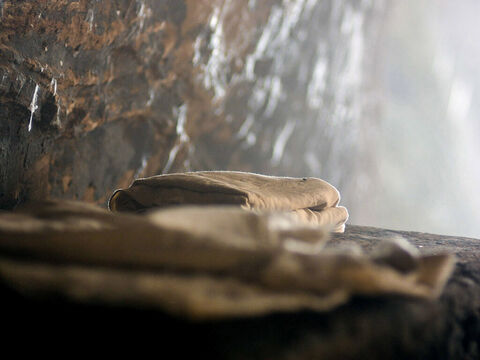
Peter and John then arrived at the tomb and found the body gone, and while John seems to have believed that Jesus rose from the dead, Peter wasn’t so sure. Perhaps discussing the situation, they then left. (Luke 24:12; John 20:3-9)

Mary, by this time had arrived at the tomb. Whether Peter and John were still there when she arrived is not clear, but it’s possible they had already gone.

Jesus then appeared for the first time and spoke to her. She then went to tell the disciples. (John 20:10-18)

As she was on her way, Jesus then appeared to the other women, perhaps as they were on their way back home, discouraged that the disciples had not believed them.

Encouraged once again, they returned and told the disciples what Jesus had told them, bolstered by Mary’s testimony. (Matthew 28:9-10)

I don’t know if that was the exact order of events, but it seems to be a reasonable harmonization to me.

At any rate, I want to focus on Mary for a moment.

The image that strikes me most was Mary in the garden, in the depths of sorrow and despair.

If the order of events were as I imagine, she had not heard the story of the other women. All she knew was that Jesus was gone.

She enters the tomb, and sees the two angels, but because she never heard the other women’s story, she doesn’t recognize the angels for what they are.

So when they ask her, “Why are you crying?” she simply says, “They’ve taken away my Lord, and I don’t know where they’ve put him.”

Perhaps the angels were about to tell Mary the truth when they saw Jesus appear behind her.

At first, through her tears, she couldn’t recognize him, but then he spoke her name, “Mary.”

And in an instant, all of her tears of sorrow were washed away by joy.

How often are we like Mary? We’re going through a tough time, and God seems far away. We pray but our prayers bounce off the ceiling. We seek him, but we can’t seem to find him. For all we know, he’s dead.

But the truth is, he is there. Like Mary, we can’t see him, but he is there. And at the proper time, he will reveal himself to us.

So don’t give up. We all go through times of sorrow. We all go through times when God seems distant.

But he is Immanuel. He is God with us. And through the same power that raised Jesus from the dead, he will change our sorrow into joy.

Categories
Matthew Matthew 27 Matthew 28

A God who cannot be thwarted

This is perhaps one of the more humorous incidents in the Bible if you really think about it.

The Pharisees and chief priests were concerned that perhaps the disciples might come to steal the body and claim that Jesus had risen from the dead as he had prophesied. And so they asked Pilate to make the grave secure so that no one could come and steal the body.

Pilate assented, and gave them a guard (that is, a group of soldiers), to protect the tomb from any robbers.

But on the third day, there was an earthquake, and an angel rolled away the stone and sat on it. This so freaked out the guards that they fainted dead away.

Imagine the consternation of the priests and the Pharisees when they heard this.

They had to have been questioning themselves, “Why in the world did we set that guard? All we did is make it more inexplicable that the body has disappeared?”

But it all goes to prove one thing. People can make all their plans to achieve their purposes while denying God’s. But God is not someone who can be thwarted. And his purposes will stand.

Many people wonder about the tension between God’s sovereignty and our free will.

I certainly don’t have all the answers, but I think you catch a glimpse of the answer here. By their free will, the priests and Pharisees put out a guard to prevent Jesus from coming out from that grave.

God didn’t interfere with that choice at all. But after they made their choice, God made his. He raised Jesus from the dead, rolled away the stone, and scared the living daylights out of the guards in the process.

In the same way, we make our choices, and God lets us do so.

But then God makes his choices, and his purposes will not be thwarted. It wasn’t thwarted then back at the tomb. Nor will it be thwarted now nor into eternity.

So let us praise him and walk with confidence knowing that no matter what happens, God is in control, and his purposes will be accomplished.

Categories
Luke Luke 20 Mark Mark 12 Matthew Matthew 22

When we fail to understand the scriptures and the power of God

There’s a children’s song that humorously describes the Sadducees. It says, “I don’t wanna be a Sadducee, ’cause a Sadducee is ‘sad, you see?'”

Yes, I know, a very bad joke. 🙂

Nevertheless, they were a sad bunch of people because of one main thing. They had no hope for a resurrection. They thought this life was all we have.

And because of that, it shaped the way they saw God, the way they saw life, and the way they saw scripture.

They didn’t understand God’s power, nor his desire for a lasting relationship with us.

They didn’t understand that life goes beyond the grave, and so they were more interested in the power and influence they had on earth, as well as their wealth.

As a result of these things, it also affected the way they saw scripture. They only accepted the first five books of the Bible as scripture, and rejected everything else as divinely inspired.

They therefore came up to Jesus with a question that had apparently stumped the Pharisees who did believe in the resurrection of the dead.

It was essentially an asinine question, although it brought up a situation that was technically possible.

In Jewish culture, if a person’s brother died without having a son, they would have to marry that brother’s wife and have children through her so that their brother’s family line could continue.

So the Sadducees asked Jesus if a man had 7 brothers, and this happened 6 times because the woman failed to have a son, whose wife would she be in the resurrection?

Like I said, an asinine question, on the level of asking, “Can God make a rock so big that he can’t move it?”

Jesus answered the Sadducees,

You are in error because you do not know the Scriptures or the power of God.

At the resurrection people will neither marry nor be given in marriage; they will be like the angels in heaven. (Matthew 22:29-30)

Then he stuck the needle in by using a passage from the book of Exodus that they had never really thought through (and most people don’t to this day).

He said,

But about the resurrection of the dead—have you not read what God said to you, ‘I am the God of Abraham, the God of Isaac, and the God of Jacob’?

He is not the God of the dead but of the living. (Matthew 22:31-32)

In other words, God could have said, “I was the God of Abraham, Isaac, and Jacob.”

But he purposely said, “I am the God of Abraham, Isaac, and Jacob. Even now, I am their God.”

Meaning, of course, that they were still alive, not dead, utterly destroying the Sadducees’ argument, using the only possible passage they would accept as scripture.

What does this mean for us? Let us not put God in a box that he has not put himself in.

In the Sadducees’ case, they had boxed him in as a God that could not raise the dead because they did not understand his power. And the reason they didn’t understand his power was because they did not understand scripture.

Let us not be like the Sadducees. Let us thoroughly study God’s word and seek to understand it.

And where it contradicts our ideas of God, let us not cast it aside as the Sadducees did. Rather, let it transform the way we think about God and cause us to draw closer to him.

Categories
John John 11

The one who calls forth the dead

Yes, we will eventually finish this chapter. But not today. It’s a passage that is so totally rich in truth.

When Jesus told Martha that her brother would rise again, she said,

I know he will rise again in the resurrection at the last day. (John 11:24)

But Jesus answered,

I am the resurrection and the life. He who believes in me will live, even though he dies; and whoever lives and believes in me will never die. (John 11:25-26)

In other words, “The resurrection is not simply a time in the future when the dead will be raised. I am the resurrection. I am the one that raises the dead and gives them life. And if you believe in me, you will never truly die.”

Jesus proved that moments later by raising Lazarus from the dead. And just as he called Lazarus out from the grave, so will he call all who have put their faith in him.

The apostle Paul tells us,

For the Lord himself will come down from heaven, with a loud command, with the voice of the archangel and with the trumpet call of God, and the dead in Christ will rise first. (1 Thessalonians 4:16)

And again,

Listen, I tell you a mystery: We will not all sleep, but we will all be changed– in a flash, in the twinkling of an eye, at the last trumpet.

For the trumpet will sound, the dead will be raised imperishable, and we will be changed.

For the perishable must clothe itself with the imperishable, and the mortal with immortality. (1 Corinthians 15:51-53)

Lazarus was only raised temporarily. He would die again.

But when Jesus raises us, we will be raised in an immortal and incorruptible body.

How about you? Do you know what will happen after you die? Do you know that you have eternal life?

Jesus is the resurrection and the life. If you believe in him, you will never truly know death. Only a new beginning.

Jesus asks you the same question he asks Martha. “Do you believe this?”

May you answer as she did,

I believe that you are the Christ, the Son of God. (John 11:27)

Categories
Psalms

Song of a Savior

In this psalm by David, we see his suffering and deliverance. But we also see the song of our Savior, as he sings about his suffering on the cross and his resurrection.

Psalm 40 starts out with David praising God for his salvation, singing,

I waited patiently for the LORD;
he turned to me and heard my cry. 

He lifted me out of the slimy pit,
out of the mud and mire;
he set my feet on a rock
and gave me a firm place to stand. 

He put a new song in my mouth,
a hymn of praise to our God. (Psalm 40:1-3)

In the same way, Jesus looks back upon the cross and his sufferings there, and saw his patience rewarded as his Father resurrected him from the dead never to know death again.  Now because of his work,

Many will see and fear and put their trust in the LORD.  (3)

And so they have.  Throughout the years, people have looked to Jesus’ work on the cross and have been saved.

He then says,

Blessed is the man who makes the LORD his trust, who does not look to the proud, to those who turn aside to false gods. (4)

Ever since the time of the Fall, people have either trusted in false idols, or looked to themselves for their salvation.  But the psalmist says here that these things cannot save.

Rather, it is the person who looks upon and puts their trust in the Savior that will be saved.

All this was according to God’s plan that he had laid out before time began.

Then, in verses 6-8, it says,

Sacrifice and offering you did not desire,
but my ears you have pierced;
burnt offerings and sin offerings you did not require.

Then I said, “Here I am, I have come–
it is written about me in the scroll.

I desire to do your will, O my God;
your law is within my heart.”

This passage is quoted in Hebrews 10, and the writer there comments that while the sacrifices and offerings of the Old Testament were required by law, nevertheless, they were a mere shadow of the work that Christ would do on the cross.

A quick note here.  Many comments have been made on the “piercing of ears” as quoted in the Psalms, and “a body prepared for me” as written in Hebrews.

The reason for the change comes from the Greek translation of the Hebrew Bible which the writer of Hebrews quoted.

When the translators changed the Hebrew to Greek, they changed “my ears you have pierced” to “a body you have prepared for me.”

Why they did so is unknown.  Some have claimed that it was a copyist’s mistake.  Others have said that it was a paraphrase, as the Greeks couldn’t understand the meaning of the piercing of ears.

There are numerous other theories, but little agreement, and more qualified people than I have written on this.  Here is one idea I favor, however.

The piercing of ears seems to refer to Mosaic law where if a servant who was to be set free desired instead to stay with his master for life, he would have his ear pierced as a sign of his voluntary, lifelong submission (Deuteronomy 15:16-17)

Perhaps, if the Greek translation did paraphrase here, the idea was that David wanted to serve God forever with the body God had given him.

Not because he was forced to.  But because he deeply loved his Father and wanted to please him.

In the same way, Jesus wanted to serve his Father by going to the cross, and the Father provided him a human body to do so.

Again, Jesus did this, not because he was forced to, but because he loved his Father and wanted to please him.

And now he lives to serve his Father forever. (Romans 6:10; I Corinthians 15:24-28)

Having died for us, he then proclaimed God’s righteousness, his salvation, his truth, and his love to all.  (9-10)

For the final verses, it goes back to the cross, and his suffering there.  Having taken our sins upon himself and counting them as his own, he suffered for us.  (12)

And he begs God not to forget him, but that he would be vindicated before those who hated him, and that God would be glorified by those who loved him.  (13-17)

The Father, of course, answered his prayer, and now because of Jesus we can rejoice in his salvation and truly shout, “The Lord is exalted.”

To that, I say, “Amen.”