Categories
Mark Devotionals

That he might save me…

In the same way, the chief priests with the scribes were mocking him among themselves and saying, “He saved others, but he cannot save himself!” (Mark 15:31)

Those words always resonate with me. The chief priest and scribes said those words to mock Jesus. But their words were truer than they knew.

In order to save us, Jesus couldn’t save himself. He had to die an excruciating death, taking all our sins on himself. All of God’s wrath toward us was poured out on him.

And because of him, the curtain that separated us from God was torn in two.

I’m so grateful that Jesus chose not to save himself so that he could save us.

Categories
Philippians Devotionals

Working out our salvation

Therefore, my dear friends, just as you have always obeyed, so now, not only in my presence but even more in my absence, work out your own salvation with fear and trembling… (Philippians 2:12)

I was thinking today on what it means to work out our salvation.

I think Paul explains his meaning more clearly in chapter 3.

He’s not talking about trying to become righteous by his own efforts to keep the law. His righteousness came by faith in Christ’s work on the cross for him. (Philippians 3:9)

So what does he mean by working out his salvation?

  1. Pursuing his relationship with Jesus. Knowing Christ became his ultimate pursuit in life above all other things.
  2. Becoming more and more like Jesus. Paul wanted to experience Jesus’ resurrection power in his life, becoming like his Lord.

    But before he could be raised with Jesus, he had to die with Jesus. Just as Jesus suffered and died to sin once for all time, Paul needed to learn to die to sin once and for all so that he could live for God (Romans 6:10-11).

    And by Paul joining in Christ’s sufferings, he showed that he was through with sin, no longer living for himself, but for God’s will. (1 Peter 4:1-2)

That’s what it means to work out our salvation. And it’s an ongoing process. A process that Paul admitted he had not fully completed yet.

He still fell short. He still hadn’t arrived.

But Jesus in his grace had taken hold of him. And so Paul strove to take full hold of the salvation he had received, working out his salvation with fear and trembling.

I marvel at the fact that this same Jesus that took hold of Paul has taken hold of me. And so like Paul, I’m striving to take full hold of the salvation I have received, working out that salvation with fear and trembling.

I still fall short. I still haven’t arrived. But with full confidence in the grace and love God has given me, I say with Paul,

Forgetting what is behind and reaching forward to what is ahead, I pursue as my goal the prize promised by God’s heavenly call in Christ Jesus. (Philippians 3:13-14)

Categories
Exodus Devotions

What makes us different

The blood on the houses where you are staying will be a distinguishing mark for you; when I see the blood, I will pass over you.

No plague will be among you to destroy you when I strike the land of Egypt. (Exodus 12:13)

What made the Israelites different from the Egyptians? Why were the Israelites spared God’s judgment and not the Egyptians?

As we’ll see later in Exodus, it wasn’t because the Israelites were somehow morally superior to the Egyptians.

Rather, it was the blood of the sheep or goat that was shed for them.

It’s the same with us.

We deserve God’s judgment as much as anyone.

What distinguishes us and saves us from God’s judgment is not how good or faithful we are.

Rather, it is Jesus’ blood shed on the cross for us.

Perhaps David was thinking of the Israelites using hyssop to brush the blood on their doorposts when he prayed,

Purify me with hyssop, and I will be clean;
wash me, and I will be whiter than snow. (Psalm 51:7)

God told the Israelites to always remember what he did for them that day. (Exodus 12:24-27)

In the same way, let us always remember what Jesus did for us on the cross, and like the Israelites, fall down in worship.

It’s your blood that cleanses me.
It’s your blood that gives me life.
It’s your blood that took my place in redeeming sacrifice.
And washes me whiter than the snow.
My Jesus, God’s precious sacrifice. — Michael Christ

Categories
Matthew Devotionals

A prayer to the Lord of the Harvest

When he saw the crowds, he felt compassion for them, because they were distressed and dejected, like sheep without a shepherd.

Then he said to his disciples, “The harvest is abundant, but the workers are few. Therefore, pray to the Lord of the harvest to send out workers into his harvest.” (Matthew 9:36-38)

Lord of the Harvest, who are the distressed and dejected around me? Who are those living without hope?

Open my eyes. Help me to see beyond the surface to the need as you did. Give me your compassion. And send me out into the harvest.

May I be a giver of hope to those without hope, proclaiming your forgiveness, salvation, and your love. (Matthew 9:2, 22)

In Jesus’ name, amen.

Categories
Luke Devotionals

Son of God, son of God

Jesus also was baptized. As he was praying, heaven opened, and the Holy Spirit descended on him in a physical appearance like a dove.

And a voice came from heaven: “You are my beloved Son; with you I am well-pleased.” (Luke 3:21-22)

…Adam, son of God. (38)

Jesus, you are God’s Son in whom the Father is well pleased.

Father, you once said that of Adam, but then he rebelled. He sinned. And through him sin and death came into this world.

But through you, Jesus, forgiveness and life came into this world. (Romans 5:12-21)

Father, may Japan, may this whole world see your salvation. (Luke 3:6)

Give me the heart and passion of John who called people to repentance, who called people to look to you, Jesus.

Jesus, give me your heart for the people you came to save. Give me your heart.

Categories
Isaiah Devotionals

Blessed

All who see them will recognize 
that they are a people the LORD has blessed. 

I rejoice greatly in the LORD, 
I exult in my God; 
for he has clothed me with the garments of salvation 
and wrapped me in a robe of righteousness…” (Isaiah 61:9-10)

Usually when I read this passage, most of my focus is on the first three verses because Jesus applied them to himself. (Luke 4:18-21)

But today my eyes focused on verses 9-10. And I realized just how blessed I really am.

I see all my flaws, all my failures, all my sins. But by his grace, God has clothed me with his salvation and Christ’s righteousness.

Father, I am blessed.  I rejoice in you, I exult in you, because you have clothed me with the garments of salvation and wrapped me in Christ’s robe of righteousness.

I didn’t have to make those clothes. I didn’t have to buy them. Jesus, you purchased them with your blood and you clothed me. All I can say is, “Thank you.”

Categories
Isaiah Devotionals

Shepherds’ song?

I was reading a Christmas advent devotional today and thinking about the shepherds. I was thinking about how they felt when they saw the angel.

Luke tells us they were terrified. Why?

God had been silent for 400 years. Now he was breaking that silence. For what? To bring judgment on his people?

No. To bring good news.

His anger was ended. And now he was bringing salvation through his Son.

Did the shepherds think of Isaiah 12 when they heard the angels?

Probably not. But if they had, I think they would have been singing it.

I will give thanks to you, Lord,
although you were angry with me.

Your anger has turned away,
and you have comforted me.

Indeed, God is my salvation;
I will trust him and not be afraid,
for the Lord, the Lord himself,
is my strength and my song.
He has become my salvation. (Isaiah 12:1-2)

Jesus, the root of Jesse had come. (Isaiah 11:1-5, 10)

And after seeing Jesus, the shepherds went and told everyone what they had seen and heard. (Luke 2:16-18)

Cry out and sing, citizen of Zion,
for the Holy One of Israel is among you
in his greatness. (Isaiah 12:6)

Categories
Acts Devotionals

Because we have hope

I wish before God,” replied Paul, “that whether easily or with difficulty, not only you but all who listen to me today might become as I am…(Acts 26:29)

Like Paul, we have a hope.

We have the hope of eternal life.

We have the hope that all things will be made new.

We have the hope that all evil will be judged.

We have hope that by his grace, God will receive us as his children into his kingdom.

We have the hope of Paul. But do we have his heart?

Do we desire that those around us would become like we are: people of hope?

That they too would turn from darkness to light and from the power of Satan to God?

That they would repent and receive forgiveness of sins and a share among those who are sanctified by faith in Christ.

Is that your heart?

Lord, thank you for the hope you have given me as a child of God. Now send me out to those around me that they may have the same hope I have.

Give me the heart of Paul. Give me your heart. In your name I pray, amen.

Categories
Matthew Devotionals

Christ’s blood upon us

All the people answered, “His blood be on us and on our children!” (Matthew 27:25)

When the people said that, they were saying, “We take responsibility for Jesus’ death. Put the blame on us.”

Yet ironically, there on the cross, Jesus took the blame for all of our sin. He took the punishment for our sins.

And now, in a different sense from how the people meant it, Jesus’ blood is on us.

When God made the first covenant with the people, they were sprinkled with the blood of calves and goats, and Moses said, “This is the blood of the covenant that God has ordained for you.” (Hebrews 9:20)

Why were they sprinkled with blood? Because without the shedding of blood, there is no forgiveness. (Hebrews 9:22)

But the blood of bulls and goats could not truly take away sin. Those sacrifices only reminded people of their sin and pointed to what Jesus would later do on the cross. (Hebrews 10:1-4)

But now Jesus has entered the true tabernacle, the true temple which is heaven, with his own blood, and he has bought our salvation. (Hebrews 9:11-12)

That’s why the curtain was torn in the earthly temple when Jesus died. That curtain was a sign of the separation between God and his people.

But by tearing that curtain, God was saying, “You have now been sprinkled with the blood of the new covenant. Your sins are forgiven. And now you have free access to me.” (Matthew 26:28)

So let us remember the words of the author of Hebrews.

Therefore, brothers and sisters, since we have boldness to enter the sanctuary through the blood of Jesus—he has inaugurated for us a new and living way through the curtain (that is, through his flesh)—and since we have a great high priest over the house of God, let us draw near with a true heart in full assurance of faith, with our hearts sprinkled clean from an evil conscience and our bodies washed in pure water. (Hebrews 10:19-22)

Christ’s blood is upon us. Let us rejoice, and draw near.

Categories
Matthew Devotionals

The message of Christmas

She will give birth to a son, and you are to name him Jesus, because he will save his people from their sins. (Matthew 1:21)

“He will save his people from their sins.”

How much did those words shock Joseph?

“My son will save his people from their sins? How is that possible? What does that mean?”

He certainly had no concept of the cross at that point.

Had the angel told him, “He will save his people from the Romans,” similar to what God had said concerning Samson (Judges 13:5), I’m sure Joseph would have had no problems understanding that.

But, “He will save his people from their sins?”

How many people today would be as confused as Joseph was?

If they think they need salvation at all, it might be salvation from government oppression. Or salvation from financial problems, health problems, or family problems.

They think joy and peace in their lives would come from having all those issues taken away.

And so if they ever ask God for anything, that’s what they pray for.

But it never occurs to them that the number one issue in their lives is their sin. They need salvation from their sin.

So many take their sin lightly. Many refuse to even admit their actions are sinful.

On the other hand, there are those completely burdened with guilt and regret because of their sin, but they can’t see what can be done about it.

To both, the message is the same: Jesus came to save his people from their sins.

So as we think about Christmas and how to share with the people we love its meaning, let us remember what is at the core of the Christmas message:

Jesus came to save his people from their sins.

Categories
1 John Devotionals

Calling God a liar?

The one who does not believe God has made him a liar. (1 John 5:10)

Those words struck me this morning.

When we do not believe God, we are effectively calling him a liar.

Satan called God a liar in the garden of Eden and taught Adam and Eve to do the same. (Genesis 3:3-6)

When we reject his word as outdated or flat out wrong, we call him a liar.

Perhaps the biggest thing people struggle with is the idea that Jesus is the only way to have a relationship with God. That he is the only way to eternal life. (John 14:6)

We especially struggle with that when we think of our loved ones who don’t know Jesus. Couldn’t there be other ways?

But to say that is to call God a liar.

John tells us that God has testified to his Son as being the only way through the water, the blood, and the Spirit.

Through Jesus’ baptism, God testified to who Jesus was and his mission of salvation. (John 1:29-34 )

When Jesus died, his blood cried out a better word than Abel’s (Hebrews 12:24).

A word that instead of crying for vengeance, cried out for forgiveness (Genesis 4:10-11, Luke 23:34, John 19:34-35).

And the Father answered by tearing the temple curtain, opening the way for us to have a relationship with God. (Matthew 27:50-51)

The Spirit then testified to what Jesus had done at Pentecost, and continues to testify to this day. (Acts 2:16-21, John 15:26, 16:7-10, Romans 8:14-17)

When we reject that testimony and insist there must be other ways, we call God a liar.

Do you ever question the things God teaches and testifies to in his Word?

Let us never compromise his word, especially what he has to say about salvation. Instead, let us hold fast to his testimony and take it to the ones we love so that they may know him, and that our joy may be complete. (1 John 1:1-4)

And this is the testimony: God has given us eternal life, and this life is in his Son. The one who has the Son has life. The one who does not have the Son of God does not have life. (1 John 5:11-12)

Categories
Galatians Devotionals

Marveling at our salvation

How often do we stop to marvel at our salvation?

Paul did.

But when God, who from my mother’s womb set me apart and called me by his grace, was pleased to reveal his Son in me… (Galatians 1:15-16)

Paul was speaking of himself, but his words also apply to us.

When we were still in our mother’s womb, God set us apart for himself.

Then in his timing, he called us by his grace.

And by that same grace, he uses our lives to reveal his Son to those around us so that they might find him too.

Take some time and think on those words.

Think of God’s eyes on you as you were in your mother’s womb. And as you see him looking upon you in love, hear him saying, “I choose you.”

Then think of all the things God did, the little “coincidences” he used to bring you to himelf.

Finally, consider how incredible it is that he would choose to use you, imperfect though you are, to reveal his Son to those around you.

Marvel at these things.

Marvel at God’s grace.

Marvel at your salvation.

Categories
Numbers Devotionals

Too weak?

Is the Lord’s arm weak? (Numbers 11:23)

Those words struck me today.

Unlike Moses (14), unlike us, God is not weak.

Certainly not in his ability to keep his promises.

Certainly not in his ability to care for his people.

Certainly not in his discipline.

He shows all these things in this chapter.

But there’s one other area in which he is not weak.

Verse 23 reminded me of what God said in Isaiah 59:1.

Indeed, the Lord’s arm is not too weak to save, and his ear is not too deaf to hear. (Isaiah 59:1)

I wonder: do we ever despair of ever seeing God’s salvation?

In our own country?

In the lives of those we love?

When we look at all the sin and evil in this world, when we see the hardness of people’s hearts, it’s easy to despair.

But remember: the Lord’s arm is not too weak to save.

Remember this too:

Just as God poured his Spirit on the elders in Israel, he has also poured his Spirit on us. (Isaiah 59:21, Acts 2:17-18)

And he has poured his Spirit on us to proclaim his words of life to those around us. That’s not just our pastors’ job.

It’s ours.

Lord, pour out your Spirit in me as you did with Moses and the elders of Israel. As you did in the book of Acts.

Your arm is not too short to save. You saved me.

Now fill me with your Spirit and use me to save those around me. In Jesus’ name, amen.

Categories
Psalms Devotionals 2

A reason to rejoice

Do not trust in nobles,
in a son of man, who cannot save. (Psalm 146:3)

Reading that as Christians, that second line is really striking, isn’t it?

Do not trust in a son of man, who cannot save.

Yet as Christians, we do trust in a Son of Man to save. We trust in Jesus.

Why?

Because he is not just a Son of Man.

Rather, Jesus was “appointed to be the powerful Son of God according to the Spirit of holiness by the resurrection of the dead.” (Romans 1:4)

So unlike mere men whose plans die when they do (4), Jesus rose and lives forever.

While he was on earth, he gave food to the hungry, gave sight to the blind, and raised those who were oppressed.

Now because of the cross and his resurrection, all we spiritual prisoners have been set free.

And the day will come when he will bring justice to this earth, reigning forever in righteousness.  

That’s a reason to worship, don’t you think?

Hallelujah!
My soul, praise the Lord.

I will praise the Lord all my life;
I will sing to my God as long as I live. (1-2)

Categories
1 Corinthians Devotionals

The foundation of our salvation

God is faithful. (1 Corinthians 1:9a)

Think about those words for a minute.

God is faithful.

If there is one reason that our salvation is sure, it’s those three words:

God is faithful.

Through his great love, he called us into fellowship with his Son. (9b)

By his grace, he sanctified us. He called us as his saints. (2)

And because of his faithfulness, he will strengthen us to the end so that we will stand blameless before him on judgment day. (8)

I’m so glad my salvation doesn’t depend on my faithfulness. Because there are so many times I am unfaithful.

But as Paul wrote Timothy,

if we are faithless, he remains faithful,
for he cannot deny himself. (2 Timothy 2:13)

So if you’re ever feeling down on yourself for your faithlessness to him, remember those three little words:

God is faithful.

Categories
Genesis Devotions

Unseen, but present

What was Joseph thinking when his brothers seized him at Dothan and sold him to the Ishamelites?

“Where is God?” would be the likely response.

Strangely enough, it was at Dothan hundreds of years later that another person was wondering, “Where is God?”

The prophet Elisha and his servant were surrounded by the enemy’s army, and his servant was filled with fear. But Elisha reassured his servant,

Don’t be afraid, for those who are with us outnumber those who are with them. (2 Kings 6:16)

Then Elisha prayed,

Lord, please open his eyes and let him see. (2 Kings 6:17)

Suddenly the servant saw that they were protected by the Lord’s army. God hadn’t abandoned them. He had been there all along.

So he was with Joseph.

And so he would be with Jesus thousands of years later even as Jesus cried out, “My God, my God why have you forsaken me?”

And just as he used the evil of the brothers to save Jacob’s entire family including those brothers, he used the evil of the Jewish leaders to save us from our sin.

So whatever you’re going through remember: You may not be able to see God in your circumstances. But he is present. And he is working for your good. (Romans 8:28)

Categories
Genesis Devotions

The day the curse is reversed

As I was reading this passage, I thought about all the results of our sin.

Guilt.

Shame.

Pain.

Death.

But worst of all, being cast out from God’s presence.

And yet, God said something that gave hope to Adam and Eve.

He told Satan,

I will put hostility between you and the woman,
and between your offspring and her offspring.
He will strike your head,
and you will strike his heel. (3:15)

God kept that promise. On the cross, Jesus suffered death, but in doing so, he delivered a fatal blow to Satan. More, Jesus rose from the dead three days later.

And because of that, we look forward to the day the curse is reversed. The apostle John saw it, and he described it to us.

Then I saw a new heaven and a new earth; for the first heaven and the first earth had passed away, and the sea was no more.

I also saw the holy city, the new Jerusalem, coming down out of heaven from God, prepared like a bride adorned for her husband.

Then I heard a loud voice from the throne: Look, God’s dwelling is with humanity, and he will live with them.

They will be his peoples, and God himself will be with them and will be their God.

He will wipe away every tear from their eyes.

Death will be no more; grief, crying, and pain will be no more, because the previous things have passed away.

Then the one seated on the throne said, “Look, I am making everything new.” (Revelation 21:1-5)

Amen. Come Lord Jesus. (Revelation 22:20)

Categories
Psalms Devotionals 2

If the Lord had not been on our side

If the Lord had not been on our side—
let Israel say—
if the Lord had not been on our side… (Psalm 124:1-2a)

Those words made me think of something my pastor said in a recent message: “If God had not been on my side, if God had not saved me, where would I be now? How would my life be different?”

I think my life would be very different.

I’ve seen how God dealt with my father’s anger issues and how that change not only affected my relationship with him, but with my wife and daughter as well.

I see my own sins and weaknesses and how they could have made a total mess of my life if God had not worked in my own heart.

But most importantly, I see how without the Lord, I would still be lost in my sin and on the path to hell.

God saved me from all that.

So all I can say is,

“Blessed be the Lord…

I have escaped like a bird from the hunter’s net;
the net is torn, and I have escaped.

My help is in the name of the Lord,
the Maker of heaven and earth.” (6-8)

Categories
Acts Devotionals

Filled with joy

And the disciples were filled with joy and the Holy Spirit. (Acts 13:52)

No matter how many times I remind myself, I often forget that the word “disciples” in the book of Acts is primarily referring to the “ordinary” Christian.

So when Luke talks about the disciples being filled with joy, Luke’s not talking about Paul and Barnabas. He’s talking about the brand new Christians that they had just shared the gospel with.

Why were they filled with joy? After all, their leaders had just been persecuted and kicked out of the city.

I think they were filled with joy for two reasons. 

First, they were rejoicing in their salvation.

For years, the Gentiles had been told they were outsiders. That they had to become Jews in order to be accepted by God.

But now they were told that they too were accepted by God through faith in Christ.

Not only that, they found out that before time began, they were loved and chosen by God. (Acts 13:48, Ephesians 1:4-6)

But I do think there was a second reason.

They saw how their leaders were treated and the trials they faced. And they saw their leaders still filled with God’s joy. 

How we respond to trials in our life will affect other people. 

If in the midst of our trials, we are rooted in the truth that God loves us and has chosen us, we will keep our joy. And people will notice. 

Our children will notice. Our friends will notice. Our coworkers will notice. 

For those who are Christians, they will take heart by looking at us. And for those who don’t know Jesus, it will start making them wonder what we have that gives us the ability to rejoice.

There are a lot of people in this world who are struggling to find joy. If they can’t see it in us, where will they find it? 

Categories
Psalms Devotionals

When God looked down

He looked down from his holy heights—
the Lord gazed out from heaven to earth—
to hear a prisoner’s groaning, 
to set free those condemned to die,
so that they might declare 
the name of the Lord in Zion 
and his praise in Jerusalem when peoples and kingdoms are assembled to serve the Lord.” (Psalm 102:19-22)

Those words reminded me of the Lord delivering the Israelites from Egypt.

They were groaning and condemned to die in slavery. But God looked down and heard them, setting them free. (Exodus 2:23-25, 3:7-10)

And because of that, they praised the Lord, declaring his name, and serving him.

In the same way, we were all groaning and condemned to die because of our sin. But God looked down and heard our cries. And by his grace he saved us. 

And the day will come when people from every tribe, tongue, and nation will stand before him to serve and worship him forever. (Revelation 7:9-17)

So when we are weak, when we are crying out to him, let us always remember what an awesome God we serve!

Categories
Psalms Devotionals

A reason to rejoice

Lord, I live in a dark world. I see moral decay around me. I see people living without hope.

But Lord, you have called me to rejoice. To sing to you a new song (Psalm 96:1-2).

And why not?

After all, you saved me, forgiving my sin and giving me new life.

And now you have called me to proclaim your salvation from day to day. To declare your glory and your wondrous work of salvation to a people who are dying. (3)

Lord, they worship worthless idols that cannot save them. But we worship you.

You are great and highly praised. You reign! And you are coming back to judge this world in righteousness and faithfulness. (4-5, 10, 13)

Lord, I look forward to that day.

But many people around me don’t know you. They don’t know your goodness. They don’t know your salvation.

Let them see your joy in me. And give me the opportunity and courage to proclaim your wondrous work of salvation to them.

In Jesus’ name, amen.

Categories
Psalms Devotionals

Commanded to rejoice

Verses 4-5 of Psalm 81 were very interesting to me when I read them.

In verses 1-3, Asaph says things like, “sing aloud,” “shout for joy,” and “raise a song” to God.

Then he gives the reason in verses 4-5. It is a statute, a rule, a decree. One which God gave the Israelites after he rescued them from Egypt.

Why was it important to God that they did this? So that they would remember all he had done to save them. How he had lifted away their burdens, delivered them from slavery to Egypt, and led them through the desert to the promised land.

In the same way, God commands us to rejoice as well.

Rejoice that he has lifted from us our burden of sin and set us free from Satan’s kingdom. Rejoice that he is always with us, leading us to his eternal kingdom.

Why is it so important for us to remember that? So that we will trust him, obey him, and open our mouths wide to his Word (verse 10, see also Ezekiel 3:1-3 and Jeremiah 15:16).

And as we do that, we find his blessing in our lives (16).

How much more would we trust and obey him if we would remember he loves us and desires to bless us.

And how much more would we remember that truth if we remembered what he did to save us and rejoiced in it?

That’s one reason why communion is important. It’s a time to remember and rejoice.

I know in this time of pandemic, many churches haven’t been able to do that. I’m looking forward to remembering and rejoicing with all God’s people in that way again.

Categories
Psalms Devotionals

The One who restores us.

Three times we see basically the same prayer repeated.

Restore us, God; make your face shine on us, so that we may be saved. (Psalm 80:3)

Restore us, God of Armies; make your face shine on us, so that we may be saved. (7)

Restore us, Lord, God of Armies; make your face shine on us, so that we may be saved. (19)

Our only hope of salvation is found in God restoring us, turning our hearts to him.

And ultimately, that was accomplished on the cross where verse 17 was fulfilled.

Jesus, the Son of Man, the one who sits at the Father’s right hand, suffered and died for our sin.

The Father’s hand was on Jesus, strengthening him so that he might complete his mission.

And now, because of Jesus’ work, the Father’s face shines on us. He turns our hearts toward himself. And he saves us.

Let us each day rejoice in this awesome grace we have received.

Categories
Psalms Devotionals

As we face a new season

As we face new seasons in our lives, it is natural, I think, to pray for God’s blessing. And that’s what David prays for here, using the prayer of blessing found in Numbers 6:24-27.

I myself am facing a new season as I will start teaching in junior high schools for the first time in 7 years. So I pray for God’s blessing on me as I do that.

But let us remember that our prayers for blessing are not to be purely self-centered. Rather, we pray for God’s blessing,

that your way may be known on earth,
your salvation among all nations. (Psalm 67:2)

Our desire is that all people will see God’s hand on us, and that they will desire that for themselves.

We pray for the day when they too will fear and praise God and know his salvation and blessing in their lives.

So as you face a new season in your life, don’t just pray for God’s blessing in your own life. Pray that through you, people may know God’s way and find his salvation in their lives.

Categories
Psalms Devotionals

God’s favor for a lifetime

I was just meditating on David’s words in verse 9 today.

He said,

What profit is there in my death,
if I go down to the pit? (Psalm 30:9, ESV)

For David, there was no profit.

But hundreds of years later on the cross, the answer to that question was quite different.

Through Jesus’ death, there was great profit: our salvation.

And because of his death and resurrection, our mourning is turned into dancing. God’s anger was shown but for a moment on the cross, but now his favor toward us lasts a lifetime.

So this Christmas season, let us sing out in praise with Paul.

Thanks be to God for his indescribable gift! (2 Corinthians 9:15)

Categories
John Devotionals

The Word

In the beginning was the Word, and the Word was with God, and the Word was God. He was with God in the beginning…The Word became flesh and dwelt among us. (John 1:1, 14)

As many of us know, when John talks about the Word, he’s referring to Jesus. He was with God in the beginning. And he is God himself. But why did John refer to Jesus as “the Word”? 

There are various theories, but here are some thoughts. 

In Psalm 33:6, the Psalmist says this,

The heavens were made by the word of the LORD,
and all the stars, by the breath of his mouth.

John also echoes this idea in verse 3. 

All things were created through him, and apart from him not one thing was created that has been created. (John 1:3)

Many times in the Old Testament, we see the Word of the Lord coming to the prophets revealing God and his message to the people. (Isaiah 38:4, Jeremiah 1:4 for example). 

John also talks about this in verse 18. 

No one has ever seen God. The one and only Son, who is himself God and is at the Father’s side—he has revealed him. (John 1:18)

The Psalmist further talks about how God sends his Word to bring healing and salvation.

He sent his word and healed them;
he rescued them from their traps. (Psalm 107:20)

And Isaiah talks about the power of the Word that he sends. 

For just as rain and snow fall from heaven
and do not return there
without saturating the earth
and making it germinate and sprout,
and providing seed to sow
and food to eat,
so my word that comes from my mouth
will not return to me empty,
but it will accomplish what I please
and will prosper in what I send it to do. (Isaiah 55:10-11)

And so John essentially says, “This Word who created all, who reveals the Father, who heals and saves, who accomplishes all of God’s purposes, he became flesh and dwelt among us.”

So take some time and meditate on these things. Meditate on who Jesus is. And worship him. 

Come, let us adore him!
Christ the Lord.

Categories
Acts Devotionals

Why Jesus saved us

“For what purpose did Jesus save me?”

Have you ever thought about that?

Is it just to go to heaven someday? Is it just so that we can have a happy life here on earth?

I think we find the answer in Jesus’ words to Paul.

He said,

For I have appeared to you for this purpose, to appoint you as a servant and a witness of what you have seen and will see of me…

I am sending you to them to open their eyes so that they may turn from darkness to light and from the power of Satan to God, that they may receive forgiveness of sins and a share among those who are sanctified by faith in me. (Acts 26:16-18)

Jesus saved us that we might become his servants and his witnesses who share his gospel with others and tell them what God has done in our lives.

He sends us so that their eyes may be opened, that they may turn from darkness to light, and from the power of Satan to God.

He sends us that they too may receive forgiveness of sins and the inheritance we ourselves have received from God.

Some like Festus will call us crazy. Some like Herod will harden their hearts. But others will become Christians too.

Paul said concerning Jesus’ command, “I was not disobedient.”

By God’s grace, may we all be able to say the same.

Categories
Jeremiah Devotionals

Our hope for a lost world

Jeremiah had a pretty depressing job.

He was preaching to a nation that was being judged for their sin, and God had outright told him to stop praying for the nation. That even if Moses or Samuel prayed for Israel, God would not listen. (Jeremiah 15:1)

What was the nation’s problem? They couldn’t even recognize their own sin. (16:10)

Namely, they had:

  1. Abandoned the Lord.
  2. Followed and worshiped other gods.
  3. Followed the stubbornness of their evil hearts. (Jeremiah 16:11-12)

And yet there was still a sliver of hope. Though God would punish his people, he would bring them back. (Jeremiah 16:14-15)

The interesting thing is that right after saying that, God said he would send fishermen to fish for the Israelites, and hunters to gather them in.

That was actually a word of judgment. The Babylonians would gather in the people of Israel and the Israelites would pay for their own sin by suffering exile for 70 years.

But hundreds of years later, after God kept his promise and graciously returned his people to their land, Jesus came and called his first disciples, saying,

“Follow me…and I will make you fish for people.” (Matthew 4:19)

This time, though, he would send out fishers not to punish people, but to save them.

Why was that possible? Because Jesus himself would be punished in our place. He took all of God’s wrath toward us upon himself.

And now, he calls all of us as his disciples to fish for people.

So let us go out and do that.

And especially in this time when fear seems to reign, let us pray for the nations.

Pray as Jeremiah did. I’m an American, living in Japan. But feel free to adjust this prayer to wherever you live.

Lord, my strength and my stronghold,
my refuge in a time of distress,
the nations will come to you from the ends of the earth.

Japan will come to you.
The U.S. will come to you.
All the nations.

And they will say,
“Our fathers inherited only lies,
worthless idols of no benefit at all.”

O God, can one make gods for himself?
People have tried, worshiping all manner of things.
But these things are not gods. Forgive them.

Lord, through us, inform them
and make them know your power and might.
Then they will know that your name is Yahweh.

(Based on Jeremiah 16:19-21)

Categories
2 Kings Devotionals

When we fail to believe. When we fail to share.

This passage starts and ends with the story of the king’s captain.

He failed to believe in the salvation God promised to provide, and as a result, he perished.

The same is true for people today. If they fail to believe in the salvation God provides through Jesus Christ, they will perish.

But in Romans, the apostle Paul asks us a very important question:

How, then, can they call on him they have not believed in?

And how can they believe without hearing about him?

And how can they hear without a preacher? (Romans 10:14).

Answer: they can’t.

And for many people you know, you are the only “preacher” they will ever meet.

So as with the lepers in this story, we too have a responsibility to share this salvation we have received.

It is not enough for us to enjoy our salvation. We must share the good news with others.

And if we don’t, God will hold us accountable.

Paul himself understood that from scripture. (Ezekiel 3:16-21, Acts 20:26-27)

Again, for many of the people you know, you are the only Christian they will ever meet.

So if you don’t share the good news of God’s salvation with them, who will?

Categories
Matthew Devotionals

Why Jesus came

As I was reading this passage today, I saw it in a slightly different way.

This man comes to Jesus and says, “What good must I do to have eternal life?”

Jesus answered, “Why do you ask me about what is good. There is only one who is good.”

What was Jesus’ point in saying that?

One point he was making is that only one person is truly qualified to be called “good,” and that’s God.

This makes your view of Jesus very important. If he is not truly God, you cannot say Jesus is truly good.

But more than that, perhaps what Jesus was saying was this: “You think it’s possible for you to become good? There is only One that can make the claim to be good. Do you really think you can become the second person who can make that claim?”

Jesus then challenges the man to keep the commandments if he thinks himself truly good. Amazingly, the man claims to have kept all of them. And yet, he still detects there is something lacking.

And so Jesus challenges him with the two most important commandments: to love his neighbor (sell all he has and give to the poor), and to love God (follow Jesus).

At this, the man walks away sadly because he was not willing to part with his riches.

Jesus’ words, like a double-edged sword pierced the man’s soul and showed him the truth that was there: that he was not as good as he had thought he was.

Why did Jesus come?

Unlike what the man may have thought, Jesus didn’t come simply to teach the commandments of God. If the commandments were all we needed to be saved, there would have been no need for the cross.

Rather Jesus came for one important reason: with man, woman, and child, salvation is impossible. We are all sinners. We all fall short of God’s goodness.

But with God, salvation is possible for us all, sinners though we are.

Jesus perfectly kept the law we were unable to keep. And then he paid the price for our sin on the cross.

Still, it seems Peter missed the point Jesus was making. Peter asked, “What about us? Look at what we have done for you.”

But if salvation were based on what we did for God, we’d all be doomed. Our salvation is based on what Jesus did. Peter would learn that later. (I Peter 1:1-5)

How about you? Do you think yourself good? Only one is good. And if you think you’re the second person who make that claim, you’re deceiving yourself. We all need a Savior. And that’s why Jesus came.

Categories
Matthew Devotionals

The one who saves his people

I heard news today of a well-known former pastor who has now renounced his faith and is now going down a different path.

And the question that is often asked at this kind of time is, “What happened? How could this happen?”

I don’t know. But this I know: people falling away is not anything new, even among church leaders.

In 2 Timothy, Paul wrote this of two people, Hymenaeus and Philetus, who had at one time been church leaders:

They have departed from the truth, saying that the resurrection has already taken place, and are ruining the faith of some. (2 Timothy 2:18).

But then Paul adds,

Nevertheless, God’s solid foundation stands firm, bearing this inscription: The Lord knows those who are his… (2 Timothy 2:19)

In other words, Hymenaeus and Philetus may have proved to be false believers (1 John 2:19), but God was never fooled. He knows exactly who are his own.

Which brings me to today’s passage, to something that I had never noticed before.

In talking to Joseph about Mary, the angel said,

She will give birth to a son, and you are to name him Jesus, because he will save his people from their sins. (Matthew 1:21)

The key words: He will save his people.

We know from Ephesians 1 and Romans 8 that God knew from the beginning who his own were. That before the world was created, he had in love chosen people to be his own. Not because of any special qualifications they had, but because of his grace.

And having chosen them, he put his plan into action.

In doing so, he worked through former idolaters (Abraham), liars (Isaac), and connivers (Jacob).

He worked through outsiders (Ruth and Rahab), and he worked through adulterers (David) and backsliders (Solomon).

He worked through both good kings and bad kings.

He took one man and turned him into a nation. He led that nation out of slavery and made them a kingdom. He then sent them into exile for their sin, and by his grace brought them back out.

And this was all to what purpose? To save a people that he had chosen before the creation of the world.

And this he ultimately accomplished by coming himself into this world and taking on human flesh. He truly became God with us. And through the cross, he saved his people.

So what am I saying? Only God knows whether this pastor is truly His own or not. But if this pastor is, God will bring him back. That would be no great feat.

For when you look at that list I mentioned above, all of them had failed in one way or another. But because they were God’s people, he brought them back.

And that gives us hope. That no matter how far gone we may be, if we are God’s own, he will bring us back.

He will save his people from their sin.

Categories
1 Peter Devotionals

What are we drinking?

“You are what you eat.”

Or so the saying goes.

In this case, Peter might change that to, “You are what you drink.”

I talked in my last blog about living by the gospel.

But what kind of things do we drink in every day?

Malice toward other people?

Deceit and hypocrisy, pretending to be something we’re not?

Envy of those around us?

Slander, trying to cut others down to size?

Or are we drinking in the gospel?

Peter writes,

Like newborn infants, desire the pure milk of the word, so that you may grow up into your salvation, if you have tasted that the Lord is good. (1 Peter 2:2-3)

You could of course interpret “word” broadly to refer to the whole Word of God.

But in 1:25, Peter specifically limits it to the gospel we have heard.

We never outgrow the gospel, no matter how “mature” a Christian we may be.

And if we aren’t drinking in the gospel daily, we eventually end up drinking in other filth.

That’s why we need to come to Jesus every day. Every day, we need to drink of his goodness, remembering all he has done for us.

What has he done for us?

He redeemed us from an empty way of life by his blood on the cross. (1:18)

He gave us new life. (1:23)

He made us his temple, his priests. (2:5)

He made us his own people. (2:9-10)

More, he has made us his own children. (1:14, 17)

When we were lost sheep, he sought after us and brought us back, dying for our sins, and healing us. (2:21-25)

Drink those things in. Meditate on them daily. Remember just how amazing all this really is.

And as these truths sink in, all the poison we have taken into until now will be cleansed out of our system.

Lord, let me never take these things for granted. I do so too often. As I daily take in the milk of the gospel, renew in me each day the joy of my salvation. Amen.

Categories
Hebrews Devotionals

Ignoring the word of Jesus

In my last post, we saw how Paul told Timothy, “Remember Jesus Christ.”

Here we see similar words by the author of Hebrews: “Consider Jesus.” (Hebrews 3:1)

I have probably read Hebrews dozens of times, but as I’ve been reading it through this time, I’m starting to see what the author is saying more clearly.

I’ve always seen how he was talking about the superiority of Christ: to angels, to Moses, to the priests, to the animal sacrifices.

But this time, something else struck me even more strongly: Why was the writer of Hebrews talking about all this?

I’ve mentioned in my first blog postings on Hebrews, that the book of Hebrews was written by a Hebrews (Jew) to the Hebrews, telling them to stop acting like Hebrews and start acting like Christians.

In other words, because of persecution, these Jews were being tempted to go back to their old Jewish rituals in order to obtain their salvation. But the only way to do so would be to turn their backs on Jesus and his message of salvation.

And that was the main point of all that the writer of Hebrews was warning against in these four chapters (and for the rest of the book for that matter.)

In chapter 1, the writer says,

Long ago God spoke to the fathers by the prophets at different times and in different ways. In these last days, he has spoken to us by his Son. (Hebrews 1:1)

He then lists the qualifications of Jesus:

  1. He is the heir of all things.
  2. He is the creator of the universe.
  3. He is the radiance of God’s glory.
  4. He is the exact expression of God’s nature.
  5. He sustains all things by his powerful word.
  6. He was confirmed by the Father as God’s Son.
  7. All the angels worship him.
  8. His throne will last forever.
  9. He is flawless in justice and  righteousness.
  10. He is eternal.
  11. All things are put under his rule.

And it is because Jesus is all these things, the writer of Hebrews says this,

For this reason, we must pay attention all the more to what we have heard, so that we will not drift away. (Hebrews 2:1)

Why? Because if the law which was brought to Moses by angels was binding and required obedience on pain of punishment, how much more is the word of Jesus binding on us and requires our obedience?

How do we dare ignore the message of salvation he brings.

And the writer makes it clear that it was Jesus himself that spoke of this salvation that we have, right after his resurrection from the dead. (Luke 24:44-47)

The apostles then testified to that same message. (Acts 2:22-39, among other places.)

For that matter, God in Trinity attested to this message that Jesus brought: the Father through signs and wonders, and the Holy Spirit through the distribution of his gifts.

In chapter 3, the writer then points out that Jesus is the Son over God’s house, and that we ourselves our God’s house.

The implication? That we are answerable to Jesus. And we are to obey him.

And then here’s the kicker. The writer quotes Psalm 95, something that clearly refers to Yahweh, and applies it to Jesus.

Today, if you hear his (Jesus’) voice,
do not harden your hearts as in the rebellion…(Hebrews 3:7-8)

In the desert, they tested Jesus, and so Jesus swore to them in his wrath, “They will never enter my rest.” (3:11)

No less than three times in chapters 3 and 4 does the writer reiterate, “Don’t harden your heart to Jesus’ voice. For if you do, you will never enter his rest.”

And so the writer encourages us,

Therefore, a Sabbath rest remains for God’s people. For the person who has entered his rest has rested from his own works, just as God did from his.

Let us then make every effort to enter that rest, so that no one will fall into the same pattern of disobedience. (Hebrews 4:9-11)

But then he warns us,

For the word of God is living and effective and sharper than any double-edged sword, penetrating as far as the separation of soul and spirit, joints and marrow.

It is able to judge the thoughts and intentions of the heart. No creature is hidden from him, but all things are naked and exposed to the eyes of him to whom we must give an account. (4:12-13)

I don’t think it’s a coincidence that Jesus himself is called “the Word of God” by John.

And the writer of Hebrews warns us: we cannot simply ignore him. For everything is exposed before him and we will give an account to him for what we’ve done.

And again, the main point of this whole passage is Jesus’ specific word on the way of salvation. There is no other way but through him.

So many people want to say that there must be other ways. That God wouldn’t be so narrow as to limit the way of salvation to Jesus.

But there is no rest or peace apart from Christ. There is no salvation apart from him. And if you choose to ignore him and his message of salvation, only his wrath remains.

As John put it,

Whoever believes in the Son has eternal life, but whoever rejects the Son will not see life, for God’s wrath remains on them. (John 3:36)

How about you? What will you do with the word of Jesus?

Categories
Ephesians Devotionals

A God-centered salvation

One thing I have been doing the last couple of days as I have read Ephesians 1-2 is noting all the “him’s” and “his’es” that are there, and really thinking through, “Who is this talking about, the Father, the Son, the Spirit, or God in Trinity?”

Sometimes it’s a little hard to tell. For example, in chapter one, three times Paul uses the phrase “to the praise of his glorious grace” or “to the praise of his glory” (Ephesians 1:6, 12, 14).

In the first, it’s certainly talking about the Father.

In the second, it’s probably talking about the Father, but you could see how it could also be talking about the Son.

In the third, it’s talking about the Spirit’s work, with no apparent reference to the Father, but with a definite reference to the Son in verse 13.

But with verses 6 and 12 referring to the glory of the Father, it’s hard to say that Paul isn’t thinking about the Father’s glory here too.

All that said, I think it would be safe to say that our salvation is to the glory of God in Trinity: Father, Son, and Holy Spirit.

And that I think is my main point for today. I really encourage you to take the time to highlight each reference to God the Father, God the Son, and God the Holy Spirit (including the “his’es and “him’s) in these two chapters.

You’ll be stunned to see how they permeate Ephesians 1 and 2.

Read Paul’s words and think about how each person in the Trinity is involved in our salvation.

And when you do, I think you’ll start to appreciate the power of Ephesians 2:8-9 even more.

For you are saved by grace, through faith, and this is not from yourselves, it is God’s gift–not from works, so that no one can boast.

So as we meditate on these two chapters, let us praise God, Father, Son, and Holy Spirit, for his glorious grace which he has granted to us.

Categories
1 Chronicles Devotionals

The joy of our salvation

In this passage, we see David doing something very important in the psalm he wrote: he recalls the joy of his salvation.

(You also might want to read Psalms 96, 105, and 106, where this psalm came from…or vice versa).

You can see this most clearly in verse 23.

Let the whole earth sing to the Lord.
Proclaim his salvation from day to day.

Declare his glory among the nations,
his wondrous works among all peoples. (1 Chronicles 16:23)

Do we do this? Proclaim his salvation day after day?

David declared the salvation that God gave Israel from Egypt and all their enemies.

But we have a much greater salvation: salvation from sin and death.

Of course, we should declare his salvation to those around us day by day so that they can know him.

But I think we need to declare it to ourselves as well.

It’s easy to take our salvation for granted. To forget to be thankful for the grace we have received.

Or worse, we start to think that God has given up on us.

Either way, we lose our joy.

How about you?

Do you live in the joy of your salvation?

Or has the fire started to die down?

Take time to read the words of praise in this psalm. Highlight them. Underline them. Better yet, read them out loud.

And don’t just read them out loud, read them like you mean it.

Try doing it every day for the next week.

As you do, perhaps it would also be good to pray, “Restore the joy of your salvation to me.” (Psalm 51:12)

And let us never forget to say each morning,

Give thanks to the Lord, for he is good;
his faithful love endures forever. (24)

Categories
Joshua Devotionals

When God listened to a man

As I was reading this passage about how God made the day longer and helped the Israelites conquer their enemies, this verse struck me.

There has been no day like it before or since, when the Lord listened to a man (Joshua), because the Lord fought for Israel. (Joshua 10:14)

Certainly what God did that day was incredible. But since the time that those words were written, we have seen such a day when God listened to man.

Ironically, that man had the same name…Joshua, or in the Greek form of the name, “Jesus.”

The writer of Hebrews wrote,

During [Jesus’] earthly life, he offered prayers and appeals with loud cries and tears to the one who was able to save him from death, and he was heard because of his reverence.

Although he was the Son, he learned obedience from what he suffered. After he was perfected, he became the source of eternal salvation for all who obey him…(Hebrews 5:7-9)

Certainly, there were many days that Jesus prayed. But the crucial time came when he hung on the cross, and cried out, “It is finished. Father into your hands I commit my spirit.”

The Father heard him, and three days later raised him from the dead.

Truly there has never been a day like that before or since when the Lord listened to a man’s cry, saved him, and in the process saved us.

All I can say to that is, “Thank you Father. And thank you Jesus for all you’ve done for us.”

Categories
Jonah Devotionals

Salvation

I’ve really been looking at Jonah through different eyes which has been kind of cool.

Here we see Jonah’s cry from the fish, but we also see Jesus in kind of a reverse mirror image. Jonah, of course suffered for his own sin. Jesus suffered for ours. But that aside, the parallels are remarkable.

Like Jonah, Jesus was thrown into the waves of death.

Like Jonah, Jesus cried out, “I have been banished from your sight. Why have you forsaken me?” (4)

But like Jonah, though Jesus sunk to the pit, he was raised again.

The Father heard his cry, raised him from the grave, and brought him, not to the earthly temple, but the real one in heaven, where Jesus presented the blood he had shed on our behalf.

By his faithful love, Jesus offered the perfect sacrifice and fulfilled his vows to the Father. And in so doing, he fulfilled the meaning of his name, “The Lord saves.”

Or as Jonah cried out,

“Salvation belongs to the Lord.” (9)

Categories
1 John

The love God has for us

I said yesterday that I wanted to get back to some verses from chapter 4 that I skipped a couple of days ago. And they are absolutely vital because it goes back to something I said yesterday.

I said yesterday that as we come to drink more deeply of the love, our whole perspective on ourselves and others change.

Let’s take a deeper drink of that love today.

John writes,

This is how God showed his love among us: he sent his one and only Son into the world that we might live through him.

This is love: not that we loved God, but that he loved us and sent his Son as an atoning sacrifice for our sins. (1 John 4:9-10)

Think about these verses for a minute.

God could have let us all go to hell. He would have been perfectly within his rights to do so. He didn’t have to save anyone.

He certainly didn’t send Jesus to save any of the angels that sinned against him.

And when he sent his Son into the world, he could have sent him in judgment. To destroy all of us who had rebelled against him. But that’s not why he sent Jesus. He sent him that we might have life.

The amazing thing is, it’s not like we were looking to be saved. It’s not that we said, “God I really messed up. But I truly do love you. Please save me.”

Rather, we were perfectly content living in our sin. We had no intention whatsoever of turning our eyes toward him.

But God’s eyes were already turned on us. Not to judge us. But to save us.

And so he sent his Son to be an atoning sacrifice for us.

I’ve mentioned before that atoning sacrifices were usually made by people to appease an angry God. But God didn’t even wait for us to do that. The truth is, we didn’t care enough to make one, nor could we make any sacrifice that could appease him even if we wanted to.

But God made that sacrifice for us. John’s words here echo Paul’s when the latter said,

But God demonstrates his own love for us in this: While we were still sinners, Christ died for us. (Romans 5:8)

As I write this, Good Friday and Easter are coming up soon. And it would be so easy to just take for granted all that God has done for us.

Don’t do that. Memorize these verses in I John and Romans. Meditate on them. Drink them in.

And they will transform you forever.

Categories
1 Peter

The hope that we have

When people mock us for our faith, it can be disheartening. And when we are persecuted for our faith, it can be easy to ask why.

“Why does God allow this? Why does he let us suffer? And how long will we have to endure it?”

I think we can find at least some of the answers to that here as Peter compares our experience of suffering and persecution to that of Christ’s and Noah’s. He says,

For Christ died for sins once for all, the unrighteous for the unrighteous, to bring you to God.

He was put to death in the body, but made alive by the Spirit, through whom also he went and preached to the spirits in prison who disobeyed long ago when God waited patiently in the days of Noah while the ark was being built.

In it, only a few people, eight in all, were saved through water, and this water symbolizes baptism that now saves you also — not the removal of dirt from the body but the pledge of a good conscience toward God.

It saves you by the resurrection of Jesus Christ, who has gone into heaven and is at God’s right hand — with angels, authorities, and powers in submission to him. (1 Peter 3:18-22)

Noah was undoubtedly mocked and possibly persecuted for warning the people about the coming judgment, and the salvation that God was providing through the ark. He suffered for many years like this before the flood came.

Why?

Because God was showing patience, giving people the chance to repent.

Ultimately, they did not and died in the waters of judgment.

In the same way, many Christians suffer for Jesus sake, and that suffering may seem long. But the reason for this is that God even now is waiting for people to repent.

But just as judgment eventually fell on the unbelievers in Noah’s day, it will fall once again when Jesus returns to judge all people. And their judgment is certain. That, I think, is the point of Peter talking about the “spirits in prison.”

It’s a little unclear who these “spirits in prison” were.

Some think they were demons who had had sexual relations with human women. Others think they were the humans living at the time of Noah who rejected God.

I tend to think it’s the latter, but whoever they were, they are now in some kind of prison, apart from God, and awaiting judgment.

Some people think that when Christ went to preach to them, he was preaching one last chance at salvation. But as I said yesterday, the scriptures are clear that there is no second chance after death.

The word “preach” can also be translated “proclaim.” (The new NIV translates it “made proclamation.”)

And I think what Christ did was proclaim his final victory to those who had rejected God in the past, and to let them know that their fate is now sealed.

But just as Noah was saved through the waters of judgment, so all who put their trust in Christ will be saved through judgment as well.

Peter points out that this is one of the things that water baptism symbolizes, our salvation through judgment.

And that’s the hope that we have. That ultimately justice will come to those who persecute us and don’t repent. But more importantly, mercy and grace will be shown to us and all those who have put their faith in Christ.

But until that time, God is patiently waiting in order that he might show the mercy and grace he gave to us to as many people as possible.

Our suffering is but for a little while. So let us not lose heart. When we suffer for the sake of the gospel and of Christ, it will not be in vain. For Jesus is the king, with angels, authorities, and powers in submission to him.

We may not see that now. But we will some day.

So remember the words of the writer of Hebrews.

In just a little while, “He who is coming will come and will not delay. But my righteous one will live by faith. And if he shrinks back, I will not be pleased with him.”

But we are not of those who shrink back and are destroyed, but of those who believe and are saved. (Hebrews 10:37-39)

Categories
James

How true faith expresses itself (Part 4)

There was something that I wanted to add in the last blog, but it was getting long as it was, so I decided to put it here.

One thing that I have been trying very carefully to do is to make clear that maturity and completion as a Christian takes time. One does not become a perfect Christian the day he or she is saved.

Abraham certainly wasn’t. I talked yesterday about how his faith was made complete with his putting of Isaac on the altar. But he did struggle with this faith a lot up until that point.

We saw that with his sleeping with his wife’s slave Hagar.

We also see it in Genesis 20 where he lied to a king named Abimelech, saying Sarah was his sister (technically true, she was his half-sister, but not the whole truth) because he was afraid Abimelech would kill him in order to take Sarah.

I say all this to make two points.

First, I have challenged you to think about your faith. And it would be easy for you to focus on your failures, and say, “Maybe I’m not really saved at all. After all, I still don’t see all the fruit of love in my life I should have, and I still fail in so many ways.”

But that’s not my intention nor was it James’.

The people we are challenging are those who claim it is possible to be a Christian, and simply live the way that they want to. The people who say, “I have faith, you have deeds,” as if there were no connection whatsoever between the two.

But as we have seen, there is a connection. True faith in God always leads to a change in life. Because if you truly have seen his love for you in the cross of Christ, and you truly do love him for that, then you will naturally want to do the things that please him.

The question I would ask you if you’re questioning your faith is this: “Do you really love God. Do you have a burning desire to please him?”

If you can say yes, then I wouldn’t worry too much about you, because change will happen. Like I said, it may be hard and it may be painful. But it will happen.

Second, I think we need to be very careful about judging those who we feel are not changing “fast enough.”

People grow at different paces. And while actions often show the state of the heart, you know as well I do that it’s not a perfect measure.

Some people look really good, but in their hearts are not right before God. On the other hand, other people may seem hypocritical, but when they are at home in their room before God, they are crying out, “God why am I this way? Forgive me. Help me.”

The only people whose faith we should be questioning are those people who blatantly don’t seem to care about becoming godly. Who always make excuses when they hear the Word of God and reject any rebuke for their actions on the basis that they are “saved by faith alone.”

These are the people that I’m challenging, and I believe James is too.

Categories
Hebrews

Equipped

I love how the writer of Hebrews closes his letter.

Now may the God of peace, who through the blood of the eternal covenant brought back from the dead our Lord Jesus, that great Shepherd of the sheep, equip you with everything good for doing his will, and may he work in us what is pleasing to him, through Jesus Christ, to whom be glory for ever and ever. Amen. (Hebrews 13:20-21)

So often in our Christian lives, we forget the grace of God and think we have to live this life in our own strength.

We think that when trials come, we must endure in our own strength. That we must hold on to faith through our own mental toughness and willpower. That we must achieve holiness through our own efforts and those efforts alone.

But here, the writer of Hebrews brings us back to basics: that it is God who gives us the grace to do all these things.

Jesus died on the cross to take the punishment for our sins and make us right before God. And now, that same power God used to raise Jesus from the dead is at work in us.

It is God himself who equips us with everything good in order to do his will. And day by day, he works in us what is pleasing to him.

We’re not on our own. We were saved by God’s grace. And we live each day by his grace.

How are you living your life?

Are you living each day tired because you are relying on your own strength and wisdom to achieve the things you think God wants you to do?

Are you discouraged because you just don’t seem to have the willpower to change yourself with all your sins and faults?

Remember that you were saved by God’s grace. And that grace is not simply for your salvation, but to transform you into the person God has created you to be.

You are not on your own. So don’t try to live that way.

Instead live each and every day resting in his grace.

Grace be with you all. (Hebrews 13:25)

Categories
Hebrews

Impossible

This is one of the more controversial passages in scripture. Many Christians use it to try to prove that it is possible for a person to lose their salvation. The writer of Hebrews says,

It is impossible for those who have once been enlightened, who have tasted the heavenly gift, who have shared in the Holy Spirit, who have tasted the goodness of the word of God and the powers of the coming age, if they fall away, to be brought back to repentance, because to their loss they are crucifying the Son of God all over again and subjecting him to public disgrace. (Hebrews 6:4-6)

At first glance, it sure looks like it’s possible to lose your salvation.

But I want to bring into focus a single word in there: “impossible.”

If you are going to say that it is possible for a person to fall away and thus lose their salvation, you also have to say it is impossible for them to get it back. There is no out.

The word impossible there in Greek has exactly the same meaning in English: impossible.

The question, though, is if that is true in our experience? How many people do we know that “fell away” and yet later came back to God?

According to this passage, they must have never really “fallen away” because they came back.

So if you are going to say that a person can lose their salvation, you have to have a very narrow definition of “fall away.”

It has to mean someone who has completely hardened their heart to God such that they will never come back again. But we can never say with any certainty that this is true of anyone until they actually die.

And even if they do die, the question becomes, “Did they really fall away? Maybe if they had had a little more time, they would have eventually come back.”

I personally believe that once a God saves a person, they are always saved.

I don’t think it’s possible for God to choose someone to be saved before time began (Ephesians 1:4-5), and then be caught by surprise when they “fall away,” thus causing God to reject them.

What do I then make of this being “enlightened, tasting of the heavenly gift, sharing in the Holy Spirit,” and all the rest?

I think the best thing to do is point to Judas Iscariot. All these things perfectly describe Judas.

He had all the teaching of Jesus, perhaps was even convinced by it initially. He tasted of the heavenly gift, sharing in the power of the Holy Spirit, performing miracles and casting out demons like the rest of the disciples (Matthew 10:8).

And yet, Jesus knew from the beginning that he never had true faith and was going to betray him (John 6:64).

In short, he was the perfect tare in the wheat field. He looked like a believer, he acted like a believer, but he never truly believed.

And that’s what you see in the latter part of this passage.

Land that drinks in the rain often falling on it and that produces a crop useful to those for whom it is farmed receives the blessing of God.

But land that produces thorns and thistles is worthless and is in danger of being cursed. In the end it will be burned. (7-8)

The other 11 disciples, though they had their share of weeds, ultimately produced the crop that comes from salvation.

Judas, on the other hand, when all was said and done, only produced thorns and thistles in his life, and he perished because of it.

Add to this that the writer of Hebrews had also talked about the Jews who had come out of Egypt.

They experienced the giving of the law, experienced all the miracles, and yet because they never really believed, never entered the promised land.

From all this, I think the warning is clear: genuine faith is necessary for salvation.

What kind of “faith” do you have? Are you truly a believer? Then it should show in your life. You should be maturing, becoming more and more like Christ each day.

A “faith” that bears no fruit will ultimately shown for the counterfeit faith it is on the day of judgment, if not before, when those who claim to be Christians “fall away,” proving themselves to have been tares all along.

What kind of faith do you have?

Categories
2 TImothy

To be a good teacher

As I look at this passage, I am challenged as to the kind of teacher I should be.

What does it take to be a good teacher of the Word of God?

1. Pass on what you know.

Especially pass it on to the next generation of teachers after you.

You won’t be here forever. So make sure that the wisdom and knowledge God has given you doesn’t die with you. (2 Timothy 2:2)

2. Be faithful in your life and your teaching.

Don’t compromise either in the face of persecution or suffering.

Remember who your commanding officer is. Remember who you are trying to please.

You cannot please God if you are trying to please people. Too often, when we try to please people, we end up compromising our lives and our message. (3-4)

3. Work hard at your preaching.

Know the rules of interpreting scripture. Know how to rightly interpret God’s word and then present it in a way that people can understand.

And know that if you do so, you will reap the fruit of that in the changed lives of the people you teach. (5-6, 15)

4. Ponder over the words of God.

Don’t just gloss over them, thinking you already know what they mean. Meditate on them. And God will give you insight that you didn’t expect. (7)

5. Remember Jesus Christ in your messages.

Remember to make him the center of all that you teach. Keep the gospel that changes lives central to all that you say. (8-9)

6. Seek the salvation of those you teach.

Don’t just seek to win arguments. Seek to win souls.

Show people that you genuinely care about them, and don’t simply want to win an argument.

Correct people when they’re wrong, but with gentleness, praying that God may grant them repentance.

They are not the enemy. They themselves have been captured by the Enemy and God wants to set them free. (10, 24-26)

7. Don’t get involved in pointless arguments.

There are some arguments that generate a great deal of heat and very little light. Avoid them. (14, 23)

8. Flee from the false teaching that infects many churches today, teaching that would deny the Word of God and all it stands for.

That kind of teaching will spread quickly and infect all who hear it, destroying them. And you will be held responsible. (16-17)

9. Finally, be sure that you yourself are a clean vessel that God can use.

Flee impurity. More, pursue righteousness, faith, love, and peace. (20-22)

How about you? What kind of teacher are you?

Categories
1 Timothy

The wonder of the gospel

Christmas is right around the corner, and I think it can be so easy to take for granted what it’s all about. Do we truly wonder at what it really means?

Paul did.

He said,

Beyond all question, the mystery of godliness is great. (1 Timothy 3:16a)

The mystery of godliness.

So many people in Paul’s time said that the key to godliness was their own self-effort. That it could be found through asceticism or through keeping the law.

Others were saying it was found in these myths and genealogies that they were promoting.

But true godliness does not come through religion or self-improvement. It comes through Jesus Christ and what he did for us.

Paul wrote,

[God] appeared in a body, was vindicated by the Spirit, was seen by angels, was preached among the nations, was believed on in the world, was taken up in glory. (16b)

God came down to this earth as a tiny baby in Jesus Christ.

God who created this world. God, the one who sustains all things by his word alone. The true King of the universe, apart from whom nothing would exist. He came as a helpless child.

Jesus grew up as a carpenter’s son. He knew hardship as a youth with Joseph his father passing away, leaving him to care for the family.

He then left his home to start his ministry, preaching to the people. He showed them who God really is.

He showed them the power of the kingdom, casting out demons, healing the sick, and raising the dead. And yet they crucified him, just a week after declaring him king.

But the Spirit showed him to be the Son of God with power by raising him from the dead.

The angels proclaimed his resurrection to his disciples. He himself appeared to them, and then was taken into glory.

His disciples took this news to the world, and even now, Jesus’ name is preached and believed on throughout the world.

And it is through this gospel, that people are now made righteous before God, their lives transformed by the very power of God that raised Jesus from the dead.

That’s the wonder of the gospel. That’s the wonder of Christmas.

May we, his church, be the pillar and foundation of this truth, proclaiming it to this world that is dying and without hope.

Let us never become calloused and take for granted the glory of this gospel.

How about you? Do you still wonder at this gospel you believe?

Categories
1 Timothy

Women and leadership in the church (Part 3)

Before wrapping up this section with some concluding remarks, there’s one last part to this passage that has yet to be addressed.

Paul writes in verse 15,

But women will be saved through childbearing–if they continue in faith, love and holiness with propriety. (1 Timothy 2:15)

One of the study Bibles I use calls it a “notoriously difficult passage to interpret.”

And it is. What does Paul mean?

I think one thing that we can definitely rule out is that he meant women need to have children in order to be saved. For as Paul said,

For it is by grace you have been saved, through faith–and this not from yourselves, it is the gift of God–not by works, so that no one can boast. (Ephesians 2:8-9)

What then does Paul mean?

Remember that in verse 14, that Paul had just said, “It was not Adam who was deceived but the woman.”

Those sound like pretty harsh words, and perhaps Paul knew it. It sounds like, “Women, it’s Eve’s fault that we’re in this mess.”

And so I think Paul was trying to soften his statement.

What I think he’s pointing to is the sentence that God passed on Eve. What was the sentence? That she would experience an increase in pain in childbirth.

And Paul is saying, “That pain that you go through in childbirth is symbolic of the pain that has come into this world because of Eve’s sin.

“But though you have this physical reminder of this spiritual reality, know that you will indeed be saved if you walk in faith in Christ and his work on the cross, in love for God and for others, and in the holiness of God.”

A similar use of the word “through” is used in I Corinthians 3:15,  that though Christians go through the fire of judgment and some or even all of their works are burnt up, nevertheless they will be saved because of their faith in Christ.

So that would be my explanation for this passage. There are numerous other explanations, however, and I’m not going to dogmatically insist that I’m right on this question.

To conclude, I do think both sides need to think carefully about a few things. To their credit, most do. But I want those who are reading this to know what the issues are.

For those who think that Paul’s instructions were limited to the Ephesian church:

1. If the problem was that the women were improperly trained, why does Paul specifically restrict them from teaching men? Why not simply say, “I don’t allow women to teach at all”?

Surely we don’t think that while it was forbidden for them to teach men false doctrine, it was okay for them to teach other women and their children false doctrine.

2. Where is the evidence of false women teachers in the church? What are their names? We see evidence of false male teachers in the church and even have their names (I Timothy 1:19-20, 2 Timothy 2:16-17). Why not the women?

3. If Paul’s main point was to forbid people who were improperly trained from teaching or holding positions of authority, why didn’t he simply say, “I don’t allow any of the false teachers to teach or have authority”? Why specifically single out the women?

For those who believe that only men are to be the main leaders in the church:

1. What do we make of Priscilla who at least in a private setting taught men?

2. If leaders in the church were meant to be men only, and apostles were high on that list, what do we think of Junia in Romans 16:7?

Was she merely “noteworthy in the eyes of the apostles?”

Or was she “noteworthy among the apostles?”

Which is the best way to translate that verse? Can we get a definitive answer to that question?

Like I said, the two sides give far more detailed and nuanced arguments than I can give here in this blog, and I would encourage you to read both sides. Look at the arguments and see which you think is most biblical.

The best site for the complementarian side is here: https://cbmw.org/

The best site for the egalitarian side is here: https://www.cbeinternational.org/

But again, I would encourage you: don’t let this issue divide your church. If you find you simply can’t agree with your church on this issue, then go to one you can agree with.

Categories
Galatians

Deserting God

A lot of people today see Christianity as a set of rules. They think that you have to keep these rules to be accepted by God. Even many Christians tend to think this way. But is this what the Bible teaches?

In this letter, Paul was writing to a troubled church in Galatia, which is in modern day Turkey. Paul had started many churches there on his first missionary journey, and at first all had seemed well.

But then word came back to him that some people called Judaizers had crept into the church.

These were people that were teaching that it wasn’t enough to just have faith in Jesus. In order to be truly saved, they said you also needed to follow the Jewish law.

In particular, they said that one needed to be circumcised. And if you weren’t circumcised and keeping all the Jewish laws, then you weren’t really a Christian.

Because of this, the Galatians were falling into confusion, and had started to buy into this false gospel. And so Paul wrote them this letter.

Right from the very beginning, he reminds them of this gospel that he had first preached to them, saying,

Grace and peace to you from God our Father and the Lord Jesus Christ, who gave himself for our sins to rescue us from the present evil age, according to the will of our God and Father, to whom be glory for ever and ever. (Galatians 1:3-5)

Here he reminds them that they had received grace from God and peace with God. How? Through keeping the law? Through getting circumcised?

No, this was all of God, who had planned the way of salvation, and who through Jesus Christ had paid the penalty for all our sins through his death on the cross.

And because this was all the work of God, we don’t receive any of the credit for our salvation because we did nothing to earn it. Rather, it is God that receives the glory because salvation is all of him.

This was the gospel that Paul had preached to them.

But now he tells them,

I am astonished that you are so quickly deserting the one who called you by the grace of Christ and are turning to a different gospel– which is really no gospel at all.

Evidently some people are throwing you into confusion and are trying to pervert the gospel of Christ. (Galatians 1:6-7)

That first phrase strikes me. By turning to a gospel of law, to a gospel of salvation by keeping a set of rules, the Galatians were actually deserting God.

They thought they were pleasing him. That they were drawing close to him by trying to keep these rules. But in reality, they were turning their backs on him.

They were essentially telling him, “We reject your plan of salvation by grace alone through Jesus’ work on the cross. We’re going to follow these other teachers and add these other requirements to your plan of salvation.”

In short, they were no longer putting their total faith in God for their salvation, but in these false teachers and their own ability to keep the law of God.

And so Paul reacted harshly, telling them,

But even if we or an angel from heaven should preach a gospel other than the one we preached to you, let him be eternally condemned!

As we have already said, so now I say again: If anybody is preaching to you a gospel other than what you accepted, let him be eternally condemned! (Galatians 1:8-9)

Paul was saying, “This ‘gospel’ you’re embracing is no gospel at all. I don’t care who it is, if anyone, even an angel from heaven or even us, preaches a different gospel from the one we first gave you, they are worthy of eternal damnation.”

Why? Because they have deserted God. And anyone who follows a gospel of rules has deserted God too.

Which gospel are you following? Are you following a gospel that says that faith in Jesus is not enough, but that you must keep a bunch of rules as well in order to be saved?

Or are you keeping your eyes on the cross, trusting in Jesus alone for your salvation?

Let us not desert God by following a false gospel, but put our full trust in him and Christ’s work on the cross for our salvation.

Categories
Romans

The One who establishes us

And so we finish off Romans.

I think it’s been one of the more fun books that I have blogged through. And as we do, we finish up where we started. With a reminder that salvation is ultimately the work of God.

Paul writes,

Now to him who is able to establish you by my gospel and the proclamation of Jesus Christ, according to the revelation of the mystery hidden for long ages past, but now revealed and made known through the prophetic writings by the command of the eternal God. (Romans 16:25-26)

Here we see the wonder of the gospel. That years before Jesus came, God gave glimpses of what was to come through the prophets.

It was something that was unclear for hundreds of years but found its clarity in Jesus Christ. And now this gospel is clear for all to see that,

all nations might believe and obey him. (Romans 16:26b)

But it’s not a gospel based on our works. Rather, it’s based on the grace of God. He is the one who establishes us in our faith, and in our salvation.

Before time began, he chose us, predestining us to be conformed to the likeness of his Son.

Through Jesus, he paid the price for our sin. And through the Spirit, he sanctifies us day by day so that we might become more like Jesus until the day we see him in glory.

That’s the wonder of salvation. Not that we deserved it. Not that we earned it.

But that through his grace, God’s love was poured out on us that we might believe and be transformed into his likeness.

So as Paul said,

To the only wise God be glory forever through Jesus Christ! Amen. (Romans 16:27)

Indeed, amen and amen.

Categories
Romans

All that’s left for us to do

The way to salvation is, in a sense, contradictory. That is to say, it is so easy, and yet so hard.

Paul writes,

But the righteousness that is by faith says: “Do not say in your heart, ‘Who will ascend into heaven?’ ” (that is, to bring Christ down) “or ‘Who will descend into the deep?’ ” (that is, to bring Christ up from the dead). (Romans 10:6-7)

In other words, we don’t need to drag Jesus down from heaven to effect our salvation. Nor do we have to drag his dead body from the grave in order for us to be saved.

Jesus has already come. He has already paid for our sins on the cross. And he has already been raised from the dead.

So what is there left for us to do then?

But what does it say?

“The word is near you; it is in your mouth and in your heart,” that is, the word of faith we are proclaiming: That if you confess with your mouth, “Jesus is Lord,” and believe in your heart that God raised him from the dead, you will be saved.

For it is with your heart that you believe and are justified, and it is with your mouth that you confess and are saved. (Romans 10:8-10)

In short, all we need to do is acknowledge in our hearts who Jesus is and what he has already done for us.

Who is he? He is Lord.

What does that mean exactly. Paul makes it crystal clear in the next few verses.

As the Scripture says, “Anyone who trusts in him will never be put to shame.”

For there is no difference between Jew and Gentile–the same Lord is Lord of all and richly blesses all who call on him, for, “Everyone who calls on the name of the Lord will be saved.” (Romans 10:11-13)

The last quotation he brings out is Joel 2:32, and the word translated “Lord” is not simply “Adonai” which can be used of mere men as well as of God. Joel uses the divine name, “Yahweh.”

In short, “Everyone who calls on the name of Yahweh will be saved.”

So Jesus is not merely “a lord,” but he is God himself.

Paul says as much in Philippians 2 where he quotes Isaiah 45:23 in which Yahweh says,

Before me every knee will bow; by me every tongue will swear.

He then applies it to Jesus, saying,

At the name of Jesus every knee should bow, in heaven and on earth and under the earth and every tongue confess that Jesus Christ is Lord, to the glory of God the Father. (Philippians 2:10-11)

So if we are to be saved we need to confess Jesus for who he really is, Lord and God.

More we are to believe in what he has done. That he died for our sins and was raised from the dead. And then beyond that, we are to call on him.

It’s not enough just to know Jesus is Lord. It is not enough to know that he died for us and was raised again. The demons know all this.

We must call on him and ask him to save us. And if we do, he will.

It is so easy. Yet it is so difficult.

Why? Because people simply do not want to believe. Many people claim they can’t believe. But God has given enough evidence for all of us to believe.

It’s not that people can’t believe. They choose not to.

They choose not to because of pride.

“It’s too simple. I must be able to do something to save myself.”

Or, “I don’t need God in my life. I’m fine as it is. I don’t need a crutch in my life.”

Or, “I’m too intelligent to believe in God.”

Others are simply too in love with their sin. They know that if they acknowledge Jesus in their lives, they can’t keep living as they are. And they don’t want to give it up even though it is destroying them.

How about you? What will you do with Jesus in your life?

Categories
Romans

Why can’t there be another way to God?

One of the things that bothers people about Christianity is that Christ claims he is the only way to God. That there is no other way. And they say, “Why can’t there be another way?”

There are many ways to answer that question, but Paul gives one answer here, as he talks about the Jews.

As I look at this passage, it strikes me that everything Paul says about the Jews, he could be saying about every other religious person in the world.

He says,

What then shall we say? That the Gentiles, who did not pursue righteousness, have obtained it, a righteousness that is by faith; but Israel, who pursued a law of righteousness, has not attained it. (Romans 9:30-31)

Let’s rephrase that into the modern world.

What then shall we say? That the Christians, who did not pursue righteousness through religious rules, have obtained it, a righteousness that is by faith; but the rest of the world, who pursued righteousness through the laws of their own religion, has not attained it.

How can we say that? How can we just dismiss the efforts of all the religious people of the world?

Because they pursued it not by faith but as if it were by works. (Romans 9:32)

In other words, their whole idea of how to be made righteous before God is wrong. It’s not by works. It’s by faith.

Let’s put it this way. There’s a famous book called the “Five Love Languages.” And in it, the author makes clear that people feel love in different ways.

Some people feel love by receiving gifts, others feel love by being served, others feel love by the words they hear, and so on. And there can be conflict in a marriage when a person doesn’t know their partner’s love language.

For example, a husband tries very hard to please his wife by giving her gifts.

But though he tries very hard to give her the perfect gift, though he spends tons of money on it, he gets frustrated because she’s not responding as he expects. After all, he feels most loved when he receives gifts.

What he doesn’t know is that she doesn’t want gifts; she wants his time.

And so though he tries very hard to please his wife, because he’s going about it in the wrong way, he can never achieve his aim.

In the same way, most people approach God by thinking they have to do a lot of good works to be accepted by him.

But what they don’t realize is that while the good works are nice, that’s not what he really wants. What he really wants is for people to trust him. To have faith in him.

You see that from the very beginning in the garden of Eden.

He told Adam and Eve, “Trust me. Don’t eat from that tree. It’ll lead to your destruction.”

But they didn’t trust him, and the result was a broken relationship with God.

You see this all the way through the Bible, God telling his people, “Trust me,” and them refusing to do so.

To this day, the pattern continues.

God tells people, “Trust me. Put your faith in Jesus. He did all the work necessary for you to be saved.”

But instead, they try to pursue righteousness through their own efforts.

And so, Paul says,

They stumbled over the “stumbling stone.” (That is, Jesus). As it is written: “See, I lay in Zion a stone that causes men to stumble and a rock that makes them fall, and the one who trusts in him will never be put to shame.” (Romans 9:32-33)

How about you? Are you trying to pursue God through your own efforts?

It won’t work. God isn’t looking at your efforts. He’s looking at one thing: Do you trust him? Are you putting your faith in Jesus?

If you don’t you will fall before him. But if you do, he will accept you and you will never be put to shame.

Categories
Acts

Going beyond repentance

In this passage, we see some people that were similar to Apollos, but different.

Like Apollos, they had been disciples of John, but unlike Apollos, they were unaware of the one John had been pointing to.

So while they had been baptized by John, they had probably left him before Jesus’ baptism and John’s declaration of him as Messiah.

In other words, they had repented of their sins, but were not yet following Jesus.

And so Paul taught them about Jesus, after which they believed and were baptized both in water and in the Holy Spirit.

I suppose that if there’s one thing to get from this passage, it’s that it’s not enough to be sorry for your sins and repent. It’s not enough to say that you want to follow God. You also must put your faith in Jesus.

Jesus isn’t one of many ways to God. He is the only way. And if you don’t have him, you have nothing.

How about you? Have you put your faith in Jesus?

Categories
Acts

A second Christmas

Well, Christmas has come and gone here in Japan. I hope you enjoyed yours as much as I did mine.

As I read this passage though, it strikes me that there is still a Christmas we are yet waiting for.

The first Christmas marked Jesus’ first coming. His purpose? To bear our sins on the cross. To take the punishment that we deserved that our sins might be forgiven.

But Paul tells us here that Jesus is coming again. And this time, he will be coming for judgment. Paul said,

For he has set a day when [God] will judge the world with justice by [Jesus whom] he has appointed. He has given proof of this to all men by raising him from the dead. (Acts 17:31)

To those who reject him will come condemnation for all eternity. But to those who receive him as Lord, their ultimate salvation from this fallen, broken world will come, and all things will be made new.

The writer of Hebrews puts it this way:

Just as man is destined to die once, and after that to face judgment, so Christ was sacrificed once to take away the sins of many people; and he will appear a second time, not to bear sin, but to bring salvation to those who are waiting for him. (Hebrews 9:27-28)

The question is, are you ready? There is only one way to be ready. Paul told the Athenians and us,

Now [God] commands all people everywhere to repent. (Acts 17:30)

To repent means to turn around. To stop going your own way and to start going God’s way. To stop putting your trust in yourself, and start putting it in Jesus Christ.

And if you do, you will be ready when “Christmas” truly rolls around again.

Are you ready?

Categories
Acts

Unless we go

This is one of two stories in the book of Acts where we see the election of God, the choice of man, and our need to go as God’s witnesses all interacting with each other.

Many people wonder about the first two in particular. How can God choose people to be his own, and yet be held accountable for accepting or rejecting him?

And for some, they wonder why we even need to go to the lost and share the gospel if God has already elected them?

I don’t have all the answers, but that all are true is made clear in this passage.

Here we see an Ethiopian eunuch who had a high position in his queen’s court. Yet, somehow, he had heard about the God of Israel, and had gone to Jerusalem to worship.

Note here that though he was a God-fearer, God did not simply say, “Well, he doesn’t know about Jesus, but that’s okay. That he fears me and is trying to serve me is enough.”

Instead, he sent an angel to Phillip and told him to go out to where this man would be. And when Phillip saw him, the Spirit whispered to him, “Go up to him.”

Phillip did and heard this man reading from Isaiah 53, a chapter that specifically prophesies about Jesus. And Phillip asked, “Do you understand what you’re reading?” The man’s answer is very striking.

How can I…unless someone explains it to me? (Acts 8:31)

Reading that brings to mind Paul’s question to the Romans.

How, then, can they call on the one they have not believed in? And how can they believe in the one of whom they have not heard? And how can they hear without someone preaching to them? (Romans 10:14)

The answer: They can’t. The eunuch certainly couldn’t. And so he invited Phillip to join him on his chariot.

Phillip explained the gospel, and upon hearing it, the eunuch believed and was baptized. He then took the gospel back to his own country, and Christians in Ethiopia today trace their roots back to this man.

Several points to be made.

First, before a person can be saved, they must hear the gospel and believe. If it was possible for a person to simply be a God-fearer and go to heaven without the gospel, God would not have gone out of his way to send Phillip to this Ethiopian.

Paul, in the same passage in Romans I mentioned above, asks,

And how can they preach unless they are sent? (Romans 10:15)

The answer again is that they can’t. But God does send us out to go and preach the gospel that people might believe, just as he sent Phillip to go to the eunuch.

Second, God clearly chose this man to be saved. This man was on the way to hell with no way of hearing the gospel. God intervened so that he could hear the gospel. Without that intervention, this eunuch would never have been saved.

Third, this man still had to make the choice to believe in order to be saved. He did, and was saved.

How do these all intertwine philosophically? I don’t know. But somehow in the mind of God it all makes sense. And that’s good enough for me.

The main point: Go.

There are so many people like this Ethiopian who are headed for hell. There are so many people like this Ethiopian who need to hear about Christ. And just like God called Phillip to go, he calls you to go as well.

Let us remember the words of our Lord, who commanded us,

Therefore go and make disciples of all nations, baptizing them in the name of the Father and of the Son and of the Holy Spirit, and teaching them to obey everything I have commanded you. (Matthew 28:19-20)

Categories
Matthew Matthew 28

A people that will not be convinced

The hardness of heart that the priests and Pharisees had is simply unbelievable to me. Despite all their efforts, the tomb was empty. That is one thing even they did not dispute.

They had the testimony of the guard who told them that there was an earthquake, and then an angel rolled away the stone.

More, they had to have heard of all the people that had died who were suddenly now living again. (Matthew 27:52-53)

But with all this evidence before them, they still didn’t believe Jesus was the Christ. Instead, they went out of their way to bribe the guards so that they would spread a false rumor that the disciples had stolen the body.

And these were people that prided themselves in keeping God’s law.

It just goes to prove what Jesus said in his story about Lazarus,

If [people] do not listen to Moses and the Prophets, they will not be convinced even if someone rises from the dead. (Luke 16:31)

Jesus rose from the dead and so did many others. But the Pharisees and priests refused to believe.

And there are many people like that today. You can throw out all the evidence there is for God; you can answer all their questions about the Bible and Jesus.

They may even see things they can’t explain, people healed of cancer or other terminal illnesses. Yet they still won’t believe.

Ultimately it comes down to the fact that there are people who simply will not believe. It’s not that they can’t believe. They choose not to. And apart from God’s grace, they never will.

So what am I saying? Pray. For only God can open the eyes of such people.

The apostle Paul tells us,

And even if our gospel is veiled, it is veiled to those who are perishing.

The god of this age has blinded the minds of unbelievers, so that they cannot see the light of the gospel of the glory of Christ, who is the image of God. (2 Corinthians 4:3-4)

What do we pray? That God would make his light shine in their hearts to give them the light of the knowledge of the glory of God in the face of Christ. (2 Corinthians 4:6)

Indeed, that was what saved Paul. In his blindness and rejection of the truth, God shined his light upon Paul both literally and figuratively and it changed his life.

Are you discouraged by the hardness of heart in the people you love? You cannot change their hearts. No matter what you say or do, you don’t have the power to change a heart.

But God does. So don’t give up. Pray. Fervently.

And by his grace, God will bring his light of salvation to them.

Categories
John John 19 Luke Luke 23 Mark Mark 15 Matthew Matthew 27

That scripture would be fulfilled

One thing that becomes crystal clear as we look at these passages is that Christ’s death was no accident. It was no mistake on the part of God. Rather, he had planned it from the beginning of time for our salvation.

The irony was that when the chief priests asked for a sign from Jesus to prove that he was the Messiah, Jesus did give them a sign. They were just too blind and deaf to perceive it.

They demanded he come down from the cross. He pointed them to prophecy.

He couldn’t have been more clear when he cried out,

My God, my God, why have you forsaken me? (Matthew 27:46)

The priests thought he was calling for Elijah. But Jesus was actually pointing them to Psalm 22. Why? If they had only seen, they would have understood that Jesus was fulfilling many of the things that David had written.

He was scorned, despised, mocked, and insulted. In fact, the chief priests themselves used virtually the very words that David prophesied they would say.

He trusts in the LORD; let the LORD rescue him. Let him deliver him, since he delights in him. (Psalm 22:8)

He trusts in God. Let God rescue him now if he wants him, for he said, ‘I am the Son of God.’ (Matthew 27:43)

David also gave a graphic description of suffering on the cross. He said,

All my bones are out of joint. (Psalm 22:14a)

This disjointing of the bones is what often happened to people hanging on a cross.

David then said,

My heart has turned to wax; it has melted away within me. (Psalm 22:14b)

John records that when the soldiers pierced Jesus’ side, water and blood flowed out, which doctors today say is a sign that he had suffered heart failure.

David prophesied Jesus’ great thirst upon the cross, saying,

My tongue sticks to the roof of my mouth. (Psalm 22:15)

And he prophesied Jesus’ hands and feet being pierced. (Psalm 22:16).

More, a person hanging on a cross could probably see his ribs pressing against his flesh, thus David saying,

I can count all my bones. (Psalm 22:17)

And of course, David prophesied the casting of lots for Jesus’ clothing, saying,

They divide my garments among them and cast lots for my clothing. (Psalm 22:18)

All these pointed to Jesus as the Messiah, but the chief priests who knew the scripture, couldn’t see it.

John points to other scriptures, Psalm 34, Psalm 69, and Zechariah 12, all of which point to the cross.

And of course, Isaiah 53 describes even more.

Jesus being pierced for our sin and taking our punishment for us.

Being silent in front of his accusers.

Interceding for those who killed him.

Being originally assigned a grave with the wicked, but instead being buried in a rich man’s tomb.

And of course, being resurrected from the dead.

In short, again, this was no accident. It was planned and purposed by the Father for our salvation from the beginning of time.

So let us never take the cross for granted. Instead let us praise God with hearts full of thanksgiving for the price his Son paid for our salvation.

Categories
John John 19 Luke Luke 23 Mark Mark 15 Matthew Matthew 27

Railing at God, humbling ourselves before him

This is one of the most famous stories from the cross. Along with Jesus, two robbers were crucified by his side. And at first, both mocked him. In the ESV, it says,

One of the criminals who were hanged railed at him, saying, “Are you not the Christ? Save yourself and us!” (Luke 23:39)

Somehow, that word, “railed,” really strikes me. It makes me think about how many people rail at God when they face the consequences for their sin.

Here was this criminal who had done wrong and was being punished for it, but far from being repentant, it seems he felt that he was being wronged.

Perhaps he felt justified in the things that he had done, and so as he railed at Jesus, he said, “Are you really the Christ? Then save me from this! I don’t deserve this!”

Apparently, according to the other gospels, the second criminal joined in with the first in railing at Jesus, at least at first.

But perhaps as Jesus refused to answer, but instead only looked with pity upon his abusers, the second criminal started to quiet down.

He saw the dignity of Jesus in a situation where all dignity had seemingly been stripped away from him.

He saw the compassion, love, and forgiveness Jesus had for those who had crucified him.

And as he did, perhaps he remembered all the stories he had heard about Jesus. Perhaps, he had even gone to listen to Jesus at one time and seen him perform all those miracles.

As he considered all these things, perhaps he then looked at himself, and for the first time, admitted, “I was wrong. I made all these excuses for what I did. But ultimately, those were just excuses. I was wrong. I deserve this.”

And so after hearing again the railings of the man beside him, he said,

Don’t you fear God…since you are under the same sentence?

We are punished justly, for we are getting what our deeds deserve. But this man has done nothing wrong. (Luke 23:40-41)

Then he turned to Jesus, and pled with him,

Jesus, remember me when you come into your kingdom. (Luke 23:42)

I’m not sure, but perhaps for the first and only time on the cross, Jesus smiled. And he said,

I tell you the truth, today you will be with me in paradise. (Luke 23:43)

And in that moment, the man was saved. In death, he found life.

As I said, so many people are like the first man on the cross. They do wrong, but when they are caught in their sin and suffer for it, instead of admitting their wrong, they rail at God.

Sometimes, people wonder how God could allow eternal punishment.

I think part of it is because there is no repentance in hell. Rather, there is an eternal railing against God.

They rail that they were justified in their actions. And they rail that God would punish them for what they know deep in their heart is wrong.

And part of hell is the knowing they are wrong and are getting what they deserve but being too proud to admit it.

But for those who will only recognize their sin, humble themselves, and repent, as the second criminal did, there is forgiveness and there is life.

But that time is now. Because once you are dead, it is too late. As the apostle Paul wrote,

I tell you, now is the time of God’s favor, now is the day of salvation. (2 Corinthians 6:2)

How about you? Have you humbled yourself before Jesus? Have you received his salvation?

Categories
Mark Mark 12 Matthew Matthew 22

What we need to understand to enter the kingdom

Of all the people that had come to question Jesus, there was one that seemed to be impressed with what Jesus had to say. And so he asked Jesus,

Of all the commandments, which is the most important? (Mark 12:28)

Jesus answered,

The most important one…is this: ‘Hear, O Israel, the Lord our God, the Lord is one.

Love the Lord your God with all your heart and with all your soul and with all your mind and with all your strength.’

The second is this: ‘Love your neighbor as yourself.’

There is no commandment greater than these.

All the Law and the Prophets hang on these two commandments. (Mark 12:29-31 and Matthew 22:40)

In other words, if you keep these two laws, to love God with everything you have and you love your neighbor as yourself, you will have kept all of the laws. All of the laws are summed up in those two commands.

The man questioning Jesus answered,

Well said, teacher…You are right in saying that God is one and there is no other but him.

To love him with all your heart, with all your understanding and with all your strength, and to love your neighbor as yourself is more important than all burnt offerings and sacrifices. (Mark 12:32-33)

This man was unique among the other Pharisees and teachers of the law in that he understood that it was not enough to be ritually clean.

He understood that to please God meant going beyond the letter of the law to the spirit beneath it, to love God and to love others. And if you don’t do these two things, all the “righteous” things you do are worthless.

When Jesus saw the man understood this, he said,

You are not far from the kingdom of God. (Mark 12:34)

Notice he didn’t say, “Good job. You are now part of the kingdom!”

Rather, he said, “You are not far from the kingdom of God.”

What was this man lacking? He was lacking one further insight. That none of us keep these two commandments perfectly. And because of that, we need a Savior.

Once this man realized that and put his faith in Jesus, then Jesus could say, “Welcome to the kingdom.”

And that’s what all of us need to realize. None of us are good enough to earn our way into heaven. Because no matter how hard we may try, all of us fail in loving God or loving others in one way or another.

That’s why Jesus came. He died on a cross to take the punishment for our sin. He then rose again three days later, and if we will put our faith in him, then and only then will we be saved.

Have you done that? If not, will you do it today?

Lord Jesus, I realize that I have sinned. I have not loved you with all my heart, soul, mind, and strength. And I haven’t loved my neighbor as myself. Instead, I have hurt you and others through my actions. Forgive me.

Thank you for dying on the cross for my sin and taking my punishment. Now come and be Lord of my life. In Jesus’ name, amen.

Categories
John John 12

Before it’s too late

Sometime people put off following Christ thinking they can always do it later. But in this passage, we see the danger of that.

Jesus in thinking about the cross and his determination to follow the Father’s plan cried out,

Father, glorify your name! (John 12:28a)

In a voice that all could hear, the Father replied,

I have glorified it and will glorify it again. (John 12:28b)

Yet though all could hear the voice, it seemed that few if any actually heard it.

Some said it was thunder. Others said it was an angel. Why couldn’t they understand the Father’s words? John later comments,

This was to fulfill the word of Isaiah the prophet: “Lord, who has believed our message and to whom has the arm of the Lord been revealed?”

For this reason they could not believe, because, as Isaiah says elsewhere:

“He has blinded their eyes and deadened their hearts, so they can neither see with their eyes, nor understand with their hearts, nor turn–and I would heal them.”

Isaiah said this because he saw Jesus’ glory and spoke about him. (John 12:38-41)

I’ve explained this passage in another blog, and essentially what it comes down to is that the people couldn’t hear the voice because they had already hardened their hearts to Jesus.

Some hardened their hearts because his background as a carpenter from Nazareth was not what they expected from a Messiah.

Others rejected him because he exposed the hypocrisy of their religion.

Others rejected him because his teaching went against their religious rules and traditions.

And when Jesus performed miracles that proved who he was and the truth of his words, they tried to explain it away saying he did them by Satan’s power, or in this case, by trying to say it never really happened. That they were just imagining things.

The problem was, the more they hardened their hearts, closing their eyes and ears to the truth, the more blind and deaf they became.

And so Jesus tried to warn them, saying,

You are going to have the light just a little while longer. Walk while you have the light, before darkness overtakes you.

The man who walks in the dark does not know where he is going.

Put your trust in the light while you have it, so that you may become sons of light. (John 12:35-36)

In other words, “Your time is short. If you don’t soften your hearts, you will become blind forever. Put your trust in me and the light I bring while you still can.”

Jesus says the same thing to you. He was lifted up on a cross that all people might be drawn to him and be saved.

But if you harden your heart to him, if you close your eyes and ears to what you know is true, the time will come when you can no longer recognize the truth though it’s right in front of you. And then it will be too late.

As Paul wrote,

I tell you, now is the time of God’s favor, now is the day of salvation. (2 Corinthians 6:2)

Categories
Luke Luke 19

If we are determined to reject Christ

There is another point to this story that Jesus told that we didn’t get to touch on yesterday.

It says in verses 12-15,

A man of noble birth went to a distant country to have himself appointed king and then to return….

But his subjects hated him and sent a delegation after him to say, ‘We don’t want this man to be our king.’

He was made king, however, and returned home. (Luke 19:12-15)

This was actually based on a true story.

When Herod the Great died, one of his sons Archelaus had to go to Rome to have his kingship ratified since they were the true power in Israel at that time.

The Jews, however, sent an embassy to Caesar Augustus basically saying that they didn’t want him as king.

Ultimately, Archelaus received charge over Judea, but did not receive the title of king.

In the same way, Jesus is awaiting his Father’s “ratification” of his kingdom. But to this day, there are people who hate him and say, “We don’t want this Jesus as our king.”

But whether they want him as king or not, Jesus will be king someday. And if these people continue in their rejection of him, they will be judged and condemned as the people in Jesus’ story were.

How about you? Have you made Jesus king in your life?

He will be king whether you want him to or not. Would it not be better to turn over your life to him willingly, rather than to fight it and be condemned for all eternity?

I don’t mean to try to “scare the hell out of you.” I’d much rather talk about God’s love and grace.

And God does truly love you. He sent his Son to die on a cross so that your sins could be forgiven and you could have peace with him.

But if you spit on that peace offering, and are determined to reject Jesus as king, then only judgment remains.

The apostle John wrote,

Whoever believes in [Jesus] is not condemned, but whoever does not believe stands condemned already because he has not believed in the name of God’s one and only Son. (John 3:18)

The choice is yours. What will you choose?

Categories
Luke Luke 19

Parable of the minas: While we are waiting

It says that Jesus told this next parable because,

He was near Jerusalem and the people thought that the kingdom of God was going to appear at once. (Luke 19:11)

In other words, there was an idea that he wanted to dispel from their minds, but there was another idea that he wanted to plant. And so he said,

A man of noble birth went to a distant country to have himself appointed king and then to return.

So he called ten of his servants and gave them ten minas.

‘Put this money to work,’ he said, ‘until I come back.’ (12-13)

The idea that Jesus wanted to dispel? That his kingdom was imminent.

Before becoming king, he had to first die on the cross to deal with the problem with sin. And after he had done so, he ascended to heaven and sat down at the Father’s side.

Now the Bible says,

Since that time, he waits for his enemies to be made his footstool… (Hebrews 10:13).

And to this day we await our Lord’s return.

So until that day, what are we to do?

We are to serve him until he returns. That’s the idea he wanted to plant in their minds. That there is still much work to be done.

In the story, the king-to-be called ten of his servants in and gave them each an equal amount of money and said, “Put this to work until I come back.”

What is Jesus talking about here? I believe he’s talking about the salvation we have received.

Notice that these men didn’t work to obtain the money. They were simply given it. But they were to invest what they were given.

In the same way, we never worked for our salvation, rather we received it by God’s grace. But we are to take what we’ve been given from God, and put it to work.

Paul puts it this way,

Continue to work out your salvation with fear and trembling, for it is God who works in you to will and to act according to his good purpose. (Philippians 2:12-13)

What does it mean to invest this salvation we have been given?

It means to take this salvation we have received and invest it in the lives of others. To not hoard this salvation we have received to ourselves, but to share it with others.

It means to pray for them. To minister to them as the mouth, ears, and hands of Jesus in their lives. And we are to do this until Jesus returns.

If we do, we will be rewarded. How? By being given more responsibilities in his kingdom.

So many people want to do great things for God. But if they fail in the task of sharing this salvation they’ve been given, can they expect God to give them more responsibilities?

What’s more, if they fail to invest in the kingdom, as the last man in the story did, all they can expect is rebuke from Jesus when he returns.

Paul says of such people,

He will suffer loss; he himself will be saved, but only as one escaping through the flames. (1 Corinthians 3:15)

How about you? What are you doing with this gift of salvation you have received?

Categories
Luke Luke 19

Because of us

This is a very famous story in the Bible, and it’s one I’ve heard (and sang) since I was a kid. But as I looked at it today, verse 3 struck me.

[Zacchaeus] wanted to see who Jesus was, but being a short man he could not, because of the crowd. (Luke 19:3)

Zacchaeus, of course, was a tax collector. In our day and age that would be bad enough.

In the Jews’ day and age, however, it was worse because as I’ve mentioned before, they were basically considered collaborators with the Roman government, not to mention crooks.

As a result, they were utterly despised by their fellow Jews.

And yet, he wanted to see Jesus. Why? Probably because though he had all the money he could possibly want, he still felt empty inside. And in Jesus, he saw something different. He saw life and hope.

But because of the crowd, he couldn’t see Jesus.

This was a crowd, that if you had asked them, would probably have said that they were very religious. That they loved God. And yet because of them, Zacchaeus could not see Jesus.

Part of this was because he was short, of course, and because of the sheer number of people.

But I think there’s also a chance that Zacchaeus knew what would happen if he tried to push through to draw near to Jesus. That being who he was, the crowd would not be inclined to let him through.

And so he climbed a tree in order to see Jesus. When Jesus saw him, however, he said,

Zacchaeus, come down immediately. I must stay at your house today. (5)

If there had been any doubt at what the people’s reaction to Zacchaeus would be, it was quickly dispelled as the people grumbled,

[Jesus] has gone to be the guest of a ‘sinner.’ (7)

But touched by the love of Jesus, Zacchaeus became a changed man, and he said,

Look, Lord! Here and now I give half of my possessions to the poor, and if I have cheated anybody out of anything, I will pay back four times the amount. (8)

What can we get from this?

How often are like that crowd? We say we love God. We say that we even follow Jesus. But because of us, people can’t see him.

They can’t see him because we fail to tell them about him. Or even worse, because we look down on them and even push them away.

But let us always remember Jesus’ reaction to Zacchaeus. He longs for a relationship with them. That’s why he went to the cross. Not just for you and me. But for those around us. Even the despised.

So let us not despise those around us. And let us not block others off from him. Rather let us remember these words of Jesus and live them.

For the Son of Man came to seek and to save what was lost. (10)

Categories
Luke Luke 18 Mark Mark 10 Matthew Matthew 19

The impossibility of salvation

My religion professor in university brought up this story when talking about Christianity. His point? “If you want eternal life, you have to sell everything you have.”

Which shows the fallacy of not looking at a scripture in its context, because that was not Jesus’ point at all.

But we’re getting ahead of ourselves.

It’s interesting looking at the different accounts of this story, because through them, you get a composite view of this man who came to Jesus.

He was young (Matthew 19:22), rich (all the accounts), and a ruler (Luke 18:18)

And he asked Jesus, “Good teacher, what good thing must I do to inherit eternal life?”

Jesus answered, “Why do you call me good? And why do you ask me about what is good? No one is good except God alone.”

Here Jesus dispels one thing that many people say about Jesus. Namely, “Jesus was a good man, but he wasn’t God.”

Jesus told the young man and us, “You can call me God. Or you can call me just a man. But if you call me just a man, you cannot call me good, because only God is good.”

He then told the man, “You know the commandments. Do them, and you will find life.”

At first glance, it seems that Jesus is telling us that we can work our way into heaven. But look at what the young man said next.

All these I have kept…What do I still lack? (Matthew 19:20)

Here we see the problem of many people today. They do their best to follow God’s commands. To do what is right. Maybe, like this young man, they even think they have achieved it.

But deep in their soul, they know something is wrong. That something is lacking. Why?

Because though we may fool others and even ourselves, none of us meet God’s standard. The Bible says,

For all have sinned and fall short of the glory of God. (Romans 3:23)

And if we look deeply into ourselves, we’ll realize that.

Why then, did Jesus point to the commandments as the way to life? I think the apostle Paul gives us the answer.

No one will be declared righteous in his sight by observing the law (because no one can keep it); rather, through the law we become conscious of sin. (Romans 3:20).

The law cannot make us righteous any more than a mirror can clean our face. What the law can do is show us the sin that is there.

And through the law, we see our need for a Savior.

The problem is, sometimes the mirror can get a little blurred. Not that the law itself is blurry, but we make it blurry by our own conceptions of what it means.

And that was the problem with this young man. He was convinced that he had kept the law. So Jesus cleaned off the mirror so that the young man could see clearly. He said,

If you want to be perfect, go, sell your possessions and give to the poor, and you will have treasure in heaven. Then come, follow me. (Matthew 19:21)

Why did Jesus say that? Because the young man was right. He was lacking something. He had put his money ahead of God. Money was most important to him.

And by this attitude, he broke the first commandment against putting anything ahead of God in his life.

The man now saw clearly. And sadly, instead of saying, “Jesus, help me. Have mercy on me a sinner,” he walked away. He walked away sadly. But he did walk away.

And Jesus said,

How hard it is for the rich to enter the kingdom of God! (Mark 10:23).

His disciples were stunned to hear this because they always had thought that people were rich because of God’s blessing. But Jesus said again,

Children, how hard it is to enter the kingdom of God!
It is easier for a camel to go through the eye of a needle than for a rich man to enter the kingdom of God. (Mark 10:24-25).

Why? Because it is impossible to hold on to the things of God when you’re holding on to the things of this world. The rich have more things of this world to hold than most people. And more to let go of.

The disciples then asked,

Who then can be saved? (Mark 10:26).

And now we come to the key point of this entire passage. Jesus answered,

With man this is impossible, but not with God; all things are possible with God. (Mark 10:27).

Salvation apart from God is impossible. None of us can make it because none of us are perfect. That’s what Jesus wanted to make clear to the young man.

But because of Christ’s work on the cross, because of what God did, salvation is now possible. All we have to do is believe.

As John wrote,

For God so loved the world that he gave his one and only Son, that whoever believes in him shall not perish but have eternal life. (John 3:16).

Won’t you accept God’s gift of salvation today?

Categories
Luke Luke 17

Grateful

In this passage, we see ten lepers hanging out together when they see Jesus. And if there was one thing that this terrible disease did, it broke down barriers that would have otherwise existed.

Jews and Samaritans, as we’ve noted before, detested each other. But with these men cut off from their own peoples because of their disease, they found there truly were no differences between them.

The same is true with us. In Romans 3:22-23, it says,

There is no difference, for all have sinned and fall short of the glory of God.

No matter your religious or cultural background, all of us are the same. We all suffer from the disease of sin, and apart from the touch of Christ, we are cut off from God and will be separated from him forever when we die.

There is absolutely nothing we can do to save ourselves, much as there was no way, in those days, for a person to save himself from leprosy once they caught it.

All we can do is what those lepers did. Throw ourselves on God’s mercy. These men cried out to Jesus,

Jesus, Master, have pity on us! (Luke 17:13)

And Jesus in his mercy cleansed them. But it required faith.

Jesus didn’t heal them right away. He told them to go show themselves to the priests, and it was as they were on their way to do so, that they suddenly found themselves cleansed.

In the same way, we can only be cleansed of our sins by putting our faith in Jesus.

But then we come to the key point. When the 10 men realized that they were cleansed, all were overjoyed, but it says that when the Samaritan realized he had been healed, he alone returned to Jesus to thank him.

And when Jesus saw this, he asked,

Were not all ten cleansed? Where are the other nine?

Was no one found to return and give praise to God except this foreigner? (Luke 17:17-18)

How often does Jesus ask the same concerning us? He gave his life on the cross to cleanse us from our sins. By his grace, we have been saved from eternal death.

Yet how often, do we take our salvation for granted.

I’m not only talking about failing to express thanks in our words, but in our actions.

How often do our actions show how grateful we are to Christ for what he has done for us? Does the grace and love he has poured into our lives, stop there?

Or does it cause us to pour that grace and love into those around us, and in so doing bring glory to God?

Is your life a reflection of your gratitude toward Jesus for all he has done for you?

Categories
Luke Luke 15

Parables of the lost sheep and coin: Seeking the lost? Condemning the lost?

In this passage, we see the one big difference between Jesus and the Pharisees. And it is unfortunately one of the big differences between God and a lot of people that call themselves Christians today.

The Pharisees condemned those who were lost. Jesus sought to save them.

Jesus had just spent some time with the Pharisees, and now he went back to the people he usually hung out with, the “sinners.”

And because of that, the Pharisees condemned Jesus saying, “This man welcomes sinners and eats with them.” (Luke 15:2).

The Pharisees were a people that did everything they could to keep from being “contaminated” by sinners.

They would never entertain a “sinner” at their home, and they would never dream of even visiting a “sinner’s” house.

To the extent it was possible, they would avoid having any business dealings with them, and it was their ideal to avoid them entirely.

No wonder then that they were shocked at how openly Jesus welcomed the sinner.

And so Jesus told them three parables, two of which we’ll look at today.

One was of a lost sheep, and how it was so valuable that the shepherd went out to seek it. And when he found it, Jesus said,

He calls his friends and neighbors together and says, ‘Rejoice with me; I have found my lost sheep.’ (Luke 15:6)

Jesus then told the Pharisees,

I tell you that in the same way there will be more rejoicing in heaven over one sinner who repents than over ninety-nine righteous persons who do not need to repent. (Luke 15:7)

Imagine for a moment if the Pharisee had been the shepherd. What would he have done? He would have condemned the sheep.

“How stupid could that sheep be straying off like that. Well let him get what he deserves. He deserves to die.”

But Jesus never thought that way. Rather, he sought to save the sheep, even to the point of giving his life for them.

This way of thinking was totally foreign to the Pharisees. But it shouldn’t have been.

Had they read the prophets, they would have seen that is exactly the way God is. It was, in fact, the whole point of the book of Hosea.

Jesus then told a story about a woman who had lost a coin. Most likely, this was part of a head-dress worn by married women.

It was made up of 10 silver coins and was somewhat like our wedding ring today. If you can imagine a woman losing her wedding ring, that’s the kind of feeling this woman had.

And so she searched every corner of the house until she found it.

In the same way, God searches throughout every corner of creation for those who are lost in their sin. And Jesus said when God finds them, “there is rejoicing in the presence of the angels of God.” (Luke 15:10).

That’s God’s attitude. But how about you? When you see the “sinner,” do you simply condemn them? Or do you go out of your way to try to save them?

Let us not be like the Pharisees that condemned, but like our Savior who saved us.

Categories
Luke Luke 14

When we reject Jesus

After Jesus mentioned how God would reward the generous in the resurrection of the righteous, one of the guests at the dinner said,

Blessed is the man who will eat at the feast in the kingdom of God. (Luke 14:15)

This man was referring to the great banquet that will be held someday when the Messiah comes into his kingdom. And as he said this, I’m sure every man at that table said, “Amen,” fully expecting to be at that table when God’s kingdom came.

The ironic thing? They were having dinner with the Messiah right at that very moment and didn’t recognize him. More than that, they rejected him as Messiah and eventually had him crucified.

As a result, they would be locked out of the kingdom, while all those they looked down upon, the poor, the crippled, the lame, and the blind, the very people they locked out of their own feasts, would be allowed into the kingdom.

More than that, those sinners they despised and the Gentiles they thought unworthy of the kingdom would all find a place in the kingdom, while they would be left out.

So many people want to go to heaven, but like these Pharisees, want no part of Jesus.

Instead, they rely on their own concept of righteousness to get them into heaven, while looking down on all those that fail to meet that standard.

And like these Pharisees, when their time comes, they will find the gates of heaven closed to them, while those they despised will enter.

How about you? Are you trying to get into heaven, even expecting to go to heaven, when all the while, you’re rejecting the one who is the only way into heaven?

Only those who put their faith in Jesus and his work on the cross will enter. So put aside your pride and come to Jesus. For as he himself said,

I am the way and the truth and the life. No one comes to the Father except through me. (John 14:6)

Categories
Luke Luke 13

Before it’s too late

None of us like to think about hell. And none of us like the idea that anyone is going to hell. We’d like to think that everyone (or almost everyone) will go to heaven someday.

Perhaps that’s the feeling this person had when he came up to Jesus and asked,

Lord, are only a few people going to be saved? (Luke 13:23)

Perhaps as he asked this, he was thinking, “Can’t it be easier? Can’t we let more people into the kingdom of heaven?”

Let’s think about the context of the situation for a moment.

The person asking this was a Jew. In asking this, I don’t think he had any thought in his mind that the Gentiles could be saved. Rather, as a Jew, he was thinking about how tough it would be for him to be saved.

After all, if you looked at the “religious people” of the day, you had to be thinking of people like the Pharisees, people who studied the law, and tried to keep every rule both God-made and man-made.

And as he looked at the Pharisees and other religious folk, he must have been thinking, “This is impossible. I can’t possibly live like the Pharisees. And Jesus once said that our righteousness has to surpass the righteousness of the Pharisees!”

But Jesus doesn’t salve his worries. Instead, he said,

Make every effort to enter through the narrow door, because many, I tell you, will try to enter and will not be able to. (Luke 13:24)

In short, “Yes, only a few people will be saved.”

He then warns,

Once the owner of the house gets up and closes the door, you will stand outside knocking and pleading, ‘Sir, open the door for us.’

But he will answer, ‘I don’t know you or where you come from.’ (Luke 13:25)

In other words, we only have a limited time in which to enter the narrow door, that is, we only have our lifetime here on earth. If we die before entering, it is too late.

What is the door? Jesus answered that in the book of John. He said,

I am the gate; whoever enters through me will be saved. (John 10:9)

Only through a relationship with Jesus, by believing in his work on the cross, and putting our faith in him will we be saved.

Jesus warned the Jews,

There will be weeping there, and gnashing of teeth, when you see Abraham, Isaac and Jacob and all the prophets in the kingdom of God, but you yourselves thrown out.

People will come from east and west and north and south, and will take their places at the feast in the kingdom of God.

Indeed there are those who are last who will be first, and first who will be last. (Luke 13:28-30)

Many Jews thought that just by being a Jew they would be saved. Others thought by keeping the law they would be saved.

But Jesus warned that while others who would receive him as Savior would enter the kingdom, many Jews would be left outside because they rejected him.

They thought they would be first in the kingdom. But they would be left out entirely.

Many people today feel the same way as the Jews. They feel like because they were born in a Christian family, they are Christians. Or by going to church and doing a lot of good things, that makes them a Christian.

But those things are not enough. Jesus is the gate, and only by him can you be saved.

Won’t you enter before it’s too late?

Categories
John John 9

A picture of salvation

After Jesus healed this man blind from birth, it caused quite a stir as we see in this chapter. But through this story, we see a beautiful picture of salvation.

We see, first of all, that this man was blind from birth. In the same way, we also were born spiritually blind and spiritually dead.

Then Jesus came for us. It wasn’t that this blind man sought Jesus. Jesus sought him out, and touched him. And though we, like this blind man, were not even seeking God, he sought us and touched us.

The man was then told to wash in the pool of Siloam. This is a picture of baptism, both our spiritual baptism in which God washes us of our sin, and of our physical baptism in which we proclaim to the world what God has done for us.

The man now seeing, the change was so dramatic that people could barely recognize him, saying,

Isn’t this the same man who used to sit and beg? (John 9:8)

Some people said yes, others said it couldn’t be, and the man had to insist that it was really him.

People often respond the same way to us after we become Christians.

Sometimes the change in us is so dramatic, that people can barely recognize us, and wonder, “Is this really the same person,” giving us the opportunity to give our testimony as this man did.

Like the man, however, we often don’t know so much when we first become Christians.

But as time goes on, we start to get a clearer idea of just who Jesus is. To this man, Jesus was first simply, “a man,” then “a prophet,” then finally, “God’s Son.”

But though we give our testimony, and though the change is undeniable, yet some people will reject not only Christ, but us.

And that’s what happened with this man. First, they tried to convince the man that Jesus was a sinner, and not from God.

But when this man could not be shaken, they rejected him.

Even then, this man’s faith was not shaken. And when Jesus found him again, he fell at Jesus’ feet and worshiped him for the new life he had been given.

Let us be like this man. Grateful for the change that God has brought in our lives. Sharing boldly what we know (limited though it may be) with others. Standing fast in the face of opposition. And ever worshiping and seeking our Savior.

Categories
John John 7

The waters of salvation

Yes, we will eventually get past this chapter. In fact, this will be our last look at it as we look at verses 37-39.

On the last day of the Feast of Tabernacles, Jesus probably watched as the priests took water drawn from the stream of Siloah which flowed under the temple mountain and poured it over the altar. With that, a cheer rang out as the people sang,

With joy you will draw water from the wells of salvation. (Isaiah 12:3)

And perhaps at that moment, the people heard another voice ring out. The voice of Jesus calling out,

If anyone is thirsty, let him come to me and drink.

Whoever believes in me, as the Scripture has said, streams of living water will flow from within him. (John 7:37-38)

Leave it to the Master Teacher to tell the people exactly what this ceremony they had been performing for years really meant.

For years, as the people saw this ceremony, they thought of their deliverance from Egypt, and how for years, they had traveled through the desert. How God provided water for them when they thirsted, twice bringing water out of a rock.

And through this ceremony, they recalled the joy of their salvation, a salvation that came not through their own efforts, but through the provision of God.

But what they didn’t know was that rock was a picture God was giving them of Christ himself. The apostle Paul wrote,

They (the Israelites) all ate the same spiritual food and drank the same spiritual drink; for they drank from the spiritual rock that accompanied them, and that rock was Christ. (1 Corinthians 10:3-4)

Now Jesus was telling them, “Are you thirsty as the Israelites were in the desert? Do you feel like you’re in a spiritual desert, thirsting for God, and yet somehow not able to find him? Then come to me. Believe in me. (Remember John 6:35)? And if you do, streams of living water will flow through you.”

What did he mean by that? John tells us in the next verse.

By this he meant the Spirit, whom those who believed in him were later to receive.

Up to that time the Spirit had not been given, since Jesus had not yet been glorified. (John 7:39)

In other words, God himself, the Holy Spirit would come and dwell in each person that came to Jesus and believed in Him. And because of that, our thirst for God would be filled.

Not only that, the Holy Spirit would flow out of our lives like a never-ending stream of water and touch the lives of the people around us.

And so day after day, with joy, we draw from the wells of salvation, not only blessing ourselves, but all those around us.

That’s how we as Christians are to live. Drawing from the Spirit each day the power to live our lives so that we may be made as Christ is, and to share his salvation with everyone we meet.

And when we do, we’ll find joy.

Categories
Matthew Matthew 16

The one on whom all stands

This is truly a powerful passage and as such, it deserves another look.

After Peter declares Jesus to be the Messiah, Jesus praises him, saying,

Blessed are you, Simon son of Jonah, for this was not revealed to you by man, but by my Father in heaven.

And I tell you that you are Peter, and on this rock I will build my church, and the gates of Hades will not overcome it.

I will give you the keys of the kingdom of heaven; whatever you bind on earth will be bound in heaven, and whatever you loose on earth will be loosed in heaven. (17-19)

That’s a mouthful. But what does it all mean? What can we get from all of this?

First, salvation comes as God reveals himself to people. Because God is invisible, we can only come to know him if he reveals himself and his truth to us. As such, salvation truly is by grace from first to last.

Lots is made by the Catholics of Peter’s name and how he is the rock on which Jesus would build his church. But that’s not what Jesus is saying here.

The word “Peter” basically means “little stone,” while the “rock” on which Jesus would build his church is a word for “bedrock.”

Peter himself refers to this in one of his letters as he said,

As you come to him, the living Stone — rejected by men but chosen by God and precious to him — you also, like living stones, are being built into a spiritual house to be a holy priesthood, offering spiritual sacrifices acceptable to God through Jesus Christ.

For in Scripture it says: “See, I lay a stone in Zion, a chosen and precious cornerstone, and the one who trusts in him will never be put to shame.” (1 Peter 2:4-6)

According to Peter, who was the stone on which all stands? It was and is Jesus.

What are we? We are living stones built into the church that God is creating. And through Christ, we have been made his priests. We don’t need other people to be our priests. We are priests who have direct access to God.

And because this church is built on Christ, all of Hades cannot stand against it. Though Satan has sought to wipe out the church from the very beginning, it still stands and will stand until the end of time when Jesus returns.

Was Jesus giving Peter any special authority in this passage?

To some degree, I believe so, although I doubt the disciples, and even Peter truly understood it at the time.

It was Peter who first opened up the gospel to the Jews by preaching to them in Acts 2.

And it was Peter again who first opened up the gospel to the Gentiles by preaching to them in Acts 10-11. In so doing, he used the keys of the kingdom to open the way to salvation for all people, both Jews and Gentiles.

It was also Peter that helped set the Gentiles free from following the law of Moses, loosing the requirements of the ceremonial and dietary laws, while still binding Christians to the moral laws as well as a few other things for the sake of peace between the Jewish and Gentile believers at the time. (Acts 15).

That said, I think it goes too far to say that he was the first pope and that this authority was to be passed on to his successors. Jesus never, ever said that.

To some degree, though, these things Jesus said to Peter apply to all Christians. As his priests, we have been given the keys to the kingdom, and by preaching the gospel to those around us, we open the way of salvation to all those who will listen and believe.

And we have been given authority to declare the forgiveness of sins through Jesus by grace, setting people free from trying to earn their salvation through their works.

So let us use the keys and authority we have been given by Jesus so that those around us may find the salvation we have been given.

Categories
Matthew Matthew 13

Parable of the net: A coming judgment

It has been said that Jesus spoke more on hell than he did about heaven. And here we see one of his teachings on the coming judgment.

As I’ve mentioned before, it can get frustrating to see all the evil in the world and wonder why God doesn’t do more about it.

But here, we see the day is coming when he will. All will be caught up and brought before him to be judged, both the living and the spirits of those who have died.

On that day, those who are evil will be weeded out from those who are righteous. While the righteous will be rewarded and go on to live with God forever, it is the wicked that Jesus focuses on here.

And he says of them,

The angels will come and separate the wicked from the righteous and throw them into the fiery furnace, where there will be weeping and gnashing of teeth. (Matthew 13:49-50)

Why does he tell us this? I think more than anything, it’s to give us hope. It’s to remind us that evil will not last forever, and that it will be dealt with for all eternity. And in a world full of evil, we need that hope.

But I think he also tells us this as a warning. That God’s patience will not last forever.

God does not desire that any should perish, but if they stubbornly reject him despite all his entreaties to them, he will let them have what they desire. A life without him forever.

Unfortunately, what they will find out is that a life without God is a life of despair. And that’s what they will have for all eternity.

So many people run from God because they think he’s trying to kill their joy. But the reality is that there is no joy apart from him.

So as you look at the evil around you, remember a day of judgment is coming. And ask yourself, “Am I ready?”

If you are, if you have received God’s salvation by faith, ask yourself the next question: “Are those I love ready?”

If they aren’t, are you doing everything you can to make sure that they are.

Hell is a reality. Jesus taught it. Do you believe it? Do you believe it enough that you are working for the salvation of those you love?

Categories
John John 3

How to be born again

In my last blog, we saw Jesus explaining to Nicodemus the need to be born again.  That we can’t work our way into heaven any more than we can work our way into the physical world.

In both cases, we need to be born into these kingdoms.  One is primarily through the efforts of our mother (physical birth) and the other solely through the work of the Holy Spirit (spiritual birth).

Nicodemus, for all his knowledge of scripture, had trouble wrapping his brain around this concept.

All his life, he had been trying to earn his way into heaven.  To keep the law of God to a T.

But here Jesus is completely tossing out that idea, and so Nicodemus asks,

How can this be?  (John 3:9)

In other words, “I don’t understand.  I’ve dedicated my life to the law.  And now you’re saying that to enter God’s kingdom depends solely on the Spirit’s work, and not mine?”

To this day, people from basically every religion ask the same thing.

All their lives they were taught they had to earn God’s favor by doing good works, and so they have a hard time wrapping their minds around the idea that salvation is a free gift.  It seems…too easy.

Jesus chides Nicodemus for his lack of understanding, saying,

You are Israel’s teacher…and do you not understand these things?  (10)

Had Nicodemus truly understood the words of the prophets (Jeremiah and Ezekiel, as I mentioned in the last blog), he should have understood Jesus’ words.

Because he didn’t, Jesus went even further back in scripture to a well-known story in Jewish history.

While the Israelites were wandering in the desert after having escaped Egypt, they started complaining against God and Moses.

Because of their rebellion, God sent snakes which bit the people and caused many to die.  When the Israelites repented, God told Moses to set up a bronze snake on a pole, and that everyone who looked up to it would live.

They didn’t have to do good works in order to live.  They simply needed to believe in what God had said.

The ones that chose to believe and looked at the snake lived.  The ones that chose to continue in their unbelief died.

Jesus told Nicodemus, “In the same way, you don’t work to earn your way to eternal life.  All you have to do is look to me, and put your faith in me when I go to the cross to die for your sins.

“Just as the snake was lifted up and all who believed in what God had said lived, so I will be lifted up, and all who believe in me will live.”

It’s not clear if the conversation with Nicodemus ends here and John is simply expositing on Jesus’ teaching, or if Jesus actually says the next few words (there are no quotation marks in Greek).

But either way, these words are the most famous in the Bible.

For God so loved the world that he gave his one and only Son, that whoever believes in him shall not perish but have eternal life. (John 3:16)

How are we born again?  By simply putting our faith in Jesus.  By believing that he died on the cross to take the punishment for our sin.

Sin is essentially saying, “God I don’t trust you.”

So the remedy to sin is not good works.  It’s turning around and saying, “God I trust you.”

And the first area that you need to say, “God I trust you,” is in putting your faith in Jesus for your salvation.

Have you done so?

Father God, I admit I have sinned.  I have been living my own way, instead of trusting you and doing things your way.  Forgive me.

Jesus thank you for dying for my sin.  Please come into my life and be my Lord.  I want to trust you from now on in every area of my life and to live your way.

Holy Spirit, every day, please lead me, guide me, and change me.  In Jesus’ name, amen.

Categories
Luke Luke 1

Salvation

One wonders all that Zechariah thought during the nine months his mouth was stopped due to his unbelief.

Somehow, one gets the feeling that while he regretted his unbelief, it nevertheless didn’t put a damper on his spirit, because his inability to speak proved to him that God’s promise was true.

Instead of wallowing in sorrow, I think he walked each day with a new spring in his step.

And when his son was finally born, and his mouth was opened, all his joy came bubbling out. He sang,

Praise be to the Lord, the God of Israel, because he has come and has redeemed his people.

He has raised up a horn of salvation for us in the house of his servant David (as he said through his holy prophets of long ago). (Luke 1:68-70)

And as he goes on in his song of salvation, we see just what salvation is all about.

It’s a salvation that shines on those in darkness and in the shadow of death. (Luke 1:79)

So many people today are living in the darkness of sin, and because of that, the shadow of death hangs over them. For as Paul wrote, the wages of sin is death. (Romans 6:23)

But to those in darkness, salvation proclaims the forgiveness of sins to all who will believe. (Luke 1:77)

It’s a salvation that comes not through works, but through the mercy of God. (Luke 1:78)

We deserve nothing from God but eternal death. But because he loved us so much, he sent his Son to die for us, and through him, our sins can be forgiven.

It’s a salvation that rescues us from Satan’s kingdom. (Luke 1:71, 74)

Though Satan hates us and desired to keep us in bondage, God set us free from the chains of sin Satan had bound us in.

It’s a salvation that brings us a new life (Luke 1:74-75)

Instead of serving Satan’s kingdom, leading to our own destruction, we now serve in God’s kingdom.

Instead of living in sin, leading to fear, sorrow, and shame, we now live in the holiness and righteousness that he has clothed us in.

And each day, he transforms us more and more into his likeness. (2 Corinthians 3:18)

It’s a salvation that brings us peace. (Luke 1:79)

A peace that goes beyond our personal circumstances and is beyond all comprehension. A peace that comes because we know that we are at peace with God.

How can we receive this salvation? It’s as easy as a prayer:

Lord Jesus, I admit I’m a sinner. I have done so many things that have hurt you and others. Please forgive me.

Thank you for dying on the cross for me and taking the punishment for my sin. Please give me a new start. I desire to follow you and become more like you each day. Grant me your peace each day. In Jesus’ name, amen.

Categories
Luke Luke 1

Blessed

When Mary heard that her relative Elizabeth was pregnant, she quickly hurried down to see her.

This is quite understandable considering Mary’s own unusual circumstances. She probably wanted to confirm that this wasn’t just some kind of delusion or dream.

Any such thoughts were quickly dispelled the moment Elizabeth saw Mary. Because Elizabeth’s baby leaped within her, and filled with the Holy Spirit, she said,

Blessed are you among women, and blessed is the child you will bear! But why am I so favored, that the mother of my Lord should come to me?…

Blessed is she who has believed that the Lord would fulfill his promises to her! (Luke 1:42-45)

There was no human way for Elizabeth to know that Mary was pregnant nor was it possible for her to know that Mary’s baby was to be the Messiah. The only way that she could know was if God told her.

And because of this supernatural knowledge, all remaining doubt Mary may have had dissolved, and she sang,

My soul glorifies the Lord and my spirit rejoices in God my Savior, for he has been mindful of the humble state of his servant.

From now on all generations will call me blessed, for the Mighty One has done great things for me—holy is his name. (Luke 1:46-49)

As I look at her words, it reminds me of how God has blessed us as well.

Like Mary, it’s not because we are deserving of anything of God. We are simply his humble servants. It’s not because of the things we have done that we are blessed, but because of the great things God has done.

What has he done for us?

1. He has extended his mercy to us. And not only to us, but to those who came before us, and all who will follow after. (Luke 1:50)

We deserve punishment for all the sins we have committed, but God instead shows us mercy.

Why could he show his mercy to us? Because all his wrath was poured out onto his Son when he died on the cross. And because Jesus took our punishment for us, we can receive God’s mercy instead.

2. He has acted on our behalf. (Luke 1:51)

When Israel was in slavery to Egypt, God humbled Pharaoh and lifted up Moses and the Israelites.

He also cast down nations and rulers that were more powerful than them, and brought them into the land he had promised.

And though his people failed him again and again, nevertheless, he never forgot his promises to Abraham, and has preserved them to this day.

That’s amazing, considering not only how many other races have perished in that time, but also how many times other nations have tried to destroy Israel, even up to the present time.

Just as God has acted on the behalf of Israel, he has acted on our behalf as well. He did so by sending Jesus to die on the cross for us. But even now, he continually acts on our behalf.

When our problems are bigger than we are, he brings us victory. When we are in need, he meets those needs. And when Satan seeks to destroy us, God watches over us and preserves us.

So as Mary did, especially in this Christmas season, let us magnify the Lord. For he has done great things for us. And we truly are blessed.

Categories
Psalms

A time to sing, a time to fight

I must admit that upon first reading, Psalm 149 can be a bit disturbing, particularly from verses 6 on.

It is a psalm that first calls on God’s people to praise him.  To rejoice in him because he is our Maker and our King.  It then says to praise him with dancing and musical instruments.

It’s always cool for me to see people praise God through dance, although personally it’s not something I think I could ever do.  But to see the joy of people as they dance is such a blessing for me just watching them.

And to hear the beauty of instruments played for the glory of God helps draw me close to God as well.

At our church, we sometimes have a professional violin player join in with the worship band, and it really adds something to the experience that I can’t properly express in words.

But as much as I delight in these things, God delights in them even more.  Even for those who can’t keep a tune, or play an instrument, or dance, the psalmist says,

The LORD takes delight in his people;
he crowns the humble with salvation.  (Psalm 149:4)

The Lord doesn’t delight so much in what we can do.  He delights in what he sees in our hearts.  When he sees people who love him and rejoice in him, that’s what he takes pleasure in.

And when we humble ourselves before him, putting our trust in him, he crowns us with his salvation.

The psalmist tells us that we should rejoice in this honor he has given us.  Though we deserve nothing from him, he has given us life.

But then comes the disturbing part.  For while the psalmist calls people to worship, it also calls them to war.  To war against those who would set themselves against God and carry out his judgment.

Now for the Israelites coming into Canaan, that is exactly what God called the people to do.

For years, God waited with patience for the Canaanites to turn from their sin, but instead the situation became worse and worse.

And when they reached their “full measure of sin” (Genesis 15:16), God sent his people to exercise his judgment on them.

But we are not the Israelites, for whom this psalm was originally written.  So what does this mean for us?

The thing we need to remember is that we are in a spiritual war.  And as I’ve mentioned before, our battle is no longer against flesh and blood.  People are not our enemies.

But there are spiritual powers and forces out there using people as their pawns.  This is what we are fighting.

And ours is not a literal two-edged sword that we hold, but rather the two-edged sword of the Word of God, a sword that,

penetrates even to dividing soul and spirit, joints and marrow; it judges the thoughts and attitudes of the heart.  (Hebrews 4:12)

We use it not to fight against people, but to fight for their souls that they may be saved.

And we bring a message of salvation and judgment.

To those who believe, Jesus has given us the authority to proclaim their forgiveness in his name.

To those who reject his word, he has given us the authority to proclaim their coming judgment if they do not repent.  (John 20:23).

So let us never forget.  We are called to worship, that is true.  But we are also called to fight.  To fight for the lives of those who are lost.

So as I’ve said before, let us run to the battle.

Categories
Psalms

A call to worship

There’s a song by Tommy Walker that I love called “All the Saints Join in” which is basically Psalm 148 set to modern music.

The psalm and song are essentially a call to all creation to praise its Creator.

From the angels, to the sun, the moon, and all the creatures in the sky, on the earth, and in the ocean; from the kings and princes, to the ordinary people young and old, adults and children.  All are called to praise the Lord.

Why?

For his name alone is exalted;
his splendor is above the earth and the heavens.  (Psalm 148:13)

In short, all glory belongs to him; and if all his creation is glorious, how much more glorious is he, and so worthy of our praise.

But more than that,

He has raised up for his people a horn, the praise of all his saints, of Israel, the people close to his heart.  (14)

The horn is a symbol of power and strength in the Bible, and so it’s talking here about how when we are cast down, because we are close to his heart, he strengthens us and delivers us through all of our troubles.

This was seen in David’s life.  This was seen also in God’s restoration of Israel after their exile into Babylon.  It was also seen in the more modern restoration of Israel as a nation in 1948.

But this is perhaps best seen in how he sent Christ to be the horn of our salvation.  (Luke 1:69).

And when we were trapped in our sins, headed for eternal death, God sent his Son out of his great love for us.

Because we were close to his heart, he sent his Son not only to live on this earth and reveal himself to us, but to die on a cross and take the punishment for our sins.

And because he has done so, our sins have been forgiven, and we’ve been given new life.

God is truly worthy of all praise.  So let us all join in along with all creation, and as the psalmist exhorts us, praise the name of our Lord.

Categories
Psalms

Rejoicing in our salvation

Psalm 98 is anonymous, so it could’ve been written in any number of contexts.

It could’ve been written following the Israelites deliverance from Egypt, or perhaps it was written by David after his reign was firmly established.

Or it could’ve been written after the exile to Babylon when God brought his people back to the promised land.

We simply do not know, but as I read it, I see in it the joy of salvation.

The psalmist starts out by singing,

Sing to the Lord a new song (Psalm 98:1).

Recently, I’ve been picking up my guitar again and have been playing some of the songs I played back when I was in university, and when I first moved to Japan.  It’s nice to go retro at times.

But at the same time, I love it when we have new songs at church.  As great as the old songs are, they can get stale if sung too much.

We stop thinking about what we’re singing, and we start just doing karaoke, instead of singing prayers to God.

But with the new songs, we have to think about what we’re singing and can remember anew all that God has done for us.

And that’s what the psalmist does with this new song.  He sings,

For he has done marvelous things; his right hand and his holy arm have worked salvation for him.

The Lord has made his salvation known and revealed his righteousness to the nations.

He has remembered his love and his faithfulness to Israel; all the ends of the earth have seen the salvation of our God.  (Psalm 98:1-3)

This passage reminds me of what Isaiah wrote in Isaiah 59.

The Lord looked and was displeased that there was no justice.

He saw that there was no one, he was appalled that there was no one to intervene; so his own arm achieved salvation for him (Isaiah 59:15-16).

God saw the evil in this world, and that there was no one to deal with it.  And so he himself did something.

When we weren’t even looking to be saved, blinded by our sin as we were, God worked his salvation.  As Paul wrote,

But God demonstrates his own love for us in this:  While we were still sinners, Christ died for us.  (Romans 5:8)

Now salvation has come not just to the Jews, but to all who would believe.  As the psalmist put it,

All the ends of the earth have seen the salvation of our God.  (3)

He then cries out,

Shout for joy to the Lord, all the earth, burst into jubilant song with music; make music to the Lord with the harp, with the harp and the sound of singing, with trumpets and the blast of the ram’s horn—shout for joy before the Lord, the King.  (4-6)

The psalmist concludes the psalm by calling for creation itself to praise the Lord for the salvation that is to come.

It is good to rejoice in our salvation.  We should do it.  But let us also remember the final words of the psalmist.

For he comes to judge the earth.

He will judge the world in righteousness and the peoples with equity.  (9)

We can rejoice in the judgment to come because we who believe in Jesus as our Savior are no longer condemned.

But are all those we know and love as ready for judgment as we are?

Let us rejoice in our salvation.  But let us also be sure to share our joy and hope with those around us, that they may know the joy of salvation too.

Categories
Psalms

Song of a Savior

In this psalm by David, we see his suffering and deliverance. But we also see the song of our Savior, as he sings about his suffering on the cross and his resurrection.

Psalm 40 starts out with David praising God for his salvation, singing,

I waited patiently for the LORD;
he turned to me and heard my cry. 

He lifted me out of the slimy pit,
out of the mud and mire;
he set my feet on a rock
and gave me a firm place to stand. 

He put a new song in my mouth,
a hymn of praise to our God. (Psalm 40:1-3)

In the same way, Jesus looks back upon the cross and his sufferings there, and saw his patience rewarded as his Father resurrected him from the dead never to know death again.  Now because of his work,

Many will see and fear and put their trust in the LORD.  (3)

And so they have.  Throughout the years, people have looked to Jesus’ work on the cross and have been saved.

He then says,

Blessed is the man who makes the LORD his trust, who does not look to the proud, to those who turn aside to false gods. (4)

Ever since the time of the Fall, people have either trusted in false idols, or looked to themselves for their salvation.  But the psalmist says here that these things cannot save.

Rather, it is the person who looks upon and puts their trust in the Savior that will be saved.

All this was according to God’s plan that he had laid out before time began.

Then, in verses 6-8, it says,

Sacrifice and offering you did not desire,
but my ears you have pierced;
burnt offerings and sin offerings you did not require.

Then I said, “Here I am, I have come–
it is written about me in the scroll.

I desire to do your will, O my God;
your law is within my heart.”

This passage is quoted in Hebrews 10, and the writer there comments that while the sacrifices and offerings of the Old Testament were required by law, nevertheless, they were a mere shadow of the work that Christ would do on the cross.

A quick note here.  Many comments have been made on the “piercing of ears” as quoted in the Psalms, and “a body prepared for me” as written in Hebrews.

The reason for the change comes from the Greek translation of the Hebrew Bible which the writer of Hebrews quoted.

When the translators changed the Hebrew to Greek, they changed “my ears you have pierced” to “a body you have prepared for me.”

Why they did so is unknown.  Some have claimed that it was a copyist’s mistake.  Others have said that it was a paraphrase, as the Greeks couldn’t understand the meaning of the piercing of ears.

There are numerous other theories, but little agreement, and more qualified people than I have written on this.  Here is one idea I favor, however.

The piercing of ears seems to refer to Mosaic law where if a servant who was to be set free desired instead to stay with his master for life, he would have his ear pierced as a sign of his voluntary, lifelong submission (Deuteronomy 15:16-17)

Perhaps, if the Greek translation did paraphrase here, the idea was that David wanted to serve God forever with the body God had given him.

Not because he was forced to.  But because he deeply loved his Father and wanted to please him.

In the same way, Jesus wanted to serve his Father by going to the cross, and the Father provided him a human body to do so.

Again, Jesus did this, not because he was forced to, but because he loved his Father and wanted to please him.

And now he lives to serve his Father forever. (Romans 6:10; I Corinthians 15:24-28)

Having died for us, he then proclaimed God’s righteousness, his salvation, his truth, and his love to all.  (9-10)

For the final verses, it goes back to the cross, and his suffering there.  Having taken our sins upon himself and counting them as his own, he suffered for us.  (12)

And he begs God not to forget him, but that he would be vindicated before those who hated him, and that God would be glorified by those who loved him.  (13-17)

The Father, of course, answered his prayer, and now because of Jesus we can rejoice in his salvation and truly shout, “The Lord is exalted.”

To that, I say, “Amen.”

Categories
Esther

Celebrating God’s goodness

Feasting.  Joy.  Celebration.

These are words you see again and again in this chapter.

After the Jews succeeded in defending themselves against their enemies, they celebrated their salvation.

Not only that, but Mordecai and Esther started the first annual celebration not required by the law of Moses, Purim.

In commanding the start of this new holiday, they said,

These days should be remembered and observed in every generation by every family, and in every province and in every city.

And these days of Purim should never fail to be celebrated by the Jews — nor should the memory of these days die out among their descendants.  (Esther 9:28)

What can we get from all this?

Basically, we should never forget God’s goodness in our lives.

Not only that, we should pass on our stories of what he has done in our lives to the next generation.

So often we pray for things, and when God answers our prayers, we give him a brief thank you and then completely forget about it.

That was something that Mordecai and Esther didn’t want to happen.  And so they commanded that Purim be celebrated annually so that people would never forget.

When God does good things in your life, write them down.

It might be a good idea to write down your prayer requests, and to take note how God answered them.

Then, say during Thanksgiving, take the time to go over what you wrote and thank God for them during your celebration.  Or do it during Christmas, if you don’t celebrate Thanksgiving in your country.

And make sure to share with your children all God has done for you.

But above all, let us always remember and pass on what Jesus did to deliver us from our sins.

It’s so easy to start taking it for granted.

But Jesus paid such an awful price, that it’s something we should never take for granted.

During Christmas, Easter, and Thanksgiving, be especially sure to celebrate your salvation.

But let us not just do it during those times, but all throughout the year.

As David wrote,

Give thanks to the Lord, for he is good;
his love endures forever.  (Psalm 118:1)

Categories
Zechariah

The Prince of Peace

In this passage, we see more prophecies of Jesus, some of which were fulfilled in his first coming, while others are yet to come.

It says in verse 9,

Rejoice greatly, Daughter Zion! Shout, Daughter Jerusalem!

See, your king comes to you, righteous and victorious, lowly and riding on a donkey, on a colt, the foal of a donkey. (Zechariah 9:9)

This was fulfilled, of course, when Jesus came into Jerusalem shortly before he was crucified.

Why a donkey, and not a horse? Basically, in those days, a king rode horses during times of war, while they would ride donkeys in times of peace.

Jesus came into Jerusalem not as a conquering king, but as the Prince of Peace.

And when Jesus comes again, he will come in defense of his people, and bring war to a final end.

In verse 10, it says,

I will take away the chariots from Ephraim and the warhorses from Jerusalem, and the battle bow will be broken.

He will proclaim peace to the nations. His rule will extend from sea to sea and from the River to the ends of the earth. (Zechariah 9:10)

To those who are held captive and in despair, he will bring freedom and hope. Why?

Because of the blood of my covenant with you. (Zechariah 9:11)

This is probably pointing back to the covenant made under Moses, which is all the Jews in Zechariah’s time knew.

But it’s worth pointing out that the sacrifices under the old covenant were shadows of the new covenant made in Christ’s blood.

And it is through Christ’s blood that all of us who were held captive in Satan’s kingdom were set free and given hope.

And so God says of his people Israel, but also of us,

The Lord their God will save his people on that day as a shepherd saves his flock. They will sparkle in his land like jewels in a crown.

How attractive and beautiful they will be! Grain will make the young men thrive, and new wine the young women. (Zechariah 9:16–17)

Categories
Zechariah

Saved to be a blessing

The book of Zechariah is full of warnings and admonitions. But as we have seen, it also has words of encouragement as well. And in this passage we see a bit of both.

God starts with words of encouragement, telling the people that Jerusalem would indeed be restored and that it would become a place of joy and safety for those who lived there.

More, he told them that those who had been scattered would be brought back, and that they would be his people and he would be their God once again.

For those who had a hard time imagining it, he reminded them that he is the God that can do all things, saying,

It may seem marvelous to the remnant of this people at that time, but will it seem marvelous to me? (Zechariah 8:6)

And so he charged the people,

Let your hands be strong so that the temple may be built. (Zechariah 8:9)

God tells us the same. That through his power, we have been saved. And now, we are to take courage, even in the face of opposition, and to become the temple that God intended us to be, holy and set apart for his use as he dwells within us.

But then he said,

Just as you, Judah and Israel, have been a curse among the nations, so I will save you, and you will be a blessing. (Zechariah 8:13)

Before we were saved, our lives were cursed by sins, and we cursed others by the sins we committed against them. But God tells us that now that we have been saved, we will become a blessing to them instead.

That’s the same promise that God gave to Abraham. That he would bless him and make him a blessing to those around.

God wants the same for us. So he tells us,

These are the things you are to do: Speak the truth to each other, and render true and sound judgment in your courts; do not plot evil against each other, and do not love to swear falsely.

I hate all this, declares the Lord. (Zechariah 8:16–17)

In short, he calls us to love our neighbors as ourselves. And as we do, people will be drawn to us and to him.

Zechariah closes the chapter by saying,

Many peoples and powerful nations will come to Jerusalem to seek the Lord Almighty and to entreat him.

This is what the Lord Almighty says: In those days ten people from all languages and nations will take firm hold of one Jew by the hem of his robe and say, ‘Let us go with you, because we have heard that God is with you.’ (Zechariah 8:22–23)

One day, people will say that of the Jews.

But may the same be said of us, as we live our lives each day.

Categories
Ezekiel

Standing in the gap

So many times, we complain about the evil that we see in this world. But do we really care? Do we care enough to do something about it?

God in this passage tells Ezekiel to warn the people of the judgment that was coming through Babylon. That their leaders, the priests (the turban), and the kings (the crown) would be judged and removed from their positions of power. (Ezekiel 21:25–26)

He told Ezekiel to groan with broken heart and bitter grief before the people because of this.

He then told Ezekiel that in the same way, all the people would groan when the day of judgment came.

Why was it coming? Because of all the evil in the land.

There was idolatry, murder, sexual immorality, and corruption.

In short, the people had forgotten the Lord and were simply living their own way. (Ezekiel 22:1–12)

But at the end of chapter 22, God says something interesting. He says,

I looked for a man among them who would build up the wall and stand before me in the gap on behalf of the land so I would not have to destroy it, but I found none.

So I will pour out my wrath on them and consume them with my fiery anger, bringing down on their own heads all they have done, declares the Sovereign Lord. (Ezekiel 22:30–31)

To build up the wall. To stand in the gap. What does this mean?

Israel’s spiritual walls had been torn down. There were gaping holes in them, and as a result, the people had fallen into immorality.

And God said, “Isn’t there anyone who can rebuild these walls? To repair the breaches that were meant to protect my people?”

More, he asked, “Isn’t there anyone to stand in the gap between us? I’m about to destroy my people because of their sin. Where is the person who will intercede for them as Moses did many times before?”

But there was no one to do these things. And so God was going to have to pour his judgment on these people.

How about you? When you see the evil around you, do you simply complain or moan in misery? Or do you do something?

Do you, like Ezekiel, fight for what’s right? Do you warn people of the judgment to come if they don’t turn from their sin?

More than that, do you pray for them?

Do you pray that the Holy Spirit would work in their hearts to repair the breaches there? Do you pray that Jesus himself would stand in the gap and bring salvation to them?

It’s not enough for us to just stand and weep. We need to stand in the gap. Do you?

Categories
Ezekiel

Saving ourselves, saving others

When I was younger, I remember reading a book that said that if we became Christians, it meant that God guaranteed that our families would be saved too.

The author quoted Acts 16:31, where Paul said,

Believe in the Lord Jesus, and you will be saved—you and your household.

So the book encouraged us to pray for our families’ salvation.

While I agree with the need to pray for our families’ salvation, I disagree with the interpretation of the scripture.

I believe what Paul meant was, “If you and your family will put your faith in Christ you all will be saved.”

In other words, if the jailer whom Paul was talking to put his faith in Christ, he would be saved. And if his family put their faith in Christ, they would be saved too.

It’s very important as we interpret scripture to not just look at one verse before reaching a conclusion, but to look at what the Bible says on the topic as a whole.

If we look at Paul’s further teachings, he told the Corinthians, “If your unsaved husband or wife decides they want to leave you, let them leave.” Why? Because,

How do you know, wife, whether you will save your husband? Or, how do you know, husband, whether you will save your wife? (1 Corinthians 7:16)

This was of course a rhetorical question, the answer to which was, “You don’t know if your spouse will ever get saved, so let them go.”

This flies straight in the face of the interpretation of Acts 16:31 which says that if you get saved, it automatically means that your whole family will be saved.

This passage in Ezekiel also contradicts this teaching. Here, God proclaims judgment on Israel saying,

Son of man, if a country sins against me by being unfaithful and I stretch out my hand against it to cut off its food supply and send famine upon it and kill its men and their animals, even if these three men—Noah, Daniel and Job—were in it, they could save only themselves by their righteousness, declares the Sovereign Lord. (Ezekiel 14:13–14)

And again,

Even if these three men were in it, they could not save their own sons or daughters. They alone would be saved. (Ezekiel 14:18)

Several times in this passage, God repeats the same thing. A person cannot save others by their own righteousness, only themselves.

Of course, our righteousness is a righteousness that comes through faith in Christ. As Paul says,

The righteous will live by faith. (Romans 1:17)

That was true in the Old Testament days, the New Testament days, and even in our days.

What then am I trying to say?

Ultimately, people need to make their own choices, whether to follow God or not.

We cannot coerce people into following God. They need to choose to do so on their own.

What is our responsibility then? To pray for them, certainly. But also to make sure that we tell them the way of salvation.

That’s all we can do. The rest is up to them and God.

None of us want to think of our family or our friends going to hell. But it’s not up to us. They’ve got to make their own choices.

So with this in mind, here’s the question you need to ask yourself: “Am I doing all I can to make sure that they have the opportunity to follow Christ?”

Categories
Ezekiel

Whether they listen or not

Hey, a chronological book! What a unique concept! And quite refreshing considering all the time jumping going on in Jeremiah.

Ezekiel comes on to the scene at about this time of history. It was the fifth year after Jehoiachin, the second-to-last king of Judah, had gone into exile to Babylon. Along with Jehoiachin, Ezekiel and many other Jews joined him in exile.

Ezekiel was the son of a priest, but at an age (30) when he would normally have started his service as a priest, God calls him here as a prophet.

Ezekiel first saw what appears to be cherubim. They had four faces, that of a man, lion, ox, and an eagle.

Many of the church fathers take that as the different “faces” of Christ as found in the gospels. Jesus the “Lion of Judah” in Matthew, Jesus the servant in Mark (the ox), Jesus the Son of Man in Luke, and Jesus the Son of God in John (the eagle).

They also show the omniscience of God (with their four faces on four sides, nothing was out of their view), and the omnipresence of God (the wheel within the wheels able to go anywhere at any time).

But then God himself appears, and speaks to Ezekiel.

And it is his call of Ezekiel that interests me the most here.

First he told Ezekiel,

Son of man, I am sending you to the Israelites, to a rebellious nation that has rebelled against me; they and their fathers have been in revolt against me to this very day.

The people to whom I am sending you are obstinate and stubborn. Say to them, ‘This is what the Sovereign Lord says.’

And whether they listen or fail to listen—for they are a rebellious house—they will know that a prophet has been among them.

And you, son of man, do not be afraid of them or their words. Do not be afraid, though briers and thorns are all around you and you live among scorpions.

Do not be afraid of what they say or terrified by them, though they are a rebellious house.

You must speak my words to them, whether they listen or fail to listen, for they are rebellious. (Ezekiel 2:3–7)

Two key things here:

First, God said that he was sending Ezekiel to the people of Israel.

Second, he said, “Whether they listen or not, you are to give them my message.”

He tells us the same thing. He is sending us to the people around us, and commands us to give them his words.

Some may listen. Some may not. But whether they listen or not, we are to give them his words.

Then he told Ezekiel,

Open your mouth and eat what I give you. (Ezekiel 2:8)

He then gave Ezekiel a scroll with his words written on it. They were not happy words. Rather they were words of “lament, mourning, and woe.”

In other words, they were words of the judgment to come because of the people’s sins. Ezekiel took in the words of God, and he said it tasted like honey in his mouth.

We too are to take in the words of God. We are to savor them.

But we are not just to keep them to ourselves, we are to share them. Not just the good things God has said, but his words of warning as well. What happens if we don’t?

God told Ezekiel,

Son of man, I have made you a watchman for the house of Israel; so hear the word I speak and give them warning from me.

When I say to a wicked man, ‘You will surely die,’ and you do not warn him or speak out to dissuade him from his evil ways in order to save his life, that wicked man will die for his sin, and I will hold you accountable for his blood.

But if you do warn the wicked man and he does not turn from his wickedness or from his evil ways, he will die for his sin; but you will have saved yourself.

Again, when a righteous man turns from his righteousness and does evil, and I put a stumbling block before him, he will die. Since you did not warn him, he will die for his sin.

The righteous things he did will not be remembered, and I will hold you accountable for his blood.

But if you do warn the righteous man not to sin and he does not sin, he will surely live because he took warning, and you will have saved yourself. (Ezekiel 3:17–21)

What is God saying here? We have a responsibility as God’s watchmen to warn people to turn from their sin.

If we do, and they repent, we will have saved them. If they don’t, they will die, but God will not hold us responsible for their blood.

If, however, we say nothing, they will die and God will hold us responsible.

We cannot control how people respond to God’s message. That’s not in our hands.

But whether they listen or not, God calls us to tell them. To tell our family, our friends, our neighbors, and our coworkers.

Some will listen and be saved. Some will close their ears and die because of it.

But the question you need to ask yourself is this: “Am I doing what God has commanded me to do? Am I telling them his words of warning and salvation?”

Are you?

Categories
Isaiah

God of Salvation; God of Judgment

The gospel has, from the beginning, been a double-edged sword.  Salvation for those who will receive Jesus, and judgment for those who reject him. 

You see both in this passage.

First you see the judgment of Christ on the nations, his garments red with the blood of those who rebelled against and fought against God.  He said,

I trampled them in my anger and trod them down in my wrath; their blood spattered my garments, and I stained all my clothing.  For the day of vengeance was in my heart.  (Isaiah 63:3-4)

And again,

I trampled the nations in my anger; in my wrath I made them drunk and poured their blood on the ground.  (6)

It’s a picture of Christ that no one wants to think about.  But it shows very clearly what Paul says in the book of Romans.

For the wages of sin is death.  (Romans 6:23)

If we refuse to turn from our sin, and persist in our rebellion against God, we will face judgment and death.

But God is also the God who brings salvation.  Isaiah asks,

Who is this, robed in splendor, striding forward in the greatness of his strength?  (Isaiah 63:1)

God answers,

It is I, speaking in righteousness, mighty to save…the year of my redemption has come. 

I looked, but there was no one to help, I was appalled that no one gave support; so my own arm worked salvation for me.  (1, 4-5)

It is very reminiscent of what Paul also wrote in Romans.

You see, at just the right time, when we were still powerless, Christ died for the ungodly. 

Very rarely will anyone die for a righteous man, though for a good man someone might possibly dare to die. 

But God demonstrates his own love for us in this:  While we were still sinners, Christ died for us.  (Romans 5:6-8)

When there was no one who could save us, when we were powerless to save ourselves, God came down as a man died and died for our sins. 

He didn’t wait for us to make ourselves righteous.  We couldn’t. 

Instead, while we were still steeped in our sin, unable to help ourselves, Christ died for us. 

Now all we have to do is receive the gift he offers.  That’s the other side of the gospel.

But the gift of God is eternal life in Christ Jesus our Lord.  (Romans 6:23)

Salvation or judgment.  For each person, it’s one or the other. 

Which will you choose?

Categories
Isaiah

Reflecting the light of God

I love the first 3 verses of this chapter.

Arise, shine, for your light has come, and the glory of the Lord rises upon you. 

See, darkness covers the earth and thick darkness is over the peoples, but the Lord rises upon you and his glory appears over you. 

Nations will come to your light, and kings to the brightness of your dawn. (Isaiah 60:1-3)

Nations will come to your light, and kings to the brightness of your dawn.  

As I read this, I kind of wonder, what does it mean by “your light” and “your dawn?” 

It says in verse 1, “your light has come, and the glory of the Lord rises upon you.” 

So does that mean that the nations will come to the Lord who is our light?  Or does it mean that they will come to the light that we shine?

I would guess that’s it’s actually both.  That as the Lord shines upon us and through us, people will be attracted to him through us. 

This world is surrounded by evil and sin, and so people are left groping in the dark, without hope and without God in the world, as Ephesians puts it. (2:12) 

But when Jesus came, he was a light in the darkness, a beacon of hope.  And now he has put that beacon of hope into our lives, and he calls us to reach out with the light we’ve received and reflect it to the world around us.

It would be so easy to just bask in our own joy, and the salvation and redemption that we’ve received. 

But God calls us to shine our lights brightly that others may come to know the same joy that we have. 

As Jesus said,

You are the light of the world.  A city on a hill cannot be hidden. 

Neither do people light a lamp and put it under a bowl.  Instead they put it on its stand, and it gives light to everyone in the house. 

In the same way, let your light shine before men, that they may see your good deeds and praise your Father in heaven.  (Matthew 5:14-16)

Categories
Isaiah

A God far away?

Sometimes people complain, “Where is God in this world?  I sure can’t see him.  All I see is all the evil that’s here.”
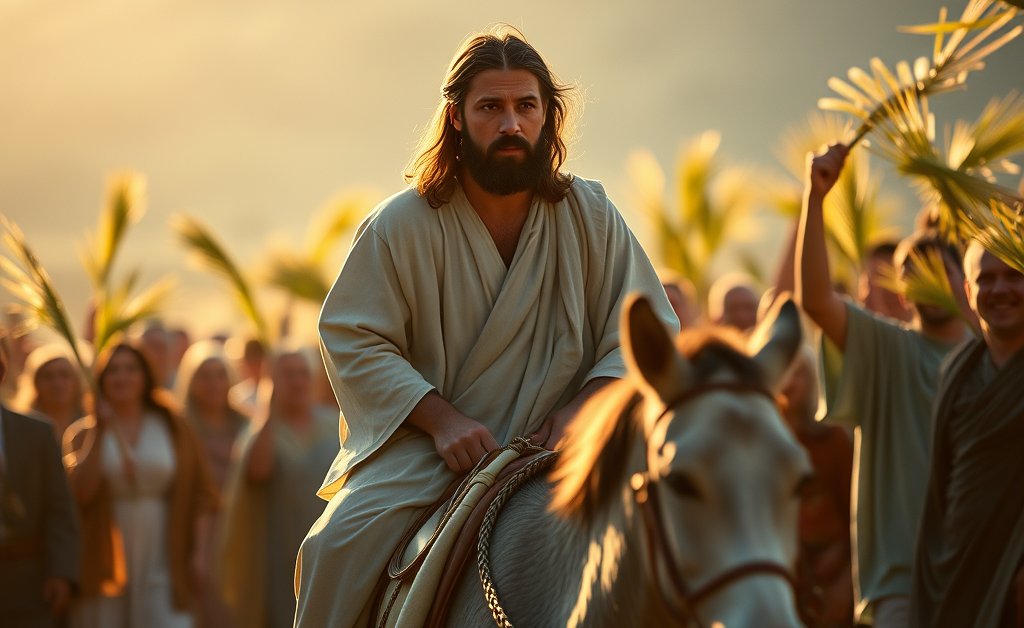
Actually, God is here.  But the evil that dwells within us makes it difficult for us to see God.  Isaiah says here in verse 1-2,

Surely the arm of the Lord is not too short to save, nor his ear too dull to hear. 

But your iniquities have separated you from your God; your sins have hidden his face from you, so that he will not hear. (Isaiah 59:1-2)

Do you want to see God in this world?  Then you need to make sure that your sins are forgiven and that your heart has been made pure. 

Jesus said,

Blessed are the pure in heart, for they will see God.  (Matthew 5:8)

God is so pure that he cannot look upon sin.  And because of that, our sins, if they are not dealt with, will separate us from him.

But instead of dealing with the sin in their lives, people often just make excuses.  As Isaiah wrote,

They rely on empty arguments and speak lies; they conceive trouble and give birth to evil.  (Isaiah 59:4)

And so instead of turning from their sin,

Their feet rush into sin; they are swift to shed innocent blood. 

Their thoughts are evil thoughts; ruin and destruction mark their ways. 

The way of peace they do not know; there is no justice in their paths. 

They have turned them into crooked roads; no one who walks in them will know peace. 

So justice is far from us, and righteousness does not reach us.  We look for light, but all is darkness; for brightness, but we walk in deep shadows. 

Like the blind we grope along the wall, feeling our way like men without eyes.  At midday we stumble as if it were twilight; among the strong, we are like the dead. (7-10)

When we look at this world, how often do we see this?  People calling what is evil good.  Celebrating when things that God condemns becomes accepted among the majority. 

And so we end up groping in the darkness, wondering why this world is falling apart, all the while blind to the fact that it’s because we’re embracing evil instead of the One who is good. 

As a result, things continue to spiral down at a rapid pace.

But God did not leave us to die in our sins.

The Lord looked and was displeased that there was no justice. 

He saw that there was no one, he was appalled that there was no one to intervene; so his own arm worked salvation for him, and his own righteousness sustained him. 

He put on righteousness as his breastplate, and the helmet of salvation on his head. (Isaiah 59:15-17)

Jesus came 2000 years ago to die for our sins that we might be forgiven and set free from our sin.  All we have to do is to turn to him.  That’s the good news.

The bad news is  that if we don’t turn to him, we will face judgment.

According to what they have done, so will he repay wrath to his enemies and retribution to his foes.  (18)

So don’t wait.  The day of salvation is now.  Turn to him while you still can.

Categories
Isaiah

Salvation

As we look at this passage where God calls his people out of exile, we also see a picture of salvation.  Isaiah tells the people,

Awake, awake!  Rise up, O Jerusalem, you who have drunk from the hand of the Lord the cup of his wrath, you who have drained to its dregs the goblet that makes men stagger…

Your sons have fainted; they lie at the head of every street…

They are filled with the wrath of the Lord and the rebuke of your God.  (Isaiah 51:17-20)

Here, we see Isaiah calling the Jews who had been staggered by the judgment of God in their lives.  Who had had everything stripped from them because of their sins.  And he tells them in verse 22,

See, I have taken out of your hand the cup that made you stagger; from that cup, the goblet of my wrath, you will never drink again. (Isaiah 51:22)

In other words, their judgment was coming to an end, and they would never taste of it again. 

In the same way, when we come to Christ, in our brokenness and sin, he saves us, having paid for our sins on the cross, so that we never need taste God’s judgment again.

Then in chapter 52, Isaiah says,

Awake, awake, O Zion, clothe yourself with strength.  Put on your garments of splendor, O Jerusalem, the holy city….

Shake off your dust; rise up, sit enthroned, O Jerusalem.  Free yourself from the chains on your neck, O captive Daughter of Zion.  (Isaiah 52:1-2)

Just as God would take off their tattered, dirty clothes, and clothe them with rich garments, just as he would take off the chains that bound them, so he does with us. 

He takes off the chains of sin that bound us, and he dresses us as his sons and daughters.  No longer are we slaves, but God calls us his beloved children.

God said of the Jews,

You were sold for nothing, and without money you will be redeemed.  (Isaiah 52:3)

We too were not bought by Satan.  He never paid anything for us.  Rather we sold ourselves as slaves to him through our sins.  And when God redeemed us, it was not with money, but through the blood of Christ.

Now he proclaims his salvation to the whole world, saying,

How beautiful on the mountains are the feet of those who bring good news, who proclaim peace, who bring good tidings, who proclaim salvation, who say to Zion, “Your God reigns!”  (Isaiah 52:7)

And again,

The Lord will lay bare his holy arm in the sight of all the nations, and all the ends of the earth will see the salvation of our God.  (Isaiah 52:10)

So how shall we respond?

Depart, depart, go out from there!  Touch no unclean thing! Come out from it and be pure…the Lord will go before you, the God of Israel will be your rear guard.  (Isaiah 52:11-12)

God told the Jews, “Leave your life of captivity.  Leave your life of sin.  And I will be with you.”

He tells us the same thing. 

“The path has already been cleared for you to leave the kingdom of Satan, and enter the kingdom of God.  Your sins are paid for.  The clothes of salvation are waiting for you.  So leave your old life.  Leave your life of sin.  And I will be with you.”

Categories
Isaiah

That they may know Me and be saved

The ways of God are hard to grasp sometimes. 

Why would he use the Assryians, Babylonians, and Persians to punish his people, when these people were just as bad, if not worse than the Israelites?

I don’t know, but perhaps Isaiah and the people of Israel were asking the same thing, because God said to them,

Woe to him who quarrels with his Maker, to him who is but a potsherd among the potsherds on the ground. 

Does the clay say to the potter, ‘What are you making?’  Does your work say, ‘He has no hands’…

Concerning things to come, do you question me about my children, or give me orders about the work of my hands? 

It is I who made the earth and created mankind upon it.  My own hands stretched out the heavens; I marshaled their starry hosts.  (Isaiah 45:9, 11-12)

In other words, “I created everything.  I stretched out the heavens and created all that is in it.  What have you done recently?  When you’ve done anything to compare, then we can talk.”

We can’t always understand the reasoning of God, but one thing that we can see is that it’s his desire that all would know him and be saved. 

He makes that clear when talking about Cyrus.  He basically says, “You don’t know me or acknowledge me Cyrus, but I will make you great and nations will fall before you.  Why do I do this?”

So that from the rising of the sun to the place of its setting men may know there is none besides me.  I am the Lord, and there is no other…

They (the peoples you conquer) will bow down before you and plead with you, saying, ‘Surely God is with you, and there is no other; there is no other god.’ (6,14)

By using the Persians to punish and then restore Israel, God was able to make his name great among the nations, particularly when Cyrus himself acknowledged God’s hand in all that he had done.  (2 Chronicles 36:23)

And now that God had everyone’s attention, he told them,

Who foretold this long ago, who declared it from the distant past?  Was it not I, the Lord? 

And there is no God apart from me, a righteous God and a Savior; there is none but me. 

“Turn to me and be saved, all you ends of the earth; for I am God, and there is no other. 

By myself I have sworn, my mouth has uttered in all integrity a word that will not be revoked:  Before me every knee will bow; by me every tongue will swear.”  (Isaiah 45:21-23)

What was God’s message to the people?

I am God.  There is no other.  There is no other Savior.  Turn from your gods that are not even gods at all.  Turn instead to me and be saved.

God’s message hasn’t changed in thousands of years.  He still calls us to turn from the gods of this world, and to turn to him for our salvation.

The day will come when every knee will bow before God and every tongue will swear.  What will they swear?

Paul answers that question as he quotes and expands on Isaiah 45 in Philippians 2:10-11.

That at the name of Jesus every knee should bow, in heaven and on earth, and under the earth, and every tongue confess that Jesus Christ is Lord to the glory of God the Father.

Some day everyone will confess Jesus as Lord.  Some will do it with heartfelt love and awe.  Others will say it grudgingly with clenched teeth.  But all will confess it. 

So why not confess it now before it’s too late?

Categories
Isaiah

Precious to God

This is probably one of my favorite if not favorite passages in scripture.

But now, this is what the Lord says– he who created you, O Jacob, he who formed you, O Israel:  “Fear not, for I have redeemed you; I have summoned you by name; you are mine.  

When you pass through the waters, I will be with you; and when you pass through the rivers, they will not sweep over you. 

When you walk through the fire, you will not be burned; the flames will not set you ablaze. 

For I am the Lord, your God, the Holy One of Israel, your Savior. (Isaiah 43:1-3)

The God who created us in the womb, who formed us into his masterpiece speaks here.

I have redeemed you. 

For the Israelites, this would have the idea of being led out of Egypt and the hands of their other captors. 

For us, it has a deeper meaning.  That through the cross of Christ, we’ve been redeemed from the penalty of sin.  That through his blood we have found forgiveness.

I have summoned you by name.  You are mine. 

We are not just one of billions of people here on this earth.  He knows us by our very name.  And when he looks at us, he says, “You are mine, my beloved child.”

When you pass through the waters I will be with you. 

Jesus says here, “When the waters in your life become too deep for you and things seem desperate, just as I was with Peter, I will be with you, taking your hand and leading you over the waves of life.”

When you pass through the rivers, they will not sweep over.  When you walk through the fire, you will not be burned. 

Here he’s saying, “Whatever trials you go through in life, you will make it through.  They will not overcome you as long as you trust in me.”

And then God goes on to say,

Because you are precious and honored in my sight, and because I love you, I will give men in exchange for you.  (4)

This is probably a reference to God giving Egypt, Cush and Seba to Persia because of its kindness to Israel in letting the people return to their homeland. 

But in the same way, God considered us so precious and honored that he sent Jesus to die for our sins, taking our place on the cross.  He was given in exchange for us, so great was God’s love for us.

And then he promised that no matter how far gone they were, no matter how scattered among the nations they were, he would bring them back. 

The same is true with us.  No matter how far we have fallen from God, no matter how messed up our lives are, he will bring us back if we turn to him. 

No matter how blind or deaf we were to him, he will bring us back (8).

And now he calls us to be his witnesses.  To not just rest in his salvation, but to bring his salvation to the ends of the earth. 

He tells us,

“You are my witnesses,” declares the Lord, “and my servant whom I have chosen, so that you may know and believe me and understand that I am he.”  (10)

What is the message that we are to give?

Before me no god was formed, nor will there be one after me.  I, even I, am the Lord, and apart from me there is no savior.  (10b-11)

Or as Jesus said,

I am the way, the truth, and the life.  No one comes to the Father except through me.  (John 14: 6)

So as God’s precious and beloved children, let us take Jesus out into this world that others may know him too.

Categories
Isaiah

A prayer

I’ve kind of gotten out of the habit of memorizing scripture and I want to get back into it.  A couple of days ago, I worked on Isaiah 30:15.  Today it’s this verse.

O Lord, be gracious to us; we long for you.  Be our strength every morning, our salvation in time of distress. (Isaiah 33:2)

Somehow, each phrase resonates with me.

O Lord, be gracious to us.

Lord, I need your grace each day.  I fail so much.  I sin.  I let you down.  Forgive me.  Be gracious to me.  And as I receive your grace this day, let me share that grace with those around me.

We long for you.

Lord, my soul thirsts for you.  I desperately need more of you in my life.  Lord let my heart seek you.  Let it be undivided in its pursuit of you.

Be our strength every morning.

Lord, every morning as I wake, be my strength.

As I face the trials of the day, be my strength.  As I meet with difficult people, be my strength.  As I meet with difficult circumstances, be my strength.  Stand with me this day.

Be our salvation in times of distress.

When I’m weighed down by anxiety, deliver me.  When the Enemy comes against me, be my defender and my deliverer.

Lord I am weak.  I can’t fight the Enemy on my own.  So deliver me from evil.  And let me overcome.

I ask all these things in Jesus’ name, amen.

Categories
Isaiah

The joy of salvation

Last Sunday, I was listening to a message on John 3 at church.  And our pastor was talking about verse 16, probably one of the most famous, if not the most famous verse in the Bible.

He asked us this question:  What does this mean to you?  Is it a verse that still stirs your soul?  Or have they become just words?

I think sometimes it can be easy to take our salvation for granted.  When was the last time that you really thought about what it all means?

This passage in Isaiah is a reminder to me of what it all means.

I will praise you Lord.  Although you were angry with me, your anger has turned away and you have comforted me.

Surely God is my salvation; I will trust and not be afraid.

The Lord, the Lord is my strength and my song; he has become my salvation.

With joy you will draw water from the wells of salvation.  (Isaiah 12:1-3)

I remember growing up, fearing my dad’s anger when I did something wrong.

Many people feel that way about God.  They hide from him, thinking he’s just waiting to nail them for the wrong things that they have done.

But it says here that there’s no need to be afraid of God.  That because of his mercy and grace, his anger has turned away from us.

Through Jesus, we now have salvation from our sins.  And instead of being a God we need to fear and hide from, he has become our joy and song.

Not only that, he is with me every moment of every day.  Wherever I go, whatever I do, his hand is on me.  To bless.  To guide.  And to protect.

I really need to think about all this more in my life.  To think about just how much I have in Christ.

I have so much to be grateful for.  And this world needs to hear the message that has set me free.

As Isaiah wrote,

Give thanks to the Lord, call on his name; make known among the nations what he has done, and proclaim that his name is exalted.

Sing to the Lord, for he has done glorious things; let this be known to all the world.  Shout aloud and sing for joy!  (Isaiah 12:4-6)

Categories
2 Kings

The salvation that comes from God

As I read this passage, it reminds me of the salvation that we receive from God.

First, we learn that it needs to be proclaimed in order for people to receive it. 

It’s amazing to me that this girl, who goes nameless in this story, would show such compassion for her master when she was stolen away from her own people to become a slave. 

And yet, she cared so much for her master, that she told his wife, “If only my master would see the prophet who is in Samaria! He would cure him of his leprosy.”  (2 Kings 5:3)

Had she never said a word, he would have wasted away in his leprosy. 

In the same way, many people are wasting away in their sin, and unless we tell them about the one who can save them, they will die in that sin. 

Paul wrote,

How, then, can they call on the one they have not believed in? 

And how can they believe in the one of whom they have not heard? 

And how can they hear without someone preaching to them? 

And how can they preach unless they are sent? 

As it is written, “How beautiful are the feet of those who bring good news!”  (Romans 10:14-15)

The second thing about salvation is that it has to come God’s way, not our own. 

When Naaman was told that he would have to bathe in the Jordan, his first reaction was revulsion. 

“Why should I go to the Jordan?  Why not the rivers in my own land?  They’re much better than the Jordan! 

“What kind of prophet is this anyway?  I thought he would just wave his hand over me and I would be made clean.  This guy wouldn’t even see me!”  (11-12)

But Naaman had to learn that healing wouldn’t come by doing things his own way, but through God’s. 

God required that he show humility, admitting that he couldn’t help himself.

And God required that he demonstrate faith, believing his word and then obeying it. 

He requires the same from those who seek salvation today: That we would humble ourselves, admit we are sinners who need help, and then putting our faith in Jesus for the forgiveness of ours sins.

Finally, salvation is not a gift we can buy. 

I believe that it was for this reason that Elisha refused payment and that Elisha’s servant Gehazi was punished with leprosy for lying to Naaman and saying that Elisha had changed his mind. 

God had wanted to make clear that this salvation Naaman had received was a free gift. 

But Gehazi ruined that picture God was trying to show Naaman and the Arameans.

In the same way, salvation from sin is a free gift. 

We cannot pay for it.  We cannot earn it. 

All we can do is humbly receive it. 

As Ephesians 2:8-9 says,

For it is by grace you have been saved, through faith–and this not from yourselves, it is the gift of God– not by works, so that no one can boast.