Categories
Joshua Devotionals

Leaving nothing undone

Just as the Lord had commanded his servant Moses, Moses commanded Joshua. That is what Joshua did, leaving nothing undone of all that the Lord had commanded Moses. (Joshua 11:15)

There are several famous verses in the book of Joshua, including chapter 1, verses 5-9, and chapter 24, verse 15.

But this is also one of my favorites. “Joshua left nothing undone of all that the Lord commanded.”

I want to be that way too. Especially when it comes to sin.

I don’t want to make excuses for my sins. I don’t want to treat them lightly. I want to wipe them out as thoroughly as Joshua and the Israelites wiped out the Canaanites and their evil from the land. (See Leviticus 18, especially verses 24-25).

Father, help me to do just that. Let me leave nothing undone of all that you command.

Categories
Joshua Devotionals

Judgment day

So Joshua conquered the whole region—the hill country, the Negev, the Judean foothills, and the slopes—with all their kings, leaving no survivors.

He completely destroyed every living being, as the Lord, the God of Israel, had commanded. (Joshua 10:40).

Let’s be honest, words like these are tough to swallow. Why would God command such a thing?

In a word: judgment.

What were the Amorites being judged for?

Their sin.

God goes into great description of that in Leviticus 18, telling the Israelites that the land was “vomiting” out the Amorites for their sin. (Leviticus 18:24-25)

That said, God was patient with them. He waited 400 years for them to repent. (Genesis 15:13-16)

They never did.

And when their sin reached their “full measure,” judgment came, with God instructing Joshua and the Israelites to wipe them out.

I mentioned in my last article that the Bible is not all encouraging and comforting words about God’s love and mercy. It also has hard words about judgment too.

God is patient. He desires all to come to repentance. (2 Peter 3:9)

But if like the Amorites, people refuse to repent, judgment will come.

So let us never take our sin lightly. Remember that a day of judgment is coming as it came for the Amorites. And always keep in mind the words of Peter.

But the day of the Lord will come like a thief; on that day the heavens will pass away with a loud noise, the elements will burn and be dissolved, and the earth and the works on it will be disclosed.

Since all these things are to be dissolved in this way, it is clear what sort of people you should be in holy conduct and godliness as you wait for the day of God and hasten its coming. (2 Peter 3:10-12)

Categories
Luke Devotionals

More than willing

When Simon Peter saw this, he fell at Jesus’s knees and said, “Go away from me, because I’m a sinful man, Lord! (Luke 5:8)

I found Peter’s words above interesting. He spoke almost like a leper.

Lepers were required by God’s law to say to anyone who came near them, “Go away from me. I’m unclean.” (Leviticus 13:45-46)

But in Luke 5, a leper actually drew near to Jesus and said, “If you are willing, you can make me clean.”

Jesus was willing and cleansed the leper of his disease.

More significantly, by his grace, he cleansed Peter and the paralytic of their sins.

And in Matthew’s case, Jesus was not only willing, he actually went chasing after Matthew.

In the same way, Jesus chased after us. Though we had gone our own way, treating Jesus like a zero, he went to the cross for us, paying the price for our rebellion.

Now when we come to him asking for mercy, as with the leper, Jesus says to us, “I am willing. Be clean.”

Therefore, let us approach the throne of grace with boldness, so that we may receive mercy and find grace to help us in time of need. (Hebrews 4:16)

Categories
Deuteronomy Devotionals

Purging the evil within us

You must purge the evil from you. (Deuteronomy 17:7)

Twice God repeats these words to the Israelites, first in respect to idolatry and second to arrogant sin.

For the Israelites, that meant death to those who committed these sins. In the New Testament church, it meant excommunication. (1 Corinthians 5:13)

But as I read those words, God reminded me that I need to purge the sin that’s within me as well. To put it to death, as Paul said. (Colossians 3:5-10)

I can’t take my sin lightly. I can’t arrogantly ignore God or those who would correct me.

With God’s help, and the help of God’s people, I need to purge my sin.

And so my prayer for the day:

Father, let me never take my sin lightly. Help me to purge it.

Let your Word be that cleansing fire in my life. Through your Word, let me learn to fear you and obey you in everything.

Let me never turn back to Egypt, to my old way of life.

That way is death. But your ways are life. You are life. And you are good.

So help me to love and honor you in all I do. In Jesus’ name, amen.

Categories
Numbers Devotionals

Guarding our hearts against sin

Let’s be honest. There are things in Numbers that are hard to read. Especially when it comes to God’s judgment.

But according to the apostle Paul, there is a reason God recorded all these things. He wrote this in 1 Corinthians 10.

Now these things took place as examples for us, so that we will not desire evil things as they did.

Don’t become idolaters as some of them were; as it is written, The people sat down to eat and drink, and got up to party.

Let us not commit sexual immorality as some of them did, and in a single day twenty-three thousand people died. Let us not test Christ as some of them did and were destroyed by snakes.

And don’t grumble as some of them did,, and were killed by the destroyer.

These things happened to them as examples, and they were written for our instruction, on whom the ends of the ages, have come. (1 Corinthians 10:6-11)

The first event Paul mentions happened in Exodus 32. The rest occured in the chapters we’ve been reading in Numbers, including today’s chapter.

Why did God record all these things?

For our instruction.

What can we learn?

1. God takes sin seriously, especially willful, rebellious sin.

We saw this in chapters 15-17, and we see it again here in verse 6.

While the people are weeping over their sin and God’s judgment, a man brashly brings into his tent a Midianite woman to sleep with her, probably as part of a religious ritual.

2. The wages of sin, particularly willful, rebellious, and unrepentant sin is death.

Because of that we dare not take sin lightly in our lives. Rather we are to flee from it.

And so Paul warns us:

So, whoever thinks he stands must be careful not to fall. (1 Corinthians 10:12)

We need to constantly be on our guard against sin.

But the good news is that God is with us to help us stand against sin and be victorious over it.

As Paul says,

No temptation has come upon you except what is common to humanity.

But God is faithful; he will not allow you to be tempted beyond what you are able, but with the temptation he will also provide the way out so that you may be able to bear it. (1 Corinthians 10:13)

Categories
Numbers Devotionals

What cannot be forgiven

In these chapters, we see some harsh punishments that God laid on the Israelites.

For a lot of people, including Christians, that’s hard to understand, but it comes down to a truth that God laid out in chapter 15.

There is a huge difference between unintentional sins and willful, and more importantly, unrepentant rebellion.

There were sacrifices that could be made for the former.

There were no sacrifices for the latter.

Where there is unrepentant rebellion, any sacrifices would be totally meaningless. (Numbers 15:22-30)

We see this truth played out in the person who willfully and unrepentantly broke the Sabbath. (Numbers 15:32-36)

We see it also in Korah and his followers. (Numbers 16)

A rebellious heart is an ugly thing.

But when it is combined with a heart that refuses to repent, it becomes unforgivable.

All of us sin. But let us never get to the point where we willfully and unrepentantly rebel against God.

Instead, let us have the heart of David, who certainly knew willful sin, but also knew true repentance as well.

Who perceives his unintentional sins?
Cleanse me from my hidden faults.

Moreover, keep your servant from willful sins;
do not let them rule me.
Then I will be blameless
and cleansed from blatant rebellion.

May the words of my mouth
and the meditation of my heart
be acceptable to you,
Lord, my rock and my Redeemer.” (Psalm 19:12-14)

Categories
2 Thessalonians Devotionals

Be an example? Me?

For you yourselves know how you should imitate us…we did it to make ourselves an example to you so that you would imitate us. (2 Thessalonians 3:7, 9)

Those words really hit me this morning. Paul’s words are pretty bold: “You yourselves know how you should imitate us.”

Honestly, I don’t know if I feel that bold.

I see all my flaws. I see all the areas I still need to grow.

Why would people want to imitate me?

But God calls all of us to make disciples. Not just the pastors. Not just the church leaders. All of us. He calls all of us to make ourselves examples to the people in our lives so that they would imitate us.

And I suppose that means them not only seeing our strengths and imitating them, but seeing us working on our flaws as well.

And to see us moment to moment, day by day, walking in God’s grace, not under condemnation for our flaws, but with full confidence as children of God.

Father, I desire to be someone others want to imitate. In a lot of ways, I feel unworthy of that.

But as people watch me, let them see not only my admirable qualities that they want to imitate, let them also see the grace I walk in each day as I’m working on my flaws. In Jesus’ name, amen.

Categories
1 Thessalonians Devotionals

God is faithful. He will do it.

Now may the God of peace himself sanctify you completely.

And may your whole spirit, soul, and body be kept sound and blameless at the coming of our Lord Jesus Christ.

He who calls you is faithful; he will do it. (1 Thessalonians 5:23-24)

“He who calls you is faithful; he will do it.”

Those words rung in my mind this morning.

It brought to mind what Paul wrote in Romans 8:29-30:

For those he foreknew he also predestined to be conformed to the image of his Son, so that he would be the firstborn among many brothers and sisters.

And those he predestined, he also called; and those he called, he also justified; and those he justified, he also glorified.

I wonder. Do we really believe this?

He started this work, choosing us before we were born. Choosing us to become like his Son, our whole spirit, soul, and body sound and blameless before him.

And what he started, he will complete. Because he is faithful.

Do you like what you see in the mirror? Or do you see your sins and failures, the dirt and grime, and grimace?

Our Abba doesn’t grimace. He knew you from the first. And he still chose you. He called you. He justified you, wiping away your entire record of sin.

And whether you can see it or not, he’s in the process of sanctifying you through and through.

This is God’s will: your sanctification, your becoming like Jesus. (1 Thesssalonians 4:3)

And he’s not going to stop until he’s completed the process and he glorifies you, making you completely like his Son.

So put on the breastplate of righteousness. Not your righteousness, but the righteousness of God that comes by faiith. Let confidence in God’s love for you guard your heart. (Ephesians 6:14; 1 Thessalonians 5:8)

And know that the hope of your salvation, of your becoming like Jesus is a certain hope. Wear that hope every day.

For God did not appoint us to wrath, but to obtain salvation through our Lord Jesus Christ… (1 Thessalonians 5:9)

And again,

He who calls you is faithful; he will do it. (1 Thessalonians 5:24)

Categories
Matthew Devotionals

When we are “unclean”

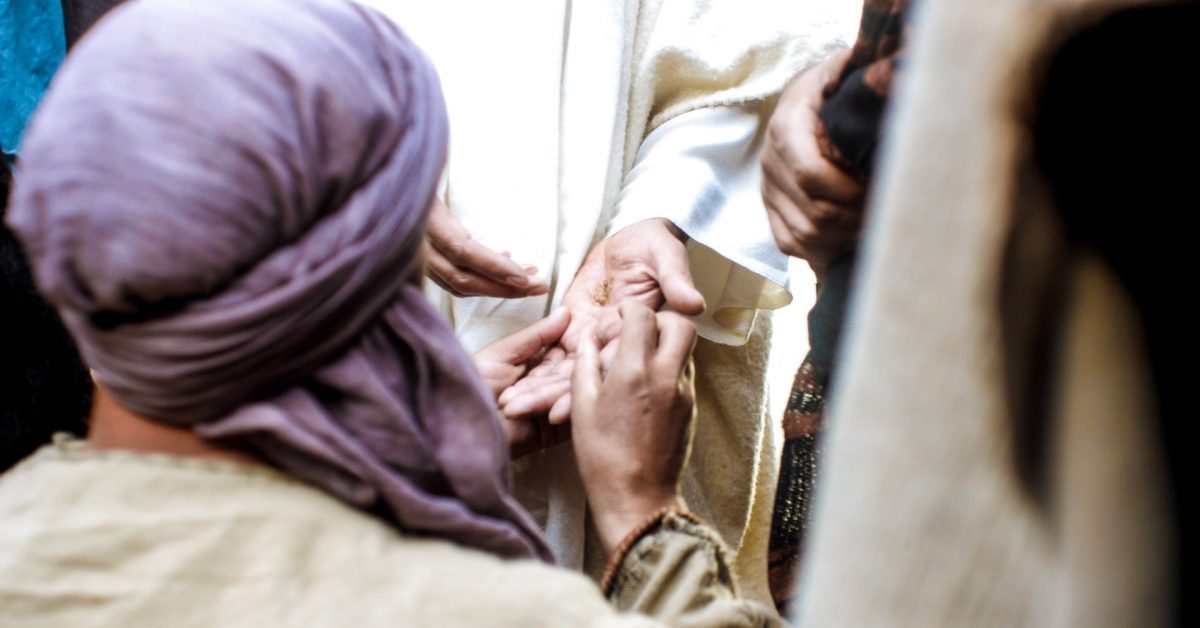
Right away a man with leprosy came up and knelt before him, saying, “Lord, if you are willing, you can make me clean.”

Reaching out his hand, Jesus touched him, saying, “I am willing; be made clean.” (Matthew 8:2–3)

Leprosy was a terrible disease in Israel. It made people “unclean,” outcasts from society, and as such, they were banned from God’s temple. (Leviticus 13:45-46, Numbers 5:2-3).

In that way, leprosy is a picture of sin. It makes us spiritually unclean and breaks our relationships with God and others.

But the man in this story approached Jesus and said, “If you are willing, you can make me clean.”

And in his mercy and grace, Jesus touched him and said, “I am willing. Be clean.”

Often times after we sin, we wonder if God could possibly forgive us, if he could possibly accept us after what we’ve done.

And so we come before him trembling, saying, “If you are willing, you can make me clean.”

Jesus says the same thing to us as he said to that man.

“I am willing. Be clean.”

So, children of God, let us approach his throne with confidence, knowing that we will receive mercy and find grace in our time of need. (Hebrews 4:16)

Categories
Galatians Devotionals

Bearing the marks of Christ

Those who want to make a good impression in the flesh are the ones who would compel you to be circumcised—but only to avoid being persecuted for the cross of Christ.

For even the circumcised don’t keep the law themselves, and yet they want you to be circumcised in order to boast about your flesh.

But as for me, I will never boast about anything except the cross of our Lord Jesus Christ. The world has been crucified to me through the cross, and I to the world…

From now on, let no one cause me trouble, because I bear on my body the marks of Jesus.” (Galatians 6:12-14, 17)

I was chewing on those last few words of Paul, “I bear on my body the marks of Jesus.”

The word “marks” usually carried the idea of a slave being branded, identifying who their master was.

For the Jews, circumcision was the sign they belonged to God. As a Jew, Paul had received circumcision, but for him, he wasn’t pointing to that as his identifying mark.

Rather, Paul pointed to the scars he bore for faithfully preaching God’s gospel of grace.

Many times, the Jews persecuted him for preaching a salvation based on the cross instead of a salvation based on circumcision and on keeping God’s laws.

He had gone through many other hardships as well for preaching that gospel. (2 Corinthians 11:24-29)

And so he tells those preaching a false gospel to the Galatians, “Stop bothering me and hindering the work that I’ve done among the Galatians. You aren’t true servants of Christ. You’re only preaching circumcision because you want to avoid persecution.

“But my scars, not my circumcision, prove that I truly belong to Christ.”

I can’t help but wonder, though, if he was also trying to tell the Galatian Christians something else.

“Circumcision isn’t what marks you as belonging to God. You already carry the ‘marks’ of Christ which he received on the cross. You have been crucified with Christ and died to the law and its condemnation of you.

“More, you’ve died to the sin that once enslaved you and you’re no longer living for the things of this world. Rather, you live for Jesus who loves you and gave himself up for you. That’s what marks you as a child of God.”

So let us walk each day as children of God, proudly wearing the marks of our crucified Lord whom we love.

I have been crucified with Christ, and I no longer live, but Christ lives in me.

The life I now live in the body, I live by faith in the Son of God, who loved me and gave himself for me. (Galatians 2:20)

Categories
Genesis Devotions

Finding God’s healing for your broken life

At that time Judah left his brothers and settled near an Adullamite named Hirah. (Genesis 38:1)

I have read that verse hundreds of times, but today, for the first time, I asked myself a question: “Why?”

Why did Judah leave his family? Why did he leave his responsibilities?

It can be argued that with his three older brothers Reuben, Simeon, and Levi fallen into disfavor with their father Jacob (Genesis 49:3-7), Jacob was counting on Judah to lead the family after he died.

But Judah left. Why?

I don’t know, but I’m guessing that his conscience was deeply bothering him for what he had done to Joseph. And perhaps seeing his mourning father every day was more than Judah could bear. (Genesis 37:26-28, 34-35)

And so he left.

He tried to start a new life.

But he couldn’t escape himself. He couldn’t escape his sinful heart.

And as he faced himself at the end of chapter 38, Judah didn’t like what he saw.

Not only was Joseph whom he had betrayed more righteous than he was, this Canaanite girl Tamar who didn’t even know God was more righteous than he was.

And perhaps at that point, he looked in the mirror and said, “Something has to change. I can’t keep living like this. I have to stop running.”

His first step? Taking responsibility for Tamar and their two sons.

And then somewhere along the line, it seems he returned home a different person.

You see that in his actions in chapters 43-44.

The change probably didn’t happen overnight. But it started with that single step, and he took it. And as God led him, day by day Judah kept taking those steps forward.

In doing so, he found healing in his broken life.

Joseph forgave him. (Genesis 45)

His father forgave him. (Genesis 49:8-12)

And of course, God forgave him.

What do you see in the mirror? Do you like what you see?

Change…and healing starts with a single step. What is God asking you to do?

Categories
1 John Devotionals

Walking in the light

If we walk in the light as he himself is in the light, we have fellowship with one another, and the blood of Jesus his Son cleanses us from all sin. (1 John 1:7)

As I read those words this morning, I was thinking about what it means to walk in the light.

Somehow, I’ve always had this impression that whenever we sin, we immediately step out of the light and into the darkness, if only for a brief time until we repent and come back into the light.

But in reflecting on John’s words, I’m not so sure that’s true.

John doesn’t say that the person walking in the light will never sin.

Rather, he says that if we walk in the light, the blood of Jesus will cleanse us whenever we do sin.

I think to walk in the light, then, means to constantly expose every facet of our life to Jesus, both the good and bad. And whenever his light exposes some sin in our hearts, we immediately repent.

We don’t try to hide our sin. We don’t make excuses for it. We repent. And as we do, he is faithful and just and will forgive us.

That’s walking in light. That’s what fellowship with God looks like.

On the other hand, it’s impossible to have fellowship with God if we’re hiding from his light. If like Adam and Eve we try to cover our guilt and our shame. Or if we constantly make excuses for and try to justify our sins.

That’s walking in the darkness.

And so as we think about whether we’re walking in the light or not, the question we need to ask ourselves is not how much we struggle with sin in our lives.

The question is, “Am I exposing all of me to Jesus? Or are there areas that I’m still trying to hide from him?”

Father, I choose to step out into the light and walk in it. To hide nothing from you, not even the sins I’m ashamed of.

Let your light shine on me. Show me the areas that need to change.

I don’t want to just stand in the light, basking in your grace. I want to walk in the light.

So show me my next step. And as I keep moving forward, step by step, make me more like you. In Jesus’ name, amen.

Categories
2 Peter Devotionals

Seeing sin for what it is: vomit and mud

It has happened to them according to the true proverb: A dog returns to its own vomit, and, “A washed sow returns to wallowing in the mud.” (2 Peter 2:22-23)

Father, help me to see my sin for what it is: vomit and mud.

How often, though, do I get pulled back to it because I don’t see it as vomit and mud?

I don’t want to return to and eat my own vomit. I don’t want to go back to wallowing in the mud.

I want to be clean in your sight. So when the tides of my flesh, my instincts, feelings, and desires start pulling me back to that vomit and mud, help me to go against the tide and follow you.

Jesus, clothe me in your righteousness and holiness. I want to know the freedom and joy that is in you. In your name, I pray. Amen

Categories
Acts Devotionals

What God has made clean

“What God has made clean, do not call impure.” (Acts 10:15)

Peter said to them, “You know it’s forbidden for a Jewish man to associate with or visit a foreigner, but God has shown me that I must not call any person impure or unclean. (28)

When God called Israel to be his people, he declared certain foods “unclean” for them.

But those laws were not simply for the benefit of their health. Rather, they were a visual, daily reminder that they were to be a different from the nations around them.

They were not to simply eat things because the other nations ate them.

And in the same way, they were not simply to do immoral acts because the surrounding nations did them.

They were God’s people now and they were to follow him.

So it was a total shock to Peter when God told him to eat a bunch of food that God had declared unclean in his law.

When Peter balked, though, God said, “Hey. I’ve made this food clean. Don’t call what I made clean, unclean.”

But once again, God’s point wasn’t about mere food.

God was showing Peter that his promises to make a great nation out of Abraham were no longer limited to the Jews. Rather, the promises were now extended to even the “unclean” Gentiles.

Anyone who puts their faith in Jesus will be accepted by him.

That means us. We were once outsiders to God’s promises, excluded from God’s kingdom, without hope, and no relationship whatsoever to God.

But we have now been brought near to God by the blood Jesus shed on the cross. We have been made clean, with all our sin and guilt washed away. We are saints. We are God’s children. (Ephesians 2:12-18)

But too many Christians don’t see themselves that way.

Perhaps because of their past sins they’re ashamed of. Or guilt for the sins they struggle with now.

Or perhaps because all their lives, they’ve been told by their parents, their teachers, or others, “You’re not good enough.”

Is that you? Do you still see yourself as dirty.

When you hear God calls you a “saint,” do you feel that it must be some kind of joke?

When you look at yourself in the mirror, do you like what you see? Or does the thought, “I’m not good enough” keep reverberating in their head?

God says to you, “What I have made clean, don’t call impure. I have washed away the dirt of your sin, the guilt of your past. I have accepted you. So stop beating yourself up. You are my child now.”

Categories
2 Samuel Devotionals

What God thinks

However, the Lord considered what David had done to be evil. (2 Samuel 11:27)

Sometimes I think the Bible, especially the Old Testament history books (Joshua-Chronicles) would be so much easier to read if we saw more words like the above.

So many times, we see questionable or downright wrong decisions made by the “good” Biblical characters and no comment is made on what God thought.

Even though we might see the negative consequences of their actions, there’s no actual direct rebuke from God.

So we think, “If God disapproved, why didn’t he say something?”

I don’t know about you, but that’s how I feel a lot of times.

But I think the thing to remember is that the writers of these books are assuming we already know what God thought about these people’s actions.

We know because we read the ten commandments and God’s other laws.

We know because we’ve seen before how God felt and responded to similar sins.

And so often times, the Biblical authors don’t go out of their way to specifically say, “By the way, what this person did was wrong.”

In this case, however, the author does go out of his way to say that the Lord considered David’s actions wrong.

Why? I don’t know.

But I do think it’s a warning to us. Like David, we can fool ourselves into thinking that what we’re doing is okay, even when God says it’s clearly wrong.

That especially can happen when we don’t immediately see any negative consequences or “sense” any rebuke from God.

But it doesn’t change the fact that what we’re doing is evil in God’s eyes. He sees. And sooner or later, he will hold us accountable.

It might be on this earth. It might be before his judgment seat in heaven. But he will hold us accountable.

So let us not fool ourselves. Let us instead, maintain soft hearts toward God, not letting our consciences get seared by ignoring God’s word.

Categories
Matthew Devotionals

Helping the struggling

They tie up heavy loads that are hard to carry and put them on people’s shoulders, but they themselves aren’t willing to lift a finger to move them. (Matthew 23:4)

It is so easy to condemn those who are struggling with sin. That’s true even when we aren’t adding a myriad of rules to God’s laws as the scribes and Pharisees did.

But God doesn’t call us to simply condemn those struggling with sin. Nor does he call us to simply ignore or downplay their sin.

Rather, he calls us to come alongside people and help them any way we can to overcome their sin. And as we do so, we are to show grace and mercy to them, the same grace and mercy we ourselves have received from Him.

So let us take on the heart of our Lord, who said,

Come to me, all of you who are weary and burdened, and I will give you rest.

Take up my yoke and learn from me, because I am lowly and humble in heart, and you will find rest for your souls.

For my yoke is easy and my burden is light. (Matthew 11:28-30)

Categories
Matthew Devotionals

Seeing our own sins

Yesterday, I was reflecting on Matthew 6:22-23, thinking about how healthy my spiritual eyesight is.

Part of that is my ability to see my own sins and faults. It’s so easy to see other people’s sins and faults, and not see my own. (Matthew 7:1-5)

And as the old saying goes, there’s no worse deception than self-deception. When you’re self-deceived, as Jesus says, “how deep is that darkness.” (Matthew 6:23)

(O Lord.) Who perceives his unintentional sins?

Cleanse me from my hidden faults.

Moreover, keep your servant from willful sins;
do not let them rule me.

Then I will be blameless
and cleansed from blatant rebellion.

May the words of my mouth
and the meditation of my heart
be acceptable to you,
Lord, my rock and my Redeemer. (Psalm 19:12-14)

Categories
Matthew Devotionals

The message of Christmas

She will give birth to a son, and you are to name him Jesus, because he will save his people from their sins. (Matthew 1:21)

“He will save his people from their sins.”

How much did those words shock Joseph?

“My son will save his people from their sins? How is that possible? What does that mean?”

He certainly had no concept of the cross at that point.

Had the angel told him, “He will save his people from the Romans,” similar to what God had said concerning Samson (Judges 13:5), I’m sure Joseph would have had no problems understanding that.

But, “He will save his people from their sins?”

How many people today would be as confused as Joseph was?

If they think they need salvation at all, it might be salvation from government oppression. Or salvation from financial problems, health problems, or family problems.

They think joy and peace in their lives would come from having all those issues taken away.

And so if they ever ask God for anything, that’s what they pray for.

But it never occurs to them that the number one issue in their lives is their sin. They need salvation from their sin.

So many take their sin lightly. Many refuse to even admit their actions are sinful.

On the other hand, there are those completely burdened with guilt and regret because of their sin, but they can’t see what can be done about it.

To both, the message is the same: Jesus came to save his people from their sins.

So as we think about Christmas and how to share with the people we love its meaning, let us remember what is at the core of the Christmas message:

Jesus came to save his people from their sins.

Categories
1 John Devotionals

Walking in darkness? Walking in the light?

1 John 3:4-10 are among the more difficult in the Bible and can cause many Christians to doubt their salvation. Why? Because it seems to be saying that those who sin are not truly Christians.

That is clearly not what John means, however, as we’ve seen in 1 John 1:8-10 and 2:1.

So what does he mean?

I think we see a hint of the answer in 1 John 1:6-7.

True children of God walk in his light, not in darkness. Why?

Because they love God. They believe he is good. And they strive to be like their Heavenly Father.

People living in darkness are not this way. Instead, they have deep-seeded doubts about God, questioning the goodness of his character and his commands. And they essentially say, “If that’s the way you really are, if that’s the way you really think, I want nothing to do with you.”

That was Satan’s attitude.

That was the attitude he passed on to humanity in the garden.

And that’s how many people live today.

Such people have not seen or known Jesus or his Father.

True Christians don’t live that way. They can’t live that way.

Though they may fall into sin, when God’s light exposes it, they repent. No excuses. No trying to justify their sins. And certainly no questioning of his goodness.

The question, then, is not whether you sin or not. All of us sin. The question is if you’re walking in the light or not.

Because if we walk in the light as he is in the light, confessing our sins and repenting of them, the blood of Jesus his Son purifies us from all sin. (I John 1:7)

And the good news is, when our hearts condemn us for our failings, God is greater than our hearts and knows all things. He knows we truly love him and desire to please him. And he accepts us. (1 John 3:20)

So let us rejoice in his grace, singing with John.

See what great love the Father has given us that we should be called God’s children—and we are! (1 John 3:1)

Categories
1 Corinthians Devotionals

The wrong question

The Corinthian church had a lot of problems. People were cheating each other. There was also sexual immorality in the church.

And a lot of it seems to have come from this saying that had spread throughout the church: “All things are lawful for me.” (1 Corinthians 6:12)

This appears to be a twisting of Paul’s teaching that “we are no longer under law, but under grace.” (Romans 6:14-15)

A lot of Christians today twist Paul’s teaching the same way the Corinthians did. They turn God’s grace into a license for sin. (Jude 1:4)

But Paul makes clear that so-called “Christians” who willfully sin this way with no hint of repentance have no part in God’s kingdom. (1 Corinthians 6:9-10)

There are other people, however, that are always wondering, “Where is the line? How close can I get to sin without sinning.”

For example, “How much touching is allowed between boyfriend and girlfriend?”

But that’s the wrong question.

As Paul said, some things may be “permissible,” but they are not beneficial. (12)

And if we’re not careful, they may just lead to sin.

What then is the correct question?  

The correct question is, “Who do I belong to? And what is pleasing to him?”

If you’re a Christian, the answer is clear.

You are not your own, for you were bought at a price. So glorify God with your body. (1 Corinthians 6:19-20)

Who do you belong to? Are you doing what is pleasing to him?

Categories
Genesis Devotions

The day the curse is reversed

As I was reading this passage, I thought about all the results of our sin.

Guilt.

Shame.

Pain.

Death.

But worst of all, being cast out from God’s presence.

And yet, God said something that gave hope to Adam and Eve.

He told Satan,

I will put hostility between you and the woman,
and between your offspring and her offspring.
He will strike your head,
and you will strike his heel. (3:15)

God kept that promise. On the cross, Jesus suffered death, but in doing so, he delivered a fatal blow to Satan. More, Jesus rose from the dead three days later.

And because of that, we look forward to the day the curse is reversed. The apostle John saw it, and he described it to us.

Then I saw a new heaven and a new earth; for the first heaven and the first earth had passed away, and the sea was no more.

I also saw the holy city, the new Jerusalem, coming down out of heaven from God, prepared like a bride adorned for her husband.

Then I heard a loud voice from the throne: Look, God’s dwelling is with humanity, and he will live with them.

They will be his peoples, and God himself will be with them and will be their God.

He will wipe away every tear from their eyes.

Death will be no more; grief, crying, and pain will be no more, because the previous things have passed away.

Then the one seated on the throne said, “Look, I am making everything new.” (Revelation 21:1-5)

Amen. Come Lord Jesus. (Revelation 22:20)

Categories
Psalms Devotionals

If you are willing…

David had committed an unspeakable sin. He had murdered a man and taken his wife.

In light of that, verse 7 really is quite stunning.

Purify me with hyssop, and I will be clean;
wash me, and I will be whiter than snow. (Psalm 51:7)

Here David compares his sin with leprosy, something that in that time was incurable and ostracized a person from the presence of God.

(That is, a leprous person could not approach the tabernacle/temple as well as his community. See Leviticus 13:45-46, 14:1-32 and especially verses 6-7, Numbers 5:3-4)

And yet he says with utter confidence, “You can make me clean.”

It reminds me of something a leper once said to Jesus. With the same confidence that David had, he said to Jesus,

Lord, if you are willing, you can make me clean. (Matthew 8:2)

Jesus’ response?

I am willing; be made clean. (Matthew 8:3)

Because of the cross, no matter how terrible our sin, no matter how great our guilt, Jesus can cleanse us. All we have to do is humble ourselves and ask.

And he will make us clean.

Categories
Romans Devotionals

Walking in the newness of life

Just meditating today on verse 4 where Paul says,

Therefore we were buried with him by baptism into death, in order that, just as Christ was raised from the dead by the glory of the Father, so we too may walk in newness of life. (Romans 6:4)

Prior to the cross, there was a certain heaviness that Jesus carried with him, the knowledge that a day of reckoning was coming. That he would be put on a cross, bearing our sin and shame.

And while he rejoiced in serving his Father, nevertheless, that heaviness remained reaching its peak at Gethsemane (Luke 12:50, John 12:27; Luke 22:42-44).

But when he rose from the dead, all that burden was lifted from him. Our sins that he came to die for were now paid for, and now he was free to live for the glory of his Father with complete joy.

It is the same with us.

Prior to becoming Christians, we carried the weight of our sin with all its shame and the certainty of judgment hanging over us.

But when we were baptized into Jesus, his death became ours. All our punishment was transferred to him. All our shame was transferred to him.

And as with Jesus, we have now been raised to new life. We no longer carry the burden of ours sins, the shame it brings, and the fear of judgment. Our sins have been completely paid for.

Now we are free to live for the glory of our Father with complete joy.

So let us live each day in that joy

Categories
Jeremiah Devotionals

Our hope for a lost world

Jeremiah had a pretty depressing job.

He was preaching to a nation that was being judged for their sin, and God had outright told him to stop praying for the nation. That even if Moses or Samuel prayed for Israel, God would not listen. (Jeremiah 15:1)

What was the nation’s problem? They couldn’t even recognize their own sin. (16:10)

Namely, they had:

  1. Abandoned the Lord.
  2. Followed and worshiped other gods.
  3. Followed the stubbornness of their evil hearts. (Jeremiah 16:11-12)

And yet there was still a sliver of hope. Though God would punish his people, he would bring them back. (Jeremiah 16:14-15)

The interesting thing is that right after saying that, God said he would send fishermen to fish for the Israelites, and hunters to gather them in.

That was actually a word of judgment. The Babylonians would gather in the people of Israel and the Israelites would pay for their own sin by suffering exile for 70 years.

But hundreds of years later, after God kept his promise and graciously returned his people to their land, Jesus came and called his first disciples, saying,

“Follow me…and I will make you fish for people.” (Matthew 4:19)

This time, though, he would send out fishers not to punish people, but to save them.

Why was that possible? Because Jesus himself would be punished in our place. He took all of God’s wrath toward us upon himself.

And now, he calls all of us as his disciples to fish for people.

So let us go out and do that.

And especially in this time when fear seems to reign, let us pray for the nations.

Pray as Jeremiah did. I’m an American, living in Japan. But feel free to adjust this prayer to wherever you live.

Lord, my strength and my stronghold,
my refuge in a time of distress,
the nations will come to you from the ends of the earth.

Japan will come to you.
The U.S. will come to you.
All the nations.

And they will say,
“Our fathers inherited only lies,
worthless idols of no benefit at all.”

O God, can one make gods for himself?
People have tried, worshiping all manner of things.
But these things are not gods. Forgive them.

Lord, through us, inform them
and make them know your power and might.
Then they will know that your name is Yahweh.

(Based on Jeremiah 16:19-21)

Categories
Judges Devotionals

Failing to drive out evil in our lives

One of the things God commanded the Israelites to do as to completely drive out the Canaanites from the land, and make no compromise with them.

Why? Because of all their evil. And if they did not drive them out, their sin would eventually spread to the Israelites. (Leviticus 18, Deuteronomy 7:1-5).

But in this chapter, we see time and again the Israelites failing to do this.

In some cases, it was because it was hard. (Judges 1:19, 27, 34).

But that was no excuse. In the days of Joshua, they overcame enemies stronger than they. And in chapter 4 of Judges, we see that enemies having iron chariots were no match for Israel when they followed God.

More, we see that when they sought God’s counsel and they worked together, they could overcome anyone (1:1-5).

So what was the real issue?

In most cases, they just couldn’t be bothered to drive the Canaanites out. They could have. They were strong enough to do so. They simply didn’t.

How about us? God calls us to drive out sin and evil in our lives. But how important is that to us? Do we think that there are certain sins that are no big deal? A quick temper. Selfishness. Pornography.

Or are there sins that we’re finding hard to get rid of, and so we just don’t bother to try anymore?

Don’t make excuses for your sin. God has given his Spirit and each other to help us overcome sin in our lives. (Romans 8:13, James 5:15-16).

One day Jesus will return and we will be like him. So let us strive each day to be pure as he is pure. (1 John 3:2-3)

Categories
Acts Devotionals

Angry at evil?

This past week, in Japan (where I live), a terrible incident happened in which 34 were people were killed due to an arsonist who set fire to an anime studio called Kyoto Animation.

A friend of mine, who is an anime fan, was extremely upset about it, but so was my wife who is not an anime fan.

I think it is a natural reaction. We should be upset, both angry and saddened by this kind of evil.

The question is, “What do we do about it?” Just complain about the evil and ask God why he doesn’t stop it? Simply mourn over the tragedy of it?

I think about the passage in Acts 17 where Paul was in Athens.

He saw a city filled with idols, and Luke tells us, “he was deeply distressed” by it. Other translations put it, “he was greatly provoked” or “he was upset.”

In short, he was angry.

What did he do? Simply rage at its evil? Simply mourn over it?

No. He went out and preached the gospel to everyone he could.

Why? Because the only solution to sin and evil in this world is the gospel. Only the power of the gospel can change lives and bring healing to this broken world.

The question is, “Do you believe it? Do you believe it enough that when you see all the evil that sin causes, you want to share the gospel to all the hurting people around you?”

What is your response to evil?

Categories
1 Corinthians Devotionals Psalms Devotionals

Keeping a pure heart

Today I was reading I Corinthians 5 and Psalm 19, and as I meditated on them, the two passages connected in my heart.

In I Corinthians 5, Paul was talking about sin in the church and the need to discipline Christians living in unrepentant sin.

But as I read that passage, I also thought about how it applies to our personal lives.

Paul said concerning the Corinthian church’s response to this man,

And you are arrogant! Shouldn’t you be filled with grief and remove from your congregation the one who did this? (1 Corinthians 5:2)

Again, he’s talking about dealing with a Christian living in unrepentant sin.

But how often do we have that same attitude toward our own sin? Instead of grieving over our sin and asking God’s help to remove it from our lives, we blatantly continue to live in it.

Paul later tells the church,

Your boasting is not good. Don’t you know that a little leaven, leavens the whole batch of dough?

Clean out the old leaven so that you may be a new unleavened batch, as indeed you are. For Christ our Passover lamb has been sacrificed.

Therefore, let us observe the feast, not with old leaven or with the leaven of malice and evil, but with the unleavened bread of sincerity and truth. (1 Corinthians 5:6-8)

A little sin can spread quickly in our lives, and soon we start making excuses for everything we do.

So Paul says, get rid of the old leaven, the sin that dominated our lives before we became Christians, and live in sincerity and truth.

Christ cleansed us of our sins on the cross. Why go back to it?

What does this have to do with Psalm 19? David’s words and prayers at the end of it. May it be ours as well.

Who perceives his unintentional sins?
Cleanse me from my hidden faults.

Moreover, keep your servant from willful sins;
do not let them rule me.

Then I will be blameless
and cleansed from blatant rebellion.

May the words of my mouth
and the meditation of my heart
be acceptable to you,
LORD, my rock and my Redeemer. (Psalm 19:12-14)

Categories
1 Chronicles Devotionals

A never-ending battle

If there was one enemy that often came against the Israelites, it was the Philistines.

Time and again, the Israelites conquered them.

Time and again, the Philistines came back to war against the Israelites.

In the same way, as Christians, we face a constant struggle with sin.

We may overcome temptation one day, but the next day, the temptation comes roaring back. And until we enter God’s kingdom, we will face that battle every day.

But don’t get discouraged.

Just as God gave David victory over the Philistines, he will give us victory over sin. And even when we fall, he is there to pick us back up.

So in our battle against sin, let us always remember Paul’s words.

“Finally, be strengthened by the Lord and by his vast strength. Put on the full armor of God so that you can stand against the schemes of the devil.

For our struggle is not against flesh and blood, but against the rulers, against the authorities, against the cosmic powers of this darkness, against evil, spiritual forces in the heavens.

For this reason take up the full armor of God, so that you may be able to resist in the evil day, and having prepared everything, to take your stand.” (Ephesians 6:10-13)

Categories
2 Samuel Devotionals Psalms Devotionals

How we see sin

In these passages, we see one of the horrid sins of David, committing adultery with Bathsheba and then murdering her husband. And God had some hard words for David concerning that sin.

“Why then have you despised the Lord’s command by doing what I consider evil…you despised me and took the wife of Uriah the Hethite to be your own wife. (2 Samuel 12:9-10)

Think about this a minute. David sinned terribly against Bathsheba and against Uriah. And yet, God looked at that sin and said, “You have sinned against me! By that sin, you have despised me!”

David recognized that in his psalm of repentance. He wrote,

“Against you—you alone—I have sinned
and done this evil in your sight.” (Psalm 51:4)

How do you look at your sin? Do you see it as God does…as despising him? Because at root, that’s what sin is.

When you say something or do something that wounds a loved one or coworker or whoever it may be, you’re not only despising them, you’re despising God.

When you hold bitterness and unforgiveness in your heart towards someone, you’re not only despising them, you’re despising God.

So when we sin, let us recognize it for what it is: despising Jesus who went to the cross to die for our sins. And let us pray as David did.

“God, create a clean heart for me
and renew a steadfast spirit within me.” (Psalm 51:10)

Categories
Joshua Devotionals

Clinging to what we shouldn’t

As I read the first few words of this chapter, these words struck me.

The Israelites, however, were unfaithful regarding the things set apart for destruction. (Joshua 7:1)

It says here that the Israelites were unfaithful. How? Because of how they dealt with things set apart for destruction.

Now in context, the meaning is that God had told the Israelites to destroy all the people of Jericho and all the things in it, except for the silver, gold, iron, and bronze things which were to be given to the Lord’s treasury. (Joshua 6:17-19)

And in this story, a man named Achan was unfaithful to the Lord in that he took some beautiful and valuable things for himself.

But how often do we as Christians cling to that which God has determined should be destroyed in our lives, namely sin?

Like Achan (and for that matter, Eve back in the garden of Eden), we see, we covet, and then we take for ourselves that which God has forbidden. As a result, not only do we bring trouble upon ourselves, we bring trouble on those around us as well.

God was very severe in his judgment toward Achan. There was no mincing of words. He said,

“They have stolen, deceived, and put those things with their own belongings.” (Joshua 7:11)

God says the same thing when we cling to our sin, claiming rights to sin that we do not have.

And God warns,

I will no longer be with you unless you remove from among you what is set apart. (12)

In short, God will not be mocked. If we cling to our sin, he will withdraw his presence from us. He will not answer our prayers. He will not bless us. And we will pay the price for our sin.

Some of you may ask, “Are you saying you can lose your salvation?”

Here’s what I’m saying. God will discipline his children until they repent. You don’t lose your status as God’s children because of sin, but you will be under his discipline until you repent. And that is a miserable thing.

But if you can willfully stand in rebellion against God, clinging to what is to be destroyed in your life, I would strongly question whether you are God’s child at all.

So would Jesus (Matthew 7:21-23, John 8:34-47).

So would his apostles (James 2:18-26, I John 2:3-5, 3:4-10; Romans 8:1-14, 1 Peter 1:13-23).

So let us listen to the words of John who said,

Do not love the world or the things in the world. If anyone loves the world, the love of the Father is not in him.

For everything in the world—the lust of the flesh, the lust of the eyes, and the pride in one’s possessions—is not from the Father, but is from the world.

And the world with its lust is passing away, but the one who does the will of God remains forever. (1 John 2:15-17)

Categories
Deuteronomy Devotionals

Calling evil, “evil”

I’m thinking about my next message I’ll be giving at my church, where Jesus talks about “eye for eye, tooth for tooth” versus forgiveness.

I think one thing that many people don’t realize is that “eye for eye, tooth for tooth” was never, not even in Moses’ day, to be interpreted as justification for personal revenge.

No one person had the right to take an eye for an eye or a tooth for tooth, nor a life for a life.

You can see this, when Moses said,

“One witness cannot establish any iniquity or sin against a person, whatever that person has done.

A fact must be established by the testimony of two or three witnesses.” (Deuteronomy 19:15)

Verse 16 makes clear that this was to be done in front of the priests and judges who would decide these kinds of cases.

The other thing to remember is this “eye for eye, tooth for tooth” was very rarely, if ever, literally interpreted by the priests and judges.

Rather, the idea was to limit the severity of the judgment, that is, to match the punishment with the crime.

The judges were not to kill a person, for example, for knocking out another person’s tooth.

So when Jesus talks about forgiveness in Matthew 5, he is not contradicting God’s law. Nor is he saying that we are to let injustice run rampant in society.

Rather, he’s saying, “Don’t apply to yourself a law that was meant for judges in order to execute your own personal revenge. Let the law take care of them. And even if the law fails you, leave it in God’s hands.

“But as for you, you are to forgive that person and pray for them.”

But there is one more point.

In applying this law, Moses said,

You must purge the evil from you.

Then everyone else will hear and be afraid, and they will never again do anything evil like this among you. (19-20)

How often do we call evil, “evil” nowadays?

How often do we call adultery “evil”?

Or any kind of sex outside of marriage “evil”?

How often do we call lies, “evil”?

Or filthy or coarse language “evil”?

Too often, we take sins lightly. We call them “faults.”

Sometimes, because of our culture, we don’t consider them as bad at all. As a result, we do not think it necessary to purge them out of our lives. Or out of our churches.

But God never takes sin lightly. And neither should we.

In fact, Paul uses those words, “purge the evil from among you,” when talking about disciplining a man in the church who was unrepentantly committing sexual sin. (1 Corinthians 5:13)

Again, the church was not like the judges of the Old Testament who were authorized by God to execute someone. But they were to expel the person from the church.

We are to do the same with unrepentant people who claim to be Christians in our churches.

And of course, by the power of the Spirit living in us (for we can’t do it in our own strength), we are to purge sin from our own lives.

But we won’t seriously consider doing that unless we see sin as God does.

How about you? How do you see sin?

Do you see it as God does?

Do you see it as evil?

Categories
Psalms Devotionals

Conscious of our sin

I’ve probably seen (and sung) Psalm 51 hundreds of times.

Today, verse 3 strikes me. David writes,

For I am conscious of my rebellion, and my sin is always before me. There are two kinds of problems Christians face when it comes to sin. (Psalm 51:3)

One is a complete lack of consciousness of their sin.

The other is an overwhelming sense of sin and guilt despite the fact that God has already forgiven them.

After David’s sin was exposed, he was overwhelmed by guilt.

No doubt the fact that his child born of adultery was dying kept his sin ever before him. This despite the fact that Nathan had proclaimed God’s forgiveness to David. (2 Samuel 12:13)

God will forgive, but that does not mean he will take away all earthly consequences for our sin.

Perhaps one reason is to remind us just how awful it is. And it is a reminder to us that though we may be suffering the consequences of our sin, the price Jesus paid for us was much more costly.

So if your sin is ever before you because of the consequences you face, look to the cross. Remember what it means.

You may be paying a price for your sin. And it may be painful.

But Christ paid the ultimate price for your sin. And because of it, your debt is paid in full. Because of Jesus, your sin is blotted out.

Cling to that truth. You are forgiven.

But perhaps a worse problem Christians face is not feeling guilt at all for their sin.

For a long time, David felt no real guilt when it came to his sin with Bathsheba.

I’m not saying that he was not aware of it at all. If that were the case, he would have brazenly told Uriah to his face what he had done.

And there would have been no subterfuge in first trying to hide the fact from Uriah and then murdering him. He would have done it for all to see. (Think of Herod the Great or Herod Antipas for example).

No, David knew better. And yet he was not even close to repenting.

It’s hard to say what he was thinking, frankly. What kind of excuses was he making for his sin to shove down the guilt he was feeling.

And so the question for me is, how lightly do I take my sins? Am I even conscious of them? What excuses do I make for them?

Lord, let me become more conscious of my sins. Help me to see them as clearly as David saw his. And let those sins drive me to your cross. To weep at the incredible love for me that nailed you there.

Day by day cleanse me. Create a clean heart for me, and renew a steadfast spirit in me, a spirit that revels in your grace and sings of it, so that those around me may find that grace for themselves.

Categories
Leviticus Devotions

How we see sin

It strikes me here how God sees sin.

It is perverse. (Leviticus 20:12)

It is detestable. (13)

It is depraved. (14)

It is a disgrace. (17)

It is impure. (21)

Do we see sin, the same way God does? Or do we take it lightly?

This world laughs us off when we talk about sin. They call us narrow and bigoted.

But we can’t afford to see sin as this world does.

God said,

I am the LORD your God who set you apart from the peoples. Therefore you are to distinguish the clean…from the unclean… (25)

Yes, I know verse 25 is specifically talking about “clean” and “unclean” foods, and that Jesus has since proclaimed all foods clean. But the principle holds.

Because we are set apart from the world, we are to distinguish between clean and unclean, between what is good and what is evil in God’s sight.

So let us remember who we are and what kind of people we are called to be.

You are to be holy to me because I, the LORD, am holy, and I have set you apart from the nations to be mine. (26)

As God’s people, holy to him, let us have the same view of sin that he does.

Categories
Revelation

Heaven according to Revelation: Who can’t enter?

Yesterday, we talked about the glory of heaven and of God’s people. We saw all the wonderful things that will be in heaven.

But there is one thing that cannot enter heaven: sin.

And anyone who lives in defiant sin cannot be a part of God’s people or share in their inheritance. That was true in the Old Testament days (see Leviticus 18 for example). And it is certainly true in the New.

Why not? Why can’t God be more “tolerant?”

Heaven is a place with no more death, mourning, crying, or pain (Revelation 21:4).

But if God allows sin into heaven, all those things will come flooding into heaven along with it. Just look at this world, and you’ll know what I mean.

I don’t know about you, but I want no part of that.

So God says,

But the cowardly, the unbelieving, the vile, the murderers, the sexually immoral, those who practice magic arts, the idolaters, and all liars, — their place will be in the fiery lake of burning sulfur.

This is the second death. (Revelation 21:8)

And again,

Nothing impure will ever it (the new Jerusalem), nor will anyone who does what is shameful or deceitful, but only those whose names are written in the Lamb’s book of life. (Revelation 21:27)

And yet again,

Outside are the dogs, those who practice magic arts, the sexually immoral, the murderers, the idolaters, and everyone who loves and practices falsehood. (Revelation 22:15)

Who can’t enter heaven?

  • It’s the murderers.
  • It’s everyone who lies.
  • It’s the idolaters: all those who put anything ahead of God in their lives.
  • It’s the sexually immoral. Those who engage in any kind of sex outside of a marriage relationship between a man and woman.
  • It’s anyone who has ever done anything shameful and deceitful.

None of these can ever enter heaven.

Most would agree with murderers being on the list. But what about the rest?

Do you fit in any of those categories? Then you can’t go to heaven.

Unless.

Unless your name is written in the Lamb’s book of Life.

Unless you have repented of your sins and given your heart to God.

Because the one sin that describes all who fit the list above is this: they refuse to put their faith in God. They refuse to put their trust in Jesus and his work on the cross, and instead follow their own path.

Like I said before, your eternal destiny is based on what’s written in one of two books. One book is the Lamb’s book of life, and the names written there are based on Christ’s finished work on the cross.

The other is the book of all our deeds. Not just the good. But the bad. All the bad.

And the problem is, it is not the good things we do that keep us out of heaven. It is the bad. Just one bad thing on your record is enough to keep you out of heaven.

And all of us have much more than just one bad thing written on our records.

So if you want to get to heaven based on your deeds, you’re never going to make it.

You can only make it if your name is also written in the Lamb’s book of life. And your name will only be written there if you give your heart to Christ, making him your Savior and King.

The apostle Paul wrote this:

For the wages of sin is death, but the gift of God is eternal life in Christ Jesus our Lord. (Romans 6:23)

What will you choose? Won’t you choose Christ today?

Categories
Revelation

Why people do evil

Why do people do evil? Does the devil make them do it? Are they simply products of their environment? The injustice, poverty, and the evil around them has so shaped them that they simply have no choice?

Or is there something else?

I think we find the answer in this passage.

After Jesus returns and the antichrist, his prophet, and their armies are all dealt with, Jesus will reign for 1000 years. Whether this is a literal 1000 years or not I don’t know. But anyway, it’s for a considerable period of time.

All the resurrected people of God will also come to live on the earth and will reign with Christ (Revelation 20:4).

Who will they reign over? Apparently all those who survived the wrath that God poured out on the earth.

The resurrected saints will never be subject to death again (6), but unfortunately, the same cannot be said of the survivors of the wrath of God.

For while there will be heaven-like aspects to the conditions, it will not quite yet be heaven.

There will be perfect justice, and a time of great peace. People’s lives will start to extend as it did before the time of the flood. And yet, people will still die.  Why? Because there will still be sin in the world. (Isaiah 11:1-9, 65:17-25)

And in this time, Isaiah seems to picture Jesus still needing to judge cases that are brought before him.

Unlike now, however, there will be perfect justice. There will be no hiding of the facts from him, no loopholes to escape through, or any technicalities that people can get off on. (Isaiah 11:1-5)

But this raises a question. In a world of perfect conditions, perfect justice, and no Satan to tempt people, why do people still sin and die?

The reason is that people are innately sinful. People don’t become sinners because they sin. They sin because they are sinners.

And while Satan can tempt, and our backgrounds and environments can influence, nevertheless, people sin because that is their nature. David recognized this (Psalm 51:5) as did Paul (Ephesians 2:1-3).

The millennium will prove this once for all. And it will prove once again why we need a Savior.

People will never be good enough to deserve God’s salvation even in a perfect world. Many people will come to realize that and will put their trust in Jesus as Savior during that time.

Others, however, won’t. And when Satan is released one last time, millions will flock to his side to wage one final war against God.

But like the war of antichrist and his prophet, it will be no war at all. With a single act of God, they will be destroyed and Satan will be tossed into the lake of fire with all his minions. (Revelation 20:7-10)

So let us be honest with ourselves.

We don’t sin because God allows Satan to run around.

We don’t sin because of our environments or backgrounds.

We sin because we are sinners. And that’s why we need a Savior.

If you haven’t already, won’t you turn to him today?


Categories
James

A faith that pursues

The letter of James ends rather abruptly compared to a lot of the letters that you see in the New Testament. But it ends with one of its main themes: a faith that expresses itself in love.

And here we see a love that pursues a fallen brother or sister.

In verses 15-16, it talks about dealing with a brother or sister who is not just physically sick, but spiritually sick. And he encourages us to pray that their whole body, mind, and spirit be healed.

But in the last two verses, he goes further.

My brothers, if one of you should wander from the truth and someone should bring him back, remember this: Whoever turns a sinner from the error of his way will save him from death and over over a multitude of sins. (James 5:19-20)

Sometimes we see a brother or sister walk away from God. And too often, we just let them go without pursuing them. We may pity them, sometimes we even judge them. But we don’t pursue them.

But love doesn’t just let someone slip away without a fight. It pursues.

Part of that pursuit is confronting them in their sin. Part of that pursuit is entreating them to come back. And part of that pursuit is praying for them. How do we pray for them?

I find it very interesting that just before he talks about bringing a brother or sister back, James talks about the kind of prayer that Elijah prayed.

Elijah lived in a time when much of Israel had walked away from God. And so he prayed. What did he pray? He prayed that it would not rain. And it didn’t, for three and a half years.

And because of his prayer, it got people’s attention. It certainly got king Ahab’s attention. Eventually through his prayer, it brought people back to the worship of the Lord.

Sometimes we need to pray the same way.

Like I said at the very beginning of this book, God brings trials into our lives to make us mature and complete. And sometimes God uses trials to bring us back to himself when we are wandering off. So sometimes we need to pray that way.

“Lord, bring a drought in so-and-so’s life. Help them see the futility of a life apart from you and bring them back to you.”

And I think God will honor that prayer.

It almost seems cruel to pray that kind of thing. But like God, we are to have a heart for people, not one that delights in the fact that they are struggling, but one that longs for their repentance and rejoices when they do.

How about you? When someone walks away from God, do you have a faith and love that pursues them?

Categories
Ephesians

Spiritual pitfalls: Taking sin lightly

If there is one problem in this world, it’s that it takes sin lightly, even to the point of joking about it. But sin is not something to be taken lightly. Especially by Christians.

So Paul says,

But among you there must not be even a hint of sexual immorality, or of any kind of impurity, or of greed, because these are improper for God’s holy people.

Nor should there be obscenity, foolish talk or coarse joking, which are out of place, but rather thanksgiving. (Ephesians 5:3-4)

In other words, our lives should be so holy, that no one should be able to even begin to accuse us of any impropriety, not even in our speech. Again, sin is not something to take lightly or joke about.

But how often do we do that when talking about TV shows, movies, songs or anything to do with pop culture.

How often do we ever say, “You know, what that character did in that drama or comedy was sinful.”

Or “What that singer is singing about will lead to eternal death if she doesn’t repent.”

We just don’t think that way.

“Oh come on. Lighten up,” some of you may say. “This is the world we live in.”

But that’s exactly the problem. Too many Christians are becoming like everyone else in the world, taking sin far too lightly.

But Paul reminds us,

For of this you can be sure: No immoral, impure or greedy person–such a man is an idolater–has any inheritance in the kingdom of Christ and of God.

Let no one deceive you with empty words, for because of such things God’s wrath comes on those who are disobedient. (Ephesians 5:5-6)

In short, sin is serious business. People are under God’s wrath because of these things. People are going to hell because of these things. How then can we take them lightly?

So Paul tells us,

Therefore do not be partners with them. For you were once darkness, but now you are light in the Lord.

Live as children of light (for the fruit of the light consists in all goodness, righteousness and truth) and find out what pleases the Lord.

Have nothing to do with the fruitless deeds of darkness, but rather expose them. For it is shameful even to mention what the disobedient do in secret.

But everything exposed by the light becomes visible, for it is light that makes everything visible. (Ephesians 5:7-14a)

God calls us to be totally different from the world around us. They are living in the darkness of sin. We used to live that way too. But now Paul says we are light in the Lord, and because of that we should live that way.

Our lives shouldn’t be bearing sin with all its fruit. We should be bearing the fruit of all goodness, righteousness, and truth.

So instead of celebrating sin, we should be exposing it with the light of Christ for what it is: something that destroys.

And we should be calling out to those around us,

Wake up, O sleeper, rise from the dead, and Christ will shine on you. (Ephesians 5:14b)

How about you? Are you taking sin lightly? Have you forgotten how serious it is?

Remember that Jesus died because of sin. And now he calls us and those around us to come out of it, and into new life.

Are you living that new life? And are you calling others into it as well?

Categories
2 Corinthians

What holds our hearts

There are some people that think 2 Corinthians was actually two or even more letters pieced together. Looking at this letter, I can see why, though I still believe it is one unified letter.

Still, at one turn, Paul talks about his reconciliation with the Corinthian church, and at the next he talks about his remaining troubles with it.

The reason for this is probably that while the majority of the church had indeed repented, there were still a number of people there that had their reservations about Paul and his credentials as an apostle. The question is why?

Paul says here,

We have spoken freely to you, Corinthians, and opened wide our hearts to you.

We are not withholding our affection from you, but you are withholding yours from us.

As a fair exchange–I speak as to my children–open wide your hearts also. (2 Corinthians 6:11-13)

Paul essentially says, “We have been nothing but open with you. We’ve laid our hearts all on the table for you. And yet, you still withhold your affections from us.”

The ESV translates verse 12 this way,

You are not restricted by us, but you are restricted in your own affections. (2 Corinthians 6:12)

The latter translation is more literal, and while a bit more obscure in meaning than the NIV, is much less interpretive.

While the NIV’s interpretation may be correct, I actually think what Paul is saying is this:

You may find it difficult to open your hearts to us because of how we’ve dealt with you.

“You may think us harsh for how we’ve dealt with you and the sinners and false apostles among you. You may feel like we have shut you out by doing so.

But really you have shut yourself in because of the things that you are holding on to.

You’re holding on to your sin. You’re holding on to these relationships with these false teachers. You’re holding on to idols in your life.

And so when we rebuke you for these things, you shut us out. These things you cling to are what’s keeping you from opening your hearts to us.”

How about you? What holds your hearts?

Sometimes, people leave the church and the fellowship of believers. Or they may have a falling out with someone they once considered a close brother or sister.

And one reason is that these brothers and sisters have rebuked them for their sin. As a result, they feel rejected by those who have rebuked them.

Being rebuked by fellow Christians can be hard. And unfortunately, sometimes, Christians can go too over the top in their rebuke, failing to rebuke with gentleness. (Galatians 6:1)

I do wonder if perhaps even Paul had failed in this respect concerning the Corinthians.

He was a sinner too after all, and he had had previous failings in his personal dealings with Mark, for example. (Acts 15:36-39)

Nevertheless, Paul truly loved the Corinthians. But because of his rebuke and the Corinthians’ own wrongful affections, they failed to see the love he had for them and shut him out.

So my question is this: Can we see beyond the painful words of our brothers and sisters, recognize sin in our lives, and release these things we are holding on to?

Or are we so in love with these things that it causes us to reject further fellowship with those who love us?

In short, how do you respond to rebuke in your life?

Categories
1 Corinthians

The final victory

I really love these verses here in 1 Corinthians 15:51-57. Somehow, I’ve never gotten around to committing them to memory, but I think I may just do that over the next several days.

It is Paul’s victory cry. He says,

When the perishable has been clothed with the imperishable, and the mortal with immortality, then the saying that is written will come true: “Death has been swallowed up in victory.” (1 Corinthians 15:54)

It’s possible he was quoting from Isaiah 25:8, where Isaiah said,

He will swallow up death forever. (Isaiah 25:8)

Paul then cries out,

“Where, O death, is your victory? Where, O death, is your sting?” (1 Corinthians 15:55)

It’s very interesting the passage he quotes here. It comes from Hosea 13:14. The NIV seems to put Paul’s interpretation on it, translating it to say that God will deliver his people from death.

But actually, it seems in Hosea that God is really calling down curses upon his people.

Essentially, he’s saying, “Shall I rescue you from the grave? Shall I rescue you from death? Death! Rain down plagues upon my people. O grave! Where is your sting that you might prick my people?” (see ESV or NASB).

Why? Because of their sins. Because of their unfaithfulness to God.

But here Paul says, “Whereas God once used these words to call judgment on his people for their sins, now he is proclaiming victory over the very sin and death that had once reigned over them.”

He says,

The sting of death is sin, and the power of sin is the law. (1 Corinthians 15:56)

The word “sting,” can of course mean “sting” as in a scorpion’s sting or a bee’s sting. And taken that way, sin’s sting was like poison to us leading to death.

The word “sting” can also mean “a goad,” however, and in that sense, it gives the idea that our sin pokes and prods us toward destruction.

Paul tells us that sin’s power was in the law, namely in our inability to keep it. We saw the law, but because of our sinful nature, we broke it leading us to sin and causing us to fall under God’s condemnation. (Romans 7)

But when Jesus came, he fulfilled the law for us, living a perfect life, and then paying the price for our sins.

As a result, we are no longer under the jurisdiction of law, but of grace. The law now has no power over us, and because of that, sin no longer has power over us either.

In short, death has been defanged. (Or “de-stinged”)

And so Paul proclaims joyfully,

But thanks be to God! He gives us the victory through our Lord Jesus Christ. (1 Corinthians 15:57)

What does this mean for us?

It means we no longer have to fear death because we no longer have to fear God’s condemnation.

He’s not waiting to call down plagues and destruction upon us.

Rather, the time will come when he grants us new bodies and new lives in which we can glorify him forever. And for all eternity, we will bask in this grace he has given us.

How about you? Do you fear death? Or can you along with Paul cry out,

“Where, O death, is your victory? Where, O death, is your sting?” (1 Corinthians 15:55)

Categories
Romans

Hope

As I mentioned before in my last blog, I do believe there is room for hope in our fight against sin.

The main problem Christians fight in their struggle against sin is despair.

And the question that most people ask is, “Am I really a Christian? How can a Christian possibly do the things that I do? I want to do what’s right, and I keep failing time and again.”

But here is something important that Paul brings up.

For what I want to do I do not do, but what I hate I do.

And if I do what I do not want to do, I agree that the law is good…

For what I do is not the good I want to do; no, the evil I do not want to do–this I keep on doing.

Now if I do what I do not want to do, it is no longer I who do it, but it is sin living in me that does. (Romans 7:15-16, 19-20)

What is the key thing to notice here? One word: struggle.

The non-Christian, at least one not yet touched by the grace of God, does not struggle against sin. They don’t even notice there is a problem. A Christian does.

Now if a Christian were making a practice of sin despite knowing what God has said (and this is a key point because young Christians don’t always know), and telling me, “What do you mean I’m doing something wrong? I’m not doing anything wrong,” that would be a warning sign to me that something is wrong.

Either they are not really a Christian, or they have so hardened their hearts to God that they can’t hear him anymore.

But a Christian that is struggling is a Christian that I have confidence God is working in. And if God is working in you, he will complete his work.

Paul put it this way,

In all my prayers for all of you, I always pray with joy… being confident of this, that he who began a good work in you will carry it on to completion until the day of Christ Jesus. (Philippians 1:4,6)

Rest assured, if God is bringing into your life conviction of sin, he will not leave you there in the pigsty. He will bring you victory. That’s the hope that we have.

That’s why one minute Paul could cry out,

What a wretched man I am! Who will rescue me from this body of death? (Romans 7:24)

And the next minute cry out even more loudly,

Thanks be to God–through Jesus Christ our Lord! (Romans 7:25)

We cannot make ourselves better. We cannot change ourselves. But God can. That’s the hope that we have.

How does he do it? How do we change?

Through the Holy Spirit whom he has given us.

But that’s another blog. Stay tuned.

Categories
Romans

Why we struggle with sin

Having given my prologue, let’s look at the text. Like I said, I can see why some people say Paul is speaking as a Christian and others say that he isn’t. Let’s start with the latter.

If you look at verse 14, it says,

I am unspiritual, sold as a slave to sin. (Romans 7:14)

And again, in verse 25, he says,

In the sinful nature [I’m] a slave to the law of sin.

The question is very obvious. Weren’t we redeemed from sin? Weren’t we set free? How then, can Paul as a Christian say that he is sold as a slave to sin.

Again, in verse 18,

For I have the desire to do what is good, but I cannot carry it out.

Yet isn’t the point of living by the Spirit that we can carry out our desire to do good?

All good points and must be answered.

However, I think other verses are even more problematic if you hold that Paul is speaking as a non-Christian.

The most problematic verse is in verse 17 where he says,

As it is, it is no longer I myself who [sins], but it is sin living in me. (Romans 7:17)

And again in verse 20 where he repeats himself saying,

Now if I do what I do not want to do, it is no longer I who [sin], but it is sin living in me that does it. (Romans 7:20)

How can the non-Christian possibly claim that “It is no longer I myself who is sinning?” when he is still in rebellion against God, which is the ultimate sin?

There can be no separation between yourself and your sinful nature when you’re a non-Christian. You are your sinful nature. You are so intertwined, that you can’t tell where one ends and the other starts.

Further, because you are married to your sinful nature, the only fruit you can possibly bear is sin leading to death. How then can you, as a non-Christian, say “It’s not really me?”

The Christian, on the other hand, can say all these things. And I believe it is what Paul is saying as a Christian.

To review, our sinful nature is dead in that the part of us that was rebellious to God has been crucified. Our old husband is dead. He no longer can actively influence us.

But though that part of us is dead, we are still bonded to a heart, body, and mind that has been influenced by sin from the time we were born.

The scars left by it, namely all the behavioral patterns of sin, and all the emotional ties to it, all still remain and they affect the way we live.

The old man is dead, but his influence in our hearts, bodies, and minds is still very much alive. And as long as we are tied to our physical bodies and those scars remain, we are in that sense still slaves to sin.

Now these other passages make sense. It’s not me anymore that desires sin. That part of me that was in rebellion to God died. Now I want to do what is right. I want to please God.

But there are still those residual scars of sin in me. There are still those behavioral patterns and emotional ties to sin within me. The old man is dead, but even dead, he influences me.

And right here, right now, influenced by the old man as I am, I find it impossible to carry out the good that I wish to. I want to forgive, but I can’t. I want to be patient with my kids, but I can’t.

So what am I saying? That there is no hope for the here and now? That there’s only despair for me in my fight against sin as long as I live?

Not at all, and we’ll see that in tomorrow’s blog.

Categories
Romans

Just how bad is sin?

Paul says in verse 5, that while we were married to the sinful nature, the law aroused sinful passions within us.

The natural question then becomes, “Is then the law bad? Is it in fact equal to sin? After all, it’s causing me to have all these sinful desires right? It’s making me sin, right?”

But Paul answers,

Certainly not! Indeed I would not have known what sin was except through the law. For I would not have known what coveting really was if the law had not said, “Do not covet.” (Romans 7:7)

In other words, “The law is a good thing. It’s not sin. Rather it simply makes sure we understand what sin is so that we can avoid what would destroy us.”

What then is the problem?

But sin, seizing the opportunity afforded by the commandment, produced in me every kind of covetous desire. (Romans 7:8)

Put another way, sin saw the law, and said, “Oh yeah? God doesn’t like this, does he?”

And it immediately extends an invitation to our sinful nature which is more than happy to oblige, because our sinful nature itself is in rebellion against God.

Paul then says,

For apart from law, sin is dead. (Romans 7:8b)

Here we see an important truth: you can’t break a law that doesn’t exist. You may be doing something God says is wrong, but because there is no law, he can’t hold us accountable for it.

The only thing God really held people accountable for before the law came was choosing to turn their backs on him and going their own way, which of course, is the true root of all sin.

But then God laid out the laws through Moses. And they were meant to show people the way to true life. To show them what God was like, and how God had designed them to be.

When God gave the law, though, what happened? Did people happily say, “Oh, this is the way to life? Great! Let’s follow it!”

No. Rather,

When the commandment came, sin sprang to life and I died.

I found that the very commandment that was intended to bring life actually brought death. (Romans 7:9-10)

Why?

For sin, seizing the opportunity afforded by the commandment, deceived me, and through the commandment put me to death. (Romans 7:11)

As we said before, when the commandment came, sin in the sense of breaking a commandment became possible.

“Sin” sprung to life and deceived me into thinking breaking the commandment was a good thing, thus bringing me under the law’s judgment.

All of this, of course, is figurative. There is no actual person named “Sin” out there. Nor do I think “Sin” is a reference to Satan, although he can tempt us to sin.

The main point is that the opportunity to break the law came when God gave it, and because our sinful nature is in rebellion to God, we did.

The result? Death.

Paul concludes,

So then, the law is holy, and the commandment is holy, righteous and good. (Romans 7:12)

In short, “The law isn’t the problem. The law is good. The problem is you. You brought death upon yourself by breaking the law.”

He then asks,

Did that which is good, then, become death to me? (Romans 7:13)

Here he pictures the person who says, “Great! The law is good. But it means my death. How is that good?”

But Paul answers,

By no means! But in order that sin might be recognized as sin, it produced death in me through what was good, so that through the commandment sin might become utterly sinful. (Romans 7:13)

What is Paul saying here?

He’s saying, “Now you’re realizing what makes sin so bad. It takes something that is good and twists it so that evil results. The law shows the way to life, but sin used it to bring death to people.”

When you look at all sin, this is true. It takes something good and twists it. Even something like sadism is twisted good.

Sadism is pleasure derived from another’s pain. But pleasure itself is a good thing. What’s bad is how you derive that pleasure.

And so one of the main purposes of the law is to help us realize just how bad sin really is.

One of the main problems with sin is people don’t realize just how bad it is. And until they do, they will never see their need for a Savior.

That’s why we need the law.

How about you? Do you truly understand just how bad sin is?

Categories
Romans

Married to Christ

I mentioned before that there were two points that Paul was trying to make through his marriage illustration.

The first, as we’ve already seen, is that when we die with Christ, the law’s power over us is broken. He illustrates that with the point that death breaks the law’s power over people in a marriage.

And as I said in my last post, you would think that in making that point, it would only seem natural for Paul to focus on the husband and compare us directly to him. The husband died, and the law lost power over him. We died with Christ, and the law lost power over us.

But instead, Paul puts his entire focus on how the husband’s death frees his wife from the law of marriage that bound her to him.

The result is a very confusing metaphor in which we are not compared to the husband who dies but to the wife who lives.

But in comparing us to the wife, Paul can more easily make his second point. What is that point?

Before we became Christians, we belonged to another “husband.” Now we belong to Christ.

In making that point, Paul clearly refers to Christ as the new husband and us as the wife. The question then becomes, “Who did we used to be married to? Who was our husband that died?”

I mentioned earlier that it can’t be the law, because we never see any passage referring to the law dying. Even now, the law serves a very important function. It shows what is good and what is sin. (Romans 7:7)

Who then were we married to? I believe it’s our old sinful nature. What do I mean by our sinful nature?

It’s a heart that is in total rebellion against God and insistent on going its own way. And from the time we were born, we were married to it. And the fruit of this joining, the “children we bear” so to speak, is sin leading to death. (Romans 7:5)

More, as long as we were married to our sinful nature, it was impossible to be married to Christ.

But when God saves us, he crucifies our sinful nature and puts it to death.

What happens when the sinful nature we were married to dies? Two things.

First, the law no longer has authority over us, just as when a husband dies, the law of marriage no longer has authority over a woman.

She died to the law of marriage when her husband died, and we died to the law of Moses and all its requirements when our sinful nature was crucified with Christ on the cross.

Second, with our sinful nature dead, we now are free to marry Christ.

And as I said before, through this joining with Christ, we no longer give birth to sin that leads to death. Rather, we give birth to the fruit of righteousness that leads to life.

It is ultimately the reason that only through Christ we can be saved.

As long as we are married to a nature that is rebellious towards God, we can never bear fruit towards eternal life. The “seed” it plants within us causes us to give birth to sin.

But when we are joined with Christ, through his seed planted in us, we give birth to true righteousness in our lives, and the result is eternal life.

Who are you married to?

Categories
Romans

A broken power

If anyone ever read this article four years ago, it’s undergone a massive change. Since that time, my understanding of this passage has changed, and as a result, this article has also changed.

It was a passage that puzzled me at the time, and I came to some tentative conclusions, but I’ve now come to different ones.

I mentioned this in my original post, but one of the problems in this passage is Paul’s use of the same metaphor to illustrate two different points. Unfortunately, that usage is not consistent.

In this passage, Paul talks about our relationship with the law and with God.

In doing so, he uses the illustration of marriage in which a husband dies and his wife is freed from the law which didn’t allow her to marry another man while her husband was alive.

As a result, she goes ahead and gets married to another person.

Here’s what I originally wrote, describing my inner thought process as I tried to figure this passage out:

“So, we died to the law. That means we are the husband and the law is the wife, right?

No, that can’t be right. Because Paul says with the husband gone, the wife is free to marry Christ.

The Law marries Christ? No, Paul says we marry Christ.”

“So is the law the husband, and we are the wife? No, because the law doesn’t die; we die.”

Ultimately, the problem comes down to the fact that Paul doesn’t intend us to push his metaphor too far.

There are certain points he wants to make and you have to kind of go with his flow even if his use of the metaphor is a little inconsistent.

So what do I think now?

Here’s Paul’s primary point: Death breaks the power of the law over a person.

So in the case of marriage, a husband’s death breaks the power of the law of marriage over a wife.

As long as the husband was alive, she could not be joined to another. But now with her husband’s death, she is no longer bound by the law and she can marry another man.

In our case, we were under a different law: God’s law.

This law told us what was right and wrong. More, it told us that if we sinned, we would be condemned.

But because all of us have sinned, we could not be joined to God. We were separated from him by our sin.

But then, in Christ, we died.

We read this in chapter 6, that when Christ died on the cross, we died with him. Jesus then raised us as new people (Romans 6:3-7).

Baptism is a picture of this.

The water is a picture of the grave. And as we go down into the water, it shows us a spiritual reality.

Our old self, the one that was living for himself or herself, the one that was in rebellion against God is now dead.

Instead, we are raised a new person: a person who loves God, who wants to follow him, who wants to live for him.

More importantly, through the Holy Spirit, we have God himself living in us, giving us those desires and the power to live out those desires.

So now that we have died with Jesus, God’s law no longer has power over us.

Our relationship with God is no longer based on keeping that law. It’s based on the grace of God and the work of Jesus on the cross.

Now, the law can no longer condemn us for our sin, because Jesus took our punishment for us.

The law can no longer separate us from God because of our sin. Rather, in Jesus, we have been joined to him.

I don’t think the picture of Jesus and the church being a groom and bride is an accident.

As his church, we are now joined to Jesus, and we bear fruit for him. Not literal children, of course, but fruit that causes his kingdom to grow as we share his love and his gospel to those around us.

That is definitely a truth to meditate on and rejoice in.

Categories
Romans

Bad infection

This is admittedly a tough passage to completely fathom, though I get the general gist.

The most difficult part, I suppose, is our relationship to sin.

The big questions we need to ask is, “Are we sinners because we sin, or do we sin because we are sinners? Are we condemned to death because we do acts of sin, or are we condemned to death because of the sin that is in us by nature?”

From what Paul says, it seems to be the latter for both questions. He says in verse 12,

Therefore, just as sin entered the world through one man, and death through sin, and in this way death came to all men, because all sinned. (Romans 5:12)

Part of this is clear cut. According to Paul, sin entered the world through Adam when he sinned in the Garden of Eden (Genesis 3).

And through his sin, death came into the world. He died. Eve died. And everyone that followed after him died. The ratio of death to humans is still one to one.

The latter part is not so clear. It says death came to all because all sinned.

On the face of it, it seems that this is saying that people die because of the sins that they have committed.

I think this is in part true, but not fully true. We who have lived for some time will be held accountable for any sin that we have committed, and by right, we should be punished for it. We should die.

But what about the child, for example, who dies in infancy, or for that matter is stillborn.

Which of God’s laws have they broken? They don’t even have consciences or any concept of good or evil. Did they die because of their sin?

Paul addresses this somewhat in verses 13-14.

For before the law was given, sin was in the world. But sin is not taken into account when there is no law.

Nevertheless, death reigned from the time of Adam to the time of Moses, even over those who did not sin by breaking a command, as did Adam, who was a pattern of the one to come. (Romans 5:13-14)

Paul’s saying here that between the time of Adam and Moses, there were no laws sent from God telling people what was good and evil. There was not even a command, as God had given to Adam.

As a result, sin, in terms of committing a sinful act, was not taken into account by God. Yet people still died during that time. Why?

Because Adam’s sin is in us all. What was Adam’s sin?

An attitude of rebellion toward God. An attitude of “my way.” And this attitude is ingrained in each person from the time that they are born. It is the inborn trait of every human.

So in verse 12, when it says “death came to all because all have sinned,” it’s referring to the fact that because Adam sinned, we all became sinners.

Not because we have committed a sinful act, but because through the nature we have received from Adam (and we are all his offspring), we have all been born sinners.

It is as if his sin has infected us all, as a virus infects a body.

How can this be? I really don’t know. Nevertheless, history tells us this is true.

There is not one person in the history of the world who you can say was utterly good except for Jesus. Everyone else has sinned.

They didn’t become sinners because they sinned. They sinned because they are sinners. That’s what sinners by nature do. And because we’re all sinners, we are condemned to death.

Well, that’s pretty depressing. I hate to stop here, but this is getting long. But needless to say, there is good news, and we’ll see it in tomorrow’s blog.

Categories
Romans

But I’m not that bad

One thing that many people can’t seem to understand is how God could reject a person just because they don’t believe in Christ.

“After all, there are a lot of good people in this world who don’t believe in Jesus. I can understand sending murderers and rapists to hell.

But what about people like Ghandi? He was a pretty good guy. You can’t tell me God would send him to hell just because he didn’t believe in Jesus.”

The problem with that way of thinking is that we have a warped view of what “good” is. “Good” is what God is. “Good” is not a thing we can define on our own.

“Good” is God in all his essence. So in order to see what is truly good, we need to look at God. And we need to look at how he says he created life to be lived.

That’s what the law was for. It was to show us what God is like, and how he designed us to be.

So if we are going to measure our goodness, we can’t measure ourselves on a sliding scale of how good we are compared to other people.

Nor can we measure ourselves based on a standard that we have set up or even our own cultures have set up.

We need to measure our goodness by what God says is good. And by that standard, no one measures up.

Paul puts it this way.

We have already made the charge that Jews and Gentiles alike are all under sin.

As it is written: “There is no one righteous, not even one; there is no one who understands, no one who seeks God.

All have turned away, they have together become worthless; there is no one who does good, not even one. (Romans 3:9-12)

What is Paul saying? He’s saying that there is no one whom God considers righteous on their own merits.

Why not? Because they don’t even understand what’s right.

And the reason they don’t understand what’s right is that they don’t seek God; rather they have turned their backs on him.

And that is the ultimate evil. Not murder, not rape, nor anything else. Rather, the ultimate evil is turning your back on God.

Why? Because as I said, God is good. And what is evil but turning your back on what’s the ultimate Good.

What happens when you turn your back on the source of all that’s good? It starts to creep out in your words, and in your actions.

How often have you lied? Or slandered someone? Or cursed someone? How often have bitter things come out of your mouth? Do those kinds of things come out of a good heart?

How often have you messed up your life by your decisions?

How often have you hurt others because of your actions?

How often have you said, “I know this is what God has said, but I’m going to do things my way anyway?”

If you’re completely honest with yourself, you have to plead guilty on all charges. And that’s what Paul tells us here.

Now we know that whatever the law says, it says to those who are under the law, so that every mouth may be silenced and the whole world held accountable to God.

Therefore no one will be declared righteous in his sight by observing the law; rather, through the law we become conscious of sin. (Romans 3:19-20)

When Ghandi stands before God, there’s not a word he will be able to say when God judges him. God will lay out all his sins before him, things that Ghandi knows were wrong. And he will be without excuse.

Why? Because even when he didn’t know the Bible, his own conscience smote him.

And when he came to a knowledge of the Bible, he became even more responsible because it showed him his sin, just as a mirror shows us the dirt on our face.

And you’ll be in the same position if you face God, having rejected Christ.

So let’s not kid ourselves by trying to convince ourselves we’re not so bad. All of us are sinners in need of grace.

It’s better to realize and admit that now than to do so when we stand before God on judgment day.

Categories
Romans

The problem of sin

As Christians, we often talk about salvation. But what are we being saved from? What have we done that is so bad that we require salvation?

We find the answer in this passage, one of the darkest in all of scripture, because it describes just how desperate our condition is.

Paul starts by saying,

The wrath of God is being revealed from heaven against all the godlessness and wickedness of men who suppress the truth by their wickedness. (Romans 1:18)

The wrath of God.

If you really think about those words, they’re pretty scary. We all love to talk about the love of God. No one ever likes to talk about his wrath. Why is his wrath being poured out?

Two reasons: godlessness and wickedness, both of which are described in much further detail as we go along.

What is godlessness? Essentially, it’s a turning of our backs on God.

Paul tells us in this passage that God has revealed himself to everyone. Not just to the Jews. Not to just a select few. But to everyone.

How? Through his creation. All of creation screams out that there is an intelligent creator.

Even those who reject that idea, in honest moments admit, “You know, just by looking at everything, you’d almost think there was an intelligent designer behind all this.”

They then of course do everything to bury that idea behind their arguments and theories.

And that’s what Paul talks about here. Through his creation, we see God’s power and his divine nature.

Just by looking at his creation, we see just how big he must be. We see his mind. We see his creativity. We see his goodness. We see his beauty. God makes all of these things plain through his creation.

But what do people do? They suppress the truth of all this by their wickedness.

If you look closely at the motives of most if not all of those who would argue against the existence of God, at its root, it comes down to the fact that they don’t want to believe that they are accountable to him.

They know that if God truly exists, they can’t just live as they desire but are responsible to him.

By turning their backs on God, though, what happens?

Their thinking became futile and their foolish hearts were darkened.

Although they claimed to be wise, they became fools. (Romans 1:21-22)

We can see this in literal idol worshipers. They make things with their own hands. They are the “creator.” And yet they bow down and worship what they themselves created.

But people set up other idols as well. Their own intelligence. Their own wisdom. Their own money. Their own lusts.

By trusting these things, they become blind. They become blind to what’s truly good and right. And they become blind to how these things they are worshiping are destroying them.

But worse than all of this, because they turned their backs on God, he has turned his back on them.

God says, “You don’t want to follow my will? Fine. Your will be done.”

What’s the result of our will? We see the ugly results from verses 24-31. Not only our godlessness. But our wickedness. All the things that we do that hurt others and ourselves.

I don’t need to go into them all. All you have to do is look at the world around you, and you’ll see what happens when people turn their backs on God.

Verse 32 also very much describes the world today.

Although they know God’s righteous decree that those who do such things deserve death, they not only continue to do these very things but also approve of those who practice them. (Romans 1:32)

People know in their hearts they deserve to be punished for what they’re doing. But not only do they continue doing them, they cheer on those who practice them.

I don’t think I even have to comment on what that means. In America, we see the media constantly doing this.

They celebrate when those who do what is evil in God’s sight are open about it. They celebrate when laws are passed that are contrary to the Word of God.

And because of that, we are condemned.

That is the problem of sin. And that’s why we all need salvation.

How about you? Do you recognize the world’s need for salvation? More importantly, do you recognize your need for salvation?

Categories
Acts

The seriousness of sin

This is perhaps the most shocking story in the book of Acts. It also shows us the seriousness of sin.

Two people in the church, Ananias and Sapphira, had seen Barnabas generously sell some of his land to help the poor.

Perhaps after seeing the praise Barnabas had received from the others, they too wanted to show off their generosity. The problem? Their generosity was purely superficial.

Oh, they sold their land. But instead of giving all of the proceeds from the sale, they kept some of it for themselves.

That in itself wasn’t so bad. As Peter later told them, it was up to them how much they wanted to give. If they had only wanted to give 50%, that would have been fine. If they had only wanted to give 10%, that too would have been fine.

The apostle Paul would later write,

Each man should give what he has decided in his heart to give, not reluctantly or under compulsion, for God loves a cheerful giver. (2 Corinthians 9:7)

In short, God is not so interested in how much of our money he has. (Actually, as I pointed out yesterday, all of it really belongs to him).

God is much more interested in how much of our heart he has.

I don’t know how much of Ananias’ and Sapphira’s heart he had, but it obviously wasn’t 100%. They were more interested in money, and the pride of life. Of being admired by others.

And because of this, they lied. Not just to Peter. Not just to the church. But to God himself.

It’s also possible that it wasn’t any mere lie. It’s possible that they had even sworn to dedicate the proceeds of the land to the Lord, according to the law of Moses. (Leviticus 27:28).

And by keeping back some of the money they had promised to the Lord, they broke their oath.

This was so serious in the eyes of God, that Ananias and Sapphira paid for it with their lives.

That may seem harsh. And it was. But I think we learn one very important thing from this: Sin is a serious thing to God, no matter how little it may seem to us.

Perhaps Ananias and Sapphira thought, “It’s only a little lie. Who could it hurt?”

But though the actual sins we commit may seem small, they show the state of our hearts. Ananias’ and Sapphira’s sin showed the jealousy, greed, pride, and hypocrisy that was in theirs.

And while telling a little lie may seem trivial to us, the issues that lie behind them are very serious. So serious, that Jesus had to die on a cross to pay the price for it.

Are there sins in your life that you brush off as trivial? They are not trivial in the eyes of God. So search your heart.

What do the sins you commit show about the state of your heart?

Categories
John John 14

If we truly love Jesus

This is one of those passages that would probably make many people turn their heads if they really thought about it.

Jesus says to start off,

If you love me, you will obey what I command. (John 14:15)

Think about that a minute. If your husband, wife, boyfriend or girlfriend said to you, “If you love me, you will obey what I command,” what would your response be?

Most probably, “I’m outta here. Forget this relationship.”

I think there are certain things to keep in mind, however.

First, Jesus is not only our Savior, but our Lord. Yet he’s not some tyrant looking to make our lives miserable just for his own pleasure. Rather, he genuinely loves us and is looking out for our good.

More than that, he’s our creator, and he knows exactly how our lives were designed to work.

And so this idea of obedience is not so much a matter of, “Do what I say!”

Rather, Jesus is telling us, “Trust me. If you really love me, trust me. I truly know what is best for you, and I truly want what is best for you.”

Our problem is that we’ve seen so many people trying to order us around not because they’re looking out for our best, but because they’re looking out for their own interests.

That’s why when God tells us, “Trust me, I want what’s best for you,” we tend to look at him with a jaded eye.

This is not a new problem. It goes all the way to the garden of Eden.

God told Adam and Eve, “Trust me, I want what’s best for you. So stay away from the tree of the knowledge of good and evil. Believe me, you don’t want to know what evil is.”

But Satan caused Eve to become jaded to God’s intention. To start thinking, “God doesn’t really want what’s best for me. He’s holding something back from me.”

And to this day, people hold that same way of thinking.

The other thing to remember is that our sin really hurts God. He is so pure, and righteous, he can’t even stand the sight of sin.

Do we really want to do something that hurts him? Rather, wouldn’t we want to do things that please him?

If you love your wife or husband, for example, will you purposely do things that hurt them? “Yes, I know it will hurt them, but I’ll do it anyway.” Of course not.

Rather, we do things that we know will bring a smile to their faces.

And that’s what our relationship with God should look like.

We love him so much that we do the things that please him, and we stay away from the things that we know will hurt him.

Jesus modeled this with his own life while he was on earth.

He loved and trusted his Father so much, he always did what his Father said, even though it meant going to the cross.

Why? Because he believed his Father knew what was best.

How about you? What does your relationship with God look like? Do you trust him enough to do what he says?

Categories
Luke Luke 17

Causing others to fall

Things that cause people to sin are bound to come, but woe to that person through whom they come.

It would be better for him to be thrown into the sea with a millstone tied around his neck than for him to cause one of these little ones to sin. (Luke 17:1-2)

Those are pretty heavy words. But Jesus then lends even heavier weight to them, saying,

So watch yourselves. (Luke 17:3)

I don’t know about you, but those words give me pause.

I have a 5-year old daughter who certainly qualifies as a “little one.” What kind of father am I to her?

I do my best, but I’m far from a perfect father. Yet she is watching me. Am I being a good example to her? Or am I doing things that would cause her to fall?

As I think of that, I can only say, “God have mercy on me, a sinner.”

But what of the other people in my life? My wife? My coworkers. The people at church, especially the younger Christians, but all that I come into contact with.

Do I cause any to fall because of my actions? Because of my attitudes?

How about you? What kind of person are you to those around you? Do you help them to come closer to Christ? Or do you cause them to stumble into sin?

Categories
Matthew Matthew 5

Sermon on the Mount: Whatever it takes

My favorite sports team is the Pittsburgh Steelers, and back in the 70s, their coach was a man named Chuck Noll.

Noll had a saying, “Whatever it takes.” In other words, “We do whatever necessary to win the game (within the rules, of course).”

Well here, we see that same kind of attitude. But it has nothing to do with winning games. It has to do with sin.

Jesus essentially tells us, “Do whatever it takes to get rid of sin in your life.”

He said,

If your right eye causes you to sin, gouge it out and throw it away. It is better for you to lose one part of your body than for your whole body to be thrown into hell.

And if your right hand causes you to sin, cut it off and throw it away. It is better for you to lose one part of your body than for your whole body to go into hell. (Matthew 5:29-30)

Although some people have taken this literally, Jesus does not mean this literally. He doesn’t want you to literally gouge out your eye or cut off your hand.

What he is saying is to take sin seriously. Too often, we don’t. We just say, “Well, it’s okay. God will forgive me.”

And unlike what Jesus taught in the Beatitudes, we don’t mourn over our sin. Instead, we continue on in our sin.

But Jesus reminds us here that sin is the reason that he went to the cross.

Sin causes people to go to hell. You were going to hell because of your sin before you met Jesus. How then can you take it lightly and continue on in your sin?

And so Jesus says do whatever it takes to get rid of sin in your life. What does that mean practically?

First, it means prayer. We do not have the ability to fight sin on our own. We need the power of God working in us to conquer sin.

Second, it means avoiding problem areas in your life. In other words, if you have a problem with alcoholism, stay away from bars or parties where alcohol is served and you’ll be tempted to drink.

If you have a problem with lust, stay away from anywhere that sells pornography. Cut these things off from your life.

Third, it means accountability. Share with someone you trust your struggles and have them check up on you regularly. Not only that, have them pray with you and for you.

James writes,

Therefore confess your sins to each other and pray for each other so that you may be healed.

The prayer of a righteous man is powerful and effective. (James 5:16)

But whatever you do, don’t take sin lightly. Jesus didn’t. He went to the cross because of it.

So do whatever it takes to be holy as he is holy.

Categories
Luke Luke 5 Mark Mark1 Matthew Matthew 8

The One who cleanses

I love the compassion of Jesus that we see in this passage. A man covered with leprosy came to Jesus, begging him,

Lord, if you are willing, you can make me clean. (Matthew 8:2)

Being leprous back in those days was a horrible thing because you were literally cut off from society. You had to leave your home, and basically go into exile. If someone came close to you, you had to shout “Unclean, unclean” to warn them away.

It was a lonely, miserable life. The only people you could hang out with were other lepers.

But this leper had heard about Jesus and suddenly he had hope again. He dared to draw near, asking for healing.

I think Jesus went well beyond what this man expected. Not only did Jesus say he was willing to heal him, he even touched the man.

To touch a leprous man in Jewish society was to make yourself ceremonially unclean, not to mention putting yourself in danger of becoming leprous yourself.

It may have been the first time that this man had been touched in years and Jesus’ touch may have jolted him.

I’ve been in Japan, a place not known for much human touch (such as hugs) among adults. I’ve been here so long, I get kind of jolted when people offer me a hug.

That’s how this man may have felt. For so long, people feared to touch him because they might become unclean.

But when Jesus touched this man, Jesus didn’t become unclean. Rather, he made the leprous man clean.

In the same way, Jesus sees us in an unclean sinful state. We’re trapped in the muck and mire of our sin, unable to save ourselves. All we can do is say, “Jesus, if you’re willing, you can make me clean. Help me. Save me.”

And if we will do that, as he did with the leprous man, Jesus will reach down, touch us, and make us whole.

If Jesus could make a person’s skin whole, how much more can he make our souls whole?

Are you trapped in your sin? Do you feel unclean because of it, unable to help yourself? Come to Jesus. Ask for his help and his forgiveness. And he will make you whole.

Categories
Nehemiah

God’s grace in the midst of our unfaithfulness

In this passage, we see the people coming before God to confess their sins.  And in this prayer, we see two things.  The unfaithfulness of the Jews and God’s grace.

The prayer starts with how God created everything, and then chose one man Abram to start a nation.  It then talks about how the Jews were enslaved in Egypt, but how by God’s grace he delivered them and led them through the desert.

But despite all the miracles he performed, the people wanted to go back to Egypt and return to their lives as slaves.  And instead of worshiping God as he is, they made an idol and called that God.

Yet God showed grace even then, providing them food and water in the desert and continuing to lead them.

He then brought them into Canaan, a land of milk and honey, but there they turned their backs on God once more, killing his prophets and serving their own gods.

As a result, God handed them to their enemies, but when they cried out to God in their distress, once again in his grace he saved them.  But the time came when finally he sent them into exile.  And so the people prayed,

But see, we are slaves today, slaves in the land you gave our ancestors so they could eat its fruit and the other good things it produces.

Because of our sins, its abundant harvest goes to the kings you have placed over us.  They rule over our bodies and our cattle as they please.  We are in great distress.  (Nehemiah 9:36-37)

Now they came before God with repentant hearts, seeking to renew their covenant with him.

It’s amazing to me that God would show so much grace to them.  If I had been God, I would’ve given up on them.  But he never did.  Even now, he has not given up on these people he has called.

And I think that it’s a good thing.  Because I’m just as bad in my own way as the Israelites.  I stumble in my sin, and I fall.  Like the Israelites, so often I harden my heart, and do what I know is wrong.

Yet though I am unfaithful, God remains faithful.  And he never gives up on me.  For that, I am truly grateful.

Categories
Ezekiel

Standing in the gap

So many times, we complain about the evil that we see in this world. But do we really care? Do we care enough to do something about it?

God in this passage tells Ezekiel to warn the people of the judgment that was coming through Babylon. That their leaders, the priests (the turban), and the kings (the crown) would be judged and removed from their positions of power. (Ezekiel 21:25–26)

He told Ezekiel to groan with broken heart and bitter grief before the people because of this.

He then told Ezekiel that in the same way, all the people would groan when the day of judgment came.

Why was it coming? Because of all the evil in the land.

There was idolatry, murder, sexual immorality, and corruption.

In short, the people had forgotten the Lord and were simply living their own way. (Ezekiel 22:1–12)

But at the end of chapter 22, God says something interesting. He says,

I looked for a man among them who would build up the wall and stand before me in the gap on behalf of the land so I would not have to destroy it, but I found none.

So I will pour out my wrath on them and consume them with my fiery anger, bringing down on their own heads all they have done, declares the Sovereign Lord. (Ezekiel 22:30–31)

To build up the wall. To stand in the gap. What does this mean?

Israel’s spiritual walls had been torn down. There were gaping holes in them, and as a result, the people had fallen into immorality.

And God said, “Isn’t there anyone who can rebuild these walls? To repair the breaches that were meant to protect my people?”

More, he asked, “Isn’t there anyone to stand in the gap between us? I’m about to destroy my people because of their sin. Where is the person who will intercede for them as Moses did many times before?”

But there was no one to do these things. And so God was going to have to pour his judgment on these people.

How about you? When you see the evil around you, do you simply complain or moan in misery? Or do you do something?

Do you, like Ezekiel, fight for what’s right? Do you warn people of the judgment to come if they don’t turn from their sin?

More than that, do you pray for them?

Do you pray that the Holy Spirit would work in their hearts to repair the breaches there? Do you pray that Jesus himself would stand in the gap and bring salvation to them?

It’s not enough for us to just stand and weep. We need to stand in the gap. Do you?

Categories
Jeremiah

Turn

When I was in Hawaii, I often had Jehovah’s Witnesses and Mormons come to my door. 

Even in Japan, I had Jehovah’s Witnesses come to my door, although since I’ve moved to my condo 6 years ago, I’ve had no such visits because of condo rules. 

It’s too bad really.  I had some very interesting conversations with them.

Anyway, one problem with these groups (among many others), is the number of false prophesies that their leaders have given in the past. 

And one thing they often say in response is, “Well, sometimes Biblical prophets made mistakes too.  Look at Jonah.  He prophesied that Ninevah would fall, and it didn’t.”

What they fail to realize is that God’s purpose in Jonah’s message was that the people would repent.  It wasn’t a false prophesy, it was a warning. 

This is what God says of such warnings:

If at any time I announce that a nation or kingdom is to be uprooted, torn down and destroyed, and if that nation I warned repents of its evil, then I will relent and not inflict on it the disaster I had planned. 

And if at another time I announce that a nation or kingdom is to be built up and planted, and if it does evil in my sight and does not obey me, then I will reconsider the good I had intended to do for it.  (Jeremiah 18:7-10)

The Ninevites were a perfect example of this.  They repented and therefore God spared them. 

On the other hand, God promised the Israelites that if they would follow his commands, he would bless them, and that they would be his people and he would be their God. 

But the people turned their backs on him, and so although God planned good for them, he instead brought disaster against them.

Here at the end of this chapter, we see that they were so hardened against God’s message that they ignored Jeremiah and wanted to be rid of him. 

The result?  Exile.

What is the message for us?  Turn.  Turn from our sin.  Turn from our selfish ways.  And most of all, turn to God.  For only in following him will we find true life. 

So as we end this year, let us reflect on the sins in our lives that we need to turn from and also on the things that God would have us do in the coming year.

Categories
Isaiah

A God far away?

Sometimes people complain, “Where is God in this world?  I sure can’t see him.  All I see is all the evil that’s here.”

Actually, God is here.  But the evil that dwells within us makes it difficult for us to see God.  Isaiah says here in verse 1-2,

Surely the arm of the Lord is not too short to save, nor his ear too dull to hear. 

But your iniquities have separated you from your God; your sins have hidden his face from you, so that he will not hear. (Isaiah 59:1-2)

Do you want to see God in this world?  Then you need to make sure that your sins are forgiven and that your heart has been made pure. 

Jesus said,

Blessed are the pure in heart, for they will see God.  (Matthew 5:8)

God is so pure that he cannot look upon sin.  And because of that, our sins, if they are not dealt with, will separate us from him.

But instead of dealing with the sin in their lives, people often just make excuses.  As Isaiah wrote,

They rely on empty arguments and speak lies; they conceive trouble and give birth to evil.  (Isaiah 59:4)

And so instead of turning from their sin,

Their feet rush into sin; they are swift to shed innocent blood. 

Their thoughts are evil thoughts; ruin and destruction mark their ways. 

The way of peace they do not know; there is no justice in their paths. 

They have turned them into crooked roads; no one who walks in them will know peace. 

So justice is far from us, and righteousness does not reach us.  We look for light, but all is darkness; for brightness, but we walk in deep shadows. 

Like the blind we grope along the wall, feeling our way like men without eyes.  At midday we stumble as if it were twilight; among the strong, we are like the dead. (7-10)

When we look at this world, how often do we see this?  People calling what is evil good.  Celebrating when things that God condemns becomes accepted among the majority. 

And so we end up groping in the darkness, wondering why this world is falling apart, all the while blind to the fact that it’s because we’re embracing evil instead of the One who is good. 

As a result, things continue to spiral down at a rapid pace.

But God did not leave us to die in our sins.

The Lord looked and was displeased that there was no justice. 

He saw that there was no one, he was appalled that there was no one to intervene; so his own arm worked salvation for him, and his own righteousness sustained him. 

He put on righteousness as his breastplate, and the helmet of salvation on his head. (Isaiah 59:15-17)

Jesus came 2000 years ago to die for our sins that we might be forgiven and set free from our sin.  All we have to do is to turn to him.  That’s the good news.

The bad news is  that if we don’t turn to him, we will face judgment.

According to what they have done, so will he repay wrath to his enemies and retribution to his foes.  (18)

So don’t wait.  The day of salvation is now.  Turn to him while you still can.

Categories
Micah

Following the sins of others

We’re going to take a short break from Isaiah here for a couple of reasons. First, Isaiah is just about to prophesy against Jerusalem, and here, Micah does the same. And second, we need to do some catching up with the chronology.

Although they were contemporaries, Micah started his prophecies a little after Isaiah did. Isaiah started in the time of Uzziah; Micah started at the time of Uzziah’s son, Jotham.

As Micah begins, Israel (that is, the northern kingdom) is still standing, but as Micah points out, that wouldn’t last long.

He starts out by talking about the Lord’s judgment against Samaria for its idolatry, and told them that because of it, their cities would soon be devastated, and the idols they relied on would be broken to pieces.

But then he turns his attention to Judah. And two verses strike me here.

First in verse 9, it says,

[Israel’s] wound has come to Judah. It has reached the very gate of my people, even to Jerusalem itself. (Micah 1:9)

Then in verse 13,

You who live in Lachish… You were the beginning of sin to the daughter of Zion, for the transgressions of Israel were found in you. (Micah 1:13)

In other words, while Israel started sinning first through their idol worship, these same things had crept their way into Judah as well.

It’s ironic to note that the spiritual breach occurred in the city of Lachish, because Lachish was one of the main fortress cities that protected Judah. And that spiritual breach would lead to a physical one.

In accordance with Micah’s prophecy, the Assyrian army attacked Lachish and crushed it, paving the way for them to lay siege to Jerusalem. It was only through God’s help that Jerusalem was delivered. But that’s another story for another time.

In the same way that sin crept into Judah and corrupted it, the sins of this world can creep into our lives as well if we’re not careful.

How often have you seen Christians fall into sin, whether it’s adultery, or the love of money, or whatever it may be?

As we look at the world around us, sin can look pretty attractive. It seems to offer us something good that we don’t have.

But as with the people of Israel and Judah, it leads to our destruction. It destroys our families, it destroys our faith, and ultimately destroys our lives if we’ll let it.

So let us be vigilant against the sins that would worm their way into our lives. And let us be a people that is pleasing to God, holy and blameless in his sight.

Categories
Exodus

Doing what you know you shouldn’t

At last!  Some action! 

Unfortunately, they weren’t very good ones by Aaron and the people of Israel. 

Only 40 days after Moses went up the mountain to meet with God, only 40 days after they promised to follow God and his ways, the Israelites got impatient waiting for Moses, saying,

Come, make us gods who will go before us. As for this fellow Moses who brought us up out of Egypt, we don’t know what has happened to him. (Exodus 32:1)

So what does Aaron do? 

This high priest of the Lord. 

This leader. 

This man of God.

What does he say?

“Okay.”

It’s unbelievable. 

He had been there with Moses when they confronted Pharaoh.  He had seen the miracles.  He had been part of them. 

You would’ve thought he would’ve stood up to the people and said, “No!  This is wrong!  Don’t do this evil thing!  Just wait!  Moses will come.”

But instead, he says “okay.” 

He gets the people to collect gold and actually fashions it with a tool, and then has the gall to say, “Okay people.  This is your God.” 

What justification could he possibly give for all of this?

Perhaps one was that he wasn’t “really” turning his back on God. 

In verse 4, it’s translated as Aaron saying “These are your gods that brought you out of Egypt,” but it could also be translated, “This is your God.” 

In other words, Aaron was saying, “This is Yahweh, the one you’ve been following all along.  I’ve now made a physical representation of him for you to worship.”

That’s why in verse 5, he says, “We will have a festival to the Lord (that is, Yahweh).” 

They then had burnt offerings and fellowship offerings, just as they always had, only they were calling the calf, “Yahweh.”

Later when Moses confronts him saying, “What have you done?” Aaron points the blame to the people, and actually says, “I just kind of threw the gold into the fire and out came this calf.” (22-24). 

It’s the kind of thing you expect an 8-year old to say, not someone over 80. 

But that’s exactly what Aaron did.

It’s easy to criticize Aaron, but how often as God’s priests do we do the same thing? We cave in to peer pressure. 

We receive pressure from our boss to cheat on the financial books. 

We receive pressure from our family not to get baptized. 

We receive pressure from our friends to join in activities that we know are sinful.

And then we make excuses. 

Like Aaron, we try to make our sins seem less bad. 

“Well, I’m still serving God.  Surely he’ll understand.  I had to do it.” 

Or, “It’s not really my fault.  They made me do it.” 

And often times, we’ll make excuses that even we know are outrageously stupid.

But as God’s priests, we need to stand up for what’s right.  We need to stand up and say “This is wrong, and I will not be a part of it.” 

If we don’t, we’ll bring discredit to our witness as Christians, and discredit to God as well. 

In Romans 2:24, it says,

God’s name is blasphemed among the Gentiles [the unbelievers] because of you.

May that never be said of us.

Categories
Exodus

Dealing with the problem of sin

Shortly after my wife and I got married, her grandfather passed away, and we went to attend his wake and funeral. 

He was a Buddhist, so of course, they were both Buddhist ceremonies. 

During the wake, the Buddhist priest said some interesting things.  Namely that it was through the love and grace of Amida Buddha that people could go to heaven. 

It sounded so similar to the Christian message that my wife remarked on it later.

I remember thinking the same thing when I was attending university, and I heard my religion professor speak about the worship of Amida Buddha. 

He said it was through Amida Buddha’s love and mercy that people would go to heaven. 

It was the first time I’d ever heard of a religion say something so similar to Christianity, and I started wondering how Christianity differed then from Amida Buddhism. 

The answer came fairly quickly. 

The problem of sin is never dealt with in Amida Buddhism.

It’s forgiven, but justice is never truly done.  Sin is never really punished. 

Christianity is different. 

Yes, there is forgiveness. 

But there was a price that had to be paid in order for justice to be done.

And so in the Old Testament, God required that sacrifices be made for sin. 

When a person walked into the courtyard of the tabernacle, the first thing that a person would see was the altar for making sacrifices. 

There was only one doorway to the courtyard, and only one altar, again pointing out there is only one way to God and only one way for our sin to be dealt with. 

Bulls or goats would be brought to the altar and sacrificed there. 

It was a reminder of two things. 

First, all of us sin, and that sin is so serious, that the result is always death. 

Second, it pointed to the day when a more perfect sacrifice would be made for the sins of the whole world. 

What made the sacrifice of Jesus more perfect?

For one, it was never the bull’s choice to die.  It was led to slaughter. 

For another, a bull has no concept of sin or righteousness.  Its sinlessness is due to ignorance, not to choice. 

Finally, no matter how perfect an animal is, the life of an animal is not the equal to the life of a man or woman.

But when Jesus came to his earth, he came as a man. 

Not only was he equal to us as a man, but as God, he was much greater.  And he offered his greater life for our lesser one. 

Not only that, he knew what sin and righteousness were and always chose the path of righteousness.  His sinlessness was due to choice, not ignorance. 

And finally, his sacrifice was his choice.  He didn’t have to die.  But he chose to out of his love for us.

In all these ways, his was a more perfect sacrifice, and when he died, he took the punishment for our sin once for all. 

As Hebrews 10:14 says,

For by one sacrifice he has made perfect forever those who are being made holy.

The altar in the court of the tabernacle was a reminder of the problem of sin. 

Amida Buddhism never deals with it.  Other religions try to deal with it by requiring people to do good deeds. 

But just as there was only one way into the courtyard of God and only one altar to deal with sin, there is only one way for our sin to be dealt with, and that’s through Jesus Christ. 

Only through him can our sins be forgiven.

How about your sin?  Has it been dealt with?  As it says in Romans 6:23,

For the wages of sin is death, but the gift of God is eternal life in Christ Jesus our Lord.

Categories
Exodus

Fighting sin

As I look through this passage and God’s commands to the people concerning the land they were entering, it reminds me of our fight against sin.

God told the people that when they entered the land, he would drive out their enemies before them and ultimately wipe them out.

In the same way, God is constantly working in us to drive out sin in our lives.  And as he does, he doesn’t want any residuals left in our lives. 

Sin is like a cancer, and unless it is completely taken out, it will spread. 

That’s why he said to the Israelites not just to avoid worshiping other gods and idols, but to completely demolish them and break their sacred stones to pieces.

That brings up another point. 

It is by God’s power that sin is driven out of our lives.  But we have our part too. 

God said he would wipe out the people inhabiting Canaan, but he also said in verse 31, “You will drive them out.” 

In our fight against sin, we need to actively fight too. 

Part of that is totally getting rid of anything in our lives that would cause us to sin, whether it’s pornography, friends that consistently drag us into sin, or whatever it may be.

But not only that, God told the people,

Do not make a covenant with [the people of the land] or with their gods.

Do not let them live in your land or they will cause you to sin against me, because the worship of their gods will certainly be a snare to you.  (Exodus 23:32-33).

In the same way, we are not to let sin live in our hearts, nor are we to make a covenant with it. 

What does it mean to make a covenant with sin?  In short, it means compromise. 

“I know this movie is a little dodgy, but I’ll watch it anyway.” 

Or, “I know I shouldn’t hold on to anger, but I’m going to let myself stay angry until he apologizes.” 

Or, “I know I’m being selfish, but I deserve something for myself.” 

How often do we make these agreements with sin in our lives? 

God says, “Don’t do it.  Don’t let it live in your hearts.  They will be a snare to you.”

One final point.  The fight against sin isn’t fought and defeated in one battle. 

God told the people, “Little by little I will drive [the Canaanites] out before you, until you have increased enough to take possession of the land.” (Exodus 23:30)

In the same way, our victory over sin comes over time, as little by little God gives us victory over it. 

Sometimes we will struggle. 

Sometimes we will fall. 

But our ultimate victory is sure.  Just don’t give up.

Categories
Exodus

The seriousness of sin

As I look through these laws, they seem to be a running commentary on the ten commandments, namely, “Do not murder,” and “Do not steal,” and “Honor your father and mother.” 

You get the idea from reading through these laws, that they came from actual cases that Moses (along with the other judges that Moses appointed) ran into on a daily basis. 

And so while all this may seem a bit dry to us, it was very practical for them.

One thing that strikes me is how seriously God takes sin. 

The sin of dishonoring your mother and father, for example, was taken a lot more seriously then, than it is now. 

Nowadays, you have kids striking or cursing their parents, I wouldn’t say all the time, but often enough.   And in Moses’ day, that meant death. 

I kind of think age was taken into consideration here.  I can’t see a 5-year old kid being put to death for this. 

In the Jewish culture, you were (and still are) considered an adult at age 13, and it is at that time that you are held responsible for your actions. 

It was probably from that age that people would be punished for striking or cursing their parents. 

Even so, the penalty is still very harsh, and it shows how seriously God takes the command to honor your father and mother.

Murder also was a capital crime. 

And while the punishment for theft was not death, it still was pretty strong, with apparent punitive penalties to go along with paying restitution for the crime.

So the question we need to ask ourselves is, “Do we take sin as seriously as God does?” 

Many times we don’t. 

Sometimes people make excuses for their sins. 

Or they say, “It was really that bad.  It was just a small thing.”

But to God, sin was so serious, that he sent Jesus to die on the cross to pay for the penalty of our sin. 

Since he did that, how can we look at our sin and treat it lightly?

Categories
Exodus

No small thing

I kind of debated writing about this passage or not.  It’s one of those “uncomfortable” passages in the Bible, as well as being a passage that seems to come out of nowhere.

One moment Moses is being told to go to Egypt.  The next, God is trying to kill him.  Why?

Apparently, Moses had disobeyed God and didn’t circumcise his son. 

And it wasn’t something that God took lightly.  He was ready to kill Moses for not doing so. 

Why?  Was it really such a big thing?

Actually obedience always is. 

So many times when temptation comes, the thought comes, “It’s such a small sin.  It doesn’t really matter does it?  God won’t really get so upset about it will he?”

And so we give in to the temptation.

But what we forget is that no sin is really small. 

The Bible says that “the wages of sin is death.”  (Romans 6:23) 

It doesn’t say that the wages of big sins is death.  It says the wages of all sin is death, whether we think they’re big or small.

When we think about the very first sin that was committed, the eating of forbidden fruit, surely that’s much smaller than the sin of say, murder or rape or something else like that. 

But it led to death and separation from God. 

It was so serious, that Jesus had to come down to this earth to die to take the punishment for our sin.

By saying our sin is “small,” we’re actually minimalizing the necessity of the death of Christ. 

If any sin was such a small matter, then Christ would never have had to die.  But as it is, without his death on the cross, all of us would be separated from God forever.

Moses had to learn that no sin is too small.  All sin needs to be dealt with. 

God had probably warned him that his son needed to be circumcised.  It was part of the covenant God had made with Abraham. 

But for whatever reason, Moses had ignored the warning. 

Maybe he thought it was a minor detail that God wouldn’t be too concerned about. 

Maybe his wife was against the idea.  She certainly seemed unhappy that she had to circumcise her son. 

But whatever the reason, Moses sinned, and God took it seriously.

Are we ever like Moses and ignore the things God has told us. 

Do we ever trivialize sin in our lives and say, “Surely God won’t mind too much?” 

Remember that God considers no sin too small to be ignored.  All sin needs to be dealt with. 

To trivialize sin in our lives would be to trample Jesus underfoot, to treat as an unholy thing the blood he shed to cleanse us, and to insult his Spirit of grace.  (Hebrews 10:29)

It is no small thing to tolerate sin in our lives.  Let us never do so.

Categories
Genesis

Broken

I watched a documentary recently on a couple of basketball players, Vlade Divac and Drazen Petrovic, called “Once Brothers.” If you haven’t seen it, you should watch it on YouTube.

It documents the friendship between these two men and how it was broken during the civil war in Yugoslavia. Divac said in the documentary, “To build a friendship takes years. But to destroy it, it takes one second.”

As I read Genesis 3, it brought those words to mind. We don’t know how many years Adam and Eve spent in the garden of Eden before the fall, but during that time, they had a wonderful relationship of openness, honesty, love, and acceptance with each other and with God.

So many people long for the perfect marriage. That’s exactly what Adam and Eve had. So many people long for a close relationship with God. That’s exactly what Adam and Eve had.

Day after day, Adam and Eve worked in the garden with each other, perhaps went for hikes when their work was done, enjoyed the great food God had provided, and in general just enjoyed each others’ company throughout the day.

And when evening came, and God came into the garden for a visit, they enjoyed sweet fellowship with him too.

I’m sure God enjoyed hearing about their activities and adventures throughout the day. He probably answered a lot of the questions they had as they learned more about the world he had created just for them.

For years, perhaps, they enjoyed building their relationship with each other. But then in an instant, it was gone.

You know the story. Adam and Eve ate the fruit God had forbidden them to eat. As soon as they did, shame and insecurity came into their relationship. They tried to hide their bodies from each other by making clothes from fig leaves.

Gone was the openness that they had previously had in their relationship. Instead questions like, “Can he accept me?” and “Can she really love me?” started to pop up in their minds.

And when God walked into the garden, instead of racing out to meet him, they ran away. They hid.

When God confronted them, the brokenness in the relationship between Adam and Eve and in their relationship with God became even more evident.

“God! It’s not my fault I ate. It was this woman! It’s her fault! I never asked for her! YOU gave her to me!”

How must Eve have felt when she heard those words from Adam’s lips? Condemnation. Rejection.

How must God have felt? “Not only have you rejected me, but you have rejected this precious gift I made especially for you.”

All those years of sweet fellowship…broken in a moment.

And yet…from the moment that fellowship was broken, God started working to restore that fellowship.

He made clothes for them, and in doing so, he showed the way that fellowship would be restored.

Death came into the world for the first time, as God killed an animal and used it to make clothes to cover their shame. And in the same way, thousands of years later, God would send his Son, and through his death on the cross, our sin and shame would be covered for all time.

Our relationships are a struggle now. We struggle with each other. I’d be lying if I said my marriage is perfect. There are times my wife and I fight. There are times we let each other down.

I struggle in my relationship with God. I really wish I could be closer to him, as Adam and Eve once were. I wish I could hear his voice more clearly. I wish I could enjoy sweet fellowship with him every day. But I don’t.

And yet, the way to restoration has already been established in Christ. Pursue it.

It’s easy to throw relationships away. Don’t do it. Pursue your relationship with God and with each other.

It takes effort, and it takes humility.

But by God’s grace and power, that which is broken can be restored.

God did it with Adam and Eve.

He can do it with you.